
First Drive in Rivian R2, Revealed 777HP RAM 1500 Rumble Bee SRT, & INEOS Grenadier Review
About this episode
Rivian R2 gets the spotlight with a first-drive look at its smaller, more garage-friendly size, low-mounted battery packaging, and minimalist, screen-based cabin—plus Performance trim details like semi-active dampers and a claimed 330-mile range. The hosts also cover the Ram 1500 Rumblebee SRT’s 777-hp, aero-focused push toward production speed records, and the INEOS Grenadier’s Defender-inspired off-road approach, steering feel, and Rough Pack hardware. The conversation widens to market trends and even lane-splitting debate.

Dodge Ram
"...down to talk about starting with the Hemi-Powered Ram 1500 Rumblebee SRT. And yes, that's rumble, not b..."
The Dodge Ram is a large pickup truck. It’s built for hauling and towing, but it can also be used like a normal truck for daily driving. The podcast mentions a specific high-performance Ram version with a Hemi engine.
The Dodge Ram is a full-size pickup truck line known for offering a range of engines and configurations for work and everyday use. It’s frequently discussed because certain special editions and performance-oriented trims have become enthusiast favorites. In the podcast, it’s specifically tied to the Hemi-powered Ram 1500 Rumblebee SRT as part of a performance history conversation.
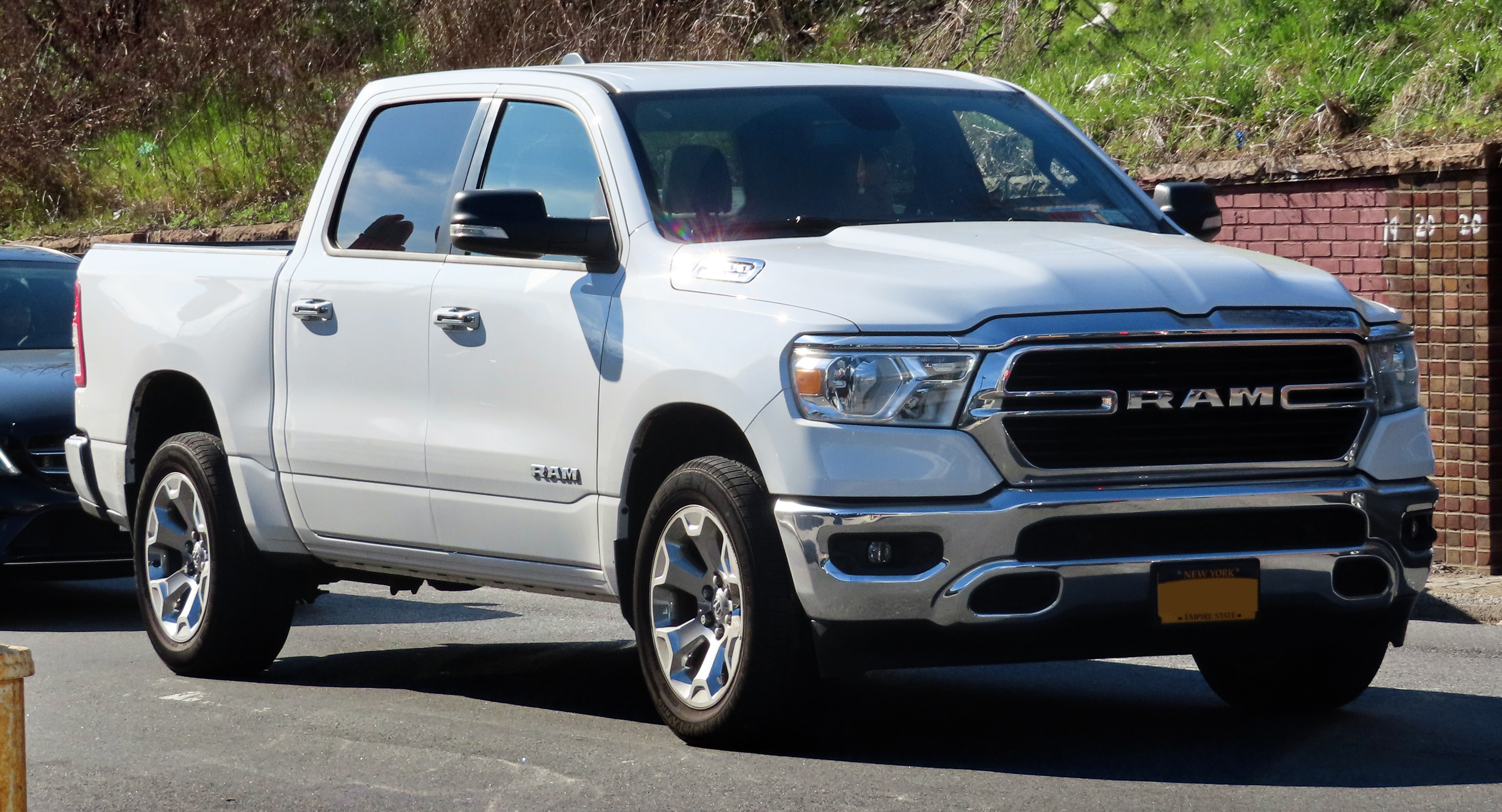
Ram 1500 Rumblebee SRT
"about starting with the Hemi-Powered Ram 1500 Rumblebee SRT. And yes, that's rumble, not bumble."
This is a special, high-performance Ram 1500 pickup. It’s meant to be faster and more aggressive than a normal Ram 1500, and it uses a Hemi V8 engine.
The Ram 1500 Rumblebee SRT is a performance-focused version of the Ram 1500 pickup, built around a Hemi V8. The “SRT” badge signals a high-performance tuning and hardware package aimed at making a truck feel more like a muscle car.

Ineos Grenadier
"And then a vehicle you may not be aware of, the Ineos Grenadier, one man's modern take on the classic Land Rover Defender 110."
The Ineos Grenadier is a new off-road vehicle meant to feel like the old-school Land Rover Defender. It’s built to be tough and capable, but with modern engineering.
The Ineos Grenadier is a modern off-road truck/SUV designed by Ineos as a spiritual successor to the Land Rover Defender 110. It’s notable for taking a classic, rugged, body-on-frame approach and packaging it with contemporary driveline and safety features.
Hemi V8
"We tested the return of the Hemi V8 to the Ram 1500 back in February. And it didn't take a stretch of the imagination to see what was coming next."
A Hemi V8 is a type of V8 engine design. The “Hemi” shape inside the engine helps it breathe better, which can make more power.
A “Hemi” V8 refers to Chrysler’s hemispherical combustion-chamber design, where the chamber shape helps airflow and can support strong power output. In practice, it’s a performance-oriented engine architecture rather than just a marketing name.
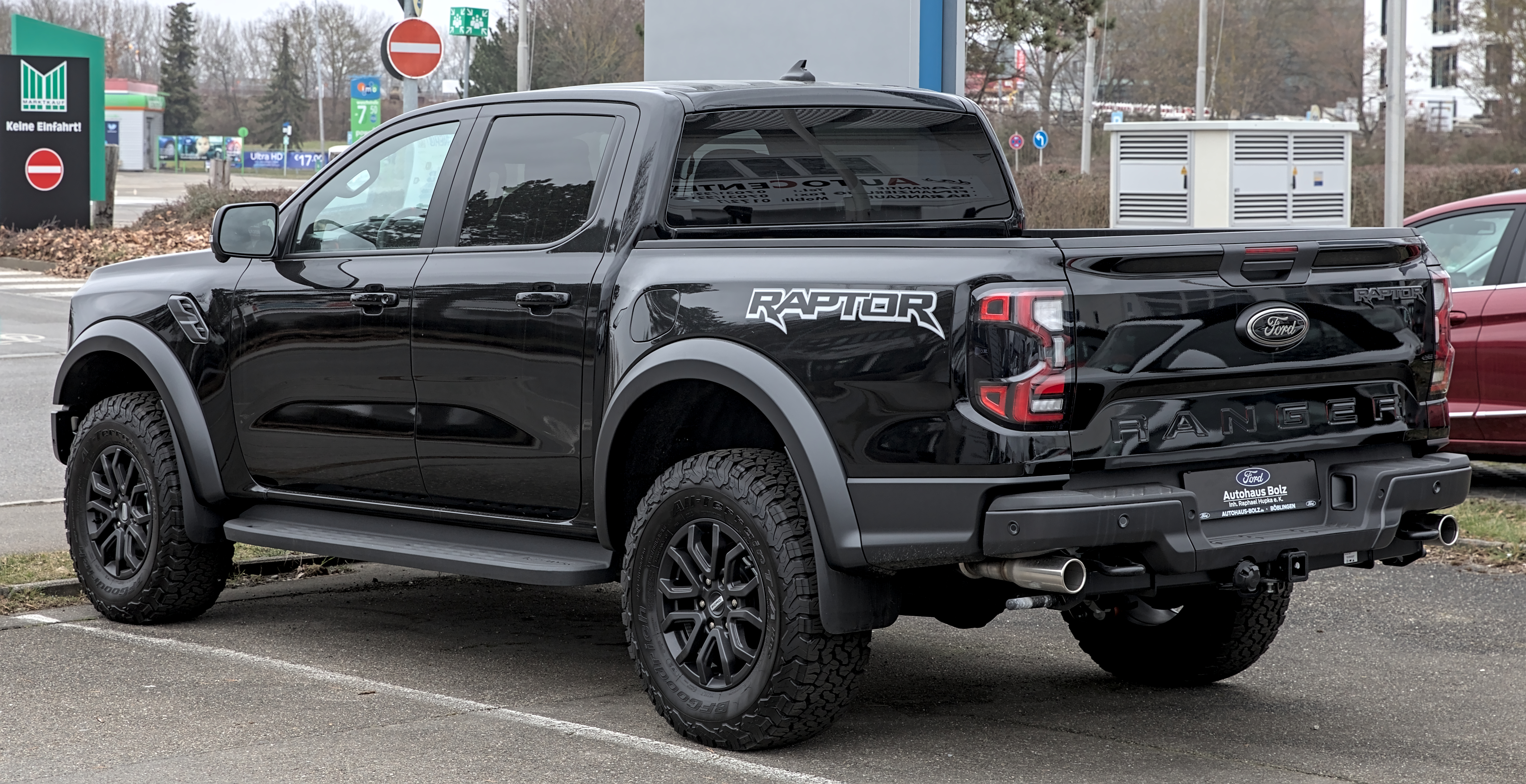
Ford Raptor
"If you go back to 2010s, early 2010s Ford came out with the Raptor, right? Purpose built off-road rig."
The Ford Raptor is a pickup designed specifically for rough off-road driving. It’s known for being able to handle things like rocks and also move fast over desert terrain.
The Ford Raptor is a purpose-built off-road pickup that helped define the modern “performance truck” formula. The host describes it as rock-crawling-capable and especially aimed at high-speed desert runs, which is why it became a benchmark for competitors.

F-150 Raptor
"...back to 2010s, early 2010s Ford came out with the Raptor, right? Purpose built off-road rig."

Ram Trx Ram
".... So then Chrysler came out with the version, the TRX Ram with 700 horsepower. And then Ford came out of th..."
The Ram TRX is a super-powerful pickup truck. It’s designed to handle off-road driving better than a normal truck. The podcast mentions it because it has extremely high horsepower.
The Ram TRX is a high-performance version of the Ram pickup built for off-road capability and extreme power. It’s known for very high horsepower and a purpose-built suspension and drivetrain setup for rough terrain. The podcast references it as a major performance step, noting the TRX’s 700-horsepower figure.

Raptor R
"And then Ford came out of the Raptor R. Just constantly upping each other at the off-road game."
Raptor R is a more extreme, higher-performance version of the Ford Raptor. The host brings it up to show how truck makers keep pushing harder in off-road performance.
“Raptor R” refers to Ford’s higher-performance Raptor variant, positioned as an even more extreme version of the Raptor formula. In the segment, it’s used to illustrate Ford continuously escalating its off-road truck offerings in response to rivals.

Ford F-150 Lightning
"what Alex? The Lightning? SVT Lightning."
The Ford F-150 Lightning is an electric pickup truck. It’s built on the F-150 truck body style, but it uses a battery instead of gasoline. The podcast mentions it as a notable electric truck variant.
The Ford F-150 Lightning is the electric version of the F-150 pickup, bringing EV power to a truck platform known for towing and utility. It’s discussed because it’s a mainstream way to get an electric drivetrain in a full-size truck format. In the podcast, it’s specifically called out as the SVT Lightning, tying it to the performance/heritage naming conversation.
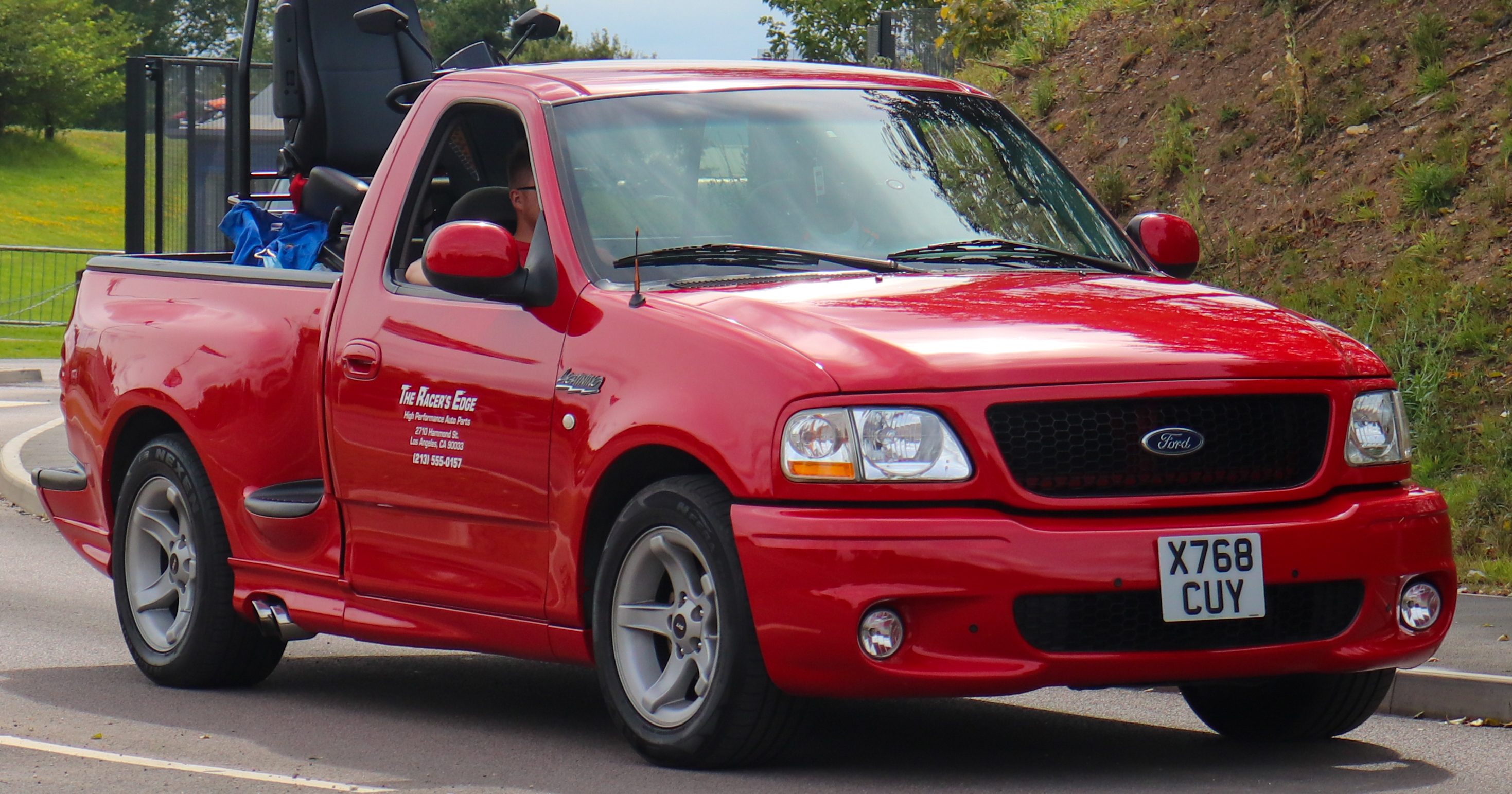
Ford SVT Lightning
"The Lightning? SVT Lightning. Yeah, very good."
The Ford SVT Lightning is a faster, more performance-focused version of the F-150 pickup. It’s meant to feel more powerful than a typical truck. The podcast brings it up because the Lightning name has a performance history.
The Ford SVT Lightning is a performance-oriented version of the F-150 that became known for its high-output character and enthusiast appeal. It’s significant because the Lightning name is tied to a specific era of fast, street-capable trucks. The podcast references it directly while talking about the Lightning name and its reputation.

Chevy 454 SS
"Chevy came out with the 454 SS, which was awesome. And then Ram came out with the SRT-10, which was a Ram 15, handle of the Viper motor in"
This was a Chevy pickup that used a big V8 engine (the 454) and was tuned to be quicker than a normal truck. It’s remembered as part of the 1990s performance-truck trend.
The Chevrolet 454 SS is a classic performance pickup built around the 454 cubic-inch V8. In the 1990s “performance street truck” conversation, it represents the era’s big-displacement, high-power approach to making pickups feel fast.

Ram SRT-10
"And then Ram came out with the SRT-10, which was a Ram 15, handle of the Viper motor in it."
This was a Ram pickup built by SRT for performance, and it used the same basic engine family as the Dodge Viper. It was meant to be a fast truck, not just a regular work truck.
The Ram SRT-10 is a performance-focused Ram pickup that used the Viper’s V10 engine as its powerplant. The host is using it as an example of 1990s-era “performance street trucks” that were exciting but didn’t sell strongly or last long in the market.
2027 Rumblebee
"So with the 2027 Rumblebee, they have taken a Ram 1500, chopped 13 inches out of the wheel base, slammed it by a couple inches, depending on which trim you get, more on that later, and widened the track by seven inches."
The 2027 Rumblebee is a special Ram 1500 pickup tuned to look and drive more like a performance vehicle. It gets a shorter wheelbase, sits lower, and is made wider so it feels more planted and aggressive.
The 2027 Ram Rumblebee is a performance pickup concept built from the Ram 1500, but with major stance and packaging changes to make it feel more like a performance car. The host highlights the chopped wheelbase, lowered ride height (“slammed”), and widened track as the key engineering choices to chase that “street truck” vibe.
wheel base
"So with the 2027 Rumblebee, they have taken a Ram 1500, chopped 13 inches out of the wheel base, slammed it by a couple inches, depending on which trim you get, more on that later,"
Wheelbase is how far apart the front and rear wheels are. Changing it can affect how the truck turns and feels when you drive it.
Wheelbase is the distance between the front and rear wheel centers. Shortening it (as described for the 2027 Rumblebee) typically makes a vehicle feel more agile and can change how it turns and how weight is distributed.
slammed
"chopped 13 inches out of the wheel base, slammed it by a couple inches, depending on which trim you get, more on that later,"
“Slammed” means the truck is lowered so it sits closer to the ground. People do it for a more aggressive look and often to help it feel more stable when driving.
In car culture, “slammed” means lowering a vehicle’s ride height to sit closer to the ground. Lowering the 2027 Rumblebee by a couple inches is intended to change its stance and handling feel by reducing body height and potentially improving cornering stability.
track
"and widened the track by seven inches. If you're in a NASCAR, if you know the NASCAR truck series, that was the inspiration, right?"
Track is how wide the truck is from left wheel to right wheel. Making it wider usually helps the vehicle feel more stable in corners.
Track (or track width) is the distance between the left and right wheels on the same axle. Widening the track (as mentioned for the 2027 Rumblebee) can improve stability and reduce body roll by increasing the vehicle’s “stance” and leverage against tipping.
NASCAR truck series
"If you're in a NASCAR, if you know the NASCAR truck series, that was the inspiration, right? Just lowered, slammed, widened pickup truck."
This is a NASCAR racing series that uses pickup trucks as the basis for the cars on track. The host is saying the Rumblebee’s look is inspired by that kind of setup.
The NASCAR truck series is a stock-car racing series where teams race pickup-based vehicles. The host uses it as a reference point for the Rumblebee’s lowered, widened “race-inspired” pickup stance.
RAM 1500 Rumble Bee
"So that's how we got to the Rumblebee. Now there are four different versions of it, starting with the base Rumblebee, which has the 5.7 liter Hemi 395 horsepower... And so inside you've got performance seat, performance steering wheel, an actual shifter, not a dial."
The RAM 1500 Rumble Bee is a special RAM pickup that’s meant to feel sporty. It’s built with a powerful Hemi V8 and a more “enthusiast” driving setup, not just a plain truck.
The RAM 1500 Rumble Bee is a performance-focused RAM pickup built around a muscle-car style formula: big V8 power plus a distinctive “low, slammed, wide” look. In this segment, they describe it specifically as a quad-cab, short-bed truck with a Hemi V8 and a real shifter, aiming to feel more like a driver’s truck than a basic work pickup.
5.7 liter Hemi
"Now there are four different versions of it, starting with the base Rumblebee, which has the 5.7 liter Hemi 395 horsepower. That's kind of just your base."
A “5.7 liter Hemi” is the name for a V8 engine in the RAM lineup. “5.7 liter” is how big the engine is, and “Hemi” is Chrysler’s design that helps it breathe and make power.
“5.7 liter Hemi” refers to Chrysler’s HEMI V8 engine family with a 5.7-liter displacement. In this context, it’s the base Rumble Bee’s engine choice, and the host ties it directly to the truck’s output (395 horsepower).
quad cabs
"All of them are quad cabs and short bed. There's no options as far as cabs or beds. All quad cabs, short beds."
A “quad cab” is a pickup cab style with seats for more than just the driver and front passenger. It’s basically a way to get rear seating, but usually with smaller rear doors than a full crew cab.
“Quad cab” is a pickup body style that provides rear seating access in addition to the front seats—typically with smaller rear doors than a full crew cab. The host uses it to specify the Rumble Bee’s cabin layout: all versions are quad cabs with short beds.
short bed
"All of them are quad cabs and short bed. There's no options as far as cabs or beds. All quad cabs, short beds."
A “short bed” means the truck’s cargo area is shorter than the longer-bed versions. It affects how much you can carry and how the truck feels in tight spaces.
A “short bed” is the shorter cargo-box length on a pickup truck compared with a standard or long bed. The host highlights that the RAM 1500 Rumble Bee is only offered with a short bed (and quad cab), limiting configuration choices.
tow 9,000 pounds
"And they still tow 9,000 pounds. That's pretty much back then. That was another thing in the previous era, like the lightning."
“Tow 9,000 pounds” is the maximum weight the truck is rated to pull. It’s a practical measure of whether the vehicle can haul trailers, not just look fast.
“Tow 9,000 pounds” refers to the truck’s maximum towing capacity, a key spec for how much weight it can pull safely when properly equipped. The host contrasts this with earlier “previous era” performance pickups that didn’t tow as much, arguing the Rumble Bee still functions like a real truck.
soft suspension
"Like I think even the Raptor gets maybe 8,000 pounds or less. Yeah, just with the soft suspension. And so inside you've got performance seat, performance steering wheel, an actual shifter, not a dial."
“Soft suspension” means the truck’s suspension is tuned to ride more smoothly and absorb bumps. The host is connecting that to towing, saying the truck may not be rated to tow as much because it’s tuned more for ride comfort/off-road use.
“Soft suspension” means a setup tuned for comfort and off-road compliance rather than firm control. The host links it to reduced towing capability, implying that suspension tuning can affect how well the truck manages trailer loads.
actual shifter
"And so inside you've got performance seat, performance steering wheel, an actual shifter, not a dial. So they kind of set you up there with the base Rumblebee now."
An “actual shifter” means the truck uses a normal gear lever you move by hand. The host is saying it’s not using a dial-style selector, which can feel less direct.
“Actual shifter” here contrasts a traditional gear lever with a more modern “dial” style selector. The host is emphasizing that the Rumble Bee uses a conventional shifter feel, which many enthusiasts prefer for quick, tactile gear changes.
Rumblebee 392
"Then you step up to the Rumblebee 392, which has the 6.4 liter Hemi. The first time that engine has been in a RAM pickup. And that one is 470 horsepower."
This is a special Ram pickup version that’s meant to feel more like a performance truck. It uses a bigger Hemi V8, and the host says it’s the first time that specific engine shows up in a Ram pickup.
The Ram Rumblebee 392 is a performance-focused RAM pickup built around a larger Hemi V8. In this segment, MotorWeek ties it to the 6.4-liter Hemi and highlights that it’s the first time that engine has been used in a RAM pickup, along with a power bump and added performance features.
6.4 liter Hemi
"Then you step up to the Rumblebee 392, which has the 6.4 liter Hemi. The first time that engine has been in a RAM pickup."
A “Hemi” is a type of V8 engine design used by Chrysler. The “6.4 liter” part just means it’s a big engine, built to make strong power.
“Hemi” refers to Chrysler’s hemispherical combustion-chamber engine design, which helps airflow and combustion efficiency. A 6.4-liter Hemi is a large-displacement V8 intended for strong low-end torque and high power in performance trims.
6.2 liter supercharged Hellcat engine
"Then on top of that, you can add the, for the full SRT version, you add the 6.2 liter supercharged Hellcat engine to that 392 trackback. And you get the full SRT."
This is a big V8 engine that’s “supercharged,” meaning it uses a compressor to push more air in. More air usually means a lot more power, which is why Hellcat versions are so strong.
The 6.2-liter supercharged Hellcat engine is Dodge/Chrysler’s high-output V8 architecture known for using a supercharger to force more air into the engine. That forced induction is a big reason it can reach extreme horsepower figures in performance trucks and cars.

Challenger Hellcat
"...l SRT version, you add the 6.2 liter supercharged Hellcat engine to that 392 trackback. And you get the ful..."
The Dodge Challenger is a muscle car built for performance. Different versions can have much bigger engines and more power. The podcast mentions a high-performance SRT/“Hellcat” type setup to explain how the power increases.
The Dodge Challenger is a performance muscle car known for powerful engine options and a long-running enthusiast following. It’s often discussed in terms of how different trims build on the same platform with bigger engines and performance upgrades. In the podcast, it’s referenced with an SRT/“Hellcat” style setup, describing how adding a supercharged 6.2-liter engine changes the performance profile.
0 to 60
"That will do 3.4 second, 0 to 60 top speed over. They won't say exactly, because they're still working on it."
“0 to 60” is how fast the car gets from a standstill to 60 mph. Faster times usually mean stronger acceleration.
“0 to 60” is shorthand for how quickly a vehicle accelerates from 0 mph to 60 mph. It’s a common performance metric because it captures how effectively the engine and drivetrain translate power into acceleration.
front splitter
"The big plans as far as that, a lot of aero treatments, front splitter, rear spoiler on the back."
A front splitter is an aerodynamic extension at the front of the car/truck that helps control airflow under the vehicle. By shaping the airflow, it can generate downforce and improve high-speed stability.
rear spoiler
"The big plans as far as that, a lot of aero treatments, front splitter, rear spoiler on the back. The tailgate, it's pretty cool the way they integrated the rear spoiler onto the tailgate."
A rear spoiler is a shape on the back of the vehicle that helps control airflow. It’s mainly there to keep the car more stable when you’re going fast.
A rear spoiler is an aerodynamic wing-like device mounted at the back to influence airflow. On performance vehicles, it’s commonly used to help reduce lift and increase stability, especially at higher speeds.
aero treatments
"The big plans as far as that, a lot of aero treatments, front splitter, rear spoiler on the back."
Aero treatments are changes to the truck’s shape to control airflow. The goal is usually to make it feel more stable and planted at higher speeds.
Aero treatments are aerodynamic modifications designed to manage airflow around the vehicle. On performance trucks, they’re used to reduce lift and increase stability at speed—often via devices like splitters, spoilers, and diffusers.
trim lines
"And as you go up the trim lines, you get a few more things inside, a few more special details in there."
A “trim line” is basically the version of the same vehicle with more or fewer features. Higher trims usually add nicer materials and more tech.
“Trim lines” are different equipment levels offered within the same model. As you move up trim lines, you typically get more features (like better infotainment, upholstery, and convenience tech).
infotainment
"You still get the two different versions of the full infotainment set up, and you can get leather and all the stuff."
Infotainment is the car’s main screen-and-controls system for things like music, maps, and connecting your phone. Higher trims often include a better or more complete infotainment setup.
Infotainment is the in-car electronics system that combines navigation, audio, phone integration, and vehicle settings on a touchscreen or controls. When hosts mention “full infotainment,” they’re usually talking about the most feature-complete version of that system.

Dodge Charger
"They're really not. They're almost like the charger inside. So this is a six-figure truck at the top ..."
The Dodge Charger is a car that’s built for performance, not just commuting. It’s known for having powerful engine options and a sporty look. The podcast brings it up because the name is strongly tied to performance.
The Dodge Charger is a performance-focused sedan that’s known for strong engines and a muscular design. It comes up in discussions about “charging” performance because it’s a long-running nameplate associated with high-output trims. In the podcast, it’s referenced as a point of comparison for something described as “almost like the charger inside,” tying the name to performance heritage.
rear-wheel drive on demand
"And all-wheel drive is standard, but much like the charger, you can go rear-wheel drive on demand."
This means the truck can normally use power to all wheels, but it can switch to just the rear wheels when it makes sense. It’s a way to get better efficiency without losing traction.
“Rear-wheel drive on demand” describes a system that normally uses AWD, but can switch to driving just the rear wheels when conditions allow. This can help efficiency and feel, while still keeping the traction benefits of AWD when needed.
all-wheel drive
"And all-wheel drive is standard, but much like the charger, you can go rear-wheel drive on demand."
All-wheel drive means the car can send power to all four wheels. That helps it grip better on slippery roads.
All-wheel drive (AWD) sends power to all four wheels to improve traction and stability, especially in rain, snow, or low-grip conditions. In this segment, it’s also contrasted with a mode where the vehicle can run without driving all wheels all the time.
hub extensions
"So what happens when somebody buys it and puts the hub extensions on it?"
“Hub extensions” are modifications that change how far the wheels sit out from the truck. People do it to change the look or to fit bigger wheels/tires.
“Hub extensions” refers to aftermarket wheel/fitment modifications that extend the wheel mounting area to change stance and clearance. Hosts are likely setting up a question about how such mods affect ride, steering feel, and fitment on a truck.
special lighting
"Then you got to put the special lighting or whatever on the front, unless it already has it. It's like the three lights."
“Special lighting” here likely refers to distinctive front lighting elements (such as unique headlamp/DRL designs) used to differentiate a performance trim. Lighting packages are often part of the visual identity on performance models, even when the underlying mechanical changes are the main story.
22-inch wheels
"The heavy-duty trucks get it. The 22-inch wheels on the SRT are like 12 inches wide, 325 tires. Oh, my gosh."
“22-inch wheels” means the rims are 22 inches across. Bigger wheels usually make the car look more aggressive and can change how the ride feels.
“22-inch wheels” refers to the wheel diameter, which is a common way to describe how large the rims are on a vehicle. Larger wheels often pair with lower-profile tires, which can change ride comfort and steering feel while also looking more aggressive.
325 tires
"The heavy-duty trucks get it. The 22-inch wheels on the SRT are like 12 inches wide, 325 tires. Oh, my gosh."
“325 tires” means the tires are very wide—about 325 millimeters. Wider tires can grip the road better, but they can also be heavier and more expensive.
“325 tires” is shorthand for a tire width of about 325 millimeters, which is extremely wide for a street tire. Wider tires increase the contact patch with the road, which can improve grip and braking, but they also add weight and cost.

Dodge Viper
"They're wider than what was on the last Dodge Viper. Oh, lord, mercy. But that's a lot of weight."
The Dodge Viper is a famous old-school American sports car. The hosts mention it to show just how wide the tires on this performance RAM pickup are.
The Dodge Viper is a legendary American sports car known for huge power and wide, track-oriented tires. Here it’s used as a reference point to emphasize how wide the RAM 1500 Rumble Bee SRT’s tires are—so the pickup is being compared to a true performance icon.
a brick through the wind
"Let's talk about a brick through the wind. Oh my goodness. They're done a lot of aerowaves."
They’re using a metaphor: “a brick through the wind” means the truck is shaped in a way that catches a lot of air. That makes it harder to move fast because the air pushes back. They’re about to explain how the truck’s body changes to improve airflow.
“A brick through the wind” is a descriptive phrase for a vehicle with poor aerodynamics—high drag that makes it feel like it’s pushing against a wall of air. It’s often used to contrast a boxy, bluff shape with a more streamlined body that reduces resistance. In this segment, it tees up a discussion of aerodynamic changes (“aerowaves”) on the truck.
aerowaves
"Oh my goodness. They've done a lot of aerowaves. It's a totally different body than the regular RAM 1500."
“Aerowaves” is the name they’re using for body shapes meant to improve how air flows around the truck. Better airflow can make the truck easier to drive fast and more stable. It’s basically fancy bodywork for aerodynamics.
“Aerowaves” here refers to aerodynamic body features—shaped surfaces or add-ons designed to manage airflow around the vehicle. The idea is to reduce drag and/or improve stability by directing air more effectively than a plain, flat body. The hosts connect it to the truck having a totally different body than a regular RAM 1500.

Defender 110
"Old school defender, more defender 110 because it is a two row. Just talking about the size really quickly, putting it in the context, it's actually shorter"
The Defender 110 is a Land Rover model with two rows of seats. It’s used here as a size comparison—basically, the new truck feels like it’s in the same “longer Defender” category.
The Land Rover Defender 110 is the longer, two-row version of the Defender lineup, built around off-road capability. In this segment, the host uses it as a reference point for size and proportions, noting the vehicle being discussed is “more Defender 110” because it’s a two-row SUV.

Toyota 4Runner
"It's actually kind of the same length as like a Toyota 4Runner, like roughly. So you can kind of think of it in that ballpark again, two row."
The Toyota 4Runner is a tough, off-road SUV. The host mentions it to give you an easy mental picture of how long this vehicle is.
The Toyota 4Runner is a body-on-frame SUV known for rugged, off-road-oriented packaging and a simple, durable layout. Here it’s used as a familiar length benchmark to help listeners visualize the discussed vehicle’s size and “two-row” proportions.
overlanding
"And the name of the game here is to make something that is truly built for the off-road, for the overlanding, for the safari."
Overlanding is like road-tripping, but with a focus on going far and being able to handle rough roads or trails. It usually means you want a vehicle that can keep going for long trips off the pavement.
Overlanding is long-distance, self-reliant travel—often off-road—where the vehicle needs durability, ground clearance, and the ability to handle rough terrain for extended trips. The host frames the vehicle’s design goal as being “built for the off-road” and specifically for overlanding and safari-style use.
safari
"the overlanding, for the safari. And I said it in my piece, it doesn't shy away from some of the compromises"
Here, “safari” just means rough off-road driving—like trails where you need a capable vehicle, not a normal commute.
In an automotive context, “safari” refers to rugged, off-road driving conditions where you need traction, durability, and control at low speeds. The host uses it as a shorthand for the kind of terrain and use-case the vehicle is targeting.
power steering system
"So traditionally, in a car, you have power, well, today, you have a power steering system that when you are turning and you're done, the wheel will re-center, self-center."
Power steering is what makes the steering wheel easier to turn. It helps especially at low speeds, like when maneuvering off-road or parking.
A power steering system uses a motor or hydraulic pressure to reduce the effort needed to turn the steering wheel. This matters off-road because steering feel and low-speed control are critical, and the host specifically contrasts how the wheel behaves after you turn.
self-center
"that when you are turning and you're done, the wheel will re-center, self-center."
Self-centering means the steering wheel naturally comes back toward straight ahead after you turn. It helps the car feel easier and more stable to drive.
Self-centering describes how the steering wheel returns toward the straight-ahead position after you turn. It’s a key part of steering feel because it reduces driver workload and helps the vehicle track predictably after cornering or correcting.
recirculating ball type
"[877.0s] It feels like it doesn't have power steering at basically a standstill. [881.3s] It's a recirculating ball type. [883.2s] It's hydraulically assisted."
Recirculating ball is a way the steering system turns your steering-wheel input into wheel movement. It uses little balls inside the steering mechanism, and it often feels a bit heavier or less precise than newer steering designs.
A “recirculating ball” steering gear is a mechanical steering system that uses ball bearings in a threaded path to convert steering-wheel rotation into turning the wheels. It’s commonly found on older trucks and many off-road-oriented vehicles because it can feel strong and durable, but it often has more play and less “direct” feel than modern rack-and-pinion setups.
hydraulically assisted
"[881.3s] It's a recirculating ball type. [883.2s] It's hydraulically assisted. [885.2s] And again, the disadvantage here is that when you're driving it every day, you may not notice"
Hydraulically assisted steering means the car uses fluid pressure to help you turn the wheel. It reduces the effort you feel, especially when you’re moving slowly or turning a lot.
“Hydraulically assisted” refers to hydraulic power steering, where a pump and fluid help apply force to the steering gear. Compared with electric power steering, hydraulic systems can feel different at low speeds and under load, and they’re often discussed in terms of steering effort and feedback.
rock crawling
"[907.3s] But the advantage here is that when you're off-roading, this type of system, it lets you [910.2s] keep your line a little bit easier. [911.9s] If you hit a bump or something like that, or you're rock crawling, or you're going 50 [915.8s] miles an hour in the safari, and you hit something, it's not going to break your wrist, basically."
Rock crawling is off-roading at very low speed over rocks and rough obstacles. The idea is to go carefully and keep control so bumps don’t throw the steering around.
Rock crawling is slow-speed off-roading where a vehicle navigates steep rocks, ruts, and uneven terrain with careful throttle control. Steering and suspension compliance matter a lot because impacts and bumps can otherwise jolt the driver’s hands and upset the vehicle’s line.
rack and pinion
"And the other thing that it lacks, and one of the reasons we went to rack and pinion, [932.7s] is feel."
Rack-and-pinion is a steering setup that turns the wheels using a gear and a bar. People mention it because it can make steering feel more direct and responsive.
Rack-and-pinion is a steering system where a gear (the pinion) moves a toothed bar (the rack) to turn the wheels. It’s commonly used because it can provide direct steering feel compared with older steering designs.
ground clearance
"You will feel a lot of the vehicle moving because it sits up high. [940.2s] It's over 10 inches of ground clearance, so it will naturally roll in the corners and [943.7s] pitch forward and everything."
Ground clearance is how much space there is between the bottom of the car and the ground. More clearance usually makes the car sit higher, which can make it lean more in turns.
Ground clearance is the distance between the lowest part of the vehicle and the road. Higher ground clearance usually means more suspension travel and a higher center of gravity, which can increase body roll and pitch during cornering and braking.
roll
"It's over 10 inches of ground clearance, so it will naturally roll in the corners and [943.7s] pitch forward and everything."
Roll is when a car leans to one side during a turn. It’s normal, but taller cars often lean more.
Body roll is the tendency of a vehicle to tilt to one side when cornering. It’s influenced by suspension geometry, tire grip, and the vehicle’s center of gravity—higher vehicles typically roll more.
pitch forward
"It's over 10 inches of ground clearance, so it will naturally roll in the corners and [943.7s] pitch forward and everything."
Pitch forward is when the front of the car dips down, like when you brake. It happens because the car’s weight shifts forward.
Pitch forward is the vehicle’s front end dipping and rear end lifting under braking or deceleration. It’s caused by weight transfer from the rear to the front, and it’s more noticeable when the suspension and damping aren’t tuned to resist it.
B58
"Now, as for the powertrain, it's actually borrowed from BMW. [955.9s] It's the B58, which I think a lot of enthusiasts are very in the know with."
The B58 is BMW’s turbo inline-six engine. It’s known for making strong pulling power and feeling smooth as it accelerates.
The BMW B58 is a well-known turbocharged 3.0-liter inline-six engine family. It’s popular with enthusiasts because it makes strong torque for its size and has a reputation for smooth power delivery.
turbocharged 3-liter inline 6
"[960.9s] It's a turbocharged 3-liter inline 6. [963.5s] We're talking 282 horsepower, 332 pound-feet of torque, and it's actually paired up to"
This describes an engine with six cylinders in a line, plus a turbo that helps it make more power. The turbo boosts performance by pushing extra air into the engine.
A turbocharged inline-six uses a turbocharger to force more air into the engine, allowing it to produce more power than a naturally aspirated engine of the same displacement. “Inline 6” means six cylinders arranged in a straight line, which typically helps smoothness.
torque
"We're talking 282 horsepower, 332 pound-feet of torque, and it's actually paired up to [968.4s] another BMW entity, the ZF-8Smeane Automatic, which I drove this at Mason-Dixon."
Torque is the engine’s twisting pull. Higher torque usually means the car feels stronger when you start moving or accelerate without needing to rev as high.
Torque is the twisting force an engine produces, and it strongly affects how quickly a vehicle accelerates from low speeds. The “pound-feet” figure is a measure of that force at the crankshaft.
ZF-8Smeane Automatic
"We're talking 282 horsepower, 332 pound-feet of torque, and it's actually paired up to [968.4s] another BMW entity, the ZF-8Smeane Automatic, which I drove this at Mason-Dixon."
This is the car’s 8-speed automatic transmission from ZF. It controls how the engine’s power is delivered through different gears, and that can make the car feel fast right away.
This refers to ZF’s 8-speed automatic transmission used with the BMW B58 in this application. The key point is that the gearbox’s shift strategy and gear spacing can make the car feel especially quick in the lower gears.
slalom course
"[989.2s] Slalom course was another, that was an event. [992.0s] That was exciting."
A slalom course is a cone course that makes you weave quickly left and right. It’s a good way to see how well a car turns and stays composed.
A slalom course is a timed driving setup with closely spaced cones that forces rapid steering inputs. It’s used to evaluate handling balance, steering response, and how the vehicle behaves under quick direction changes.
two-speed transfer case
"You have a two-speed transfer case, so you have your high range and your low range with [1007.0s] a very satisfying, notchy thing in the center"
On a 4x4 truck, the transfer case sends power to both the front and rear wheels. “Two-speed” means it can switch between a normal gear for everyday driving (high range) and a slower, stronger gear for tough off-road situations (low range).
A two-speed transfer case is the gearbox that splits power to the front and rear axles and also provides two gear ratios for off-road use. High range is for normal driving, while low range gives much lower gearing for crawling over obstacles with better control.
high range
"so you have your high range and your low range with [1007.0s] a very satisfying, notchy thing in the center"
High range is the “normal” setting for a 4x4. It’s used when you don’t need super-low gearing, like on roads or easier trails.
High range is the transfer-case setting that uses a taller gear ratio for typical driving. It keeps engine speed lower and is meant for faster road use or mild dirt roads.
low range
"so you have your high range and your low range with [1007.0s] a very satisfying, notchy thing in the center"
Low range is the “slow and strong” setting. It helps the truck crawl over rough terrain with more control and less wheel spin.
Low range is the transfer-case setting that uses a much shorter gear ratio for off-road control. It multiplies torque at the wheels so the vehicle can move slowly and steadily over rocks, ruts, and steep grades.
manual parking brake
"a very satisfying, notchy thing in the center, which is right next to a very BMW shifter and [1012.8s] a manual parking brake."
A manual parking brake is the traditional hand lever you pull to keep the car from rolling. It’s a more old-school way to secure the vehicle when parked.
A manual parking brake is a hand-operated brake (typically a lever) used to hold the vehicle when parked. It’s different from electronic parking brakes and can be simpler and more direct to operate.
center locker
"Ours was the Fieldmaster spec with the Rough Pack, so you had a center locker and you had [1020.1s] a front and rear locker as well."
A locker helps the truck keep traction when wheels start slipping. A “center locker” locks the front and rear drive together so both ends pull at the same time.
A locker is a drivetrain device that forces wheels (or axles) to rotate together instead of allowing slip. A center locker specifically locks the front and rear axles together, improving traction when one end loses grip.
Rough Pack
"Ours was the Fieldmaster spec with the Rough Pack, so you had a center locker and you had [1020.1s] a front and rear locker as well."
“Rough Pack” is a package of off-road upgrades. Here it’s tied to extra traction hardware and more aggressive tires for tougher conditions.
The “Rough Pack” is an off-road equipment package that bundles traction and durability upgrades. In this case, it’s described as adding a center locker and additional lockers, plus off-road tires.
front and rear locker
"so you had a center locker and you had [1020.1s] a front and rear locker as well."
Lockers can prevent one wheel from spinning uselessly. Having lockers on both the front and rear axles helps the truck stay hooked up in mud, snow, or uneven terrain.
Front and rear lockers are traction aids that lock the differential(s) on each axle so left and right wheels turn together. This reduces wheelspin and helps the truck keep moving when one wheel on an axle is unloaded or on low-grip surfaces.
BF Goodrich, KO2 tires
"The Rough Pack added BF Goodrich, KO2 tires, all-terrain. [1038.2s] But the big thing about this is that in all the literature"
KO2 is a specific all-terrain tire from BFGoodrich. It’s built to handle rough roads and trails better than a regular street tire.
BFGoodrich KO2 is an all-terrain tire model designed for mixed on-road/off-road use. It’s commonly chosen for its durability and traction in loose surfaces like dirt, gravel, and snow.
all-terrain
"The Rough Pack added BF Goodrich, KO2 tires, all-terrain. [1038.2s] But the big thing about this is that in all the literature"
All-terrain tires are made to work on both regular roads and rougher surfaces. They usually grip better on dirt and gravel than regular street tires.
All-terrain tires are designed with tread patterns that balance road manners and off-road traction. They typically offer better grip on dirt, gravel, and mud than highway-focused tires, while still being usable for daily driving.
solid frame
"This front and rear solid axles, it's a solid frame. [1067.1s] It is built like..."
A solid frame means the truck has a separate “skeleton” underneath that carries the weight. This is a traditional truck design that tends to be tough for off-road driving.
A solid frame means the vehicle uses a body-on-frame construction, where a separate ladder frame carries the load. This layout is common in traditional off-road trucks because it’s strong and can better tolerate impacts and heavy-duty use.
front and rear solid axles
"This front and rear solid axles, it's a solid frame. [1067.1s] It is built like..."
Solid axles connect the left and right wheels with a rigid bar. That can help the truck keep traction when the terrain is bumpy or uneven.
Front and rear solid axles mean both axles use a rigid beam that connects the wheels on that axle. This can improve durability and wheel articulation off-road, helping the tires maintain contact over uneven ground.
ECUs
"The windows, they cut down on the number of ECUs. They wanted to make this as simple as possible."
ECUs are the car’s little computers that control different systems. If a design uses fewer of them, the car can be simpler to manage and may be easier to maintain.
ECUs (electronic control units) are small computers in a modern car that control specific functions like engine management, body electronics, and driver-assistance systems. Reducing the number of ECUs can simplify wiring and software, and sometimes improves reliability and serviceability.
center hub
"That is the center hub for everything. So you don't have gauges. All you have in front of you is a little cutout for your warning lights."
A center hub is the main screen/control area in the middle of the dash. Instead of lots of separate gauges, the car’s important info and controls are gathered there.
A center hub is the main control interface in the middle of the dashboard where the car concentrates key functions (media, settings, and sometimes vehicle status). The host’s point is that this design replaces traditional gauge clusters, leaving fewer dedicated instruments in front of the driver.
emergency lane keep
"Part of the update for 26 is they've added emergency lane keep and some driver attention things."
Emergency lane keep is a driver-assistance feature that helps keep the car within its lane when it detects a potential loss of lane position. It’s typically more intervention-focused than normal lane-keeping, aiming to reduce the chance of a crash during sudden distraction or drift.
driver attention
"Part of the update for 26 is they've added emergency lane keep and some driver attention things."
Driver attention monitoring uses sensors (often cameras and/or steering/behavior analysis) to detect whether the driver is paying attention. If it thinks you’re distracted, it can trigger alerts and may influence driver-assistance behavior, like lane-keeping prompts.
role
"Again, obviously you get into more technical roads. You're going to feel that role. The only thing I noticed on the highway that I didn't like was the emergency lane"
“Role” means the car leaning over in a turn. When the road gets twistier, the suspension has to shift the car’s weight, and you can feel the lean.
“Role” here is shorthand for body roll: when a car leans to the outside of a turn due to suspension and weight transfer. On more technical roads, the suspension can’t keep the body perfectly level, so you feel that lean.
Recaro seats
"Rest of the interior, super simple. Recaro seats, not sport buckets, but Recaro seats that will hold you in place. There's a piano black line that goes across the cabin."
Recaro makes seats designed to keep you supported when the car turns. Even if they’re not the deepest “bucket” style, they’re meant to hold you in place so you don’t slide around.
Recaro seats are aftermarket-style performance seats known for strong lateral support—helping hold occupants in place during cornering. The hosts note these aren’t “sport buckets,” but they still aim to keep you from sliding around.
sport buckets
"Rest of the interior, super simple. Recaro seats, not sport buckets, but Recaro seats that will hold you in place. There's a piano black line that goes across the cabin."
Sport bucket seats are seats with deeper sides that “hug” you in turns. They’re saying these Recaro seats are supportive, but not the most extreme bucket style.
Sport bucket seats are a more aggressively shaped seat design with higher side bolsters to grip your body during hard cornering. The hosts contrast them with the Grenadier’s Recaro seats, implying the seat shape is supportive but not as enveloping.
piano black
"There's a piano black line that goes across the cabin. And the idea is anything below that is OK to get wet."
“Piano black” is that shiny black trim that looks like a glossy surface. It tends to show smudges and minor scratches more easily than duller finishes.
“Piano black” is a glossy, high-polish black trim finish that reflects light like a piano. It’s visually striking but can show fingerprints, scratches, and scuffs more easily than textured or matte plastics.
water line
"And the idea is anything below that is OK to get wet. That's like water line, so to speak. So if you hose out the interior after a safari, you can do that."
A “water line” is basically the level in the cabin below which water is expected to be okay. They’re saying you can rinse the interior after muddy/off-road use without ruining the important stuff underneath.
A “water line” is the practical boundary in an off-road vehicle’s cabin where the manufacturer expects water exposure to be tolerable. In this case, the hosts say everything below that line is designed to handle being hosed out after a safari, including protecting electronics.
30 70 split rear door
"Yeah, huge cargo space with like a 30 70 split rear door. I kind of wish in the cargo area, they did what some of the old defenders did,"
It means the back door is split into two pieces. You can fold down only the bigger side to fit bulky stuff, without opening the whole door.
A “30/70 split” rear door means the rear opening is divided into two sections: one smaller section (about 30%) and a larger section (about 70%). You can fold down just the larger part for bigger items while keeping the smaller part up for partial access and cargo flexibility.
900 pound static low capacity, 300 dynamics
"It's got 900 pound static low capacity, 300 dynamics, rooftop tents all day. Price."
It’s a weight limit for things you mount on the roof or carry in that area. “Static” is when the vehicle is still, and “dynamic” is when you’re driving over bumps—so the driving limit is usually lower.
These are roof/cargo load ratings. “Static” load is how much weight the vehicle can support when parked (no movement), while “dynamic” load is the allowable weight under driving conditions like bumps and motion; the dynamic number is typically lower for safety.

Mini Cooper
"It does adhere to the old style, say, Mini Cooper thing about putting all the gauges in the middle so you don't have to make it left or right, depending on which side of the road you drive on."
The Mini Cooper is a small car brand/model. The host is using it as an example of a dashboard design where the gauges are centered so they’re easy to see no matter which side of the road you drive on.
The Mini Cooper is a compact car known for its driver-focused cockpit layout. Here, it’s referenced as an example of putting key gauges in the center so you don’t have to look left or right depending on which side of the road you drive on.
old style
"It does adhere to the old style, say, Mini Cooper thing about putting all the gauges in the middle so you don't have to make it left or right, depending on which side of the road you drive on."
“Old style” means the car is using a more traditional dashboard layout instead of relying on newer, more complicated screen setups.
“Old style” here refers to a traditional driver-instrument layout and cabin ergonomics rather than a fully modern, screen-centric design. The point is that the vehicle’s interface is designed to feel familiar and intuitive.
gauges
"Mini Cooper thing about putting all the gauges in the middle so you don't have to make it left or right, depending on which side of the road you drive on."
“Gauges” are the dashboard displays that tell you things like how fast you’re going and whether the car is warning you about something.
In automotive use, “gauges” means the instrument readouts that show driving information like speed, engine status, and warning lights. The host is specifically talking about where those displays are positioned in the cabin.
Land Rover Defender
"I mean, it is like I whenever I see an old school Land Rover or Defender, my head always turns, especially the ones that have been restomotted and look just fantastic."
The Land Rover Defender is a tough, off-road SUV with a classic, boxy design. The host is talking about older Defenders that have been updated so they look great but drive more modern.
The Land Rover Defender is a rugged off-road SUV known for its boxy, utilitarian design and long history as a go-anywhere vehicle. In this segment, the host mentions “old school” Defenders that have been restomotted, which highlights how enthusiasts keep the classic look while updating the driving experience.
restomotted
"I mean, it is like I whenever I see an old school Land Rover or Defender, my head always turns, especially the ones that have been restomotted and look just fantastic."
A restomod is when someone brings an older car back to life, but also updates key parts so it drives better and feels more modern. It’s basically “classic looks, modern improvements.”
Restomodding (often shortened to “restomod”) is the practice of restoring a classic vehicle’s appearance while modifying it with modern upgrades—commonly things like improved engines, brakes, suspension, and electronics. The host uses it to describe why certain classic Land Rover Defenders still look fantastic but are more usable than they were originally.

G-Class G Wagon
"...hink a lot of people look at it as like a bargain G wagon, right? Yes. Well, yes, less than half the price ..."
The G-Class is a luxury SUV with a very distinctive boxy shape. It’s known for being tough enough for rough roads while still offering comfort. The podcast mentions it in a comparison about pricing.
The Mercedes-Benz G-Class (often called the G-Wagon) is a luxury SUV known for its boxy design and rugged, off-road-capable roots. It’s frequently discussed because it blends traditional off-road styling with modern luxury features. In the podcast, it’s referenced as a “bargain” G-Wagon compared to something else, emphasizing its price positioning relative to another vehicle.
niche vehicle
"But also like when there's a reason like this is a niche vehicle. When they built these because we went to Sully Hill, I think it was the assembly plant."
A niche vehicle is a car made for a specific kind of customer, not everyone. The host is saying the Defender was originally built for military and police work, so it’s always been aimed at a particular purpose.
A “niche vehicle” is a model targeted at a smaller, specialized group of buyers rather than the mass market. Here, the host frames the Land Rover Defender’s origins and purpose—military and police use—as the reason it remains a niche product today.
Sully Hill
"When they built these because we went to Sully Hill, I think it was the assembly plant. When they built these, the majority of them were being built for military"
They mention “Sully Hill” as a place where the vehicles were assembled. The point is that the factory’s output was largely meant for military and police use.
Sully Hill is referenced as the location of an assembly plant the hosts visited. In this context, it’s used to support the historical point that these vehicles were built in large numbers for government and security customers rather than typical retail buyers.
assembly line backwards
"It was a very, it was like a assembly line backwards. So it was built to be this all conquering terrain vehicle."
They’re describing a factory process that doesn’t follow the usual step-by-step assembly order. Workers move between stations as the car is built in a different sequence than normal.
“Assembly line backwards” is a description of a manufacturing workflow where the build process moves through stations in a non-traditional order. Instead of a straightforward forward progression, workers transition between stations as the vehicle is assembled in a different sequence.
all conquering terrain vehicle
"So it was built to be this all conquering terrain vehicle. And we're talking what, early 80s, I've forgotten when."
This phrase means the vehicle is meant to handle lots of different kinds of rough terrain. It’s more about off-road ability than luxury.
“All conquering terrain vehicle” is an enthusiast-style way to describe a vehicle engineered to handle a wide range of off-road conditions. It emphasizes capability across different surfaces rather than just on-road comfort or luxury features.
EVs
"When you have regulations and you say everything's got to be electric by 2035. [1915.0s] Everyone's making EVs and making things more efficient or whatever hybrids."
EVs are cars that run mostly on electricity from a battery. When rules push automakers to sell more EVs, they often change what kinds of engines and cars they build.
EVs are electric vehicles, meaning the car is powered primarily by an electric motor and a battery rather than a gasoline engine. In the context of regulations, EV mandates can push automakers to redesign powertrains and product lineups toward electrification.
hybrids
"Everyone's making EVs and making things more efficient or whatever hybrids. [1918.2s] But when you remove all those and people can make V8s again, they're going to make V8s."
Hybrids use two power sources: a gas engine and an electric motor. They help reduce fuel use compared with a pure gas car, especially in stop-and-go driving.
Hybrids use both an internal-combustion engine and an electric motor/battery to move the car. They’re often used as a transitional technology when regulations encourage lower emissions and better fuel economy without going fully electric immediately.
V8s
"But when you remove all those and people can make V8s again, they're going to make V8s."
A V8 is a gas engine with eight cylinders arranged in a V shape. People often associate V8s with strong power and a distinctive sound.
A V8 is an engine with eight cylinders arranged in a V shape (two banks of four). It’s a common shorthand for gasoline performance and sound/feel, and the transcript is linking V8 demand to how regulations affect what automakers are allowed or incentivized to build.
trickle down effect
"You don't see a trickle down effect. That's not obvious."
A “trickle down effect” means one thing causes other things to happen later. They’re basically saying they’re not sure if what Ram does at events actually leads to noticeable changes for buyers in the real world.
A “trickle down effect” is the idea that one change (like a brand’s event, marketing, or product strategy) will gradually influence other areas downstream. Here, the hosts are questioning whether truck-event themes or actions actually lead to broader consumer or regional effects.
tow a boat
"they might occasionally one or twice, maybe three times in their life, tow a boat or something."
To “tow a boat” means pulling a boat trailer behind the truck. They’re saying some people buy big trucks mostly for convenience and occasional trips, not because they tow all the time.
“Tow a boat” refers to using a pickup’s towing capability to pull a trailer, which is one of the common real-world reasons people buy full-size trucks. The hosts contrast occasional towing with everyday driving, suggesting many owners buy trucks for lifestyle and capability rather than constant heavy-duty use.
dirt road or a gravel road
"then you get off the highway, then before you know what you're on a dirt road or a gravel road and you're like, OK, well, it's nice to have something like this."
A dirt or gravel road is an unpaved road. They’re saying that once you get off the highway and onto rougher roads, having a truck can feel more useful and capable.
“Dirt road” and “gravel road” describe unpaved surfaces where a pickup’s higher ground clearance and tougher tires can make daily driving feel more confident. The hosts are using this as an example of why truck owners value their vehicles once they leave paved highways.
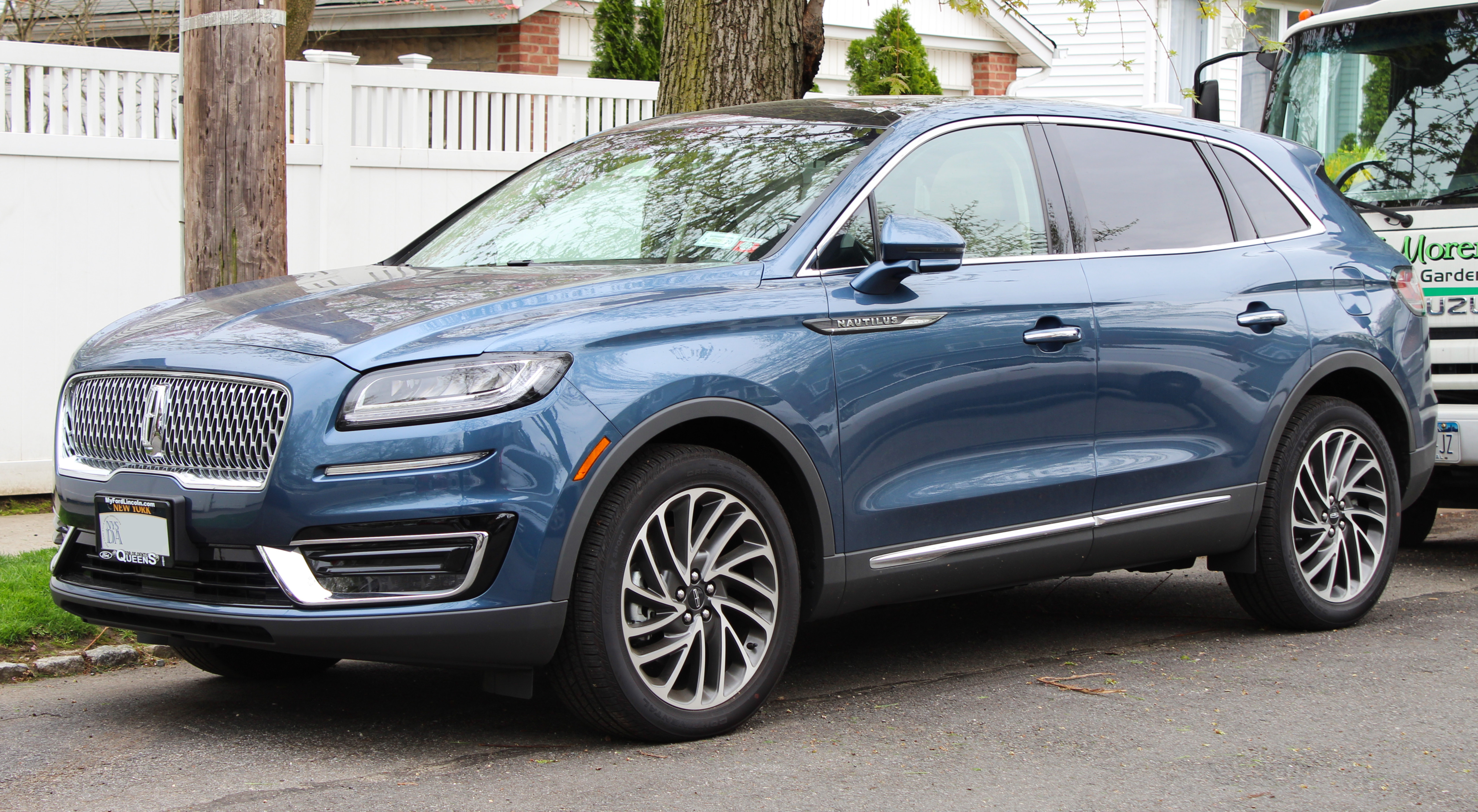
Lincoln Nautilus
"...ufacturers suggest 87 octane for his 2019 Lincoln Nautilus. Is it true that if he went up to 93, he'd get be..."
The Lincoln Nautilus is a luxury SUV. The podcast talks about what fuel type it should use, comparing 87 octane to 93 octane. This matters because the car’s engine is tuned based on the fuel it’s designed for.
The Lincoln Nautilus is a luxury midsize SUV positioned for comfort and everyday usability. It comes up in the podcast in a practical context—specifically fuel octane recommendations—because using the recommended fuel can affect how the engine is calibrated. The mention of 87 vs. 93 octane highlights that owners may wonder what happens if they use a higher grade.

Ford Mustang Gt
"Right. My car also says the minimum of Ford Mustang GT, bring it up every podcast. It says I only need to run 87, but I run 93 in it."
The Ford Mustang GT is a fast version of the Mustang. The fuel you use matters because the car’s computer may change how the engine runs based on the fuel’s octane rating.
The Ford Mustang GT is a performance-focused trim of the Mustang that’s commonly discussed in the context of fuel octane. Higher-octane fuel (like 93) can allow the engine control system to run more aggressive timing/combustion strategy than it would on 87, which can change power and efficiency depending on the tune.
93
"It says I only need to run 87, but I run 93 in it. ... But if you step up to 93, you'll get 256 horsepower."
“93” is the octane number on premium gas. It can let the engine run more aggressively without knocking, which may add power, but it usually doesn’t dramatically improve gas mileage.
“93” refers to a higher fuel octane rating (premium gasoline). Higher octane can allow the engine control system to run a more optimal combustion setup (often more timing advance) without knock, which can increase power and sometimes change efficiency—though the fuel-economy gains are often small.
87
"It says I only need to run 87, but I run 93 in it. The computer in your car, unless it states otherwise or there's something going on,"
“87” is the octane number on regular gas. Higher octane helps prevent knocking, and the car may run differently depending on what fuel you put in.
“87” refers to fuel octane rating (regular gasoline). Octane is a measure of how resistant the fuel is to knocking (premature combustion), and engines with knock sensors can adjust their timing/strategy based on the fuel they detect or the fuel they’re supplied.

Mazda CX 50 turbo
"But I bring them up as an example, a Mazda. I think they're the only brand actually that does this. But I bring them up as an example, a CX 50 turbo. It's got a 2.5 liter."
The Mazda CX-50 turbo is a small SUV with a turbo engine. The host is saying Mazda’s tune can make more power when you use higher-octane fuel like 93 instead of 87.
The Mazda CX-50 turbo is a compact SUV where the manufacturer’s fuel recommendation is tied to engine output. In this example, using 87 octane is claimed to produce less power than stepping up to 93 octane, because the engine’s control system can adjust combustion to better match the higher-octane fuel.
octane rating
"Having a higher grade of gas or higher octane rating just makes the the fuel or the engine more resistant to predetination."
Octane rating tells you how resistant the fuel is to knocking or pinging inside the engine. Higher octane usually lets the engine run more spark timing safely.
Octane rating is a measure of a fuel’s resistance to knock, which is uncontrolled combustion in the cylinder. Higher-octane fuel generally allows an engine to run more aggressive ignition timing or higher operating conditions without knocking.
predetination
"Having a higher grade of gas or higher octane rating just makes the the fuel or the engine more resistant to predetination."
The idea here is that the fuel can start burning too early. When that happens, the engine can run rough or knock, and higher-octane fuel helps reduce that risk.
“Predetination” in the transcript appears to refer to pre-ignition or premature combustion—fuel igniting too early in the cycle. That can contribute to knock-like harsh combustion and is why higher-octane fuel can help engines run more aggressively.
knock
"So they say, look, you can, but we've had to detune the engine to hopefully stave away any knock."
Knock is when the fuel-air mixture starts burning at the wrong time, causing a harsh rattling/pinging. The car’s computer protects the engine by backing off timing when it senses risk.
Engine knock is when the air-fuel mixture ignites too early or unevenly, creating pressure spikes that can damage the engine. To prevent it, engine control units may reduce ignition timing (retard timing) or otherwise “detune” the engine when lower-octane fuel is used.
detune
"So they say, look, you can, but we've had to detune the engine to hopefully stave away any knock."
Detune here means the car’s computer dials back the engine’s “aggressive” settings to avoid problems with lower-quality fuel. That can reduce power and change how the engine feels.
In this context, detune means the engine’s control strategy is intentionally softened—typically by reducing ignition timing or limiting boost—so it can run safely on lower-octane fuel. The tradeoff is usually less power and sometimes different drivability.

Ford Mustang SVO
"The other example, and I've brought it up on this podcast before, is another Ford product, the 84 to 86 Mustang SVO, which we road tested back in the day, one of my favorite cars of all time."
The Ford Mustang SVO is a special Mustang from the mid-1980s that had a switch to tell the computer what fuel you were using. The car then adjusted timing so it wouldn’t knock.
The Ford Mustang SVO (1984–1986) is a performance-focused Mustang variant that used a dash switch to tell the engine computer whether you were running premium or not. That mattered because the computer would adjust ignition timing based on the fuel grade to manage knock risk.
timing
"You had to tell the computer what grade of fuel you put in there so that it could then change the timing."
Timing is when the spark happens in the engine cycle. If the spark happens too early for the fuel you’re using, the engine can knock, so the computer adjusts it.
Ignition timing is when the spark plug fires relative to the piston’s position. Engines use timing to control combustion; if timing is too advanced for the fuel’s octane, knock becomes more likely, so the computer may change timing to match fuel quality.
premium
"And one of the there, so you get up to a point where they are also as well recommended that you run premium. It's not required, but I do think you look in that owner's manual."
Premium is a higher-grade gas. Some trucks and SUVs want it when you’re towing or driving hard, because it helps prevent engine knocking.
“Premium” refers to higher-octane gasoline (typically 91+ in the U.S.). Some engines are designed to use it for better knock resistance, especially under heavy load, towing, or very hot conditions.
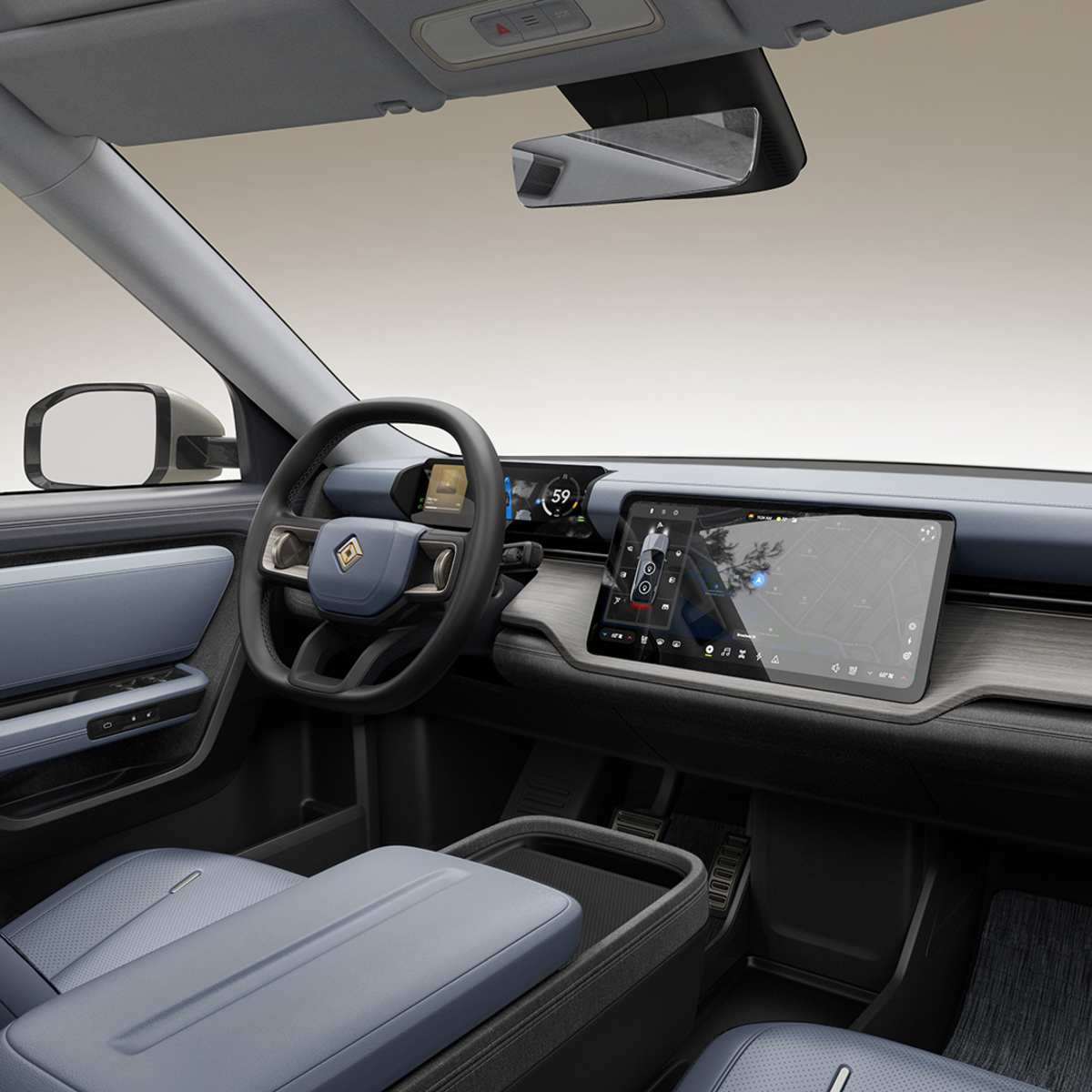
Rivian R2
"And now we're going to turn our attention to a vehicle that some of you may not have heard a lot about yet, but you will. The Rivian R2, the smaller addition to the Rivian R1 line, I should say the first of two smaller additions to the Rivian R1 line since there is going to be an R3 even smaller."
The Rivian R2 is a smaller, cheaper Rivian electric SUV than the R1 models. The big question is whether it can help Rivian sell more cars and make the business work.
Rivian R2 is the smaller, more affordable SUV in Rivian’s lineup, positioned below the R1 line. The key idea is that it’s meant to broaden Rivian’s market—similar to how Tesla’s Model 3 helped Tesla scale volume and profitability.

Tesla Model 3
"...ill the more affordable R2 do for Rivian with the Model 3 did for Tesla? In other words, make it profitable..."
The Tesla Model 3 is an all-electric car that runs on a battery instead of gasoline. It’s one of Tesla’s more mainstream, lower-cost models. The podcast mentions it as an example of how an EV can become profitable and widely sold.
The Tesla Model 3 is an electric sedan designed to be one of the more affordable ways to buy into Tesla’s EV lineup. It’s significant because it helped scale EV production and profitability for the brand. The podcast references it in the context of how a “more affordable” future model could follow a similar path to success.
make it profitable
"Will the more affordable R2 do for Rivian with the Model 3 did for Tesla? In other words, make it profitable."
This is the business goal of scaling sales and margins so the automaker can earn profit. The host frames it as a “Model 3 effect” for Rivian—using a lower-priced model to increase volume and improve financial performance.
Rivian R3
"I think, you know, Rivian is looking to make the R2 and eventually the smaller R3 [2687.3s] into their versions of the Model Y and the Model 3."
The Rivian R3 is mentioned as a smaller future model that Rivian plans alongside the R2. The host’s point is that Rivian is building a multi-model strategy, with R2 and eventually R3 aimed at mainstream crossover buyers.

Tesla Model Y
"...ntually the smaller R3 into their versions of the Model Y and the Model 3. They are looking to make sure th..."
The Tesla Model Y is an all-electric SUV. It’s designed to be a practical size for everyday driving. The podcast mentions it as part of Tesla’s plan to offer multiple EV sizes.
The Tesla Model Y is an electric compact SUV built on Tesla’s EV platform strategy, positioned between smaller and larger models. It’s discussed because it’s part of Tesla’s broader plan to expand their lineup with different sizes while keeping manufacturing efficient. In the podcast, it’s referenced alongside the Model 3 as part of that scaling approach.
cross shopping
"They are looking to make sure that this vehicle is accessible and, you know, [2700.6s] people are cross shopping it with and everything in that class, not just being [2706.2s] like, I want an electric car."
“Cross shopping” means you’re looking at several different cars before deciding. The host is saying Rivian wants the R2 to be one of the cars people compare against other mainstream options.
“Cross shopping” means comparing multiple competing models in the same buying decision, rather than shopping only within one brand or one powertrain type. Here, the host emphasizes that Rivian R2 buyers may be considering it alongside other cars in the same class, not just choosing an electric vehicle for its own sake.

Rivian R1S
"It is 15 inches shorter in length than an R1S and much more garageable, way [2731.7s] garageable and honestly, I was looking at the dimensions and it is very close [2737.7s] in size to a RAV4."
The Rivian R1S is a bigger Rivian electric SUV. The host is saying the R2 will be noticeably shorter than the R1S, so it should be easier to park and fit in a garage.
The Rivian R1S is Rivian’s larger electric SUV, and the host uses it as a size reference point for the smaller R2. The key detail here is that the R2 is described as 15 inches shorter than the R1S, which affects parking and everyday usability.

RAV4
"It is 15 inches shorter in length than an R1S and much more garageable, way [2731.7s] garageable and honestly, I was looking at the dimensions and it is very close [2737.7s] in size to a RAV4."
The Toyota RAV4 is a very common compact crossover. The host is using it as a reference point to say the Rivian R2 should be about the same size, so it should feel familiar and easier to live with.
The Toyota RAV4 is used here as a size benchmark for the Rivian R2. The host says the R2 is very close in size to a RAV4, which helps listeners understand where it lands in everyday dimensions and parking/garage fit.
compact crossover
"Right. [2749.0s] I would never call, do they technically call these compact crossover? [2753.4s] The term doesn't mean as much as you used to since compacts are often what [2757.9s] government says mid-size should be."
A “compact crossover” is a smaller SUV-shaped car that’s built more like a regular car than a truck. The host is saying the labels can be confusing now because what counts as “compact” has changed over the years.
“Compact crossover” is a vehicle category describing a smaller SUV-style car built on a car-like platform (crossover) rather than a traditional body-on-frame truck layout. The host notes that the meaning of “compact” has drifted over time because government sizing classifications and market sizes don’t always match what shoppers think of as compact.
center of gravity
"So it has a low center of gravity, but also that helps create just so much more interior space."
Center of gravity is basically where the car’s weight “balances.” If it’s lower, the car usually feels steadier when you turn or change direction quickly.
Center of gravity is the point where a vehicle’s weight effectively acts. A lower center of gravity generally improves handling by reducing body roll and making the car feel more stable during turns and quick maneuvers.
leg room
"I believe it has like 40 inches of leg room for the rear passengers, which is pretty respectable."
Leg room is the space your legs have in the seat area. More leg room makes it easier to sit comfortably, especially in the back seat.
Leg room is the available space for a passenger’s legs, typically measured from the seat to the front of the cabin. More leg room usually means easier comfort on longer trips, especially for rear passengers.
cubic feet of storage
"And then with the seats up, I believe it's like 28 cubic feet of storage."
Cubic feet of storage is a way to measure how much stuff the cargo area can hold. It’s like the “volume” of the trunk or storage space.
Cubic feet of storage is a volume measurement used to describe how much cargo space a vehicle provides. It helps compare cargo capacity across vehicles even when the shapes of the trunks or cargo areas differ.
40-20-40 split
"But then the seats can, the rear seat can fold down in a 40-20-40 split."
A 40-20-40 split means the back seat can fold in sections. That way you can carry bulky items while still keeping some seats available for passengers.
A 40-20-40 split means the rear seat is divided into three sections: 40% left, 20% center, and 40% right. This lets you fold part of the seat down to balance carrying cargo and keeping some rear seating available.
pass through
"if you're an outdoorsy person, you like to ski, surf, it has that like pass through that they think that they're buyers."
A pass-through is a gap/opening that lets you slide long gear from the back storage area into the cabin. It helps you carry things like skis or long boards more easily.
A pass-through is an opening between the passenger area and the cargo area, allowing long items (like skis or boards) to be carried through the cabin. It’s a practical feature for outdoor gear without needing to fully remove or awkwardly position items.
Rivian OS 2.0
"And they're running Rivian OS 2.0, which the engineers at Rivian told me that they built from the ground up for the R2. [2947.9s] So because this is a very what they refer to as I think they call it software driven vehicle,"
Rivian OS 2.0 is the software that powers the screens and controls in the Rivian R2. The host is saying it was designed specifically for the R2, so the interface and features are meant to fit the car well.
Rivian OS 2.0 is the software platform running the infotainment and vehicle interface on the Rivian R2. The host says Rivian built it from the ground up specifically for the R2, which implies the user experience and features are tailored to this model rather than just ported over.
software driven vehicle
"So because this is a very what they refer to as I think they call it software driven vehicle, [2955.8s] we call them software defined. [2957.1s] Right."
A “software driven vehicle” means the car’s features and how it feels to use—like menus, settings, and some behaviors—are controlled mainly by software. The host is saying Rivian designed the R2 so its overall experience lines up with the R1S.
A “software driven vehicle” (often described as “software-defined”) is a car where key functions and the user experience are heavily controlled by software rather than fixed hardware. In this segment, the host connects that idea to Rivian’s goal of matching the R1S experience in the R2 through software and system design.
Halo wheels
"[2993.9s] They're called Halo wheels. [2995.2s] And so now Rivian is not going to go back from their statement of like they don't want to do buttons. ... [3018.8s] So they have these two Halo wheels on the steering wheel that they're these pretty big moving wheels that you can sort of like push in, push out, push to the right, to the left to sort of toggle through a very small menu."
Halo wheels are physical knobs/dials on the steering wheel. They let you control things like the volume and climate settings without tapping the touchscreen.
“Halo wheels” are Rivian’s physical, steering-wheel-mounted control dials that let you navigate a small on-screen menu without using the main touchscreen. In this segment, they’re used to adjust climate control (temperature and fan speed) and audio volume via push/toggle movements.
climate control
"And two of those big things are temperature, climate control and the volume. [3018.8s] So they have these two Halo wheels on the steering wheel... ... [3036.5s] They also allow you to like change the temperature and also change the fan speed."
Climate control is what keeps the cabin comfortable—heat in cold weather and cooling in hot weather. In this case, the controls can change the temperature and how strong the fan blows.
Climate control is the system that manages cabin heating and cooling to maintain a chosen temperature. Here, the hosts say Halo wheels can directly adjust temperature and fan speed, which are key climate-control functions.
software, inspired or driven aspect
"Now, you know, Rivian's like, we there's so much we can do with this, you know, we could always add more capability in that. [3049.1s] That's where the software, you know, inspired or driven aspect comes in. [3053.0s] Yes."
They’re saying Rivian is using software to add or improve features. The idea is that you can do more with software even while the car’s hardware gets simpler.
The hosts are pointing to a design philosophy where software enables or extends vehicle features, rather than relying only on physical hardware. In context, they connect that idea to Rivian’s ability to add capability while simplifying the underlying tech.
wiring harnesses
"[3074.8s] Like, and when I say that, I'm talking about wiring harnesses. [3077.8s] I'm talking about the the the the boards, actual hardware of the vehicle. ... [3087.0s] They showed us literally they compared the R1 Gen 2 wiring harness versus the R2s."
A wiring harness is the car’s organized bundle of wires that connects all the electronics. The point here is that Rivian made the R2’s wiring simpler/smaller than the previous generation.
Wiring harnesses are bundled sets of electrical wires that connect the car’s modules (like computers, sensors, and actuators) in an organized way. The segment highlights that Rivian is reducing and simplifying these harnesses in the R2 compared with the R1 Gen 2, which can lower weight, cost, and assembly complexity.
mass production
"it’s going to take some time for them to really get production started at any sort of real mass production. ... The real big mass production will happen when they open their plant down in Georgia."
Mass production is when a manufacturer ramps up to build large numbers of vehicles efficiently, usually using dedicated factories and assembly processes. In this segment, the hosts connect Rivian’s production ramp to when the R2 can be sold at scale.

Hyundai Palisade
"...r, like much closer to a four runner than maybe a palisade. We'll say that."
The Hyundai Palisade is a family SUV with three rows of seats. It’s made to carry more people and gear than a typical two-row SUV. The podcast brings it up mainly to talk about how big it is.
The Hyundai Palisade is a three-row midsize SUV aimed at families who want space and comfort. It’s often discussed in the context of how it compares in size and practicality to other large family SUVs. In the podcast, it’s mentioned as a reference point for sizing—described as closer to a four-row/utility type of vehicle than a smaller alternative.
wide crossover market
"They’re aiming it at the wide crossover market, not necessarily the EV market. Yes."
They’re saying Rivian is aiming the R2 at people who already shop for regular crossovers, not just people who specifically want an electric vehicle.
This phrase describes Rivian’s target customer segment: people shopping for mainstream crossovers rather than only EV buyers. It’s a positioning/market strategy point tied to how the R2 is marketed and tuned.
semi-active dampers
"I drove the, like I said, the performance model, which has semi-active dampers, which none of the other trims get. So we haven't driven one with just a passive suspension quite yet."
Semi-active dampers are shocks that can change how stiff they feel while you drive. That helps the car stay comfortable over rough pavement but still feel more controlled when you turn or hit uneven roads.
Semi-active dampers are shock absorbers whose damping force can be adjusted in real time based on driving conditions. Compared with a passive setup (fixed damping), they can better balance ride comfort with control when the road gets bumpy or curvy.
passive suspension
"So we haven't driven one with just a passive suspension quite yet. We will eventually. But it handled itself really well on the highway."
Passive suspension uses fixed shock absorber settings, so the damping doesn’t change dynamically as conditions change. In contrast to semi-active dampers, it can’t fine-tune ride/handling balance on the fly.
drive modes
"They have a bunch of different drive modes. They have like an all-purpose mode, which in my mind kept the steering like really nice and light and very easy to drive."
Drive modes are different “personalities” you can pick for the car. They can change how heavy the steering feels, how the car responds to your pedal, and sometimes how the suspension acts.
Drive modes are selectable settings that change how the vehicle behaves—often affecting steering weight, throttle response, and suspension behavior. In EVs, they can also influence how aggressively the powertrain responds to your inputs.
656 horsepower
"Connected feel. A little bit of a connected feel, especially because this vehicle had 656 horsepower, which is a lot. And you can tap into that by using their sport mode..."
Horsepower is a way to describe how much power the vehicle can produce. 656 horsepower is a lot, and the host is saying it helps the car feel lively and responsive as you drive.
Horsepower is a measure of engine (or motor) power output, and 656 horsepower indicates a very high-performance level for an electric SUV. The host connects this power to the car’s “connected feel,” implying strong acceleration and responsiveness.
sport mode
"And you can tap into that by using their sport mode, which really dials in the steering even more and stiffens the suspension a little bit to kind of allow you to be far more spirited on a curvy road than you would expect."
Sport mode is the car’s “go faster” setting. It usually makes steering and power delivery feel more responsive, and in this case it also makes the suspension feel firmer for more confident cornering.
Sport mode is a drive setting that typically sharpens steering response and makes the car feel more eager to accelerate. Here, the host says it also stiffens the suspension, aiming for a more spirited feel on curvy roads.
88 kilowatt hour battery pack
"They're saying 330 miles of range out of this 88 kilowatt hour battery pack, which is, I think, pretty respectable."
The 88 kilowatt hour battery pack is how much energy the EV stores. More stored energy usually means you can drive farther before needing to recharge.
An 88 kilowatt hour (kWh) battery pack is the size of the electric vehicle’s energy storage. Larger kWh generally means more potential range, and the host pairs it with the claimed 330-mile range figure.
330 miles of range
"They're saying 330 miles of range out of this 88 kilowatt hour battery pack, which is, I think, pretty respectable."
Range is how far the EV can go on one full charge. The host is saying the stated 330 miles is a good number for real-world expectations.
Range is how far an EV can travel on a full charge under a standardized test cycle. The host is calling the stated 330-mile figure “pretty respectable,” especially given the 88 kWh battery pack.
heated and ventilated seats
"And it comes incredibly well loaded, like heated and ventilated seats. A few other fun little features, I should say, is that you get a rear window that rolls down."
Heated seats warm you up, and ventilated seats blow air to help cool you down. It’s a convenience feature that makes the car more comfortable in both hot and cold weather.
Heated seats warm the cabin quickly in cold weather, while ventilated seats use fans to move air and help cool you down. Together, they’re a comfort feature that can reduce temperature swings across seasons.
BFG KO2s
"So they actually have custom-made BFG KO2s that you can get for the R2."
BFG KO2s are a specific brand/model of all-terrain tires. The host is saying the R2 can be equipped with KO2 tires made to fit it, which helps for rougher trails.
BFG KO2s refers to BFGoodrich’s KO2 all-terrain tire line, known for aggressive tread and off-road capability. The host says Rivian offers custom-made versions of these tires for the R2.
rear-drive setup
"They come standard with a rear-drive setup with one of them has... They both have 350 horsepower..."
Rear-drive means the power goes to the back wheels. It can be simpler and efficient, but it may not grip as well as all-wheel drive on snow or wet roads.
A rear-drive setup means the vehicle’s drive power is sent to the rear axle rather than all four wheels. Compared with all-wheel drive, it can be simpler and sometimes more efficient, but it may offer less traction advantage in slippery conditions.
kWh
"one of them has the same 88 kWh battery pack for 345 miles of range."
kWh is a way to measure how much energy is in the EV’s battery. More kWh usually means you can go farther, but it’s not the only factor.
kWh (kilowatt-hours) is a unit of energy that describes how much electricity is stored in an EV’s battery pack. Higher kWh generally means more potential energy for driving, though real-world range also depends on efficiency and driving conditions.
sticker price
"because of that sticker price. But to get an R2 that is smaller, so you're diving into that crucial segment, you get it at lower price points."
“Sticker price” means the price printed on the car when you look at it for sale. It’s the starting number before any deals or discounts.
“Sticker price” is the manufacturer’s listed retail price on the vehicle’s window sticker (before discounts, incentives, or negotiation). In this segment, it’s used to explain why the current Rivian pricing limited how many buyers were interested.
crucial segment
"But to get an R2 that is smaller, so you're diving into that crucial segment, you get it at lower price points."
“Crucial segment” just means a key group of buyers or a category of cars. They’re saying the R2 is aimed at the smaller, more affordable EV crowd.
“Crucial segment” refers to a specific slice of the market—here, the smaller, lower-priced EV category. The host’s point is that Rivian’s strategy with the R2 is to target that market segment with a lower entry price to broaden demand.

Rivian R1T
"...ll, not first time, maybe second. Lengthwise, the R1T, we may call it a mid-sized truck, but if you loo..."
The Rivian R1T is an electric pickup truck. It’s meant to be useful like a regular truck, but powered by electricity. The podcast talks about how big it is compared to what people expect from a pickup.
The Rivian R1T is an electric pickup truck designed to blend EV efficiency with truck utility. It’s discussed because it’s positioned as a capable “mid-sized” truck while still offering the space and practicality people expect from a pickup. In the podcast, it’s referenced by its length and overall size category.
adaptive headlights
"It does. I will say it also gets the matrix, the new matrix headlights that adapt the adaptive headlights."
Adaptive headlights adjust the headlight beam as you drive. That can help you see better when turning or when conditions change.
Adaptive headlights are headlamp systems that change their aim and/or beam pattern based on driving conditions. The goal is better visibility around corners and during different speeds, rather than a fixed beam.
matrix headlights
"I will say it also gets the matrix, the new matrix headlights that adapt the adaptive headlights."
Matrix headlights are high-tech headlights made of lots of tiny light sections. They can adjust which parts are on so you can see farther without blinding other drivers.
Matrix headlights are a type of advanced headlamp system that uses many individually controlled light elements. By selectively turning segments on/off, the car can shape the beam for the road and reduce glare to other drivers.
Rivian R1
"Like I said, the R2 tops out at $60,000, and R1 starts at $76,000. So there's a big sizable gap there."
The Rivian R1 is Rivian’s earlier, more expensive electric vehicle. In this discussion, it’s mainly mentioned to show that the newer R2 costs less.
Rivian R1 refers to Rivian’s earlier, higher-priced EV platform (the larger models in the lineup). Here it’s used as a pricing comparison point: R1 starts around $76,000, highlighting how the Rivian R2 is meant to be a lower-cost entry.
lane splitting
"I have been annoyed recently with what seems like an uptick in what is called lane splitting,"
Lane splitting is when a motorcycle moves between lanes when cars are stuck in traffic. It’s allowed in some areas and not in others, and it can be controversial because it changes how cars and bikes share the road.
Lane splitting is when a motorcycle rider drives between lanes of slow or stopped traffic. It’s a practice that’s legal in some places and restricted or illegal in others, and it can affect how safely riders and drivers share space.
white line
"And if you're not familiar with that term, it's basically a motorcycle on a four-lane highway [3728.4s] where you've got two lanes going in each direction, someone on a motorcycle using the white line, [3734.8s] preferably not a yellow line, to drive past you."
The white line is the painted line on the road that marks lanes. Here, the rider is described as staying near that line while moving between cars.
The white line refers to the lane-marking color used to separate lanes. In the context of lane splitting, the host specifically mentions riding along the white line between vehicles, implying a more controlled path compared with random weaving.
Request an Explanation
Heard something you'd like explained? We'll add it to this episode.
Sign in to request explanations for terms you heard.
Want to learn more?
Browse our glossary for plain-English explanations of automotive terms, jargon, and concepts.
Help improve this episode
See something that's not quite right? Our annotations are AI-generated and can sometimes miss the mark. Click the flag icon on any annotation to suggest a correction.