
We Recently Tested the 2026 Honda Prelude, Kia K4 Hatchback & Mazda CX-30
About this episode
MotorWeek rounds up fresh tests of the 2026 Honda Prelude, Kia K4 hatchback, and Mazda CX-30, starting with how the K4 hatchback keeps the sedan’s look but “chopped a foot of length off the rear.” The Prelude gets attention for its hybrid layout, simulated “eight fake gears,” and GT-mode behavior, while the CX-30 leans “old school” with a six-speed automatic and a 2.5-liter turbo. The hosts also debate touchscreen/infotainment ergonomics and the long-term risks of software-defined cars.

Kia K4 hatchback
"we're going to start with Brian Robinson and we're going to talk about the 2026 Kia K4 hatchback. It closely followed the K4 compact sedan. Brian, does it have a lot more than just a fifth door or not?"
This is Kia’s K4 hatchback version. It’s basically the same model family as the K4 sedan, but with a hatch that opens at the back, and the rear is shorter—so it looks and packages differently.
The Kia K4 hatchback is a compact hatchback variant of Kia’s K4 lineup. In this episode, they highlight how it keeps the same overall design theme as the K4 sedan but changes the body shape by shortening the rear overhang and adding a hatchback “fifth door.”
fifth door
"Brian, does it have a lot more than just a fifth door or not? [84.8s] Yes, it has a lot more than just a fifth door."
A “fifth door” just means the back hatch on a hatchback. Instead of only opening the trunk, the whole rear door opens like a door.
“Fifth door” is a common enthusiast term for the rear hatch on a hatchback (or wagon). It’s called the “fifth” door because the car typically has four side doors plus the rear hatch that swings open.
B pillar
"Now we have a hatchback version that looks even cooler, has the same kind of muscular stance, everything like B pillar forward is exactly the same, but they chopped a foot of length off the rear."
The B-pillar is the metal post in the middle of the car, between the front and back doors. Mentioning it is a way of talking about where the doors and cabin are positioned.
The B-pillar is the vertical support structure between the front and rear doors on a car. When the hosts say the K4 hatchback is “B pillar forward” the same as the sedan, they’re describing how the cabin and door-to-door proportions are carried over.
floating roof
"And extended the roof line, kind of made a floating roof and put a hatch in the back,"
A “floating roof” is a design trick that makes the roof look like it’s visually separated from the rest of the car. It’s usually done with trim and window/pillar styling to make the car look more sleek.
A “floating roof” is a styling cue where the roof visually appears to be separated from the body, often using darker trim, window graphics, or pillar shaping. It’s meant to make the car look sleeker and more coupe-like, even when it’s a hatchback.
driver's display
"Inside, there's tons of tech and very easy to use with the possible exception of, so 141.9s they combine the driver's display with the central touchscreen into one big display."
The “driver’s display” is the instrument cluster screen that shows key driving information like speed, navigation prompts, and vehicle status. In this Prelude discussion, it’s combined with the central touchscreen into one continuous “big display,” changing how information is laid out and read.
central touchscreen
"they combine the driver's display with the central touchscreen into one big display. So it goes almost two thirds of the way across almost."
The “central touchscreen” is the main screen in the middle of the dashboard. They’re saying the car uses it as part of a big combined display, but the climate controls are still located separately.
A “central touchscreen” is the main infotainment screen mounted in the center of the dashboard. The hosts note that, in this car, it’s paired with the driver’s display to create a wide, continuous display, while the climate controls are placed in between.
climate control
"But in between those is where they move the climate control, which functionally, it works pretty well because they're easy to reach, but they're almost always blocked by the steering wheel."
Climate control is the car’s heating and air-conditioning system. They’re pointing out that the buttons/controls are placed in a tricky spot and may be partially blocked by the steering wheel.
Climate control refers to the system that manages cabin heating, ventilation, and air conditioning. In this segment, the hosts discuss ergonomics—specifically that the climate controls are positioned between the two screens and can be blocked or made harder to reach by the steering wheel.
rear seat legroom
"Rear seat legroom is the same as the sedan. You just have a little more headroom because they raise the roof a little bit there."
Rear seat legroom is how much room your legs have in the back seat. They’re saying the back seat has the same leg space as the sedan, but the taller roof gives you a bit more headroom.
Rear seat legroom is the space for passengers’ legs in the back seats, typically measured from the seat to the front of the rear space. The hosts say it’s the same as the sedan, but with slightly more headroom due to the raised roofline.
headroom
"You just have a little more headroom because they raise the roof a little bit there. And it is comfortable back there."
Headroom is the space above your head when you’re sitting. They’re saying the hatchback version raises the roof a bit, so taller passengers should feel less cramped.
Headroom is the vertical space between a person’s head and the roof. The hosts connect it to packaging: raising the roofline for the hatchback improves headroom even if legroom stays similar to the sedan.
22 cubic feet of cargo
"So it's a little tight back there with wise, but plenty of legroom, 22 cubic feet of cargo and back almost twice what you got in the trunk of the sedan."
Cargo volume is how much stuff the car can hold in the back. They’re quoting the hatch’s cargo space in cubic feet and comparing it to the sedan’s trunk, plus what happens when you fold the back seats.
Cargo volume is the amount of space available for luggage, measured in cubic feet. The hosts give a specific figure—22 cubic feet—then compare it to the sedan’s trunk and discuss how much more space you get with the rear seatbacks folded.
seatbacks
"and back almost twice what you got in the trunk of the sedan. 205.5s 59.3 with the seatbacks."
Seatbacks are the parts of the rear seats that you lean against. When they fold down, you usually get more room for luggage.
Seatbacks are the back portions of the rear seats that can fold forward to increase cargo space. The segment references cargo measurements “with the seatbacks,” implying the difference between using the seats upright versus folded down.
turbo engine
"And in addition to getting the turbo engine, 1.6 liter turbo at 190 horsepower versus the naturally aspirated two liter that's standard at 147 horsepower."
A turbo engine uses a device that squeezes more air into the engine. More air usually means more power, even if the engine is smaller.
A turbo engine uses a turbocharger to force more air into the cylinders. That lets the engine make more power from a smaller displacement, often improving acceleration compared with a naturally aspirated setup.
naturally aspirated
"And in addition to getting the turbo engine, 1.6 liter turbo at 190 horsepower versus the naturally aspirated two liter that's standard at 147 horsepower."
Naturally aspirated means the engine pulls in air without a turbo. It can feel different than a turbo engine, especially when you accelerate.
Naturally aspirated engines rely on atmospheric pressure to draw air into the cylinders, rather than using a turbocharger or supercharger. They typically respond differently and can feel less forceful at low speeds than turbocharged engines, though they can be simpler mechanically.
IVT
"You get bigger brakes and you get an eight speed automatic transmission instead of the CVT or IVT as Keel likes to call it."
IVT is another way of referring to the same general “no fixed gears” transmission idea. It changes ratios smoothly instead of shifting like a normal automatic.
IVT is being used here as an alternate name for the same type of continuously variable transmission concept. The key idea is that the transmission uses a continuously changing ratio rather than fixed gears.
zero 60
"So I mean, you could say I don't know. We got a 6.8 on the zero 60, which isn't which isn't thrilling, but it's certainly more than adequate."
“Zero 60” is how fast the car goes from 0 to 60 mph. Lower time generally means quicker acceleration.
“Zero 60” refers to how quickly a car accelerates from 0 to 60 mph. It’s a common performance metric that reflects traction, gearing, and power delivery.
cone course
"Yeah, but you could speak more to handling. I mean, yeah, yeah, that's the that's probably what's more impressive to me about it. Taking it through the cone course."
A cone course is a track-like path made with cones. It helps you see how the car handles tight turns and quick changes in direction.
A cone course is a controlled driving layout using cones to create a slalom or tight turning path. It’s used to evaluate handling traits like steering response, balance, and how the car behaves when you change direction quickly.
role
"Like just to be blunt about it, there is going to be more role than something that is truly sport tune."
Here, “role” means the car leans over in a turn. If it leans a lot, it can feel less stable when you drive hard through corners.
In this context, “role” is shorthand for body roll—when the car’s body leans to the outside of a turn due to suspension and weight transfer. More body roll usually means less composed handling in aggressive cornering.
sport tune
"Like just to be blunt about it, there is going to be more role than something that is truly sport tune. But with the GT line, you do get that sportier suspension."
A “sport tune” means the car’s suspension is set up to handle more aggressively. It’s meant to feel tighter and less wobbly when you take corners.
A “sport tune” refers to suspension and chassis calibration aimed at sharper handling—often firmer springs/dampers and different steering/sway-bar behavior. The goal is to reduce body roll and make the car feel more responsive during cornering.
GT line
"Again, we had the fully loaded GT line turbo. They actually there is no base LX from the sedan."
“GT line” is basically a higher-trim package that usually adds sportier looks and extra features. In this case, they’re also talking about it being a turbo version.
“GT line” is a trim/appearance-and-equipment designation used by some manufacturers to indicate a sportier package. It often bundles styling cues and upgraded features, and in this segment it’s specifically paired with a turbo powertrain.
LX
"They actually there is no base LX from the sedan. That didn't carry over."
“LX” is usually the name for a lower, more basic trim level. They’re saying the cheaper LX version doesn’t exist in the sedan lineup, so you start with a higher trim.
“LX” is a common model-trim label that typically refers to a base or entry-level equipment level in a model lineup. The hosts say there’s no base LX from the sedan, meaning the lineup starts higher up in price and features.

Honda Civic
"...'re going to compete against, say, the likes of a civic hatchback, you have to beat them out in some way."
The Honda Civic is a common, everyday compact car made by Honda. It’s sold in different versions, including a hatchback. The podcast brings it up because other cars are trying to compete with it in the same size and purpose category.
The Honda Civic is a mainstream compact car that’s offered in multiple body styles, including hatchbacks. In the podcast, it’s referenced as a benchmark competitor, meaning other cars are expected to match or beat how it drives, fits, or performs for its class. That’s why it comes up frequently in discussions about new models and market positioning.
benchmark
"And because the Civic is such a good performer, that's a benchmark too. And if anything Kea and Hyundai like is going after somebody else's benchmark."
A “benchmark” is the car (or standard) everyone compares against. In this case, they’re saying the Civic sets the bar for what a compact hatchback should be like.
In car reviews, a “benchmark” is the reference vehicle or standard that defines what “good” looks like for a category. Here, the Civic hatchback is treated as the target that competitors must match or surpass.
powertrain choice (two powertrains in one model lineup)
"[530.4s] And nobody else is really doing something like this, like having two powertrains, [537.0s] like a quote unquote performance powertrain in a performance model for an entry level compact"
They’re talking about how this car can be bought with two different “types” of powertrains. One is meant to be more efficient, and the other is meant to feel more sporty, and they think that setup is rare for this price class.
The hosts are highlighting a strategy where a single entry-level compact model offers two distinct powertrain options—one aimed at efficiency and one positioned as more performance-oriented. They frame it as unusual in the market because most competitors typically offer either one “main” powertrain or separate trims without a clear efficiency-vs-performance split.
hybrid
"The hatchback version is you get one powertrain now. There is no option for a quote unquote performance powertrain. In their minds, the hybrid is the performance powertrain, but for those who might want"
A hybrid car uses two kinds of power, usually gas and electricity. The electric part can help the car feel quicker while also improving fuel economy.
A hybrid powertrain uses more than one energy source—typically a gasoline engine plus an electric motor/battery. In many modern cars, the hybrid system can deliver strong acceleration and efficiency, which is why some people equate it with “performance,” even if it isn’t a traditional high-output engine.
displacement
"How do you feel about a one and a half to 1.6 or whatever? They're pretty common these days. Yeah, I mean, as someone who daily drives a V8, I don't know if I'm qualified to answer this. I'll let someone know. Yeah, it's got less than a third of your displacement."
Engine displacement is basically how big the engine is, measured in liters. Smaller engines can still be powerful, especially with turbo or hybrid help, but people worry about how long they’ll last.
Displacement is the total volume swept by an engine’s cylinders, usually measured in liters (like 1.6L or 1.5L). Smaller displacement engines can still feel strong when paired with turbocharging or hybrid systems, but the discussion here is about whether smaller displacement increases durability risk.
peak efficiency
"So they're tuned to operate at their peak efficiency at all times, but they do get noisy and you do tell they're working usually compared to some other engines."
Peak efficiency is the operating point where an engine or powertrain converts energy into motion with the least losses—often at specific loads and speeds. The hosts suggest these small engines are calibrated to run near that best-efficiency zone, which can affect how they sound and feel in everyday driving.
fuel economy
"But the 1.6 does give you, let's say, if that was a two-liter turbo, your fuel economy would be substantially worse probably, just because displacement generally is aligned with fuel economy anyway."
Fuel economy is how far the car can go on a gallon (or a tank) of fuel. Bigger engines often use more fuel, so they usually get worse fuel economy than smaller ones.
Fuel economy is how efficiently a car turns fuel into distance—usually measured as miles per gallon (MPG) or liters per 100 km. In general, larger engines (more displacement) tend to consume more fuel, especially when comparing naturally aspirated engines or when boost levels aren’t identical.
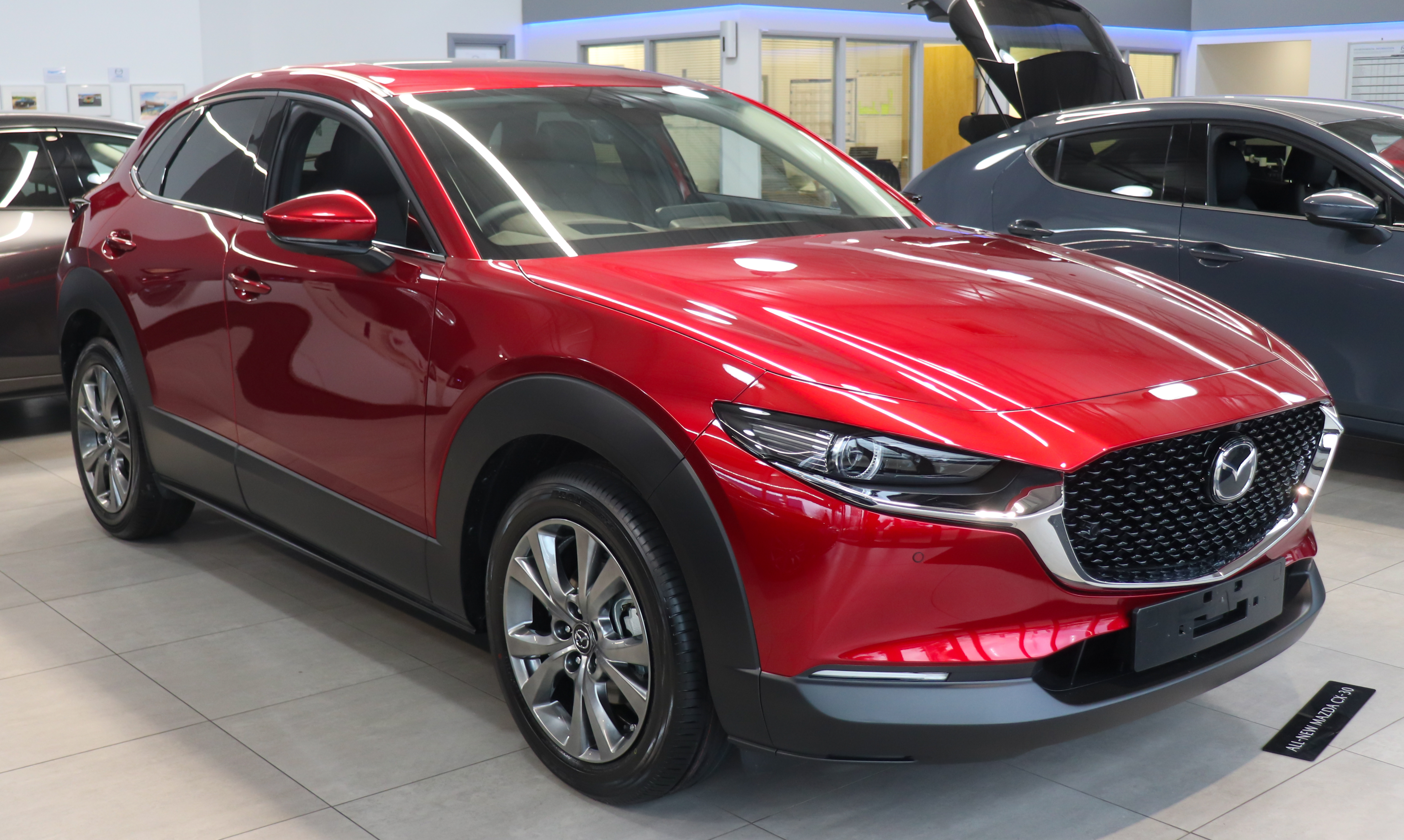
Mazda CX-30
"And that was the Mazda CX-30... It was new for 2020... Yeah, I mean, so the CX-30 is considered a subcompact crossover. It slides underneath the CX-5 in the lineup, or the CX-50..."
The Mazda CX-30 is a small SUV-style car (a crossover) that’s closely related in concept to the Mazda-3. It’s meant to be smaller than the CX-5, but still gives you the higher, SUV-like feel.
The Mazda CX-30 is a subcompact crossover built on the same general idea as a hatchback-based Mazda-3, but with higher ride height and SUV-style packaging. In the Mazda lineup, it slots below the CX-5 (and CX-50), which is why it’s often described as a crossover version of the Mazda-3.

Mazda Cx3
"It was new for 2020. It was an able successor to the CX-3. And at the time, we questioned why they were adding a zero to the numbering name."
The Mazda CX-3 is a small SUV crossover. The podcast says it was introduced for 2020 and replaced an earlier version of the CX-3. It also points out that the name changed slightly, which is why it stood out.
The Mazda CX-3 is a subcompact crossover SUV, and the podcast notes it was new for 2020 and served as a successor to the previous CX-3. It also mentions the unusual naming decision of adding a “zero,” which highlights how Mazda branded the update. It’s discussed because the CX-3 is part of the lineup history and model evolution.
subcompact crossover
"Yeah, I mean, so the CX-30 is considered a subcompact crossover. It slides underneath the CX-5 in the lineup..."
A subcompact crossover is a small SUV-style car. It’s usually built like a regular car, but it sits higher and is easier to get in and out of than a typical sedan or hatchback.
A subcompact crossover is a small SUV-like vehicle that typically uses a car-based platform (not a body-on-frame truck layout) and is sized below mainstream compact crossovers. The “crossover” part usually means it blends passenger-car driving dynamics with SUV seating height and packaging.

Mazda Cx50
"Yeah, I mean, so the CX-30 is considered a subcompact crossover. It slides underneath the CX-5 in the lineup, or the CX-50, because there's- It's amazing they still do both of them, but-"
The Mazda CX-50 is a compact SUV crossover. The podcast explains it’s placed above the smaller CX-30 in Mazda’s lineup. That means it’s meant to be a step up in size or features compared with the smaller model.
The Mazda CX-50 is a compact crossover SUV positioned above the CX-30 in Mazda’s lineup. The podcast notes that the CX-50 sits higher than the CX-30, which helps explain how Mazda spaces its models by size and capability. It’s discussed as part of understanding where each vehicle fits for buyers.

3 Mazda3
"The CX-30 lives on its own. And I guess in a way, you could kind of compare it to a crossover version of the Mazda-3, right? I mean, that's virtually what it is."
The Mazda 3 (also known as the Axela in some markets) is a compact car. The podcast says the CX-30 is like a crossover version of that same idea. So it’s a way to understand the CX-30’s size and purpose.
The “3 / Axela” refers to Mazda’s compact car line that the podcast compares to the CX-30 as a crossover-style version. The point is that the CX-30 is closely related in concept to the Mazda-3/Axela, meaning it shares the same general size and purpose. That comparison helps explain what kind of driving and packaging to expect.
2.5-liter turbo four
"It's a 2.5-liter turbo four, which has 227 horsepower, 310 pound-feet of torque, which I think is pretty respectable numbers..."
This means a 2.5-liter engine with four cylinders, and it’s boosted by a turbo. The turbo helps it feel punchier when you press the gas.
“2.5-liter turbo four” describes an engine with four cylinders (a “four”) and a total displacement of 2.5 liters, boosted by a turbocharger. The turbo helps the engine make stronger power and torque, especially when you accelerate.
turbocharger
"It's a 2.5-liter turbo four... which has 227 horsepower, 310 pound-feet of torque..."
A turbocharger is a system that helps the engine make more power. It uses the car’s exhaust to push extra air into the engine, so it feels stronger when you accelerate.
A turbocharger is a device that uses exhaust gases to spin a turbine, forcing more air into the engine. That extra air lets the engine burn more fuel and produce more power and torque than a non-turbo engine of similar size.

Honda Hrv
"which I think is pretty respectable numbers for that class of vehicle when you sort of start comparing it to, say, the Honda HR-V or the Corolla Cross. Or even the K4, where we're just talking about-"
The Honda HR-V is a small SUV crossover. It’s designed to be easy to drive and practical for daily life. The podcast mentions it because it’s a well-known option in the same general class as other small crossovers.
The Honda HR-V is a small crossover SUV built for everyday practicality with a compact footprint. In the podcast, it’s used as a comparison point within its class, alongside other small crossovers. That makes it relevant because it represents a common target for buyers shopping in this size and purpose category.

Toyota Corolla Cross
"...start comparing it to, say, the Honda HR-V or the Corolla Cross. Or even the K4, where we're just talking about-"
The Toyota Corolla Cross is a small SUV crossover. The podcast mentions it when comparing it to other similar-sized crossovers. It’s included because it’s a typical choice for people shopping in that category.
The Toyota Corolla Cross is a compact crossover SUV that’s often compared against other small crossovers in the same shopping category. In the podcast, it’s mentioned alongside vehicles like the Honda HR-V and the Kia K4, which signals it’s a common benchmark for buyers. That’s why it comes up—because it represents a mainstream option in this segment.
Zoom, zoom, zoom, zoom
"And also, just the way that Mazda likes to tune all of their vehicles with the phrase that I am forgetting at the moment... but it's that, you know- Zoom, zoom, zoom, zoom."
“Zoom-zoom” is Mazda’s slogan. It’s meant to describe a driving feel that’s fun and connected, like the car responds in an engaging way.
“Zoom-zoom” is Mazda’s marketing phrase tied to its driving philosophy. The idea is that the car should feel engaging and connected to the driver, not just move you from place to place.
hot hatch
"We're not talking about a sports car. This is not an MX-5 or an RX. It's not even a hot hatch."
A hot hatch is a sporty version of a hatchback. The hosts are saying the Mazda CX-30 isn’t trying to be that kind of performance car.
A hot hatch is a performance-focused hatchback, usually with a more powerful engine and sport-tuned suspension. The hosts use it as a comparison point to set expectations, saying the CX-30 isn’t that kind of car.
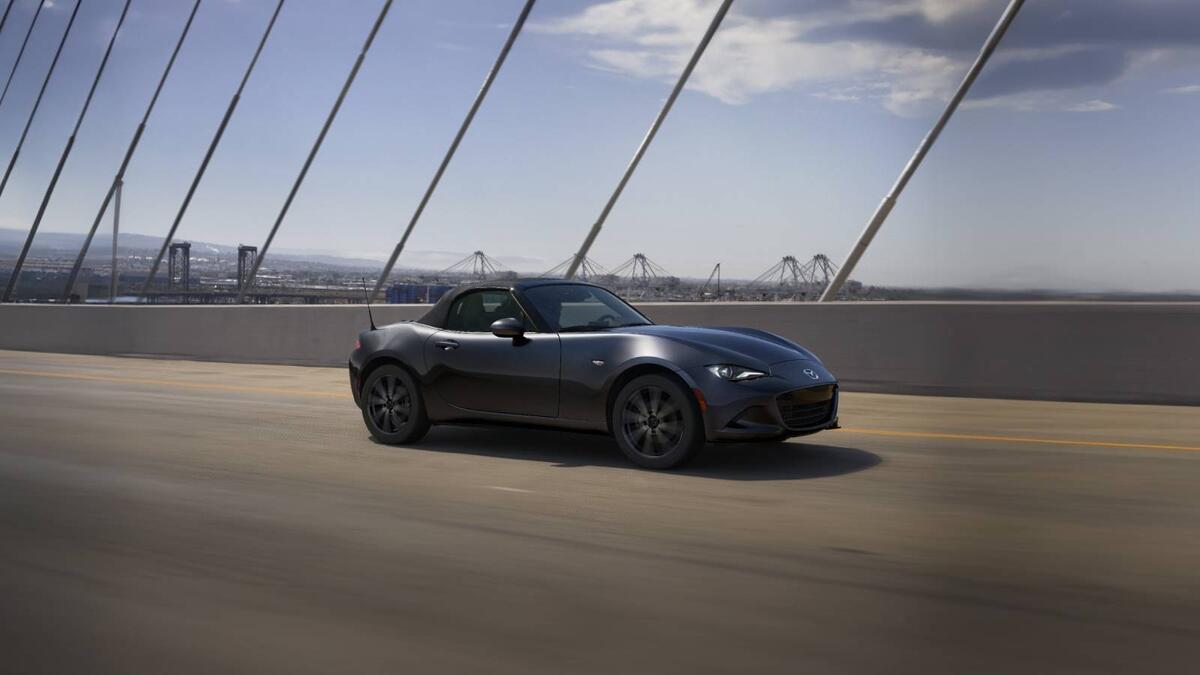
Mazda MX-5
"We're not talking about a sports car. This is not an MX-5 or an RX."
The Mazda MX-5 is a small, sporty roadster famous for being fun and easy to drive. They’re using it as a benchmark to say the CX-30 is sporty, but not a true roadster.
The Mazda MX-5 (Miata) is a lightweight, rear-wheel-drive roadster known for its nimble handling and driver-focused feel. The hosts mention it to clarify that the CX-30 isn’t aiming for that same sports-car experience.
six-speed automatic
"like a six-speed automatic, typically in their smaller offerings instead of going with a million gears or going with a CVT or something."
This is an automatic gearbox with six different gear ratios. It helps the engine work efficiently and can make the car feel smoother when you accelerate.
A six-speed automatic is an automatic transmission that uses six forward gear ratios to keep the engine in a good operating range. More gears can help the car feel smoother and stay efficient, but the driving feel also depends on how the transmission is programmed.
CVT
"instead of going with a million gears or going with a CVT or something. And then with this powertrain, with just that amount of performance..."
CVT means the car doesn’t use fixed gears like a normal automatic. Instead, it can smoothly change the “gear ratio” all the time, which can feel smooth but may feel a bit different to some drivers.
CVT stands for continuously variable transmission, which uses a belt-and-pulley system to provide an infinite range of gear ratios instead of fixed steps. It often prioritizes smoothness and efficiency, but some drivers dislike the way it can make engine revs feel less connected to speed.
BMW iDrive
"they got rid of the dial. And he's like, I like that dial. So I think the last remnant of the BMW iDrive has hit the dust, huh? It's one of those things where it, every time I get in a Mazda..."
BMW iDrive is BMW’s in-car screen/menu system that’s controlled with a central knob. The hosts are using it as an example of the “dial” style of controls versus more touchscreen-based setups.
BMW iDrive is BMW’s infotainment and control system, known for using a central controller (a dial/knob) to navigate menus. The hosts mention it as a reference point while discussing Mazda’s and the CX-5’s shift away from that kind of dial, framing it as “analog controls” versus touchscreen-first design.
analog controls
"But I think once you do, like I personally really like that dial. And I do appreciate Mazda's commitment to more like analog controls and things like that. Certainly means less smudges on the screen."
Analog controls are the physical buttons and knobs in the car. People like them because you can use them without staring at the screen, and they don’t get as many fingerprints as touchscreens.
Analog controls are physical switches, knobs, and dials used to operate functions like audio, climate, or navigation. Enthusiasts often prefer them because they can be used by touch without looking away from the road, and they tend to reduce smudges and glare compared with touchscreen-only interfaces.
car infotainment systems
"He publishes his updates on the global auto industry and he had a dissertation in the last issue about car infotainment systems. They came with a lot of promise, but also it faced a lot of buyer pushback and a lot of questions about their future."
Infotainment systems are the big screen(s) in modern cars that you use for music, maps, and phone features. They also control some car settings, instead of using lots of physical buttons.
Car infotainment systems are the in-dash screens and software that handle things like navigation, media, phone integration, and many vehicle settings. They often replace physical knobs and buttons with touch menus and digital controls.
infotainment screens
"You know, the infotainment screens and digital displays, they're very common in automakers now. Almost every car has one."
These are the main screens in the dashboard that you tap to control things like music and navigation. If the menus are slow or confusing, it can be annoying while driving.
Infotainment screens are the primary user interface for infotainment functions—media, navigation, and increasingly vehicle controls. Because they’re software-driven, the experience depends on the system’s responsiveness and menu design.
subscription services
"Also, some are prone to subscription services, which I think have gone over like a lead balloon."
Some car features are locked behind a monthly or yearly payment. Instead of paying once when you buy the car, you pay ongoing subscriptions to unlock certain functions.
Subscription services in cars are paid add-ons delivered through the vehicle’s software, often for features that used to be included at purchase. Examples can include premium audio, navigation services, or driver-assistance-related functions.
digital age of what's coming in the automotive industry
"There's a lot of concern about future reliability and that goes with the whole digital age of what's coming in the automotive industry."
Cars are becoming more like computers, with features controlled by software. That can be convenient, but it also raises worries about whether the tech will keep working well years later.
This refers to the shift toward software-defined vehicles, where features, updates, and even some functions depend heavily on electronics and connectivity. It raises concerns about long-term reliability, because software can fail or become outdated even if the hardware is fine.
random touch panel controls
"It's the random touch panel controls that you can't use while you're driving easily, I think,"
This is the frustration when car controls are set up in a confusing way on the screen. If you have to hunt through menus to change something simple, it’s harder to do safely while driving.
“Random touch panel controls” describes a UI/UX problem where frequently used functions are buried in inconsistent or unintuitive touch-menu layouts. That increases the time and attention needed to make simple adjustments, especially while driving.
Haptip Climbing Controls
"Just like the Haptip Climbing Controls, right? If you want to look down and just go up a temperature."
This sounds like a touch-style control that gives feedback when you use it. The point the hosts are making is that it’s harder to use without looking, because you have to touch the right spot exactly.
“Haptip Climbing Controls” appears to refer to a haptic (touch-feedback) control interface that changes settings through a specific touch gesture. The hosts criticize it because it requires precise interaction—so you may need to look down to find and hit the right spot.
touch screens
"So while I agree, the touch screens are probably going to be here, they're probably not going to go away, but I would like to see them implemented better."
Touch screens are the big displays you tap to control things like music and climate. The concern here is that if they’re distracting or hard to use quickly, they can make driving less comfortable and less focused.
Touch screens in modern cars act as the primary interface for infotainment and often for climate and vehicle settings. When they’re too large or distracting, they can worsen ergonomics by pulling attention away from driving and increasing the number of steps needed to make common adjustments.
software-driven vehicle
"And that's the fact that cars are software driven now. Okay. Which means, what does that really mean? Instead of, you know, being led by hardware... the main... functions of the car just being done by software, by programming..."
A software-driven vehicle means the car uses computers to run lots of its functions. Instead of purely mechanical parts doing the work, software decides what to do—sometimes improving features, but also creating new usability challenges.
A software-driven vehicle is one where many functions traditionally handled by mechanical parts are controlled by software and electronic control units. That can improve flexibility and enable features like advanced driver assistance, but it also raises questions about usability, responsiveness, and how well the tech supports real-world driving.
shift by wire
"We've seen some pretty impressive feats of engineering with things like shift by wire, right? Things of that nature."
Shift-by-wire means your gear changes aren’t connected by cables or rods. Instead, the shifter sends an electronic signal to the car, and the transmission changes gears based on that signal.
Shift-by-wire replaces a traditional mechanical linkage between the shifter and transmission with electronic signals. The car’s computer interprets your gear selection and commands the transmission accordingly.
steer by wire
"Even, I mean, cars are even coming with steer by wire. And think how much safer vehicles are today."
Steer-by-wire means turning the wheel sends signals to the steering system rather than moving parts through a direct mechanical link. It can help with safety features, but it also changes how the steering system is designed.
Steer-by-wire uses electronic control to manage steering instead of a direct mechanical connection between the steering wheel and steering rack. It can enable advanced safety and driver-assist features, but it also changes how steering feel and redundancy are engineered.
processors
"I am worried about the long term reliability aspect, what happens when the chips are not made anymore, so they can't buy the processors, [1656.6s] can the aftermarket support it?"
Processors are the computer chips inside the car that control things like infotainment and driving functions. If they’re hard to replace later, fixing the car can become much more difficult.
In modern cars, “processors” are the computer chips that run the vehicle’s electronic control units (ECUs). If those chips become scarce, repairs and replacement parts can get harder, which can affect long-term ownership.
vehicle architecture
"And now we're heading towards where everything in the vehicle architecture is, except the basic frame, is going to be defined digitally."
“Vehicle architecture” is how all the car’s systems are organized and connected. The idea here is that more of the car is controlled by software than by traditional mechanical parts.
“Vehicle architecture” refers to how the car’s systems are laid out and connected—like electronics, sensors, and control modules. The speaker’s point is that more of those systems are becoming software-defined rather than purely mechanical.
bricked
"You'll get in basically a vehicle that it might roll, but it's otherwise bricked. Yeah, the developer stopped making updates for it back in 2038, so you won't be able to drive it, sorry."
“Bricked” means the car’s computers can’t work properly anymore. It might still move, but you may not be able to use it like a normal car.
“Bricked” means a vehicle’s electronic systems become unusable—often because software updates stop or critical modules can’t communicate anymore. Even if the car can physically move, it may be effectively dead for normal operation.

Subaru Brat
"...ified, especially since I bring up the Baja slash brat like every other podcast. Gregory, I want this to..."
The Subaru Brat is an older Subaru vehicle that mixes the idea of a pickup with a more compact, rugged setup. The podcast brings it up because it’s related to the Baja/Brat theme. It’s mentioned as a historical example of that kind of vehicle.
The Subaru Brat is a pickup-style vehicle from Subaru’s past that’s closely associated with the brand’s off-road-friendly image. The podcast mentions the Baja/Brat connection, implying a discussion about Subaru’s history of rugged, utility-focused models. It’s brought up because the Brat is a recognizable reference point for that niche.

Ford Maverick
"...tout. It's all rumors. Yep. They compete with the Maverick. All right. Thanks, Gregory, very much for sendin..."
The Ford Maverick is a smaller pickup truck. It’s meant for people who want a truck but don’t want a big one. The podcast mentions it because it’s a common choice in the same general category.
The Ford Maverick is a compact pickup truck, typically aimed at buyers who want truck capability without the size and cost of a full-size truck. The podcast mentions it in the context of rumors and competition, suggesting it’s part of the conversation about which vehicles are targeting similar buyers. That makes it relevant when discussing new or upcoming models.
Honda Civic Hybrid
"And specifically, this is the hybrid powertrain you would find in a Civic Hybrid, which we talked about earlier. So 200 horsepower, 232 pound-feet of torque, that's the net output."
They’re saying the Prelude’s hybrid system is basically the same kind of setup you’d find in a Honda Civic Hybrid. That’s why they can compare how the two cars make power and feel similar.
The Honda Civic Hybrid is referenced as the source of the Prelude’s hybrid powertrain. The hosts use it as a benchmark for the Prelude’s net output numbers and to explain why the Prelude feels comparable to the Civic Hybrid.
net output
"So 200 horsepower, 232 pound-feet of torque, that's the net output."
Net output is the official power/torque number the car puts out after subtracting the energy used by the car’s own systems. It’s the number you compare between cars.
Net output is the power and torque figure measured after accounting for how much energy is consumed by the vehicle’s systems (like alternator loads and accessories). In this segment, they’re using net output to compare the Prelude’s hybrid performance numbers to the Civic Hybrid.
liftback
"There's also a lot of comparison between this and the last-generation Civic Coupe, because this is a two-door liftback."
A liftback is like a hatchback, but usually with a more coupe-like shape. The back opens upward, and it helps with access to the cargo area.
A liftback is a body style where the rear hatch lifts upward and the trunk opening is integrated into that hatch. The hosts use it to describe the Prelude’s two-door shape while also noting it has usable rear seating.
wheelbase
"So the Prelude's on a 103-inch wheelbase, and it measures out to about 178 inches long."
Wheelbase is the distance between the front and rear wheels. It’s a basic measurement that helps describe how long the car’s platform is and how it might feel on the road.
Wheelbase is the distance between the front and rear axles. It’s used here as a size reference point to compare the Prelude’s proportions against a current Civic, helping listeners understand how the cars differ in overall layout.
S-plus shift mode
"so it has this new S-plus mode, which we were at the track, and we played around with it a little bit... And S-plus, basically. S-plus shift. So there's the S-plus shift mode"
The S-plus shift mode is a driver-selectable transmission setting that changes how the car manages gear selection and engine response. Here, the hosts connect it to track testing and explain that it uses simulated gear behavior to make the car feel more “shift-like.”
simulated gears
"with the transmission, you can kind of, it has like eight fake gears or virtual gears. Simulated... predefined ratios."
Simulated gears are pretend gear steps the car uses to mimic a normal automatic transmission. Even if the transmission isn’t actually shifting like a manual, the computer changes the engine speed to feel like it is.
Simulated gears are virtual gear steps created by the transmission control software, even if the gearbox itself doesn’t use traditional fixed gears (common with some automatic or continuously variable designs). The hosts describe it as “eight fake gears” with predefined ratios that the car can lock you into.
sport drive mode
"“You just want to put it in the auto mode and put it in the sport drive mode and go for it.”"
“Sport drive mode” is a button or setting that makes the car respond more sharply when you press the gas. It’s meant to feel more lively and performance-focused.
“Sport drive mode” is a selectable setting that changes how the car responds to your inputs—often sharpening throttle mapping and altering shift/torque management. The goal is typically a more immediate, performance-oriented feel.
auto mode
"“You just want to put it in the auto mode and put it in the sport drive mode and go for it.”"
“Auto mode” is a driving setting where the car handles the power and response for you. It’s usually meant to feel smoother and more efficient than the more aggressive modes.
“Auto mode” refers to a driving setting where the car’s control system decides how to manage throttle response and power delivery. It typically aims to balance smoothness and efficiency rather than maximizing driver aggression.
zero to 60
"“We can say zero to 60, right? We haven't published it yet… sure. Six and a half seconds…”"
“Zero to 60” is how fast a car can go from stopped to 60 mph. It’s a simple way to compare acceleration, but it doesn’t tell you everything about how the car handles.
“Zero to 60” is a common performance metric that measures how quickly a car accelerates from a standstill to 60 mph. It’s used to compare straight-line acceleration between cars, even though it doesn’t fully describe handling or real-world drivability.
Honda Civic Type R
"“...especially since it is starting to get close to the Civic Type R, which is just shy of 50 and does 300 plus horsepower and pound feet of torque.”"
The Honda Civic Type R is Honda’s performance hot hatch. Here it’s used as a comparison point because people expect the Prelude to feel as powerful, even though the Prelude is aimed at a different kind of driving.
The Honda Civic Type R is a high-performance, track-focused hot hatch known for strong power and torque and for being quick in straight-line acceleration. In this segment, the hosts use it as a benchmark for power expectations when comparing it to the 2026 Honda Prelude’s more grand-touring-oriented hybrid approach.
torque
"“...300 plus horsepower and pound feet of torque.”"
Torque is the force that helps the car pull forward. It’s one of the big numbers that affects how strong the acceleration feels, not just the top-end speed.
Torque is the twisting force an engine or motor produces, and it strongly influences how quickly a car accelerates, especially at lower speeds. The hosts mention torque alongside horsepower to explain why power expectations matter for how the car feels.
chassis components
"“So the prelude gets chassis components from said Type R, so we're talking about the brakes and some of the front suspension.”"
“Chassis components” are parts of the car’s structure and suspension system that determine how it handles—things like brakes, control arms, and front suspension geometry. Here, the hosts say the Prelude borrows elements from the Civic Type R, which helps explain its unusually strong handling feel.
TCS
"“I had the TCS turned off as much as possible, and only once when I got a little froggy with it did it kick in…”"
TCS (traction control) helps prevent wheel spin. If the car senses the tires losing grip, it steps in to reduce power so you keep traction.
TCS stands for traction control system. It monitors wheel slip and intervenes—typically by reducing engine power or applying brakes—to keep the tires from losing grip during hard acceleration or cornering.
trim structure
"“There are a lot of confusing things about this car, though. One of them is the trim structure.”"
“Trim structure” is how the car’s features are bundled into different versions. It determines what you get for the money without having to choose every option separately.
“Trim structure” is how a car’s options and equipment are packaged into different versions (or, in this case, a simplified setup). It affects what features you get without having to pick many individual options.
power functions (for seats)
"The seats are comfortable. I really like the seats, [2242.8s] but it's odd that the seats, there's no power functions. Now, I like manual seats."
“Power functions” for seats means electrically powered adjustments (like moving the seat or changing the angle) instead of manual levers. The host notes that, despite calling the car a grand touring-style vehicle, the seats lack power adjustments.

Dodge Charger
"...gh. I didn't want to turn this into another Dodge Charger situation, but it very well could have. But I'll ..."
The Dodge Charger is a car that’s built to feel sporty, not just like a regular family sedan. The podcast brings it up as a reference point for how something could turn out. It’s mentioned because people know what a Charger is supposed to be.
The Dodge Charger is a performance-oriented sedan that’s often associated with a sporty, powerful driving character. The podcast references “another Dodge Charger situation,” implying a comparison or concern about how a new idea might turn out. That’s why it’s mentioned—because the Charger is a recognizable reference point for style and performance expectations.
adaptive dampers
"Speaking specifically to how it drives, I thought it drove phenomenal. It's got the adaptive dampers, [2312.7s] as you mentioned, with like comfort, sport, and then a GT mode."
Adaptive dampers are shocks that can adjust how stiff or soft the ride feels. When you switch drive modes, the car changes how it absorbs bumps and controls motion.
Adaptive dampers are shock absorbers that change their damping settings based on driving conditions or the selected drive mode. That’s why the host can describe different behaviors like comfort, sport, and a GT mode—each setting tunes how the car controls body motion.
drive modes (comfort, sport, GT mode)
"It's got the adaptive dampers, [2312.7s] as you mentioned, with like comfort, sport, and then a GT mode."
Drive modes are buttons that change how the car behaves. Here, the host says the ride changes depending on whether you pick comfort, sport, or a GT-style setting.
Drive modes are preset configurations that alter how the car responds—often changing throttle mapping, steering feel, and suspension behavior. In this segment, the host ties the modes (comfort, sport, and GT) to the adaptive dampers’ different ride characteristics.

2026 Honda Prelude
"and playing with all three, I ended up just leaving it in GT... Honda goes overboard telling you that this is a grand touring car, not a track car, but then they also tell you how it's got all kind of type R suspension and brakes... I thought the torqueiness of that hybrid system... makes up for a lot of lower numbers in the power area."
They’re talking about the 2026 Honda Prelude and whether it really feels like a comfortable “grand touring” car. The host says it has some sport-focused hardware and a hybrid that delivers strong low-end pull, so it doesn’t feel like a typical GT cruiser.
The 2026 Honda Prelude is being discussed as a “grand touring” (GT) car, but the hosts point out it also borrows performance cues associated with Honda’s Type R line. They mention GT driving modes, steering feel details, and a hybrid powertrain’s torque delivery, which shapes how it feels in real driving.
GT
"and playing with all three, I ended up just leaving it in GT, which I thought was not too firm at all for the sportier setting, but it handles great."
GT usually means “grand touring,” which is about comfortable, easy driving rather than track-style aggression. Here, the host is basically asking: if it’s a GT, why does it also feel and act like a sportier car?
GT (grand touring) is a driving mode or vehicle positioning aimed at comfortable, relaxed cruising—often with softer throttle mapping and tuned suspension/steering for everyday roads. In this segment, the host questions whether the Prelude’s GT setup matches the car’s more performance-oriented hardware.
grand touring car
"Honda goes overboard telling you that this is a grand touring car, not a track car, but then they also tell you how it's got all kind of type R suspension and brakes."
A grand touring car is meant for long, comfortable drives—less about track racing and more about cruising. The host thinks Honda calls it GT, but the car has parts that sound more like a performance model.
A “grand touring” (GT) car is designed to cover long distances comfortably while still feeling composed and capable. The host contrasts Honda’s GT messaging with the Prelude’s sport-oriented components (Type R-style suspension/brakes), arguing the marketing and the hardware don’t fully line up.
Type R suspension and brakes
"Honda goes overboard telling you that this is a grand touring car, not a track car, but then they also tell you how it's got all kind of type R suspension and brakes."
Type R is Honda’s performance line, and it usually means firmer suspension and more serious brakes than a typical commuter. The host is saying the Prelude has those kinds of parts, even though Honda markets it as a non-track GT.
Honda’s Type R identity is associated with track-focused tuning—stiffer, more responsive suspension setups and braking hardware designed for stronger pedal feel and repeated hard stops. In this segment, the host uses “Type R suspension and brakes” to argue the Prelude’s behavior doesn’t match its “not a track car” positioning.
on-center mark
"It's got a steering wheel with like an on-center mark. Why would you need that in a GT car if you're not going to specifically drive it on just stuff like that?"
The on-center mark is a little reference on the steering wheel that shows when the wheels are pointed straight ahead. The host is wondering why a GT car would need that if it’s not meant to be driven very precisely.
An on-center mark is a visual indicator on the steering wheel showing the straight-ahead (centered) position. It’s often used to help drivers keep the car aligned with minimal steering input, which can matter more in precise, driver-focused setups than in purely comfort-oriented GT tuning.

Toyota Celica GTS
"You've got a Mustang. You used to have a, what, Celica? You used to have a Celica. Okay. So you had a Celica GTS, and so you like that genre of car?... I still have it, actually."
They’re comparing the 2026 Prelude to a Toyota Celica GTS they’ve owned for a long time. The point is that even though the Prelude has lots of modern tech, it still feels easy to drive—like the older Celica.
The Toyota Celica GTS is brought up as an older coupe the speaker still has, and as a reference point for how the Prelude feels. The host contrasts the Celica’s lack of modern tech with the Prelude’s heavy tech content, while saying the Prelude still feels “simple” when driving.

Ford Mustang
"Both you two had coupes. You've got a Mustang. You used to have a, what, Celica?"
They mention the Ford Mustang because it’s another coupe the hosts have owned. It’s used as a comparison point for what kind of driving feel they enjoy.
The Ford Mustang is referenced as part of the hosts’ prior coupe experience, used to compare driving feel and expectations. In this context, it’s a baseline for what “genre” of car the speaker likes, alongside a Toyota Celica.
personal luxury coupe
"But once something exciting, but not. That's the definition of a personal luxury coupe."
A personal luxury coupe is basically a two-door car that’s meant to feel stylish and enjoyable to live with. It’s not necessarily built to be the most hardcore sports car.
A personal luxury coupe is a marketing category for a two-door car focused on style and comfort, often with a more “grand touring” feel than a track-focused sports car. In this discussion, it’s used to describe the Prelude’s blend of cool looks and everyday usability rather than pure performance.
tariff
"this is unfortunately made in Japan... because it shares those Type R parts... So this gets hit with some sort of tariff."
A tariff is a tax the government charges on imported products. If a car is built in another country, that tax can make it cost more when it’s sold locally.
A tariff is a government tax on imported goods. Here, the host suggests the Prelude being made in Japan could lead to added cost in the U.S. market, which can affect pricing and demand.
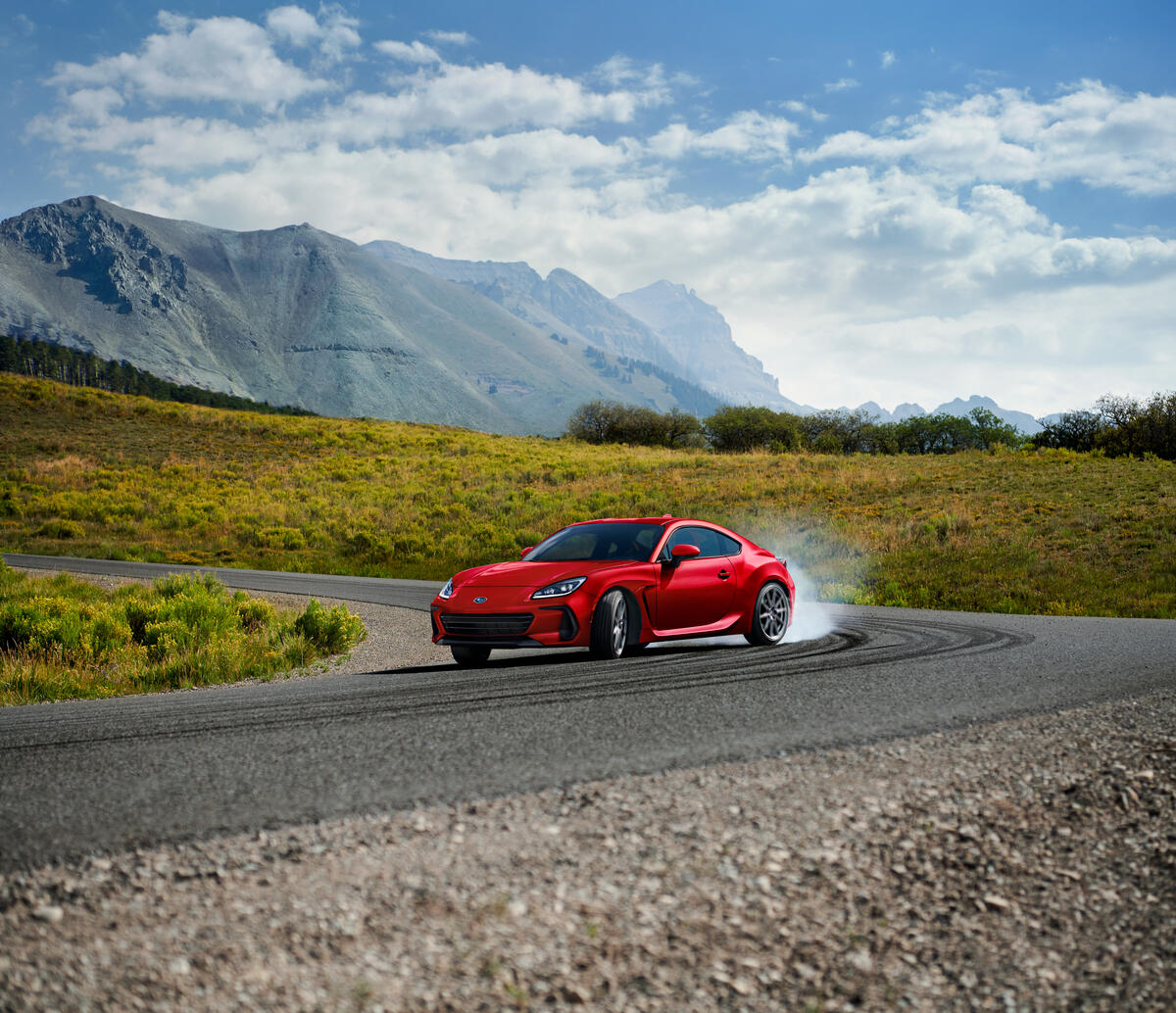
Subaru BRZ
"there's a headline that's been going around, I have two points here... that this has already outsold the BRZ, the Subaru BRZ... Honda... they said this isn't going to compete with the BRZ and the GR86."
The Subaru BRZ is a small sports car that’s built to feel fun and balanced to drive. The hosts mention it to explain that the Prelude is aiming at a different kind of buyer.
The Subaru BRZ is a lightweight, rear-wheel-drive sports coupe known for emphasizing driving feel and balance over outright power. In this segment, it’s used as a benchmark for what the Prelude is (and isn’t) trying to compete with.
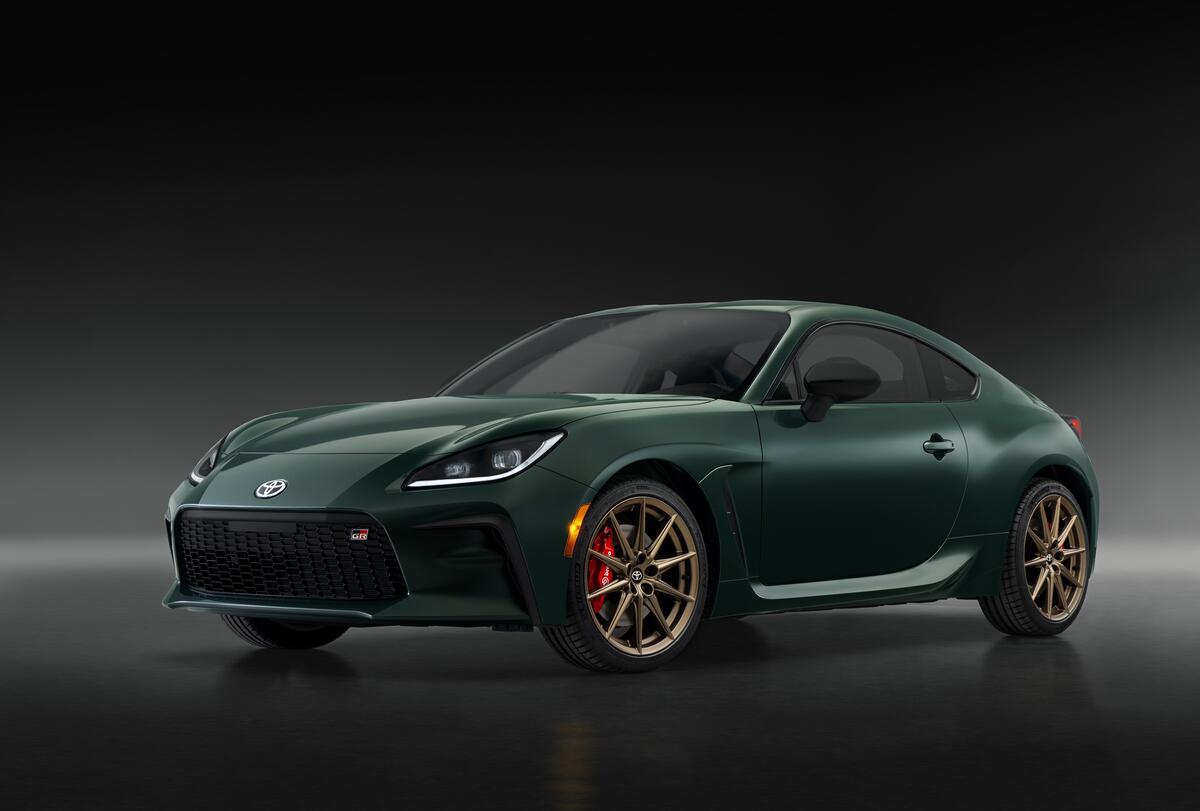
Toyota GR86
"They said this isn't going to compete with the BRZ and the GR86. This is meant to be something else."
The Toyota GR86 is a fun, sporty two-door car that’s meant to be enjoyable to drive. They bring it up to say the Prelude isn’t trying to be the same kind of sports coupe.
The Toyota GR86 is a rear-wheel-drive sports coupe designed for an engaging driving experience, often compared to the Subaru BRZ due to shared platform roots. The hosts reference it alongside the BRZ to clarify that Honda positions the Prelude differently rather than as a direct rival.
1.5 liter turbo
"I do kind of wish that they had offered another trim of this Prelude with the SI's powertrain with that 1.5 liter turbo and the manual, get it at a cheaper price point if you can."
This means a small 1.5-liter engine that uses a turbo to make more power. The turbo helps the engine feel punchier, especially when you accelerate.
A “1.5 liter turbo” refers to a 1.5-liter engine that uses a turbocharger to force more air into the cylinders. That typically helps produce stronger torque and acceleration than a non-turbo engine of the same size.
manual
"And the Prelude is not meant to be that, though I will say to your point, I do kind of wish that they had offered another trim of this Prelude with the SI's powertrain with that 1.5 liter turbo and the manual, get it at a cheaper price point if you can."
A manual transmission means you shift gears yourself using a clutch pedal and a gear stick. Some drivers like it because it feels more connected and gives you more control.
A manual transmission lets the driver choose gear ratios by operating a clutch and gear lever. Enthusiasts often prefer it because it gives more direct control over engine speed and how the car responds during acceleration and cornering.
front drive
"But for the people who want something a little rowdy or they want the front drive, you know, the kind of feeling of a hot hatch in a way in this lift back design, you've got the SI's powertrain..."
Front drive means the front wheels do the work of moving the car. It can make the car feel different when turning and accelerating compared with cars where the rear wheels drive.
“Front drive” means the engine sends power to the front wheels (front-wheel drive). It changes how the car handles—front-drive cars often feel different in traction and steering balance compared with rear-wheel drive setups.
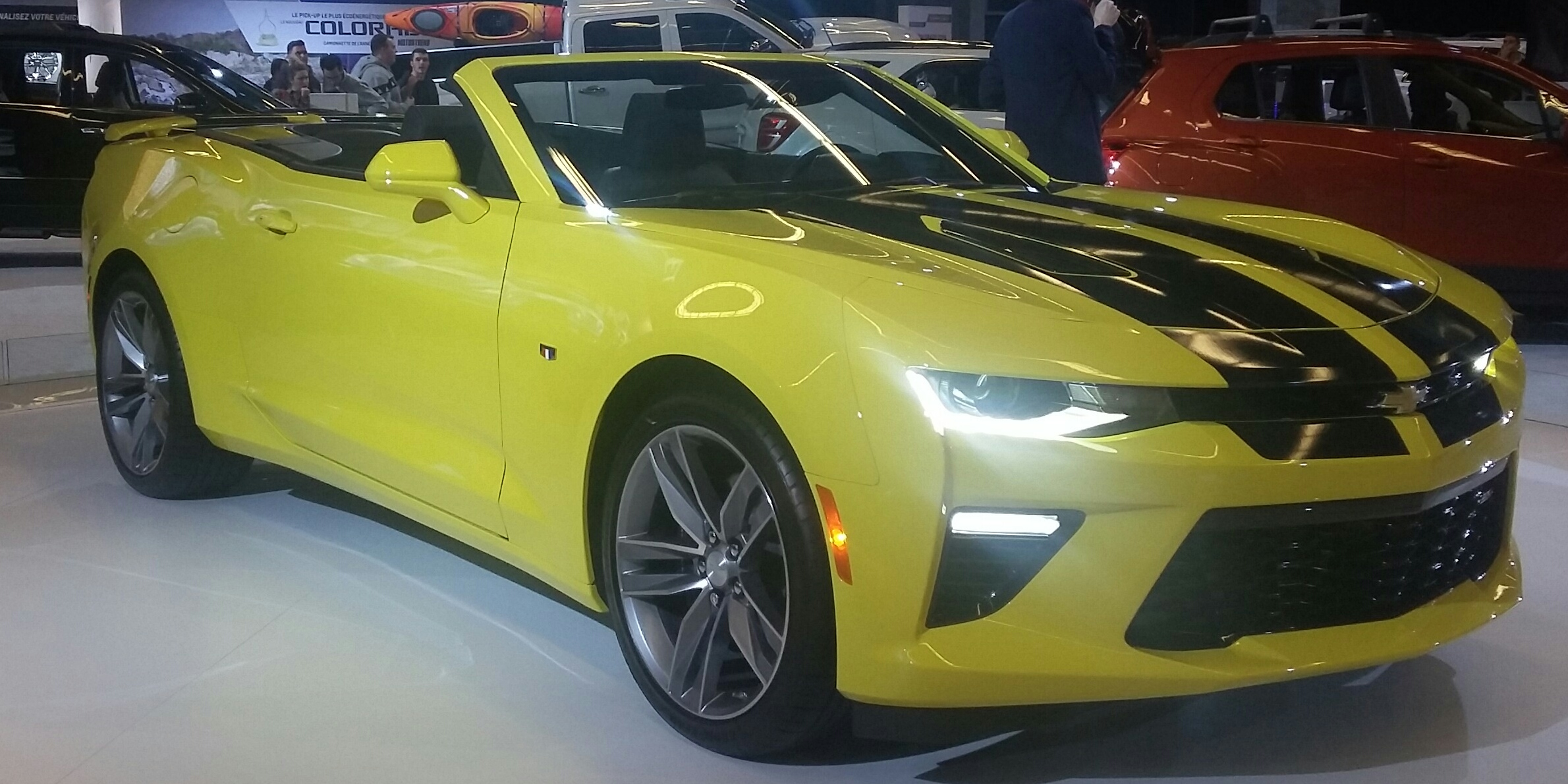
Chevrolet Camaro
"... probably goes for male and female. It's what the Camaro used to appeal to, used to see a lot of, I wouldn..."
The Chevrolet Camaro is a sports car made by Chevrolet. It’s known for a sporty look and performance. The podcast talks about who it used to appeal to, meaning it’s part of a discussion about the car’s audience.
The Chevrolet Camaro is a long-running American sports car known for its performance image and styling. The podcast references how the Camaro used to appeal to a broad audience, including both men and women, which highlights its marketing and fan base. It’s mentioned because the conversation is about who a sports car is meant to attract.
Request an Explanation
Heard something you'd like explained? We'll add it to this episode.
Sign in to request explanations for terms you heard.
Want to learn more?
Browse our glossary for plain-English explanations of automotive terms, jargon, and concepts.
Help improve this episode
See something that's not quite right? Our annotations are AI-generated and can sometimes miss the mark. Click the flag icon on any annotation to suggest a correction.