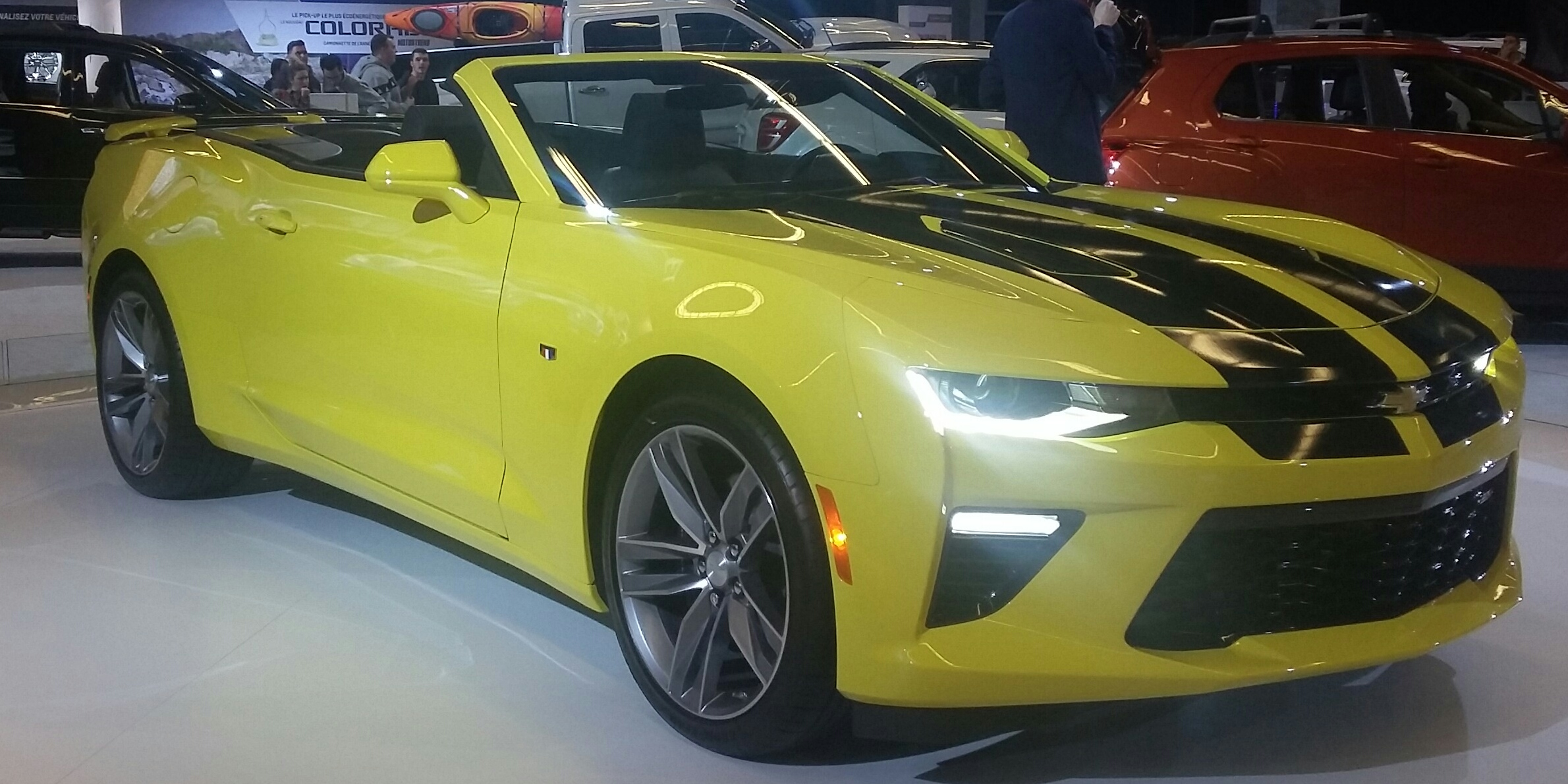
This is Kia’s K4 hatchback version. It’s basically the same model family as the K4 sedan, but with a hatch that opens at the back, and the rear is shorter—so it looks and packages differently.
The B-pillar is the metal post in the middle of the car, between the front and back doors. Mentioning it is a way of talking about where the doors and cabin are positioned.
A “floating roof” is a design trick that makes the roof look like it’s visually separated from the rest of the car. It’s usually done with trim and window/pillar styling to make the car look more sleek.
The “driver’s display” is the instrument cluster screen that shows key driving information like speed, navigation prompts, and vehicle status. In this Prelude discussion, it’s combined with the central touchscreen into one continuous “big display,” changing how information is laid out and read.
The “central touchscreen” is the main screen in the middle of the dashboard. They’re saying the car uses it as part of a big combined display, but the climate controls are still located separately.
Climate control is the car’s heating and air-conditioning system. They’re pointing out that the buttons/controls are placed in a tricky spot and may be partially blocked by the steering wheel.
Rear seat legroom is how much room your legs have in the back seat. They’re saying the back seat has the same leg space as the sedan, but the taller roof gives you a bit more headroom.
Headroom is the space above your head when you’re sitting. They’re saying the hatchback version raises the roof a bit, so taller passengers should feel less cramped.
Cargo volume is how much stuff the car can hold in the back. They’re quoting the hatch’s cargo space in cubic feet and comparing it to the sedan’s trunk, plus what happens when you fold the back seats.
IVT is another way of referring to the same general “no fixed gears” transmission idea. It changes ratios smoothly instead of shifting like a normal automatic.
A “sport tune” means the car’s suspension is set up to handle more aggressively. It’s meant to feel tighter and less wobbly when you take corners.
Term
GT line
“GT line” is basically a higher-trim package that usually adds sportier looks and extra features. In this case, they’re also talking about it being a turbo version.
“LX” is usually the name for a lower, more basic trim level. They’re saying the cheaper LX version doesn’t exist in the sedan lineup, so you start with a higher trim.
The Honda Civic is a common, everyday compact car made by Honda. It’s sold in different versions, including a hatchback. The podcast brings it up because other cars are trying to compete with it in the same size and purpose category.
A “benchmark” is the car (or standard) everyone compares against. In this case, they’re saying the Civic sets the bar for what a compact hatchback should be like.
Concept
powertrain choice (two powertrains in one model lineup)
They’re talking about how this car can be bought with two different “types” of powertrains. One is meant to be more efficient, and the other is meant to feel more sporty, and they think that setup is rare for this price class.
Engine displacement is basically how big the engine is, measured in liters. Smaller engines can still be powerful, especially with turbo or hybrid help, but people worry about how long they’ll last.
Peak efficiency is the operating point where an engine or powertrain converts energy into motion with the least losses—often at specific loads and speeds. The hosts suggest these small engines are calibrated to run near that best-efficiency zone, which can affect how they sound and feel in everyday driving.
Fuel economy is how far the car can go on a gallon (or a tank) of fuel. Bigger engines often use more fuel, so they usually get worse fuel economy than smaller ones.
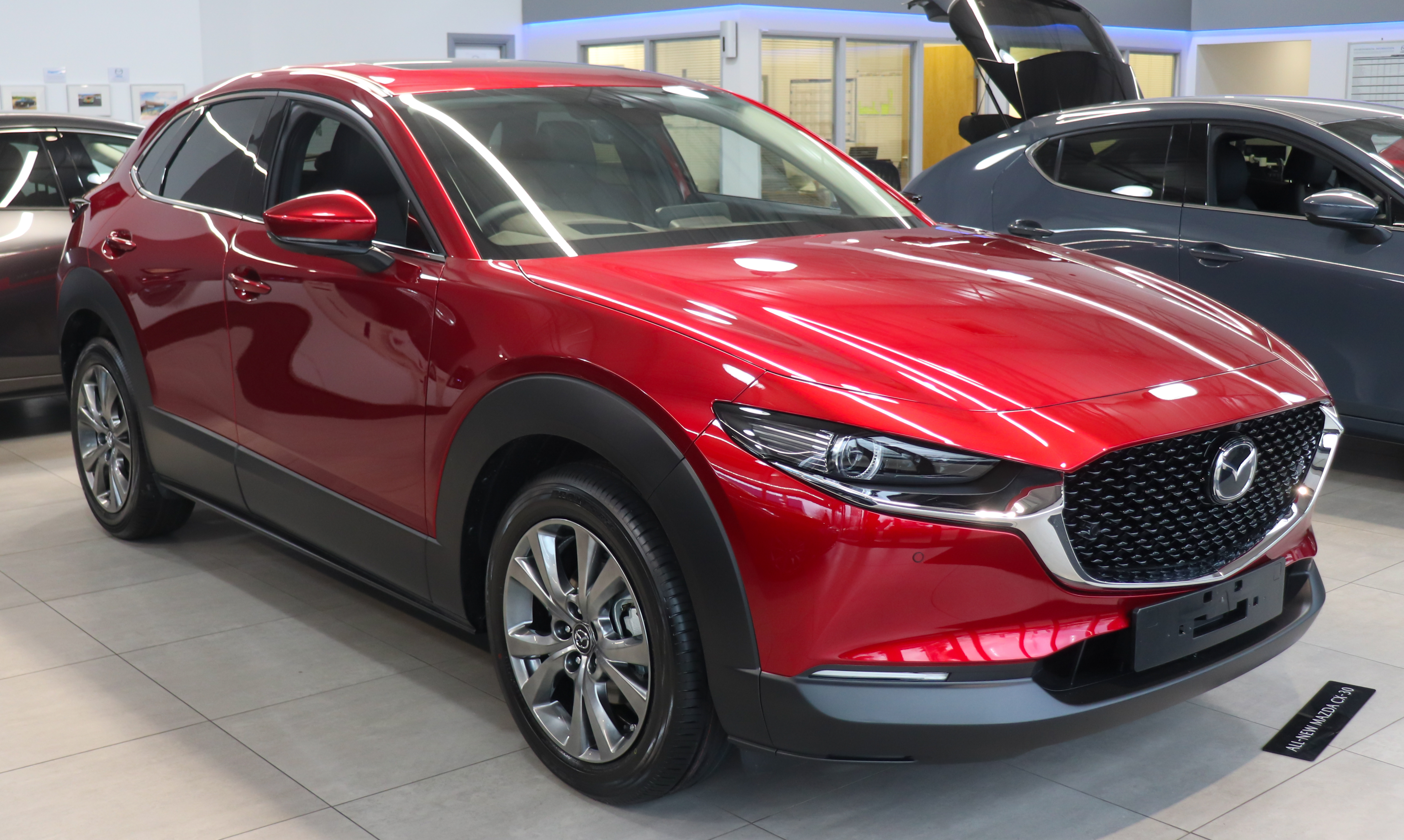
The Mazda CX-30 is a small SUV-style car (a crossover) that’s closely related in concept to the Mazda-3. It’s meant to be smaller than the CX-5, but still gives you the higher, SUV-like feel.
The Mazda CX-3 is a small SUV crossover. The podcast says it was introduced for 2020 and replaced an earlier version of the CX-3. It also points out that the name changed slightly, which is why it stood out.
A subcompact crossover is a small SUV-style car. It’s usually built like a regular car, but it sits higher and is easier to get in and out of than a typical sedan or hatchback.
The Mazda CX-50 is a compact SUV crossover. The podcast explains it’s placed above the smaller CX-30 in Mazda’s lineup. That means it’s meant to be a step up in size or features compared with the smaller model.
The Mazda 3 (also known as the Axela in some markets) is a compact car. The podcast says the CX-30 is like a crossover version of that same idea. So it’s a way to understand the CX-30’s size and purpose.
A turbocharger is a system that helps the engine make more power. It uses the car’s exhaust to push extra air into the engine, so it feels stronger when you accelerate.
The Honda HR-V is a small SUV crossover. It’s designed to be easy to drive and practical for daily life. The podcast mentions it because it’s a well-known option in the same general class as other small crossovers.
The Toyota Corolla Cross is a small SUV crossover. The podcast mentions it when comparing it to other similar-sized crossovers. It’s included because it’s a typical choice for people shopping in that category.
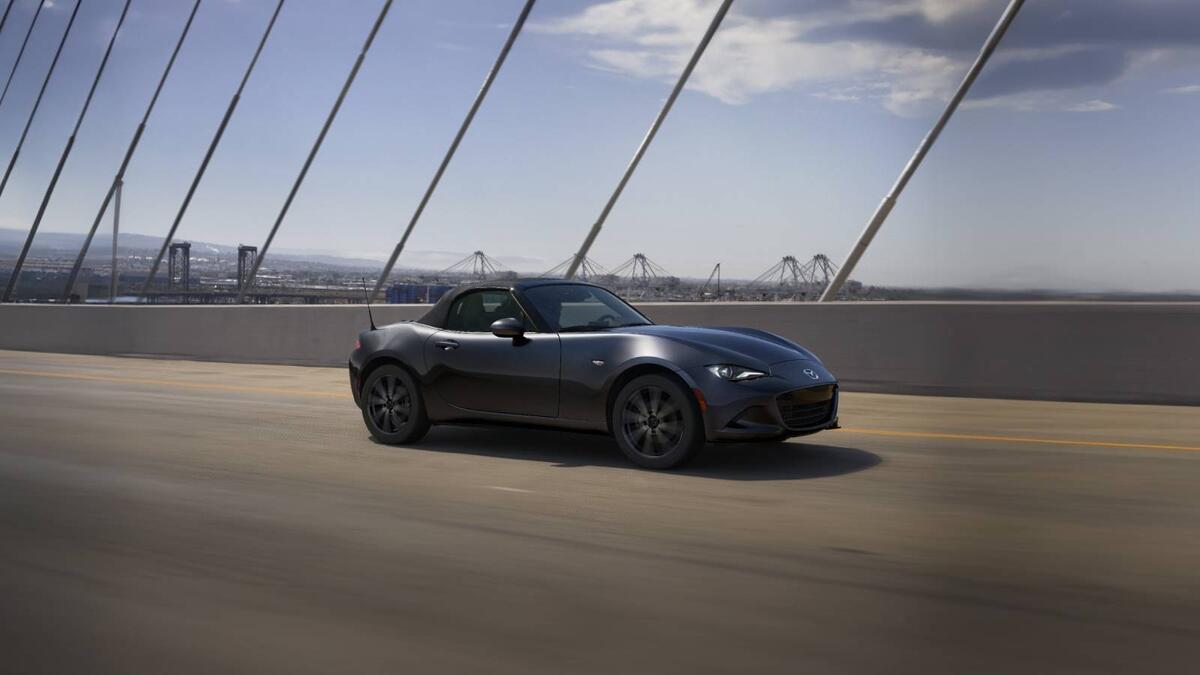
The Mazda MX-5 is a small, sporty roadster famous for being fun and easy to drive. They’re using it as a benchmark to say the CX-30 is sporty, but not a true roadster.
This is an automatic gearbox with six different gear ratios. It helps the engine work efficiently and can make the car feel smoother when you accelerate.
CVT means the car doesn’t use fixed gears like a normal automatic. Instead, it can smoothly change the “gear ratio” all the time, which can feel smooth but may feel a bit different to some drivers.
BMW iDrive is BMW’s in-car screen/menu system that’s controlled with a central knob. The hosts are using it as an example of the “dial” style of controls versus more touchscreen-based setups.
Analog controls are the physical buttons and knobs in the car. People like them because you can use them without staring at the screen, and they don’t get as many fingerprints as touchscreens.
Infotainment systems are the big screen(s) in modern cars that you use for music, maps, and phone features. They also control some car settings, instead of using lots of physical buttons.
These are the main screens in the dashboard that you tap to control things like music and navigation. If the menus are slow or confusing, it can be annoying while driving.
Some car features are locked behind a monthly or yearly payment. Instead of paying once when you buy the car, you pay ongoing subscriptions to unlock certain functions.
Concept
digital age of what's coming in the automotive industry
Cars are becoming more like computers, with features controlled by software. That can be convenient, but it also raises worries about whether the tech will keep working well years later.
Concept
random touch panel controls
This is the frustration when car controls are set up in a confusing way on the screen. If you have to hunt through menus to change something simple, it’s harder to do safely while driving.
Term
Haptip Climbing Controls
This sounds like a touch-style control that gives feedback when you use it. The point the hosts are making is that it’s harder to use without looking, because you have to touch the right spot exactly.
Touch screens are the big displays you tap to control things like music and climate. The concern here is that if they’re distracting or hard to use quickly, they can make driving less comfortable and less focused.
A software-driven vehicle means the car uses computers to run lots of its functions. Instead of purely mechanical parts doing the work, software decides what to do—sometimes improving features, but also creating new usability challenges.
Shift-by-wire means your gear changes aren’t connected by cables or rods. Instead, the shifter sends an electronic signal to the car, and the transmission changes gears based on that signal.
Steer-by-wire means turning the wheel sends signals to the steering system rather than moving parts through a direct mechanical link. It can help with safety features, but it also changes how the steering system is designed.
Term
processors
Processors are the computer chips inside the car that control things like infotainment and driving functions. If they’re hard to replace later, fixing the car can become much more difficult.
“Vehicle architecture” is how all the car’s systems are organized and connected. The idea here is that more of the car is controlled by software than by traditional mechanical parts.
The Subaru Brat is an older Subaru vehicle that mixes the idea of a pickup with a more compact, rugged setup. The podcast brings it up because it’s related to the Baja/Brat theme. It’s mentioned as a historical example of that kind of vehicle.
The Ford Maverick is a smaller pickup truck. It’s meant for people who want a truck but don’t want a big one. The podcast mentions it because it’s a common choice in the same general category.
They’re saying the Prelude’s hybrid system is basically the same kind of setup you’d find in a Honda Civic Hybrid. That’s why they can compare how the two cars make power and feel similar.
Net output is the official power/torque number the car puts out after subtracting the energy used by the car’s own systems. It’s the number you compare between cars.
Wheelbase is the distance between the front and rear wheels. It’s a basic measurement that helps describe how long the car’s platform is and how it might feel on the road.
The S-plus shift mode is a driver-selectable transmission setting that changes how the car manages gear selection and engine response. Here, the hosts connect it to track testing and explain that it uses simulated gear behavior to make the car feel more “shift-like.”
Simulated gears are pretend gear steps the car uses to mimic a normal automatic transmission. Even if the transmission isn’t actually shifting like a manual, the computer changes the engine speed to feel like it is.
“Sport drive mode” is a button or setting that makes the car respond more sharply when you press the gas. It’s meant to feel more lively and performance-focused.
“Auto mode” is a driving setting where the car handles the power and response for you. It’s usually meant to feel smoother and more efficient than the more aggressive modes.
“Zero to 60” is how fast a car can go from stopped to 60 mph. It’s a simple way to compare acceleration, but it doesn’t tell you everything about how the car handles.
The Honda Civic Type R is Honda’s performance hot hatch. Here it’s used as a comparison point because people expect the Prelude to feel as powerful, even though the Prelude is aimed at a different kind of driving.
Torque is the force that helps the car pull forward. It’s one of the big numbers that affects how strong the acceleration feels, not just the top-end speed.
Term
chassis components
“Chassis components” are parts of the car’s structure and suspension system that determine how it handles—things like brakes, control arms, and front suspension geometry. Here, the hosts say the Prelude borrows elements from the Civic Type R, which helps explain its unusually strong handling feel.
“Trim structure” is how the car’s features are bundled into different versions. It determines what you get for the money without having to choose every option separately.
“Power functions” for seats means electrically powered adjustments (like moving the seat or changing the angle) instead of manual levers. The host notes that, despite calling the car a grand touring-style vehicle, the seats lack power adjustments.
The Dodge Charger is a car that’s built to feel sporty, not just like a regular family sedan. The podcast brings it up as a reference point for how something could turn out. It’s mentioned because people know what a Charger is supposed to be.
Adaptive dampers are shocks that can adjust how stiff or soft the ride feels. When you switch drive modes, the car changes how it absorbs bumps and controls motion.
Drive modes are buttons that change how the car behaves. Here, the host says the ride changes depending on whether you pick comfort, sport, or a GT-style setting.
They’re talking about the 2026 Honda Prelude and whether it really feels like a comfortable “grand touring” car. The host says it has some sport-focused hardware and a hybrid that delivers strong low-end pull, so it doesn’t feel like a typical GT cruiser.
GT usually means “grand touring,” which is about comfortable, easy driving rather than track-style aggression. Here, the host is basically asking: if it’s a GT, why does it also feel and act like a sportier car?
A grand touring car is meant for long, comfortable drives—less about track racing and more about cruising. The host thinks Honda calls it GT, but the car has parts that sound more like a performance model.
Type R is Honda’s performance line, and it usually means firmer suspension and more serious brakes than a typical commuter. The host is saying the Prelude has those kinds of parts, even though Honda markets it as a non-track GT.
The on-center mark is a little reference on the steering wheel that shows when the wheels are pointed straight ahead. The host is wondering why a GT car would need that if it’s not meant to be driven very precisely.
They’re comparing the 2026 Prelude to a Toyota Celica GTS they’ve owned for a long time. The point is that even though the Prelude has lots of modern tech, it still feels easy to drive—like the older Celica.
They mention the Ford Mustang because it’s another coupe the hosts have owned. It’s used as a comparison point for what kind of driving feel they enjoy.
A personal luxury coupe is basically a two-door car that’s meant to feel stylish and enjoyable to live with. It’s not necessarily built to be the most hardcore sports car.
A tariff is a tax the government charges on imported products. If a car is built in another country, that tax can make it cost more when it’s sold locally.
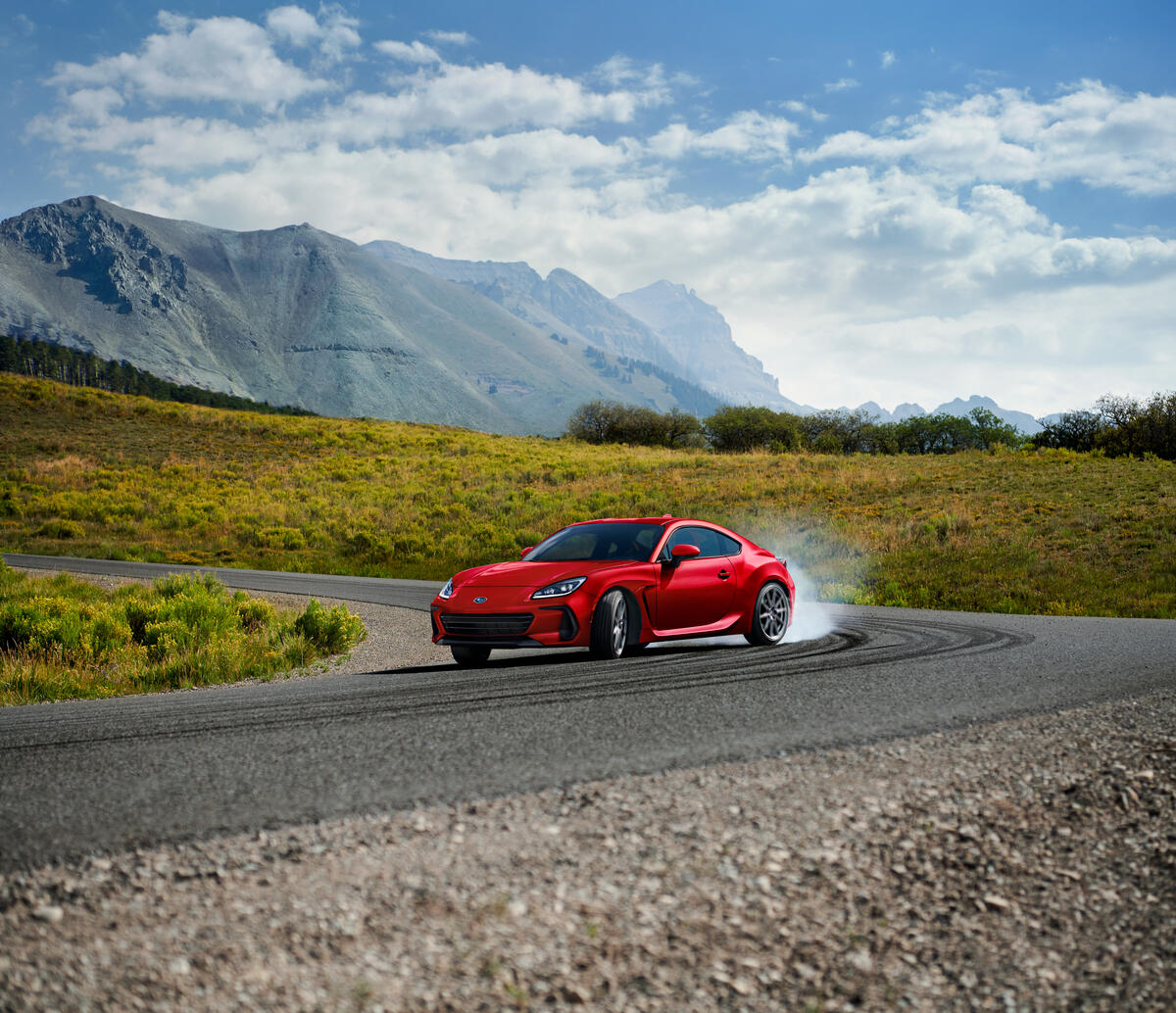
The Subaru BRZ is a small sports car that’s built to feel fun and balanced to drive. The hosts mention it to explain that the Prelude is aiming at a different kind of buyer.
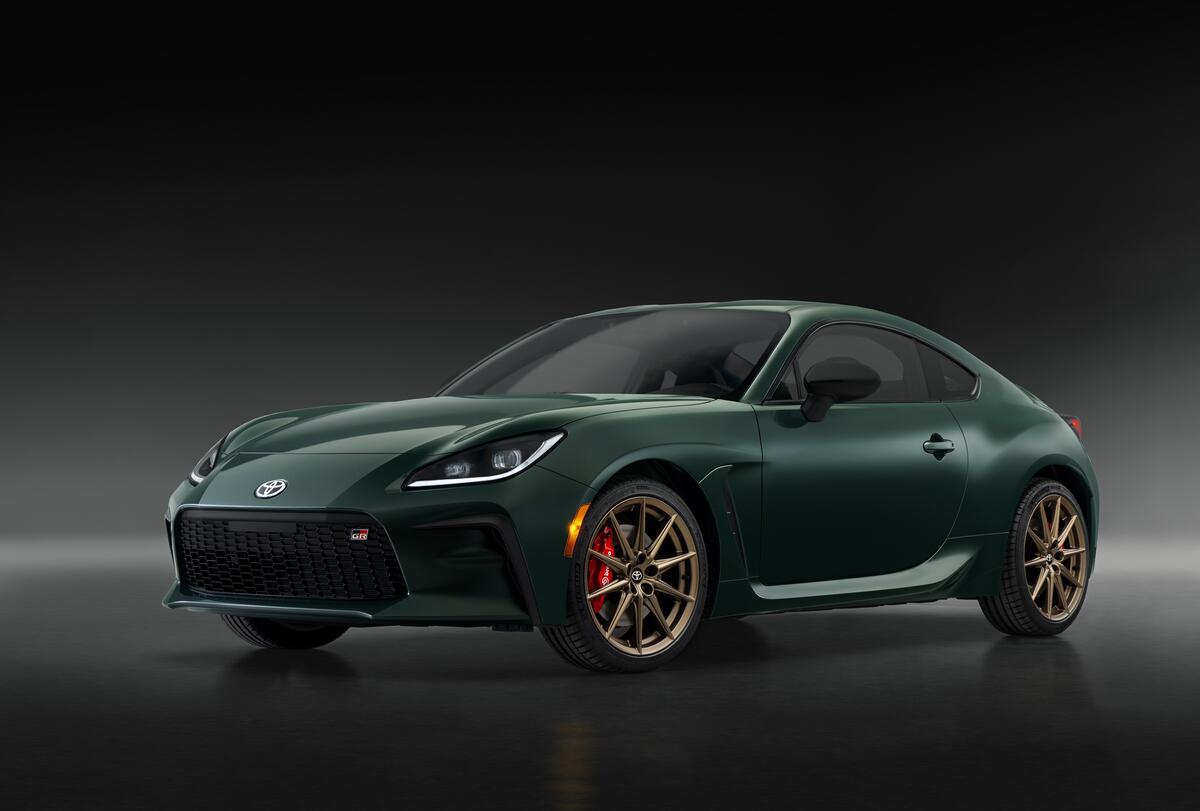
The Toyota GR86 is a fun, sporty two-door car that’s meant to be enjoyable to drive. They bring it up to say the Prelude isn’t trying to be the same kind of sports coupe.
A manual transmission means you shift gears yourself using a clutch pedal and a gear stick. Some drivers like it because it feels more connected and gives you more control.
Front drive means the front wheels do the work of moving the car. It can make the car feel different when turning and accelerating compared with cars where the rear wheels drive.
The Chevrolet Camaro is a sports car made by Chevrolet. It’s known for a sporty look and performance. The podcast talks about who it used to appeal to, meaning it’s part of a discussion about the car’s audience.
LIVE
Welcome to the podcast of Motor Week, television's original automotive magazine.
Motor Week is made possible by AutoValue and Bumper2Bumper and TireRack.com.
Here's your Motor Week podcast host, John Davis.
Welcome to Motor Week podcast number 377.
I am indeed your host John Davis and as usual we have a jam packed show for you today with
no less than three new vehicles we're going to talk through.
The Kia K4 hatchback, an update on the Mazda CX-30 and last but certainly not least, after
25 years, the return of the Honda Prelude.
Joining me today are rider producer Brian Robinson, digital producer Jessica Rae, and
staff writer Alex Kellum.
Always happy to be your last minute substitution.
Well, in a way we all are Alex, but we had something a little different for you planned
today, but that person was under the weather, so we scrambled together this great podcast
we've got and we're going to start with Brian Robinson and we're going to talk about the
2026 Kia K4 hatchback.
It closely followed the K4 compact sedan.
Brian, does it have a lot more than just a fifth door or not?
Yes, it has a lot more than just a fifth door.
So just to backtrack a little bit, the K4 sedan came out last year and we gave it our
driver's choice for best family sedan, mostly because packed a ton of features in there.
It looked cool and drove really great.
Now we have a hatchback version that looks even cooler, has the same kind of muscular
stance, everything like B pillar forward is exactly the same, but they chopped a foot
of length off the rear.
That's pretty amazing really.
And extended the roof line, kind of made a floating roof and put a hatch in the back,
and I think it looks even better than the sedan.
I agree.
Especially in person, I'm not so sure in pictures, but yeah, I think it looks really great in
person.
Inside, there's tons of tech and very easy to use with the possible exception of, so
they combine the driver's display with the central touchscreen into one big display.
So it goes almost two thirds of the way across almost.
But in between those is where they move the climate control, which functionally, it works
pretty well because they're easy to reach, but they're almost always blocked by the steering
wheel.
I think I said that to you in my notes after a night with it, I was like, I couldn't find
the climate control blocked by the wheel.
So with that one exception, everything inside looks and works really great.
Rear seat legroom is the same as the sedan.
You just have a little more headroom because they raise the roof a little bit there.
And it is comfortable back there.
And again, lots of legroom.
It's not as wide as maybe what you get in a compact crossover.
So it's a little tight back there with wise, but plenty of legroom, 22 cubic feet of cargo
and back almost twice what you got in the trunk of the sedan.
59.3 with the seatbacks.
That's a lot.
Yeah, similar to what you get.
So and here's where we give you a caveat that the one that we drove was the GT line turbo,
which is the top of the line.
And in addition to getting the turbo engine, 1.6 liter turbo at 190 horsepower versus the
naturally aspirated two liter that's standard at 147 horsepower.
In addition to that power, you get a much better suspension upgrade.
You get bigger brakes and you get an eight speed automatic transmission instead of the CVT
or IVT as Keel likes to call it.
So that's that's a big difference in how the car overall made.
Absolutely. So yeah, I have not driven a base model yet.
So all of our opinions are based strictly on the GT line turbo.
And it drove fantastic.
I think overall at the track, we got you drove the track right, Alex.
If you don't ask me what the numbers are, because I don't remember off the top of my head.
They're not public yet.
We haven't aired the test.
So I mean, you could say I don't know.
We got a 6.8 on the zero 60, which isn't which isn't thrilling, but it's certainly more than adequate.
Yeah, but you could speak more to handling.
I mean, yeah, yeah, that's the that's probably what's more impressive to me about it.
Taking it through the cone course.
I mean, it's not it's not a hot hatch.
Like just to be blunt about it, there is going to be more role than something that is truly sport tune.
But with the GT line, you do get that sportier suspension.
And again, we haven't driven a base model.
So I guess I can't totally compare the two.
But it is a little bit more lively than you would expect from it.
I know I've made this joke before, but I just want them to make a proper GT model of it instead of a
quasi line.
Yeah, it's not a joke.
Well, it's a real thing.
But I'm just, you know, I'm injecting some humor into it.
OK, trying to anyway.
Yeah, no one laughed.
So but I wasn't actually telling that.
All right, you know what?
This is a good not a hand moving on.
Yeah, I would say in addition, in addition to the handling aspects,
just the car itself feels way more refined than just about anything else in the segment.
Very mature compared to other small hatchbacks.
It didn't feel.
I mean, when we think of compact cars, we think of entry level cars.
It did not feel entry level.
That is correct.
Again, we had the fully loaded GT line turbo.
They actually there is no base LX from the sedan.
That didn't carry over.
So it kind of starts midway up at $26,000 to start the GT line turbo.
I think it was just over 30.
I think you can't buy a whole lot of SUV for that.
That is correct.
Yeah.
Any questions or further comment?
Jessica, we haven't heard from you.
I mean, it's such a smart packaging by Kea for the K4.
Like you said, it doesn't really feel entry.
I don't really feel like the K4 sedan when we initially tested it.
But even compact, it's a larger car than you realize.
It's up there.
It's almost mid-sized room inside of the compact dimensions.
They recognize that American buyers, this is what they want.
If you're going to compete against, say, the likes of a civic hatchback,
you have to beat them out in some way.
In almost all ways.
I mean, you've got to go after them in room and comfort.
And because the Civic is such a good performer, that's a benchmark too.
And if anything Kea and Hyundai like is going after somebody else's benchmark.
Why are you laughing?
Alex and I are racing to see who's going to say they don't make the Civic hatchback anymore.
Well, they don't.
But still, the Civic in general.
What?
They can make the Civic hatchback.
Oh, is it the Freilude?
No, you're thinking a coupe.
Yeah.
They don't make the coupe anymore.
You're right, you're right.
They do make the Civic hatchback.
We are a team of automotive experts here.
We drove the hybrid version of that as well.
Yes, yes, yes.
No, I was just giggling because you're like, they have to beat it.
And then you're listening to things and I'm like, cool.
So they have to beat the car in every tangible way.
That makes sense.
It's reasonable.
I think the one thing where, unfortunately, this K4 falls a little bit for me is just that
if you do opt for that 1.6 liter for the additional horsepower,
it's just not that fuel efficient.
The CVT or the IVT like Brian had mentioned,
that's really what they call the transmission in the base model, naturally aspirated 2 liter.
It's far more efficient, and the hatchback versus the stand does lose a little bit of
efficiency because of that.
But that gives buyers a clear choice.
So you can buy all the versatility and, frankly, most of the comfort and get your
MPGs or you can get a little more sporty ride.
And, frankly, all for $30 grand or less, that's a pretty slick deal.
And I think, too, like Brian had mentioned, you know, we drove the GT line.
It's fully loaded, but it's just over $30 grand.
And nobody else is really doing something like this, like having two powertrains,
like a quote unquote performance powertrain in a performance model for an entry level compact
sedan or hatchback, like the Civic is another example.
The hatchback version is you get one powertrain now.
There is no option for a quote unquote performance powertrain.
In their minds, the hybrid is the performance powertrain, but for those who might want
something more traditional, this is.
Can I stop you right there?
And this is kind of like a side discussion.
I hear from a lot of people when they hear how small some of the engines are these days.
They worry, and I think this is an American worry, about durability.
1.6 is pretty small.
Now, granted, it's got a turbo on it and it performed well.
Is there any evidence from what we've tested or anything else that just because you've got
an engine that seems a little undersized that you're running any real risk?
How do you feel about a one and a half to 1.6 or whatever?
They're pretty common these days.
Yeah, I mean, as someone who daily drives a V8, I don't know if I'm qualified to answer this.
I'll let someone know.
Yeah, it's got less than a third of your displacement.
I was gonna say, but that 1.6 is very popular amongst both the Kia's lineup and also Hyundai's
lineup, and it's involved in so many different vehicles.
Around a while and then not to bring up Honda again, but they're 1.5.
And very common.
I don't think reliability is an issue there.
So they're tuned to operate at their peak efficiency at all times, but they do get noisy
and you do tell they're working usually compared to some other engines.
But I don't think reliability is a real problem.
But the 1.6 does give you, let's say, if that was a two-liter turbo, your fuel economy would
be substantially worse probably, just because displacement generally is aligned with fuel
economy anyway.
That would make a great GT with a two-liter turbo.
Yeah, would be indeed.
Okay, thanks, Brian.
That was more than just a little interesting, and it kind of leads us to another vehicle that's
not all new, but certainly has seen some growth since we last did it.
We actually first tested it six years ago.
And it's hard to imagine it's been that long.
And that was the Mazda CX-30.
It was new for 2020.
It was an able successor to the CX-3.
And at the time, we questioned why they were adding a zero to the numbering name.
It's been around and enjoyed a lot of popularity.
Jessica, why not refresh everyone's memory on the CX-30?
And what's happened to it in six years?
Yeah, I mean, so the CX-30 is considered a subcompact crossover.
It slides underneath the CX-5 in the lineup, or the CX-50, because there's-
It's amazing they still do both of them, but-
Two of those, for whatever reason.
The CX-30 lives on its own.
And I guess in a way, you could kind of compare it to a crossover version of the Mazda-3, right?
I mean, that's virtually what it is.
Styling-wise, I think it looks pretty attractive.
You get into that backseat and you are remembering why this is called a subcompact.
It's not exactly roomy in the back there, but you do get a fair amount of cargo space, too.
So this is definitely very entry-level for entry-level buyers.
The thing with the CX-32 is that you do get two different engine options, which we were talking
about with the K4 Mazda does sort of make sure that there is a more performance-y version
that you can buy, which is the one that we tested.
It's a 2.5-liter turbo four, which has 227 horsepower, 310 pound-feet of torque,
which I think is pretty respectable numbers for that class of vehicle when you sort of
start comparing it to, say, the Honda HR-V or the Corolla Cross.
Or even the K4, where we're just talking about-
Yeah, we're just talking about more horsepower.
That's true. Yeah, that's a great point.
And so Mazda also goes pretty old school, and they made it to a six-speed automatic.
And we'll talk about the driving experience with this powertrain and this setup that we had.
And it definitely sticks out from the competition because of that.
It has a much more traditional driving feel.
You get so much pep with the turbo engine, and the six-speed auto just gives you just that
acceleration feeling. And also, just the way that Mazda likes to tune all of their vehicles with
the phrase that I am forgetting at the moment, but it's that, you know-
Zoom, zoom, zoom, zoom.
No, there's like a Japanese phrase that's like being one with the car.
They brought that up, believe it or not. I'd talk to one of their people at the-
Well, that jives with the driver orientation of the vehicle.
And it's clear with the CX-30 that they've stuck with that.
It is, I think, arguably one of the most enjoyable vehicles to drive in that class at that price
point. And that price point is it starts at like $27.5, which is certainly not going to be the
cheapest. But when you look at that class of car, they all pretty much-
None of them start anywhere under $25,000 now. So that subcompact crossover is you're looking
at a starting price of just under $30,000. Also, over 200 horsepower for that class of car
is, I would say, still fairly rare. Now, correct me if I'm wrong, but when we did the original
CX-30, that engine wasn't available. That's correct. It was 186 horsepower.
It was a 2.5, but no turbo. Maybe even a year later.
So this is a lot pepier than the car, the SUV we drove that six years ago.
Yes. Back in 2020 when everyone was-
Yeah. And we were all at our houses. And we all didn't get to drive all the cars all the time.
But it really hasn't changed much at all since 2020 with the arrival of the turbo. That was a big
deal. This is just the air addition, which adds some different trim. I guess the most noticeable,
there's like a suede material on the dash. The interior was nice. I like to have nice
light interior. Let me drop back and ask you, we like Mazda's because in general,
they're more fun to drive than a lot of the competition. And there aren't a lot of fun
to drive vehicles down at the bottom of the subcompact class. Is this vehicle a real standout to
you? Did you like driving it? Did it conjure up better some nice memories of when we used to have
a lot of cars that were fun to drive? Because it did for me. I just felt like I wasn't exactly
in a sports car, but I was darn close to getting in something that was pretty darn sporty for its
price. Just looking straight at Alex. Yeah, well, I look at the V8 King here to see what he's gonna
say. I also made it no secret over the years that I really enjoy Mazda and part of that is because
it's a more engaging experience. But like you just said, and I always have to qualify it this way,
we're not talking about a sports car. This is not an MX-5 or an RX. It's not even a hot hatch.
Right. So you can't go into it like notions like that, but the steering typically is
harder. It's a little heavier. You feel like you got a little more grip. Yep, they stick with
like a six-speed automatic, typically in their smaller offerings instead of going with a million
gears or going with a CVT or something. And then with this powertrain, with just that amount of
performance, I'm not going to sit here and tell you that I would choose this as like a canyon
carver or anything like that. Like this is not really that, but if you want something in this
class and you actually do care about the way that it drives, this one is certainly near the
top of the list, if not at the top for me. What's your feeling about the interior and the controls?
I mean, they've stuck with, this still has the central controller. It does. It has the old
design. And you know, are we, I'm kind of tired of that, but I'm not so sure with all the touch
screens that this still isn't a better idea. You know, it's one of those things that on the surface
and the fact that we only get cars for a short period of time. So we don't live with them.
We don't get to really live with them long, long term. But when you, like my dad had
the whole knob situation going on in his CX-5, and it was fine. It was fine. Some people like it.
Well, it's funny you say that because the new CX-5 just arrived at the studio today and at the
front desk, Carl, he received the keys. He went and checked it out and he said, you know, I really
like this thing, but they got rid of the dial. And he's like, I like that dial. So I think the
last remnant of the BMW iDrive has hit the dust, huh? It's one of those things where it, every time
I get in a Mazda and it's been a while, it does take a little bit of readjusting to it. But I
think once you do, like I personally really like that dial. And I do appreciate Mazda's commitment
to more like analog controls and things like that. Certainly means less smudges on the screen.
That is true. Okay. That's the Mazda CX-30. We've gone through that in the K42. Very good.
Down at the bottom of the market, but very sensible vehicles that actually are indeed a lot
of fun to drive. And we're going to have one more vehicle we're going to talk about. And that was
the Honda Prelude. Back after 25 years, we're going to get to that a little bit later in today's show.
But first, I need to thank the folks that make this possible. Our sponsors of this podcast
and everything Motor Week, Auto Value and Bumper to Bumper. Thank you very much for your support
and tireact.com. We know our viewers and listeners appreciate your dedication to all things Motor
Week. We have a lightning round where panelists have 30 seconds or five minutes, whichever they
choose to talk about a trending automotive topic. Now this one actually is a little different. It's
by way of a good friend of ours, Sam Fiorani, who is an industry analyst and runs Auto Forecast
Solutions once a month. He publishes his updates on the global auto industry and he had a dissertation
in the last issue about car infotainment systems. They came with a lot of promise, but also it
faced a lot of buyer pushback and a lot of questions about their future. You know, the infotainment
screens and digital displays, they're very common in automakers now. Almost every car has one.
They save the industry a lot of money because they eliminate many knobs and switches and controls.
You could say the trend began with Tesla and it's now pretty much universal. However, there are
lots of complaints. The systems require substantial more time to actually activate minor things like
changing your temperature or radio station. Also, some are prone to subscription services,
which I think have gone over like a lead balloon. Stands to reason they're more difficult to drive
to adjust while driving. There's a lot of concern about future reliability and that goes with the
whole digital age of what's coming in the automotive industry. So what do you folks think about where
we are with the infotainment systems? Could it have been avoided? Sam doesn't offer any solutions
and I don't expect any from you, but where are we and going?
And do you think the whole thing was a bad idea from the start?
Now we're all looking at Brian Robinson. Because you don't expect any solutions.
I'll see if I can not help in that. So touch screens are here to stay in all walks of life.
Everyone insists on having a screen to touch for every task we do. You can't even get a big mac
without touching a touch screen these days. So I think we can do a better job of implementing them
and touch screens themselves, I don't necessarily have a problem with. It's the
random touch panel controls that you can't use while you're driving easily, I think,
are a much bigger problem than the central touch screens. Give me an example, can you?
Just like the Haptip Climbing Controls, right? If you want to look down and just go up a temperature.
You've got to find some invisible little bar to roll you. You've got to touch it exactly
where the right spot and you can only do that if you look down at it. Whereas a knob,
you don't really need to look down. That kind of stuff to me is more touch screen, it's not a problem.
Alex. Oh, God. No, I'll keep it short. Here we go. What was that supposed to be? All right.
You kind of started that. There was the pregnant pause, I think. Yeah, I'm tired. I really am.
There's screens and everything and you need an app for everything. We've gone too far,
you can order pizza in your infotainment now. It's gone too far. That being said, while I do
agree that I want more physical buttons, I hope this is just a fad that exists. I agree with the
safety aspect of it, being able to just reach down and adjust your climate and everything. The
K4 was a great example of we said the climate we couldn't see because of the steering wheel.
They basically put it in the only spare room they had, which was inconvenient.
So I agree that the implementation needs to be better, though I do understand that
screens, it's a novelty for a lot of people. What do they say? The average
time of vehicles on the road now is 12 years. And the way I was always kind of putting it,
it's this kind of like cold war effect. It's the same reason why cars keep getting bigger and
bigger to meet the competition. You think of cars 12 years ago or maybe five years ago,
12 years ago before that. People, if they still had, I know, just roll with me.
We are. Yeah, unfortunately. 30 seconds is up. Sorry about this.
People who had those cars since then, their car probably didn't have a big screen or any screen
in it. And then they've been in Ubers and taxis, their friends' cars. I have these screens and
they go, oh man, I kind of wish I had all that stuff. And it's cool. And you know, it has a fun
little animation that plays when you start the car or whatever. I can order Domino's through it.
I don't know if you can, but I'm pretty sure you can anyway. You can definitely do like McDonald's,
I think. Point being that when they go into the showroom now to buy a car, they want all that
stuff because the novelty is until they have to live with it. Right. And then you have it and
then you start all the cracks in the armor, right? It starts to show. So while I agree,
the touch screens are probably going to be here, they're probably not going to go away,
but I would like to see them implemented better. I would like to see them smaller and less distracting
and honestly just something I don't need to use. And more redundant manual controls,
which there is a trend that they're coming back. So, you know, for basic audio and climate control
functions. All right, Jessica. I mean, so this sort of is a symptom of a larger problem
that probably all consumers are going to begin running into. And that's the fact that
cars are software driven now. Okay. Which means, what does that really mean?
Instead of, you know, being led by hardware, like tech devices, they drive, they are tech devices
that drive. And so the main, a lot of the main functions of the car just being done by software,
by programming versus a mechanical linkage or something that you know, I think, you know, we
can, I don't want to sort of like say that all of that is bad of software driven vehicle. Like
all of that's, it's not all bad, right? We've seen some pretty impressive
feats of engineering with things like shift by wire, right? Things of that nature. Even, I mean,
cars are even coming with steer by wire. And think how much safer vehicles are today.
They are. And so you can't knock all of the technology that's being thrown inside of modern
vehicles. But I think, like I said, part of this larger problem where we now are almost
too saturated with technology, if the technology isn't serving us in a way that's positive,
then we need to step back and rethink, okay, well, why did we make this choice to begin with?
And oftentimes with, with the screen, it might be, well, we made this choice because it's going to
save us money. Your parts on the assembly line, which that that is true. But when it comes down
to the ergonomics of your vehicle, I mean, to me, I thought that's incredibly important.
And that will supersede this quote unquote fad, right? Of the, of the novelty of the touchscreen.
If your car isn't ergonomically well planned, then what's the chances that somebody is going to buy
one model? And then when they need to buy the next one, that they buy the next one.
We've seen a number of manufacturers that have gone from almost nothing physical controls.
They went away in a big way. They did away with the knobs and switches, Hyundai, Kia,
there's been others. Now they're bringing them back because they recognize maybe there is a
happy medium. So I think that's what we can hope for. I am worried about the long term
reliability aspect, what happens when the chips are not made anymore, so they can't buy the processors,
can the aftermarket support it? And now we're heading towards where
everything in the vehicle architecture is, except the basic frame, is going to be defined
digitally. So I wonder in a hundred years, how many of today's vehicles will still be running,
like a hundred, there's still quite a few, 80 and 90 and a hundred year old vehicles
today still running. I'm not so sure the future car collector is going to have
the inventory to pick from because it won't be able to get stuff. You'll get in basically a vehicle
that it might roll, but it's otherwise bricked. Yeah, the developer stopped making updates for
it back in 2038, so you won't be able to drive it, sorry. Well, I didn't think we'd have any
solutions, but your insights were certainly worth the 30 plus seconds you took to deliver them.
Thank you all very much. We actually do have a viewer question. It was an email from Gregory,
and we're keeping his last name secret to protect his identity. Just kidding, Gregory.
Okay, there have been a lot of rumors and false information on the internet and on YouTube about
the return of the Subaru Baja. If you don't remember what the Baja is, the little short
unibody pickup truck. A lot of it is coming out of Australia because of the success of
various small pickups there, and there's rumors that they want to go after the Ford Maverick.
What do we know if anything, and do we think it might actually happen within the next few years?
Jessica is shaking her head. Let's turn to the guy with the Subaru jacket on. I was going to say,
I'm wearing a thrifted Subaru jacket, so I feel maybe partially qualified, especially since I
bring up the Baja slash brat like every other podcast. Gregory, I want this to be true.
Big if true, it's not. That's the problem. You can't believe everything you read on the
internet. Or see. Or see. It's so easy now to, and everything, like it used to be like somebody
would just sort of like cobble something together in Photoshop, but now people are making things
they're running. They're getting close to looking like they're sitting on a showroom floor.
Now we know it's not true. The Scuttlebud started recently, well, I should say started,
it was rekindled recently by some executive in Australia for Subaru who supposedly said
they were looking into it. Well, that's kind of a standard automotive response to just about any
question about a future product. I think Gregory, what we have to tell you is we have absolutely
nothing anywhere that we have seen or heard that gives any credence to this. Is it possible?
Sure it's possible, but we don't, I personally don't think Subaru is moving in that direction.
And since they are controlled these days by Toyota, I'm not sure why Toyota would want to start
another truck line in a different brand when they pretty much have gotten all the trucks
they need themselves. If they were going to start a unitized truck, I think they would do it within
their own brand. Well, that's another rumor. Yeah, They're going to bring back
the stout. It's all rumors. Yep. They compete with the Maverick. All right. Thanks, Gregory,
very much for sending in that question. Speaking of buzz, a lot of real buzz about the third vehicle
we're going to talk about today, the Honda Prelude, return of Hondas. We used to call them
personal luxury coupes. In this SUV world, that's a pretty bold move for Honda, I think,
so let's turn to Alex to give us his first notes on the Prelude. Yeah. Come on. That was at least
halfway clever. No, you were great. This is one of those vehicles that I feel like no matter
I say, I'm going to say something wrong, and that's because this has been a very divisive car.
Enhancement, for sure. If the internet is actually the prelude has been a divisive car since it
first arrived, but this one in particular, the TLDR is that there is a lot to like here,
but there's a lot that's very confusing about it as well and things that I think will disappoint
some people. So just kind of diving into it right now, the Honda Prelude, I think the first thing
you need to know about it is that this is a hybrid powertrain. And specifically, this is the
hybrid powertrain you would find in a Civic Hybrid, which we talked about earlier. So 200
horsepower, 232 pound-feet of torque, that's the net output. So there is a lot of comparisons being
made between this and the Civic Hybrid. You can make that comparison. There's also a lot of comparison
between this and the last-generation Civic Coupe, because this is a two-door liftback. It's a two
plus two seating arrangement. So you do, believe it or not, have two seats in the back. You wouldn't
know that by looking at it, but they are effective. I'm not so sure you want to spend much time here.
No, they're better for purses than persons. Yeah, no purses than people. Yeah, yeah, that's,
it's a whole thing. But yeah, so actually I went through the measurements. I thought that was going
to be kind of interesting at first, just to get that out of the way, give you a context of the size.
So the Prelude's on a 103-inch wheelbase, and it measures out to about 178 inches long. If you
want to compare that to a current Civic, which is on a 108-inch wheelbase and a 185-inch overall
form, so it is smaller. Prelude's actually wider by about four inches, though. I believe that.
And actually compared to the Civic Coupe, it is also smaller yet wider than the last-gen Civic
Coupe. Not by a lot, but by a little bit. My first, when I walked up to the Prelude is I actually
thought, this thing looks like it's a mile off the ground, and I thought the ride height was a
little tall. Now that's partially because at the bottom they do like the black side skirts and
stuff, so it kind of camouflages that. It is a pretty low car when you go into it. So the power,
like I said, 200 horsepower, 232 horsepower, and it's got this new S-plus mode, which we were at
the track, and we played around with it a little bit, the drag strip specifically, not a road
course. And S-plus, basically. S-plus shift. So there's the S-plus shift mode, which with the
transmission, you can kind of, it has like eight fake gears or virtual gears. Simulated.
And yes, simulated gears. Predefined ratios. Yeah, predefined ratios. You see all sorts of
terminology, and it can kind of lock you into one of those, which if you're on a back road,
it is nice to play around with. You get that feeling, but if you're trying to go for straight
line, it's, you don't want to stick with that. You just want to put it in the auto mode and put it
in the sport drive mode and go for it. We can say zero to 60, right? We haven't published it yet,
but sure. Six and a half seconds, which is one. Again, it's reasonable, respectable, no
rocket ship. That is what Honda has claimed it to be, and we have proven it. And there's a lot
of people who are saying, and I'll get to price kind of near the end here before I open the floor,
but there are a lot of people who are saying, for the price of the vehicle, I'll spoil it now,
42 grand before destination, 43 width, that that is not enough power, especially since it is starting
to get close to the Civic Type R, which is just shy of 50 and does 300 plus horsepower and pound
feet of torque. Don't you think though it's a different buyer? I think it's a different buyer,
and I think the prelude is meant to be something different. Think of what Honda's definition of
a grand touring car would be. Really think about what that is, and the hybrid system makes sense
to be in here. I do wish it had more power just to differentiate it from the Civic Hybrid,
just to make it a little different, but I do not think it's in a bad place. That is especially
in tandem with the handling. So the prelude gets chassis components from said Type R,
so we're talking about the brakes and some of the front suspension.
And wow, this thing in the handling department is out of this world. I was very surprised by it
through the cone cores. Tons of grip, not really getting any torque steer. I had the TCS turned
off as much as possible, and only once when I got a little froggy with it did it kick in,
and the problem with this vehicle is if it kicks in, you lose your momentum, and you got to try
and rebuild it because you don't have a lot of extra torque. You can't lean on that power.
But handling is great, and then when you're ready to drive it home, you can throw it. It's
got the adaptive dampers, so you can make the ride nice and cushy. There are a lot of confusing
things about this car, though. One of them is the trim structure. So technically, technically,
this is a one-trim car. You get a Honda prelude, but if you go in the builder, there will be
two trims available for you to buy. One is called the prelude, and the other one is called
the prelude, not that, prelude two-tone. Two-tone, you get a black roof, you get black mirror covers.
It costs $500 more, okay. But then if you select that one, you can pick from one exterior color.
That is white. White is an option, so it's $600 on top of that. The black badges, you can opt on
the base one. Yeah, you don't get those with the two-tone. You got to pay extra for those.
Jess seems weird to me. Wow. Weird pricing stuff with that. Sounds like just a weird configurator
situation. Sure. I sat in the car. I really like a lot of things about it, but you're also reminded
of its civic roots. While I do like that the dash gets a suede thing to it, and they've changed
the architecture of the air vents and stuff a little bit, there's just a lot of civic influence
in there, and a lot of the material show that. The seats are comfortable. I really like the seats,
but it's odd that the seats, there's no power functions. Now, I like manual seats. I'm not
complaining, but as a grand touring car and a pricier vehicle, I just thought they would have
put that in there. When the car came out, I said to me, this is not your grandfather's
prelude. It's not the one from the 90s and earlier, but it is the one that he would buy.
And the case in point is I took it home one night, and I showed a buddy of mine,
and his grandfather used to have a prelude, and he was sending his grandfather pictures of
it and everything, and he loved it. He thought this was the coolest thing, and he is seriously
considering buying one. And he doesn't care that it's only, quote, only got 200 horsepower.
What he cares about is, oh, the ride can be comfortable, but also sporty, and it's fun.
And I didn't talk about the looks because that's very subjective, but I think most people around
the office really dig the way this one looks. It's a good looking car. That's a very good looking car.
So I think I've rambled enough. I didn't want to turn this into another Dodge Charger situation,
but it very well could have. But I'll open the floor before I get carried away.
Speaking specifically to how it drives, I thought it drove phenomenal. It's got the adaptive dampers,
as you mentioned, with like comfort, sport, and then a GT mode. I put a fair amount of miles on it,
and playing with all three, I ended up just leaving it in GT, which I thought was not too firm at all
for the sportier setting, but it handles great. Again, to bring out these weirdness or inconsistencies,
Honda goes overboard telling you that this is a grand touring car, not a track car,
but then they also tell you how it's got all kind of type R suspension and brakes.
It's got a steering wheel with like an on-center mark. Why would you need that in a GT car if
you're not going to specifically drive it on just stuff like that? It's not really consistent
with their messaging, but I thought the power was fine. I mean, there was never a time when I was
like, well, I could use more power here. I thought the torqueiness of that hybrid system,
I think, makes up for a lot of lower numbers in the power area.
Both you two had coupes. You've got a Mustang. You used to have a, what, Celica?
You used to have a Celica. Okay.
Okay. So you had a Celica GTS, and so you like that genre of car?
I still have it, actually. Yeah.
Did you feel any familiarity into it, or like the prelude was a nice progression from what
your car's well over 20 years old? There's nothing grand touring about that Celica, for sure,
but it's a similar feel. Yeah. Not a lot of tech either, but yeah, small.
I want to use the word simple, but the prelude is obviously not simple,
because there's a ton of tech in there. But when you're driving it, it feels simple.
It feels simple. Yeah. Feel sorry. Jess.
Oh, the prelude. Such an interesting vehicle. I mean, I really liked it. I went on the first
drive initially, so I got to carve it up a little bit outside of, I guess we were in San Diego
on some of the roads out there, and I was really impressed with it, and I felt like I understood
why people are kind of hating on it, and I think it's because Honda.
Because maybe they haven't driven it?
Well, they haven't driven it, but also like this is for a very niche,
but this is for like a niche buyer. Like I know exactly who would buy this car,
specifically with the price. Now, if it was priced at $35,000, I could imagine younger people
going for this, and it being like, especially because of how stylish it is, but there is a
rationality to this car that it's like, okay, it looks cool, it drives well, and it's fuel efficient.
So this is somebody who maybe would have opted for a manual in the past, but it just doesn't
want to deal with that on their knees, maybe. But once something exciting, but not.
That's the definition of a personal luxury coupe.
The problem then just becomes like, this is unfortunately made in Japan,
because it shares those Type R parts, I guess, because that's where the Type R is made.
So this gets hit with some sort of tariff. Honda never told me exactly, like why?
I don't know who knows.
I think its price is kind of what's holding it back. Otherwise, I think this is a great car.
Yeah, I wanted to add something to the, you brought up Niche Bayer, there's a headline that's been
going around, I have two points here. There's a headline that's been going around, yeah,
laugh it up, that this has already outsold the BRZ, the Subaru BRZ.
Interesting.
It will drive sport.
Interesting.
But that headline to me feels a little disingenuous, not because the numbers aren't there,
the numbers back it up, the sales figures. But to me, those are two different products,
you know.
Very different.
And Honda, I distinctly remember them when the Prelude, like we hadn't even seen one in person
yet, we just knew it was coming and they had already announced that. They said this isn't
going to compete with the BRZ and the GR86. This is meant to be something else. Like to me,
the BRZ, the GR86, that is the, I want a manual rear wheel drive sport coupe.
I want a sport coupe, yeah.
And the Prelude is not meant to be that, though I will say to your point, I do kind of wish that
they had offered another trim of this Prelude with the SI's powertrain with that 1.5 liter turbo
and the manual, get it at a cheaper price point if you can. And I think that maybe could have,
that gives you options, right? You have the, what they could say is this is what we really
think the Prelude is, this grand touring hybrid, it's smooth, it's quiet, it's great.
But for the people who want something a little rowdy or they want the front drive, you know,
kind of feeling of a hot hatch in a way in this lift back design, you've got the SI's powertrain,
which I think we all really liked when it was in, I know I certainly did. So, all right,
done ranting.
That's mine.
That might be getting too close to the Civic.
Do you think that maybe, I mean, we talked about how good it looks and we had a bunch of people
when it was parked outside talking about how good it looks. Do you think maybe its looks may
have like oversold it in a way to some people?
I think that's been a situation with the Prelude for a long time. Every time a Prelude comes out,
our review sounds like almost every Prelude that I can remember ever doing,
underpowered, good handler, nice looking car, more luxurious than anything down at that end of the
market that Honda or anybody else was making at the time. It's very similar. If anything,
they have stayed spot on with their heritage. So, is this going to be a big volume car? No.
Is it going to appeal, and nobody actually seems to have the gall to say it,
it's going to appeal to an older buyer.
And that probably goes for male and female. It's what the Camaro used to appeal to,
used to see a lot of, I wouldn't say old, but mature men and women driving Camaros.
I think this is where we're at with this vehicle.
You're looking at me. My mom had a Camaro.
There you go.
Can't be more honored to put that in there.
Well, I don't think they'll be calling us for the rights.
I think you said it best. It's not, maybe it's not the most exciting car,
but it's one of those cars that you should, you got to drive.
It's a nice looking vehicle. It handles well, and you feel, here's the important part to me.
If you buy it, you feel like you're driving something that's pretty unique,
because there's not going to see a lot of them on the road,
and that's something most mass marketers can't say.
And you should be forced to drive one before you put hate on the internet about it.
Yeah. Well, that wouldn't be the internet.
Seeing it in person would actually be a positive.
Thanks very much, everybody.
Hey, I want to remind everyone that's listening, that all of our Motor Week information
and our videos, and including the test of the Prelude coming up,
will be available on our new Motor Week app. It's not so new anymore, but it's still free.
It works on almost everything that's got a screen, including your cell phones and tablets,
and we invite you to download it. It does have a very special
tab on it for anything that uses alternative fuels, clean vehicles of all types,
and that includes hybrids, EVs, E85, natural gas, both new and used.
It's the power tab. Hit it. You'll be fascinated with the information there.
And download the app today because, frankly, if you take it with you,
you'll never miss a mile of Motor Week.
Rant and raves before we wrap up this podcast today. Anything sticking in anybody's car
or something you want to rave about? Do-do-do-do-do.
I'm not going to do something.
You usually do.
Well, I haven't really...
I haven't really...
I'm not picking on you.
...participator of the ranta rave in the past few times,
because I think Alex did one the last ones.
Oh, I did. I got dunked on when I did it.
I had another one ready just in case.
My rant.
And I know we don't like to do too much of people's driving style.
No, I don't know. I like to do it all the time.
I've been noticing this quite a bit that you're trailing behind someone on maybe a single lane
road, probably, and they start braking, and you're like, why are you doing that?
And they brake for a solid maybe 34 seconds before they put their turning signal on.
Turning signal is the last thing.
If it even gets turned on.
It's always the signal...
Because if you turn your turning signal on before you brake,
that means I know why you're braking.
If you just randomly start braking...
I think you've looked up from your cell phone or something.
Yeah, I mean, and so I've been seeing that a lot lately and it's infuriating and brings to the
overall point of like, I just feel like people just don't take driving seriously at all.
And they have so many distractions now they take it less seriously than they used to.
Alex is shaking his head.
Yeah, I'm agreeing, by the way.
It was a nod, not a disapproval for the people listening.
I notice it a lot.
I travel a four lane, not interstate, but highway to and from work, and I notice it constantly.
But because I know the road, I say, oh, they're hitting their brakes here,
that means they're getting ready to turn into the Dunkin' Donuts.
And sure enough, you know, after that three or four seconds, the turn signal flip at the same
time the front wheels are turned, turn signals are to give the driver behind you notice of what
you're thinking about doing before they don't ram into the back of you.
Yeah, I believe in other parts of the world, they refer to them as indicators.
Turn indicates where you are going or what you intend to do.
I frankly, I'd just like to see people use them more often.
But yes, use them before you break.
At this era of software defined vehicles.
I'm sure somebody's thinking, well, gee, you know, if we see the wheel is turned to one degree
and you hit the brakes, we'll do that, but they haven't yet.
Well, I think, too, is some people think that even if, like, maybe somebody's not behind them,
they don't have to put their turn signal on.
Oh, yeah.
But it's like, it doesn't matter where you are, it doesn't matter if there's no one around.
Put, use your turning signal.
I always use it, even when I'm alone on a road, because you just, you never know.
There could be a pedestrian that you haven't seen that's getting ready to go across a crosswalk.
Who knows?
It's just good practice.
I think that's a very good one.
Brian, anything to add?
If you're using your brakes in front of me, I'm going to slow down regardless of whether your
turn signal is on.
And when you turn your indicator on, I'm not going to assume that you're actually going to turn.
You know how many times you get on the highway, you see some turn signal and you're like, has
that been on, like, for five seconds or five minutes?
Well, you can't pull out when someone's got a turn signal on.
Don't assume anything.
Yeah, don't assume anything.
That's a really great rule of thumb.
Yeah, don't assume anything, especially when it comes to someone else's driving behavior or
perhaps your own.
Or this podcast.
And that is our podcast.
Writer, producer, Brian Robinson, thank you very much.
Digital producer, Jessica Ray, thank you.
Staff writer, Alex Killam.
Blue shirt and all, thanks very much, Alex.
I was waiting for the thank you.
Like, oh, God.
Hey, out there, thanks very much for listening to our podcast today.
If you're wondering what time Motor Week can be seen on your local public television station,
go to our website, motorweek.org.
Click on the tab, watch Motor Week.
Enter your zip code for the days and times in your area.
You can also watch current episodes of Motor Week and other PBS programming,
anytime, anywhere with the free PBS app.
Download the app now on your smartphone, tablet or smart TV.
We're happy to note that recent and archived seasons of Motor Week are now available on almost
all streaming services, including Tubi, Roku, Pluto, Plex and Zumo.
If individual road tests are your game or features, hop on over to youtube.com slash
Motor Week.
There are literally hundreds of them.
We invite you to go there.
If you've got a screen, you can watch Motor Week.
To those who made today's podcast possible, thank you very much, Jessica Ray, our podcast
producer, audio engineer, Nicole Phillips-Nailer, podcast creator, Bob Mixter.
Hey, out there, remember for the fastest way to find new car reviews or use car reviews,
be sure to include Motor Week in your search engine.
I'm John Davis and thank you all for being a part of Motor Week.
You've been listening to the podcast of Motor Week,
television's original automotive magazine.
Motor Week is made possible by AutoValue and Bumper2Bumper and TireRack.com.
Visit our website at MotorWeek.org for more car reviews and the latest automotive news.
And watch Motor Week, television's longest running automotive magazine series
each week on your local PBS station or the Motor Week app.
About this episode
MotorWeek rounds up fresh tests of the 2026 Honda Prelude, Kia K4 hatchback, and Mazda CX-30, starting with how the K4 hatchback keeps the sedan’s look but “chopped a foot of length off the rear.” The Prelude gets attention for its hybrid layout, simulated “eight fake gears,” and GT-mode behavior, while the CX-30 leans “old school” with a six-speed automatic and a 2.5-liter turbo. The hosts also debate touchscreen/infotainment ergonomics and the long-term risks of software-defined cars.
In Podcast #377, John Davis and the MotorWeek crew recap some of the latest vehicles we have been testing. First up, the Kia K4 adds a hatchback model to their lineup that buyers can opt for that costs just $500 more than the sedan! Then, not much is new about it but Mazda CX-30 keeps to its roots as a fun and affordable subcompact utility. And finally, we’ll dive into all the details of our 2 weeks with the all-new Honda Prelude which returns to their lineup after 25 years. Then a Lightning Round about how the screens we see in new cars are becoming less useful. And a viewer has a question about whether or not the Subaru Baja will be returning!