
pre rinsing
Pre-rinsing means spraying the car before you wash it. The host is saying that rinsing with water usually doesn’t get all the gritty dirt off, so that dirt can still get on your mitt and cause scratches. It’s better to use steps that actually loosen and lift grime, not just rinse it.
wash mitt
A wash mitt is the soft glove you use to wash the car. If gritty dirt is still on the paint, it can get stuck in the mitt and then you spread it across the surface. Keeping the mitt cleaner (or reducing debris before contact) helps prevent scratches.
foam
Foam refers to applying a foaming product (often via a foam cannon or sprayer) that spreads over the paint as a thick layer. The host describes foaming a dry car and then rinsing it off as a way to loosen and lift contaminants before you make more direct contact with the paint. That reduces the amount of debris that can be dragged around by the wash mitt, lowering scratch risk.
two bucket wash method
This is a car-washing method that uses two buckets. One bucket holds soap, and the other bucket is for rinsing your wash mitt so you don’t keep dragging dirt back onto the paint. The idea is to wash more safely to avoid scratches.
chemistry
Here, “chemistry” means the cleaning ingredients in your car soap and foam. Different products are designed to loosen different types of dirt. The host’s point is that your washing steps should match what those products can do, not just follow an old routine.
pressure washers
A pressure washer is a machine that sprays water at high pressure. The host is saying some people rely on tools like this, but the right cleaning chemicals and steps matter too—because grit can still remain and cause scratches if you touch the paint afterward.
pH neutral soap
pH neutral soap is a gentler cleaner that’s not too acidic or too harsh. That helps protect the wax or sealant on your car so you don’t clean the paint in a way that makes protection disappear faster.
lubricious
Lubricious means the soap makes things slippery. In car washing, that slipperiness helps your mitt glide over the paint with less friction, which reduces the risk of scratches.
work my way backwards
This means you start by deciding what you want to achieve, then you figure out the steps to get there. In car washing, it’s like planning the process around the dirt-removal goal instead of just using whatever products you already have.
two bucket method
The two-bucket method is a way to wash your car while trying not to drag grit back onto the paint. You use one bucket for soap and another to rinse your mitt so dirt doesn’t get back into the wash water.
pre soak
Pre-soak means you spray cleaner on the car and let it sit for a bit. That gives the chemicals time to loosen dirt before you start scrubbing with a mitt.
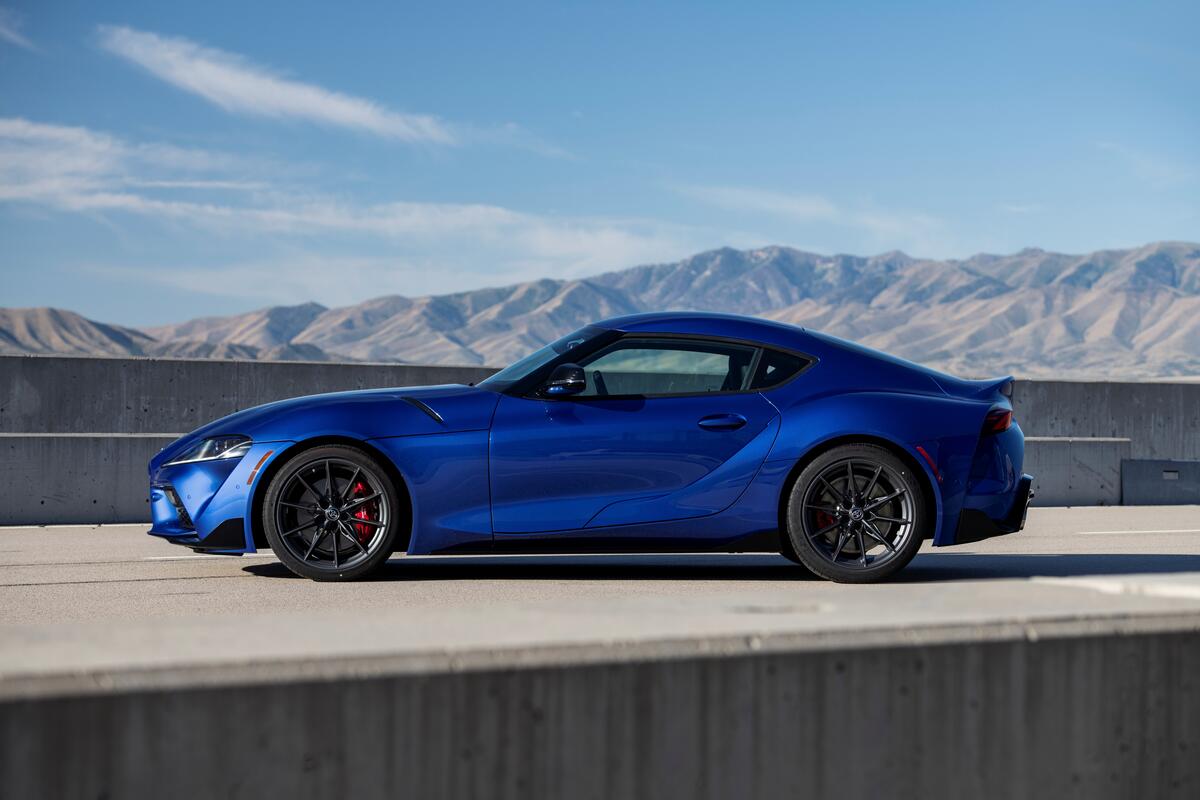
Toyota A90
The Toyota Supra is a sports car, usually a two-door coupe, built for fast driving. Because it has a smooth, glossy paint finish, dirt and grime can stick to it and make the surface look dull. That’s why people may pre-soak it with cleaner first, rinse, and then wash more carefully.
contact wash
A contact wash is when you actually touch the paint with a mitt. The idea is to loosen and rinse off as much dirt as possible first, so the mitt doesn’t drag grit across the surface.
direct Sun
Washing or waxing in direct sunlight can make products dry too fast on the paint. If the product isn’t made for hot conditions, it can leave streaks or stains.
Carnuba days
They’re talking about older car waxes (carnauba) that used to dry and harden very quickly. In hot sun, that could make the wax harder to apply evenly and remove cleanly.
streak
A “streak” is when the soap or wax dries unevenly and leaves visible lines on the paint. Heat can make that happen faster if the product isn’t designed for hot conditions.
stain
A “stain” is a mark or discoloration left behind after a product dries. If the paint is too hot, some soaps/waxes can leave these spots instead of rinsing or buffing cleanly.
traditional glass cleaners
Traditional glass cleaners are the usual spray-on products for windows. The host thinks they can leave extra stuff behind or make the process harder. They recommend trying DI or distilled water instead to see if it cleans better with fewer issues.
distilled water
Distilled water is water that’s been purified by boiling and re-condensing it. It has fewer minerals that can cause ugly spots when water dries. The host suggests it as an alternative to glass cleaner if you’re struggling.
blower
A blower is an air tool that blows water out of crevices and helps dry the car faster. Using it can reduce the chance of water spots because there’s less water left to dry on its own. The host recommends it to improve the drying step.
compressed air
Compressed air is air blown out under pressure. Detailers use it to get water out of small gaps so they don’t have to wipe as much. The host brings it up as a way to improve drying.
deionized water
Deionized water is water that’s been cleaned so it has fewer minerals. When you dry your car with it, it’s much less likely to leave ugly water spots on the paint.
water spots
Water spots are the hard, dried marks that show up when water dries on a car. They can be annoying to get off and may require scrubbing or chemicals that aren’t great for your paint.
wheel cleaner
Wheel cleaner is a special cleaner made to break down brake dust and grime on your rims. If it’s too mild it won’t clean well, and if it’s too harsh it can potentially harm the wheel’s finish.
iron remover
Iron remover is a product that targets tiny iron particles, usually from brake dust. You don’t always need it—only when your paint or wheels have that kind of embedded contamination.
all-purpose cleaner degreaser
An all-purpose degreaser is a general cleaner meant to remove oily dirt. The issue is that it’s not always the right choice for every surface—some wheel/paint finishes can be harmed if the product is too harsh.
high pH heavy duty cleaner
“High pH” means the cleaner is very alkaline, so it cuts dirt and grease strongly. If it’s too strong for the job—or used at the wrong time—it can leave streaks and can wear down protective coatings on your car. That’s why people warn against using it as a pre-soak on hot panels.
hot panel
A “hot panel” is a part of the car that’s warmed up by the sun or heat. When you apply cleaner to something that’s too hot, it can dry too quickly and leave streaks or residue. That’s why many detailing steps are best done in the shade.
black restore
“Black restore” is about making faded black plastic trim look dark again. When chemicals dry out plastics, they can turn gray or patchy. A black restore product is used to re-darken and even out that appearance.
trim restore
Trim restore is meant to bring back the look of faded exterior plastic trim. If harsh cleaners dry out or degrade that plastic, it can look dull or uneven. A trim restore product is used to refresh that surface so it looks more like new.
APC's
APC’s are all-purpose cleaners. The host says they can be too strong for interior plastic parts, which can cause streaks and make the plastic dry out over time. Interior-specific cleaners are usually gentler and safer for those materials.
interior complete cabin cleaner
An interior cabin cleaner is made specifically for cleaning the inside of the car. The host says it’s usually easier to dilute and safer for interior plastics than an all-purpose cleaner. That helps prevent streaks and keeps trim from drying out.
dilute
To “dilute” means to mix the cleaner concentrate with water. The host’s point is that some interior cleaners are designed to be safely diluted, so you can use the right strength without being too harsh. That reduces the chance of streaks and drying out plastic.
pre wash soap
Pre-wash soap is what you use before you start scrubbing the car. It helps loosen dirt so it comes off more easily and you’re less likely to scratch the paint while washing. This host recommends a gentler, near-neutral pH version to avoid streaks and damage.
paint protection
Paint protection is a product layer you put on top of your car’s paint. It helps dirt wash off more easily and reduces the chance of damaging the paint during future washes.
clear coat
Car paint usually has a top transparent layer called the clear coat. It’s the layer you see and it’s the one that gets scratched or damaged first, so protecting it helps your paint stay nicer longer.
Toughest Shell
Toughest Shell is a paint-protection spray the host recommends. They say you can use it while drying your car to help the towel glide and add protection at the same time.
ceramic coating
A ceramic coating is a liquid polymer system that bonds to the paint surface to form a durable protective layer. It’s used to make dirt and grime release more easily and to reduce how often you need to aggressively wash or decontaminate.
massive drying towel
A drying towel is the microfiber cloth you use to wipe water off the car. A bigger, softer microfiber towel helps you dry without rubbing as hard, which reduces the chance of scratching.
drying aid
A drying aid is a spray you put on the paint while you dry it. It helps the towel slide more easily so you’re less likely to scratch the paint as you wipe off water.
Jimbo's detailing line
Jimbo's detailing line is the host’s own set of detailing products. They’re meant to make it easier to choose what to use and avoid doing too many complicated steps.