Mark Bruno shares his extensive journey in the car audio world, from early experiences at a stereo shop to becoming a national trainer for Eclipse. He discusses the evolution of sound quality competitions, the challenges of tuning cars, and the camaraderie among competitors. The episode dives into the technical aspects of car audio, the impact of different organizations, and the importance of community in the car audio scene. Mark also reflects on the changing landscape of car culture, including the rise of social media influencers and the challenges they face.
In this episode of the SQOLOGY Podcast, Klifton Keplinger and Michael Myers are joined by special guest Mark Bruno. Mark shares his origin story in car audio, his time at Eclipse during its peak years, and the real-world lessons that shaped how he builds and tunes today. The conversation covers competition mindset, “run what you brung” versus last-minute changes, what separates top money-round cars, and why consistency is harder than people think when conditions, judges, and formats vary.
This episode is sponsored by ResoNix Sound Solutions, providing engineered sound treatment designed to reduce noise and resonance and create a stable foundation for serious sound quality systems. Learn more at resonixsoundsolutions.com.
This episode is also supported by SVR XV (Steel Valley Regional 15), taking place July 17-19, 2026 at the WesBanco Arena in Wheeling, West Virginia. Registration for the Top 48 competitor field is currently full. For more information, contact Larry Chijner or Richard Papasin, and follow the Steel Valley Regional Facebook group for updates on organization registration, announcements, and availability.
SQOLOGY exists to document the pursuit of better sound, preserve the culture of sound quality competition, and keep meaningful conversations alive across seasons, regions, and generations.
Alpine is a company that makes really good sound systems for cars. They are known for making music sound great when you're driving.
Alpine is a brand known for high-quality audio equipment, particularly car audio systems. They are recognized for their innovative technology and sound performance in vehicles.
"...And Bob had an older, well, then it was a new Mercedes. I want to say it was a 500 SEC, like the coupe. Very cool car."
The Mercedes-Benz 500 SEC is a fancy two-door car that was made in the 1980s and 1990s. It's known for being powerful and stylish, making it a popular choice for those who want a luxury vehicle.
The Mercedes-Benz 500 SEC is a luxury coupe that was part of the S-Class lineup in the 1980s and early 1990s. Known for its powerful V8 engine and elegant design, it represents a blend of performance and luxury.
"the subwoofer out in the rear rack out that had two Infinity RSDS 12s..."
A subwoofer is a type of speaker that makes deep sounds, like bass. It's often used in car audio systems to make music sound better and more powerful.
A subwoofer is a specialized speaker designed to reproduce low-frequency sounds, typically used in car audio systems to enhance bass performance. It adds depth and richness to the overall sound experience.
"infinite baffle. And it was in a 1994 Thunderbird Super Chickens..."
An infinite baffle is a way to set up a speaker so it can make better sounds. It helps the speaker produce deep bass without interference, which is great for music in cars.
An infinite baffle is a speaker installation method that allows a subwoofer to operate as if it is in an infinite space, improving sound quality by preventing sound waves from interfering with each other. This setup is often used in car audio to enhance bass response.
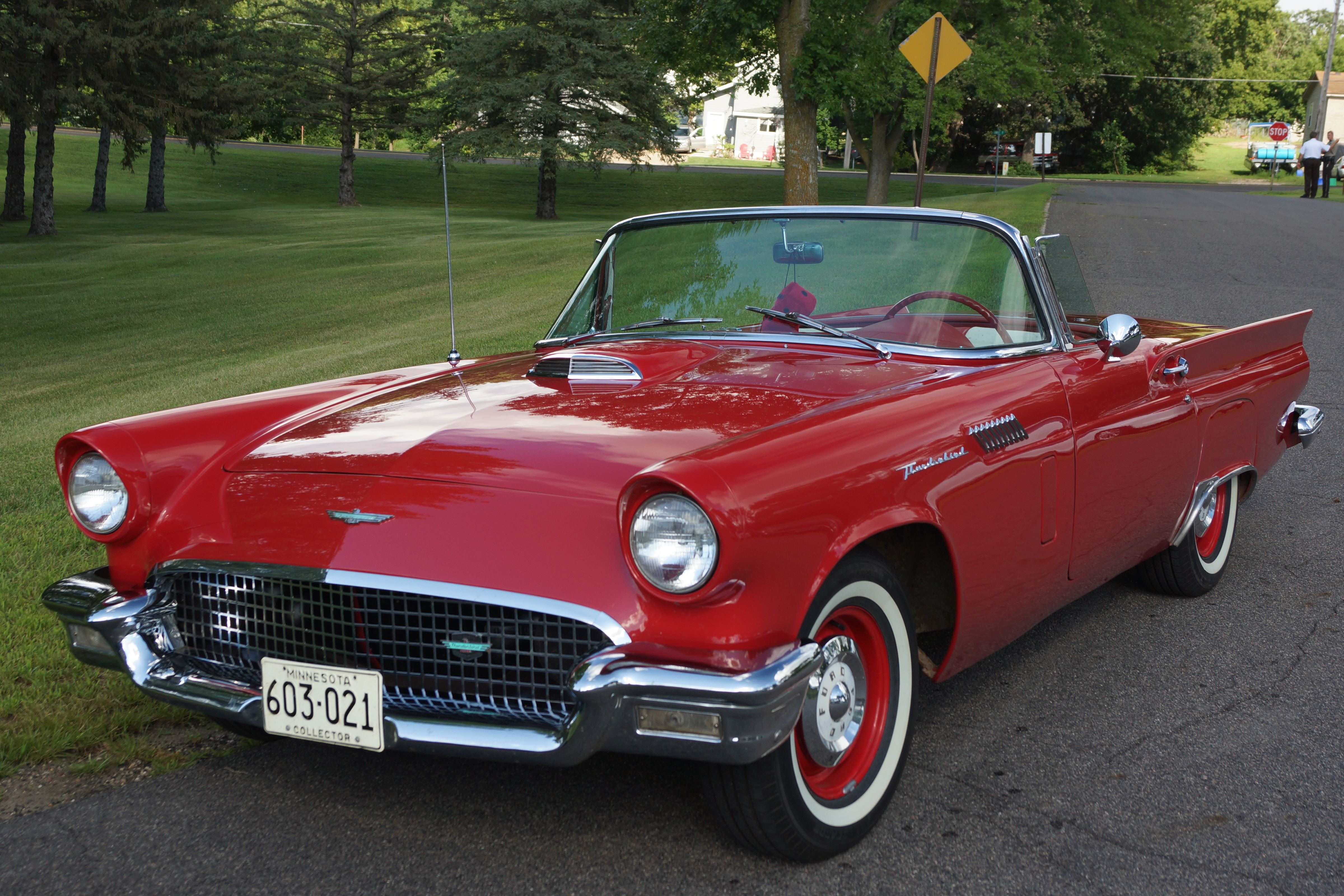
"It was in a 1994 Thunderbird Super Chickens, what I called it. Yeah, those are fun. Yeah, it was a great car..."
The 1994 Thunderbird Super Coupe is a sporty car made by Ford. It has a powerful engine and was designed for both performance and comfort, making it a fun car to drive.
The 1994 Ford Thunderbird Super Coupe is a performance version of the Thunderbird, known for its supercharged V6 engine and sporty features. It was popular in the 1990s for its blend of performance and comfort.
"... was coming out the DDL system with all the fiber OPTIQ cable and the first digital processor for a car,..."
The Cadillac Optiq is a new electric car that will have cool technology and features. It's part of Cadillac's plan to make more electric vehicles that are both fancy and fun to drive.
The Cadillac Optiq is an upcoming electric vehicle that represents Cadillac's shift towards electrification and advanced technology in the automotive market. It is expected to feature innovative systems, including a digital processor and fiber optic technology, highlighting Cadillac's commitment to luxury and performance in the electric vehicle segment.
"Yeah. And it seems like, you know, especially when the eclipse was coming out, like there, from what I remember from the consumer angle, I mean, I had, you know, I had a couple of clips had units."
The Eclipse is a car made by Mitsubishi that was popular for its sporty look and performance. Many people liked it for racing and customizing.
The Eclipse is a model produced by Mitsubishi, known for its sporty design and performance. It was popular in the 1990s and early 2000s, especially among car enthusiasts and tuners.
"...the concept was great, but you actually using a CD was, I thought a really cool idea was just using the table of contents from a CD player as your code."
ESN is a security code used in some car audio systems. It helps keep the system safe from being stolen by requiring a special code to use it after it's been unplugged.
ESN stands for Electronic Serial Number, a security feature used in car audio systems to prevent theft. It requires a unique code to unlock the device after it has been disconnected from power.
"Yeah. When I first got there, it was just the radios, you know, kind of the third generation..."
'Third generation' means the third version of a car model, which usually has new features and improvements compared to earlier versions. For the Eclipse, this version was made from 1995 to 1999.
The term 'third generation' refers to the specific iteration of a car model that has undergone significant updates or redesigns. In the case of the Mitsubishi Eclipse, the third generation was produced from 1995 to 1999 and featured various improvements in design and performance.
Term
410
"...but it's right when the 410 came out. And that was when it started..."
The '410' is probably a specific version or type of the Eclipse that has certain features or engine options. It helps people know which version of the car they are talking about.
The '410' likely refers to a specific model or variant within the Mitsubishi Eclipse lineup, possibly the engine or trim designation. Such designations help differentiate performance levels and features among different versions of the same model.
"...similar to a line array. It's exactly that's what it is. It's a it's a line source, right?"
A line array is a setup of speakers lined up in a row that helps make the sound clearer and more direct. It reduces echoes and makes it easier to hear the music or audio, especially in big areas.
A line array is a type of loudspeaker configuration that uses multiple drivers arranged in a line to create a more focused sound projection. This design helps reduce sound reflections and improves clarity, especially in larger spaces.
"...ged it, it might not have been, what was it seven 100s difference? Yeah. Yeah. You know, it might have,..."
The Audi 100 is a comfortable and well-made car that was popular for many years. It's known for being a nice car to drive and having good features, which helped Audi become a respected brand.
The Audi 100 is a mid-size luxury sedan produced by Audi from the 1960s to the 1990s, known for its advanced engineering and comfortable ride. It played a significant role in establishing Audi's reputation for quality and innovation in the automotive industry.
"...it's a beautiful car, but it's not it's not a purpose built sound quality car, you know, it's not a black Betty or a or a NASCAR or..."
A purpose-built car is made for a specific job, like racing or showing off sound quality, instead of just being a regular car. They have special features to help them do that job better.
A purpose-built car is specifically designed for a particular function, such as racing or sound quality, rather than general use. These vehicles often have modifications that enhance performance or specific features for their intended purpose.
"...it's not a black Betty or a or a NASCAR or, you know, any clips or any clips. Yeah, yeah, yeah..."
NASCAR is a big racing organization in the U.S. that holds races with specially built cars. These cars are made to go really fast on circular tracks.
NASCAR, or the National Association for Stock Car Auto Racing, is a popular motorsport organization in the United States known for its stock car racing events. These races feature cars that are heavily modified for high-speed competition on oval tracks.
"...the problem is I had the Zapko processor in it. And that thing was, you know, some days it'd be great..."
Zapko makes equipment that helps improve the sound system in cars. Their processors are used to make music sound better in vehicles.
Zapko is a company that produces audio processors and other sound equipment for vehicles. Their products are often used to enhance the audio experience in cars, particularly in competitive audio setups.
"...the stereo system that was in it, how it was done and all that..."
A stereo system in a car is like a music player that lets you listen to songs and radio. It has speakers and controls to change the music you hear.
A stereo system in a car refers to the audio equipment that allows occupants to listen to music, radio, and other audio sources. It typically includes speakers, an amplifier, and a head unit for controlling audio playback.
"...unds. Their job was competition. Like they had a semi truck rolling in with, you know, everything. And ..."
The Tesla Semi is a big electric truck that helps transport goods without using gas. It's designed to save money on fuel and be better for the environment, making it a new option for businesses that need to move products.
The Tesla Semi is an all-electric truck designed for freight transport, showcasing Tesla's commitment to sustainable energy and innovation in the trucking industry. It aims to revolutionize the way goods are transported by offering lower operating costs and reduced emissions compared to traditional diesel trucks.
"...has done. And even what you've done with the, the challenger is how much can I do within this, you know, thes..."
The Dodge Challenger is a big, powerful car that looks like it came from the past but has modern features. People love it for its speed and style, making it a popular choice for those who enjoy fast cars.
The Dodge Challenger is a classic American muscle car known for its powerful performance and retro styling. It has become a symbol of automotive enthusiasm and is often discussed for its strong presence in the muscle car segment, especially among fans of high-performance vehicles.
"...but we had guys doing, you know, side shows and all that kind of stuff, cops trying to break them up..."
Side shows are events where people gather to show off their cars and do tricks, like drifting. Sometimes, these can get out of hand and cause problems for the neighborhood.
Side shows refer to informal gatherings of car enthusiasts, often involving stunts, drifting, or other forms of car performance in public spaces. These events can attract large crowds and sometimes lead to disruptions or safety concerns.
"...But man, you got this weird sort of element that is kind of trying to take it over and it's all kind of over social media stuff. So you'll see videos online if you check it out. But anyway, takeover stuff or yeah, like total takeovers..."
Car week is a time when many car lovers come together to see and talk about fancy cars. There are events where you can look at these cars and meet other people who like them too.
Car week refers to a series of automotive events, often featuring luxury and exotic cars, that attract car enthusiasts and spectators. It typically includes car shows, exhibitions, and gatherings where people can admire and discuss various vehicles.
"...But man, you got this weird sort of element that is kind of trying to take it over..."
A takeover is when a lot of cars come together in one place, sometimes causing traffic jams and doing stunts. It can be fun but also a bit chaotic.
In automotive culture, a takeover refers to an event where a large group of cars gathers in a specific location, often leading to street performances or disruptions. These events can be controversial due to safety concerns and traffic issues.
".... He's super into the culture. He has a zero six Corvette. Like he's, he's involved. He's fast. He does all..."
The Chevrolet Corvette is a fast and stylish sports car that many people admire. The Z06 version is even more powerful, making it a top choice for those who love speed and driving excitement.
The Chevrolet Corvette is an iconic sports car that has been in production since the 1950s, known for its sleek design and impressive performance. The Z06 variant, in particular, is celebrated for its enhanced power and handling, making it a favorite among car enthusiasts and racers.
"...they're leasing them, yet they're blowing them up..."
Leasing means you pay to use a car for a few years instead of buying it. At the end of the lease, you can either give the car back or buy it if you want.
Leasing is a method of financing a vehicle where the driver pays to use the car for a set period, typically with the option to buy it at the end of the lease. This allows drivers to have access to new cars without the full purchase price upfront.
"...like you blow a motor on a Lamborghini or Ferrari or something like that..."
Lamborghini is a brand that makes very expensive and fast sports cars. If something goes wrong with one, it can cost a lot of money to fix it.
Lamborghini is a luxury sports car manufacturer known for its high-performance vehicles and distinctive designs. Repairs on these cars can be very expensive due to their advanced technology and materials.
"...like you blow a motor on a Lamborghini or Ferrari or something like that..."
Ferrari is a famous brand that makes very fast and expensive cars. If you need to repair one, it can be very costly.
Ferrari is another luxury sports car brand known for its high performance and racing heritage. Like Lamborghini, repairs can be costly due to the complexity and exclusivity of their vehicles.
"...you can do burnouts and, you know, donuts in a car. I mean, I got a car sitting..."
A burnout is when a car's tires spin while the car is not moving, making a lot of smoke. It's usually done to show off how powerful a car is.
A burnout is a driving maneuver where the driver spins the wheels of a car while the vehicle is stationary, causing the tires to heat up and produce smoke. It's often performed for entertainment or to showcase a car's power.
"...you can do burnouts and, you know, donuts in a car. I mean, I got a car sitting..."
Donuts are when a car spins in circles, making the back tires slide and leave marks on the ground. It's a fun but risky thing to do with a car.
Donuts refer to a driving maneuver where the car is spun in a circle, causing the rear tires to lose traction while the front tires remain pointed outward. This results in a circular skid mark on the ground.
Select text to request an explanation
Many thanks to Resonix Sound Solutions for making this podcast a reality.
Find out more about Resonix Sound Treatments at ResonixSoundSolutions.com.
SVR has become one of the real checkpoints for the sound quality world. It's the weekend where
competitors bring the work they're most proud of, judges get pushed, and the community shows up
ready to listen. If you care about sound quality and the craft behind a serious build, SVR is the
place to hear what's possible and improve in venue with a feel to competitors who don't coast.
Details and registration info are available through the Still Value Regional Facebook
Group or by contacting Larry Chisner. SVR 15, July 17th through 19th, 2026 at the West Banko Arena.
Plan the trip now. Welcome to the Eskelegy Podcast. I'm joined today by Mike Myers. Hello, Mike.
Hello. And we finally have our special guest, Mark Bruno. Hello, Mark.
Hello, everybody. We started planning this maybe around nine months ago or so, and then
everybody's mostly my procrastination on things happened. And anyway, we finally got Mike's
shuffled around and Mark is finally with us. And then very appreciative of that. A few things
have happened since we first discussed doing this. But anyway, welcome, Mark. I'm glad to have you here.
Hey, thanks, Cliff. Thanks, Mike. It's good to have you on. Yeah, I know it's good to be on.
I know your history in car audio is probably much deeper than most people realize, at least on the
national scene. You're, for most people who are currently involved, a fairly recent addition.
It's not like you were been competing nonstop for 30 years or something, like one or two other people
that have the same kind of breadth and depth of your experience in car audio.
But what got you in car audio in the first place? Like, where did that journey start? When and how?
You know, it's actually kind of a funny story. My stepdad's cousins, a guy named Bob Nichols,
and he owned a stereo shop here in Seaside. And it was called Cartoons with a K.
And they did Alpine, all the cool stuff. But I think I was 13 years old, and we were at the
county fair. And Bob had an older, well, then it was a new Mercedes. I want to say it was a
500 SEC, like the coupe. Very cool car. And it was a demo car. So if I remember right, he had 36
Seas six inch in the back. And that was one of the ones that had the gas tank right behind the rear
seat. And so I remember peeking in the rear window. And he had a cartoons hat that was just
doing tricks on the back deck of that thing was flying around. And then eventually it would
fall off and he would send me in there to get it. And then I'm feeling the air pressure and all that.
So I mean, that was it for me. I was, I was, you know, locked in and had to figure out how to do
that, even though I was 13 years old and, you know, had a bicycle, I could put something on.
That's phenomenal. Yeah. So ultimately ended up going to work for him. Through high school,
I started building enclosures for people started doing my own installs and things like that.
And my stepdad was electrical contractor. So I was crawling under houses at 13 with him. So I
kind of had a little bit of a grip on, you know, how electricity worked and all that stuff. So,
you know, the AC side of things with signal kind of came easy for me because I learned the hard
way by being shocked at 60 Hertz 120 volts a lot. Yeah. So if you ever see, you know, I'm a little
sensitive at 60 Hertz. So I think Mike calls me out for not having enough of that frequency of my
car. I'm scared of it. So I don't know what it is. It just brings back bad memories. I can't
sleep afterwards. Yeah. So ultimately I went to work for him and as a sales guy and a guy named
Tim Haines and I had built a couple of cars that I'd taken to I ask actually before I ask a NACA
way back when and did a bunch of stuff up and down the coast with that car. I had one car that
won every show and entered that year in California. Then of course, like all people that are planning
on going to the finals, I decided to tear a bunch of it down. Always a recipe for success. Oh yeah,
and put in a bunch of new passive crossovers that were really cool looking with big air
conductors and polycaps and all that fun stuff. And we had to take the subwoofer out in the rear
rack out that had two Infinity RSDS 12s, infinite baffle. And it was in a 1994 Thunderbird Super
Super Chickens, what I called it. Yeah, those are fun. Yeah, it was a great car and it had that
giant rear deck. So it was perfect for IB. The problem is that's kind of where we integrated
those crossovers so you could see them and for installation and all that stuff. And apparently
when we put the woofers back in, one of them ended up with a cold solder joint and when they're
sharing airspace and an amplifier, that was not a recipe for success. Very big on balance load
at that point. Yeah, yeah, exactly. Yeah, out of phase with each other and yeah, all kinds of good
stuff. So my mid-base disappeared and was not a recipe for success thing. Yeah, no, definitely
not. Definitely. And so that's why I tend to run what I brung these days. I learned that lesson
the hard way, making all these changes and you know, try not to do changes until it's the
off season or whatever. Interation is key. Yeah, exactly. So where'd you end up next?
So what did I do? So I bounced around to a couple different retail places in the area. I met Reese
Haggett, who was a guy who pretty much started Alpine way back in the day. And at that point,
he was at Eclipse. And this was here in California at the time? In California, yeah, yeah. He came
in for a sales training with Ray Windsor and all that stuff. He saw a car that I had done before
and he was coming out the DDL system with all the fiber OPTIQ cable and the first digital
processor for a car, all that fun stuff. So we got one of the first units in the country,
the first round of prototypes. We got one of those and I remember the manual was all in Japanese.
You had to look at pictures to try to figure things out. Ultimately, what you really had to do
was just kind of play with buttons and watch it on an RTA and see what it was doing to figure
out how to use the thing. So I went through that whole process and that actually is the
vehicle that we ended up doing really well with. And so I was down attending a training at Fujitsu
and Ray was kind of struggling through kind of what it does because there was no manual. He
hadn't really had his hands on one in a car like that and Reese kind of bumped me and said,
hey, why don't you go up there and show them what you've learned with it? So I went up there and
I forget how many reps are there. There's probably five or six reps and maybe 20
dealers and just kind of ran through what I knew about the system and all that.
And then he asked me to go to CES that year and at CES he says, hey, I'm going to find a spot for
you and make you our national trainer. And yeah, so I thought that was really cool,
although I failed one class in my life and it was speech.
It was in college, right? And so immediately he goes directly into a speech role,
going into people. No, no cliff would happen is I immediately started sweating when he told me
what I was going to be doing. You're like, oh, training. That sounds like, oh, wait a minute.
Oh, whoa, wait. And he said, it's what you just did. And I'm like, okay. So anyway,
Reese ends up not getting hired back. They let his contract expire. Apparently he spent way too
much money or something like that. There's all sorts of stories about it. And Ray became the
national sales manager and it took about six months for Ray to get the budget to hire me,
but then he brought me in. And by the time I actually made the move down there, we were about
three months out of CES and they had all this new product stuff. And so I never went out and did
any training in the field. My first indoctrination into being the trainer was in front of 120 reps
at the Consumer Electronics Show at our rep meeting. Even better. And oh man, I was like, you
know, and of course, those are the kindest, most gentlest people when it comes to any
technical information being conveyed, I'm sure. Yeah, they did not want to hear the technical
stuff. They wanted to hear how much money they could make. All I'll say is thank God I didn't
eat anything the night before because I'm pretty sure I would have made a mess on stage. Yeah,
one way or the other, it would have came out, right? So that was an interesting experience.
But what I quickly realized is if you know the product better than anybody in the room,
you've got nothing to worry about standing up in front of them and actually training. So
it took me a few times to do that. And I also realized that silence was kind of my friend
when you're doing these trainings, it's okay to rest for five or even 10 seconds and get your
thoughts right. Because everybody just seems to, yeah, because everybody just seems to draw in even
more if you're on track up to that point. So what's he gonna say next? Yeah, something like that,
right? Yeah, yeah, what kind of crap is going to come out of his mouth next? And then, yeah, exactly.
Yeah, or uh, uh, uh, uh, yeah. So, so I did that for, I think about a year and a half,
and then that rolled into being a trainer as well as being the Western Regional Sales Manager
as Eclipse was starting to grow. That's a good, that's a good time to be alive.
Oh, it was, it was actually a super cool ride. I still hang out with some of the reps once in a
while. Like I saw Brad Crawford down in Southern California at the, at the show. And uh, he's,
he's retiring right now, but he's with Western Sales and Marketing back then. It was a great rep
and he was a very technical kind of a trainer guy. And he, when I, he and I were kind of reliving
those days and uh, he was just, you know, big ear to ear grain. He goes, those were just great
times. I mean, we were just, you know, forging a new path. It was like reinventing Alpine for the
specialty realtors, realtors, listening to me, especially realtors, especially uh, retailers.
Yeah. Um, it was, it was, it was a lot of fun. Then Dan McMillan up north and I, you know, I was
just up there a few weeks ago and, you know, we were talking about it all that. And so it's,
they were really good times, really good times.
Yeah. And it seems like, you know, especially when the eclipse was coming out, like there,
from what I remember from the consumer angle, I mean, I had, you know, I had a couple of clips
had units. I had the, um, one of the Eclipse aluminum, you know, 15s that were awesome clubs.
Yeah. And that was kind of, kind of in the later run, you know, of Eclipse, but throughout their,
you know, tenure in the market, they always seem to have a really spotless reputation. Like
it feels like they were one of the brands. I mean, I'm sure it was different working on the
inside. No, no, it's exactly like you're driving. But from a consumer angle and part of it may have
been just, you know, there and it wasn't the same as it is today. But, you know, there was,
there was, from a consumer angle, it felt like it was pretty much like, you know, yeah, there's,
you know, Alpine had its good and it's bad and Sony did, you know, and that was like,
especially when the explode series kind of came out and ES kind of took a dive. You know, there
was, there was a lot of that, a lot of complacency in the market. And it seemed like Eclipse was
the one that was continually, how many volts can we throw out in this output? How, you know,
what we got here? I mean, the, the security, the security discs were super annoying.
But other than that, I mean, I think I have, I still have at least two Eclipse stacks that
are completely brick because I can't do anything with them. But yeah. Because ESN stuff. Yeah.
ESN was, it was super cool. The concept was great, but you actually using a CD was,
I thought a really cool idea was just using the table of contents from a CD player as your code.
Right. The problem is nobody ever remembered or the installer would use their favorite CD and
the next thing you know, they're working for somebody else and nobody remembered what they
used and we would reset a bunch of them. Yeah. But I thought the concept was great. We actually
caught people and had the cops go pick them up with stolen radios with ESNs in them. So that part
of it was really cool. And then you probably remember there was an insurance policy on it
where if it got stolen, we'd give you a new radio. Right. Oh yeah. How'd that work out?
So it was, it was there. I mean, it actually worked out great. Nobody, I don't remember
has ever replaced in a radio from being stolen. Really? Okay. So yeah, yeah. So either people
didn't follow through with it or the work got out fairly quickly. Right. And you know, retailers,
one of the reasons those radios were popular and we kept selling stuff and everything else was
kind of slowing down was, I mean, one, the distribution was pretty skinny on them. So
retailers weighed heavily on them. But it was something different. And that's one of the things
we always tried to do with that brand back then was, you know, to, to create something that other
retailers didn't have to sell. So the reason we had an aluminum cone on a subwoofer wasn't because
it performed better. It performed as good as or, or maybe a little bit better than other
products that were out there, but it's because it looks super cool and it was so different. Right.
And they did perform really well. They sounded great. I mean, yeah, yeah, exactly. Because I went
from solo barracks to those. And I mean, it was in the solo, solo barracks back then that was a
really good sub. Like it was, yeah, absolutely. But, but yeah, I mean, it was one of the subs that
just had a noticeable like sound to it that was, you know, I don't know, sakeable. It was fun.
Yeah, it was one, I think it was one of the first speakers to kind of throw all the old rules out
about subwoofers. And instead of making the cone assembly and voice call assembly and all that
as light as you could, we kind of went the other direction. We were just, yeah, we're trying to
compress air in a car. So it's a totally different thing than compressing air in a big room or in
auditorium or in a concert hall, right? Right. Yeah. So you can throw away some efficiency
to gain a lower resonant frequency. Exactly. Exactly. And we used a guy named Tilo Stampler
who TC sounds you guys probably remember. Yep. So he was the guy who did the engineering on that.
I went to him kind of with the concept, here's what we're thinking. And of course, like everybody
else we talked to, he said, well, we can do that with a bunch of different cone materials,
but papers, the most cost effective and the stiffest that you're going to get for the money.
I'm like, yeah, but everybody has paper cone. We actually want to do this in aluminum, a spun
aluminum cone. And he looked at me like I had two heads, right? And then I explained to him why
and kind of what we're doing with the rest of the brand and all that. He goes, actually,
that's brilliant. He goes, I just have to find a supplier who can make them. So it was interesting,
you're reminding me of things, you're talking about how good the brand seemed on the outside.
Do you remember what happened to the first round of those aluminum speakers? Were you
in the market at that point? I owned one, but I wasn't in the field to know details.
So they were glued together, basically, with super glue. And the super glue that he got,
the first batch of it was older and had started to go bad, which I didn't know anything. Something
was wrong with the way it was kept. And so cones were basically flying off those things.
Actually, the dust, I'm sorry, the surrounds were coming off the cones, and then the cones would
like smash themselves up. Oh, yeah. Yeah. And that happened right out of the chute. And luckily,
we had just a small batch out there. So we caught it fairly quickly and then replaced them all and
did the right thing for all the dealers and everybody. And the second round of those things
were pretty much bulletproof and sounded great. And then the titanium combs came out, right?
Yeah. So, yeah. So I was working on that project with Teelo and, you know, the Japanese didn't
like to pay you a lot of money back then. Right. And I'd been there for quite a while. And if you
remember the rest of the speaker line, like, you know, I was heavily involved in the coaxials,
the components, the FIFA drivers that we had that were, I thought, pretty, pretty good speakers for
for the money. Right. And we did those point source speakers. I kind of came up with that idea
with one of our suppliers to get around Kef's patent on the drivers so that we had kind of that
same thing, but different and it was designed for car. And so all this stuff had huge margins for
the company and for the retailers. And, you know, we're making money on this brand. And
they're like, yeah, so we thought we'd give you a $2,000 raise this year.
Okay. And I'm like, okay, great. You know, and at that point, Rockford had been trying to get me
to go work for them sort of as a regional that's all timing with those guys and precision power
called me up. I knew Sean Gibbons and he called me and said, Hey, we need a regional and basically
they gave me an employment contract that was more than double what I was making at Eclipse.
And I got to move to Arizona, which allowed me to buy a house. So it was kind of kind of,
yeah, totally different times and stuff. Yeah. Buy a house in Arizona. Yeah. Yeah.
Yeah. In car in 12 volt. Yeah. See, that's what I'm saying, right? But you couldn't buy anything
in California. I mean, I could barely buy a car with what I was making in California with that.
Right. So it was kind of a no brainer, especially with my mom being in real estate and she's like,
Hey, you need to buy a house as soon as you can. I mean, that was always instilled in me when I was
younger. So that kind of was in the back of my head. And that was really the reason why I made
the move to Arizona, but you know, more money and more opportunity to kind of set your future in
motion. So how long were you with Eclipse altogether? Almost seven years, six and a half,
six and a half years, really kind of majority of the time that they were at the peak of the market.
Yeah. When I first got there, it was just the radios, you know, kind of the third generation,
I think it wasn't the cheap stuff, but it's right when the 410 came out. And that was when it started
to get good at look cool and all that. And the performance was there. You can really hear the
difference in them. And then, yeah, all the way through, gosh, I can't remember. But when we had
the mini disc changer, kind of through all of that stuff. And even when they had the voice
operated navigation system, I can't remember what we called that on the main mini disc. I don't
know if you were involved with anything of that. But I mean, how was that with licensing with Sony
and stuff? Because I know Sony is notorious with their formats. They tried with the main disc to
try to open it up. Obviously, they failed with beta max and they failed with smaller things.
And it seems like they tried to open up main disc a little bit too little too late. And I
asked because I mean, I was very into main disc. I had the first main disc recorder that came out
that Sony released. I had a Sony ES main disc changer in my car at one point. I also had the
main disc in dash because even I mean, even after that time, you know, like the Sony, you know, had
the Mavica cameras and stuff like that, the, you know, recorded shots to floppy disc essentially.
So until they kind of until things went to a memory card, and even in the beginning,
the memory cards weren't obviously very big at all. And so there was, there wasn't a lot of
indication at the time to say, well, all these writable media are just going to be obsolete soon.
So at the time, it felt like main disc was really the future because, you know, it was compact. It
didn't, you didn't destroy it just by opening up the package. You know, it was recordable. You
could make your own mix tapes with fidelity. You could record studio level, you know, stuff with
a recorder that fit the palm of your hand. Like there was a lot of advantages to it. So I mean,
I can see forward looking brands like Eclipse seeing that. But then, you know, how was that
competing with Sony with their own format? Yeah. So it's kind of ironic because Reese used to run
around with a memory card way back when that had, like you said, very little memory on it.
But he was showing people, hey, this is solid state. This is where we're going.
And we're going to be there faster than you think. And, you know, CD is temporary.
He kind of talked about mini disc, not as mini disc, but in general, I think he had already
seen it in Japan. And he was kind of against it saying, hey, we need to just skip that. So to me,
it was ironic when we brought that stuff out. Okay. But you, you sound like the perfect guy to buy
the, oh yeah. The three, the three days changer I have at home is really what I was saying. I've
got one sitting at home. So you sound like the guy. You've got some decks for it too.
I mean, I still have, I probably still have 100, 150 main discs. I mean, yeah, I don't use them,
but yeah, I think I have a two megabyte card. I think I think it was maybe that maybe it was
smaller. I don't remember. Yeah. The whole media format changes over the years that we all went
through. And I mean, because there was a time, you know, they're in the late nineties, early 2000s
with, you know, may just be more, more mainstream a little bit there. You know, where when we were
judging cars, you know, for like Mecca, whatever, you had to be pretty much ready for CD, cassette
tape or mini disc. And then, you know, it could be any of those at any given time. It was, I mean,
because there was the rare aspect of the cassette and there was a rare aspect of the main disc.
And then you had the CD that was the majority, but yeah. Yeah. Well, the mini disc, I mean,
to me, the big advantage back then was when you had even an SQ car that could hit 140 CDs were
skipping in a lot of the dashes. And the mini disc, you didn't have that problem. So there were
guys that, you know, really the opinion makers, right? The guys were competing back in those
days were also the guys creating all the opinions out there for other consumers. And they were
kind of moving to that little changer. And that's, that's kind of where those sales went. Early
adopters and, and, you know, kind of the opinion making crowd that was out there.
Right. Was there anything else in the, in the scene at that time that
you saw that maybe was a unique perspective?
Well, you know, the, everybody asked me why I run those ribbons in my car. And I was,
everybody was doing, well, not everybody, but the big thing was compression horns and all that.
And back then I never really heard a car with compression horns in it that I'd loved.
They did a lot of things well in terms of imaging and staging compared to, you know,
for two seat compared to kick panels and all of that. But the tonality in them just never
really kind of got me going. So I never, I never got into those. And a buddy of mine was telling
me about Bollinger Gravener and how they had some products that might be cool in a car.
And this particular gentleman was a, was an engineer at Harman way back when, and he owned
a company called, oh, I can't think of the name of it now, XTC baffles. Remember the little foam
baffles you used to put in your door, you'd cut them in half, put one on the left speaker,
one on the right speaker and keep the rain out. He owned that company and he's also the guy who
did all my passive crossovers. And so they made like air core inductors and, and he had all the
polycaps and all that stuff in stock. Super smart guy. He's also the guy that helped voice a lot
of those speakers and was sending me different crossovers when we're doing the eclipse stuff.
So he was kind of a behind the scenes guy who was just loved doing this stuff. And
he and I hit it off. So for whatever reason, he was always helping me do these things.
He was way more talented than I was when it comes to all of that stuff. I was good at listening
to stuff. But anyway, he hooked us up with the Bullinger Gramer guys. So Ray Windsor and I went
up to Lake Tahoe and I got to listen to the room they had with the 72 inch planar drivers doing
full surround sound. And I mean, it just blew me away. So we had to figure out how to do that in
a car. So we had this concept of doing an eight inch ribbon on its side. And there was an under
dash housing for it. That would allow it to kind of work sort of like a compression driver does.
You can mount it back underneath the dash and it had like this little lens that would reflect
things upward. And it worked pretty good. I had a car that I built at CES. Although I didn't use
the lens, we actually mounted them in the floors and put grills. And even though they were behind
like on the driver side behind the brake pedal, since it's a line source, it really didn't matter.
So that car actually centered out and was dash high and all that in both seats. And it was
pretty impressive. Long story short, I left the company before they delivered those and the
engineering staff or somebody there made the decision to ship them with the lenses riveted
on the driver as opposed to what we had planned on, which was screwing them on so you could remove
them. So obviously when you go to drill out the rivets, all the metal then collects right in the
ribbon. Yeah. And the magic goes here, bring me. Yeah. So they had, you know, it's a push-pull
magnet setup in there. So all the metal goes in there. Right. So that made them, I wouldn't say
stillborn because I still run into people once in a while. I said, Oh, I had a set of those.
They were amazing. But it just bugged me that they never got released in a way where they could
reach their full potential on the competition circuit and all that. So yeah, yeah. Just my
little pet peeve. So I kind of had that little bug in my bonnet, I guess you would say.
So that's why I'm so stubborn about those speakers and really like them and they're
capable if you do the right things with them. That's cool. And Mike, you got any follow-up
questions that we've blown over? When I first saw the car with those in there,
I was like, I don't know about that. And then you hit play and you're like,
okay, they really do sound great. But I expected it to be more like a wide,
not as focused center because the width of the speaker actually is really wide compared to
like a three inch mid or something like that. So it was really kind of astonishing
how focused of a sound and everything you were able to get. But I thought that was just kind of
neat. Yeah, no, it's they're a challenge mounted that way. Ideally, you'd mount them vertically
in a car and I have a vehicle now that might be the recipient of the last pair that I have
mounted vertically. We'll see. Yeah. Because then all of a sudden you've got a vertical line
source instead of a horizontal one. It'll create other problems. But the cool thing about them is
they don't have a lot of reflections on the long ends of the driver, right? So it's like having
think of it as having three two inch drivers all next to each other. It's just going to focus
everything kind of straight out in front of you. And you don't get reflections off the side windows
or towards the middle of the car like you do with a regular conical speaker.
Yeah, similar to a line array. It's exactly that's what it is. It's a it's a line source, right?
So you just have to think a little bit differently when you're putting them in and and you know,
so horizontally is not a bad solution in a car because it takes a side glass out of play.
But that does limit a little bit of the width that I might be able to get on. Yeah. And I don't
know if it's I guess it would be real. Yeah, exactly. Exactly. I still get pretty good ambient
width, but it just depends on the music now. The more I thought about it, I was like, well,
I mean, with the way that it's that that is sitting, you don't move your head like when you're in a
car, you know, space, you don't really move your head so much like left to right. Yeah, exactly.
But you will get, you know, taller and shorter judges quite a lot. So that would make it,
I think, probably a little less susceptible to frequency deviations by moving up and down a bit.
I haven't mounted it that way. Yeah, yeah. It's interesting because early on I had a lot of
problems with taller and shorter judges and huge variances on scores. Yeah. And those cars are
not very good at being able to move the seat up and down because if you push it up, it wants to
push forward also. Yeah, forward. Right. So I just kept working on it and working on it and
working on it and Robert kind of the same thing in his car. And it over time it got a little
more stable, but occasionally like I'll get a judge who's taller and I might have an issue with them
because they're getting different reflections and things than somebody who's, you know, kind of in
the pocket or even a little bit lower than the pocket. Yeah. Well, those cars have a really
large kind of a dashboard front rear, you know. So in that, you know, the dash is kind of like a
horn, you know, between the dash and the windshield is kind of like a horn. So if your face is not
like within that horn window, then it will change it quite a bit. Yeah. And then sometimes for technical
stuff like the Emma stuff, you have to have your head just in the right spot. And otherwise it,
you know, the last, what is it, the last high frequency goes flying around the car.
For whatever reason. And I've heard other cars that don't have those speakers do the same thing,
but yeah, it's reflecting off of something and it's hard to control unless you dial it down.
Yeah, cars are just difficult. I mean, there's a lot of glass in the top.
I've seen that what kind of a big movement with people using dash locations because it's easier
to control kind of some of that stuff. You know what you've got, I guess, right?
Yeah, I mean, you get, you know, some free low frequency extension out of your mid range drivers
because they're horn loaded, you know, but at the same time, if the angle,
you know, between the mid to like the glass reflection is pretty extreme, you know, like
smaller than, you know, 45, you know, closer to like,
you know, more like 60 degrees or something like or something like that, then you start to get
nulls like in the response of the mid. And so, you know, you can kind of point the speaker
more towards the inside the cab to help smooth some of that out. Yeah. Yeah. Yeah. I think a lot
more people are starting to, starting to embrace what the, what the OEMs have already figured
out long ago is that the dash locations work great. Yeah, you get the biggest bang for your
buck for sure there, right? Yeah. I mean, it's not perfect by any means, but I mean,
as far as all of the trade offs go, it's, it's a pretty good way to go. Yeah. I totally agree.
Like Teresa's truck, when I don't screw the tune up is really good. Well, I mean, there's,
there's so many, there's so many good sounding vehicles that I've heard with that type of setup,
you know, especially at SVR when we listen to so many and, you know, it's like a more
of a search and discuss for a while. Everybody was just, you know, A pillars, A pillars,
pillar pods, dash pods, and people are starting to, you know, embrace this again, you know,
the dash location. And there was a lot of pretty good sounding cars. I agree. I agree. I heard,
I usually don't get around and list a lot of cars because I'm usually just the demo fiend
with people in my car and Teresa's car. So I did get around and hear a few there and I was kind
of blown away by some of the cars that I heard. Yeah. And you can tell there's, there's definitely
a rising tide right now with SQ cars and, and the work that people are putting in, the sound
deadening that people are doing, all the things that, you know, we learned way back when that you
just kind of have to do, I think people were doing in stages, right? They would, well, let's just get
the speakers into a little bit of sound deadening. And the reality is when you really kill that car,
that's when you hear all the difference, at least for me and my old crusty ears, but yeah, you know,
that makes a big difference. So, so looking back on the, you know, competition scene in particular,
you've won quite a few of these money round, you know, top, top 40, top 50 type of type of
contest, you know, so like Aggieland, SVR, you know, back to back. What, what do you attribute
some of that success to? You know, that's a tough question. I kind of tune the car the way I like
it to sound. And I usually, when I'm tuning, I'm looking for things that don't belong. So I'm not
looking for a certain type of signature sound. I'm hearing stuff that just doesn't sound right.
And I'll work on tuning that stuff out. And I think what happens, the biggest thing that I hear
people say is, you know, there's really nothing bad to point at in this car. I mean, you can nitpick
anything, right? And I nitpick it daily. That's, I think, kind of how it got, well, I would like to
listen to it. But so I think that that's really the key. And you figure you've got like, at SVR,
we had what, six different judges? Yeah. And I would say, you know, no two judges were looking
for the same thing when they get into a car. So it's easy for them to get into one car and just
say, Oh my gosh, this is really something's really wrong. And they hear it through all of their tracks.
And you get really hammered. So you just have to make it, I think anyway, where there's really
not much you can, you know, pick on in the system. Right. Right. And it was kind of like I was telling
you at Aggieland this year when I got out and you said, Yeah, that low base note is way too hot.
And I said, I know, but I run in what I brung and I kind of made the decision back here before I
got there to leave it that way, because it did some other things with some of the other orbs
better that way, in my opinion. And the put on tracks or the put on track is always a pain in
my butt. And I made some and I made some adjustments good for SVR. But you know, I had like, Miguel
got in the car at Aggieland, he said, you know, that that that's too hot right there. I said,
Yeah, he goes, you're not going to change it. I'm like, no, he goes, I got my laptop,
we change right now. So no, I'm not going to change it. I mean, it is what it is. And had I
changed it, it might not have been, what was it seven 100s difference? Yeah. Yeah.
You know, it might have, it might have been a little bit bigger spread than that. I don't know.
But I mean, you know, so but I like I said, I mean, I learned a long time ago, just run what
you brung. And the reason Teresa's truck did so bad so poorly at SVR is because I was sitting in it,
trying to make some changes from a show that we had before some good feedback that I heard in it.
So I'm sitting in it trying to make those changes. And then I got distracted by a competitor who
needed the music. And when I came back in, I didn't listen to it, I just saved it and shut it,
shut the computer and got out. Well, apparently I pushed something where some things changed
pretty radically. And I didn't listen to it until I got back home. And I'm like, what the hell was
I thinking? So, you know, yeah, no. So I mean, that's that's why I try not to break that rule,
right? Yeah, because you're there where there's all these different people, there's all these
distractions and all that where if I'm sitting here by myself, I've got, you know, three, four
hours to get it right. Yeah, or I should say not to screw it up. Yeah, yeah, don't break it.
Yeah, and that's and I think I've told you that at a couple of shows, but I'm glad you haven't
listened to me because it's really paid off for you. Well, I think it this at SVR, you said it
wasn't the low note, it was I think you said the fourth note. Yeah, yeah, the second. Yeah. Yeah,
a second last one, right? So I think so that's not not the low. Yeah, yeah, it's a little higher.
And I was struggling with that one because I knew it was a little bit lower, but as I turned it up,
it then started to pull back. So without a front sub, you have to be super careful in that range
because those notes are pretty, they're pretty naked. There's not a whole lot. Yeah, you're
mid-bass really play it. Yeah. Yeah. I mean, they probably could if I if I actually cut them
out and made them true I be as well, I probably could get a little more out of them. But
I don't know if I want to do that or not at this point, right? I don't think you should mess with
this. Pretty awesome. Yeah, that's what everybody keeps telling me. Don't touch it. See, don't even
breathe on it. Yeah. Well, there's there's some guys coming up and I'm guessing it's just a matter
of time before guys start kicking its butt. But that's okay. I mean, it's I'm amazed that it's on
the run that it's on right now. So yeah, yeah, to have multiple do amazing to have multiples
like that in a row is like, you know, your Mark Eldridge level stuff where yeah,
yeah, super impressive. Yeah, especially, especially considering the car is not, you know,
looking at it, you know, it's a beautiful car. I mean, obviously from the paintwork and
a careful, careful cliff, careful car careful. No, I'm just kidding. No, it's not a radical
build. Yeah, that's all. Yeah. Yeah, it's it's it's a beautiful car, but it's not it's not a
purpose built sound quality car, you know, it's not a black Betty or a or a NASCAR or,
or, you know, any clips or any clips. Yeah, yeah, yeah. You haven't where the steering wheel is.
Yeah. Yeah. Without without without any adjustments. I know I was going to put you guys in the back
seat and do a certain thing, but but there's no back seat. So I mean, it's and it but at the same
time, it's still a show car. And I think that's kind of the two contrasts are in this room right
now because like, you know, mics are simple, straightforward builds that do phenomenally
well. And yours is still not a purpose built car, but it's on the show car end of, you know,
showing up. But I think, you know, it takes it takes that kind of mixture at these things to
where we don't just look like a Walmart parking lot, you know, it's like, oh, yeah. And so having
that attraction to the car, it doesn't matter if you're a fan of the vehicle itself or not,
there's so much work in that car that, you know, the more you the, unlike most builds,
the closer you get to that car, the more you notice, you know, and I think that's a really cool,
you know what you're doing on the car show side, obviously, but for it to be doing as exceptionally
and consistently well as it is doing on on the competition side with not being a purpose built
vehicle is awesome. I mean, it's really well done. No, thanks. I mean, there's there's a lot of people
that worked on that car. And you know, I know Brian gets a lot of the credit for it. And he did the
back end when we switch the amps and the cosmetic stuff and all that, which is amazing. But what a
lot of people don't realize is the front speakers have been in that car since 2019. And I had some
success with it. Then like I actually beat Brian at one of the shows with the Cadillac and I beat
Scott Welsh and I forget which I want it wasn't his van. It was something before that. But the
problem is I had the Zapko processor in it. And that thing was, you know, some days it'd be great.
And especially if smaller shows and if you had a show that was a money round, you could look at
score sheets and there'd be huge swings on the same tune with the same, you know, money round guys
kind of get going through it. And it would just change. So it's like when it got hot, you know,
the the image would go from being all the way across the dash, it would collapse to the middle
or something like that. So that's really what the next door. Yeah. No, I mean, I had Matt Roberts
play at all. Matt Roberts got out of the car at a big show in LA. And he looks at me, he goes,
he goes, dude, because your image is all screwed up. It starts in the center and goes to the left
pillar. I'm like, I'm like, basically FU Matt, there's no way it does that, right? And I didn't
know him that well at the time, but I get in the car and like five minutes later, I jumped in it
and it went all the way across the dash. And I had, I had Nick Adams was parked right next to me.
I said, Nick, is this going from the center over? And he's like, no, it's across the dash. He goes,
your image is a little bit fuzzy compared to where it was, but it wasn't, you know, like,
like he was saying. So I just chalked it up to, you know, him having a bad day or, you know,
maybe he didn't like me. I don't know, right? Like competitors do. But he seems like a pretty
straightforward guy. And then his wife got in it. And that was after, I forget who went through it.
We had somebody else go through it right before her. And she had it also, not at the middle,
but it was definitely way off the right side. And so I'm just like, whatever, right? So we're
getting ready for finals that year. And we're in, we're sitting in Brian's garage at his shop.
And we just put some finishing touches on it. The things sounded amazing. We're like, hey,
let's go get some sandwiches and come back. So we left the system on with that Zapco,
you could leave it running only we had the volume turned down. And we come back, eat our sandwiches
and Nick goes, Hey, I'm going to get in here and listen to it. And like 30 seconds later,
he gets out, he goes, dude, you've got no right side. And it was from the center to the left.
And the fans were running inside that Zapco, you could hear something in there just buzzing.
And so there, that, that was our deal. So we tried to do the finals that year with fans and
things like that on it. It still didn't, didn't work. So that was when we were in the, that was
when we were in Arkansas, I think at the, the pig farm. Oh yeah.
When you said work for days, I was like, you're being awfully kind and optimistic there. I mean,
See something that's not quite right? Our annotations are AI-generated and can sometimes miss the mark.
Click the flag icon on any annotation to suggest a correction.