Instead of the engine turning the coolant pump with a belt, an electric motor runs the pump. That can help the car manage engine cooling more precisely.
A mechanical pump is the traditional coolant pump that’s turned by the engine. Because it’s belt-driven, it changes speed as the engine speed changes.
Concept
drag racing community
Drag racing is very hard on the car in a short time, so heat control matters a lot. Cooling upgrades that keep working after shutdown are especially useful for racers.
“Cool the engine offline” means circulating coolant without the engine running. Electric pumps enable this by providing independent power to move coolant even when the crankshaft isn’t turning.
Engines have to spend some power to run accessories like a mechanical water pump. The idea is that an electric pump can reduce how much engine power gets used just to move coolant.
Vibration is the shaking a pump gets while it’s mounted on a running engine. That shaking can wear out parts faster, so engineers try to protect the pump from it.
Electronic ignition is the system that makes the spark for the engine. If the car’s electrical system gets noisy, it can potentially affect how that spark is controlled.
A lip seal is a seal with a flexible edge that presses against a spinning part to stop leaks. The episode is saying they moved away from the industry-standard version to improve durability.
A ceramic face seal is a very hard, flat sealing surface that helps stop coolant leaks. The idea is that it wears slowly, so the pump can last a long time.
Term
OE
OE means “original equipment,” like the parts that came on the car from the factory. They’re using OE pumps as a reference point for what seal technology is already proven.
A brush-type motor uses physical carbon brushes that contact the motor’s commutator to transfer electrical power. Those brushes wear out over time, so in a brushed electric water pump, brush life can become the limiting factor for overall pump longevity.
GPM means “gallons per minute.” It’s just a way to say how much coolant a pump moves each minute. It’s useful, but it doesn’t tell the whole story because real engines restrict coolant flow.
Flow rate means how fast and how much coolant is moving through the engine. More flow can sound better, but the pump also has to push coolant through tight passages, not just move a lot in open space.
A head gasket sits between the engine block and the cylinder head. It helps seal combustion and also affects how coolant can pass through the engine, so it can add resistance that the pump has to overcome.
The radiator cools the hot coolant by transferring heat to the air. It also makes it harder for coolant to flow, so the pump has to work against that resistance.
A pump graph is a chart that shows how the pump behaves under different conditions. Instead of just asking “how much flow,” it also shows whether the pump can build enough pressure to push coolant through the system.
“Flow versus pressure” means: if the pump has to push harder (higher pressure), how much coolant can it still move. Real engines need that pressure to get coolant through tight spots.
A electric water pump moves coolant using electricity instead of being driven directly by the engine. That can let it push more coolant when you need it, like during hard driving.
Road course driving means track-style driving with lots of sustained hard use. That kind of driving makes the engine run hotter for longer, so cooling upgrades matter.
Ambient temperature is how hot the air is outside. When it’s very hot out, the cooling system can’t dump heat as effectively, so the engine is more likely to run hot.
Pump sizing means picking a pump that can move enough coolant for how hot the engine gets. A slightly bigger pump can give you extra cooling “headroom” so you’re less likely to run hot.
If the water pump stops working, coolant can’t move through the engine. Without coolant flow, the engine can overheat fast—especially when you’re driving hard.
Loose or corroded electrical connections can cause resistance, which makes things heat up. That extra heat can trigger fuse problems or other failures, so it’s important to find the root cause.
If a fuse keeps blowing, something is wrong electrically—often too much current or a short. Putting in a bigger fuse can hide the issue and make things more dangerous.
A crimp is how a wire is clamped onto a connector. If it’s not crimped correctly, the connection can be loose or resistive and cause electrical problems.
A ground path is the electrical “return route” that lets current complete the circuit. If the connection is bad—like when paint or coatings block metal contact—things can act unreliable or stop working.
Bearings are the parts that let a rotating shaft spin smoothly. If they start making noise or wear out, they can make the pump work harder and fail sooner.
A test stand under pressure is a controlled setup where the pump is run and checked while pressurized. It helps catch leaks or seal problems before the pump goes to a customer.
Stop leak is a coolant additive meant to plug small leaks. It can cause problems for pump seals because the seal needs coolant to behave in a certain way to stay sealed.
A mechanical seal is the part that keeps coolant from leaking where a rotating shaft passes through the pump. It uses tight, precision surfaces that stay lubricated so they can seal reliably.
Wide open throttle means the gas pedal is fully down. The engine is under heavy load, so it makes more heat and needs stronger cooling.
Term
cooling challenge
“Cooling challenge” is how hard it is for the cooling system to keep the engine from overheating. It depends on how you drive and how long the engine is working at high load.
Power adders are upgrades that make the engine produce more power than it did originally. More power usually creates more heat, so the cooling system has to work harder.
Heat soak means the engine parts keep getting hotter and hotter because the heat can’t leave fast enough. After a long hard pull, the metal can stay hot even when you’re not adding more heat.
Block pressure is how hard the coolant is being pushed inside the engine. Higher pressure makes the coolant boil at a higher temperature, so the engine is less likely to overheat.
Effective boiling temperature is the temperature where the coolant starts boiling in your specific cooling system. Because the system is pressurized, the coolant can get hotter than plain water before it boils.
Hose size matters because it changes how easily coolant can flow through the system. If the hoses are too small or restricted, the engine may not cool as effectively.
AN hoses are a common aftermarket standard for performance fluid lines. The key thing here is that the hose size you pick can change the inside diameter, which affects how much coolant can flow into the pump.
“Dash 20” is a hose size label used with AN-style fittings. The important point is that the inside opening may be smaller than what the car originally used, which can limit coolant flow into the pump.
A centrifugal pump uses a spinning wheel inside the pump to push coolant outward. Coolant enters near the center and gets flung toward the outside, which helps it circulate through the cooling system.
The inlet side is the part of the cooling system where coolant first enters the pump. If that entry is too small or restricted, the pump struggles to pull in enough coolant.
A cooling system is the full network that removes heat from an engine, not just the water pump. It includes components like the radiator and fans, and their airflow and flow rates determine overall heat rejection. The segment highlights that pump performance depends on how the rest of the system is set up.
Airflow is how much air is actually moving through the radiator. If airflow is weak, the radiator can’t get rid of heat well, so the engine may run hotter.
In a cooling system, the radiator fan provides forced airflow across the radiator when natural airflow is insufficient. The fan’s effectiveness often drops as vehicle speed increases because airflow from driving becomes the dominant cooling source.
The core support is the mounting structure that keeps the radiator positioned. If the front end isn’t sealed or aligned right, air may go around the radiator instead of through it.
Term
spoiler underneath the car
Underbody spoilers help guide airflow under the car. If one is missing or altered, air may not be pushed through the radiator the way the car was designed to do.
Instead of fresh air flowing through the radiator, the air gets trapped and comes back around. That makes the radiator less effective at cooling the engine.
Pump capacity is how much coolant the pump can push through the system. If the radiator can’t get enough air or the flow path is restricted, a bigger pump may still not fix overheating.
Coolant flow is how quickly coolant is moving through the engine. If the flow is too low, some parts get hotter than they should because the coolant can’t remove heat quickly enough.
Twin turbo means the engine uses two turbochargers to make more power. More power usually means more heat, so the cooling system has to work harder to keep temperatures under control.
Cylinder heads are the top parts of the engine where combustion happens. They get very hot, and they need coolant flowing through them to prevent overheating.
Term
ambient cold coolant
Ambient cold coolant refers to coolant that’s cooled to near outside air temperatures before entering the engine. Even if the coolant is very cold, the system still needs enough flow to move heat away from the hottest engine areas.
Hot spots are small areas of the engine that get much hotter than the rest. If coolant isn’t moving there fast enough, those spots can overheat and cause major problems.
The alternator is what keeps your car’s battery charged and runs the electrical stuff while the engine is on. If you add an electric water pump, it uses some extra electricity. The guest is saying most alternators have enough extra capacity to handle that.
Air can get trapped in the cooling system. If that air gets into the pump, the pump can spin but not move coolant well, so the engine may not cool properly. The guest says this is a major issue that can basically stop flow.
A centrifugal pump is a common style where a spinning part pushes coolant through the system. If air gets trapped inside, the pump can’t push coolant effectively. That’s why the guest says air-locking is especially bad for this pump type.
When you fill a car with coolant, you want to get the air out of the system. If air gets trapped, the coolant may not circulate the way it should.
Part
300 series pumps
“300 series” is another water pump model line from their company. The main point is it’s mounted on the engine, so the filling/bleeding process can be guided differently.
Part
100 series pumps
The “100 series” is a specific type of water pump in their lineup. The important part is that it’s mounted on the engine, which changes how you deal with filling and air removal.
A vacuum fill tool helps you fill the car’s coolant system without leaving air pockets. Less air in the system means the coolant can circulate properly.
Instead of bolting the water pump directly to the engine, you mount it somewhere else on the car and connect it with hoses. People do this when the engine bay is too tight for the usual setup.
This pump has one place where coolant enters, but two separate paths where it exits. On a V8, that lets you send coolant to each side of the engine more easily.
This is a coolant pump that runs on electricity and can be mounted away from the engine. Putting it “remotely” helps fit it in tight spaces and can make the rest of the front-end easier to build.
The steering rack is the component that converts the steering wheel’s rotation into left/right movement of the tie rods. In front-end packaging, it can limit where pumps and hoses can be routed or mounted.
Concept
front weight vs rear weight for drift
For drifting, where the car’s weight sits matters. People often try to move more weight toward the rear so the back tires can slide more easily and the car rotates better.
A remote pump is a water pump that’s placed somewhere else in the car, not right on the engine. It helps circulate coolant, either by itself or to boost the main system.
Concept
street rods
Street rods are classic hot rods that are built to be driven and shown. The speaker is saying the pump was designed to fit and look right in those kinds of builds.
Term
cast type pumps
Cast type pumps are built using cast housings/parts, which can limit how precisely internal flow paths and tolerances are controlled. The speaker contrasts these with a design where components are made in-house to better manage how fluid enters and exits the pump.
Low speed characteristics mean how effectively the pump works when the car is moving slowly or the engine isn’t revving much. Good low-speed performance helps prevent overheating during cruising.
Low RPM means the engine isn’t spinning fast. If the pump is driven by the engine, it also spins slower—so the challenge is making sure coolant still moves well at low speeds.
Clearances are the tiny gaps inside the pump between parts. If those gaps are set correctly, the pump can push coolant more effectively instead of letting fluid slip back inside.
They bring up the Baja 1000 to explain real-world use. It’s a tough off-road race, so the pump has to keep moving coolant under extreme conditions for a long time.
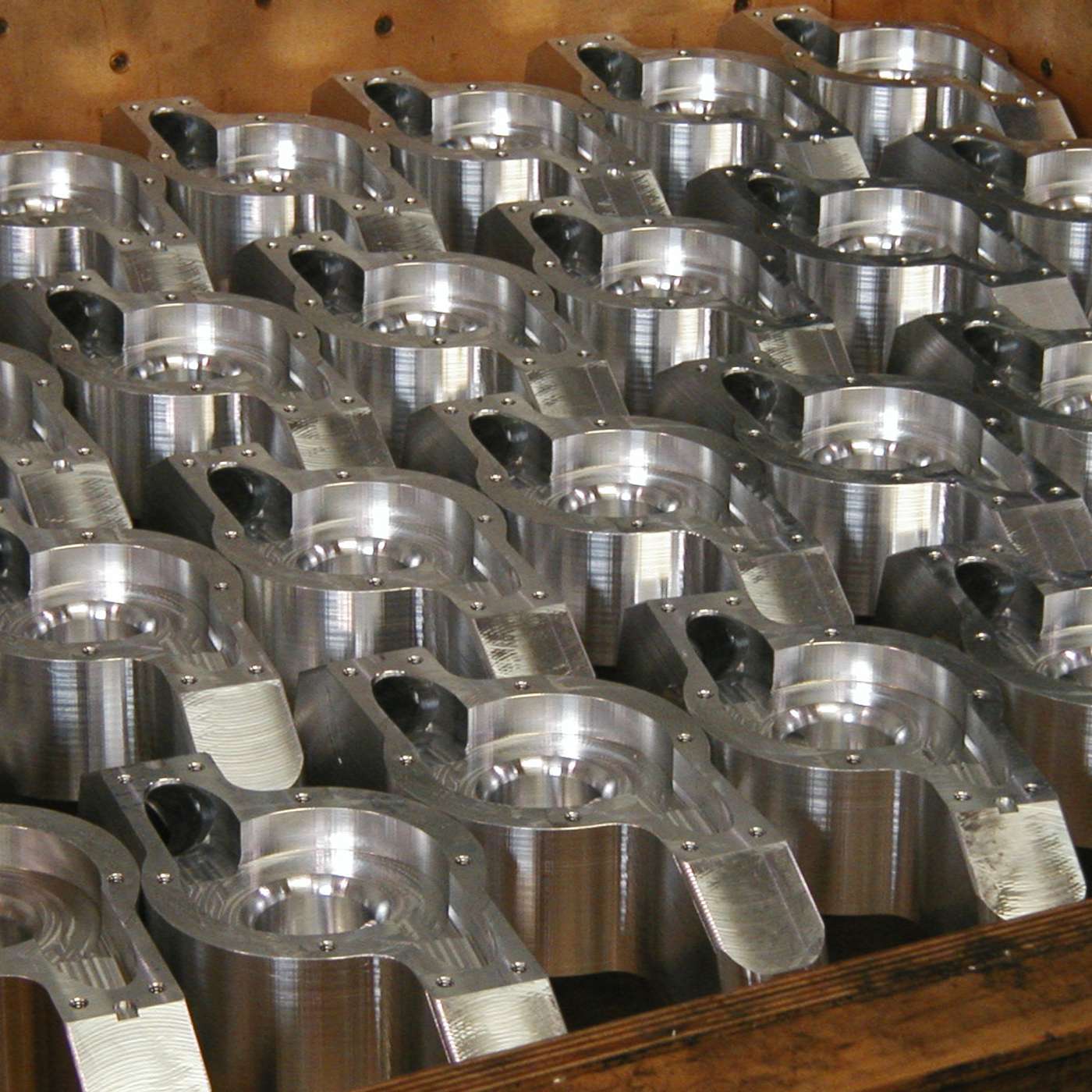
CNC machines are computer-controlled tools used to precisely cut and shape parts. For pump design, CNC machining supports tight tolerances and repeatable manufacturing of components like housings and impeller features.
These are electric water pumps that can be mounted away from the engine. They use a motor with “brushes,” which are small parts that wear over time, so the design can affect how long the pump lasts.
A two-year warranty means the company will stand behind the part for two years if something goes wrong. Longer warranties usually suggest the maker expects the part to last.
Meziere is the company/brand making these water-pump products. They’re saying they still support older, less-common engine setups instead of only making parts for newer cars.
A flex plate is a part that helps connect the engine to the automatic transmission. Performance versions are made to handle more stress, which helps on higher-torque builds.
The starter is what turns the engine over when you hit the key or button. A “performance” starter is designed to crank more strongly or more reliably, especially on modified or demanding setups.
This is a special pan for an automatic transmission that helps cool the transmission fluid. Cooler fluid can help the transmission work better and last longer under heavy use.
LIVE
This is the On All Cylinders podcast powered by Summit Racing.
Your host for today is Summit Racing's Paul Sokolis with special guest, Don Mazir from
Mazir Enterprises.
Here we go.
Paul Sokolis here in your host chair for today.
And it's fair to say that I am pumped to talk about the topic we have on the docket.
And if you'll pardon the pun, it's because we're talking about water pumps.
Now, when you think about a cooling system, your mind probably immediately goes to things
like radiators and fans, right?
But in an almost literal sense, your water pump is the heart of your cooling system.
And there's a lot of high tech brain power that goes into developing a pump.
And more importantly, you got to install it properly to ensure it's doing its job right.
Okay.
So to help us illuminate that topic, we brought in an expert.
I mean that in the truest sense of the word, Don Mazir from Mazir Enterprises.
Don, thank you so much for joining us today.
It is my pleasure, Paul.
Thank you so much for inviting us.
I'm really looking forward to having this conversation, mostly to help, you know, your
customers to understand cooling systems and to illuminate maybe some of your salespeople
just to get people the best help we can.
And that's certainly why you're here.
And we'll get into that topic here in just a moment.
But before we do that, certainly the Mazir name is well known in performance and racing
circles.
But we want to hear the origin story.
How did you become a gearhead?
And how did you, along with your brothers, decide to establish a company that would become
so prominent in the motorsports world?
That actually goes back a couple of generations, believe it or not.
My grandfather, Harold Mazir Sr., was a farm guy, but always into fix and stuff.
And he ended up being a mechanic for Ford and going to work for a guy named Parnelli
Jones that you may have heard of.
And my grandpa was the rear differential setup guy for all other NASCAR teams and stuff.
So that is one connection to motorsports.
Moving forward, the next generation, my dad was a street racer in Los Angeles.
And he never told us if he got into trouble doing that, but, you know, that's, I guess
that's another topic for another day, but his cousin, my dad's cousin, is actually the
snake Don Prado.
And so as the legend goes, dad gave Don Prado a ride in a 32 Ford when he was kind of young
and that lit the fire under him.
You know, we always just thought that was urban legend until the snake was on a podcast
like two months ago or maybe four months ago and actually added some validity to that.
So I guess we can, we can connect that one too.
So yeah, motorsports has been, you know, in the blood.
Dad's had us go into the races since we were kids.
Orange County Raceway was pretty much two or three times a month I was there.
So growing up, never got to race there.
I closed when I was 14 years old, but, you know, built my first car at 16 years old,
you know, just at nights after high school.
And I didn't realize how much we were learning at the time about manufacturing, about looking
at a problem and trying to fix it well, you know.
And you personally are still racing to this day.
I ran, I ran a race last weekend actually, yeah, I have a top sportsman Corvette.
It is not as successful as we hoped it to be, but man, we're getting close.
I feel like we can win the very next race we go to.
So yeah, it's getting, it's getting better all the time, obviously, leaning on people
in the industry for knowledge that I don't, I don't have all the knowledge that I need,
but this industry is so great that way.
You know, you make a couple of phone calls.
I got, I got a friend in Florida that, that owns a chassis engineering
and he's, he's been helping me with chassis stuff.
My engine builder is Monty Green and he's, he takes care of, of supply and power
that, that's very reliable and it's just, you know, bringing the knowledge together.
You don't have to have all the knowledge.
You have to know people that have the knowledge.
So I'm very fortunate to have that network of people.
Speaking of bringing knowledge together, are you ready to talk water pumps?
Yeah, let's do it. Yeah.
All right. So if you mentioned the word Mazeer to an engine builder, performance
engine builder, their minds probably going to immediately go to water pumps
and specifically your electric water pumps.
So let's just start there.
Why did electric water pumps come about?
Why did someone look at a mechanical pump and say, Hey, maybe there's, there's a different way.
I think the electric pumps became popular because there was a need
within the drag racing community to cool system, to cool the, an engine off
while it's not running.
And of course, a belt driven pump is the only way it gets power is at the crankshaft
turn and so the advent of the electric water pump was kind of
a combination of external electric motor hooked to a mechanical pump.
And, you know, it's, it's just kind of evolved over the decades.
We saw a need within the realm of electric water pumps
to make something more reliable.
When we first started making pumps, the advantages were obvious.
You don't take horsepower off the crankshaft and you can cool the engine offline.
But the longevity was really not there.
And so it became a source of irritation to other racers and to ourselves
when when we got a race car.
And that was the first thing that failed on it was was a water pump.
And my oldest brother, Dave, he's he's kind of a thinker.
He's a very goal driven engineer.
And so when he took that thing apart and saw the pieces inside, he said,
man, we can do better than this.
You know, at the time, we were just a machine shop, pretty, you know,
focused on just job shops, bringing a bringing a job in, you know,
making the parts as well as we could and sending them out.
But we wanted our own product line at that time.
And this was the first opportunity that that seemed like it was a perfect fit for us.
We had the equipment and we had the knowledge.
So he went to work on developing a more reliable electric water pump.
So he changed the seal design, upgraded the armature, you know,
created some processes internally here to to protect the pump from vibration,
which, you know, every engine mounted pump has got to put up with a ton of vibration.
He did some work inside the electrical part of it to reduce the voltage spike
that was coming out to make sure it was going to play well
with some of the electronic ignitions and things like that.
So Davis, the kind of guy that's just never satisfied with good enough.
You know, he's always looking for some way that our pump can can serve
our customers well and not create problems in other areas of the vehicle.
Now, I know there are a ton of variables at play
and all operating environments are different, but how do you determine
the longevity of a water pump?
In other words, how long do you know what's going to last?
It's typical for a mechanical pump to be rated in like, oh,
I got this many miles out of it.
Well, it's an electric pump.
We rate them in hours.
And so when we look at the components that are involved in the electric pump,
the two sources of failure are basically the electrical side,
you know, the motor can fail or the seal can fail.
So the seal that that we incorporated into our pumps,
and this is way back when we first started developing,
we changed the at that time, the industry standard was like a lip seal,
just a shaft seal.
And we incorporated a ceramic face seal, which is comparable to a mechanical pump
like like an OE Chevrolet or Ford pump is going to have a ceramic face seal.
That the expected life on a ceramic seal is 10,000 hours.
And that's far beyond what the electric motor will do,
especially a brush type to motor.
You know, the brushes have a certain life to them.
So the brushes become the limiting factor on an electric water pump.
And so the brushes on our standard motor are rated at 2,400 hours.
And on the heavy duty or high flow pumps, it's 3,000 hours.
And, you know, somebody somebody will say, well, you know, what does that relate to?
How do I how do I make a time estimate out of that?
And so what I usually say is, look, if this is like a street strip car
and you average only 10 miles an hour, it's a cruiser.
You're going to go get some ice cream with your car or whatever.
If you only average 10 miles an hour, well, 2,400 hours is 24,000 miles then.
So that starts to give you an idea of the longevity you can expect
from an electric water pump.
And it's pretty significant for any kind of play car, anything that's not your
daily driver. And we've had our pumps on daily drivers that have gone 40,000
miles and more. You know, hopefully that helps answer the question.
They really are pretty robust, you know, plenty enough for for cars,
even if they're daily drivers.
Now, say someone's out there shopping for a water pump outside of like general
fitment and vehicle application data.
The first spec they're going to see is flow rate.
And that's typically measured in GPM gallons per minute.
Can you discuss what flow rate means and like is more automatically
better? Flow rate is is a tricky thing.
You know, when we got into this business, that was the standard of the industry.
And remains to this day, the standard of the industry to rate a flow to rate
a pump by its flow rate does not tell the whole story, not by a long shot.
So the free flow rate is what's used.
So you take a pump of any sort and you give it zero inlet restriction
and zero outlet restriction and see what moves through it.
Well, how many ways can you manipulate that test, right?
With elevation and a little bit inlet pressure and a little bit outlet pressure
things change a lot.
And the fact of the matter is it's not reality for any cooling system.
The first thing you do is bolt it onto an engine where it's got restriction
from head gaskets.
It's got restriction from the cylinder heads themselves.
And most importantly, it's got restriction from the radiator.
So it becomes more important to know what the pump graph looks like.
So it's flow versus pressure.
How much pressure do you make at what flow rate?
But, you know, for most of the gear heads, that really isn't an exercise
that they're going to go through.
And so we have to lend them our practical experience.
What what flow rate is appropriate for what horsepower rating?
Because in the end, the cooling system is trying to control heat
and heat is a byproduct of horsepower.
For every horsepower you make, there's a certain amount of heat
that's going to be need to be dissipated because of the efficiency of the engine
or inefficiency.
So more flow rate in general is better with an electric pump.
You're going to be limited by the electric power that you have on tap, right?
So our motors are about, I think, 180 watts, which doesn't mean anything
to most people, except to say that it's not very much horsepower.
It's a fraction of a horsepower.
So that flow rate, when trying to determine which pump you want to use,
generally more is better.
You can always restrict.
You can always use a thermostat to control flow.
But you want to overkill it a little bit.
We have found that our high flow pumps have been effective on like, I'd say,
like road course vehicles up to about 800 horse.
I think is the is the the top end that I've heard at trade shows.
We used to advertise only 600 horse.
And the reason is we don't want to overpromise.
We always want our customers to be happy with what they bought to make sure
that we've supplied a product that's going to do what they have told us
they want to do.
But I've heard, you know, a customer came up to me at the Seaman show.
He goes, I don't know why you guys say 600 horse.
We were making 850 and we're and we're road racing this car and it is fine.
So it was good news to me.
You know, I know we've done 600 horse at a circle track here locally.
Alcohol and Speedway.
I don't know if it's open anymore.
But when we were doing the testing, 600 horse on 103 degree ambient day.
And we were keeping that engine cool on gas.
It wasn't an alcohol engine.
So that's another factor.
How much, you know, heat is produced from the fuel being used.
So all of these factors.
But yeah, sizing the pump, you want to go a little bit oversized.
You know, you don't want to be disappointed right off the bat.
You're kind of tiptoeing closer to a question I wanted to ask later,
but I'll ask it now because I think it's relevant.
Whether you're talking a street or a strip car, the last thing you want to do
is be out there and have a water pump fail.
So are there any clues out there to help you identify a potential failure point?
In other words, do you have any warning signs to look for
that your pump may be on its way out?
Yeah, on the electrical side, I would say look for heat in electrical connections,
especially on the ground side.
If it's blowing a fuse, don't just put a bigger fuse in it.
Let's figure out why that's happening.
That could be a bad connection externally.
That could be a bad connection internally.
So externally, it could be like a relay that's going bad
or just a bad connection, a bad crimp or something like that.
It could be a ground that's connected to some paint or some anodizing.
You know, so ground path is really important.
On the mechanical side, what we have are bearings and seal.
So bearings are going to make a little noise.
You'll notice on a Mazeere pump when you bolt it onto your engine,
it's pretty darn quiet.
You'll hear, you know, obviously the electric motor itself.
If the engine's not running, if the engine's running, you won't hear it.
But also keeping it out for bearing noise that will put extra strain on the pump.
But on the seal, really, there's a couple of weep holes.
It's sealed up or it's not, you know, when we first put them together,
we brought them for about 30 minutes on our test stand under pressure.
So when we box them, we know that they're good.
Every single pump, there's without exception.
Every single pump gets run in and tested.
So if there's a failure, it can come down to just a percentage deal
or it can be somebody ran some stop leak through their engine or something like that.
That doesn't play well with seals.
There is, with a mechanical seal, there is a spec where there's a certain
number of drops per hour or, you know, there is a certain leak allowed
on a ceramic face seal because it's designed to run on a film of coolant
between the two faces.
It both lubricates the faces and helps them to remain sealed.
So you might get a drop every once in a while out of a pump,
but it shouldn't be the norm.
So when somebody sends me a note says, hey, you know, I got a seal going bad,
we can repair them.
We can replace a seal.
Usually we'll do bearings at the same time.
And if it needs an armature, we'll do an armature.
But yeah, those are the things to look for heat on the electrical side,
noise from the bearings and maybe a little bit of weepage from the from the
seal, or worse, if the seal is bad, it's just bad.
So those are the points of failure, I'd say.
Now, I kind of jumped ahead in my question.
So I'll rewind back a little bit.
Now, earlier, you had mentioned that heat is a byproduct of horsepower.
So whether we're talking a street car or a track car, once you start going down
that recipe of building an engine intake, heads, exhaust, cans,
dare I say it, a power adder along the line, at what point do you take a step
back and say, hey, now I'm making X amount of additional horsepower.
And I know I'm making X amount of additional heat.
I should investigate my water pump to make sure it's up to the task
of cooling down this engine properly.
Yeah, much, much like every aspect of the vehicle, you've got to have a vision,
right? My dad's done a couple of street rods.
And the first thing he does is get an artist rendering.
He's got a 53 pickup.
And the first thing he did is get, you know, I want the mean
looking wheels on the back and all of that, you know, so so you have a vision.
And then you you buy the components that are appropriate for that vision.
Electric pump is no different and should be considered as a part of an overall system.
So size of the radiator, fan, hoses.
I mean, a lot of people miss that one.
But the size of the water pump, you know, that has been our baseline.
That 600 horsepower number and some of our customers have done more than that.
And and how the vehicle is going to be used as well in a drag car or a street
strip car, you can build a thousand horsepower and use an electric pump
because the time of wide open throttle is just not that much.
You can build a thousand horsepower and try to put it out on Woodward Avenue
for 10 seconds, wide open throttle and see how you do, you know, but, you know,
the cooling challenge is much less than 650 horsepower running at a circle track
or something like that or slalom or or road racing, whatever you're doing there.
You know, if there's a lot of wide open throttle time,
it may be better to consider a mechanical pump.
So if you're doing wide open throttle with power adders, man, oh, man,
you better have a mechanical pump.
So we are very careful to recommend electric pumps where appropriate.
But there are some cases where it's just not a good fit.
So number, amount of horsepower, amount of wide open throttle time.
I think those are probably the two major factors.
Now, I'm going to pick up a conversation that you and I had done several
weeks ago when we met in person in California for a conference.
And we were talking about the best use applications for either a mechanical
water pump or an electric one.
And you said something that really kind of perked my ears up.
And you had mentioned that for trucks that do a lot of towing and hauling
in those applications, installing an electric water pump might not be the greatest idea.
Right. So can you kind of explain why that is and why you typically
wouldn't recommend an electric water pump for a tow rig?
OK, so from some anecdotal evidence, customers coming up to us at trade shows
and just having conversations at the track and stuff, I know it's been done.
We do not recommend that.
And here's why.
Our own experience in Southern California is whether we're pointed
north or northeast or pointed east, everywhere we go, we got a climate hill.
And if you're wide open throttle for 45 minutes, an electric pump is just not
going to do it. And here's why.
We touched a little bit on the on the characteristic of power available
to the water pump.
So the electric water pump has 180 or 200 watts available.
It's just not that much power.
And what you don't get is block pressure.
So block pressure is really, really important when you have sustained
horsepower for a long period of time.
Heat soak, everybody's familiar with that term of heat.
So the heat just starts getting into all the steel and aluminum parts
in the engine, and it just won't go away.
Well, to deal with heat soak, you really need block pressure.
Block pressure helps to raise the boiling temperature.
So if you consider regular plain water boiling at 212 degrees,
if you put it under pressure, it raises the effective boiling temperature.
So a mechanical pump, by virtue of there being restriction
presented by the radiator, you spin that thing up to 45
6000 RPM, you get a lot of block pressure.
Even though your radiator cap is still a 16 or 18 pound cap,
inside the block, what's observed is 40 or 50 PSI.
And so for every PSI that you raise the pressure,
you get two and a half degrees additional boiling temperature.
So again, if your situation is you're towing your boat to the river,
but you got to get over a 4000 foot hill to do it.
You're going to want block pressure and you're going to need
a mechanical pump to take care of that heat.
Yeah, block pressure.
I never really considered that fast into the system.
So I'm glad we kind of get to a chance to reboot that conversation for this episode.
Now, something else you had mentioned earlier,
and I think it's also vital to bring up again is hose size.
Talk about how hose size will affect cooling system performance,
because I think this might open a lot of eyes.
You know, I'll speak in general terms like Chevrolet or Ford,
Mopar, they all select an inch and three quarter hose for the lower passage
from the radiator to the to the pump, whether mechanical in most cases.
And then the return hose might be slightly smaller.
It might be inch and a half quarter.
And that is a pretty good volume of water.
You just look at the the cross section that's available to the pump
and the column of water that's presented to the pump.
In many cases, especially with custom vehicle builds,
people will want to select AN hoses like braided steel or Kevlar, whatever.
And there's something to be considered there,
because when you switch over to the to the AN hoses,
a large size to deal with is like dash 20.
But the fact of the matter is the passage available through that dash 20 hose,
diameter wise is like under inch and a quarter is like 1.2 or 1.15.
So that is a significant reduction
from what the factory has selected as an inlet size for the for the coolant pump.
In one reason that's important to maintain that large passage
is that all of these pumps, mechanical or electrical,
the type of pump they are is a centrifugal pump.
And what that means is a column of water coolant
is presented to the center of the impeller
and then slung towards the outside of the impeller cavity.
So centrifugal force, if you will,
it does my physics teacher told me there's no such thing as centrifugal force.
But we all know what we're talking about when we say centrifugal force.
So that's why it's called a centrifugal pump.
The coolant is going from the center to the outside.
That type of pump doesn't pull.
It doesn't pull worth a darn. So but they push very well.
And so if that column of water being presented to the center of the impeller
is restricted, that really kind of cripples the pump.
You know, so if you want the full performance capability of the pump
to be realized, you've got to keep that inlet wide open.
So so this is why we really recommend larger host sizes,
especially on the inlet side of the pump.
Yeah, that's a perfect example of something that's it's obvious now
that you said it out loud, but I would have never considered it otherwise.
And so looking at the way your engine cools down, looking at the whole system,
are there other things to consider like it's not just the water pump,
but you've got radiators and fans and other things that impact the way it performs.
So talk about the rest of the cooling system and how they all interact.
Yeah, I think anybody building a custom vehicle or upgrading a vehicle
that they own realizes that the pump is one part of a cooling system.
Some of the things that can be very beneficial
are excellent airflow aided by a fan that's got a lot of capacity, right?
Excellent airflow aided by proper ducting to the inlet side of the radiator
and creating a low pressure zone behind behind the radiator.
So our specialty is to deal with the coolant flow part.
But a lot of times when we receive tech calls, we can't sell them anything.
What we really want to do is solve the problem.
What we want to do is talk about airflow and making sure that the airflow is fixed.
So somebody calls us with a custom vehicle says,
I bought the biggest pump you've got and it's still not cooling.
OK, we'll talk about is it is it a low speed cooling problem?
Do we need to address the fan and how it's how it's moving air
flew through the radiator or do we need to address what's happening at speed?
Because in our experience, the fan is good for low speed.
But by about 20, 25 miles an hour, the fan is done helping.
It's the design of the vehicle, the placement of the radiator,
the ceiling of the radiator to the core, the core support.
Many times it's the spoiler that's underneath the car or not been deleted,
you know, or, you know, the space above the core support
where it's supposed to seal to the hood is has been deleted.
So air is recirculating.
So covering that baseline of making sure the air has a good reason
to get to the radiator and a good reason to get through the radiator
and a good reason to leave the area once it's heated up.
We have a lot of conversations around that.
So when you talk about other other components in the cooling system,
radiator size is important restriction of the radiator, right?
How tight the core is or or restrictive or non restrictive, I should say,
when you're talking about radiator core, we like to see a fairly free flowing
core that doesn't present a ton of restriction to the to the water pump.
So these are all factors.
The hose sizes, the pump capacity, the size of the radiator,
its ability to move fluid and its ability how the car is engineered
to move air through the radiator.
All of these are very important topics.
Since we're kind of on the topic of troubleshooting cooling issues,
how are you able to narrow it down to a water pump issue?
I mean, how can you look at something and say, no, your radiator is good,
your fans good, everything else is good.
It might be your water pump that's not up to the task.
I think there's some there's some practical things you can do,
especially if you have the ability to shoot the corners of the radiator.
You know, if if there's a big differential
from the from the top of the radiator to the bottom,
but it just is heating up overall, that means the radiator is doing its job
and even more coolant flow where we see this sometimes is with some
of the extreme engine builds like, you know, if it's a twin turbo
charged bill or something like that, you have got to have a lot of fluid
moving past. The radiator might be huge.
You might be supplying like ambient cold coolant to the to the cylinder heads.
But if you don't have enough flow, you're still going to see pretty extreme
temperatures at the top of the engine, you know, so or worse,
you might see hot spots in the head where the coolant just isn't moving
fast enough and boils, you know, so that that can be a catastrophic failure.
So yeah, there are there are some telltale signs that that you need more coolant,
more pressure.
You brought up your tech lines a few moments ago, and I love
mining our own tech lines here at Summit Racing just to see what questions are being
asked, what issues are being confronted, what problems are being solved.
And I'm sure Mazeer gets their fair share of water pump questions as well.
So are there common issues?
Are there common things that that folks should know about so you can address
them here and they won't have to call you about them?
I think for the most part, people wonder if they're switching from a
mechanical pump to an electric pump.
Sometimes they wonder, oh, do I need to upgrade my alternator or, you know,
just how much of a drag is this thing?
And honestly, the water, the electric water pumps are pretty efficient.
They don't put a huge drain.
You would, you would need to put a lot more consideration into supporting a fan
or a pair of fans more than the electric water pump.
They, the fans take a lot more power than the water pumps.
What we see is generally with our highest flowing electric pumps, it's 11
to 12 amps of draw.
Now, typically an alternator has more than that as far as extra capacity.
So doesn't really turn into a problem for most people's moving to an electric
water pump.
I think other than that, one of the most prominent, I guess, questions we get is
people that fill the system for the first time and have maybe an air locking problem.
That is kind of a deal killer for a centrifugal type pump.
If you get air in the impeller cavity that won't move out, that can be a
very frustrating problem.
You, you might get a little bit of flow, but typically it's almost no flow at
all because the impeller's just spinning in air and doesn't have the ability to
move it out.
A couple of weapons you can use against that.
With some of our pumps, there's a trick that people will call.
We just tell them to pull a certain screw out and put it right back in and that
releases the air and then they're off and run.
And so if it's one of our 100 series pumps or 300 series pumps that are
engine mounted, sometimes we can, we can guide them that way.
Another good tool is a vacuum fill tool.
I believe some parts stores will rent this.
Most auto repair techs will have this because some of the, some of the more
modern vehicles, it's an absolute necessity to get the coolant system full.
You have to use one of these vacuum fill tools.
So that's another good one to, to let our customers know about is that vacuum
fill tool.
So once you get the air out of the system, you know, a well-designed system is
going to fill up pretty easy, but it's easy to get the, get something wrong to
where the air won't quite move itself out like on the first fill.
So I'd say those are probably the most prominent, a little bit of electrical
knowledge and a little bit of practical knowledge about filling the system.
And when you have a reasonably savvy and sophisticated customer base, like,
like our respective customers, it's usually probably pretty easy to solve.
I imagine once you explain it.
Now, as I was researching water pumps, going down the proverbial rabbit hole
of water pump technology for this interview, a particular product caught my eye.
Now, when you think of a water pump, you typically think of it physically
attached to the engine, certainly a belt driven mechanical pump.
And in most cases, an electric water pump bolts right up into its place right
on the front of the engine, but that's not always the case.
Can you talk about remote mount water pumps and what applications those serve
and what benefits they might offer?
Yeah, we have a pretty extensive line of remote mounted and radiator mounted pumps.
So the remote pumps, you know, obviously some of the custom builds,
you just run out of room.
You're trying to put a V8 in a vehicle that was never intended to have that.
A friend of ours brought us, gosh, I can't remember the body style.
It seems like it was a 36 Chevy or something like that.
And they had done everything they could to fit this engine in.
And at the end of the day, yes, the engine was in and yes,
the radiator was in the right spot, but there was nowhere to go with a water pump
for this thing, much less get an electric fan on the back of the radiator.
There was just nothing there.
So what we did is we took one of our, I think it was a WP116 we put on that.
We just mounted it on the frame rail just next to the engine, kind of down where,
I guess the fuel pump would be in that general area and ran a short hose
from the radiator to the remote mounted pump.
And it's a single in, dual out pump.
And for a V8, that's very convenient.
You take the two exits from the pump and run one to each bank of the engine.
We have adapters and plates and things to get that done.
So really, it was just a short inch and three-quarter hose,
a pair of dash 12 AN hoses to the front of the engine.
And it gave him the opportunity to get a good fan on the radiator then,
because we took away what five and a half, six inches of water pump that would be hanging there.
And the thing cooled really well.
He was so happy with it.
So that's one kind of anecdote about how an electric remote mounted pump can be used.
I'll say two more things about this.
We have the radiator mounted pumps.
And it really is just a remote mounted pump where you don't have to deal with how to mount it
because it's mounted right to the radiator.
And you don't have to deal with an inlet line because it's drawing water right out of the bottom
of the radiator.
So really, that's a nice solution considering those two things.
You have to have the space.
You know, there might be a steering rack in the way or something.
It's got to be low on the radiator.
But if you can make that work, man, it's super clean just to put the pump on the radiator
and two lines to the front of the engine.
It's very simple.
It leaves the room for like an easy cam change or, you know, all of that stuff is then exposed
and you don't have as much trouble getting to the front of the engine.
So there's been a lot of situations where that's really nice.
And one other thing, we've noticed a recent trend and it comes up a lot in vehicles that
will be used for drift in vehicles where front weight is a big problem.
They're trying to move weight to the rear of the vehicle or in vehicles where there's
a like a crank driven supercharger, people are moving the radiator to the back and that's
an instance where a remote pump may be used as standalone or it may be used as an assist
to move the coolant forward in the vehicle.
So there's a lot of different strategies there.
Of course, air control becomes a huge problem.
But that's another topic that we don't want to get into right now.
But but yeah, the remote pumps and radiator mounted pumps are very useful.
So I know we've been focusing a lot of the conversation on electric water pumps,
but it is absolutely worth mentioning that Mazir has a really healthy catalog of mechanical
pumps too, right?
Yeah, we absolutely do.
We've got the first designs were done like in 1997, maybe 1998.
And the goal with that was to make a really nice looking pump like for street rods,
high end builds.
So they present really well.
It's an all build body, nice fluting on it.
It will accommodate heater and bypass.
The first ones were built with a three inch impeller.
And because we're making all of the components, we can control the clearances inside.
And the performance of them are really, you know,
head and shoulders above most of the cast type pumps because of the way that we can control
the fluid coming in and moving out.
Very efficient pump, great low speed characteristics.
So if you're building like a street rod and you're going to do a lot of cooling cruising
with it, I should say, you're going to do a lot of cruising with it.
You know, it's a lot of low speed engine RPM and you still need to move a significant amount
of coolant.
So controlling those clearances inside allows us to move a pretty decent amount of coolant
at low RPM.
Later on, we were asked to do some more aggressive pump designs.
And where these have been used primarily are in the off road community.
We're down here in San Diego.
So the Baja 1000 is, you know, just across the border from us.
A lot of those types of vehicles will use our LS and Chevrolet and Ford mechanical pumps
with a four inch impeller.
So the four inch impeller versus the three inch impeller is going to move more fluid.
And it's just more appropriate for the 7800, 900 horsepower that those guys are using for,
I don't know, I think they take some 17 hours to finish that race or something like that,
you know.
So yeah, our mechanical pumps are used in some of the most demanding arenas both as
an aesthetic, you know, you want a really nice looking pump for your street ride.
I think you should look at our line.
And if you want something that's really going to perform at high RPM for a long period of time,
we have something to fit that bill as well.
And your fabrication shop, your R&D, it's all in Southern California, right?
It is.
Yeah, yeah, we grew up here.
It's home for us.
And we have a lot of roots here.
We have a shop of, I think we're at about 23 different CNC machines right now.
And about 45 people work here.
And we have a great team and we wouldn't want to change that for the world.
So yeah, we really love what we do.
We love where we're doing it.
Feel very blessed to be here and to be doing what we're doing.
That's fantastic to hear.
And it's fantastic that you're there answering the phones.
Because as I understand it, you want people to call you.
You want to talk through issues and solve problems.
Like that's a big part of your business philosophy, right?
We consider ourselves a resource for people, not just our customers.
If somebody calls us with a cooling system problem, let's talk it over.
If one of our products will help you, then we're happy to sell you something.
But if one of our products is not what you need, we'll tell you that too.
We're not in the business of just selling things.
We're in the business of helping people solve problems.
And our products have always been about that.
So our tech line is busy, but available for people to use as a resource.
We want, more than anything, what we found over the last 30 years of doing this
is that the relationships are very, very important.
If somebody doesn't use our product on this build, they may on the next.
And we really feel like we're just trying to help people solve problems at the end of the day.
If you have one of our products, we do have full repair services here.
Typically, our repair department runs about two weeks to repair a product.
So most of our electric pumps, I'll say our engine mounted pumps
and our remote brush type pumps that we talked about,
all of those carry a two-year warranty.
It's the best in the business.
And so we have a lot of confidence in our product.
Because if we weren't building a good product, that would sink us.
The two-year warranty would be problematic,
but it's not because we try to build a lot of reliability into our product.
So those are some important things too.
And Mazeer, over the years, we've developed a lot and not obsolete it very much.
So if you've got an engine that's like a Ford FE or a Buick, a Pontiac,
I hope that your customers think about Mazeer because we have some of those obscure applications.
We still have those in our lineup.
We don't delete them.
We don't make very many of them a year.
But again, it's about solving those problems,
helping people get where they're going.
And that's a fantastic sentiment.
And something you'll find here in the halls of Summit Racing too.
And I'd be remiss if I didn't mention that you could buy Mazeer products at summitracing.com.
And yeah, we've got a tech department.
Mazeer has a tech department call us.
Let's solve these problems.
Let's get you on the road.
And with that said, how would you like folks to contact you?
Is there a website for them to fill out an email or a phone number?
Yeah, yeah, absolutely.
Yeah, we have our websites probably the easiest.
And it's just Mazeer.com, M-E-Z-I-E-R-E.com.
We have a new site up and it has a support tab on it.
So you can email us.
I mean, honestly, the email comes directly to my desk.
A lot of people, they're kind of blown away by how hands-on the three brothers are.
Myself and my brother, Mike Dave, we're involved.
We do have some other, I'll call them friends.
They're colleagues that work with us, Jerry and Jonah.
They're probably the first ones to answer the phone line and try to help you.
But if they're not available, you just might get Mike Mazeer or Dave Mazeer or Don Mazeer
to help you through the problems.
So some people have the perception of Mazeer that we're a legacy company and we're very proud of that.
But we still feel like we're a small business, like a family business,
and we treat our customers like that.
So yeah, Mazeer.com is a good way to get ahold of us.
Or the 800 number, I think the 800-208-1755, any way you do it, we're happy to help you.
And it's absolutely worth reinforcing that,
although we've spent the entire podcast episode talking all about water pumps,
but that's just a sliver of the Mazeer Enterprises catalog.
Yeah, 100% true.
I mean, to this day, we'll go to trade shows and people will say,
oh, you guys are doing all of these things now.
Well, our catalog has grown to over 100 pages,
and a good portion of that is water pumps and cooling system accessories.
But we also are well known for performance starters, performance flex plates, some specialty tools.
We have some heat exchanging transmission pans that are very unique.
So our biggest challenge is not creating parts, but letting people know about them.
So hopefully people will think about us for starters, for flex plates,
for cooling systems, and we can be helpful on all of those fronts.
So yeah, definitely worth checking out summitracing.com,
type in Mazeer into the search bar, M-E-Z-I-E-R-E,
and see what Don and his brothers and his team have for you.
On that note, we've been talking for well over 40 minutes on water pump tech
with Don Mazeer of Mazeer Enterprises.
So Don, thank you so much for sharing your knowledge with us.
Really good discussion, and I really hope our paths cross again soon.
Yeah, it's been a pleasure to be here.
I really appreciate the opportunity to be here with you,
and please reach out if there's anything we can be helpful with.
This has been the On All Cylinders podcast.
Powered by Summitracing.
Check out new episodes coming soon at OnAllCylinders.com.
OnAllCylinders.com.
Thanks for listening.
See you next time.
About this episode
Water pumps get treated like the “heart” of a vehicle’s cooling system as Don Meziere walks through why electric pumps replaced mechanical ones—especially in drag racing—then digs into reliability, failure modes, and how to evaluate real-world performance. You’ll hear about ceramic seals and brush wear, why free-flow specs can mislead, and how heat soak ties to “block pressure.” The conversation also covers troubleshooting, airflow/plumbing details, remote-mounted packaging, and Meziere’s support and repair services.
We spoke with Don Meziere of Meziere Enterprises all about the design & operation of water pumps, along with some troubleshooting & install tips & techniques. If you're struggling with a hot-running engine, this one's worth a listen.