A Deep Dive Into Water Pump Design & Tech with Don Meziere from Meziere Enterprises
About this episode
Water pumps get treated like the “heart” of a vehicle’s cooling system as Don Meziere walks through why electric pumps replaced mechanical ones—especially in drag racing—then digs into reliability, failure modes, and how to evaluate real-world performance. You’ll hear about ceramic seals and brush wear, why free-flow specs can mislead, and how heat soak ties to “block pressure.” The conversation also covers troubleshooting, airflow/plumbing details, remote-mounted packaging, and Meziere’s support and repair services.
We spoke with Don Meziere of Meziere Enterprises all about the design & operation of water pumps, along with some troubleshooting & install tips & techniques. If you're struggling with a hot-running engine, this one's worth a listen.

Chevrolet Corvette
"I ran, I ran a race last weekend actually, yeah, I have a top sportsman Corvette. [202.2s] It is not as successful as we hoped it to be, but man, we're getting close."
They’re talking about a Chevrolet Corvette that’s set up for racing. “Top sportsman” is a category/class in drag racing, not a normal street-car trim.
A “Corvette” is Chevrolet’s performance sports car, and “top sportsman” is a racing class label used in drag racing. In that context, the speaker is describing a Corvette configured to compete in a specific bracket/class rather than a showroom trim.
electric water pumps
"and specifically your electric water pumps. [262.1s] So let's just start there."
Instead of the engine turning the coolant pump with a belt, an electric motor runs the pump. That can help the car manage engine cooling more precisely.
An electric water pump uses an electric motor to circulate engine coolant instead of a belt-driven mechanical pump. This can improve control of coolant flow (especially during warm-up and varying loads) and can reduce parasitic losses from the engine driving the pump.
mechanical pump
"Why did electric water pumps come about? [265.9s] Why did someone look at a mechanical pump and say, Hey, maybe there's, there's a different way."
A mechanical pump is the traditional coolant pump that’s turned by the engine. Because it’s belt-driven, it changes speed as the engine speed changes.
A mechanical water pump is typically driven by the engine via a belt or timing components, so coolant flow is tied to engine speed. Electric pumps decouple coolant circulation from RPM, which is one reason electric pumps became attractive for modern engine control.
drag racing community
"I think the electric pumps became popular because there was a need within the drag racing community to cool system, to cool the, an engine off while it's not running. And that was the first thing that failed on it was was a water pump."
Drag racing is very hard on the car in a short time, so heat control matters a lot. Cooling upgrades that keep working after shutdown are especially useful for racers.
Drag racing creates short, intense operating conditions where heat management is critical, especially during staging and after a run. That’s why cooling-system improvements—like electric pumps that can run with the engine off—get adopted early in this niche.
belt driven pump
"And of course, a belt driven pump is the only way it gets power is at the crankshaft turn and so the advent of the electric water pump was kind of a combination of external electric motor hooked to a mechanical pump."
A belt-driven water pump is powered by a belt from the engine. When the engine is off, the pump stops too, so it can’t keep cooling.
A belt-driven water pump is powered by the engine via a belt connected to the crankshaft. Because it’s mechanically tied to engine speed, it can’t circulate coolant when the engine is off.
cool the engine offline
"You don't take horsepower off the crankshaft and you can cool the engine offline. But the longevity was really not there."
“Cool the engine offline” means circulating coolant without the engine running. Electric pumps enable this by providing independent power to move coolant even when the crankshaft isn’t turning.
take horsepower off the crankshaft
"You don't take horsepower off the crankshaft and you can cool the engine offline. But the longevity was really not there."
Engines have to spend some power to run accessories like a mechanical water pump. The idea is that an electric pump can reduce how much engine power gets used just to move coolant.
This refers to parasitic power loss: a belt-driven pump consumes some of the engine’s output to spin the pump. Electric pumps aim to reduce that mechanical load by decoupling coolant circulation from crankshaft rotation.
seal design
"So he changed the seal design, upgraded the armature, you know, created some processes internally here to to protect the pump from vibration,"
The seal is what keeps coolant from leaking out around moving parts. Better seal design can make the pump last longer by preventing leaks.
Seal design is how the pump prevents coolant (and other fluids) from leaking where the rotating parts pass through the housing. In water pumps, seal failures are a major failure mode, so changing the seal type/material and geometry is a common reliability improvement.
armature
"So he changed the seal design, upgraded the armature, you know, created some processes internally here to to protect the pump from vibration,"
In an electric motor, the armature is the part that spins to turn electricity into movement. If it’s built better, the pump motor can last longer.
The armature is the rotating electrical part inside an electric motor that converts electrical energy into mechanical motion. Upgrading the armature can improve motor durability and performance under real-world loads and heat.
vibration
"created some processes internally here to to protect the pump from vibration, which, you know, every engine mounted pump has got to put up with a ton of vibration."
Vibration is the shaking a pump gets while it’s mounted on a running engine. That shaking can wear out parts faster, so engineers try to protect the pump from it.
Vibration is the oscillating motion a pump experiences when mounted on an engine or drivetrain. It can accelerate wear in seals and electrical components, so reliability-focused designs often include measures to protect against vibration.
voltage spike
"He did some work inside the electrical part of it to reduce the voltage spike that was coming out to make sure it was going to play well with some of the electronic ignitions and things like that."
A voltage spike is a quick jolt of extra electrical voltage. If it’s too high, it can cause problems for other electronics in the car.
A voltage spike is a brief, sudden rise in electrical voltage that can occur during switching or motor operation. In electric pumps, reducing voltage spikes helps prevent electrical noise or stress that could interfere with other vehicle electronics.
electronic ignitions
"to make sure it was going to play well with some of the electronic ignitions and things like that."
Electronic ignition is the system that makes the spark for the engine. If the car’s electrical system gets noisy, it can potentially affect how that spark is controlled.
Electronic ignition systems use sensors and electronic control to time and deliver spark to the engine’s cylinders. They can be sensitive to electrical noise, so pump-related voltage spikes may need to be controlled to avoid misbehavior.
rated in hours
"Well, it's an electric pump. We rate them in hours. And so when we look at the components that are involved in the electric pump,"
Instead of rating the pump by miles driven, electric pumps are often rated by how many hours they run. That matches how they’re controlled in the car.
Electric water pumps are often durability-rated by operating time (hours) rather than by mileage, because their usage depends on electrical duty cycle and control strategy. That makes it easier to compare reliability across different vehicles and driving conditions.
lip seal
"we changed the at that time, the industry standard was like a lip seal, just a shaft seal."
A lip seal is a seal with a flexible edge that presses against a spinning part to stop leaks. The episode is saying they moved away from the industry-standard version to improve durability.
A lip seal (a type of shaft seal) uses a flexible sealing lip that presses against a rotating surface to block fluid leakage. The transcript notes that the industry standard at the time was a lip seal, implying it was a baseline design they later changed for improved reliability.
shaft seal
"the industry standard was like a lip seal, just a shaft seal."
A shaft seal is the part that keeps fluid from leaking around a spinning shaft. It’s important because that area experiences a lot of stress and wear.
A shaft seal is a seal designed to prevent fluid leakage where a rotating shaft passes through the pump housing. In electric water pumps, shaft seals are a common failure point because they must survive heat, pressure, and vibration while maintaining a tight contact.
ceramic face seal
"And we incorporated a ceramic face seal, which is comparable to a mechanical pump like like an OE Chevrolet or Ford pump is going to have a ceramic face seal. That the expected life on a ceramic seal is 10,000 hours."
A ceramic face seal is a very hard, flat sealing surface that helps stop coolant leaks. The idea is that it wears slowly, so the pump can last a long time.
A ceramic face seal is a sealing surface used in some pumps to keep coolant from leaking out. In this context, Meziere is using it in an electric water pump, and they compare it to the ceramic face seal you’d find on certain OE (original equipment) pumps.
OE
"like like an OE Chevrolet or Ford pump is going to have a ceramic face seal. That the expected life on a ceramic seal is 10,000 hours."
OE means “original equipment,” like the parts that came on the car from the factory. They’re using OE pumps as a reference point for what seal technology is already proven.
OE means original equipment—parts made to match what the vehicle manufacturer installed on the car when it was new. In this discussion, the host is using OE examples (Chevrolet and Ford pumps) to justify the ceramic face seal design choice.
brush type motor
"And that's far beyond what the electric motor will do, especially a brush type to motor. You know, the brushes have a certain life to them. So the brushes become the limiting factor on an electric water pump."
A brush-type motor uses physical carbon brushes that contact the motor’s commutator to transfer electrical power. Those brushes wear out over time, so in a brushed electric water pump, brush life can become the limiting factor for overall pump longevity.
GPM
"And that's typically measured in GPM gallons per minute. Can you discuss what flow rate means and like is more automatically better?"
GPM means “gallons per minute.” It’s just a way to say how much coolant a pump moves each minute. It’s useful, but it doesn’t tell the whole story because real engines restrict coolant flow.
GPM (gallons per minute) is a flow-rate unit that tells you how much liquid a pump moves over time. In cooling systems, it’s commonly used to compare pump output, but it doesn’t capture how the pump performs under real-world resistance.
flow rate
"Can you discuss what flow rate means and like is more automatically better? Flow rate is is a tricky thing. You know, when we got into this business, that was the standard of the industry."
Flow rate means how fast and how much coolant is moving through the engine. More flow can sound better, but the pump also has to push coolant through tight passages, not just move a lot in open space.
Flow rate is how much coolant volume moves through the system per unit time. A higher flow rate can help, but the pump’s performance depends on how much pressure it can generate against restrictions in the engine and radiator.
head gaskets
"The first thing you do is bolt it onto an engine where it's got restriction from head gaskets. It's got restriction from the cylinder heads themselves."
A head gasket sits between the engine block and the cylinder head. It helps seal combustion and also affects how coolant can pass through the engine, so it can add resistance that the pump has to overcome.
Head gaskets seal the cylinder head to the engine block and also shape coolant flow paths. In pump testing and real installation, they contribute to restriction—meaning the pump must generate enough pressure to move coolant through the gasket’s passages.
radiator
"And most importantly, it's got restriction from the radiator. So it becomes more important to know what the pump graph looks like."
The radiator cools the hot coolant by transferring heat to the air. It also makes it harder for coolant to flow, so the pump has to work against that resistance.
The radiator is the heat exchanger that dumps heat from the coolant to the air. It also creates flow restriction, so pump performance can’t be judged by free-flow numbers alone.
pump graph
"So it becomes more important to know what the pump graph looks like. So it's flow versus pressure. How much pressure do you make at what flow rate?"
A pump graph is a chart that shows how the pump behaves under different conditions. Instead of just asking “how much flow,” it also shows whether the pump can build enough pressure to push coolant through the system.
A pump graph shows how flow and pressure relate for a specific pump. For cooling applications, it’s more informative than a single flow number because it indicates how much pressure the pump can produce at different flow rates.
flow versus pressure
"So it's flow versus pressure. How much pressure do you make at what flow rate?"
“Flow versus pressure” means: if the pump has to push harder (higher pressure), how much coolant can it still move. Real engines need that pressure to get coolant through tight spots.
“Flow versus pressure” describes how much coolant volume a pump moves at different pressure levels. In a cooling system, pressure is what pushes coolant through restrictions like gasket passages and the radiator, so this relationship matters for real heat control.
heat is a byproduct of horsepower
"and heat is a byproduct of horsepower. For every horsepower you make, there's a certain amount of heat that's going to be need to be dissipated because of the efficiency of the engine or inefficiency."
Making power in an engine also creates heat. The cooling system has to move that heat away so the engine stays from getting too hot.
In an engine, not all the energy from horsepower becomes useful work—some turns into heat. That heat has to be removed by the cooling system so temperatures stay in a safe range and components don’t overheat.
electric pump
"So more flow rate in general is better with an electric pump. You're going to be limited by the electric power that you have on tap, right?"
A electric water pump moves coolant using electricity instead of being driven directly by the engine. That can let it push more coolant when you need it, like during hard driving.
An electric water pump is a cooling-system pump driven by an electric motor instead of being mechanically driven by the engine. Because it’s electrically controlled, it can be matched to the cooling demand (like higher flow for track use) rather than running at a fixed mechanical speed.
thermostat
"You can always restrict. You can always use a thermostat to control flow. But you want to overkill it a little bit."
A thermostat is a valve that opens or closes depending on how hot the engine is. It helps control when and how much coolant can circulate.
A thermostat is a temperature-controlled valve that regulates coolant flow by opening or closing based on engine temperature. In cooling-system design, it can be used to control how much flow is allowed, complementing pump output.
road course vehicles
"We have found that our high flow pumps have been effective on like, I'd say, like road course vehicles up to about 800 horse."
Road course driving means track-style driving with lots of sustained hard use. That kind of driving makes the engine run hotter for longer, so cooling upgrades matter.
Road course vehicles are cars used on circuit-style tracks where sustained high loads and repeated hard acceleration/braking create heavy cooling demands. Cooling hardware like high-flow pumps is often sized around this kind of continuous heat soak.
103 degree ambient day
"But when we were doing the testing, 600 horse on 103 degree ambient day. And we were keeping that engine cool on gas."
Ambient temperature is how hot the air is outside. When it’s very hot out, the cooling system can’t dump heat as effectively, so the engine is more likely to run hot.
Ambient temperature is the air temperature around the car, and it strongly affects cooling system performance. On a hotter day, the radiator and heat exchangers can reject less heat, so the engine runs closer to its thermal limits.
sizing the pump
"But yeah, sizing the pump, you want to go a little bit oversized. You know, you don't want to be disappointed right off the bat."
Pump sizing means picking a pump that can move enough coolant for how hot the engine gets. A slightly bigger pump can give you extra cooling “headroom” so you’re less likely to run hot.
Pump sizing is choosing the coolant pump’s capacity so it can move enough coolant for the engine’s heat load. Going slightly oversized helps maintain cooling margin, reducing the chance of overheating right away.
water pump fail
"Whether you're talking a street or a strip car, the last thing you want to do is be out there and have a water pump fail."
If the water pump stops working, coolant can’t move through the engine. Without coolant flow, the engine can overheat fast—especially when you’re driving hard.
A water pump failure stops coolant circulation, so the engine can’t shed heat. In practice, that can quickly lead to overheating and potential engine damage, especially under sustained load like racing.
electrical connections
"Yeah, on the electrical side, I would say look for heat in electrical connections, especially on the ground side. If it's blowing a fuse, don't just put a bigger fuse in it."
Loose or corroded electrical connections can cause resistance, which makes things heat up. That extra heat can trigger fuse problems or other failures, so it’s important to find the root cause.
Electrical connections can create resistance or intermittent contact, which generates extra heat at the connection point. That heat can lead to failures like blown fuses or pump shutdowns, so connection integrity is a key diagnostic area.
ground side
"Yeah, on the electrical side, I would say look for heat in electrical connections, especially on the ground side."
The ground side is the electrical return path back to the car’s chassis. If it’s not making good contact, the circuit can run hot and act unreliable.
The ground side of an electrical circuit is the return path to the battery/vehicle chassis. Poor grounding (corrosion, loose terminals, damaged wires) can cause voltage drop and overheating, often showing up as heat at the connection.
blowing a fuse
"If it's blowing a fuse, don't just put a bigger fuse in it. Let's figure out why that's happening."
If a fuse keeps blowing, something is wrong electrically—often too much current or a short. Putting in a bigger fuse can hide the issue and make things more dangerous.
A fuse blowing indicates the circuit is drawing too much current or has a short/serious fault. Replacing it with a higher-rated fuse can mask the problem and increase the risk of wiring damage or fire.
crimp
"or just a bad connection, a bad crimp or something like that."
A crimp is how a wire is clamped onto a connector. If it’s not crimped correctly, the connection can be loose or resistive and cause electrical problems.
A crimp is a mechanical electrical connection where a wire is compressed onto a terminal or connector. Crimps that are poorly formed can create high resistance, heat, intermittent faults, and eventual failure.
ground path
"It could be a ground that's connected to some paint or some anodizing. You know, so ground path is really important."
A ground path is the electrical “return route” that lets current complete the circuit. If the connection is bad—like when paint or coatings block metal contact—things can act unreliable or stop working.
In an automotive electrical system, the ground path is the return route for current back to the battery/vehicle chassis. If the ground connection is poor (for example, through paint, anodizing, or corrosion), sensors and motors can behave erratically or fail prematurely.
bearings
"On the mechanical side, what we have are bearings and seal. So bearings are going to make a little noise."
Bearings are the parts that let a rotating shaft spin smoothly. If they start making noise or wear out, they can make the pump work harder and fail sooner.
Bearings support rotating shafts and reduce friction so the pump can spin smoothly. Worn or noisy bearings can increase load and strain on the pump, which can shorten service life and contribute to failures.
test stand under pressure
"we brought them for about 30 minutes on our test stand under pressure. So when we box them, we know that they're good."
A test stand under pressure is a controlled setup where the pump is run and checked while pressurized. It helps catch leaks or seal problems before the pump goes to a customer.
A test stand under pressure is a bench setup used to verify a pump’s sealing and flow performance before it’s boxed and shipped. Running under pressure helps reveal leaks or seal issues that might not show up during normal handling.
stop leak
"it can be somebody ran some stop leak through their engine or something like that. That doesn't play well with seals."
Stop leak is a coolant additive meant to plug small leaks. It can cause problems for pump seals because the seal needs coolant to behave in a certain way to stay sealed.
Stop leak products are additives intended to temporarily seal small coolant leaks. They can interfere with mechanical seals—especially designs that rely on a specific coolant film and controlled leakage—leading to seal performance problems.
mechanical seal
"There is, with a mechanical seal, there is a spec where there's a certain number of drops per hour... on a ceramic face seal because it's designed to run on a film of coolant between the two faces."
A mechanical seal is the part that keeps coolant from leaking where a rotating shaft passes through the pump. It uses tight, precision surfaces that stay lubricated so they can seal reliably.
A mechanical seal is a precision sealing device that prevents coolant from leaking along a rotating shaft. It uses closely matched faces (often ceramic and other materials) and relies on a controlled leakage/film to lubricate the faces and maintain sealing.
weepage
"heat on the electrical side, noise from the bearings and maybe a little bit of weepage from the from the seal"
Weepage means a tiny, slow leak. It can be an early sign that a seal is wearing out.
Weepage (weepage) refers to small, slow fluid seepage rather than a full leak. In a pump, weepage from a seal is an early warning sign that the seal is starting to fail.
wide open throttle
"You can build a thousand horsepower and use an electric pump because the time of wide open throttle is just not that much. You can build a thousand horsepower and try to put it out on Woodward Avenue for 10 seconds, wide open throttle and see how you do"
Wide open throttle means the gas pedal is fully down. The engine is under heavy load, so it makes more heat and needs stronger cooling.
Wide open throttle (WOT) means the driver has the throttle fully opened, so the engine is operating at maximum airflow and load. Cooling requirements increase at WOT because the engine produces more heat, especially for long durations.
cooling challenge
"but, you know, the cooling challenge is much less than 650 horsepower running at a circle track or something like that or slalom or or road racing, whatever you're doing there."
“Cooling challenge” is how hard it is for the cooling system to keep the engine from overheating. It depends on how you drive and how long the engine is working at high load.
“Cooling challenge” refers to how difficult it is for the cooling system to keep engine temperatures under control under a specific duty cycle. Factors like sustained high load, track type, and time at WOT determine how much coolant flow and heat rejection are needed.
power adders
"So if you're doing wide open throttle with power adders, man, oh, man, you better have a mechanical pump. So we are very careful to recommend electric pumps where appropriate."
Power adders are upgrades that make the engine produce more power than it did originally. More power usually creates more heat, so the cooling system has to work harder.
Power adders are aftermarket or forced-induction modifications that increase engine output beyond stock, such as turbocharging or supercharging. Higher power usually means higher heat rejection to the cooling system, which affects pump selection.
heat soak
"Heat soak, everybody's familiar with that term of heat. So the heat just starts getting into all the steel and aluminum parts in the engine, and it just won't go away."
Heat soak means the engine parts keep getting hotter and hotter because the heat can’t leave fast enough. After a long hard pull, the metal can stay hot even when you’re not adding more heat.
Heat soak is the process where heat builds up in engine components and surrounding materials over time, even if the cooling system is working. During sustained high-load operation, the engine can absorb more heat than the cooling system can remove quickly, leading to rising temperatures.
block pressure
"Well, to deal with heat soak, you really need block pressure. Block pressure helps to raise the boiling temperature."
Block pressure is how hard the coolant is being pushed inside the engine. Higher pressure makes the coolant boil at a higher temperature, so the engine is less likely to overheat.
Block pressure is the coolant pressure inside the engine block. Raising it increases the coolant’s effective boiling point, which helps prevent overheating and vapor formation during heavy load or heat soak.
effective boiling temperature
"So if you consider regular plain water boiling at 212 degrees, if you put it under pressure, it raises the effective boiling temperature."
Effective boiling temperature is the temperature where the coolant starts boiling in your specific cooling system. Because the system is pressurized, the coolant can get hotter than plain water before it boils.
Effective boiling temperature is the coolant temperature at which it will actually start boiling under the system’s current pressure. In pressurized cooling systems, this is higher than the 212°F (100°C) boiling point of water at atmospheric pressure.
hose size
"Now, something else you had mentioned earlier, and I think it's also vital to bring up again is hose size. Talk about how hose size will affect cooling system performance..."
Hose size matters because it changes how easily coolant can flow through the system. If the hoses are too small or restricted, the engine may not cool as effectively.
Hose size affects cooling performance because it changes coolant flow resistance and how quickly coolant can move between the radiator and pump. Smaller or poorly sized hoses can increase restriction, altering pressure and temperature control.
AN hoses
"In many cases, especially with custom vehicle builds, people will want to select AN hoses like braided steel or Kevlar, whatever. And there's something to be considered there, because when you switch over to the to the AN hoses..."
AN hoses are a common aftermarket standard for performance fluid lines. The key thing here is that the hose size you pick can change the inside diameter, which affects how much coolant can flow into the pump.
AN hoses are aftermarket hose assemblies sized using the AN (Army-Navy) fitting standard, commonly used for high-performance plumbing. When you switch to AN hoses, the internal diameter can be smaller than the factory coolant hose, which can reduce flow area into the water pump.
dash 20 hose
"a large size to deal with is like dash 20. But the fact of the matter is the passage available through that dash 20 hose, diameter wise is like under inch and a quarter..."
“Dash 20” is a hose size label used with AN-style fittings. The important point is that the inside opening may be smaller than what the car originally used, which can limit coolant flow into the pump.
“Dash 20” is an AN hose size designation that corresponds to a specific nominal diameter in the AN sizing system. Even when the dash number sounds large, the actual internal passage can be much smaller than the factory inlet hose, which can restrict coolant flow to the pump.
centrifugal pump
"all of these pumps, mechanical or electrical, the type of pump they are is a centrifugal pump. And what that means is a column of water coolant is presented to the center of the impeller and then slung towards the outside of the impeller cavity."
A centrifugal pump uses a spinning wheel inside the pump to push coolant outward. Coolant enters near the center and gets flung toward the outside, which helps it circulate through the cooling system.
A centrifugal pump moves coolant by spinning an impeller so the fluid is forced outward from the center. In a typical cooling system, coolant is presented to the center of the impeller and then “slung” toward the outside, increasing pressure as it moves through the pump.
impeller
"a column of water coolant is presented to the center of the impeller and then slung towards the outside of the impeller cavity."
The impeller is the spinning part inside the pump. It’s what actually helps move the coolant by pushing it through the pump.
An impeller is the rotating component inside a centrifugal pump that accelerates the coolant. Its shape and how coolant enters it determine how efficiently the pump can move fluid and build pressure.
inlet side
"to be realized, you've got to keep that inlet wide open. So so this is why we really recommend larger host sizes, especially on the inlet side of the pump."
The inlet side is the part of the cooling system where coolant first enters the pump. If that entry is too small or restricted, the pump struggles to pull in enough coolant.
The inlet side is where coolant enters the pump. Restricting the inlet reduces flow available to the impeller, which lowers pump performance. That’s why the discussion emphasizes keeping the inlet “wide open” and using larger inlet/host sizes.
cooling system
"looking at the way your engine cools down, looking at the whole system, are there other things to consider like it's not just the water pump, but you've got radiators and fans and other things that impact the way it performs."
A cooling system is the full network that removes heat from an engine, not just the water pump. It includes components like the radiator and fans, and their airflow and flow rates determine overall heat rejection. The segment highlights that pump performance depends on how the rest of the system is set up.
airflow
"Some of the things that can be very beneficial are excellent airflow aided by a fan that's got a lot of capacity... and creating a low pressure zone behind behind the radiator."
Airflow is how much air is actually moving through the radiator. If airflow is weak, the radiator can’t get rid of heat well, so the engine may run hotter.
Airflow is how much air moves through the radiator and cooling components, and it directly affects how much heat the system can reject. The segment connects airflow to fan capacity and ducting, emphasizing that cooling performance is a combined result of coolant flow and air flow. Fixing airflow problems can be as important as upgrading the pump.
low speed cooling problem
"OK, we'll talk about is it is it a low speed cooling problem? Do we need to address the fan and how it's how it's moving air"
This is when the car doesn’t cool well when you’re driving slowly. The fan has to do more work because there isn’t much natural airflow yet.
A “low speed cooling problem” means the engine overheats or fails to shed heat mainly when the vehicle is moving slowly. At low speeds, airflow through the radiator relies more on the radiator fan than on vehicle speed.
fan
"Do we need to address the fan and how it's how it's moving air... Because in our experience, the fan is good for low speed. But by about 20, 25 miles an hour, the fan is done helping."
In a cooling system, the radiator fan provides forced airflow across the radiator when natural airflow is insufficient. The fan’s effectiveness often drops as vehicle speed increases because airflow from driving becomes the dominant cooling source.
core support
"the placement of the radiator, the ceiling of the radiator to the core, the core support."
The core support is the mounting structure that keeps the radiator positioned. If the front end isn’t sealed or aligned right, air may go around the radiator instead of through it.
The core support is the structural area that holds the radiator in place and helps define its position relative to the front end. Changes to the core support area can affect how well the radiator seals to surrounding bodywork and how air is directed through the radiator.
spoiler underneath the car
"Many times it's the spoiler that's underneath the car or not been deleted, you know, or, you know, the space above the core support"
Underbody spoilers help guide airflow under the car. If one is missing or altered, air may not be pushed through the radiator the way the car was designed to do.
A spoiler or air dam underneath the car can help manage airflow under the front end and reduce unwanted turbulence. If it’s missing or not functioning as intended, airflow may not be directed through the radiator, reducing cooling efficiency at speed.
air recirculating
"where it's supposed to seal to the hood is has been deleted. So air is recirculating."
Instead of fresh air flowing through the radiator, the air gets trapped and comes back around. That makes the radiator less effective at cooling the engine.
Air recirculating in this context means the airflow around the radiator is looping back instead of being pulled through the radiator and then exiting the engine bay. This reduces effective cooling because the radiator isn’t getting fresh, cooler air.
pump capacity
"The hose sizes, the pump capacity, the size of the radiator, its ability to move fluid"
Pump capacity is how much coolant the pump can push through the system. If the radiator can’t get enough air or the flow path is restricted, a bigger pump may still not fix overheating.
Pump capacity refers to how much coolant the water pump can move (its flow capability). Higher capacity can help, but it can’t compensate for poor radiator airflow, restrictive radiator cores, or sealing issues that prevent air from going through the radiator.
coolant flow
"and even more coolant flow where we see this sometimes is with some of the extreme engine builds ... if you don't have enough flow, you're still going to see pretty extreme temperatures at the top of the engine"
Coolant flow is how quickly coolant is moving through the engine. If the flow is too low, some parts get hotter than they should because the coolant can’t remove heat quickly enough.
Coolant flow is how much coolant is moving through the engine’s cooling passages per unit time. Low flow can cause uneven temperatures—especially near the hottest areas—because heat can’t be carried away fast enough.
twin turbo charged
"we see this sometimes is with some of the extreme engine builds like, you know, if it's a twin turbo charged bill or something like that, you have got to have a lot of fluid moving past."
Twin turbo means the engine uses two turbochargers to make more power. More power usually means more heat, so the cooling system has to work harder to keep temperatures under control.
A twin-turbo setup uses two turbochargers to force more air into the engine, which increases power potential but also raises heat loads. That extra heat often demands more aggressive cooling capacity and coolant flow.
cylinder heads
"You might be supplying like ambient cold coolant to the to the cylinder heads."
Cylinder heads are the top parts of the engine where combustion happens. They get very hot, and they need coolant flowing through them to prevent overheating.
Cylinder heads are the engine components that sit above the cylinders and house critical parts like combustion chambers and coolant passages. They’re a common location for overheating because they see intense heat from combustion and rely on coolant circulation to stay within safe temperatures.
ambient cold coolant
"The radiator might be huge. You might be supplying like ambient cold coolant to the to the cylinder heads. But if you don't have enough flow, you're still going to see pretty extreme temperatures"
Ambient cold coolant refers to coolant that’s cooled to near outside air temperatures before entering the engine. Even if the coolant is very cold, the system still needs enough flow to move heat away from the hottest engine areas.
hot spots
"or worse, you might see hot spots in the head where the coolant just isn't moving fast enough and boils"
Hot spots are small areas of the engine that get much hotter than the rest. If coolant isn’t moving there fast enough, those spots can overheat and cause major problems.
Hot spots are localized areas that run significantly hotter than the surrounding metal because coolant isn’t reaching or moving through that region effectively. In engines, hot spots in the head can indicate insufficient cooling and can lead to severe damage.
boils
"hot spots in the head where the coolant just isn't moving fast enough and boils, you know, so that that can be a catastrophic failure."
If the coolant “boils,” it turns into steam bubbles. Steam doesn’t cool as well as liquid coolant, so temperatures can spike quickly.
When coolant “boils,” it forms vapor bubbles instead of staying a liquid. Vapor doesn’t transfer heat as effectively, so boiling can rapidly worsen temperatures and contribute to engine damage.
alternator
"Sometimes they wonder, oh, do I need to upgrade my alternator... What we see is generally with our highest flowing electric pumps, it's 11 to 12 amps of draw. Now, typically an alternator has more than that as far as extra capacity."
The alternator is what keeps your car’s battery charged and runs the electrical stuff while the engine is on. If you add an electric water pump, it uses some extra electricity. The guest is saying most alternators have enough extra capacity to handle that.
The alternator is the engine-driven generator that powers the vehicle’s electrical system and recharges the battery. When adding an electric water pump, the alternator’s available current (extra capacity) matters because the pump increases electrical demand. This segment frames alternator capacity as the reason most cars don’t need upgrades when moving to electric pumping.
air locking problem
"people that fill the system for the first time and have maybe an air locking problem... That is kind of a deal killer for a centrifugal type pump... You might get a little bit of flow, but typically it's almost no flow at all because the impeller's just spinning in air"
Air can get trapped in the cooling system. If that air gets into the pump, the pump can spin but not move coolant well, so the engine may not cool properly. The guest says this is a major issue that can basically stop flow.
An air-lock (air locking problem) happens when trapped air prevents coolant from filling the pump’s flow path. For a centrifugal pump, air in the impeller cavity can stop effective circulation: the impeller may spin but move little to no coolant. The guest calls this a “deal killer” because it can produce almost no flow until the air is purged.
centrifugal type pump
"That is kind of a deal killer for a centrifugal type pump. If you get air in the impeller cavity that won't move out, that can be a very frustrating problem."
A centrifugal pump is a common style where a spinning part pushes coolant through the system. If air gets trapped inside, the pump can’t push coolant effectively. That’s why the guest says air-locking is especially bad for this pump type.
A centrifugal pump uses a spinning impeller to move coolant outward by centrifugal force, creating flow through the system. This design is sensitive to trapped air because air in the impeller cavity reduces the pump’s ability to generate pressure and flow. In the segment, the guest ties air-locking directly to poor performance in centrifugal pumps.
coolant system air removal
"We just tell them to pull a certain screw out and put it right back in and that releases the air and then they're off and run. [1768.0s] releases the air and then they're off and run... [1804.7s] So once you get the air out of the system, you know, a well-designed system is going to fill up pretty easy, but it's easy to get the, get something wrong to where the air won't quite move itself out like on the first fill."
When you fill a car with coolant, you want to get the air out of the system. If air gets trapped, the coolant may not circulate the way it should.
This segment describes the need to remove air from the cooling system during filling. Trapped air can prevent coolant from moving through the system on the first fill, so a proper fill process (including venting and vacuum filling) is critical for correct operation.
300 series pumps
"And so if it's one of our 100 series pumps or 300 series pumps that are engine mounted, sometimes we can, we can guide them that way."
“300 series” is another water pump model line from their company. The main point is it’s mounted on the engine, so the filling/bleeding process can be guided differently.
“300 series pumps” is another specific product line of water pumps mentioned by the guest. Like the 100 series, the segment notes these are engine-mounted, implying installation and service steps can differ from other pump configurations.
100 series pumps
"And so if it's one of our 100 series pumps or 300 series pumps that are engine mounted, sometimes we can, we can guide them that way."
The “100 series” is a specific type of water pump in their lineup. The important part is that it’s mounted on the engine, which changes how you deal with filling and air removal.
“100 series pumps” refers to a specific product line of water pumps from the guest’s company. The key detail here is that these pumps are described as engine-mounted, which affects how they’re installed and how they’re filled/serviced.
vacuum fill tool
"Another good tool is a vacuum fill tool. [1782.6s] I believe some parts stores will rent this. [1785.5s] Most auto repair techs will have this because some of the, some of the more modern vehicles, it's an absolute necessity to get the coolant system full."
A vacuum fill tool helps you fill the car’s coolant system without leaving air pockets. Less air in the system means the coolant can circulate properly.
A vacuum fill tool is used to fill a vehicle’s cooling system by pulling a vacuum first, then introducing coolant. That helps remove trapped air so the system can fill completely and consistently, which is especially important on modern cooling systems.
remote mount water pumps
"Can you talk about remote mount water pumps and what applications those serve and what benefits they might offer? ... we have a pretty extensive line of remote mounted and radiator mounted pumps."
Instead of bolting the water pump directly to the engine, you mount it somewhere else on the car and connect it with hoses. People do this when the engine bay is too tight for the usual setup.
A remote mount water pump is installed away from the engine, typically on the frame or near the radiator, and connected with hoses. This helps when there isn’t physical space on the front of the engine for a conventional pump location.
single in, dual out pump
"And it's a single in, dual out pump. And for a V8, that's very convenient. You take the two exits from the pump and run one to each bank of the engine."
This pump has one place where coolant enters, but two separate paths where it exits. On a V8, that lets you send coolant to each side of the engine more easily.
A single-in, dual-out pump takes coolant from one inlet and provides two separate outlet flows. For a V8, that’s convenient because you can route one outlet to each cylinder bank, improving plumbing simplicity.
electric remote mounted pump
"So that's one kind of anecdote about how an electric remote mounted pump can be used. I'll say two more things about this. We have the radiator mounted pumps."
This is a coolant pump that runs on electricity and can be mounted away from the engine. Putting it “remotely” helps fit it in tight spaces and can make the rest of the front-end easier to build.
An electric remote mounted pump is a coolant pump placed away from the engine, driven electrically, and connected with hoses. “Remote mounted” lets designers position the pump where it fits best—like clearing space for radiator fans or avoiding interference with other components.
steering rack
"You have to have the space. You know, there might be a steering rack in the way or something. It's got to be low on the radiator."
The steering rack is the component that converts the steering wheel’s rotation into left/right movement of the tie rods. In front-end packaging, it can limit where pumps and hoses can be routed or mounted.
front weight vs rear weight for drift
"there's been a lot of situations where that's really nice. And one other thing, we've noticed a recent trend and it comes up a lot in vehicles that will be used for drift in vehicles where front weight is a big problem. They're trying to move weight to the rear of the vehicle or in vehicles where there's"
For drifting, where the car’s weight sits matters. People often try to move more weight toward the rear so the back tires can slide more easily and the car rotates better.
In drift setups, weight distribution matters because it affects traction and how easily the car can rotate into a slide. The discussion highlights a common goal: reduce front weight (or shift load rearward) so the rear can break traction more predictably.
remote pump
"an instance where a remote pump may be used as standalone or it may be used as an assist to move the coolant forward in the vehicle."
A remote pump is a water pump that’s placed somewhere else in the car, not right on the engine. It helps circulate coolant, either by itself or to boost the main system.
A remote pump is a coolant pump mounted away from the engine, used to move coolant through the cooling system. It can run as a standalone solution or act as an assist to help push coolant when the main pump isn’t enough.
street rods
"And the goal with that was to make a really nice looking pump like for street rods, high end builds."
Street rods are classic hot rods that are built to be driven and shown. The speaker is saying the pump was designed to fit and look right in those kinds of builds.
Street rods are classic hot-rod style cars built for driving and show use, often with modernized components. The segment frames the pump design goal as looking good and fitting well in high-end street-rod builds, including cooling features like heater and bypass accommodation.
cast type pumps
"head and shoulders above most of the cast type pumps because of the way that we can control the fluid coming in and moving out."
Cast type pumps are built using cast housings/parts, which can limit how precisely internal flow paths and tolerances are controlled. The speaker contrasts these with a design where components are made in-house to better manage how fluid enters and exits the pump.
low speed characteristics
"Very efficient pump, great low speed characteristics."
Low speed characteristics mean how effectively the pump works when the car is moving slowly or the engine isn’t revving much. Good low-speed performance helps prevent overheating during cruising.
Low speed characteristics describe how well a pump moves coolant when the pump (and often the engine) is turning slowly. For street cruising, strong low-speed flow helps maintain stable temperatures without needing high RPM.
low speed engine RPM
"You know, it's a lot of low speed engine RPM and you still need to move a significant amount of coolant."
Low RPM means the engine isn’t spinning fast. If the pump is driven by the engine, it also spins slower—so the challenge is making sure coolant still moves well at low speeds.
Low RPM operation means the engine is turning slowly, which reduces the speed at which many engine-driven components (like mechanical pumps) can move fluid. The segment focuses on designing the pump so it still moves enough coolant even when RPM is low.
clearances
"So controlling those clearances inside allows us to move a pretty decent amount of coolant at low RPM."
Clearances are the tiny gaps inside the pump between parts. If those gaps are set correctly, the pump can push coolant more effectively instead of letting fluid slip back inside.
In a water pump, “clearances” are the small gaps between moving parts (like the impeller and housing). Tight, controlled clearances can reduce internal leakage and improve how effectively the pump moves coolant, especially at low RPM.
Baja 1000 off-road use case
"So the Baja 1000 is, you know, just across the border from us. A lot of those types of vehicles will use our LS and Chevrolet and Ford mechanical pumps with a four inch impeller."
They bring up the Baja 1000 to explain real-world use. It’s a tough off-road race, so the pump has to keep moving coolant under extreme conditions for a long time.
The hosts connect pump design choices to the Baja 1000, an extreme off-road race. They use that context to explain why larger impellers and mechanical pump setups are used for sustained, demanding conditions.
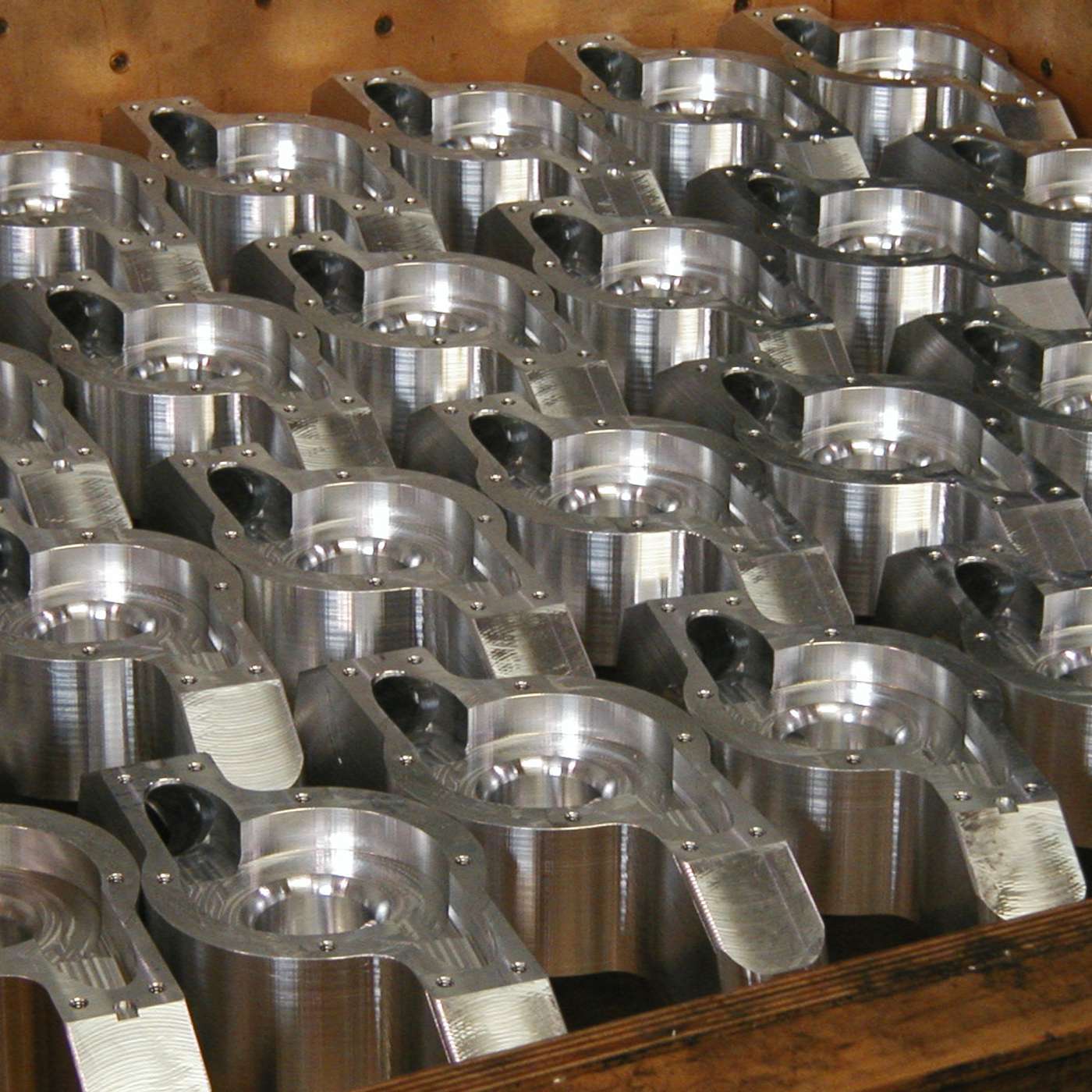
CNC machines
"And we have a lot of roots here. We have a shop of, I think we're at about 23 different CNC machines right now."
CNC machines are computer-controlled tools used to precisely cut and shape parts. For pump design, CNC machining supports tight tolerances and repeatable manufacturing of components like housings and impeller features.
remote brush type pumps
"and our remote brush type pumps that we talked about, [2305.9s] all of those carry a two-year warranty."
These are electric water pumps that can be mounted away from the engine. They use a motor with “brushes,” which are small parts that wear over time, so the design can affect how long the pump lasts.
“Remote brush type pumps” refers to an electric water-pump setup where the pump is mounted away from the engine and uses a brushed electric motor. The “brush” part matters because it uses physical electrical contacts, which affects maintenance needs and long-term wear compared with brushless designs.
two-year warranty
"[2305.9s] all of those carry a two-year warranty. [2307.9s] It's the best in the business. [2309.4s] And so we have a lot of confidence in our product."
A two-year warranty means the company will stand behind the part for two years if something goes wrong. Longer warranties usually suggest the maker expects the part to last.
A “two-year warranty” is the manufacturer’s promise to cover defects or failures for a set period after purchase. In performance/aftermarket parts, warranty length is often used as a proxy for how confident the maker is in durability.
Meziere
"And Mazeer, over the years, we've developed a lot and not obsolete it very much. [2335.1s] So if you've got an engine that's like a Ford FE or a Buick, a Pontiac, [2341.3s] I hope that your customers think about Mazeer because we have some of those obscure applications."
Meziere is the company/brand making these water-pump products. They’re saying they still support older, less-common engine setups instead of only making parts for newer cars.
Meziere Enterprises is the aftermarket brand being discussed for water-pump design and fitment. The speaker emphasizes that Meziere keeps older/obscure applications in its lineup and doesn’t “delete” them, which matters for owners of vintage engines needing correct cooling hardware.
Summit Racing
"And something you'll find here in the halls of Summit Racing too. [2360.7s] And I'd be remiss if I didn't mention that you could buy Mazeer products at summitracing.com."
Summit Racing is a parts store that sells aftermarket car parts. The host is saying you can find these products there.
Summit Racing is a major aftermarket retailer that sells performance and specialty parts. Mentioning it here signals that Meziere products are available through a mainstream enthusiast parts channel, not just direct sales.
performance flex plates
"But we also are well known for performance starters, performance flex plates, some specialty tools. We have some heat exchanging transmission pans that are very unique."
A flex plate is a part that helps connect the engine to the automatic transmission. Performance versions are made to handle more stress, which helps on higher-torque builds.
A flex plate is the thin metal plate that connects the engine’s crankshaft to the torque converter in many automatic transmissions. “Performance flex plates” are typically stronger or better balanced to handle higher torque and reduce cracking or failure under hard use.
performance starters
"But we also are well known for performance starters, performance flex plates, some specialty tools. We have some heat exchanging transmission pans that are very unique."
The starter is what turns the engine over when you hit the key or button. A “performance” starter is designed to crank more strongly or more reliably, especially on modified or demanding setups.
A starter is the motor that cranks the engine to get it running, but “performance starters” are built to crank more reliably and often with higher output. They’re commonly used when engines have higher compression, tighter packaging, or when reliability under repeated starts matters.
heat exchanging transmission pans
"We have some heat exchanging transmission pans that are very unique. So our biggest challenge is not creating parts, but letting people know about them."
This is a special pan for an automatic transmission that helps cool the transmission fluid. Cooler fluid can help the transmission work better and last longer under heavy use.
A heat-exchanging transmission pan replaces the stock automatic-transmission oil pan with one that adds cooling capacity. By increasing heat transfer from transmission fluid, it can help reduce overheating during towing, spirited driving, or high-load racing use.
Request an Explanation
Heard something you'd like explained? We'll add it to this episode.
Sign in to request explanations for terms you heard.
Want to learn more?
Browse our glossary for plain-English explanations of automotive terms, jargon, and concepts.
Help improve this episode
See something that's not quite right? Our annotations are AI-generated and can sometimes miss the mark. Click the flag icon on any annotation to suggest a correction.