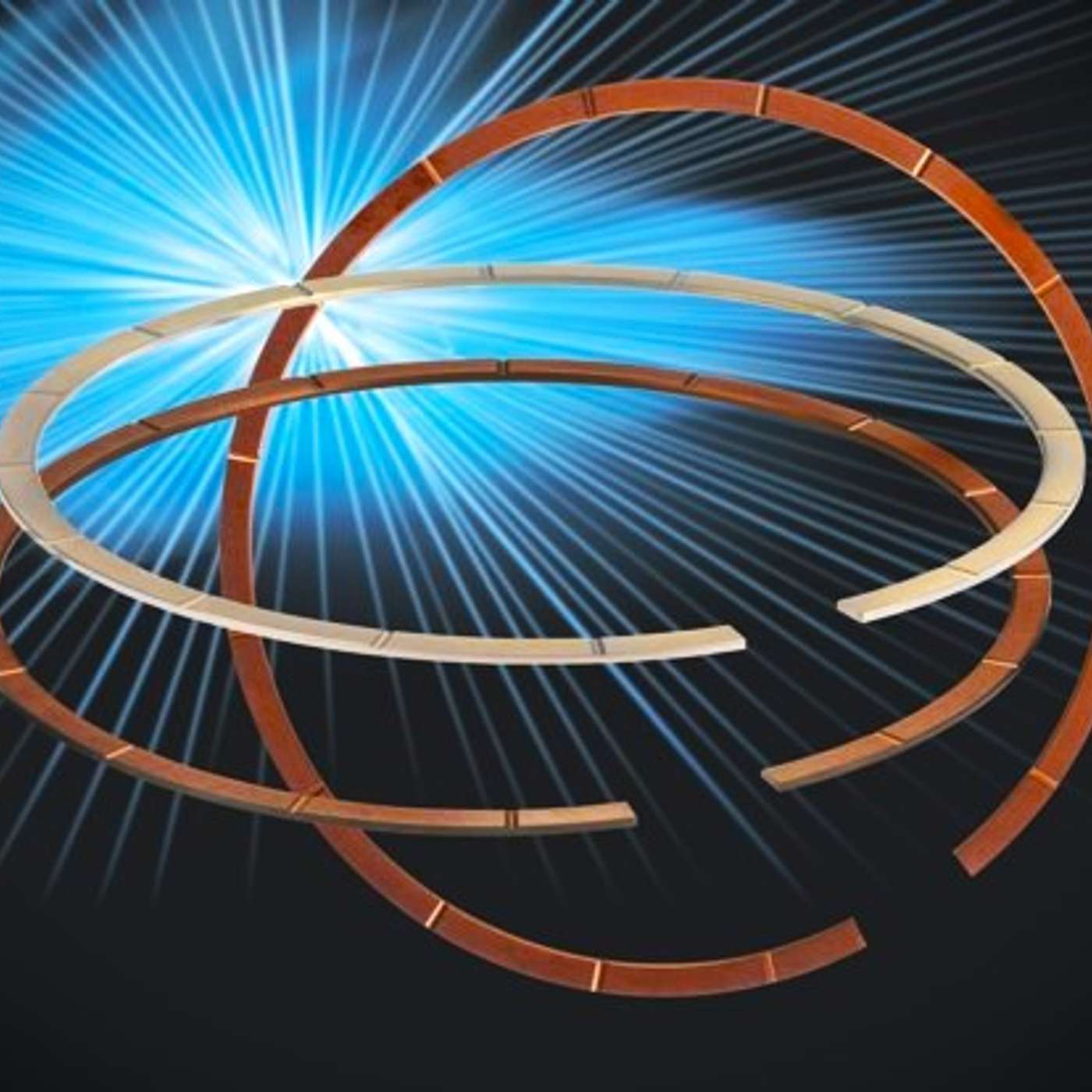
Piston Rings: Keith Jones from Total Seal Explains What You Need to Know
About this episode
Keith Jones of Total Seal breaks down piston rings as a system, not a single part—sealing compression, transferring heat, and controlling oil to prevent detonation. He explains how modern materials, thinner ring designs, and today’s engine management allow less ring mass while handling higher power and tighter ring placement. Key advice for builders: match rings to the piston and cylinder finish, don’t ignore ring gap/end gap fitment, and consider upgrades when boosting or adding nitrous. He also covers break-in mistakes and why gas-porting can help high cylinder pressure setups.
Keith Jones from Total Seal delves into the history & science behind piston rings, and explains what you need to know about them when it's time to build the rotating assembly for your next performance engine.
Summit Racing
"This is the On All Cylinders podcast powered by Summit Racing."
Summit Racing is a major automotive retailer focused on performance parts and accessories. Because this is a Summit Racing–powered podcast, the discussion is likely geared toward practical, build-focused guidance for enthusiasts. It can be a helpful reference point for parts availability and common upgrade paths.
piston ring
"Yes, folks, we're talking all about piston ring tech today on the On All Cylinders podcast."
A piston ring is a small metal ring on the piston that helps the engine seal properly. It keeps combustion gases from leaking into the crankcase and also helps manage how much oil gets used. Better rings can mean less wear and better engine performance over time.
A piston ring is a thin metal ring mounted on a piston that seals the combustion chamber. It helps control oil consumption and transfers heat from the piston to the cylinder wall while maintaining compression. Ring design and material strongly affect wear, friction, and engine longevity.
Total Seal
"And to help us out in that endeavor, we brought in Keith Jones from Total Seal Piston Rings."
Total Seal is a company that makes piston rings. Since this episode is about piston ring tech, their recommendations are likely based on how different ring designs perform in real engines. It’s useful to listen for what they suggest for your type of build.
Total Seal is known for manufacturing piston rings and related engine sealing components. In a conversation about piston ring tech, the company’s expertise typically centers on ring materials, coatings, and gap/fitment strategies for different engine builds. Listeners may want to pay attention to what Total Seal recommends for their specific application (street, race, boosted, etc.).
bracket racing
"...always been around the racing, always been around cars, kind of born into it. It's in my DNA... from bracket racing to running super cop..."
Bracket racing is a drag-racing format where competitors race to a preset “dial-in” time rather than trying to be the absolute fastest. It emphasizes consistency and reaction-time/ET management, which is why it often attracts people who are deeply into engine and tuning details.
running super cop
"...from bracket racing to running super cop to being around this. I'm a car guy."
“Super Cop” sounds like the name of a racing class or event. The key takeaway here is that the guest has experience across different types of racing, not just one.
“Super Cop” appears to be a specific racing class/series name in the drag-racing world. Without more context in the excerpt, it’s best treated as a niche motorsport reference rather than a widely standardized term.
GM
"I've been with Total Seal for 29 years and prior to that, I worked through different outlets of the GM dealership chains and GM racing..."
GM refers to General Motors, a major automaker with both production vehicles and a large motorsports/performance ecosystem. Here, Keith Jones mentions working through GM dealership chains and GM racing, which frames his background before joining Total Seal.
gapless second rings
"...when I first started working at Total Seal, we kind of just did gapless second rings is what we did."
“Gapless” ring sets use a design where the ring end gap is minimized or eliminated, improving sealing consistency. “Second rings” refers to the second compression ring in the piston ring pack, which plays a major role in controlling blow-by and maintaining cylinder pressure.
Warren Johnson
"...through some of my relationships with people through GM racing at the time, like Warren Johnson, the professor. And the question came up..."
Warren Johnson is mentioned as someone in racing who cared about piston rings being consistent. The point is that if rings vary, sealing and performance can vary too.
Warren Johnson is referenced as a racing figure connected to where piston rings were sourced. In this segment, his comment about wanting “eight rings that are all the same” highlights the importance of ring-to-ring consistency for performance engines.
GM racing
"...saw the picture right off the bat through some of my relationships with people through GM racing at the time, like Warren Johnson, the professor."
GM racing is General Motors’ involvement in racing. The speaker is saying their racing connections helped them understand what top teams want from piston rings.
GM racing refers to General Motors’ motorsports efforts and teams. The guest mentions relationships formed through GM racing as part of how they learned where piston rings were sourced and what performance customers demanded.
micrometer
"He's got a micrometer, sleeves, the rings, and he's stacking them all up. You know, that one's that size, that one's that size, you know, this one's this size"
A micrometer is a tool for measuring very small distances accurately. It’s used to make sure piston rings are the right size before they’re installed.
A micrometer is a precision measuring tool used to check small dimensions. In the context of piston rings, it’s used to measure ring size and ensure parts are within spec so they’ll fit and seal correctly.
speed pros
"...I put them in, built lots of engines, ... buy my speed pros, throw them in, and away I went."
“Speed Pros” is a brand of performance engine parts. The speaker is saying they used to just buy rings and install them, without fully understanding how precise the fit needs to be.
“Speed Pros” is a brand name commonly associated with performance engine parts, including piston rings. The speaker contrasts earlier assumptions—buying rings off the shelf—with later realization that manufacturing precision and tolerance are critical.
tolerance
"And it really got us going down the path at looking how parts are manufactured. What can we do to hold better tolerance?"
Tolerance is how accurately a part is made. With piston rings, if the ring and cylinder are made to fit closely, the engine seals better and wastes less oil and gas.
Tolerance refers to how precisely a part is made—how close its dimensions are to the target spec. With piston rings, tighter tolerance can improve sealing consistency and reduce blow-by, but it also requires correct matching of ring, bore, and installation practices.
Formula One car
"How do we build parts that, you know, not only can go in a guy's lawn mower, but can go in his pro stock car or his top fuel car or proudly in the Formula One car?"
Formula One is referenced as an example of the extreme performance environment piston-ring technology can be used in. The point is that the same core sealing challenge exists across lawn mowers, drag racing, and top-tier motorsport, but the requirements scale dramatically.
pro stock car
"...not only can go in a guy's lawn mower, but can go in his pro stock car or his top fuel car..."
Pro Stock is another drag racing class where engines are tuned for repeated high-performance runs. The reference is used to illustrate that ring technology must handle demanding cycles and maintain sealing performance over repeated pulls.
top fuel car
"...can go in his pro stock car or his top fuel car or proudly in the Formula One car?"
Top Fuel is drag racing where cars accelerate extremely hard. That kind of stress makes piston rings work under tough conditions, so durability and sealing matter a lot.
Top Fuel is a drag racing category known for extremely high power and violent acceleration, which creates harsh combustion and thermal conditions for engine components. Mentioning it highlights how piston-ring sealing and durability must survive extreme loads.
gapless rings
"It's not just about gapless rings. It's about all the rings."
Most piston rings have a small opening (a gap) so they can expand as the engine heats up. “Gapless” rings try to reduce that opening to improve sealing, but they’re more sensitive to fit and setup.
Gapless rings are piston rings designed so the ring’s ends don’t create a traditional open gap in the ring face. The goal is to improve sealing and reduce blow-by, particularly at high cylinder pressures, but they require careful manufacturing and installation because the ring must still expand/contract with temperature.
production level parts
"And the one thing that, you know, we're not I'll say weighed down by if you want to call it that is doing production level parts."
Production level parts are made in large numbers with consistent quality. Racing parts often require more experimentation and tougher performance targets, so they’re more interesting to build.
“Production level parts” refers to high-volume, repeatable manufacturing intended for everyday or mass-market use. The speaker contrasts that with the more challenging, lower-volume work of developing rings for specialized racing applications where conditions and requirements can be extreme.
race engines
"Well, the guys building race engines, they never stop here. Soon as we get them apart that works really good here."
Race engines are pushed much harder than normal driving engines. Because of the heat and pressure, piston rings have to seal and control oil extremely well to keep the engine healthy.
Race engines are built and operated with much higher stress than typical street engines, including higher RPM, cylinder pressures, and thermal cycling. That environment makes ring sealing, wear resistance, and oil control especially critical, which is why ring development often targets racing first.
turbos
"And the other day was like, oh, man, 600 horsepower. Now it's like, oh, man, 1000 horsepower next week... you and I were talking a little earlier about, you know, turbos and LSs and things like that."
“Turbos” refers to turbochargers, which force more air into the engine to increase power. Higher boost typically raises cylinder pressures and temperatures, which can increase demands on piston ring sealing and durability.
reinvent that wheel
"So that means we can't stop. So we have to constantly try to reinvent that wheel and make a better ring."
They’re basically saying that as engines get pushed harder, the parts have to keep improving. So manufacturers and builders can’t just use the same ring design forever—they need better rings to keep working reliably.
In this context, “reinvent that wheel” refers to continuous iteration in performance engine components—here, improving piston rings to handle higher loads and temperatures. As power levels rise, ring materials, coatings, and sealing design have to evolve to maintain durability and compression.
1000 horsepower motor
"The idea of 1000 horsepower motor is a very attainable thing right now. I mean, I think that's a result of the internet and gear heads having access..."
They’re talking about building an engine that makes extremely high power—around 1,000 horsepower. When you do that, the engine parts have to handle much more pressure and heat, so things like piston rings become especially important.
The phrase “1000 horsepower motor” highlights how modern engine-building and tuning practices make extreme power more achievable than in the past. Achieving that level typically increases stress on sealing components like piston rings due to higher cylinder pressures and heat.
internet and gear heads having access to a lot more information
"I mean, I think that's a result of the internet and gear heads having access to a lot more information than they than they used to, even as recently as 10, 15 years ago..."
They’re saying the internet makes it easier for car enthusiasts to learn from others. That helps people build engines more effectively because they can find tips, data, and proven combinations faster than before.
This points to how widespread online knowledge (forums, build threads, data sharing) has lowered the barrier to advanced engine building. Better information flow helps builders choose proven parts and setups, which can accelerate progress in high-power builds.
NHRA national events
"We do a thing called, you know, the total seal tech talk. We do do this at certain NHRA national events. So if you're interested..."
NHRA is a big U.S. drag racing organization. They’re saying they do their tech talks at major drag racing events, where engine parts like piston rings get tested hard.
NHRA is the National Hot Rod Association, which organizes drag racing events in the U.S. Mentioning “NHRA national events” frames where the guest’s “Total Seal tech talk” is hosted, tying the discussion to real-world drag racing conditions where piston ring performance matters.
seal the compression
"So we've not only got to seal the compression, we've got fuel. We've got compression. We've got spark bang."
When the engine compresses the air-fuel mix, you want it to stay sealed so it can make power. If the piston rings don’t seal well, some of that pressure leaks out and the engine loses efficiency.
“Sealing the compression” refers to preventing combustion gases from escaping past the piston and rings during the compression and power strokes. When sealing is poor, you get more blow-by, which reduces efficiency and can increase oil contamination and wear.
compression, spark bang, explosion
"We've got compression. We've got spark bang. We've got an explosion. We've got that driving force pushing the piston down…"
This is describing how an engine makes power: it squeezes the fuel-air mix, ignites it with a spark, and then burns it to create force. The piston rings have to seal and handle the heat during that whole process.
These phrases outline the engine’s basic cycle: compression of the air-fuel mixture, ignition (spark), and combustion (the explosion/power event). The piston rings are critical because they must seal during these high-pressure moments while also surviving the heat and forces involved.
least amount of leakage getting by as possible
"We want the least amount of leakage getting by as possible. So that's one function."
This describes minimizing “blow-by,” which is combustion gas that leaks past the piston rings into the crankcase. Less blow-by generally means better power, better fuel economy, and less contamination of engine oil.
transfer heat
"Next function is transfer heat. We get the heat out through the piston, piston to the ring, ring to the wall…"
Your engine makes a lot of heat, and it has to get rid of it. The piston rings help move heat from the piston to the cylinder wall and then into the cooling system so the engine stays in a safe temperature range.
Heat transfer is a core piston-ring function: heat moves from the piston into the ring, then into the cylinder wall, and finally out through the engine’s cooling system. Proper heat removal helps maintain correct clearances and reduces the risk of overheating-related damage.
heat out through the piston... wall to the water, water to the air
"We get the heat out through the piston, piston to the ring, ring to the wall, wall to the water, water to the air."
Heat has to travel from the hot engine parts into the coolant, and then the radiator uses airflow to cool that coolant down. If that heat can’t get out, the engine can run too hot and parts can wear faster.
This is a simplified description of the engine’s cooling path: heat leaves the combustion components (piston/ring) and reaches the cylinder wall, then is carried by coolant (“water”) to the radiator, where it’s rejected to the outside air. Cooling is tightly linked to ring and piston health because overheating can change clearances and accelerate wear.
cold fusion
"You know, I'm just I think cold fusions out there, but they're not letting us have it. So there's probably no money in cold fusion since it we're going to give it away."
Cold fusion is a claim that fusion could happen without the extreme heat normally required. In this conversation, it’s mentioned as an example of something that might not be pursued if it doesn’t look profitable or practical.
Cold fusion is a controversial idea claiming nuclear fusion can occur under relatively low-temperature conditions. In this segment, it’s used as a comparison point to explain why certain technologies may not get funding if they can’t be commercialized.
thermal transfer through the rings
"So, you know, as long as we're making power, we're making heat. We've got to have a way to get rid of that heat. And the bulk of that thermal transfer is through the rings, like I said, ring to the piston, piston all the way through the engine."
Engines get extremely hot, and they have to move that heat away. The piston rings help carry heat from the piston area into the rest of the engine, so they matter for keeping temperatures under control.
In an internal-combustion engine, heat has to move from the hot combustion area to the cooler parts of the engine. The piston rings play a major role in that heat path—ring-to-piston and then through the engine structure—so ring design affects how well the engine manages temperatures.
control the lubricant
"Another function is we have to control the lubricant. We have to control the oil. We have worked on oilless applications."
“Controlling the lubricant” refers to managing how oil is distributed, metered, and retained in the cylinder. The goal is to maintain a proper oil film for friction reduction and wear protection while still allowing the rings to seal effectively.
oilless engines
"We have worked on oilless applications. We are always working with people on the next generation of engines, the new prototypes that are out there. ... We worked on oilless engines as well. But at this time, we still need oil."
Some engine ideas try to work with little or no engine oil. But in this discussion, the point is that fully oilless operation is still hard, and lubrication is still important for sealing and protection.
“Oilless” engine concepts aim to reduce or eliminate the need for conventional engine oil by using alternative lubrication strategies or materials. The discussion here highlights that even with oilless development work, the speaker still emphasizes that oil and lubrication are needed at this time for practical sealing and wear control.
engine project that runs on water (hydrogen from water)
"We're working on an engine project that runs on water. You know, we'll just say we take the hydrogen out of the water and turn it into a fuel."
They’re talking about a concept where you use water as the starting point to make a fuel—specifically hydrogen. It’s an example of exploring alternative fuels beyond normal gasoline or diesel.
The speaker describes a prototype concept where hydrogen is extracted from water and used as a fuel. This is essentially a hydrogen-from-water idea, which connects to how future powertrains might use different energy carriers rather than conventional gasoline or diesel.
oil is the gasket
"Oil is the gasket. It's what seals the ring to the cylinder wall. It allows us to get away with little imperfections in the board, filling those voids with oil that creates a good ring seal."
Even when the cylinder wall isn’t perfectly smooth, a thin layer of oil can help fill the tiny gaps. That oil layer helps the rings seal better, like a gasket would.
The phrase “oil is the gasket” describes how the oil film helps seal microscopic gaps between the piston ring and the cylinder wall. Even if the cylinder bore has tiny imperfections, the oil can fill voids and support a better ring seal under operating conditions.
ring seal despite cylinder-wall imperfections
"It allows us to get away with little imperfections in the board, filling those voids with oil that creates a good ring seal."
Cylinder walls aren’t perfectly smooth in real life. The oil film can smooth over tiny rough spots so the rings can still seal tightly and keep gases from leaking.
A key concept in ring sealing is that real cylinder bores have microscopic roughness and voids. Under lubrication, the oil film can conform to those imperfections, helping the rings maintain a tight seal for compression and reduced blow-by.
octane rating
"That throws the octane rating of the fuel that pulls that octane rating down and [469.1s] throws the engine into detonation."
Octane rating tells you how resistant the fuel is to “pinging” or knocking. If the fuel can’t handle the engine’s conditions, it can start burning in the wrong way and cause damage.
The octane rating is a measure of a fuel’s resistance to knock (uncontrolled combustion). If the fuel’s octane is too low for the engine’s operating conditions, the engine can detonate instead of burning smoothly.
detonation
"[465.4s] That throws the octane rating of the fuel that pulls that octane rating down and [469.1s] throws the engine into detonation. ... [487.6s] horsepower out of it because it started to throw the engine into detonation."
Detonation is when the fuel-air mixture ignites in an uncontrolled, explosive way. Instead of a smooth burn, it “bangs,” which can hurt the engine fast.
Detonation is an abnormal, explosive form of combustion that occurs when the end-gas auto-ignites under high pressure and temperature. It’s destructive because it creates extreme pressure spikes and can quickly damage pistons, rings, and bearings.
HRA test down in Gainesville
"I was just at an HRA test down in Gainesville this past weekend and top fuel [478.1s] guys were there, pro stock guys, a bunch of guys, and I was working with one guy"
They mention a racing test in Gainesville to show how tiny tuning changes can matter a lot. In racing, engines are pushed hard, so detonation can happen quickly if setup isn’t right.
The hosts reference an HRA test event in Gainesville, using it as context for how sensitive high-performance engines are to changes like ignition timing. This is a motorsports setting where small tuning changes can have large effects on power and detonation risk.
timing
"One degree, they put one degree too much timing in the engine and it knocked 100 [487.6s] horsepower out of it because it started to throw the engine into detonation."
Timing is when the spark happens during the engine cycle. If it’s too early, the engine can get too hot/pressurized and start knocking.
Ignition timing is when the spark occurs relative to piston position. Too much timing advance can raise cylinder pressure and temperature enough to trigger detonation, especially under high load.
knock
"One degree, they put one degree too much timing in the engine and it knocked 100 [487.6s] horsepower out of it because it started to throw the engine into detonation."
Knock is when the engine starts “pinging” or burning unevenly. It’s a warning sign that the combustion is wrong, and racers often lose power to prevent it.
Knock is the audible/combustion phenomenon associated with detonation or near-detonation. In performance engines, knock is often detected and managed because it can force power loss (via timing changes) and increase wear.
wet combustion chamber
"And bottom line is we're getting a wet combustion chamber. [495.8s] We're going to pull that engine into detonation."
A wet combustion chamber means oil is getting into the cylinder where it shouldn’t. That oil can mess up how the fuel burns and can lead to knocking and damage.
A “wet” combustion chamber means excess oil is present in the cylinder, typically from poor sealing or ring issues. Oil contamination can lower effective fuel octane and promote detonation, while also increasing deposits and wear.
top ring
"It's going to hold compression. It's going to back up that top ring... It's there to catch what the top ring misses"
The top ring is the ring closest to the combustion area. Its main job is to keep the high-pressure gases from leaking down into the crankcase. Because it can’t be perfect all the time, other rings help make up the difference.
The top ring is the primary compression-sealing ring. It sits closest to the combustion chamber and takes the harshest conditions, so it’s designed to seal combustion pressure while surviving heat and wear. The transcript emphasizes that other rings support it when it doesn’t seal perfectly under real operating conditions.
oil ring
"It's also the wingman of the oil ring because the oil ring is not the perfect device either... It's there to catch what the top ring misses and catch what the oil ring misses"
The oil ring is the ring that helps manage oil on the cylinder wall. It makes sure the engine doesn’t leave too much oil there (which can burn and smoke) or too little (which can increase wear).
The oil ring controls how much engine oil is left on the cylinder wall after the piston moves. The transcript notes that the oil ring isn’t “perfect” either, so the rest of the ring set must work together to achieve the right oil control. Proper oil control is critical to prevent excessive oil consumption and to avoid carbon buildup.
ring package
"It's a package. It's all got to work together... We've got the right rings for the job... I'm not going to put a NASCAR ring package on a three stage nitrous engine."
A ring package is the full set of rings you install in an engine. The key idea is that the rings, piston, and cylinder have to be matched so they work together. If you pick rings meant for a totally different kind of engine use, they may not survive or seal correctly.
A “ring package” means the complete set of rings chosen for an engine, including how the rings are designed to work together. The transcript stresses that the rings must be matched to the piston and cylinder conditions, and that using the wrong ring package for the engine’s operating environment can lead to failure. It’s essentially a system-level approach to sealing, friction, and oil control.
cylinder finish
"The right rings on the wrong piston with a crummy cylinder finish or the best ring, great piston, bad bore finish, keep mixing this up any way you want."
Cylinder finish is how smooth (and what kind of texture) the inside of the engine cylinder is. The rings need the right surface to seat properly and control oil. If the cylinder surface is wrong, the rings can wear faster or not seal well.
Cylinder finish refers to the surface texture of the cylinder bore, which strongly affects ring seating, friction, and wear. The transcript argues that even the best piston and rings can underperform if the bore finish is wrong. Correct surface preparation helps rings establish the proper contact pattern and oil control behavior.
honed right
"We've got to make sure the cylinders are honed right. We've got the right piston for the job. We've got the right rings for the job."
Honing is the process of finishing the inside of the cylinder so the rings can seat correctly. If it’s not done right, the rings may not seal well and can wear out sooner. It’s one of the steps that has to match the rings you plan to use.
“Honed right” means the cylinder bore is machined to the correct dimensions and surface characteristics using honing. Proper honing is essential for ring seating and for achieving the right balance of sealing and friction. The transcript treats honing as a prerequisite that must align with piston and ring selection.
three stage nitrous engine
"I'm not going to put a NASCAR ring package on a three stage nitrous engine. It wouldn't get through the burnout. It's going to die."
Nitrous oxide (NOS) adds extra power by injecting more oxygen into the engine. A “three stage” setup means it can add that power in steps, which makes the engine conditions much more intense. The speaker is saying the rings have to be built for that kind of stress.
A “three stage nitrous engine” indicates an engine using nitrous oxide with multiple stages of activation, which can dramatically increase cylinder pressures and heat. The transcript’s point is that the ring package must be appropriate for that extreme environment, or the rings may fail quickly. This highlights how operating conditions (pressure/temperature cycles) drive ring design requirements.
burnout
"I'm not going to put a NASCAR ring package on a three stage nitrous engine. It wouldn't get through the burnout."
A burnout is when you spin the tires while the car is mostly in place, and the engine is working hard. The speaker uses it to show that if the engine parts aren’t matched, they can fail quickly under heavy heat and load.
A burnout is a high-load, often high-heat event where the tires are spun while the engine is under sustained stress. In the transcript, it’s used to illustrate how quickly an incorrect ring setup can fail under harsh conditions. It’s a practical example of real-world thermal and mechanical stress.
system
"But remember, it's a system. It's all got to work together."
He’s saying the engine parts work together. Rings can only do their job well if the piston and cylinder surfaces and the oil are also right.
Calling it “a system” emphasizes that piston rings, pistons, cylinders, lubrication, and manufacturing tolerances all interact. If one part isn’t optimized, the ring can’t seal or control oil as effectively even if the ring design is good.
oil control
"I've seen rings, pistons, I should say, that had eight rings on them. And it was that's what it took to get it sealed up, get oil control."
Oil control means the rings manage how much oil gets into the wrong places. Good oil control helps prevent the engine from burning oil.
Oil control is the piston rings’ ability to regulate how much engine oil reaches the combustion chamber area. Proper oil control reduces oil burning and helps maintain lubrication while preventing excess oil from being consumed.
eight rings
"I've seen rings, pistons, I should say, that had eight rings on them. And it was that's what it took to get it sealed up, get oil control."
Earlier engines sometimes used more rings because the parts weren’t as precise and the surfaces weren’t as good. More rings helped them seal and manage oil.
Using “eight rings” illustrates how earlier engine designs relied on stacking more ring elements to achieve sealing and oil control when cylinder and piston quality (and manufacturing precision) were limited. Modern manufacturing and ring materials can achieve similar or better performance with fewer, thinner rings.
lubrication on there
"We can produce straighter, rounder cylinders with the right cylinder finishes to produce that good ring seal to get that lubrication on there. And all that means I can do less with the rings."
Lubrication is the thin layer of oil that keeps metal parts from grinding against each other. If the oil film is right, rings seal better and the engine lasts longer.
The lubrication film between the piston rings and cylinder wall is critical for reducing wear and friction while still allowing the rings to seal. Ring seal and oil control depend on maintaining the right oil conditions under load and temperature.
material technologies
"I can produce much thinner parts. And part of that is also the exposure to different material technologies."
Material technologies means newer metals and coatings used to make rings tougher and more wear-resistant. That can let engineers use less material while still keeping the engine sealed and lubricated.
“Material technologies” refers to advances in metallurgy and coatings that improve ring strength, wear resistance, and friction behavior. New materials can allow thinner rings and fewer rings while still meeting sealing and oil-control requirements.
bore conformability
"The rings are getting shallower in the groove. So it is allowing us better bore conformability."
Bore conformability means the ring stays pressed against the inside of the cylinder. If it doesn’t stay in contact, you can lose sealing and performance, so this is a key design goal.
Bore conformability is how well a piston ring maintains contact with the cylinder bore surface as conditions change (wear, heat, pressure, and ring movement). Better conformability helps sealing and stability, especially when rings are made thinner or run in different block materials.
aluminum blocks
"We're dealing with a lot of aluminum blocks today that weren't around before. Aluminum as good as we've got it. It still moves around... compared to a cast iron block."
An aluminum engine block changes shape more as it heats up than a cast-iron block. That movement can affect how well the piston rings seal, so ring design has to account for it.
Aluminum engine blocks expand and move differently than cast iron blocks due to different thermal and stiffness characteristics. This segment notes that aluminum “moves around,” which makes ring design and heat management more important to maintain sealing and durability.
fuel management
"you look at how well tuned and how refined these engines are today in fuel management, timing management, you know, the whole tune up"
Fuel management is how the engine computer chooses the right fuel amount for the current driving conditions. Getting it right helps the engine run smoothly and prevents problems from running too rich or too lean.
Fuel management is the ECU strategy for determining the correct air-fuel mixture under varying load, speed, and temperature. This matters because ring and cylinder conditions (like heat transfer and sealing) interact with combustion quality, and the ECU must keep the mixture within safe, efficient limits.
draw through and blow through carburetors
"They were back in the 70s and 80s with draw through and blow through carburetors. You can never get the fuel curves right."
These are two old-school ways to put a carburetor in a turbo system. The problem is that when boost changes, the carburetor can’t always adjust fuel accurately enough, so the engine can run poorly or dangerously.
Draw-through and blow-through carburetor turbo setups route intake air through carburetors in different locations relative to the turbo. The challenge is that boost changes airflow and pressure in ways carburetors weren’t designed to compensate for precisely, making it hard to maintain correct fueling across conditions.
fuel curves
"You can never get the fuel curves right."
Fuel curves are basically the “map” of how much fuel the engine gets as conditions change. If that map is wrong, the engine can run too rich or too lean.
Fuel curves describe how the fuel delivery changes relative to engine operating conditions (like airflow/boost). The speaker’s point is that older turbo carburetor systems couldn’t produce the correct relationship, leading to fueling errors.
engine management
"Look at the power levels we're hitting and the root of all that is the computer. That is really the big, big game changer. And, you know, the rings are a part of that package because we've got such great engine management today."
Engine management is the car’s computer system that controls how the engine runs. It decides things like when to spark and how much fuel to use. Better engine computers let engineers design engine parts differently because the engine can be controlled more accurately.
Engine management is the vehicle’s electronic control system that coordinates fuel, ignition timing, boost (if equipped), and other parameters. When it’s advanced, the engine can be tuned more precisely, which changes how components like piston rings are designed and selected. In this segment, the host credits modern engine management as a key enabler for higher performance and more optimized ring designs.
boosted engines
"Now, in this modern era, boosted engines, you know, turbocharged, supercharged engines are becoming increasingly common on like daily driver commuter cars."
Boosted engines use forced induction to increase the amount of air entering the cylinders, which allows more power from a given engine size. Common forms include turbocharging and supercharging. Boost changes combustion pressures and temperatures, which influences piston ring design targets like sealing under higher cylinder pressures and controlling oil under more demanding conditions.
turbocharged
"Now, in this modern era, boosted engines, you know, turbocharged, supercharged engines are becoming increasingly common on like daily driver commuter cars."
Turbocharged means the engine has a turbo that squeezes more air into the cylinders. More air usually means more power, but it also means the engine parts see higher stress. That’s why ring design has to account for the tougher conditions.
Turbocharged engines use a turbocharger to compress intake air using exhaust energy. That raises cylinder pressure and can increase thermal and mechanical stress on internal components. The speaker ties the rise of turbocharged engines to the need to rethink piston ring package design.
supercharged
"Now, in this modern era, boosted engines, you know, turbocharged, supercharged engines are becoming increasingly common on like daily driver commuter cars."
Supercharged means the engine uses a belt-driven blower to push more air into the cylinders. More air can mean more power, but it also makes the engine work under higher stress. That affects how piston rings are engineered.
Supercharged engines use a mechanically driven compressor (typically belt-driven) to force more air into the intake. Like turbocharging, supercharging increases cylinder pressures and changes the operating environment for piston rings. The segment groups turbocharged and supercharged engines together as part of the broader shift toward forced induction in everyday cars.
direct injected era
"So we're well into the direct injected era, too. So I'm going to assume that that is impacting the way you design and develop a piston ring package, right?"
Direct injection means the fuel is sprayed straight into the engine’s combustion chamber. It lets the computer control fuel more precisely. Because the way the engine burns fuel changes, piston rings may need different design choices to handle the results.
Direct injection is a fuel system where gasoline is sprayed directly into the combustion chamber rather than into the intake port. This enables more precise fuel control and can improve efficiency and power, but it also changes combustion characteristics and heat distribution. The speaker suggests this “direct injected era” impacts how piston ring packages are designed and developed.
piston design
"Yeah, absolutely. Again, things that we look at with a modern engine from where I sit, a lot of these engines, many, many, they're just little race car engines. You know, if you look at the piston design, the rod designs,"
Piston design refers to the geometry and features of the piston—such as crown shape, ring land dimensions, and cooling provisions—that determine how the piston seals, sheds heat, and withstands combustion forces. Since piston rings are mounted on the piston, changes in piston design can drive changes in ring package requirements. The speaker is framing modern engines as “race car engines” in terms of how tightly engineered the internal components are.
rod designs
"You know, if you look at the piston design, the rod designs,"
Rod design is about the connecting rods inside the engine. They help transfer force from the piston to the crankshaft. Even though this part is about rings, the idea is that modern engines are designed as a complete system, not just one component.
Rod design refers to the connecting rod’s construction and geometry, which affects strength, stiffness, and how the engine handles loads. While the segment is primarily about piston rings, connecting rods are part of the same “package” of internal components that must work together under higher cylinder pressures. The speaker is emphasizing that modern engines are engineered with race-level attention to these details.
TRW piston
"and your old TRW piston with 564s, 564s, 316s."
TRW makes engine parts like pistons. The speaker is using TRW as a historical example of older piston designs compared to today’s shorter, more compact setups.
TRW is an automotive supplier known for pistons and other engine components. In this segment, TRW pistons are referenced as an example of older piston/ring setups used in small-block applications, contrasted with newer forging and ring-stack packaging.

BMW 316S
"...lock Chevy, your old TRW piston with 564s, 564s, 316s. You know, we're dealing with much shorter compr..."
The BMW 3 Series is a car made by BMW that’s designed to be comfortable for daily driving but also fun to drive. People talk about it in engine discussions because it has engines that can be modified, and the internal parts like pistons and rings matter for how well it handles more power. If someone is building an engine, they may choose parts based on what that engine needs.
The BMW 3 Series is a compact luxury sedan (and wagon/other body styles depending on generation) known for a balance of everyday usability and performance-oriented driving. In a podcast discussion about engine parts and compression, it may come up as a common platform where builders talk about piston/ring choices and how internal engine components affect durability and power. It’s often discussed because the 3 Series has a wide range of engine configurations that people modify for different performance goals.
compression heights
"You know, we're dealing with much shorter compression heights."
Compression height is the vertical distance between the piston’s wrist-pin center and the piston crown. Shorter compression heights change where the rings sit relative to the combustion chamber, which drives the need for different ring sizes and ring-stack packaging.
OE
"We've learned, you know, racing has taught the OE a lot. And at the same time, they teach us a lot."
OE means the car manufacturer’s own design. The host is saying racing influences how manufacturers build engines, but manufacturers also have to meet rules and targets.
OE means “original equipment” (the automaker’s own engineering and production parts). The segment credits racing with teaching both the OE and the aftermarket, and it frames modern piston/ring design as a response to how engines are calibrated for performance plus regulations.
detonate
"if you missed that tune up, detonated, boy, you killed the ring. But with today's, again, those engine management systems, we don't have that problem."
Detonation is when the fuel-air mixture ignites in an uncontrolled way, causing a harsh pressure spike. It can damage engines, and this segment explains how modern design and engine control reduce that risk.
Detonation is uncontrolled, explosive combustion that occurs when the end-gas auto-ignites ahead of the intended flame front. The segment links detonation risk to ring placement/geometry and to modern engine management, which helps prevent the conditions that would otherwise “kill the ring.”
crevice volume in the ring stack
"We want to reduce what's called crevice volume in the ring stack. If we can do that, we're less likely to detonate."
Crevice volume is the tiny “pockets” around the piston rings where gases can get trapped. If those pockets are smaller, the engine is less likely to develop damaging knock/detonation.
Crevice volume in the ring stack refers to the small trapped spaces around the rings where unburned gases and combustion byproducts can accumulate. Reducing that volume helps lower the tendency to detonate (end-gas auto-ignition), improving knock resistance and allowing more aggressive engine calibration.
push those compression ratios higher, run the engines leaner
"Back to we can push those compression ratios higher, run the engines leaner."
Higher compression and “leaner” fueling are ways to get better efficiency. They can be harder on the engine if not controlled well, so modern design and computer tuning help keep everything stable.
Increasing compression ratio raises thermal efficiency but also increases knock sensitivity, so it must be balanced with combustion control. Running leaner (more air, less fuel) can improve fuel economy and emissions, but it also changes combustion behavior—so modern ring design and ECU calibration work together to manage the risks.
fuel economy emissions, tailpipe emissions standards
"but they've also got to meet fuel economy emissions, tailpipe emissions standards"
Car makers have to meet government rules for how efficient the car is and how clean the exhaust is. Those rules influence how the engine is designed and tuned, including details like piston and ring design.
Fuel economy and tailpipe emissions standards are regulatory requirements that limit how much fuel an engine can burn and how much pollution it can produce. This drives design choices like combustion efficiency improvements, calibration strategies, and component packaging (including piston ring geometry) to achieve both performance and compliance.
thinner, lighter, stronger rings
"demands that we put thinner, lighter, stronger rings in there that will handle the higher temperatures that we deal with today."
Ring makers try to make rings that are lighter and thinner so the engine wastes less energy. But they still have to be tough enough to keep sealing properly when things get hot and pressurized.
Modern piston ring sets are often engineered to be thinner and lighter to reduce friction and improve efficiency, while still being strong enough to maintain sealing under higher loads. The “stronger” part matters because thinner rings must still resist wear and maintain tension as temperatures and cylinder pressures rise.
dilemma of choice
"But let's take a look at piston ring choice from like a backyard engine builder's perspective, you know, one of the good dilemmas we have nowadays is the dilemma of choice, especially when it comes to pistons."
Engine builders used to pick parts separately, and that meant you had to choose the right rings for the piston you wanted. Today some kits come pre-matched, which can simplify things but changes how you think about compatibility.
The “dilemma of choice” refers to how engine builders historically selected piston and ring combinations from many separate options, rather than relying on a pre-matched package. That selection affects ring pack requirements like ring thickness, tension, and material to match the piston’s geometry and the engine’s target compression and heat conditions.
cast, forged
"You've got cast, forged, different alloys, dish, domed. How does the exact piston choice impact the piston ring package you need?"
Cast and forged pistons are made differently. Forged pistons are often stronger, while cast pistons can be lighter or cheaper depending on design. Since pistons expand and wear differently, the rings may need to be chosen to match.
Cast and forged pistons differ in how they’re manufactured, which changes strength, weight, and how they handle heat and stress. Those differences can influence the piston’s shape and expansion behavior, which in turn affects what piston ring package is appropriate for sealing and durability.
dish, domed
"You've got cast, forged, different alloys, dish, domed. How does the exact piston choice impact the piston ring package you need?"
Dish and dome are shapes on the top of the piston. They change how much space is in the combustion area, which affects compression and how hard the engine works. That can influence what kind of rings you need to keep everything sealed and durable.
“Dish” and “domed” describe piston crown shapes that affect combustion chamber volume and compression ratio. Because compression ratio and combustion conditions change, the required ring sealing performance and heat handling can also change, influencing ring selection.
rings never came with the pistons
"But what's happened today in a lot of respects, when I first started doing this, rings never came with the pistons, never did. Only time you ever got a ring with a piston, if you were buying a you know, a motorcycle piston, they'd always come with the ring."
They’re saying that in the past, you usually bought rings separately from pistons. That gave builders more control to match rings to the exact engine they were building. Now some piston kits include rings automatically, which can be convenient but less customizable.
The speaker contrasts older hot-rod/performance practices—where builders selected pistons, cylinder heads, and camshafts and then chose rings separately—with modern packaged piston-and-ring supply. This matters because ring selection can be tuned to the specific engine build rather than assumed from a manufacturer’s default pairing.
ring selection for the application
"Sometimes yes. Sometimes no... That's one of those things you want to do a little research when you're selecting that piston... if you're going to use the ring that comes with that piston, is it the right ring for what you're doing?"
The episode emphasizes that the “ring set that comes with the piston” is often chosen to hit a cost target, not necessarily to survive extreme conditions. Selecting rings should be based on the actual power/pressure environment (e.g., forced induction or nitrous), not just the piston model.
cast iron ring set
"it comes with a plain old cast iron ring set that's a nice economy kit, but yet you're planning on putting a 250 shot of nitrous or 15 pounds of boost on it."
Cast iron rings are a traditional, affordable ring material. They can be fine for everyday or mild performance, but they may wear out faster when you add big power like nitrous or heavy boost.
A cast iron ring set is a common, cost-effective piston ring material choice. While it can work well for stock or mild applications, it may not have the durability needed for high cylinder pressure and heat associated with nitrous or significant boost.
piston and ring combination
"we can supply you something that is going to be the right ring for what you're doing, or maybe you need to look at another piston and ring combination from the same supplier, maybe a different supplier."
The piston and the rings work together as a system. If the rings that come with a piston aren’t meant for your power level, you may need different rings or a different piston setup so everything lasts.
The segment argues that durability depends on matching the piston with the correct ring package, not treating them as independent parts. If the included rings aren’t appropriate, you may need a different ring solution or even a different piston/ring pairing from the same or another supplier.
matching parts to the build (don't buy by price)
"Just don't just don't buy it by the price. You know, make sure that it's the right thing for what you do. I get a lot of customers that they'll buy a piston kit."
The speaker emphasizes that performance parts must be selected as a system—ring type/coating, cylinder finish, and the engine’s power goals—rather than chosen purely by cost. This “fitment” mindset helps prevent premature wear or failure when the engine is pushed harder than the parts were designed for.
piston kit
"I get a lot of customers that they'll buy a piston kit. And I'll say this, you know, they're going into their mod or their LS or whatever."
A piston kit is the set of parts you install when rebuilding or upgrading an engine’s pistons. It usually includes the piston rings, and the rings need to be the right type for how your engine is built and how hard you’re pushing it.
A piston kit is a matched set of piston components (typically pistons plus rings, and sometimes pins/related hardware) intended to work together in an engine rebuild or performance build. The key point is that the rings and coatings must be compatible with the engine’s cylinder finish and the power/boost level you’re targeting.
right ring for what you're doing
"because it just wasn't the right ring for what you're doing. And so like anything, it's a matter of doing a little investigation to make sure you're getting the right thing for what you're doing."
Not all piston rings are the same. The “right” ring depends on how you’re using the engine—like how much boost or nitrous you’re running—because the rings have to handle the heat and pressure.
Ring selection is application-specific: ring type, material coating, tension, and end-gap need to match the engine’s operating conditions (boost level, RPM, fuel, and heat). Using the wrong ring can lead to poor sealing, excessive wear, or ring failure under higher cylinder pressures.
high boost
"Now, we all know what high boost and oodles of nitrous can do to a rotating assembly that's not prepared for it. But what about the piston rings?"
“Boost” is extra air pressure from a turbo or supercharger. More boost usually means more power, but it also means the engine is under more stress, including the piston rings.
High boost increases the amount of air forced into the cylinders, which raises combustion pressure and heat. That makes piston rings work harder to maintain sealing and manage oil control; ring end-gap and material/coating choices become more important as boost rises.
powdered metal rods
"If it's got a really good conservative tune up, you know, what I like to say is powdered metal rods have a tendency to go back to their natural state, powdered metal. You've got to be careful."
Powdered metal connecting rods are manufactured from metal powder and sintered, then formed into rod shapes. They can be cost-effective for production engines, but they may not tolerate extreme power/heat cycles as well as stronger aftermarket forged rods—especially when combined with high boost or nitrous.
molly coated ring
"That engine does use a molly coated ring. So if you put it together and you've got a mild amount of boost,"
A molly-coated ring has a special surface treatment that helps it wear in and last longer against the cylinder wall. When you’re making more power, that coating can help the rings hold up better.
A “molly” coating (molybdenum-based) on piston rings helps with wear resistance and initial break-in, improving ring-to-cylinder compatibility. Under higher cylinder pressures from boost or nitrous, ring coating and fitment can affect how well the rings maintain sealing and survive heat.
100 shot
"[1204.2s] Well, I'm going to put a hundred shot on it. [1205.7s] I go, is that kid adjustable?"
When people say “100 shot,” they mean a nitrous dose that’s expected to add a certain amount of power. Bigger shots usually mean more power, but also more stress on the engine.
A “shot” is a common way to describe the amount of nitrous oxide being injected, typically in horsepower terms. The discussion implies that a 100-shot is a baseline plan, but the risk grows quickly as you increase the nitrous amount.
adjustable
"[1205.7s] I go, is that kid adjustable? [1207.5s] Well, yeah, how big does it go?"
“Adjustable” here means the nitrous system can be set to different levels. That’s important because you want to stay within what the engine can safely handle.
In nitrous setups, “adjustable” usually means the system can be tuned for different nitrous amounts (and often different stages). That matters because you can start smaller and avoid exceeding the engine’s safe limits.
500
"[1209.2s] All to go 500. OK, you're going to end up at 500. [1211.8s] So let's build it for 500."
Here, “500” is being used as a bigger target than the initial plan. The takeaway is that if you’re going to push that hard, you can’t rely on a mild setup—you need to build for the higher load.
The “500” in this context is almost certainly referring to a target nitrous amount (or an expected power level) that would require the engine to be built for higher stress. The host’s point is that if you’re going to run that level, you should plan the build around the worst-case.
stock bottom end
"[1223.9s] What is the worst case scenario? [1226.4s] And building that stock bottom end is fine."
“Bottom end” is the engine’s lower rotating assembly (crankshaft, rods, pistons, bearings). The host says a stock bottom end can be okay only if you keep the power/abuse “in check,” because nitrous and aggressive tuning can exceed what stock components were designed to handle.
high octane fuel
"[1246.7s] You've got to run a high octane fuel in this thing. [1250.0s] We've got the timing turned up."
High octane fuel helps prevent the engine from “knocking,” which is harmful. If someone turns up the timing to make more power, you often need higher octane to keep it safe.
High octane fuel helps resist knock (detonation) when ignition timing and boost/power levels are pushed. The transcript ties it to a scenario where the tuner “turned up” timing, which increases the need for fuel that can tolerate more aggressive combustion.
93 octane
"[1253.8s] You have to run at least 93 octane in this thing."
Octane is how well the fuel resists knocking in the engine. If the speaker says you need 93 octane, it usually means lower-octane fuel could cause knock and potentially damage the engine.
Octane rating is a measure of fuel’s resistance to knock (premature combustion). The mention of “93 octane” implies the engine or setup requires higher-octane fuel to prevent knock and protect the piston/ring package under load.
87 octane
"[1260.4s] ...whatever it was goes in, rolls in the 87 thing rattles its way home."
87 octane is regular gas. The speaker’s point is that using 87 when the engine needs higher octane can lead to knocking and faster engine trouble.
“87 octane” refers to regular-grade fuel. The context suggests using lower-octane fuel can contribute to knock or combustion issues that accelerate engine problems, especially when paired with a performance or higher-compression setup.
ring gap
"[1283.1s] ...I want to make sure we touch on a topic that's that's really critical to any piston ring discussion. [1287.3s] And that is ring gap. [1289.3s] Can you talk about the role ring gap plays..."
Piston rings have a tiny gap at their ends. That gap matters because the ring gets bigger when the engine heats up—too little gap can cause the ring ends to touch and fail, while too much gap lets more combustion gases leak by.
Ring gap is the small clearance left between the ends of a piston ring when it’s installed. As the engine heats up, the ring expands, so the gap has to be large enough to prevent the ends from butting together, but small enough to reduce blow-by (combustion gases leaking past the rings).
end gap
"[1301.7s] ...we're gapping the ring static at room temperature [1304.8s] and we're speculating how much is that ring going to expand... [1322.0s] Either they didn't have enough end gap on the ring..."
End gap is the clearance at the ends of a piston ring when installed. It’s typically set at room temperature (static gapping) and then chosen to account for how much the ring will expand during operation, preventing the ring from butting while maintaining sealing.
blow by
"[1309.0s] ...when it's running, we want to get that gap as close as we can [1312.7s] to get that blow by number down."
Blow-by is when some of the engine’s combustion gases sneak past the piston rings instead of staying in the cylinder. If it’s too much, it can foul the oil and generally means the rings aren’t sealing well.
Blow-by is combustion gases that leak past the piston rings into the crankcase. Reducing blow-by is a key goal of correct piston ring end gap and ring fitment, because excessive blow-by can increase oil contamination and reduce engine efficiency.
butt the ring
"[1314.8s] But we've got to make sure we don't butt the ring in. [1317.0s] So a lot of things that I see in engines, you know, failures..."
If the piston ring gap is too tight, the ring can expand until its ends touch. That can lead to the ring getting damaged because it can’t handle the heat and movement safely.
“Butting” happens when piston ring end gap is too small and the ring ends touch as the ring expands with heat. This can cause mechanical failure or damage because the ring can’t move/seat properly in its groove.
mechanical fitment issues
"[1317.0s] So a lot of things that I see in engines, you know, failures are what I'll [1320.7s] call mechanical fitment issues. [1322.0s] Either they didn't have enough end gap..."
Mechanical fitment issues are mistakes in how parts are physically matched and installed. With piston rings, the most common problems are incorrect ring gap or rings not sitting correctly, which can quickly lead to failure.
Mechanical fitment issues refer to problems caused by incorrect physical installation or tolerances—like wrong ring end gap or improper seating in the ring groove. These are a common root cause of piston ring-related failures because the ring can’t seal or move correctly.
D wall
"It was called D wall. It's a, you know, delta wall board divided by 22. That rule went out the window 20 years ago."
“D wall” is an old shortcut people used to estimate how deep piston rings should be. It was based on cylinder measurements, but the point here is that modern setups don’t follow that simple rule anymore.
“D wall” refers to a historical rule-of-thumb used to set piston ring depth based on cylinder wall dimensions. The speaker describes it as a calculation involving a “delta wall” divided by 22, which was once used as a standard but is no longer relied on.
Request an Explanation
Heard something you'd like explained? We'll add it to this episode.
Sign in to request explanations for terms you heard.
Want to learn more?
Browse our glossary for plain-English explanations of automotive terms, jargon, and concepts.
Help improve this episode
See something that's not quite right? Our annotations are AI-generated and can sometimes miss the mark. Click the flag icon on any annotation to suggest a correction.