
A No-Reserve Mecum Bid Turns Setback Into A Dream Convertible
About this episode
A Mecum no-reserve Chevelle SS story turns into a dream-convertible win for Charlie Domain, who details the car’s 396, number-matching status, black/white bench-seat oddity (Chevrolet allegedly sourced a Buick seat), and its spotless, low-drama ownership after Hurricane Harvey. The hosts also cover racing and automotive history, from big-block horsepower wars to how the Clean Air Act reshaped performance. News includes Honda pausing its Prologue EV plans and a Hyundai fraud ruling tied to Theta II engine recalls.
A flood can wipe out a classic car in minutes, but it can also set up a comeback you never saw coming. From the Lupe' Tortilla Tailpipes and Tacos cruise-in in Beaumont, we sit down with Charlie Domain and his white 1968 Chevelle SS convertible, a numbers-matching 396 big block that looks as clean underneath as it does in the sun. Charlie walks us through how he found it, how he cares for it, and why a black-and-white muscle car still stops people mid-conversation at a car show.
The best part is the origin story. Charlie lost a Buick Skylark GS to Hurricane Harvey, then took a friend’s advice to get out of the house and head to the Mecum auction. He targeted a no-reserve Chevelle, landed it for $42,000 plus fees, and realized the final paperwork was being signed with a check that matched what he’d just been paid for the flooded car. We also dig into the details that spark real debate in the classic car world: Baldwin decals that hint at dealer-era performance culture, an automatic column-shift setup, optic lighting, and a bench seat mystery that points across the street to Buick.
Then we zoom out to everything else car people care about. We run through the racing calendar with NHRA, NASCAR at Darlington, IndyCar, and Formula 1 schedule updates.
“This Week in Auto History” connects Ford’s moving assembly line to the explosion of car culture, then tracks big-block milestones and the Clean Air Act’s impact on muscle cars before efficient icons like the Honda Civic took off.
We finish with straight automotive news: Honda’s shifting EV plans around the Prologue and a Hyundai engine recall lawsuit that shows how costly recall decisions can get.
Subscribe, share this with a fellow car nerd, and leave a review so more people can find the show. What’s the best classic car comeback story you’ve ever seen?
Be sure to subscribe for more In Wheel Time Car Talk!
The Lupe' Tortilla RestaurantsLupe Tortilla in Katy, Texas
Gulf Coast Auto Shield
Paint protection, tint, and more!
Disclaimer: This post contains affiliate links. If you make a purchase, I may receive a commission at no extra cost to you.
---- -----
Want more In Wheel Time car talk any time?
In Wheel Time is now available on Audacy!
Just go to Audacy.com/InWheelTime where ever you are.
----- -----
Be sure to subscribe on your favorite podcast provider for the next episode of In Wheel Time Podcast and check out our live multiplatform broadcast every Saturday, 10a - 12nCT simulcasting on Audacy, YouTube, Facebook, Twitter, Twitch and InWheelTime.com.
In Wheel Time Podcast can be heard on you mobile device from providers such as:
Apple Podcasts, Amazon Music Podcast, Spotify, SiriusXM Podcast, iHeartRadio podcast, TuneIn + Alexa, Podcast Addict, Castro, Castbox, YouTube Podcast and more on your mobile device.
Follow InWheelTime.com for the latest updates!
Twitter: https://twitter.com/InWheelTime
Instagram: https://www.instagram.com/inwheeltime/
https://www.youtube.com/inwheeltime
https://www.Facebook.com/InWheelTime
For more information about In Wheel Time Podcast, email us at
[email protected]
recalls
"[18.0s] Yeah,it'stailpipesandtacosjustahead. [21.0s] Thisweek'srecallsandwhatit'ssoldfor. [24.3s] Later,MarshasThisWeekinAutoHistory."
A recall is when a car company admits there’s a problem that could be unsafe. They fix it for free, and owners should check whether their car is included.
A vehicle recall is when a manufacturer (or regulator) identifies a safety-related defect and issues a remedy, usually free repairs. In a show segment like this, “this week’s recalls” typically means summarizing what models are affected and what owners should do next.

1968 Chevelle SS droptop convertible
"This is Charlie Domain. He is the proud owner of this white 1968 Chevelle SS droptop convertible, no less."
They’re talking about a 1968 Chevrolet Chevelle SS, which is a sportier version of the car. “Droptop” means it’s a convertible—so the roof comes off.
This is a 1968 Chevrolet Chevelle SS, and “droptop” refers to a convertible body style. The SS (Super Sport) trim typically indicates a more performance-focused package than a base Chevelle.
SS
"He is the proud owner of this white 1968 Chevelle SS droptop convertible, no less."
“SS” is a badge that usually means the car is a sportier, more performance-focused version. On older Chevelles, it often came with better engines or upgrades than the standard models.
“SS” stands for Super Sport, a trim level used by Chevrolet to denote a more performance-oriented version. On classic muscle cars like the Chevelle, SS often came with stronger engine options and upgraded appearance and equipment.
original motor
"Uh68ChevelleSisityougottheoriginalmotorinit? [164.9s] Yes,sir. [165.4s] It'sanumbermatchingcar."
“Original motor” means the engine is the same one the car originally came with. Collectors usually prefer this because it keeps the car more authentic.
“Original motor” means the engine currently installed is the one the car left the factory with (or at least the same engine that matches the car’s identity). In collector circles, originality often affects value and desirability.
number matching
"[165.4s] It'sanumbermatchingcar. [166.7s] It'sa396numbersmatchingcar. [169.1s] Yes,sir."
“Number matching” means the car’s important parts have the same identifying numbers as they did when it was built. Buyers like it because it usually means the car is more original and worth more.
“Number matching” refers to the car’s major components—most commonly the engine and sometimes the transmission—having identification numbers that match the vehicle’s documentation. It’s a key authenticity marker at auctions because it suggests the car hasn’t been heavily altered.
black interior
"[171.6s] White,white. [172.8s] Withablackinterior. [174.2s] Blackinterior. [175.3s] Benchseat."
The interior color is what the cabin looks like. Collectors often care because certain color combinations are more desirable or more “factory correct.”
Interior color and trim are part of how collectors judge originality and desirability. A black interior paired with the exterior color can be a specific “factory look,” which may matter for auction buyers.
benchseat
"[174.2s] Blackinterior. [175.3s] Benchseat. [176.5s] Andyes,andyou'regoingtotalkaboutthat."
A bench seat is one wide seat in the front instead of separate seats. Some buyers prefer it because it can match how the car was originally equipped.
A bench seat is a single wide seat for multiple passengers (often front). In muscle cars, whether the car has a bench seat versus bucket seats can affect how “period correct” the interior is and how some buyers value the configuration.
Hurricane Harvey
"I had another old car in uh Hurricane Harvey. Want it more than I did. Uh-oh. Oh, Hurricane Harvey."
Hurricane Harvey was a huge storm that flooded a lot of places. If a car was involved, it usually means it got damaged by water and may have needed repairs or rebuilding.
Hurricane Harvey was a major hurricane that caused widespread flooding and damage, especially in the Houston area. In car stories, it often explains why vehicles were totaled, rebuilt, or had major restoration work afterward.
no-reserve auction
"It's no reserve. Noreserve. Noreserve. And we bid on it, and I actually want it it $42,000."
A no-reserve auction means there’s no “minimum price” the seller will accept. If people bid, the car sells to the highest bidder—even if the price ends up lower than expected.
A no-reserve auction means the seller has set no minimum price—so the car sells to the highest bidder regardless of how low the final bid goes. It creates higher uncertainty for the seller but can be a great opportunity for buyers to snag a deal.
frame-off restoration
"UmIaskedyou,Isaid,soisitaframeoffrestoration? Becausethatpaintjobonthatcarisreallynice."
That means the car gets taken apart almost completely, all the way down to the frame. It’s a big, thorough restoration that lets you fix hidden damage instead of just repainting the outside.
A frame-off restoration is when the car is completely disassembled and the body is removed down to the bare frame/chassis. It’s the most thorough kind of restoration and is often used for flood-damaged or heavily deteriorated cars because it lets you inspect and repair everything properly.
numbers matching
"Butitwasanumbersmatchingcar. Itisanumbersmatchingcar. Chancesare thatthere'smaybesometruthbehindallofthat."
“Numbers matching” means the car still has the original big parts that match the records. People care because it usually means the car hasn’t been heavily swapped or rebuilt with different parts.
“Numbers matching” means the major components (like the engine and transmission) are the original ones that correspond to the car’s identification numbers. Collectors use it as a proxy for originality and authenticity, which can strongly affect value—especially for classic cars.
automatic, three-speed on the column
"No,sir,it'sautomatic. It'sanautomatic,three-speedonthecolumn. Three-speedonthecolumn."
This means the car automatically shifts, and it has three forward gears. The shifter is on the steering column instead of on the floor.
“Automatic, three-speed on the column” describes an automatic transmission with three forward gears where the gear selector is mounted on the steering column. This is a common classic-era setup and helps identify the car’s original drivetrain configuration.
A-body
"They called the mall A-bodies back then. General Motors called the mall A-bodies. A lot of the parts interchange."
“A-body” is a GM category for a group of cars built on the same basic platform. Cars in the same group often share parts, so restorations and repairs can be easier.
“A-body” is General Motors’ internal platform family used for many mid-size cars. When someone says “A-bodies back then,” they’re talking about a specific GM architecture that shared many components and body/interior design traits across different models.
General Motors
"General Motors called the mall Abodies. A lot of the parts interchange."
General Motors is the big automaker behind brands like Chevrolet, Pontiac, and Oldsmobile. They used internal platform groupings, which can make it easier to find compatible parts.
General Motors (GM) used platform codes like “A-body” to organize vehicles that shared engineering and many interchangeable parts. In collector-car conversations, GM platform talk helps you understand what parts are likely to fit and what era-specific components to look for.
odometer
"What does the odometers say? Right now, the odometers said like 863."
The odometer shows how many miles the car has been driven. For older cars, mileage helps people judge how worn things might be.
An odometer measures a car’s total mileage, which strongly influences value—especially for classic cars. In the segment, they’re using the odometer reading to estimate whether the car’s wear matches its claimed history.
wrecked or bumped
"Did has it ever been wrecked or bumped or not? Not that I can't tell. No, sir."
“Wrecked or bumped” means the car may have been in an accident. Even if it looks fine, repairs can sometimes hide problems underneath.
“Wrecked or bumped” is shorthand for prior collision damage, which can affect structural integrity and long-term durability even if repairs look good. The speaker is checking for signs of past damage before trusting the car’s condition.
four-barrel carburetor
"Uh four four-barrel carburetor on that 396. Yes, sir."
A carburetor is how an older engine mixes fuel and air. A “four-barrel” carb has more than one opening for airflow, which can help the engine breathe better.
A four-barrel carburetor is an older-style fuel metering system with four throttle bores, typically used on performance V8s. It can improve airflow and fuel delivery compared with smaller carb setups, which is why it’s often mentioned when discussing classic muscle-car performance.
dual headlights
"[545.1s] Yes,that'sthefirstyearofthedualheadlights. [547.1s] Yeah. [548.4s] It'sabeautifulcar."
Dual headlights means the car has two headlight units instead of one in the front lighting setup. It’s a visual clue people use to identify the car’s year or trim.
Dual headlights refers to a front lighting arrangement with two headlamp units per side (or a dual setup overall), depending on the vehicle’s design. In this segment, the speaker points out that dual headlights were introduced in the first year of that specific front-end configuration, making it a key visual identifier.
manifold
"HeyCharlie,Ineedyoutocomeoverhereandputthisnewmanifoldonthiscar. Willyouhelpme? Yes,sir. Isthatthekindofthing?"
A manifold is a set of passages that moves gases to and from the engine. Depending on which one it is, it either helps get air/fuel into the engine or helps send exhaust gases out.
An engine manifold is the ducting that routes gases between the engine and the rest of the exhaust or intake system. In plain terms, it helps control how air/fuel (intake manifold) or exhaust gases (exhaust manifold) flow for proper engine operation.
Volkswagen
"Now,whenyouwereworkingdownthereatExxonMobil,what'dyoudrive? [730.0s] Well,startedoutasdrivingaVolkswagen when I hired on. [733.8s] Yeah."
Volkswagen is a car brand from Germany. Here, it just means that the speaker started out driving a Volkswagen before moving on to other cars.
Volkswagen is a major German automaker known for compact, efficient cars and a wide range of models. In the context of this conversation, it’s being used to describe the speaker’s first car while working at ExxonMobil.
classic car
"[755.4s] Yeah. [755.8s] Ididn'tgetaclassiccaruntilafterthefamilyhadleft,anditwasjustsomethingformetodo. [761.4s] Sohowlonghaveyoubeenintoclassiccars?"
A classic car is an older car that people keep because they love it—maybe for its style or history. Here, the person is saying they only started getting into that hobby later on.
A “classic car” generally refers to an older vehicle that’s kept for its historical value, design, or enthusiast appeal rather than daily transportation. In this segment, the speaker explains they didn’t get into classic cars until after family life changed, framing it as a personal hobby.
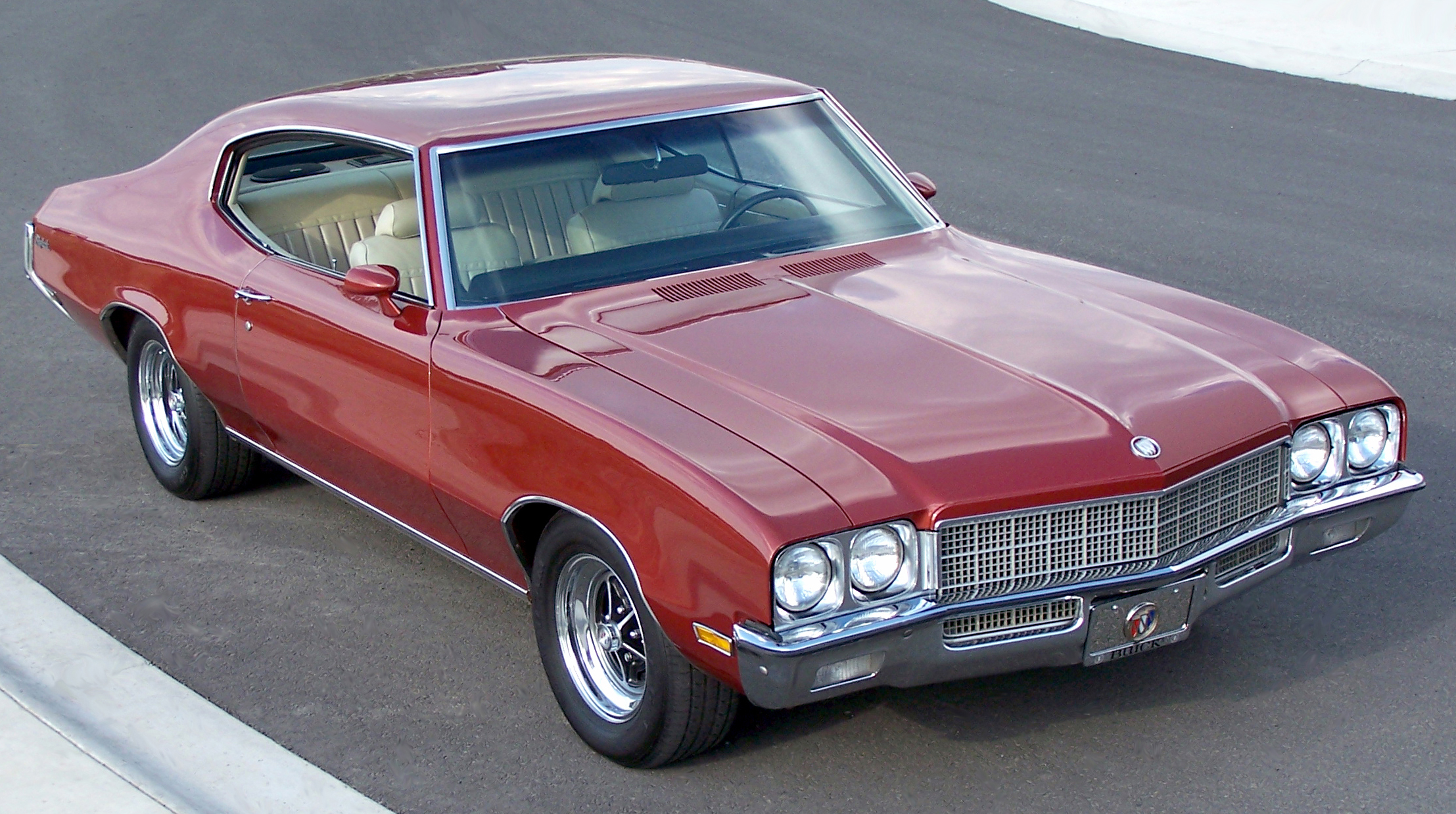
Buick Skylark Grand Sport
"[771.7s] Whatwasit? [772.2s] No,no,no,no. [773.3s] WhatwasthatcarthatgotuhruinedbyHarvey? [775.4s] ItwasaBuickSkylarkGrandSport."
A Buick Skylark Grand Sport is a classic American car, usually associated with the older “muscle car” style. The speaker is saying this specific Buick was the one that got damaged.
The Buick Skylark Grand Sport is a performance-oriented trim of the Skylark line, best known from the muscle-car era. In the episode, it’s mentioned as the car that was “ruined,” so it’s a key example of the kind of classic the host is talking about.
lowriders
"You got any lowriders coming in, the different stuff. And that's not to say that we don't love everybody that has cars, but you know, you get to see these same cars because we're not we are all creatures of habit."
Lowriders are cars that are lowered a lot and usually have custom suspension so they can move in a distinctive way. People also tend to customize the look a lot.
Lowriders are cars modified to sit very low and often use suspension setups that allow the car to bounce or “hop.” They’re closely associated with custom styling and a strong car-culture scene, especially in the U.S.
miles to a gallon
"Well,wegottawegottaworryaboutthepriceofgas. You know, maybe eight, nine milestoagallon, you don't want to go very far."
Miles to a gallon tells you how efficiently a car uses gas. Higher MPG usually means you spend less on fuel and stop less often.
“Miles to a gallon” (MPG) is a fuel-economy measure that tells you how far a vehicle can travel on one gallon of gas. When planning a trip, MPG helps estimate fuel cost and how often you’ll need to stop.
cruise-in
"And it's a big cruise in on a Saturday. Doyou know what I'm talking about?"
A cruise-in is a car meet where drivers gather and then cruise around together, often moving between multiple parking areas. The “parking lot cruise” description here highlights that it’s less about one static show field and more about a rolling route.
parking lot cruise
"You kind of no, it's not a Woodward type cruise, it's a parking lot cruise. Oh, okay."
A parking lot cruise is when car people meet and drive between different parking areas. It feels like a moving car show rather than one place everyone stays.
A parking-lot cruise is an event format where cars circulate through multiple parking areas rather than following a long continuous road route. It often creates a “rolling meet” feel—cars are always arriving, departing, and regrouping.
aftermarket industry
"And then when the aftermarket industry was developed, it really kicked things in."
The aftermarket is where you buy extra parts for your car—like upgrades that aren’t included from the factory. When it grows, more people can modify cars and make them faster or more personal.
The aftermarket industry is the ecosystem of companies that sell parts and upgrades for cars beyond what the factory installs. The episode credits aftermarket development with accelerating customization and performance culture.

Honda Prologue
"HondaisexpectedtopulltheplugonitsuhsoleelectricvehicleintheU.S., [1466.5s] theprologueafterthecurrentproductionrunendsinDecember. [1469.8s] Theautomakerisn'tplanningasecondgenerationofthemid-sizecrossover,whichGMbuildsforHonda onasharedEVplatform..."
Honda Prologue is Honda’s electric SUV. The discussion here is about whether Honda will keep making it after the current production run ends.
The Honda Prologue is Honda’s mid-size battery-electric SUV. In this segment, they’re discussing whether Honda will continue the model after the current production run ends and whether a second generation is planned.
hot rod
"There'll be coffee and adult beverages, plus chili pepper trophies for the best hotrod, best modern classic, and best classic."
A hot rod is a car that’s been modified to look cool and drive better. When they say “best hot rod,” they’re judging the coolest build.
A hot rod is a modified car—often older—built for performance and style rather than stock originality. In events, “best hot rod” usually means the most impressive combination of upgrades and presentation.
Gulf Coast Auto Shield
"Well, why not let Gulf Coast Auto Shield protect it? Houstonian John Gray invites you to his state-of-the-art facility..."
Gulf Coast Auto Shield is a local shop that helps protect your car. They do things like paint protection, window tint, and windshield protection.
Gulf Coast Auto Shield is the Houston-area shop being promoted for paint and glass protection services. The segment lists multiple offerings—ceramic coating, paint protection film, window tint, and windshield protection—plus radar detector installation.
ceramic coating
"Whether you're looking to massage your original paint to a like new appearance, apply a ceramic coating, install a paint protection film..."
Ceramic coating is a protective layer put on your car’s paint. It helps water bead off and makes the car easier to wash.
Ceramic coating is a liquid polymer/ceramic layer applied to paint to add hydrophobic water beading, easier cleaning, and improved resistance to minor contaminants. It’s often marketed as longer-lasting protection than basic wax.
paint protection film
"...apply a ceramic coating, install a paint protection film, nanoceramic window tent, or new windshield protection called Exoshield..."
Paint protection film is a clear protective sheet on the car’s paint. It helps stop rock chips and small scratches from damaging the paint.
Paint protection film (PPF) is a clear, tough film applied to high-impact areas like the hood, bumper, and fenders. It helps protect against rock chips and light scratches, and some films can be self-healing.
radar detector
"How about a professionally installed radar detector? Gulf Coast Auto Shield does that too."
A radar detector is a device that warns you when police radar is being used nearby. It’s meant to help you avoid speeding tickets.
A radar detector is an electronic device that alerts drivers to radar signals used by law enforcement for speed measurement. Many enthusiasts consider them part of “track-day to street” preparedness, though legality and allowed features vary by location.
Request an Explanation
Heard something you'd like explained? We'll add it to this episode.
Sign in to request explanations for terms you heard.
Want to learn more?
Browse our glossary for plain-English explanations of automotive terms, jargon, and concepts.
Help improve this episode
See something that's not quite right? Our annotations are AI-generated and can sometimes miss the mark. Click the flag icon on any annotation to suggest a correction.