Rivian is a company that makes electric vehicles, like trucks and SUVs. They are known for their unique designs and have a partnership with Amazon to provide electric delivery vans.
Hyundai is a car company from South Korea that makes many types of vehicles, including electric cars. They are working on new projects, including commercial vehicles.
The Ford Transit Connect is a small van that businesses use to carry things around. It's easy to drive and great for city driving.
Car
BrightDrop van
The BrightDrop van is an electric delivery vehicle made by General Motors. It's designed to help businesses deliver packages in a more environmentally friendly way.
Fleet business is when a company owns many vehicles to help with their work, like delivering goods. It helps them manage their transportation needs better.
Supercruise is a feature in some cars that lets you drive without using your hands or looking at the road, but only on certain highways. It uses special technology to keep the car safe while doing this.
Volkswagen is a car company from Germany that makes many different types of cars, including electric ones. They are working on new technology to improve their vehicles.
ICE means Internal Combustion Engine, which is the type of engine that most cars have been using for a long time. It works by burning fuel to create power.
Tesla is a company that makes electric cars and other energy products. They are famous for their high-tech vehicles and advancements in battery technology.
Stellantis is a large car company that makes many different brands of vehicles, like Jeep and Peugeot, and it was created from a merger of two other companies.
DS Automobiles is a luxury car brand from France that makes stylish and high-tech cars. They are part of the Citroën family but focus on the luxury market.
The Dodge Ram is a big truck that people use for work and heavy-duty tasks. It's often mentioned because it's known for being strong and capable, making it a favorite among truck lovers.
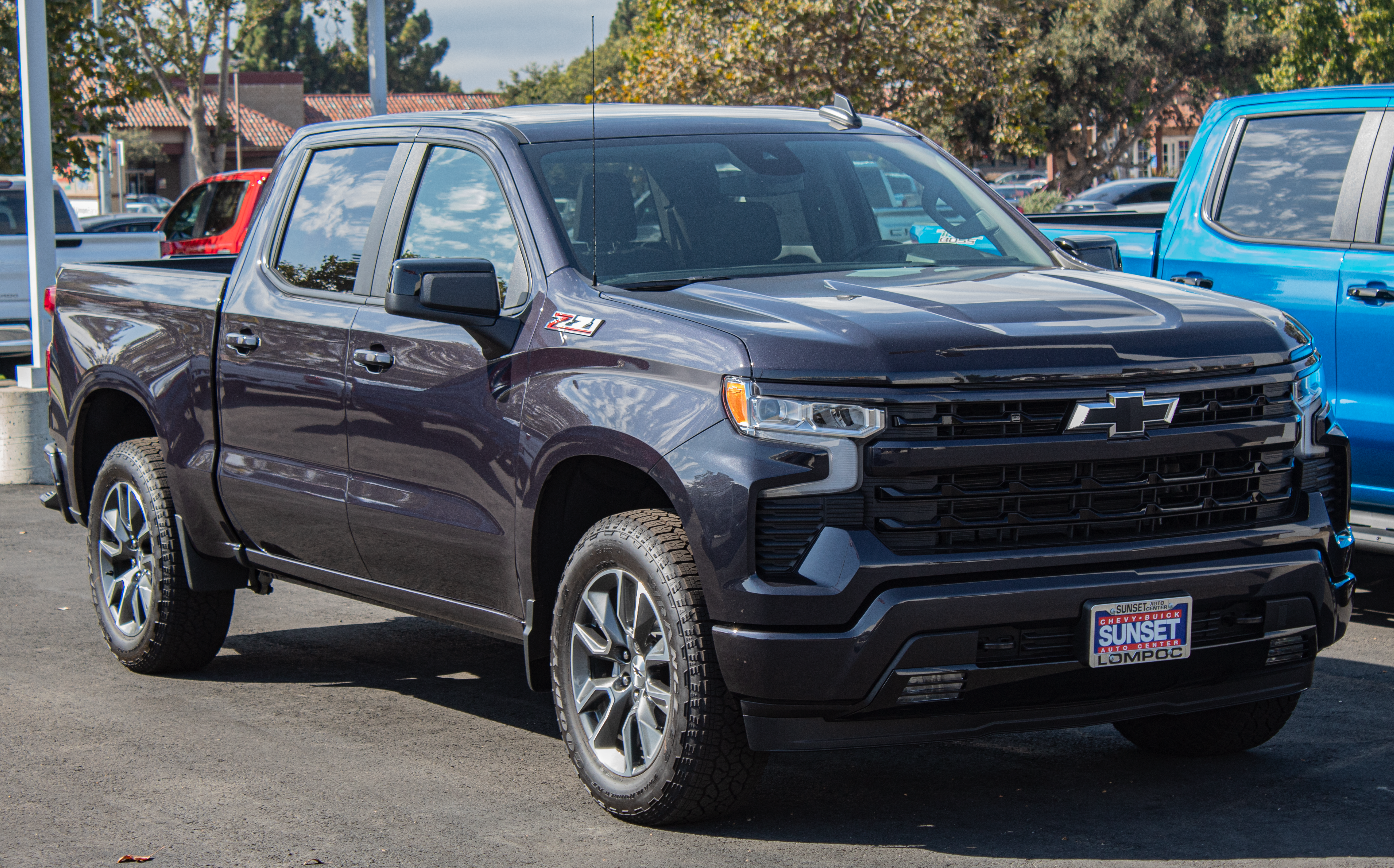
The Chevrolet Silverado is a big truck that can carry heavy loads and is great for work or towing. People often talk about it because it's popular and has a good reputation for being tough and reliable.
The Chrysler Pacifica is a family van that has lots of room for kids and their stuff. It's talked about because it's designed to make traveling with a family easier and more comfortable.
The Honda Odyssey is another family van that offers plenty of space and comfort for parents and kids. It's popular because it has good safety ratings and is built to handle family life well.
The Chevrolet Camaro is a type of sports car that is known for being fast and fun to drive. It's a favorite among car enthusiasts and has a long history in American automotive culture.
The Dodge Charger is a large car that is known for being powerful and sporty. It's popular for its strong engine options and bold design, making it a favorite among those who like fast cars.
EVs stands for electric vehicles, which are cars that run on electricity instead of gas, making them better for the environment.
LIVE
Forget whatever plans you have this weekend because you're staying at home and playing on SpinQuest. And there's never been a better time to sign up than right now. New users get $30 coin packs for just $10. All the table games you love with hundreds of slot games and real cash prizes. That's at SpinQuest.com, S-P-I-N-Q-U-S-T dot com.
Auto line after hours is brought to you by Alex Partners when it really matters and by Borg Warner. The automotive industry continues to evolve and so do the opportunities to define it. Borg Warner, one of the world's most admired companies, gets partners where they need to go. Let's do something big together.
Everybody, thanks for joining us on Auto Line after hours. Gary, what's today's show going to be about?
Today's show is going to be about like everything. We're going to look at the entire auto industry from soup to nuts and we got two experts here to get us through out of it. That's why we're talking about all of this.
Stephanie Brinley from S&P Global Mobility, correct?
Yes, thank you.
Paul Wadi from Auto Pacific.
Great to be back.
We got like the two consultants in the industry here.
Analyst consultants, what have you?
We should start with a quiz, though. We haven't had a quiz for a very long time.
I've had some great ones and I've just sat there and they've gone nowhere.
On October 23rd, 1911, a vehicle went into production overseas that has had significant impact ever since.
1911, overseas.
That pretty much says Europe.
I mean, I don't think the Japanese are the Koreans or anybody else was doing things that.
No, I think they were.
Not the Koreans for sure.
I don't think the Japanese were quite good.
We're getting close.
80 spends?
No.
I mean, it could have been overseas when carbon had their first one.
Right.
Instead of getting close when we said not Japanese.
You stumped us, Gary.
Yeah.
We went into production before that.
No, here overseas.
Where was that?
Ireland?
England.
England.
That's why I didn't want to say Europe.
Yeah.
But not when salt are British fake.
That's right.
I had to be very delicate about that, so I didn't want to say that.
But it's interesting.
I mean, that, you know, if you talk to people who are in England, I mean, Ford has been there so long.
It almost seems like an indigenous company to them.
Yeah.
Let's put that in the past.
Well, because Ford has not got much of anything going on in Britain now.
Right.
But if they think, you know, if they think about the brand, right?
Yeah.
Oh, yeah.
Versus the brand, like if there were a Chevy there, right?
They would say, oh.
You know, that caravan.
It's an American vehicle, right?
But if they see a transit van.
Yes.
It's just what, you know, it's part of the scenery.
It's part of the European scenery.
Yeah.
That's right.
So I mean, we've got so many topics to get into here.
One thing that I thought was very interesting was GM's earnings that came out just a couple of days ago, or yesterday, I guess it was.
And boy, their profits operating and net profits down sharply on sales were not much of a gain revenue, not much of a gain.
And yet the stock price took off.
Because I already thought it was going to be worse than it was.
I know.
But yeah, you don't go, whoa, okay, those numbers aren't so bad.
I better get better.
Yeah.
There's more positive stuff going on way the market went after it.
It was interesting that it did go, that it did go positive.
Like, yeah, but it was better than it was expected.
And really, who's going to, who's going to be able to say I've got more profits this quarter?
Not many.
Right.
Yeah.
The profits didn't look too good.
And the revenue was there.
I mean, there was revenue there and still still moving forward, I think, in managing the tariffs as well as I can.
And it's also what they cut.
You know, bright drop, you know, that's cutting some loss there.
You know, I recently talked to a business owner and he had mentioned that one of the keys to his success in his business was excise.
You know, he was willing to look at any new business opportunity.
But he was also ruthless about cutting his losses early and often.
And, you know, throwing good money at bad doesn't do much for your business.
So cutting bright drop, I think, was a smart move.
So let's talk about this a little bit.
I mean, so, so bright drop when it came out, this was, this was going to be, you know, the bright shiny box literally bright shiny box.
That was an EV that was going to have all manner of clever things, including specific carts that were made to fit into it.
And you'd be able to roll them off.
And they would try more over.
They were going to have my autonomous.
They would follow a delivery person to the door.
And I mean, and then they, you know, they had it in two sizes when they launched.
They had somebody from FedEx saying, oh, we can't wait to get our hands on these.
And I think Walmart was another that all we're going to have all these vehicles.
And so, you know, as you point out, they're saying we're done.
I mean, first it was a standalone, right?
And then they rolled it into Chevy.
Yeah.
And now they're rolling it out the door.
And it's gone.
And, you know, I don't know about your neighborhood.
But in mine, I mean, I'm seeing the Amazon Rivian EVs all the time.
I mean, the idea is right, isn't it?
The idea is right.
But it still hasn't been taking off quite even with Rivian and Amazon.
I think we do see a lot of them here, but I think it's a little bit location oriented.
Here's another one.
You notice they're building a commercial band with Hyundai in a couple of years.
That's true.
So, if right now it's not really working the way that you want it to.
The sales really aren't there.
The plants been down for a couple months anyway.
It's struggled the entire time that it's been on between battery issues and all sorts of things.
Why not?
Let it go.
Don't throw them on good money after bad right now.
And in what, two or three years, hopefully commercial bands are, and then the electric sector of it is picking up a little bit more.
And you will have an answer.
How come it didn't work, though?
I mean, you look at Rivians lucky.
Amazon's buying these fans.
They said what the original order was for like 100,000 through 2030.
Yeah.
So, and Ford is doing, you know, like four times better with the transit connect compared to the bright drop.
And again, you know, the numbers aren't fantastic, but it's four times better.
Right.
How come General Motors was not able to sell the bright drop van?
Because they didn't stick it with Chevy in the first place.
I think I think actually having it a separate brand and independent.
When you look at that fleet business, and you're trying to get people that have multiple fleet vehicles in there, they really are all ended.
Like, let's go with Chevrolet.
I mean, in Rivian has Amazon.
So, you're not selling to a bunch different fleets.
And Rivian has opened it up to other fleets.
So, maybe Amazon's being a little bit slower than what they expected.
That's entirely possible because it was 100,000 by 2030.
But I think they have 60,000 out there right now.
They may.
So, I mean, that's not bad.
They got five.
They got five years to.
They've got five years looking to fill the 40.
Right.
But I think that the bright drop in like it was clever.
It was a really cool idea when it started off, but I think it was too far from the fleet business.
And I think they might have had a better shot if it had been a Chevrolet product from the beginning.
And then it went from bright drop to being part of the it that they involve fleet business and then to Chevrolet.
So, there was a little bit of inconsistency in what to do with it.
I think long term, there's definitely a lot of opportunity in an electric commercial.
I think right now, commercial buyers tend to be a little more conservative.
And, you know, bright drop wasn't necessarily a cheap van for one.
Infrastructure is still pretty low on the totem pole in our country.
And, you know, so I think the timing was off.
In addition to, I think it should have been branded as Chevy.
But it wasn't a bright drop because general motors wanted to tell the market they were cool.
And they hired a tech guy.
I forget his name.
Josh something.
Yeah.
It's a Josh towel.
No, no, no.
But I mean, they hired some guy who was like from out of the industry, he came in.
He was going to run this thing and it would be like, yeah, you know, you want to come with us because, you know,
Ford, that's old.
We're the new kids on the block.
You want to be with us.
There was a lot of things that we're going to make most right happy that year long period.
Forget whatever plans you have this weekend because you're staying at home and playing on SpinQuest.
And there's never been a better time to sign up than right now.
New users get $30 coin packs for just $10.
All the table games you love with hundreds of slot games and real cash prizes.
That's at SpinQuest.com.
S-P-I-N-Q-U-S-T dot com.
SpinQuest is a free to play social casino.
Boyd, we're prohibited.
Visit SpinQuest.com for more details.
From everyone.
But there are, you know,
what's on the board?
Yeah, because I think there are some really positive things.
And I think that's what the market jumped at.
One of those being that they let it slip out of their mouths that so far this year,
on star is generated $2 billion in revenue.
I don't think they've talked about that on before.
And they said they have 11 million subscribers.
That's a huge number.
And they talked about the growth, the explosive growth,
just in the last quarter of supercruise.
And how many people are signing up for that.
And that's all future growth.
And I think that's what Wall Street was looking at when it wouldn't stock go up.
It was a huge jump for a legacy automaker.
And then they followed it up the next day with more news.
Yeah.
So I'll go into that.
So yesterday we went to New York and they talked about eyes off technology.
Supercruise level three.
Supercruise level three.
Hands off eyes off.
A little confusing if they're going to call it supercruise or something else.
But hands off eyes off.
Highway only to begin with.
Routed.
So that way, as you need to take back over,
as you get closer to the exit, excuse me, out the freeway,
there's a gated, there's a lot of time to kind of get the driver back involved
because you can begin your two miles from your gate,
you're from your exit, you're kind of bringing them back on.
And you, because it's highway only, you are expected that you're going to have to
get yourself off the highway night.
So it's part of the trip, not all of the trip.
But the technology seems to be pretty cool.
And then they've put a time to it.
2028.
Oh, 2028.
Yeah.
And then we're talking about the new super computer, the new computing power that's
that's going to go in.
So we had the.
Zonal centralized computer.
Zonal centralized.
So it's a little bit different from Rivian.
They call it a leap frog over current and zonal.
Yeah.
More of its controlled central unit.
But yeah, it's similar to zonal, though.
Similar to zonal.
And it did.
It sort of takes like those initial sensors and puts the thought process more centralized.
So you don't have stepping on the break and having that sensor tell it to turn the
brake light on.
You have that sensor saying, oh, go back to your big computer.
And this is what you all need to do.
But there's these are not instead of can boss.
And so there's a lot faster.
And the computing power is looking at the numbers too.
They are definitely putting more of the computing power toward the autonomy.
Which is what 10 or 10,000 10 times faster.
Right.
And then there's two to four times more power for infotainment.
So it's centralized, but it's also modular.
So like you're not going to have it on the entry level.
And you can add more.
You know, to something that is highly autonomous if you need it.
Yeah, there's growth there.
Power train agnostic.
See, that's very interesting.
You know, because as you guys know,
Ford pretty much gave up on its zonal centralized for its ice products.
Still going ahead with its skunk works on.
And they just decided that was too heavy a lift for the legacy side of the
business to go along with it.
GM doesn't seem to have that problem.
No, and it might be if you look at the evolution of that the vehicle intelligent
platform from 2019.
And then the evolution that they did about two years ago.
So I think it might be partially just because of where GM is in the
evolution of their electrical architecture to begin with.
Right.
And the fact that they're trying to be more vertically integrated with all of it.
So their systems speak to each other.
You could see what's happening over at Rivian and VW.
You know, VW trying to integrate some of Rivian's software into
Cobbled off ice slash EB products.
They're having a lot of issues.
GM has been working with their own platform and their own
components.
And they're trying to, you know, integrate it in from an ice level and an
EB level.
Well, but let's not leave our friends at Nvidia from out of this conversation.
Oh, well, they're using the Nvidia platform isn't like these guys in
Warren are beginning to do their own silicon.
Well, exactly.
But from the core standpoint, though, they're using Nvidia's products and
integrating it into their own system.
Rather than, you know, taking an off the shelf product like most automakers
are trying to do.
So they're saying it 10 times more over the air update capacity.
A thousand times more bandwidth than up to 35 times more AI
performance for autonomy and advanced features.
And then they talked a lot about how, you know, they'll be autonomy in
your vehicle, which will be your friend and learn to be your companion.
Yeah.
We've heard this from the Europeans.
I was thinking, I don't want to know when they were talking about
it being your friend and me having all the information.
And John, you might remember Toyota did a say and a mini band
that had all of this sort of friendly stuff.
And one of the things I remember is that it had a calendar.
You walked up and the calendar would jump on the screen for you.
Point being that I think was 15 years ago.
We've been talking about how it's going to be your friend and be predictable
for a very long time.
But in GM's news yesterday, next year, they'll do Gemini AI.
And they didn't put a date on it.
But sometime after 2028, they'll do their own AI system
and kind of bring that all in house.
So this first one, they're working with Google on that one.
Yeah.
They'll need their, the architecture that we were talking about
goes in in 2028.
So they need to have that in first before they're going to be able
to do their own AI.
So why are they putting it first in the next generation,
Escalade IQ?
Yeah.
Top to bottom, right?
Yeah.
Top to bottom, Cadillac is supposed to be your leading technology brand,
your luxury brand is where people will spend more money to save time
and then you cascade it through.
To me, it feels very logical to put it there.
Right.
It's, you know, until they can get scale, you know, start with something
where you can have some margin, right?
It's a pay for it.
But wouldn't they have greater volume if they just put it in the normal Escalade?
I mean, they're telling us that, you know,
the rollout's going to be quicker than supercruise.
So for this, you know, when you, when you put it in a legacy product,
think about it.
If, if you're going to have the zonal centralized thing,
all the components that you're using right now have software in them
written by the suppliers, that's all going away.
So now you pretty much have to get rid of those components, right?
Or you've got to change them so that they fit into this new zonal
architecture.
That's a big mess.
If you've got a clean sheet, the electric product right now,
that you can just slap that in.
It's much easier to start with that.
But isn't, isn't the next generation Escalade going to be completely clean sheet?
I doubt it.
The IQ.
The IQ.
Oh, IQ.
Yes, so that's why it's, so it's the next generation of the IQ.
So if they do, they do another vehicle.
I mean, why wouldn't you do this in an expensive volume vehicle
that you're going to be able to get scale faster than a limited selling EV,
which oh, by the way, Mira Berra has now admitted that it's going to take
longer for these EVs to be what they, what she thought they would be.
So by that point in time, there may be even fewer EV sales.
Oh, I don't think we're going to have fewer in 28.
I think we're going to be in better shape in 28 than we are now.
I agree.
I think that the trajectory that was talked about.
Not 30 percent.
Yeah, yeah.
But it'll be better than, and I'm, and, and I think the key part of the key is they,
they've said several times that the rollout is going to go a lot faster.
And once, I mean, 2017, when we first saw Supercurs,
that, that learning curve period was quite long.
But once they really started rolling it out and once they got over chip shortages in 21,
then it started rolling quick and they're ready to do that.
So I think it's going to roll much faster than, than you imagine.
And I think that's part of it.
And the other part of it is you've got any technology that people have to learn to understand.
And so if you do it in the SQLite IQ, you do also kind of buy yourself a little bit of time
when you continue that education process.
And when you continue the making sure they'll feel like it's right before you go out.
But you feel like that little bit of process is almost better with a slightly smaller group.
And I mean, it might be a year before it starts rolling out.
So we aren't talking about three or four years later.
So let's pivot to test the technological optimists here.
I'm thinking about that Jeep over the year update that worked those vehicles.
Just saying, right, there's a learning curve.
But let's talk about Tesla because it also reported its earnings just yesterday.
And we saw sales were up, sales were up strong.
Revenue was up in all sectors of the company, you know, energy storage, car services.
And yet profits fell like 40%.
So they had they had revenue was up 12% net income was down 37%.
And operating credit come down 40 credits, credit sales were down 44%.
Yeah.
And I think this explains a lot of the reason why profits were down.
They're just not getting that Zev credit money.
Yeah.
I mean, to the tunes of hundreds of millions of dollars gone.
The last year they made $739 million and this was 417.
Yeah.
SpinQuest Social Casino.
The presents are open and you're over the in-laws.
It's a perfect time to grab your phone and play SpinQuest.com with live dealer blackjack.
Crafts and a ton of slots.
And here's a great deal for the holiday.
A $30 coin pack for $10.
And if you're hearing this ad, you can play right now on SpinQuest.com.
SpinQuest is a free to play Social Casino.
Point where prohibited.
Visit SpinQuest.com for more details.
So significant drop.
Feel the ballroom or that kind of money.
So like, pose the question to you.
Are we seeing a crossing over point where here's General Motors has been
the poster child of slow plotting legacy company.
And we've just been talking about all this exciting stuff,
although a lot of it Tesla pioneered.
Meanwhile, here's Tesla.
It's been the poster child of this agile lean growing car company.
Are we starting to see a crossover?
We might be part of it is.
Is Tessas was tapped evolving the car?
I mean, other than looking at anything.
Yeah, actually, I mean, full self driving.
They're still trying to figure out.
So innovation.
Exactly.
We haven't seen anything out of there.
And there isn't really a lot on the agenda for what the next anything is going to look like.
So other than cyber cab, which you know, we'll wait and see a little bit how that that really evolves.
And what you're seeing at GM, I think, is as you know, coming to fruition,
a lot of decisions that were made a long time ago and that have just been consistently improved and consistently improved.
And they didn't shift course and they didn't shift course and have stayed through.
So I think that's a lot of what we're seeing at GM right now.
And they also have an ice portfolio that's rather strong right now.
It's strong is holding up their business that Tesla doesn't have.
So.
Yep.
I agree.
So is it does it mean that GM is suddenly more technology oriented companies than they were before?
I don't know.
What I thought, don't you think I asked you about this problem in the presentations that we saw yesterday.
One of the things that I was thinking about it after is the two, you know, the Aurora Sterling Anderson from Aurora and Dave Richardson from Apple.
In their presentations and then their conversations about the new technology they were bringing, they were both very clear.
These are cars.
And it was interesting and very neat to see these two guys who have only been with the company for six or eight months.
Really excited about their technology being applied to cars and that forgetting that that's what it was.
And understanding that.
And I thought that was a really interesting and refreshing take.
But hear that as much when you're talking about the Tesla or technology company.
It tends to focus on the AI is the end result and the thing.
And this was this AI is going to make your car better for you.
Yeah.
No, that's that's a major shift from what we've seen in in Rivian or Tesla.
And those companies have obviously great potential in the long run.
But you get a bump in the road like $7,500 tax credit goes away all of a sudden.
You're losing the zev income that you're getting.
And all of a sudden your business gets gets shook up and we're seeing that with Tesla right now.
When you don't have anything else to fall back on.
You don't have many options.
I thought it was very interesting is in the earnings deck presentation that Tesla made yesterday.
That that one of the slides was the optimist robot at the Tron Aries debut,
which is the biggest tanking movie of the year.
That's where you want to show off your good technology at the failure of a movie.
And I did.
So we're at the GM thing.
And one of the things that the the Q and A that Sterling Anderson was asked about was that they were talking co-bots.
Collaborative robots was one of the conversations that GM was having yesterday.
And there was a little video that showed them and they were kind of like the dogs and kind of like a rolling things.
All all plants oriented stuff right.
And the question in the Q and A was why do these why are they not human rights because Tesla and because there's some Chinese companies doing human rights.
Why are you doing human rights and Sterling Anderson is like well because people's hands are better effectively.
He's like because people can be more nuanced and actually building something that has the right grip and the right torque and they be able to the ability to hold something is really quite difficult.
But moving this around and having this other part support what that person is doing is much more efficient and a better use of robotics.
A couple hours later, we're in the Tesla.
I'm listening to the Tesla earnings call.
And in the Q and A and sort of later on when when when Elon Musk goes and do his sort of random chattering.
He starts talking about how hands are really hard to do in that slowing up optimus.
It's like it's really hard and as you find out like a paraphrasing that not you know he's like hands are our fingers are different likes for a reason.
And it's really in the forum where the strength is coming from.
So it was interesting to hear to robotics people talking about the same issue in the same day.
I'm sure it wasn't scripted but it was funny.
I like one other thing too that GM's not going to talk about is the UAW.
And you know you've got on socialists especially coming out against automation.
You know Bernie Sanders is calling for attacks on robots.
You know because it's going to get rid of jobs.
There's a lot of people in manufacturing on the labor side saying wait a minute this automation is going to get rid of all kinds of jobs.
So if you start introducing humanoid robots and in the UAW plant they're going to go eight.
If you introduce co-bots that work with workers to enhance their job.
That's a totally different story.
And if you think about robots we've seen out of BMW and Hyundai and the plants they have been more that.
It has been more co-bots.
It has been things that aren't so much humanoid.
There's the dog that walks around and checks the seams and things.
But most of it is like that.
You're right it's not humanoid that the more traditional automates are talking about for plants.
They're not talking about humanoids.
Co-bots so just full disclosure here.
Like one of my very first jobs was working on a magazine called Robotics Today.
So I've been covering the robot industry longer than you guys probably have existed.
And you know this whole co-bots thing.
Okay co-bots have been basically around since 2016.
Okay.
And so for car companies not to be all where we're using co-bots it's like Jesus you know.
Do you put air in tires too?
It astonishes me that this becomes something that's considered to be clever.
And into the point of the robot tax again the robot tax has been talked about for like ages.
But the thing that is is that if you look at it statistically that basically the more robots you have.
You have greater economic growth rather than a reduction.
And you know if if we're going to be competing in the world.
In the US we need to be more efficient.
And this is a means by which we can be more efficient.
And if you look at the per capita use of robots like and that's right China.
Far exceeds what it is in the United States.
You think well gee they got so many people there why do they even need robots.
But because they find out that it's got an economic leverage to what they're doing.
So more or not less.
And we isn't there a tear of running around about robotics.
I feel like that's in the air somewhere.
Yeah that's another.
Don't remember if the section 232 has been finished yet.
That's when I don't remember.
But I think that's that's on the agenda too.
Which is interesting because you want to tear off the robotics because if you have robotics coming in.
They're doing the jobs that there's a big circle there.
Just just finish up the Tesla discussion.
What do you guys make of a Elon Musk and pay me this big pay package or I'm out of here.
Okay so you see here's my question to you guys which is in line with that.
Like okay at this point time what if he goes away.
I mean what if he goes away?
I mean the stock would tank.
Why?
Number one.
Well it depends on who they put in and it depends on how they handle the change.
But there should be somebody in there because that can step up.
At some point a lot of companies you look at their evolution and the right CEO at one point is not the right CEO at a different point.
That may happen with Tesla right around now.
You know he's running a lot of different projects and he's pushing things.
But there doesn't seem to be a lot of maintenance and development in the auto side of the business.
It's all robots and AI.
So whether Musk leaves the company or they just get somebody in to deal with the with the auto with the automotive side of the business.
It does feel like that wouldn't be a bad thing.
But if he leaves and takes AI and robots with him.
Tesla stock tanks.
You know the next day.
It's you know there's just no way that you can support the valuation as a car company.
If you throw AI and robots, okay, maybe it's worth.
Okay, but okay.
Steve Jobs dies.
Did Apple die?
Tim Cook comes takes over.
Companies valued more than people could even imagine.
Yeah.
So here's the you know because now remember they had John Scully after they threw.
Jobs is running it.
Throw him out.
Put in John Scully.
Less very short period of time.
Because the company tank.
Big company because it's like where Steve Jobs and Steve Jobs went and started next computer.
Right.
And he was doing that.
And developmental operating system to be OS and.
And I don't know.
Well, let's bring him back.
Brought him back.
And he's like.
He's back because the innovation started again with a Steve Jobs driving.
So.
So.
So.
But my point is is that.
If somebody who clearly.
Was so essential to a company.
Is able to.
Unfortunately, in his case, die.
And get replaced.
That the replacement can actually.
Make it a better company.
So maybe.
I think part of your.
You just said it, John.
Innovation.
I mean, where is the innovation in Tesla right now?
Maybe they need new blood.
To create new innovation.
Or maybe they don't need new blood.
They just need.
Well, maybe they.
New blood to take the.
You know, let the dogs off the leashes.
Right.
The dogs at Tesla.
Let them run and do the stuff they want to do.
Yes.
Clearly there are very smart people within Tesla.
Absolutely.
And they do seem like they have leashes on them in certain aspects.
But look, I got to believe the design staff at.
Tesla is just dying to do new designs.
Yes, but.
What about the two people.
They're sitting in the corner office.
Yeah.
And so the question.
The second part of that question about what happens at Moscow.
It is dependent on who comes.
And it can even be in a little bit of a turmoil for a while.
It doesn't have to be solved in the next two minutes.
There will be turmoil.
There will be turmoil for sure.
The stock price will be affected for sure.
But it isn't where the where the revenue is coming from.
Your stock price can go down and you can still make money.
I think last time I tracked.
So it will hurt.
And there will be a stock impact if he does go.
But it doesn't necessarily have to end the company.
And it might even be that the company does split.
You know, maybe the automotive vision goes one way.
And maybe.
One thing I would say.
Like this is all theoretical.
Moscow leaves the stock tanks.
You're going to see.
Huge amounts of money coming in to want to buy that company.
Automakers, private investments.
I mean, they, you know, right now it's priced out in the atmosphere, right?
It's a trillion dollar valuation.
Nobody could buy it.
But if the stock took a massive hit and got down to regular automotive multiples,
you would see a feeding frenzy wanting to buy Tesla.
Okay, but charging network alone, you know.
But the thing is, it's just not a car company though.
I mean, it's so much more than just a car company.
And so that, you know, the stock comparison really isn't fair to car companies
because here's a company that has AI and rocket ships and robots.
Well, SpaceX, that's a separate company.
But it's under the order of Moscow.
Right.
But so I think that, you know, if they're really concerned that he's going to say,
I'm going to take my, if I don't get my money, I'm going to go home.
They have somebody in that back room, better have a plan.
Because there is talent within the company and somebody else could.
But the most uncertainty, the most difficult thing is if he just walks out
and they appear to be uncertain on how to put a new manager in.
Someone's got to be thinking about that.
Even if they aren't going to talk about it, that's fine.
They're going to say it out loud.
They don't have to say it out loud.
But you do.
And you have to have, you should have succession planning for CEO anyway.
That's right.
Regardless of that.
There's not just plan B, plan C as well.
Plan C and plan D and you really need to think about what that's happening
because the company is more than the person.
It really is.
It would be a humble musk.
Good.
Hey, look, we got to take a quick break.
Shout out to the sponsors that make this show possible.
The automotive and industrial sectors are undergoing a historic transformation.
The pace is accelerating and the pressure to adapt is real.
This is not a time for hesitation.
It's a time for bold decisions backed by fast, effective execution.
You need a partner who understands complexity from factory floors to boardrooms
and delivers measurable results.
That partner is Alex Partners when it really matters.
The automotive industry continues to evolve and so do the opportunities to define it.
Borg Warner, one of the world's most admired companies, gets its partners where they need to go.
Let's do something big together.
Thank you, Alex Partners and Borg Warner for your support.
I know there's a topic that you want to get into but quickly before we get into that,
Carlos Tavares has written a book just came out.
I think it got posted yesterday online where he's saying
Stellantis may not stay together as a company and may have to get broken up.
Paul, any thoughts on that?
I mean, there's a lot of different paths that they could go with that but,
you know, obviously the US brands have been core to Stellantis.
I think it could make sense in some aspects for some of the companies to split off.
Yeah, what Tavares was saying is that the political pressures particularly in Europe
between the France and the Italians are such that
he doesn't think they're going to be able to hold it together.
So, you've got the Italian unions and the government
really putting the pressure on Antonio Filosa because production is down so much in Italy
because the vehicles aren't selling.
Same thing going on in France.
The unions and the government want more jobs there.
And the things just aren't selling.
Meanwhile, you've got Filosa putting $13 billion into his US operations
and people back in Europe screaming bloody murder about it.
What do you think, Gary?
Well, the other interesting part about what Tavares said was he thought a Chinese company
would buy the European operations and then the US operations would.
Who don't them?
That's a good question. Maybe they're back to their back to being independent again.
Would they or I mean look, I could see Ford and GM fighting to get Jeep especially
maybe Ram.
That's just taking a competitor out.
And is that better for you?
Well, I mean, I'm in the truck side.
It's going to give you a lot more volume, profits, revenue.
That's assuming that it works that way.
You assume you buy a brand and you get all of their sales.
People do stuff.
I don't know that there's a feeding frenzy for that.
I don't know that Ford really wants to expand more sense for Ford to buy Ram
because Ford would just like to build more pickup trucks because that's only one build anyway.
But Ford's got Bronco.
So maybe GM is the one that goes for Jeep.
I feel like if GM was really committed to going to an off-road Jeep vehicle,
they could have done it.
We've seen, they've talked about it at GMC in a number of times.
And I feel like if that product was important to them,
they've got the skill and capability to do it.
You don't need to buy somebody else's.
I mean, maybe because it's cheap, but it doesn't really fit.
I don't know that is necessarily the best solution.
Maybe it is better if they stand on their own a little bit.
So if they stand on their own,
and you guys know product and the market very well,
they stand on their own.
Do they keep Chrysler and Dodge,
or do they become a company that is basically Jeep and Ram
because that's where the money's coming from.
I mean, you look at Chrysler,
and once the last time you saw a product, right?
And the atrophy there is seemingly long-lasting.
Chrysler doesn't seem to make much sense anymore in their portfolio.
As it is, it doesn't.
If they're really developing the products that we think,
if they're developing the products,
if they're talking about can they revive it?
It can be revived if you really want to.
But as it stands right now, it's a minivan.
Yeah.
But Dodge, I do think there's potential there.
And I think that if they took the resources
that they're saying they're putting towards Chrysler
and they directed them towards Dodge,
then I do see potential,
especially if they add a couple SUVs that we've heard about,
and I think there is potential there.
So what would Dodge be?
I would go back to having more,
having that mix.
I mean, it's cars.
It's still.
It must be their sporty car.
Yeah, performance plan can work.
But so that's what it would be.
I mean, it wouldn't be, you know,
it's when you add, you know, these two SUVs
or whatever they would be performance vehicles,
not for us.
Or maybe you don't add them.
I mean, if there's no Chrysler in the picture,
you know, maybe they'd be able to sustain both,
but I think a greater potential would be with focus
on sporty aspect.
Which is where Dodge is thrive, so.
See, this is interesting because we're talking about
how Chrysler on its own in North America could probably make it.
Yeah.
Meanwhile, you look at what Filosa has got, you know,
in terms of Elfero male.
Doesn't make any money at all.
Maserati.
I mean, they've thrown everything in the kitchen sink at it.
It hasn't worked.
On Chia, on Chia died two decades ago.
Nobody told Stellantis that yet.
You've got DS in France.
It's going nowhere.
And yet, if you tried to kill Maserati or Elfero male,
I mean, the Italian government would go ballistic.
So is the Italian government or the French government
going to be like, oh, sure, sell it to the Chinese.
That'd be good.
Yeah.
And they're already, if they save jobs, they'll sell it.
And the government will be behind it.
It's possible.
It's possible.
But I think we go back at this.
And then you look at all the brands and the idea,
I don't even know what Mr. Tivari said.
He said, we have scale.
We can support our 14 brands because we're going to share.
And we have scale.
Sister brands, right?
And it has been effective.
Well, but I mean, look how much has been unraveled so far.
You know, in just a short time that Tivari has been out.
You know, their electrification plans in the US have been totally,
you know, they were turned backwards faster than Tivari's
was kicked out the door.
Yeah.
Yeah.
I mean, VH for everybody now.
Yeah.
But they need to get their business back in mind.
So if that's what it takes for right now,
just as long as they're still looking at the mid to long term plans
and planning for one electrification is hopefully going to take hold
a little better in the later part of the decade.
You know, as much as I think that the alpha has been a good brand
and VH has been an interesting brand just.
It's okay.
Yeah.
They just don't have any likes in the States, really.
I mean, and alpha's just, there's too long between products.
It's not that it's not that the brand ethos can't survive.
It's not that they couldn't build a good product.
They just haven't.
It's nothing.
It's not even that they've had a bad product and been able to not do it well
and they just aren't really playing in the States.
But that product Earth has also been a problem in Europe too.
So when you look at the European brands, again, you've got a company
that for all of the talk of scale being able to bring products to market faster
and being able to support and feed the brands by using stuff under the skin.
All that theory sounded really good, but it didn't happen.
And part of the reason these brands are struggling is because they don't have
either enough product or not the right product.
So John, do you think it's possible for a Chinese company to buy the European
business of Stellantis?
Yeah, I do.
Because it'll come down to jobs and the unions, which politically are very powerful
in both France and Italy, you'll say, you know, the choices we sell to the Chinese
or we lose all these jobs, the choice is easy, sell to the Chinese.
Forget whatever plans you have this weekend because you're staying at home
and playing on SpinQuest.
And there's never been a better time to sign up then right now.
New users get $30 coin packs for just $10 all the table games you love
with hundreds of slot games and real cash prizes.
That's at SpinQuest.com, S-P-I-N-Q-U-S-T dot com.
SpinQuest is a free to play social casino.
Boydware prohibited, visit SpinQuest.com for more details.
I'm not making it that one way or another.
Yeah.
Okay.
And so, no, maybe Stellantis will just, you know, Pelosi will get the thing turned around
and we'll laugh about what we said on the show.
I mean, you know, it's not, it's not, it's not dead yet.
Right.
Yeah.
That's right.
All right.
So before the show started, and I mentioned to Stephanie, and she crushed me after I
read this thing from Lexus L-E-X-I-S, not the U-S vehicle one.
Lexus slash nexus that they did a study and they discovered that one deciding
on their next vehicle purchase, 42% of U-S consumers decided on the brand
less than one month before purchasing or leasing.
42% one month and they could change to something else.
And Stephanie, you're like, what are you?
I'm trying to, no, I'm trying to remember precisely, I'm sorry.
I don't remember precisely what our loyalty number is, but it's around 55-52%.
So, what I was saying is if 55% of the people are brand loyal and the rest aren't...
Well, of course, there's a possibility they change in the last month.
They could change in the last two hours.
So, I mean, the thing that I wonder about is, you know, so we were talking about Jeep
and we were talking about Ram and we're talking about Chrysler and we're talking about Dodge.
And so my question to you guys is, like, to what extent
do brands matter anymore in terms of people saying, you know what?
I buy Ram, I don't buy NF150, I don't buy a Silverado, I buy Ram versus like...
Yeah, but especially with full-size pickup.
Yeah, especially with that example.
How many people say, I will buy a Pacifica minivan and you've got to pull my dead fingers off the steering wheel.
And I will not buy an Odyssey and I will not buy a Carnival and I will not buy a Sienna.
Well, I think a couple of things is that, I mean, there's no bad products on the market rate.
Yeah.
Everything is good.
So there's a lot of choice and buyers, a large portion of buyers are price sensitive.
So, you know, they're going to find a vehicle type that they like maybe but they might be open to a number of different brands.
And I think that just shows that the strength of the market as a whole right now is we have good product.
If that's a great point because, you know, if you get online to search, boom, boom, boom, boom, you can line up all the different brands,
one right next to the other and compare all the different features and what the price is.
And so it's so much easier to choose between brands than it was before.
And I will go back to even if that loyalty is 50%, even if it's only 42%, because some brands are that low.
But even if it's that low, those brand buyers that are loyal, yeah, get to spend a lot less money to keep them.
So from a marketing perspective, from how you communicate and how you reach out,
it's less expensive to retain those buyers than it is to convert another buyer from the manufacturer's view.
So the more that you can keep, the more that you can keep.
But I don't think they necessarily expect nobody expects anymore.
They get 70 or 80% loyalty.
We haven't seen that in, I don't even know how long.
So the reality is you're going to have a mix consumer base.
You're going to have a mix of loyal buyers and you're going to have a mix of shoppers.
The loyal buyer save you a little bit of money.
So you want to have that.
But it doesn't surprise me that people were, I anecdotally my sister went to go.
Years ago, a few years ago, she was like, she was going to buy a Camaro.
No.
The F&I guy told her to go have lunch while he crunched the numbers.
They went across the street and bought a charger instead.
I mean, people just make different choices on the whim.
And some people are very loyal to their brands.
But to your point, John, you know, you can, you can cross shop a number of different vehicles by feature.
But it's also easier to get pricing and an idea of what you would be paying.
You know, right there online, we have so many resources and dealers are more open to, you know, handing some of those numbers,
giving an idea at least of what you'd be paying.
No, that's a great point.
You get the consumer more choices.
You're going to take them.
Yeah, exactly.
Okay, so given, you know, you mentioned, you mentioned affordability.
And, you know, we saw last week when it was announced that it's over 50,000 bucks as the average transaction price for a vehicle.
Does this have an effect on loyalty in and of itself?
In and of itself, probably not.
And I think when we look at that average transaction price number two, we have to remember kind of who's buying right now.
And there's a big electric vehicle pull ahead.
Electric vehicles are more expensive.
We've been talking about affordability is high.
But we've also been talking about it for the last eight or nine months.
There's a lot of conversation about how tariffs are going to make things more expensive.
And it's slowly starting to trickle in.
So if you're on the fence and if you're worried about that, there's probably some buyers that are just not stepping in right now.
And the ones that are stepping in have a little bit more flexibility, which is just contributing to the higher price.
That's really crazy high price.
And it has been coming up.
But there are some other things happening to that we might see it.
We might see that settle down.
You see some correlation to like what happened back in COVID in the chip shortage.
You know, it was the more affluent buyers that were in the market at that time.
And I definitely think we're seeing that.
What I'm wondering about is is that okay, so let's let's take the mid size SUV category, the ever ever popular category that everybody wants one right.
And so someone gets online and they look at their options.
And if there is pricing attached to these things.
Is it likely that you know, a died in the wool Chevy person will consider a Kia?
They could.
I mean, do you think this is more likely now than it would have been five years ago when this information was not as readily available?
I'd like to go 10 years, but yeah, yeah, yeah, probably 10 years.
But I definitely think there's correlation with that.
You know, and you can look at who's gaining market share.
Toyota's gaining market share.
Hyundai's market gaining market share.
Hyundai Group.
General Motors too.
GM is gaining more market share than anybody this year in the US market.
Yeah.
So yeah, look, you give customers compelling reasons and they'll abandon them.
Not everybody.
Some are a hard car.
You know, I'm.
I'm died in the wool woolen on this brand, but.
And some are died in the wool and some are just the brand actually works for them.
And they're lazy about switching brands.
Sometimes that's a case too, but.
But sometimes, you know, sometimes Chevy buyers just actually like the design.
And they just like the styling and some people, you know, are really attracted to the Kia styling.
So some of that brand loyalty is about the product.
But you do have buyers who are also super practical and some of them are like, yeah, I can save whatever it is.
And they will be closer and it's good enough.
And and to Paul's point earlier, there isn't a bad car.
So, you know, if you're a very practical buyer and and you go.
Kia versus Chevrolet, you're probably not super unhappy with whichever.
At the end of the day, especially if if prices is the is the key factor for you.
They're both going to have the technology similar technologies.
They're both attracted vehicles.
They're both going to do what you need to do.
Neither I'm just going to just randomly break on you.
So so Paul, you guys do a lot of research into features and technologies that.
Consumers are interested in.
I mean, are you seeing significant differences between what's on offer.
In terms of affordability for people that.
Some car makers are putting it like so everybody has a longer list of what they want, right.
But no one is going to be able to afford what they want unless they're one of these affluent consumers that you talked about.
Yeah, and you know, it used to be like.
I would always say Nissan always packed the most value at the lower end of their their portfolio.
Now you see Hyundai Kia really stepping in and they're making the value propositions.
And you know, it changes over cycles, but now GM is also starting to inject more, you know, into most of their portfolio.
So I think it's a cat and dog race here where they're all trying to keep up with each other.
But not negotiables now are the safety features that are kind of just baked into every vehicle.
And I think it comes back to the point where there's not really a bad vehicle now.
And so a lot of it does just rely on price and value.
So I think that that's the direction that the market is going.
And I think values is that key factor as well as price because.
I think there's enough there's enough vehicles at enough price points.
It's the value that comes into it as well.
We're also starting to see less like trim options.
I've noticed almost every automaker is cutting down their trim levels.
And obviously that helps in the factory too.
But if you bake in more value, you make a stronger proposition on the market.
Yeah. And I think two people coming in and out.
If you have a bonkire for a few years, the price can surprise you.
But when you start looking at that laundry list of what is pretty much standard anymore.
I think consumers are smart enough to realize they're getting more technology than they used to.
Like they understand that some of that price increase is because they're getting more stuff.
And they understand that there's stuff that they don't really want to go without.
So while affordability is a problem in terms of how much of the market you're open up to.
Consumers can understand some of where this price increases coming from.
Except for the tariff side of it, which we haven't really dives into yet.
Automakers have been super cautious about increasing based on tariffs.
That's probably shifting soon, but they have fun.
So I think consumers do what they can afford is one question.
And that's where if it's more affordable, then you can get more people in.
And that's where the market gets hung up.
But I think people do understand and can make that price value connection.
And even more than features, I mean, you guys mentioned who's gaining market share and look at who's offering hybrids.
And that's becoming a big story to Hyundai Kia and the market share that they've been growing.
Toyota is starting to offer entire lineups as hybrid only.
So automakers that are really digging deep into the hybrid hole are probably going to see some benefit in these next five years.
So do you guys see that being sort of a replacement for the emphasis that has been on electric vehicles for the last few years?
That the electrification basically takes the form of hybrid.
Forget everything you had planned for this weekend because you are sitting on your couch and winning from the comfort of your own home.
I'm here with SpinQuest, where you could play hundreds of slot games, all of the table games you love, and you could even win real cash prizes.
New users, $30 coin packs are on sale for 10 at SpinQuest.com.
SpinQuest is a free-to-play social casino.
Wait, we're prohibited. Visit SpinQuest.com for more details.
I think it's going to backfill a little bit, but if you look at Toyota, they've been consistent on what they've been doing, and their messaging has been the same.
EV has a time and a place, and it has a part in their portfolio, but they really think they can do more with hybrids, and they've stayed on that path.
The other side of it is regulations.
Yes, I'm aware. We're not charging anybody for not meeting right now.
I don't think there's an automaker who is going, okay, this is going to be sustainable.
I'm never going to have to pay a fine again.
We saw how quickly things changed just within this year.
Imagine in the next three and a half years.
We do have more regulations coming.
We don't know exactly what they're going to look like yet.
They're not going to be as bad as they are, but we kind of knew they weren't going to be able to make.
This is what they look like.
I don't think we're going to be there.
I think there's going to be something in the interim, and the regulations aren't gone yet.
They have not been pulled away, which means you're still at risk.
Nobody is pursuing them.
They are. Why do you think we're getting so many hybrids?
It is not just because suddenly consumers woke up and said, I want a hybrid.
It's about electrification. It's about regulations.
That is part of the reason for hybrid here.
They're planning for flexibility.
They're planning for flexibility, and they're needing electrification.
Even if it's not as bad as what's on the books right now,
and even if it comes back, you still need more electrification and hybridization as part of it.
What we're finding is consumers will get to full electric at their own pace.
That's right.
Absolutely right.
The automakers I've talked to are saying, look, we're being whipsod by every new administration that comes in here.
Right now, we're saddled with stranded EV investments.
But what if the Democrats pull off the perfect trifecta in 2028
and they get the White House and the House?
It's going to snap right back.
And we could be caught by the end of this decade with stranded ICE investments.
So to your point, Steph, they're trying to remain as flexible as they possible.
Absolutely. I guess politics.
But I have a hard time.
I would hope that if the Democrats do that we don't have as much of a whipsaw,
I would hope that whatever the next administration comes in,
whether it's Democratic or Republican,
starts to understand that the whipsaw effect on the industry is causing a lot of pain.
I know, but look, why the Democrats were so adamant about putting in such strict regulations
and forcing the industry to invest so heavily and move so fast is climate change
and their viewpoint is an existential threat.
We have to move now.
So I just don't see them coming in and saying, you know what?
Trump was right. We just can't push that hard.
I don't think they say it. I think I find another way to say it.
But because the thing is, again, consumers are pushing and deciding when they're going to do it.
And I am maintained that part of the reason.
I mean, President Trump ran.
And I'm going to get rid of some of this climate stuff.
I don't like EVs. I don't think this is a good thing.
Oh, I pretend I like them, but whatever it was.
You know, the regulations are going to be gone.
But you want them?
Right.
And then he didn't.
And whatever. But you knew that was coming.
So if you voted for Trump, you knew that that was part of his agenda.
And people are buying at they want.
So I think there's two really strong signals that consumers have said we will buy EVs when we're ready.
We're seeing it in Europe.
We're seeing it in Canada.
We're not seeing that consumers saying that consumers don't want EVs.
But we're seeing that that is going to be the factor more than regulations, I think.
Right.
So the Democrats come in and want tougher regulations.
They're not going to be able to go as hard as they were because consumers are not going to follow them.
Whether regardless of your political party, you're going to buy what makes sense for your lifestyle.
And there's still that infrastructure thing.
Yeah.
So even if they're pushing so hard, it's not attainable right now for the mass market.
Right.
I mean, look, anybody I know who talks, who owns an EV says, what infrastructure problem?
What charging problem?
I don't have a problem with that.
And so the people who have bought it live in a house.
Well, they all do live in a house as the ones I know.
So there's still 35% of America that doesn't have access to a home charger.
I know, but that means 65% do.
Yeah.
So the market could be right with the right product at the right price.
And I think I don't think it's the one right product at the right place.
Right.
I think it's going to fill out the whole thing.
And so Bolt coming on, Leaf coming on, and we are getting price vehicles at different price points.
What you guys make, you know, because we've been talking about the Bolt and everything.
And now GM in the last week has been talking about, oh, there's going to be a whole family of low cost EVs.
They've said that before.
Yeah, but they seem to be hitting on that more now.
They're going to bring out the Bolt BUB again.
A little bit of it, a little bit of that is timing because the Honda project was the Honda project was supposed to be multiple.
And even before the Honda project was there, filling out a more affordable side of things is part of the market evolution, especially for a company like GM that does sell at every price point.
They're going to need more than $130,000 EV because they've got three brands that could sell at that point, right?
They've got more brands and they've got they've got a they're covering a bigger part of the market.
So it makes perfect sense to me.
Ford picks a much more focused product lineup.
So they might not have as many things coming.
Interesting.
We're down to the end here. You got something burning there.
Yeah, I think we've covered a lot of the major stuff.
So we didn't get to the chip shortage, which maybe that's next week's show because maybe things will start shutting down by then.
That's coming quick. You're not going to be here next week.
I'm not going to be here, but I leave it to you guys too.
It's going to happen.
It's not right. It's one of those it's so politically oriented and it could be solved or not.
Just wait and see.
It's like the government shutdown.
I don't think it'll be solved.
I don't think it'll be total shutdown.
I think it's just another thing.
The industry is going to have to stumble across for the next few months, which will cause the rise in prices of vehicles even higher.
That's true.
Yes, it will.
Anyway, on that habit as well.
Yeah, yeah, right.
Paul Wattie, thanks so much for coming back in here. Stephanie Burnley, great to have you here.
Gary, good to see you every week and I want to thank all of you for having tuned in.
AutoLine After Hours is brought to you by Alex Partners when it really matters and by Borg Warner.
The automotive industry continues to evolve and so do the opportunities to define it.
Borg Warner, one of the world's most admired companies, gets partners where they need to go.
Let's do something big together.
SpinQuest Social Casino.
The presents are open and you're over the in-laws.
It's a perfect time to grab your phone and play SpinQuest.com with live dealer blackjack crafts and a ton of slots.
And here's a great deal for the holiday, a $30 coin pack for $10.
And if you're hearing this ad, you can play right now on SpinQuest.com.
SpinQuest is a free to play Social Casino.
Boydware prohibited, visit SpinQuest.com for more details.
You're welcome.
Hear that?
That's me in Tokyo learning to make sushi from a master.
How did I get here?
I invested wisely.
Now the only thing I worry about is using too much wasabi.
Get where you're going with spy.
The world's most traded ETF.
Getting there starts here with state street investment management.
Before investing, consider the funds investment objectives, risks, charges and expenses.
Visit statestreet.com slash I.M. for perspectives containing this and other information.
Read it carefully.
Spy subject to risks similar to those of stocks.
All ETFs are subject to risk including possible loss of principal, Alps Distributors Inc. Distributor.
About this episode
A deep dive into the shifting dynamics between GM and Tesla reveals how both companies are adapting to the evolving automotive landscape. Analysts Stephanie Brinley and Paul Wadi discuss GM's recent earnings, the challenges faced by its BrightDrop EV division, and the implications of Tesla's declining profits despite rising sales. The conversation explores the impact of brand loyalty, consumer preferences, and the future of electrification, including the rise of hybrids as a bridge to full EV adoption. The episode also touches on potential market disruptions and the role of government regulations in shaping the industry.