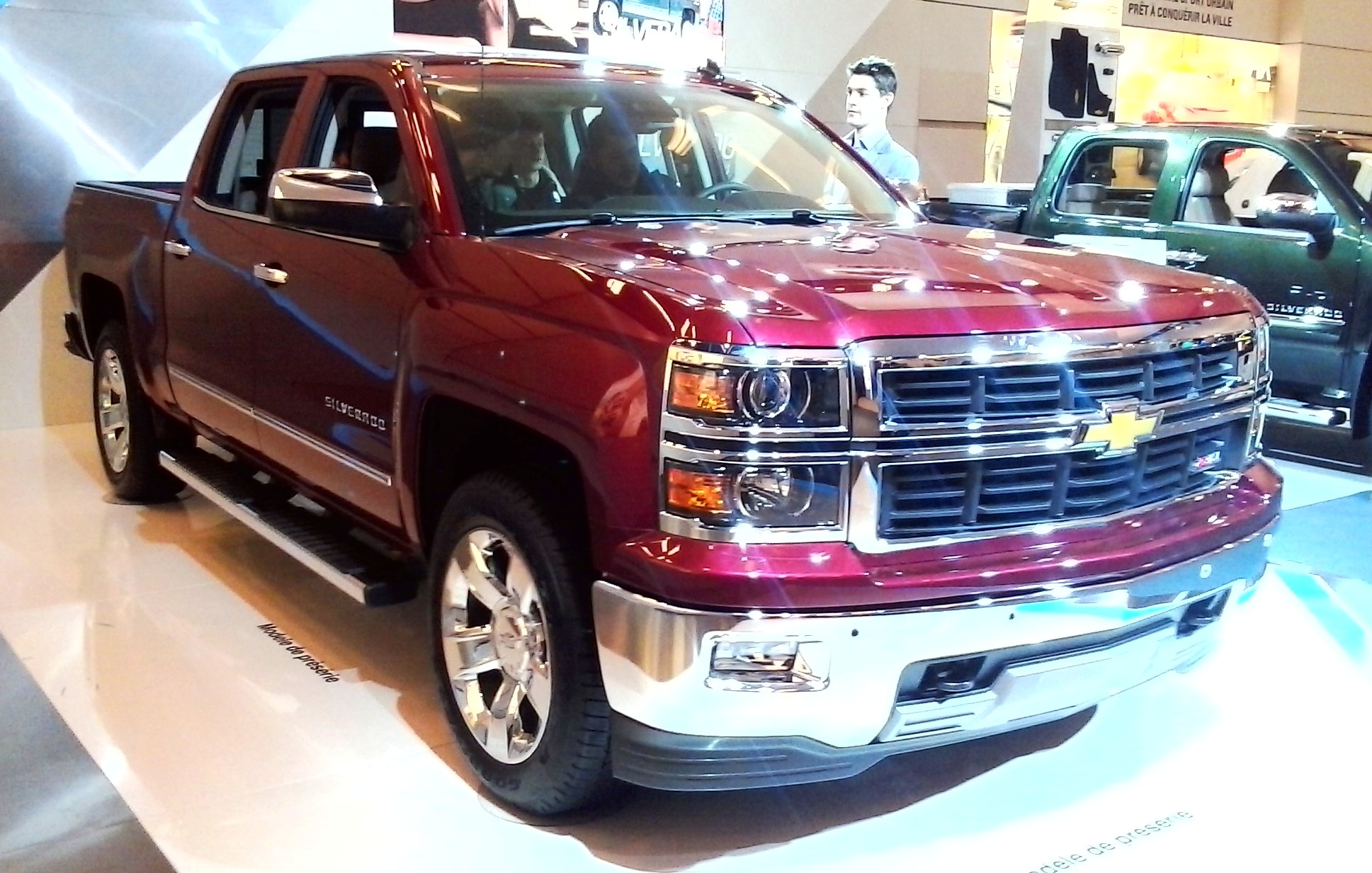
The Chevrolet Silverado EV is a new electric truck that runs on batteries instead of gas. It's designed to be powerful and efficient, making it a part of the move towards more eco-friendly vehicles.
The Jeep Wagoneer is a big SUV that can handle tough roads and is great for families. It has lots of space inside and modern features, making it a popular choice for those who love adventure.
The Jeep Grand Wagoneer is a fancy SUV that can handle rough roads and off-road adventures. It has lots of luxury features inside, making it comfortable for families and trips.
The Tesla Cybertruck is a new electric truck from Tesla that looks very different from traditional trucks. It's designed to be powerful and efficient, appealing to those who want an eco-friendly vehicle.
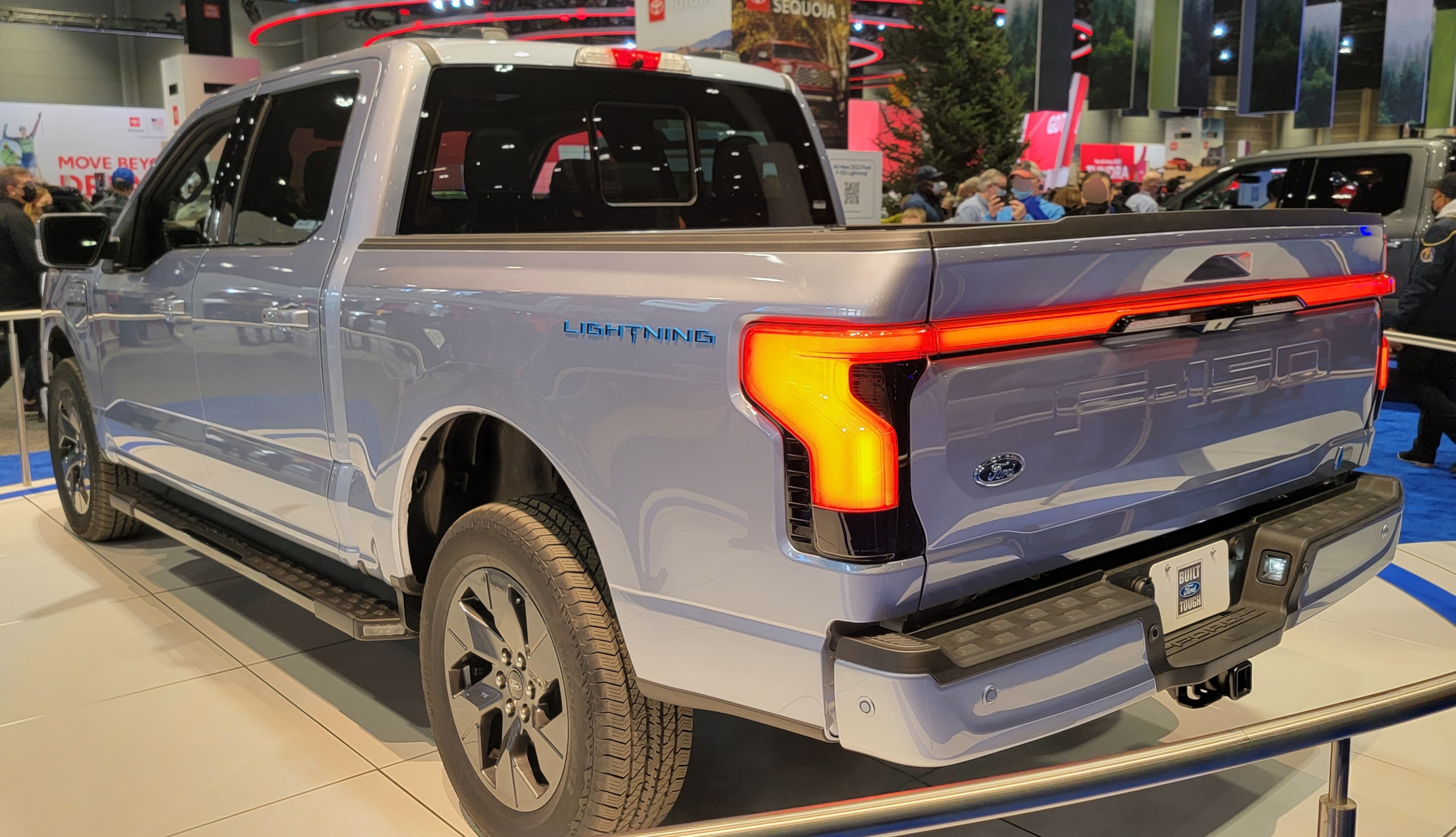
The Ford F-150 Lightning is an electric version of Ford's best-selling truck, the F-150. It has a lot of power and can be charged at home, making it a great choice for those who want a truck that's also environmentally friendly.
A write-off happens when a company decides that something they invested in is no longer worth anything, so they remove it from their financial records. This can happen if a product doesn't sell well or costs too much to make.
The Acura ZDX was a stylish SUV that offered luxury features but was only made for a short time. It was meant to appeal to people who wanted a nice-looking and comfortable vehicle.
The Ford Maverick is a smaller pickup truck that is designed to be affordable and practical for everyday use, especially for families who might not need a large truck.
Entry level means the cheapest or simplest version of a car that a company sells, aimed at people who are buying their first car or who want to spend less money.
The Chevy Trax is a small SUV made by Chevrolet, aimed at families looking for an affordable vehicle. It's easy to drive and has enough space for everyday needs.
Total addressable market is the total amount of money that could be made from selling a certain type of product. Here, it refers to how much money could be made from selling cars that cost $100,000 or more.
The secondary market is where used cars are sold after someone has already owned them. It's important because many people buy cars from this market instead of buying new ones.
Rivian is a company that makes electric vehicles, like trucks and SUVs. They are known for creating vehicles that are designed for outdoor adventures and have a partnership with Amazon to provide delivery vans.
EVs are cars that run on electricity instead of gas. They are better for the environment because they produce less pollution.
Term
AV
AV means autonomous vehicles, which are cars that can drive on their own without needing a person to control them. It's a technology that's still being worked on.
The Volkswagen ID. Buzz is a new electric van that looks like the old VW Microbus. It's designed to be roomy and eco-friendly, making it a fun choice for families who want to travel in style.
The Detroit Auto Show is a big event where car companies display their latest cars and new ideas. It's a place for people to see what's new in the car world.
The Dodge Challenger is a muscle car that looks like the classic models from the 1970s. It has strong engines and is designed for speed and performance, making it a favorite among car lovers.
The Chevrolet Camaro is a type of sports car that is known for being fast and stylish. It's often compared to other cars like the Ford Mustang and is popular among car enthusiasts.
The Ford Mustang is a famous sports car that has been around for a long time, starting in the 1960s. It's known for being fast and stylish, and many people love it because it represents American car culture.
Car
Honda That Honda
The Honda That's is a small car made for city driving, especially in Japan. It's known for being practical and easy to park, with a design that's a bit different from regular cars.
The Dodge Power Wagon is a tough truck made for driving on rough terrain. It has a strong build and is designed for people who need a reliable vehicle for off-roading.
Cummins is a brand that makes powerful diesel engines used in trucks. These engines are strong and can pull heavy loads, which is why they're often used in big vehicles.
The Ford F-150 Raptor is a tough pickup truck made for driving on rough roads and trails. It has a strong engine and special features that help it handle bumpy surfaces, making it popular with people who love outdoor adventures.
The Dodge Ram is a big truck that people use for work and everyday driving. It's known for being powerful and comfortable, with different options to fit what drivers need.
The Lucid Gravity is a new electric SUV that will be made by a company called Lucid Motors. It's designed to be a fancy and high-tech car that runs on electricity instead of gas.
ICE means Internal Combustion Engine, which is a type of engine that runs on gasoline or diesel. When they talk about 'ICE-related products,' they're referring to cars that use these engines instead of electric ones.
The Ford Model T is an old car that was made a long time ago, and it was one of the first cars that regular people could afford. It changed how cars were made and helped more people own cars.
The Ford F-150 is a large truck that many people use for work and everyday driving. It's popular because it can carry heavy loads and has different options to fit what people need, like towing or off-roading.
A tax credit is money you can take off your tax bill, which can help make buying a car cheaper, especially for electric cars.
LIVE
AutoLine After Hours is brought to you by Bridgestone Tires. Solutions for your journey.
Hey everybody, thanks for joining us for the first show of 2026. It's just unbelievable that it's another year.
And so on behalf of the AutoLine team, good luck.
And good luck to my colleagues here, Joanne Muller, transportation correspondent for Axios.
Hey, how are you Gary?
Good. Been a while.
How have you back?
Thank you. Happy to be here.
And we've got Joe White from High Speed Rodeo, the sub-stack.
Look it up.
High Speed Rodeo.
And we have Jeff Schuster back.
He is now the, I'm going to get this right, Director of Automotive Market Insights of S&P Global Mobility.
That's right, another company name, right?
Long time friend of the show, new job.
So, okay, you got to tell us what this is about, what you're doing, and then we'll get on to this.
You got it.
So basically, I am storyteller.
Think of it as an automotive storyteller talking about what's going on with the market.
So kind of, I suppose, why I'm here today.
And conveying that to clients.
So talking to clients, getting, helping them make decisions.
So something that I've got a little bit of experience doing from previous life.
And I look forward to doing it at S&P now.
So, okay, you started this new position toward the end of 2025.
We now see how 2025 wrapped up in terms of US auto sales, about a 16-3, I think is the number that people have difficulty.
So, tell us a story about what happened.
Only one.
Well, yeah.
We're starting one.
Yeah, the ebb and flowing of 2025 and the view of 2025.
I mean, I think in, to summarize, the year was better, I think, than anyone expected.
Consumer is resilient.
The manufacturers found ways to absorb the tariff impact and not have a substantial change in pricing.
So that kept consumers in the marketplace.
We had some pull forward for a couple of various reasons.
In the spring, we had tariff pull forward.
In the end of summer, we had EV incentive pull forward.
So, I think that had a lot to do with where we ended and likely, as we'll get into, impact where the market goes this year.
What was your reaction to you?
Well, no, I mean, I think that's right.
I think 2025, we had a lot of ebb and flow around subsidies and incentives or disincentives.
As you said, people trying to beat the tariffs in the spring.
It was interesting.
I read a couple of different accounts of sort of the year-end sales press calls, you know, from the different companies.
And one Toyota jumped out at me where one of their executives said, look, you know, prices are going to go up now.
I mean, they, I think the companies were fortunate in that the mix generally was so rich.
I mean, the affluent consumer was resilient.
The not so affluent consumer.
And I'm sure we can talk about it, not so much.
But that game does seem like it's maybe reaching its limit.
So that'll be interesting to see how that plays out.
Do you think, Joanne, from what you've learned over the recent weeks that this will happen, that prices are going to be?
Yeah, I mean, honestly, that stuck out to me too when I heard Toyota talking about it.
I mean, if you think about Toyota, right, here's a company that is the cream of the crop, always a company to admire.
And if they can't make money in North America because of all this, you know, that's, that's a serious problem.
And they, they do expect prices to go up and they, but it's very interesting.
They're looking at it.
And I believe all the companies are strategically like, we're not going to put a 10% increase across the board.
We're going to watch and see what our competitors do, which segments are going up and apply that way.
I mean, trucks, if they can still keep getting $80,000, $90,000 for a truck, you know, they'll just keep going.
They probably can go higher.
But some of those other cars, maybe they have to squeeze a little bit.
But if you look at the whole year of 2025, I think the thing that struck me is I think about what I was covering at the beginning of the year and where it ended up.
These car makers have been incredibly resilient.
It's a testament to how they figure out how to survive uncertainty.
We've seen it for decades, you know, there's always something that causes them to, you know, throw their hands up and then somehow they make it through.
And I just, I think that there's a limit to what they can do.
But in the end, and I think you've written this, I've written this, the Trump administration hasn't been so bad for car makers.
No, because the thing, and you know, we can go down this rabbit hole or not.
But I mean, the other, the flip side of the tariff coin is the massive regulatory relief around, you know, taxes, fuel economy, you know, penalties for failing to reach fuel economy, which are going away.
I mean, in fact, I mean, somewhat of an oversimplification, what I'm about to say, but effectively is going to, there's no demand to improve fuel economy in any significant way for the next, what, four or five plus years.
And we just got Venezuela, it'll be forever.
Well, yeah, so we'll see about that.
But at any rate, I mean, right.
So that, and again, I think the companies have been sort of talking about this a little bit, and I expect when they do their year-end calls, they'll talk about it a lot, is that then sort of the net-net, the over-under on regulatory relief, you know, versus tariff costs, could be, could be positive.
I mean, net out.
Yeah.
And yeah, so.
It could be.
And I think, you know, you go back to April and the expectations where the sky was falling.
Oh, yeah.
Because of tariffs, and that is one of the main reasons why it didn't, is you had the flip side of it.
And I think most underestimated the positive impact that that would have on the industry from a cost perspective, and again, allow the manufacturers to absorb those tariffs.
Yeah.
But, you know, if you zoom back out, right, and you think about what's happening globally in terms of EV transition and stuff, you know, we're getting some relief at home right now, but you've got to wonder how far behind the U.S. auto industry is going to fall.
Because nobody's holding their feet to the fire.
I mean, yes, and at CES, and maybe we'll talk about this later, but at CES, you know, there was kind of, you know, visuals on that.
Chinese companies showing off their wares and looking at this stuff, and you're like, uh-oh.
Yeah.
Well, okay.
So one of the things, you know, so, you know, Joanne, you were saying that, you know, we really haven't seen it, you know, that there hasn't been the effect.
And I sort of wonder whether this isn't a case of inertia that is suddenly going to break through at some point.
And then it's going to be this, like, holy shit moment that hits the industry where suddenly, you know, I mean, because, you know, there's still those steel and aluminum 50% tariffs on, you know, and, you know, you don't build steel mills overnight.
I mean, it just doesn't happen.
I mean, and, you know, aluminum takes a lot of energy to make.
Well, and both of those, both the metals industry likes things just the way they are.
Because they're, and again, S&P has data that will prove me wrong.
But, you know, if the sort of the ambient level of aluminum and steel prices goes up because they have a 25% plus percent or 25%, you know, cushioned against imported product, I mean, the domestic producers are going to price to that, right?
So, um,
And then capacity, right?
And they're not going to go running out a ton of capacity.
They're going to keep prices where they're at.
Right. Well, I mean, and it turns out as I just a little research on this.
And so domestic steel producers increase their prices from 10 to 15% after this took place.
Of course they did.
It's just like, wait a minute, you know, they got this, they got this protection.
And so they're not going to say, oh, well, you know, we'll be good, we'll be good citizens and, and
We'll pass that on.
That's always how it works.
That's always how it works.
And, and okay, so, so here's a question.
So, so Jeff, the automakers have spent, the domestic automakers have spent, you know, cubic tons of money on getting electrification capability, you know, especially EV capability in place.
How do they absorb these costs?
I mean, at some point, you know, shareholders are going to say, wait a minute, what happened to that money?
Yeah, what about all the plant investment that took place and battery technology and or battery capacity that took place?
You've got to pay for that somehow.
And I mean, the margins on ice trucks are pretty good still.
So that's one way to pay for it.
So I think, again, that reduced regulatory environment is, is a roadmap, at least for the near term.
And I think to Joanne's point, the long term, you know, it's still likely an EV picture globally, including the US.
So at what point, you know, does, does the US industry get behind?
And it doesn't take long to get too far behind things to keep up with it.
So it's kind of walking that fine line between what's paying the bills today and what you ultimately need to get to.
And now that we've walked some of that back, I think it's a little cloudier on what that picture looks like going forward.
So I was going to give you guys a quiz at the top of the show, which of course I didn't.
So I'll give it now because while we're on this subject.
So is there a right or wrong answer?
There's only a right answer.
Okay.
There's lots of wrong answers.
An infinite number of wrong answers.
Okay.
So, okay.
So let me, let me preface this a little bit.
So there were a lot of vehicles that had sales of under 15,000 units this past year.
I mean, there were, there was, you know, the Cadillac CT4 had 5600.
The IQ had 81.
VISTIQ 78.
The Silverado EV was at 11, 20, 11, yeah, 275.
Wagoneer S 11,000.
Grand Wagoneer 5100.
Okay.
So a lot of, a lot of vehicles just didn't sell that great.
Okay.
There was one vehicle that had 20, 25 sales of 12,005 units for the whole year.
But in December, only 43 sold.
Cybertruck.
I was going to say Cybertruck as well.
No?
I mean, I don't know where you got it.
Those would have gotten those numbers, but I'm just guessing.
So I haven't analyzed the month yet, but.
Fully.
Lightning?
They were 30 sometimes.
Okay.
ZDX.
Oh.
But I mean, think of, so this, this gets back to this, this issue of the money that has
been invested by these companies in doing stuff.
So, you know, ZDX is going away.
ZDX is going to go.
But, you know, the tooling costs alone.
I mean, how did these cost?
Well, that's why Ford had a 19 and a half billion dollar write-off.
That's why you see these massive write-offs and why vehicles, there are a lot of underperforming
vehicles that never got to expectations.
And I mean, that always happens, but I think because of the, just the sheer fragmentation
has taken place partly because of the, that, that EV push.
And now, you know, the other side of that, you've, you've got a lot of vehicles that
are likely on the chopping block.
Yeah.
So, so what's your sense of that?
I mean, will we see vehicles go away in 2026 or will it take longer?
I think it'll take longer.
You may see, I mean, we're expecting some, but I think, I think all in all, that's going
to, they're going to let it play out a little bit longer, I think before they, many of them
take the hit on it, but the writing's there already.
So I think it, it's going to play out over the next 18 months probably.
And again, I mean, this is, you know, kind of a U.S. market conversation, right?
But, but I do wonder how long different companies and not just the Detroit three, but, you know,
any company, any of these companies will nurse along money losing compliance related products.
I mean, vehicles that were kind of in the mix because they helped with cafe.
And if you're like, well, I don't have to worry about cafe, or at least for the next
product cycle, why am I building this money losing small car or whatever?
I just wonder if there will be a tradeoff on that, which is so interesting.
I agree with you, but at the same time, the affordability issue remains and small cars
are purely the domain mostly, I guess, not purely, but mostly of the Asians.
And so I, it continues to blow my mind that the entry level to the Ford brand is now the
Maverick pickup truck.
Which in the real life costs what?
Thirty some plus thousand.
And how many families actually want a pickup truck?
They might have bought an escape, but now they can't anymore.
So I think like Ford, I know is going in the direction of where they think they're strongest,
but they have completely cut themselves off at the knees.
And that might be because they don't have any other choices.
But I think this compliance small car versus this affordable small car creates some tension.
That's all.
Well, just to that point, so in keeping this within the EV thing and the affordability thing.
So in 2025, General Motors in the US sold 169,764 electric vehicles.
And in fairness to GM, that would be their response, Joanne, to what you say.
Totally.
They would say, we have the Chevy Trax, don't blame us.
We are offering an affordable option to young families.
I mean, you know, they don't, they can, I don't need to carry their water, but it's
a fact, so they might as well acknowledge it.
Okay.
But if you're a shareholder of General Motors and you say, wait a minute, you have this
whole panoply of vehicles that you're selling this many of, and you've got one vehicle.
It sells all of those other ones.
Yeah.
And oh, by the way, where does that vehicle come from?
Korea, I believe.
Yeah.
So, you know, look at Buick for goodness sakes.
I mean, it's just like, they've got one vehicle coming from here, three vehicles coming from
elsewhere.
Right.
Don't they all get hit with tariffs?
Well, I think the Korean ones, Jeff, they're not as much.
I think it's reduced.
Okay, but this is the thing.
But at the point where we say like, oh, it's only 15%.
They're relieved.
Yeah.
That's a big relief.
Yeah.
Because it was going to be 20.
Right.
And so then if you take that and you, you know, if I could really do this, I guess I'd be
working for these companies.
But it seems to me that within, once you know that it's a 15% tariff, then you can adjust
the mix within those to get to, you know, the revenue and profit levels that make sense
to you, right?
You know, maybe bring in fewer of the very lowest trim level, more of the higher trim
level, et cetera, et cetera.
Right?
I mean, this is all stuff they know how to do.
Right.
And what is what?
It ends up doing what?
Pricing the prices.
So, I mean, so if 2025 was the year of affordability, what is 2026?
No, I wouldn't say that.
And that's a stretch calling it the year of affordability.
The year of talking a lot about affordability.
But I would say the pressure on 26 in terms of pricing is real for a lot of different reasons.
So, what do you mean by the pressure on pricing?
Meaning it's real pressure.
Prices are likely to continue to rise.
And I think if you look at, you know, we talked about affordability, we talked about the,
there's not really a entry point that is someone the first time car buyer can come into.
So, then you look at the use market.
You know, you look at that as an alternative, but that's under pressure as well.
Inventory is still, it's not super robust.
So, that's not a driver to throw a lot of incentives.
We're not seeing incentives.
We're not likely to see a return to high incentive use, maybe sporadically.
So, I think the pressure points are all pointing to that lower volume in 26 because of affordability,
because of pricing.
And then, I know we're going to talk about CS at some point.
So, I don't want to, and you were there, I was not.
But everything is, all this tech that's starting to roll out as a, you know, AI assistance or AI this or that,
that has a price to it as well.
And that's coming in 26 and beyond.
So, where's the relief on pricing to the consumer?
I don't see it.
Yeah.
No, I don't either.
And I think, look, I mean, I think there's kind of a fallacy at the heart of the whole affordability
discussion when it comes to the auto industry.
And the fallacy being that the automakers themselves have a deep abiding interest in offering affordable vehicles.
They don't.
They have a deep abiding interest in making money.
And margin.
And margin.
And in trying to get their stock prices out of the gutter.
And so, I mean, yes, I understand that it's more complex than that.
You have to try to get some people, you know, there's a whole brand ladder idea that still exists.
But I don't think like dropping the bottom of the brand ladder all the way down to like, you know,
someone who makes, you know, family makes $40,000 or $35,000 a year.
That isn't what they're about.
They're happy to have affluent customers who make fairly good incomes with strong credit
coming by their vehicles.
And I don't know that there's a whole lot of interest.
I mean, Ted Cruz, Senator Ted Cruz is going to have this affordability hearing maybe at
some point.
I don't know.
I think it's next week.
Well, it got postponed.
Oh, it did.
All right.
All right.
But anyway, my point being the senator, you know, and I've read he's going to preamble
or his preview is going to make this big argument about, well, regulatory costs are forcing
up the price of vehicles.
And this is a scandal.
And we here are going to do something about it.
And I think the industry will, people will say whatever they feel like they need to say.
But the truth of the matter is they're like, yeah, please give us regulatory relief.
And we're still going to sell $75,000 pickup trucks most of the time.
Yeah.
All right.
All right.
So since you went there, I'll have to go there.
And so because this, everything has to be branded now, right?
So this is the Senate Commerce Committee meeting that's supposed to happen on January 14th.
You just can't call it the Senate Commerce Committee on Automotive Affordability.
No, no, no, no, no, no.
It is, and I quote, pedal to the policy, the views of the American auto industry on the
upcoming surface transportation reauthorization.
That's the name of this thing.
Okay.
And to your point about Ted Cruz making a statement, this is the statement from Ted Cruz, quote,
Americans have been clear that they are hyper-focused on affordability.
And so this committee, the average price of a car has more than doubled in the past decade
driven up by onerous government mandated technologies and radical environmental regulations.
The one big, beautiful bill act took crucial steps to drive costs down with the repeal
of the EV mandate and CAFE standards, but we must do more.
This hearing will examine how government interference continues to make vehicles expensive and out
of reach for American customers and how we can restore competition and choice.
So I await with aided breath, the first CEO among the three or four, however many ultimately
show up, who will say to the senator, well, one of the biggest government interventions
that's driving up our costs right now are the president's tariffs, as we were just
discussing earlier.
Since thank you very much, you have eliminated the EV mandate, true.
You have eliminated fuel economy.
You've given us these big tax breaks, but so I mean, it's just like you could get a whole
thing of like, what's really going on here?
It's only part of the story because it's offsetting the tariffs.
That relief is offsetting the tariffs, not making things more affordable.
Right, right.
So I mean, and then I don't know, I mean, sort of what onerous government regulation would
be on the ones that have already, again, there's been action on this already.
I mean, should we repeal airbags?
We repeal backup cameras?
Seat belts.
Seat belts.
Should we tell the auto industry, look, all this ADAS technology that you're putting on vehicles
at hundreds of dollars per car costs, whatever it is, don't, anyway, you know, you see,
that's the problem I have with this.
It seems like there is an answer, but it's not the one I think the senator wants to hear.
You tell.
Well, tariffs, that's like, oh, and by the way, please, please tell your president
not to detonate the USMCA, which allows us to arbitrage labor costs across Mexico and other
advantageous locales.
I mean, I'll stop.
You get my point.
So, you know, talking about affordability in this, now, this is something I can tell
the viewers and listeners that I would have suspected I would have found this in high speed
rodeo.
So, I'm a little disappointed I didn't, but this is the sort of thing you would have had.
I should have.
Go ahead.
Okay.
This is according to the Boston Consulting Group in the Dupont Registry.
The total addressable market in the US for vehicles priced at $100,000 and above, comprising
both the new and secondary market vehicles, is estimated to be worth $110 billion today
and is expected to rise by a compound annual growth rate of 5% to 7% over the next decade,
reaching a market value of between $180 billion and $215 billion by 2035.
You were saying, no one cares about affordability, right?
They care a little, but they don't care about it as much as how do we get our share of that
demographic that you just described.
And I think as long as you have equilibrium or you're willing to accept lower volume when
you've got the higher price points and higher margin, when that gets out of balance,
then you'll see action and we're not there.
So, before we get to the year interview, so Joanne, the last time I saw you, you were
interviewing RJ Scurringe at an automotive press association meeting.
Yes.
And so, I was looking at Rivian's numbers for 2025, okay?
So, in 2025, they produced 42,284 vehicles and in 2024, they produced 49,476 vehicles.
So, they've had a-
Does that include the vans?
Includes everything that they report.
So, they had a 14.5% drop in production and then I don't understand how they
make some, deliver some, you know, whatever it is, isn't it an 18.1% drop in sales?
Okay.
What happens to a company like Rivian in 2026 and 27 and beyond?
So, this is a company that doesn't have the benefit that GM and the others have,
which is we can ride those gasoline trucks.
What they need is the clock to move faster.
They have this smaller SUV that looks amazing.
If they could get it out the door, they have a lot of good technology.
They're, you know, they're selling it to Volkswagen, they got a big partnership.
I think there's going to be others that would want it, but time is not on Rivian's side.
Now, the one thing I've always said about Rivian from the very beginning,
as long as they have Amazon, they'll be okay.
Amazon, you know, back them originally, put in big order for Vans.
I would like to talk to Amazon about their commitment to Rivian because they're now
buying Vans elsewhere and stuff.
So, I don't know if that feeling that I had is still valid.
I don't know.
I happen to think Rivian makes some really good EVs.
Question is, is there a market for it?
You know, and they have made a lot of progress with their technology.
Their AV stuff looks good, but proof, you got to prove it, right?
And so, they need time and they don't have time because they're not selling enough.
So, who's going to keep funding that?
Volkswagen, I guess, and Amazon.
Yeah, I mean, they've got a valley of death problem.
And in a way, at a sort of a higher, at a much higher financial altitude,
Tesla does too right now.
Because, you know, EV sales for Tesla are dropping.
And as you said, even Rivian sales are dropping.
And, you know, over the next year, or maybe two, you know, can these companies kind of
stay above the tree tops?
At least stabilize.
Until, you know, in Rivian's case, they have a couple of new products coming
at presumably higher volume price points.
And I mean, I agree with you.
I mean, they're quite attractive products.
And, you know, there's all kinds of good things that you can like about that.
On Tesla's side, you know, he's doing a pivot to, I don't know what, you know,
robots and robotic cars.
And that's got its own set of risks.
So, you have to be able to see how that works.
So, Jeff, you were saying that, you know, as we're going forward, that some vehicles will
go away.
Going forward, do you see some companies going away?
Certainly a possibility, yeah.
And it's kind of weathering that short term.
And if you run out of funds, and that can happen very quickly.
If there's not enough funds to weather this, then there could be some companies in trouble
that are specifically EV only in the US market.
I think that's a challenge.
But taking a wider picture, I think just because of the competitive pressure in the EV space,
globally, they're eating each other alive in various markets.
So, China, you've still got that price war going on that's probably elevating at this point.
More product coming out, more and more product, less volume per vehicle.
We talked about doing the math earlier on the $169,000 for GM, that's a story around,
that's kind of playing around the world.
And I think that's an issue is if you can't either get enough synergies where the products
share enough componentry, that you can make it cost effective at a lower scale individually,
we're going to see volume go away, potentially brands go away.
Yeah, I mean, you're talking earlier, Joanne, about turning the dials to tweak things,
to adjust for what the market is saying.
I mean, I just wonder to what extent is this industry still an industry that is predicated
on big scale and inability to fine tune what it's putting out of the market?
Well, I think in theory, if you, as you said, Jeff, if you have a platform like Ford is coming
out with, right, an EV platform, they plan to put a lot of topics on that.
In theory, they can dial those up and down.
GM plans to do that with Altium, you know, we would say mixed success, maybe.
They're regrouping on some of their EV stuff.
But I don't know, I mean, I got it, I agree, it looks dark sometimes, but these companies
have some survival instincts, and they manage to get through.
Yeah, well, they do have survival instincts, and the legacy companies do have kind of the benefit,
or many of them, not every single one, but many of them have the benefit of being national champions
in their respective home countries, so that there's going to be, you know, if a push comes up,
as we've seen in this country and we've seen in other countries, you know, the government will
come in and make sure that these companies don't die.
I mean, so those things are kind of out there.
I don't think that's an immediate issue.
It does seem though, especially in the United States with the withdrawal of subsidies for EVs,
that some kind of restructuring and reckoning, I mean, Jeff, as you've been kind of alluding,
is going to have to happen, because just throwing capital into a barrel and lighting it up
just doesn't make any sense.
And they've, you know, that's kind of, if you just say, well, just keep on keeping on,
that's what you're going to be doing, and it doesn't make any sense.
Because eventually it'll pay off, right?
Yeah, eventually someday it'll pay off, and yeah, and the breathing room for doing that globally
doesn't really exist, because the Chinese companies are, you know, all the markets like
Brazil or places like that are, in the Toyotas case, Southeast Asia, you know,
where they used to be able to sort of count on Volumen's profits, those companies can't
any, if you're fiat thinking, oh, we're thinking in Latin America is going to be hunky-dory,
no way, because the Chinese companies are flooding those markets with products.
So yeah, it's competitive product, right?
Oh, very.
All right, we're going to take a bright break here.
We're going to have something positive here.
We're going to hear from our friends at Bridgestone, who we certainly are very happy to
support this show, and then we'll be back and we'll talk about more auto stuff.
Performance that shines even in the rain.
That's what really matters.
Bridgestone Petenza Tires, Improved Grip and Wet Conditions.
All right, so I'm going to give you guys another quiz.
This one will be easier.
I'm sure they'll be the first one.
Yeah, all three of us.
I'm sure they'll be very specific.
All right, so we've all been doing this for a long time, and we all know that otherwise this
week, like right now, we would probably be at the Detroit Auto Show or the North American
International Auto Show, right?
And that it was a big deal.
There'll be a show happening next week.
We'll maybe go down there for 20 minutes or something.
I mean, it's just a big difference.
All right, so you all remember that it used to be Sunday.
You'd go down there and it'd be concept car day, and there'd be a blizzard.
Always something that was very exciting, and we'd be there through Thursday,
and it was a big deal.
Anyway, so we're going to go back in time to January 8th, 2006.
So that was a Sunday.
So there were two concept cars introduced at that show.
One was introduced on the eighth, which is today's the eighth, so that's the
hook for this.
And then the other one was introduced on the ninth, which was the Monday.
Okay, so there are two concept cars were introduced.
Both cars went into production, and both cars are now out of production.
What were those cars?
The Volt?
No.
Okay, I give up.
Can't think.
2006?
2006.
Kind of a blur.
And these cars, we know them well.
All of us.
Yeah, that whole period of time was a huge blur in my brain.
Wow, and it wasn't the Volt, so okay.
It wasn't the Volt.
Was it a Buick?
It wasn't a Buick.
And they're cool concept cars.
They were cool concept cars.
Okay.
And they went into production, but they didn't make it.
They're out of production.
They're out of production already.
Oh, you guys are going to kick yourself.
I know, I'm fully expecting it.
Oh, you're going to, okay.
The HHR?
I said HHR.
So you got, you know, when you mentioned the Blizzard, very close.
It wasn't probably cool.
It was the Dodge Challenger.
Oh, really?
Okay.
That was a concept car.
That was in 2006.
2006 was a concept, right?
Okay.
And the other car, the Chevy Camaro.
Oh, wow.
Oh, the next generation.
The one that we had that we no longer have.
Yeah.
We no longer have.
Comeback of the Camaro.
So basically, we come back at the Challenger.
We all thought it was going to be a Renaissance in the Pony car.
Right.
I suppose it was for a period of time.
Now, they could, now they could dig the dice out
and put it back in production.
Like a Dodge or, yeah.
Yeah.
They got a Charter and a Daytona.
So does this basically do everything now?
So I guess Ford won, right?
I mean, they still have the Mustang.
They still have the Mustang.
All right.
So what I want to do is I want to go back through the last year.
I'll talk about some top or bring topics to your attention
and I want you guys to respond to them.
Okay.
I hope we remember better than we did in 2006.
I'll give you the answer.
Okay.
That's helpful.
All right.
So in January, 2025, a year ago,
Honda and Nissan had been talking about a merger
and if they had merged,
it would have been the third largest automaker in the world
and that fell apart.
Okay.
Was it a good thing that it fell apart?
Or was it a bad thing that it fell apart?
Anybody can answer.
Probably depends who you ask, right?
I'm asking you guys.
No, I know.
I'm saying it depends on what angle you want to take.
Yeah.
I mean, from an industry structure point of view
or profitability point of view.
Yeah.
I mean, it probably would have worked
from a profitability standpoint.
Now, could those brands and teams jived and survived?
I don't know.
Well, that's why it didn't work.
Because I mean, if my recollection-
That's why it didn't go through.
It didn't go through.
My recollection is that Honda people said,
look, we want to run this thing.
Is that right?
I think that's what I remember.
And the Nissan are like, whoa, whoa, wait, wait.
That's not what we-
And it's like, what part about you being acquired by Honda?
Don't you get?
That's all of them.
Sure enough.
Mergeal equals.
So at least in the contrast to the infamous Daimler Chrysler example,
they figured out that the cultures wouldn't fit before the money went in.
Yeah.
Yeah.
All right.
February was not a big, big thing.
But that was the first month when Trump talked about putting 25% tariffs on imports
from Canada and Mexico before he paused them and didn't put the tariffs on.
And then it caused some roiling in the market.
Did that have a big effect in terms of people running to their dealerships?
Or was it still-
I think it was still maybe a little early,
but it probably, us in the industry, started running scenarios at that point.
And that's when things started really ramping up as far as getting a lot of supply-based OEM
questions, financial questions.
And what could this mean?
Tons of anxiety.
It started spinning up the anxiety.
Absolutely, the anxiety.
So then on March 26th, that anxiety manifest itself when the president signed a proclamation
invoking Section 232 of the Trade Expansion Act to impose a 25% tariff on imported vehicles
and certain auto parts that went into effect on August, or April 3rd, excuse me.
Now, another thing that happened in March of 2025, and this was discussed, we talked about
a little bit, was Tesla's stock nose dived.
It fell 36% during Q1.
The most significant decline since late 2002, that was Doge effect in a part.
We forgot about Doge already.
Well, yeah, I mean, the stock, as we all know, stock subsequently has recovered.
Elon's forgetting about Doge too.
Yeah, Elon's forgetting about Doge.
Wiped his hands of it now.
Yeah, that's his onto the next thing.
But yeah, I think it's a lot going on with Tesla in Europe, and it's not just one thing,
but I think it's funnily enough, I think Europeans in a negative way have remembered
that kind of period in Elon's behavior and punished him for it and punished the company
for it more so even in this country.
So yeah.
Yeah, sales in Europe are down 28% for the year.
Yeah, I mean, I think there's more to it than just people not liking his politics.
I mean, there's also real competition there from Chinese companies.
Absolutely.
So we were talking about affordability.
So in April, when the tariffs took effect, that company started offering employee pricing
for everyone.
Joanne, how did that work out, do you think?
You know, I can't remember.
What were the sales in April, Mark?
They didn't fall as far as expected, and then you started getting in.
So I guess if we go back to March for a minute, you started getting some of that
pre-buy, the rush to the dealership.
And that probably spilled into April as well when the announcement was made.
And then, yeah, I think things just stabilized a lot earlier than anyone expected.
Yeah, I mean, I think this points to the resiliency.
These people at their core sell cars, right?
And they figure out how to do it.
Yeah, I think that's right.
And so, you know.
And I think because of the on again, off again, it's delayed, the tariffs are on.
Nope, we're going to hold them in it.
We're in discussions with country fill in the blank.
I think that caused the manufacturers kind of ahead of the whole regulatory pullback
to say, all right, let's not panic and pass.
We're not going to pass it on.
Let's just stay the course.
We'll figure it out as we get in the back end of the year.
And I think, again, that discipline kind of held the sales in the industry together as well.
Well, and don't forget that, I mean, I'm sure all the companies and again,
the Detroit companies are fairly public way because they have to report their financials.
They were all cutting costs, GM slashing costs, payrolls getting cut.
So, to some extent, the organization's absorbed the pain.
I mean, there are people who don't have jobs at GM today because the company's like,
well, we got to find some money somewhere.
Okay, we touched on this a little bit in May of 2025.
Graham announced the return of the Hemi V8.
For those of you who are listening, Joe is just exhilarated here about this.
Well, I mean, I have to say, if our viewers and listeners have not gone online and found
the video that Ram, the Ram brand did with Tim Koniscus, I call him the once in future CEO
of the Ram brand, he went away, came back.
There's a video, and I forget now the exact title.
I had it in my latest high speed rodeo, but it's easy enough to find.
It's saying it's Ram rebirth or Ram reborn is the title of the video.
And it's Tim Koniscus basically promo-ing a 1000, I think it's 1000 foot pounds of torque
Cummins diesel power wagon return of that or the latest duration of that.
And what the 777 or some such horsepower reborn TRX, monster truck, it's the Raptor fighter.
And the whole video from front to back is a giant middle finger to the whole idea of EVs.
And like, yeah, we're going monster truck all the way.
We were wrong to ever step off that path.
I mean, pretty much says that.
And I'm not saying this because I have a problem with it.
I think it makes a lot of sense for the brand, but that's where this is all going.
And the customers wanted it.
They were pissed.
Oh, heck yeah.
No, they lost sales because they.
Yeah.
And so listen to your customer.
Well, how many times do you have to say that?
I think actually, I think I think on a credit car and driver for this insight,
because I'm pretty sure this was in there.
I read this in their 10 best edition there.
They put their, maybe they said the Ram trucks, one of the 10 best trucks on the market.
And they were talking about how the new inline six cylinder engines that they were going to
produce instead of the Hemi actually have better fuel economy and better horsepower,
just better performance all around than the Hemi.
But it doesn't matter.
Their customers wanted the Hemi.
They wanted eight cylinders, old school, so these high tech six cylinder engines are like,
yeah, forget that.
I was driving that Ram Hemi between Christmas and New Year's.
And I really felt bad for my neighbors every time I started.
I was like, well, Jo-Anne's up.
Good to see Jo-Anne's working hard.
That's what they want.
Yeah.
Although I seem to recall you two and I were in the Chrysler design dome or whatever they call it
when Tim Kaniscus was there for the first time when he was in charge of Ram telling us how wonderful
the EV Ram pickup was.
Oh, yeah.
Do what you have to do.
Right.
Let me just say in this video, and viewers can judge for themselves in this video,
Tim seems to really be buying into it in a much more authentic way.
All right.
So, John, who I mentioned before is not here today.
He said that 2025 was the year of autonomy.
So, this is a shout out to him that in June, Waymo and Uber expand to Atlanta and Waymo
increased its footprint in LA from 89 to over 120 square miles.
So, when you have companies like Waymo and Uber getting together and they're working with each
other in other markets, is this showing us what will be happening in June of 2026?
I have thoughts on this.
First of all, I spent a one day just riding around LA in Waymo, only Waymo,
and it was really, really remarkable.
You know, I believe in it.
It's expensive though, doesn't always drop you off exactly where you want to be.
I had a terrific experience when the car unexpectedly pulled over because it hit a pot hole
and I got a message to stay in the vehicle, stay buckled while we examine the vehicle.
So, somewhere, eyes are expecting to see if I was a flat tire or whatever.
It was the best thing that could have happened because I finally got to see what happens when
there's a problem, right?
Something goes wrong.
You know?
Now, there's been a lot of other Waymo problems that we've been reading about, especially lately.
There is zero room for mistakes in NAV right now.
We can kill 40,000 people with human driven cars, but if we kill one bodega cat, forget it, right?
And so, Waymo is at the edge and they are taking the rest of the world with them,
and they're going to now be under, you know, they got a target on their back.
Okay, but you mentioned Uber, those two, Uber is trying to figure out what they do, right?
Because robotexies are existential to them.
They're talking about a sort of a hybrid network.
They're partnering with a lot of different companies.
The only one right now that can deliver on fully autonomous is Waymo,
but they do have other partnerships in the U.S.
Interestingly, overseas, all Chinese partners.
We ride Pony.
I do.
I do.
Yeah, they just announced that in London, so did Lyft.
I think that Waymo and Uber are more competitors than they are partners.
I expect that there to be some friction there, and they go away as partners.
But we'll see.
Right now, it's the best and only game in town, although they did make partnerships with
WaymoBility and with, I don't know if they have one with Zooks yet, but...
I'm not sure.
I saw the Zooks cars in Las Vegas.
You had to go on the Zooks app, I think, to get them.
I don't think you...
And the Zooks, that Zooks thing only goes in certain places,
and it'll drop you off in the back parking lot, not where you want to be in the lobby.
Yes, yes.
I have one, I mean, I really like, I agree with your take on this.
I mean, the one thing I would say is that Waymo has the autonomous technology.
Uber has the ride-sharing network.
And each of those things is a high-dollar thing to replicate for the other, right?
I mean, Uber tried and failed to do autonomous on its own.
I think it would take Waymo as much money as Google has.
It would take Waymo a really long time to get as much network
and traffic and travel data as Uber has.
That's what I wonder whether they...
Maybe they don't like each other that much, but they may also come in with each other.
There's a cost-reason for that, right?
Yeah, and a time.
Yeah, it's a time like...
All right, all right, time, time, time.
We got to move, we got to move, we got to move.
I can talk about that all day.
I can just point out that at the CES, which I'm afraid we're not going to be getting to at the rate,
we're going that Lucid, Uber, and Neuro unveiled a production-intent Lucid Gravity Robo Taxi.
So, we have Uber now working with Neuro, which is another...
That was the one I was...
Yeah, I mean, the company.
All right, we didn't mention in June, why would we, me?
Antonia Filosa became the CEO of Stellantis and sort of is trying to write the ship there.
Do we think it'll be right, righted anytime soon?
Quick answers, yes or no?
My quick answer would be they will...
They have to do something.
Somewhat, yeah.
Somewhat.
They can't just do what, what, what, what.
And, you know, I enjoyed covering Carlos de Barris a lot.
But, you know, we've got 14 or 15 or however many brands, and we've got this kind of chaotic
strategy in all these different parts of the world, and we're just going to keep doing it.
I don't think that's going to cut it.
I mean, I'll just believe when I see that they're really rationalizing that beast.
I agree.
I agree.
Perfect.
Agree?
Sure.
I'll just say real quick.
There's a lot hinging on a flawed strategy in the U.S. that still needs to be unwound and...
All right, you got to tell us that briefly.
Well, just the lack of attention, just letting everything hang on the vine and hope it goes well
is not a strategy for this market.
And the lack of focus, I think, on this market for the brands was a problem.
So, there is some fixing that needs to be done, and I don't think you'll see that just in 26.
So, going back to the top, we were talking about all this investment that's gone into stuff.
Stellantis has announced it's spending $13 billion on basically ice-related product in
the United States, which Joe's got his thumbs up there.
But the thing that I wonder about, again, okay, where's this money come from?
Okay, they've made all those announcements that they were going to be spending money on EVs,
and now they're going, wow, that's $13 billion?
We'll just move it over here.
Yeah.
I mean, are they moving it, or is it like some of that money's already been spent and eat it?
All right, July, the big, beautiful bill act was signed.
So, yeah, we need to talk about that.
August is when Ford announced the, and you mentioned this before, the universal EV production system,
which is going to ostensibly revolutionize the way vehicles are manufactured.
You know what?
It's intriguing.
I was at the factory where they were showing us some thoughts.
They wouldn't show us real production yet, but I'm intrigued if you can reinvent manufacturing,
mass manufacturing.
You know, we'll see.
Was it a Model T moment, though?
You know, you need some PR.
Yeah, you do.
But isn't it sort of ironic that it's, you know, like we've established that the EV market is
like declining, and maybe we'll at some point plateau for a while, and they're like putting
all our chips on, oh, we got this new EV that's going to be the basis of everything.
I mean, I think it's a worthy project.
One thing I would say is, and I think actually everyone in this room or in the studio has seen
Ford do, you know, this is going to change the world's gunkworks projects, you know,
as things off to the side of the main body of Ford.
And they have, those projects, even when they've been relatively successful,
have not changed the main body of Ford.
And that is the problem.
And how do you change the main body of Ford?
And, you know, Jim Farley says that, you know, it's not a me being mean to Ford.
It's he himself, the CEO says they need to change fundamentally what they're doing.
So it would be interesting to see if they, whatever they develop in that EV operation,
to what extent can they mainstream things like the manufacturing process, you know,
and that kind of stuff, can they mainstream it back and fundamentally change the cost
structure at Ford, which is what they have to do.
One of the things I wonder, and I see this joint.
So Ford had a record 152 recalls last year.
The previous record was 77 by General Motors back in 2014,
the year of the faulty ignition switch that we all remember so well.
Okay.
So when they come out and say, oh, we've got this, this brand new,
best things, the consumers feel comfortable.
I don't think consumers are focused on that.
You and I, we wonder, you know, if they can't make a good car the way they've been
making it for 100 years, how are they going to make a good one with a brand new process?
I take your point.
I take your point.
The consumer is not really concerned about that.
The consumer wants a good, affordable, efficient car.
If they can deliver that reasonably well, then it's a success, I guess.
But we'll see.
I mean, you know, it's a lot of talk right now.
Not a consumer issue until something goes wrong once you've owned it, right?
And then, yeah, but I'd say let's give them the benefit of the doubt.
Yeah, no, that's right.
And Rivian, I mean, Rivian had terrible scores in the Consumer Reports Quality Survey this year,
but they were at number one or number two.
I can't remember.
It was very high in customer satisfaction because people loved the product,
it loved its design, loved its concept.
They were like, oh yeah, a whole bunch of stuff went wrong,
but that's fine because it's still a great vehicle.
So what do you, what do you figure?
It's hard to.
So, okay, in September of 2025, there was an immigration raid
at the Hyundai LG Battery Plant in Georgia.
I can't remember this now.
Detained workers and halted.
So September.
Please come and build your factories in America
because then we're going to arrest all the workers and throw them away.
That was kind of nuts.
Yeah.
Um, not to, we talked about aluminum before, so I might as well.
That was when fire disrupted the factory that was making aluminum for the F-150.
It's too bad.
Okay, October, we've talked about this many times.
The $707,500 tax credit went away.
Um, and then also in the month of October, the U.S.-China trade deal eased concerns
about rare earth metal supply for EV batteries.
You know, EV batteries is something that is still, I think, a mystery.
I mean, um.
Well, by the way, the rarest problem is not just EV batteries.
It's almost everything.
Yes, defense is a big one.
Right.
I mean, the magnets in the window, in the window actuators is all this kind of stuff.
And the thing I would say about, there's that and the fire at the aluminum plant
or that kind of point to some, an overarching issue, which is the fragility of supply chains.
Even after all the lessons we were all supposed to have learned during COVID about
not having fragile supply chains.
And tsunamis from years past, I mean, you've had earthquakes.
Right.
But we're going to fix up, but we're going to fix all that stuff because we learned all our
lessons from tsunamis and COVID and you come to find out supply chains are still fragile.
Extremely.
And, you know, like GM, give GM some credit.
They've been building, uh, getting more control, more vertical integration and buying companies
all along the supply chain for batteries, but for motors, magnets, all that stuff.
It still ain't enough.
It's nowhere near enough.
And if you talk to Mike Dunn, a China expert, he'll tell you it's already over.
The U.S. has lost, you know, the supply chain.
We cannot do it.
And it would cost infinite amounts of money to replicate the Chinese supply chains.
And so we have to have good relations with China and we don't.
All right.
Speaking of infinite amount of money, we go to the month of November when Tesla shareholders
re-approved Elon Musk's pay package, which would give him a trillion dollars worth.
A trillion dollars worth of, uh, worth of stock, um, assuming he hits certain metrics.
Is this going to happen?
I have a hard enough time forecasting volumes.
Right.
You have actual data and experience for that.
Joe already pointed out the problem that exists at Tesla is
the EV sales are going down and the robots in autonomy haven't yet arrived.
And so there's going to be, you call it a valley of death.
If he comes out, like people who believe in Elon, investors generally, right?
That's why his stock has managed to stay up so high for so long.
I looked up the other days, 305 PE multiple.
Yeah.
And GM is 16, 15, 16.
So whatever, like he, if he can make it through that,
who knows where the autonomy robot stuff is going.
There's a lot of bullish thoughts.
Does he ever get a trillion dollars?
I doubt it, but I don't know.
You might get 500 million or 500 billion rather, listen to me, 500 billion.
If we go back over the years, I think I've certainly said that.
Yeah.
That, oh no, they're not going to, I don't know about not make it,
but certainly are going to start going the other direction on market share and volumes.
I would say don't bet against Elon.
No, that's certainly true.
All right.
So we'll end the year with December, when?
Usually it doesn't end in December.
Very often.
And we're going to end it.
Ideally.
Such that it was announced that BYD surpassed Tesla to become the world's top selling electric
vehicle maker, selling 2.26 million electric vehicles versus Tesla's 1.64 million,
which gets BYD by 620,000.
And I looked at those numbers and I thought, well, BYD would wrap in their plug-in hybrid stuff.
But it turns out that they also sold 2.29 million plug-in hybrids.
Okay, so we were saying, you know, Elon's got to do all this stuff.
And now it seems like the rest of the industry is catching up with him.
And you mentioned the humanoid robots at CES, which we're not going to talk to because we're
going to be done with that Hyundai rolled out with, you know, like it owns Boston Dynamics,
which makes those cute little robot dogs.
And now it's going to be making robot humans to work in its factory by 2028.
Well, and I think that just quickly I'll say,
just quickly I'll say that points up the thing that the risk for Tesla is that
Elon tends to talk about his initiatives and robot taxis, robotic cars and humanoid robots,
as if he and his people are the only people doing those things. They are not by a long shot.
I mean, you know, honestly, the Hyundai Boston Dynamics thing had a lot of the,
we've been doing this longer than he has. Why are they talking about him?
Let's talk about, you know, Boston Dynamics. It's kind of true.
And I think their demos have been closer to real than his have been.
Yeah. Well, I'd say yes. I mean, it seems that way.
It seems that way anyway.
All right. So we're going to end this with a prediction and Jeff, you know,
you said you're all about forecasting. And so I look back over the last,
I look back over the last 10 years, what vehicle sales have been. So on 10 years ago,
2015 sales were 17.5, 16, 17.5, 17, 17.2, 18, 17.3, 19, 17.1. Then we came to 2020
and it dropped to 14.6, 21 was 14.9. So there's still supply chain issues and availability issues
and stuff like that. And then oddly 22 is even worse, 13.7, 23, 15.1 last year, 16,
16.3 this year. So are we ever going to see 17 again?
Ever is a long time. All right. But anybody in this room ever see?
I don't think so. Not unless, and we've said a lot of affordability and we've probably overused
that word today, but not unless that's addressed. And I just don't see how it can, given the movements
to more technology in the vehicle, more cost in the vehicle. And we've talked about this in
the past as well, but you've turned the market into a premium market, at least from a pricing
standpoint. At some point you're going to run out of alternatives for those that can afford a new
vehicle. So that's going to have to get addressed. I just don't see it in the near term. So I don't
see 17 in the near term either. So what are you going to see for 26? So right now we're kind of
modeling a 15.9-ish, so sub 16. Obviously there's a lot that can play out in the first quarter.
I think that's probably the weakest point and that's mostly payback from the pull forward,
we think. Lot's going to hinge on what happens with the Fed over the first quarter
from an interest rate standpoint and the economy overall and pricing. But I think right now that's
probably first quarter into the second quarter is the weak point before things start to come back.
What do you think, Joe? I mean that makes sense. I mean, pardon me, the one wild card that I think
we need to watch or one of them. You said the Fed, absolutely that. And then to what impact
do the tax refunds, tax cuts, and tax incentives to buy vehicles for use in a business,
how does that all kind of plus up or does it? Because it could be that people get these big
tax refunds in April and I think that or in March, April, which I think is a part of what the bill
was trying to do for obvious political reasons. And do people say, wow, I got two grand, maybe I
should buy a new car. I can put a down payment on something. I mean, I don't have the background
to say, well, I know that means we'll have a 16-3. But I think that's something to watch. How
does that play out? I think sales are probably plateauing and I think what we should also watch
is the scaling up of robo taxis, shared rides, etc. Because for some people, the cheaper way to go
maybe to not own a car, but to share one, take rides with Uber or Waymo or public transit.
Imagine that. I don't know. Public transit hasn't been doing so great, but I don't see a lot of
growth beyond 16-5 or I don't think we'll be at 17 again unless the whole economy changes. And
right now, it's very bifurcated. If you have money, you can buy a car. If you don't, you're not,
you're taking the bus. In a 16 million year, that's not a bad year. Yeah. But there isn't a lot of
growth. No, right. I think it's going to be. So yeah, if you layer that, not to end in negative
territory, but if you layer, okay, so 16 on the surface isn't bad. But if you look at all that
competitive pressure below that top line number and launching new vehicles and still having EVs out
there, it's a challenge down in the brand and model level. So in other words, the companies need to
spend so much money to support that. To support. With various things that it'll make it difficult for
the people who are not highly wealthy to afford a vehicle. Yeah.
Well, that's why this industry is so much fun. So I want to thank you guys who are being here today
and sharing your perspectives. Joe, I'm sorry we didn't get to all the CES, but
Let's not get in there.
We need a little bits and pieces. And so I appreciate knowing you guys and
for your spending time with us today. So we'll be back next week. John will be sitting in this chair.
I'll be sitting in that chair and we appreciate your time and have a good one.
About this episode
The discussion kicks off the new year by reflecting on the automotive landscape of 2025 and what to expect in 2026. Key guests include Joanne Muller, Joe White, and Jeff Schuster, who analyze the resilience of consumers and manufacturers amidst tariffs and EV incentives. They debate the future of vehicle pricing, the impact of regulatory changes, and the ongoing challenges in the EV market, including competition from Chinese manufacturers. The episode also touches on the potential for vehicle discontinuations and the importance of affordability in a rapidly changing market.