
AAH #773 - After the Surprise of ’25. . .Auto in ‘26
About this episode
The discussion kicks off the new year by reflecting on the automotive landscape of 2025 and what to expect in 2026. Key guests include Joanne Muller, Joe White, and Jeff Schuster, who analyze the resilience of consumers and manufacturers amidst tariffs and EV incentives. They debate the future of vehicle pricing, the impact of regulatory changes, and the ongoing challenges in the EV market, including competition from Chinese manufacturers. The episode also touches on the potential for vehicle discontinuations and the importance of affordability in a rapidly changing market.
Toyota
"Yeah, I mean, honestly, that stuck out to me too when I heard Toyota talking about it. I mean, if you think about Toyota, right, here's a company that is the cream of the crop, always a company to admire."
Toyota is a well-known car company that makes reliable vehicles. They are facing some difficulties in making money in North America.
Toyota is a leading automotive manufacturer known for its reliability and innovation. The company has a strong presence in various markets, including North America, where it faces challenges in profitability.

Cadillac CT4
"...there were, you know, the Cadillac CT4 had 5600..."
The Cadillac CT4 is a small luxury car made by Cadillac, known for its stylish design and comfortable features.
The Cadillac CT4 is a compact luxury sedan that offers a blend of performance and technology, aimed at competing with other luxury brands in its segment.

Chevrolet Silverado EV
"VISTIQ 78. The Silverado EV was at 11, 20, 11, yeah, 275. Wagoneer S 11,000."
The Chevrolet Silverado EV is a new electric truck that runs on batteries instead of gas. It's designed to be powerful and efficient, making it a part of the move towards more eco-friendly vehicles.
The Chevrolet Silverado EV is an all-electric version of the popular Silverado pickup truck, showcasing Chevrolet's commitment to electric vehicles. With impressive range and performance, it aims to compete in the growing market for electric trucks. The Silverado EV represents a significant shift in the truck segment towards sustainability and innovation.

Jeep Wagoneer
"The Silverado EV was at 11, 20, 11, yeah, 275. Wagoneer S 11,000. Grand Wagoneer 5100."
The Jeep Wagoneer is a big SUV that can handle tough roads and is great for families. It has lots of space inside and modern features, making it a popular choice for those who love adventure.
The Jeep Wagoneer is a full-size SUV that combines luxury and off-road capability, making it a versatile choice for families and adventure seekers. Revived in recent years, it features modern technology and spacious interiors while retaining the classic Jeep ruggedness. The Wagoneer's return is significant as it reflects the growing demand for large, capable SUVs.

Jeep Grand Wagoneer
"Wagoneer S 11,000. Grand Wagoneer 5100. Okay."
The Jeep Grand Wagoneer is a fancy SUV that can handle rough roads and off-road adventures. It has lots of luxury features inside, making it comfortable for families and trips.
The Jeep Grand Wagoneer is a luxury SUV that combines rugged off-road capability with upscale features and amenities. Revived in recent years, it aims to compete with other high-end SUVs while maintaining Jeep's heritage of adventure. Its blend of luxury and performance makes it a noteworthy topic in discussions about modern SUVs.

Tesla Cybertruck
"...I was going to say Cybertruck as well. No? I mean, I don't know where you got it..."
The Tesla Cybertruck is a new electric truck from Tesla that looks very different from traditional trucks. It's designed to be powerful and efficient, appealing to those who want an eco-friendly vehicle.
The Tesla Cybertruck is an all-electric pickup truck designed by Tesla, known for its futuristic design and high performance. It aims to compete in the growing electric vehicle market, particularly in the truck segment.

Ford F-150 Lightning
"...Lightning? They were 30 sometimes."
The Ford F-150 Lightning is an electric version of Ford's best-selling truck, the F-150. It has a lot of power and can be charged at home, making it a great choice for those who want a truck that's also environmentally friendly.
The Ford F-150 Lightning is the electric version of Ford's popular F-150 pickup truck. It combines the utility of a traditional truck with electric performance, offering features like fast charging and high towing capacity.
write-off
"that's why Ford had a 19 and a half billion dollar write-off."
A write-off happens when a company decides that something they invested in is no longer worth anything, so they remove it from their financial records. This can happen if a product doesn't sell well or costs too much to make.
A write-off is an accounting term that refers to the reduction of the value of an asset or the recognition of a loss. In this context, Ford's write-off indicates a significant financial loss related to their investments or inventory.

Acura ZDX
"...by these companies in doing stuff. So, you know, ZDX is going away. ZDX is going to go."
The Acura ZDX was a stylish SUV that offered luxury features but was only made for a short time. It was meant to appeal to people who wanted a nice-looking and comfortable vehicle.
The Acura ZDX was a luxury crossover SUV that combined sporty design with premium features, though it was discontinued after a brief production run. It aimed to attract buyers looking for a stylish and comfortable vehicle with performance capabilities. Discussions about the ZDX often reflect on its unique design and the challenges faced in the competitive luxury SUV market.

Ford Maverick
"...the entry level to the Ford brand is now the Maverick pickup truck. Which in the real life costs what? Thirty some plus thousand."
The Ford Maverick is a smaller pickup truck that is designed to be affordable and practical for everyday use, especially for families who might not need a large truck.
The Ford Maverick is a compact pickup truck that was introduced as a more affordable option in Ford's lineup, appealing to families and individuals who need utility without the size of a full-size truck.
entry level
"...the entry level to the Ford brand is now the Maverick pickup truck."
Entry level means the cheapest or simplest version of a car that a company sells, aimed at people who are buying their first car or who want to spend less money.
Entry level refers to the most basic or affordable model in a car manufacturer's lineup, which is often targeted at new buyers or those on a budget.
General Motors
"So in 2025, General Motors in the US sold 169,764 electric vehicles."
General Motors, often called GM, is a big car company in the United States that makes many different types of vehicles.
General Motors is a major American automotive manufacturer known for producing a wide range of vehicles, including cars, trucks, and electric vehicles.

Chevrolet Ev Blazer
"So in 2025, General Motors in the US sold 169,764 electric vehicles. Equinox EV, Blazer EV, Lyric, Hummer EV, Optique, Silverado EV, VISTIQ, Sierra EV, Escalade IQ EV, and the BrightJob 400 and 600 EVs."

GMC Hummer EV
"...electric vehicles. Equinox EV, Blazer EV, Lyric, Hummer EV, Optique, Silverado EV, VISTIQ, Sierra EV, Escala..."
GMC Sierra EV
"... Lyric, Hummer EV, Optique, Silverado EV, VISTIQ, Sierra EV, Escalade IQ EV, and the BrightJob 400 and 600 E..."

Cadillac Ev Escalade
"Equinox EV, Blazer EV, Lyric, Hummer EV, Optique, Silverado EV, VISTIQ, Sierra EV, Escalade"
The Escalade is a large luxury SUV made by Cadillac, famous for its comfort and style.
The Cadillac Escalade is a full-size luxury SUV known for its spacious interior, high-end features, and powerful performance.

Lyric
"Equinox EV, Blazer EV, Lyric, Hummer EV, Optique, Silverado EV, VISTIQ, Sierra EV, Escalade"
The Lyric is a luxury electric SUV made by Cadillac, which focuses on high-end features and comfort.
The Cadillac Lyric is an all-electric luxury SUV that represents Cadillac's entry into the electric vehicle market, featuring advanced technology and a premium design.
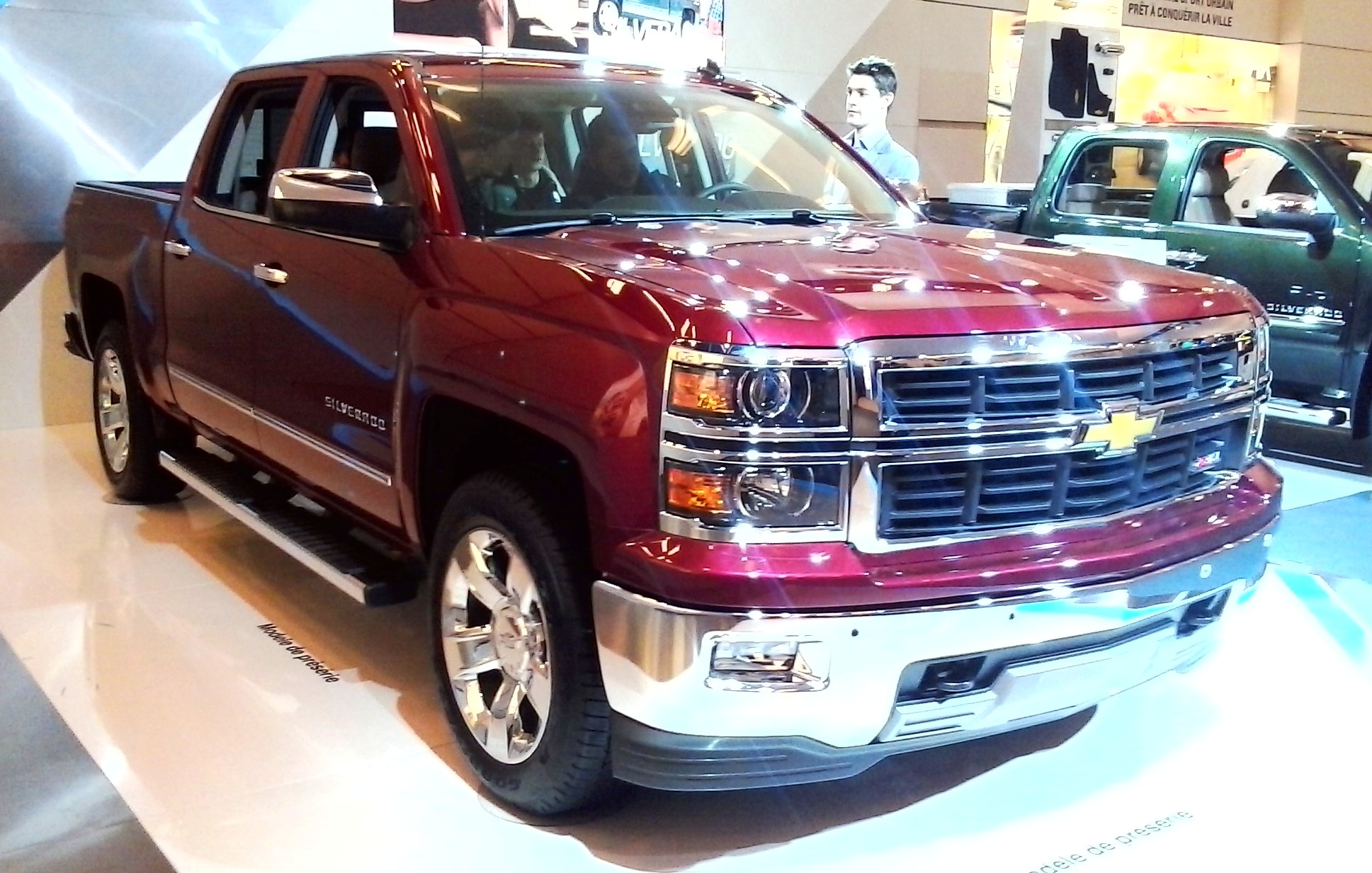
Silverado EV
"Equinox EV, Blazer EV, Lyric, Hummer EV, Optique, Silverado EV, VISTIQ, Sierra EV, Escalade"
The Silverado EV is an electric version of the Chevrolet Silverado truck, which is used for carrying heavy loads and towing.
The Chevrolet Silverado EV is an electric version of the popular Silverado pickup truck, designed for both work and recreational use with electric efficiency.

Equinox EV
"Equinox EV, Blazer EV, Lyric, Hummer EV, Optique, Silverado EV, VISTIQ, Sierra EV, Escalade"
The Equinox EV is an electric SUV made by Chevrolet, which means it runs on electricity instead of gasoline.
The Chevrolet Equinox EV is an electric version of the popular Equinox SUV, designed to offer a more sustainable and efficient driving experience.

Chevrolet Trax
"But here's the thing to your point, Joanne. The Chevy Trax, they sold 206,339 of them. Yeah."
The Chevy Trax is a small SUV made by Chevrolet, aimed at families looking for an affordable vehicle. It's easy to drive and has enough space for everyday needs.
The Chevy Trax is a subcompact SUV produced by Chevrolet, designed to be an affordable option for young families. It offers a practical size and features suitable for urban driving.
Buick
"So, you know, look at Buick for goodness sakes."
Buick is a brand of cars that is part of General Motors, and they make cars that are usually more comfortable and luxurious.
Buick is a division of General Motors that produces premium vehicles, often known for their comfort and luxury features.
total addressable market
"The total addressable market in the US for vehicles priced at $100,000 and above, comprising both the new and secondary market vehicles, is estimated to be worth $110 billion today"
Total addressable market is the total amount of money that could be made from selling a certain type of product. Here, it refers to how much money could be made from selling cars that cost $100,000 or more.
The total addressable market (TAM) refers to the overall revenue opportunity available for a product or service, assuming 100% market share. In the context of vehicles, it indicates the potential sales volume for cars priced at $100,000 and above.
secondary market
"The total addressable market in the US for vehicles priced at $100,000 and above, comprising both the new and secondary market vehicles, is estimated to be worth $110 billion today"
The secondary market is where used cars are sold after someone has already owned them. It's important because many people buy cars from this market instead of buying new ones.
The secondary market refers to the resale market for vehicles, where used cars are sold after their initial purchase. This market plays a significant role in the overall automotive industry, especially for luxury vehicles.
Rivian
"They have this smaller SUV that looks amazing. If they could get it out the door, they have a lot of good technology. They're, you know, they're selling it to Volkswagen, they got a big partnership."
Rivian is a company that makes electric vehicles, like trucks and SUVs. They are known for creating vehicles that are designed for outdoor adventures and have a partnership with Amazon to provide delivery vans.
Rivian is an American electric vehicle manufacturer known for its innovative electric trucks and SUVs. They have gained attention for their focus on adventure-oriented vehicles and their partnership with Amazon for electric delivery vans.
EVs
"I happen to think Rivian makes some really good EVs. Question is, is there a market for it?"
EVs are cars that run on electricity instead of gas. They are better for the environment because they produce less pollution.
EVs, or electric vehicles, are cars that are powered entirely by electricity instead of gasoline or diesel. They are considered more environmentally friendly due to lower emissions.
AV
"You know, and they have made a lot of progress with their technology. Their AV stuff looks good, but proof, you got to prove it, right?"
AV means autonomous vehicles, which are cars that can drive on their own without needing a person to control them. It's a technology that's still being worked on.
AV stands for autonomous vehicles, which are cars that can drive themselves without human intervention. This technology is still being developed and tested by various companies.

Volkswagen I
"So, who's going to keep funding that? Volkswagen, I guess, and Amazon. Yeah, I mean, they've got a valley of death problem."
The Volkswagen ID. Buzz is a new electric van that looks like the old VW Microbus. It's designed to be roomy and eco-friendly, making it a fun choice for families who want to travel in style.
The Volkswagen ID. Buzz is an electric minivan that pays homage to the classic VW Microbus while incorporating modern electric vehicle technology. It aims to provide a spacious and eco-friendly option for families and those seeking a retro-inspired design. The ID. Buzz represents Volkswagen's shift towards electric mobility and sustainable transportation.

Fiat / 2100 Familiare
"...'s profits, those companies can't any, if you're fiat thinking, oh, we're thinking in Latin America is ..."
Detroit Auto Show
"...we would probably be at the Detroit Auto Show or the North American International Auto Show, right?"
The Detroit Auto Show is a big event where car companies display their latest cars and new ideas. It's a place for people to see what's new in the car world.
The Detroit Auto Show, officially known as the North American International Auto Show (NAIAS), is one of the largest and most prestigious automotive trade shows in the world. It showcases new vehicles, concept cars, and automotive technology from various manufacturers.
concept car
"...you'd go down there and it'd be concept car day..."
A concept car is a special type of car that shows new ideas and designs. They are usually not made for sale but help companies see what people like.
A concept car is a prototype vehicle that showcases new design ideas and technologies. These cars are often not intended for production but serve to gauge public interest and demonstrate innovation.

Dodge Challenger
"...It was the Dodge Challenger. Oh, really?"
The Dodge Challenger is a muscle car that looks like the classic models from the 1970s. It has strong engines and is designed for speed and performance, making it a favorite among car lovers.
The Dodge Challenger is a classic American muscle car known for its powerful engines and retro styling. It has been popular among car enthusiasts since its reintroduction in the 2000s, offering a range of performance options.

Chevrolet Camaro
"And the other car, the Chevy Camaro. Oh, wow. Oh, the next generation."
The Chevrolet Camaro is a type of sports car that is known for being fast and stylish. It's often compared to other cars like the Ford Mustang and is popular among car enthusiasts.
The Chevrolet Camaro is a popular American muscle car known for its performance and aggressive styling. It has undergone several generations since its introduction in the 1960s, often competing with the Ford Mustang.

Ford Mustang
"...ess Ford won, right? I mean, they still have the Mustang. They still have the Mustang."
The Ford Mustang is a famous sports car that has been around for a long time, starting in the 1960s. It's known for being fast and stylish, and many people love it because it represents American car culture.
The Ford Mustang is an iconic American muscle car that has been in production since 1964. It represents a blend of performance, style, and cultural significance, often associated with freedom and the open road. The Mustang's enduring popularity makes it a frequent topic in automotive discussions.
Honda That Honda
"It didn't go through. My recollection is that Honda people said, look, we want to run this thing."
The Honda That's is a small car made for city driving, especially in Japan. It's known for being practical and easy to park, with a design that's a bit different from regular cars.
The Honda That's is a compact car that was primarily produced for the Japanese market, known for its unique design and efficient use of space. It was aimed at urban drivers looking for a practical and economical vehicle. Discussions around the Honda That's often focus on its quirky styling and functionality in city driving.
torque
"...1000 foot pounds of torque Cummins diesel power wagon return of that or the latest duration of that."
Torque is how much twisting force an engine can create. It's important because it helps a vehicle move quickly and pull heavy things.
Torque is a measure of rotational force, which is crucial in determining a vehicle's ability to accelerate and tow heavy loads. Higher torque values typically indicate better performance in these areas.

Dodge Power Wagon
"...k it's 1000 foot pounds of torque Cummins diesel power wagon return of that or the latest duration of that. A..."
The Dodge Power Wagon is a tough truck made for driving on rough terrain. It has a strong build and is designed for people who need a reliable vehicle for off-roading.
The Dodge Power Wagon is a heavy-duty pickup truck known for its off-road capabilities and rugged design. Originally introduced during World War II, it has evolved into a modern truck that combines strength with advanced technology. The Power Wagon is often discussed for its unique blend of history and capability in the off-road truck segment.
Cummins diesel engine
"...1000 foot pounds of torque Cummins diesel power wagon return of that or the latest duration of that."
Cummins is a brand that makes powerful diesel engines used in trucks. These engines are strong and can pull heavy loads, which is why they're often used in big vehicles.
Cummins diesel engines are known for their durability and high torque output, making them popular in heavy-duty trucks and commercial vehicles. They are often favored for their towing capabilities and long lifespan.
Ford F-150 Raptor
"...ch horsepower reborn TRX, monster truck, it's the Raptor fighter. And the whole video from front to back ..."
The Ford F-150 Raptor is a tough pickup truck made for driving on rough roads and trails. It has a strong engine and special features that help it handle bumpy surfaces, making it popular with people who love outdoor adventures.
The Ford F-150 Raptor is a high-performance off-road variant of the best-selling F-150 pickup truck. It is designed for rugged terrain and is equipped with a powerful engine and advanced suspension, making it a favorite among off-road enthusiasts. The Raptor's capabilities and aggressive styling often spark discussions about performance trucks.

Dodge Ram
"...there for the first time when he was in charge of Ram telling us how wonderful the EV Ram pickup was. ..."
The Dodge Ram is a big truck that people use for work and everyday driving. It's known for being powerful and comfortable, with different options to fit what drivers need.
The Dodge Ram, now known as the Ram 1500, is a popular full-size pickup truck that has gained a reputation for its strong performance and comfortable ride. It offers a range of configurations and features, making it suitable for both work and leisure. The Ram's evolution into a more modern, tech-savvy vehicle has made it a frequent topic of discussion in the automotive world.

Lucid Gravity
"...ber, and Neuro unveiled a production-intent Lucid Gravity Robo Taxi. So, we have Uber now working with Neu..."
The Lucid Gravity is a new electric SUV that will be made by a company called Lucid Motors. It's designed to be a fancy and high-tech car that runs on electricity instead of gas.
The Lucid Gravity is an upcoming electric SUV from Lucid Motors, known for its luxury electric vehicles. It aims to compete in the growing electric vehicle market with advanced technology and high performance. The Gravity's introduction is significant as it represents the shift towards electric mobility in the SUV segment.
ICE-related product
"Stellantis has announced it's spending $13 billion on basically ice-related product in the United States, which Joe's got his thumbs up there."
ICE means Internal Combustion Engine, which is a type of engine that runs on gasoline or diesel. When they talk about 'ICE-related products,' they're referring to cars that use these engines instead of electric ones.
ICE stands for Internal Combustion Engine, referring to vehicles powered by gasoline or diesel engines. The term 'ICE-related product' indicates investments in traditional vehicle technologies rather than electric vehicles.

Ford Model T
"You know, we'll see. Was it a Model T moment, though? You know, you need some PR."
The Ford Model T is an old car that was made a long time ago, and it was one of the first cars that regular people could afford. It changed how cars were made and helped more people own cars.
The Ford Model T, produced from 1908 to 1927, is often regarded as the first affordable automobile, making car ownership accessible to the masses. Its introduction revolutionized the automotive industry and paved the way for modern manufacturing techniques. Discussions about the Model T often center around its historical significance and impact on society.
Ford F150
"Um, not to, we talked about aluminum before, so I might as well. That was when fire disrupted the factory that was making aluminum for the F-150. It's too bad."
The Ford F-150 is a large truck that many people use for work and everyday driving. It's popular because it can carry heavy loads and has different options to fit what people need, like towing or off-roading.
The Ford F-150 is a full-size pickup truck that has been one of the best-selling vehicles in the United States for decades. Known for its versatility, it is used for both work and personal purposes, offering a range of engine options and features. The F-150's construction, including its aluminum body, has been a topic of interest due to its impact on performance and fuel efficiency.
tax credit
"...October, we've talked about this many times. The $707,500 tax credit went away."
A tax credit is money you can take off your tax bill, which can help make buying a car cheaper, especially for electric cars.
A tax credit is an amount of money that taxpayers can subtract directly from the taxes they owe to the government. In the automotive context, it often refers to incentives for purchasing electric or hybrid vehicles.
Request an Explanation
Heard something you'd like explained? We'll add it to this episode.
Sign in to request explanations for terms you heard.
Want to learn more?
Browse our glossary for plain-English explanations of automotive terms, jargon, and concepts.
Help improve this episode
See something that's not quite right? Our annotations are AI-generated and can sometimes miss the mark. Click the flag icon on any annotation to suggest a correction.