AAH #799 - Honda: New Hybrids, More MPGs On The Way
About this episode
Honda leadership and the hosts connect the dots between sales momentum, lineup strategy, and the next wave of electrification. They discuss why Honda turned the corner in June after prior semiconductor disruption, how Civic volume and the returning Prelude nameplate drive excitement with minimal incentives, and how Acura expects MDX growth. The conversation then pivots to hybrid/EV education, charging realities, and upcoming two-motor hybrid systems—plus dealer experience, CPO strength, and how tariffs and USMCA compliance shape production.
Lance Wolfer
"We've got Lance Wolfer. He's the vice president of sales for Honda America. Lance, great to have you back on the show."
Lance Wolfer is a Honda executive who leads sales for Honda America. Here, he talks about why Honda’s sales improved and what factors helped.
Lance Wolfer is Honda America’s vice president of sales. In this segment, he explains what drove Honda’s sales momentum and how production consistency and product focus affect results.
Stephanie Brindley
"And we've got Stephanie Brindley from Mobility Global. Yes, yes, and steph always good to have you on that."
Stephanie Brindley is a guest in the discussion, representing Mobility Global. She’s there to add context to the topics being discussed with Honda.
Stephanie Brindley is mentioned as being with Mobility Global. She’s part of the conversation alongside Honda’s sales leadership, likely contributing perspective on mobility and electrification trends.
chip shortage
"Most recently there was next period chip shortage. But I think consistency has been key for us when you look at the consumer with the additional challenge from an affordability standpoint with gas prices."
A chip shortage means there weren’t enough computer chips available to build cars. If that happens, car companies can’t make as many vehicles as they want, which affects sales.
A “chip shortage” refers to a shortage of semiconductor components used to build modern vehicles. When chips are scarce, automakers can’t produce as many cars, which can disrupt sales and inventory.
gas milage
"Honda's well known as being an automaker that provides good value and really good gas milage number one as far as overall fuel efficiency. So I think we're benefiting from that"
Gas mileage tells you how far a car can go on a gallon of gas. Higher gas mileage usually means you spend less on fuel, which matters a lot when gas prices rise.
“Gas mileage” is a measure of how efficiently a vehicle uses gasoline, typically expressed as miles per gallon (MPG). In this segment, Honda is described as being known for good fuel efficiency, which can influence buyer demand when fuel costs are high.

Acura Integra
"You look at Accurate, which had a phenomenal and we're really succeeding with the Integra and the eighty X. We're getting a lot of people who are moving up into premium..."
Acura Integra is a small, nicer Honda from Acura (Honda’s luxury brand). In this episode, they mention it as one of the cars driving strong sales growth.
The Acura Integra is a compact premium hatchback/sedan-style model from Honda’s luxury brand, Acura. It’s notable here because the speaker credits it with strong growth and success in the US premium segment.
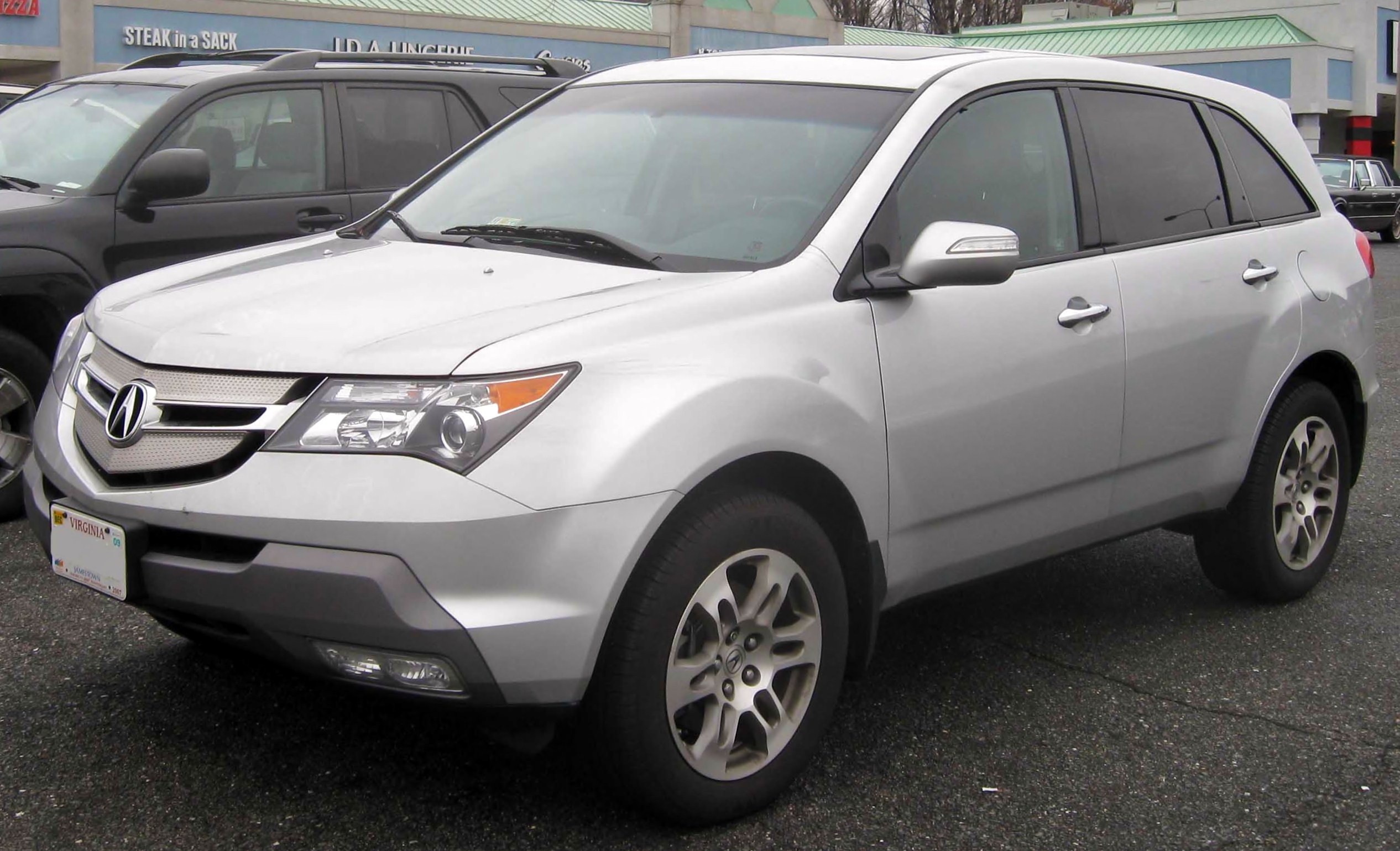
Honda MDX
"...h of the brand, particularly in those models. But MDX we're in to spend about ten percent growth, so we..."
The Honda MDX is a larger Honda SUV with room for more than just two people. It’s built for families or anyone who needs extra seating and cargo space. The podcast mentions it because it’s a key model in Honda’s lineup plans.
The Honda MDX is a three-row midsize SUV aimed at buyers who want more space than a smaller crossover. In the podcast, it’s referenced in the context of growth and brand focus, which suggests it’s an important model for Honda’s lineup strategy. That makes it relevant when discussing where the brand is investing and how it’s trying to expand sales.

Acura MDX
"But MDX we're in to spend about ten percent growth, so we're on pace for our targets and actually we're outperforming our expectations a little bit."
Acura MDX is a family-sized luxury SUV. They’re talking about it because sales growth is tracking well and even beating their expectations.
The Acura MDX is a midsize luxury SUV from Acura. The speaker uses it as an example of expected growth (about 10%) and says Acura is outperforming expectations with it.

Acura TLX
"with the integer in the TLX, we decided, hey, the integer's a way for us to focus... I mentioned the TLX. I have that as a personal car..."
Acura TLX is Acura’s mid-size luxury sedan. They mention it when talking about which models they focus on, and the speaker also says they personally have one.
The Acura TLX is Acura’s midsize luxury sedan. In the segment, it’s mentioned alongside the Integra as part of Acura’s lineup decisions and the speaker’s personal ownership.

Honda Civic
"Speaker 3: Well, I mean what I found interesting you So like last year you guys sold over two hundred and thirty eight thousand Civics, and you know, you look at some of the domestics and if it's not a truck, they didn't sell two hundred and thirty eight thousand of anything."
The Honda Civic is one of Honda’s most popular cars. Here, they’re talking about how many Civics Honda sells and using that to show it’s especially appealing to younger buyers.
The Honda Civic is a high-volume compact car that Honda sells in huge numbers in the U.S. In this segment, the hosts use Civic sales volume as evidence of how strong the model is with younger buyers and how it performs versus other non-truck models.

Honda Integra
"Speaker 4: Well, and that's I think what's exciting about Accurate that I was talking about with the Integra and the ADX doing so well, So those first time premium buyers really have a lot of places that we can take them in the lineup in the future."
The Honda Integra is a sportier Honda model. They’re saying it’s doing well with first-time “premium” buyers, and that helps Honda keep those customers interested in future models.
The Honda Integra is a compact, performance-leaning model that Honda positions as a “premium” step for buyers moving up from entry-level cars. In this segment, it’s mentioned alongside other new Acura/Honda products as part of a strategy to keep first-time premium buyers within the brand ecosystem.
Gen Z
"Speaker 2: You know, if you're getting young buyer gen z right, you can ride that generational way for a long time to come if you play."
Gen Z is a name for a younger generation of consumers. They’re talking about marketing cars to that group and keeping them interested for years.
Gen Z is a demographic label for people born roughly from the mid-1990s to early 2010s. In this segment, it’s used to describe the target audience for Honda/Acura products and the idea of building long-term brand loyalty with younger buyers.

Honda Prelude
"Speaker 8: And the type pass is really fun. Of course, it's really fun to do have too. So you're the Prelude, you're happy with what you're getting at just the numbers."
The Honda Prelude is a classic Honda name that’s being brought back. They’re saying it’s selling about as much as they expected, and the main benefit is generating excitement for the brand.
The Honda Prelude is a nameplate with a long history as a sporty Honda, and this segment discusses its return and how it’s performing in sales. They say the Prelude volumes match expectations and that the bigger win is brand excitement and reputation rather than massive sales impact.
incentives
"Speaker 4: Yeah, we've seen a lot of loyalists get excited about the Prelude nameplate coming back, and yeah, the volumes exactly where we expected it to be. So it's not huge as far as impact on our sales volume, but I think brand reputation and excitement for the brand it's been great. [356.5s] So it's got zero incentives on it, and we see a need for more."
Incentives are dealer or manufacturer promos that lower the price or cost of financing. They’re saying the Prelude doesn’t need those promos right now.
In automotive sales, incentives are discounts or promotional offers (often cash rebates, financing deals, or lease specials) used to stimulate demand. The speaker says the Prelude has zero incentives, implying it’s selling without needing price cuts to move units.
charging options
"I think the first thing is that why it's more infrastructure. [421.2s] We need more charging options for the consumer throughout the country"
“Charging options” means how and where you can plug in to charge an EV. If there are more places to charge—especially away from home—people feel more confident using an EV for daily trips.
“Charging options” refers to the availability and variety of places and methods to recharge an EV—like public fast chargers and home charging. The speaker argues that better charging options across the country reduce range anxiety and make EVs easier for everyday use.
range drive
"We need more charging options for the consumer throughout the country for them to be more comfortable that they can get from point A to point and maybe not B that's your traditional day to day driving experience, [440.6s] We don't anticipate the market getting beyond ten percent"
They’re talking about whether an EV can realistically make your usual trips without running out of charge. More charging stations help you feel confident you can get where you’re going.
“Range drive” appears to refer to the EV’s ability to complete trips between charging stops—i.e., practical driving range. The speaker connects it to charging infrastructure so consumers can reliably get from point A to point B.
home charger
"and if you've got a home charger, I think that works out well for a good amount of consumers, but we need more infrastructure so they can make that longer distance drive. [440.6s] We don't anticipate the market getting beyond ten percent"
A “home charger” is a device that lets you charge your EV at your house. They’re saying EVs are much easier to live with if you can charge at home, but harder if you can’t.
A “home charger” is an EV charging setup installed at a person’s house, typically enabling faster and more convenient overnight charging. The speaker says home charging works well for many consumers, but EV adoption slows when people can’t easily charge at home.

Honda Prologue
"we're still working on next gen evs, and we still have the zero series Alpha that is India and Japan, and so that technology is still available to us when it's right for the US market. But today we've got one hundred thousand or so prologue and CDX is in operation, [490.2s] and we'll start to see those comeback from leases"
The Honda Prologue is Honda’s electric SUV. They’re saying a lot of them are already on the road, and when leases end, Honda expects to sell those cars to new customers.
The Honda Prologue is Honda’s electric SUV, and it’s part of the company’s current EV lineup. The speaker says there are about “one hundred thousand or so” Prologue vehicles in operation, and that returning lease vehicles will create opportunities to sell to new EV buyers.
leases
"and we'll start to see those comeback from leases, and that'll create an opportunity for us to sell those to new consumers [505.5s] or re engage with those consumers who are driving those vehicles"
“Leases” are when you rent a car for a set time and then give it back. They’re saying when EV leases end, those cars come back and can be sold to new customers.
“Leases” are vehicle rental contracts where the driver returns the car at the end of the term (unless they buy it). The speaker says lease returns will bring Prologue and other EVs back into the market, creating a sales opportunity for Honda.
EV owner
"it takes it seems to be taking an EV owner, a first time EV owner, you know, a year and a half to two years to get to the point where what's happening with their vehicle of second nature [544.4s] On the hybrid side of things, so you were talking about your sales being so good this year"
An “EV owner” is someone who has adopted an electric vehicle and is learning how to live with charging routines. The speaker claims it can take roughly 1.5 to 2 years for charging and vehicle behavior to become second nature, which affects how quickly new buyers decide to switch.
ICEs
"So I will tell you that before gas prices were increasing as we've seen recently, we started moving a little bit more towards ice. [577.4s] But this is a fifty to"
ICE means the traditional gas-engine cars. They’re saying Honda is moving a bit more toward gas cars when gas prices go up.
ICE stands for “internal combustion engine,” meaning gasoline- or diesel-powered powertrains. The speaker contrasts ICE with EVs/hybrids and says Honda is shifting more toward ICE as gas prices rise.
hybrid
"And actually we see ev buyers gravitating to hybrids because they get that balance. But I think that you know, we're looking at do we need more hybrids in California and the Northwest... Speaker 3: You know, Stephanie was mentioning education and I talked to some people who still don't understand what a hybrid is."
A hybrid is a car that uses two power sources: a regular gas engine and an electric motor. The electric part helps the car use less gas, especially in stop-and-go driving.
A hybrid vehicle uses both an internal-combustion engine and an electric motor/battery to move the car. The point is to improve efficiency and reduce fuel use compared with a traditional gasoline-only setup.
EV
"And actually we see ev buyers gravitating to hybrids because they get that balance... But what did come to light is most of them know somebody who has a hybrid they're talking to about a hybrid, and they're becoming much more open to it."
EV means electric vehicle. It’s a car that runs mainly on electricity from a battery, not gasoline.
EV stands for electric vehicle, meaning the car is powered primarily by an electric motor drawing energy from a battery. In the transcript, EV buyers are described as being open to hybrids as a middle ground.
traditional ISCE engine
"It's gas making hybrid more affordable for me, or is it that I need a little less content and a traditional ISCE engine."
They’re contrasting a hybrid with a regular gas engine. An internal combustion engine is the traditional engine that burns gasoline.
“ISCE engine” appears to be a mis-transcription of “ICE engine,” which means an internal combustion engine. The speaker is contrasting hybrids against conventional gas engines.
plug it in
"But there's definitely customers who don't have clear understanding and think you have to plug it in, and that's something that we can continue to educate customers."
“Plug it in” refers to the idea that a hybrid must be charged from an external power source. Some hybrids (like plug-in hybrids) can be charged that way, but many hybrids are not, which is why the transcript frames it as a common misunderstanding.
miles to the gallon
"Don't call them hybrids, just say, hey, do you want that civic tickets forty five miles to the gallon or what you want to because if you have, you're in sales."
MPG tells you how many miles a car can go on one gallon of gas. Higher MPG generally means you spend less on fuel.
Miles to the gallon (MPG) is a fuel-economy measure that indicates how far a vehicle can travel using one gallon of fuel. The transcript uses it as a sales message for hybrids versus traditional gasoline vehicles.
fuel efficiency
"Speaker 4: Well, we're going to see more range or I should say more fuel efficiency, lower cost, and they're going to be a little more powerful."
Fuel efficiency means how far you can drive on a given amount of gas. Higher fuel efficiency usually means fewer fill-ups and lower fuel costs.
Fuel efficiency is how effectively a vehicle converts fuel into distance, commonly expressed as miles per gallon (MPG) or similar metrics. The hosts connect it to Honda’s hybrid plans, emphasizing improved MPG and lower operating costs.
right product at the right time
"Speaker 3: What kind of mindset is there in the organization that says, you know what, we've got to have the right product at the right time, and if it's not right, we don't have it."
It means the company tries to sell the right car at the right moment. Instead of keeping an old model just because it exists, they try to match what people want and what the future requires.
This is a product-planning concept: aligning what a company sells with what the market wants at a given moment. In automaking, it usually means timing model launches and updates so demand and regulations match the vehicle lineup.
production capacity
"Speaker 4: We use our production capacity. We won't build something that the consumers don't want. We have other options for that production capacity."
Production capacity is how many cars a company can build with its factories. The idea is that if one model won’t sell well, they can use that building time for something else.
Production capacity is the maximum output a factory or manufacturing system can produce over a period of time. Honda’s point here is that they can reallocate that capacity to other products when a specific vehicle isn’t the right fit for customers.

Honda Element
"Speaker 8: Yeah, and it's an interesting it's interesting you brought that up right, the nameplates that come in and out, but you do have loyalty with those nameplates. You are able [913.6s] to bring prelude back and have it be responded to that way. If you brought an F two thousand back, you'd get some response to that too. [920.2s] Speaker 4: For me. [922.1s] Speaker 8: Cars, you know, the Element just just saying Element has gotten people excited."
The Honda Element is a Honda model that people love for its practical, outdoors-friendly design. The hosts are saying that even rumors about it got a lot of attention because owners really care about the car.
The Honda Element is a boxy, utility-focused compact SUV/crossover from Honda that became known for its flexible, outdoorsy lifestyle appeal. In this segment, the hosts discuss how the Element has a passionate owner community and how speculation about it still drives interest.

Pontiac Torrent
"... to we have cars, bikes and coffee that we do and torrents and we might even do it. I don't know, but there ..."
The Pontiac Torrent is a small SUV. It’s the kind of vehicle people might talk about or bring to local car events. In the podcast, it’s mentioned as part of that casual discussion.
The Pontiac Torrent is a compact SUV that was offered as part of Pontiac’s lineup. In the podcast, it’s mentioned in a casual context alongside events like “cars, bikes and coffee,” which suggests it’s being referenced as a model people might show up with or talk about. That kind of mention usually points to the car’s presence in enthusiast or local community settings.

Honda HR-V
"Speaker 4: Well, we've been able to maintain that customer base with the products that we have today. I mean we had [949.8s] to fit years ago, and most of those customers have gravitated the HRV as we've seen consumers want to move up into SUVs and element We've seen a lot of movement towards CRV and to pilot."
The Honda HR-V is a smaller Honda crossover. The speaker is saying some Element buyers moved to the HR-V as people started buying more SUV-style cars.
The Honda HR-V is a subcompact crossover positioned below Honda’s larger SUVs. Here, it’s mentioned as the model that has absorbed some of the Element’s customer base as consumer preferences shifted toward SUVs and crossovers.

Honda Crv
"Speaker 4: Well, we've been able to maintain that customer base with the products that we have today. I mean we had [949.8s] to fit years ago, and most of those customers have gravitated the HRV as we've seen consumers want to move up into SUVs and element We've seen a lot of movement towards CRV and to pilot."
The Honda CR-V is a mainstream compact crossover that’s been a long-running best-seller for Honda. In this segment, it’s used to illustrate where Element customers have “moved up” as demand shifted toward SUVs.

Honda Pilot
"Speaker 4: Well, we've been able to maintain that customer base with the products that we have today. I mean we had [949.8s] to fit years ago, and most of those customers have gravitated the HRV as we've seen consumers want to move up into SUVs and element We've seen a lot of movement towards CRV and to pilot."
The Honda Pilot is a larger Honda SUV with room for more people. The host is saying that as shoppers wanted bigger SUVs, some moved toward models like the Pilot.
The Honda Pilot is a three-row midsize SUV aimed at families needing more interior space. The speaker mentions it alongside the CR-V to show how Honda’s SUV lineup is pulling customers upward from smaller/older nameplates like the Element.
USMCA
"Speaker 2: Lancia USMCA has got a plant in Canada, it's got a plant in Mexico. [975.6s] Speaker 5: They're getting hit by tariffs right now. [978.5s] Speaker 2: I'd love to hear from a sales VP standpoint, what's your assessment of where we're standing right now and how you're going to muddle through this?"
USMCA is a trade agreement between the U.S., Canada, and Mexico. It can change costs and rules for cars and parts moving across those borders, so automakers plan production to stay compliant and avoid extra charges.
USMCA is the United States–Mexico–Canada Agreement, a trade deal that affects how vehicles and parts can be imported/exported across North America. The hosts connect it to tariffs and to whether Honda-built vehicles meet “USMCA current standards,” which influences production planning and where parts are sourced.
tariffs
"Speaker 2: Lancia USMCA has got a plant in Canada, it's got a plant in Mexico. [975.6s] Speaker 5: They're getting hit by tariffs right now. [978.5s] Speaker 2: I'd love to hear from a sales VP standpoint, what's your assessment of where we're standing right now and how you're going to muddle through this?"
Tariffs are extra taxes on imported products. The hosts are saying they’re currently making it harder or more expensive for companies to move cars and parts across borders.
Tariffs are taxes a government places on imported goods. In this segment, tariffs are discussed as a current pressure on automakers’ cross-border supply chains and pricing, especially when production is split between the U.S., Canada, and Mexico.
AI enhancements
"do like functionality in the car. They like these AI enhancements, But it depends on the consumer."
“AI enhancements” means the car is using artificial intelligence to improve features. That could be things like smarter navigation or more helpful suggestions while you drive.
“AI enhancements” refers to using artificial intelligence to add or improve vehicle features—often in areas like driver assistance, personalization, or smarter infotainment. In practice, these features can change how the car interprets inputs and provides guidance.
Apple CarPlay
"But we think consumers will really rally around it, at least certain ones like car Play and Android Otto. You've got to have those in the car..."
Apple CarPlay lets you connect your iPhone to the car and use certain apps on the car’s screen. It’s meant to make navigation and music easier to use while you’re driving.
Apple CarPlay is a smartphone-to-car interface that mirrors compatible iPhone apps onto the vehicle’s infotainment screen. It’s designed for easier, safer use of navigation, calls, messages, and music while driving.
Android Auto
"But we think consumers will really rally around it, at least certain ones like car Play and Android Otto. You've got to have those in the car..."
Android Auto connects your Android phone to the car so you can use certain apps on the car’s screen. It helps you get directions, make calls, and play music more safely.
Android Auto is a smartphone-to-car interface that displays compatible Android apps on the vehicle’s infotainment system. It focuses on common driving tasks like navigation, calls, messages, and media through a simplified interface.
Gemini
"It tends to add some of those types of technologies, maybe just a little bit later, but this is pretty early with the Gemini."
“Gemini” sounds like a specific car or tech program name tied to when new features show up. In this discussion, they’re saying it’s an early stage for that technology.
“Gemini” here appears to be a named vehicle/tech platform or product line associated with early rollout of new infotainment or AI features. The context suggests the technology is arriving later than some other systems, but still relatively early in its lifecycle.

Honda Odyssey
"Well, the Odyssey has been a stable for our dealers. At one point it was two hundred thousand. It's still close to one hundred thousand today and they actually have been asking for more... and the odyssey. I mean there's people who've been driving those for every generation."
The Honda Odyssey is Honda’s minivan. The hosts say it’s been a reliable seller for dealers and that many customers keep coming back through multiple generations.
The Honda Odyssey is a minivan known for family-focused practicality and smooth, car-like driving. Here it’s framed as a dealer “stable” with strong sales momentum, and the discussion notes that people have been driving Odysseys for every generation.

Honda Ridgeline
"So you have two. Models that many OEMs don't have, Ridgeline and Odyssey, and they're doing fairly Okay... You know, on the ridgeline standpoint, we see dealers really being able to keep customers in the lineup because they have that versatility and it's got driveability that really is totally different than I think everything else in the lineup."
The Honda Ridgeline is a pickup truck from Honda. The speakers say dealers like it because it’s versatile and easy to drive, so it helps keep shoppers buying within Honda instead of switching brands.
The Honda Ridgeline is Honda’s midsize pickup that blends truck utility with car-like driving manners. In this segment, it’s discussed as a dealer “keep customers in the lineup” model because its versatility and driveability are different from other vehicles in Honda’s lineup.
inventory
"they always like to have more inventory until they have too much, so they're asking for more production... Today, Like I said, they're asking for more product."
Here, “inventory” just means how many cars are sitting at dealerships ready to sell. Dealers want more cars available, but not so many that it becomes a problem.
In a dealership context, inventory means the number of vehicles available on lots for sale. The speakers discuss dealers wanting more inventory until it becomes “too much,” and they connect that to production and supply timing.
D segment
"There's a lot of feedback from the dealer on where they want to prioritize that and the D segment is most exciting to them... So in the future hybridization want bigger cars, yeah, they they want in the future they want to see that our lineup has starts to offer hybrids at that D segment."
“D segment” is a way car makers group cars by size/class. Here, they’re saying dealers want Honda to bring hybrids to the mid-size category where bigger cars are in demand.
The “D segment” is a European-style vehicle classification for mid-size cars (roughly larger than compact, smaller than large). The speakers use it as a market category where dealers are most excited to see hybrid offerings—i.e., bigger cars than the current mix.
service retention
"and our dealers are above average at that. Our service retention is maybe the best in the industry, and our retail retention is very strong."
Service retention means how often customers return to the same place for car service. If it’s high, it usually means people are happy with the dealer and keep using them.
Service retention is how effectively a dealer keeps customers coming back for maintenance and repairs after the initial purchase or lease. Higher service retention usually means customers trust the dealer and are satisfied with the experience.
retail retention
"Our service retention is maybe the best in the industry, and our retail retention is very strong. We lease more than most"
Retail retention refers to keeping customers engaged through repeat retail purchases or ongoing dealer relationships in the retail (non-fleet) market. In automotive, it’s often measured by how many customers come back to buy again or stay within the brand/dealer network.
stripping out many features
"low base price is achieved by stripping out many features that have become standard even in entry vehicles. Slate does not offer an INCR modem, embedded infotainment navigation, advanced driver SYSTEMCE systems, or integrated connectivity at any price."
The idea is: to make the starting price lower, the car leaves out some features. You can usually add them later or use your phone for things the car doesn’t include.
This describes a pricing strategy where a manufacturer reduces the base price by removing features that are becoming common even on lower trims. The trade-off is that buyers either pay more for those features later or use alternatives (like a phone) instead.
embedded infotainment navigation
"low base price is achieved by stripping out many features that have become standard even in entry vehicles. Slate does not offer an INCR modem, embedded infotainment navigation, advanced driver SYSTEMCE systems, or integrated connectivity at any price."
That phrase means the car has a built-in screen and software for music/phone stuff and also directions. If it’s not included, you usually use your phone for navigation instead.
“Embedded infotainment navigation” refers to a built-in in-car system that combines entertainment functions (like audio/phone/media) with turn-by-turn navigation. When a car doesn’t include it, you may need to rely on a phone app or a separate aftermarket/navigation device.
advanced driver system systems
"low base price is achieved by stripping out many features that have become standard even in entry vehicles. Slate does not offer an INCR modem, embedded infotainment navigation, advanced driver SYSTEMCE systems, or integrated connectivity at any price."
This refers to safety tech that helps the driver—things like keeping you in your lane or braking if there’s danger. The discussion is about how some cars leave these features out to keep the price down.
“Advanced driver systems” is a catch-all for modern driver-assistance and safety technologies, such as adaptive cruise control, lane-keeping, automatic emergency braking, and related sensors/software. The key point here is that the speaker is contrasting cars that include these features versus ones that omit them to hit a lower base price.
integrated connectivity
"Slate does not offer an INCR modem, embedded infotainment navigation, advanced driver SYSTEMCE systems, or integrated connectivity at any price."
This means the car can connect to the internet and services using built-in hardware. Without it, you typically depend more on your phone for data and apps.
“Integrated connectivity” means the vehicle is built with cellular/Wi‑Fi hardware and software so it can connect to services without relying entirely on a phone. This can enable features like remote services, real-time traffic, and over-the-air updates (depending on the car).
INCR modem
"low base price is achieved by stripping out many features that have become standard even in entry vehicles. Slate does not offer an INCR modem, embedded infotainment navigation, advanced driver SYSTEMCE systems, or integrated connectivity at any price."
This sounds like the car’s built-in cellular “internet” hardware. It’s what lets the car use wireless networks for connected features.
“INCR modem” appears to be a transcription error for a cellular modem used for in-car connectivity. In practice, a modem is the hardware that lets the car communicate over a cellular network for connected services.
two-door
"Those ambitious goals for an EV with the least popular configuration two doors and rear will drive."
“Two doors” means the car has two side doors for getting in and out. The discussion is basically about how that specific body style might be less in demand.
“Two doors” refers to a vehicle body style with two side doors for passenger access (typically a coupe-like layout or a compact SUV variant). The hosts are saying the EV’s sales targets depend on a less popular two-door configuration.
affordability and accessibility
"It is an ambitious goal for that because another part of affordability and accessibility is how you define affordability for you personally, is going to be does that vehicle meet your needs in the first place."
They’re talking about whether people can actually afford the vehicle and whether it fits what they need. If it doesn’t match your lifestyle, price alone won’t make you buy it.
“Affordability and accessibility” is the idea that EV adoption depends not just on whether a vehicle exists, but whether enough buyers can realistically buy it and fit it into their lives. The hosts connect this to pricing, configuration, and whether the vehicle matches buyers’ needs.
rear WORL drive pickup truck
"If your need is not for an electric rear WORL drive pickup truck with two doors, you're not considering it anyway."
This sounds like “rear-wheel-drive pickup truck.” That means the power goes to the back wheels, which changes how the truck feels and grips compared with front-wheel drive.
This appears to be a mis-transcription of “rear-wheel-drive pickup truck.” Rear-wheel drive means the engine sends power to the rear axle, which can affect traction and handling feel compared with front-wheel drive.
fastback
"They wanted all the media focus on the vehicle that they've got right now, the pickup and the suv and the fastback version that you can get to and in fact, there's even an open air version that they showed us..."
A fastback is a car shape where the roof smoothly slopes down toward the back. It usually looks more sporty and can help the car cut through air more easily.
A fastback is a body style where the roofline slopes smoothly down into the rear, without a sharp break. It’s often used to improve aerodynamics and give the car a sportier look compared with a traditional sedan or hatchback.
open air version
"...and in fact, there's even an open air version that they showed us, although they didn't talk any price on that."
An open-air version is basically a convertible—part of the roof can be removed or retracts so you get more open-air driving. It changes the car’s feel and how people use it.
An open-air version refers to a convertible-style variant where the cabin can be open to the elements. In practice, it usually means a removable roof panel or a roof that retracts, changing how the vehicle is used and marketed.
hot hatch
A hot hatch is a hatchback that’s been tuned to be faster and more fun to drive than a regular one. It’s the “sporty” version of a practical small car.
A hot hatch is a performance-focused hatchback that’s tuned for quicker acceleration and sharper handling than a normal economy hatch. The idea is to combine everyday practicality with sports-car-like driving dynamics.
all wheel drive
"I think the suv, lower it, you know, turn it into a hot hatch, you know, add an extra remoter, you know, make it all wheel drive, and give it, you know, some blinding performance."
All-wheel drive means the car can send power to both the front and rear wheels. That usually helps it grip better, especially on wet or slippery roads.
All-wheel drive (AWD) sends power to more than one axle, typically both the front and rear wheels. It can improve traction in low-grip conditions and help the car put power down more effectively.
personalization
"Yeah, I mean, and there are cool things that you can do it like the colors around the dials. You can pick your own colors there. There's a lot of personalization that can be done..."
Here, personalization means you can choose options on the car—like colors and settings—so it feels more like your own. It’s more than just picking a trim level.
In this context, personalization refers to customer-selectable configuration options—such as interior/exterior choices and UI/lighting themes. It’s a way automakers differentiate trims and packages beyond just horsepower or range.
Repair Shops
"But then they're also like, well you can buy the SHUV and you can have the repair shops do that, but that information is not yet available."
Repair shops are places that do car service and installs. If an option isn’t available through the factory, you may need a shop to add it later—and cost can vary.
Repair shops are independent or franchised service providers that can install options or perform work not handled at the factory. In automotive buying, they matter because availability and pricing for installations can vary by location.
high voltage batteries
"Speaker 3: You have in there, three thousand service centers, about one hundred of which can handle high voltage battery issues. [2305.5s] Speaker 6: Yes, that's what they do."
Hybrid and electric cars use a battery pack that runs on high voltage. If something goes wrong with that battery, the repair shop needs special training and safety gear to work on it.
This refers to problems in the battery pack used by a hybrid or electric vehicle, specifically the high-voltage components. These repairs typically require specialized training and safety procedures because the system can be dangerous even when the car is off.
franchised service center network
"Speaker 8: ...it's basically a franchised service center network, which which strikes me as you've got the opportunity for really variable pricing... [2334.8s] Speaker 3: So John, organizationally, I mean, if it comes out of the box..."
This means the repair network is made up of authorized shops that follow the brand’s rules. Since different shops can price work differently, the cost to fix a car can vary.
A franchised service center network is a dealer/repair-shop system where independent locations operate under a brand’s authorization and standards. Because each center can have different labor costs and parts pricing, consumers may see more variation in what repairs cost.
capacity utilization
"Speaker 2: I mean, as you know, you need eighty percent capacity utilization rule of thumb in the industry. Now, having said that, [2372.9s] these guys did a brilliant job in terms of capital expenditure..."
Capacity utilization is how busy a factory is—how much of its maximum production it’s using. If it’s not used enough, each car costs more to make, which can make the business less profitable.
Capacity utilization is how much of a factory’s production capability is actually being used. The “80 percent” rule of thumb is commonly cited because running too far below that level can make unit costs higher and hurt profitability.
capital expenditure
"Speaker 2: I mean, as you know, you need eighty percent capacity utilization rule of thumb in the industry. Now, having said that, [2372.9s] these guys did a brilliant job in terms of capital expenditure..."
Capital expenditure is the big money a company spends on long-term stuff like factories and machines. Spending it wisely can help the business reach break-even sooner.
Capital expenditure (capex) is money a company spends to buy or improve long-term assets like factories, equipment, and tooling. In manufacturing, how much capex you commit can strongly affect break-even timing and overall cost structure.
breakeven point
"Speaker 2: ...It's re manufactured. So their break even point [2444.2s] could well be well below the industry average of eighty percent..."
The break-even point is when the business stops losing money and starts making money. If it’s lower than usual, the factory can do well even if it’s not running at maximum output.
The break-even point is the production volume (or time) where total costs equal total revenue, so the operation stops losing money. If the break-even point is below the industry average, it suggests the factory can be profitable at lower utilization.
fleet sales
"To be retail. I talked to their head of fleet sales. They're hoping for ten to twenty thousand units a year from fleets that are very interested in getting a very inexpensive basic truck."
Fleet sales means companies buying cars or trucks in bulk for their own use. Instead of one person buying a vehicle, a business orders many at once and usually cares a lot about keeping the cost down.
Fleet sales are vehicle purchases made by businesses or organizations for use by their employees or operations. They’re often priced and packaged differently than retail sales because fleets buy in volume and may prioritize cost and basic functionality.
small electric trucks
"So one of your favorite forthcoming products, the small electric truck that Ford. Is going to be coming out with, right."
They’re talking about a compact pickup truck that runs on electricity. The point here is that it’s meant to be cheaper and simpler, including for business fleets.
A small electric truck refers to a compact pickup-style vehicle powered by an electric powertrain rather than a gasoline engine. The segment frames it as a forthcoming product aimed at cost-conscious buyers, including fleet customers.
Slate
"Well, it's two different customers and that adds a little different kind of complexity in the plant, and the SLATE was developed to make it easy for you to do that, put during arm rest on yourself at home."
SLATE sounds like a vehicle platform or design strategy that helps manufacturers build cars in a way that’s easier to customize. In this discussion, it’s being credited with making it simpler for owners to add things themselves.
SLATE is referenced as a platform or development approach designed to make it easier to tailor the vehicle for different customer needs. Here, it’s contrasted with the Ford product’s approach, suggesting SLATE supports more consumer customization and simpler “do-it-yourself” style additions.
3D print parts
"But let's not forget which company was first to say, we're going to provide information so you can three D print parts to put on your Ever they did do that, Okay, they will will put all kinds of little features on the vehicle so you can see where you can add things."
3D printing parts means making a physical car part using a printer that builds it layer by layer from a computer file. People bring this up because it could make it easier to add accessories or make certain parts on demand.
3D printing parts means using an additive manufacturing process to create physical components from a digital model. In automotive contexts, it’s often discussed as a way to let owners add accessories or replace certain items without waiting for traditional supply chains.

Ford Maverick
"There was a lot in the Maverick. Yeah. Look I noticed I said brilliantly about Fortnite."
The Ford Maverick is a smaller, budget-friendly pickup truck. Here, they’re using it as an example of how Ford thinks about adding features people can use or customize.
The Ford Maverick is a compact pickup known for being relatively affordable and practical. In this segment, the hosts reference it as an example of Ford’s approach to features and consumer-friendly thinking.
modular assembly
"Speaker 2: Think that the Ford UEV is a much bigger step forward, not just for Ford, but for the industry because of this modular assembly."
Modular assembly means building a car using repeatable parts or “modules” that can be mixed and matched. The benefit is that it can make production faster and easier to customize.
Modular assembly is a manufacturing strategy where a vehicle is built from standardized modules (sub-assemblies) that can be combined and configured more easily. In this discussion, it’s presented as the reason the Ford concept could spread across the industry if it works at scale.
Ford dealers across the country
"Speaker 2: ...Ford's got how many dealers, four thousand dealers across the country. Boy, that's going to be hard to compete against."
This is about how many local dealerships exist. More dealers usually means easier buying and easier service, which can make it hard for smaller players to compete.
The phrase refers to a large dealer network, which affects how easily customers can buy, service, and support a vehicle. In the segment, it’s used to argue that competing with a mainstream brand’s distribution is difficult.

Ford Ranchero
"...ch I guess we're saying is going to be called the Ranchero, was not coming out, and I'm sure Ford Wish and S..."
The Ford Ranchero is a vehicle that mixes a car-like design with a truck bed. That means it can look like a regular car but still carry items in the back. In the podcast, it’s mentioned as something that might be introduced or renamed.
The Ford Ranchero is a pickup-based vehicle concept that blends the look of a car with the utility of a truck bed. In the podcast context, it’s discussed around whether a version called “Ranchero” would be coming out, which suggests the conversation is about naming, product planning, or market strategy. That’s why it appears in a discussion about what Ford might offer and how it’s positioned.
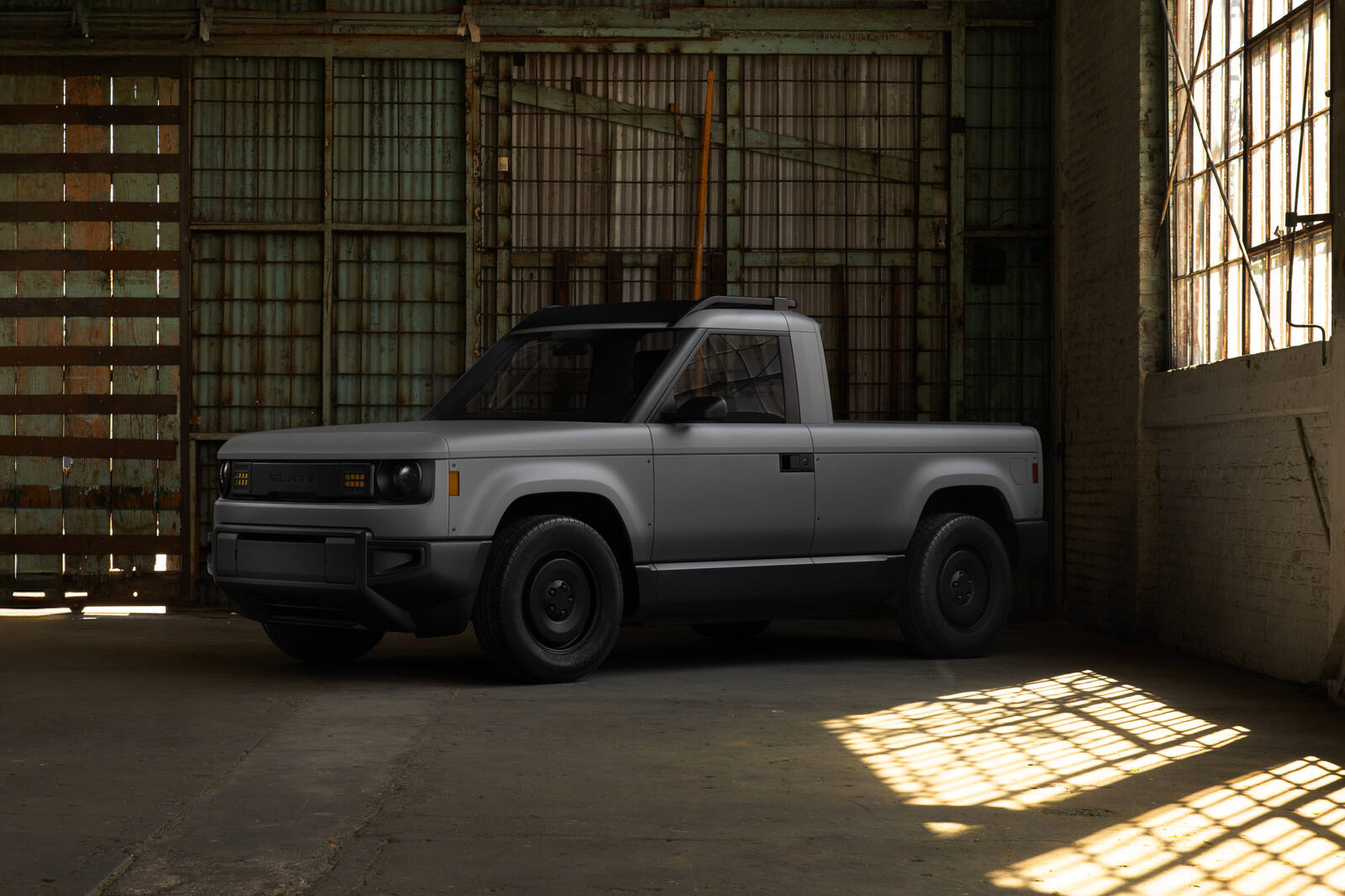
Truck Slate Truck
"...e two different audiences for the ranchera in the Slate truck, So what are these audiences? Speaker 2: So for S..."
In this podcast, “truck” is mentioned as a type of vehicle that people choose for different reasons than a regular car. The discussion sounds like it’s about who buys which kind of vehicle. That’s why it comes up when talking about different audiences.
In the podcast, “Truck” appears to be part of a broader discussion about different audiences for vehicles—specifically in relation to the Ranchero and a “Slate truck.” That suggests the conversation is about how different buyers are targeted based on vehicle type and intended use. It’s included because truck models often appeal to a distinct set of needs compared with car-based vehicles.
maker customer
"Speaker 2: So for Slate, it's going to be much more of a uh an artistic, a creative class, a maker class, customization, personalization kind of customer who loves simplicity."
A “maker customer” is someone who likes to customize and personalize things. In the episode, they’re describing a buyer who wants a truck they can modify, not just a fully finished appliance.
A “maker customer” in this context means a buyer who values hands-on customization and personalization, treating the vehicle as a platform for creativity. The hosts contrast this with a convenience-first customer who wants to buy and drive with minimal changes.
power windows
"Speaker 2: ...on the forward side, a customer was like, no, I want power windows, I want to air conditioning."
Power windows are windows you control with a button or switch. Instead of turning a crank by hand, you press to move the glass up or down.
Power windows are electrically operated window regulators that let drivers raise and lower glass with a switch instead of manually cranking. In the segment, they’re used as an example of the convenience-focused features one customer group is expected to want.
US Army Surplus
"Speaker 2: ...these are the people that would have bought the original Willi's jeeps from you know, US Army Surplus."
“US Army Surplus” means leftover military stuff sold to the public. The hosts are using it to describe a type of buyer who enjoys rugged equipment and may want to tinker with it.
“US Army Surplus” refers to goods and vehicles sold off after military use, often appealing to buyers who like rugged, utilitarian equipment and DIY projects. The hosts use it as an analogy for the kind of customer they expect to buy the “Slate” offering.
air conditioning (AC)
"Speaker 2: ...a customer was like, no, I want power windows, I want to air conditioning."
Air conditioning is the system that cools the car’s interior. The hosts are listing it as a feature that convenience-focused customers expect.
Air conditioning (A/C) is the climate-control system that cools and dehumidifies the cabin. Here it’s mentioned as a baseline comfort feature for a more mainstream buyer who wants a ready-to-use vehicle.
Lucid
"So we'll now transition to the completely opposite side of this market. The rumors of Lucid, which provides vehicles that are readily well over one hundred thousand dollars possibly going bankrupt."
Lucid is a company that makes electric cars. The discussion here is about rumors that it might run out of money, and what the CEO says in response.
Lucid is an EV maker known for premium electric sedans and SUVs. In this segment, the hosts discuss rumors about Lucid’s financial health and leadership responses, which is relevant because it affects the company’s ability to keep producing vehicles.
Alex Partners
"So yeah, no, look, you know, the word came out they high aired Alex Partner's great sponsor of out of Line. Got to get that full disclosure... once the word got out that Alex has been hired by Lucid, everybody immediately went to bankruptcy."
Alex Partners is a company that helps other companies get back on track when they’re in trouble. In this segment, they’re mentioned because their hiring by Lucid made people think the situation was worse than it was.
Alex Partners is a turnaround and restructuring firm that helps struggling companies stabilize finances and operations. Here, the hosts connect Alex Partners’ involvement with Lucid to the market’s speculation about bankruptcy risk.
turnaround artists
"But uh and as Alex Partners is especially known for its bankruptcy expertise, but they're also turnaround artists, right They go in, they help a company clean up its books and its operations and get it turned around."
A turnaround is when a company that’s struggling gets help to improve and get back on track. The host is saying Alex Partners specializes in that kind of rescue work.
A “turnaround” refers to efforts to rescue a company that’s underperforming—often by cutting costs, reorganizing operations, and improving financial discipline. The phrase “turnaround artists” is used here to describe Alex Partners’ role in helping companies recover.
bankruptcy expertise
"But uh and as Alex Partners is especially known for its bankruptcy expertise, but they're also turnaround artists, right They go in, they help a company clean up its books and its operations and get it turned around."
Bankruptcy expertise means experience dealing with companies that might not be able to pay their debts. The hosts mention it to explain why people assumed the worst after Alex Partners got involved.
“Bankruptcy expertise” means specialized experience in handling companies that may be insolvent—typically involving legal and financial restructuring. In the segment, it’s used to explain why Lucid-related news triggered bankruptcy speculation.
assembly plant
"I question why they would ever put an assembly plant in Arizona... And then the Saudi Investment Fund... has told them and they're building. They're building an assembly plant in Saudi Arabia, and it's like why why?"
An assembly plant is a factory where cars are put together from parts. The discussion here is about whether choosing certain locations is smart for supply chains and production.
An assembly plant is a manufacturing facility where components are brought together and the vehicle is built. The hosts debate the strategy of where Lucid builds vehicles—Arizona versus adding capacity in Saudi Arabia.
Saudi Investment Fund
"And then the Saudi Investment Fund, which is their major, their biggest shareholders, has told them and they're building. They're building an assembly plant in Saudi Arabia..."
The Saudi Investment Fund is described as a big investor in Lucid. The hosts say it’s connected to the decision to expand manufacturing in Saudi Arabia.
The Saudi Investment Fund is referenced as Lucid’s major shareholder influencing corporate decisions. In this segment, it’s tied to the plan to build an assembly plant in Saudi Arabia.
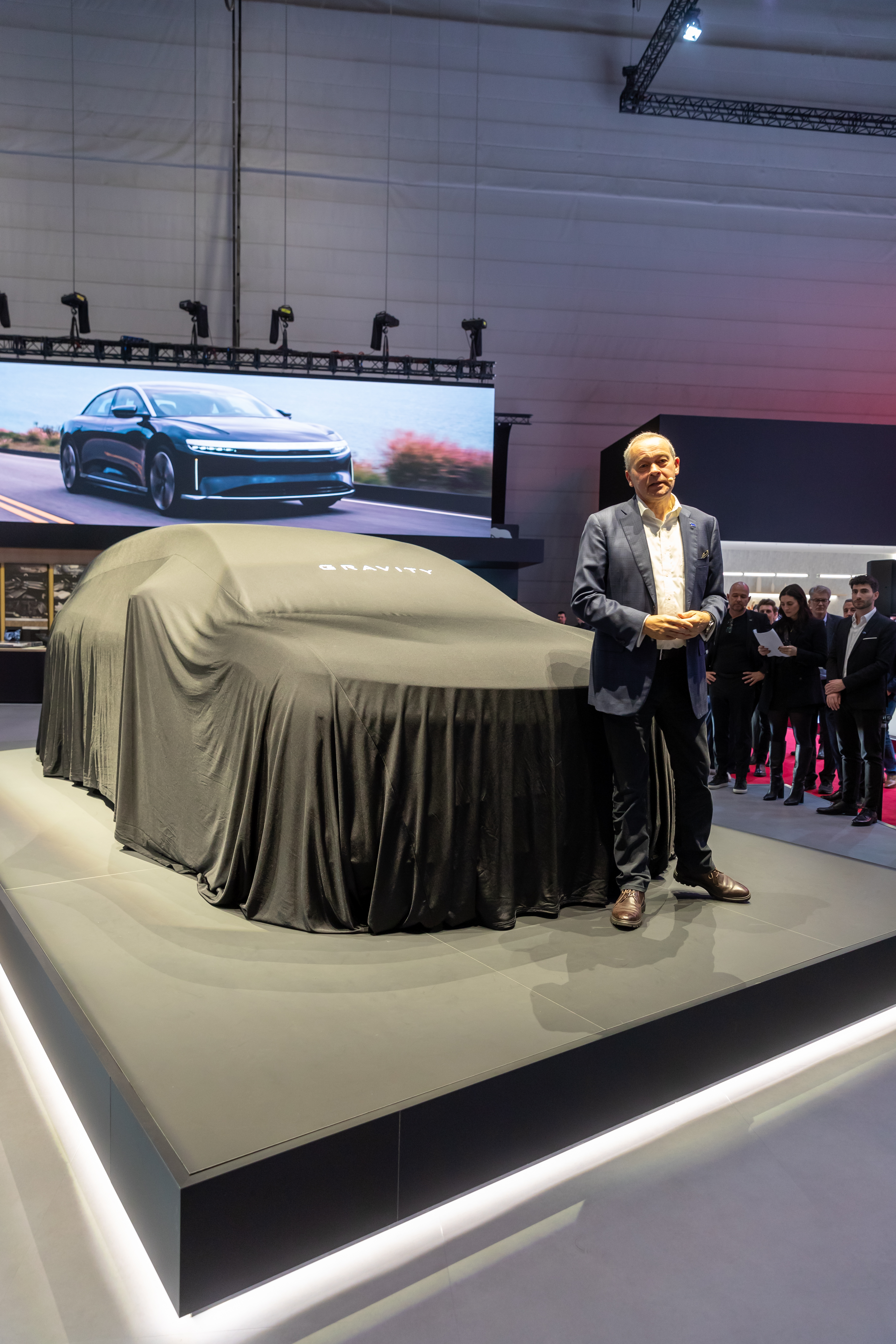
Lucid Gravity
"I mean even the lucid Gravity, which was supposed to be more economical, is still you're looking at least sixty grand to get one of these things."
Lucid Gravity is Lucid’s big electric SUV with three rows of seats. The discussion is basically saying it was supposed to be more affordable, but it still costs a lot.
Lucid Gravity is Lucid’s larger, three-row SUV aimed at family buyers while still using an all-electric powertrain. The hosts mention it as a more “economical” option than expected, but still priced around the $60k range.
three row SUV
"Then, but yeah, it's it had some some they said, there was some flier is supplier issues in Q one, and it just this has not quite lifted up the way that that you would expect a three row shuv in the space to do."
A three-row SUV is an SUV with three rows of seats, meant for bigger families. The discussion is saying the market didn’t respond as strongly as expected.
A three-row SUV is a sport-utility vehicle with seating for three rows (typically up to 6–8 passengers). The host uses it to compare expectations for how well the Gravity should perform in its segment.
supplier issues
"Then, but yeah, it's it had some some they said, there was some flier is supplier issues in Q one, and it just this has not quite lifted up the way that that you would expect a three row shuv in the space to do."
Supplier issues are problems at a company’s parts or materials vendors that can delay production or reduce output. In EVs, this often shows up as shortages of key components that prevent vehicles from ramping up as planned.
Q one
"Then, but yeah, it's it had some some they said, there was some flier is supplier issues in Q one, and it just this has not quite lifted up the way that that you would expect a three row shuv in the space to do."
“Q one” is just the first three months of the year. They’re saying the issues showed up around that time.
“Q one” means the first quarter of the year (January through March). The host is tying the timing of supplier problems to that reporting period.

Lucid Air
"Yeah, you know, I mean in the Lucid Air, I mean, it's just one of the most wonderful cars I've ever driven in my life."
The Lucid Air is Lucid’s main electric sedan. The host is praising it for how well it’s engineered and how impressive it feels to drive.
The Lucid Air is Lucid’s flagship electric sedan, known for high-end engineering and performance-focused efficiency. The host calls it one of the best cars they’ve driven, emphasizing the company’s technical competence.
Rivian
"But you know, you got to move the metal at the end of the day, or like Rivian, you know, maybe a sugar daddy like Volkswagen comes along and says, you know what, We'll give you five billion dollars to take your your tech stack."
Rivian is an electric-vehicle company. The host is using it as an example that even with good technology, you still have to actually sell a lot of cars.
Rivian is an EV brand best known for electric trucks and SUVs, and it’s referenced here as an example of an EV maker that still needs strong execution to sell enough vehicles. The point is that technology alone isn’t enough—you have to “move the metal” (sell cars).
Volkswagen
"But you know, you got to move the metal at the end of the day, or like Rivian, you know, maybe a sugar daddy like Volkswagen comes along and says, you know what, We'll give you five billion dollars to take your your tech stack. Okay, speaking of that sugar daddy, they seem to be, uh running out of sugar. Well yeah, Volkswagen trouble, deep deep deep trouble."
Volkswagen is a major automaker. In this segment, they’re talking about it possibly stepping in with big money, and then they mention Volkswagen having serious problems.
Volkswagen is referenced as a potential “sugar daddy” that could financially rescue or acquire an EV technology company. The hosts also later say “Volkswagen trouble,” framing it as a serious situation for the brand.
board of supervisors
"[3009.8s] plants in Germany, but they're board of supervisors, which is half of half of which plus one is labor or local politicians are like, no, no, no, no, no, you can't get rid of jobs. [3023.1s] And so management is going to be you know, handcuffed here."
A board of supervisors is part of Germany’s two-tier corporate governance system, where oversight is separated from day-to-day management. In this context, the board includes labor representatives and local political figures, which can restrict drastic restructuring decisions like plant closures.
two-tier corporate governance
"[3009.8s] plants in Germany, but they're board of supervisors, which is half of half of which plus one is labor or local politicians are like, no, no, no, no, no, you can't get rid of jobs. [3023.1s] And so management is going to be you know, handcuffed here."
Some companies are organized so that one group oversees another group that runs the company. In this case, the oversight group includes labor and political voices, which can make it harder for management to make tough decisions.
Two-tier corporate governance is a structure where a company has separate bodies for oversight and for management. The segment implies this matters because the supervisory board’s composition (labor and political influence) can limit how aggressively management can restructure the business.
R and D
"[3090.6s] And I realize they're not all in Germany and they're all over but that's the other half of it. You [3094.9s] kill that brand and you're done. Are your R and [3098.2s] D are your development for the ones that you keep goes up because you're not putting on more vehicles, And then you have plants that don't get enough."
R and D means research and development—basically the effort and spending to create new cars and new technology. The point here is that if you drop a brand, the remaining cars may have to carry more of the development burden.
R and D (research and development) is the work a company does to create new technologies, designs, and products. The hosts argue that cutting a brand can increase development pressure or costs for the remaining brands because the company isn’t selling enough vehicles to spread those fixed costs.
market has a hard time supporting as many automakers
"at what point do some of the automakers that are even in there start to look at at finances and and there's too many as it is, the market has a hard time supporting as many automakers as there exist."
They’re talking about a crowded market. If too many companies are selling similar cars, not all of them can make enough money to keep going.
This is a discussion of market saturation: when there are too many automakers competing for the same buyers, sales and profitability can’t support all of them. The segment argues that this pressure can eventually cause “fallout” or consolidation.
sales problems because the consumer knows
"It's also one of the reasons they're running into sales problems because the consumer knows, give it three weeks and there's going to be something else that's hot, that's cool, that's whatever."
They’re saying people may not buy right away because they expect something newer to come out soon. So sales can drop because shoppers wait.
The hosts describe a “new model churn” effect: when consumers expect another hot release soon, they delay purchases. That can hurt sales even if incentives exist, because buyers wait for the next update.
Mark Whitefield
"Mark Whitefield from alex Partners who was on the show. Very smart man. You know, he's pointed out a couple of things."
Mark Whitefield is a business analyst. The hosts are quoting his opinion that competition in China is so tough that only a smaller number of companies will survive.
Mark Whitefield is an analyst associated with AlixPartners. In this discussion, he’s cited for his view that China’s auto competition is extremely intense and will lead to fewer surviving automakers.
Alix Partners
"Mark Whitefield from alex Partners who was on the show. Very smart man. You know, he's pointed out a couple of things."
AlixPartners is a consulting company. In this segment, it’s referenced because the guest analyst works there.
AlixPartners is a consulting firm that advises companies on strategy and restructuring. Here it’s mentioned because Mark Whitefield (from the firm) is providing analysis about China’s automaker competition.
GM
"But [3451.1s] you know, well, GM has spent how much restructuring in China, and you know, they bury that news. We don't really [3459.0s] hear how much it costs, or what plants are closing, or how many people are losing their jobs."
GM is General Motors, one of the biggest car companies in the world. They’re talking about GM changing how they operate in China, including closing facilities and reducing jobs.
GM refers to General Motors, a major global automaker. In this segment, the hosts mention GM’s restructuring efforts in China, implying significant operational changes like plant closures and workforce impacts.
humanoid robots
"Up, one of the big dealer groups in China that has Hyundai and Mercedes Benz stores announced it's going to start selling humanoid robots and it's stealerships. [3483.2s] Speaker 5: And I thought that. [3484.1s] Speaker 2: This has got to be the best, you know, showroom generating traffic idea I've ever heard of in my life."
Humanoid robots are robots that look and move more like a person. The idea here is that dealers would use them as a flashy in-store attraction to bring people in.
Humanoid robots are robots built with a human-like body shape—typically with arms and legs—so they can interact with environments designed for people. In this segment, the hosts frame them as a showroom attraction in China’s slowing auto market.
Mercedes-Benz
"Up, one of the big dealer groups in China that has Hyundai and Mercedes Benz stores announced it's going to start selling humanoid robots and it's stealerships. [3483.2s] Speaker 5: And I thought that."
Mercedes-Benz is a well-known luxury car brand from Germany. The hosts are saying some Mercedes dealers in China are trying to attract customers with robots in the showroom.
Mercedes-Benz is the German luxury automaker. Here it’s mentioned alongside Hyundai as part of a Chinese dealer group that plans to sell humanoid robots in showrooms to generate traffic.
Request an Explanation
Heard something you'd like explained? We'll add it to this episode.
Sign in to request explanations for terms you heard.
Want to learn more?
Browse our glossary for plain-English explanations of automotive terms, jargon, and concepts.
Help improve this episode
See something that's not quite right? Our annotations are AI-generated and can sometimes miss the mark. Click the flag icon on any annotation to suggest a correction.