A chip shortage means there weren’t enough computer chips available to build cars. If that happens, car companies can’t make as many vehicles as they want, which affects sales.
Term
gas milage
Gas mileage tells you how far a car can go on a gallon of gas. Higher gas mileage usually means you spend less on fuel, which matters a lot when gas prices rise.
Acura Integra is a small, nicer Honda from Acura (Honda’s luxury brand). In this episode, they mention it as one of the cars driving strong sales growth.
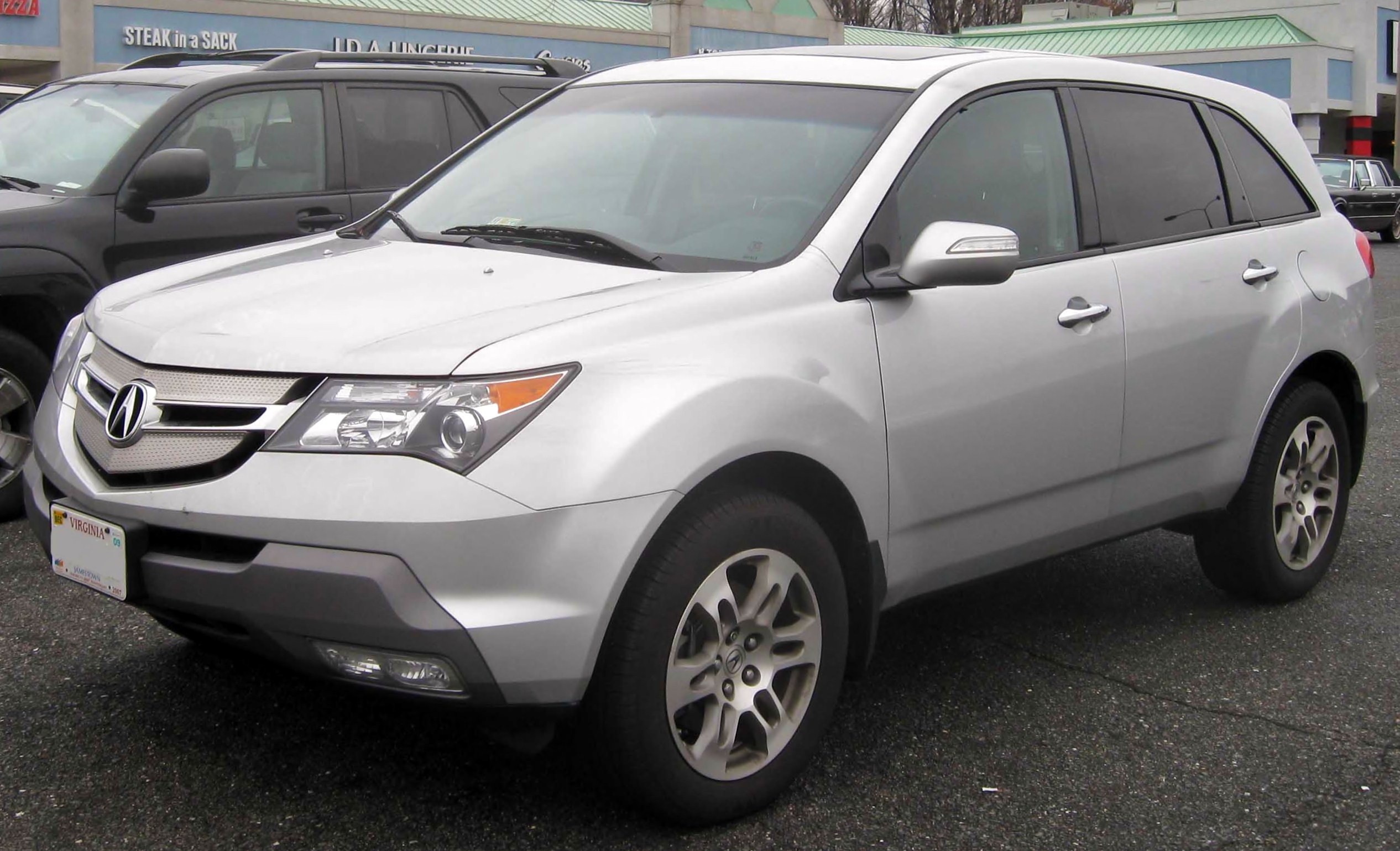
The Honda MDX is a larger Honda SUV with room for more than just two people. It’s built for families or anyone who needs extra seating and cargo space. The podcast mentions it because it’s a key model in Honda’s lineup plans.
Acura TLX is Acura’s mid-size luxury sedan. They mention it when talking about which models they focus on, and the speaker also says they personally have one.
The Honda Civic is one of Honda’s most popular cars. Here, they’re talking about how many Civics Honda sells and using that to show it’s especially appealing to younger buyers.
The Honda Integra is a sportier Honda model. They’re saying it’s doing well with first-time “premium” buyers, and that helps Honda keep those customers interested in future models.
The Honda Prelude is a classic Honda name that’s being brought back. They’re saying it’s selling about as much as they expected, and the main benefit is generating excitement for the brand.
Incentives are dealer or manufacturer promos that lower the price or cost of financing. They’re saying the Prelude doesn’t need those promos right now.
“Charging options” means how and where you can plug in to charge an EV. If there are more places to charge—especially away from home—people feel more confident using an EV for daily trips.
Term
range drive
They’re talking about whether an EV can realistically make your usual trips without running out of charge. More charging stations help you feel confident you can get where you’re going.
A “home charger” is a device that lets you charge your EV at your house. They’re saying EVs are much easier to live with if you can charge at home, but harder if you can’t.
The Honda Prologue is Honda’s electric SUV. They’re saying a lot of them are already on the road, and when leases end, Honda expects to sell those cars to new customers.
“Leases” are when you rent a car for a set time and then give it back. They’re saying when EV leases end, those cars come back and can be sold to new customers.
An “EV owner” is someone who has adopted an electric vehicle and is learning how to live with charging routines. The speaker claims it can take roughly 1.5 to 2 years for charging and vehicle behavior to become second nature, which affects how quickly new buyers decide to switch.
A hybrid is a car that uses two power sources: a regular gas engine and an electric motor. The electric part helps the car use less gas, especially in stop-and-go driving.
“Plug it in” refers to the idea that a hybrid must be charged from an external power source. Some hybrids (like plug-in hybrids) can be charged that way, but many hybrids are not, which is why the transcript frames it as a common misunderstanding.
Fuel efficiency means how far you can drive on a given amount of gas. Higher fuel efficiency usually means fewer fill-ups and lower fuel costs.
Concept
right product at the right time
It means the company tries to sell the right car at the right moment. Instead of keeping an old model just because it exists, they try to match what people want and what the future requires.
Production capacity is how many cars a company can build with its factories. The idea is that if one model won’t sell well, they can use that building time for something else.
The Honda Element is a Honda model that people love for its practical, outdoors-friendly design. The hosts are saying that even rumors about it got a lot of attention because owners really care about the car.
The Pontiac Torrent is a small SUV. It’s the kind of vehicle people might talk about or bring to local car events. In the podcast, it’s mentioned as part of that casual discussion.
The Honda CR-V is a mainstream compact crossover that’s been a long-running best-seller for Honda. In this segment, it’s used to illustrate where Element customers have “moved up” as demand shifted toward SUVs.
The Honda Pilot is a larger Honda SUV with room for more people. The host is saying that as shoppers wanted bigger SUVs, some moved toward models like the Pilot.
USMCA is a trade agreement between the U.S., Canada, and Mexico. It can change costs and rules for cars and parts moving across those borders, so automakers plan production to stay compliant and avoid extra charges.
Tariffs are extra taxes on imported products. The hosts are saying they’re currently making it harder or more expensive for companies to move cars and parts across borders.
“AI enhancements” means the car is using artificial intelligence to improve features. That could be things like smarter navigation or more helpful suggestions while you drive.
Apple CarPlay lets you connect your iPhone to the car and use certain apps on the car’s screen. It’s meant to make navigation and music easier to use while you’re driving.
Android Auto connects your Android phone to the car so you can use certain apps on the car’s screen. It helps you get directions, make calls, and play music more safely.
“Gemini” sounds like a specific car or tech program name tied to when new features show up. In this discussion, they’re saying it’s an early stage for that technology.
The Honda Odyssey is Honda’s minivan. The hosts say it’s been a reliable seller for dealers and that many customers keep coming back through multiple generations.
The Honda Ridgeline is a pickup truck from Honda. The speakers say dealers like it because it’s versatile and easy to drive, so it helps keep shoppers buying within Honda instead of switching brands.
Here, “inventory” just means how many cars are sitting at dealerships ready to sell. Dealers want more cars available, but not so many that it becomes a problem.
“D segment” is a way car makers group cars by size/class. Here, they’re saying dealers want Honda to bring hybrids to the mid-size category where bigger cars are in demand.
Service retention means how often customers return to the same place for car service. If it’s high, it usually means people are happy with the dealer and keep using them.
Retail retention refers to keeping customers engaged through repeat retail purchases or ongoing dealer relationships in the retail (non-fleet) market. In automotive, it’s often measured by how many customers come back to buy again or stay within the brand/dealer network.
Concept
stripping out many features
The idea is: to make the starting price lower, the car leaves out some features. You can usually add them later or use your phone for things the car doesn’t include.
Term
embedded infotainment navigation
That phrase means the car has a built-in screen and software for music/phone stuff and also directions. If it’s not included, you usually use your phone for navigation instead.
This refers to safety tech that helps the driver—things like keeping you in your lane or braking if there’s danger. The discussion is about how some cars leave these features out to keep the price down.
Term
integrated connectivity
This means the car can connect to the internet and services using built-in hardware. Without it, you typically depend more on your phone for data and apps.
Term
INCR modem
This sounds like the car’s built-in cellular “internet” hardware. It’s what lets the car use wireless networks for connected features.
“Two doors” means the car has two side doors for getting in and out. The discussion is basically about how that specific body style might be less in demand.
They’re talking about whether people can actually afford the vehicle and whether it fits what they need. If it doesn’t match your lifestyle, price alone won’t make you buy it.
Term
rear WORL drive pickup truck
This sounds like “rear-wheel-drive pickup truck.” That means the power goes to the back wheels, which changes how the truck feels and grips compared with front-wheel drive.
A fastback is a car shape where the roof smoothly slopes down toward the back. It usually looks more sporty and can help the car cut through air more easily.
An open-air version is basically a convertible—part of the roof can be removed or retracts so you get more open-air driving. It changes the car’s feel and how people use it.
A hot hatch is a hatchback that’s been tuned to be faster and more fun to drive than a regular one. It’s the “sporty” version of a practical small car.
All-wheel drive means the car can send power to both the front and rear wheels. That usually helps it grip better, especially on wet or slippery roads.
Term
personalization
Here, personalization means you can choose options on the car—like colors and settings—so it feels more like your own. It’s more than just picking a trim level.
Repair shops are places that do car service and installs. If an option isn’t available through the factory, you may need a shop to add it later—and cost can vary.
Hybrid and electric cars use a battery pack that runs on high voltage. If something goes wrong with that battery, the repair shop needs special training and safety gear to work on it.
This means the repair network is made up of authorized shops that follow the brand’s rules. Since different shops can price work differently, the cost to fix a car can vary.
Capacity utilization is how busy a factory is—how much of its maximum production it’s using. If it’s not used enough, each car costs more to make, which can make the business less profitable.
Capital expenditure is the big money a company spends on long-term stuff like factories and machines. Spending it wisely can help the business reach break-even sooner.
The break-even point is when the business stops losing money and starts making money. If it’s lower than usual, the factory can do well even if it’s not running at maximum output.
Fleet sales means companies buying cars or trucks in bulk for their own use. Instead of one person buying a vehicle, a business orders many at once and usually cares a lot about keeping the cost down.
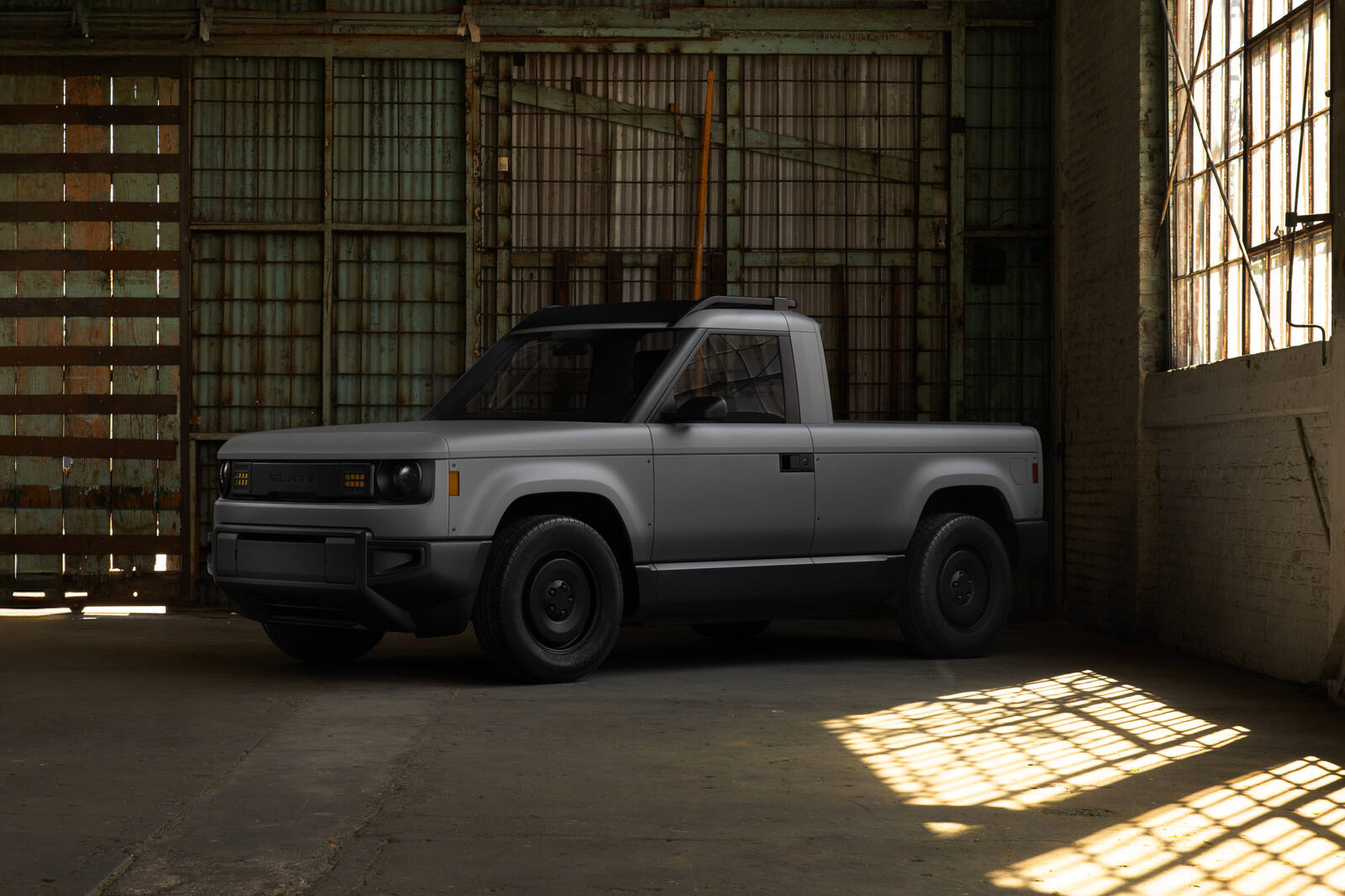
They’re talking about a compact pickup truck that runs on electricity. The point here is that it’s meant to be cheaper and simpler, including for business fleets.
SLATE sounds like a vehicle platform or design strategy that helps manufacturers build cars in a way that’s easier to customize. In this discussion, it’s being credited with making it simpler for owners to add things themselves.
3D printing parts means making a physical car part using a printer that builds it layer by layer from a computer file. People bring this up because it could make it easier to add accessories or make certain parts on demand.
The Ford Maverick is a smaller, budget-friendly pickup truck. Here, they’re using it as an example of how Ford thinks about adding features people can use or customize.
Modular assembly means building a car using repeatable parts or “modules” that can be mixed and matched. The benefit is that it can make production faster and easier to customize.
This is about how many local dealerships exist. More dealers usually means easier buying and easier service, which can make it hard for smaller players to compete.
The Ford Ranchero is a vehicle that mixes a car-like design with a truck bed. That means it can look like a regular car but still carry items in the back. In the podcast, it’s mentioned as something that might be introduced or renamed.
In this podcast, “truck” is mentioned as a type of vehicle that people choose for different reasons than a regular car. The discussion sounds like it’s about who buys which kind of vehicle. That’s why it comes up when talking about different audiences.
A “maker customer” is someone who likes to customize and personalize things. In the episode, they’re describing a buyer who wants a truck they can modify, not just a fully finished appliance.
Power windows are windows you control with a button or switch. Instead of turning a crank by hand, you press to move the glass up or down.
Concept
US Army Surplus
“US Army Surplus” means leftover military stuff sold to the public. The hosts are using it to describe a type of buyer who enjoys rugged equipment and may want to tinker with it.
Alex Partners is a company that helps other companies get back on track when they’re in trouble. In this segment, they’re mentioned because their hiring by Lucid made people think the situation was worse than it was.
A turnaround is when a company that’s struggling gets help to improve and get back on track. The host is saying Alex Partners specializes in that kind of rescue work.
Bankruptcy expertise means experience dealing with companies that might not be able to pay their debts. The hosts mention it to explain why people assumed the worst after Alex Partners got involved.
An assembly plant is a factory where cars are put together from parts. The discussion here is about whether choosing certain locations is smart for supply chains and production.
The Saudi Investment Fund is described as a big investor in Lucid. The hosts say it’s connected to the decision to expand manufacturing in Saudi Arabia.
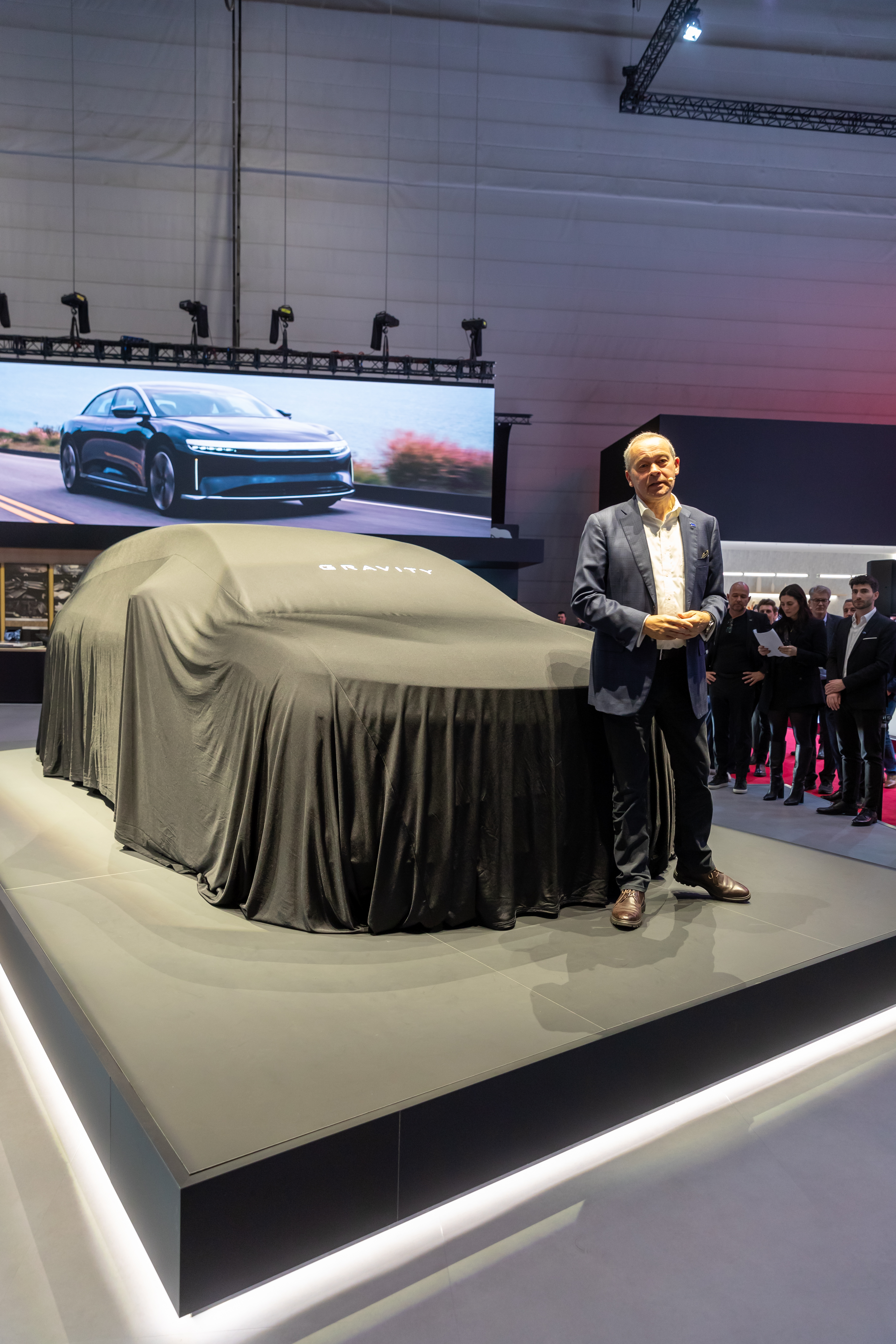
Lucid Gravity is Lucid’s big electric SUV with three rows of seats. The discussion is basically saying it was supposed to be more affordable, but it still costs a lot.
A three-row SUV is an SUV with three rows of seats, meant for bigger families. The discussion is saying the market didn’t respond as strongly as expected.
Supplier issues are problems at a company’s parts or materials vendors that can delay production or reduce output. In EVs, this often shows up as shortages of key components that prevent vehicles from ramping up as planned.
Rivian is an electric-vehicle company. The host is using it as an example that even with good technology, you still have to actually sell a lot of cars.
Volkswagen is a major automaker. In this segment, they’re talking about it possibly stepping in with big money, and then they mention Volkswagen having serious problems.
A board of supervisors is part of Germany’s two-tier corporate governance system, where oversight is separated from day-to-day management. In this context, the board includes labor representatives and local political figures, which can restrict drastic restructuring decisions like plant closures.
Concept
two-tier corporate governance
Some companies are organized so that one group oversees another group that runs the company. In this case, the oversight group includes labor and political voices, which can make it harder for management to make tough decisions.
R and D means research and development—basically the effort and spending to create new cars and new technology. The point here is that if you drop a brand, the remaining cars may have to carry more of the development burden.
Concept
market has a hard time supporting as many automakers
They’re talking about a crowded market. If too many companies are selling similar cars, not all of them can make enough money to keep going.
Concept
sales problems because the consumer knows
They’re saying people may not buy right away because they expect something newer to come out soon. So sales can drop because shoppers wait.
Mark Whitefield is a business analyst. The hosts are quoting his opinion that competition in China is so tough that only a smaller number of companies will survive.
Company
Alix Partners
AlixPartners is a consulting company. In this segment, it’s referenced because the guest analyst works there.
GM is General Motors, one of the biggest car companies in the world. They’re talking about GM changing how they operate in China, including closing facilities and reducing jobs.
Humanoid robots are robots that look and move more like a person. The idea here is that dealers would use them as a flashy in-store attraction to bring people in.
Mercedes-Benz is a well-known luxury car brand from Germany. The hosts are saying some Mercedes dealers in China are trying to attract customers with robots in the showroom.
LIVE
Speaker 1: I'll online After Hours is brought to you by bridge Stone Tires Solutions for your journey.
Speaker 2: Hey, everybody, thanks for joining us. Gery you're ready to
do a show.
Speaker 3: Absolutely, we missed last week. It seems like forever.
Speaker 2: I know it does seem like forever. But we got
to let everybody know. We've got Lance Wolfer. He's the
vice president of sales for Honda America. Lance, great to
have you back on the show.
Speaker 4: Great to be back, Thanks for having me.
Speaker 1: Yeah.
Speaker 2: And we've got Stephanie Brindley from Mobility Global.
Speaker 5: Yes, yes, and steph always good to have you on that.
Speaker 6: I'm glad to be back. I love being here.
Speaker 2: So let's talk Honda. Okay, So here's all.
Speaker 5: I'll kick it off and who knows where it's all going to go.
Speaker 2: But Lance, for the first half of the year, you guys in sales are down, but you're down. But in June,
holy moly, you guys really turned the corner. You had
a big increase in sales. And my question is what changed.
Speaker 4: Well, we're actually a two point four percent I think for the year after after June. Okay, and you know
it's really just the momentum. I think we have from
being a really value focused brand, and we've had more solid production than we had some of the disruption we've had over the past number of years. Most recently there
was next period chip shortage. But I think consistency has
been key for us when you look at the consumer with the additional challenge from an affordability standpoint with gas prices.
You know, handas well known as being an automaker that provides good value and really good gas milage number one as far as overall fuel efficiency. So I think we're
benefiting from that and from our focus on maintaining our entry level models like the Civic and the HRV. Of course,
but we're playing in markets where some of our competitors aren't, which is, you know, still committed to the car market.
You look at Accurate, which had a phenomenal and we're really succeeding with the Integra and the eighty X. We're
getting a lot of people who are moving up into premium and getting that entry level premium vehicle and seeing good growth of the brand, particularly in those models. But
MDX we're in to spend about ten percent growth, so we're on pace for our targets and actually we're outperforming our expectations a little bit. So it's been a great year.
Speaker 3: I want to ask you about this, this this car thing. Now,
we keep hearing more and more about.
Speaker 7: Companies, Oh, we need to get this a dance.
Speaker 3: And as you pointed out, you guys have been there, you've never left, right, So were there pressures to eliminate cars from your lineup or did you guys always know that that's part of the mix.
Speaker 4: Well, I think it's part of our DNA. It's how
we've been successful in the US. We'll evaluate it. And
you know, we got with the Accurate brand. We had
two sedans and really we had both were being built in the same factory, and with the integer in the TLX, we decided, hey, the integer's a way for us to focus and we're competing for production. So we're taking a
look at the lineup and where we have resources, what makes sense going forward with our loyal customers that have been buying Sitans from US forever. And honestly, I started
driving sedans again. I had not for years. I've been
driving SUVs. The kids got older and I started driving
a Cords and spend all the time in a Civic.
Most recently a prelude, and I actually really like how cars drive. Having not done it for a while, I
forgot and I actually do have. I mentioned the TLX.
I have that as a personal car, and it's probably my favorite car that I'll have to drive of our brand.
It's great, it's.
Speaker 8: In your DNA, and you also have the advantage of global volume for some of your cars. That isn't necessarily
as true for some of the automakers that left that They don't have a lot of market anywhere for the cars.
Speaker 6: And they weren't doing as well here, so they did that.
Speaker 8: It's going to be interesting to see how we go in the next couple of years, and if we see I think we're going to start to see a stand or two come back. We aren't going really crazy in
sedan numbers, but point I think people are starting to become interested in a little bit more. I was looking
at it the other day and more than more than half of the new models are our SUVs. Like there's
there's just not a lot there, and it's it's whatever percent of the volume at this point, and some people want to do something a little bit different. Not enough
to change the market from one to another, but enough to make a difference. I'm with you on cars lately.
I I'll get into a newer Press car and I get it.
Speaker 6: I start driving, and I'm like, I'm having a lot. Oh, oh,
it's to sit in. I'm not in an SVV. I'm
having so much fun.
Speaker 3: Well, I mean what I found interesting you So like last year you guys sold over two hundred and thirty eight thousand Civics, and you know, you look at some of the domestics and if it's not a truck, they didn't sell two hundred and thirty eight thousand of anything.
Speaker 7: So it's just like that's good business.
Speaker 4: It's got a little fan base, but it's really sought after by younger buyers, and it's aspirational really in that regard.
So we're of fitting from how exciting the Civic is for young buyers. And there's actually a lot of people
who just stay in that model, but they can move up the lineup if they want. But it's got a
loyal fan base.
Speaker 5: Say that bodes well.
Speaker 2: You know, if you're getting young buyer gen z right, you can ride that generational way for a long time to come if you play.
Speaker 5: Your cards right.
Speaker 4: Well, and that's I think what's exciting about Accurate that I was talking about with the Integra and the ADX doing so well, So those first time premium buyers really have a lot of places that we can take them in the lineup in the future.
Speaker 8: And the type pass is really fun. Of course, it's
really fun to do have too. So you're the Prelude,
you're happy with what you're getting at just the numbers.
Are you happy with who you're reaching out to and what consumers are picking that one up?
Speaker 4: Yeah, we've seen a lot of loyalists get excited about the Prelude nameplate coming back, and yeah, the volumes exactly where we expected it to be. So it's not huge
as far as impact on our sales volume, but I think brand reputation and excitement for the brand it's been great.
So it's got zero incentives on it, and we see a need for more. I'm not sure that we're going
to be able to increase production much, but we see an opportunity to even increase sales if we're able.
Speaker 3: To to what extent is the hybridization for that vehicle important?
Speaker 4: Well, I mean you look at hybrids today versus ten years ago when you were making that decision of do I one more gas mileage or don't want a traditional driving experience? Now it's kind of an enhanced driving experience,
and that's what I like about our sedans and the Civic.
Actually hybrid drives amazing, So I'm preferring the driving experience that I get with a hybrid, and then the prelude kind of takes it to another level. But I think
it really takes the you know, an opportunity to highlight what we can do with a hybrid and how it kind of balances what you get with an EV, which you get with a traditional ICE and it's a lot of fun to drive.
Speaker 2: So where do you see EV's going. I mean, Honda
is really backpeddled a lot, to say the least. And
but what's your sense of what the market really wants out there or does it well?
Speaker 4: I think the first thing is that why it's more infrastructure.
We need more charging options for the consumer throughout the country for them to be more comfortable that they can get from point A to point and maybe not B that's your traditional day to day driving experience, and if you've got a home charger, I think that works out well for a good amount of consumers, but we need more infrastructure so they can make that longer distance drive.
We don't anticipate the market getting beyond ten percent in any kind of hurry. I think that it will grow,
and we plan in the future to be able to be competitive in that part of the market. But two
years ago I would have told you was going to get there in a much bigger hurry than it is today.
So the change in regulations, but more so I think some of the support and the maybe a little slower and expected. Although we're still doing iona to help create
more charging opportunities for consumers, the infrastructure just not getting to the pace where it needed to be to move quicker.
I think it'll take a lot longer. And we're still
working on next gen evs, and we still have the zero series Alpha that is India and Japan, and so that technology is still available to us when it's right for the US market. But today we've got one hundred
thousand or so prologue and CDX is in operation, and we'll start to see those comeback from leases, and that'll create an opportunity for us to sell those to new consumers or re engage with those consumers who are driving those vehicles, because overall the experience has been good. And
you know, really it depends though if you bought one and you have a home charger, experience is pretty good.
Sometimes it's not as good if you don't have that easy access to charging when you get home.
Speaker 8: And consumer education has been an assue and that they're not they are, they're learning as much as they can fast enough, and it takes it seems to be taking an EV owner, a first time EV owner, you know, a year and a half to two years to get to the point where what's happening with their vehicle of second nature and not something new, and that I think is slowing things down a little bit for people who are wanting to try and considering thinking about it. On
the hybrid side of things, so you were talking about your sales being so good this year, it feels like you're a realiant, really sweet spot in the sense that you've got the hybrid there, but you can work with pricing and meet that affordability with the strong gas mileage of the gas engines that you have there. Are you
looking at changing the mix it a little bit on that regard on helping to goose affordability, Well, we balanced it.
Speaker 4: So I will tell you that before gas prices were increasing as we've seen recently, we started moving a little bit more towards ice. But this is a fifty to
fifty on a cord and CRV. Maybe it moves a
few percentage of the five percent. And now as we
see gas prices go up, you know we're balancing. Okay,
do we need a little more hybrid, but the difference is more regional and still as we've always seen, everybody's much more open to hybrids than they were in the past.
And actually we see ev buyers gravitating to hybrids because they get that balance. But I think that you know,
we're looking at do we need more hybrids in California and the Northwest. The answer is absolutely yes. Do we
need more affordability in other markets, yes, So we're working hard to make sure that they're putting the right vehicles in the right markets. But overall, it's kind of gravitating
back towards about fifty to fifty, and it was going a little bit more towards affordability, so we were fifty five maybe hybrid. I think that affordability is really challenging
a lot of consumers, so we definitely have to be at that price point and they're making the decision. It's
gas making hybrid more affordable for me, or is it that I need a little less content and a traditional ISCE engine.
Speaker 3: You know, Stephanie was mentioning education and I talked to some people who still don't understand what a hybrid is.
Speaker 7: Did you guys run into that.
Speaker 4: Yeah, Actually I was in a customer clinic not too long ago where some of the customers had a very clear and clear understanding of evs to hybrid. But it
was a little eye opening that there's consumers that still aren't on clear on hybrid. So there's an opportunity for
education there. But what did come to light is most
of them know somebody who has a hybrid they're talking to about a hybrid, and they're becoming much more open to it. So I think the last three or four
years have really been good at getting more exposure. But
there's definitely customers who don't have clear understanding and think you have to plug it in, and that's something that we can continue to educate customers.
Speaker 5: You know what I've always said, if you want to sell more hybrids.
Speaker 2: Don't call them hybrids, just say, hey, do you want that civic tickets forty five miles to the gallon or what you want to because if you have, you're in sales.
Speaker 5: If you have to explain it, you've already lost the battle.
Speaker 4: Well traditionally, and I say that, but really, before this generation of hybrids that were selling, we've got another two motor hybrid system coming, really two different ones that are coming before the end of the decade. But before this
we would have a comparable trim level one with hybrid one without, and we switched and we've been much more successful.
And it's just part of the progression through the trim mix because it comes to the hybrid. So the features
you're looking for and the driving experience you're looking for are paired together in a way that makes it an easier selling experience. And the consumer, you know, when you
tell them it's a hybrid, but all you do is put gas in it and drive, it's usually going pretty well.
Speaker 5: How do these new hybrids differ from what you've got right now?
Speaker 4: Well, we're going to see more range or I should say more fuel efficiency, lower cost, and they're going to be a little more powerful. So I think me based
on announced some of the details, not really details, it was going to be more efficient, and that we're going to have them by the end of twenty thirty. We're
going to have up to fifteen additional hybrids globally and a significant amount of coming to the US, more than half.
So going to be good.
Speaker 3: Okay, this may not this may sound like I'm being rude, but I absolutely think this is great what you guys have done over the years.
Speaker 7: Okay, so all right, let me preface that.
Speaker 3: I'll just want to ask you how you're able to do this.
Speaker 1: There are a.
Speaker 3: Number of vehicles that Honda has taken out of the market over the years. Sure Clarity del sol As two
thousand and most OEMs basically don't do that. They try
to hang on long after the sell by date.
Speaker 7: Is Waygunner.
Speaker 3: What kind of mindset is there in the organization that says, you know what, we've got to have the right product at the right time, and if it's not right, we don't have it.
Speaker 4: It's focused on the customer and you know, being part of the community where you're selling and honestly building cars.
We built sixty two percent of our vehicles we sell in the US. In the US, I know that's not
part of the question, but I think it talks about how we want to be part of the community and if the consumer, if a car is right for today, but it's not right for tomorrow, we try to anticipate that and utilize those resources for another product. In the US.
We use our production capacity. We won't build something that
the consumers don't want. We have other options for that
production capacity. So I think we're fortunate there. We're lucky
and not really lucky. It's part of our strategies to
build in the US, but we use all of our capacity.
So I think it gives us the option to do that and move towards the consumer without impacting our bottom line.
Speaker 6: And aren't we bringing the Element back? Is that what
I understand.
Speaker 4: We're not making any product statements today, but a lot so you know there was you know, there was an article that you know it was specula yea. And what
is exciting about that is how people have responded to it and how much they really love the Element. And
if you were to go to we have cars, bikes and coffee that we do and torrents and we might even do it. I don't know, but there are dozens
of people who come there with elements, and a lot of them are outfitted for like camping and off road, and there's some people in there they sell kits. But
the reality is it's just such a passionate following for the Element, so they Yeah, it's interesting to see what people's response to that information that wasn't from us that went out there.
Speaker 8: Yeah, and it's an interesting it's interesting you brought that up right, the nameplates that come in and out, but you do have loyalty with those nameplates. You are able
to bring prelude back and have it be responded to that way. If you brought an F two thousand back,
you'd get some response to that too.
Speaker 4: For me.
Speaker 8: Cars, you know, the Element just just saying Element has gotten people excited. And yes it was a speculative wood
report and not yours, but you you have even though you've come in and out of the market with some of these nameplates, while they were here, they managed to connect in a really special way. Even though it was
probably time to let the Element go when it was, there might still be some space to revisit that formula.
Speaker 4: Well, we've been able to maintain that customer base with the products that we have today. I mean we had
to fit years ago, and most of those customers have gravitated the HRV as we've seen consumers want to move up into SUVs and element We've seen a lot of movement towards CRV and to pilot. But yeah, there's definitely
some people who are letting us know based on you know, what they're hearing out there, that that's interesting to them.
So it's kind of fun.
Speaker 2: Lancia USMCA has got a plant in Canada, it's got a plant in Mexico.
Speaker 5: They're getting hit by tariffs right now.
Speaker 2: I'd love to hear from a sales VP standpoint, what's your assessment of where we're standing right now and how you're going to muddle through this? And I say muddle
because everybody's muddling through. There's no clarity.
Speaker 4: Well, we've you know, optimized our production in the United States to make sure that what we're building for the US, whatever we can inside the United States, we do. There
was some limited export out of the US into some of the places that we distribute to from here, but where there was an opportunity that could move to Canada or Mexico if appropriate, more Canada, and that gave us a little bit more capacity that went directly to the United States, but we really don't have a lot of flexibility there as we utilize pretty much every ounce of production capacity we have. So we've got some of our
most affordable products coming in and are impacted by USMCA and the fact that they are compliant with USMCA current standards.
Ninety nine percent of what we build meets that standard, and sixty two percent is built in the US. That
means almost all of it is from Canada, Mexico. It's
very limited that comes from Japan. We do the type
are and the braide loop. So we you know, are
expecting and excited for and anticipating a quick review of USMCA and a trilateral agreement that'll give us some clarity on what the future of tariff's looks like. But as
you know, right now, we're focused on, you know, being a good value for the consumers. I think, you know,
we haven't really changed pricing in order to address terrace because the consumer doesn't care what daris are. They care
what the payment is for the vehicle and how we can enter in that relationship with them, and when you're talking about your entry level products, it's really important that you make sure that that first opportunity to work with that customer is affordable and everything in their lives gone up, you know, maybe impacted over since COVID. And that's why
we're proud to be the highest seller in the segments where we compete from a CPO standpoint, where we can offer that used vehicle with a great warranty and enter into that relationship and there's really good service loyalty there.
And so we're number two overall, but we're number one in the segments we compete and certified and we've enhanced that so now we've got six to ten years. We've
had that for a couple of years, but you know, really for us, it's we'd love to see a resolution there and clarity, but we're going to keep doing what we do and sell cars and try to bring value to the customer.
Speaker 3: You know, you've mentioned manufacturing a few times, yea, And I was surprised when I made a list of all the plants that Honda has in the US. Yeah, Alabama
Auto plant and an engine plant, East Liberty Plant, Georgia, Transmission Indiana, Ato, Ohio Transmission Marysville, and one plant in South Carolina and one plan in North Carolina for power sports.
Speaker 4: Yeah, I think we've Actually, if you add them all up and you count everything, it might be twelve when you look at.
Speaker 5: Everything that there's jet airplanes and there's some place too.
Speaker 7: I didn't count that. I just figured, you know.
Speaker 3: So, I mean, it's amazing that you guys have as big a footprint as you do.
Speaker 4: It started maybe fifty years ago with a motorcycle plan, and you started building accords here forty plus or whatever years ago. So it makes sense if you're going to
be building cars in a community where you're selling them and the US market is you know, has some global tie in, but it's different. So building here, designing here,
I think is a big part of our DNA as we've been successful.
Speaker 2: Hey, not that how to made big news this week.
I think, in my opinion, you're putting JEM and i AI onto your.
Speaker 5: Cars and quite a few models take it from there.
Speaker 2: I mean, what are you expecting from customer customer reaction or customers asking for this?
Speaker 5: I mean, why the mood? Because this is pretty aggressive
for you guys to do that.
Speaker 4: I think the response has been really positive. The consumers
do like functionality in the car. They like these AI enhancements,
But it depends on the consumer. You know. Some of
them are super excited about all the tech. I want
everything in the car, and there are still a lot of traditionalists who want you know, I want that driving experience I've had for the last number of years. So
you can use it or not use it. It's up
to the consumer. So add that functionality, give them the
opportunity to have those tools. And there is the.
Speaker 2: Recons with it that you charge to customers.
Speaker 6: It's no okay, yeah, okay, so just I mean, there's no monster.
Speaker 5: It's just baked into the pro car.
Speaker 4: You know, with purchase of the vehicle, you get utilization. Okay,
and then I don't remember the timeframe.
Speaker 5: H what do you how do you think your customers are going to use it?
Speaker 4: Yeah, well, it's you can give it more information to get you know, you can give it directions and also say, hey, I want to stop off and get a hammerground the way home. What's the best way to do that? And
I think it'll rout you in a better way. And
there's other ways that you can utilize it. I haven't
had a chance to utilize it myself because I've been in markets where I'm getting traveling to go see Prasser dealers, so i haven't had a chance to utilize it. So
I'm looking forward to it. But we think consumers will
really rally around it, at least certain ones like car Play and Android Otto. You've got to have those in
the car, and I think consumers over time are going to want this technology.
Speaker 6: And to John's point is it is a step forward.
Speaker 8: It tends to add some of those types of technologies, maybe just a little bit later, but this is pretty early with the Gemini.
Speaker 4: With the technology and the car is the opportunities there, so I want to take advantage of it.
Speaker 8: So you said consumers need Apple car Play and Android Otos.
You're not looking at pulling those out of anything.
Speaker 4: We think it's been a competitive advantage to keep it.
Speaker 5: So you have two.
Speaker 3: Models that many OEMs don't have, Ridgeline and Odyssey, and they're doing fairly Okay. How do the dealers feel about
those vehicles?
Speaker 4: Well, the Odyssey has been a stable for our dealers.
At one point it was two hundred thousand. It's still
close to one hundred thousand today and they actually have been asking for more. You know, on the ridgeline standpoint,
we see dealers really being able to keep customers in the lineup because they have that versatility and it's got driveability that really is totally different than I think everything else in the lineup. So from a dealer standpoint, the
ridge line isn't our quickest turn vehicle, but it's that vehicle that they have that allows them to keep consumers in the lineup as they are. Starting over the last
twenty years, we've seen a tremendous progression towards light trucks, and I think it's really helped us keep a good amount of consumers in the lineup. It's a lot of
competition as you move up into those truck segments, but it's got on a driving experience with the versatilit everybody's looking for and the odyssey. I mean there's people who've
been driving those for every generation.
Speaker 2: So what are your retailers telling you? And I'm what
are they asking for? What are they looking for? And
I'm wondering how that might vary geographically.
Speaker 4: So first thing they're asking for is more product, So our data supply on CRV right now is below twenty overall maybe thirty days. And this is in both brands.
So we are building that capacity and we're saying good throughput from the dealers, but they always like to have more inventory until they have too much, so they're asking for more production. But there's you know, in this environment
where we've talked about that we're going to switch towards more hybrids from you know, maybe the path that was going to include more EVS ANDBB it's announced that we're going to have those fifteen new hybrids. There's a lot
of feedback from the dealer on where they want to prioritize that and the D segment is most exciting to them.
So in the future hybridization want bigger cars, yeah, they they want in the future they want to see that our lineup has starts to offer hybrids at that D segment.
So I'm not going to say which models, but you know that would include you know, the possibility of something like a Pilot or an Odyssey bridgeline. We'd have that
capability so we can meet the market where it needs to go. Today, Like I said, they're asking for more product.
That's number one. So whether or not we have it.
We're selling everything that we we can so it will help us in the future.
Speaker 8: We've talked about you managing productive, production and capacity really really well and using that to a huge, huge advantage, and we're talking about USMC. Is there a point at
which that you would think that Honda would want to look at another plant within North America depending on how the situation strikes out to you think you need another plant.
Speaker 4: I think that that's you know, we're looking at any in all options as we go forward for the future as to what makes sense for the company on a global standpoint. And you know, one of the key things
I think we just mentioned was triple half, where we want to be able to bring a car to market much faster, with less cost to bring it to market and more value for the consumer. And so we're looking
at what are the options that we can do that as we go forward. So we're looking at everything globally
and that you know whether or not that impacts locally.
Right now, we're only utilizing our capacity. It's a good situation.
But you know, I'm about growth, so it's not my decision and we don't have any announcements here, but from a sales perspective. I think we've got an opportunity to grow.
So when we make a decision about that, will you know communicated and.
Speaker 2: Does a company that rarely runs a lot of overtime never triple shifts appliant in my recollection? Okay, there might
be other ways of getting more production without brick and mortar.
Speaker 4: So you know, we're going to look could what all those opportunities that exist and what makes sense, you know, And it's it's a equation, right, We're going to be able to utilize our resources most effectively that way, and but yeah, we could. We're just evaluated the market. No
news today.
Speaker 8: That's not always happened. There's not a day you're not
evaluating the market.
Speaker 4: Yeah, that's true. Yeah, it's kind of I always thought
that there would be less dynamic change in the market.
Then it has been consistently for the last number of years, and now you just.
Speaker 8: Expected you know, I've been doing this for a long time, and initially it was like this is cool because it's always changing. There's always something new. There's a point where
you're like, okay, we it's there's been more change really than I expected. When I certainly when I started my
career here.
Speaker 2: Yeah, there's a term. They call it perma crisis. Yeah,
a permanent crisis.
Speaker 4: You get used to it. You just kind of you know,
what do we do? How are we endleness? But I
got into this industry thinking you would have less change than I was in the computer industry. I was building,
you know, computers and selling them, but I was also doing computer training and it's like a new software going to learn how so that pace of change. I was like, oh,
I'll do this. I'll go to the car business. I
think it's worse. When I do worse. It's more interesting,
though it's certainly not boring. They were always changing, We're
always meeting new customer.
Speaker 6: Needs, We're doing all of those things.
Speaker 8: But there are some things that it strikes me that working with a customer doesn't really change. Can you think
about some of the things like that that might be I mean, whether whether the tangible thing about the vehicle, whether it's a gas or an ice.
Speaker 6: I mean.
Speaker 8: At the same time, there is still there's got to be some consistency. Want consumers what their ultimate needs are well,
I think, and how you work with them.
Speaker 4: The biggest point is the dealer, and that's where the consumer interacts with the brand. If I talk to somebody
and say I work for Honda, their question is which dealer.
That's who Honda is the consumer. So the key is
the consistency of our dealers being able to take care of the customer and explain a hybrid if that's really what's right for the customer, bring them back for service, and our dealers are above average at that. Our service
retention is maybe the best in the industry, and our retail retention is very strong. We lease more than most
and so that really helps drive so of our customers coming back. But if they don't have a good experience
of relationship with the dealer, that's who they really perceive.
The quality of the vehicle and their experience in driving it and the relationship with the dealers is really everything.
So got to thank our dealers for how well they do for us.
Speaker 2: Well, good, Well, we're going to have to wrap this segment up, but I know we covered a lot of things though, But thanks so much for coming back on the show, and anytime you're back in Detroit, you know you're more than welcome here.
Speaker 4: Well, glad to do it. Thank you so much. Good
to see you really good.
Speaker 2: We're going to be back in a moment. We're going
to be talking more of the news of the week of what's been happening in this crazy automotive industry.
Speaker 9: Performance that shines even in the rain. That's what really matters.
Rich don't pretends to tires, improved grip and wet conditions.
Speaker 5: All Right, we're back.
Speaker 2: Lots of news to talk about. Gary, you had a
couple of subjects you thought we ought to get in.
Speaker 7: I'll give you a.
Speaker 3: Quiz first, Okay, man, Okay, this is this is July sixteenth, nineteen thirty five.
Speaker 7: So there's this guy. Now I'm gonna give you like
lots of clues for this one. Okakay, the lots of clues. Okay.
So there's this guy. His name was Carl c. McGee.
Speaker 3: He moved to Oklahoma City from New Mexico, who was a journalist.
Speaker 7: Okay.
Speaker 3: One of his claims to fame, which perhaps is not much fame because you've never heard of him, and you've never heard of him and I'd never heard of him, was that he was he was involved in uncovering the he bought hepot Dome scandal, where it was you know, it was oil trading and it was very shady. Okay,
and the Secretary of Interior was convicted for shady operations.
Speaker 7: Okay.
Speaker 3: Now, so here's Carl and he is he's a newspaper guy.
He's in in Oklahoma City, starts a newspaper, the Oklahoma News.
But he develops something that exists today that is automotive adjacent and it's found, I would argue in most major cities.
Speaker 5: I think we need more clues.
Speaker 2: I'm looking at st but she's looking at me, and we've got these puzzled look on her face.
Speaker 7: I got to give you more clues. Okay.
Speaker 3: It had nothing to do with the vehicle itself, but it has something to you know.
Speaker 5: Okay, that's stupid. Yeah, I gotta kept it.
Speaker 2: He came up with the owner's manual, A good one.
Speaker 6: But that is a good one. I was.
Speaker 8: I was thinking at first, like the sort of classified ad but that no, that's not.
Speaker 3: This a physical object and people don't necessarily like them.
Speaker 8: That's nice, Okay, thirty five something that's adjacent to the vehicle and you don't like it, but we still have it.
Speaker 7: Correct.
Speaker 5: Oh, I'm at a loss.
Speaker 7: The parking meter, parking Wow.
Speaker 6: Yes, that's a goodbody likes.
Speaker 7: Yeah, that's it didn't get I found me interesting.
Speaker 3: So the first parking meter that this guy was the park oh meter okay, and it was a nickel an hour. Okay,
there's a lot of money, a lot of money, yeah, I mean, so I look to see what it was and it would be like a bucket a quarter. Now,
so basically what it costs nineteen thirty five is basically what it costically, you know, for an hour and many major cities anyway, Okay, moving along away from that, so okay, what if So Stephanie, you were on the slate thing and you wrote it. You wrote a great piece on slate,
and so.
Speaker 7: I'm going to quote you on you.
Speaker 3: And John has written a piece on it as well.
The structure of the organization, and you are looking at the product and this, so this is your quote. Slate
low base price is achieved by stripping out many features that have become standard even in entry vehicles. Slate does
not offer an INCR modem, embedded infotainment navigation, advanced driver SYSTEMCE systems, or integrated connectivity at any price.
Speaker 7: Is that a bridge too far?
Speaker 6: The consumers will tell you.
Speaker 8: But but I think what It really shows is why cars are expensive because they have stuff, and you can now you can get something without that stuff and you can save money for that.
Speaker 6: But it also then flips and says.
Speaker 8: Why would I want to get a different vehicle that has that stuff and spend five thousand dollars more because it has stuff? And I think it sort of resets
what that equation is. It doesn't necessarily mean one consumer
has to make one choice for another, but it defines that a little bit.
Speaker 5: For me.
Speaker 8: When people say the cars are too expensive, that's really horrible, that's awful that they're so expensive. Well take the motive out. Yeah,
that goes and is that acceptable? Is that going to
be enough of a vehicle or you're okay if you just use your iPhone instead whatever. There's other solutions to
get around some of that thing. So that's I think
it's super interesting. I don't know that they I don't
know that the upside is quite going to be the.
Speaker 6: Capacity that they've talked about so far. We'll see.
Speaker 3: So you said, Slatest targeting an annual production capacity of one hundred and fifty thousand units, though it does not expect to reach that pace until the second half of twenty twenty seven. It targets more than one hundred thousand
units of sales in twenty twenty seven. Those ambitious goals
for an EV with the least popular configuration two doors and rear will drive.
Speaker 6: There you go.
Speaker 8: It is an ambitious goal for that because another part of affordability and accessibility is how you define affordability for you personally, is going to be does that vehicle meet your needs in the first place. If your need is
not for an electric rear WORL drive pickup truck with two doors, you're not considering it anyway. So and if
that's a really small part of the market, that makes it a little bit difficult to get to the one hundred thousand unit number because it's not just about the raw price. But and we're looking at you know, we've
been having this com around our shop a little bit too. Yes,
this year's sales are going to be down a little bit. Yes,
affordability is a big question, and it's a constant conversation.
US market is matt falling as much as you would think it would for this being so important, And so it's just perplexing to me that you know, yeah, maybe if you had more cheaper cars, you would see sales come up a little bit. But I don't think the
answer is that it needs to be a twenty five thousand dollars car.
Speaker 6: It's how do you make a.
Speaker 8: CRV four thousand dollars cheaper? And that's where you come
in and what other segment, because again, you're going to chose your vehicle for your lifestyle first and then figure out if you can afford it.
Speaker 2: Yeah, yeah, no, Look, I agree with what Stephanie said.
I don't think there will come anywhere close to one hundred and fifty thousand units. I think if they get
to half that they should declare victory. But I did
talk to them at the event. They do have future
models planned coming off that same platform. They didn't want
to talk about it at all. They wanted all the
media focus on the vehicle that they've got right now, the pickup and the suv and the fastback version that you can get to and in fact, there's even an open air version that they showed us, although they didn't talk any price on that. But you know, we've talked
about this on the show for a number of times.
I think a big box on the back of the pickup truck for parcel delivery would open up a lot of parcel delivery potential. I've also said take the suv,
lower it, you know, turn it into a hot hatch, you know, add an extra remoter, you know, make it all wheel drive, and give it, you know, some blinding performance.
I think there's a lot of upside potential for them, and I think they recognize that. I don't think they're
you know, delusional into believing that they're going to sell that plant out with the products they've showed us so far.
Speaker 8: I'll I'll drive this easy one. Yeah, that's that's the
Easy Breeze.
Speaker 5: Yeah.
Speaker 3: But then suddenly it's it's no longer this affordable vehicle.
Speaker 8: If it's less expensive than that one next to it, then that's it. And that's where you get into trouble.
When the yellow one that they had on display is about thirty six thousand. It was an SHUV, the square
back Ashuv, and it was thirty just over just a hair over thirty six. And the way they configured that
they hadn't put speakers in it, which made me laugh a little bit because I'm like, Okay, now you're at thirty six thousand, dollars and you still don't have speakers.
Speaker 7: They didn't have armress. I mean, that's that surprises.
Speaker 6: Yeah, I think they dead.
Speaker 8: Yeah, I mean, and there are cool things that you can do it like the colors around the dials. You
can pick your own colors there. There's a lot of
personalization that can be done, and the base of it is solid enough to be able to put other vehicle types on that. It's it's how soon, it's how fast?
And I think the installation prices aren't very clear yet.
They they've got the price coming out of the factory if you put the SHUV in it. But then they're
also like, well you can buy the SHUV and you can have the repair shops do that, but that information is not yet available. And it's it's a really it's
a strong network's three thousand.
Speaker 7: Yeah, but this was a puzzling thing.
Speaker 3: You have in there, three thousand service centers, about one hundred of which can handle high voltage battery issues.
Speaker 6: Yes, that's what they do.
Speaker 3: That doesn't strike me as being very many.
Speaker 8: Not very many, but they don't expect to differ. I'm
sure they would like to have more, and more may happen as it comes because it's a it's a service center network that they're working with, So it's basically a franchised service center network, which which strikes me as you've got the opportunity for really variable pricing and and something that you think is not going to be as expensive, you might find out it's more expensive to install after than you thought. And I don't know how consumers will
feel about that. We haven't done this before, so I
don't know what the right price is for installing after, but there is some room in there to end up being a little bit disappointed with the pricing depending on how it comes out.
Speaker 3: So John, organizationally, I mean, if it comes out of the box and it goes for seventy five thousand, is that sufficient to keep the business running.
Speaker 2: Seventy five thousand units a year, that that would be half a capacity?
Speaker 5: Probably not.
Speaker 2: I mean, as you know, you need eighty percent capacity utilization rule of thumb in the industry. Now, having said that,
these guys did a brilliant job in terms of capital expenditure, I mean, as I wrote, they scrutinized the side of each side of a penny before they spend it, and so some of the stuff that I loved hearing from them is they didn't build a brand new plant like everybody else does. They went and found an abandoned printing
plant and took that over. Then they found out that, well, look,
half the floor is not thicken enough to be able to hold up the equipment.
Speaker 5: We want to put in. So they dug up the floor.
Speaker 2: They ground everything on site and used all that ground up concrete to pour the new floor. And they found
a skillet type assembly line that GM had bought and scrapped, and they bought it used and GM paid two hundred million dollars for it. They got it installed for under
twelve million, and it just goes through. You know, everything
that they've done is extremely inexpensive. The robots in the
plant are new, but everything else in that plant has been refurbished. It's re manufactured. So their break even point
could well be well below the industry average of eighty percent, could be well under that.
Speaker 8: It could be, and you know, I'm curious to see what their new thing. You know, I wrote mostly about
the trucks and the truck mass you that were there, and they don't want to talk about the future product yet, but it will be interesting to see that shakes out and there is there is some consumer appetitor, and there's some interesting vehicles that aren't connected. Just some people who
think that would be cool. I think there's so I
think Fallow, I do think I agree.
Speaker 6: I do think that following if people.
Speaker 2: Love the customization, they love the simplicity. And by the way,
it's not only going.
Speaker 5: To be retail. I talked to their head of fleet sales.
Speaker 2: They're hoping for ten to twenty thousand units a year from fleets that are very interested in getting a very inexpensive basic truck.
Speaker 5: They don't care that there's nothing in there. Okay, In fact,
I love that.
Speaker 7: Okay, so let's let the other shoe drop.
Speaker 3: So one of your favorite forthcoming products, the small electric truck that Ford.
Speaker 7: Is going to be coming out with, right.
Speaker 3: You don't think that the guys in Dearborn are going to see if this is successful and say we can do that, we can just leave parts out.
Speaker 7: I don't know arms.
Speaker 5: Yeah, yeah, I don't think Bard's going to do that.
I mean, because I think they're.
Speaker 7: Going after different where they're in their money.
Speaker 8: Well, it's two different customers and that adds a little different kind of complexity in the plant, and the SLATE was developed to make it easy for you to do that, put during arm rest on yourself at home. And that's
not the case with the With the Ford product, it wasn't designed with as much of do it yourself stuff, and Slate made various decisions in their development that will make it easier for a consumer to be able to do that.
Speaker 3: But let's not forget which company was first to say, we're going to provide information so you can three D print parts to put on your Ever they did do that, Okay, they will will put all kinds of little features on the vehicle so you can see where you can add things.
I mean, they've already got that mindset. I mean it,
They've deployed it brilliantly.
Speaker 6: There was a lot in the Maverick.
Speaker 5: Yeah.
Speaker 7: Look I noticed I said brilliantly about Fortnite.
Speaker 5: Yeah, would you rarely do That's right?
Speaker 4: No.
Speaker 7: Look, I.
Speaker 2: Think that the Ford UEV is a much bigger step forward, not just for Ford, but for the industry because of this modular assembly. I believe if the truck successful, I
believe it will be every other automaker in the world is going to have to copy that process, just as if you go back to nineteen thirteen when Ford introduced the moving assembly line, it was only a matter of years before every other single car company had to copy that.
So but again, I think they're going for two different customers.
And look, Ford's got how many dealers, four thousand dealers across the country. Boy, that's going to be hard to
compete against. And I'll bet Late Wishes the new Ford truck,
which I guess we're saying is going to be called the Ranchero, was not coming out, and I'm sure Ford Wish and Slate was not coming out.
Speaker 5: But that's how that's, you know, the industry work.
Speaker 7: Okay, So about to question. I want some clarity here.
Speaker 3: So you guys are saying they're two different audiences for the ranchera in the Slate truck, So what are these audiences?
Speaker 2: So for Slate, it's going to be much more of a uh an artistic, a creative class, a maker class, customization, personalization kind of customer who loves simplicity. You know, these
are the people that would have bought the original Willi's jeeps from you know, US Army Surplus. That's exactly what
they wanted, and then you're going to have I believe on the forward side, a customer was like, no, I want power windows, I want to air conditioning. You know,
I want to take this from the dealership and not have to do anything other than drive it.
Speaker 8: That's what I would say too. Yeah, those are the
two different customers in there. And the reality is the
Maker customer is a smaller group than you think.
Speaker 7: I don't think Maker magazine exists anymore.
Speaker 3: Okay, Maker Fair, which was well, it's a big success.
Speaker 7: When's the last time you saw that. I don't feel going.
Speaker 6: I was trying to figure that out.
Speaker 8: But but that doesn't mean there's not room and Sleet is being very careful about it, so I I'm not going to say they can't be profitable at their even if there are plant is at half capacity and they're thinking longer term. Right Again, that's one of the things
to kind of remember when we've got a little startup like this. They're not trying to be in business for
four years. I'd like to be in business for forty.
Speaker 7: Right, but the question is whether you can.
Speaker 3: So we'll now transition to the completely opposite side of this market. The rumors of Lucid, which provides vehicles that
are readily well over one hundred thousand dollars possibly going bankrupt.
Speaker 6: I got nothing.
Speaker 8: Yeah, I'm not going to speculate one way or another, especially you know loose and CEO jumped on it yesterday and said, this is not what we're doing.
Speaker 2: So yeah, no, look, you know, the word came out they high aired Alex Partner's great sponsor of out of Line.
Speaker 5: Got to get that full disclosure.
Speaker 2: But uh and as Alex Partners is especially known for its bankruptcy expertise, but they're also turnaround artists, right They go in, they help a company clean up its books and its operations and get it turned around. Uh So, naturally,
once the word got out that Alex has been hired by Lucid, everybody immediately went to bankruptcy. And the CEO
came out and like, I said, no, no, no, no, no, that's not.
Speaker 5: Why we brought it in.
Speaker 2: We've got enough cash to last till next year.
Speaker 5: And I was like, oh my, I didn't mean an automotive terms.
Speaker 8: Well, they can get through the next year, they can get the mid size on the road and then you get some more fun.
Speaker 2: Yeah, but you know, they've made other mistakes. To number one,
I question why they would ever put an assembly plant in Arizona. Nothing against Arizona, but you know, you want
to be up and down I seventy five east of the Mississippi if you want to have access to the supply chain that's in America. And so to go out
to Arizona I thought was a bonehead move. And then
the Saudi Investment Fund, which is their major, their biggest shareholders, has told them and they're building. They're building an assembly
plant in Saudi Arabia, and it's like why why? I mean,
first rule of thumb in this industry is, if you've got a plan, take that up to full capacity one hundred percent. It's a money machine at one hundred percent
and an absolute mint thing.
Speaker 7: You can start.
Speaker 2: Thinking about going to another Well, okay, if if.
Speaker 3: Your bank says we want you to put something right next door, you're gonna put something, you do it.
Speaker 7: You're gonna put it right next door to the bank, whether whatever.
Speaker 2: No, no, no, And I get it, I totally get it.
But the thing is that what they should have done, and maybe they had this conversation, is you can put the investors and go you guys are crazy, you know, you're let's not take two steps. All, well, let's take
a little baby step here. Let's fill up the plant
we got, which is in the wrong location anyway, and then once we're making money, let's talk about expansion, right.
Speaker 8: And then the Saudi Arabia plant is also where it's hot and also where there's not as much supply based around.
Speaker 6: So two really expensive places to build plants.
Speaker 3: That's right, but it's two places to build really expensive vehicles.
I mean even the lucid Gravity, which was supposed to be more economical, is still you're looking at least sixty grand to get one of these things.
Speaker 8: Yeah, but again we're talking about somebody who wants to be around for more than three years, more than ten years, more than five years.
Speaker 6: So it's not stopping it too.
Speaker 8: They've already talked about the next three cars that are coming, so and there are lower price plants than Gravity coming.
Speaker 6: Yeah, so they still need that.
Speaker 8: I'm surprised, I mean, and looking at the numbers, Gravity struggled to get off the ground more than I would have expected to.
Speaker 6: And I know they.
Speaker 7: Supplier we get off the ground. Yeah, like that, see
what I did?
Speaker 8: Then, but yeah, it's it had some some they said, there was some flier is supplier issues in Q one, and it just this has not quite lifted up the way that that you would expect a three row shuv in the space to do.
Speaker 3: Yeah, you know, I mean in the Lucid Air, I mean, it's just one of the most wonderful cars I've ever driven in my life.
Speaker 2: I mean, it's just the engineering and the technical competence that the company is terrific.
Speaker 6: It is.
Speaker 2: But you know, you got to move the metal at the end of the day, or like Rivian, you know, maybe a sugar daddy like Volkswagen comes along and says, you know what, We'll give you five billion dollars to take your your tech stack.
Speaker 3: Okay, speaking of that sugar daddy, they seem to be, uh running out of sugar.
Speaker 5: Well yeah, Volkswagen trouble, deep deep deep trouble.
Speaker 2: This this is uh, you know, I'm not going to say existential, i e. That they would go out of business.
It's so hard to kill a car company, it really is.
But u you know, they know, management knows they need to take drastic action. They want to act one hundred
thousand jobs in Germany. They want to close down four
plants in Germany, but they're board of supervisors, which is half of half of which plus one is labor or local politicians are like, no, no, no, no, no, you can't get rid of jobs. That's why we have a Volkswagen.
And so management is going to be you know, handcuffed here.
It's not going to be able to take the drastic action it needs to try to save the company.
Speaker 6: That's that's what's going on in Volkswagen.
Speaker 3: So okay, So if they can't take the steps they need to take in order to save the company, does this mean that it is truly an existential problem?
Speaker 6: Again, it's really hard to kill a car company.
Speaker 5: Yeah it is.
Speaker 7: But will it shrink?
Speaker 2: It may far greater than what it is today, I believe, So will it shrink in half?
Speaker 5: I think that's entirely possible.
Speaker 3: So is it conceivable that if the board consisting of people who were politicians or trade unions in Germany look at this and say, you know, we've got that company in Spain, seat get rid of them.
Speaker 8: It's always but yeah, that's always been the Dilomo. When
you build up all those brands, cut them off, you lost that volume, and what does that do with the remaining volume? What does that do with the other plants?
And I realize they're not all in Germany and they're all over but that's the other half of it. You
kill that brand and you're done. Are your R and
D are your development for the ones that you keep goes up because you're not putting on more vehicles, And then you have plants that don't get enough. And so
it's a it's not an easy thread to pull. It's
not as simple as just go I'm going to pull that brand out because it's the smallest one. It might
be the one that's just enough getting you over on six or seven other things to make the rest of it almost work in this case. But that's always the
difficulty with just dropping a print.
Speaker 2: But I think you raise a really good point there, Gary, because the labor representatives, all they care about is their union membership, i e. Jobs in Germany. The politicians who
are from the state of Lower Saxony, where Volkswagen is based, that's all they care about. Is there voters who are
those workers and or people who depend on them.
Speaker 5: And so I think it's not at all.
Speaker 2: Out of the question that labor and politician part of the board of supervisors would say, yeah, close down plants in eastern Europe, close them down in Spain. But you
know what's going to happen. As soon as that happens,
whether it's in Hungary or Spain, the Spanish government is going to go, Oh, the Chinese company, who wants to come in and use this unused plant, you know, come build cars here. That's where they'll instantly run to. And
this is why Europe is in a terrible The European auto industry isn't a terrible predicament right now.
Speaker 5: I mean it's scary watching.
Speaker 8: It and even watching the Chinese automakers if they build their move their plants and their production over to Europe.
I mean, part of the expansion problem is because they're overcapastized in China to begin with.
Speaker 6: That still exists, that's still a problem.
Speaker 2: And maybe this takes us to the end of the program.
When's the Chinese auto industry going to crash?
Speaker 7: Yeah? When it's so sales.
Speaker 2: Are plummeting, and you know they they started dropping last year, which is a reflection of the economy in China, and that's just the car industry in China and in January they were down standing. You know, they're in the down
like twenty five percent, and the experts all said, oh, yep, they're down now, but don't worry. By the middle of
the year, we're going to see things turn around and start calling. And no, they're continuing to fall.
Speaker 8: And some of the decline is on changing incentives and so less expensive cars are more expensive than they ever used to be there and changing that environment.
Speaker 6: So I'm not.
Speaker 8: Sure what the bottom is yet for that, but I don't think that's getting better super quick, and that that's pressure on these automakers because that are trying to go into new markets. Because again, if you build the plant there,
you still have an overcapacity plant here, and you have a plant that's more expensive to run than the one that you have in China. Whether it's here Spain or
whether it's here Mexico or whether it's here, it's all more expensive to do than what they've already got built up.
So it's going to be interesting to watch. I mean,
it's a big market. Again, it's not going to it's
not existential, it's not going anywhere. But what size is
it's going to be? Is it going to be And
at what point do some of the automakers that are even in there start to look at at finances and and there's too many as it is, the market has a hard time supporting as many automakers as there exist.
Speaker 6: So you like to see some fallout across the way there.
Speaker 2: And here's the crazy thing. We had this in Outline
Daily this morning. So far this year, the first half
of the year, first six months of the year, six and fifty new models have hit the market in China.
Now this is all new and refreshed, but so I.
Speaker 5: Think Bloomberg worked it out.
Speaker 2: That's four media launches every single day, every single day, and they said, okay, if you even just strip out the refreshes and just look at brand new, all new models hitting the market, it's one a day, thirty of mine.
Speaker 8: It's also one of the reasons they're running into sales problems because the consumer knows, give it three weeks and there's going to be something else that's hot, that's cool, that's whatever. So they're starting to learn they don't have
to rush out. They can wait a year and every
and given as much as that incentives and texts, credits and various mechanisms have helped the market grow, and they changed them all the time, and it's not necessarily clear when they're going to change it again or how that's going to happen.
Speaker 6: Why not wait right? Wait, So it's.
Speaker 3: Mark Whitefield from alex Partners who was on the show.
Very smart man. You know, he's pointed out a couple
of things. One is that the level of competition in
China is brutal and relentless. And further, he's pointed out
that there will be a smaller set of survivors. Okay,
So I mean if you if you look here, you know, okay, basically we have three car companies, right, we could say we have Lucid, but we have three car companies.
Speaker 2: Right.
Speaker 7: You go to Europe, what do you have there? Four
car companies? About that's how you count.
Speaker 3: But more or less so at some point China, which is you know, we we did not lose out of the fact that they are a huge market. So maybe
they'll have five, maybe they love six. So yeah, there'll
be a lot of blood on the ground.
Speaker 2: But there'll still be those who are surviving right right now, the survivors will be formidable.
Speaker 5: But it's it's going to be a gut wrenching change in China.
Speaker 2: And you know, we were just talking about Europe and Germany especially, we're seeing the pain right now, right now, but the restructuring has already started in China. It's just
not getting the headlines like we're seeing in Europe. But
you know, well, GM has spent how much restructuring in China, and you know, they bury that news. We don't really
hear how much it costs, or what plants are closing, or how many people are losing their jobs. But it's
already started there and I think it's only going to get worse.
Speaker 5: In fact, one of the things that we got to bring this.
Speaker 2: Up, one of the big dealer groups in China that has Hyundai and Mercedes Benz stores announced it's going to start selling humanoid robots and it's stealerships.
Speaker 5: And I thought that.
Speaker 2: This has got to be the best, you know, showroom generating traffic idea I've ever heard of in my life.
And you start selling humanoids in your store, but I think it's a It shows a level of desperation because you know, even though the Chinese market has slowed down dramatically for all the foreign automakers.
Speaker 5: It's even worse for Hundai and Mercedes, it's even worse.
Speaker 2: And we know that retailers are going out of business left, right and backwards in China.
Speaker 5: So here's a retailer saying I got to do something to tell you my story.
Speaker 7: Is a lot to think about it.
Speaker 3: I mean, the guy's got you know, if that is what he has on his showroom floor, and the interest in those are not existent as they were, you know, ten years ago when he probably got them, it's like, damn, this is great. This would be like getting a medallion
in New York City for a cab, you know, pre uber after Uber, right exactly. You know, That's that's the
situation these guys are going to be facing.
Speaker 2: Well, guess what, We've burned up an hour here. I
think we're gonna have to wrap it up. Stephanie Brandley
from let me get this right.
Speaker 7: Mobility Global.
Speaker 6: Yes, that is correct.
Speaker 4: The new name.
Speaker 8: The new name, the new name. We have separated and
everything you know about automotive that used to be SMP Global Mobility is now Mobility Global.
Speaker 5: Yeah.
Speaker 8: We still have the same most of the same leadership team, where the still the same analysts. We're still taking out
all this great stuff that we did before. We're just
we've got a little bit more independence.
Speaker 2: Cool cool Gary. It's going to be your show next
week because I'm going to be out of there, wiby.
Speaker 7: It'll be an exciting one. Yeah, what will miss you?
Speaker 2: Uh And I'll mised doing the show, but I'm doing some pretty cool stuff. Maybe I'll be able to talk
about it once I get back. But anyway, I want
to thank all of you for having tuned in.
Speaker 1: O'll Online After Hours is brought to you by bridge Stone Tires Solutions for your journey as
About this episode
Honda leadership and the hosts connect the dots between sales momentum, lineup strategy, and the next wave of electrification. They discuss why Honda turned the corner in June after prior semiconductor disruption, how Civic volume and the returning Prelude nameplate drive excitement with minimal incentives, and how Acura expects MDX growth. The conversation then pivots to hybrid/EV education, charging realities, and upcoming two-motor hybrid systems—plus dealer experience, CPO strength, and how tariffs and USMCA compliance shape production.