Chrysler
Chrysler is a car brand. Here they’re talking about Chrysler adding new crossover SUVs to go along with its minivan, the Pacific.
Stella small platform
A platform is the shared foundation underneath a car. Using the “Stella small” platform means different models can be built on the same basic structure, which can help reduce cost and speed up development.
rebadged versions
“Rebadged” means the same car is sold under a different brand. The hosts say Stellantis may use the same vehicles across several brands, changing badges and some styling instead of designing everything from scratch.
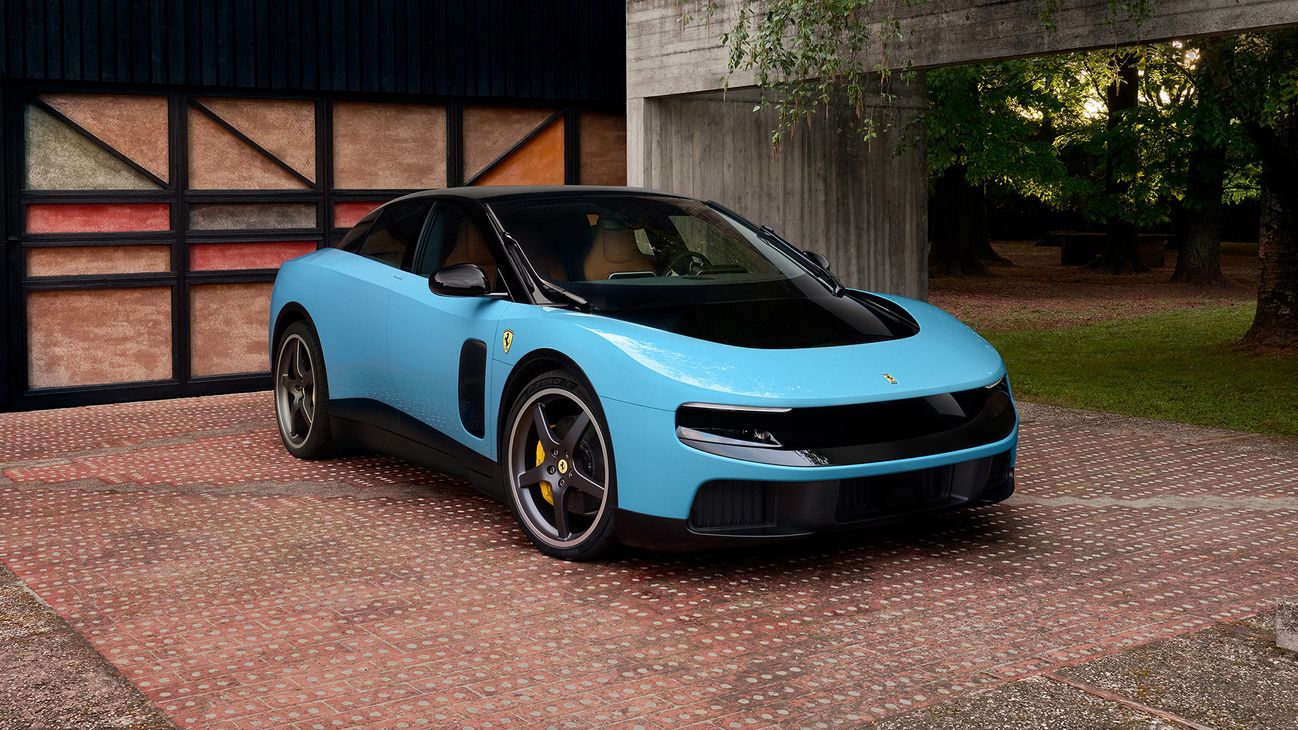
Ferrari Luce
The Ferrari Luce is Ferrari’s first electric car, and it’s also their first practical four-door, five-seat model. The hosts say it uses a high-voltage electrical system and has motors at each wheel.
bespoke eight hundred volt platform
“800 volt” is the electrical system voltage in the car. Higher voltage can help the car charge faster and move more power around efficiently.
four in house developed electric motors, one at each wheel
This means the car has a motor for each wheel, instead of one motor driving everything. That can help the car control grip better and feel more responsive.
fake engine noises
Because EVs are so quiet, some cars add artificial sound. Ferrari is saying the Luce will play different “engine-like” noises depending on how you’re driving.
active suspension system
Active suspension is a system that actively adjusts how the car’s shocks behave. It helps the car stay controlled over bumps and during cornering.
rear wheel steering
Rear wheel steering means the back wheels can also turn. That can make the car easier to maneuver at low speeds and more stable when driving fast.
Samsung
Samsung is a big electronics company. Here it’s mentioned because it helped develop the screens used in the Ferrari Luce.

Ford Escape
The Ford Escape is a popular crossover SUV. The hosts say it’s coming back as an all-electric vehicle built on a new electric-focused platform.
UEV play
A UEV platform is Ford’s plan for building electric cars. The hosts say the Escape will be built on that new electric platform, not just converted from a gas-car design.
Louisville assembly plant
The Louisville assembly plant is where the car would be built. Where a car is manufactured can affect availability and production planning.
CE one
“CE one” is a code name for the project behind the electric Escape. It’s basically an internal label used during development.
body on frame
Body-on-frame means the car has a separate “truck-like” frame underneath, and the body mounts on top. It’s often used for trucks because it’s strong for hauling and towing.
hybrid and EREV powertrains
Hybrid means the truck can use both a gas engine and an electric motor. EREV means it mainly drives like an electric vehicle, and a small engine helps generate electricity to extend how far it can go.
IMA
“IMA” is an internal name for the platform the pickups will use. It’s basically the development label for the shared truck foundation.

Hyundai Santa Cruz
The Hyundai Santa Cruz is a small crossover that also has a pickup-style bed in the back. It’s meant for everyday driving but can carry items like tools, groceries, or gear. Automakers sometimes use internal code names during development, which is why you may hear different names for the same underlying platform.
FSD
FSD is Tesla’s software that tries to handle more of the driving for you. Even though the name sounds like it drives by itself, it still needs supervision and isn’t truly fully autonomous everywhere.
Tesla
Tesla is the car company behind the software that helps with driving. They changed the name of their self-driving feature because regulators didn’t like the implication that it’s fully autonomous.
Mercedes
Mercedes is the car company rolling out a new driver-assist feature. It can help with steering and route guidance, but it’s still not the same as fully autonomous driving.
level two plus plus
“Level 2+” is a way to describe advanced driver-assist features that can steer and control speed, but you still have to watch and be ready to take over. It’s not the same as the car fully handling driving on its own.
point to point driving
Point-to-point driving refers to an assisted-driving mode where the system can guide the vehicle along a route from one location to another, rather than only handling short segments like lane centering. It typically relies on navigation, mapping, and sensor inputs to manage the route while the driver remains responsible.
BMW
BMW is also planning to bring out a similar driving-assist system. The episode is basically saying many brands are competing to offer advanced help while staying within regulatory limits.
level three
Level 3 is closer to “the car can drive” for certain situations, and you don’t have to watch every second. But it’s harder to approve legally, which is why companies are cautious about claiming Level 3.
level four
Level 4 is when the car is designed to drive itself without you taking over, but only in certain areas or conditions. Even then, companies may pause service to update software and improve safety around tricky roads.
Waimo
Waimo is a company that operates self-driving taxi services. They paused service and updated their software to handle construction areas and flooded roads more safely.
Shaomi
Shaomi is mentioned as a company making electric cars. The host is about to talk about how much money they lose for each car they sell.