
AD #4306 - Could BYD Buy Alpine F1?; Reuters Disputes Musk's FSD Claims; Dodge Gets GLH and Hyper Muscle Car
About this episode
Hosts connect U.S. policy and trade pressures to what automakers can source, while Reuters challenges Tesla’s FSD safety comparisons. The discussion then shifts to what makes EV driving feel exciting, plus Dodge performance rumors—reviving GLH and refreshing the Durango and Charger. Formula 1 business news follows, including Gucci’s title sponsorship for an Alpine-named team and rumors that BYD could buy an F1 team and its France engine factory. A sponsor segment spotlights Intrepid’s Neovi cloud platform for vehicle data.
data collection
"Two years ago, the US Commerce Department... adopted rules that would ban Chinese hardware and software and cars starting next year, especially anything to do with connectivity in data collection."
Connected cars can record and transmit information about what they’re doing. The discussion here is about rules that try to limit who supplies the tech that gathers and handles that information.
In connected-car policy, “data collection” refers to how vehicles gather information (like location, sensor data, and system logs) and send it back to manufacturers or service providers. The segment frames it as a key area targeted by rules meant to restrict Chinese hardware/software in cars.
Volvo
"President Trump's Commerce Department just gave Volvo the ok to use Chinese hardware and software in its cars. Valvo says Commerce reviewed its governments, technology and data security..."
Volvo is a car brand. In this story, the U.S. is allowing Volvo to use certain Chinese-made tech in its vehicles, which could change what gets built in the U.S.
Volvo is a Swedish automaker discussed here in the context of U.S. approval to use Chinese hardware and software in its cars. The segment implies this regulatory green light could affect how Volvo and its parent structure future U.S. production plans.
Jili
"This will undoubtedly encourage Jili, the parent company of Volvo, to proceed with plans to build cars in the US using the exact same technology..."
Jili is mentioned as the company behind Volvo. The idea is that if the U.S. allows Volvo to use Chinese tech, the parent company may move faster on building cars in America.
“Jili” appears to refer to Geely, the parent company associated with Volvo in the segment. The point is that Geely could accelerate plans to build cars in the U.S. using similar Chinese technology after the regulatory approval.
USMCA trade agreement
"The US and Mexico officially began negotiating changes to the USMCA trade agreement yesterday. The US will negotiate separately with Canada..."
USMCA is the trade deal that governs how the U.S., Mexico, and Canada buy and sell goods to each other. Changes to it can affect what parts can be used in cars and what labor rules have to be met.
USMCA is the North American trade agreement covering the U.S., Mexico, and Canada, and it affects how cars and parts cross borders. The segment highlights how negotiations could change labor and “North American content” requirements, which in turn influences whether manufacturers can use imported (including Chinese) components.
labor content
"He says the US will likely demand that the labor content on imported cars from Mexico rise to twenty dollars an hour, up from sixteen dollars today."
This is a rule about how much of a car’s cost is connected to work done by workers in certain countries. If the requirement increases, companies may need to build more of the car locally to qualify.
“Labor content” is a trade-compliance metric that measures how much of a vehicle’s value is tied to labor performed in a qualifying country. The segment says the U.S. may raise the required labor rate for imported cars from Mexico, which would push automakers toward more North American production.
North American content
"Also, the North American content in those cars will have to account for seventy five percent of the cost, which is aimed to limit the use of Chinese parts and components."
This is a requirement for how much of the car’s value has to come from parts made in North America. Higher requirements make it harder to use lots of imported components.
“North American content” is the portion of a car’s cost that must come from components and manufacturing within North America to meet USMCA rules. The segment notes a requirement that it account for a large share of the cost, aiming to reduce reliance on Chinese parts.
full self driving
"Elon Musk likes to brag about the safety of full self driving bought. A new analysis from Reuters found that Tesla's claims about the technology are misleading."
It’s Tesla’s software that tries to drive the car for you more than normal cruise control. Even though it sounds like the car can drive itself everywhere, it still depends on the driver to supervise and take over when needed.
“Full self driving” (FSD) is Tesla’s marketing name for driver-assistance software that can automate more driving tasks than basic cruise control. It’s still not the same thing as a fully autonomous car that can handle any situation without a human ready to take over.
tracking the US value added content
"Robinett says that tracking the US value added content is going to turn into an accounting nightmare for suppliers."
This is about figuring out how much of a car’s value was created by work done in the U.S. The point is that measuring it accurately can be complicated for the companies supplying parts.
“Value added content” refers to the portion of a product’s value created through work done in a specific country (here, the U.S.). The segment suggests tracking it could become administratively complex for suppliers because it requires detailed accounting of where value is created.
FSD
"Tesla says FSD is ten times safer than humans. But Reuter's examined how Tesla compares its own crash data to federal crash data..."
FSD is short for Tesla’s “full self driving.” In this story, Reuters is saying Tesla’s safety claims don’t match the real crash data the way they were presented.
FSD is an acronym for “full self driving,” Tesla’s name for its advanced driver-assistance software. In this segment, the key point is that Reuters says Tesla’s FSD safety comparisons use questionable crash-data methodology.
CA car segment
"Chinese automakers are starting to target Japan's CA car segment, which accounts for forty percent of sales in the country."
This is Japan’s category for very small, affordable cars. The episode is saying Chinese brands are trying to sell more of these in Japan.
The “CA car segment” is almost certainly referring to Japan’s kei-car (K-car) category, which is designed for very small, lightly powered vehicles. It’s a major market segment in Japan, and the episode frames it as a target for Chinese automakers.
Cherry
"BYD will launch the Raco this summer, and now Cherry will introduce its own CA car in Japan next year... it will be sold under the m To brand..."
Cherry is a Chinese car brand being discussed as planning to sell a small car in Japan. The episode says it would be marketed under a different brand name connected to a joint venture.
Cherry (likely Chery) is a Chinese automaker mentioned as planning to introduce a kei-car-style model in Japan next year. The segment also says the model would be sold under the “m To” brand tied to a joint venture.
m To brand
"There aren't many details about the model, but it will be sold under the m To brand, which falls under a joint venture between Cherry and four other companies."
The episode says the car won’t just be sold under the parent company’s name—it will be sold under a separate brand name. That brand is connected to a partnership between multiple companies.
The “m To brand” is the consumer-facing name the segment says the next Japanese model would be sold under. The episode ties it to a joint venture involving Chery and several other companies, suggesting a localized brand strategy for Japan.
fine tuning its vehicle dynamics
"Pollstar says it will use this data as a new layer for fine tuning its vehicle dynamics, so what does that Stlantis riorg have in store for the Dodge brand."
Vehicle dynamics is how the car feels and behaves when you turn, brake, or accelerate. “Fine tuning” means making small changes so the car handles more smoothly and predictably.
“Vehicle dynamics” is how a car behaves—things like steering response, traction, and how it settles during braking, cornering, and acceleration. “Fine tuning” means adjusting the control systems and/or hardware so the car’s handling and stability feel more consistent and predictable.
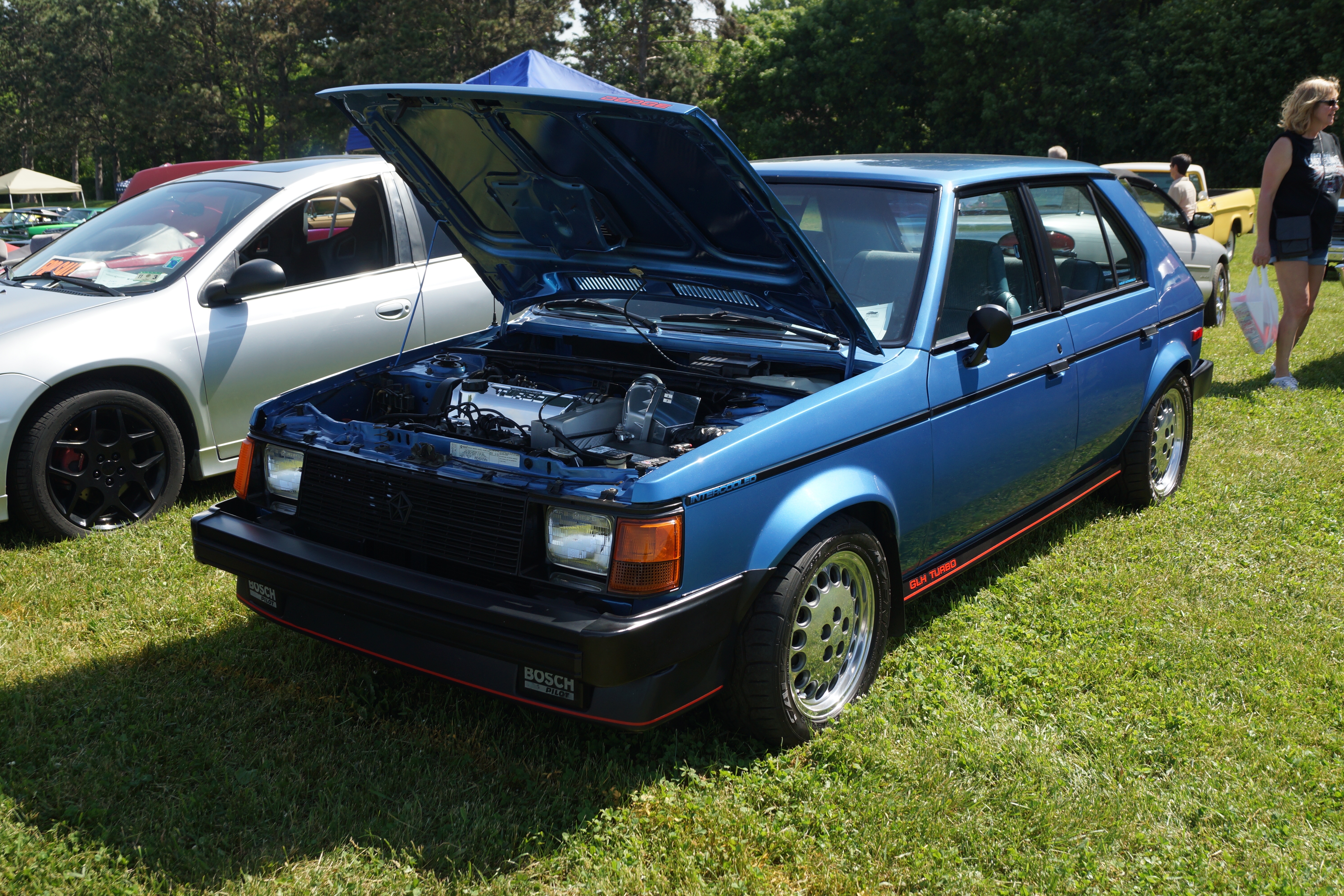
Dodge GLH
"First off, it's going to revive the GLH name, which dates back to nineteen eighty four, when Carol Shelby developed a performance version of the Dodge Omni and said it goes like hell. This time around, the GLH will be an entry level four door compact crossover..."
GLH is a Dodge performance name that originally came from the 1980s. In this segment, Dodge is said to be bringing it back as a smaller, practical crossover instead of a traditional performance coupe.
GLH is a Dodge performance nameplate associated with the 1980s-era “goes like hell” concept. Here, the host says Dodge plans to revive GLH as an entry-level four-door compact crossover, which would be a major shift from the original performance-car context.

Dodge Omni
"First off, it's going to revive the GLH name, which dates back to nineteen eighty four, when Carol Shelby developed a performance version of the Dodge Omni and said it goes like hell."
The Dodge Omni was a compact car from Dodge. The segment is using it as the starting point for the original GLH idea—basically a “make it faster” version of that model.
The Dodge Omni is a compact car that became famous in the 1980s for its performance variants. In this segment, the host ties it to the original GLH concept—Carol Shelby’s performance version—so it’s the base model that the GLH name was built on.

Dodge Durango
"The Durango will be getting a major refresh in two years, and then we believe Dodge will add a turbocharged or supercharged v to the charger as part of an SRT package."
The Dodge Durango is Dodge’s bigger SUV. The host says it’s planned to get a major update in about two years, which usually brings changes to the look and features.
The Dodge Durango is Dodge’s larger three-row SUV, positioned for families that still want a performance-oriented look and feel. The segment says it’s getting a major refresh in two years, which typically means updates to styling, tech, and powertrain options.
turbocharged
"The Durango will be getting a major refresh in two years, and then we believe Dodge will add a turbocharged or supercharged v to the charger as part of an SRT package."
A turbocharger is a device that helps the engine make more power. It uses exhaust to “push” extra air into the engine so it can burn more fuel.
A turbocharger uses exhaust gases to spin a turbine that forces more air into the engine. That extra air lets the engine burn more fuel and make more power without needing a larger engine size.
supercharged
"The Durango will be getting a major refresh in two years, and then we believe Dodge will add a turbocharged or supercharged v to the charger as part of an SRT package."
A supercharger is another way to make an engine stronger. It compresses the air going into the engine so it can make more power.
A supercharger is an engine-driven forced-induction device that compresses intake air before it enters the cylinders. Because it’s mechanically driven, it often provides strong boost at lower engine speeds compared with many turbo setups.
F one
"it probably didn't take much effort for the lp F one team to sell itself to its new title sponsor, Gucci. At the start of next season, it will officially be known as the Gucci Racing Lpine Formula One team..."
They’re talking about Formula 1 racing. The big news here is who sponsors teams and who might own or run teams in the future.
This segment is discussing Formula 1 (F1) team sponsorship and ownership changes. The host mentions a title sponsor deal and rumors about a new team entry, which are major business and competitive storylines in F1.
Gucci
"it probably didn't take much effort for the lp F one team to sell itself to its new title sponsor, Gucci. At the start of next season, it will officially be known as the Gucci Racing Lpine Formula One team..."
Gucci is a luxury fashion brand. Here, the host says Gucci is becoming a major sponsor for an F1 team, so its name will be tied directly to the team.
Gucci is a luxury fashion brand, and the segment says it’s becoming a Formula 1 title sponsor. In F1, a title sponsor’s branding can appear in team names and on car/driver assets, signaling a major marketing partnership.
title sponsor
"it probably didn't take much effort for the lp F one team to sell itself to its new title sponsor, Gucci. At the start of next season, it will officially be known as the Gucci Racing Lpine Formula One team..."
A title sponsor is the company whose name is used as part of the official event or team branding. In Formula 1, a title sponsor deal can affect the team name, marketing materials, and how the brand is presented to fans.
BYD
"Rumors are swirling that BYD is considering buying the LPING team, as well as its F one engine factory in France."
BYD is a car company best known for electric vehicles. The host says BYD might get involved in Formula 1, either by starting a new team or buying an existing one.
BYD is a Chinese automaker known for electric vehicles and batteries. The segment says BYD is considering buying into Formula 1—either by entering as a new 12th team or acquiring an existing team and its engine factory—highlighting how EV brands are using motorsport for technology and marketing reach.
Christian Horner
"Its first choice is to enter as a brand new twelfth team, but it's exploring all options right now, and there's speculation that former Red Bull team principle Christian Horner could lead the operations."
Christian Horner is a Formula 1 team leader. The host is speculating he might run operations for a new or acquired F1 team connected to BYD.
Christian Horner is a motorsport executive best known for leading the Red Bull Formula 1 team. The segment speculates he could lead operations for a potential BYD-related F1 effort, which would be a significant leadership move in team management.
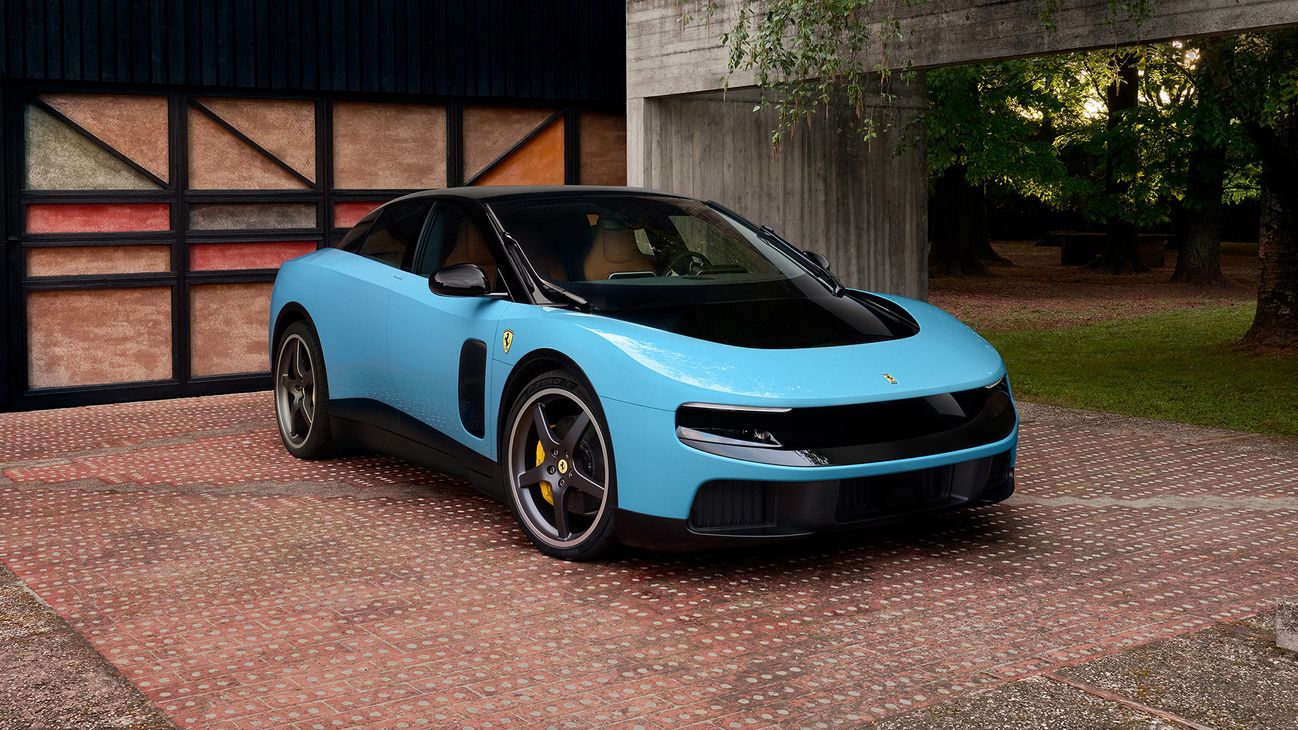
Ferrari Luce
"... reorganization. We'll also dive into the Ferrari luce which is kicked off a firestorm? Is Ferrari crazy..."
The Ferrari Luce is a Ferrari car model that people talk about because it caused a lot of attention and argument. When a new model name or plan creates a “firestorm,” it usually means many people reacted quickly to what was announced. The discussion is often about what Ferrari is planning and why it upset some fans.
The Ferrari Luce is a model name associated with Ferrari’s ongoing product planning and brand strategy, which is why it can become a talking point in automotive news. It’s discussed in the context of controversy and strong public reaction, making it significant beyond just its specs. Podcasts may bring it up to explain what the name represents and why it sparked debate.
Request an Explanation
Heard something you'd like explained? We'll add it to this episode.
Sign in to request explanations for terms you heard.
Want to learn more?
Browse our glossary for plain-English explanations of automotive terms, jargon, and concepts.
Help improve this episode
See something that's not quite right? Our annotations are AI-generated and can sometimes miss the mark. Click the flag icon on any annotation to suggest a correction.