
AD #4335 - Bigger Lexus ES Replaces Flagship LS; How Rivian is Reducing Its Complexity; 650 New Models Hit China This Year
About this episode
China’s rapid model rollout is colliding with weak profitability, and supply-chain limits tied to rare earth and graphite could complicate EV battery production. Lexus is reshuffling its lineup by axing the LS and introducing a bigger ES offered as a BEV or hybrid, priced just under $48,000 for the base BEV—though import tariffs may bite. Rivian, meanwhile, says it’s cutting EV complexity for the R2 by consolidating power electronics and computing hardware, including a new Maximus drive unit with fewer welds and fasteners.
BYD
"Speaker 2: A BYD executive complained that they can't keep the buzz up about a new car for more than three months because then it goes cold."
BYD is a big car company from China that makes electric cars and batteries. Here, they’re saying people stop getting excited about a new car after a few months.
BYD is a major Chinese automaker known for large-scale EV and battery production. In this segment, a BYD executive is used as an example of how quickly consumer attention fades after a new model launch.
rare earth
"Last year, China started limiting exports of rare earth, but after a global blowback, it agreed to delay those restrictions for a year."
Rare earths are special minerals used in lots of modern technology. If a country restricts exports, it can make it harder and more expensive for carmakers to build EVs and other electronics.
Rare earth elements are a group of minerals that are crucial for many high-tech products, including EVs, motors, and electronics. The segment discusses China limiting exports of rare earths, which can raise costs and disrupt production globally.
graphite
"The IEA also warned that China's planned restrictions on graphite at XI Sports will impact three hundred billion dollars of production outside of China."
Graphite is a material inside many lithium-ion EV batteries. If supply is restricted, battery production can get delayed and make EVs harder to build.
Graphite is a key material used in EV batteries, especially for the anode in many lithium-ion designs. The segment claims China’s planned graphite restrictions could disrupt hundreds of billions in production outside China.
EV batteries
"That would be another blow to the auto industry because graphite is a key material used in evy batteries."
EV batteries are what store the electricity that drives an electric car. This matters because materials like graphite are used inside those batteries, so shortages can slow EV production.
EV batteries are the energy-storage systems that power electric vehicles, typically using lithium-ion chemistry. The segment ties graphite supply to EV batteries, highlighting how upstream materials can directly affect EV manufacturing.
humanoid robots
"Humanoid robots are one of the hottest investment areas these days, and Hyundai says it's going to take full ownership of Boston Dynamics."
Humanoid robots are robots that look and move more like people. The episode says they could be used at home for things like cleaning and helping older adults.
Humanoid robots are robots designed with a human-like body shape and movement, often with two legs and two arms. The segment discusses them as a hot investment area and describes intended uses like home cleaning, elderly care, and emotional support.
Hyundai
"Humanoid robots are one of the hottest investment areas these days, and Hyundai says it's going to take full ownership of Boston Dynamics."
Hyundai is a big car company. They’re also getting involved with robotics, and the episode connects that to worries about jobs being replaced by robots.
Hyundai is a major automaker that’s expanding into robotics investment and ownership. In this segment, Hyundai is described as seeking full ownership of Boston Dynamics, while also facing labor concerns in South Korea.
SoftBank
"The Japanese investment firm SoftBank still owns about ten percent of the robotics company, but Hyundai wants it all."
SoftBank is an investment company. Here it’s mentioned because it still owns part of a robotics company, Boston Dynamics.
SoftBank is a Japanese investment firm that holds a stake in robotics through its ownership of part of Boston Dynamics. The segment uses SoftBank’s remaining ownership to set up Hyundai’s push for full control.
Boston Dynamics
"Humanoid robots are one of the hottest investment areas these days, and Hyundai says it's going to take full ownership of Boston Dynamics."
Boston Dynamics is a robotics company famous for building advanced robots. The episode mentions it because Hyundai wants to fully own it.
Boston Dynamics is a robotics company known for advanced humanoid and legged robot designs. The segment frames it as a target of Hyundai’s acquisition push, tying robotics to both investment trends and workforce fears.
Ubi Tech
"In related news, Bashi, an auto dealer group in China, formed a partnership with robotics company Ubi Tech, and it's going to start selling humanoid robots at its Hyundai in Mercedes dealerships."
Ubi Tech is a company that makes robots. In this story, it’s partnering with car dealers so the robots can be sold through dealership networks.
Ubi Tech is a robotics company mentioned as partnering with an auto dealer group in China. The segment claims the partnership will sell humanoid robots through dealerships, including Hyundai and Mercedes locations.
digitalization
"Speaker 3: The automotive and industrial sectors are undergoing an historic transformation electrification, digitalization, supply chain reinvention, regulatory shifts."
Digitalization is when more of the car and the factory work is run by software and data. It can mean smarter features in the car and more efficient production.
Digitalization is the use of software, data, and connected systems to run and improve vehicles and the businesses that build them. In automotive, it often shows up as over-the-air updates, advanced driver assistance, and more data-driven manufacturing.
electrification
"Speaker 3: The automotive and industrial sectors are undergoing an historic transformation electrification, digitalization, supply chain reinvention, regulatory shifts."
Electrification means cars are moving away from gas and toward electricity. That can be fully electric cars or cars that use electricity along with another power source.
Electrification is the shift from using gasoline or diesel to using electricity to move the vehicle. In practice, that usually means battery-electric vehicles (BEVs) and plug-in or hybrid powertrains becoming more common.
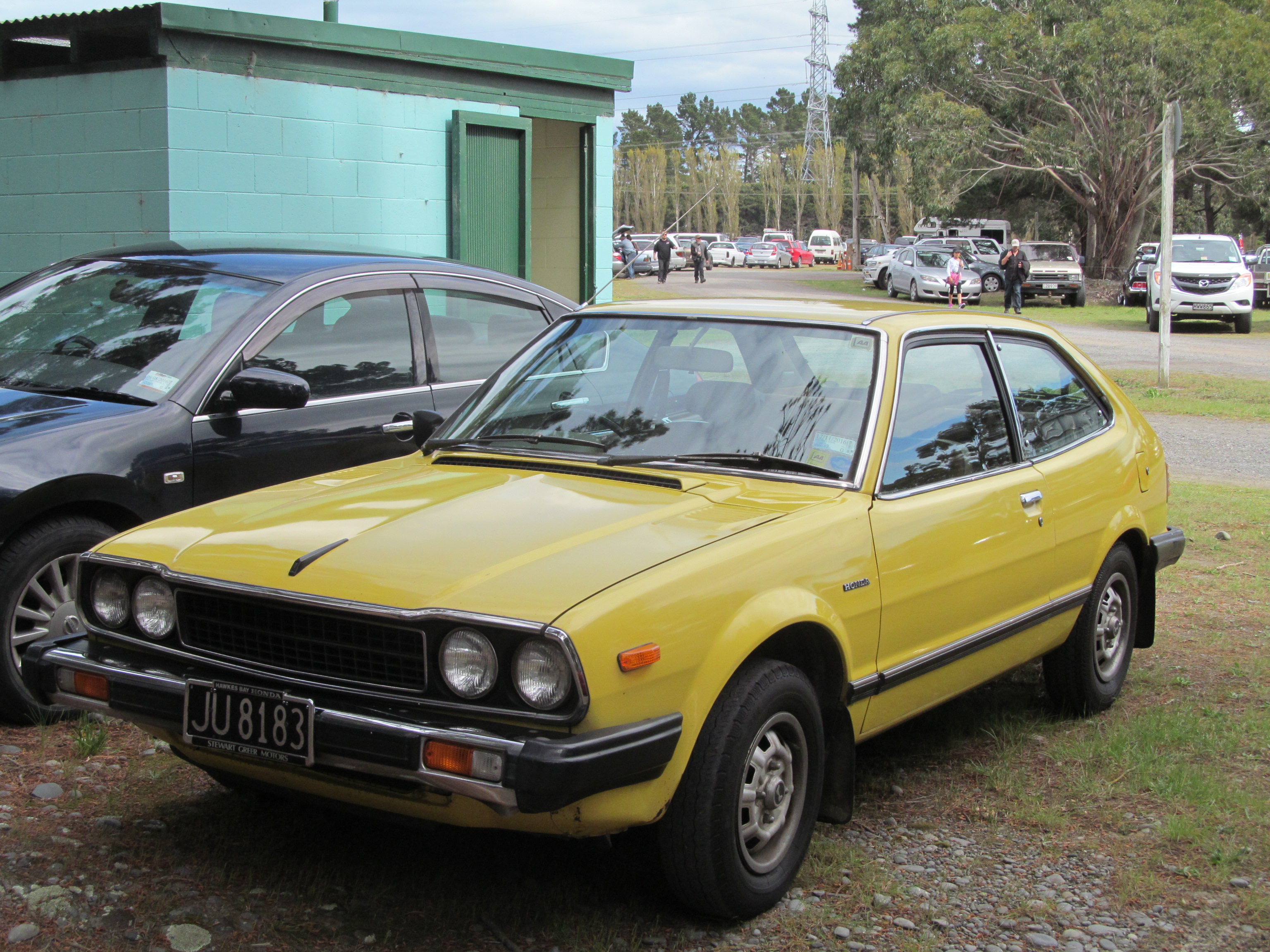
Honda Accord
"...atest. It's adding Google Gemini to select Civic, Accord, Prelude, CRV, Passport and Pilot models. The Gem..."
The Honda Accord is a larger, everyday family car. In the podcast, it’s mentioned because some Accords will get Google Gemini, including a voice assistant feature. That means you can talk to the car to do certain tasks instead of only using buttons and menus.
The Honda Accord is a mid-size sedan (or similar family sedan) that’s often chosen for comfort and everyday usability. The podcast mentions it because select Accords are getting Google Gemini, including Gemini Voice, as an update to the car’s connected features. This is significant because it can improve voice-based control and information access in the cabin.

Honda Civic
"...s the latest. It's adding Google Gemini to select Civic, Accord, Prelude, CRV, Passport and Pilot models...."
The Honda Civic is a popular car that’s built for everyday driving. The podcast is saying some newer Civics will include Google Gemini, which is a voice assistant you can use through the car’s screen and microphones. It’s meant to make the car’s tech easier to use.
The Honda Civic is a mainstream compact car known for being practical and widely sold. In this podcast context, it’s being discussed because select Civics are adding Google Gemini, including a voice assistant feature, as part of an in-car technology update. That kind of update matters because it changes how drivers interact with the infotainment system day to day.

Honda Prelude
"...t's adding Google Gemini to select Civic, Accord, Prelude, CRV, Passport and Pilot models. The Gemini Voice..."
The Honda Prelude is a Honda model that’s aimed at drivers who want a sportier feel. The podcast says some Preludes will add Google Gemini, including a voice assistant. This helps you use the car’s features by speaking instead of navigating through screens.
The Honda Prelude is a sporty Honda model that’s typically discussed for its driving character and design. Here, it’s mentioned because select Preludes are included in a rollout adding Google Gemini, including Gemini Voice, to the infotainment experience. That’s relevant because it updates the car’s in-cabin technology and how the driver interacts with it.
generative AI
"Speaker 1: Automakers love the idea of putting generative AI into their cars, and Honda's the latest."
Generative AI is a type of AI that can “make up” responses, like talking back in a more natural way. In a car, it can help the voice assistant understand what you mean and respond more conversationally.
Generative AI refers to AI systems that can create new content—like text, images, or spoken responses—rather than just following fixed rules. In cars, it’s used to make voice assistants more flexible and natural in conversation.
Google Gemini
"It's adding Google Gemini to select Civic, Accord, Prelude, CRV, Passport and Pilot models."
Google Gemini is Google’s AI system. In this case, Honda is using it to make the car’s voice assistant sound more natural and respond better.
Google Gemini is Google’s generative AI model family used to power conversational experiences. Here, it’s being integrated into Honda vehicles to improve how the voice assistant talks and adapts over time.

Honda Passport
"...gle Gemini to select Civic, Accord, Prelude, CRV, Passport and Pilot models. The Gemini Voice assystem is me..."
The Honda Passport is a midsize SUV meant for everyday family driving. The podcast says some Passports will include Google Gemini, which includes a voice assistant. It’s designed to let you control or ask for things using your voice.
The Honda Passport is a midsize SUV built for family use with a focus on practicality and comfort. In this podcast, it’s brought up because select Passport models are getting Google Gemini, including a voice assistant system, as part of an infotainment update. That matters because it changes the user experience for navigation, information, and other in-car functions.
Gemini Voice assystem
"The Gemini Voice assystem is meant to be more conversational, not relying on exact commands, and improving over time."
This is Honda’s voice assistant that uses Gemini. The goal is for you to talk more naturally, without needing to use perfectly worded commands.
“Gemini Voice” refers to the voice-assistant system in Honda vehicles that uses Gemini. The key idea mentioned is that it aims to be more conversational—less dependent on exact command phrasing.
Lance Wolfer
"Speaking of Honda, we have Lance Wolfer, the vice president of sales for Honda America, coming on Autuline after hours this afternoon, we'll learn a lot more about this AI effort."
Lance Wolfer is a Honda executive focused on sales in the U.S. He’s joining the show to talk about Honda’s new AI features and how they fit into sales plans.
Lance Wolfer is Honda America’s vice president of sales. He’s being introduced as a guest to discuss Honda’s AI/voice-assistant effort and related sales initiatives.
S and P Global Mobility
"Stephanie Brinley from S and P Global Mobility will also be on the show, so joined John and Gary when it all goes live at three pm Eastern Time today."
S&P Global Mobility is a company that tracks and analyzes automotive data. They’re sending someone on the show to add context on what’s happening in the industry.
S&P Global Mobility is a data and analytics provider for the automotive industry. The segment indicates a representative will join to discuss industry developments.

Lexus LS
"Toyota launched Lexus. In nineteen eighty nine with the LS, and for thirty six years it was the brand's flagship model, but sales started slumping a decade ago, and last year Lexis sold barely a thousand of them in the US market."
The Lexus LS is Lexus’s big, top-tier luxury sedan. The hosts say Lexus is ending it because sales have been dropping a lot in the U.S.
The Lexus LS is the brand’s long-running flagship sedan, known for a traditional luxury formula and being Lexus’s top model for decades. In this segment, it’s described as being axed because sales have been slumping, with the U.S. market seeing barely a thousand units last year.

Lexus ES
"Lexus is axing the LS and is coming out with a bigger, all new version of the ES that is awfully close in size to the LS. It's six and a half inches longer, two point two inches wider, and four and a half inches taller than the old ES..."
The Lexus ES is getting a major upgrade and is effectively taking over from the Lexus LS as the bigger Lexus sedan. They’re making it larger, and it will come as either an electric version or a hybrid, starting under $50,000 for the base electric model.
The Lexus ES is moving up in role: Lexus is replacing the outgoing flagship Lexus LS with a bigger, all-new ES that’s close in size to the LS. The segment highlights its new dimensions and that it’ll be offered as a BEV or a hybrid, with an aggressive sub-$50k starting price for the base BEV.
BEEV
"Offered as a BEEV or a hybrid, and at just under forty eight thousand dollars for the base BEV..."
“BEEV” here means a BEV, or battery-electric vehicle. It’s the fully electric version that uses a battery instead of gas for driving.
“BEEV” is a mis-transcription of “BEV,” meaning battery-electric vehicle. A BEV runs on electricity stored in a battery pack and doesn’t use a gasoline engine for propulsion.
hybrid
"Offered as a BEEV or a hybrid, and at just under forty eight thousand dollars for the base BEV, it's actually priced slightly lower than the base hybrid..."
A hybrid uses both a gas engine and an electric motor. It can save fuel by using electricity sometimes, but it can still drive like a normal gas car when needed.
A hybrid powertrain combines an internal-combustion engine with an electric motor and battery. The goal is to improve efficiency and reduce fuel use compared with a purely gas car, while still providing gasoline range.
import tariffs
"Back then, Lexus also thought it would be a good idea to make the new es in Japan, but today that means Lexus has to eat the fifteen percent import terraff for everyone it sells in the US market."
An import tariff is a tax on products shipped into a country. If Lexus builds the car in Japan and sells it in the U.S., that tax can raise the cost and influence the final price.
An import tariff is a tax charged on goods brought into a country from abroad. The segment says Lexus would have to pay an import tariff (described as 15%) if the new ES is made in Japan and sold in the U.S., which affects pricing and margins.
Rivian
"Yesterday, Rivian invited US out to its development,"
Rivian is an electric-vehicle company. They’re being discussed in the context of how they’re organizing and simplifying their development and production.
Rivian is an EV maker known for building battery-electric vehicles and focusing heavily on software and manufacturing strategy. The segment says Rivian invited someone out to its development, tying into the episode’s theme of reducing complexity in EV production.
energy management module
"The vehicle's energy management module is a good exact ample of this, combining five units into one for the R one, the DC to DC converter, the onboard charger, the AC to DC converter, the battery management system, and the low voltage distribution box are all separate units and are all supplied by suppliers."
In an EV, the energy management module is like the car’s power “traffic controller.” It helps manage how electricity moves between the battery and the rest of the car, and here Rivian is combining several separate power parts into one unit.
An energy management module coordinates how power flows through an electric vehicle’s high-voltage and low-voltage systems. In this segment, Rivian is consolidating multiple energy-related units into a single module that bolts to the battery pack, reducing supplier complexity and packaging overhead.
DC to DC converter
"combining five units into one for the R one, the DC to DC converter, the onboard charger, the AC to DC converter, the battery management system, and the low voltage distribution box are all separate units"
An EV battery runs at one voltage, but many car systems need a different (usually lower) voltage. The DC-to-DC converter changes the battery’s voltage so the rest of the car can run correctly.
A DC-to-DC converter steps voltage up or down within an EV, converting the battery’s high-voltage DC to the lower voltages needed by accessories and control electronics. The segment notes that Rivian previously used separate supplier units for this function, then consolidated it into an in-house module.
battery management system
"combining five units into one for the R one, the DC to DC converter, the onboard charger, the AC to DC converter, the battery management system, and the low voltage distribution box are all separate units"
The battery management system is the EV’s “battery supervisor.” It watches the battery’s condition and helps keep it safe and working properly, and here it’s mentioned as part of a consolidated power package.
A battery management system (BMS) monitors and controls the EV battery’s health and safety, including cell balancing, temperature management, and protection limits. The segment highlights that Rivian is packaging the BMS into a consolidated energy module rather than keeping it as a separate unit.
on-board charger
"combining five units into one for the R one, the DC to DC converter, the onboard charger, the AC to DC converter, the battery management system, and the low voltage distribution box are all separate units"
The onboard charger is the part of the EV that turns charging-station electricity into the right kind of power to fill the battery. Here, it’s mentioned as one of the components being packaged into a more integrated unit.
An onboard charger converts AC electricity from the wall or charging station into DC power to charge the EV’s battery. This segment treats it as one of the previously separate modules that Rivian is now consolidating into a single energy management unit.
AC to DC converter
"combining five units into one for the R one, the DC to DC converter, the onboard charger, the AC to DC converter, the battery management system, and the low voltage distribution box are all separate units"
Charging equipment can provide electricity in AC form, but EV batteries need DC. The AC-to-DC converter does that conversion so the battery can charge.
An AC-to-DC converter changes alternating current (AC) into direct current (DC), which is what EV batteries require. The segment lists it alongside other power electronics that were once separate supplier modules, then says Rivian is consolidating them into one in-house unit.
low voltage distribution box
"the DC to DC converter, the onboard charger, the AC to DC converter, the battery management system, and the low voltage distribution box are all separate units"
Even though EVs have a high-voltage battery, many parts of the car run on lower voltage. The low-voltage distribution box is the part that sends that lower-voltage power to all the electronics that need it.
A low-voltage distribution box routes and manages the EV’s lower-voltage power to things like lighting, infotainment, and control modules. In this segment, it’s one of the components previously supplied as separate units that Rivian is now integrating into a single energy management package.
telematics
"The R one uses five expensive high power chips on multiple circuit boards to control safety, computer vision, audio, infotainment, connectivity, and telematics"
Telematics is how the car stays connected to the internet and sends information out—like location and diagnostic data. In this segment, it’s mentioned as one of the functions that used to require separate high-power computing hardware.
Telematics refers to the vehicle’s connected systems that transmit data—such as location, diagnostics, and usage—to external services. The segment groups telematics with other functions controlled by high-power chips, then describes consolidating those chips to reduce cost and complexity.
computer vision
"The R one uses five expensive high power chips on multiple circuit boards to control safety, computer vision, audio, infotainment, connectivity, and telematics"
Computer vision is the car’s ability to “see” using cameras and software. It helps the car understand what’s around it, and the segment says Rivian is consolidating the computing hardware that runs it.
Computer vision in automotive systems means using cameras and onboard computing to interpret the road and surroundings (for features like driver assistance). Here, it’s listed as one of the functions previously handled by multiple high-power chips, then consolidated into a single more powerful chip.
infotainment
"This reduces cost, which is important because infotainment is the second most expensive electronic unit in the R two, right behind the eight S unit."
Infotainment is the car’s touchscreen and systems for things like music, maps, and connectivity. The hosts point out it can be expensive to build, so Rivian is trying to reduce the cost by simplifying the electronics behind it.
Infotainment is the EV’s in-car user interface for media, navigation, and connected services. The segment says infotainment is one of the most expensive electronic units in the Rivian R2, which is why Rivian is consolidating controllers and chips to reduce cost.
drive unit
"And it's not just electronics. The all new drive unit, called Maximus has two hundred and forty less welds, thirty percent fewer fasteners, features integrated electronics, multiple areas of parts consolidation"
In an EV, the drive unit is the main power system that turns electrical energy into motion for the wheels. The segment says Rivian’s new Maximus drive unit is designed to be simpler to build and more integrated.
An electric drive unit is the EV’s main propulsion assembly, typically combining the motor and the reduction gearing (and often power electronics) that deliver torque to the wheels. This segment introduces Rivian’s new drive unit called Maximus and highlights manufacturing and integration changes like fewer welds and integrated electronics.
Maximus
"The all new drive unit, called Maximus has two hundred and forty less welds, thirty percent fewer fasteners, features integrated electronics"
Maximus is Rivian’s new name for a key EV propulsion component—the drive unit. The point being made is that it’s designed to be easier and cheaper to build by combining functions and reducing the number of separate parts.
Maximus is the name Rivian gives to its new electric drive unit. The segment emphasizes manufacturing simplification (fewer welds and fasteners) and integration (integrated electronics and parts consolidation) as part of Rivian’s effort to reduce complexity.
power density
"features integrated electronics, multiple areas of parts consolidation, a lower profile, and a forty percent increase in power density."
Power density is basically “how much power you get for the space it takes.” A higher number usually means the motor or drive unit is more compact while still making strong power.
Power density is how much power a component can produce relative to its size or mass, often expressed as power per unit volume or weight. The segment claims the new Rivian drive unit has a 40% increase in power density, which implies more output from a more compact package.
Thunder
"Gili is launching a new drive unit called Thunder that consolidate sixteen functions, twelve hardware, and four software into a single package."
Thunder is Geely’s new electric drive unit design. The claim here is that it combines a lot of the drive’s functions into one package to improve efficiency and reduce complexity.
Thunder is the name of a new drive unit being launched by Geely. The segment claims it consolidates many functions—both hardware and software—into a single package, aiming for very high efficiency for a production vehicle.
comprehensive efficiency
"The company claims a comprehensive efficiency of nearly ninety four percent, which would be a record for a production vehicle."
Efficiency here means how much of the electricity actually turns into useful motion. “Comprehensive efficiency” is a more complete measure of losses across the whole system, and the host says Geely claims it’s extremely high.
Comprehensive efficiency is a broad efficiency metric that accounts for multiple losses across the system, not just one part of the drivetrain. The segment says Geely claims nearly 94% comprehensive efficiency for Thunder, calling it a record for a production vehicle.
Ford Galaxy
"...icle. The setup is making its debut in the g Lely Galaxy TT Sedan and has a peak power output of two hundr..."
The Ford Galaxy is a vehicle built to carry passengers, often for families. The podcast is saying a new version or setup is debuting in a Galaxy TT Sedan, and it’s expected to make around 200 horsepower at peak. That’s the main headline because it affects how strong the car feels when accelerating.
The Ford Galaxy is a passenger-focused vehicle (commonly discussed as a large family car/MPV) designed to carry people comfortably. The podcast context says a new setup is making its debut in the “Galaxy TT Sedan,” with peak power output quoted around two hundred horsepower, indicating a performance-oriented or upgraded configuration. It’s being discussed because the powertrain/technology details are a key part of what’s new.
peak power output
"and has a peak power output of two hundred and forty five kilowatts or nearly three hundred and thirty horse power."
Peak power output is the highest power the electric system can produce at its best moment. The segment gives a number (245 kW) to show how strong the Thunder drive unit is.
Peak power output is the maximum power the motor/drive system can deliver under ideal conditions, usually measured in kilowatts (kW). The segment reports Thunder’s peak power as 245 kW (about 330 hp), which frames the performance potential of the new drive unit.
Request an Explanation
Heard something you'd like explained? We'll add it to this episode.
Sign in to request explanations for terms you heard.
Want to learn more?
Browse our glossary for plain-English explanations of automotive terms, jargon, and concepts.
Help improve this episode
See something that's not quite right? Our annotations are AI-generated and can sometimes miss the mark. Click the flag icon on any annotation to suggest a correction.