
BYD
BYD is a big car company from China that makes electric cars and batteries. Here, they’re saying people stop getting excited about a new car after a few months.
rare earth
Rare earths are special minerals used in lots of modern technology. If a country restricts exports, it can make it harder and more expensive for carmakers to build EVs and other electronics.
graphite
Graphite is a material inside many lithium-ion EV batteries. If supply is restricted, battery production can get delayed and make EVs harder to build.
EV batteries
EV batteries are what store the electricity that drives an electric car. This matters because materials like graphite are used inside those batteries, so shortages can slow EV production.
humanoid robots
Humanoid robots are robots that look and move more like people. The episode says they could be used at home for things like cleaning and helping older adults.
Hyundai
Hyundai is a big car company. They’re also getting involved with robotics, and the episode connects that to worries about jobs being replaced by robots.
SoftBank
SoftBank is an investment company. Here it’s mentioned because it still owns part of a robotics company, Boston Dynamics.
Boston Dynamics
Boston Dynamics is a robotics company famous for building advanced robots. The episode mentions it because Hyundai wants to fully own it.
Ubi Tech
Ubi Tech is a company that makes robots. In this story, it’s partnering with car dealers so the robots can be sold through dealership networks.
digitalization
Digitalization is when more of the car and the factory work is run by software and data. It can mean smarter features in the car and more efficient production.
electrification
Electrification means cars are moving away from gas and toward electricity. That can be fully electric cars or cars that use electricity along with another power source.

Honda Accord
The Honda Accord is a larger, everyday family car. In the podcast, it’s mentioned because some Accords will get Google Gemini, including a voice assistant feature. That means you can talk to the car to do certain tasks instead of only using buttons and menus.

Honda Civic
The Honda Civic is a popular car that’s built for everyday driving. The podcast is saying some newer Civics will include Google Gemini, which is a voice assistant you can use through the car’s screen and microphones. It’s meant to make the car’s tech easier to use.

Honda Prelude
The Honda Prelude is a Honda model that’s aimed at drivers who want a sportier feel. The podcast says some Preludes will add Google Gemini, including a voice assistant. This helps you use the car’s features by speaking instead of navigating through screens.
generative AI
Generative AI is a type of AI that can “make up” responses, like talking back in a more natural way. In a car, it can help the voice assistant understand what you mean and respond more conversationally.
Google Gemini
Google Gemini is Google’s AI system. In this case, Honda is using it to make the car’s voice assistant sound more natural and respond better.

Honda Passport
The Honda Passport is a midsize SUV meant for everyday family driving. The podcast says some Passports will include Google Gemini, which includes a voice assistant. It’s designed to let you control or ask for things using your voice.
Gemini Voice assystem
This is Honda’s voice assistant that uses Gemini. The goal is for you to talk more naturally, without needing to use perfectly worded commands.
Lance Wolfer
Lance Wolfer is a Honda executive focused on sales in the U.S. He’s joining the show to talk about Honda’s new AI features and how they fit into sales plans.
S and P Global Mobility
S&P Global Mobility is a company that tracks and analyzes automotive data. They’re sending someone on the show to add context on what’s happening in the industry.

Lexus LS
The Lexus LS is Lexus’s big, top-tier luxury sedan. The hosts say Lexus is ending it because sales have been dropping a lot in the U.S.

Lexus ES
The Lexus ES is getting a major upgrade and is effectively taking over from the Lexus LS as the bigger Lexus sedan. They’re making it larger, and it will come as either an electric version or a hybrid, starting under $50,000 for the base electric model.
BEEV
“BEEV” here means a BEV, or battery-electric vehicle. It’s the fully electric version that uses a battery instead of gas for driving.
hybrid
A hybrid uses both a gas engine and an electric motor. It can save fuel by using electricity sometimes, but it can still drive like a normal gas car when needed.
import tariffs
An import tariff is a tax on products shipped into a country. If Lexus builds the car in Japan and sells it in the U.S., that tax can raise the cost and influence the final price.
Rivian
Rivian is an electric-vehicle company. They’re being discussed in the context of how they’re organizing and simplifying their development and production.
energy management module
In an EV, the energy management module is like the car’s power “traffic controller.” It helps manage how electricity moves between the battery and the rest of the car, and here Rivian is combining several separate power parts into one unit.
DC to DC converter
An EV battery runs at one voltage, but many car systems need a different (usually lower) voltage. The DC-to-DC converter changes the battery’s voltage so the rest of the car can run correctly.
battery management system
The battery management system is the EV’s “battery supervisor.” It watches the battery’s condition and helps keep it safe and working properly, and here it’s mentioned as part of a consolidated power package.
on-board charger
The onboard charger is the part of the EV that turns charging-station electricity into the right kind of power to fill the battery. Here, it’s mentioned as one of the components being packaged into a more integrated unit.
AC to DC converter
Charging equipment can provide electricity in AC form, but EV batteries need DC. The AC-to-DC converter does that conversion so the battery can charge.
low voltage distribution box
Even though EVs have a high-voltage battery, many parts of the car run on lower voltage. The low-voltage distribution box is the part that sends that lower-voltage power to all the electronics that need it.
telematics
Telematics is how the car stays connected to the internet and sends information out—like location and diagnostic data. In this segment, it’s mentioned as one of the functions that used to require separate high-power computing hardware.
computer vision
Computer vision is the car’s ability to “see” using cameras and software. It helps the car understand what’s around it, and the segment says Rivian is consolidating the computing hardware that runs it.
infotainment
Infotainment is the car’s touchscreen and systems for things like music, maps, and connectivity. The hosts point out it can be expensive to build, so Rivian is trying to reduce the cost by simplifying the electronics behind it.
drive unit
In an EV, the drive unit is the main power system that turns electrical energy into motion for the wheels. The segment says Rivian’s new Maximus drive unit is designed to be simpler to build and more integrated.
Maximus
Maximus is Rivian’s new name for a key EV propulsion component—the drive unit. The point being made is that it’s designed to be easier and cheaper to build by combining functions and reducing the number of separate parts.
power density
Power density is basically “how much power you get for the space it takes.” A higher number usually means the motor or drive unit is more compact while still making strong power.
Thunder
Thunder is Geely’s new electric drive unit design. The claim here is that it combines a lot of the drive’s functions into one package to improve efficiency and reduce complexity.
comprehensive efficiency
Efficiency here means how much of the electricity actually turns into useful motion. “Comprehensive efficiency” is a more complete measure of losses across the whole system, and the host says Geely claims it’s extremely high.
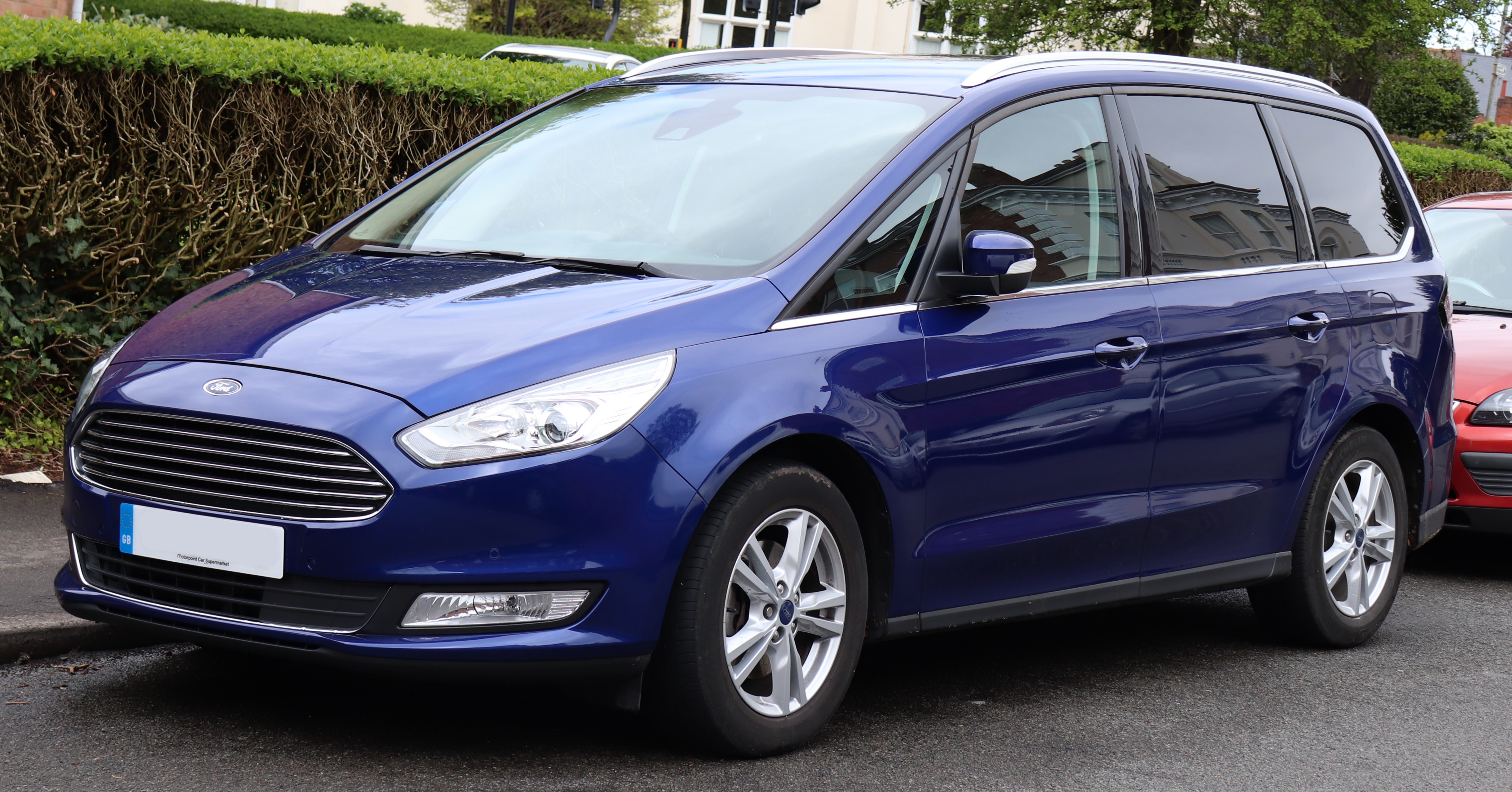
Ford Galaxy
The Ford Galaxy is a vehicle built to carry passengers, often for families. The podcast is saying a new version or setup is debuting in a Galaxy TT Sedan, and it’s expected to make around 200 horsepower at peak. That’s the main headline because it affects how strong the car feels when accelerating.
peak power output
Peak power output is the highest power the electric system can produce at its best moment. The segment gives a number (245 kW) to show how strong the Thunder drive unit is.