“New energy vehicles” is a label used in China for cars that run on electricity (and sometimes plug-in hybrid setups). The host is saying that even these electric-focused sales are falling compared to last year. So the problem is broader than just gas cars.
Dragon Sourcing is the company the host cites for wage information. They’re used as a reference point to compare how much factory workers are paid in different countries. The takeaway is that wages in China are reported to be much lower than in some competitors.
A “smart factory” is a factory that uses computers, sensors, and robots to run production more efficiently. Instead of relying only on people and fixed schedules, the system can monitor what’s happening and adjust automatically. That helps make cars with fewer delays and more consistent quality.
Here, “AI” means computer software that can learn from data and help make decisions. “Automation” means machines doing tasks automatically instead of people doing everything by hand. Used together, they help factories build products more consistently and efficiently.
Huawei is a major technology company, and in automotive discussions it’s often associated with telecom, cloud, and connectivity systems used in advanced manufacturing and connected vehicles. Here, it’s grouped with Avatar as an “automotive leader” using high levels of automation to make electric cars. The point is that tech firms are increasingly involved in the infrastructure behind EV production.
Slate is referenced as an EV startup planning to sell directly to consumers rather than using the traditional franchise dealer network. The segment also connects Slate’s funding round to Carvana, suggesting Carvana’s role could be tied to vehicle delivery and customer fulfillment. That makes Slate relevant as a business-model case study in EV retailing.
“Franchise dealer model” refers to selling cars through independently operated dealerships that have franchise agreements with automakers. “Foregoing” it means selling directly to consumers—typically via online ordering, delivery, and centralized pricing. This can change how inventory is financed and how customers experience sales and service.
Carvana is a company that sells cars online and delivers them to customers. The idea here is that Carvana’s delivery experience could help an EV startup get vehicles to buyers without using the traditional dealer network.
DTCs are the short form for diagnostic trouble codes. They’re the codes a car logs when it finds a problem, and they can be used to track which cars have which issues.
The Dodge Charger is a famous American performance car. Here, the hosts are talking about Dodge bringing the Charger back to Europe for its 60th birthday, with both gas and electric versions planned.
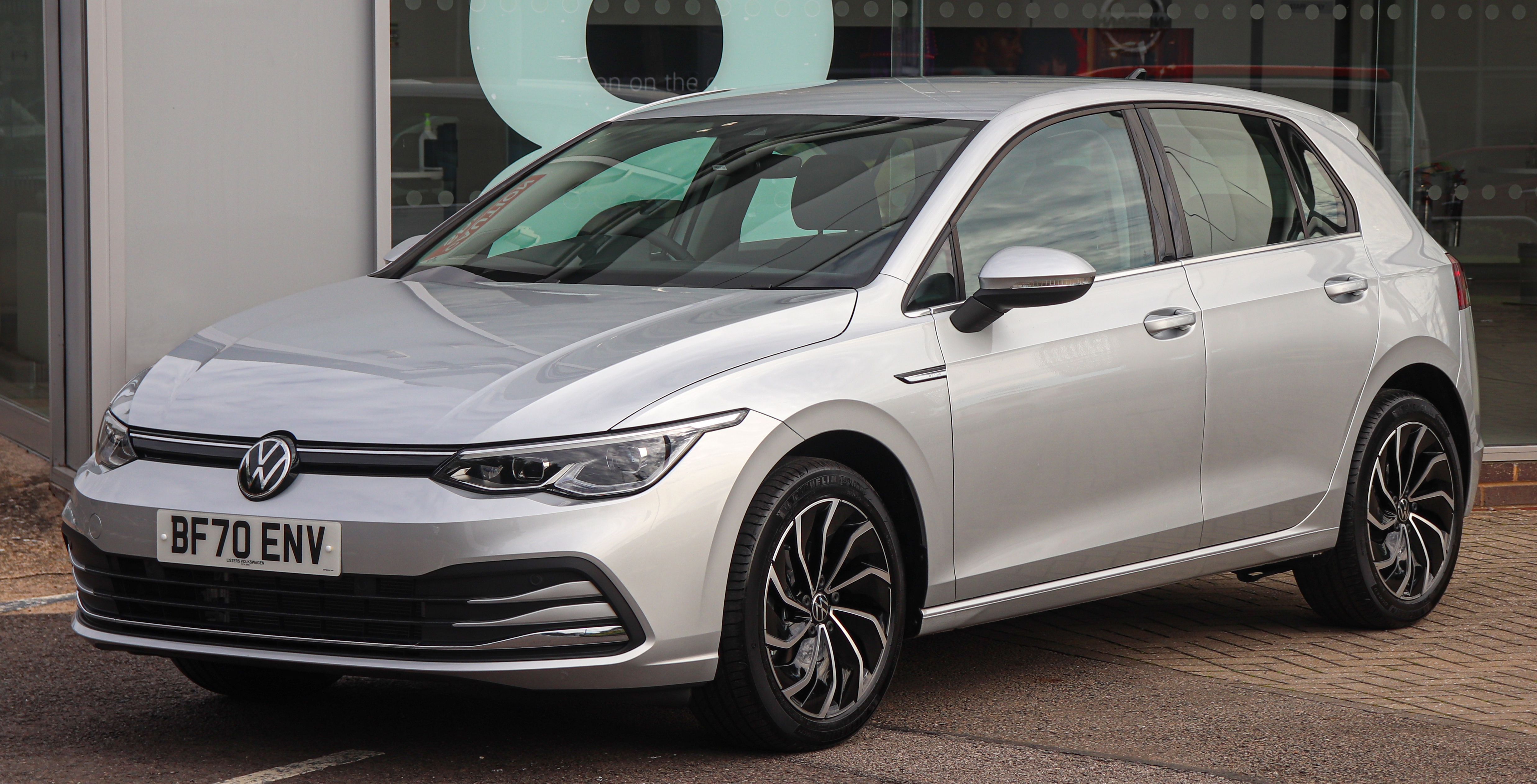
The Volkswagen Golf is a small car (a hatchback) made for everyday driving. It’s popular in Europe and has versions that are tuned to feel more sporty. When people talk about new “performance GTI” type trims, the Golf is usually part of that discussion.
The Ford Mustang Mach-E is an electric Ford SUV. Here, it’s mentioned as the car Uber plans to use for self-driving rides with a partner company.
LIVE
Speaker 1: This is Autoline Daily, the show dedicated to enthusiasts of the global automotive industry. When new car sales in China
dropped off in a big way at the beginning of the year, that China Passenger Car Association predicted that they would start to pick back up again in April, but that's not happening. They were down twenty one percent in
April and fell twenty two percent in May compared to last year. Even sales of new energy vehicles fell seven
and a half percent. Last month, total retail sales were
one and a half million vehicles, and so far this year they're down nineteen point five percent. The Past Car
Association still predicts sales will pick up later in the year, but says they'll be down eleven percent for the full year.
Automakers in China pay their factory workers an average of six dollars and fifty cents an hour, according to a company called Dragon Sourcing. Even though that's shockingly low, that's
nearly twice as much as.
Speaker 2: Workers earn in Vietnam and Thailand.
Speaker 1: So to protect its manufacturing juggernaut, the Chinese government is pushing manufacturers to embrace smart factories that rely heavily on AI and automation. The Ministry of Industry and Information Technology
established a four tier program from the most basic automation to the highest, and it's encouraging all manufacturers to embrace the program. There are now forty three thousand of these
so called smart factories. Avatar and Huawei are two of
the automotive leaders using high levels of automation to make electric cars. China is also preparing its industry for a
declining population. According to RAND Research, China's population will decline
by three million people this year. Like all other evy startups,
Slate plans to forego the franchise dealer model and sell directly to consumers, and its possible use car retailer Carvana could help get trucks into customer hands.
Speaker 2: Tech Crunch reports that paid work.
Speaker 1: Filed within Slate's latest funding round gives Carvana the authority to purchase an unknown amount.
Speaker 2: Of shares in the ev startup.
Speaker 1: With Carvana's experience delivering vehicles right to customers, a partnership with Slates seems like it would make a lot of sense, saying goes for any ev startup. Really, and this is
not Carvana's first attempt to sell new cars. Earlier this year,
it bought seven Stilantis dealerships. Vinfest is reporting a forty
two percent increase in revenue. For its latest fiscal quarter,
it brought in nine hundred and twenty million dollars, which is a big jump. The company sold over fifty eight
thousand evs and one hundred and forty three thousand East scooters and e bikes, mainly in Vietnam, India, Indonesia, and the Philippines. The company's efforts in the US and Europe
are struggling due to the poor quality of the cars that it offered when it launched them three years ago.
Speaker 3: Intrepid we produce network hardware and software solutions enabling vehicle manufacturers to innovate and design the next generation of modern mobility.
Delivering scalable next generation solutions requires thorough testing and validation of vehicle platforms. Intrepid's Neovi cloud platform helps manufacturers quickly
identify diagnostic trouble codes and defects by pinpointing which vehicles have specific software versions. This allows them to isolate non
compliant vehicles in real time using analytics, part numbers, DTCs, and organized secure cloud based data. All of these steps.
Speaker 4: Ensure vehicles are cleared for production and ready for the road, taking your fleet testing into the future of mobility intrepid control systems driven by your data.
Speaker 1: The Dodge Charger is going to Europe in honor of the sixtieth birthday. The brand says it will introduce both
the gas powered six Pack and the all electric Daytona, but it didn't reveal when they'll go on sale, where and how it will sell them, or prices. In the US,
the six pack starts at roughly fifty two thousand dollars, while the Daytona is over seventy two thousand bucks. In
the first quarter, Dodge sold less than two thousand units, which it blames on an incomplete rollout of models to dealers.
Even so, that's got to be pretty disappointing and probably part of the reason the model is headed to Europe.
Speaker 2: While the brand.
Speaker 1: Says the Charger is quote unquote making its return to the region, the only evidence we could find of the model making its way over was through gray market imports.
Speaking of Stalantis in Europe, Pougeot is bringing back its performance GTI trim line and debuted the new E twoh eight GTI, which is the brand's first fully electric car to get the GTI badge. Unfortunately, it really only revealed
that the car's performance figures are expected to quote wow right now.
Speaker 2: The top version of the E two eight has a single.
Speaker 1: Electric motor that produces just over one hundred and fifty five horse power. There's a lot of autonomous vehicle news
today and first Up Pepsi Co is now operating forty one driverless trucks on roads in Arizona, Texas in Arkansas, and that makes it the first consumer goods company to operate an autonomous fleet at scale. The medium and heavy
duty trucks are made by Asuzu and equipped with autonomous technology from self driving truck company Gaddick. Pepsi started the
driverless runs last year and the trucks have achieved ninety nine percent on time arrivals with no accidents on public roads.
Next Up Uber has opened a wait list for customers in London that are interested in riding in a robotaxi.
The ride hailing company is partnering with Wave to offer driverless rides in my Ford Mustang Machias. Uber is planning
to debut the service in the UK this year, but it still hasn't received regulatory approval.
Speaker 2: Meanwhile, down in Austin.
Speaker 1: Tesla expanded its unsupervised robotaxi service to the entire metro area.
According to city officials, Tesla has around fifty vehicles operating in Austin. And finally, Chinese automaker dong Fun just launched
a new autonomous commercial vehicle company called open Van. It
unveiled four self driving cargo vehicles it developed with autonomous vehicle companies Zelos. Bridgestone, which is one of our sponsors,
is celebrating the one hundredth anniversary of its Firestone Service stores in the US, and here's a little interesting history.
Harvey Firestone established the first network of service stations in nineteen twenty six, growing to eighteen hundred locations today and that makes it the largest network of automotive service provider in the world. In fact, the company created a website
with historical archives that document the one hundred year history.
And we'll provide you a link if you'd like to see more. That's a wrap for today's Autoline Daily. Thanks
for watching.
Speaker 5: Auto Line Daily is brought to you by Bridgestone Solutions for your journey CSP the Composites Solution partner Intrepid Control Systems.
Over the year engineering boost your game and thanks to the following YouTube and Patreon members.
Speaker 6: At CSP, we work with OEM engineers across the country on their journeys to lighter, safer, and more eco friendly vehicles.
Learn more at vcsp dot com.
Speaker 2: Making a life full of memories, one road trip at a time, That's what really matters.
Speaker 3: Bridgetoon weather Peak Tires Speaker 5: For the seventy thousand mile women at Warranty
About this episode
China’s car market keeps sliding, with passenger car sales down “twenty one percent in April” and “fell twenty two percent in May,” and even new energy vehicle sales slipping. The hosts connect the slowdown to government pressure for “smart factories” built on AI and automation, and to direct-to-consumer EV retail models where Carvana could play a delivery role. Elsewhere, Dodge is sending the Charger back to Europe for its 60th birthday, while robotaxi services expand—despite regulatory hurdles.
- China Car Sales Drop Again - Cheap Foreign Labor Pushes China to Automation - Carvana to Invest in Slate - VinFast Reports 42% Revenue Increase - Dodge Charger Headed to Europe - Peugeot Launches EV Hot Hatch - Pepsico Operates 41 Autonomous Trucks - Uber Opens London Robotaxi Waitlist - Tesla Expands Robotaxi Service in Austin - Dongfeng Debuts AV Van - Firestone Celebrates 100 Years of Service