solid state sodium cell
They’re talking about a battery design that’s supposed to use a solid material inside (instead of a liquid) and use sodium chemistry. The big point is that the podcast says the battery wasn’t actually what it was advertised to be.
lithium ion cell
Most EV batteries today use lithium-ion chemistry. The episode says the battery being marketed as something new was actually using the same general type of chemistry as today’s lithium-ion batteries.
Donut Labs
Donut Labs is the company that marketed a new battery. The episode says experts found it wasn’t actually the advanced battery it claimed to be.
four hundred watt hours per kilogram
This is a way to describe how much energy a battery can store compared to how heavy it is. Higher numbers generally mean more range for the same battery weight, and the episode says the real number was much lower than advertised.
Verge
Verge is mentioned as the maker of an electric motorcycle that was rumored to use the battery. The host says that plan never materialized.
BYD
BYD is a big Chinese car company. The episode says the U.S. added BYD to a list of companies it believes support China’s military, and it also talks about BYD’s plans to grow very fast.
NEO
NEO is another company named in the episode’s discussion of U.S. accusations related to China’s military. The host says NEO responded that it wouldn’t change anything for them.
Pentagon regularly publishes a list of companies that aid the Chinese military
This refers to a U.S. government compliance-style list used to identify companies considered to support China’s military. The practical effect described is that it doesn’t automatically impose sanctions, but it blocks the U.S. Defense Department from doing business with those companies.
scale
Here “scale” means making a lot more cars and becoming a much bigger company. The episode also says the hard part is doing it without letting costs rise too much.
capacity to make over eleven million vehicles a year
Capacity is how many cars a company can build in a year. The host compares Toyota’s yearly production ability to BYD’s current output to show how big BYD’s growth target is.
Insurance Institute for Highway Safety or IIHS
IIHS is an organization that tests cars and trucks to see how safe they are in crashes. If a vehicle earns good IIHS ratings, it usually means it performed well in their standardized safety tests.
seat belt force limiters
In a crash, a seat belt can pull very hard. A seat belt force limiter helps make that pull less extreme so the body isn’t shocked as much.
pretentioners
Pretentioners are part of the seat belt system that instantly tightens the belt during a crash. That helps keep you held in place sooner and more effectively.
seat belt reminders
Seat belt reminders are the beeps or lights that tell you to buckle up. They’re meant to increase the chance that people actually wear their seat belts.
Class three trucks
“Class” is a way of grouping trucks and vans by size/weight. IIHS uses these groups so it can test comparable commercial vehicles.
automatic emergency braking
Automatic emergency braking is a safety feature that can brake for you if it thinks a crash is about to happen. It’s designed to help reduce how hard the collision is.
Stillantis
Stellantis is a major car company. They’re running a robotaxi testing program to see how ready their self-driving plans are.
Level four tech
Level four is a scale for how automated a car can be. At level four, the car can handle driving in certain situations without you constantly taking over, but it still may not work everywhere.
Luxembourg
Luxembourg is where the robotaxi tests are happening. The idea is to test self-driving tech in real European traffic conditions.
hands free driving
Hands-free driving means the car can steer for you without your hands in certain situations. It usually still expects you to pay attention and be ready to take control.
Lucid Motors
Lucid Motors is the EV maker behind the car being discussed. They’re adding a hands-free driving feature, but the release was delayed due to software and quality issues.
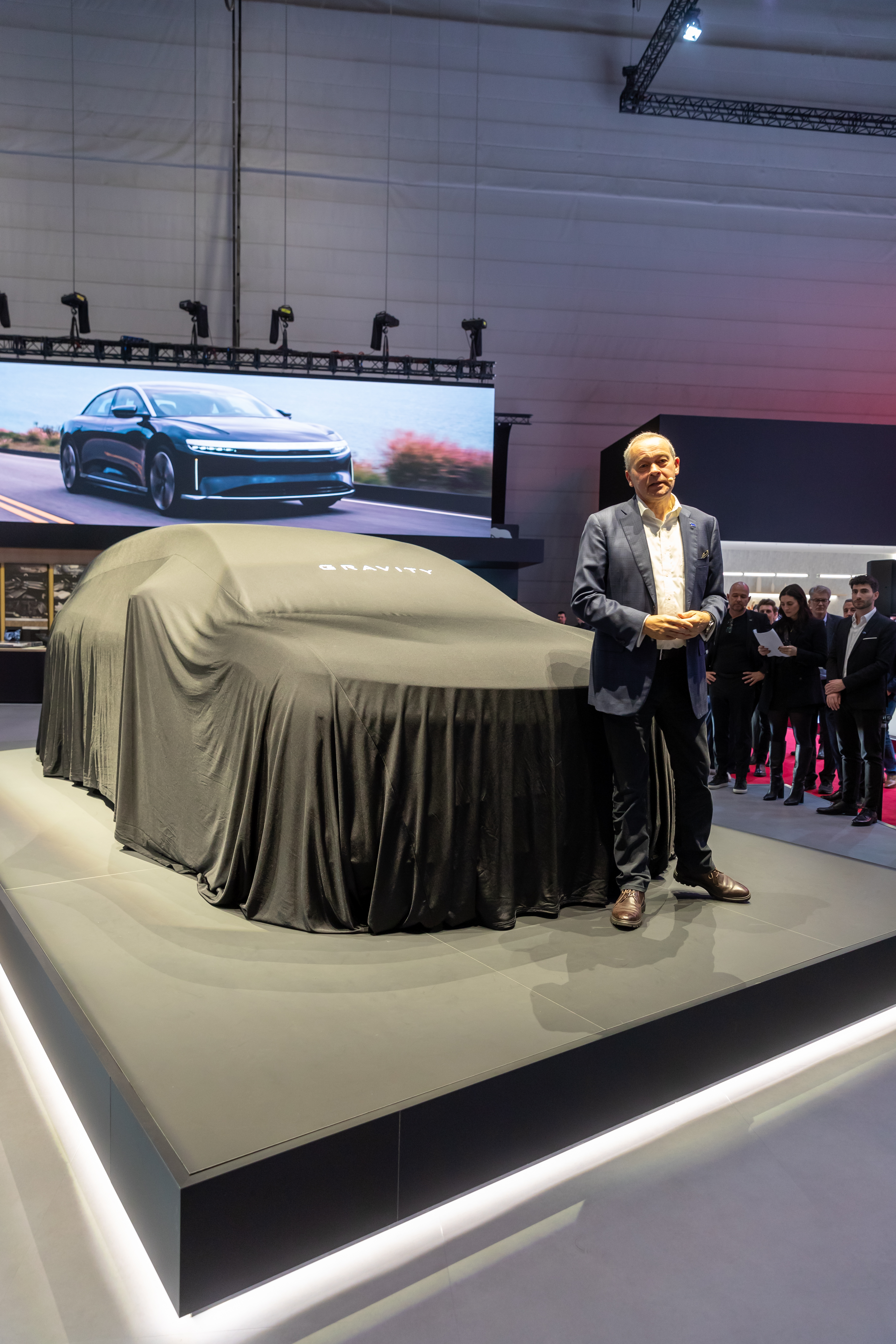
Lucid Gravity
The Lucid Gravity is an electric SUV made by Lucid. It’s designed to carry people and cargo while using electricity instead of gasoline. The podcast mentions it because it’s getting a hands-free driving feature, which helps the car steer and manage parts of driving with less driver input.
over the air update
An over-the-air update is a software update sent to the car wirelessly. It lets the manufacturer add or improve features without taking the car to a shop.
automated lane changes
Automated lane changes let the car switch lanes for you. The car uses sensors to do it, but it usually only works under certain conditions and still expects you to watch.
assembly plant
An assembly plant is where cars are built. The episode is using factory output capacity to talk about how many vehicles these companies can produce.