AD #4315 - Mexico’s Home Grown $8,600 EV; Magna Could Make Chinese Cars in North America; Ford Says Right Incentives Boost PHEV Charging
About this episode
GM is pushing bidirectional charging, arguing it needs standardized communication protocols and coordination across stakeholders. The show also highlights Mexico’s Olinia Uno EV, built around a 14.7 kWh LFP pack and targeting 125 km of range, with plans for 2,000 charging stations. Magna’s CEO says it could make cars for Chinese automakers in North America only with a commitment lasting at least two design cycles. Ford ties PHEV charging to lower running costs, while Intrepid’s cloud platform uses DTCs to pinpoint software-version issues.
LFP
"So when Ford announced it was pivoting most of its EVY battery plants to make storage systems for utilities and data centers, we wondered if GM would follow suit. Well, it finally did. In addition to LFP, GM says it will make sodium eye on batteries..."
LFP is a type of EV battery. It’s known for being relatively safe and cost-effective compared with some other battery types.
LFP stands for lithium iron phosphate, a lithium-ion battery chemistry. It’s often chosen for EVs because it’s generally considered safer and can be cheaper than some other lithium chemistries, though it may have different energy-density characteristics.
sodium eye on batteries
"Well, it finally did. In addition to LFP, GM says it will make sodium eye on batteries sense it can reuse most of the equipment that's needed to make lithium cells. Ford stock shot up over nineteen percent..."
The transcript is referring to sodium-ion batteries, which use sodium instead of lithium for the battery’s charge-carrying ions. Sodium-ion is often discussed as a potentially lower-cost alternative, especially where sodium supply chains are favorable, though performance and energy density can differ from lithium-ion.
bidirectional charging
"Meanwhile, GM is really pushing the idea of bidirectional charging. It already has two hundred and fifty thousand evs on the road in the US with that capability, and says that if all evs could be connected to the grid when they're not being used, it could offset the need to build more generating plants..."
Normally, you plug an EV in and it only takes power to charge. Bidirectional charging means the car can also send power back out—like acting as a backup battery for your home or the grid.
Bidirectional charging lets an EV not only draw electricity from the grid, but also send electricity back to it (or to a home/building). That turns the EV into a kind of temporary power source, which can help balance demand when many cars are plugged in.
GM Energy
"Wade Scheffer, the vice president of GM Energy, says we need to start looking at parking lots and driveways as a massive spread out power asset. Ford says just a one percent drop..."
GM Energy is GM’s group focused on electricity and grid-related ideas. Here, they’re talking about using EVs as part of the power system.
GM Energy is the energy-focused arm of General Motors, centered on grid and charging-related concepts like bidirectional charging. In this segment, it’s used to frame EVs as part of a broader energy system rather than just transportation.
CO two reductions
"Ford says just a one percent drop in people buying new cars can completely stall CO two reductions are racing an amount equal to two million combustion engine vehicles. But Jim Bomback..."
CO2 is the main greenhouse gas from burning gasoline and diesel. CO2 reductions means lowering the amount of CO2 released by transportation.
CO2 reductions refers to cutting carbon dioxide emissions, typically from transportation. In this context, the host is tying EV and plug-in adoption to the goal of reducing emissions compared with combustion-engine vehicles.
plugin hybrids
"That's why he says buyers need choice, putting an emphasis on plugin hybrids and encourages countries to offer incentives for driving on electricity. For example, in Sweden, an employer can reimburse an employee tax free for charging a hybrid at home..."
A plug-in hybrid can run on electricity like an EV, but it also has a gas engine. You plug it in to charge the battery, and when it runs low it uses gas.
Plug-in hybrids (PHEVs) are cars that combine an internal-combustion engine with an electric motor and a battery you can recharge from an external outlet. They’re designed to run on electricity for part of the time, then switch to the engine when the battery is depleted.
kilowhite hour
"While Olinia just unveiled its first model, called the Uno. It features a fourteen point seven kilowhite hour LFP battery pack and an eighteen horsepower motor which provide one hundred and twenty five kilometers..."
Kilowatt-hours (kWh) tell you how much energy is stored in the battery. More kWh usually means the car can go farther before it needs charging.
A kilowatt-hour (kWh) is a unit of energy used to describe a battery’s capacity. In EVs, a larger kWh number generally means the battery can store more energy, which often translates to more potential driving range (though efficiency and vehicle weight matter too).

Fiat Uno
"...twork of two thousand stations across Mexico. The Uno will go on sale in the country next year with a s..."
The Fiat Uno is a small car with a hatchback body, meant for everyday city and short-distance driving. It’s designed to be affordable to buy and relatively inexpensive to run. The podcast mentions it because it’s planned to be sold in Mexico soon.
The Fiat Uno is a small, budget-focused hatchback designed for everyday driving and low running costs. It’s significant in markets where compact cars are popular because it offers practical space in a simple, economical package. It may come up in the podcast because the Uno is being discussed for a new market launch in Mexico, indicating renewed interest in that model.
BASF
"BASF is warning that the war in Iran could cause supply issues for automakers. The company's CEO says shortages of materials are becoming more likely..."
BASF is a big supplier of chemicals used to make parts for many industries, including cars. They’re warning that problems in the region could mean fewer materials available, which could slow down car production.
BASF is a major chemical company that supplies materials used across automotive manufacturing. In this segment, BASF warns that geopolitical conflict could reduce key inputs (like sulfur and helium), which can ripple into production delays for automakers.
Magna
"Magna would be interested in making cars for Chinese automakers in North America as long as it's a long term deal... Swami Kotagiri, the CEO of Magna, said that they need a commitment lasting at least two design cycles..."
Magna is a company that helps build cars for other brands. They’re saying they’d be open to producing cars for Chinese companies in North America, but they need a long contract so the project makes financial sense.
Magna is an automotive supplier that builds vehicles and major systems for other brands, not just parts. Here, Magna’s CEO says it would consider making cars for Chinese automakers in North America, but only with a long-term commitment long enough to cover multiple design cycles.
design cycles
"Swami Kotagiri, the CEO of Magna, said that they need a commitment lasting at least two design cycles for it to make economic sense."
A “design cycle” is the long process of planning and developing a new car, from engineering to getting it ready to build. Magna is saying they need a long enough commitment—several years—so they can recoup the development costs.
A “design cycle” is the multi-year development timeline needed to engineer, validate, and prepare a new vehicle program for production. Magna is saying it needs at least two such cycles to justify the investment required to build cars economically.
Swami Kotagiri
"Yesterday, Swami Kotagiri, the CEO of Magna, said that they need a commitment lasting at least two design cycles for it to make economic sense."
Swami Kotagiri is the CEO of Magna. In this segment, he explains why Magna needs a long-term deal before it will invest in building cars.
Swami Kotagiri is identified as the CEO of Magna in this segment. His comments about needing long-term commitments and multiple design cycles frame Magna’s strategy for producing vehicles for other automakers.
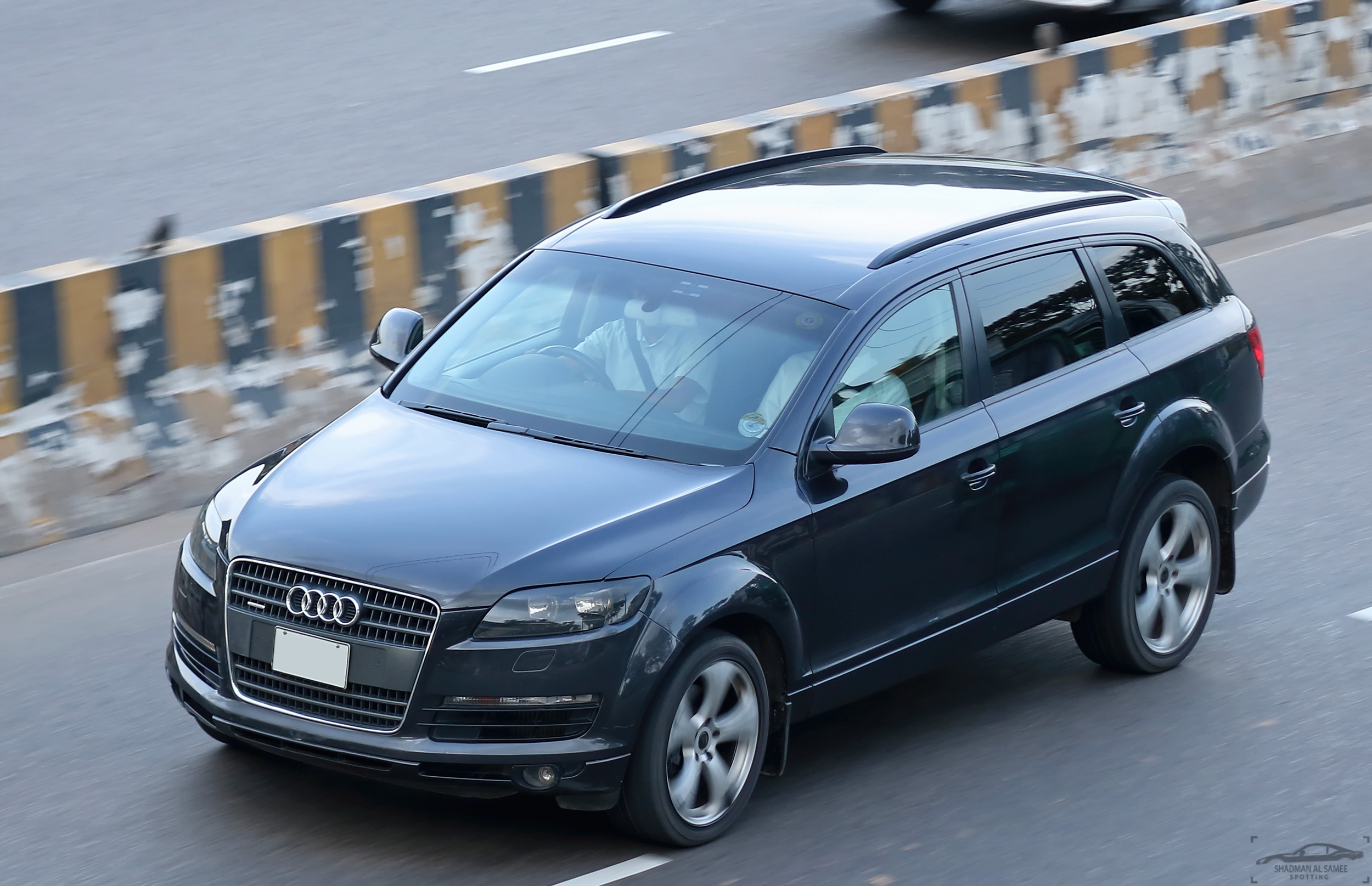
Audi Q seven
"Speaker 3: Audi revealed the all new Q seven... Depending on the market, it's available in five, six, and seven seat configurations... it will bring its adaptive headlights to the US for the first time..."
The Audi Q seven is a big luxury SUV with three rows of seats. In this update, Audi is talking about new engine choices and new lighting technology coming to the US.
The Audi Q seven is a full-size three-row luxury SUV, and this segment focuses on its new-generation powertrains and US rollout. Audi is described as offering multiple seating configurations, diesel and V6/V8 options depending on market, and adding adaptive headlights in the US for the first time.
turbo charged
"Either a turbo charged two point nine liter V six or a twin turbo four lider V eight that makes over five hundred and ninety horse power..."
Turbocharging uses a device that packs more air into the engine. That helps the engine make more power, even if it’s not a huge engine.
A turbocharged engine uses a turbocharger to force more air into the cylinders, allowing higher power output from a smaller displacement engine. The segment mentions a “turbo charged 2.9 liter V6” as one of the US options for the Audi Q7.
twin turbo
"Either a turbo charged two point nine liter V six or a twin turbo four lider V eight that makes over five hundred and ninety horse power..."
Twin-turbo means there are two turbochargers working to boost the engine. That usually helps the engine produce more power and respond strongly when you accelerate.
Twin-turbo means the engine uses two turbochargers to improve airflow and power delivery. In this segment, the “twin turbo V8” is described as making over 590 horsepower for the US market.
adaptive headlights
"While Audi helped pioneer the tech achnology for Europe, it will bring its adaptive headlights to the US for the first time, which can eliminate lightclair for other road users."
Adaptive headlights are headlight systems that adjust their aim and/or beam pattern based on driving conditions (like steering angle and speed). The host claims they can reduce glare for other road users by improving how light is aimed.
WEC
"Stella Lead, the company's executive VP, met with Stefano Dominicali, the President of the FIA, for the second time about getting into Formula one and or the WEC."
WEC is endurance racing—cars run for long periods, often with driver changes. It’s a different style of racing than Formula 1.
WEC refers to the World Endurance Championship, a series focused on long-duration racing. The segment also mentions the series’ premier event, connecting the business discussion to endurance racing.
Formula one
"Stella Lead, the company's executive VP, met with Stefano Dominicali, the President of the FIA, for the second time about getting into Formula one and or the WEC."
They’re talking about whether BYD could get involved in Formula 1. That’s the top level of open-wheel racing, and teams are expensive to run.
This segment discusses whether BYD and/or other partners could enter Formula 1. It’s a motorsport business topic tied to brand exposure and team ownership decisions rather than a technical car detail.
Stefano Dominicali
"the company's executive VP, met with Stefano Dominicali, the President of the FIA, for the second time about getting into Formula one and or the WEC."
Stefano Dominicali is a top official at the FIA, the organization that governs major motorsport rules. He’s mentioned here in connection with talks about getting into Formula 1 or endurance racing.
Stefano Dominicali is the President of the FIA mentioned here. The segment says he met with Magna’s/ BYD’s executive VP to discuss potential entry into Formula 1 and/or WEC.
Christian Horner
"Possibilities include BYD buying a part of the LPNF one team or starting its own team with Christian Horner, the former team leader at Red Bull f one."
Christian Horner is a well-known Formula 1 team leader who previously ran Red Bull’s F1 team. The segment is speculating he could help with a new team effort.
Christian Horner is referenced as the former team leader at Red Bull Formula 1. The segment suggests he could be involved in a BYD-backed Formula 1 team plan or a new team effort.
twenty four Hours of Lama
"And by the way, the wec's premier event, the twenty four Hours of Lama, is running this weekend and that's a wrap."
This is likely the “24 Hours of Le Mans,” a famous long-distance race in France. The cars and teams race nonstop for a full day, with drivers rotating.
This appears to be a mis-transcription of the “24 Hours of Le Mans,” the world-famous endurance race. It’s referenced as the WEC’s premier event running that weekend.
Request an Explanation
Heard something you'd like explained? We'll add it to this episode.
Sign in to request explanations for terms you heard.
Want to learn more?
Browse our glossary for plain-English explanations of automotive terms, jargon, and concepts.
Help improve this episode
See something that's not quite right? Our annotations are AI-generated and can sometimes miss the mark. Click the flag icon on any annotation to suggest a correction.