EPA certification documents are official government paperwork that verifies a car’s test results. For an electric car, it includes standardized range numbers that are meant to be comparable across vehicles.
The Tesla Cybercab is Tesla’s electric self-driving taxi concept. In this segment they share official EPA numbers like battery size, power, and how far it can go, plus they note it drives the front wheels (not the rear).
Unadjusted combined range is the test-based estimate of how far the EV can go. It’s a good comparison number, but your real range can be different depending on how you drive and conditions.
Adjusted range is a more realistic guess of how far you’ll get. It takes into account things like using the air conditioning or heat and how you actually drive.
Diagnostic trouble codes are like the car’s error messages stored in its computer. They help a shop figure out what system is acting up so the problem can be diagnosed faster.
DTCs are short for diagnostic trouble codes—basically the car’s stored error codes. They’re used to track problems and confirm whether a software change fixed the issue.
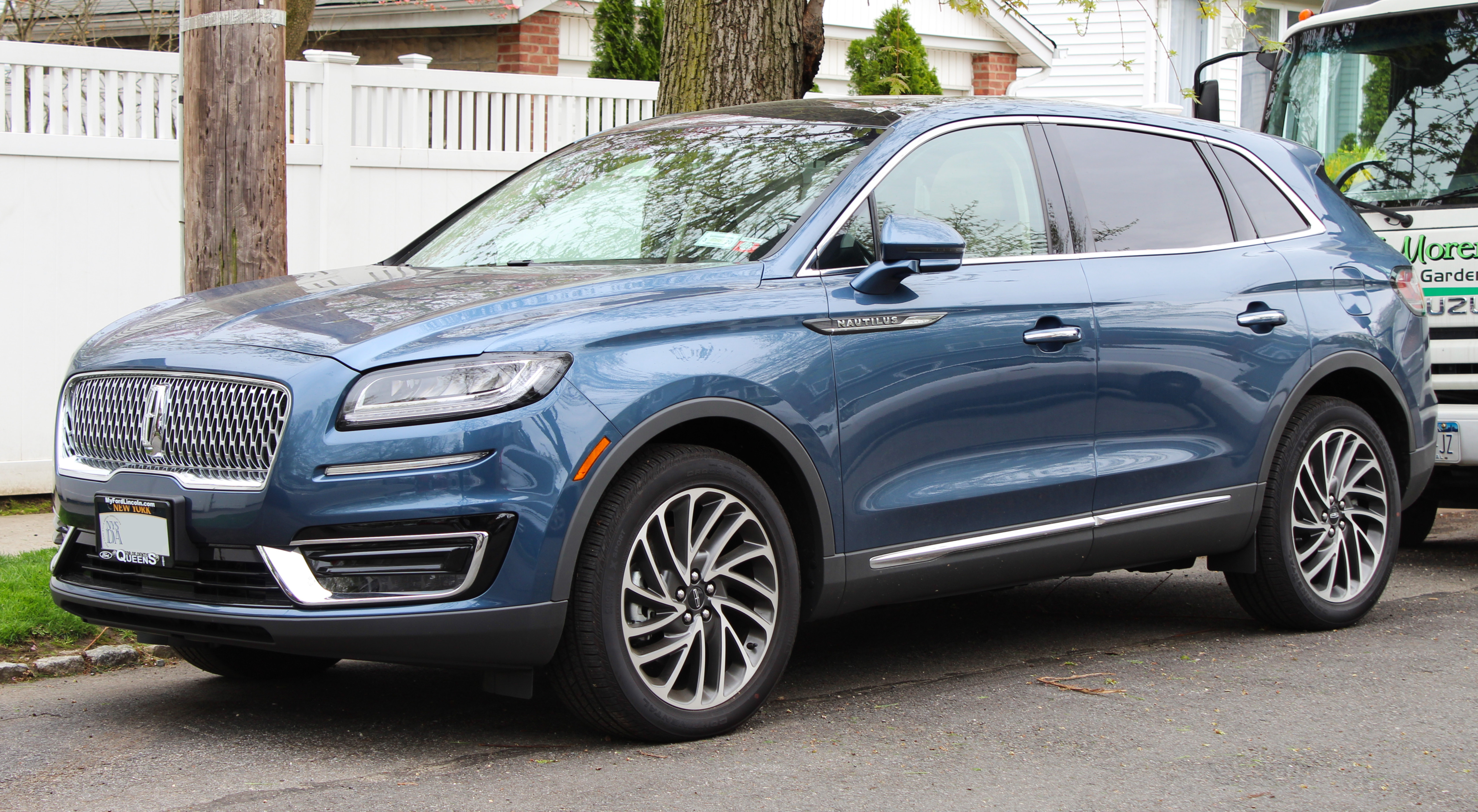
The Lincoln Nautilus is a luxury SUV made by Lincoln (Ford’s luxury brand). Here, the big issue is that the U.S. government is restricting certain Chinese software/connected features, so Ford needs permission to keep selling that version.
Car
Volvo
Volvo is a car company. In this story, Volvo is mentioned because it got permission to keep selling cars in the U.S. even though they include Chinese software—so it’s a clue that Ford could potentially get similar approval.
The BMW X3 is a luxury SUV from BMW. In this segment it’s the example car where an AI chatbot gave the wrong selling price, causing a big difference in the offer.
The Alpine A390 GTS is an all-electric SUV. It’s built for performance, with multiple electric motors and upgraded braking and handling features to help it accelerate and turn more aggressively.
Active torque vectoring is a system that helps a car turn by controlling how much power goes to different wheels. Instead of sending the same power everywhere, it can shift it to the wheels that need it most for better handling.
Virtual testing means using computer simulations to test a car before building real prototypes. It can save time and money because you can try changes digitally first.
Clay freeze is a point in the design process where the car’s shape is basically locked in. The host says that’s the moment when companies start spending heavily to prepare to build the car.
Line speed is how fast the factory assembly line is running once the car is really in production. The host says that’s the point where you can say development is “done” because the car is finally being built at scale.
LIVE
Speaker 1: This is Outline Daily, the show dedicated to enthusiasts of the global automotive industry. Yesterday we reported how European automakers
are getting into the defense business. Today, the Wall Street
Journal reports that General Motors is talking with Lockheed Martin about making parts for munitions. GM already has a business
unit called GM Defense, but up until now it focused on making vehicles that can carry troops or go out on patrol, not weapons or munitions production. The US recently
accused Chinese automakers Neo and BYD of aiding the Chinese military and blocked them from doing business with US defense contractors.
Both companies denied those claims, and currently they don't have any business with the US government. So as a result,
we wonder if the Chinese government will retaliate against GM.
In any case, we're more likely to see automakers and supples around the world getting involved in military production. It
looks like the Iran War is coming to an end, but the effects are going to linger for months. Car
dealerships and repair shops around the world have been running short of motor oil, lubricants, diesel, exhaust fluid, and paint.
Reuter's reports that auto repair shops have been hit especially hard on the flip side, though Bloomberg reports that spot prices of petrochemicals have already started to drop just on the news that the Straits of Hormuz will reopen, but even so it will take the rest of the year for supplies to build back up to where they were before the war started. Tesla has been pretty tight lipped
about the Cybercab, but thanks to EPA certification documents, we just got a lot more information. It features a one
hundred and sixty three kilowatt or roughly two hundred and twenty horse power electric motor, a nearly forty eight kilowatt hour lift fum ion battery pack, and a curb weight of just over thirty one hundred pounds, which is seven hundred and fifty pounds lighter than a Model three. It
has an unadjusted combined range of four hundred and eighteen miles, but when you factor in things like AC heat and driving behavior, the adjusted range is around two hundred and ninety three miles, and unlike most Teslas, which are rear or all wheel drive, the Cybercab is front drive. While
we're getting a better understanding of the purpose built Robotaxi Tesla still needs regulatory approval before it can roll out the vehicle without any backup drivers. EV sales in the
US by the end of the decade will be much lower than previous forecasts. In twenty twenty four, Bloomberg NEF
estimated that fully electric vehicles would account for forty eight percent of overall sales in the US by twenty thirty.
Last year, it lowered that projection to twenty seven percent, and wow, it lowered it again to seventeen percent of sales.
The weaker forecast is the result of the Trump administration rolling back emission standards and eliminating the federal tax credit for evs, and it won't just impact the US. Bloomberg
now projects thirty five point six million evs will be sold worldwide in twenty thirty, about three point four million lower than last year's forecast.
Speaker 2: Ad Intrepid we produce network hardware and software solutions enabling vehicle manufacturers to innovate and design the next generation of modern mobility. Delivering scalable next generation solutions requires thorough testing
and validation of vehicle platforms. Intrepid's Neovi cloud platform helps
manufacturers quickly identify diagnostic trouble codes and defects by pinpointing which vehicles have specific software versions. This allows them to
isolate non compliant vehicles in real time using analytics, part numbers, DTCs, and organized secure cloud based data. All of these steps
ensure vehicles are cleared for production and ready for the road, taking your fleet testing into the future of mobility intrepid control systems driven by your data.
Speaker 1: Ford is seeking an exemption to import the Chinese built Lincoln Nautilus to the US. The automaker needs a license
from the government to continue selling the model because of a ban on Chinese software and connected cars, and the software in the Nautilus is developed in the US but installed in China, which is why Ford needs government approval.
Starting for the twenty twenty seven model year, most Chinese developed and maintained software is banned from vehicles, and then for the twenty thirty model year, restrictions on Chinese hardware and vehicle go into effect. Last month, Volvo received authorization
to continue selling vehicles in the US with Chinese software, so it's likely Ford we'll get an exemption too. AI
can be incredibly powerful enough to replace humans in some cases, but like any piece of tech, it's not going to be perfect. And here's an example of a seven thousand
dollars error. A BMW owner wanted to sell his X three,
so we started chatting online with the dealer that he originally bought it from, eventually agreeing to a price of just over twenty seven thousand dollars. But the owner didn't
know he was interacting with the chatbot, and the dealer called saying the AI made a mistake. Its new offer
was closer to twenty thousand bucks. Not willing to accept that,
the owner contacted CBC News saying, quote, if they're going to be replacing their employees' jobs with AI, then they need to be honoring what that AI said. After being
reached by CBC, the dealer reverse course and reinstated the AI price, adding this is quote new territory for us.
We're trying to figure out the best way for a good customer experience. Alpine is now taking orders for the second,
more powerful version of the A three ninety, the brand's very first suv, which also happens to be all electric.
The A three ninety GTS features three motors, one at the front and two at the rear, which are mounted in an LPENE developed aluminum subframe and combined to produce four hundred and seventy horse power. That's enough to move
the five seater from zero to one hundred kilometers an hour in three point nine seconds, nearly a full second faster than the GT version, which makes four hundred horse power.
Other highlights include unique wheels, active torque vectoring, larger brakes, and six piston front calipers. Pricing for the A three
to ninety GTS starts at seventy eight thousand euros including taxes.
Nissan says it's learning how to run at China speed and has cut the development time of new models from fifty five months down to twenty four. It's relying heavily
on AI at the design stage to help optimize aerodynamics and aesthetics, as well as replacing sixty percent of its physical testing with virtual testing, and it's also using AI to speed up management decisions and approvals as well as to streamline at supply chain. But maybe Nissan needs to
pick up the pace in China. An eighteen month development
cycle is now the benchmark, with a goal at getting to twelve months. Of course, we still need to learn
how they're measuring when a program starts and when it stops.
At autuline, we think the Stopwatch should start at clay freeze and stop when production hits full line speed. Clay
freeze is when an automaker really starts spending heavily to tool up a car, and line speed is when a vehicle line starts to make a profit. And for those
of you who are involved in product development, we'd love to learn how you would do it, but that's a rat for today's show. Thanks for making autoline a part
of your day.
Speaker 3: Auto Line Daily is brought to you by Bridge Stone Solutions for your Journey CSP, the composites solution partner Intrepid Control Systems, over the Air Engineering boost your game and thanks to the following YouTube and Patreon members.
Speaker 4: At CSP, we work with OEM engineers across the country on their journeys to lighter, safer, and more eco friendly vehicles.
Learn more at these esp dot com.
Speaker 1: Making a life full of memories, one road trip at a time, that's what really matters.
Speaker 4: Rigdon weather Peak Tires with Speaker 3: A seventy thousand mile women at Warranty
About this episode
GM’s talks with Lockheed Martin signal automakers moving deeper into defense supply chains, raising questions about potential Chinese retaliation after the US blocked BYD and Neo. The episode also tracks lingering post–Straits of Hormuz shortages hitting oil, lubricants, diesel, and shop supplies. Tesla Cybercab details emerge from EPA paperwork, including a 163 kW motor, ~48 kWh battery, and front-drive robotaxi setup—still awaiting regulatory approval. EV forecasts drop sharply. Other items: Ford seeks a US exemption for the China-built Lincoln Nautilus, an AI chatbot pricing blunder costs $7,000, and Alpine’s new electric A390 GTS plus Nissan’s AI-driven China development acceleration.
- GM to Make Military Munitions - Iran War Effects Will Linger for Months - Key Tesla Cybercab Details - EV Sales Forecast Much Lower Than Before - Lincoln Seeks China Exemption for Nautilus - AI Makes $7,000 Mistake - Alpine Opens Orders for A390 GTS - Is Nissan's 'China Speed' Too Slow?