AD #4320 - GM Not Giving Up on Robotaxis; Chinese Auto Execs Warn of Thin Margins; German Suppliers Cut Jobs and Investments
About this episode
Robotaxis are back on the menu for GM, even after it shut down Cruise’s autonomous business in late 2024. The show also highlights partnerships pushing Level 4 autonomy, plus GM’s “eyes off” plans for 2028. On the traditional auto side, Chinese executives warn that the market is tightening into thin margins, while German automakers and suppliers respond with guidance cuts and production changes. The episode also touches on platform electrification shifts at Jaguar Land Rover and a cloud platform for vehicle validation.
thin margins
"The COO of Leap Motor says bold moves and speed will be replaced by thin margins and uncertainty that demands extreme flexibility..."
Thin margins means the profit on each car is small. When that happens, it’s harder for companies to deal with surprises or invest in new cars.
Thin margins means automakers are earning relatively little profit per vehicle sold. When margins get tight, companies have less room to absorb costs, invest in new products, or handle demand swings—so flexibility becomes critical.
prolonged downturn
"He points out that new car sales in China are down almost twenty percent this year and warns that automakers need to be prepared for a prolonged downturn."
A prolonged downturn means a long period where car sales are weak. Companies may have to slow down production and spend less because fewer cars are selling.
A prolonged downturn is an extended period of weaker demand and sales. In auto terms, it can force manufacturers to cut production, delay investment, and rely on cost control rather than growth.
BMW
"BMW just lowered its guidance for twenty twenty six due to weak sales in China and disruptions caused by the war in Iran."
BMW is mentioned because it lowered its forecast. The reason given is weaker sales in China and disruptions tied to the war in Iran.
BMW is cited as lowering its guidance due to weak sales in China and disruptions linked to the war in Iran. The segment uses BMW’s forecast changes to show how global events and regional demand are pressuring automakers’ financial outlook.
Volkswagen
"Meanwhile, Volkswagen is planning to scale back production at one of its plants in Germany, which has labor represented as concerned about the site's future."
Volkswagen is the car company mentioned here. They’re talking about cutting back production at a German plant because demand is weaker and the future is uncertain.
Volkswagen is the German automaker discussed here as planning production changes at a plant in Germany. The segment focuses on how demand weakness and uncertainty are affecting output and workforce decisions.
Osna Brook plant
"Production of the convertible version of the t Rock crossover is being reduced, the only model that the Osna Brook plant makes. That production is scheduled to end completely next year..."
This is a specific Volkswagen factory location in Germany. The episode uses it as an example of how changes in car demand can affect workers there.
The Osnabrück plant is a specific Volkswagen manufacturing site in Germany. In this segment, it’s used to illustrate how production schedules and product plans can directly impact local jobs and investment decisions.
full battery electric power trains
"Some models will remain on the company's MLA platform, which supports mild hybrid, plugin hybrid, and full battery electric power trains."
This means the car is fully electric. It runs on a battery and an electric motor, not a gas engine.
A full battery electric powertrain (BEV) uses only electric motors powered by a battery pack. There’s no gasoline engine, so efficiency and energy management depend heavily on battery capacity, charging, and thermal control.
plugin hybrid
"Some models will remain on the company's MLA platform, which supports mild hybrid, plugin hybrid, and full battery electric power trains."
A plug-in hybrid is part electric and part gas. You can charge it at home or at a charger, and it can usually drive for a while on electricity before the gas engine takes over.
A plug-in hybrid (PHEV) combines a gasoline engine with an electric motor and a battery that can be charged from an outlet. It can often drive short distances on electricity alone, then switches to hybrid mode when the battery is depleted.
MLA platform
"Some models will remain on the company's MLA platform, which supports mild hybrid, plugin hybrid, and full battery electric power trains."
MLA platform is Land Rover/Jaguar’s shared vehicle design that can be used for different kinds of electrified powertrains. It’s like a common “car skeleton” that can be adapted for different versions.
Jaguar Land Rover’s MLA platform is a modular architecture that can be configured for multiple electrified powertrains, including mild hybrid, plug-in hybrid, and full battery electric. Using one platform for several powertrain types helps manufacturers spread development costs and speed up product updates.
mild hybrid
"Some models will remain on the company's MLA platform, which supports mild hybrid, plugin hybrid, and full battery electric power trains."
A mild hybrid is a car that has a small electric motor to help the gas engine. It usually can’t run on electricity alone for long—its main job is to assist and improve efficiency.
A mild hybrid uses a small electric motor to assist the engine, improving efficiency and smoothness. It typically cannot drive the car by itself for long distances, unlike full battery electric vehicles.
Jaguar Land Rover
"Jaguar Land Rover is modifying its future strategy in the hopes of achieving double digit revenue growth in the medium term."
Jaguar Land Rover is the car company in this part of the news. They’re changing their plan to grow revenue, but they also expect lower profits and say they need to cut costs.
Jaguar Land Rover (JLR) is the automaker discussed as modifying its strategy to target double-digit revenue growth while also forecasting weaker profit margins. The segment ties its platform plans (MLA/EMA) to an electrification roadmap and cost-cutting needs.
double digit revenue growth
"Jaguar Land Rover is modifying its future strategy in the hopes of achieving double digit revenue growth in the medium term."
Double-digit revenue growth means the company expects its sales/earnings from selling cars to rise by 10% or more. It’s a business goal, not a car-tech term.
Double-digit revenue growth means revenue is expected to increase by at least 10% over a period. It’s a financial target used to communicate growth expectations to investors and analysts.

Land Rover Range Rover
"...ry electric power trains. The latter includes the range Rover Electric and range Rover Sport Electric that come..."
The Range Rover is a large luxury SUV made by Land Rover. It’s designed to be comfortable for everyday driving while still being capable on rough roads. The podcast mentions an electric version, which uses an electric motor instead of a traditional engine.
The Land Rover Range Rover is a full-size luxury SUV known for combining off-road capability with high-end comfort. In the podcast context, it’s discussed as part of the brand’s move toward electric powertrains, including an all-electric Range Rover variant. That makes it a notable topic because it represents how a flagship model is being adapted to new technology and driving characteristics.

range Rover Sport Electric
"The latter includes the range Rover Electric and range Rover Sport Electric that come out later this year."
Range Rover Sport Electric is the electric version of the Range Rover Sport. It’s the same idea—an electric SUV—but in the Sport model lineup.
Range Rover Sport Electric is the electric variant of Land Rover’s Range Rover Sport, bringing BEV technology to the performance-leaning SUV within the Range Rover family. It’s mentioned as part of Jaguar Land Rover’s electrification rollout later in the year.
EMA platform
"The first all electric model from its new EMA platform will come out later this year as well, and is also from the range Rover brand, but the company says this platform will now offer strong hybrids too."
An EMA platform is the underlying vehicle “building system” Jaguar Land Rover plans to use for electric cars. The idea is to make it easier to build different electrified versions on the same core design.
Jaguar Land Rover’s EMA platform is an electric-focused vehicle architecture intended to support battery-electric vehicles and, as described here, strong hybrids. Platform strategy matters because it determines how efficiently different electrified powertrains can be packaged and built.
strong hybrids
"but the company says this platform will now offer strong hybrids too. However, even with some of those changes, the Jaguar brand is still going electric only."
Strong hybrid means the car can rely on the electric motor more often than a mild hybrid. It still uses a gas engine too, but the electric system does more of the work.
Strong hybrid (often called full hybrid in some markets) typically uses a larger electric system than a mild hybrid and can usually propel the car electrically at low speeds or for short distances. It’s a step up in electrification capability compared with mild hybrid setups.
Tata
"Investors didn't like the news, and shares at parent company Tata fell as much as nine point six percent."
Tata is the parent company mentioned in the stock-market reaction. The episode says Tata’s shares dropped after Jaguar Land Rover’s financial outlook got worse.
Tata is the parent company referenced here for Jaguar Land Rover’s corporate ownership. The segment notes that Tata’s shares fell after the company forecast weaker profitability.
robotaxis
"Well, surprise, surprise, General Motors isn't giving up on robotaxis after all. Even though GM shut down its Cruise autonomous business in late twenty twenty four, GMS had a product."
Robotaxis are self-driving cars that you can call like a rideshare. Instead of a human driver, the car does the driving.
Robotaxis are autonomous vehicles that operate as a ride-hailing service without a human driver. The key idea is that the car handles driving tasks end-to-end, so it can be deployed like a fleet for passenger transport.
General Motors
"Well, surprise, surprise, General Motors isn't giving up on robotaxis after all. Even though GM shut down its Cruise autonomous business in late twenty twenty four, GMS had a product."
General Motors is a big car company. They’re working on self-driving technology and robotaxis, even though they stopped one part of their self-driving effort recently.
General Motors (GM) is a major global automaker that’s investing in autonomous driving through its Cruise and other autonomous efforts. In this segment, GM is described as continuing robotaxi development even after shutting down Cruise’s autonomous business.
level four autonomous vehicles
"Uber and Wave announced they formed a partnership to develop and deploy level four autonomous vehicles globally. However, no timetable for the launch was given."
Level four means the car can drive itself in certain situations without you needing to constantly supervise. It’s not necessarily “everywhere, all the time,” but it’s a big step up from earlier levels.
“Level four” autonomy is a driving capability definition where the vehicle can handle driving in specific conditions without expecting a human to constantly take over. It’s more capable than lower levels, but it’s still limited to defined environments or scenarios.
Uber
"Speaking of Uber and robotaxis, the ride hailing company also has a partnership with Lucid Motors and neuro and they announced that Houston will be the second market for their service..."
Uber is a rideshare app and company. Here, they’re working with partners to bring self-driving ride services to cities.
Uber is a ride-hailing company that’s partnering with automakers and autonomy providers to deploy autonomous vehicles. In this segment, Uber is tied to robotaxi-related partnerships and new market launches.
Lucid Motors
"Speaking of Uber and robotaxis, the ride hailing company also has a partnership with Lucid Motors and neuro and they announced that Houston will be the second market for their service..."
Lucid Motors is an EV company that makes electric cars. They’re mentioned here because they’re partnering on a self-driving ride service.
Lucid Motors is an electric-vehicle brand known for high-end EVs and advanced powertrain/efficiency engineering. In this segment, Lucid is mentioned as a partner for Uber’s autonomous-vehicle efforts.
Mobilize
"In one last bit of robotaxi news, Avy company Mobilize says it plans to expand beyond being a supplier of the technology and will launch its own robotaxi business."
Mobilize is a company involved with self-driving tech. Here they’re saying they’ll start running their own robotaxi service, starting with a small fleet and then growing.
Mobilize is referenced as a company planning to move beyond supplying autonomy technology and instead launch its own robotaxi business. The segment describes an initial fleet deployment followed by rapid scaling.
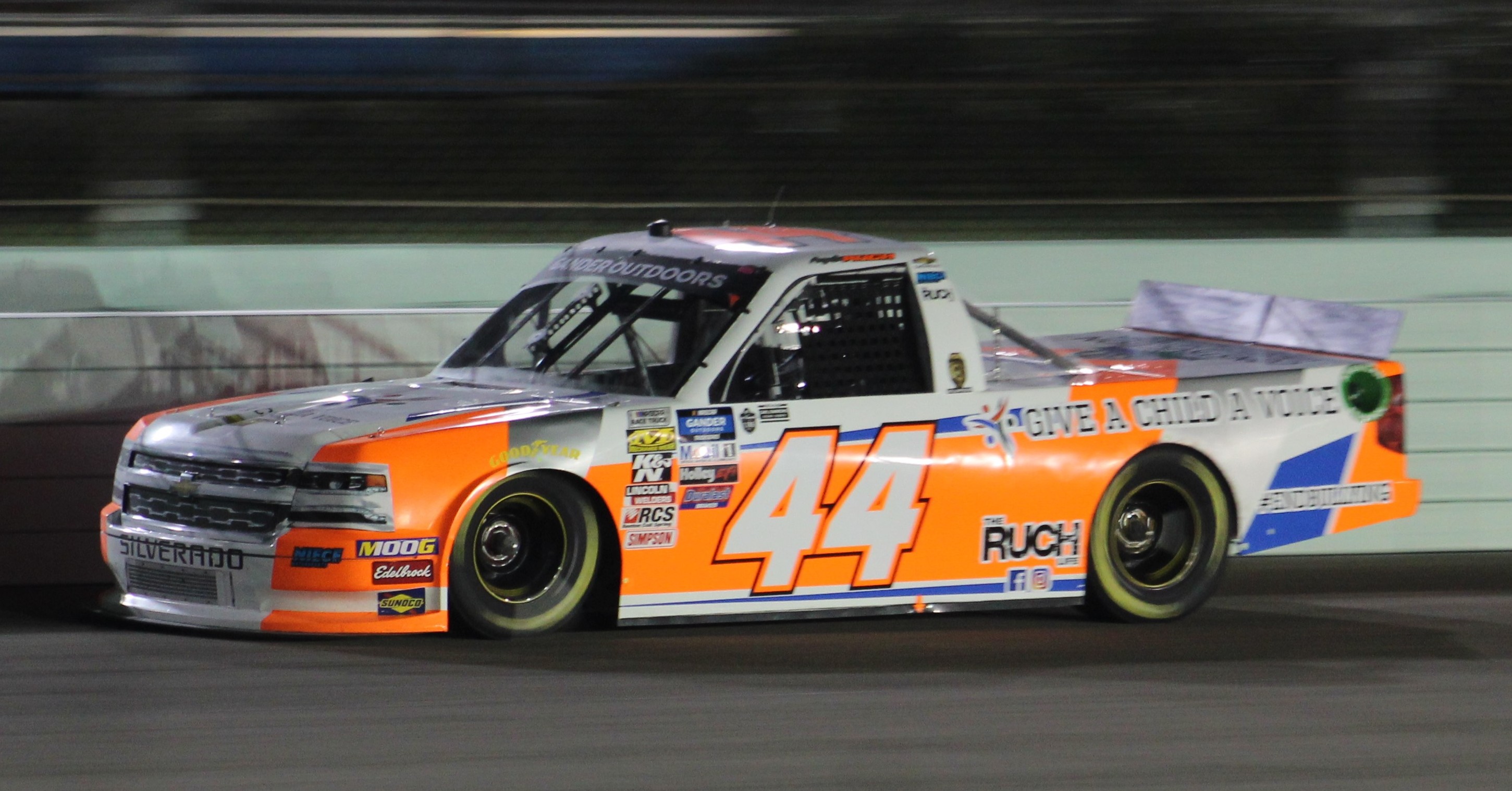
Chevrolet Silverado
"Chevy says it sells a Silverado every fifty seven seconds, so it's very important that the next gen version it just revealed picks up right where the old one left off."
The Chevy Silverado is GM’s big pickup truck. This episode talks about the next version and what’s changing—especially the engines and the interior.
The Chevrolet Silverado is GM’s flagship full-size pickup, and this segment focuses on the next-generation truck’s updates. They highlight changes to the V8 lineup, a new interior dash layout, and the fact it’s a major driver of GM sales.
V eights
"But it did make updates to the V eights. While it didn't provide details for the next gen five point seven and six point six liter engines..."
A V8 engine has eight cylinders arranged in a V shape. It’s the kind of engine that’s often chosen for strong power in trucks, and the host says GM is updating it.
“V8” refers to an engine with eight cylinders arranged in a V shape. The segment says the next Silverado updates its V8 engines to improve power and torque.
power and torque
"it did say they'll deliver improvements in power and torque, and that the six point six Leader is the most powerful naturally aspirated V eight in its class."
Power and torque are both measures of how strong the engine is. Torque is the “pulling” force that helps you get moving and tow, while power is how much work the engine can do over time.
Power and torque are two different ways to describe engine output. Torque is the twisting force that helps acceleration and towing, while power is how quickly the engine can do work (often tied to RPM).
naturally aspirated
"it did say they'll deliver improvements in power and torque, and that the six point six Leader is the most powerful naturally aspirated V eight in its class."
Naturally aspirated means the engine doesn’t use a turbo or supercharger to push air in. It relies on normal engine breathing, which can feel different than turbo engines.
Naturally aspirated means the engine draws in air without a turbocharger or supercharger. That typically changes how the engine delivers power—often with smoother response but different peak output characteristics compared with forced-induction engines.
Durmacs three Leader diesel
"The two point seven liter four cylinder, now paired with a tens beat auto and the Durmacs three Leader diesel are still available as well."
Duramax is GM’s name for certain diesel engines. Diesel engines tend to make strong low-end pulling power, which is useful for towing and heavy-duty driving.
“Duramax” is GM’s brand name for its diesel engines, and “3.0L Duramax diesel” would be a specific displacement and engine family. Diesel engines use compression ignition and are often chosen for efficiency and torque-heavy use cases like towing.
tens beat auto
"The two point seven liter four cylinder, now paired with a tens beat auto and the Durmacs three Leader diesel are still available as well."
This sounds like a 10-speed automatic transmission. It’s designed to pick the right gear for the situation so the truck can feel smoother and use fuel more efficiently.
This appears to refer to a “10-speed automatic” transmission (the transcript reads “tens beat auto”). A 10-speed automatic uses multiple gear ratios to keep the engine in a more efficient or responsive RPM range.
dash layout
"On top of the engine updates, there's also some tweets to the interior, highlighted by a new dash layout with fresh display screens, including an optional one for the passenger."
The dash layout is how the dashboard is designed—where the screens and controls are placed. They’re saying the new Silverado gets a redesigned dashboard with updated displays.
A dash layout refers to the arrangement of controls and displays on the dashboard. The segment notes a new dash layout with updated screens, including an optional passenger display.
higher gas prices
"but the numbers were practically flat in the first quarter of this year and now Duncan Aldrid, GM's president of North America, admits that higher gas prices have pushed buyers away from more expensive trucks and SUVs faster than the company expected."
They’re saying expensive gas can change what people want to buy. If fuel costs go up, some shoppers pull back on pricier trucks and SUVs.
The segment connects consumer demand shifts to fuel-cost expectations. When gas prices rise, buyers may delay or avoid higher-priced trucks and SUVs, changing sales mix even if the vehicles themselves don’t change.
Request an Explanation
Heard something you'd like explained? We'll add it to this episode.
Sign in to request explanations for terms you heard.
Want to learn more?
Browse our glossary for plain-English explanations of automotive terms, jargon, and concepts.
Help improve this episode
See something that's not quite right? Our annotations are AI-generated and can sometimes miss the mark. Click the flag icon on any annotation to suggest a correction.