
AD #4327 - Volkswagen Doubling Job Cuts To 100,000 In Germany; Polestar Denied Permission to Sell Vehicles in U.S.; GMC Debuts Redesigned 20
About this episode
Volkswagen is reportedly upping Germany job cuts to 100,000 and plans to close several assembly plants. Tesla is pushing the other direction, saying it will boost production at its Berlin plant by 20%. RoboTaxi progress continues too, with NHTSA proposing to drop the brake pedal requirement. In the U.S., Polestar has been blocked from selling vehicles after its exemption request was denied by the Commerce Department. BMW also shared results from humanoid robot tests, supporting production of 30,000 X3s over 10 months.
Volkswagen Group
"Earlier this year, the Volkswagen Group said it was going to get rid of 50,000 jobs in Germany by the end of the decade. Now it's reportedly upping that to 100,000 and plans to close assembly plants in Hanover, Zwickau, Emden and Neckersloom."
Volkswagen Group is the big company that owns multiple car brands. Here, they’re talking about cutting a lot of jobs and closing factories in Germany.
Volkswagen Group is the parent company behind brands like Volkswagen and Audi, and it also operates major manufacturing in Germany. In this segment, it’s making large workforce and plant-closure decisions, which is a big deal for European auto production.
Hanover
"Now it's reportedly upping that to 100,000 and plans to close assembly plants in Hanover, Zwickau, Emden and Neckersloom."
Hanover is a city in Germany. The show is mentioning it because a car company is planning to close a factory there.
Hanover is a major city in Germany with industrial and automotive manufacturing capacity. When a global automaker plans to close an assembly plant there, it can significantly affect local jobs and the supply chain.
Renault
"Meanwhile, Renault says it's going to get rid of 800 engineers in France by the end of next year. It's all about lean engineering to better compete with Chinese automakers."
Renault is a big car company from France. In this segment, they’re saying they’ll cut hundreds of engineering jobs as they try to compete better.
Renault is a major French automaker that’s responding to competitive pressure by cutting engineering roles. The segment frames this as a shift in how the company develops vehicles to keep up with faster-moving rivals.
lean engineering
"It's all about lean engineering to better compete with Chinese automakers. And here's why we think it's getting rid of so many engineers."
Lean engineering means trying to make the engineering process more efficient. The goal is to spend less time and effort on wasted work so the company can move faster and cheaper.
Lean engineering is a development approach that tries to reduce waste—like unnecessary steps, delays, and rework—so teams can build products faster and more efficiently. In automaking, it often means streamlining design and production processes to lower cost and respond quicker to market changes.
horse
"Renault spun off its powertrain operations to the company called horse. The new Twingo was developed at the company's R&D center in China"
“Horse” here is a separate company Renault set up for its powertrain work. The idea is to reorganize how the car’s drivetrain components are developed and produced.
In this segment, “horse” is described as the company Renault created by spinning off its powertrain operations into a separate entity. That kind of corporate restructuring can change how quickly technologies get developed and how costs are managed.
software-defined vehicles
"The new Twingo was developed at the company's R&D center in China and that's where it's going to do all its development for software-defined vehicles. But the problems in Europe are with legacy automakers."
A software-defined vehicle is a car where software plays a big role in how it works. Instead of everything being set in hardware, the car can be updated and improved through software.
Software-defined vehicles are cars where key functions and features are primarily controlled by software platforms rather than fixed hardware. That enables faster updates, new features over time, and more centralized control of things like infotainment and driving-related systems.

Renault Twingo
"Renault spun off its powertrain operations to the company called horse. The new Twingo was developed at the company's R&D center in China and that's where it's going to do all its development for software-defined vehicles."
The Renault Twingo is a small city car. Here they’re saying the newer version was developed in China, especially for the software that runs modern vehicle features.
The Renault Twingo is a small city car, and this segment highlights that the “new Twingo” was developed in China for software-focused vehicle development. That’s a notable strategy shift because it ties the car’s future tech roadmap to a different development geography.
Tesla
"Tesla says it's going to boost production at its plant in Berlin by 20%. It's going to add another 1,000 workers to the line, which comes on top of the 2,500 jobs that it announced last month in Germany to make batteries."
Tesla is an electric-car company. In this segment, they’re talking about Tesla expanding production in Germany and selling more cars in Europe.
Tesla is an EV and technology company, and the segment focuses on its manufacturing expansion in Berlin and its sales momentum in Europe. It’s used here as a contrast to traditional “legacy” automakers facing tougher competition.
Berlin
"Tesla says it's going to boost production at its plant in Berlin by 20%. It's going to add another 1,000 workers to the line, which comes on top of the 2,500 jobs that it announced last month in Germany to make batteries."
Berlin is a city in Germany. The show mentions it because Tesla is increasing production at its factory there.
Berlin is the German city where Tesla’s plant is referenced in this segment. When production is increased at a specific city’s factory, it signals direct changes to local employment and EV supply.
RoboTaxi
"But now with high gas prices triggered by the Iran War, Europeans are shrugging off their muskphobia. Last month Tesla sales in Europe shot up 107%. The RoboTaxi business keeps getting more and more interesting."
RoboTaxi means a taxi that drives itself. Instead of a human driver, the car uses technology to navigate and provide rides.
RoboTaxi refers to a self-driving taxi service that operates with minimal or no human involvement. It’s typically built on autonomous-driving software and sensor hardware, and it’s a major part of how companies try to commercialize autonomy.
Zooks
"The RoboTaxi business keeps getting more and more interesting. Zooks, which is owned by Amazon and makes its own RoboTaxi in California,"
Zooks is described as an Amazon-owned company working on a self-driving taxi project in California. It’s part of the race to build RoboTaxis.
Zooks is mentioned as being owned by Amazon and making its own RoboTaxi in California. The segment is pointing to competition in autonomous ride-hailing, not traditional car sales.
brake pedal requirement
"And hot on the heels of that, [139.4s] NHTSA is proposing to drop the brake pedal requirement for RoboTaxis. [144.2s] We think this is a good first step,"
This is a rule about whether a self-driving taxi must still have a real brake pedal. The idea is that if the car can stop safely on its own, regulators might not require the pedal.
A brake pedal requirement is a regulatory rule that mandates a physical brake control be present and usable by a human or safety system. For autonomous vehicles, regulators may loosen such requirements if the vehicle can reliably stop using its automated controls.
Polestar
" [178.4s] Polestar just got bad news. [180.5s] It can no longer sell vehicles in the US. [183.4s] The government is now restricting the import and sales of cars with connected vehicle technology"
Polestar is an electric-car brand. In this story, the U.S. is limiting its ability to sell new cars, even though Polestar says it will keep supporting existing owners.
Polestar is an automaker focused on electric vehicles, and in this segment it’s facing a U.S. sales restriction tied to connected vehicle technology. The host notes Polestar is owned by Geely and that its Polestar 3 is built in the U.S., but the company still can’t sell new vehicles starting with the 2027 model year.
connected vehicle technology
"The government is now restricting the import and sales of cars with connected vehicle technology [188.5s] that's linked to China, starting with the 2027 model year."
Connected vehicle technology means the car can communicate over the internet or with other systems. That communication can raise extra regulatory concerns compared with a car that’s not networked.
Connected vehicle technology refers to cars that use wireless links to communicate—often with other vehicles, infrastructure, or cloud services. Because it relies on data exchange, regulators may treat it differently when national security or data-sharing concerns are involved.
Geely
"Polestar, which is owned by Chinese automaker Geely, [192.8s] sought an exemption to continue selling its vehicles, [198.9s] but was denied by the US Commerce Department."
Geely is a Chinese car company that owns Polestar and Volvo. The segment mentions it because those two brands are treated differently by U.S. rules.
Geely is a Chinese automaker that owns both Polestar and Volvo, which is why the segment compares their different outcomes in the U.S. market. Ownership matters here because it ties each brand to the same corporate group and supply/technology decisions.
US Commerce Department
"Polestar, which is owned by Chinese automaker Geely, [192.8s] sought an exemption to continue selling its vehicles, [198.9s] but was denied by the US Commerce Department."
The U.S. Commerce Department is a government agency that helps set rules for imports and trade. Here, it denied Polestar permission to keep selling cars in the U.S.
The U.S. Commerce Department is a federal agency that can influence trade and import rules, including decisions that affect whether certain vehicles are allowed into the U.S. market. In this segment, it denied Polestar’s request to keep selling.

Polestar 3
"and the Polestar 3 is built in the US at Volvo's plant in South Carolina."
The Polestar 3 is Polestar’s electric SUV. The host says it’s built in the U.S., but that doesn’t automatically guarantee permission to sell it under the new rules.
The Polestar 3 is Polestar’s electric SUV, and it’s specifically called out as being built in the U.S. at Volvo’s plant in South Carolina. That detail matters because it contrasts manufacturing location with the separate question of whether the U.S. will allow sales of connected-technology vehicles.
South Carolina
"and the Polestar 3 is built in the US at Volvo's plant in South Carolina."
South Carolina is where Volvo has a factory. The host says the Polestar 3 is made there.
South Carolina is the U.S. state where Volvo’s plant is located, and the segment says the Polestar 3 is built there. For listeners, this is a concrete manufacturing-location detail that helps explain supply-chain and market-access discussions.
Sean Fane
"UAW President Sean Fane is being accused of wrongdoing again by the union's court-appointed monitor. Neil Borowski, who was assigned to watch the UAW's governance, alleges Fane stripped UAW vice president Rich Boyer of his duties"
Sean Fane is the UAW president mentioned in this segment. The transcript describes allegations against him, including claims of stripping duties from another UAW official and retaliation after certain approvals were refused.
Stellantis
"as chief negotiator with Stellantis after he refused to approve a bonus for Fane's fiancé"
Stellantis is a big car company. The union is talking about negotiations that involve that company.
Stellantis is a major automaker formed from the merger of Fiat Chrysler and PSA. Here it’s referenced because the UAW’s chief negotiator role is tied to negotiations with Stellantis.
GMC
"Last week, Chevy showed off the new Silverado, so now GMC is showing off the new Sierra."
GMC is a truck brand from General Motors. Here they’re talking about GMC’s new Sierra truck and what engines and interior features it will have.
GMC is General Motors’ truck-focused brand. The segment says GMC is showing off the new Sierra and highlights its engine lineup and interior tech.

GMC Sierra
"Last week, Chevy showed off the new Silverado, so now GMC is showing off the new Sierra. It will share the same powertrain lineup, including a 2.7-liter 4-cylinder, 3-liter Duramax diesel, and a new 5.7-liter and 6.6-liter V8."
The GMC Sierra is a large pickup truck. They’re previewing a refreshed version with new engine choices and a more tech-heavy interior, including screens for the driver and front passenger.
The GMC Sierra is a full-size pickup truck, and this segment focuses on its updated powertrain lineup and tech-forward interior. The hosts mention multiple new/updated engines, including a 2.7-liter 4-cylinder, a 3-liter Duramax diesel, and new V8 options, plus a cabin with multiple screens and an available front-passenger display.
Duramax diesel
"It will share the same powertrain lineup, including a 2.7-liter 4-cylinder, 3-liter Duramax diesel, and a new 5.7-liter and 6.6-liter V8."
Duramax is the name GM uses for its diesel engines. Here they’re saying the new Sierra will offer a 3-liter diesel option from that Duramax lineup.
Duramax is GM’s diesel-engine family, used in many of its trucks and SUVs. In this segment, the GMC Sierra is said to include a 3-liter Duramax diesel as part of its shared powertrain lineup.
injection system
"While GM still isn't sharing output numbers for the V8s, it does say they feature a new injection system as well as tweaks in the combustion cooling and control systems."
The injection system is how the engine puts fuel into the cylinders. The hosts say the new V8s get an updated fuel-injection setup.
An injection system delivers fuel into the engine in a controlled way, which strongly affects power, efficiency, and emissions. The segment says the V8s have a new injection system, along with other changes to cooling and control systems.
combustion cooling
"it does say they feature a new injection system as well as tweaks in the combustion cooling and control systems. The interior is highlighted by multiple display screens,"
Combustion cooling is about keeping the engine from overheating during normal operation. The hosts say GM adjusted the cooling related to how the engine burns fuel.
Combustion cooling refers to the systems that manage heat generated during the combustion process inside the engine. The transcript says GM made tweaks to combustion cooling, implying changes aimed at durability, efficiency, or emissions control.
control systems
"it does say they feature a new injection system as well as tweaks in the combustion cooling and control systems."
Control systems are the car’s computers that manage how the engine runs. The hosts say GM updated the control software along with the new fuel and cooling changes.
Control systems are the engine/vehicle computers and their software that manage things like fuel delivery, ignition timing, and emissions-related functions. The segment groups “control systems” with injection and cooling tweaks, suggesting broader calibration/updates for the new V8s.
multifunctional center console
"The interior is highlighted by multiple display screens, including an available one for the front passenger as well as a multifunctional center console and huge speakers built into the headrests."
The center console is the area between the seats. Here they’re saying it’s been redesigned to do more things, and it’s paired with lots of screens in the cabin.
A multifunctional center console is a redesigned dashboard area between the seats that can combine controls, storage, and infotainment/vehicle functions. The segment highlights it alongside multiple display screens, including an available front passenger display.
Silverado
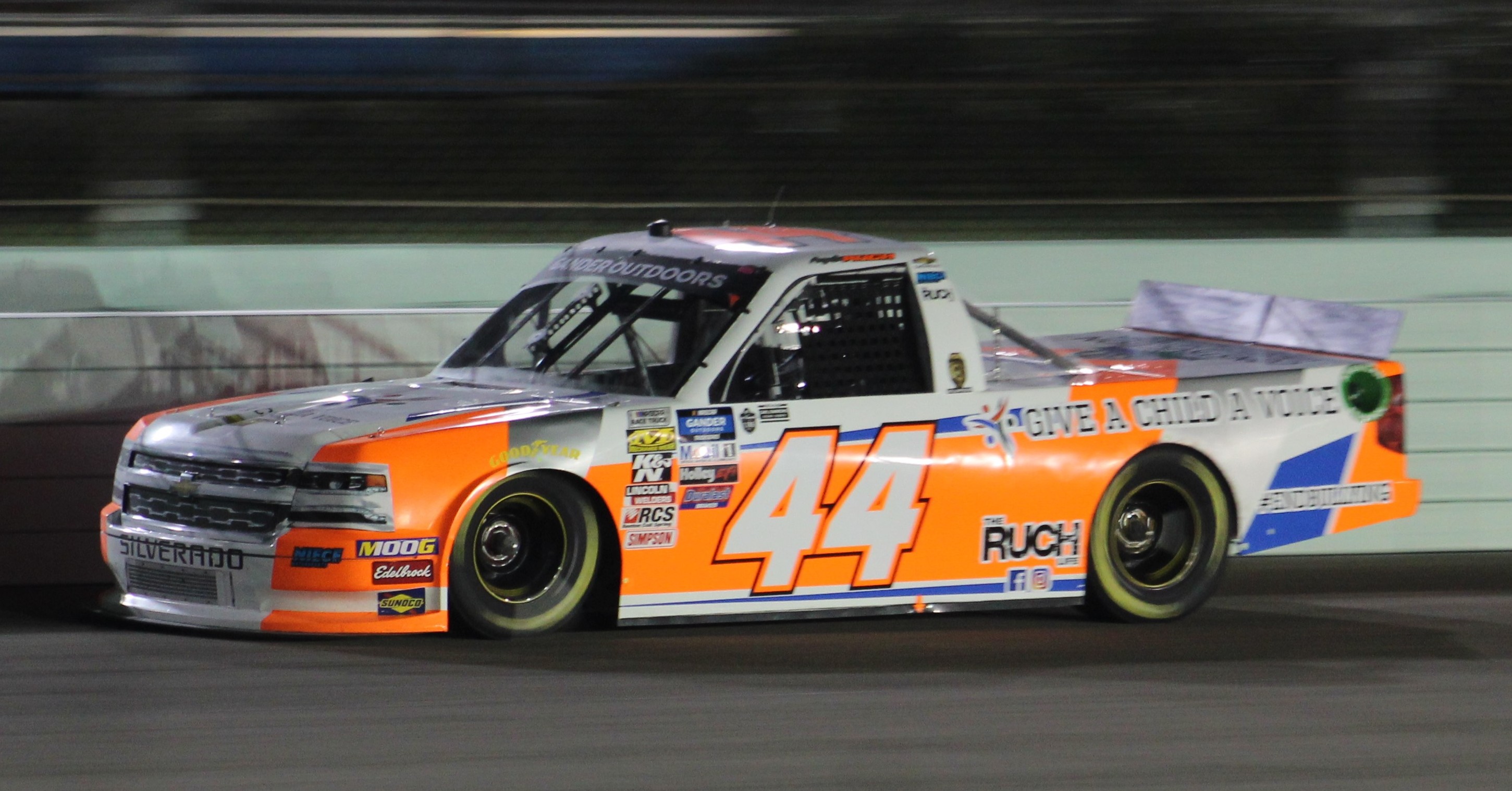
"Last year, the Silverado and Sierra accounted for nearly a third of the automaker's sales."
The Chevrolet Silverado is GM’s big pickup truck. The hosts are saying it’s one of the biggest sellers for GM, along with the Sierra.
The Chevrolet Silverado is GM’s other major full-size pickup line, and the segment notes it—along with the GMC Sierra—accounts for a huge share of GM’s sales. That’s why truck updates and production timing are strategically important for GM.
off-road adventure
"Does every automaker think that its customers want to go on an off-road adventure?"
“Off-road adventure” means driving on rough or unpaved roads, like dirt trails. It usually calls for better traction and tougher equipment than a typical street-only setup.
“Off-road adventure” refers to using a vehicle on unpaved or rough terrain—where traction, ground clearance, and durability matter more than on-road comfort. Automakers often chase this with rugged styling and equipment even when the vehicle isn’t a dedicated off-roader.
Citroen C3 Aircross
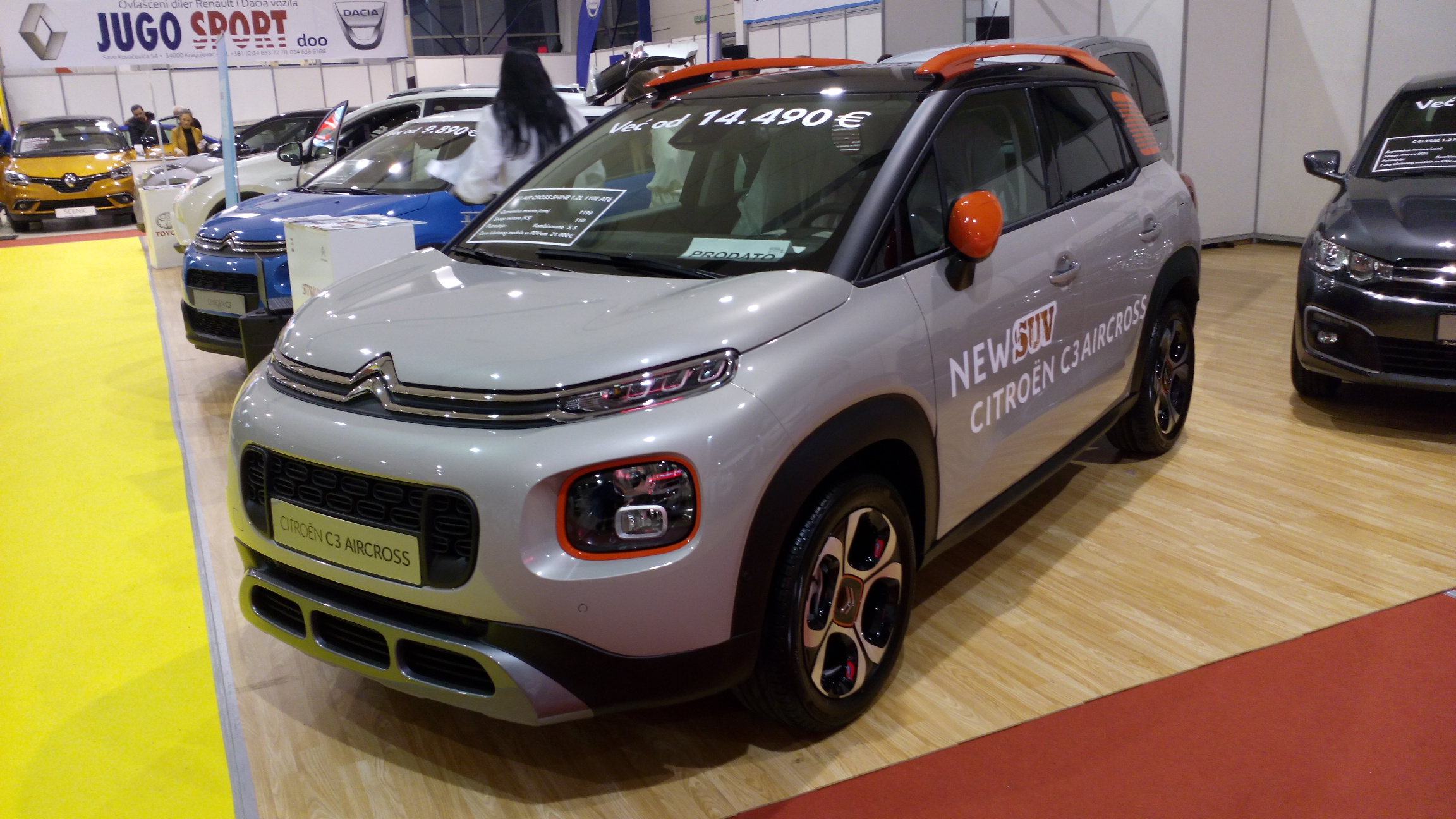
"...troën, which debuted a new concept version of its C3 Aircross. The model features new bumpers, wider wheel arch..."
The Citroën C3 Aircross is a small SUV-style car meant for daily use. A concept version shown in the podcast is mainly about styling changes, like updated bumpers and wider wheel areas. These changes help show what the next look of the car could be.
The Citroën C3 Aircross is a compact crossover designed for everyday driving with a taller ride height and practical space. In the podcast context, a new concept version is highlighted with visible styling updates like new bumpers and wider wheel arches, which signal how the model’s design could evolve. It’s the kind of car that gets discussed because it blends mainstream size with distinctive styling changes that can affect how the vehicle is positioned in the market.
fog lamps
"The model features new bumpers, wider wheel arches and bigger tires, fog lamps, tow hooks, a roof rack, and a number of unique touches inside and out."
Fog lamps are extra lights meant to help you see better in fog or bad weather. They’re designed to shine in a way that’s less likely to reflect back at you.
Fog lamps are auxiliary headlights designed to improve visibility in bad weather like fog, heavy rain, or mist. They typically use a different beam pattern than standard headlights to reduce glare and reflectivity.
tow hooks
"The model features new bumpers, wider wheel arches and bigger tires, fog lamps, tow hooks, a roof rack, and a number of unique touches inside and out."
Tow hooks are strong attachment points on the car for pulling it with a rope or strap. They’re useful if you need to recover the vehicle or tow it out of trouble.
Tow hooks are reinforced points on a vehicle used to attach a tow strap or recovery line. They’re common on off-road-oriented trims because they’re meant for controlled pulling during recovery or towing.
Figure
"BMW is using humanoids from a company called Figure, and the initial test had them supporting production of 30,000 X3s over 10 months."
Figure is the company that makes the humanoid robots BMW is using. BMW is using them to help with factory work like moving and positioning parts.
Figure is the company providing the humanoid robots used by BMW in its factory testing. In this context, it’s a robotics supplier enabling automation in manufacturing tasks like panel placement and parts handling.
body shop
"The robot, called the Figure 02, worked in the body shop, placing sheet metal panels for welding."
A body shop is where the car’s metal body parts get put together. In this case, the robot helps position metal panels so they can be welded.
A body shop is the manufacturing area where vehicle body panels are assembled and prepared—often including welding and panel placement. In this segment, the robot is described as placing sheet metal panels for welding, which is a classic body-shop task.
sheet metal panels
"The robot, called the Figure 02, worked in the body shop, placing sheet metal panels for welding."
Sheet metal panels are the thin metal pieces that make up the car’s body. They have to be positioned accurately so the car fits together correctly.
Sheet metal panels are thin metal stampings that form the outer body of a car—like doors, fenders, and quarter panels. They’re handled carefully because their shape and fit determine how well the vehicle assembles and how straight the final body looks.
logistics
"Now the next-gen version, called the Figure 03, will be used in logistics to help sort components that are then transported to the line for installation."
In a factory, logistics is how parts are organized and moved to the right place at the right time. Here, the robot helps sort parts before they go to the assembly line.
In manufacturing, logistics is the planning and movement of parts—getting components from storage to the exact spot on the production line when they’re needed. The segment says the next robot version will help sort components for transport to installation.
over-the-air engineering
"CSP, the Composites Solution Partner. Intrepid control systems, over-the-air engineering, boost your game."
Over-the-air means the car can receive software updates wirelessly. That can add features or fix problems without you going to a shop.
Over-the-air (OTA) engineering refers to updating vehicle software remotely via wireless connectivity, without visiting a dealer. It’s often used to improve features, fix bugs, or refine vehicle behavior after purchase.
CSP, the Composites Solution Partner
"But that brings us to the end of today's show. Thanks for making AutoLine a part of your day, and I hope that you have a great weekend. CSP, the Composites Solution Partner."
CSP is a sponsor described as a composites company. Composites are materials that can help make vehicles lighter, but the ad doesn’t specify exactly where they’re used.
CSP is presented as “the Composites Solution Partner,” indicating a company focused on composite materials. Composites are often used in automotive to reduce weight and improve packaging, though the segment doesn’t go into specific parts here.
Bridgestone Terran supply-attract tires
"Knowing that a little rain won't slow down your day, that's what really matters. Bridgestone Terran supply-attract tires, confident control in wet conditions."
Bridgestone is a tire maker, and “Terran” is the tire name mentioned here. They’re saying these tires are built to handle wet roads with more confidence.
Bridgestone is a major tire brand, and “Terran” appears here as a specific tire line or concept. The segment claims these tires are designed for confident control in wet conditions, which is a traction and handling focus.
Request an Explanation
Heard something you'd like explained? We'll add it to this episode.
Sign in to request explanations for terms you heard.
Want to learn more?
Browse our glossary for plain-English explanations of automotive terms, jargon, and concepts.
Help improve this episode
See something that's not quite right? Our annotations are AI-generated and can sometimes miss the mark. Click the flag icon on any annotation to suggest a correction.