AD #4328 - Porsche Loses $4,400 On Every Car in China; Carvana Upsets Franchised Dealers; Ferrari Luce Sells Out in China
About this episode
Global automotive markets are facing massive shifts as Toyota, Honda, and Nissan report falling sales. Porsche is struggling in China, losing $4,400 per car and closing half its dealerships, while Ferrari's controversial Luce EV has already sold out there. Meanwhile, Canada is opening its doors to Chinese EVs as a backdoor to the US market, and Texas is poised to overtake California as the nation's largest auto market. Finally, Carvana is disrupting the traditional dealership model by acquiring Stellantis stores and introducing haggle-free, salesperson-free buying that is sending sales skyrocketing.
Geely
"Jilly announced it'll start shipping Lotus EVs to Canada in July."
A massive Chinese car company that owns famous European brands like Volvo and Lotus, helping them build new electric cars.
Zhejiang Geely Holding Group is a major Chinese multinational automotive company headquartered in Hangzhou. It owns several prominent global brands, including Volvo, Polestar, Lotus, Zeekr, and Lynk & Co, and is a key player in the global transition to electric vehicles.
BYD
"BYD and Cherry say they also want to start shipping cars there too."
A giant Chinese company that makes more electric and hybrid cars than almost anyone else in the world. They even make their own car batteries.
BYD (Build Your Dreams) is a Chinese conglomerate that has grown to become the world's largest manufacturer of electric and plug-in hybrid vehicles. Unlike many rivals, BYD is highly vertically integrated, manufacturing its own batteries (including the famous Blade battery) and semiconductors.
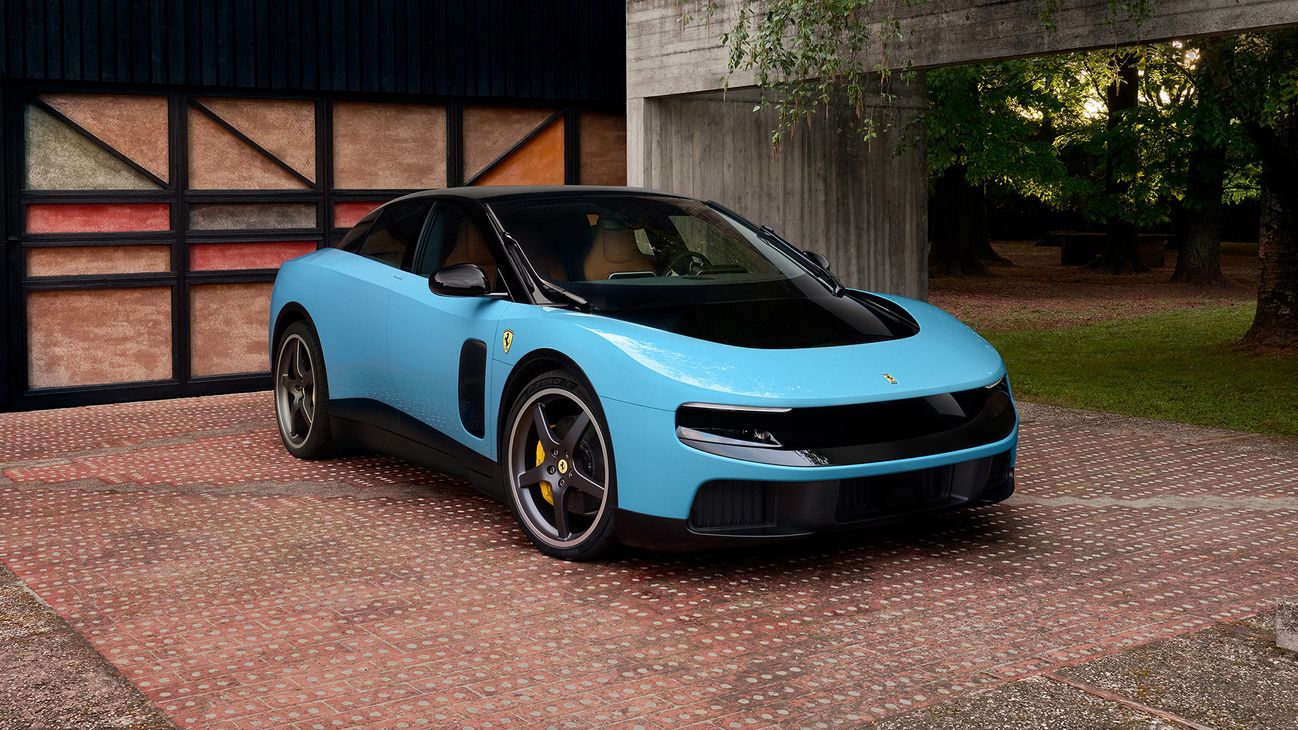
Ferrari Luce
"Ferrari's first electric vehicle, the Luce, disappointed the Tifosi because they were not at all happy with the way the car looks both inside and out."
Ferrari's very first fully electric car. Traditional Ferrari fans didn't like how it looked, but it still sold out instantly in China for over half a million dollars.
The Ferrari Luce is the Italian marque's first all-electric model, introduced as an ultra-luxury grand tourer. Despite receiving criticism from traditional enthusiasts (Tifosi) for its styling and departure from internal combustion engines, it quickly sold out its initial allocation in China.
Tifosi
"Ferrari's first electric vehicle, the Luce, disappointed the Tifosi because they were not at all happy with the way the car looks both inside and out."
A special Italian word used to describe die-hard Ferrari fans. They are incredibly passionate and often very critical if Ferrari makes a car that doesn't live up to their traditional standards.
The Italian word for 'enthusiasts' or 'fans,' used globally to describe the passionate fanbase of Ferrari, particularly its Scuderia Ferrari Formula 1 team and road cars. They are known for their intense loyalty and strict expectations regarding Ferrari's design and heritage.
supervisory board
"Labor representatives currently hold a majority on the company's supervisory board."
A high-level board in German companies where half the members are actually worker representatives, meaning bosses cannot easily fire workers or close factories without their agreement.
Under German corporate law (co-determination), a supervisory board oversees the executive board and includes representatives elected by both shareholders and employees. In German automakers like Volkswagen, labor representatives often hold half the seats, giving them veto power over major structural changes like plant closures.

Porsche Cayenne
"It wants to move production of the Cayenne out of Slovakia to its plant in Leipzig, Germany."
A high-end luxury SUV made by Porsche. It is one of Porsche's best-selling vehicles and proved that a sports car company could make a highly successful family SUV.
The Porsche Cayenne is a mid-size luxury crossover SUV, first introduced in 2002, which famously saved the company from financial ruin. It is known for combining sports-car-like handling with SUV utility and has historically been built in Bratislava, Slovakia.
Stefan Hartung
"Bosch's CEO Stefan Hartung abruptly and unexpectedly quit the company."
The top boss of Bosch, the biggest car parts company in the world, who unexpectedly quit his job in 2026.
German business executive who served as the CEO of Bosch, the world's largest automotive parts supplier, from 2022 until his abrupt resignation in 2026. During his tenure, he navigated the company's massive transition toward electric vehicle components and software-defined vehicles.
works councils
"when he's dealing with the works councils over those job cuts, because he can always blame his predecessor."
A type of worker committee in Germany that has a lot of legal power to fight against job cuts and protect employee rights at large companies.
Shop-floor organizations representing workers in German companies, which have legal rights to participate in corporate decision-making, particularly regarding layoffs, working hours, and factory conditions. They play a massive role in German automotive giants like VW and Bosch.
franchised dealers
"Carvana is turning the dealership world on its head. The innovative retailer transformed the used car market, and now it's going after new cars after buying seven Stellantis stores across the United States."
The traditional car dealerships you see on the highway. They are independent businesses licensed to sell a specific brand's cars, rather than being owned directly by the car company itself.
Independently owned car dealerships that hold a franchise agreement with an automaker to sell their new vehicles in a specific territory. They are protected by strict state franchise laws that historically prevented automakers from selling directly to consumers.
no-haggle pricing
"There's no haggle pricing, no document fees, you get same day delivery, and a money-back guarantee for up to seven days if you don't like the car."
A car buying system where the price you see is the price you pay. There is no negotiating or arguing with a salesperson to get a better deal.
A vehicle sales model where the price of the car is fixed and non-negotiable, eliminating the traditional back-and-forth negotiation between the buyer and salesperson. Popularized by Saturn in the 1990s and used extensively by used-car retailers like Carvana.
Request an Explanation
Heard something you'd like explained? We'll add it to this episode.
Sign in to request explanations for terms you heard.
Want to learn more?
Browse our glossary for plain-English explanations of automotive terms, jargon, and concepts.
Help improve this episode
See something that's not quite right? Our annotations are AI-generated and can sometimes miss the mark. Click the flag icon on any annotation to suggest a correction.