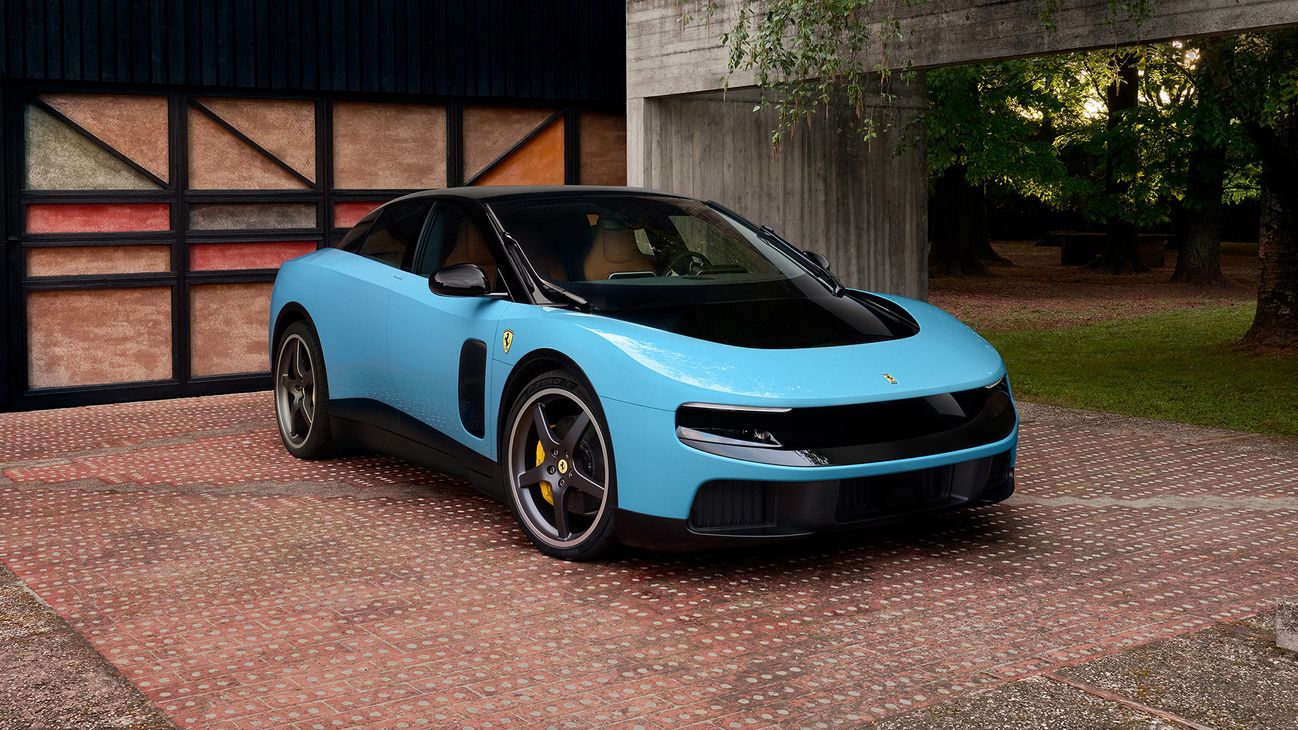
Ferrari's very first fully electric car. Traditional Ferrari fans didn't like how it looked, but it still sold out instantly in China for over half a million dollars.
A special Italian word used to describe die-hard Ferrari fans. They are incredibly passionate and often very critical if Ferrari makes a car that doesn't live up to their traditional standards.
A high-level board in German companies where half the members are actually worker representatives, meaning bosses cannot easily fire workers or close factories without their agreement.
A high-end luxury SUV made by Porsche. It is one of Porsche's best-selling vehicles and proved that a sports car company could make a highly successful family SUV.
The traditional car dealerships you see on the highway. They are independent businesses licensed to sell a specific brand's cars, rather than being owned directly by the car company itself.
advanced issue analysis, root cause identification, and remote update deployment.
All of these steps ensure vehicles are cleared for production and ready for the road,
taking your fleet testing into the future of mobility, intrepid control systems driven by your data.
Last week we reported that Volkswagen is ramping up the job cuts it wants to make in Germany.
At first, the plan was to get rid of 50,000 employees.
Now it wants to cut 100,000 and close four assembly plants in Germany.
But Bloomberg reports, VW never looped in labor representatives on those plans,
and they're going to fight tooth and nail against those cuts, which is going to be a real problem for VW.
Labor representatives currently hold a majority on the company's supervisory board.
And Porsche, which is part of the VW group, is going through its own agony.
It's closing almost half of its dealerships in China because sales have fallen so much.
In fact, Porsche dealers in China are losing $4,400 on every car they sell.
Porsche is also circling the wagons in Germany.
It wants to move production of the Cayenne out of Slovakia to its plant in Leipzig, Germany.
The automaker wants to boost capacity utilization at its German plants.
But all of that is contingent on the workers accepting a wage cut.
And sticking with Germany for the moment,
Bosch's CEO Stefan Hartung abruptly and unexpectedly quit the company.
Last October, the Bosch board extended his contract for five years.
He's 60 years old, which is much younger than when most CEOs retire.
His replacement, Christian Fischer, is 58 years old.
Bosch is in the process of getting rid of 18,500 jobs, a plan that was approved by Hartung.
So with him stepping aside, that could take a bit of the heat off Fischer
when he's dealing with the works councils over those job cuts,
because he can always blame his predecessor.
And maybe that was the plan all along.
Carvana is turning the dealership world on its head.
The innovative retailer transformed the used car market,
and now it's going after new cars after buying seven Stellantis stores across the United States.
And here's some of the main changes that it's made.
Car shoppers no longer have to deal with salespeople.
They can handle everything on their phones.
And instead, there's concierge assistants who are not on commission,
but they're there to answer any questions or to arrange for test drives.
There's no haggle pricing, no document fees, you get same day delivery,
and a money-back guarantee for up to seven days if you don't like the car.
And it offers lower prices.
The Wall Street Journal reports that Carvana's Stellantis store in Casa Grande, Arizona,
saw its sales shoot up tenfold.
Automotive News reports that a store in Dallas
is now the fifth biggest Stellantis dealership in the country.
And this is likely going to force other franchise dealers to adopt the same practices.
Oh, a programming note here.
AutoLine Daily and AutoLine After Hours will be off the air next week,
as the AutoLine crew takes its summer break.
Anyway, that wraps up today's report.
Thanks so much for tuning in.
At CSP, we work with OEM engineers across the country on their journeys to lighter,
safer, and more eco-friendly vehicles.
Learn more at thesecsp.com.
A mile-limited warranty.
About this episode
Global automotive markets are facing massive shifts as Toyota, Honda, and Nissan report falling sales. Porsche is struggling in China, losing $4,400 per car and closing half its dealerships, while Ferrari's controversial Luce EV has already sold out there. Meanwhile, Canada is opening its doors to Chinese EVs as a backdoor to the US market, and Texas is poised to overtake California as the nation's largest auto market. Finally, Carvana is disrupting the traditional dealership model by acquiring Stellantis stores and introducing haggle-free, salesperson-free buying that is sending sales skyrocketing.
- Toyota Sales Down Globally - Canada To Get First Chinese Cars - Canada Is China’s ‘Practice Run’ To Prepare for U.S. - Texas To Catch California in Car Sales - Ferrari Luce Sells Out in China - VW Faces Labor Fight on Job Cuts - Porsche Loses $4,400 On Every Car in China - Bosch’s CEO Abruptly Quits - Carvana Upsets Franchised Dealers