A massive global car company from Germany that owns brands like VW, Porsche, and Audi. They are currently having a hard time making money and are trying to figure out how to cut costs.
The big boss (CEO) of the Volkswagen Group. He is trying to make big changes to save the company money, but he is running into resistance from workers and politicians.
A special law in Germany that gives workers and local politicians a huge say in how Volkswagen is run. It makes it very hard for the company's bosses to close factories or lay off workers without their permission.
A trade agreement between the US, Mexico, and Canada that decides how cars and car parts can be shipped across borders without paying extra taxes. Changes to this agreement make it hard for car companies to plan where to build things.
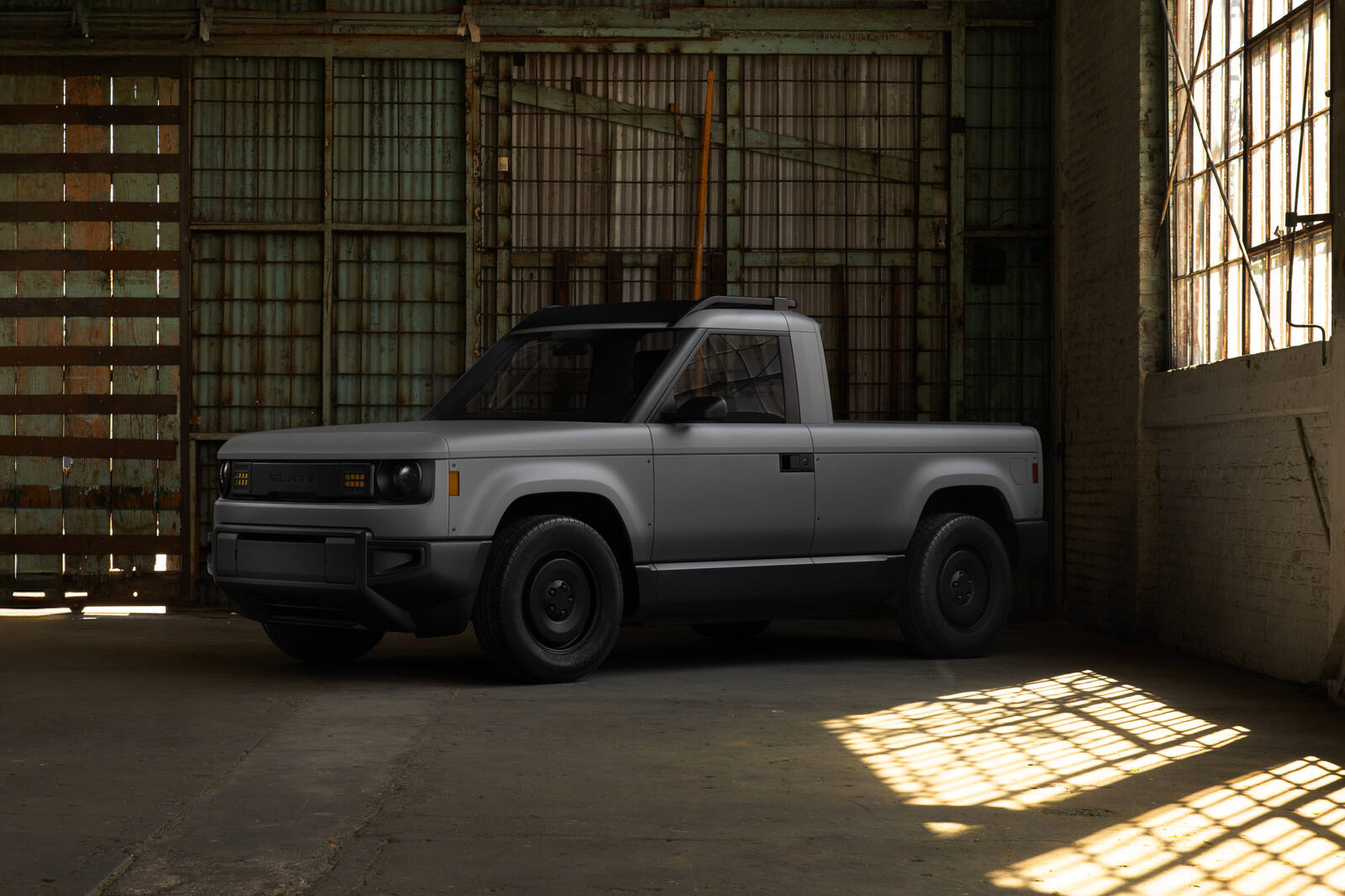
A truck is a vehicle with a passenger cabin in the front and an open cargo box in the back. It is primarily used for carrying heavy loads, towing, and outdoor work.
A car design where the roof slopes gently all the way down to the back bumper in a smooth line, making the car look sporty and slide through the air more easily.
The Dodge Avenger is a retired four-door family sedan made by the American brand Dodge. It was designed to look sporty on the outside while functioning as a standard, budget-friendly everyday car.
A term used in China to describe a situation where competition gets so fierce and cutthroat that companies end up hurting themselves and their suppliers just to survive.
Using aluminum instead of copper for the electrical wires in a car. It is cheaper and lighter, but harder to work with because aluminum is stiffer and can corrode more easily than copper.
The error codes that your car's computer generates when something goes wrong, which turn on the 'check engine' light and tell a mechanic what needs to be fixed.
LIVE
This is Out of Line Daily, the show dedicated to enthusiasts of the global automotive industry.
Sean is out on jury duty, so I'm still filling in.
The situation at the Volkswagen Group is going from bad to worse.
Sales have plummeted globally.
Profits have plunged to dangerous levels.
The stock is at its lowest point in 16 years, and the company is saddled with excess capacity.
VW's CEO, Oliver Blumma, wants to slash jobs and close plants in Germany,
but his supervisory board, half of which is represented by labor and local politicians,
are dead set against it, and they can stop it.
The VW Group's management structure dates back to 1960 when it transitioned
from being a government-owned company to a private one.
Part of the deal allowing that transition was to have half the supervisory board made up of
labor and government, and the other half being managers from the company.
They even call that the Volkswagen Law or the Volkswagen Act.
Well, Oliver Blumma wants to pull an end, run around it.
He wants to split the group into a company that makes cars
and a separate one that makes components.
The VW Law only applies to the group, so if he can split off cars and components
into their own separate entities, he can go ahead with the restructuring
that VW badly needs to do.
This could turn out to be one of the biggest boardworm battles of all time,
and we think the survival of the company is literally at stake.
Okay, now over to the United States, where President Trump is expected to formally announce
tomorrow that the United States is pulling out of the USMCA free trade agreement,
but no one knows what comes next.
The US is currently only negotiating with Mexico,
and while it will eventually have to negotiate with Canada,
nothing is scheduled.
Automakers and suppliers are going to cringe at this news.
They've been stuck in limbo for over a year,
not knowing what kind of agreement will be put in place,
and because of that uncertainty, they're holding back on investments in plants and equipment.
One thing's for sure, the Trump administration's long list of different tariffs
have created a whole new layer of red tape and bureaucracy that's driving the industry crazy.
Everybody pretty much knows what the cost of the Slate truck and SUV will be.
25 grand for the base model, 30 for the SUV, and 32 for the fastback.
But what's the destination charge going to be?
Slate hasn't announced that yet, but Ryan Green, the CFO of Slate,
told us it would be the standard destination charge of any EV.
So we looked up what Nissan charges for the Leaf and what Chevrolet charges for the Bolt.
They're both in the $1400 range, so that's what we're calling it for Slate.
$1400 for the destination charge.
Performance that shines, even in the rain.
That's what really matters.
Bridgestone Patenza tires, improved grip and wet conditions.
Stellantis promised the Italian government it would do everything in its power to boost car
production in Italy, but things are not going to plan.
Stella is extending the summer production shutdown of the Fiat 500 at its Mirta Frioriti plant in
Italy. It originally planned a three-week downtime, but it's adding an extra week.
Stella's blaming part shortages from suppliers, but one of its labor unions says it's because the car
is not selling. Last year, Stellantis scheduled production of 100,000 Fiat 500s for this year,
but it only produced 15,000 of them in the first quarter.
And if customers aren't buying them, there's no sense in making them.
You know, in the United States, Jeep is marketed with a lot of patriotism, lots of waving of
American flags, but in Europe, Stellantis is going to start selling Jeeps made by Dongfeng
in Wuhan, China. Jeep currently sells two models in Europe, the Avenger Encompass,
but it plans to expand that lineup to six models in the region by the end of the decade,
and the Chinese-made Jeeps will hit the market in 2030. No doubt they'll be marketed on price,
not a lot of flag waving. China is worried that the price war that shows no signs of going away
will hollow out its automotive industry. It's what China calls
involution. Well, there's another problem that goes along with this. EV battery makers in China
drag their feet when it comes to paying their suppliers. That's leaving those suppliers
financially weak and adding to the problem of involution. So under government pressure,
the battery makers are pledging to pay their suppliers more quickly. Last year, the Chinese
government issued rules requiring big companies to settle most payments within 60 days,
and the major EV battery companies have finally agreed to do just that. Tesla is the first
automaker that we're aware of that started using aluminum wiring for high voltage power.
Now, Stellantis, Ferrari, and BMW are starting to use it too. One reason is that the cost of
copper has nearly doubled since the start of the year. Aluminum is now $3,000 a ton cheaper.
Another reason is that aluminum is 20% lighter than copper, but there's another reason too,
and it has to do with assembly. Instead of having a floppy wiring harness made of copper to install
in a car, you can make rigid aluminum cables, or at least that's what Tesla's done. These are far
easier to install, and in fact, they lend themselves to robot assembly. So we'll be watching to see if
Stell, a BMW, and Ferrari take full advantage of what aluminum wiring can provide. And finally,
we've got some future product intel from our friends at Auto Forkast Solutions on the Nissan
Frontier pickup truck. The current model is doing quite well in the U.S. market,
with sales up 48% in the first quarter hitting 21,000 units. It's a good thing it's doing well
because the next version of the truck will not be out until December 2029. Auto Forkast Solutions
reports it will continue to be built at Nissan's assembly plant in Canton, Mississippi,
and for all you suppliers in the audience who have to track these things, the code name of the
new Frontier is H6-2B, and the platform code is D23F-elpha. As we noted yesterday, Auto Line's
going to be off the air next week so the crew can take a summer break and recharge for the second
half of the year. But without we wrap up today's report, thank you for tuning in to Auto Line Daily.
Auto Line Daily is brought to you by Bridgestone, Solutions for Your Journey, CSP,
the Composites Solution Partner, Intrepid Control Systems, Over-the-Air Engineering,
Boost Your Game, and thanks to the following YouTube and Patreon members.
At Intrepid, we produce network hardware and software solutions, enabling vehicle
manufacturers to innovate and design the next generation of modern mobility.
Delivering scalable next-generation solutions requires thorough testing and validation of
diagnostic trouble codes and defects by pinpointing which vehicles have specific software versions.
This allows them to isolate non-compliant vehicles in real time using analytics, part numbers,
DTCs, and organized, secure cloud-based data. All of these steps ensure vehicles are cleared
for production and ready for the road, taking your fleet testing into the future of mobility.
Intrepid Control Systems, driven by your data.
At CSP, we work with OEM engineers across the country on their journeys to lighter,
safer, and more eco-friendly vehicles. Learn more at thecsp.com.
About this episode
Volkswagen is facing a massive corporate showdown as CEO Oliver Blume attempts to bypass labor unions by splitting the company to force through critical restructuring. Meanwhile, the North American auto industry braces for chaos with the U.S. poised to exit the USMCA. Plus, Stellantis, Ferrari, and BMW are following Tesla's lead by adopting cheaper, lighter aluminum wiring over copper. The episode also covers Stellantis's production struggles with the Fiat 500, plans to import Chinese-built Jeeps to Europe, and a sneak peek at the next-generation Nissan Frontier.
- VW AG Wants Split to End-Run Unions - Trump To Dump USMCA Tomorrow - Slate Destination Charge: $1,400? - Stellantis Falling Short of Production Promise to Italy - Chinese Made Jeeps Headed to Europe - Chinese Battery Co’s Promise to Pay Suppliers Faster - More Automakers Want Aluminum Wiring - Next Nissan Frontier Due Late 2029