An ASE certified technician is a car mechanic who has passed tests to prove they know how to fix cars properly. This certification means they are trusted experts.
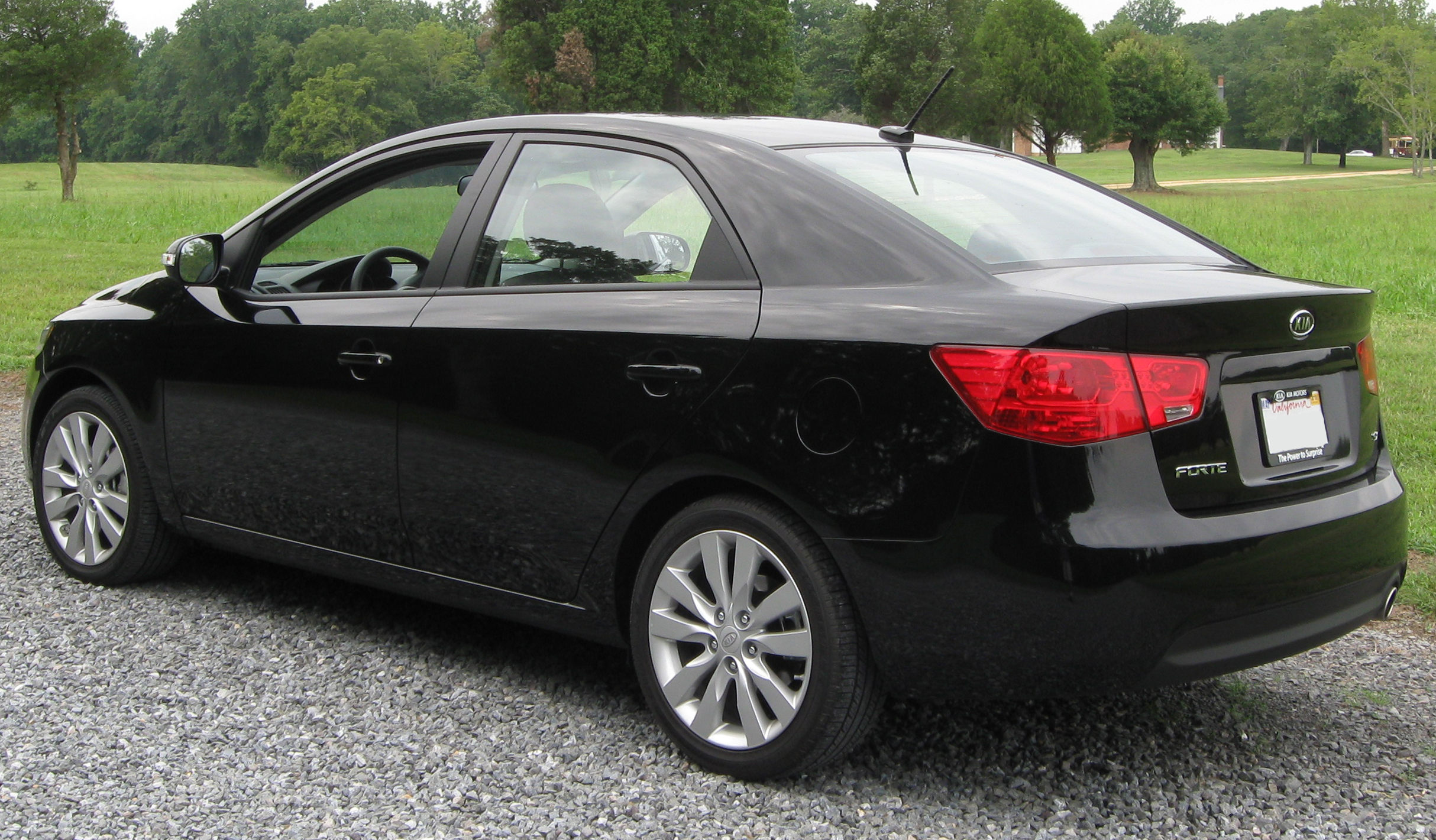
The Kia Forte is a small car that is easy to drive and doesn't cost a lot to buy or run. The 2021 version has newer features and looks compared to older ones.
An oil change means putting new oil in your car's engine so it runs smoothly and doesn't get damaged. It's something you need to do regularly to keep your car healthy.
Changing the oil and filter means taking out the old dirty oil and filter from your car and putting in new ones so the engine works well and lasts longer.
When you take your car for service, the mechanic looks over important parts like tires and lights to make sure everything is working well and to catch problems before they get worse.
A brake fluid leak is when the special brake liquid leaks out of your car. Without enough brake fluid, your brakes might stop working and the car can be dangerous to drive.
The brake fluid reservoir is a small container that holds the special liquid your brakes need to work. If it's empty, your brakes might not work right.
The oil pan plug is a small bolt at the bottom of the engine that you remove to drain old oil. If it's not screwed in tight, oil can leak out and hurt the engine.
A drain plug is a small part that lets you drain old oil or other fluids from your car. If you forget to put it back or tighten it, your car can leak and get damaged.
Engine oil weight means how thick or thin the oil is. Thicker oil flows slower and thinner oil flows faster, which helps protect the engine in different temperatures.
The heater core is a part inside the car that helps warm up the inside by using hot liquid from the engine. If it breaks, it can be expensive to fix because they have to take apart the dashboard.
5W20 oil is a type of motor oil that flows well when cold and stays thick enough when hot to protect the engine. The numbers tell you how thick or thin the oil is in different temperatures.
The tailgate latch is the part that keeps the back door of your car closed. If it gets stuck, the door might open when you don't want it to, which can be dangerous.
Silicone is a type of spray or liquid that helps parts like door hinges and locks move easily and stops them from making noise. It also protects parts from getting dry or cracked.
Antifreeze is a special liquid that helps keep a car's engine or battery from getting too hot or freezing in cold weather. Electric cars use it to keep their batteries and motors at the right temperature.
A thermostat is a part that helps keep the car's temperature just right by letting coolant flow when needed. Electric cars use it to keep their batteries and motors from getting too hot or cold.
A water pump moves the cooling liquid around inside the car to keep things from getting too hot. Electric cars use it to keep their batteries and motors cool.
A decarbon service cleans out sticky black stuff that builds up inside an engine to help it run better and use less gas. People sometimes do this after driving a certain number of miles.
The fuel cap is the cover you put on the gas tank to keep the gas inside and stop smelly fumes from escaping. If it's not on tight, your car might think something is wrong.
The Honda CR-V is a small SUV that many people like because it is easy to drive, uses fuel well, and has plenty of room inside. The 2009 version is especially popular because it is comfortable and lasts a long time. People often talk about it because it holds its value and is a good choice for everyday use.
The Ford Fusion is a medium-sized car that many people buy because it is comfortable and easy to drive. The 2012 model has an engine that works well for everyday driving and uses fuel reasonably. People talk about it because it is a good, affordable car for getting around.
LIVE
Another Saturday in CCO line has rolled around time once again for a little car
care. If you have any kind of a question, any kind of a question you want to always
ask a mechanic maybe, your question, or maybe you're having trouble with your car,
your truck, your van, and before you bring them for service, your favorite dealer,
your favorite shop, you might want to know what could be ailing. We'll get you a
little analysis over the radio. The guy to do that is ASE certified technician
Nick Stoffel from Lloyd's Automotive on beautiful Grand Avenue at St. Paul. Nick,
good morning. Good morning, Denny. Welcome to the last day of February. Kind of hard
to believe March, where did February go? But it's been probably a busy, a busy one
for you and your crew at Lloyd's. I think like most, I'm happy February's over. It's
the, it's the longest and hardest, it's the shortest but the hardest month of the
year. It's gray and cold and everything else. So yeah, we're looking forward,
it sounds like a little bit of snow today, but that's okay. It'll be warm again and the sun's
higher in the sky. So just hold on folks, we're almost to the end. It'll be more melting this
week, probably producing more bottles, maybe use some more work for your crews, but that's
a whole other thing. Yeah, we always like to invite our listeners to join in on this conversation
sooner rather than later because not only does our time go by quickly, Nick takes his leave
about 7.45 making way for Ted Ferrell's wine chat. So if any kind of a car care question,
give us a call or send a text, just one number for either 6514619226. Interesting question
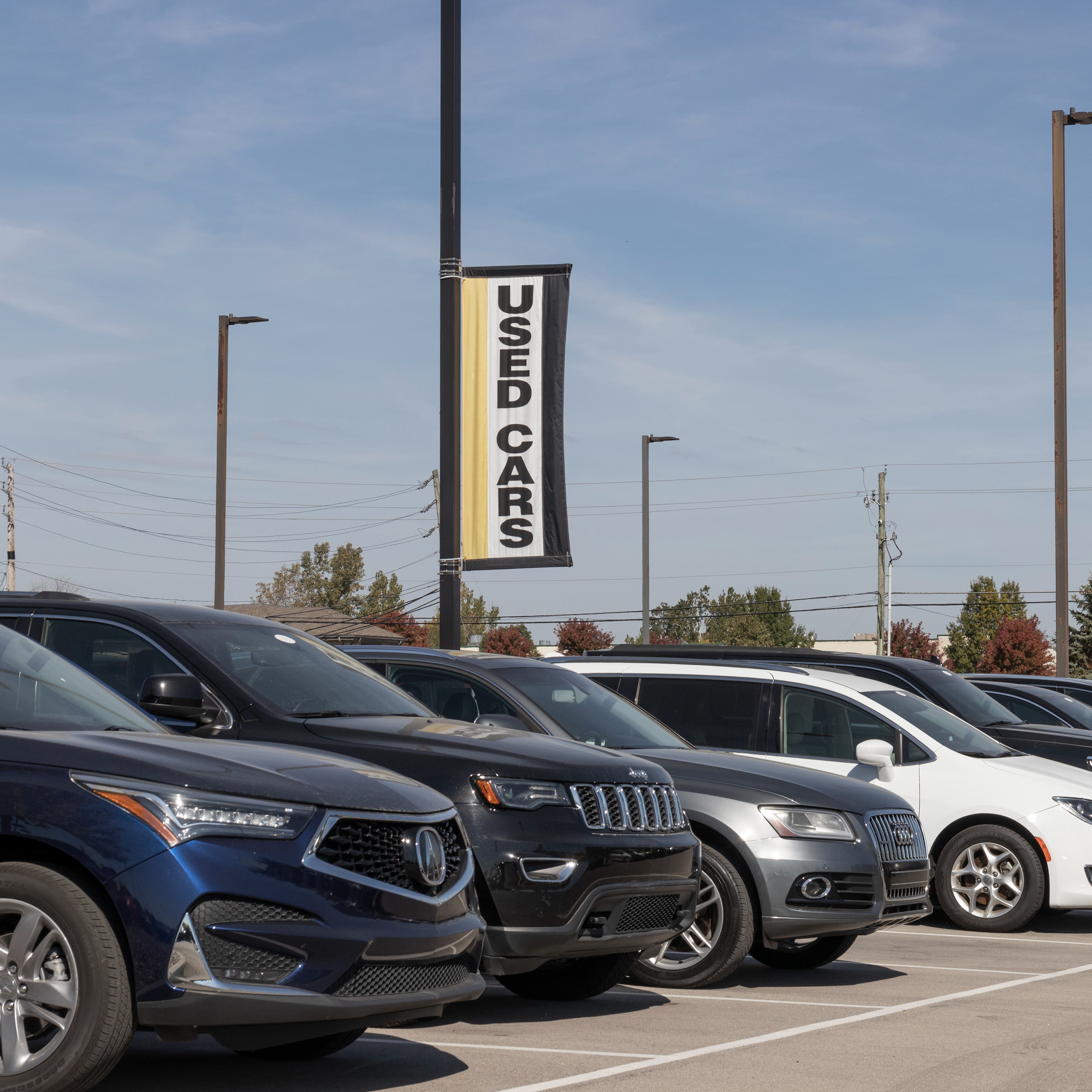
that came in earlier this morning and we do talk about getting, if you're going to buy a used car,
see if the owner will let you get it checked out at Lloyd's, for example. This text says this,
good morning. If I'm buying a used car from a dealership, should I still take it into my
mechanic for a check and any other advice for buying a used car? It's a good question to kick
off the show. What about advice or what about a dealership? Can you ask them to check it out
someplace else? Yeah, you can for sure. I mean, before you buy, excuse me, before you buy any
vehicle, I think it's fair to say it should be inspected. Depending on the dealership, they may
have done an inspection and your relationship with them might be telling of that. Keep in mind,
they likely took that in on a trade-in. So it's not a vehicle that they naturally had servers
that had a long history with. So they, somebody traded in, they in turn are trading the vehicle
to you or someone else. So I would make sure there's an inspection, whether they've done it
or you have your people do it, but you should really know what you're spending on the money
before you do. All right. Good question. Again, 6514619226. Good morning. Tim Minneapolis sends
this one in, 2021 Kia Forte, 45,000 miles on it. Tim's recently retired. Good going. He will drive
about 2,500 miles, I assume, 25,000 per five every five to six months. His question is,
should I now have oil changed every 5,000 or every five to six months? Great show. He loves the show.
And he says he remembers me doing the nighttime news at 10 o'clock every Sunday night. Well,
I did it a lot more, Tim. That's true. Anyway, you can answer your question, then I have a little
bit of a comment for Tim. What about the oil change? I think this is pretty common these days.
What do you think about folks that don't drive, like Tim says, maybe about 2,500 a year?
You know, I think it's fair to say that the vehicle should be inspected twice a year. You know,
it just a lot happens in the course of the year with the heat of the summer and the cold of the
winter and everything in between. So I think the vehicle should be inspected. At that time,
they can, you know, look at the condition of the oil. If they have any reason or recommendation,
they might want to do it twice a year or they might just do it once a year. And I think that's
either way could be fine, depending on the vehicle and the condition of the fluid.
So have it inspected twice a year. They can make the determination if they change the oil or not,
based on, you know, conversation with you. But, you know, it's not just the oil, it's the suspension,
the steering. You mentioned potholes, Denny, and, you know, we're getting into that season,
there's a lot of wear and tear. So we want to have our eyes on that to make sure everything's
safe for the driver. Yeah, that's a good point. And we've talked about it before when, when
someone brings in their vehicle for an oil and filter change, what does the mechanic do? What
does the technician do each time? It's not just change the oil and filter? No, it's not just
change the oil and filter. You know, you take your vehicle in for service, it should be thoroughly
inspected. You're checking the tires, the lights, the steering suspension, any noises or any of that
kind of stuff that has happened over the last several months, we want to put our eyes on to make
sure, you know, usually if there's a noise or something that's different than the norm, that's
because something's wearing out. So we want to get our eyes on that to see to what extent maybe make
a recommendation for repair then or plan for something for the future. But having that car
looked at kind of keeps you on top of things and hopefully prevents any, any kind of breakdown.
Just a side note, thanks to him for that comment and Tim was mentioning when he
remembers me doing the nighttime news. What we had was, that's what we called it,
nighttime news. Every night at 10 o'clock, we announced, they called us staff announcers.
We did all the news and the weather. The news people, the journalists in the newsroom,
they wrote it. They did all the typing, yes, on typewriters and we in turn did all the reading.
And we had every night, 10 o'clock news. Ever since they told me, Cedric Adams time,
some folks may remember him. It was before my time, by the way. We had six minutes of CBS news,
then about eight, 10 minutes of local news. Sometimes Steve Cannon would come in and do the
sports. And then we had the weather, usually five states. We did the five state weather. So
he's bringing it back in old memory. It was a long time ago with Tim, but had a lot of fun
back then too. All right, back to our car care. 6514619226. Let me see if I can piece this together.
It comes in a bunch of sentences here. It's a 2004 Dodge Ram 1500, 5.7 engine.
My brake pedal goes to the floor. I don't see any brake fluid in the reservoir. Could my problem
possibly be a bad rusty brake line? Or could it be something else? Thanks for the show.
Please keep up the great work. Well, thank you. Thanks for joining us. What do you think about
that brake issue? We want to be very cautious for sure because if the brake pedal is going to the
floor, that tells us and they mentioned the reservoir is empty. So there's a leak somewhere.
Definitely could be a rusty brake line. Could be a caliper, a fitting, the reservoir itself,
the master cylinder, a lot of places where that fluid could be going. But the fact that it's leaking
tells us we don't have any of that hydraulic pressure. So in the event of having to stop,
you may not be able to. So that vehicle should not be driven. Definitely should be towed in.
Get it in the air and try to find that source of that leak. We mentioned it and we always like to
that any any kind of a car care question, maybe it's something you've always wanted to ask a
mechanic. Debbie sent this in and I think I don't I don't think we've ever had that general question
like this. What would you say, Nick, are the most common car problems when somebody brings in
view? What do you see at your shop? Most common. It kind of seasonal, I suppose. We get a lot of
concerns about heat going into the winter months, not air conditioning questions in the summer months.
And I suppose a lot of brakes and like steering suspension type noises as we transition through
the spring time. So the things that bother us the most, you know, the heat, the cold, the roads
are usually the types of problems for the cars also, I guess. I would say as we roll into March
and April, we'll see a lot of steering suspension wear and tear type issues come May when we hit
that 90 degree day, our cars will be full of air conditioning work and it kind of transitions as the
year goes around. Have you put you on the spot here? And I think I heard this story many years
ago. It was not at a shop. It was at a quick oil or one of those places that strictly do oil
changes. Someone forgot to tighten the pan plug and consequently the oil leaked out and bad stuff.
Have you ever seen that in your career? I know it doesn't happen at Lloyd's, but have you ever
heard of that happening? We have, you know, and keep in mind, you know, we're all human and humans
make mistakes. Unfortunately, a drain plug is a very costly mistake. We actually have one that was
brought into Lloyd's. It was serviced elsewhere, but there's a third party involved and they need to
have a middle person and we're that middle person. So we're working with it with an outfit to replace
an engine on a vehicle where the same thing happened and it does happen. You know, it's not
that it's intentional. You know, like I said, people are human, humans make mistakes. It's
unfortunately a drain plug is probably the most expensive mistake on a car, but it can happen.
Oh yeah, and you don't want to be the one that forgot that. All right,
in right after the break, we're going to talk to Jerry and then I talk to him. So hang on, Jerry.
We're going to get to your phone call and everybody else, if you want to send a text or give a Nick
a call, either way, Nick will be with us till about 745 answering any kind of a car care question
you may have 651-461-9226. 18 degrees going to 21 today here on Newstalk A30W CCO.
It's another Saturday morning when we talk cars, trucks, vans, and the problems you may be having
with yours and maybe some solutions. At least find out what's wrong with them. Thanks to Nick Stoffer
from Lloyd's Automotive in St. Paul answering those questions. Nick, for those that need some
assistance from Lloyd's, tell us how we find you guys. Yes, sir. If you have ever have a question
and need some advice, we're here to help. You can reach us at 651-228-1316. If you're in St. Paul,
you can find us on the corner of Grand and Shatsworth, which is 982 Grand Avenue. If you need
more information, do check our website, which is LloydsAutomotive.net. We'll get you that info
before Nick takes his leave, which is about 745. So call us, text us with your question 651-461-9226.
Speaking of phones, let's grab a call or two. Jerry has been waiting there in Minnetucket to
ask you something. Thanks, Jerry. What is your question? You're more on Nick's side. You guys,
I have an older high performance, higher horsepower performance engine, older engines,
and I've been running like 1040 conventional and bellowing for, yes, my lifetime, never any
problem. What do you think of that switch to synthetic oil?
Well, if there's a reason to switch to the fluid, I'd like to say if you have something
you've been using or doing for a long time, it's a performance vehicle. Something was built for
said type of weight of oil. Honestly, I'd probably stick with what you've been using. I'd hate to
create any issues or any potential problems. Obviously, on a newer vehicle or anything
other than that, I would tell you follow the manufacturer's recommendation. They might have a
range of oil weights to use. Obviously, 1040 is a very thick and heavy oil from years past. A lot
of performance engines use that type of oil. Today's vehicles obviously use a much lighter
weight oil as we touch on often. So I would say I would stick with what you've been using unless
there's a reason. The engine builders, somebody's giving some advice otherwise and they have a
reasoning for it. But other than that, I would stick with what you've been doing all along.
Good advice. Thanks, Jerry. Hank is calling in from Hudson this morning. Hank, what is your question for Nick?
Well, my question is I've been dealing with the same dealer for maybe 20 years on my vehicles.
And I have presently a Jeep that I really like. I've had it serviced with oil changes, brakes,
but I came into a big problem with a heater core here a couple years ago. They had to tear the
dash out and that was very expensive. Now they got to go back in because the vents,
what did I not sure what they call it? It's where you turn your vent for a heat up and frost. The
flaps aren't opening or actuating. And it's going to be about a $2,025 repair. And I negotiate a price
with them on that. I mean, as a consumer, can I say, hey, I've been a longtime customer. Can you cut
me a little reduction in the price of that repair? And the other question I had was the guy that was
talking about oil. Is it Amsoil says $10,000 on fully synthetic where the dealers say, no, no,
we got to change it every five. I'll hang up and listen. Thank you. All right. What do you think,
Nick? So pricing, obviously, you can have a conversation. You can mention that they did the
heater car. And within a certain amount of time, is that something that could have been affected?
You know, you're dealing with the dash, the heater box, with something inadvertently unplugged,
or something damaged. So I think if you have a good relationship, you can have those conversations.
If you need more information, maybe they can demonstrate or show you, maybe they have images
or pictures or some data that kind of support that. So I think the conversation is great. That's
how you get to the bottom and have you satisfied, make sure they're treated fairly. Everybody wins
in those situations. On the mortar oil, I'm on board with the 5,000 miles on a synthetic oil.
I have said many times, I believe that, you know, Amsoil or some of these other products will say
that they're good for 10, 15,000 miles. And I don't dispute that. But what I face in my experience
with all the cars that we see, we seem to do a heck of a lot of repair related to oil. What I
mean by that is when the oil breaks down, sludge is created, things become restricted,
oil flows not as good as it once was. And we run into problems with different systems there.
Trying to save 5,000 miles keeps fresh oil in there, allows those detergents to clean and
prevent or minimize the buildup. So the longer we go, the more likely those things can happen.
There's a lot of different products, a lot of different marketing out there. But I agree with
5,000 miles on a synthetic oil change. Very good. Let's grab another phone call and then we'll get
back to some texts. Joe is calling in from Maplewood. Hi, Joe. Thank you for waiting. What is your
question? It's kind of an oil relationship, too. I have a route for it. It's sad that these Toyota
and the burning oil being that they're so good. Anyways, about a week, I go about two quarts of
oil. Now it's recommended for 5W20. Can I just, I'm going to change the engine in the summertime?
Can I just put any oil in it since it's burning now or should I just take it with 520?
Well, I think 520 is probably on the lower price point. If you were in a pinch, you need to change
the oil weight. You went one grade up or down, probably not the end of the world. I wouldn't
be using the 1040 that the gentleman was using on his high-performance vehicle. If you're burning a
lot of oil, you're trying to kind of fill that gap, something inexpensive, keeping it full is most
important. But if it's 520 or 530 or 020, you're all within that same range. I don't think you're
going to hurt anything too much, especially as much as it's burning. So I think it's fair to say
the least expensive price point probably helped bridge that gap until you can get that fixed for
you. Very good. Looking at another text came in a bit ago. Denny and Nick, I have a 2016 Honda
Pilot and the tailgate does not completely close sometimes. The latch is sticking. How do I lose
it? Well, we need to figure out why. Is it the latch itself is not clasping? Is there something
that's one of the hinges or the striker? There's something that's obviously changed. Having that
looked at, figure out where it's either binding up or not properly sealing. And also, we don't want
to have a problem with the latch that could fail because that's even more frightening because now
like it could open up and anything in the back of the vehicle could fall out. So I would say I'd get
on somebody's schedule, have them try to determine exactly what it is. Maybe they can clean the
latch. And I don't think that's likely, but you never know something can get caught up in there.
Some kind of debris or something, restricting it from clasping properly. So I would have it looked
at. Definitely have it repaired because like I said, we don't have that open up and have a
bunch of stuff all along. Yeah. A couple of days ago, I was looking at the basement and some of the
stuff I've gathered. I came across some graphite. I thought, I don't know why I bought this. I must
have bought it for some lubrication business. When somebody has a problem with the latches,
door latches, tailgate, and brings it to Lloyd's, what kind of lubricant would your technician use
to kind of make it work okay? I mentioned graphite. I'd like graphite. We would like to use things
that are not going to collect dirt. You know, some of those petroleum based products that seem to,
oh, it really freed things up. It did today, but tomorrow you might end up gumming it up with more,
more, more stuff. So we want to use something that's not going to collect any dust or dirt.
Graphite's a great product. Some of the silicone products, you know, and we want to be sparingly.
We don't want to overdo it. A little goes a long ways. So I would say I would try a light product,
even on that latch, you know, the door locks, all these things you mentioned, door hinges,
you know, they start to squeak a little bit. You put a little bit of graphite or silicone in there,
work it a little bit, kind of let it work its way in, and it can go a long way. So,
but definitely that's something that's going to collect dirt and make it kind of get all
gummed up and make it actually work for yourself in the long run. Make sense. Nick, hang on. We're
going to take a break and have a look at that weather forecast and we'll have more show to come.
Any kind of a car care question, let's hear from you, either by phone or by text 6514619226
from Newstalk A3O. This is WCCO and welcome back to CCO's Car Care Show, dining along here along
with ASC certified technician Nick Stoffel from Lloyd's Automotive on Grand Avenue in St. Paul.
Question we get to Nick from time to time, does an electric vehicle use antifreeze?
Yes, they do. There's a lot of heat generated in those electric vehicles. So there are cooling
systems and you know, different than the conventional oil or engine, obviously, but they still have
cooling systems, thermostats, water pumps, and they do have issues. They do need service and
maintenance too. So if you have an electric vehicle, check your owner's manual. It's not
maintenance free, different types of maintenance, but there's still work to be done.
All right, interesting. By the way, Nick will be here for about another eight, ten minutes or so.
Take advantage of it, 6514619226. You can tell me what this detector wants to know,
is a decarbon service necessary when there is no issue at 25,000 miles? What's that text you're
wanting to know? Well, if we're talking decarbon like in the intake of an engine, that is a common
service. You know, the way the fuel systems have changed, the way the fuel injection has changed,
we've put the fuel injector inside the combustion chamber, it's no longer in the intake plenum,
meaning that that fuel's not cleaning the back of those valves. So we get a little carbon built up.
Depending on the making the model, it should be done for sure. I can't tell you the condition of
yours of that mileage. You know, that seems a little early, but if there's a reason based
on the conversation, they can justify why it should be done. Now I would hear that out, but
just to do it, to do it, I think that might be a little bit early. What is that process, Nick?
How is that done? Well, there's a few ways, you know, sometimes they'll use like walnut shells and
like an attachment with that kind of like a vacuum. They kind of sprayed them in there to clean it up.
There are chemical products too that will be put into the intake manifold,
work its way through there, get the back of the valves clean again,
not really do it yourself or type product because you have to be very careful not to overdo it. You
don't want to get any of that product into the engine in the manner where it could damage something,
or if you had a significant amount in there, it could create damage other ways too. So
you have to definitely follow the procedure, have the tools and the training to do it.
But it is becoming more of a common thing that we do see with engines. I think 25,000 miles on
a regular routine, probably a little bit early, like I said, but have that conversation that
they can demonstrate and explain why they're doing it and have good information that, you know,
after you hear them out, probably not the worst thing to get done.
All right, very good. Texter sends this in, 2005, the Euclid Saber, no brake lights. The bulbs are
good. The fuse good. What could be the possible causes? Well, there's a switch at the base of
the brake pedal. So when you depress the brake pedal, the switch opens up and it sends a signal
to turn those brake lights on. I would suspect maybe something there. Our fuse is good. Our
bulb is good. We always talk about wiring and connections, you know, getting the wiring from
the front of the back of the vehicle. Sometimes it can get pinched. Sometimes it can get in a
spot where there'd be some even road damage or possibly corrosion. So, you know,
something gets a wiring diagram, starts at 0.8 and works your way through that diagram.
You're going to find a source where we're losing the power and that's why the brakes are not,
though it's not working. Okay. Texter says, I hear you guys talking a lot about check engine lights.
What are the most common issues when I see my check engine light?
Well, I would say the most common issue and where it's kind of sometimes been referred to as a gas
cap light, you know, if we leave our fuel cap off and the vehicle does a emissions self-test,
it'll learn that there's a leak there because the cap is not sealed and secure. It'll turn the
light on and store that code. And that's unfortunately, though, there's only one light and
people might assume, oh, it's just a gas cap. Well, there can be a lot of other issues that
are more critical to the engine operation of the vehicle that could be expensive or could
they be stranded. So don't assume anything when the check engine light comes on, there's hundreds
of possible codes that could be stored at a minimum, have the code retrieved, have them do the basic
diagnosis to kind of get you an idea of what's happening there. Once you have that information,
you can make a determination how critical it is. Also keep in mind, if the light is on and somebody
looks at it and says, oh, it's something to do with the emission system with the evaporative with
the fuel cap or something along those lines, if you choose not to repair that, obviously that's
your choice. But if something else goes on, there's not another light that can come on,
there's only one light. So my advice is usually resolve anything turning that light on because
you don't want to have a situation where you're stranded because it could have done a repair
and saved yourself a lot of heartache. Yeah, and money. Grab another phone call. Paul is calling
in from Egan this morning. Hey Paul, what is your question? Yeah, I've got a 2009 Honda CRV.
Car runs great. We've got 130,000 miles on it. Keep it serviced. All of a sudden the VSA light
came on along with the exclamation point and the check engine. So I headed in, they went
through the codes, cleared some things, but it's still coming on. So whenever we drive it up,
trying to get up to speed, it surges on you. Once you get over to a certain speed, it just goes fine,
but it just intermittently comes on, goes off. You can turn the car off, push the button,
and then it'll go off. The next time you drive it, it'll come on, wondering where to go with that.
Well, whoever worked on it, take it back. Obviously there's a repair order with hopefully
some good notes and descriptions of what was found, what the codes were, what they determined
through some testing. Sounds like we need to take the next step. So whatever was going on,
documented. That's got a new set of information now. Compare that. And so we had the repair done.
We had a bunch of information related to this. We got a similar thing still going on. Let's get
some more information out of the car's computer system. Compare the two. Hopefully those will
lead you down the path to resolve that. Sometimes the intermittent problems are the hardest because
you need to catch it in the act. It sounds like in this situation, if you leave it with them,
they should be able to drive the vehicle and experience it. Get that information out of the
car's computer system, do some testing, and hopefully get you back on the road with a working car.
Very good. Good morning. Tester says I have a 2012 Ford Fusion with a 2.5-liter engine,
155,000 miles on it recently. When the car's cold, the transmission shifts hard if I accelerate
more quickly. Good to be just low on transmission fluid, no sign of leakage on the garage floor,
or something more serious. What do you think? Well, I don't know for sure, but the car's telling
you it's not happening. So my best advice to anyone, when you notice something's different, boy,
it's certainly shifting harder, starting harder, running differently, not as well. That's the car
telling you there's something's wrong. So do get that in, have somebody take a look at it.
And as always, it doesn't mean you need to spend a lot of money today, but at least figure out what's
going on. In this situation, if it's low on fluid and there's a small leak that they can resolve
and fix, that prevents from creating expensive damage to a transmission. You need to fix that,
and if you ignore it, you end up with a bigger problem you could have avoided. So I know cars
are expensive and we don't always understand how they work or what's going on. And if you notice,
I always talk about having that conversation, ask those questions, get a second opinion,
but as soon as you have a conversation, someone can demonstrate what they want to do and why,
it makes it a lot easier to understand, and then you know what you're spending your money on,
but to avoid it or ignore it, definitely is not going to be the best path.
Yeah, I think Nick, we have time for maybe one more text. As far as shocks, replacement,
how do you know when to replace my shocks and what does a mechanic do to check on that?
Well, it's a visual inspection. We see any kind of leaking. We'll get it on the ground and we'll
joust the vehicle, be pushing down on the bumper and kind of see how they rebound, tire wear,
concerns about noise or ride quality. So there's a different types of reasons that we do shocks
that are struts. It's one of those things I promised you then when we do them. You notice a
world of difference with the new shocks with struts on the vehicle versus the worn out ones.
The car just rides smoother, rides nicer. So if your car's got over 100,000 miles when it's in
for service, have them take a look. Maybe they can make some advice or recommendation based on an
inspection. That makes sense. Well, Nick, we're just about out of time. Why don't you tell folks
again how they get in touch with the good guys at Lloyd's? Absolutely. If you have a question,
as always, do call. We will answer. We don't mind 651-228-1316. And if you're in St. Paul,
we're on the corner of Grand and Chatsworth, which is 982 Grand Avenue. And if you need more
information, do check our website, which is LloydsAutomotive.net. We'll do that very thing.
And Nick, have a great week and come on back next week. Something to do. Thanks, Danny.
About this episode
Nick Stoffel from Lloyd's Automotive shares practical advice on buying used cars, emphasizing the importance of independent inspections even when purchasing from dealerships. He discusses common vehicle issues like brake fluid leaks, suspension wear, and seasonal maintenance challenges. The episode also covers oil change intervals for low-mileage drivers, the risks of overlooked maintenance errors such as loose drain plugs, and the pros and cons of switching oil types in older performance engines. Listeners get insights into routine car care, safety checks, and how to avoid costly repairs through proactive inspections.
What to consider when shopping around for a used car? When to schedule a general inspection on your vehicle. Investigating brake issues. Is is possible to negotiate repair prices? Addressing trouble with a tailgate. Do electric vehicles use antifreeze? What can cause an engine light to turn on? Ask our car care expert Nick Stoffel of Lloyds Automotive. Visit lloydsautomotive.net 651-228-1316.