Your car’s A/C compressor is the part that makes the air conditioning work. When it starts acting up, the A/C can rattle or not cool the way it should.
Some cars use a clutch to turn the A/C compressor on and off. If that clutch is slipping or chattering, it can cause rattling and inconsistent A/C operation.
This is the system that tries to keep the cabin at the temperature you set. If it’s not reading correctly, the A/C can run when it shouldn’t or act differently depending on the mode.
A vacuum pump is used to suck out air and moisture from the A/C lines before adding refrigerant again. If it can’t hold the vacuum, that’s a sign something may be leaking.
Term
control hub
The control hub/head is the car’s A/C control electronics. If the A/C light or button doesn’t behave normally, it could mean the controls aren’t sending the right commands.
“Intermittent” means it happens sometimes and then stops. A “hum” or “whirring” noise usually suggests a part that’s moving or turning on briefly, not a steady problem.
Your car’s AC doesn’t run at full blast all the time. It turns on and off to keep the cabin at the right temperature, and that switching can make a short noise.
If a problem only happens sometimes, a mechanic might not be able to see it right away. Trying another shop can help because they may catch the noise when it happens.
“Document it” here means recording details like when the noise occurs, what conditions trigger it (radio off, accelerating, AC cycling), and how long it lasts. That information helps the dealership or shop reproduce the issue and narrow down causes.
A plow is the blade you attach to the front of a vehicle to move snow. They’re saying they need a truck that can handle plowing in their work situation.
Maintenance is how regularly the car was cared for—like oil changes and fixing issues when they first show up. A well-maintained car is usually a lot less likely to have expensive surprises than one that was neglected.
Vehicle history is the story of that exact car—what it was serviced for and what repairs it needed. Looking at it can help you avoid buying a car that looks good on paper but was neglected.
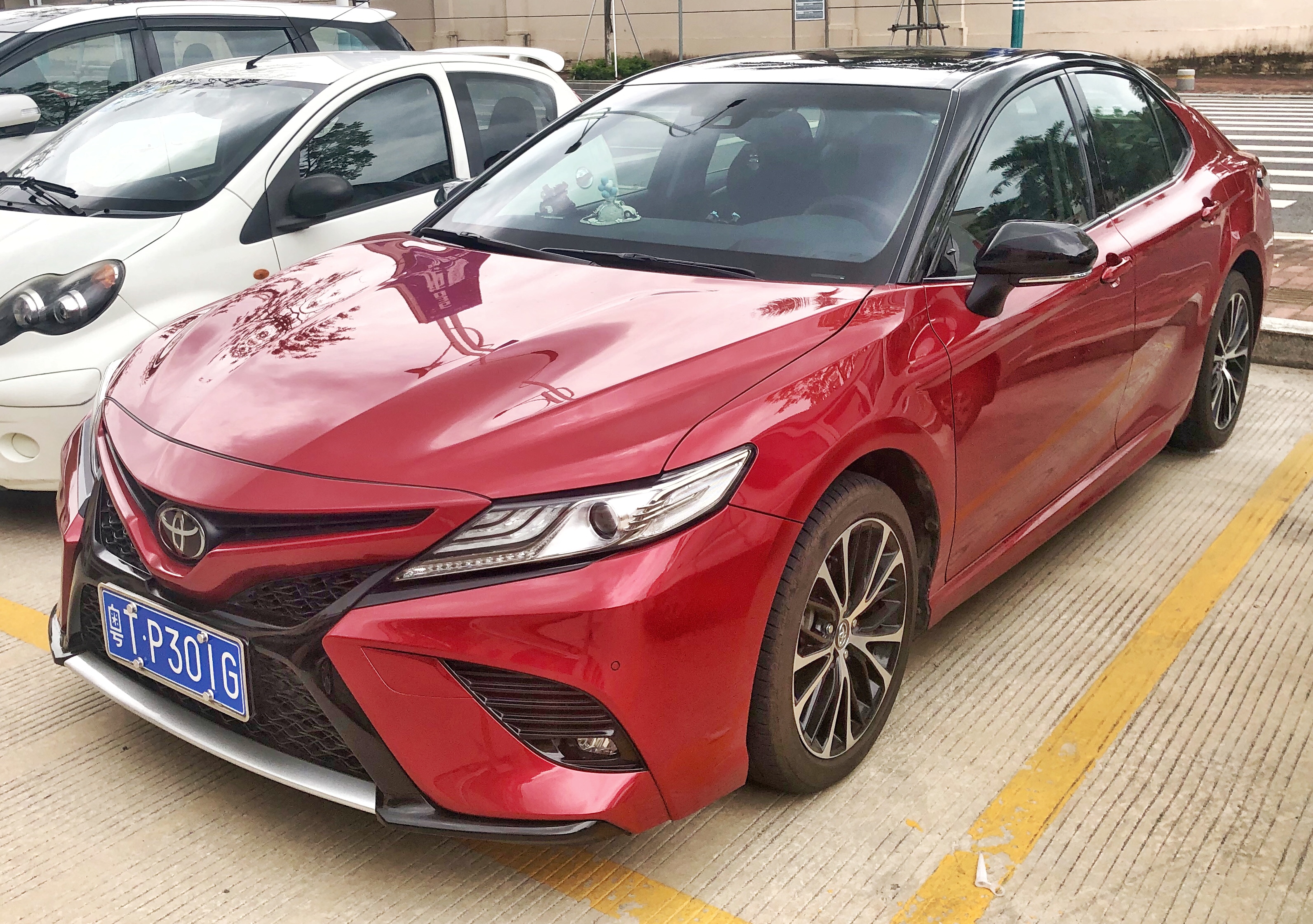
They mention the Toyota Camry to make a point: even a well-known, reliable model can turn into a headache if the previous owner didn’t take care of it. What matters is how that particular car was maintained.
Repair records are the paper trail of what work was done on the car. If you see the same problem coming up again and again, it’s a sign the car may cost more to own.
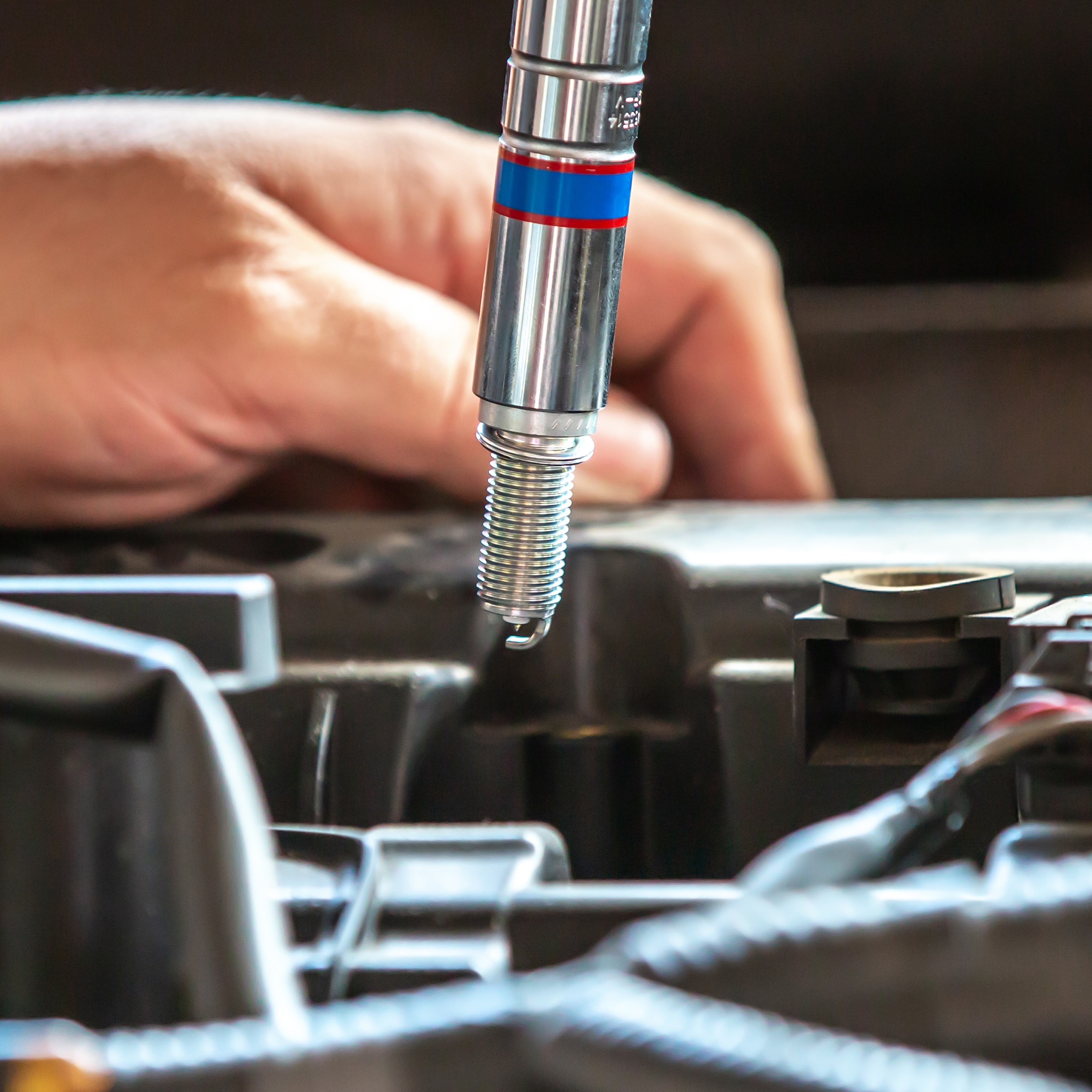
Spark plugs make the spark that starts combustion in the engine. If they wear out, the engine can run rough or misfire, and replacing them can restore normal operation.
They’re talking about a 2019 Jeep Cherokee as the example. Spark plugs are part of the engine ignition system, and the cost depends on how long it takes to get to them.
Labor cost is what you pay for the technician’s time. Some cars make spark plugs easy to reach, while others require more work, so the labor price changes.
That phrase is about how many cylinders the engine has (4, 6, or 8). More cylinders can mean a different engine layout, which can change how hard it is to reach the spark plugs.
The coil helps create the electrical energy that the spark plug uses to make the spark. On some engines, you have to loosen or remove the coil to get to the spark plug.
The intake manifold is a part that routes air to the engine cylinders. Taking it off usually takes a lot of time because there are a lot of connections to deal with.
A part number is like a precise ID for the exact part your car needs. Using the right one helps make sure you don’t accidentally buy the wrong spark plug.
The spark plug has threads that screw into the engine. If those threads get damaged, the repair can get very costly because the plug may not seat correctly.
The cylinder head is part of the engine where the spark plugs screw in. If you damage it while changing plugs, the fix can be much more expensive than the plugs themselves.
They’re talking about a 2008 Honda Pilot that’s not cooling when the AC is on. That usually means the AC system isn’t getting the right refrigerant amount, or something in the system needs repair.
The hosts emphasize diagnosis before spending money on refrigerant or “fix-in-a-can” products. Proper diagnosis identifies the actual cause (often a leak or a failed seal) so repairs are targeted rather than guesswork.
A recovery machine is used by technicians to remove refrigerant from the AC system safely and measure how much was taken out. This helps determine whether the system was low due to a leak and ensures the correct amount is recharged afterward.
In AC context, a “sealer” is an additive marketed to stop leaks by coating or plugging them. The speaker warns that sealers can end up in small passages inside the AC system and restrict flow, potentially causing larger, more expensive repairs.
“Recharge it” means adding refrigerant back into the AC system. If there’s a leak and it isn’t fixed, the refrigerant will leak out again and the AC won’t stay cold.
An o-ring is a rubber sealing ring used at joints in the AC system to prevent refrigerant leaks. If an o-ring fails, the repair can be relatively small compared to replacing major components like a compressor.
Term
CVO transmission
They mention a “CVO” transmission, but the transcript doesn’t clearly say what that means. If you’re worried about transmission problems, the key is whether the car shows symptoms and whether it’s still covered by the warranty.
CVT means “continuously variable transmission.” Instead of shifting between set gears, it can smoothly change the ratio all the time, which is why it can feel different from a normal automatic.
Concept
constant variable engagement
They’re describing how a CVT doesn’t act like it’s shifting gears. Instead, it keeps changing the drive smoothly, so the car can feel more continuous in how power is delivered.
They’re saying that if you’re seeing symptoms, you should take it in because the car may still be covered by the warranty. That can reduce or eliminate the cost of repairs.
A crescent wrench is an adjustable hand tool used to loosen or tighten nuts and bolts. In the episode, it somehow got into the tire and punctured it badly.
They’re talking about accidentally putting diesel fuel into a car that takes gasoline. Because the fuels aren’t the same, the car may not run right, and the shop may have to drain the tank and fix the fuel system.
The valve cover is a cover on top of the engine that helps protect the moving parts inside. Taking it off lets a mechanic look for buildup or problems and decide what to clean or fix.
The oil pan is the part under the engine that holds the oil. If it’s dirty or clogged with sludge, a mechanic may remove it to clean things out and check for damage.
Sludge is like a thick gunk that can build up inside an engine when oil gets old or dirty. It can make it harder for the engine to lubricate properly, so mechanics try to clean it out.
Diesel cars are built to run on diesel fuel, not gasoline. The fuel nozzle sizes are different to help prevent people from accidentally putting the wrong fuel in.
Bleeding the lines is a way to get the bad stuff (and sometimes trapped air) out of the fuel lines. It helps the engine get the right fuel so it can start more reliably.
The fuel injection system is how the engine gets fuel into the cylinders. If the wrong fuel gets in, mechanics may try to remove the contaminated fuel from the lines so the engine can run again.
A cam phaser helps control exactly when the engine’s valves open and close. If it fails, the timing can get thrown off, and the engine may need a costly repair.
Adjustable valve timing means the engine can change when its valves open and close. If that system breaks, the engine timing can be wrong and repairs can get expensive.
The timing chain is like the engine’s timing “link” that keeps everything moving in sync. If it gets loose or the timing goes wrong, the engine can be damaged and repairs can be very expensive.
Some engine timing systems depend on engine oil pressure to work correctly. If the oil isn’t right (low or dirty) or the parts wear out, the timing can go wrong.
An engine replacement is when the shop swaps out the whole engine instead of fixing one small part. It usually happens when the damage is too severe to safely repair.
Term
used
They’re talking about using a previously owned engine to save money. The risk is you don’t know how it was treated or what problems it might already have.
“Shoulder seasons” means the time between the hot part of the year and the cold part of the year. Cars tend to be easier to work on then because weather stress is lower than in deep winter or peak summer.
Term
R12
R12 is an older type of AC refrigerant that used to be common in cars. It was replaced because it wasn’t good for the environment.
“Air conditioning repairs” refers to diagnosing and fixing problems in the AC system—commonly leaks, low refrigerant, or component failures. The mention ties into why refrigerant cost and proper procedures matter during service.
This part is about tires—how much they cost and whether expensive tires are actually better. They also talk about ways to save money without ignoring quality.
OE parts are the same kind of parts your car maker designed for the vehicle. Using them can reduce the chance of fit or performance problems.
Term
off-brand tire
An off-brand tire is a non-OEM (not original equipment manufacturer) tire from a lesser-known brand. The concern is that quality, materials, and consistency can vary, which may affect wear, grip, and ride behavior.
LIVE
You know what that means means time to talk about cars your car your truck your van and maybe the problems you are having with it
And you need to bring it in for service at your favorite dealer your favorite shop
The guy that's going to give you a little analysis over the radio is none other than Nick Stoffel
Who was an ASC certified technician at Lloyd's automotive among other things Nick. Good morning to you
Good morning, Danny. How are things at Lloyd's etc?
Very busy. It's you know, the weather is trying to make its way through the spring-summer field
But folks are making their appointments and getting the cars ready for whatever comes next
Summertime travel absolutely among other things
We're already getting phone calls and text messages and that's why we're here Nick will be with us till just about 745
So any kind of a car care question you may have for Nick
Let's hear from you sooner rather than later. We always like to say six five one four six one nine two two six
You can call you can text and Nick will will help you out over the radio speaking of Nick
There's another Nick calling in from my shore view this morning Nick. Thank you. What is your question for Nick?
Okay, I was having a
It was kind of a long thing on my air conditioning compressor
It was starting to rattle like the clutch was going in and out
Now this is an older car. It's an old one Buick Regal and then so I replaced that replaced the cumulative dryer and
Low pressure valve was leaking so I replaced that and now
What happens is a clutch runs continuously
Unless I have it in the it's like it's off button and go in the vent mode
then it'll stay out, but the light will come on for the
Automatic temperature sensor control, but it'll stay off until I
Get it out of the vent control
So I wonder if there's something with the the control panel obviously when you put on defrost
It's concerned the compressor on because that's you know, even in the winter months
We want to have dry air clear in that windshield or any any moisture
And I wonder too about the level of charge
Might not be a bad idea to take it in where somebody could put a vacuum on that to make sure it pulls all the refrigerant out
Puts it on a vacuum. You know falls. There's a procedure about a period of time
To hold that vacuum to make sure it's not any kind of leak because if the system sees a fluctuating pressure change
You know back and forth back and forth. It's not as it's going to confuse it
But it's going to not operate the compressor all the time the way you want
So I think there could be an avenue there
Also something with the control hub because when you said you put it the vent it shuts it off
But the button that the light is on or off usually that light would mean if the light is on the compressors engage
So if that light's not responding accordingly or as it should I wonder if there's something with that control head that's not working properly
All right
Nick good morning. Good good luck with that and thanks for calling this morning. Appreciate that. Good luck
Yeah, it's interesting to hear as you know Nick
We do get the callers from time to time or textures that do have the ability to work on their
Their vehicles I'm kind of impressed with that. How about you?
Absolutely, you know and some of the difficulty here is this person's trying to you know work on their conditioning system
Which is great, but they likely don't have the right tool to recover recharge the refrigerant
You know, so that's you know, it's kind of give and take maybe he can put the components into the vehicle
Take it to his shop or his his people that help him out and they can finish that procedure because I wonder if there's just not the
Correct amount of refrigerant. So therefore the system is not working properly about tools and I think it's certainly with the
Computerization that has come into your business
Tools as well. You've seen some pretty good changes nice changes with power tools besides computers, right?
Well, it is funny that you know and there's still plenty of air tools that are utilized
But a lot more these battery powered hand tools
Oh, yeah, they're they've made batteries small enough so they're light enough
You know, these guys have these tools in their hands all day
So that wear and tear does take its time
You know if you're a do it yourself or where you're doing it once or twice here and there
But if you're holding these wrenches and these ratchets all day every day the fit mint the weight all of that is very important
So it's nice to see some of these battery powered tools have the capacity to allow our guys to fix cars
Efficiently yet comfortably. Yeah, and have the power to do so. Yeah, absolutely
All right looking at a text
That just came in a bit ago a new card. They don't say what kind
Started to notice an intermittent hum or whirring noise
Barely noticeable but more noticeable when the radio is off
It sounds to me texture says that this is the AC cycling on and off and only lasts for a few seconds
But repeatedly also appears when accelerating the dealership first said nothing wrong
Then they said it was the alternator and replaced it. Well now that warmer weather is back. I can hear it again
Do you have any ideas?
That's a tough those are the
Most interesting and gratifying once you figure out what it is. Yeah in the meantime
But your second opinion sometimes a third opinion
Is much information you can document and I can't say that enough more information
You can share with the shop or the dealership this situation this scenario and there's some good clues on what they've shared already
But every detail you can share
Hopefully will give them a clue to duplicate that that situation because those intermittent how mean annoying noises would drive me nuts
And I can sympathize with this person. So I would say document it go back share with them
Maybe go for a drive with them so you can duplicate the noise and they can experience it with you and hopefully get to the bottom of it
Once in a while we get
Questions usually in the text form of someone wanting your opinion and if they should buy such and such a vehicle
And I want to know any negatives on that and I that's kind of a tough position for you to be in isn't it sirs as far as
Not promoting but in endorsing or not endorsing a certain vehicle, right?
I'm sure in your private life fine, but I don't know if you can do that
Publicly even at that, you know people say, what are you a driver?
Well, as I've said on the radio before I drive a big pickup truck because I have parking lots
I need to plow snow. So I need a plow. So I need to pick up truck
It fits my needs now depending on your needs where you are in life your fortability all those things are such a huge factor
And as far as a particular vehicle it kind of comes out to the maintenance, you know, I'm not gonna like you said
I'm not gonna pick on a maker a model. We all have our opinions. You like Pepsi. I like Coke this that you know
That's that's just a matter of opinion
But if there's a certain maker model that you do like and you are interested in buying do little research check the history of that
particular vehicle itself because it could be
You know, I tell you out of Camry that you just actually love but the person that you're buying it from didn't maintain it at all
Well, that vehicle might not be very good vehicle regardless of the nameplate
So I think it's more about the history of the vehicle that you're looking to buy
The necessary to make in the model you can talk to your friends your neighbors get their opinions that make some models
But once again, that's mostly just an opinion and you can also something I used to do
I haven't done it for quite some time because I haven't been looking for a vehicle, but
Consumer magazines, you know legitimate publications
Either on the web or whatever
It's it's amazing what you can find on repair records of different
Vehicles and the different manufacturers and it's good research and it really will maybe save you a lot of heartache and money
Down the road. So I would alert that
That the texture to to check around check them around. All right, let's take a quick break here
Let's invite or listen as we're getting more text messages if you want to call in your question for Nick
That's great. Or if you just want to send a text like other folks are doing fine, too
Either way six five one four six one nine two two six keep in mind Nick will be with us till just about seven forty five
So let's hear from you sooner rather than later right now in the Twin Cities
We have a 40 as a temp. We are heading for 66 today 67 tomorrow and maybe
70 on Monday, but then that kind of cooler daytime highs
We'll pick up on that forecast coming along in a few minutes right now. It's fair. It's 40. It's a Saturday here on a 30
W CCO and welcome back to CCO's car care show Denny along here along with ASC certified technician Nick Stoffel from Lloyd's automotive
Which is located where how do we find the Lloyd's if we need you guys?
Great question. So if you need anything from us, we will always answer your questions
That's what they're there for so you can call us at six five one two two eight one three one six
If you're in St. Paul and you want to step stop and say hi
You can find us at nine eight two Grand Avenue
Which is on the corner of Grand and Shatsworth for more information check out our website, which is Lloyd's automotive net
Some great coffee shops nearby, too, which I'll be visiting. I think next week or so next couple of weeks
We do get these texts from time to time. By the way, if you have a question a car care question six five one four six one nine two two six
Average cost of replacing spark plugs this in this case
It's a 2019 Jeep Cherokee and I know there's a lot of variables there
But do you want to do a kind of a ballpark? I know it's kind of tough with it with the cost questions
Yeah, the cost questions are tough, you know in the truth is it labor cost or hi
You know because people need to be paid
And I would tell you
Depending on the amount of time in the vehicle if it's a four six eight cylinder
Sometimes they're very accessible meaning that they're right out top
Maybe there's one screw set screw that holds the coil down. You can pull the spark plugs out
There's some scenarios where you need to remove like an intake manifold
There's some air ducking so the labor times can go for anywhere from probably 45 minutes up to three or four hours
So cost-wise, you know in the spark plugs
They're they're made out of these precious materials where they can be, you know, 20 25 dollars a spark plug
They're probably still some that are 10 12 dollars. There's probably some that are 40 45 dollars
So there's a there's a huge range here that you might be spending a couple hundred dollars or five six seven hundred dollars
depending on the make model labor time and what that vehicle is equipped with so
It's hard to hard to price things without really having all the details
You know and I would say if you're getting a price, you're not sure call them around get in the second opinion
I also feel very very strongly on spark plugs themselves that you put back in what came out of the vehicle
If you're at the parts store and they say oh these should work don't buy that you need it
You know, you have that spark plug in your hand. There's a name a brand and a part number out there
That's what you want to put back into the vehicle every time and I won't I won't sway from that one at all
So put back what came out good point plus like you've told us in the past shows that some vehicles they're hard to get at
Well, they're hard to get it if you go back in three years a certain engine setups that
Sometimes the spark plug might become seized or stuck in that cylinder heads
You have to have the right know how to get them out because if you
Damage that spark plug threading and that cylinder head. That's a big costly repair
So if you do it yourself or you get into the job and you hit some resistance
Stop ask questions
You do not want to strip that spark plug or those threads and you definitely do not want to break that spark plug
Because you run the risk of that porcelain material get it into the cylinder if that happens you run the risk of permanent damage
So I'm not trying to scare you out of doing the job
I just want to make sure you know what you're getting yourself into and you take the time and do diligence and make sure you get it done
right
Nick I'm looking at a text about a
2008 Honda Pilot 200,000 miles on it does not blow cold air when I turn on the AC a friend can put
Refrigerant in but I don't want to spend the money if that's not the issue
Is it expensive to have a professional?
Diagnose the problem you guys do that all the time don't you?
we do and the issue with your friend who can fill it up is
The refrigerant systems work off of weight the weight of the refrigerant and there's a scale in the recovery machine that we use
That will tell us how much we removed from it and how much we put back into it
It's very specific if you just take a can of that stuff and push it in there
You're not gonna have the right amount, you know, it's like a needle in the haystack. So doing that
I advise against you and another thing that so very very strongly against is you look at these products at the stores
It says it includes like a sealer or it's gonna fix the hole or a plug or whatever it claims
It does the risk there is there's a lot of small components in areas that the refrigerant flows through if that sealant ends up in one
Of those spots and restricts or plugs it now you're looking at much larger larger repairs
So it does cost something maybe it's a hundred and fifty two hundred dollars and taken in have it assessed possibly even recharge it
If there's no leak seen
There might be a repair it could be simple as an o-ring it doesn't have to be a brand new compressor a very expensive repair
But you don't know until have it assessed. So the very first step is take it in find out what's going on
Once, you know, what's wrong you can make an informed decision the path you want to take but guessing ahead of time is a very bad idea
Texas is this love the show gentlemen. Thank you for that and the interesting question
Maybe this is one I should have you think about it for a while and when we come back after the weather you can
Tell us about it, but maybe you both could chime in Texas is my question is what is one of the strangest repairs?
You've done or seen in your life or career
Well, you're you're the you're the
ASU certified technician think about that for a bit Nick and maybe after the weather we can we can have you tell us about some strange
repairs you've done
This one in the meantime
Good morning. Texas says I bought a 2025 eco knocks last year new
It has a CVO transmission and we get this from time to time as you know after talking to friends of mine who seem to know cars
They're telling me that this is a bad transmission and I'm going to have problems with it. Should I be concerned it has 8,000 miles on it
What would you say about that?
Is it a CVT is that what there's not a
CVT transmissions in it's a technology
The best thing that can compare it was like a snowmobile where it's that constant variable
Engagement right and I think on the lighter white vehicles. I think they do fine. Obviously
maintenance is important
You know back to our call earlier, you know, what's what's a good make bad make good model bad model mad of opinion
The manufacturers put a ton of resources into you know engineering these things and there are some hiccups
I'm not gonna dispute that there's some hiccups out there
But I would say if you maintain your vehicle if you're driving it not noticing any issues
Don't worry about it. If you're noticing something it's under warranty
Take it in share that with them and see what you can learn from there. All right, Nick
Hang on now. We're gonna take a break have a look at that forecast when we come back maybe think about that
Maybe you in New York career. You've seen or heard some strange repairs on
Vehicles in years gone by in the meantime. We'll have a look at that forecast. Let's invite our listeners to join in
We still have some time for your car care question. Nick will be taking his leave about 745
So about another 1415 minutes call us text us 6 5 1 4 6 1 9 2 2 6
All coming at you this morning from Newstalk a3o w cco
And welcome back to cco's car care show denny along here along with if you're just joining us nick stoffel
From Lloyd's automotive in st. Paul ac certified technician there
Ben in the business. How many years have you I know you joined dan when you were really just a kid, right?
Yes, I started working at the amical station in 1991. I think it was like april
So it's just a few months before I'd had my got my driver's license
And I may or may not have driven a car before before I had that license, but don't do that
And then I started after the Marine Corps
That was a 98 or 99 I started at Lloyd's
Worked for Dan for a really long time and then actually just yesterday was my fifth year of owning Lloyd's
So wow how fast does that happen? I should say
Well, you've seen some
Repairs over the years and a listener if you're just joining us wanted nick to kind of share some maybe
Unusual repairs that you have seen what you think of one or two offhand
Yeah, I recall one time we had a customer come in and complaining about a thumping noise and
We found that a crescent wrench had impaled into their tire and that's the handle end but the adjusting and the widening
I don't you know, I assume that you know the and it was a rear tire
So I assume that the front tire hit the wrench kind of got it tumbling and it just the right impact of that rear tire
It and impaled into that tire and obviously we had to replace the tire because it wasn't repairable
And there's another time that we had a vehicle where
Somehow the customer had gotten
10 12
The gallons of diesel fuel into the tank and I did verify after we you know did the repair that the nozzle wouldn't fit in
I don't know how they
A lot of patients or we never found out because no one really fast up to what they did
But somehow they got 10 or 12 gallons of diesel fuel into the gasoline fuel tank
And if you have a diesel, you'll know that the nozzle at the filling station is a little bit larger diameter
Yeah
Purposefully so you cannot put that into a gasoline engine filler neck. So
Um, those are a couple of loose ranges in the oil
We always see these remains that sometimes the cars upon repair you pull the valve cover off
You pull the oil pan down and some of the sludge that we've seen it's amazing that these cars run there
They are an absolute wonder, you know and
Trying to clean and trying to manage those type of situations are
Always a little bit fun and interesting
I remember many years ago at a Mercedes-Benz dealership
And someone brought it was someone brought in a diesel vehicle
sedan
And uh, I won't say if it's a husband or wife that did this. I'm not going to choose sides here, but someone
Put gasoline now that would fit in there obviously because like you said the diesel
Nozzle is somewhat larger. What happened? What how is that repairable?
I don't remember what happened at the end of the story
But can that engine that diesel engine be repaired after putting in gasoline?
You have to try I mean in this situation we've seen the reverse where we will see uh contamination
You know, you got to drain the pump out if there's an accessible filter you do that you bleed the lines
And then you start with fresh fuel and start slow and see if it'll fire up if you can get it running
And try to get through some of that contamination that's left and we have pretty good success
You know, I've never really had uh that I can recall a situation where like an engine's been destroyed quite honestly
I feel that we've always been very cautious done our due diligence
Like I said drain the tank drain the lines try to bleed out the fuel injection system
Give it the best opportunity to rebound and work again and we've had pretty good luck
was visiting with some friends the other day and uh one of the friends said that she and her husband have and I think
Hope i'm not wrong. I think they were they were having trouble with a
F-150 and they were thinking of getting a new vehicle anyway, but I'm almost positive. She said
When they took it in for repair it needed a new engine because of and I never heard it before
She said they called it a phaser. She said other other manufacturers may call it something else
But she said what is a start track? Have you ever heard of such a thing?
Well, it's to do with the adjustable valve timing
There's a what we call like a cam phaser mounted at the end of the cam shaft and if something with that component had
Failed to the extent where it's not engaging or locking
It's kind of slapping around the timing chain is attached to that and if the timing chain is loose
I'll you know have it could happen. So depending to what extent that went
I also suspect there is probably some warning signs
So if you have not just that make a model but any vehicle here
A ratcheting sound a clicking noise upon startup or acceleration
Take that and don't ignore that because that might be something related to the timing which is related to oil
That something might be out of might be worn or damaged in if you ignore those things
Unfortunately, the end result is maybe an engine replacement
and from
Really expensive, right? I mean extremely expensive. It's uh, you know, they with the technology in these vehicles and these engines
oftentimes you can find something used but I was cautious there. You don't know what you're buying always but
um, yeah, the repair repairs on vehicles is extremely expensive
They're so complex the components of parts are very expensive the labor processes or time consuming
maintenance
is the biggest thing you can do to prevent those situations and
We're all busy. We all have full lives, but you got to take a minute and take care of your car. Yeah, wow
expensive
All right, let me look here. Oh, I love these questions. We which are not necessarily technical questions
But this uh listener wants to know is there ever a slow time of year
For auto mechanics. That's something we've never asked before
Well, the the the joke in the industry was the fair time
and then February
The the fair time because we're in what it is is the shoulder seasons
You know come fair time or out of the heat of the summer
Usually the
Then moderate temperatures are easier on cars the same with winter all that cold
Weather stuff has already kind of happened for the most part and your vehicles have been repaired. They're up running again
So by the time you had that last cold snap in February the car has already been repaired and you can work usually work your way through that
But yeah, it's usually February in the fair time
Um, where there's you know, I wouldn't say necessarily slow, but you know, it's not as backed up or as congested as it normally is
We're talking about repairing an ac and uh, this texture earlier talking about a friend was able to could put in some
What we just call freon. I'm not sure what you call it
But somebody else said a texture later saying not to mention the cost of quote freon is obscene
Uh, what do you call that refrigerant now and is it costly?
Yes, it is, you know, if you go far enough back, it was r12
Which they got rid of it came 134 a and now it's one two three four yz
And I don't know how they number name these refrigerants, but it's a it's a gas and the the newest stuff
The capacities have gotten smaller, you know, it used to be measured in pounds
Oh, it takes two and a half pounds or you know, it's such now
It's into the ounces where most systems have less than a pound of this refrigerant
It is very expensive, which is more the reason why you need to spend the time
Do your diligence have somebody find the repair. They've really tightened the the process down when we on a newer vehicle
We do an air conditioning repairs of such the equipment the machine that we have
It's very time consuming. They put it on the vacuum extensively long. They want to make sure there's no leaks
We don't want this stuff in the atmosphere
If you're going to the part storm vine a can of whatever and sticking it in there at least right back out
You're a part of that the problem there too. So please pause have somebody look at it figure out what's going on
Once you know what's going on you can make that informed decision
That helps you, you know keeps you going on the road. Very good. I think we have time nick for one final question
This is about tires
Texas says boy, they are expensive. Do you really get what you pay for with tires?
You do do your research as you said really there's a lot of information online
You know, there's I'd like a branded
Tire I like branded everything quite on say the oil that we use at the shops is a branded oil
We use a branded battery our parts, you know, we'd like to use oe parts or oe like parts
We do a lot of research to make sure we fit that
Kind of goes hand in hand with tires. There's always something cheaper net necessarily better
Not saying you have to go by the most expensive tire on the road
But do your research if you know if you're a member of like Costco Sam's Club
You know, they got a lot of a lot of promotions and such that can have cut down some of that cost, but I'm an advocate
Primarily for like a branded brand tire
Just to avoid the risk of some off-brand tire and issues you might have with it
Again common sense there. All right nick. We have to run but in the meantime
We always invite listeners to to call in if they have any questions
You guys are are kind enough to do that even if you don't bring in your car for service
But if we do need some help, how do we find Lloyd's?
Yes, sir that phone number 651 228 1316 and if you're in st. Paul on grand avenue
You'll find us on the corner of grand and chatsworth, which is 982 grand avenue
If you need more information check out our website, which is Lloyd's automotive dot net
We will do that very thing and what do you say we get together for another show next week
That sounds good. Danny. I'll be ready. Very good deal. Thank you. Nick next awful from Lloyd's automotive
About this episode
The conversation moves from diagnosing a Buick Regal air-conditioning problem to broader shop advice on refrigerant charge, spark plug pricing, and why proper parts matter. It also touches on unusual repair stories, including a wrench embedded in a tire and diesel fuel in a gasoline tank. Later, the hosts discuss expensive engine issues like cam phasers, seasonal slowdowns in the shop, and practical buying advice such as checking vehicle history and choosing branded tires.
Solving problems with the air vent. Why a whirring sound may be coming from your car. Why replacing spark plugs can be an expensive purchase. Some of the strangest repairs Nick has seen in his career. What does a phaser do in a vehicle? Is there a slower time of the year for mechanics? Why good tires are worth the investment. Ask our car care expert Nick Stoffel of Lloyds Automotive. Visit lloydsautomotive.net 651-228-1316.