Air Vent Issues, The Cost of Spark Plugs, Some Strange Repairs
About this episode
The conversation moves from diagnosing a Buick Regal air-conditioning problem to broader shop advice on refrigerant charge, spark plug pricing, and why proper parts matter. It also touches on unusual repair stories, including a wrench embedded in a tire and diesel fuel in a gasoline tank. Later, the hosts discuss expensive engine issues like cam phasers, seasonal slowdowns in the shop, and practical buying advice such as checking vehicle history and choosing branded tires.
air conditioning compressor
"It was kind of a long thing on my air conditioning compressor. It was starting to rattle like the clutch was going in and out"
Your car’s A/C compressor is the part that makes the air conditioning work. When it starts acting up, the A/C can rattle or not cool the way it should.
The air conditioning compressor is the pump that pressurizes the refrigerant so the system can cool the cabin. If it’s failing or cycling abnormally, you may hear rattling or feel odd on/off behavior.
clutch
"It was starting to rattle like the clutch was going in and out. Now this is an older car... What happens is a clutch runs continuously"
Some cars use a clutch to turn the A/C compressor on and off. If that clutch is slipping or chattering, it can cause rattling and inconsistent A/C operation.
In many car A/C systems, the compressor uses an electromagnetic clutch to engage and disengage the compressor. When the clutch cycles too often or chatters, it can point to a refrigerant/pressure issue or a control problem.

Buick Regal
"Now this is an older car. It's an old one Buick Regal and then so I replaced that replaced the cumulative dryer"
They’re working on a Buick Regal. They’re trying to fix an A/C problem that started after replacing some A/C parts.
The speaker’s issue is on a Buick Regal, an older model they’re troubleshooting after A/C component replacements. The A/C behavior described (compressor/clutch cycling and control-panel effects) can vary by model year and system design.
cumulative dryer
"So I replaced that replaced the cumulative dryer and Low pressure valve was leaking so I replaced that"
The A/C dryer is a small part in the refrigerant line that helps keep moisture out. If it’s failing, the A/C can act weird and may not work correctly.
A “cumulative dryer” is almost certainly the A/C receiver-drier (often just called the dryer). It removes moisture from the refrigerant and stores some liquid refrigerant; when it’s bad, the system can behave erratically.
Low pressure valve
"...cumulative dryer and Low pressure valve was leaking so I replaced that and now What happens is a clutch runs continuously"
This part checks the refrigerant pressure in the A/C system. If it’s leaking or giving the wrong reading, the A/C can run too much or not work right.
The low-pressure valve/switch monitors refrigerant pressure and helps the A/C control decide when to run the compressor. If it leaks or reads incorrectly, the system can over-cycle, run continuously, or disable cooling.
vent mode
"What happens is a clutch runs continuously Unless I have it in the it's like it's off button and go in the vent mode then it'll stay out"
Vent mode is the A/C/heat setting that blows air out of the dashboard vents. Switching modes can change how the A/C compressor behaves.
Vent mode is the HVAC setting that directs airflow to the dashboard vents rather than defrosting the windshield or sending air to the floor. HVAC control logic can change compressor engagement depending on the selected mode.
Automatic temperature sensor control
"...but the light will come on for the Automatic temperature sensor control, but it'll stay off until I Get it out of the vent control"
This is the system that tries to keep the cabin at the temperature you set. If it’s not reading correctly, the A/C can run when it shouldn’t or act differently depending on the mode.
Automatic temperature sensor control refers to the car’s climate-control system that uses temperature sensors to maintain a target cabin temperature. If the sensors or control module are misreading, the system may keep the compressor/clutch engaged or behave oddly in certain modes.
defrost
"So I wonder if there's something with the the control panel obviously when you put on defrost It's concerned the compressor on"
Defrost is the setting that blows warm air (or conditioned air) at the windshield to clear it. It can change how the A/C system runs.
Defrost is an HVAC mode that directs airflow to the windshield to clear fog or ice. Many cars also adjust compressor operation and airflow strategy in defrost mode to improve windshield clearing.
refrigerant
"Might not be a bad idea to take it in where somebody could put a vacuum on that to make sure it pulls all the refrigerant out... if there's just not the Correct amount of refrigerant. So therefore the system is not working properly"
Refrigerant is the stuff in your car’s A/C that makes it cool. If there isn’t enough of it (or it’s leaking), the A/C won’t work right.
Refrigerant is the chemical fluid inside an air-conditioning system that absorbs heat from the cabin and releases it outside. When the system is low or has a leak, the compressor may not run correctly and cooling performance drops.
vacuum
"take it in where somebody could put a vacuum on that to make sure it pulls all the refrigerant out... There's a procedure about a period of time to hold that vacuum to make sure it's not any kind of leak"
A vacuum pump is used to suck out air and moisture from the A/C lines before adding refrigerant again. If it can’t hold the vacuum, that’s a sign something may be leaking.
In A/C service, a vacuum pump is used to pull air and moisture out of the system before recharging it with refrigerant. Moisture and air can cause poor performance and internal corrosion, so the system is often held under vacuum to check for leaks.
control hub
"Also something with the control hub because when you said you put it the vent it shuts it off... I wonder if there's something with that control head that's not working properly"
The control hub/head is the car’s A/C control electronics. If the A/C light or button doesn’t behave normally, it could mean the controls aren’t sending the right commands.
The control hub/head is the electronic interface that manages A/C functions like fan/vent settings and whether the compressor should engage. If the indicator light or button behavior doesn’t match what the system is doing, the control module may be faulty.
computerization
"I think it's certainly with the Computerization that has come into your business... You've seen some pretty good changes nice changes with power tools besides computers"
Modern cars use computers to control and monitor systems like A/C. That means you often need the right diagnostic tools to figure out what’s wrong.
Computerization refers to the increasing use of electronic control units and software in automotive service and diagnostics. Modern A/C and other systems rely on sensors and control logic, so the right diagnostic tools matter more than ever.
intermittent hum or whirring noise
"Started to notice an intermittent hum or whirring noise. Barely noticeable but more noticeable when the radio is off"
“Intermittent” means it happens sometimes and then stops. A “hum” or “whirring” noise usually suggests a part that’s moving or turning on briefly, not a steady problem.
An intermittent noise comes and goes instead of being constant. “Hum” or “whirring” often points to something that spins or cycles, like an electrical component or a system that turns on briefly.
AC cycling on and off
"It sounds to me texture says that this is the AC cycling on and off and only lasts for a few seconds"
Your car’s AC doesn’t run at full blast all the time. It turns on and off to keep the cabin at the right temperature, and that switching can make a short noise.
“AC cycling” means the air-conditioning compressor turns on and off to maintain the cabin temperature. If the cycling is noticeable—especially as a hum/whirr—it can be normal, but it can also indicate a control or refrigerant-related issue.
alternator
"Then they said it was the alternator and replaced it. Well now that warmer weather is back. I can hear it again"
The alternator is what keeps your battery charged while the car is running. If it’s failing, the car can act weird and you might hear unusual sounds.
The alternator is the engine-driven generator that powers the car’s electrical system and recharges the battery. If a shop suspects the alternator, they’re usually looking for electrical charging problems that can cause odd noises or symptoms that come and go.
second opinion sometimes a third opinion
"But your second opinion sometimes a third opinion. Is much information you can document and I can't say that enough"
If a problem only happens sometimes, a mechanic might not be able to see it right away. Trying another shop can help because they may catch the noise when it happens.
Intermittent noises can be hard to diagnose because they may not show up during a short test drive. Getting a second (or third) opinion increases the odds that someone will reproduce the symptom and connect it to the correct system.
document it
"And I can sympathize with this person. So I would say document it go back share with them"
“Document it” here means recording details like when the noise occurs, what conditions trigger it (radio off, accelerating, AC cycling), and how long it lasts. That information helps the dealership or shop reproduce the issue and narrow down causes.
plow
"I need to plow snow. So I need a plow. So I need to pick up truck It fits my needs now"
A plow is the blade you attach to the front of a vehicle to move snow. They’re saying they need a truck that can handle plowing in their work situation.
A plow is the front-mounted blade used to push snow out of the way. In this segment, it’s part of the reason the host prefers a pickup truck—plowing requires the right mounting and clearance to do the job safely.
maintenance
"And as far as a particular vehicle it kind of comes out to the maintenance, you know, I'm not gonna like you said I'm not gonna pick on a maker a model."
Maintenance is how regularly the car was cared for—like oil changes and fixing issues when they first show up. A well-maintained car is usually a lot less likely to have expensive surprises than one that was neglected.
In car shopping, “maintenance” means how well a vehicle has been serviced over time—oil changes, inspections, and repairs as they’re needed. Two cars of the same model can feel very different depending on whether the previous owner kept up with routine upkeep and addressed problems early.
vehicle history
"But if there's a certain maker model that you do like and you are interested in buying do little research check the history of that particular vehicle itself because it could be"
Vehicle history is the story of that exact car—what it was serviced for and what repairs it needed. Looking at it can help you avoid buying a car that looks good on paper but was neglected.
“Vehicle history” refers to the documented past of a specific car—how it was maintained, what repairs were done, and sometimes ownership and accident information. The hosts emphasize that history can reveal issues even when the model itself has a good reputation.

Toyota Camry
"You know, I tell you out of Camry that you just actually love but the person that you're buying it from didn't maintain it at all"
They mention the Toyota Camry to make a point: even a well-known, reliable model can turn into a headache if the previous owner didn’t take care of it. What matters is how that particular car was maintained.
The Toyota Camry is used here as an example of how a popular, well-regarded model can still be a bad buy if the specific car wasn’t maintained. The point is that the condition and service history of the individual vehicle matter more than the nameplate.
repair records
"It's it's amazing what you can find on repair records of different Vehicles and the different manufacturers and it's good research and it really will maybe save you a lot of heartache and money Down the road."
Repair records are the paper trail of what work was done on the car. If you see the same problem coming up again and again, it’s a sign the car may cost more to own.
“Repair records” are documented service and repair history (often from shops, dealer logs, or vehicle history reports). They help you spot patterns like repeated failures or deferred repairs, which can be more important than the car’s brand or model name.
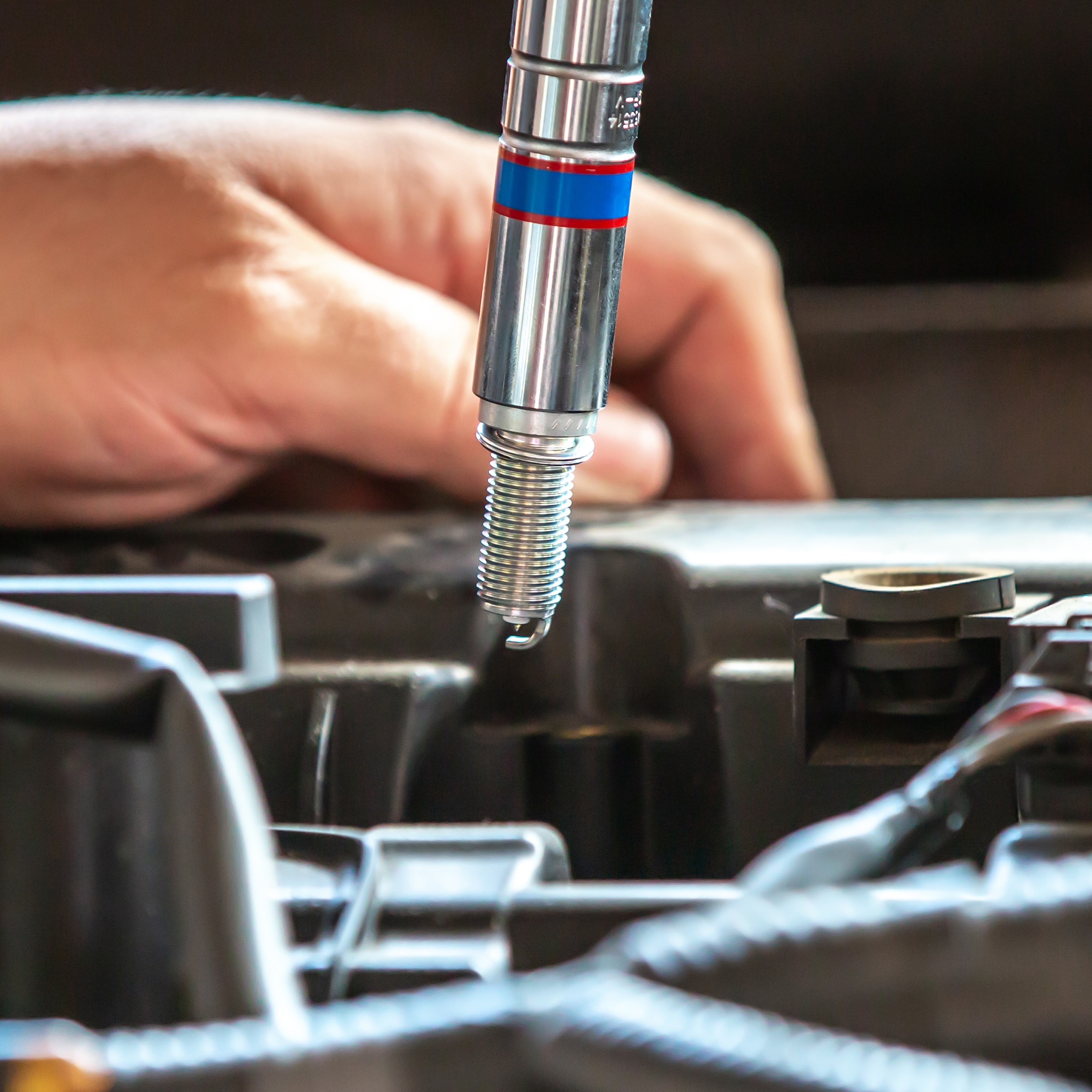
spark plugs
"Average cost of replacing spark plugs this in this case It's a 2019 Jeep Cherokee and I know there's a lot of variables there"
Spark plugs make the spark that starts combustion in the engine. If they wear out, the engine can run rough or misfire, and replacing them can restore normal operation.
Spark plugs are the ignition components that create the spark needed to ignite the air-fuel mixture in each cylinder. Replacing them at the right interval helps maintain smooth running and fuel economy.

Jeep Cherokee
"Average cost of replacing spark plugs this in this case It's a 2019 Jeep Cherokee and I know there's a lot of variables there"
They’re talking about a 2019 Jeep Cherokee as the example. Spark plugs are part of the engine ignition system, and the cost depends on how long it takes to get to them.
They’re using a 2019 Jeep Cherokee as the example for estimating the cost of replacing spark plugs. The exact price can vary a lot based on engine layout and how easy the plugs are to reach.
labor cost
"Yeah, the cost questions are tough, you know in the truth is it labor cost or hi You know because people need to be paid"
Labor cost is what you pay for the technician’s time. Some cars make spark plugs easy to reach, while others require more work, so the labor price changes.
Labor cost is the mechanic’s time charge for doing the repair. For spark plugs, labor can swing widely depending on how accessible the plugs are and whether extra parts must be removed to reach them.
four six eight cylinder
"Depending on the amount of time in the vehicle if it's a four six eight cylinder Sometimes they're very accessible meaning that they're right out top"
That phrase is about how many cylinders the engine has (4, 6, or 8). More cylinders can mean a different engine layout, which can change how hard it is to reach the spark plugs.
“Four, six, or eight cylinder” refers to how many cylinders the engine has. Cylinder count often correlates with engine design and packaging, which can affect how accessible spark plugs are for a given vehicle.
coil
"Maybe there's one screw set screw that holds the coil down. You can pull the spark plugs out"
The coil helps create the electrical energy that the spark plug uses to make the spark. On some engines, you have to loosen or remove the coil to get to the spark plug.
In this context, the coil is part of the ignition system that generates the high voltage needed for the spark plug. Some engines hold the coil down with a fastener, and that can be part of the spark-plug replacement procedure.
intake manifold
"There's some scenarios where you need to remove like an intake manifold [626.3s] There's some air ducking so the labor times can go for anywhere from probably 45 minutes up to three or four hours"
The intake manifold is a part that routes air to the engine cylinders. Taking it off usually takes a lot of time because there are a lot of connections to deal with.
The intake manifold is the engine’s air distribution part that routes air (or air/fuel mixture, depending on design) to the cylinders. Removing it is often labor-intensive because it may require disconnecting multiple components and accessing fasteners.
labor times
"There's some air ducking so the labor times can go for anywhere from probably 45 minutes up to three or four hours ... depending on the make model labor time and what that vehicle is equipped with so"
Labor time is how long a mechanic expects the job to take. Some cars are harder to work on, so the same repair can take much longer.
Labor time is the shop’s estimated hours to complete a repair, based on access difficulty and the specific vehicle’s design. Complex engine layouts can push the same job from under an hour to several hours.
part number
"If you're at the parts store and they say oh these should work don't buy that you need it [677.3s] You know, you have that spark plug in your hand. There's a name a brand and a part number out there [681.7s] That's what you want to put back into the vehicle every time"
A part number is like a precise ID for the exact part your car needs. Using the right one helps make sure you don’t accidentally buy the wrong spark plug.
A part number is the specific identifier used to match the exact component specification for your vehicle. Using the correct part number helps ensure the spark plug’s heat range and design match what the engine was built for.
seized
"Well, they're hard to get it if you go back in three years a certain engine setups that [700.6s] Sometimes the spark plug might become seized or stuck in that cylinder heads"
A seized spark plug is one that’s stuck and won’t come out easily. If you force it, you can damage the engine’s threads.
A seized spark plug is one that has effectively stuck in place due to heat cycles and corrosion. When it won’t turn normally, removal requires care to avoid damaging the threads in the cylinder head.
spark plug threading
"Sometimes the spark plug might become seized or stuck in that cylinder heads [705.1s] You have to have the right know how to get them out because if you [708.3s] Damage that spark plug threading and that cylinder head. That's a big costly repair"
The spark plug has threads that screw into the engine. If those threads get damaged, the repair can get very costly because the plug may not seat correctly.
Spark plug threading refers to the screw threads on the spark plug and the matching threads in the cylinder head. If the threads are damaged during removal or installation, it can require expensive repairs to restore proper fit and sealing.
cylinder heads
"Sometimes the spark plug might become seized or stuck in that cylinder heads [705.1s] You have to have the right know how to get them out because if you [708.3s] Damage that spark plug threading and that cylinder head. That's a big costly repair"
The cylinder head is part of the engine where the spark plugs screw in. If you damage it while changing plugs, the fix can be much more expensive than the plugs themselves.
The cylinder head is the engine component that sits above the cylinders and contains the spark plug openings. Damage to the cylinder head threads or surrounding surfaces during spark plug service can turn a routine job into a major repair.
strip that spark plug
"Stop ask questions [718.1s] Stop ask questions [719.4s] You do not want to strip that spark plug or those threads and you definitely do not want to break that spark plug"
Stripping means the threads get damaged so the spark plug can’t screw in correctly anymore. That can cause leaks or require more work to fix.
Stripping refers to damaging the threads so they no longer grip properly. This can happen if a spark plug is forced while stuck, leading to poor sealing and potentially requiring cylinder-head thread repair.
porcelain material
"Because you run the risk of that porcelain material get it into the cylinder if that happens you run the risk of permanent damage"
Spark plugs have a ceramic part inside. If the plug breaks during removal, pieces can fall into the engine cylinder and cause permanent damage.
The spark plug’s insulator is made of ceramic (often referred to as porcelain). If the plug breaks and ceramic fragments fall into the cylinder, it can cause serious internal damage.

2008 Honda Pilot
"Nick I'm looking at a text about a [741.4s] 2008 Honda Pilot 200,000 miles on it does not blow cold air when I turn on the AC a friend can put"
They’re talking about a 2008 Honda Pilot that’s not cooling when the AC is on. That usually means the AC system isn’t getting the right refrigerant amount, or something in the system needs repair.
The speaker is discussing an air-conditioning problem on a 2008 Honda Pilot with about 200,000 miles. The key symptom is that it doesn’t blow cold air when the AC is turned on, which often points to a refrigerant leak or a component issue in the AC system.
diagnose the problem
"Diagnose the problem you guys do that all the time don't you? [757.7s] we do and the issue with your friend who can fill it up is [763.0s] The refrigerant systems work off of weight..."
The hosts emphasize diagnosis before spending money on refrigerant or “fix-in-a-can” products. Proper diagnosis identifies the actual cause (often a leak or a failed seal) so repairs are targeted rather than guesswork.
recovery machine
"The refrigerant systems work off of weight the weight of the refrigerant and there's a scale in the recovery machine that we use [770.0s] That will tell us how much we removed from it and how much we put back into it"
A recovery machine is used by technicians to remove refrigerant from the AC system safely and measure how much was taken out. This helps determine whether the system was low due to a leak and ensures the correct amount is recharged afterward.
sealer
"another thing that so very very strongly against is you look at these products at the stores [788.6s] It says it includes like a sealer or it's gonna fix the hole or a plug or whatever it claims"
In AC context, a “sealer” is an additive marketed to stop leaks by coating or plugging them. The speaker warns that sealers can end up in small passages inside the AC system and restrict flow, potentially causing larger, more expensive repairs.
recharge it
"So it does cost something maybe it's a hundred and fifty two hundred dollars and taken in have it assessed possibly even recharge it [812.7s] If there's no leak seen"
“Recharge it” means adding refrigerant back into the AC system. If there’s a leak and it isn’t fixed, the refrigerant will leak out again and the AC won’t stay cold.
“Recharge it” means refilling the AC system with the specified amount of refrigerant after repairs or diagnosis. Doing this without fixing the underlying cause (like a leak) usually leads to the problem returning.
o-ring
"There might be a repair it could be simple as an o-ring it doesn't have to be a brand new compressor a very expensive repair [819.9s] But you don't know until have it assessed."
An o-ring is a rubber sealing ring used at joints in the AC system to prevent refrigerant leaks. If an o-ring fails, the repair can be relatively small compared to replacing major components like a compressor.
CVO transmission
"It has a CVO transmission and we get this from time to time as you know after talking to friends of mine who seem to know cars"
They mention a “CVO” transmission, but the transcript doesn’t clearly say what that means. If you’re worried about transmission problems, the key is whether the car shows symptoms and whether it’s still covered by the warranty.
“CVO transmission” is likely the speaker referring to a specific transmission type or package, but the transcript doesn’t provide enough detail to confirm what “CVO” stands for. In general, when people worry about a transmission, it’s about whether that transmission design has known issues and whether the car’s behavior matches those concerns.
CVT
"Is it a CVT is that what there's not a CVT transmissions in it's a technology The best thing that can compare it was like a snowmobile where it's that constant variable Engagement right"
CVT means “continuously variable transmission.” Instead of shifting between set gears, it can smoothly change the ratio all the time, which is why it can feel different from a normal automatic.
CVT stands for continuously variable transmission, a type of automatic transmission that uses pulleys/belts (or similar mechanisms) to provide a smooth range of gear ratios instead of fixed “gears.” The speaker compares it to a snowmobile because both use a continuously changing ratio to keep the engine in a favorable operating range.
constant variable engagement
"The best thing that can compare it was like a snowmobile where it's that constant variable Engagement right and I think on the lighter white vehicles."
They’re describing how a CVT doesn’t act like it’s shifting gears. Instead, it keeps changing the drive smoothly, so the car can feel more continuous in how power is delivered.
This phrase is describing how a CVT keeps the drive ratio continuously changing, rather than engaging discrete gears. The idea is that the transmission can keep the engine operating where it’s most efficient or responsive, which can feel “smooth” but may also behave differently than a traditional automatic.
under warranty
"But I would say if you maintain your vehicle if you're driving it not noticing any issues Don't worry about it. If you're noticing something it's under warranty Take it in share that with them and see what you can learn from there."
They’re saying that if you’re seeing symptoms, you should take it in because the car may still be covered by the warranty. That can reduce or eliminate the cost of repairs.
The speaker advises that if the owner is noticing issues, the problem may be covered under the vehicle’s warranty. Warranty coverage matters because transmission and other driveline repairs can be expensive, and manufacturers often require diagnosis/repair through authorized channels.
crescent wrench
"Yeah, I recall one time we had a customer come in and complaining about a thumping noise and We found that a crescent wrench had impaled into their tire and that's the handle end"
A crescent wrench is an adjustable hand tool used to loosen or tighten nuts and bolts. In the episode, it somehow got into the tire and punctured it badly.
A crescent wrench is an adjustable open-end wrench (the jaw size can be changed). In this story, the wrench ended up in the tire and caused damage severe enough that the tire had to be replaced.
rear tire
"...it was a rear tire So I assume that the front tire hit the wrench kind of got it tumbling and it just the right impact of that rear tire It and impaled into that tire"
A rear tire is the tire on the back of the car. They’re saying the puncture happened on the back tire, not the front.
A rear tire is the tire mounted on the back axle of the vehicle. The episode specifies the damage occurred on the rear, which matters because tire replacement and handling characteristics can differ front vs. rear.
diesel fuel into the gasoline fuel tank
"And there's another time that we had a vehicle where Somehow the customer had gotten 10 12 The gallons of diesel fuel into the tank and I did verify after we you know did the repair that the nozzle wouldn't fit in ... But somehow they got 10 or 12 gallons of diesel fuel into the gasoline fuel tank"
They’re talking about accidentally putting diesel fuel into a car that takes gasoline. Because the fuels aren’t the same, the car may not run right, and the shop may have to drain the tank and fix the fuel system.
The hosts describe a customer accidentally putting diesel fuel into a gasoline tank. Diesel and gasoline use different fuel systems and combustion behavior, so mixing the wrong fuel can prevent the engine from running correctly and may require draining/repairing the fuel system.
valve cover
"We always see these remains that sometimes the cars upon repair you pull the valve cover off [1103.1s] You pull the oil pan down and some of the sludge that we've seen it's amazing that these cars run there"
The valve cover is a cover on top of the engine that helps protect the moving parts inside. Taking it off lets a mechanic look for buildup or problems and decide what to clean or fix.
The valve cover is the top cover over the cylinder head that protects the valve train components. Removing it lets a technician inspect for sludge, oil leaks, or internal wear before deciding what else needs cleaning or repair.
oil pan
"You pull the valve cover off [1103.1s] You pull the oil pan down and some of the sludge that we've seen it's amazing that these cars run there"
The oil pan is the part under the engine that holds the oil. If it’s dirty or clogged with sludge, a mechanic may remove it to clean things out and check for damage.
The oil pan is the lower part of the engine that holds the engine oil. When technicians “pull the oil pan down,” they can inspect for sludge, metal debris, or leaks and clean out contamination.
sludge
"You pull the oil pan down and some of the sludge that we've seen it's amazing that these cars run there [1107.9s] They are an absolute wonder, you know and"
Sludge is like a thick gunk that can build up inside an engine when oil gets old or dirty. It can make it harder for the engine to lubricate properly, so mechanics try to clean it out.
Sludge is a thick, dirty buildup formed when oil breaks down and mixes with contaminants. It can reduce lubrication and contribute to engine wear, which is why cleaning and oil service matter after severe contamination.
Mercedes-Benz
"Trying to clean and trying to manage those type of situations are [1117.6s] Always a little bit fun and interesting [1117.6s] I remember many years ago at a Mercedes-Benz dealership"
Mercedes-Benz is a car brand. Here it’s mentioned because the technician is describing a past repair experience at a Mercedes-Benz dealership.
Mercedes-Benz is the car brand referenced in the story about servicing a diesel vehicle. The mention provides context for the technician’s experience with fuel-contamination repairs.
diesel vehicle sedan
"I remember many years ago at a Mercedes-Benz dealership [1123.3s] And someone brought it was someone brought in a diesel vehicle [1128.9s] sedan"
Diesel cars are built to run on diesel fuel, not gasoline. The fuel nozzle sizes are different to help prevent people from accidentally putting the wrong fuel in.
Diesel engines use diesel fuel and have different fueling and combustion characteristics than gasoline engines. The “diesel nozzle is somewhat larger” comment highlights that fuel systems are designed to reduce the chance of putting the wrong fuel in.
bleed the lines
"You know, you got to drain the pump out if there's an accessible filter you do that you bleed the lines [1164.3s] And then you start with fresh fuel and start slow and see if it'll fire up"
Bleeding the lines is a way to get the bad stuff (and sometimes trapped air) out of the fuel lines. It helps the engine get the right fuel so it can start more reliably.
“Bleeding the lines” means removing air and/or contaminated fuel from the fuel supply lines so the engine can receive clean fuel. In wrong-fuel situations, it’s part of the process of clearing out contamination before attempting to restart.
fuel injection system
"Like I said drain the tank drain the lines try to bleed out the fuel injection system [1188.3s] Give it the best opportunity to rebound and work again and we've had pretty good luck"
The fuel injection system is how the engine gets fuel into the cylinders. If the wrong fuel gets in, mechanics may try to remove the contaminated fuel from the lines so the engine can run again.
The fuel injection system delivers fuel to the engine in precise amounts and timing. After contamination (like wrong fuel), mechanics may “bleed out” the system to remove bad fuel and help the engine start and run correctly.

Ford F150
"F-150 and they were thinking of getting a new vehicle anyway, but I'm almost positive. She said When they took it in for repair it needed a new engine because of and I never heard it before"
The Ford F-150 is a popular big pickup truck. In this segment, they’re talking about an F-150 that ended up needing a major engine repair.
The Ford F-150 is a full-size pickup truck. In this story, it’s the vehicle that needed major engine work after a component related to valve timing failed.
phaser
"She said they called it a phaser. She said other other manufacturers may call it something else But she said what is a start track? Have you ever heard of such a thing? Well, it's to do with the adjustable valve timing"
A cam phaser helps control exactly when the engine’s valves open and close. If it fails, the timing can get thrown off, and the engine may need a costly repair.
A cam phaser is a hydraulically controlled device that adjusts camshaft timing. When it fails, the engine can lose correct valve timing, which can lead to severe damage and sometimes an engine replacement.
adjustable valve timing
"But she said what is a start track? Have you ever heard of such a thing? Well, it's to do with the adjustable valve timing There's a what we call like a cam phaser mounted at the end of the cam shaft and if something with that component had"
Adjustable valve timing means the engine can change when its valves open and close. If that system breaks, the engine timing can be wrong and repairs can get expensive.
Adjustable valve timing is technology that varies when the engine’s valves open and close to improve efficiency, power, and drivability. It relies on components like cam phasers; if those fail, the engine can run out of proper timing and become damaged.
timing chain
"It's kind of slapping around the timing chain is attached to that and if the timing chain is loose I'll you know have it could happen. So depending to what extent that went"
The timing chain is like the engine’s timing “link” that keeps everything moving in sync. If it gets loose or the timing goes wrong, the engine can be damaged and repairs can be very expensive.
The timing chain synchronizes the crankshaft and camshaft so the engine’s valves open at the right time. If timing-related components fail and the chain becomes loose or mis-timed, it can cause severe engine damage.
timing which is related to oil
"A ratcheting sound a clicking noise upon startup or acceleration Take that and don't ignore that because that might be something related to the timing which is related to oil That something might be out of might be worn or damaged in if you ignore those things"
Some engine timing systems depend on engine oil pressure to work correctly. If the oil isn’t right (low or dirty) or the parts wear out, the timing can go wrong.
On many modern engines, oil pressure is what controls variable valve timing systems (like cam phasers). If oil is low, dirty, or the control parts wear out, the phaser can fail to operate correctly and timing can be thrown off.
engine replacement
"Unfortunately, the end result is maybe an engine replacement and from Really expensive, right? I mean extremely expensive."
An engine replacement is when the shop swaps out the whole engine instead of fixing one small part. It usually happens when the damage is too severe to safely repair.
An engine replacement means the original engine is removed and replaced with a rebuilt or replacement unit. It often happens when timing components fail and cause internal damage, making repair uneconomical or impossible.
used
"oftentimes you can find something used but I was cautious there. You don't know what you're buying always but um, yeah, the repair repairs on vehicles is extremely expensive"
They’re talking about using a previously owned engine to save money. The risk is you don’t know how it was treated or what problems it might already have.
The speaker mentions finding a used engine as an alternative to a full new replacement. Used parts can reduce cost, but you still need to verify condition, history, and compatibility to avoid repeating the problem.
shoulder seasons
"Well, the the the joke in the industry was the fair time and then February. The fair time because we're in what it is is the shoulder seasons"
“Shoulder seasons” means the time between the hot part of the year and the cold part of the year. Cars tend to be easier to work on then because weather stress is lower than in deep winter or peak summer.
“Shoulder seasons” are the transitional periods between summer and winter (often spring and fall). In car care, they’re mentioned because moderate temperatures can make vehicle issues less frequent and repairs easier to schedule than during extreme weather.
R12
"Yes, it is, you know, if you go far enough back, it was r12 Which they got rid of it came 134 a"
R12 is an older type of AC refrigerant that used to be common in cars. It was replaced because it wasn’t good for the environment.
R12 (often called “Freon” in older conversations) is a legacy refrigerant used in older air-conditioning systems. It was phased out due to environmental concerns, so newer cars use different refrigerants.
R134a
"Which they got rid of it came 134 a and now it's one two three four yz"
R134a is a newer refrigerant than R12 that many cars use for their AC. It became the common replacement when older refrigerants were phased out.
R134a is a more modern refrigerant that replaced R12 in many automotive AC systems. It’s still used widely, but newer vehicles may use different refrigerants depending on design and regulations.
air conditioning repairs
"But yeah, it's usually February in the fair time... We do an air conditioning repairs of such the equipment the machine that we have"
“Air conditioning repairs” refers to diagnosing and fixing problems in the AC system—commonly leaks, low refrigerant, or component failures. The mention ties into why refrigerant cost and proper procedures matter during service.
leaks
"They put it on the vacuum extensively long. They want to make sure there's no leaks"
A leak means something isn’t sealed properly. In cars, that can let air or fuel escape and cause the car to run poorly.
In automotive diagnostics, “leaks” usually means air, fuel, or vacuum leaks. Even small leaks can lead to drivability issues and higher emissions.
tires
"This is about tires Texas says boy, they are expensive. Do you really get what you pay for with tires?"
This part is about tires—how much they cost and whether expensive tires are actually better. They also talk about ways to save money without ignoring quality.
The hosts discuss tire pricing and whether higher cost corresponds to better value. They also cover how membership programs and research can reduce costs while still aiming for quality.
OE parts
"We use a branded battery our parts, you know, we'd like to use oe parts or oe like parts We do a lot of research to make sure we fit that"
OE parts are the same kind of parts your car maker designed for the vehicle. Using them can reduce the chance of fit or performance problems.
OE parts means original equipment parts made to match what the vehicle manufacturer specifies. Using OE-equivalent parts can help ensure fitment and performance consistency, especially for safety-related components.
off-brand tire
"Primarily for like a branded brand tire Just to avoid the risk of some off-brand tire and issues you might have with it"
An off-brand tire is a non-OEM (not original equipment manufacturer) tire from a lesser-known brand. The concern is that quality, materials, and consistency can vary, which may affect wear, grip, and ride behavior.
Request an Explanation
Heard something you'd like explained? We'll add it to this episode.
Sign in to request explanations for terms you heard.
Want to learn more?
Browse our glossary for plain-English explanations of automotive terms, jargon, and concepts.
Help improve this episode
See something that's not quite right? Our annotations are AI-generated and can sometimes miss the mark. Click the flag icon on any annotation to suggest a correction.