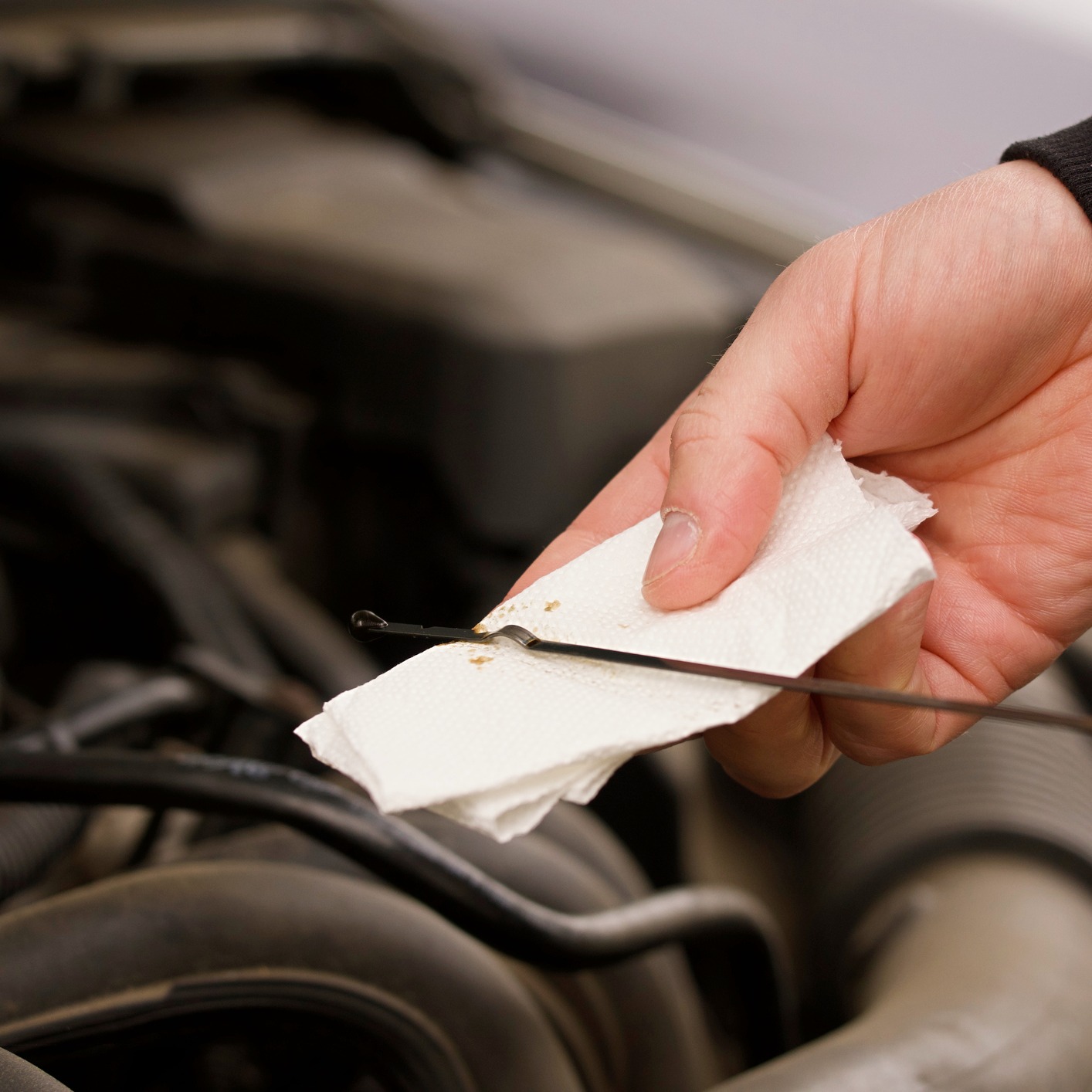
Keeping your car maintenanced and check it often!
About this episode
Nick Stoffel and the host walk through practical ways to keep a car healthy: don’t ignore noises, get a diagnosis, and check common culprits like debris in brakes, oil-related ticking, and exhaust leaks. They also cover what to do when a car sits—driving helps clear moisture and reduce corrosion—and how to troubleshoot no-start issues tied to battery drain or alternator charging. Maintenance intervals, trusted shop relationships, and careful under-hood work round it out.
caliper
"I've got something with my brakes a pebble a rock some gravel got caught up between the brake rotor and the caliper and obviously it's stuck there and when you rotate or apply the brakes you get the little record crunchy noise"
The caliper is the part that squeezes the brake pads onto the spinning brake disc. If a small rock gets stuck in that area, the brakes can make a crunchy or scraping noise.
The brake caliper is the clamp that holds the brake pads and squeezes them against the rotor. When a pebble or gravel gets trapped near the rotor-caliper area, the pads can drag over it, producing a crunchy or scraping sound.
brake rotor
"I've got something with my brakes a pebble a rock some gravel got caught up between the brake rotor and the caliper and obviously it's stuck there and when you rotate or apply the brakes you get the little record crunchy noise"
The brake rotor is the metal disc your brakes squeeze to slow the car. If something small gets stuck near it, you can hear grinding or crunchy sounds when you press the brake.
A brake rotor is the metal disc the brake pads clamp onto to slow the car down. If debris gets between the rotor and the caliper, it can cause scraping or crunchy noises when you brake.
brake pad
"it was the brakes brake pad oh dear so that was a pretty hefty little bill I must say"
Brake pads are the parts that squeeze against the spinning brake rotor to slow your car. They wear down, so they sometimes need replacement.
A brake pad is the replaceable friction material inside a disc-brake system. When you press the brake pedal, the pad clamps against the rotor to slow the car down, and it wears out over time.
diagnosis
"well now that you can do a little diagnosis maybe you can start moonlighting at the shop ... I always tell people is at least let somebody look at it let them perform the diagnosis there"
A diagnosis is how a mechanic figures out what’s really causing the problem. Instead of replacing random parts, they check and confirm what needs fixing.
In car care, a diagnosis is the process of figuring out what’s causing a symptom—like a noise or warning light—before parts are replaced. A proper diagnosis helps avoid guessing and lets you plan timing and cost.
timeline plan it budget it
"you can talk with those folks come up with a timeline plan it budget it it doesn't necessarily mean that show up today and have to give them all my money"
It means you figure out when the repair should happen and roughly what it will cost. Then you can decide the best next step instead of rushing into it.
This describes maintenance/repair planning: once the issue is identified, you decide when to fix it, estimate the cost, and prioritize what’s urgent. It’s a practical approach to avoid unnecessary spending and to prevent small issues from becoming expensive later.
catastrophic situations
"I don't think there's necessarily a reason where a car is worn out ... usually when we see catastrophic situations it's usually related to the lack of maintenance over an extended period of time"
They mean major failures that can happen when something has been ignored for a long time. Regular upkeep helps prevent the worst breakdowns.
“Catastrophic situations” refers to sudden, severe failures that usually happen after long-term neglect. The host’s point is that many breakdowns are preventable with consistent maintenance.
synthetic oil
"and I would always talk about 5000 miles on synthetic conventional oil which is kind of old school at this point most all newer vehicles have synthetic oil but a conventional oil would be 3000 miles"
Synthetic oil is a higher-tech engine oil. It usually lasts longer and protects your engine better than older basic oil.
Synthetic oil is a type of engine oil engineered to resist breakdown better than older “conventional” oils. It typically helps maintain lubrication and protection for longer between oil changes, especially in modern engines.
conventional oil
"most all newer vehicles have synthetic oil but a conventional oil would be 3000 miles manufacturers might recommend differently"
Conventional oil is the older-style engine oil. It generally doesn’t protect as well for as long as synthetic oil, so oil changes often come sooner.
Conventional oil is the more traditional, less-refined engine oil compared with synthetic. In the segment, it’s contrasted with synthetic oil to explain why oil-change intervals used to be shorter.
sludge
"you know the lack of lubrication the sludge the build up oil does more than just lubricate it runs a lot of the timing mechanisms and engine"
Sludge is gunk that can build up inside your engine when oil gets old. It can clog things and stop oil from protecting the engine properly.
Sludge is a thick, dirty buildup that forms when oil breaks down and contaminants accumulate. It can reduce lubrication and interfere with oil flow to engine components, increasing wear.
timing mechanisms
"it runs a lot of the timing mechanisms and engine so there's a lot more responsibility for oil now than there used to be"
Timing mechanisms help control when the engine’s valves open and close. Some of them depend on clean, correctly leveled oil to work smoothly.
Timing mechanisms are parts that control when engine events happen (like valve opening timing). Many modern engines rely on oil pressure and oil quality to operate these systems correctly.
valve timing
"there's a lot of valve timing that uses that oil if the oil is a little bit low or used up you might have some ticking or rattling from that"
Valve timing is when your engine’s valves open and close. If the oil is low or old, it can cause the timing system to act up and make noise.
Valve timing is the schedule of when the engine’s intake and exhaust valves open and close. The segment explains that oil level/condition can affect valve timing systems, leading to rattling or ticking sounds.
whining
"that's making like the knocking or rattling noise usually transmission we hear more like a whining [445.0s] got it I mean type of deal usually knocking is something loose"
Whining is a higher-pitched sound. The host is suggesting that whining noises are more likely to come from the transmission than from the engine itself.
Whining is a higher-pitched noise that can be associated with drivetrain components, including the transmission. Here, the host says they hear whining more often as a transmission-related sound than an engine-knock sound.
knocking
"got it I mean type of deal usually knocking is something loose which is more likely something [449.3s] with the engine okay"
Knocking is a harsh, tapping-style noise. The host is saying knocking is often linked to something loose, while other noises like whining may point more toward the transmission.
Knocking is a type of engine-related noise that often suggests something is loose or not operating as intended. In this segment, the host contrasts knocking (more likely loose) with whining (more often associated with transmission-related noises).
under the hood
"this person writes nick that they have noise under the hood on an equinox [535.0s] but have it looked at get the estimate it's something that you need to budget sooner than later"
“Under the hood” means the area where the engine and exhaust parts are. They’re saying a leak there can create noise and heat, and that’s why it should be fixed.
“Under the hood” refers to the engine compartment where the engine, exhaust components, and many heat-sensitive systems are located. In this segment, the host uses it to explain how an exhaust leak can escape into the engine bay and potentially into the cabin area.
cracked exhaust manifold pipe
"and on an it is a cracked exhaust manifold pipe okay so the that should be fixed a couple reasons [490.2s] the main reason is we'll have exhaust leaking that that that noise that you hear"
The exhaust manifold is like a collector for the engine’s exhaust. If a pipe there is cracked, exhaust can leak out under the hood, making noise and creating extra heat that can damage other parts.
An exhaust manifold is the part that collects exhaust gases from the engine’s cylinders and routes them toward the rest of the exhaust system. If the manifold (or a manifold pipe) is cracked, exhaust can leak out before it reaches the proper path, creating a loud noise and letting hot gases escape under the hood.
exhaust leaking
"the main reason is we'll have exhaust leaking that that that noise that you hear I'm making [494.9s] examples too that that is exhaust escaping under the hood which means it can make its way into"
Exhaust leaking means hot exhaust gases escape from a crack or gap in the exhaust system instead of flowing through it as designed. The host explains that this can create noise under the hood, let exhaust enter the cabin area, and increase heat that can damage other engine-bay components.
brakes
"you need to do that it's good for the exhaust to kind of get all that moisture out good for the those brakes to heat up and clean up the steering suspension components"
They’re saying you should drive enough to get the brakes hot. If you don’t use them for a while, rust can build up on the brake surfaces, and heating them up helps clean that off.
The host recommends driving so the brakes “heat up and clean up.” When brakes don’t get used, surface rust can form on rotors and pads, and heat cycles help reduce that buildup and keep braking surfaces working properly.
steering suspension components
"the those brakes to heat up and clean up the steering suspension components let that lubrication work its way through"
They’re talking about parts that help the car steer and ride smoothly. Driving helps those parts move and stay in good working condition instead of sitting for months.
The host groups “steering” and “suspension components” together as parts that benefit from being worked regularly. Driving helps lubricate moving joints and keeps rubber bushings and linkages from sitting unused for long periods.
store it for the winter
"in order to keep the juices flowing i think so now the the one you only drive in the summer obviously there's a process when you put it away for the winter you store it you do some things with the fuel and the tires"
They’re talking about what you do when you put a car away for winter. The goal is to prevent problems that happen when a car sits—like rust, tire issues, and fuel problems.
The host describes a seasonal storage process for winter, including handling “fuel” and “tires.” Proper winter storage matters because cars that sit can develop corrosion, tire flat-spotting, and fuel-related issues if not prepared correctly.
corrosion or rust
"i like that example because i think it's important that the cars do have that happen so we can prevent any excessive corrosion or rust or you know things"
They’re warning about rust. Rust happens when metal is exposed to moisture and chemicals, and letting a car sit too long can make it worse.
The host connects periodic driving with preventing “excessive corrosion or rust.” Corrosion is metal degradation from moisture and chemicals (like road salt), and cars that sit—especially in humid conditions—are more likely to develop it.
jump start
"but then it sat in the garage now for the last six months i couldn't get it started last week so had somebody come and do a jump start for me and [797.6s] i drove it for about oh 45 minutes or so"
A jump start is how you restart a car when the battery is dead. Someone (or a battery pack) provides power so the engine can start again, and then the car’s charging system should keep the battery topped up.
A jump start is a temporary way to get a car’s engine running when the battery is too weak. It uses another battery (or a jump pack) to provide enough electrical power to start the engine, after which the alternator should take over charging.
sit in the garage
"but then it sat in the garage now for the last six months i couldn't get it started last week"
When a car sits unused, the battery can lose charge over time, especially if there’s any ongoing electrical draw. Even if you drive briefly afterward, the battery may not fully recover if the underlying issue is a weak battery or a charging/drain problem.
alternator
"is the alternator not charging that battery meaning you're driving the vehicle and it's [860.9s] putting something up but not enough to fill the battery up"
The alternator is what keeps your battery charged while the car is running. If it’s not working right, the battery can go dead again soon after you park.
The alternator is the engine-driven generator that powers the car’s electrical systems and recharges the battery while you drive. If the alternator isn’t charging properly, the battery can drain again quickly even after you’ve driven for a while.
drain on that battery
"or when you shut the vehicle off of [865.7s] something staying on now not necessarily saying like a light staying on but if something's not shutting down creating a drain on that battery you may not realize it"
A battery drain means the car is still using power even after you turn it off. That can slowly empty the battery, so it won’t start the next time you need it.
A battery drain is when something keeps drawing power after the car is turned off, preventing the battery from recovering. Common causes include an electrical component that doesn’t fully shut down or a parasitic draw that slowly discharges the battery.
electrical systems test
"if you can get in before your family comes into town have them do an electrical systems test share that story with them you know had it jump started i've driven it it only sat for a couple"
This is a check to see if your car’s electrical parts are working right. Mechanics use it to find problems like a battery that won’t hold a charge or a charging system that isn’t working.
An electrical systems test checks whether the car’s charging and starting electronics are working correctly. It’s commonly used to diagnose issues like a weak battery, a failing alternator, or a parasitic drain.
0 w 20 weight oil
"well there's different marketing levels of the term synthetic if your vehicle i believe uses a zero w 20 weight oil that's probably full"
“0W-20” is an oil viscosity grade that describes how easily the oil flows when cold (the “0W”) and how it behaves at operating temperature (the “20”). Using the viscosity your vehicle specifies helps ensure proper lubrication and fuel economy.
full synthetic
"semi synthetic and synthetic blend which is kind of a marketing theme where they really didn't know what you're getting but a full synthetic if it's advertised full synthetic it should be full synthetic so i wouldn't i wouldn't worry on that front"
Full synthetic means the oil is made with synthetic ingredients rather than being mixed with conventional oil. If the label says “full synthetic,” you’re getting that type of oil.
“Full synthetic” means the oil is formulated entirely from synthetic base oils, not a blend. The host’s point is that if your oil is labeled “full synthetic,” you can generally trust it to meet that definition.
tune-up
"we're talking about i wanted to ask about tune-ups like you get your winter tune-up for your air conditioner and tune-up in the summer your furnace... that term has stuck strong in the in the industry... tune-up goes back to when you could adjust things you know you had points and condensers and timing"
A “tune-up” is regular car service that helps the engine run smoothly. In the past it meant adjusting ignition parts, but now it usually means things like replacing spark plugs and checking other engine items. It’s done on a schedule so small issues don’t turn into big repairs.
A “tune-up” is a catch-all term for scheduled engine-related service meant to keep an engine running correctly. Historically it referred to adjustable ignition components like points and condensers and setting ignition timing, but today it usually centers on items like spark plugs and related checks. The idea is to restore/maintain proper combustion and drivability before problems show up.
points and condensers
"tune-up goes back to when you could adjust things you know you had points and condensers and timing and all these things they were adjustable"
Points and condensers are older parts that helped make the spark for the engine. They controlled when the spark happened and helped the spark stay strong. Modern cars usually use electronic ignition instead, so these parts are mostly a historical reference.
“Points” and “condensers” are older ignition system components used on many cars before modern electronic ignition. The points open and close to control current to the ignition coil, and the condenser (capacitor) helps reduce arcing and improves spark quality. Many newer cars don’t use these parts, but the term “tune-up” comes from that era of adjustable ignition hardware.
spark plugs
"and it's kind of morphed into spark plugs and some of these other fluid services"
Spark plugs make the spark that starts combustion in your engine. As they wear out, the engine can misfire and run poorly. That’s why many maintenance schedules include checking or replacing them.
Spark plugs are the ignition components that create the spark needed to ignite the air-fuel mixture in the engine. Over time they wear and can cause misfires, rough running, and reduced fuel economy. Tune-up schedules often include checking or replacing spark plugs at specified intervals.
maintenance interval
"if you look at your owner's manual or if you get online and you know find something from the manufacturer that gives you a timeline or interval on certain fluids or services... those maintenance intervals are a good guide"
A maintenance interval is the recommended schedule for when to do certain services on your car. It’s there to prevent problems before they get expensive. Your driving conditions can change how closely you need to follow it, but the manual’s schedule is a good starting point.
A maintenance interval is the time- or mileage-based schedule a manufacturer recommends for servicing specific components (like spark plugs, belts, or fluids). It’s meant to prevent wear-related failures and keep performance and emissions in spec. The segment notes that real-world driving conditions can justify adjusting how you follow the schedule, but the interval is still a strong baseline.
owner's manual
"if you look at your owner's manual or if you get online and you know find something from the manufacturer that gives you a timeline or interval"
Your owner’s manual tells you what maintenance your car needs and when to do it. It’s written for your exact model, so it’s usually the best guide. The segment is basically saying to follow that schedule as a baseline.
The owner’s manual is the manufacturer’s official guide for maintenance schedules, fluid specifications, and service intervals for your specific vehicle. It’s the most reliable source for “when to do what,” because it’s tailored to that model’s design and engineering. The segment encourages listeners to use it (or manufacturer guidance) to find the correct timelines.
timing belt
"whether it's a timing belt or a transmission fluid or the spark plugs as i mentioned all those things have an interval or a time schedule that they require repair or work on them"
A timing belt keeps the engine’s moving parts in sync. If it breaks, the engine can be badly damaged. That’s why it’s replaced on a schedule listed by the manufacturer.
A timing belt is a belt-driven component that synchronizes the engine’s camshaft(s) and crankshaft so valves open at the correct time. Many engines require replacement at a specific interval because a worn or failed belt can cause severe engine damage. The key point in the segment is that it has a manufacturer-specified maintenance interval.
transmission fluid
"whether it's a timing belt or a transmission fluid or the spark plugs as i mentioned all those things have an interval or a time schedule"
Transmission fluid helps your transmission work smoothly by lubricating and helping it shift. Over time it can wear out, so it may need changing on a schedule. The owner’s manual usually tells you when.
Transmission fluid is the lubricant and hydraulic fluid used by an automatic (and some manual) transmissions to reduce friction and help operate internal clutches and gears. It degrades over time, which can lead to harsher shifting or other drivability issues. The segment emphasizes that it has a scheduled service interval in the owner’s manual or manufacturer guidance.

Hyundai Sonata
"good to know especially if you don't want a car payment and i own my car and it's a Hyundai Sonata and it has 160,000 and i just spent some money with those brakes so i'm going to keep that thing"
A Hyundai Sonata is a regular everyday car (a midsize sedan). In this segment, they’re using it as an example of how maintenance and inspections help you keep the car running longer.
The Hyundai Sonata is a mainstream midsize sedan, and in this segment it’s the specific car the host/guest is talking about owning long-term. The discussion ties it to maintenance decisions—especially brake work and how often to inspect wear items.
relationship with your mechanic
"how important it is to have a relationship with your mechanic i want to talk about that too because that's there's so much trust involved in this process when you're spending money on your car ... if you have that relationship and those conversations with your mechanic or with your garage i think you have a much better experience"
They’re saying it helps a lot to have a mechanic you trust. When you build that relationship, the shop can explain what’s urgent versus what can wait, so you don’t feel pressured into unnecessary work.
The segment emphasizes building a long-term relationship with a trusted mechanic or garage. That trust matters because it affects how repairs are prioritized, what can be scheduled later, and how well the shop can explain the reasoning behind maintenance decisions.
5000 mile interval
"0w20 i'd like to say um we want to stick with the 5000 mile interval you know i mentioned earlier that some of the manufacturers might advise differently"
This means changing the oil about every 5,000 miles. They’re saying some car makers recommend different schedules, but the idea is to keep up with maintenance so problems don’t build up.
A “5000 mile interval” is the planned distance between oil changes. The guest notes that some manufacturers may specify different intervals, but argues that frequent inspections and maintenance help prevent issues that can lead to expensive repairs.
lack of maintenance
"and i'm not a scientist or a chemist or an engineer i just know when we do a lot of repairs it's kind of based on oil or those oil engine repairs are based on lack of maintenance"
They’re basically saying that if you don’t keep up with routine car care, small issues can turn into expensive problems later. Regular oil changes and inspections help catch things early.
“Lack of maintenance” is the idea that skipping routine upkeep leads to wear problems that eventually become bigger, costlier repairs. Here, the guest links it to oil-related engine repairs and reinforces the value of periodic inspections.
purge valve
"i have a 2018 board escort or ecosport i had the purge valve replaced about a month and a half ago and now uh the same code is coming up again uh purge valve is part of the evaporative system"
The purge valve is an emissions part that helps the car use fuel vapors instead of venting them to the air. If it doesn’t work right, the car’s computer can detect the problem and turn on the check engine light. If the same code returns after replacement, there may be another issue in the same emissions system.
A purge valve is part of the evaporative emissions system that routes fuel vapors from the charcoal canister into the engine to be burned. When it fails or sticks, the car can store diagnostic trouble codes and illuminate the check engine light. Replacing it and then seeing the same code again suggests the root cause may still be present (for example, another evap component or a vacuum/flow issue).

Ford Ecosport
"...226 a texter writes i have a 2018 board escort or ecosport i had the purge valve replaced about a month and ..."
The Ford EcoSport is a small SUV made for regular commuting and errands. A purge valve is part of the car’s emissions system that helps manage fuel vapors, and if it goes bad the car may run poorly or trigger a warning light. That’s likely why someone would talk about replacing it on a 2018 model.
The Ford EcoSport is a compact subcompact SUV built for everyday driving, with a higher seating position and practical cargo space for its size. It often comes up in maintenance discussions because small engine and emissions-related components—like the purge valve—can affect drivability and check-engine light behavior when they fail. That’s why a listener mentioning a purge valve replacement is relevant to how these cars are owned over time.
evaporative system
"purge valve is part of the evaporative system um you know we you know when the check engine line comes on unfortunately people say oh it's just the gas cap well it could be but not necessary uh the evap system is designed to contain those fuel vapors"
The evaporative system keeps fuel vapors from escaping into the air. It stores those vapors and then later sends them into the engine to be burned. If it isn’t working properly, the car can detect it and trigger warning codes.
The evaporative system captures fuel vapors from the fuel tank and stores them in a charcoal canister instead of releasing them to the atmosphere. During normal operation, valves like the purge valve allow those vapors to be drawn into the engine to be burned. If the system can’t contain or route vapors correctly, the car can set emissions-related trouble codes.
check engine line
"we you know when the check engine line comes on unfortunately people say oh it's just the gas cap well it could be but not necessary"
The check engine light is a warning that the car’s computer found a problem. It can be caused by emissions parts, sensors, or other engine-related issues. If the light comes back after a repair, the problem may still be there or something else may be connected.
The check engine light is the dashboard warning that the car’s engine-management system has detected a fault. It’s triggered by stored diagnostic trouble codes (often called “codes”) related to emissions, sensors, or engine systems. When it comes back after a repair, it usually means the underlying issue wasn’t fully resolved or a related problem is present.
evap system
"well it could be but not necessary uh the evap system is designed to contain those fuel vapors the purge valve is designed when the car is running in the right situation that purge"
“Evap system” is just a shorter way to say the emissions system that handles fuel vapors. It’s meant to keep vapors contained and then send them to the engine when the car can use them. EVAP-related codes can bring the check engine light back if something else is wrong.
“Evap system” is shorthand for the evaporative emissions system that manages fuel vapors. It’s designed to contain vapors and then purge them into the engine under the right conditions. Codes related to EVAP are often why the check engine light returns after repairs if another component is still malfunctioning.
vacuum leak
"it's possible that there could be a vacuum leak it's possible there could be a vent valve there's other components in that system"
A vacuum leak means there’s a small air leak in hoses or connections that the engine uses to control things. That extra air can confuse the engine computer and cause warning signs or odd behavior. It’s one of the possible causes the host is suggesting to check.
A vacuum leak is an unintended opening in the engine’s vacuum lines or intake system that allows air to enter where it shouldn’t. That can upset sensor readings and emissions/engine control behavior, potentially triggering faults that lead to drivability issues. The host mentions it as a possible cause when a system valve isn’t working correctly.
vent valve
"it's possible that there could be a vacuum leak it's possible there could be a vent valve there's other components in that system"
A vent valve is a small valve that helps control how gases move through a system. If it doesn’t work right, the car may not handle fuel vapors properly, which can lead to smells or warning lights. The host is saying it could be part of the problem.
A vent valve is a control valve used to regulate pressure or airflow in an emissions-related system (often tied to fuel vapor management). If it sticks or fails, fuel vapors may not be routed correctly, which can cause odors or emissions faults. The host lists it as another possible component behind the issue.

2019 dodge ram
"yeah hi nick thank you for taking the call i have a 2019 dodge ram we were driving and we could smell a strange smell and then all of a sudden my wife said that she felt the the floor there was a wetness on the floor ... i believe it's well i'm pretty certain that it was the heater core"
This is a 2019 Dodge Ram 1500 pickup. The heater core is what warms the air inside the cab, and if it leaks you can get wet floors and smell coolant. The caller bypassed it to stop the problem and is now deciding whether to replace it.
A 2019 Dodge Ram 1500 is a full-size pickup where cabin heat depends on a heater core inside the HVAC system. In this call, the driver suspects a heater-core leak after noticing wetness on the floor and a strange smell, then bypasses it to stop the issue temporarily.
heater core
"it i believe it's well i'm pretty certain that it was the heater core and so i disconnected those and reconnected them to bypass the heater core so now i'm faced with thinking that i'm going to have to replace that heater core"
The heater core is the part that uses hot engine coolant to make warm air for the cabin. If it leaks, you can get wet spots on the floor and a sweet/chemical coolant smell. Fixing it can be a bigger job because it’s usually buried behind the dashboard.
The heater core is a small radiator-like heat exchanger inside the vehicle’s HVAC system. Coolant flows through it to transfer heat into the cabin, so when it leaks you can get wet floors and coolant odor. Replacing it often requires significant dashboard/HVAC disassembly on many trucks.
bypass
"so i disconnected those and reconnected them to bypass the heater core so now i'm faced with thinking that i'm going to have to replace that heater core ... we've driven it now for a month and there hasn't been an issue by bypassing it"
A bypass means you route the fluid around the broken part instead of through it. In this case, bypassing the heater core stops coolant from leaking through it, but it also means you likely won’t get normal heat inside the cab.
To bypass a component means rerouting flow around it so the system can function without using that part. Here, the caller bypassed the heater core by disconnecting and reconnecting heater hoses, which can stop coolant from leaking through the failed core (but also disables cabin heat).
dashboard
"get the manual read on it a lot of cases you're taking part of the dashboard apart ... within that dash there's a lot of things behind the dashboard if something gets forgotten or damaged then you create a rattle"
The dashboard is the big interior panel in front of you. On many cars and trucks, getting to the heater core means taking parts of the dashboard apart, so it’s easy to create rattles or accidentally leave something disconnected if you rush.
On many modern vehicles, the dashboard is a large structural and trim assembly that must be removed or partially disassembled to access HVAC components like the heater core. The host notes that disassembly can expose many parts behind it, and rushing can lead to rattles or connectors being left damaged.
rattle
"within that dash there's a lot of things behind the dashboard if something gets forgotten or damaged then you create a rattle or you create something else that's not working"
A rattle is that annoying vibrating or shaking noise you hear inside the car. It can happen if trim pieces or fasteners aren’t put back correctly after you take the dashboard apart.
A rattle is an interior noise caused by loose trim pieces, misaligned panels, or damaged clips/connectors after reassembly. The host warns that if something is forgotten or damaged during dashboard/HVAC work, it can create new rattles.
Request an Explanation
Heard something you'd like explained? We'll add it to this episode.
Sign in to request explanations for terms you heard.
Want to learn more?
Browse our glossary for plain-English explanations of automotive terms, jargon, and concepts.
Help improve this episode
See something that's not quite right? Our annotations are AI-generated and can sometimes miss the mark. Click the flag icon on any annotation to suggest a correction.