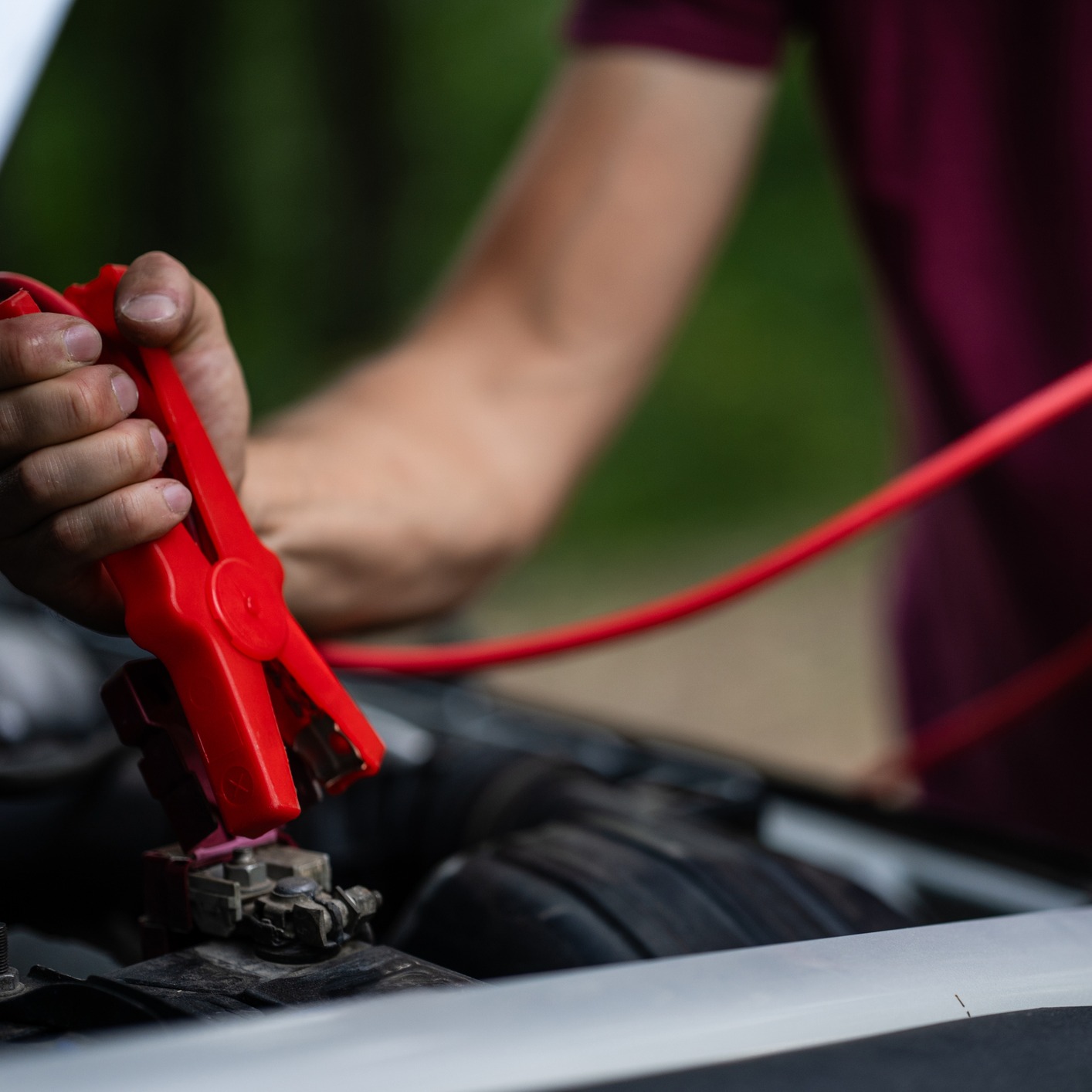
Keeping your car charged and safe in the summer!
About this episode
Summer car care focuses on keeping vehicles reliable and safe as heat and electronics add complexity. The hosts walk through real diagnostics—like tracking a parasitic battery drain with meters and schematics, ruling out fuses for intermittent headlights, and using scan tools for possible torque-converter issues. Owner basics get emphasized too: check oil level (even without a dipstick), monitor tire pressure, and do a quick four-tire visual at the pump. They also recommend following manufacturer maintenance schedules and getting underbody protection checked.

Lincoln Aviator
"...on't. They don't know what insurance is. The 2026 Lincoln Aviator SUV turns a robust list of features into a world ..."
calipers
"that might be a situation where you take those calipers apart, clean and relube them. But typically it's upon replacement of the brake pads themselves."
Calipers are the brake parts that push the brake pads onto the spinning brake disc. Cleaning and re-lubing them helps them move freely and work correctly.
Brake calipers are the clamp assemblies that squeeze the brake pads against the rotor. The host’s point about taking calipers apart, cleaning, and re-lubing refers to keeping the caliper’s moving parts operating smoothly so the brakes don’t stick or wear unevenly.
brake pads
"But typically it's upon replacement of the brake pads themselves. Alrighty. 2020 Toyota RAV4. The battery keeps draining."
Brake pads are the parts that squeeze against the brake rotor to make the car slow down. When pads are replaced, mechanics often check and clean nearby brake parts too.
Brake pads are the friction material that clamps against the brake rotor to slow the vehicle. The host mentions servicing around them (including caliper work) because pad replacement is often when technicians inspect and clean related brake hardware.

2020 Toyota RAV4
"Alrighty. 2020 Toyota RAV4. The battery keeps draining. When the vehicle is turned off, is there something that can cause the battery to lose its charge?"
They’re talking about a 2020 Toyota RAV4 that’s losing battery charge. The idea is that something in the car’s electronics may still be using power even after you shut it off.
The Toyota RAV4 is a mainstream compact SUV, and this 2020 model is being used as an example of a summer “battery keeps draining” problem. The host is describing how a modern RAV4 can have hidden electrical loads that keep drawing power even when the vehicle is off.
battery keeps draining
"2020 Toyota RAV4. The battery keeps draining. When the vehicle is turned off, is there something that can cause the battery to lose its charge? There's a lot of things. It could be the battery itself, depending on the actual age of the battery."
This means the car’s battery is losing charge even when the car is off. That can happen if some electrical system is still using power, or if something is malfunctioning.
“Battery keeps draining” usually points to a parasitic electrical draw—something in the car continues to pull power after shutdown. Modern cars have many computers and electronics that can stay awake briefly or, if a module or wiring fault exists, draw power continuously.
meter
"So typically in those situations, we're going to get our meter out. We're going to check each different circuit to try to determine which circuit or which fuse that drain is associated with."
They mean an electrical testing tool (a multimeter). It lets the mechanic measure what the battery is doing and help find what’s draining it.
A “meter” here refers to a multimeter, a tool used to measure electrical values like voltage and current. In a battery-drain diagnosis, it helps the technician confirm whether there’s an abnormal draw and then narrow down where it’s coming from.
circuit
"We're going to check each different circuit to try to determine which circuit or which fuse that drain is associated with. From that, we're going to find the items through a schematic on that circuit and start dissecting it."
A circuit is just a specific electrical “loop” in the car that runs certain parts. They test different circuits to see which one is pulling power when it shouldn’t.
A circuit is a specific electrical path in the car that powers a set of components (like lights, modules, or sensors). The host’s process is to test different circuits to find which one is responsible for the battery drain.
fuse
"We're going to check each different circuit to try to determine which circuit or which fuse that drain is associated with. From that, we're going to find the items through a schematic on that circuit and start dissecting it."
A fuse is a protective part that stops electrical flow if something is drawing too much power. Mechanics use fuse locations to figure out which part of the car’s wiring is involved.
A fuse is a safety device that protects a circuit by breaking the connection if too much current flows. In drain diagnosis, technicians often use fuses as a map to identify which circuit is drawing power.
schematic
"From that, we're going to find the items through a schematic on that circuit and start dissecting it. So you hit the easy button, take all the big easy to access things first, eliminate those,"
A schematic is a wiring diagram. It helps the mechanic see what parts are connected to the circuit they suspect is draining the battery.
A schematic is a wiring diagram that shows how components are connected within a circuit. The host uses it to identify which modules or parts belong to the circuit tied to the battery drain.
airbags
"It's pretty unique. You're right, as in all of our lives, but cars especially with a lot of the centers of protection, safety is taking the forefront on vehicles, whether it's cameras or airbags surrounding you in your vehicle."
Airbags are safety cushions that deploy during a crash. They’re part of the car’s safety system meant to protect people inside.
Airbags are supplemental restraint devices designed to deploy rapidly in a crash to help protect occupants. The host groups airbags with other safety tech (like cameras) to emphasize how modern vehicles rely on multiple systems to reduce injury risk.
cameras
"You're right, as in all of our lives, but cars especially with a lot of the centers of protection, safety is taking the forefront on vehicles, whether it's cameras or airbags surrounding you in your vehicle. I think that the manufacturers and engineers have done a wonderful job keeping us safe."
Cameras in newer cars help the vehicle “see” what’s around it. They can support safety features that warn you or help avoid crashes.
In modern cars, “cameras” often feed driver-assistance and safety systems (like monitoring and collision-avoidance functions). The host is using them as an example of newer safety technology that didn’t exist in older cars.
backup camera
"At first I was kind of intimidated by a backup camera, but now I use it every single time I get in the car."
A backup camera is a camera on the back of the car that shows a live video on the screen when you put the car in reverse. It helps you park and avoid hitting things behind you.
A backup camera is a rear-facing camera that displays what’s behind the car on a screen when you shift into reverse. It helps drivers judge distance to objects and pedestrians, especially in tight parking spaces.
parallel parking
"I think they have, but you're right, it's parallel parking with these cameras is a heck of a lot."
Parallel parking is when you park your car next to the curb between two other cars. It can be tricky because you have to line up your car carefully, and cameras can help you see where you’re going.
Parallel parking is the maneuver of positioning a car alongside the curb between two parked cars. It’s a common test of low-speed steering control and spatial judgment, and cameras can make it easier by showing the car’s alignment relative to nearby vehicles.

2007 GMC Envoy
"Nick, we have another texture with a 2007 GMC Envoy. Why would the headlights just go off at times?"
A 2007 GMC Envoy is an SUV. If the headlights randomly shut off, it usually means there’s an electrical problem—like a loose wire or switch—rather than just a fuse that permanently fails.
The GMC Envoy (2007) is a mid-size SUV that uses an electrical lighting system for the headlights. When headlights turn off intermittently, it often points to an electrical supply issue like a poor connection or a failing switch rather than a simple blown fuse.
bad ground
"Kind of with that earlier comment about electronics, there could be a bad ground, bad connection."
A bad ground means the car’s electrical “return path” isn’t making a good connection. When that happens, lights and other electronics can act weird—turning off and back on unexpectedly.
A bad ground is an electrical grounding problem where the connection between the car’s wiring and chassis/engine ground is loose, corroded, or failing. Because many circuits rely on a solid ground reference, a bad ground can cause intermittent behavior like headlights cutting out and coming back.
bad connection
"Kind of with that earlier comment about electronics, there could be a bad ground, bad connection."
A bad connection is when a wire connection isn’t tight or clean enough to carry electricity reliably. That can cause lights to cut out randomly and then start working again.
A bad connection is an intermittent or high-resistance electrical contact in a connector, splice, or switch circuit. It can make headlights (and other electronics) work sometimes and fail other times, especially when vibration or heat changes the contact.
wiring diagram
"So people always check the fuses through good tests, but in this situation where it comes and goes, it's not the fuse. I'm thinking something more along the connection or the switch itself. Once again, we're going to do the same thing. We're going to pull up that wiring diagram."
A wiring diagram is like a map of the car’s electrical system. It shows how the wires and switches connect so you can figure out where a problem might be.
A wiring diagram is a schematic that shows how components are connected electrically, including wire colors, connectors, and power/ground paths. It’s used for troubleshooting intermittent faults by tracing the circuit to identify likely failure points like connectors, switches, or grounds.

Ford F150
"Alrighty. A 2012 F-150, the wheels squeak terribly when backing up, not when going forward."
This is a 2012 Ford F-150 pickup. The important part is the squeaking happens when backing up, not when driving forward, so the mechanic can focus on what changes in reverse. That can point to things like the parking brake or parts near the wheels.
The Ford F-150 is a full-size pickup, and this 2012 example is being used to illustrate a diagnostic case: a squeak that happens when backing up. The key detail is that the noise is tied to a specific driving condition (reverse), which helps narrow down likely causes like parking-brake related components or wheel-end wear.
parking brake
"That's strange. Maybe something related to the parking brake."
The parking brake is the extra brake used to keep the car from rolling when parked. If a noise shows up in reverse, the parking brake parts might be rubbing or not releasing correctly.
The parking brake is a dedicated braking system used to hold the vehicle stationary, typically with separate hardware from the service brakes. Because it can apply differently depending on conditions, a squeal that shows up in reverse can sometimes be traced to parking-brake components or related hardware.
wheel bearing
"It could be a wheel bearing. It could be something that could give you trouble and leave you stranded."
A wheel bearing is what helps your wheel spin smoothly. If it starts to wear out, it can make loud noises and, in the worst case, can fail and cause the car to get stuck.
A wheel bearing is the component that allows the wheel to spin smoothly while supporting the vehicle’s weight. When a wheel bearing wears out, it can create squealing or grinding noises and can eventually fail badly enough to leave you stranded.
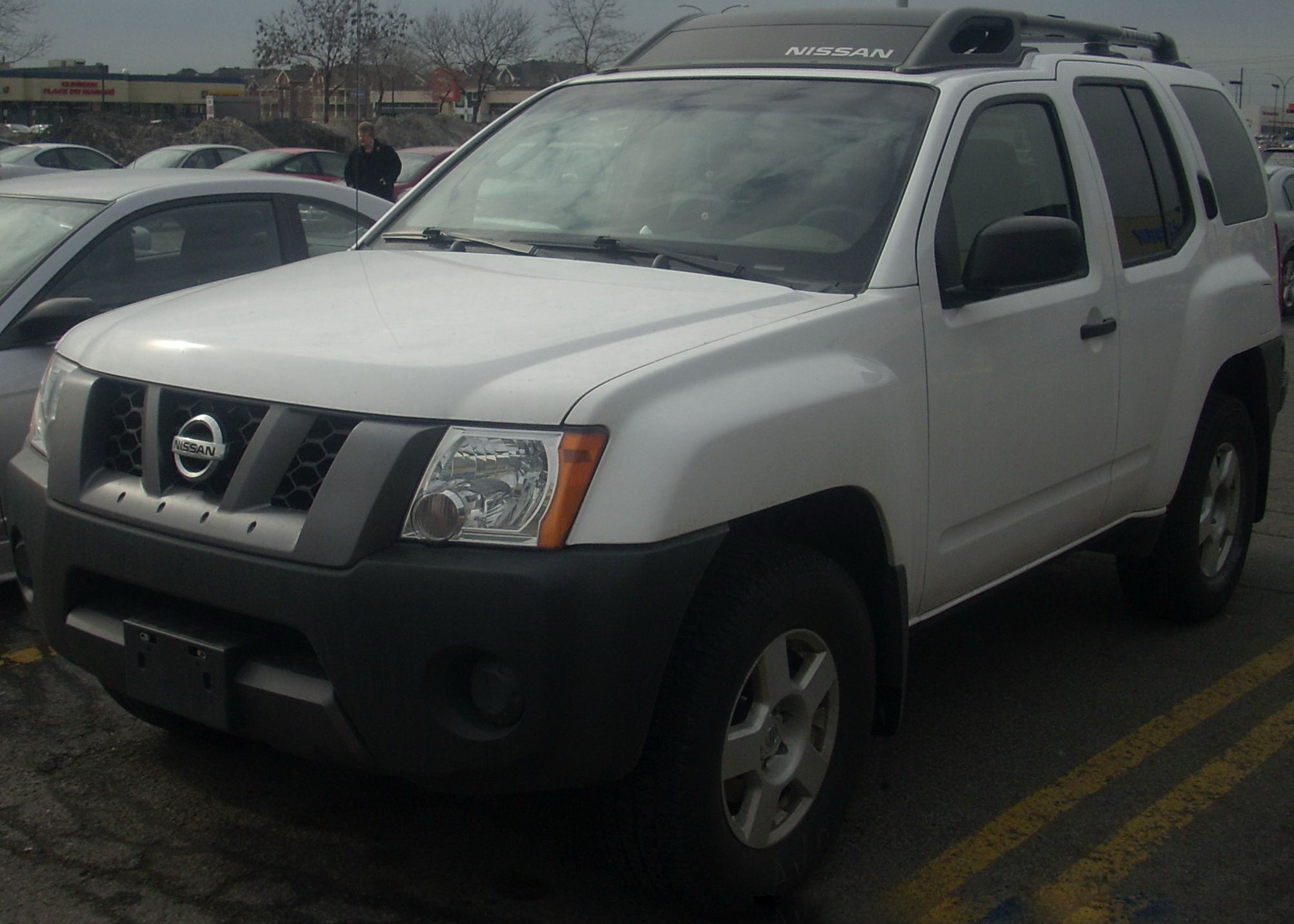
2007 Nissan XTERRA
"Mike, what's your question for Nick? ... I've got a 2007 Nissan XTERRA, 162,000 miles, and just suddenly in the last week, it started to really idle low down to about 500 RPM and it starts to shake and shudder whenever I'm at a stop."
This is a 2007 Nissan Xterra SUV. The caller says it suddenly started idling very low and shaking when stopped, which usually means the engine isn’t getting the right air/fuel mix at idle.
The 2007 Nissan Xterra is a body-on-frame SUV with a conventional engine management system that relies on sensors to control idle and smooth running. In this segment, the owner reports low idle around 500 RPM plus shaking/shuddering at stops, which points to an air/fuel/idle control issue rather than a purely mechanical “mystery noise.”
throttle body
"Well, I would be first curious about the throttle body. The throttle body is kind of the butterfly going back to carburetors that allows the air into the intake into the engine."
The throttle body is a valve that controls how much air can get into the engine. If it gets dirty with carbon, the engine can idle too low or run rough.
The throttle body is the air-control valve between the air intake and the engine. It uses a “butterfly” flap to meter how much air gets into the intake, and when it gets dirty (often carbon buildup), it can upset idle airflow and cause rough running.
carboned up
"The throttle body is kind of the butterfly going back to carburetors that allows the air into the intake into the engine. That ring or area of that flap can get dirty, carboned up."
“Carboned up” means gunk builds up inside the intake/throttle area. That gunk can block airflow a bit, which can make the engine idle poorly.
“Carboned up” refers to carbon deposits building up on intake and throttle components. Those deposits can reduce effective airflow, which can throw off the engine’s idle and mixture calculations.
fault code
"If the check engine light is on, there's a good clue there because there's a fault code that kind of sets you down the path."
A fault code is like a “clue number” the car stores when it senses a problem. It helps you (or a mechanic) know where to look first.
A fault code (diagnostic trouble code) is a specific identifier stored by the engine computer when it detects a problem. It narrows troubleshooting by pointing to the subsystem or sensor that’s acting out of range.
check engine light
"If there's too much of that, it will restrict the air flow, which the car's computer is designed to have some assumptions. It assumes at a certain angle, there's a certain amount of air... If the check engine light is on, there's a good clue there because there's a fault code that kind of sets you down the path."
The check engine light means the car’s computer noticed something wrong. Often it also stores a code that can help a mechanic figure out what’s causing the rough idle.
The check engine light is the dashboard indicator that the engine control system has detected a fault. When it’s on, the vehicle typically stores diagnostic trouble codes (DTCs) that help pinpoint whether the issue is related to idle control, airflow, or sensor inputs.
scansicle connected
"But I would start taking something related to the idle speed, a cleaning, adjustment, get some data, get a scansicle connected, try to read the data, figure out what's going on."
A scan tool plugs into the car to pull codes and live data from the engine computer. It helps figure out why the idle is too low and the engine feels rough.
Connecting a scan tool lets you read live sensor data and stored diagnostic codes from the vehicle’s engine computer. That’s especially useful for diagnosing low-idle and shudder complaints because you can see whether airflow/idle targets match what the sensors report.
Mass air flow sensor
"Mass air flow sensor might be dirty. There's a few different things that might not be horribly expensive or difficult, but a good start."
The mass air flow sensor tells the engine computer how much air is getting into the engine. If it’s dirty or inaccurate, the car may add the wrong amount of fuel and idle rough.
The mass air flow sensor (MAF) measures how much air the engine is ingesting. If the MAF is dirty or reading incorrectly, the engine computer may calculate the wrong fuel amount, which can cause rough idle, shaking, and hesitation.
cooling fan
"Here is somebody with a 2011 Buick Le Cern. [797.0s] The cooling fan cycles off and on every minute or so. [801.0s] This seems to start even before the engine is up to normal operating temperature."
The cooling fan is an electric fan that helps cool the engine by pulling air through the radiator. If it turns on and off repeatedly, it’s usually because the car’s sensors or settings are telling it to.
A cooling fan is the electric fan that pulls air through the radiator when the engine needs help shedding heat. It’s controlled by sensors and the car’s computer, so it may cycle even if the engine temperature is otherwise normal.
temperature sensor
"That's a good question. I would suspect that there's a sensor, a temperature sensor that's not reading accurately. [818.0s] So the computer's picking that up and seeing an incorrect reading and thinking it's hotter than it is."
A temperature sensor tells the car how hot the engine coolant is. If it’s reading wrong, the car may think the engine is hotter than it really is and turn the fan on too often.
A temperature sensor measures engine coolant temperature so the vehicle can decide when to run the cooling fan and other heat-related systems. If the sensor reports the wrong temperature, the computer may command the fan to cycle unnecessarily.
compressor
"It's also possible that a lot of times those cooling fans do come on when the compressor comes on. [829.0s] So if you have the frost or the air on, even if it's on low, it doesn't matter, but it's trimmed on it all."
The compressor is the part of the air conditioner that makes the cooling system work. When you turn on A/C, it can make the car run the radiator fan more often because it adds extra heat to manage.
In an air-conditioning system, the compressor is the component that pressurizes the refrigerant so it can absorb heat inside the cabin. When the A/C compressor turns on, it can increase heat load and trigger the cooling fan to cycle.
A/C
"So if you have the frost or the air on, even if it's on low, it doesn't matter, but it's trimmed on it all. [834.0s] The fan's going to cycle. So I would say that that's another thing too, that it's not an emergency."
A/C is the air conditioning system. When you use it (including defrost), it can make the car’s cooling fan turn on more because the system adds heat.
A/C (air conditioning) uses the compressor and refrigerant system to cool the cabin. Running A/C—especially defrost modes—can increase engine-bay heat and cause the cooling fan to cycle.
tire sensors
"Same with the tire sensors. Most or all vehicles are equipped with some sort of tire pressure monitoring."
Tire sensors are the parts that help the car know how inflated each tire is. Some systems just warn you, while others can show the exact pressure numbers.
Tire sensors are the hardware used by tire pressure monitoring systems to detect inflation status. Depending on the system, they may provide a simple warning or display the actual pressure for each tire.
dipsticks
"There's cars that don't have dipsticks. There's sensors that read the oil level, which is good and bad, right?"
A dipstick is the stick you pull out to see how much engine oil is in the engine. Some newer cars don’t have one and instead use sensors to tell you the oil level.
A dipstick is a manual way to check an engine’s oil level by pulling a metal rod out of the engine and reading the oil mark. Some modern cars don’t use dipsticks because they measure oil level electronically with sensors instead.
sensors that read the oil level
"There's cars that don't have dipsticks. There's sensors that read the oil level, which is good and bad, right?"
Some cars use a sensor to measure the engine oil level for you. Instead of checking with a dipstick, the car can warn you if the oil is low.
Oil-level sensors measure how much oil is in the engine and can alert the driver if the level is low. This removes the need for a manual dipstick check, but it still relies on the sensor and the car’s calibration being correct.
tire pressure monitoring
"Most or all vehicles are equipped with some sort of tire pressure monitoring. Some of the more advanced ones tell you the actual pressures of each tire."
Tire pressure monitoring is a system that checks your tire pressure and alerts you if something is off. It helps you avoid driving on tires that are too low.
Tire pressure monitoring is a system that watches tire inflation and warns the driver when pressure is too low. It helps because underinflated tires can wear faster and can affect braking and handling.
walk around your car, look at all four tires
"The biggest thing you can do... when you're getting gas, walk around your car, look at all four tires. If one looks lower than the others, that's an obvious thing."
This is a simple habit: before you drive, take a quick look at all four tires. If one looks lower than the others, that’s a sign you may have a problem even if the car hasn’t warned you.
This is a practical “visual inspection” habit: checking all four tires for obvious differences in height or condition before driving. Even with sensors, a quick walk-around can catch issues like a visibly low tire that the system hasn’t flagged yet.

Ford Fusion
"... Minneapolis on our text line. He has a 2012 Ford Fusion with 160,000 miles. He says he just spent 1900 on..."
The Ford Fusion is a mid-size car meant for everyday driving. The podcast brings up a specific example—an older Fusion with a lot of miles—that needed about $1,900 in repairs. That’s a reminder that older cars often require more maintenance as they get higher mileage.
The Ford Fusion is a mid-size sedan that was widely sold and used as a practical daily driver. The podcast references a 2012 Fusion with 160,000 miles and notes spending money on repairs, which is typical of how ownership costs can change as mileage increases. It’s discussed as an example of what happens when a car ages and needs maintenance or fixes.
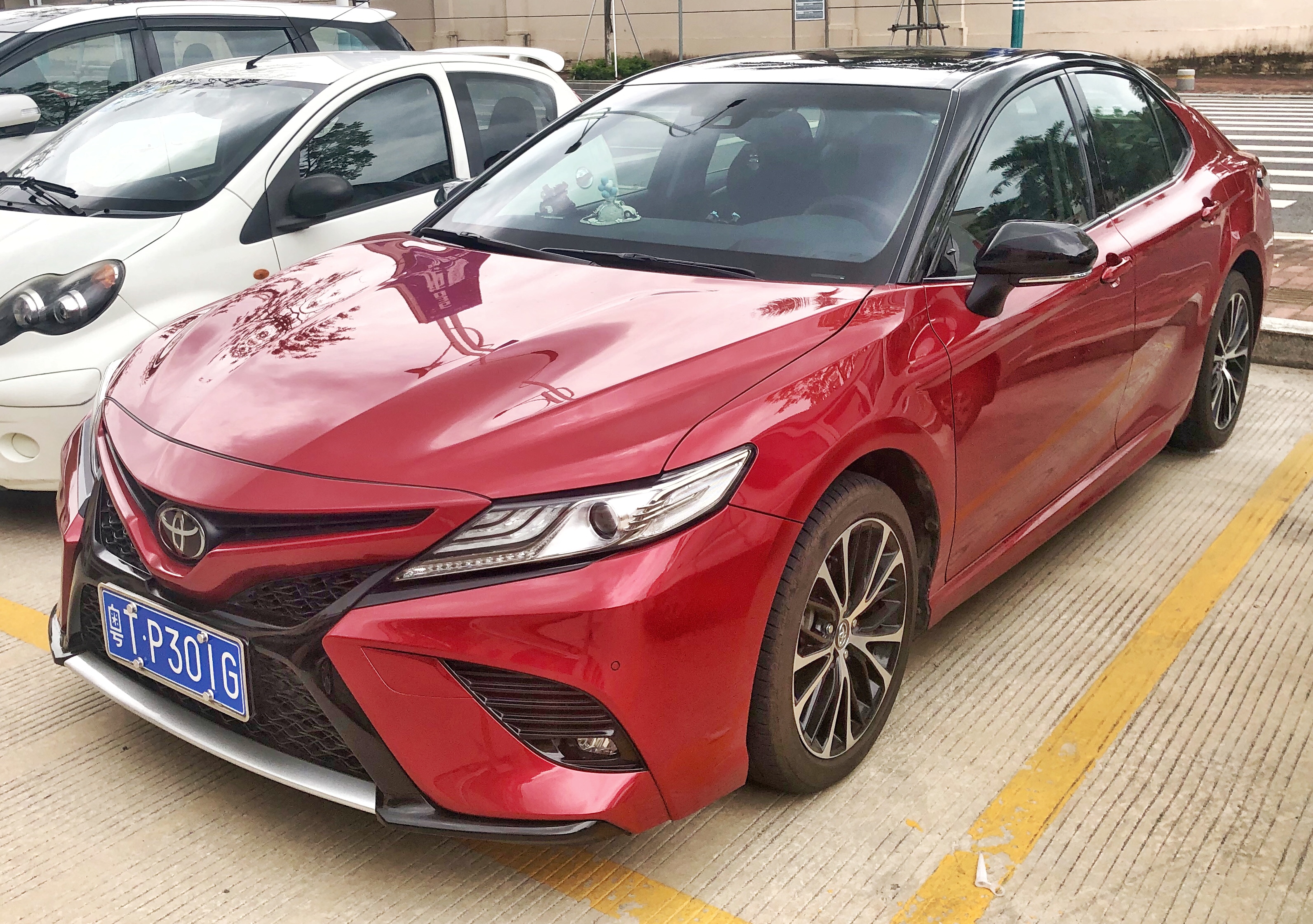
Toyota Camry
"Yep, we did that. We ran a couple of Toyota Camrys into the ground with many, many, many miles when ..."
The Toyota Camry is a regular family car (a sedan) that people use for everyday driving. The podcast mentions it because some owners keep them running for very high mileage. That usually points to the car being built to last when it’s maintained.
The Toyota Camry is a mid-size sedan known for long-distance commuting and durability. In the podcast, it’s mentioned in the context of being driven extremely high mileages, highlighting its reputation for lasting a long time with proper maintenance. That makes it a common topic when discussing what it takes to keep a daily driver running for years.
all wheel drive
"So what the what the referring to is an all wheel drive vehicle, which many vehicles are now that helps us obviously in the winter months, but in any traction situation drive when the roads are uneasy, not wet, slippery, muddy..."
All-wheel drive means the car can send power to both the front and rear wheels. That helps when the road is slippery, but it also means the tires need to be similar so the drivetrain doesn’t have to work against mismatched wheel speeds.
All-wheel drive (AWD) sends power to more than one axle (typically both front and rear) to improve traction when the road is slippery. In winter or low-grip conditions, AWD helps the car move more confidently, but it also makes tire matching more important because the system expects similar rolling behavior from all tires.
replace all four tires on an AWD vehicle
"If one tire needs to be replaced, oftentimes all four need to be replaced and that is very costly... If you get tires that are decently worn and you have a puncture or failure of one of those tires, oftentimes it's going to be recommended to replace all four."
For AWD cars, replacing only one tire can cause problems because the tires may end up rolling at slightly different speeds. That mismatch can make the drivetrain work harder than it should.
The idea is that AWD vehicles often require tires with similar tread depth and overall diameter. If one tire is replaced and the others are more worn, the new tire can roll at a different effective speed, creating driveline mismatch that can increase stress on the differential, transfer case, and related parts.
tread depth
"So tires have a diameter with, you know, there's certain tread depth when they're noon as they wear that tread depth decreases because they're wearing out."
Tread depth is how much pattern is left on the tire. Worn tires don’t grip as well, and on cars like AWD vehicles, worn tires can also end up rolling differently than newer ones.
Tread depth is how much rubber is left in the tire’s grooves. As tread depth decreases with wear, the tire’s grip and water-shedding ability drop, and the tire’s effective rolling diameter can change—matters more on AWD systems that rely on consistent tire rotation.
differential
"However, the drivetrain, all those slipping points, all those bearing points are under more stress because the things are not moving at the same speed over a period of time... create a failure point of a differential transfer case..."
A differential is part of the drivetrain that lets wheels spin at slightly different speeds, like when you’re turning. If your tires aren’t matched, it can make that system work harder than it should.
A differential is a gear set that allows wheels to rotate at different speeds while still receiving power—especially important when turning. In AWD drivetrains, mismatched tire heights/diameters can force the differential (and related components) to compensate more than intended, increasing stress and wear.
transfer case
"That can definitely create a failure point of a differential transfer case, some of these clutch packs."
A transfer case is what sends power to both the front and rear wheels in an AWD/4WD car. If the tires are mismatched, it can cause the front and rear to spin differently, which can stress the system.
A transfer case is the component in AWD/4WD vehicles that splits engine torque between the front and rear axles. If tires have different effective diameters (for example, after replacing only one), the transfer case can experience extra driveline stress because the axles are trying to rotate at different speeds.
clutch packs
"That can definitely create a failure point of a differential transfer case, some of these clutch packs."
Clutch packs are parts that help control how power is sent through the AWD system. If the tires don’t match, the AWD system may have to constantly adjust, which can wear those parts out faster.
Clutch packs are sets of friction plates used to engage and control how torque is transferred inside many AWD systems. When tires are mismatched, the drivetrain may need to constantly compensate, which can increase heat and wear on these clutch packs.
owner's manual
"You can check them with the owner's manual with the manufacturer. A lot of them will also state, you know, if the all wheel drive vehicle, if you have one failure and the tires are still in good working order,"
Your owner’s manual is the carmaker’s instructions for things like tire sizes and what to do when tires wear out. It’s especially important for AWD cars because the rules can be stricter than on two-wheel-drive cars.
The owner’s manual is the manufacturer’s guidance for maintenance and specifications, including tire sizing and AWD-related recommendations. For AWD tire replacement, the manual can spell out whether the car requires replacing all tires or matching tread depth within a certain tolerance.
plastic splash shield
"Nick, an oil chain shop did not reinstall the plastic splash shield under the engine in my 2008 VW Jetta. Is it important to replace it or can I drive the car without that splash shield?"
A plastic splash shield is an under-engine panel that helps protect the underside from road debris and water spray. It can also influence airflow and noise, and in winter it can help reduce how much snow and slush gets into areas where it shouldn’t.

Volkswagen Jetta
"Nick, an oil chain shop did not reinstall the plastic splash shield under the engine in my 2008 VW Jetta."
A VW Jetta is a regular car model, and under the engine there’s usually a plastic cover. If it’s missing on a 2008 Jetta, stuff from the road can hit parts underneath more easily.
The Volkswagen Jetta is a compact sedan that uses an under-engine splash shield to help protect components beneath the engine bay. On a 2008 VW Jetta, missing that shield can expose underbody parts to road spray, debris, and weather effects.
oil change
"Nick, we might have touched on this last week, but what would you recommend for people when they do take the car in for an oil change? ... You're not just pulling the drain plug and letting it happen."
An oil change is when the shop replaces the engine’s oil. The host is saying it’s a good time to have the car checked over, not just the oil swapped.
An oil change is the scheduled replacement of engine oil to maintain lubrication and help control wear. In this segment, the host emphasizes that the oil change visit is also a chance to inspect other under-hood and underbody items.
certified trained people
"Well, it's most important that you get the service done. Obviously, I'd like to see you take it to a place that has certified trained people, not just changing the oil, but looking at the vehicle."
This means the shop has technicians who are properly trained and qualified. They should be better at spotting problems than someone who only does quick oil changes.
“Certified trained people” refers to technicians who have formal manufacturer or industry training and credentials. The point is that they’re more likely to notice issues beyond just the oil change when the car is on a lift.
drain plug
"And that car is up in the air. You're not just pulling the drain plug and letting it happen. You're looking at all the other areas, belts, hoses, steering suspension."
The drain plug is the part that lets old oil come out of the engine during an oil change. The host is saying a good shop should do more than just open that plug.
The drain plug is the fastener on the engine oil pan that allows used oil to drain out during an oil change. The host contrasts simply draining oil with doing a broader inspection while the car is lifted.
belts, hoses, steering suspension
"You're not just pulling the drain plug and letting it happen. You're looking at all the other areas, belts, hoses, steering suspension."
Belts and hoses can wear out or start leaking. Steering and suspension parts help the car steer and ride safely, so checking them during service can prevent problems later.
Belts and hoses are rubber/engine-driven components that can wear, crack, or leak over time. Steering and suspension parts affect how the car handles and how safely it responds to bumps and steering inputs.

2014 Dodge Ram 1500
"Back to the text line, Nick, I have a 2014 Dodge Ram 1500 with a 5.7 engine with eight speed transmission."
A 2014 Dodge Ram 1500 is a full-size pickup truck. The caller is talking about weird behavior while driving—like the RPM needle fluttering and the truck shaking—and asking what part could cause it.
The Dodge Ram 1500 (2014) is a full-size pickup known for its V8 options and widespread use as a daily driver and work truck. In this segment, the caller describes drivability symptoms (RPM flutter and slight shaking) that are being linked to the truck’s drivetrain behavior.
eight speed transmission
"Back to the text line, Nick, I have a 2014 Dodge Ram 1500 with a 5.7 engine with eight speed transmission."
An eight-speed transmission is the automatic gearbox with eight different gear ratios. More gears can help the truck drive smoothly, but if the transmission isn’t behaving right, you can feel shaking or see RPM changes.
An eight-speed transmission is an automatic gearbox with eight forward gear ratios, designed to keep the engine operating closer to its efficient or power band. On trucks like the 2014 Ram 1500, transmission behavior (including torque-converter operation) can affect how smooth the RPM and driving feel at certain speeds.
torque converter
"Is it a torque converter? How easy is a torque converter replacement process? Well, it can be something related to transmission. Torque converters are component in the transmission."
A torque converter is a part in an automatic transmission that helps the engine’s power get to the wheels smoothly. If it’s not working right, the RPM can bounce around and the truck can feel like it’s shaking.
A torque converter is a key component inside an automatic transmission that transfers engine power to the transmission using fluid coupling. When it starts to slip or behave oddly, it can cause symptoms like RPM fluctuations and shuddering at certain speeds, which is why the caller asks about it.
shift points
"Take a step back and check the condition of the fluid. Check some data points, meaning that there's different shift points that you can read that information with a scan through the computer."
Shift points are when your car decides to change gears. The computer chooses the timing based on things like how hard you’re pressing the gas and how the car is running.
In an automatic transmission, “shift points” are the specific engine speed/load and vehicle conditions where the transmission decides to change gears. They’re controlled by the car’s transmission control module and can vary with driving mode, throttle input, and temperature.
scan tool
"We can even take our scan tool on our test drive and record that data. So while you're focusing on the road, which it should be, the computer is collecting all this information."
A scan tool is a device a mechanic plugs into the car to talk to its computer. It can show live readings and error codes to help figure out what’s wrong.
A scan tool is an electronic diagnostic device that connects to the car’s onboard computer (ECU) to read live sensor data and stored trouble codes. In this context, it’s used during a test drive to capture transmission-related information so the shop can diagnose issues more accurately.
solenoid
"Is there a solenoid? Is line pressure getting low? There's different things that we're going to look for."
A solenoid is an electrically controlled “switch” that moves a small part inside a valve. In cars, it’s often used to control fluid flow, like in an automatic transmission.
A solenoid is an electrically controlled valve that uses a coil to move a plunger. In many automatic transmissions and other systems, solenoids control fluid flow to determine how the car shifts or how pressure is regulated.
line pressure
"Is there a solenoid? Is line pressure getting low? There's different things that we're going to look for."
Line pressure is the fluid pressure that an automatic transmission uses to do its job. If it’s low, the transmission may not shift smoothly or may feel like it’s slipping.
Line pressure is the hydraulic pressure produced in an automatic transmission’s fluid system. If line pressure is too low, clutches and bands may not apply correctly, which can cause slipping, harsh shifts, or other drivability issues.
Ohm's law
"But oftentimes when we do our tests and they're diagnostic, it comes back to the basics, you know, the Ohm's law, which is the way electricity flows."
Ohm’s law is a simple rule that helps you connect electricity measurements—voltage, current, and resistance. Mechanics use it to figure out whether an electrical circuit is working as it should.
Ohm's law is the basic electrical relationship between voltage, current, and resistance (V = I × R). Automotive diagnostics often use it to reason about wiring, sensors, and circuits when checking whether electrical components are behaving correctly.

2023 Jeep Wrangler
"Back to the text line. What are the options for rust proofing or undercoating my 2023 Jeep Wrangler or is that even still necessary anymore?"
The Jeep Wrangler is a tough off-road SUV. If you live where roads get salted in winter, rust protection matters a lot, so people often ask about undercoating or rust-proofing.
The Jeep Wrangler is a body-on-frame off-road SUV known for its rugged durability and popularity in regions where road salt can accelerate corrosion. Because of that, owners often ask about rust protection methods like undercoating or rust-proofing, especially on newer Wranglers.
rust proofing
"What are the options for rust proofing or undercoating my 2023 Jeep Wrangler or is that even still necessary anymore?"
Rust proofing means adding a protective treatment to help stop metal from corroding. It’s especially relevant if you drive in areas that use salt on the roads.
Rust proofing is applying protective coatings or treatments intended to slow corrosion on a vehicle’s exposed metal surfaces. It’s commonly discussed for trucks and SUVs in salt-belt climates, where road salt and moisture can accelerate rust.
undercoating
"What are the options for rust proofing or undercoating my 2023 Jeep Wrangler or is that even still necessary anymore?"
Undercoating is a protective coating put on the bottom of the car. It helps protect against rust by blocking moisture and road salt.
Undercoating is a protective layer applied to the underside of a vehicle to reduce corrosion and sometimes dampen road noise. It can help shield vulnerable areas from moisture and salt, but the effectiveness depends on product quality and proper application.
washed the vehicle
"Well, there's a lot of products out there and I can speak for against them. I don't know enough about them to be honest, but my opinion has always been washed the vehicle."
Washing the car helps remove salt and dirt that can cause rust. It’s a simple habit that can slow corrosion over time.
The idea of “washing the vehicle” is a practical corrosion-prevention strategy: removing salt, grime, and road chemicals reduces how long they sit on metal surfaces. While it’s not a coating, regular cleaning can meaningfully slow rust progression in harsh climates.
undercarriage sprayed down
"Unfortunately, from time to time, you might need to sit in that line, pay the extra dollar or two to have the undercarriage sprayed down to get that salt and grime off of it."
That means cleaning the bottom of the car. It helps wash off salty road dirt that can cause rust over time.
The undercarriage is the underside of the vehicle—frame, floorpan, suspension components, and other parts that are exposed to road spray. Spraying it down helps remove salt, grime, and debris that can accelerate corrosion, especially after winter roads.
lift kits
"Nick, what do you think about lift kits for a Chrysler Pacifica all wheel drive to increase ground clearance?"
A lift kit is a set of parts that raises the car higher off the ground. It can help you clear bumps and rough roads, but it can also affect how the suspension handles, so installation matters.
A lift kit is an aftermarket suspension modification that raises a vehicle’s ride height. Increasing ground clearance can help with obstacles, but it can also change steering geometry and stress components, so it’s important to use a quality kit and proper installation.

Chrysler Pacifica
"Nick, what do you think about lift kits for a Chrysler Pacifica all wheel drive to increase ground clearance?"
The Chrysler Pacifica is a minivan, and some versions are all-wheel drive for better grip. A lift kit would raise it higher off the ground to help with snow, potholes, or uneven roads.
The Chrysler Pacifica is a minivan platform that can be equipped with all-wheel drive (AWD) for better traction in snow and rain. When people ask about lift kits for it, they’re usually trying to increase ground clearance for rougher roads or weather.
ground clearance
"Nick, what do you think about lift kits for a Chrysler Pacifica all wheel drive to increase ground clearance?"
Ground clearance is how much space there is between the road and the bottom of the vehicle. More clearance can help prevent the car from hitting bumps or snow-covered ruts.
Ground clearance is the distance between the road surface and the lowest part of the vehicle. More ground clearance can reduce the chance of scraping the underbody on curbs, snow, or uneven terrain.
Request an Explanation
Heard something you'd like explained? We'll add it to this episode.
Sign in to request explanations for terms you heard.
Want to learn more?
Browse our glossary for plain-English explanations of automotive terms, jargon, and concepts.
Help improve this episode
See something that's not quite right? Our annotations are AI-generated and can sometimes miss the mark. Click the flag icon on any annotation to suggest a correction.