Calipers are the brake parts that push the brake pads onto the spinning brake disc. Cleaning and re-lubing them helps them move freely and work correctly.
Brake pads are the parts that squeeze against the brake rotor to make the car slow down. When pads are replaced, mechanics often check and clean nearby brake parts too.
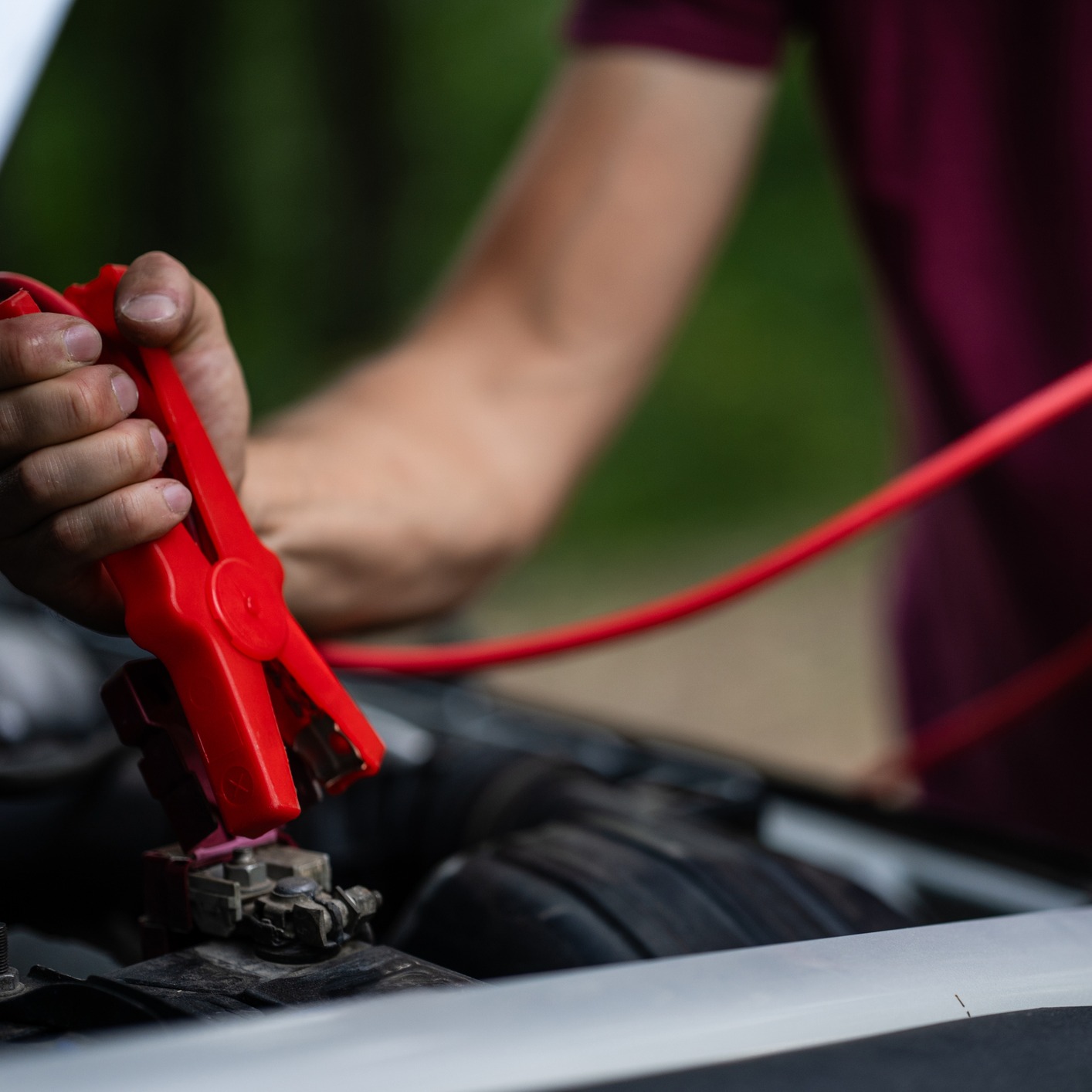
They’re talking about a 2020 Toyota RAV4 that’s losing battery charge. The idea is that something in the car’s electronics may still be using power even after you shut it off.
This means the car’s battery is losing charge even when the car is off. That can happen if some electrical system is still using power, or if something is malfunctioning.
A circuit is just a specific electrical “loop” in the car that runs certain parts. They test different circuits to see which one is pulling power when it shouldn’t.
A fuse is a protective part that stops electrical flow if something is drawing too much power. Mechanics use fuse locations to figure out which part of the car’s wiring is involved.
A backup camera is a camera on the back of the car that shows a live video on the screen when you put the car in reverse. It helps you park and avoid hitting things behind you.
Parallel parking is when you park your car next to the curb between two other cars. It can be tricky because you have to line up your car carefully, and cameras can help you see where you’re going.
A 2007 GMC Envoy is an SUV. If the headlights randomly shut off, it usually means there’s an electrical problem—like a loose wire or switch—rather than just a fuse that permanently fails.
A bad ground means the car’s electrical “return path” isn’t making a good connection. When that happens, lights and other electronics can act weird—turning off and back on unexpectedly.
A bad connection is when a wire connection isn’t tight or clean enough to carry electricity reliably. That can cause lights to cut out randomly and then start working again.
A wiring diagram is like a map of the car’s electrical system. It shows how the wires and switches connect so you can figure out where a problem might be.
This is a 2012 Ford F-150 pickup. The important part is the squeaking happens when backing up, not when driving forward, so the mechanic can focus on what changes in reverse. That can point to things like the parking brake or parts near the wheels.
The parking brake is the extra brake used to keep the car from rolling when parked. If a noise shows up in reverse, the parking brake parts might be rubbing or not releasing correctly.
A wheel bearing is what helps your wheel spin smoothly. If it starts to wear out, it can make loud noises and, in the worst case, can fail and cause the car to get stuck.
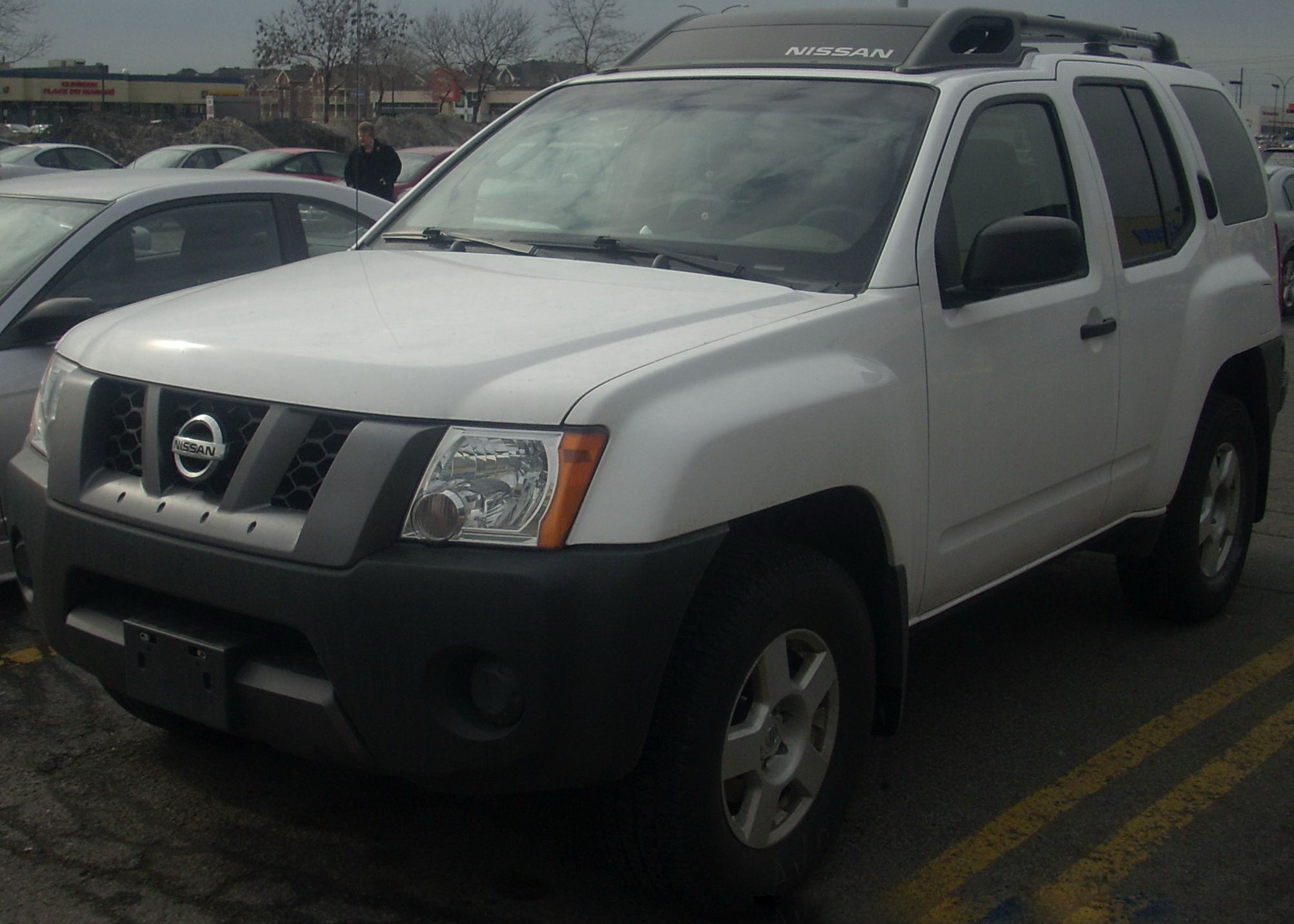
This is a 2007 Nissan Xterra SUV. The caller says it suddenly started idling very low and shaking when stopped, which usually means the engine isn’t getting the right air/fuel mix at idle.
The throttle body is a valve that controls how much air can get into the engine. If it gets dirty with carbon, the engine can idle too low or run rough.
The check engine light means the car’s computer noticed something wrong. Often it also stores a code that can help a mechanic figure out what’s causing the rough idle.
Term
scansicle connected
A scan tool plugs into the car to pull codes and live data from the engine computer. It helps figure out why the idle is too low and the engine feels rough.
The mass air flow sensor tells the engine computer how much air is getting into the engine. If it’s dirty or inaccurate, the car may add the wrong amount of fuel and idle rough.
The cooling fan is an electric fan that helps cool the engine by pulling air through the radiator. If it turns on and off repeatedly, it’s usually because the car’s sensors or settings are telling it to.
A temperature sensor tells the car how hot the engine coolant is. If it’s reading wrong, the car may think the engine is hotter than it really is and turn the fan on too often.
The compressor is the part of the air conditioner that makes the cooling system work. When you turn on A/C, it can make the car run the radiator fan more often because it adds extra heat to manage.
Tire sensors are the parts that help the car know how inflated each tire is. Some systems just warn you, while others can show the exact pressure numbers.
A dipstick is the stick you pull out to see how much engine oil is in the engine. Some newer cars don’t have one and instead use sensors to tell you the oil level.
Tire pressure monitoring is a system that checks your tire pressure and alerts you if something is off. It helps you avoid driving on tires that are too low.
This is a simple habit: before you drive, take a quick look at all four tires. If one looks lower than the others, that’s a sign you may have a problem even if the car hasn’t warned you.
The Ford Fusion is a mid-size car meant for everyday driving. The podcast brings up a specific example—an older Fusion with a lot of miles—that needed about $1,900 in repairs. That’s a reminder that older cars often require more maintenance as they get higher mileage.
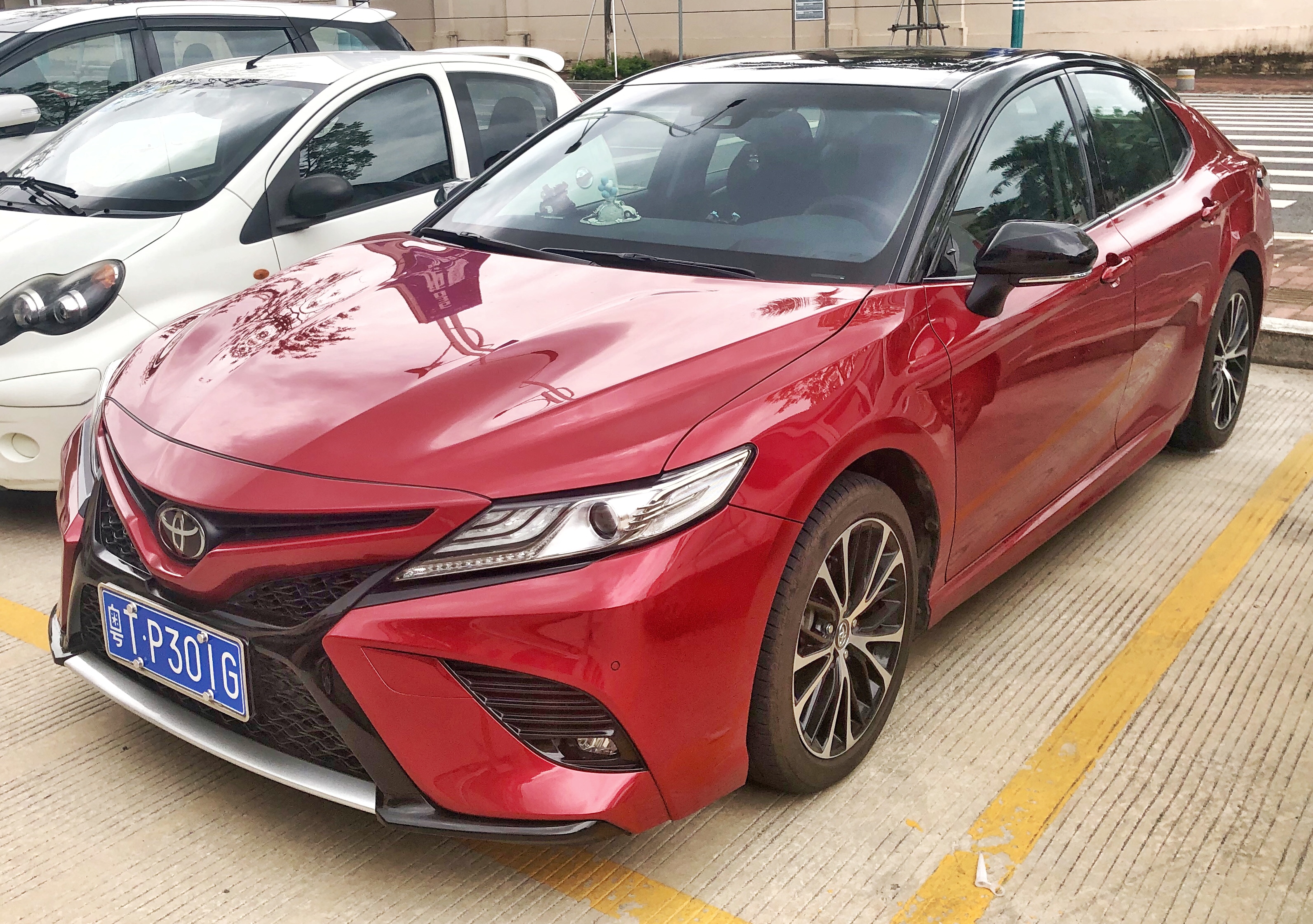
The Toyota Camry is a regular family car (a sedan) that people use for everyday driving. The podcast mentions it because some owners keep them running for very high mileage. That usually points to the car being built to last when it’s maintained.
All-wheel drive means the car can send power to both the front and rear wheels. That helps when the road is slippery, but it also means the tires need to be similar so the drivetrain doesn’t have to work against mismatched wheel speeds.
For AWD cars, replacing only one tire can cause problems because the tires may end up rolling at slightly different speeds. That mismatch can make the drivetrain work harder than it should.
Tread depth is how much pattern is left on the tire. Worn tires don’t grip as well, and on cars like AWD vehicles, worn tires can also end up rolling differently than newer ones.
A differential is part of the drivetrain that lets wheels spin at slightly different speeds, like when you’re turning. If your tires aren’t matched, it can make that system work harder than it should.
A transfer case is what sends power to both the front and rear wheels in an AWD/4WD car. If the tires are mismatched, it can cause the front and rear to spin differently, which can stress the system.
Clutch packs are parts that help control how power is sent through the AWD system. If the tires don’t match, the AWD system may have to constantly adjust, which can wear those parts out faster.
Your owner’s manual is the carmaker’s instructions for things like tire sizes and what to do when tires wear out. It’s especially important for AWD cars because the rules can be stricter than on two-wheel-drive cars.
A plastic splash shield is an under-engine panel that helps protect the underside from road debris and water spray. It can also influence airflow and noise, and in winter it can help reduce how much snow and slush gets into areas where it shouldn’t.
A VW Jetta is a regular car model, and under the engine there’s usually a plastic cover. If it’s missing on a 2008 Jetta, stuff from the road can hit parts underneath more easily.
This means the shop has technicians who are properly trained and qualified. They should be better at spotting problems than someone who only does quick oil changes.
The drain plug is the part that lets old oil come out of the engine during an oil change. The host is saying a good shop should do more than just open that plug.
Belts and hoses can wear out or start leaking. Steering and suspension parts help the car steer and ride safely, so checking them during service can prevent problems later.
A 2014 Dodge Ram 1500 is a full-size pickup truck. The caller is talking about weird behavior while driving—like the RPM needle fluttering and the truck shaking—and asking what part could cause it.
An eight-speed transmission is the automatic gearbox with eight different gear ratios. More gears can help the truck drive smoothly, but if the transmission isn’t behaving right, you can feel shaking or see RPM changes.
A torque converter is a part in an automatic transmission that helps the engine’s power get to the wheels smoothly. If it’s not working right, the RPM can bounce around and the truck can feel like it’s shaking.
Shift points are when your car decides to change gears. The computer chooses the timing based on things like how hard you’re pressing the gas and how the car is running.
A scan tool is a device a mechanic plugs into the car to talk to its computer. It can show live readings and error codes to help figure out what’s wrong.
A solenoid is an electrically controlled “switch” that moves a small part inside a valve. In cars, it’s often used to control fluid flow, like in an automatic transmission.
Line pressure is the fluid pressure that an automatic transmission uses to do its job. If it’s low, the transmission may not shift smoothly or may feel like it’s slipping.
Ohm’s law is a simple rule that helps you connect electricity measurements—voltage, current, and resistance. Mechanics use it to figure out whether an electrical circuit is working as it should.
The Jeep Wrangler is a tough off-road SUV. If you live where roads get salted in winter, rust protection matters a lot, so people often ask about undercoating or rust-proofing.
Rust proofing means adding a protective treatment to help stop metal from corroding. It’s especially relevant if you drive in areas that use salt on the roads.
A lift kit is a set of parts that raises the car higher off the ground. It can help you clear bumps and rough roads, but it can also affect how the suspension handles, so installation matters.
The Chrysler Pacifica is a minivan, and some versions are all-wheel drive for better grip. A lift kit would raise it higher off the ground to help with snow, potholes, or uneven roads.
Ground clearance is how much space there is between the road and the bottom of the vehicle. More clearance can help prevent the car from hitting bumps or snow-covered ruts.
LIVE
This episode is supported by Ring, because at the end of the day, your home is your sanctuary,
and with Ring, it's protected. Whether you're across the house or across the country, keeping an eye on things shouldn't be a mystery.
With the battery doorbell, you can keep track of your packages and see more of what's happening at your front door in real time.
If you want to make sure your yard is safe at night, the Outdoor Cam Plus delivers a wide field of view and enhanced video clarity with Retinal 2K video.
And for the ultimate in detail, you can upgrade to 4K cameras and doorbells featuring Retinal Vision.
It gives you ultra-clear footage that actually lets you zoom in without losing those important details.
The Ring system is helpful every single day. Like a lot of us, most of our shopping is done online.
There's a certain peace of mind that comes with knowing exactly when a package arrives while you're busy at work or running errands.
It's not just about the technology. It's about the relief of knowing your home is secure.
It's incredibly easy to set up, and it gives you that extra layer of protection for what matters most.
Your door, your yard, your home, your peace of mind.
With Ring, it's protected. Shop cameras, doorbells, and more right now at ring.com.
Just got a new puppy or kitten. Congrats!
But also, yikes. Between crates, beds, toys, treats, and those first few vet visits, you've probably already dropped a small fortune.
Which is where Lemonade Pet Insurance comes in. It helps cover vet costs so you can focus on what's best for your new pet.
The coverage is customizable, sign up is quick and easy, and your claims are handled in as little as three seconds.
Pro tip, Lemonade offers a package specifically for puppies and kittens.
Get a quote at limonade.com slash pet. Your future self will thank you.
Your pet won't. They don't know what insurance is.
The 2026 Lincoln Aviator SUV turns a robust list of features into a world of premium experiences.
Excite your drive with impressive horsepower and torque.
Customize your comfort with available perfect position seats featuring 30 configurations.
Make room for two more passengers with powerful third row seats that can fold flat with a touch of a button.
And immerse yourself in the finest expression of design and services with available elevated packages.
Experience it for yourself by visiting your local Lincoln retailer.
Morning, 7 0 8 on WCCO. I'm Laura Oakes. Thank you for joining us. Mostly sunny 57 degrees.
I guarantee you there are plenty of people polishing their chrome at the back of the 50s car show right about now.
Kicking off a beautiful day for a beautiful event there in St. Paul.
Also in St. Paul is our friend Nick Stoffel from Lloyd's Automotive.
We're taking your car care questions this morning. So let's get going.
Phone calls or texts, same number 65146192266514619226. Good morning, Nick. How you doing?
Good morning. Doing well.
Great. Beautiful day. What's on your plan today?
Well, we've got some little bit of yard work to do as we all do.
It's all the rain. We have a lot of sticks and stuff everywhere.
But I think my youngest Silas and I might make it up to back to the 50s.
Good.
It looks perfect today. So I think it might be something to do for the afternoon.
Yep. And I'm going to give you a pro tip since we both live in St. Paul.
If you're going later in the day, parking will be a hassle.
If you can bring yourself to take the bus on snelling, it is a great way to go.
Just drive up to snelling, jump on the bus. You're there in 10 minutes. Easy peasy.
That's a good, good, good advice.
Alrighty. So if you have a question for Nick Stauffle from Lloyd's Automotive in St. Paul,
give us a call or a text 6514619226.
We have a text or Nick who says,
How often should brake caliper slide pins be inspected and if necessary be relubricated on Honda vehicles?
What do you think?
Good question. Say the process typically that we do upon replacing of the brake pads or during brake surfaces,
if we're seeing something prematurely, some have no more wear, but the pads are not worn out,
that might be a situation where you take those calipers apart, clean and relube them.
But typically it's upon replacement of the brake pads themselves.
Alrighty.
2020 Toyota RAV4. The battery keeps draining.
When the vehicle is turned off, is there something that can cause the battery to lose its charge?
There's a lot of things. It could be the battery itself, depending on the actual age of the battery.
It's a 2020, so if it's a original battery, it might have ran its life cycle.
However, there's a lot of computers, electronics, things that can stay on without us realizing it.
Years ago, if you left the headlights on, well, it was pretty obvious.
Well, now there's a lot of things behind the scenes that are running that can wear a battery down.
So typically in those situations, we're going to get our meter out.
We're going to check each different circuit to try to determine which circuit or which fuse that drain is associated with.
From that, we're going to find the items through a schematic on that circuit and start dissecting it.
So you hit the easy button, take all the big easy to access things first, eliminate those,
and then kind of fine tune it as you continue to test to figure out which circuit, which component,
which part of that circuit has the drain on it, then there you can kind of come up with a game plan for repair.
We talked a little bit about this last week, Nick, but it's just amazing to me how computerized everything is in our cars these days.
We have come a long way since the back to the 50s cars, haven't we?
We certainly have, which makes back to the 50s pretty unique.
If you're somewhat interested in cars, you go out there and you get to see the technology and these folks that have maintained that technology.
A lot of those cars are 100 years old. It's pretty spectacular.
You're right, as in all of our lives, but cars especially with a lot of the centers of protection, safety is taking the forefront on vehicles,
whether it's cameras or airbags surrounding you in your vehicle.
I think that the manufacturers and engineers have done a wonderful job keeping us safe.
I have to say that with some of that camera business and the newer things that years ago we never had or never had to learn,
it's pretty easy to learn how to use them.
At first I was kind of intimidated by a backup camera, but now I use it every single time I get in the car.
They must know what they're doing in terms of dumbing it down for regular people.
I think they have, but you're right, it's parallel parking with these cameras is a heck of a lot.
It used to be.
I wonder if you can use them in your driver's test?
I don't know. I don't know if that's part of the loud or not.
But like I was saying, we're right on grand, so we're parallel parking cars every day, all day long,
and we're pretty good at it, but I can tell you having those cameras,
you can kind of squeeze a car into a spot that you probably would not have been able to before.
For sure. We are talking with Nick Stoffel from Lloyd's Automotive in St. Paul,
taking your car related questions.
Give us a call 651-4619-226.
We'd love to chat with you this morning.
Or go the easy route, send us a text.
It's the same number 6514619226.
Nick, we have another texture with a 2007 GMC Envoy.
Why would the headlights just go off at times?
It doesn't happen often, but enough to be very unpredictable.
Why would that be happening?
Kind of with that earlier comment about electronics, there could be a bad ground, bad connection.
It's not a fuse because if the fuse were to go out, they don't come back without replacement.
So people always check the fuses through good tests, but in this situation where it comes and goes,
it's not the fuse. I'm thinking something more along the connection or the switch itself.
Once again, we're going to do the same thing. We're going to pull up that wiring diagram.
We're going to isolate that circuit, maybe highlight it.
We're going to check the ground, check the power and start going through that circuit
to determine where the source of the issue is.
Maybe it's a matter of something that's loosening, it's tightening, something's corroded,
or some sort of replacement.
Alrighty. A 2012 F-150, the wheels squeak terribly when backing up, not when going forward.
They were squeaking before a brake job and thought that would solve it, but it's still happening. Any ideas?
That's strange. Maybe something related to the parking brake.
Obviously, I like to use the record player analogy.
Things are rotating, the needles touching the records can make some noise.
Same thing, it doesn't take much of a contact point to create noise, depending on the severity,
the frequency can be quite annoying.
I would say take it back, share with them, go for the test drive, maybe go for a ride with them,
try to duplicate that noise so the shopper mechanic can hear that.
Hopefully, upon that, they can isolate which corner of the vehicle, get the set scope out,
and just do some more trial and error and try to find the source of that.
Remedy that whether it's a matter of this lubricating, adjusting, but those noises can be very, very frustrating
and sometimes very hard to find. Just be patient with them and definitely give them as much information as you can.
The more information the shop has, the easier it is to find the problem.
How do you know when to get a strange noise checked out and when it's probably no big deal?
I always say people that go, I was making this noise, I was just ignoring it.
Well, you shouldn't do that because something's not happy.
What's even worse is I was making a noise for quite some time, now it's gone.
That might be that whatever was wearing is not worn out.
It could be a wheel bearing. It could be something that could give you trouble and leave you stranded.
So I would say if you hear a noise, not that it's an emergency, but when you're in for service, mention it, document it.
I always say this document, as much information you can share, you need to drive it down an alleyway.
You need to drive it on the interstate.
It only does that when I'm speeding up, slowing down.
All those types of pieces of information really help us try to figure out what's going on.
So the more information you can share with us, the easier it is to find the problem and therefore it's easy for you to figure out what's going on.
Great. Let's go to a caller. We have Mike on the line from Minneapolis.
Mike, what's your question for Nick?
Morning, Nick. I've got a 2007 Nissan XTERRA, 162,000 miles, and just suddenly in the last week, it started to really idle low down to about 500 RPM
and it starts to shake and shudder whenever I'm at a stop.
When the transmission is in drive, but I've got my foot on the brake, I've got a stop light, but it doesn't seem to do it when I'm in park.
Any ideas where I should start looking?
Well, I would be first curious about the throttle body.
The throttle body is kind of the butterfly going back to carburetors that allows the air into the intake into the engine.
That ring or area of that flap can get dirty, carboned up.
If there's too much of that, it will restrict the air flow, which the car's computer is designed to have some assumptions.
It assumes at a certain angle, there's a certain amount of air, it needs a certain amount of fuel.
Situations where things get dirty, the car can't see that. The computer doesn't know that.
So therefore, something's different that's coming in and it can confuse the vehicle.
If the check engine light is on, there's a good clue there because there's a fault code that kind of sets you down the path.
But I would start taking something related to the idle speed, a cleaning, adjustment, get some data, get a scansicle connected, try to read the data, figure out what's going on.
Mass air flow sensor might be dirty.
There's a few different things that might not be horribly expensive or difficult, but a good start.
And this is another good point is when you start noticing something like this, boy, it's now idling really low.
We don't want the situation where the car doesn't run.
So I would tell you, you know, drop to very busy summer months now, get on somebody's schedule in the next couple weeks, have that assessed and figure out what's going on.
All right. Thank you for the call, Mike. It is 717 on WCCO.
We're chatting with Nick Stoffel from Lloyd's Automotive in St. Paul.
Nick knows what he's talking about.
He started at Lloyd's, sweeping floors many, many moons ago.
Now he owns the place and he's answering all of your car care questions.
651-4619226. You can call us like Mike did.
You can send a text to that very same number.
We have Nick for about 25 more minutes and we do need to take a break now.
So let's get those texts and calls coming. It's 718 on WCCO.
Good morning. Thanks for waking up with us. It's 721 on WCCO Radio.
I'm Laura Oaks, mostly sunny right now, 58 degrees, nothing but sunshine today, heading for a high of 74.
Great day to get out and take advantage of some of the wonderful events going on around the Twin Cities
and much of Greater Minnesota as well today.
You're listening to Car Care with our friend Nick Stoffel from Lloyd's Automotive in St. Paul.
We're taking your calls and questions about what's going on with your car 651-4619226.
Back to the text line, Nick. Here is somebody with a 2011 Buick Le Cern.
The cooling fan cycles off and on every minute or so.
This seems to start even before the engine is up to normal operating temperature.
It always maintains normal temperature while driving. So wondering what's going on there.
That's a good question. I would suspect that there's a sensor, a temperature sensor that's not reading accurately.
So the computer's picking that up and seeing an incorrect reading and thinking it's hotter than it is.
It's also possible that a lot of times those cooling fans do come on when the compressor comes on.
So if you have the frost or the air on, even if it's on low, it doesn't matter, but it's trimmed on it all.
The fan's going to cycle. So I would say that that's another thing too, that it's not an emergency.
You don't have to run out today and have it assessed, but get on somebody's schedule here.
Because the less anyone's that fan not to operate, have the car overheat or have their conditioning not work as things heat up.
So I would say that's an important enough of an issue to get somebody's schedule to at least figure out what's going on.
Once you know what's going on, you can make the decision about the repair, but at least give an assessment to make sure you know what's happening there.
All right. Thank you, Nick.
Here is a text question, Nick, from somebody who has recognized that I have had the good fortune of growing up around car people and mechanics and people with some expertise,
which is great. Doesn't mean I have it, but I know who to ask when I do have a problem.
She is saying, wondering what recommendations do you have for a young woman who is not surrounded by knowledgeable people, car knowledgeable people in their life?
What is the best way for somebody to, I don't know, keep up with their maintenance or make sure they're taking care of their car properly or know where to turn when something is up?
What would you say?
Well, the first thing I would say is most people, like a vast majority of just don't know anymore, and it's not to fault many people, cars have evolved so much.
This is what we do every day and all day and we get stumped.
So don't be afraid. Don't be embarrassed.
The first and foremost, the biggest thing you can do is when you have those conversations, tell the truth, share every information, all the information.
As silly as it might seem to you sharing it, it can be a critical piece of information that can help us figure out what's going on.
So the willingness and ability to share all the information.
As far as maintenance goes, there's a lot of stuff online.
I would advise you to follow things put up by the manufacturer because there's a lot of opinions online, as we know too.
So when it comes to your vehicle, you find that maintenance schedule, a lot of newer vehicles, you can find the actual manual online or as an app, you can download it
and try to follow it the best you can.
Keep in mind that those maintenance schedules are a guide.
Sometimes in our climate, especially winter months, some of the things might vary a little bit, but at least it's a path to follow as far as it goes with your car and the schedules and the timeline of things.
And then as far as another piece too is where do I take my car? Who do I ask?
Start with your neighbors, your coworkers, your family, people in your community.
There is a shop in every neighborhood or every town that's reputable.
They do good work. They're honest people.
You just got to seek them out, build that relationship, build that trust back and forth.
And then at that point, you should have the confidence and no worries that when you take your car in, when they're sharing something or telling you something, you have a better understanding and a better way to look through whatever problems might arise.
For sure. Those maintenance schedules can be very helpful.
But at the same time, Nick, are there some things that you think everybody should be able to do themselves?
Like check their oil, check their tire pressure, that kind of thing.
Well, we talked about that last week.
There's cars that don't have dipsticks.
There's sensors that read the oil level, which is good and bad, right?
It's good because our lives have gotten so busy.
Same with the tire sensors.
Most or all vehicles are equipped with some sort of tire pressure monitoring.
Some of the more advanced ones tell you the actual pressures of each tire.
Those things are great.
They're pretty reliable.
Obviously, if you're of my vintage or if you're in the industry like I am, you're kind of skeptical.
Well, some of it, but it's been proven.
It's been tested.
I would say you can follow it.
The biggest thing you can do, and this might seem a little bit silly, but when you're getting gas, walk around your car, look at all four tires.
If one looks lower than the others, that's an obvious thing.
Open the hood and just observe.
You don't have to go and do anything, but if something looks funny, ask the question.
The best thing people can do is be advocates with them and their vehicles versus ignoring them.
Like I said earlier, we're also busy.
We run from one thing to the next next, assuming that we hop in the vehicle and turn the key or push the button.
It's going to work.
Well, that vehicle needs a little bit of TLC too.
So keep that in mind when you're scheduling out your summer, June, July, August, especially if you're planning on a road trip at some point.
Get on somebody's schedule now because they're busy.
I promise you that.
And you want to have that car at least, you know, a little more than kicking the tires for, say, before you hit that road trip or head to the cabin.
Great.
Good question from Marty in Minneapolis on our text line.
He has a 2012 Ford Fusion with 160,000 miles.
He says he just spent 1900 on a variety of maintenance items.
Is there a general rule of thumb regarding when to stop paying for repairs and get another car?
What do you think?
It really depends on the vehicle.
And if it's maintenance, I'm always going to say, do the maintenance.
If the car is in good working order, it'll keep going.
You know, I don't, you know, I used to be like, well, you hit 100,000 miles, 200,000 miles, I get an estimate for $1,000.
And as we know, with the world and the cost of things, $1,000 is a lot of money.
But there's a lot of work that gets done for that also.
So I usually would say if it's a repair and it's significant and engine transmission.
There's some other underlying issues with the vehicle that might be a time to consider a new vehicle.
But, you know, to be totally honest, I think the biggest point is we work hard for our money.
If we think we're ready for a new vehicle and it's in our budgets, within our means and you want it, you should go do it.
Don't feel obligated to keep this vehicle till it's whatever, you know, you can trade it in and get some return on that value there.
But there isn't necessarily like once you hit a certain mileage or certain price point that you need to replace the car, it's going to be case by case.
If you maintain your vehicle and you've done a good job of that, you're going to find that you keep your car a lot longer, you know, 10, 15 years is not out of line.
23 400,000 miles is not a line.
So it really depends on the individual in the car itself.
Yep, we did that.
We ran a couple of Toyota Camrys into the ground with many, many, many miles when we were saving money and putting a kid through college.
So nothing wrong with that at all.
All right, another texture, Nick.
Why would all wheel drive be more necessary than front wheel drive?
If one tire needs to be replaced, oftentimes all four need to be replaced and that is very costly.
So what do we think about that?
So what the what the referring to is an all wheel drive vehicle, which many vehicles are now that helps us obviously in the winter months, but in any traction situation drive when the roads are uneasy, not wet, slippery, muddy, what have the
road and head and forward.
They're referring to replacing the tires.
So tires have a diameter with, you know, there's certain tread depth when they're noon as they wear that tread depth decreases because they're wearing out.
If you get tires that are decently worn and you have a puncture or failure of one of those tires, oftentimes it's going to be recommended to replace all four.
The reason is if you do just the one tire and not the other three, that tire height is a little bit different, which means it's rotating at a different speed.
So the taller tires moving slower than the shorter tires.
Wrap your head around that.
But it's the point where it's not like you're you don't notice anything driving it.
However, the drivetrain, all those slipping points, all those bearing points are under more stress because the things are not moving at the same speed over a period of time.
That can definitely create a failure point of a differential transfer case, some of these clutch packs.
So when they're recommending that it isn't just trying to sell you four tires because they need the business.
It's because they're trying to prevent from a failure of a system or component that would take excessive abuse.
You can check them with the owner's manual with the manufacturer.
A lot of them will also state, you know, if the all wheel drive vehicle, if you have one failure and the tires are still in good working order,
you're going to need to replace all four.
So that's it can be subjective depends on how worn the tires are depends on the vehicle.
So it's not just a blanket statement, but it's a conversation needs to be had if you replace the tires for sure.
Yeah, it is expensive.
Sometimes you just need to bite the bullet, unfortunately.
It is 731 on WCCO.
We need to take a break if you have a car related question for our expert, Nick Stauvel from Lloyd's Automotive in St. Paul.
Give us a call or a text 651-4619-226 back in a moment.
Morning 735 on WCCO.
I'm Laura Oaks.
You're listening to Car Care with our friend Nick Stauvel from Lloyd's Automotive in St. Paul taking your car related questions either by text or phone call.
We'd love to hear from you 651-4619-226.
And Nick, we have Beverly on the line.
And Beverly, what's your question for Nick this morning?
Yes, due to an injury, I have my garage car that I have not started or rolled in for since December.
What should I do?
Well, make sure that you're you're up and ready to drive with not get a neighbor or family member.
I don't think it's a bad idea to have somebody take it for a good drive, you know, get it on the highway, kind of kind of stretch its legs for say, make sure the fluids are full.
You know, maybe they take it to the grocery store or something like that.
But you know, if you're not in any condition to drive, I think you should wait till you're healed up.
But like I said, I would ask a neighbor, a family member, a friend, to maybe take the car for a for a little spin to kind of work the bugs out a little bit.
Great.
Good advice, Nick.
Yep, Beverly, don't rush it for sure.
We do have a quick question on the text line.
Nick, an oil chain shop did not reinstall the plastic splash shield under the engine in my 2008 VW Jetta.
Is it important to replace it or can I drive the car without that splash shield?
It's a good question.
It happens often and it's really going to depend on the shield and the way it's set up.
Sometimes there's multiple shields underneath.
They do a variety of things.
They help with noise.
They help with airflow, keeping things cooled down.
And also in the winter months, they keep from snowing such good enough in the areas where they shouldn't be.
So I would say next year for service, you know, this is not a huge priority, but have them take a look at that, get an idea what it costs.
Especially vehicles have gotten a little bit older.
We see a lot of, you know, from curbs and in potholes and such that those shields take a lot of abuse.
They're plastic so they can fatigue and crack.
So there are some situations where we do remove them ourselves and don't replace them, but it's really going to depend on the placement of it.
So I would say next year and have them take a look at it, get the advice of the experts on what you need to do there.
And Nick, we might have touched on this last week, but what would you recommend for people when they do take the car in for an oil change?
Can you go to the quick places without a problem?
Should they take it to the dealer?
Does it matter?
What do you think about that?
Well, it's most important that you get the service done.
Obviously, I'd like to see you take it to a place that has certified trained people, not just changing the oil, but looking at the vehicle.
And that car is up in the air.
You're not just pulling the drain plug and letting it happen.
You're looking at all the other areas, belts, hoses, steering suspension.
You're getting a really good, thorough visual inspection.
And that's why we always touch base on having not just oil change done, but having the car inspected because the oil change is one of the most important maintenance we can do.
But what we're underneath, we can see if things are worn, loose, fatigued, failing.
And we can share that with the driver, the owner of the vehicle, so they can be better prepared for what they might be looking at.
So in the pinch, getting oil change is most important to answer your question, but it needs to be looked at, but trained professional to make sure your car is in good working order.
Great.
If you have a question for Nick, give us a call or a text 6514619226.
We have about seven minutes left with Nick before we're done with him for this Saturday.
So get those questions in.
Back to the text line, Nick, I have a 2014 Dodge Ram 1500 with a 5.7 engine with eight speed transmission.
The RPM meter does little flutters when I'm around 30 to 50 miles per hour.
Every once in a while at the same speed, the truck will slightly shake.
Is it a torque converter?
How easy is a torque converter replacement process?
Well, it can be something related to transmission.
Torque converters are component in the transmission.
To replace a torque converter, you need to remove the transmission so it can be labor intensive and costly.
I think we need this episode is supported by ring because at the end of the day, your home is your sanctuary.
And with ring, it's protected.
Whether you're across the house or across the country, keeping an eye on things shouldn't be a mystery.
With the battery doorbell, you can keep track of your packages and see more of what's happening at your front door in real time.
If you want to make sure your yard is safe at night, the Outdoor Cam Plus delivers a wide field of view and enhanced video clarity with Retinol 2K video.
And for the ultimate in detail, you can upgrade to 4K cameras and doorbells featuring Retinol Vision.
It gives you ultra clear footage that actually lets you zoom in without losing those important details.
The ring system is helpful every single day.
Like a lot of us, most of our shopping is done online.
There's a certain peace of mind that comes with knowing exactly when a package arrives while you're busy at work or running errands.
It's not just about the technology.
It's about the relief of knowing your home is secure.
It's incredibly easy to set up and it gives you that extra layer of protection for what matters most.
Your door, your yard, your home, your peace of mind.
With ring, it's protected.
Shop cameras, doorbells, and more right now at ring.com.
Just got a new puppy or kitten.
Congrats!
But also… yikes.
Between crates, beds, toys, treats, and those first few vet visits, you've probably already dropped a small fortune.
Which is where Lemonade Pet Insurance comes in.
It helps cover vet costs so you can focus on what's best for your new pet.
The coverage is customizable, sign up is quick and easy, and your claims are handled in as little as three seconds.
Pro tip, Lemonade offers a package specifically for puppies and kittens.
Get a quote at Lemonade.com slash pet.
Your future self will thank you.
Your pet won't.
They don't know what insurance is.
Take a step back and check the condition of the fluid. Check some data points, meaning that there's different shift points that you can read that information with a scan through the computer.
Try to figure out exactly what's happening.
We can even take our scan tool on our test drive and record that data.
So while you're focusing on the road, which it should be, the computer is collecting all this information.
We get back to the shop and we can read that information to try to figure out is there something with a torque converter?
Is there a solenoid?
Is line pressure getting low?
There's different things that we're going to look for.
And hopefully one of those things is a good clue to tell you what's going on.
And hopefully just a matter of a little bit of maintenance, maybe need some fresh fluid in there to get things working the way they should be.
I have a question for you, Nick, with so much reliance now that you guys have on computers and diagnostics and just how the technology has changed and grown so rapidly over the years.
What are your thoughts on the trade schools and the tech schools that are training our mechanics these days?
Are they plugged into, I mean, they must be plugged into all of this tech and being able to teach these kids how to use it, right?
They absolutely are.
I don't envy their challenges because oftentimes we really want the fast, easy, quick answer.
But oftentimes when we do our tests and they're diagnostic, it comes back to the basics, you know, the Ohm's law, which is the way electricity flows.
There's hydraulics, you know, all these things are computerized, but the computers are just sensors and solenoids.
The mechanics of it is still happening.
So it is a challenge because sometimes we rely a lot on those sensors and switches and such, which we need to.
That's what keeps things going.
But to understand the mechanics of how it operates is the real secret.
So I think these schools are a wonderful job.
I think the young folks that come out of the school have a good general based knowledge point.
And then it's a matter of getting the experience.
And that's where we come into play where we have, you know, people who fresh out of school and kind of run through a process to kind of build their experience level and their confidence, you know, having the confidence to fix a car sometimes is the biggest point.
Yeah, for sure.
Back to the text line.
What are the options for rust proofing or undercoating my 2023 Jeep Wrangler or is that even still necessary anymore?
Well, there's a lot of products out there and I can speak for against them.
I don't know enough about them to be honest, but my opinion has always been washed the vehicle.
You know, in the winter months on the right day, you'll see that lying around the block at the car wash.
Unfortunately, from time to time, you might need to sit in that line, pay the extra dollar or two to have the undercarriage sprayed down to get that salt and grime off of it.
You'd have to check with those companies and offer that undercoating.
I personally don't think I would do it because I like to keep my truck clean.
So if you're in the same mindset as me, I think it'll be just fine.
Other folks have different opinions, which is just fine, but just do your research.
Talk to your friends and neighbors, get referrals.
Don't just listen to what the salesman's talking to about to get another opinion.
Yeah, we don't really think about the bottom of our vehicles, do we?
It's just let's keep it shiny and pretty and bright while we're cruising around.
But who cares about the bottom because you can't see it.
Right, out of sight, out of mind, right?
And it's important though, like I mentioned, and you know, Danny, I used to talk about because he was a fanatic about keeping his car clean.
Yep.
If you rent the automated car washers, what we all do from time to time, spend the extra dollar to have them sprayed undercoat or underbody just to get all that stuff off of there.
You know, keep the rest from happening.
It does make a difference.
We see the bottom sides of cars all day long, all year round, and you can tell the difference over a period of time where somebody hasn't done much of that.
And the rest is significantly more.
Yeah, good to know.
And some of those car washes, including the one I go to, sometimes they'll have a day of the week where it's a little cheaper, but you can get the works but still pay for just kind of the basic wash.
So that's something to keep an eye out as well.
One more question from the text line.
Nick, what do you think about lift kits for a Chrysler Pacifica all wheel drive to increase ground clearance?
There are a lot of aftermarket shops in town that do fabrications, enhancements, all that stuff.
Personally, we try to put cars back the way that they came.
We're not much into that aftermarket high performance lift kits that stuff because we just don't do enough of it.
So I would, you know, the old question and answer there would be, I would, you know, look online, do your research when you start lifting the vehicle, you start changing some of the geometry, the angles, the steering suspension is a lot that goes into it.
There's a lot more thought that goes into it than just putting a part in.
So I would caution you to a lot of research, ask a lot of questions.
But yeah, that's typically stuff we don't get into.
We try to put them back to where they came when they were new.
Yep. Good advice.
Alrighty. It is 744 on WCCO.
That's all the time we have for you today, Nick.
Thank you so much for all of your expertise.
I hope you have a great time today.
If you guys do end up going to the back to the fifties and we'll chat next week.
Sounds good.
Thank you so much.
You're welcome.
We'll see you soon.
All right. Coming up, we have our weekly wine chat with Ted Farrell from Haskell's.
Stay with us on CCO.
The 2026 Lincoln Aviator SUV turns a robust list of features into a world of premium experiences.
Excite your drive with impressive horsepower and torque.
Customize your comfort with available perfect position seats featuring 30 configurations.
Make room for two more passengers with powerful third row seats that can fold flat with a touch of a button.
And immerse yourself in the finest expression of design and services with available elevated packages.
Experience it for yourself by visiting your local Lincoln retailer.
Jake from State Farm.
I just beat my running PR.
So I'm celebrating with the Banana Bonanza smoothie.
Hey, and you can keep celebrating when you create an affordable price just for you
by bundling your home minado with the State Farm personal price plan.
Go bananas.
I will.
Hey, make it a large.
Bundling.
Just another way to save with the personal price plan.
Like a good neighbor, State Farm is there.
Prices are based on rating plans that vary by state.
Coverage options are selected by the customer.
Availability, amount of discounts and savings and eligibility vary by state.
As women, we all wake up one day and realize that youth, marriage and perfect skin don't come with a refund policy.
If that hits home, Party's Over is good for you.
It's the show where beauty, heartbreak and brutal honesty collide.
Each week, beauty rebel and author of BS to Botox, Sandra Lina Silverman and her guests spill the truth about aging, love and everything in between.
Expect laughter, wisdom and the occasional Botox confession.
Real women, real stories, real talk.
Download Party's Over today on the Odyssey app.
Once you find your one and only, you can do the whole deal online and have the car delivered to your driveway.
Or you can pick it up at the dealership and drive your new ride right off the lot.
Really.
Auto Trader makes it easy to buy your car online because the whole process is designed around your wants and must-haves.
Auto Trader.
Buy your car online.
Really.
About this episode
Summer car care focuses on keeping vehicles reliable and safe as heat and electronics add complexity. The hosts walk through real diagnostics—like tracking a parasitic battery drain with meters and schematics, ruling out fuses for intermittent headlights, and using scan tools for possible torque-converter issues. Owner basics get emphasized too: check oil level (even without a dipstick), monitor tire pressure, and do a quick four-tire visual at the pump. They also recommend following manufacturer maintenance schedules and getting underbody protection checked.
A lot to get into with Nick Stoffel of Lloyds Automotive. Answering all of your questions from brake repairs, specifically caliper troubleshooting. Keeping that car battery juiced and charged - that and much more with Nick and you can contact him and his team at Lloyds Automotive in Saint Paul or visit their website lloydsautomotive.net or give Nick and his team a call 651-228-1316