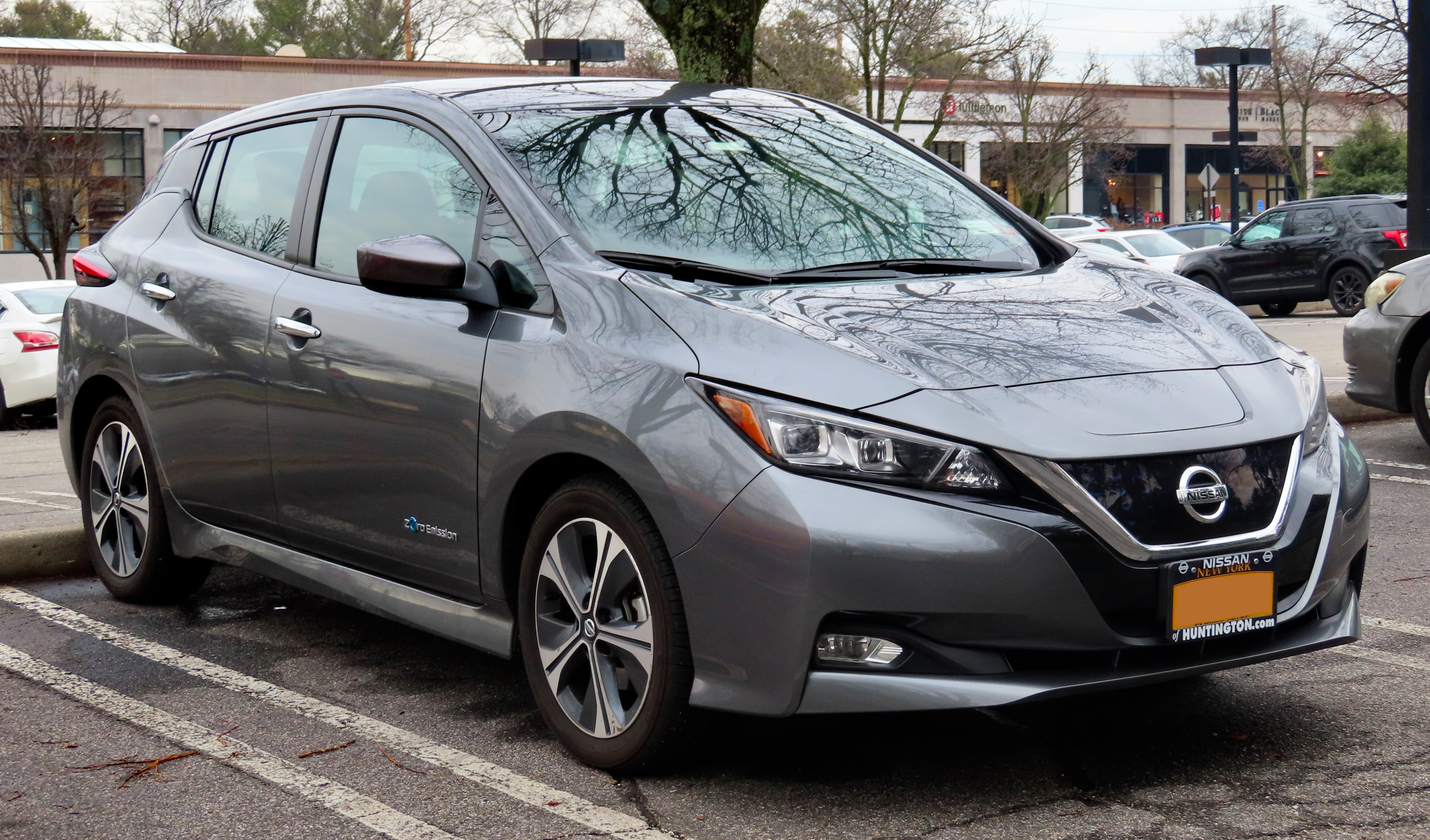
The Nissan Leaf is an all-electric car, meaning it runs on a battery instead of gasoline. It’s built for everyday driving, especially in town. People mention it when talking about how electric cars feel when you press the accelerator.
A roll cage is a strong metal frame inside the car. It helps protect you if the car flips or crashes hard, and it can also make the car feel more solid.
The Jeep Wrangler is a popular off-road SUV. Here, they’re using it like a measuring stick for how much interior space the other car has compared to a Wrangler.
“Out the door” (OTD) is the total price you pay at purchase, including the base vehicle price plus taxes, registration, and dealer fees. The host contrasts it with “out the window,” implying they mean the final, all-in number rather than just the sticker price.
“Squareback” is a way to describe a car’s shape—more upright and boxy than a sloped-roof design. Here it’s describing the look of the vehicle they configured.
Powertrain is the car’s “go” system—everything that takes stored energy and turns it into driving. In an electric car, it’s mostly the battery and the electric motor working together.
Range is how far an electric car can go before the battery runs out. The number depends on things like battery size, how efficiently the car drives, and weather.
A battery pack is the big battery inside an electric car that stores electricity. A bigger battery usually means you can drive farther before needing to recharge.
LFP chemistry is the specific “recipe” used in the EV battery cells. It’s generally considered safer and long-lasting, even if it may not pack as much energy per pound as some other battery types.
The “200 barrier” is the idea that people want an EV that can go about 200 miles on a charge. It’s a psychological and practical cutoff—though your actual miles will depend on conditions.
A Level 2 charger is the faster EV charger you can install at home. It uses higher-voltage power than a normal outlet, so it charges the battery quicker.
The “battery bag” is the protected housing where the EV’s battery pack sits. If a crash damages a big portion of it, the car may be harder and more expensive to fix.
An extension cord is just a longer power cable. People sometimes use one to charge a car temporarily, but it needs to be the right type and rating to be safe.
A heat pump is a heating system that works more efficiently than a simple electric heater. In cold weather, it helps an EV use less energy to stay warm, so you usually get more range.
Rear-wheel drive means the power goes to the back wheels. That can affect how the car grips and handles, especially when roads are wet or slippery.
Concept
iterative improvements over time
“Iterative improvements over time” means the company makes small upgrades instead of replacing the whole car design. Over the years, those tweaks can still add up to better range or features.
“800 parts” means the car is made from about 800 individual components. In general, fewer parts can make the car cheaper to build and easier to repair.
A sunroof is a panel in the roof that can open to let in light and air. Because it has seals and moving parts, it can be another thing that might need attention as the car ages.
A warranty like this tells you how long and how many miles the company will cover repairs. “10 years” is the time limit, and “110,000 miles” is the mileage limit. It matters what parts are covered, not just the length.
“Last mile” means the short part of a trip—like driving to the store or running errands close to home. Here, they’re saying the vehicle is mainly for local use, not big road trips.
Towing is how much weight a vehicle can pull behind it, like a trailer. They’re saying the towing limit went up from about 1,000 pounds to about 2,000 pounds.
Front-wheel drive means the front wheels do the work of moving the car. They’re mentioning it because it’s the base setup for the Maverick they’re talking about.
The Ford Maverick is a small pickup truck meant to be easy to live with day to day. They’re talking about how much weight it can tow—improving to about 2,000 pounds—even on the front-wheel-drive base version.
Payload capacity is the maximum weight the truck can carry. It includes things like passengers and cargo, and it’s important so you don’t overload the vehicle.
An open air kit is an add-on that makes the vehicle feel more open to the outdoors by removing or changing parts of the cabin. It’s often chosen for a fun, beachy vibe, but it can change comfort and noise.
Term
two doors
“Two doors” means the vehicle has fewer doors for getting in and out. Here, they’re saying the two-door version usually costs more because it’s marketed as more stylish.
The Mazda CX-5 is a very common SUV. In this episode, they’re talking about how Mazda’s newer CX-5 was tested for crash safety and how that testing affects safety ratings.
A crash test is a standardized impact test used to measure how well a vehicle protects occupants in a collision. In this segment, the host connects crash testing to IIHS scoring and safety awards.
The Insurance Institute for Highway Safety (IIHS) is a group that tests cars to see how well they protect people in crashes. If a car does well, it gets a safety rating that shoppers can look for.
“Top Safety Pick Plus” is a high safety award from the IIHS. It means the car did very well in their crash and safety testing, not just one part of it.
A concrete barrier is a hard, fixed wall used in crash tests. It’s used because it gives consistent results, so you can compare how different cars protect occupants.
In crash testing, “runways” are the guided paths the test vehicle is positioned on before impact. They help ensure consistent approach speed, alignment, and repeatability across different test setups.
This is a crash test where only a small part of the front of the car hits a barrier. It’s harder for the car to protect you because less of the front structure is involved.
Term
front side impact
This is a crash test where the front of the car hits in a way that also stresses the side of the car. It checks whether the car’s side protection (like beams and airbags) does its job.
They “empty the fluids” to make the test safer and cleaner. Draining things like fuel and other liquids reduces fire risk and mess if the car gets damaged.
Term
fuel in the vehicle
Whether there’s fuel in the car matters because crashes can cause leaks and fires. For safety, crash labs often remove fuel or limit it before the impact.
Term
impact like, how is it going to impact the passengers
Crash tests aren’t just about whether the car looks damaged. They’re about how the crash forces affect the people inside and whether the safety space around them stays intact.
Term
crumple in the cabin
When a car crashes, parts of the body are designed to fold or crumple in a controlled way. That helps absorb the crash energy so the space where people sit stays safer.
Term
roof getting squashed
In some crashes, the roof can get pushed down. Roof crush resistance is how well the roof holds up to help protect the people inside.
Concept
risk associated with impacts with crashes
Crash testing is used to estimate how dangerous a crash is for the people inside. Instead of only looking at visible damage, tests focus on how the car protects occupants.
Crash tests are done at set speeds so different cars can be compared fairly. “40 miles an hour” is one of those test speeds used to see how well the car protects people.
Concept
highway cruising speed
They’re talking about whether crash tests match the speeds you usually drive on highways versus city streets. The idea is that different road types lead to different kinds of crashes.
Concept
braking before impact
In real crashes, people usually brake before they hit something. That can reduce how hard the impact is compared with a test where the car hits at full speed.
Concept
t-bone kind of thing
A “T-bone” crash is when one car hits another from the side. It can be dangerous because the side of the car has to protect the occupants from intrusion.
IIHS is a group that tests cars in crash situations and gives safety scores. They measure how well a car protects people, and their tests don’t always match other organizations.
The key idea is that different safety organizations may test cars in different ways. So the scores you see might not mean the exact same thing from one agency to another.
The Volkswagen Tiguan is another SUV that gets crash-tested. The host brings it up to show how safety comparisons can change depending on which specific crash test is used.
The Kia Sportage is an SUV model that gets tested for crash safety. Here it’s mentioned as an example of how one year/model can look different depending on which crash tests are being used.
Concept
sunset that program
“Sunset that program” means they stop using it. Here, it’s about ending an older safety test once new rules make it outdated.
NHTSA is a U.S. government agency that deals with vehicle safety. The hosts say it’s slower to change because it’s government-run and heavily regulated.
Geico is an auto insurance company. The hosts mention it because insurance companies help fund the IIHS, and that funding is displayed publicly.
Company
Farm
“Farm” is short for State Farm, an auto insurance company. They’re mentioned because insurance companies help fund the IIHS and that support is shown on a wall of plaques.
This is an IIHS test of how well a car’s safety system can help prevent a front crash with another vehicle. The “2.0” version is the updated test standard, and the host says it’s not required for the non-plus Top Safety Pick.
“Moderate overlap front” is an IIHS crash-test scenario where only part of the vehicle’s front end hits a barrier at a set speed. Because the impact covers a portion of the width, it stresses the front structure and restraints in a way that differs from full-width frontal tests.
A “retest of vehicle” refers to repeating crash testing when a car changes enough to potentially affect safety performance. The hosts say retesting is generally needed after major generational structural updates, not for every minor change.
“Big generational structural change” describes major updates to a vehicle’s underlying body structure between model generations. The hosts connect this to why crash tests may need to be repeated: structural changes can alter how forces travel through the car during a crash.
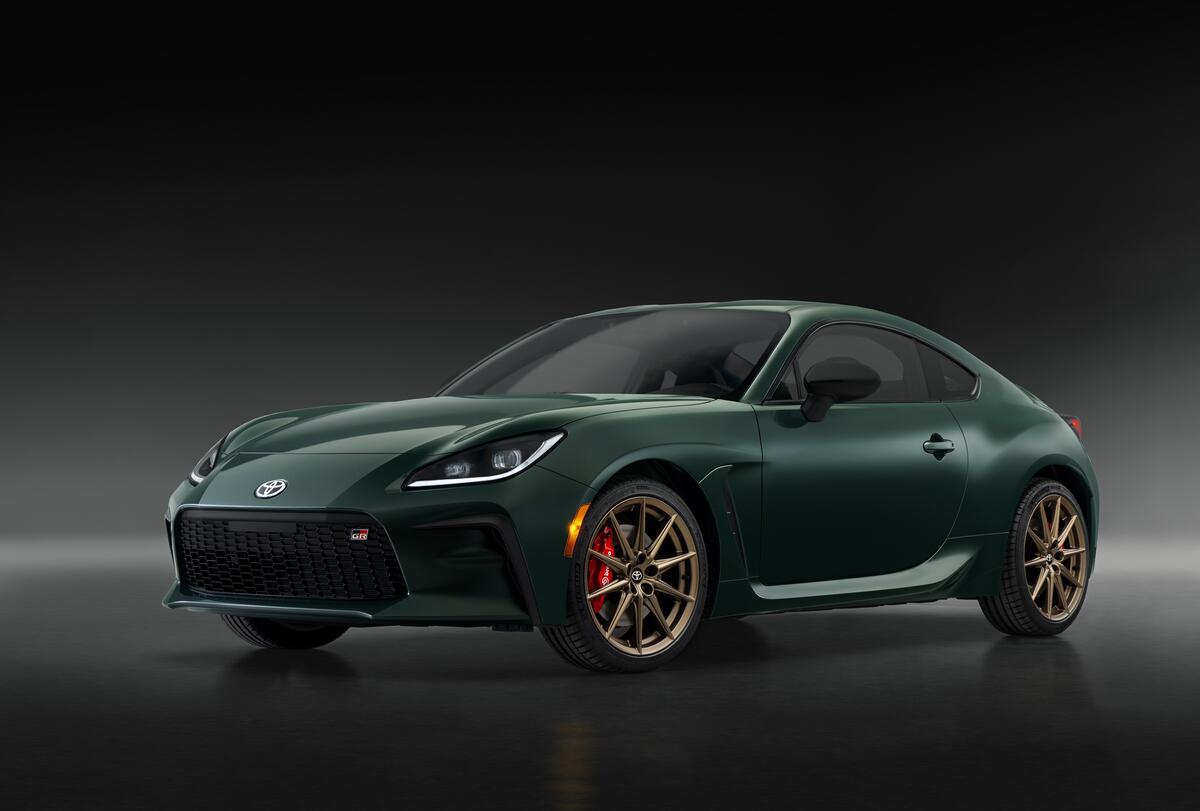
The Toyota GR86 is a sports coupe closely related to the Subaru BRZ, and the hosts mention it to explain how crash-test reporting can map results across the pair. In this segment, they’re discussing how the same platform can lead to results being associated with different model names.
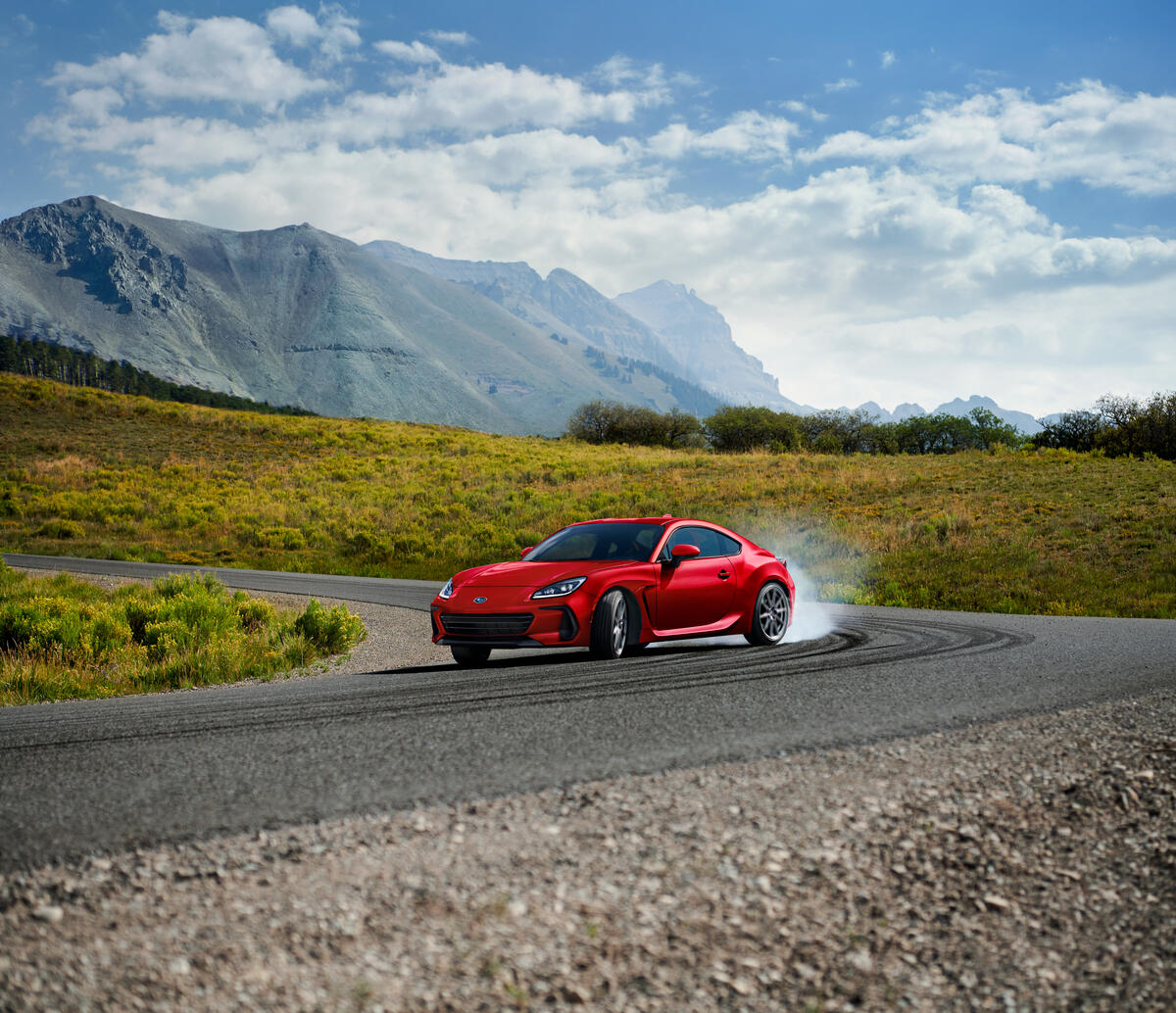
The Subaru BRZ is a sports coupe that the hosts mention as an example of how IIHS testing can be confusing across similar cars. They’re pointing out that the BRZ’s test results may reference a different but closely related model.
Concept
automaker does that
This refers to the process where an automaker submits a vehicle for IIHS testing. The hosts explain that even when a car is submitted, IIHS may not receive the vehicle itself; instead, IIHS may purchase a comparable car or handle it via a payment mechanism.
A 1959 Chevrolet Bel Air is an old classic car from the late 1950s. The point of mentioning it is to show how much safer cars are today compared to cars from that era.
Concept
crash safety in vehicles has evolved
They’re talking about how cars have gotten safer in crashes over the years. Modern cars are built to protect passengers better than older cars were.
A 2009 Chevrolet Malibu is a regular, everyday family car. In this crash-test story, the front gets badly damaged, but the part where the driver sits (the cabin) stays more intact than you might expect.
The “jaws of life” are heavy-duty tools firefighters use to rescue people from car crashes. They can cut and pull apart the crushed metal so rescuers can get to someone trapped inside.
Crumple zones are parts of a car that are built to fold and crush in a crash. That controlled damage helps protect the people inside by slowing down the impact forces.
The Chevrolet Blazer is an SUV model that’s existed for many years. In this discussion, it’s used to show how newer SUVs are built to protect people better in crashes than older ones.
Driver assistance safety systems are features that help you drive more safely, like warning you or helping with speed and spacing. In this discussion, they’re talking about whether some of these features count as “safety” versus just convenience.
Adaptive cruise control is like regular cruise control, but it can slow down or speed up to keep a safe gap from the car in front. The host is debating whether that’s mainly safety or mostly convenience.
Backup cameras show what’s behind the car when you’re reversing. They often include helpful lines on the screen so you can judge where the car will go as you turn the steering wheel.
Automatic emergency braking is a safety feature that watches for danger ahead. If it thinks you might hit something and you don’t brake soon enough, it can brake for you to help prevent or lessen the crash.
Rear cross traffic alert is a warning system for backing out of a parking spot. If a car is coming from the side where you can’t easily see it, the car alerts you so you can stop or wait.
Blind spot information systems (often called BLIS) monitor areas alongside the vehicle that are hard to see in mirrors. When a vehicle is detected in your blind spot, the system alerts you—commonly with a light or indicator—so you’re less likely to change lanes into another car.
The Silverado EV is an electric version of Chevrolet’s big pickup truck. In this story, the host says the truck’s safety braking system triggered while they were backing up, which surprised them.
A three-point turn is a low-speed maneuver used to reverse direction in a tight space by turning the vehicle, reversing, and turning again to complete the U-turn. The host mentions it because the backing/turning situation is when the braking system unexpectedly activates.
In an electric truck, the battery is what stores the energy for driving. The host is saying the battery stayed pretty efficient even in freezing weather, losing only a tiny amount overnight.
Public charging means charging your EV at stations you don’t own—like at shopping centers or along highways. The host is saying they’re not looking forward to how long it might take.
The Chevrolet Silverado EV is a pickup truck that runs on electricity instead of gasoline. Because it’s an EV truck, it can be heavier than a typical gas truck, which affects how it feels and how you plan charging. The podcast mentions it because people often learn new things about EV truck ownership after seeing the real details.
The GMC Sierra EV is an electric version of the Sierra pickup. They’re talking about how the truck’s shape and rear-side design can make it harder or easier to use the bed for loading stuff.
The Subaru Outback is a popular wagon-style crossover that’s meant for everyday driving and outdoor trips. They’re debating whether the “Wilderness” version looks better or worse than the standard one.
“Wilderness” is a Subaru trim/appearance package for the Outback that’s designed to look more rugged and outdoors-oriented. In this segment, they’re comparing how the Wilderness styling looks versus the regular Outback.
The 2021 Subaru Forester is a specific year of the Forester SUV. The host is describing how they used it on a long trip and how soon it’ll need an oil change.
An oil change is when you replace the engine oil. It helps keep the engine lubricated, and the host is saying they’re close to needing that service.
LIVE
What's up everybody? Welcome to another episode of the driveway podcast. We have a fully in
studio crew today. I can feel the energy. I can feel the air conditioning, which is working,
and it was, it was a little bit malfunctioning the previous episode. You can see I got a little
glistening by the end of some of them. Hopefully we're going to be okay. Who do we have? I'm
Elliott. We have Natalie and we have Matt in studio. We're all here. How's everybody doing?
Good. Everybody. How are either of you doing?
Summary.
Sorry, everybody.
You know, summertime, summer.
July 4th just happened. We're deep into summer. Everything's feeling good.
So as a listener, if you have been saying, I'm just, I'm really missing my Matt, I need more
Matt Smith in my life, this is the episode for you because Matt is.
And anyways, thanks for listening everybody. We'll catch you next week.
Matt is headlining this episode. We talked a little bit about it in a previous
episode about your time at the IIHS with Mazda and also your time with,
oh, you were with Nissan. We're not going to talk about Nissan,
but we are going to talk about a trip you just came back from a couple of weeks ago.
Now we, we chatted Nissan, but we're going to start off the episode talking about Slate.
Oh, and Dave is not here to tell me to stop talking about Slate.
That's right.
So I'm excited to hear. So something was announced.
I have intentionally stayed blank on it. I don't know what came out because I wanted to,
I wanted to react live on the pod.
This is my favorite part about the whole, the whole thing that Elliott,
who works in automotive media has managed to ignore automotive media until today.
I didn't manage to. I intentionally avoided this piece of automotive media.
So that he would get an on air surprise reaction.
I hope it's good.
We have a price.
We have a price.
We finally have a confirmed written down. You can see it on their website.
Everybody says this is what the price is going to be. True blue price of the blank slate.
So, and Elliott wants to be surprised about this. Do you have expectations?
Like, well, so the initial, the initial thing was $20,000 with the credit, with the tax credit.
So we, when that went away, we assumed it was going to be 27 five ish.
I'm hoping it's under that. I'm hoping it's closer to 25 genuinely don't know.
I do have nothing. I have no idea.
You're looking at me like you're, like you're shocked.
I am shocked.
I'd like to know if you're usually good at avoiding spoilers or
my wife and I are really behind on top chef.
Okay.
The premiere was six weeks ago and we still haven't watched it.
I have not been spoiled yet.
This is Elliott.
She gets bowed every time.
Wow.
But I don't know.
Well, I think you should look at that camera.
Just look right at it.
I'm going to tell you the starting price, but everybody,
I'm going to watch you.
Everyone who is watching this on YouTube or on Spotify,
they can see your surprised face when I say the starting price for the blank slate,
24,000, $950.
I love that.
Okay.
I was hoping for 25, but I didn't really expect that.
I was expecting 27,5 minimum, hoping for 25, but it's below even my hopeful number.
It's below $25,000.
So 24, what did you say?
24,950.
And that's for the like bare bones, nothing, no, anything.
Yes.
And truly, truly bare bones.
Bare bones.
And like this is one of the parts of the whole story that I think,
I'm not sure Slate has done the best job communicating it through their relationships
with the media.
I think they're doing a decent job of like on their website and their own owned communications.
But I look at this vehicle, not as this is a $25,000 car, because it's a
it's more than that.
It's a terrible $25,000 car.
It is.
It's like crank windows, no touch screen, rear wheels,
drive, like it drives.
I've actually sat in one.
They didn't let me drive it, but I sat in while we drove around the block a few times.
And it just drives.
Honestly, it's like kind of similar to like a Nissan Leaf in terms of propulsion.
It's got a little bit of roll to it, but not an enormous amount.
The rear axle is interesting, but like relatively rudimentary.
It's like every engineering decision was made with the idea of make this
an inexpensive car.
So I don't think of it as a car.
I think if you buy the $25,000 blank slate, you're missing the point.
You are missing the point.
I think of it as, and you're going to love this, Elliot.
I love that.
It's like if you were going to buy like a custom wristwatch.
Okay.
I'm there.
We're losing the audience.
Continue.
We've gained an Elliot.
You've gained one.
I've been here the whole time, baby.
When you go out shopping for the parts to build your watch, you start with,
for most people, the movement.
The movement is $25,000, but that's not the watch.
The watch is what the case looks like or the dial looks like or the hands look like
or what the crystal is made out of.
Those are all the decisions that you make on top of the movement that make that your watch.
And that is what slate is offering you.
They're saying, hey, it's $25,000 just to get in the door,
but then you get to build your slate.
And nobody else is doing this.
And the number of times I have heard people complain when they are car shopping about how,
well, I really wanted leather seats, but I had to move up to the limited trim to get leather seats.
I've said almost that exact statement.
And they don't care about the power lift gate or the bigger touchscreen
or the things that get packaged in with the leather seats.
Slate says, hey, if you just want a two-passenger, two-door pickup truck,
but it has to have leather seats, we're going to sell you the pickup truck.
And then for, oh, I don't know, 500 bucks, we'll give you leather seats.
So there's no tradition of trims.
It's really each thing you want is a plus X amount of dollars.
And you can really pick and choose.
Well, I find it to be, I still have questions about,
will it be a commercial success for mass market, for average buyers?
But I think it is the most innovative, interesting approach to building and marketing a car
that we've seen honestly since Scion, which I would argue was too early.
Scion is like, it was too expensive to really personalize,
so they couldn't personalize it to the degree that I think they were marketing it as.
Slate can actually do that.
Do they expect a lot of people to buy just the blank slate?
Or do they have projections about how much they think people might spend?
No, they do have 180,000 reservations,
which are essentially $50 deposits to put your name on a list.
You want that list?
I'm not on that list.
The challenge, which I'll get into a little bit later is
some of my personal use case, it makes sense for some things,
definitely doesn't for others.
But so they have 180,000 reservations or $50 deposits.
Anybody who has a reservation can submit another $250 to lock in their pre-order.
Or if you don't have a reservation, you can go on Slate's website
and give them a $300 deposit as a pre-order.
So it's open, everybody can pre-order.
Production is going to start later this year with deliveries expected in Q4 of 2026.
But realistically, they're only going to make like a few thousand this year.
Most of them will be delivered in 2027.
I am now getting onto the Slate Customizer because now I don't need to
worry about anything.
So is it like a builder?
Like you can see what everything costs?
You can see what a lot of stuff costs.
Do we know how much it's going to cost to turn it into that SUV kind of type?
I'm curious to hear your reaction on this.
This is now a Reacts podcast.
Preface it by saying that there are two SUV kits.
You guys have seen both of them.
I think so.
There's like a squareback and a fastback.
Did you have a preference?
I think the square one feels more usable, makes more practical sense.
Okay, same.
I'd go regular squared back.
All right, well, I've got good news for you.
It's the cheaper one.
That is the cheaper one.
The squareback SUV kit, which includes the SUV top, the roll cage, airbags, and the rear seats.
Oh, airbags too.
That costs $5,000.
Okay.
So you're looking at $29,950 for the blank squareback SUV Slate.
So that's then four seats.
Four seats.
Still two doors.
Still two doors.
Four seats.
And I will say the rear seat is quite spacious.
Oh, it is.
I had no problem sitting back there.
Still space behind you for gear and cargo and such?
Decent amount of space.
Yeah, I mean, don't quote me on it.
Now that I'm on a recorded podcast, I would say it's more than a Wrangler.
Okay.
Yeah, maybe not a Fortwood.
It's definitely more than a two-door Wrangler.
Okay.
And the fastback is $7,000, so that's $31,950.
I liked the look of the fastback, but the fact that it's $2,000 more for literally just style
out the door, not out the window.
I just not interested in that anymore.
I kind of want to, I'm not going to do it now on the air, but I want to play around and like kind
of customize, did you do that?
Did you like build your Slate that you would want?
Yeah, a little bit.
Brown SUV squareback, the interior, all the panels, but the full dash,
it might be three or four pieces.
You can replace those for like 50 bucks.
Okay.
So you take out the gray ones and you put on, I put on like forest green.
Nice.
Inside my brown.
Brown and green, that's okay.
And then.
Very LOB.
Brown, brown leather seats with like a gray fabric insert on them.
They look, they look really nice.
They don't have the price listed online, but they're like, product guy did tell me it was
going to be 500 bucks, so make it happen Slate.
For the seats?
Yeah, CJ.
Wow.
You told me it'd be 500 bucks, so make it happen.
Well, now it's quotable.
It's compelling.
I really like how I was able to make a car that had like my color scheme and materials
that fit what I wanted and like my vibe.
And I tried to buy a forest green Subaru Forester with brown leather seats and I went
to the dealer and they said, oh, well, we won't get one of those in for like another six months.
So I ended up with a gray one with black leather seats.
And it's a fine car, but it's not what I wanted.
Slate is saying, well, build you what you want.
It'll be Matt's L.O.Bean Edition Slate.
Something for your personal brand.
Come on, L.O.Bean, no free ads.
Yeah, sure.
Yeah, call us L.O.Bean.
I am curious.
You said you got to drive in it.
You didn't drive it, so I assume you were sitting in the passenger seat.
Maybe the, maybe the rear seat.
Anything notable?
Well, so on the topic of like how it's built and its powertrain, this is still where I run
into problems where like I, I think it works for, I should preface with hugely important,
I think this car makes a lot of sense for the vast majority of buyers in the vast majority
of their driving use cases.
They used, when originally they said it was going to have two batteries.
So there was going to be a small battery and a big battery.
Like optional, you can choose one or the other.
Accented range or normal.
And the small battery I think was going to give you like 150 miles of range.
It was like a 50 kilowatt.
Yeah, it was a little bit like that.
And the bigger battery was going to give you 240 miles of range.
They have reduced it to just one battery.
Which one?
Neither.
Ah, middle ground.
Now it is a 65 kilowatt hour battery pack that uses LFP chemistry, which we won't go into now,
but essentially it's going to give you 205 miles of range.
Hey, it crossed the 200 barrier.
But I think a lot of people when they were planning on this car were like,
well, I have to get it with the big battery.
And the fact that they're taking a 35 mile haircut is tough.
Well, it is nice though that it's, again, it's not as cheap as the initial 20,000 with the
tax credit, but it is cheaper than I thought it was going to be for a bigger battery than
initially was going to be the base.
If you were always going to buy it with the base price,
you are getting the base price with more range now.
I'm not going to say it's okay, but that's better than it could be.
I mean, you know, given everything that changed in the meantime, yeah.
What's the port?
Do we know?
It's an AX port.
That's nice too.
NACS, Tesla style.
You can't charge that fast though, right?
It's limited at like 20 to 80 percent.
I mean, close enough, it wouldn't make a big difference either way,
but it should do that in 30 minutes.
Okay.
So it charges fast enough, I would say.
It does because it's bigger.
It now takes 17 hours to charge full on just a regular level.
When you come home from work, you charge it early and plug it in.
Yeah.
I mean, you don't even need a level two charger in your house.
It's compelling.
Is it compelling enough for you to think about it realistically?
No, because although my job and my commute is only six and a half miles,
that six and a half miles is in like bumper to bumper hour long traffic.
And I still don't know if it's like the nicest place to spend an hour at a time.
But moreover, my parents, who I still see pretty regularly,
they live 100 miles away.
And I don't want to drive 100 miles to their house
and then have, hypothetically, 51 percent of a battery bag.
Bring a extension cord with you.
Yeah, maybe cover my fuel.
The big thing for me is that there's no heat pump in it.
Okay.
So and it's rear wheel drive.
Every VA, even Tesla's, you know, which didn't really do generations,
because like they all do iterative improvements over time.
So yeah, I mean, I would expect that more range, more capability,
like that's on that's got to be on their road map somewhere.
But this is still a company that's just getting off the ground.
Yeah. And it's got to simplify the construction procedure, make it cheaper.
I probably played a big part in keeping costs down,
is only offering one battery.
There's something like 800 parts total in this vehicle.
How does that compare?
Yeah, do you have any idea what a regular car?
A regular car, 50 million, 50 million, 100 million.
No, I actually, I have no idea.
I just know that 800 is not a lot.
It's less than it could be.
There's literally, I've done puzzles with more than 800.
That's true.
That's very true.
And like fewer computers and things like that too.
You know, you always say like, oh, it's got a sunroof.
Like that's another part to fill.
At least I say that.
Well, on that note, I think Matt says that too.
So the battery and the powertrain, those are two parts right there.
10 year 110,000 mile warranty.
Oh, that's nice.
Yeah.
110,000 mile, is that what you said?
Yeah.
Which sounds class leading to me.
Yeah.
Sounds like it's targeting a specific former class leader.
It might be.
Well, Natalie, what are you?
Is this something that you would ever consider in its current form?
Yeah, I could definitely, I could definitely see it.
I mean, for like a runabout, I can think of a lot of friends
that I think this would be perfect for.
Like a friend, a couple who moved outside of the city a couple years ago
and they're doing a lot of gardening and they have their own home.
Like they don't need a big truck, but they do want to pick a lot of stuff up
at Home Depot, you know, on the weekends.
So it would be great for them or like my brother and sister-in-law,
they'd have one kid, like I think they could, they'd be fine with the SUV.
Again, on the weekends, I don't think they would road trip with it,
but if they just had to.
Doesn't seem like an ideal road tripper, but a good commuter.
Yeah.
Last mile option.
Yes, exactly.
Heard that phrase before.
Arons and fleet vehicles, I think.
And I mean, I can also picture like someone doing, you know,
hill climbs or like autocross or whatever or trailering a vehicle.
And maybe you don't always want to run your errands and like your Dooley.
Just want to pop down the street to get that extra thing that you need
without your massive truck.
So cool.
Well, and on the truck side of it, they've also improved the performance.
So it originally was supposed to have a thousand pounds towing.
That is now 2000 pounds.
Base Maverick with front wheel drive.
That's 2000 pounds.
It's right in the same ballpark.
It's actually has a bigger bed than the Maverick.
And the payload capacity is 1,550 pounds,
which is also more than the Maverick gives you.
Only by 50 pounds, but still more.
They're clearly, they're clearly benchmarking it.
I like this open air kit.
Pricing coming soon, but that's cool.
That's a cool like California beach car.
That is one of the ones where I'm like, you're just taking things away.
Why is it more?
That should be less expensive.
That's like so typical though, right?
Like the two doors is always pricier because they know you're paying for style.
All right.
If you're paying for style, you're going to pony up.
Should we just make it a whole slate episode?
I do want to hear Dave's opinion.
Let's call him.
Honestly, like the open air kit with the rear seats, Dave.
That's right in his alley.
It's exactly his car.
Yeah.
It's probably marginally more comfortable than an 88 for runner too.
That's saying a lot for 2026.
You definitely won't be breathing the exhaust fumes.
Very true.
Very true.
Safer for the kids.
Safer for the kids.
All right.
So that was Matt's bit on slate,
but we're going to move into another Matt bit.
Like I said, this is a very Matt centric episode.
We love it.
We missed Matt.
We missed Matt.
We had to bundle it all in for a while.
Again, you talked a little bit about the IIHS and your visit.
Before the episode, I had a real hard time saying crash testing.
Ah, nailed it.
I nailed it there.
Crash testing.
Look at that.
How many tests could you crash?
Crash tests, all the crash showing off.
That's pretty good.
You can practice it.
I don't know.
Matt, I'll make it up as I go along.
I'll kind of hand it over to you to take us through your experience at the IIHS
and the crash testing facility.
There's twice.
I did that twice.
Let me tell you, if you are looking for the hot new place to hang out,
it is without a doubt, Rutgersville, Virginia, just outside of Charlottesville,
the home of the University of Virginia.
We went down with Mazda.
So Mazda has a newly redesigned CX-5.
The CX-5 is super popular.
Everybody was buying a safe car.
When you redesign a car, often the IIHS,
which is the Insurance Institute for Highway Safety,
will crash test that vehicle, give it a scorecard essentially,
and potentially award it either a top safety pick or a top safety pick plus designation.
These are tough words.
They are tough.
They're really making it difficult on us.
Mazda clearly had a lot of faith in their CX-5.
We don't have the IIHS's analysis yet,
but they invited us down to watch them run this thing
into a concrete barrier at 40 miles per hour.
And when that email comes across to transom guys, I'm saying yes.
I was more excited about this program than arguably anything I've done in years.
Is this common at all for automakers to bring people in?
This is the first I've heard of it in my time here.
It's the first I've heard of it.
I know they've done this with media in the past.
I just hadn't seen it.
So we saw the front overlap moderate test.
I can't remember what it's called.
Moderate overlap front crash test.
Some of the names of the tests seem a bit technical.
Listen, there are some things that I just keep on a sticky note.
Like on my desktops, I can paste them in every time I have to write them.
Insurance Institute for Highway Safety, parentheses, IIHS is one of them.
What a tip!
We've got sticky notes.
What a tip!
Digital sticky notes.
I guess in my world, I keep Cargeroo's brand colors on my desktops,
so I can reference them quickly.
So you can access it fast.
Matt, how do you optimize for efficiency?
Honestly, for the longest time, I had nothing on my desktop.
You can now see I have a few lightings on there.
A lot of things.
But mostly it's just me and the picture of a tractor.
Where was I?
Sorry, you were on the different kinds of crash tests.
They flew us down there.
We got to watch them do this one crash test.
I will say it was somewhat jarring how I went to Logan, got on the plane, flew to Virginia,
went out to dinner, stayed the night in the hotel, woke up the next morning,
had some breakfast, drove to Ruckersville, Virginia,
had a two and a half hour tour through the facility.
Oh, that's cool.
Well, a lot of that was shooting content and stuff.
But yeah, it was in the facility for two and a half, three hours.
And then they got us all up on this observation platform to watch one crash test that lasted,
I mean, the impact lasts less than a second, but the whole thing lasts like 12 seconds,
coming down the runway.
And then they were just like, okay, did you get anything you need?
What if you didn't?
Were they going to do it again?
No. And honestly, it was really stressful.
I had my phone out, I was trying to record it.
What if someone steps in front of you at the last minute?
Yeah, literally.
Well, and a friend of ours who was standing next to me when I'm filming it,
we have the impact and it's loud and it's like a gun going off in a warehouse.
And then I just hear next to me, Jesus Christ.
I was like, are you kidding me?
There's only one shot at that.
So Matt, your time at this facility, you wrote a really great article,
which we're going to go through.
You also did record content, which we turned into a short, which is available
on YouTube and probably some other social platforms.
By the way, big thanks to the IIA test for also offering up their own video of it,
because it's much higher quality than mine.
Again, a different angle, I'm sure.
You can check out the short.
You see a bunch of angles.
I think it's pretty cool.
I did want to, if you don't mind, I have your article printed out.
And I wanted to read the first paragraph because it made me realize Matt is a writer.
Matt got in his duffy here and really wrote.
So the sound hits first as loud as a gunshot.
It fills the entire hangar-sized space in an instant.
You can almost feel the sonic reverberations from the impact.
Almost smell the kinetic ripple through the air.
And just like that, it's over.
The measurable impact lasts barely two-tenths of a second.
What, what a writer.
Artistry.
Look at that artistry.
Okay, guys.
Sorry, I made this face because I was thinking about smelling kinetic ripple.
I was like, what does that smell like?
You could almost, almost smell it.
I feel like I almost am.
It did feel like it was just, and it's so quick, but it is just an immediate
overstimulation of your senses where you feel like, like something traumatic has happened.
Because you think about like, we've seen car accident.
Many of us, or maybe all three of us, I don't know, have witnessed a car accident,
but you're not like looking at it.
You're not like, oh, here it comes.
Here it comes.
And there it is.
And you're also like, I don't know.
I was, I was like in, in an enclosed, wide open, echo-y space.
Yeah, did you have ear protection or goggles?
I mean, I guess you didn't need goggles if you're up high enough.
They were behind something.
No.
No?
We were up on a platform that like had a railing.
Yeah, yeah.
Like a catwalk kind of thing.
I mean, I have to imagine like stuff, debris kind of sprayed a little bit, right?
We were, yes, we were far enough away that like that was never going to impact us.
But immediately after it happened, the IIHS staff is down there with their like push brooms,
sweeping stuff up.
And then they invited us all down to like really look at it.
It is a, it's a, more than just like a crash testing facility, it's basically like a studio
space because they are recording extremely high frame rate video.
500 frames per second.
Yeah.
Which did you check?
It's faster than these are.
How did I write about that?
Did I say, is that, that's fast enough that you can see the, the rubber peel back around a
water balloon popping?
You feel like you're there, you know?
It's just, I had time on the airplane back home.
I had some time on the airplane.
But no, so it's got these super high frame rate cameras so that they can capture it in
extremely slow motion.
The lighting also is insane.
It's like probably 30 or 40 yards worth of big Hollywood studio, like softbox lighting,
but instead of like a softbox, it's pumping out, shall we say, a bajillion lumens.
It's so, the lights are so powerful that they only turn them on full, full brightness right
before the car starts going down the runway.
And then as soon as it's over, they turn them off because they like just consume an enormous
amount of energy.
And this is all because they need to capture like every little detail of what happens in
that split second.
Exactly.
So when they're doing the analysis, they're actually only looking at two tenths of a second
of the footage and then they send me back to the airport.
But the analysis continues.
So if any of this sounds like visually interesting, you're short, although it is short and it's
vertical, a lot of cool camera shots there and it actually ends with your clip, which
it sounds so violent when the car actually hits the thing.
Dare I say, Jesus Christ.
Dare you say.
I know this because we talked, talk about how the thing is set up.
Like there's the middle thing and then there's like multiple runways.
Yeah, I think that's pretty cool.
So I want to hear more about that.
They basically have like one central area where the impacts happen, but they want to do
all sorts of different tests.
So they've got like the small overlap front, the moderate overlap front side impact.
So they have these three different runways to are kind of facing each other from either side
of the warehouse and then one of them is perpendicular to those.
But they let us walk down the runway before the crash.
So we like saw the car all prepped all the way at the end and then they don't like,
they don't drive it.
There's no right.
There's no fuel in the vehicle.
They like empty the fluids.
I was it on like a platform that gets moved?
No, I mean, it's, I imagine it's in neutral, but they just have it on a pulley essentially.
It's like, I'm kind of surprised there's no fuel because in real world, there would be.
I think there is a level of safety mitigate or, you know, danger mitigation there.
You know, like if you, if you like have a spark from the barrier and the car and the
credit and like if it's full of fuel and sleek, like there could be a danger thing there.
But moreover, they're not looking at like, does the car explode on impact?
They want to see, you know, how does an impact like, how is it going to impact the passengers?
So, you know, does it crumple in the cabin?
Does it like, is the roof getting squashed in?
It really is like a very technical and scientific assessment of the risk associated with
impacts with crashes.
This, the test you saw that two tenths of a second, it was at 40 miles an hour.
Is that as fast as it gets?
Do they do 65 like highway cruising speed?
They do four.
This is a good question as well.
Thank you.
They do 40.
They did say we can do faster.
Okay.
But the vast majority of impacts don't happen on the highway.
In fact, highways are like one of the safer places that we drive.
And moreover, if you are in an accident, usually there's some braking before impact,
like the idea that, you know, you're just going straight.
I mean, that's like intersections.
That's why they're where the, you know, whereas that's why rotaries are nice,
because you don't have that chance for the t-bone kind of thing.
You can love or hate rotaries.
So Matt, where do you want to go from here?
Do you want to talk about IIHS and the other ratings agency as far as how it works for
a consumer who's going to shop and sees these numbers?
Like what do they mean?
Yeah.
So I'll preface by saying the IIHS and the National Highway Traffic Safety Administration,
NITSA or an HTSA, which is the other crash testing body.
They have incredible websites with like really detailed explainers on
what their crash tests are, what they're measuring, how they work.
And if you have like real detailed questions or want a detailed understanding of these,
you should go to their websites and check those out.
If you want a general idea of like, what is the IIHS?
What does it mean for me as a shopper?
Go to carguers.com, read the article.
Thanks for already getting them started.
The critical point, the critical thing that I learned,
and this really was a big learning experience for me as well, is that the IIHS,
by design, is not looking at the same things that the NHTSA is looking at.
So in fact, one example is, IIHS used to do a roof strength crash test, where they would,
they have this big machine and it pushes down on kind of like the angle where the
roof meets the side of the car.
And they say like, you know, don't buy a Kia Sportage from 2008 by a Volkswagen Tiguan,
because it's a lot stronger.
NHTSA started doing their own version of that test.
So the IIHS said, great, we don't need to do this one anymore.
This is covered.
I have a quote from your article, from the person there.
Once there is a regulation that makes our testing obsolete, we'll sunset that program.
I think that's really cool.
Yeah.
And it shows that the goal isn't to like be the default choice.
They're really out there trying to provide, you know, the best consumer advice possible.
But the agencies are different.
What's the difference?
I mean, who do they serve?
The biggest difference, well, I mean, they both serve the consumer,
but NHTSA is a government agency.
So that, by its nature, is a little slower moving, but also like, you know, funded by the
government and very regulated, IIHS is funded by insurance companies.
And they have this great insurance, they have this great wall where they show all of the
companies that are funding the IIHS.
And it's like, you know, all state, progressive state, farm, Geico have these huge plaques.
And then all around are these smaller ones that are like Amica.
And yes, the size of the plaque is 100% determined by how much money they're doing.
Yeah, that's how that usually works.
That wall, visible in the short, another plug.
Who knows if this was like PR or not, but because of how it's funded, the IIHS was really
promoting the fact that they are more flexible, malleable, they can move a bit quicker.
So like, if NHTSA starts doing a test, they can say, let's pull that one out and put,
like, you know, start, start working on a new type of test.
And how do they, how do they rate?
They have different rating systems.
Oh yeah.
Like as a consumer, if you go up and you look at a Moneroni, a window sticker, that shows the
NHTSA rating, right?
It doesn't show the IIHS rating.
Right.
And NHTSA is out of five stars.
They do like an overall rating, and then they also have their individual tests.
All of them are out of five stars.
IIHS uses a, what felt like a very Scandinavian, you know, very matter-of-fact rating system,
where it is poor, marginal, acceptable, good.
And good as well as you can do.
Like at Cargers, we want to help you find a great deal.
The IIHS just says, it's a good, it's good deal.
So yeah, good is what you're going for.
If you see good, that you're not like, oh, but where's the great?
Good is as good as you can do.
And on top of those scores, they do have their awards.
So the top safety pick and the top safety pick plus, there are thresholds there.
So like you have to have, I think, good or acceptable.
I think it's good in all crash tests, and then headlights have to be good or acceptable on
all trims to get a top safety pick plus.
And then top safety pick is like, you know, a slightly easier threshold to hit.
Yeah. In your article, it's the vehicle-to-vehicle front crash prevention 2.0 for TSP.
Without the plus is not required.
Yes.
But for the plus, it's acceptable or good.
Don't ask me what the difference is between 2.0 and 1.0.
You only saw the, what, the moderate overlap front.
Correct.
Right.
So does that mean that Mazda is crashing two more of the CX-5 for those other two tests?
They can't use the same one, right?
Well, they definitely can't use the same one.
That car is, that's done.
That car is no more.
It would be representative of what would happen in a crash.
I actually don't know what, to what degree they need to do all of the tests every time.
They generally only need a retest of vehicle if it's had a big generational structural change.
You do see that sometimes when you look up the score for the year, it says what vehicle was tested.
Sometimes you even see like, oh, you're looking up the, you know, the BRZ and it's
saying what happened with the GR86 and it's like, it's the same car.
Yeah. So I don't know if they're going to crash more of them.
I do know that Mazda submitted this car for more crash, for this crash test.
The IHS, I don't believe it was on their like roadmap of vehicles that they were going to test this year.
Mazda submitted it and when an automaker does that, they don't give the IIHS the vehicle.
Because who knows what they did to that to make a, build it out of styrofoam.
Yeah. I like this, this part.
Instead, they give the IIHS the amount of money that it costs for the IIHS to go out and buy their own.
So they buy it just like a regular consumer would off the lawn at a dealer.
They're paying like full consumer price, not like Mazda's internal price.
Right. Interesting.
The insurance companies are footing the bill, right?
Well, no, Mazda's footing the bill.
But yes, in general, the IIHS is paying.
It's not like the employee price that Mazda can get.
Interesting. I did not know that.
Well, you can read the article.
That's really, it's a good article.
That's wild.
It's a good article.
So in the article, there are photos of some Natalie's,
kind of right now, crashed vehicles in their lobby.
And there's like a specific...
There are a lot of crashed vehicles.
Yeah. There's a lot happening there.
Talk about the comparison that you called out.
So right out front, in like literally like right past the front desk,
there are two Chevrolets.
One of them is I think a 59 Bel Air,
which they advertise as like a very common mass market vehicle in 1959.
If you look at it, you're like...
I can't imagine the roads being filled with these ever, but it's huge.
It would easily fill.
This is a great testament to like how crash safety in vehicles has evolved,
because if you looked at these two cars uncrashed next to each other,
you'd be like, I want to be in that one.
The big one.
The one that is literally, it's like the size of...
Yeah, of literally like a tank.
And then they also have a 2009 Chevy Malibu, I believe.
The idea here was that these were two cars,
both mass market, consumer, family sedans, 50 years apart.
They put both of them through the same test.
I can't remember if it was the small overlap front or the moderate overlap front,
but you can see the difference.
The Malibu, I mean, the front end is mangled,
but the driver's position, like the cabin, largely protected.
I mean, like, you know, there's a little bend.
Yeah, it's clearly been an accident,
but you look at it and you're like, you could walk out of that car.
Assuming you were okay from the impact, like nothing is in your way.
You can get out the Bel Air.
I have to believe you're dead.
It's a tough image.
It's a massive amount of metal right where you're supposed to be sitting.
At the very least, your legs are trapped.
So it demonstrates not just like the impact,
the result of the impact on the driver's body,
but also like if the person is okay in that Bel Air,
getting them out looks like it's going to be like a multi-person, multi-hour affair.
The jaws of life.
Yeah, exactly.
So it really, it's a fabulous demonstration of how
the structure of the vehicles has evolved over times,
like have different crumple zones and just be more impact-resistant
and more protective of its occupants.
Yeah, very cool.
Really, it's quite something.
And then of course you go deeper into the building and they've got all sorts.
And like some of them are, they're not 50 years apart.
You can see like generation to generation how the Chevy Blazer improved.
Like your Blazer from high school, death trap.
Oh, no.
Yeah, but the new Blazer, the new Blazer much safer.
I got hit at low speed by an elderly couple in a Kia.
So I was okay.
I walked away from that one.
Yeah, their car exploded.
Their car, I was probably totaled.
Was it a newer Kia?
Older Kia.
I mean, it was in what, 2002?
Yeah.
So it was an older Kia, latest 2002 Kia.
Yeah.
Do you want to talk about 30 by 30 at all?
Yeah, I think it's a good initiative for folks to be aware of essentially.
And some of it, there's a little bit of nuance there with the data.
So they don't have like 2024 data when they announced this.
I think they announced it in 2024, I believe is when it was announced.
But it was using 2022 data because it's what they had access to.
But the idea is to reduce U.S. traffic fatalities 30% by 2030 because they had seen
traffic fatalities going up.
And by reducing them 30%, I believe that gets them back to their low point.
And yeah, the low point seems to be 2014 vehicle deaths in the U.S.
So just the United States was 32,744.
And in 2022, it was 10 grand, or 10 grand, 10,000 more at 42,721.
So that's a big jump.
Did you, that's not in my art.
Did you just pull that data out?
It's from the IHS 30 by 30.
Wow, look at you.
I told you, I'm prepared man.
Got so many notes.
I have a lot of notes.
It also has an interesting graph, which I don't know if you've seen this, but it lays out the
vehicle crash deaths per 100,000 people per country.
And it's the 29 highest income countries.
It says 29 high income countries.
I'm not sure how those were chosen, but the United States is far and away, number one.
Interesting.
Chile is right behind us.
And then there's like, it's like, it's pretty far until you get to number three.
So the U.S. has some work to do, and it's good that somebody's working on it.
Anything else about IHS and HTSA, your experience?
Yeah, I just thought it was pretty eye-opening to see not just how they administer the crash
tests and like how awesome in like the nuclear way, how devastatingly, dramatically awesome
the crash test is.
But it was pretty eye-opening to see how they approach this
like philosophically.
They're saying our goal is not to be the default resource for consumers.
Our goal is to fill in the gaps that might affect consumers.
So honestly, if you're shopping for a car, the advice is not, oh, definitely check out IHS
or definitely check out NHTSA.
It's check out both of them because have equally valuable and differentiated
information.
Do either of you have a favorite driver assistance safety system?
Yeah.
What is it?
Does adaptive cruise control count?
If you want to do it.
I would argue that's almost a convenience feature.
I've really grown to, dare I say, be reliant on the, what are they called in the backup cameras
lines move based on the steering angle?
I don't know, adaptive lines?
Yeah, like I mean, don't get me wrong guys.
I can back into a parking space.
I could do it in a slate pickup truck.
No screen.
But when there's the lines that move with, I mean, one try at fast.
My favorite is automatic emergency braking, which I've only had in my-
Mind me not to get in a car with you.
Well, I mean, it happens traffic, you know, but it's-
You're on your phone, you know.
I am an aware driver, but everybody's had a moment or two where that's come in handy, I think.
When you're talking to the kid in the backseat.
You're talking to, yeah, exactly.
You got to do what you can do.
I looked up my, oh, sorry, do you have one?
Yeah.
I don't love automatic emergency braking all the time because in some cars it's like really
violent and responding to things that don't need to be braked for.
But I really like rear cross traffic alert.
Oh, that's like backing out of a spot.
Yeah, when it knows that someone's coming and maybe they're not in your field of vision yet.
And I like when other people have blind spot information systems.
It's helpful.
You can see me.
I, I think it was the Ford Maverick I had.
And so my driveway from the road up to my driveway, there's just a little incline
and backing into my driveway every single time it slammed on the brakes.
Rear automatic emergency braking I've run into a lot of problems with.
It was quite annoying.
I just had that happen in the Silverado EVO is making a three point turn in like a very
normal place where I do this in every vehicle and it just slammed on the brakes really violently
and kind of freaked me out.
It's a big vehicle to both turn and to slam on brakes.
I had to pause and actually look and like second guess the backup camera and be like,
am I missing something?
No, I wasn't.
So you would say that that is what's in your driveway,
which we're going to segue right into.
So Natalie, talk to us about the Silverado EVO.
It's large, but that's because it's a full size truck.
So basically the same size as the 1500.
I haven't spent that much time in it yet, but I did a couple of years ago.
We did a video right after I had done a really long road trip and that,
that was great, especially in the snow.
So I remember you being pretty positive on it.
And like it worked as a road trip vehicle because it probably has a giant battery.
It's a huge battery and it lost like one percentage point in freezing temperatures
overnight too.
So that was great.
I'm not super looking forward to public charging it because it'll take a little bit just as a
function of the public chargers that are near my house.
I think I'll be sitting in a parking lot for a while, but yeah, it's I'm looking forward to
driving around on the weekend, visiting people outside the city.
If you want an electric pickup truck, it's, um,
it's on the total other end of the spectrum through the sleet.
This one is $90,000.
Okay, so you could get almost three, almost four sleets.
More than three.
Yeah.
But I think I guess you get 400 miles of range.
Well, four sleets.
That's over 400 miles of range.
No, that's two sleets.
I think the sleets up to 200.
You just have to have them positioned periodically on your route.
The only thing.
Put a sleet in the back for when you want to do your little errands.
Toe sleet with a sleet?
Probably not.
Definitely not.
No, no, definitely not.
It's more than 2000 pounds.
The only thing I don't like about the Silverado EV, which was like a huge surprise for me,
because I did not think I, like it was going to pull me over and it's great EV truck.
They have those like buttresses or those like style buttresses on the tail, on the bed, on the
sides, like behind the rear windows, which just they don't, they do nothing.
They just get in the way.
They're not on the GMC Sierra EV.
That's form over functions, style over substance.
They look like what?
The avalanche kind of.
Yeah, a little bit.
A little bit, yeah.
Yeah.
But it also has 9000000 cameras, so they don't really give the way too much.
No, but like what if I'm like putting stuff into the bed?
Oh, I see.
Going over the side.
Yeah.
Truck things.
Truck stuff.
Truck stuff.
I don't have a truck this week.
I have a Subaru out back.
Okay.
And I got to tell you, I was like coming around to how it looked in the wilderness.
The wilderness, I was like, this one looks silly, but I actually kind of like the regular one.
And now I'm in the regular one and I take it back.
I don't like, I don't like how it looks.
Have you, have you decided that about the model overall or you prefer the wilderness?
I prefer the previous generation.
Okay, sure.
Sure.
And like, you know, I could be, I could be a little there.
My wife said that she really liked the new looks.
She has a Forester and she was like, it kind of looks like my car.
My wife said the exact same thing.
Who also has a Forester?
Yeah.
Not too much variety.
I will say the interior, I don't have, I don't believe the real leather seats.
Probably Star-Tex.
Which is supposed to be like a little more durable.
But then the dash is covered in like a woven fabric.
Looks good though.
It looks okay.
I mean, the car has 8,500 miles on it now.
And I feel like I can already see the wear in that fabric.
And I'm like, don't give me the tougher seats and something that isn't equally rugged elsewhere.
It like feels kind of nice, but I don't know, more to come.
I'm not sure, I'm not sure the new Outback is, it does not sing to me.
It doesn't sing.
Well, I do not have a car this week because I didn't take one because I went on a trip to Quebec.
Drove, drove a thousand miles in my 2021 Forester up to Quebec.
Almost ready for an oil change.
You know what?
I am just about to do for one and an inspection, by the way.
So thanks for the reminder.
Future me.
Me too.
July?
Day!
We're on the 6th schedule.
Both of our Outback.
We're working for Foresters.
Natalie, I knew it.
We are going to cut it there.
Thank you, Matt, for taking us through your experience.
I talked way too much in this.
Well, we knew it was going to be a Matt-centric episode.
So if there's a Matt-centric fan, they had a great hour.
Thank you for watching.
So you are welcome.
Thank you guys for potting.
We will see you next week, which we are talking about future classics.
What cars available today are going to be classics in the future.
It's going to be fun.
Come back for that one.
We'll see you then.
Bye, Dad.
About this episode
The Driveway crew digs into IIHS crash-testing expertise and then pivots to Slate’s big reveal: a confirmed starting price of $24,950 for the bare-bones “blank slate” EV pickup, plus how Slate’s “customizer” approach replaces traditional trim levels with à la carte options. They debate whether the concept will scale beyond enthusiasts, noting 180,000 reservations and production starting later in 2025/26. Pricing for SUV kits lands around $29,950 (squareback) and $31,950 (fastback), while the powertrain shifts to a single 65 kWh LFP battery targeting ~205 miles.
Matt went on two trips recently, first he went to see the new Slate Truck, and then he travelled to the IIHS testing facility in Virginia to see the new Mazda CX-5 get crash tested. He's bring back stories, information, and dare I say, a little bit of wisdom!