All About Crash Testing... and SLATE! #61
About this episode
The Driveway crew digs into IIHS crash-testing expertise and then pivots to Slate’s big reveal: a confirmed starting price of $24,950 for the bare-bones “blank slate” EV pickup, plus how Slate’s “customizer” approach replaces traditional trim levels with à la carte options. They debate whether the concept will scale beyond enthusiasts, noting 180,000 reservations and production starting later in 2025/26. Pricing for SUV kits lands around $29,950 (squareback) and $31,950 (fastback), while the powertrain shifts to a single 65 kWh LFP battery targeting ~205 miles.
Matt went on two trips recently, first he went to see the new Slate Truck, and then he travelled to the IIHS testing facility in Virginia to see the new Mazda CX-5 get crash tested. He's bring back stories, information, and dare I say, a little bit of wisdom!
blank slate
"they can see your surprised face when I say the starting price for the blank slate, 24,000, $950."
They’re talking about the cheapest, most basic version—before you add extras. It’s a way to say, “This is what you get at the entry price.”
“Blank slate” here means the base version of the product being discussed, before adding options or features. In car terms, it’s like talking about the entry-level trim so you can compare what you actually get at the lowest price.
crank windows
"It's like crank windows, no touch screen, rear wheels,"
Crank windows are the older-style windows you roll up and down by hand. They’re usually found on the most basic, budget versions of a car.
Crank windows are manual side windows operated with a hand crank instead of power switches. They’re a cost-cutting feature that usually shows up on very low-trim vehicles.
touch screen
"It's like crank windows, no touch screen, rear wheels,"
A touch screen is the main display you tap to control things like music and navigation. If the car doesn’t have one, you usually use buttons instead.
A touch screen is the in-car display used to control infotainment functions like navigation, media, and settings. When a car lacks one, it typically relies on physical buttons/knobs or simpler infotainment.
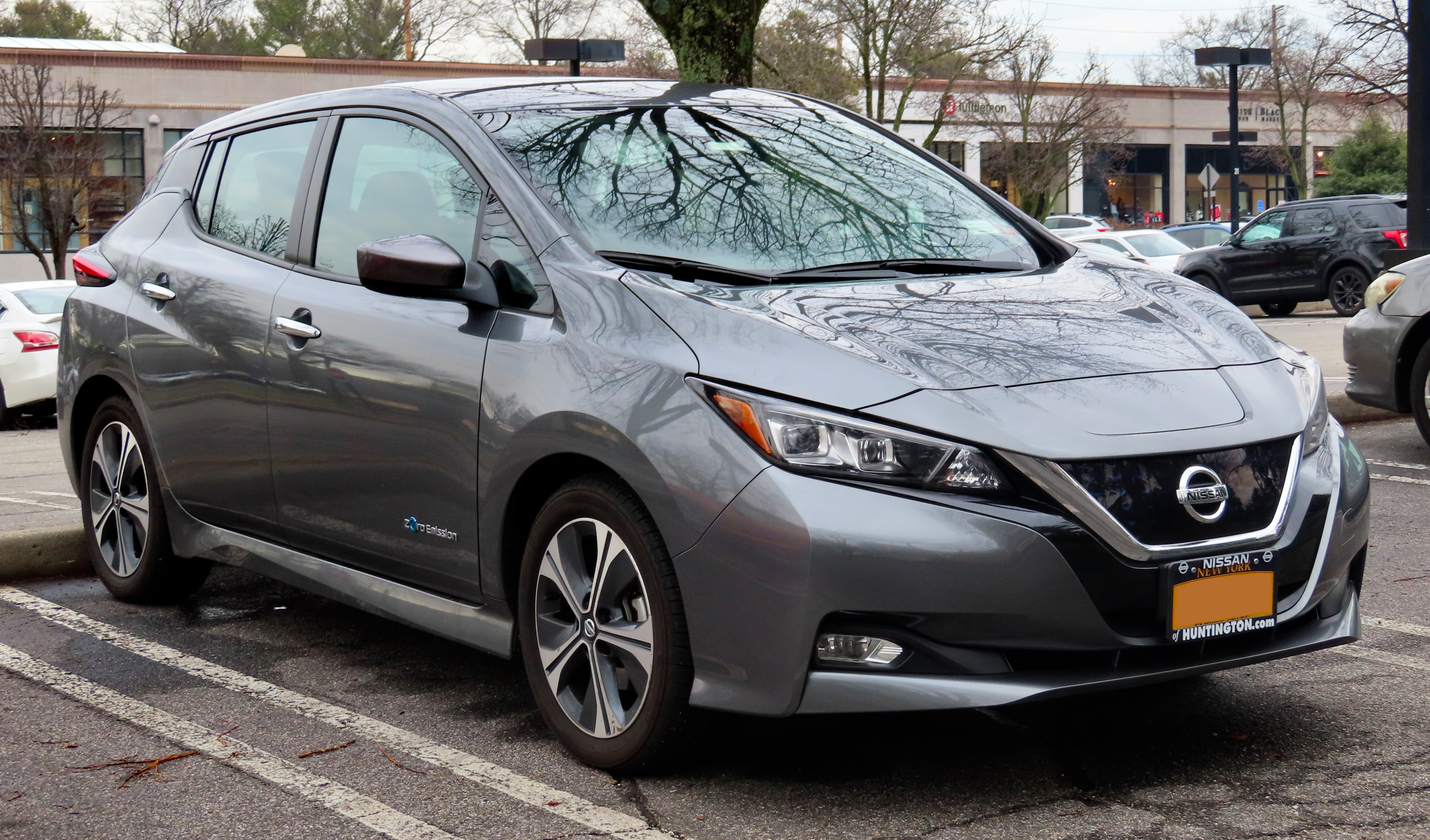
Nissan Leaf
"...estly, it's like kind of similar to like a Nissan Leaf in terms of propulsion. It's got a little bit of ..."
The Nissan Leaf is an all-electric car, meaning it runs on a battery instead of gasoline. It’s built for everyday driving, especially in town. People mention it when talking about how electric cars feel when you press the accelerator.
The Nissan Leaf is a fully electric compact hatchback known for its simple, everyday electric driving feel. It often comes up in discussions of electric propulsion because it’s designed around predictable city commuting rather than performance. In a podcast context, it’s a common reference point when comparing how electric cars deliver power and acceleration.
fastback
"There's like a squareback and a fastback. Did you have a preference? I think the square one feels more usable, makes more practical sense."
“Fastback” means the roof slopes down toward the back in one smooth line. It often looks sportier, but it can make the back seats feel a bit tighter.
“Fastback” describes a body shape where the roofline slopes smoothly down toward the rear. That design is often chosen for a sportier look and better airflow, but it can reduce rear headroom compared with a more upright shape.
roll cage
"The squareback SUV kit, which includes the SUV top, the roll cage, airbags, and the rear seats. Oh, airbags too. That costs $5,000."
A roll cage is a strong metal frame inside the car. It helps protect you if the car flips or crashes hard, and it can also make the car feel more solid.
A roll cage is a reinforced metal frame installed inside the vehicle to protect occupants during rollovers and severe impacts. In kit cars and track-focused builds, it also stiffens the chassis and provides mounting points for safety equipment.
airbags
"The squareback SUV kit, which includes the SUV top, the roll cage, airbags, and the rear seats. Oh, airbags too. That costs $5,000."
Airbags are safety cushions that pop out during a crash. They help protect your head and chest, working with your seatbelt.
Airbags are inflatable safety cushions designed to rapidly deploy in a crash to reduce injury to occupants. They’re part of the vehicle’s restraint system and typically work alongside seatbelts and crash sensors.

Jeep Wrangler
"Now that I'm on a recorded podcast, I would say it's more than a Wrangler. Okay. Yeah, maybe not a Fortwood. It's definitely more than a two-door Wrangler."
The Jeep Wrangler is a popular off-road SUV. Here, they’re using it like a measuring stick for how much interior space the other car has compared to a Wrangler.
Jeep Wrangler is a body-on-frame SUV known for off-road capability and removable/adjustable roof and doors on many trims. In this segment, the host uses it as a size/space reference point, comparing how much room the other vehicle has versus a Wrangler (and specifically a two-door).
out the door
"I liked the look of the fastback, but the fact that it's $2,000 more for literally just style out the door, not out the window."
“Out the door” (OTD) is the total price you pay at purchase, including the base vehicle price plus taxes, registration, and dealer fees. The host contrasts it with “out the window,” implying they mean the final, all-in number rather than just the sticker price.
squareback
"Yeah, a little bit. Brown SUV squareback, the interior, all the panels, but the full dash,"
“Squareback” is a way to describe a car’s shape—more upright and boxy than a sloped-roof design. Here it’s describing the look of the vehicle they configured.
Squareback is a body-style description used for vehicles with a more upright, boxy roof and rear profile, often paired with a hatchback-like rear. In this segment, it’s used to describe the host’s “Slate” configuration (a brown SUV squareback).
dash
"Brown SUV squareback, the interior, all the panels, but the full dash, it might be three or four pieces. You can replace those for like 50 bucks."
The dash is the front panel inside the car where the gauges and controls are. They’re saying it’s modular, so you can change parts of it.
The dash is the dashboard area in front of the driver, including the trim panels and instrument cluster surround. The host is talking about the dash being made of multiple pieces that can be swapped for different colors.
powertrain
"Well, so on the topic of like how it's built and its powertrain, this is still where I run into problems..."
Powertrain is the car’s “go” system—everything that takes stored energy and turns it into driving. In an electric car, it’s mostly the battery and the electric motor working together.
A vehicle’s powertrain is the set of components that generate and deliver motive power—how the car turns energy into motion. On an EV, that typically includes the battery pack, electric motor(s), inverter, and related control electronics.
range
"The small battery I think was going to give you like 150 miles of range... essentially it's going to give you 205 miles of range."
Range is how far an electric car can go before the battery runs out. The number depends on things like battery size, how efficiently the car drives, and weather.
In EV context, range is the estimated distance the car can travel on a full charge under specified conditions. It’s commonly reported in miles and is influenced by battery capacity, efficiency, speed, temperature, and driving style.
battery pack
"Now it is a 65 kilowatt hour battery pack that uses LFP chemistry, which we won't go into now..."
A battery pack is the big battery inside an electric car that stores electricity. A bigger battery usually means you can drive farther before needing to recharge.
A battery pack is the large, modular set of cells in an EV that stores electrical energy. Its size (often measured in kilowatt-hours) strongly affects range and how much energy the car can use between charges.
LFP chemistry
"Now it is a 65 kilowatt hour battery pack that uses LFP chemistry, which we won't go into now..."
LFP chemistry is the specific “recipe” used in the EV battery cells. It’s generally considered safer and long-lasting, even if it may not pack as much energy per pound as some other battery types.
LFP (lithium iron phosphate) chemistry is a type of lithium-ion battery formulation. It’s known for good thermal stability and long cycle life, though it can have different energy density characteristics than other chemistries.
200 barrier
"Hey, it crossed the 200 barrier. But I think a lot of people when they were planning on this car were like..."
The “200 barrier” is the idea that people want an EV that can go about 200 miles on a charge. It’s a psychological and practical cutoff—though your actual miles will depend on conditions.
The “200 barrier” refers to the EV marketing and consumer expectation of achieving roughly 200 miles of estimated range. Crossing that threshold can meaningfully affect buyer confidence and perceived practicality, even if real-world range varies.
bigger battery
"tax credit, but it is cheaper than I thought it was going to be for a bigger battery than [794.1s] initially was going to be the base. [795.6s] If you were always going to buy it with the base price,"
A bigger battery usually means more total energy stored in the car. That typically translates into more driving range per charge.
A “bigger battery” means a higher-capacity EV battery pack, which increases the vehicle’s available driving range. In the segment, the host argues the cost impact is less than expected because the base price now effectively buys more range.
AX port
"Do we know? [809.7s] It's an AX port. [810.5s] That's nice too."
An “AX port” is the charging plug-in opening on the car. The important part is whether it matches the chargers you’ll find in the real world.
An “AX port” here refers to the car’s charging inlet/connector type being discussed in the context of NACS compatibility. Port/connector standards matter because they determine which public chargers you can use and whether you need adapters.
NACS
"It's an AX port. [809.7s] It's an AX port. [811.3s] NACS, Tesla style."
NACS is the charging plug type Tesla uses. If your car supports NACS, it can use many chargers that use that same plug style.
NACS (Tesla’s charging connector standard) is the plug shape and charging interface Tesla popularized. Using NACS means the car can use compatible charging stations without needing an adapter, depending on the station and car model.
20 to 80 percent
"You can't charge that fast though, right? [815.3s] It's limited at like 20 to 80 percent. [820.3s] I mean, close enough, it wouldn't make a big difference either way,"
That “20 to 80 percent” range is a typical EV charging habit. Charging is usually faster there, and it slows down as the battery gets closer to full.
“20 to 80 percent” refers to a common EV charging strategy: charging from 20% up to 80% state-of-charge. Many EVs charge fastest in that window, while charging slows near 100% to protect the battery.
level two charger
"I'm not going to say it's okay, but that's better than it could be. [838.5s] Yeah. [838.9s] I mean, you don't even need a level two charger in your house."
A Level 2 charger is the faster EV charger you can install at home. It uses higher-voltage power than a normal outlet, so it charges the battery quicker.
A “level two charger” is a home or public EV charger that typically runs on 240V power, delivering much faster charging than standard household outlets. The discussion implies the car’s charging needs may be manageable without installing a Level 2 unit at home.
battery bag
"and then have, hypothetically, 51 percent of a battery bag. Bring a extension cord with you. Yeah, maybe cover my fuel."
The “battery bag” is the protected housing where the EV’s battery pack sits. If a crash damages a big portion of it, the car may be harder and more expensive to fix.
A battery pack is often packaged as a protected module or “battery bag” within the vehicle floor. Crash testing and repair discussions frequently focus on how much of that pack is damaged, because battery replacement is expensive and can take the car out of service for a long time.
extension cord
"51 percent of a battery bag. Bring a extension cord with you. Yeah, maybe cover my fuel."
An extension cord is just a longer power cable. People sometimes use one to charge a car temporarily, but it needs to be the right type and rating to be safe.
An extension cord refers to using a portable cable to connect a charger to a power outlet. For EV charging, this is sometimes discussed as an emergency or temporary workaround, but it can be risky if the cord is not rated for the required current.
heat pump
"The big thing for me is that there's no heat pump in it. Okay. So and it's rear wheel drive."
A heat pump is a heating system that works more efficiently than a simple electric heater. In cold weather, it helps an EV use less energy to stay warm, so you usually get more range.
A heat pump is an HVAC system that can move heat instead of just generating it. In an electric car, it can improve efficiency in cold weather by warming the cabin and battery more effectively, which helps preserve driving range.
rear wheel drive
"Okay. So and it's rear wheel drive. Every VA, even Tesla's, you know, which didn't really do generations,"
Rear-wheel drive means the power goes to the back wheels. That can affect how the car grips and handles, especially when roads are wet or slippery.
Rear-wheel drive (RWD) means the car sends power to the rear wheels instead of the front. It often changes traction and handling characteristics—especially in low-grip conditions—because weight transfer under acceleration affects the driven wheels.
iterative improvements over time
"Every VA, even Tesla's, you know, which didn't really do generations, because like they all do iterative improvements over time. So yeah, I mean, I would expect that more range, more capability,"
“Iterative improvements over time” means the company makes small upgrades instead of replacing the whole car design. Over the years, those tweaks can still add up to better range or features.
Iterative improvements over time means a manufacturer updates a product gradually rather than doing a full redesign or new generation at once. In EVs, this can show up as incremental changes to efficiency, range, software, or components while keeping the overall platform.
800 parts
"is only offering one battery. There's something like 800 parts total in this vehicle. How does that compare?"
“800 parts” means the car is made from about 800 individual components. In general, fewer parts can make the car cheaper to build and easier to repair.
“Parts count” is a manufacturing metric: fewer parts can mean simpler assembly, lower cost, and potentially fewer failure points. In EV design discussions, it’s often used to argue that the vehicle is easier to build and service.
sunroof
"You always say like, oh, it's got a sunroof. Like that's another part to fill. At least I say that."
A sunroof is a panel in the roof that can open to let in light and air. Because it has seals and moving parts, it can be another thing that might need attention as the car ages.
A sunroof is a glass or metal panel in the roof that can slide open or tilt for ventilation and light. It’s also a complexity point because it adds moving parts and seals that can wear over time, which is why the host frames it as “another part to fill.”
10 year 110,000 mile warranty
"So the battery and the powertrain, those are two parts right there. 10 year 110,000 mile warranty. Oh, that's nice."
A warranty like this tells you how long and how many miles the company will cover repairs. “10 years” is the time limit, and “110,000 miles” is the mileage limit. It matters what parts are covered, not just the length.
This is a long-duration warranty promise that sets the coverage window in both time (10 years) and usage (110,000 miles). For buyers, the key is what systems are covered during that period—here, the battery and powertrain are called out right before the warranty number.
last mile option
"[1004.4s] Yeah. [1004.7s] Last mile option. [1006.0s] Yes, exactly."
“Last mile” means the short part of a trip—like driving to the store or running errands close to home. Here, they’re saying the vehicle is mainly for local use, not big road trips.
“Last mile” refers to short, local trips—typically from home to nearby errands—rather than long-distance travel. In this context, the host is saying an SUV/truck-like vehicle can be used mainly for everyday local hauling and commuting.
towing
"[1035.2s] So it originally was supposed to have a thousand pounds towing. [1039.6s] That is now 2000 pounds. [1042.4s] Base Maverick with front wheel drive."
Towing is how much weight a vehicle can pull behind it, like a trailer. They’re saying the towing limit went up from about 1,000 pounds to about 2,000 pounds.
Towing is the ability of a vehicle to pull a trailer or another vehicle, usually measured by a maximum towing rating (like “1,000 pounds” or “2,000 pounds”). Here, the host is comparing the vehicle’s planned towing capacity versus the updated figure.
front wheel drive
"[1042.4s] Base Maverick with front wheel drive. [1045.4s] That's 2000 pounds. [1047.2s] It's right in the same ballpark."
Front-wheel drive means the front wheels do the work of moving the car. They’re mentioning it because it’s the base setup for the Maverick they’re talking about.
Front-wheel drive (FWD) means the engine’s power is sent to the front wheels, which handle both steering and traction. The host is using it to describe the “base Maverick” configuration while discussing towing capacity.

Ford Maverick
"[1030.6s] Well, and on the truck side of it, they've also improved the performance. [1035.2s] So it originally was supposed to have a thousand pounds towing. [1039.6s] That is now 2000 pounds. [1042.4s] Base Maverick with front wheel drive."
The Ford Maverick is a small pickup truck meant to be easy to live with day to day. They’re talking about how much weight it can tow—improving to about 2,000 pounds—even on the front-wheel-drive base version.
The Ford Maverick is a compact pickup designed to be practical for everyday commuting while still offering truck utility. In this segment, the key point is its towing capability improving from 1,000 to 2,000 pounds, and that a base front-wheel-drive version can still tow in that same ballpark.
payload capacity
"And the payload capacity is 1,550 pounds, [1055.5s] which is also more than the Maverick gives you. [1057.7s] Only by 50 pounds, but still more."
Payload capacity is the maximum weight the truck can carry. It includes things like passengers and cargo, and it’s important so you don’t overload the vehicle.
Payload capacity is the maximum weight a vehicle can carry in addition to its own weight—typically people, cargo, and accessories. It’s usually expressed in pounds or kilograms and matters because it directly limits how much you can haul safely.
open air kit
"I like this open air kit. [1066.2s] Pricing coming soon, but that's cool. [1068.6s] That's a cool like California beach car."
An open air kit is an add-on that makes the vehicle feel more open to the outdoors by removing or changing parts of the cabin. It’s often chosen for a fun, beachy vibe, but it can change comfort and noise.
An open air kit is an aftermarket or factory accessory that removes or replaces body panels to create an open, outdoor-style cabin or seating area. In this context, it’s being discussed as a “California beach car” vibe, implying a more exposed ride and different comfort tradeoffs.
two doors
"That's like so typical though, right? [1078.2s] Like the two doors is always pricier because they know you're paying for style. [1082.1s] All right."
“Two doors” means the vehicle has fewer doors for getting in and out. Here, they’re saying the two-door version usually costs more because it’s marketed as more stylish.
A two-door configuration refers to a vehicle body style with two doors total (one per side for front access, and often a smaller rear access arrangement). The host is using it as a pricing/trim cue—suggesting two-door versions cost more because they’re positioned as more style-focused.

Mazda Cx5
"We went down with Mazda. So Mazda has a newly redesigned CX-5. The CX-5 is super popular."
The Mazda CX-5 is a very common SUV. In this episode, they’re talking about how Mazda’s newer CX-5 was tested for crash safety and how that testing affects safety ratings.
The Mazda CX-5 is a popular compact crossover SUV, and it’s notable here because Mazda brought people in to see its crash testing. The episode ties the CX-5’s redesign to how the Insurance Institute for Highway Safety (IIHS) evaluates vehicles and awards safety designations.
crash test
"will crash test that vehicle, give it a scorecard essentially, and potentially award it either a top safety pick or a top safety pick plus designation. ...they invited us down to watch them run this thing into a concrete barrier at 40 miles per hour."
A crash test is a standardized impact test used to measure how well a vehicle protects occupants in a collision. In this segment, the host connects crash testing to IIHS scoring and safety awards.
Insurance Institute for Highway Safety
"When you redesign a car, often the IIHS, which is the Insurance Institute for Highway Safety, will crash test that vehicle, give it a scorecard essentially, and potentially award it either a top safety pick or a top safety pick plus designation."
The Insurance Institute for Highway Safety (IIHS) is a group that tests cars to see how well they protect people in crashes. If a car does well, it gets a safety rating that shoppers can look for.
The Insurance Institute for Highway Safety (IIHS) is an independent U.S. organization that evaluates vehicle crashworthiness using standardized tests. Automakers submit vehicles for testing, and the IIHS publishes results as scores and safety designations.
top safety pick plus designation
"and potentially award it either a top safety pick or a top safety pick plus designation. These are tough words."
“Top Safety Pick Plus” is a high safety award from the IIHS. It means the car did very well in their crash and safety testing, not just one part of it.
“Top Safety Pick Plus” is one of the IIHS’s highest safety awards. It’s granted only when a vehicle earns strong results across IIHS crash tests and related safety evaluations, making it a meaningful marketing and consumer signal.
concrete barrier
"but they invited us down to watch them run this thing into a concrete barrier at 40 miles per hour."
A concrete barrier is a hard, fixed wall used in crash tests. It’s used because it gives consistent results, so you can compare how different cars protect occupants.
A concrete barrier is a rigid crash-test target used to simulate a severe impact. In IIHS-style testing, the barrier helps produce repeatable results so vehicles can be compared fairly.
runways
"Like there's the middle thing and then there's like multiple runways. Yeah, I think that's pretty cool."
In crash testing, “runways” are the guided paths the test vehicle is positioned on before impact. They help ensure consistent approach speed, alignment, and repeatability across different test setups.
small overlap front
"So they've got like the small overlap front, the moderate overlap front side impact."
This is a crash test where only a small part of the front of the car hits a barrier. It’s harder for the car to protect you because less of the front structure is involved.
“Small overlap front” is a crash-test type where only a small portion of the car’s front end hits a barrier. Because less of the structure engages, it’s a tougher test for protecting the driver’s space and preventing intrusion.
front side impact
"So they've got like the small overlap front, the moderate overlap front side impact."
This is a crash test where the front of the car hits in a way that also stresses the side of the car. It checks whether the car’s side protection (like beams and airbags) does its job.
“Front side impact” describes a crash scenario where the front of the vehicle strikes in a way that loads the side structure as well. It’s used to evaluate how well side airbags, side-impact beams, and the front structure work together to protect occupants.
empty the fluids
"There's no fuel in the vehicle. They like empty the fluids."
They “empty the fluids” to make the test safer and cleaner. Draining things like fuel and other liquids reduces fire risk and mess if the car gets damaged.
“Empty the fluids” means removing or draining liquids from the test vehicle to reduce hazards and limit secondary damage during a controlled crash. It can also prevent leaks from contaminating the test area or interfering with instrumentation.
fuel in the vehicle
"There's no fuel in the vehicle. They like empty the fluids."
Whether there’s fuel in the car matters because crashes can cause leaks and fires. For safety, crash labs often remove fuel or limit it before the impact.
“Fuel in the vehicle” is a key safety variable in crash testing because the presence of fuel increases fire and explosion risk after impact. Many labs reduce or remove fuel to mitigate danger while still running the test safely.
impact like, how is it going to impact the passengers
"[1719.9s] But moreover, they're not looking at like, does the car explode on impact? [1725.4s] They want to see, you know, how does an impact like, how is it going to impact the passengers? [1733.1s] So, you know, does it crumple in the cabin?"
Crash tests aren’t just about whether the car looks damaged. They’re about how the crash forces affect the people inside and whether the safety space around them stays intact.
Crash testing focuses on occupant impact—how the forces from a collision affect the people inside. That includes whether the cabin stays intact and how much the vehicle structure deforms around the occupants.
crumple in the cabin
"[1725.4s] They want to see, you know, how does an impact like, how is it going to impact the passengers? [1733.1s] So, you know, does it crumple in the cabin? [1735.5s] Does it like, is the roof getting squashed in?"
When a car crashes, parts of the body are designed to fold or crumple in a controlled way. That helps absorb the crash energy so the space where people sit stays safer.
In crash testing, “crumple” refers to how the car’s body structure deforms in a controlled way. The goal is to absorb energy while keeping the passenger compartment (“cabin”) from collapsing.
roof getting squashed
"[1733.1s] So, you know, does it crumple in the cabin? [1735.5s] Does it like, is the roof getting squashed in? [1739.9s] It really is like a very technical and scientific assessment of the risk associated with"
In some crashes, the roof can get pushed down. Roof crush resistance is how well the roof holds up to help protect the people inside.
This is about roof crush resistance—how well the roof structure resists being pushed inward during a rollover or side-impact scenario. Strong roof structure helps protect occupants by maintaining a survivable space.
risk associated with impacts with crashes
"[1735.5s] Does it like, is the roof getting squashed in? [1739.9s] It really is like a very technical and scientific assessment of the risk associated with [1748.0s] impacts with crashes."
Crash testing is used to estimate how dangerous a crash is for the people inside. Instead of only looking at visible damage, tests focus on how the car protects occupants.
This describes the idea of crash risk assessment—turning test results into an estimate of how likely occupants are to be injured. Modern testing looks at structural deformation and occupant protection rather than just “damage” or whether the car is drivable afterward.
40 miles an hour
"[1748.0s] impacts with crashes. [1749.9s] This, the test you saw that two tenths of a second, it was at 40 miles an hour. [1753.9s] Is that as fast as it gets?"
Crash tests are done at set speeds so different cars can be compared fairly. “40 miles an hour” is one of those test speeds used to see how well the car protects people.
Crash tests are often run at specific speeds to represent real-world scenarios and to make results comparable. “40 miles an hour” is a common test speed used to evaluate how structures and restraint systems perform under moderate-to-severe impact conditions.
highway cruising speed
"[1753.9s] Is that as fast as it gets? [1755.8s] Do they do 65 like highway cruising speed? [1758.3s] They do four."
They’re talking about whether crash tests match the speeds you usually drive on highways versus city streets. The idea is that different road types lead to different kinds of crashes.
The discussion contrasts test speeds meant to represent highway driving versus lower-speed urban driving. Highway scenarios can involve different crash dynamics, but the hosts note that highways are often statistically safer than intersections.
braking before impact
"[1770.0s] In fact, highways are like one of the safer places that we drive. [1774.4s] And moreover, if you are in an accident, usually there's some braking before impact, [1781.1s] like the idea that, you know, you're just going straight."
In real crashes, people usually brake before they hit something. That can reduce how hard the impact is compared with a test where the car hits at full speed.
In real accidents, drivers often slow down before impact, which reduces the effective crash severity. Crash testing can account for this by using scenarios that better reflect how speed changes right before a collision.
t-bone kind of thing
"[1781.1s] like the idea that, you know, you're just going straight. [1786.9s] I mean, that's like intersections. [1788.1s] That's why they're where the, you know, whereas that's why rotaries are nice, [1792.2s] because you don't have that chance for the t-bone kind of thing."
A “T-bone” crash is when one car hits another from the side. It can be dangerous because the side of the car has to protect the occupants from intrusion.
A “T-bone” crash is a side-impact collision where one vehicle hits the other broadside, forming a “T” shape. These impacts are especially concerning because they can intrude into the side structure and occupant space.
rotaries
"[1786.9s] I mean, that's like intersections. [1788.1s] That's why they're where the, you know, whereas that's why rotaries are nice, [1792.2s] because you don't have that chance for the t-bone kind of thing. [1797.1s] You can love or hate rotaries."
“Rotaries” means roundabouts. Cars go around in a circle instead of crossing paths directly, which can lower the chance of side-impact crashes.
“Rotaries” here refers to roundabouts—circular intersections that vehicles enter and circulate around rather than crossing straight through. The design can reduce the likelihood of certain collision types (like T-bone impacts) because traffic flows are more controlled and typically slower.
IIHS
"Do you want to talk about IIHS and the other ratings agency as far as how it works for a consumer who's going to shop and sees these numbers? ... If you want a general idea of like, what is the IIHS?"
IIHS is a group that tests cars in crash situations and gives safety scores. They measure how well a car protects people, and their tests don’t always match other organizations.
IIHS (Insurance Institute for Highway Safety) is a U.S. organization that crash-tests vehicles and publishes safety ratings. Its ratings focus on specific crash scenarios and injury-risk measurements that may differ from other agencies.
different test types
"The critical point, the critical thing that I learned, [...] is that the IIHS, by design, is not looking at the same things that the NHTSA is looking at."
The key idea is that different safety organizations may test cars in different ways. So the scores you see might not mean the exact same thing from one agency to another.
This segment highlights that IIHS and NHTSA do not necessarily evaluate the same crash scenarios. Because their test menus and measurement methods can differ, the numbers consumers see may not be directly comparable across agencies.

Volkswagen Tiguan
"And they say like, you know, don't buy a Kia Sportage from 2008 by a Volkswagen Tiguan, because it's a lot stronger."
The Volkswagen Tiguan is another SUV that gets crash-tested. The host brings it up to show how safety comparisons can change depending on which specific crash test is used.
The Volkswagen Tiguan is a compact SUV that can be compared against other SUVs in crash-test ratings. In this segment, it’s used as the comparison point to show how roof-strength testing results can differ between IIHS and NHTSA.

Kia Sportage
"And they say like, you know, don't buy a Kia Sportage from 2008 by a Volkswagen Tiguan, because it's a lot stronger."
The Kia Sportage is an SUV model that gets tested for crash safety. Here it’s mentioned as an example of how one year/model can look different depending on which crash tests are being used.
The Kia Sportage is a compact SUV that can be evaluated in crash-testing programs like IIHS and NHTSA. In this segment, the host uses a historical example (2008) to illustrate that different agencies may test different things and reach different conclusions.
sunset that program
"Once there is a regulation that makes our testing obsolete, we'll sunset that program."
“Sunset that program” means they stop using it. Here, it’s about ending an older safety test once new rules make it outdated.
“Sunset that program” means officially ending a testing or evaluation program once a new regulation makes it unnecessary. In this context, it’s about how safety testing can be retired and replaced when rules change.
NHTSA
"but NHTSA is a government agency. So that, by its nature, is a little slower moving, but also like, you know, funded by the government and very regulated,"
NHTSA is a U.S. government agency that deals with vehicle safety. The hosts say it’s slower to change because it’s government-run and heavily regulated.
NHTSA is the U.S. National Highway Traffic Safety Administration. The segment contrasts it with IIHS by noting that NHTSA is a government agency, which makes its testing and rulemaking slower and more tightly regulated.
Geico
"And it's like, you know, all state, progressive state, farm, Geico have these huge plaques."
Geico is an auto insurance company. The hosts mention it because insurance companies help fund the IIHS, and that funding is displayed publicly.
Geico is a major U.S. auto insurance brand. In the segment, it’s mentioned as one of the insurers that funds the IIHS (Insurance Institute for Highway Safety), which is why its name appears on the IIHS “funding wall.”
Farm
"And it's like, you know, all state, progressive state, farm, Geico have these huge plaques."
“Farm” is short for State Farm, an auto insurance company. They’re mentioned because insurance companies help fund the IIHS and that support is shown on a wall of plaques.
“Farm” here refers to State Farm, a major U.S. auto insurer. The hosts mention it in the context of IIHS funding—insurers that contribute more are shown with larger plaques on the IIHS wall.
Progressive
"And it's like, you know, all state, progressive state, farm, Geico have these huge plaques."
Progressive is an auto insurance company. The hosts bring it up because insurers fund the IIHS, and their names show up on the IIHS funding display.
Progressive is a large U.S. auto insurance company. The segment uses it as an example of insurers whose funding is displayed on the IIHS wall, tying insurer support to IIHS testing and communications.
Amica
"And then all around are these smaller ones that are like Amica."
Amica is an auto insurance company. The hosts mention it as one of the insurers on the IIHS funding wall, where plaque size is tied to funding level.
Amica is an auto insurance company. In the segment, it’s used as an example of an insurer with a smaller plaque on the IIHS funding wall, which the hosts say correlates with the amount of money contributed.
poor, marginal, acceptable, good
"IIHS uses a, what felt like a very Scandinavian, you know, very matter-of-fact rating system, where it is poor, marginal, acceptable, good. And good as well as you can do."
IIHS uses simple categories to describe how well a car did in a crash test. “Good” is the best result, and “poor” is the worst.
IIHS grades many crash-test results using performance categories: poor, marginal, acceptable, and good. These labels are meant to be easier to interpret than raw test measurements, and they feed into whether a vehicle qualifies for IIHS awards.
vehicle-to-vehicle front crash prevention 2.0
"Yeah. In your article, it's the vehicle-to-vehicle front crash prevention 2.0 for TSP. Without the plus is not required."
This is an IIHS test of how well a car’s safety system can help prevent a front crash with another vehicle. The “2.0” version is the updated test standard, and the host says it’s not required for the non-plus Top Safety Pick.
“Vehicle-to-vehicle front crash prevention 2.0” refers to IIHS’s evaluation of a car’s forward collision avoidance system in scenarios involving another vehicle. The host ties it to Top Safety Pick (TSP) requirements, noting that without the “plus,” this specific requirement is not mandatory.
moderate overlap front
"You only saw the, what, the moderate overlap front. Correct."
“Moderate overlap front” is an IIHS crash-test scenario where only part of the vehicle’s front end hits a barrier at a set speed. Because the impact covers a portion of the width, it stresses the front structure and restraints in a way that differs from full-width frontal tests.
retest of vehicle
"They generally only need a retest of vehicle if it's had a big generational structural change."
A “retest of vehicle” refers to repeating crash testing when a car changes enough to potentially affect safety performance. The hosts say retesting is generally needed after major generational structural updates, not for every minor change.
big generational structural change
"They generally only need a retest of vehicle if it's had a big generational structural change."
“Big generational structural change” describes major updates to a vehicle’s underlying body structure between model generations. The hosts connect this to why crash tests may need to be repeated: structural changes can alter how forces travel through the car during a crash.
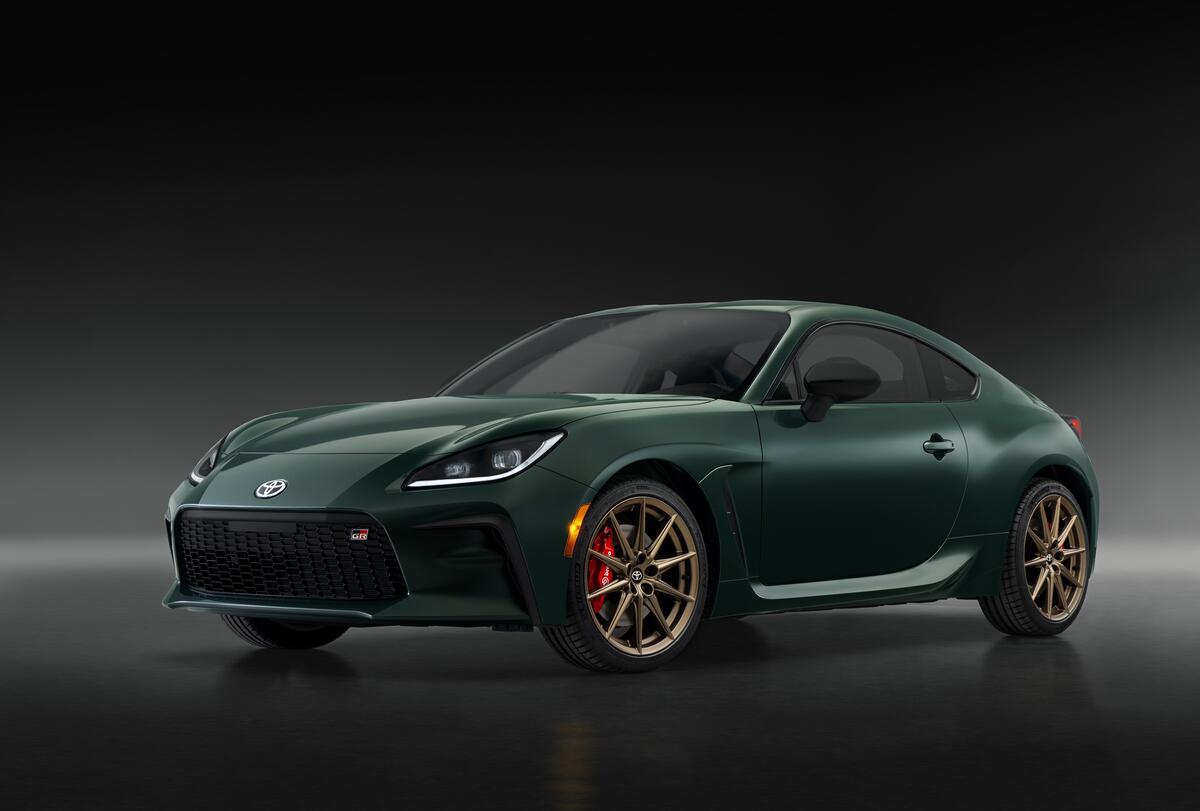
Toyota GR86
"Sometimes you even see like, oh, you're looking up the, you know, the BRZ and it's saying what happened with the GR86 and it's like, it's the same car."
The Toyota GR86 is a sports coupe closely related to the Subaru BRZ, and the hosts mention it to explain how crash-test reporting can map results across the pair. In this segment, they’re discussing how the same platform can lead to results being associated with different model names.
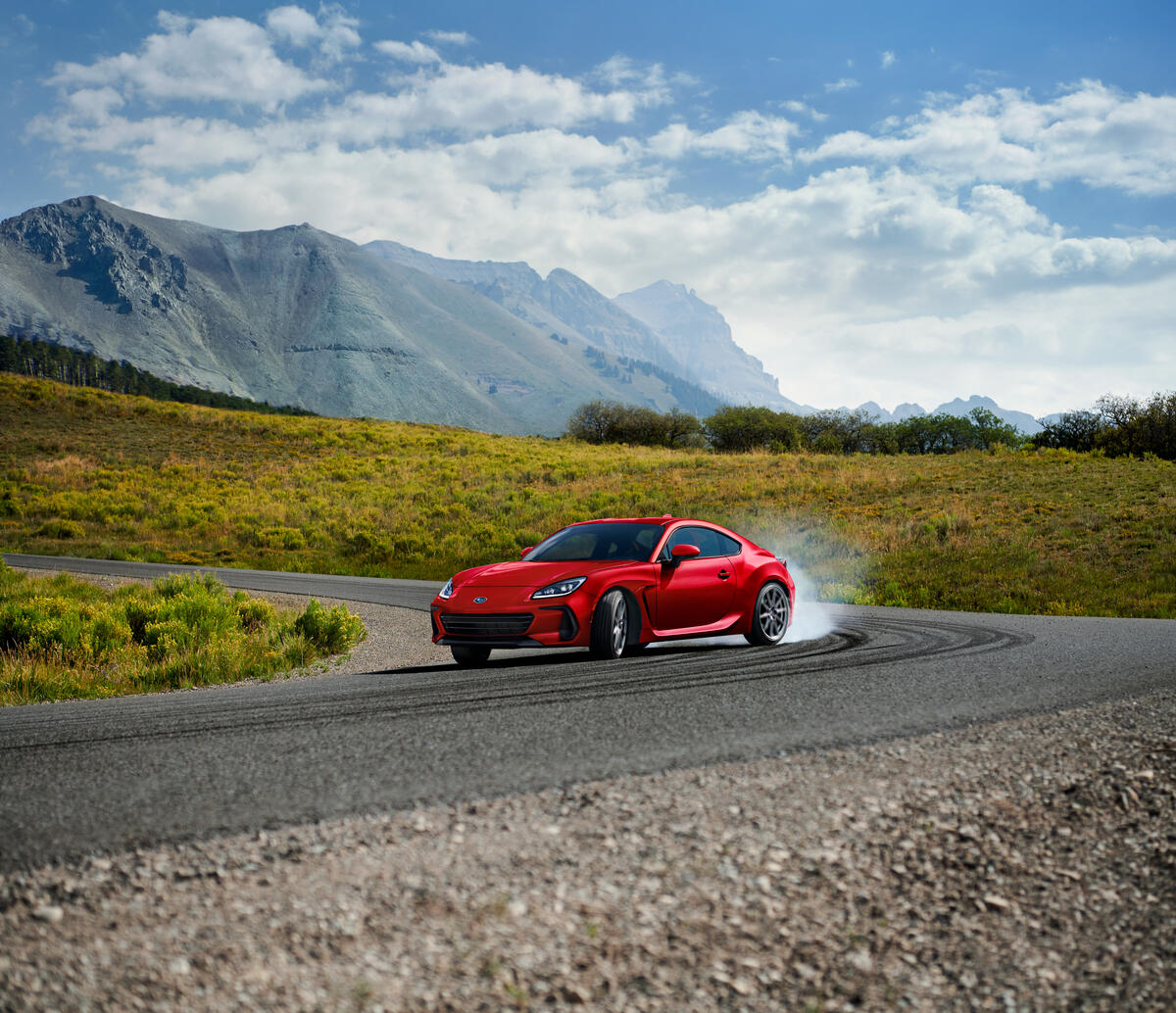
Subaru BRZ
"Sometimes you even see like, oh, you're looking up the, you know, the BRZ and it's saying what happened with the GR86 and it's like, it's the same car."
The Subaru BRZ is a sports coupe that the hosts mention as an example of how IIHS testing can be confusing across similar cars. They’re pointing out that the BRZ’s test results may reference a different but closely related model.
automaker does that
"Mazda submitted it and when an automaker does that, they don't give the IIHS the vehicle."
This refers to the process where an automaker submits a vehicle for IIHS testing. The hosts explain that even when a car is submitted, IIHS may not receive the vehicle itself; instead, IIHS may purchase a comparable car or handle it via a payment mechanism.

Chevrolet Bel Air
"One of them is I think a 59 Bel Air, [2244.0s] which they advertise as like a very common mass market vehicle in 1959."
A 1959 Chevrolet Bel Air is an old classic car from the late 1950s. The point of mentioning it is to show how much safer cars are today compared to cars from that era.
The 1959 Chevrolet Bel Air is a classic full-size American car from the late 1950s. It’s being used here as a visual comparison point to show how crash safety has evolved from older designs to modern standards.
crash safety in vehicles has evolved
"It would easily fill. [2257.7s] This is a great testament to like how crash safety in vehicles has evolved,"
They’re talking about how cars have gotten safer in crashes over the years. Modern cars are built to protect passengers better than older cars were.
This refers to the broad improvements in vehicle design and testing outcomes over time—things like stronger structures, better occupant protection, and more effective crash test performance. The episode uses the lobby display of old and damaged cars to make that progress feel tangible.

Chevrolet Malibu
"And then they also have a 2009 Chevy Malibu, I believe. [2281.7s] The idea here was that these were two cars, [2284.2s] both mass market, consumer, family sedans, 50 years apart."
A 2009 Chevrolet Malibu is a regular, everyday family car. In this crash-test story, the front gets badly damaged, but the part where the driver sits (the cabin) stays more intact than you might expect.
The Chevrolet Malibu is a mainstream family sedan, and the 2009 model is being used here as a modern baseline in a crash-test comparison. The host notes that even with heavy front-end damage, the cabin area around the driver can remain largely protected.
jaws of life
"[2348.6s] getting them out looks like it's going to be like a multi-person, multi-hour affair. [2355.4s] The jaws of life. [2355.9s] Yeah, exactly."
The “jaws of life” are heavy-duty tools firefighters use to rescue people from car crashes. They can cut and pull apart the crushed metal so rescuers can get to someone trapped inside.
“Jaws of life” is the common name for hydraulic rescue tools used by firefighters and paramedics to cut through wrecked cars. They’re designed to spread, cut, and remove metal so trapped occupants can be reached quickly.
crumple zones
"[2361.5s] the structure of the vehicles has evolved over times, [2364.7s] like have different crumple zones and just be more impact-resistant [2368.7s] and more protective of its occupants."
Crumple zones are parts of a car that are built to fold and crush in a crash. That controlled damage helps protect the people inside by slowing down the impact forces.
Crumple zones are engineered sections of a vehicle designed to deform in a crash. By absorbing energy through controlled crushing, they help reduce the forces transmitted to the occupants.

Chevrolet Blazer
"[2377.8s] And like some of them are, they're not 50 years apart. [2380.6s] You can see like generation to generation how the Chevy Blazer improved. [2385.5s] Like your Blazer from high school, death trap."
The Chevrolet Blazer is an SUV model that’s existed for many years. In this discussion, it’s used to show how newer SUVs are built to protect people better in crashes than older ones.
The Chevrolet Blazer is a midsize SUV that’s been through multiple generations, and this segment uses it as an example of how SUV crash structures have improved over time. The point is that newer Blazers tend to have better crash energy management (like improved crumple zones and occupant protection).
totaled
"[2399.9s] So I was okay. [2401.5s] Yeah, their car exploded. [2403.1s] Their car, I was probably totaled."
“Totaled” means the car is considered a write-off after the crash. The damage is so expensive to fix that insurance decides it’s not worth repairing.
“Totaled” means an insurance company has determined the vehicle is too badly damaged to be economically repaired. In practice, this usually happens when repair costs approach or exceed the car’s value after the crash.
driver assistance safety system
"Do either of you have a favorite driver assistance safety system? [2585.8s] Yeah. [2586.5s] What is it?"
Driver assistance safety systems are features that help you drive more safely, like warning you or helping with speed and spacing. In this discussion, they’re talking about whether some of these features count as “safety” versus just convenience.
A driver assistance safety system is technology that helps the driver avoid or reduce crashes, often by monitoring the road and vehicle behavior. The segment frames it as a category that includes features like adaptive cruise control and camera-based aids.
adaptive cruise control
"Does adaptive cruise control count? [2590.8s] If you want to do it. [2591.6s] I would argue that's almost a convenience feature."
Adaptive cruise control is like regular cruise control, but it can slow down or speed up to keep a safe gap from the car in front. The host is debating whether that’s mainly safety or mostly convenience.
Adaptive cruise control is a driver assistance feature that automatically adjusts the car’s speed to maintain a set distance from the vehicle ahead. The host questions whether it should be considered a “safety system” or more of a convenience feature.
backup cameras
"I've really grown to, dare I say, be reliant on the, what are they called in the backup cameras [2606.1s] lines move based on the steering angle?"
Backup cameras show what’s behind the car when you’re reversing. They often include helpful lines on the screen so you can judge where the car will go as you turn the steering wheel.
Backup cameras are rear-view camera systems used when reversing to help drivers see obstacles that are hard to view through mirrors. The segment specifically mentions the on-screen guidance lines that change with steering angle.
automatic emergency braking
"My favorite is automatic emergency braking, which I've only had in my- ... I don't love automatic emergency braking all the time because in some cars it's like really violent and responding to things that don't need to be braked for."
Automatic emergency braking is a safety feature that watches for danger ahead. If it thinks you might hit something and you don’t brake soon enough, it can brake for you to help prevent or lessen the crash.
Automatic emergency braking (AEB) is a driver-assistance system that detects a potential crash and automatically applies the brakes to reduce speed or avoid impact. It uses sensors (typically radar and/or cameras) to judge distance and closing speed, then triggers braking if the system thinks you won’t react in time.
rear cross traffic alert
"But I really like rear cross traffic alert. ... That's like backing out of a spot. Yeah, when it knows that someone's coming and maybe they're not in your field of vision yet."
Rear cross traffic alert is a warning system for backing out of a parking spot. If a car is coming from the side where you can’t easily see it, the car alerts you so you can stop or wait.
Rear cross traffic alert (RCTA) warns you when vehicles are approaching from the sides while you’re reversing or backing out. It’s meant to catch cars that aren’t in your direct line of sight, especially when turning your head isn’t enough to see them.
blind spot information systems
"And I like when other people have blind spot information systems. It's helpful. You can see me."
Blind spot information systems (often called BLIS) monitor areas alongside the vehicle that are hard to see in mirrors. When a vehicle is detected in your blind spot, the system alerts you—commonly with a light or indicator—so you’re less likely to change lanes into another car.
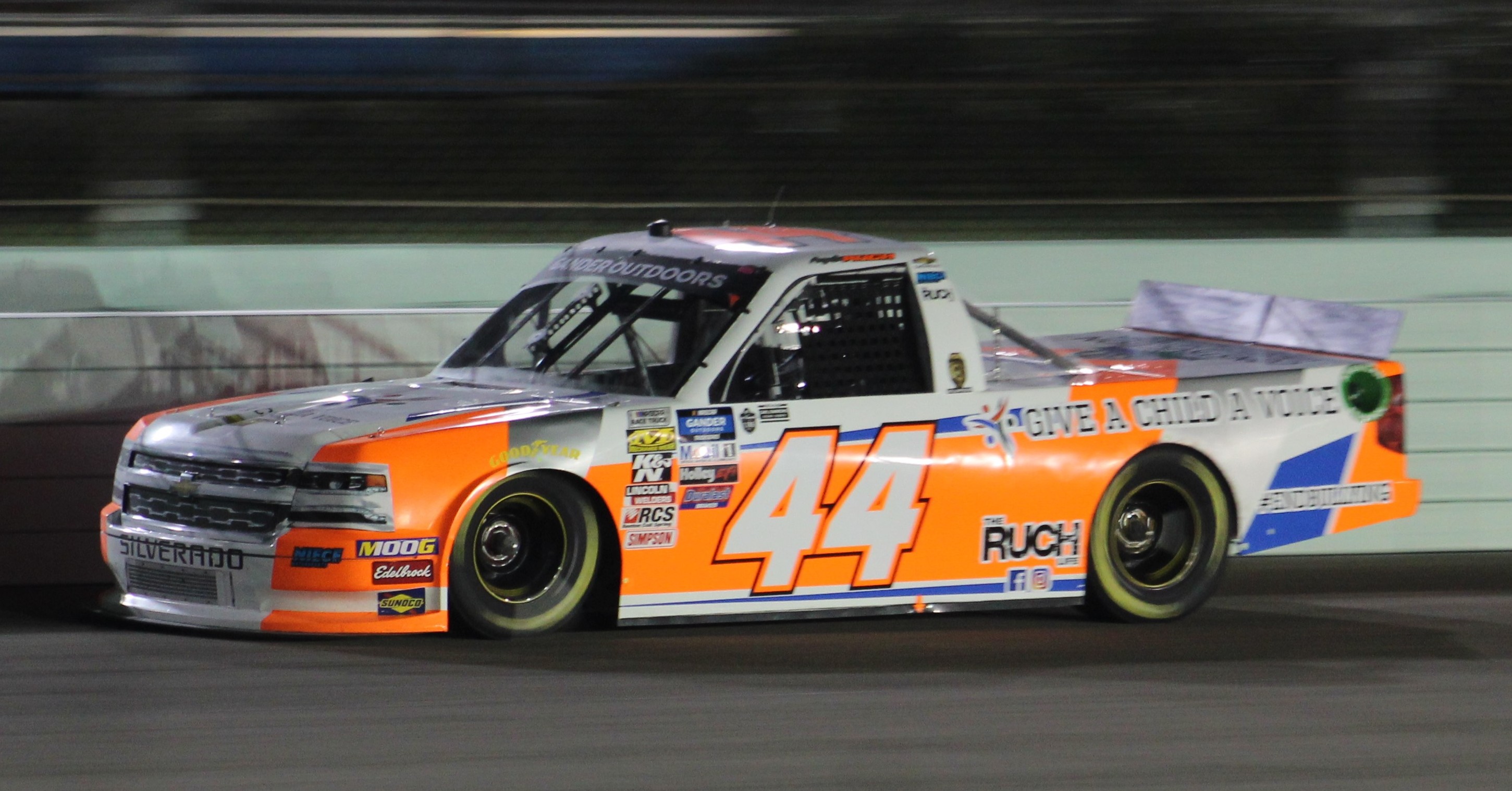
Chevrolet Silverado
"I just had that happen in the Silverado EVO is making a three point turn... and it just slammed on the brakes really violently"
The Silverado EV is an electric version of Chevrolet’s big pickup truck. In this story, the host says the truck’s safety braking system triggered while they were backing up, which surprised them.
The Chevrolet Silverado EV is a full-size electric pickup, and the host is describing how its driver-assistance systems behaved during low-speed backing. They specifically connect the truck’s size and maneuvering with an unexpected activation of rear automatic emergency braking.
three point turn
"It was quite annoying. I just had that happen in the Silverado EVO is making a three point turn in like a very normal place..."
A three-point turn is a low-speed maneuver used to reverse direction in a tight space by turning the vehicle, reversing, and turning again to complete the U-turn. The host mentions it because the backing/turning situation is when the braking system unexpectedly activates.
giant battery
"And like it worked as a road trip vehicle because it probably has a giant battery. It's a huge battery and it lost like one percentage point in freezing temperatures overnight too."
In an electric truck, the battery is what stores the energy for driving. The host is saying the battery stayed pretty efficient even in freezing weather, losing only a tiny amount overnight.
In an EV, battery size (capacity) strongly affects range and how the vehicle performs in different conditions. The host notes that the Silverado EV has a very large battery and that it only lost about one percentage point overnight in freezing temperatures.
public charging
"So that was great. I'm not super looking forward to public charging it because it'll take a little bit just as a"
Public charging means charging your EV at stations you don’t own—like at shopping centers or along highways. The host is saying they’re not looking forward to how long it might take.
Public charging refers to using charging stations outside the home, typically for EVs on trips or when home charging isn’t available. The host is concerned it will take a while, implying charging time and convenience are part of their real-world ownership experience.

Chevrolet Silverado EV
"...000 pounds. The only thing I don't like about the Silverado EV, which was like a huge surprise for me, because I..."
The Chevrolet Silverado EV is a pickup truck that runs on electricity instead of gasoline. Because it’s an EV truck, it can be heavier than a typical gas truck, which affects how it feels and how you plan charging. The podcast mentions it because people often learn new things about EV truck ownership after seeing the real details.
The Chevrolet Silverado EV is an electric pickup truck, designed to bring battery-electric power to the full-size truck segment. In the podcast context, it’s being discussed in terms of weight and real-world expectations, including how it fits into charging and ownership. That’s why it comes up when talking about what surprises people—both good and bad—about living with an EV truck.

GMC Sierra EV
"They're not on the GMC Sierra EV. That's form over functions, style over substance."
The GMC Sierra EV is an electric version of the Sierra pickup. They’re talking about how the truck’s shape and rear-side design can make it harder or easier to use the bed for loading stuff.
The GMC Sierra EV is an electric pickup truck from GMC. In this segment, the hosts are discussing how its rear-side design elements affect real-world usability—specifically visibility and loading into the bed.

Subaru out back
"I don't have a truck this week. I have a Subaru out back. Okay."
The Subaru Outback is a popular wagon-style crossover that’s meant for everyday driving and outdoor trips. They’re debating whether the “Wilderness” version looks better or worse than the standard one.
The Subaru Outback is a crossover wagon/SUV-style vehicle known for its rugged, outdoorsy styling and practical packaging. Here, the hosts are comparing the “wilderness” look versus the regular Outback appearance.
Wilderness
"And I got to tell you, I was like, coming around to how it looked in the wilderness... Have you, have you decided that about the model overall or you prefer the wilderness?"
“Wilderness” is a Subaru trim/appearance package for the Outback that’s designed to look more rugged and outdoors-oriented. In this segment, they’re comparing how the Wilderness styling looks versus the regular Outback.
Star-Tex
"Probably Star-Tex. Which is supposed to be like a little more durable."
Star-Tex is a man-made fabric that Subaru uses for seats. They’re saying it’s supposed to last longer and wear better than real leather.
Star-Tex is a brand name for Subaru’s synthetic upholstery material used in some vehicles. It’s marketed as being more durable than real leather, aiming to resist wear and hold up better to everyday use.

2021 Forester
"Well, I do not have a car this week because I didn't take one because I went on a trip to Quebec. Drove, drove a thousand miles in my 2021 Forester up to Quebec. Almost ready for an oil change."
The 2021 Subaru Forester is a specific year of the Forester SUV. The host is describing how they used it on a long trip and how soon it’ll need an oil change.
The 2021 Subaru Forester is a specific model year of Subaru’s practical crossover, and it’s notable here because the host is reporting real-world mileage and ownership timing. They mention driving about a thousand miles and being almost ready for an oil change, which ties the car’s usage to maintenance intervals.
oil change
"Drove, drove a thousand miles in my 2021 Forester up to Quebec. Almost ready for an oil change."
An oil change is when you replace the engine oil. It helps keep the engine lubricated, and the host is saying they’re close to needing that service.
An oil change is the scheduled replacement of engine oil to remove contaminants and restore lubrication. The host’s “almost ready for an oil change” comment is about how quickly the 2021 Forester’s oil is approaching its service interval after their long trip.
Request an Explanation
Heard something you'd like explained? We'll add it to this episode.
Sign in to request explanations for terms you heard.
Want to learn more?
Browse our glossary for plain-English explanations of automotive terms, jargon, and concepts.
Help improve this episode
See something that's not quite right? Our annotations are AI-generated and can sometimes miss the mark. Click the flag icon on any annotation to suggest a correction.