Building our BEST Frankenstein Car #59
About this episode
Hosts kick off with definitions and real-world testing, contrasting “overlanding” with obstacle-focused “off-roading,” then recounting a southern Utah Frontier Pro-4X trip with Nismo off-road gear and mode-driven throttle behavior. The conversation pivots to crash-testing insights from IIHS—sensors, retesting, and a Mazda CX-5 hit at 40 mph. The rest of the show turns into a “Frankenstein” draft: a five-category framework and a snake-draft game for mixing donor parts, including handling-first chassis picks, infotainment preferences, and comfort/tech requirements.
We gathered around the table, all in PERSON mind you, to build our perfect car–a chassis from this car, an infotainment screen from that car, an interior from over there–our ideal Frankenstein vehicle. Does the resulting car make sense? Maybe??
What we want to know is who did the best job, and why was it Elliot?
overlanding
"the way I like to think about is that like off-roading you go out in your car you go find something to tackle you drive up it you know it's very exciting but then you can just go home go to bed overlanding is you do all that stuff and then you might sleep in a tent on top of your truck"
Overlanding is like going on an off-road road trip that lasts days. Instead of just driving to a tough trail and heading home, you plan the trip and often camp somewhere along the way.
Overlanding is a style of off-road travel where you plan a multi-day route and live out of the vehicle, often camping along the way. It’s broader than “off-roading” because the goal is the journey and self-sufficiency, not just tackling a specific obstacle.
off-roading
"the way I like to think about is that like off-roading you go out in your car you go find something to tackle you drive up it you know it's very exciting but then you can just go home go to bed overlanding is you do all that stuff"
Off-roading means taking your car off normal roads onto rough ground. People do it to handle obstacles like dirt, rocks, or steep trails.
Off-roading is driving a vehicle on unpaved or rough terrain to tackle obstacles like steep grades, ruts, rocks, or mud. It’s usually more focused on the challenge of the trail than on multi-day camping and logistics.
Nismo
"we actually kind of lucked out we got to drive when they had a bunch of Nismo aftermarket off-roading stuff on"
Nismo is Nissan’s performance brand. In this segment, they’re saying the truck had Nismo off-road upgrades.
Nismo is Nissan’s performance and motorsport brand, and it’s also used for enthusiast-focused parts and tuning. Here, it’s referenced as the source of aftermarket off-road equipment fitted to the Frontier test truck.
beadlock wheels
"so I'd like the beadlock BF good read beadlock wheels BF good rich tires and"
Beadlock wheels are special rims that clamp the tire to the wheel. That lets you air down the tires for better grip off-road without the tire popping off the rim.
Beadlock wheels use a mechanical clamp to hold the tire’s bead to the rim, allowing you to run much lower tire pressures without the tire unseating. That improves traction and ride compliance on rocks, sand, and other loose terrain.
BF good read
"so I'd like the beadlock BF good read beadlock wheels BF good rich tires and"
BFGoodrich makes tires, and they’re especially common on off-road builds. Here, they’re the tire brand used on the truck for this desert/off-road trip.
BFGoodrich (spoken here as “BF good read”) is a tire brand known for off-road and all-terrain tires. In this segment, it’s mentioned as the tire maker paired with the beadlock wheels for the Frontier Pro-4X test setup.

Nissan Frontier Pro-4X
"we obviously test like we test a Nissan pro 4x here in New England but to get it out into that environment it really does kind of open your eyes to the true capability of the vehicle"
The Nissan Frontier Pro-4X is a version of the Frontier meant for off-road driving. They’re saying that when they take it into real mixed terrain, you can feel how capable it is.
The Nissan Frontier Pro-4X is a Frontier trim tuned for off-road use, and the hosts use it as their baseline for “true capability.” They emphasize that taking it into mixed terrain shows what the truck can do beyond a normal test setting.
naturally aspirated v6
"what's great about the frontier old school v6 naturally aspirated and you see the people in the comments being like that's why I bought it"
A naturally aspirated V6 is a V6 engine that doesn’t use a turbo. The episode is basically saying it gives the truck a more traditional driving feel than newer turbo setups.
A naturally aspirated V6 is an engine that makes power without a turbocharger, relying on atmospheric pressure and engine design for airflow. In this segment, the hosts treat it as part of the Frontier’s “old school” feel compared with modern small turbo engines.
mixed terrain
"until we had the opportunity to really drive it in true mixed terrain setting is that the frontier feels like as driving it feels like an old-school truck"
Mixed terrain refers to driving across multiple surface types—like dirt, sand, rocks, and uneven ground—rather than a single consistent track. The hosts argue that the Frontier’s behavior and capability are more obvious when you experience it in a mixed-terrain setting.
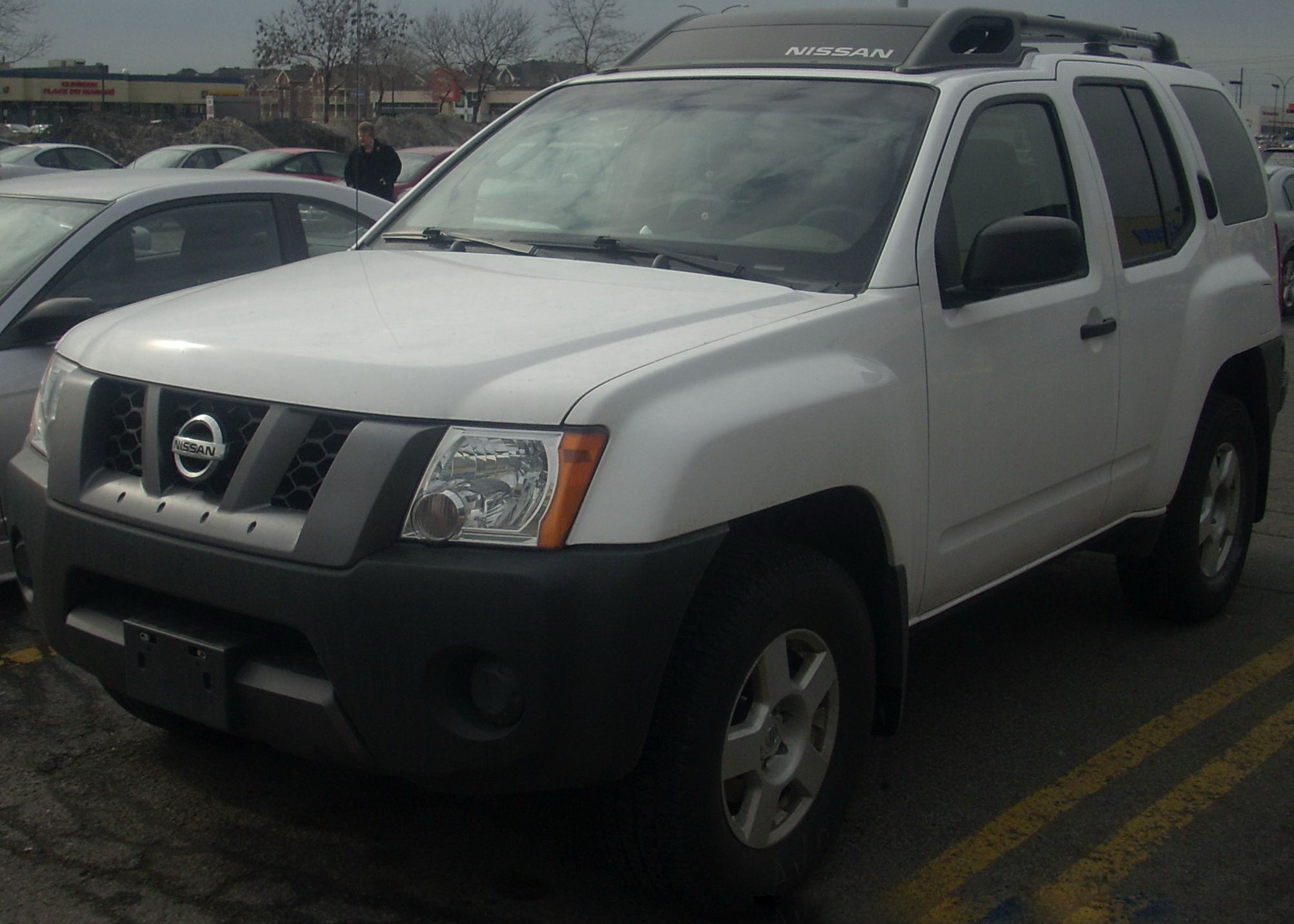
Nissan Xterra Pro-4X
"there was a 2015 XSTERRA pro 4x with us and we got to an area where that you know they're on the radio and they're like you're definitely gonna want to put it in rock mode for this and we did"
The Nissan Xterra Pro-4X is a tougher, off-road version of the Xterra. They’re using it to compare how the truck changes behavior when you switch into rock or sand modes.
The Nissan Xterra Pro-4X is an off-road-focused SUV trim known for rugged capability and selectable driving modes. Here, it’s used as a comparison vehicle to show how different trucks manage throttle response in rock and sand conditions.
rock mode
"they're on the radio and they're like you're definitely gonna want to put it in rock mode for this and we did and like you can actually feel when you're on rock or in sand you can feel that the different throttle mapping"
Rock mode is a setting that helps the truck crawl over rough rocks more smoothly. It changes how the gas pedal responds so you don’t get too much power at the wrong time.
“Rock mode” is an off-road driving setting that changes how the truck responds to the accelerator for low-speed traction on uneven surfaces. The hosts say you can feel different throttle mapping when you’re in rock mode versus sand.
throttle mapping
"you can actually feel when you're on rock or in sand you can feel that the different throttle mapping"
Throttle mapping is how the truck decides how much power to give you when you press the gas. Different off-road modes can change that response, which is why it feels different in rock versus sand.
Throttle mapping is the calibration that determines how the engine and drivetrain translate your accelerator pedal input into actual torque delivery. In this segment, the hosts use it to explain why rock and sand modes feel different—because the truck meters power differently.
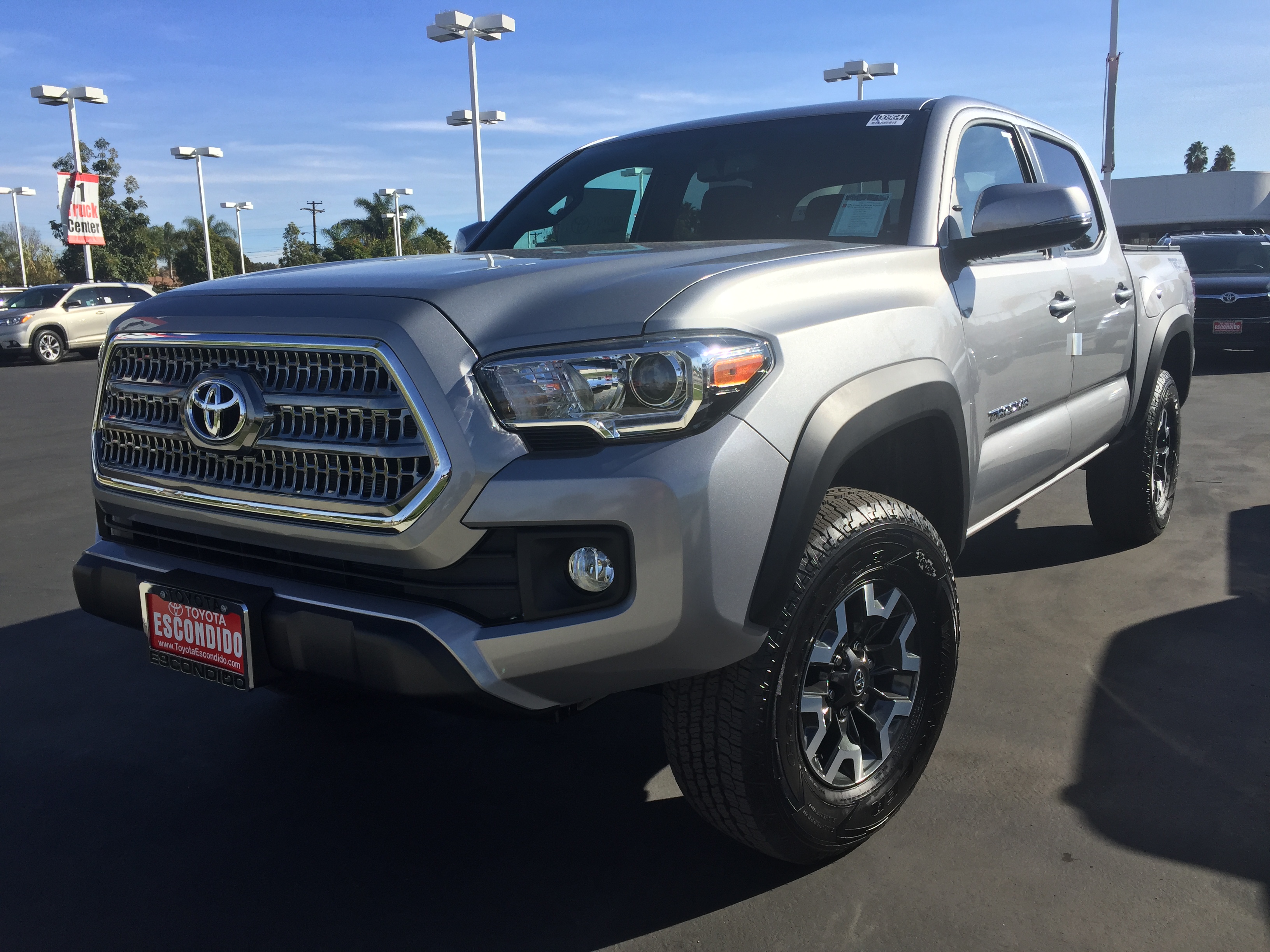
Toyota Tacoma TRD Pro
"versus the Tacoma TRD pro I want to say it was a 25 and in grants of the TRD pro has a bit more advanced kit"
The Toyota Tacoma TRD Pro is a Tacoma version that’s meant for off-roading. In this part, they compare it to another truck to talk about which one includes more off-road features and costs more.
The Toyota Tacoma TRD Pro is a mid-size truck trim that’s factory-focused on off-road capability, typically bundling suspension and other trail-ready components. The hosts use it as the benchmark in a price-and-equipment comparison versus the Nissan Frontier Pro 4X.
IIHS crash testing facility
"down to Virginia with Mazda to yeah the IIHS crash testing facility and we got to see them slam a Mazda CX5"
IIHS is a safety organization that tests cars in controlled crashes. Their facility is where they run repeatable tests and collect data to judge how well cars protect people.
The IIHS (Insurance Institute for Highway Safety) crash testing facility is where vehicles are evaluated using standardized crash tests. The hosts describe touring the facility and seeing how impact data is captured for crash-test analysis.

Mazda Cx5
"we got to see them slam a Mazda CX5 at 40 miles an hour into a concrete barrier"
The Mazda CX-5 is a small SUV. They’re using it in a crash test to show what happens when the car hits a barrier at a set speed.
The Mazda CX-5 is a compact crossover SUV, and it’s used here as the test vehicle in an IIHS crash test. The segment highlights how the crash is staged at a specific speed and into a barrier to evaluate what happens during impact.
concrete barrier
"slam a Mazda CX5 at 40 miles an hour into a concrete barrier it was awesome it lasts the point of impact"
In crash tests, a concrete barrier is a solid wall the car hits. It’s used so the test is consistent and helps show how the car’s safety systems handle the impact.
A concrete barrier is a rigid impact target used in crash testing to create a consistent, repeatable collision. Because it doesn’t deform like a vehicle might, it helps isolate how the car’s structure and restraints perform at the point of impact.
crash test analysis
"and with their sensors to do the crash test analysis is point two seconds so it's like"
Crash test analysis is how safety testers study what happened during the crash. They use sensors and video to understand how the car’s safety systems performed.
Crash test analysis is the process of interpreting the data recorded during a crash, including how the vehicle structure deforms and how occupant protection systems respond. The hosts mention sensors and camera capture, which feed into this analysis.

Toyota Land Cruiser
"they'll like show you okay they just had like the Toyota Land Cruiser and it didn't they've modified"
The Toyota Land Cruiser is a big, tough SUV. They mention it because IIHS has tested it in crash videos, showing how results can change with updates.
The Toyota Land Cruiser is a full-size SUV known for durability and off-road capability. Here it’s mentioned as an example of a vehicle IIHS has tested, including discussion of how the test results can change after updates.
Frankenstein Car
"we're creating a car that doesn't exist right ... this is what we want you guys to be building the the five categories ... it's supposed to look like the Frankenstein monster at the end a bunch of different pieces that"
A “Frankenstein car” is a custom car made from a mix of parts—often from different cars. The goal is to build something totally unique, even if it’s not a factory model.
A “Frankenstein car” is a custom build that combines parts from different vehicles or sources to create something unique. In this episode, they’re using the idea as a framework for designing a one-off car that doesn’t exist in production form.
suspension
"round one chassis so think like chassis suspension how the car handles what it's what it's capable of"
Suspension is what connects the wheels to the car and helps absorb bumps. It also affects how stable the car feels when turning and braking.
Suspension is the system of springs, dampers, and linkages that connects the wheels to the chassis. It controls ride quality and—more importantly for enthusiasts—how the car responds to cornering forces and road irregularities.
chassis
"round one chassis so think like chassis suspension how the car handles what it's what it's capable of"
The chassis is the car’s main structure—the “frame” that everything mounts to. It affects how the car handles because it influences how the suspension is positioned and how stiff the car feels.
Chassis refers to the car’s structural foundation and how it’s laid out to support the suspension and control the car’s behavior. It strongly influences handling because it determines rigidity, mounting points, and the geometry the suspension uses.
powertrain
"round two powertrain I definitely lean more heavily into just picking the engine here but extra extra points if you have a transmission of choice or a drive train of choice"
Powertrain is the set of parts that turn engine power into motion. It usually includes the engine and the gearbox, plus the parts that send power to the wheels.
Powertrain is the car’s drivetrain system—how engine power gets to the wheels. It typically includes the engine, transmission, and the components that transfer torque to the driven wheels.
transmission
"extra extra points if you have a transmission of choice or a drive train of choice I just picked and but primarily we're looking at engine"
A transmission is the gearbox that helps the engine deliver power efficiently. It changes gears so the car can accelerate smoothly and cruise without the engine screaming.
A transmission is the gearbox that changes engine speed and torque to match driving conditions. Choosing a transmission affects acceleration feel, drivability, and how the engine operates across the rev range.
drive train
"extra extra points if you have a transmission of choice or a drive train of choice I just picked and but primarily we're looking at engine"
The drivetrain is everything that sends power from the engine to the wheels. It also affects which wheels get power—front, rear, or all of them.
Drivetrain (spoken here as “drive train”) is the system that delivers power from the engine to the wheels. It includes components like the driveshaft and differential, and it determines whether the car is front-, rear-, or all-wheel drive.
ergonomics
"interior so this is like are you implying I don't know much ... we're talking about like seats upholstery ergonomics"
Ergonomics in a car means the layout is designed around how people sit and move. It’s about making the seat and controls comfortable and easy to use for long drives.
Ergonomics is the study of designing controls and seating so they fit the human body and reduce fatigue. In car design, it affects how comfortable and intuitive the driver experience is—especially reach, visibility, and seat positioning.
touchscreen
"round four is tech so if so the interior is kind of like more about like what is touching you is like what you're interfacing with in terms of you know the touchscreen or the driver display"
A touchscreen is the screen you interact with by tapping or swiping. In cars, it often controls things like music, navigation, and some vehicle settings.
A touchscreen is a user interface where functions are controlled by tapping or swiping on a display. In modern cars, it often handles infotainment and vehicle settings, so it becomes part of the “tech” and usability experience.
driver display
"in terms of you know the touchscreen or the driver display maybe the stereo if that matters to you"
The driver display is the screen behind or in front of the steering wheel that shows important driving info. It helps you see speed and warnings without looking away for long.
The driver display is the instrument cluster screen that shows key driving information like speed, engine status, navigation prompts, and warnings. It’s important because it affects how quickly the driver can read critical data.
design language
"round five definitely the most like convoluted of all of them is design language so we're kind of looking at a brand level here rather than a specific car"
Design language is the “style rules” that make a car look like it belongs to a certain brand. It’s the consistent shapes and design details you notice across models.
Design language is a set of visual cues—shapes, proportions, and styling details—that create a recognizable look for a brand or model line. It’s used to make a car feel cohesive even when the underlying build is unconventional.

4Runner Forerunner
"...n't want it to look like a 9-11 if I'm drafting a forerunner chasser but that's the beauty of it but I guess t..."
The Toyota 4Runner is an SUV built for rough roads and off-road driving. It’s known for a rugged design and a strong, durable setup. The podcast mentions it while talking about how it looks compared to another SUV.
The Toyota 4Runner is a body-on-frame SUV known for off-road toughness and long-distance capability. It’s often discussed for its rugged styling and trail-ready reputation. In the episode, it’s mentioned in relation to how it looks and how it compares visually to another vehicle.

Toyota GR 86
"I'm gonna go Toyota GR 86 sports car handling yeah [901.9s] no one else can have it we should say that that once something is claimed it's"
The Toyota GR 86 is a small, fun sports car that’s meant to feel connected to the road. People like it because it handles well and feels responsive when you drive it hard.
The Toyota GR 86 is a rear-wheel-drive sports coupe built around a lightweight, driver-focused chassis. It’s known for sharp steering feel and a “planted” stance, which is why it comes up when people talk about handling-first choices for a build.
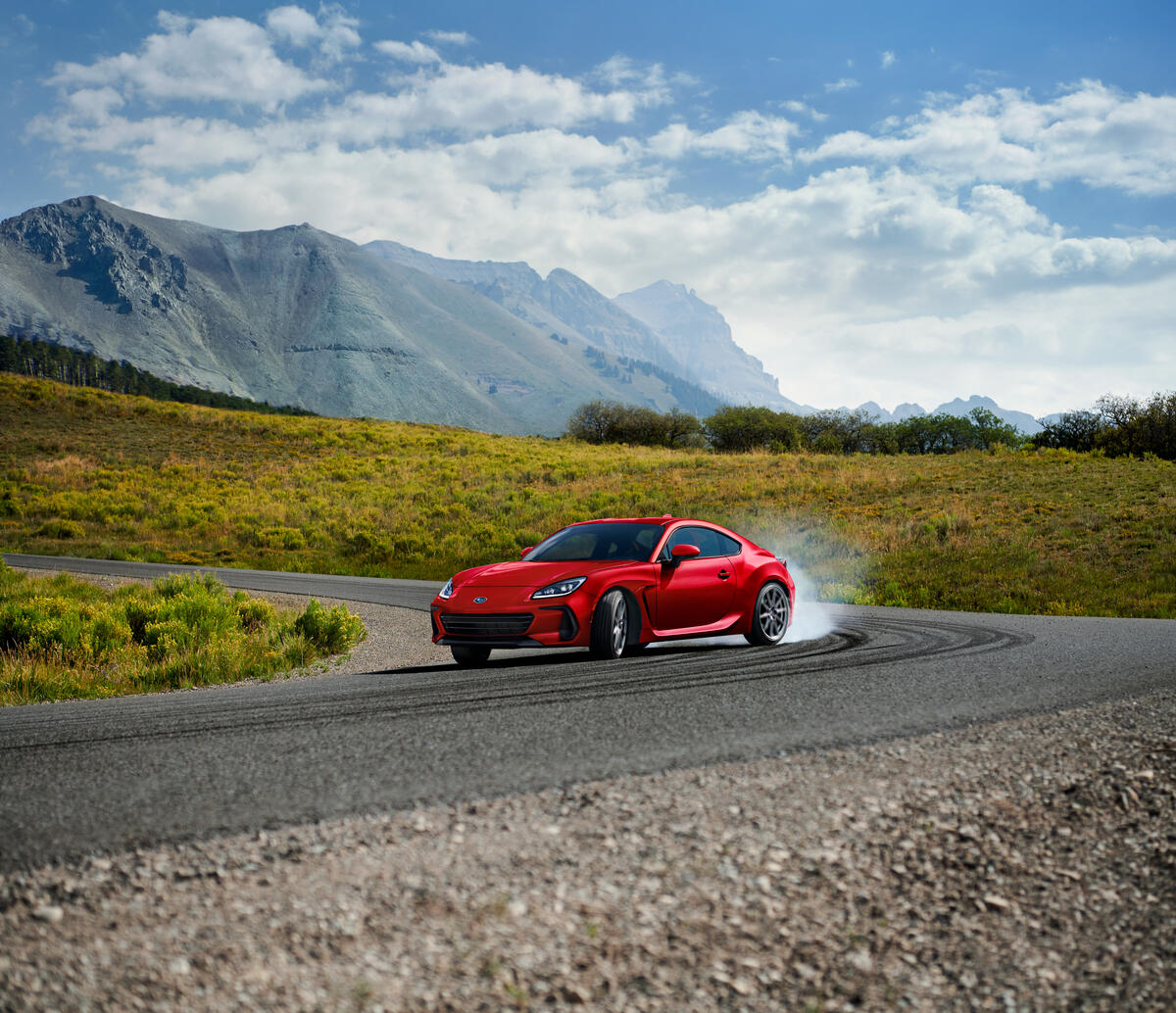
Subaru BRZ
"and I think that means super BRZ is off the board yeah yeah [911.6s] same chassis that might have been a loophole"
The Subaru BRZ is a small sports car designed to be fun to drive, with power going to the rear wheels. It’s closely related to the Toyota GR 86, so they often feel similar in how they handle.
The Subaru BRZ is a rear-wheel-drive sports coupe that shares its core chassis and platform philosophy with the Toyota GR 86. In this segment, it’s referenced as part of the same “chassis” family, which matters because it affects how the hosts decide what’s allowed in their Frankenstein-car rules.
super responsive
"really just thinking about handling and and like wanting something fun and and [994.5s] super responsive and like super planted and that's that was what came to mind"
“Responsive” means the car feels like it reacts quickly when you steer or press the gas. It’s the opposite of feeling delayed or vague.
“Responsive” in driving terms usually means the car reacts quickly and predictably to steering and throttle inputs. When paired with “planted,” it suggests a chassis that keeps the tires in good contact so the driver can feel confident and make precise corrections.
super planted
"super responsive and like super planted and that's that was what came to mind [1000.3s] when I was thinking about press cars I've driven yeah"
“Planted” means the car feels stable and stays stuck to the road instead of feeling loose or bouncy. It usually comes from how the suspension is set up.
“Planted” is enthusiast shorthand for a car that feels stable and doesn’t feel like it’s floating or rolling excessively. It typically points to suspension tuning and chassis stiffness that keep the car composed during cornering and quick transitions.

Lexus NX 350 F sport
"okay so I'm gonna take the Lexus NX 350 F sport [1039.0s] of the F sport handling the small crossover yeah this is a very strange ... [1102.5s] I just found it to be really it was it was pretty stiff and I found it was deeply [1109.3s] uncomfortable to drive I love it no but like it was really confident when I did [1114.0s] find some corners"
This is a Lexus crossover, and the “F Sport” version is meant to feel more sporty than the regular trim. The hosts are basically saying it feels firm and sure-footed when turning.
The Lexus NX 350 F Sport is a compact luxury crossover from Lexus, and the “F Sport” trim is tuned to feel sportier than the base models. In this segment, the hosts talk about how the NX platform feels “stiff” and how it stays confident in corners, which is the key enthusiast takeaway for why they’re choosing it.
platform
"himself room for this like true monster again I was thinking platform I was [1059.4s] thinking of it as a platform so what I have is that the that platform also ... [1074.1s] none of you have anything to choose from now again in the categories platform was [1078.6s] the was the thing we should have so I chose a platform"
Here, “platform” means the car’s main underlying structure and engineering base. If two cars share a platform, they often feel more similar in driving and handling than you’d expect.
In this context, “platform” is the shared structural and engineering foundation (not just a marketing label) that multiple vehicles can be built on. The hosts frame it as the key variable for how the chassis can handle power and how the car feels in handling situations like hairpins.

Lexus TX
"the NX the TX you'll live a little here"
The Lexus TX is a bigger Lexus SUV with three rows. The hosts mention it because it shares the same basic platform idea as other Lexus/Toyota models, which can affect how it drives.
The Lexus TX is Lexus’s larger three-row crossover, and it’s mentioned as sharing the same TNGA platform underpinnings as the Lexus NX. This matters to the hosts because they’re treating the platform as the foundation that can handle “more power” and deliver a similar baseline driving character.
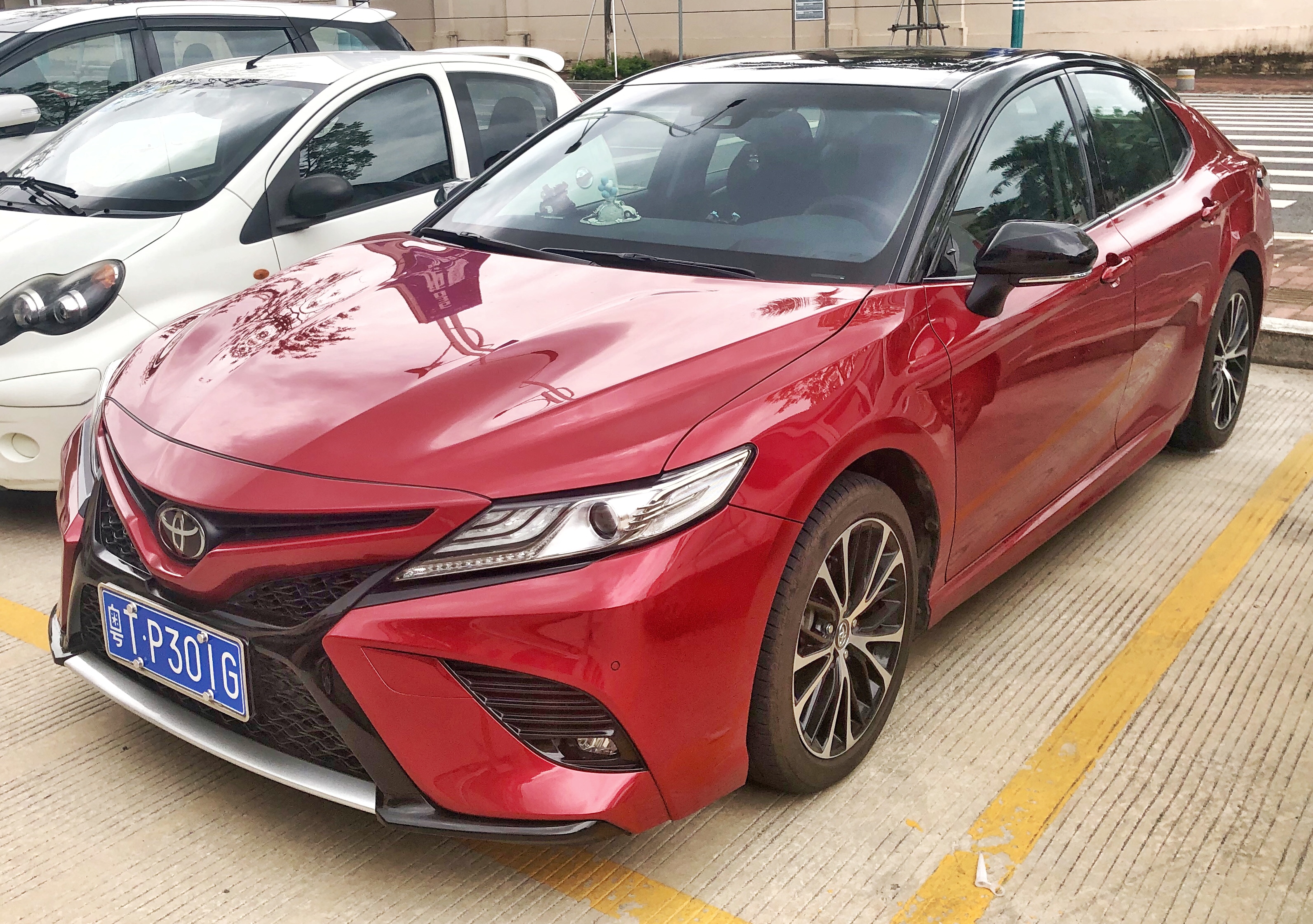
Toyota Camry
"so what I have is that the that platform also [1064.0s] underpins the Camry the Grand Highlander the NX the TX"
The Camry is a very common Toyota sedan. The hosts mention it because it shares the same basic car structure (“platform”) as other Toyotas, which can make them feel similar when driving.
The Toyota Camry is one of Toyota’s mainstream midsize sedans, and in this segment it’s mentioned as sharing the same underlying TNGA platform architecture. That’s relevant because the hosts are arguing that platform choice drives baseline stiffness and cornering confidence across multiple models.

Toyota Grand Highlander
"underpins the Camry the Grand Highlander the NX the TX"
The Grand Highlander is a bigger Toyota SUV meant for more passengers. The hosts bring it up because it uses the same basic platform concept as other models, which can affect handling feel.
The Toyota Grand Highlander is a larger three-row Highlander variant, and it’s cited here as sharing the same TNGA platform underpinnings as the Lexus NX. The point is that platform sharing can influence how stiff the chassis feels and how confident the car is in corners.

Ford Bronco
"...ng a last second confidence loss Ford Raptor yeah Bronco or Bronco Raptor okay yeah okay and I'm in it you..."
The Ford Bronco is an SUV made for driving on rough roads and trails. It’s designed to handle off-road conditions better than a typical SUV. The episode mentions it while talking about different off-road choices.
The Ford Bronco is a rugged SUV built for off-road driving, with versions designed to tackle trails and rough terrain. It’s frequently discussed because it blends everyday comfort with serious capability. In the podcast, it’s mentioned alongside other Ford performance/off-road options.
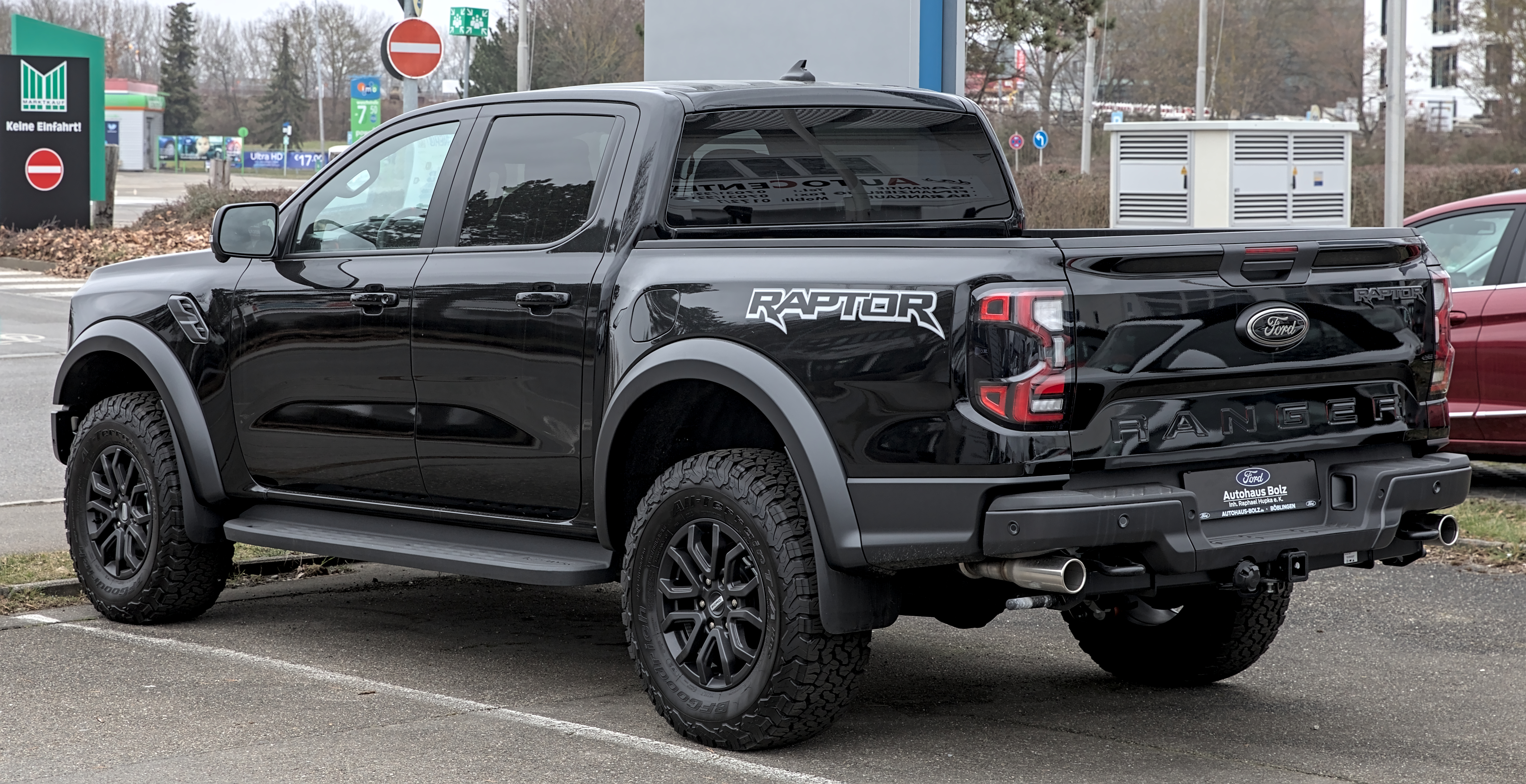
Ford Raptor
"right next on the list is Dave so I'm gonna go I'm [1142.3s] like you're doing a last second confidence loss Ford Raptor yeah Bronco or"
The Ford Raptor is a special version of the Ford pickup built for off-road driving. The hosts mention it as another option in their car-picking game.
The Ford Raptor is a high-performance off-road pickup line known for upgraded suspension and durability for rough terrain. It’s name-dropped here as a competing “last second” choice, implying a different kind of chassis capability than the Lexus crossover platform discussion.
big squishy springs and shocks
"I'm in it for like just big squishy springs and shocks you know squishiness but also adaptability right different modes you can use with it"
They’re talking about suspension that soaks up bumps. Softer, more flexible springs and shocks help the ride feel less harsh and more comfortable over rough roads.
“Squishy” springs and shocks refer to suspension tuning that allows more vertical movement and better absorption of bumps. More travel and softer damping can make a vehicle feel more comfortable and forgiving, while still being controllable in different driving modes.
different modes
"know squishiness but also adaptability right different modes you can use with it we're gonna we're gonna Frankenstein that yeah"
They mean the truck/SUV has settings you can switch between. Those modes change how it drives—like how it responds and how it handles bumps—depending on the road.
“Different modes” usually means selectable driving settings that change how the vehicle behaves—commonly throttle response, steering feel, traction control, and suspension/damping characteristics. On off-road vehicles, these modes help tailor the ride and traction to conditions like pavement vs. trails.

Ford Ranger
"... it was like do it the truck or the Bronco or the Ranger we'll go Bronco okay I love that pick I actually ..."
The Ford Ranger is a midsize pickup truck. It’s meant to be useful for work or hauling, but not as large as some bigger trucks. The podcast mentions it as a possible choice in a lineup of trucks and SUVs.
The Ford Ranger is a midsize pickup truck that’s typically aimed at buyers who want truck practicality without the size of a full-size pickup. It’s often part of conversations about which truck best fits off-road trips, towing needs, and daily driving. In this episode, it’s brought up as one of the options considered before choosing another vehicle.

Ford F-150 Raptor
"it was the Ford F-150 Raptor it's like well I could do this yeah this Avenue I could do something like this but it's been taken essentially I won't I won't take the F-150 Raptor if you've taken the Bronco Raptor"
The F-150 Raptor is a Ford pickup made for off-roading. It’s like the “Raptor” version of the F-150, and here they’re saying they considered it but decided to build with the Bronco Raptor instead.
The Ford F-150 Raptor is a performance off-road pickup built on the F-150 platform, known for its rugged suspension and high-speed desert-style capability. The host mentions it as an alternative “Raptor” base, but says they won’t use it because they’re choosing the Bronco Raptor instead.
long wheelbase
"pins the BMW 5 series because it is pretty pretty long wheelbase it's comfortable okay and it cruises on the highway like a dream"
Wheelbase is how far apart the front and rear wheels are. A longer wheelbase usually makes the car feel steadier and smoother, especially when you’re driving fast on the highway.
Wheelbase is the distance between the front and rear axles. A longer wheelbase generally helps stability and ride smoothness, especially at highway speeds, which is why the host associates it with comfort and cruising.

BMW 5 series
"I'm gonna pick whatever under pins the BMW 5 series because it is pretty pretty long wheelbase it's comfortable okay and it cruises on the highway like a dream"
The BMW 5 Series is a luxury car that’s meant to feel smooth and comfortable, especially on the highway. They’re choosing it because it’s relaxing to drive but can still be exciting.
The BMW 5 Series is a midsize luxury sedan known for a comfortable ride and strong highway manners, with options that can be very quick. In this segment, the host picks it as a “best of both worlds” choice: composed and comfortable for cruising, yet capable enough to still be fun.

BMW M5
"...dream and yet if you even you don't even need the M5 you get like a what is the 550m or M550 that thin..."
The BMW M5 is a very fast BMW sedan. It’s designed to be quicker and more performance-focused than a regular 5 Series. The episode mentions it while comparing what kinds of performance cars people talk about.
The BMW M5 is a high-performance version of the 5 Series, built for fast acceleration and confident highway driving. It’s a notable “super sedan” because it combines everyday practicality with serious performance engineering. The podcast references it when discussing performance-car expectations and related models.
line six
"so I'm gonna go with the GMC three-liter Duramax diesel wow line six and this is on your five series now I'm getting close to 30 miles per gallon on the highway"
“Line six” just means the engine has six cylinders lined up in a row. It’s a common layout that tends to run smoothly.
“Line six” means an inline-six engine layout, where all six cylinders are arranged in a single straight row. Inline-six engines are often praised for smoothness and balanced operation compared with some other cylinder layouts.
torque
"I'm getting close to 30 miles per gallon on the highway 495 pound feet of torque I can tow basically a house"
Torque is the engine’s pulling force. More torque usually means the car feels stronger when you accelerate or when you’re towing.
Torque is the twisting force an engine produces, and it strongly influences how easily a vehicle accelerates and how well it tows. The speaker quotes torque in pound-feet to emphasize the diesel’s strong pulling power.
RPM 1500 ish
"I'm still getting over 305 horsepower RPM 1500 ish before it hits that that peak performance"
RPM is how fast the engine spins. The point here is that the engine’s strong power shows up pretty early, around 1500 RPM.
RPM (revolutions per minute) is engine speed, and “1500-ish RPM” describes how quickly the engine reaches its peak/strong performance. Lower RPM peak torque generally makes a vehicle feel more responsive in everyday driving.

Porsche Taycan
"so I'm going with the Porsche Taycan okay you sound like a turbo GT powertrain so this is I had to look up the horsepower and it was over a 1000"
The Porsche Taycan is Porsche’s electric sports sedan. It’s built to be very fast, and this segment talks about how much power it can make and how far it can go on a charge.
The Porsche Taycan is Porsche’s all-electric performance sedan, known for rapid acceleration and high-output electric powertrains. In this segment, the host focuses on the Taycan GT/Turbo GT variants’ extreme power, short “push-to-pass” boost, and real-world range/efficiency tradeoffs.
push to pass button
"there's also a push to pass button for an extra 163 horsepower for 10 seconds I love that"
The “push to pass” button is a temporary boost mode. It gives you extra power for a short time so you can accelerate harder when you need to pass.
A “push to pass” button is a driver-activated power boost that temporarily increases output for passing or short bursts of acceleration. The speaker notes it can add extra horsepower for a limited time (10 seconds).
DC fast charge
"the whole point I love it and you can DC fast charge it too that fair point"
DC fast charging is the quick way to charge an electric car at a special station. It uses high power so you can add a lot of range in less time than a normal home charger.
DC fast charging is a way to recharge an electric vehicle using direct current at high power, so the battery can fill much faster than with standard AC charging. It’s especially relevant for EVs with larger battery packs and higher-voltage architectures because they can accept more power during the session.

Chevrolet Volt
"...the range of you know a potato okay it's that 800 volt yeah so we are we are back to me and in a similar..."
The Chevrolet Volt is a plug-in hybrid, which means it can run on electricity and also uses gas when needed. The podcast mentions its electrical system design, including a high-voltage setup. That’s relevant because it can affect how the car charges and how the power system works.
The Chevrolet Volt is a plug-in hybrid that’s known for using electricity for driving while also having a gasoline engine to extend range. The podcast references its “800 volt” architecture, which relates to the car’s electrical system design. That’s why it comes up in discussions about charging and modern EV/hybrid tech.
800 volt
"that 800 volt yeah so we are we are back to me and in a similar vein"
“800 volt” is how the electric car’s battery and electronics are set up electrically. Higher voltage can help the car charge faster and feel more powerful because it can move more energy efficiently.
An EV’s “800 volt” architecture refers to the electrical system voltage level used to power the drivetrain. Higher-voltage EVs can typically charge faster and deliver more power to the motors with lower current, which helps reduce losses and can improve performance and charging speed.

Rivian R1S
"have a car in mind for the platform a small ish compact crossover I'm put on the Rivian R1s quad engine powertrain"
The Rivian R1S is an electric SUV. In this episode, the host is using its electric drivetrain as the parts idea for their custom build—especially the version with motors driving all four wheels.
The Rivian R1S is an electric SUV known for its modular EV platform and, in this context, its quad-motor setup. Here the host is treating the Rivian R1S’s quad engine powertrain as the donor “platform” for a Frankenstein build, aiming to distribute power to all four wheels.
horsepower
"on the on the R1s these quad motors I have the notes here get me over a thousand horsepower 1,025 horsepower"
Horsepower is a number that describes how much power the car’s motor can produce. Higher horsepower usually means the car can accelerate harder, assuming traction and gearing are right.
Horsepower is a measure of engine/motor power—how quickly the drivetrain can do work. The host cites a target output (1,025 horsepower) to argue the EV swap could produce very strong acceleration and “monster” performance.
0 to 60
"so 2.6 seconds 0 to 60 in the NX probably like I don't know 1.2 1.3 something like that"
“0 to 60” means how long it takes a car to go from standing still to 60 mph. It’s a simple way people compare acceleration between cars.
“0 to 60” is shorthand for acceleration time from 0 mph to 60 mph, commonly used to compare how quickly cars feel responsive. In EV swaps, it’s often used as a quick proxy for how much usable power and traction the drivetrain can deliver.
foot-pound
"just hyper fast EV kind of monster almost 300 foot-pound 911 chassis like"
Foot-pounds is a way to measure torque, which is the twisting force that helps the car launch. More torque usually helps with quick acceleration, especially from a stop.
“Foot-pound” is a unit for torque, which describes rotational twisting force. EVs often produce strong torque instantly, which is why the host calls out torque (in foot-pounds) when describing how “hyper fast” the swap could feel.
manual
"like M3 you know because still get the manual we're making it rear-wheel drive"
A manual transmission is the kind where you use a clutch pedal and shift gears yourself. People like it because it gives you more control over how the car drives.
A manual transmission uses a clutch pedal and gear lever so the driver selects gears directly. Enthusiasts often prefer manuals because they provide more involvement and can help with precise control during acceleration and corner exits.
rear-wheel drive
"still get the manual we're making it rear-wheel drive [1621.3s] again three yeah it's a great choice"
Rear-wheel drive means the back wheels get the power. Many driving enthusiasts like it because it can make the car feel more “sporty” and predictable when you accelerate.
Rear-wheel drive (RWD) sends engine power to the rear wheels. It often gives a more direct, traditional sports-car feel and can make it easier to balance traction during spirited driving compared with front-wheel drive layouts.
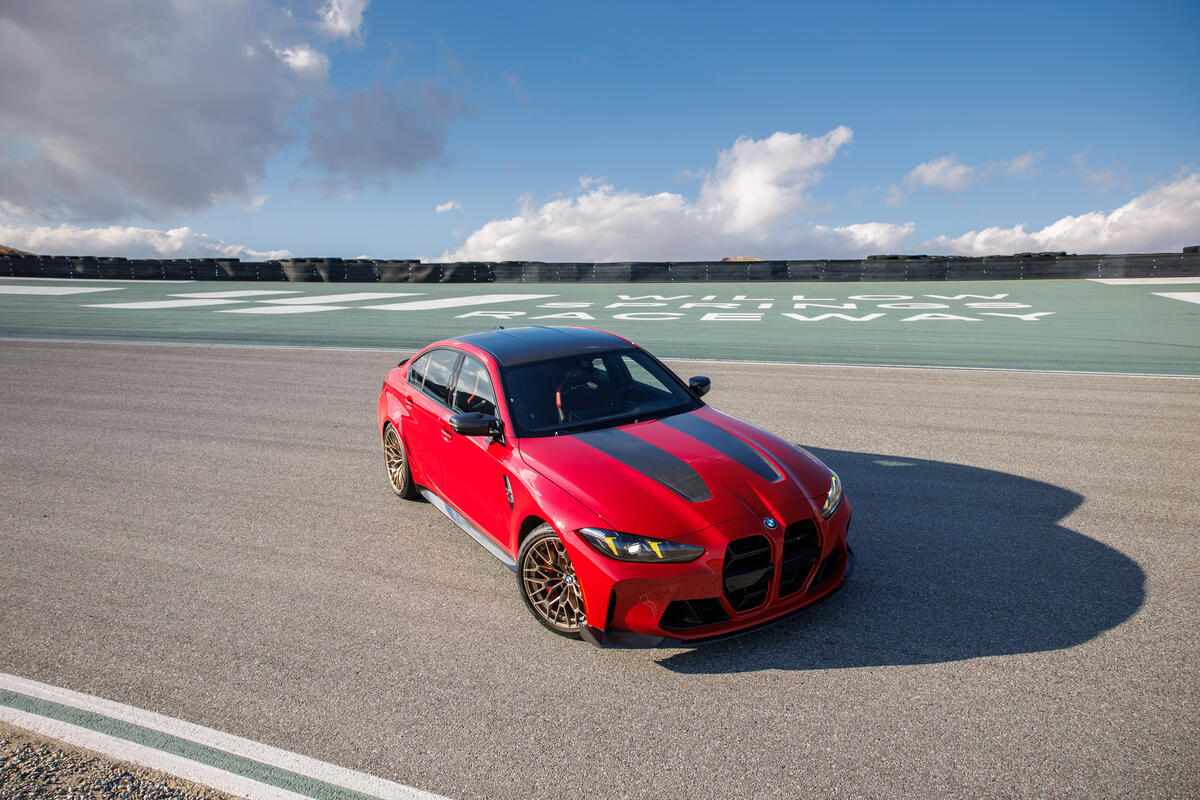
M3 CS
"they are doing a limited [1686.7s] edition M3 CS hen shelter like they did with the Z4 so there is sort of a special edition final version CS"
The BMW M3 CS is a special, more performance-focused version of the M3. Here they’re talking about it being limited and tied to a “final” manual-equipped configuration.
BMW M3 CS is a track-leaning, higher-performance variant of the M3, positioned above the standard M3 in terms of tuning and equipment. In this segment, they discuss it as a limited edition and connect it to the idea of a manual-equipped “final” version.
limited edition
"they are doing a limited [1686.7s] edition M3 CS hen shelter like they did with the Z4"
A limited edition means only a certain number of cars are made, or they’re built with special unique specs. People like them because they’re rarer and often more special than the standard version.
A limited edition is a production run with a restricted quantity or special specification compared with the regular model. Enthusiasts often look for limited editions because they can combine unique parts, tuning, and collectability.
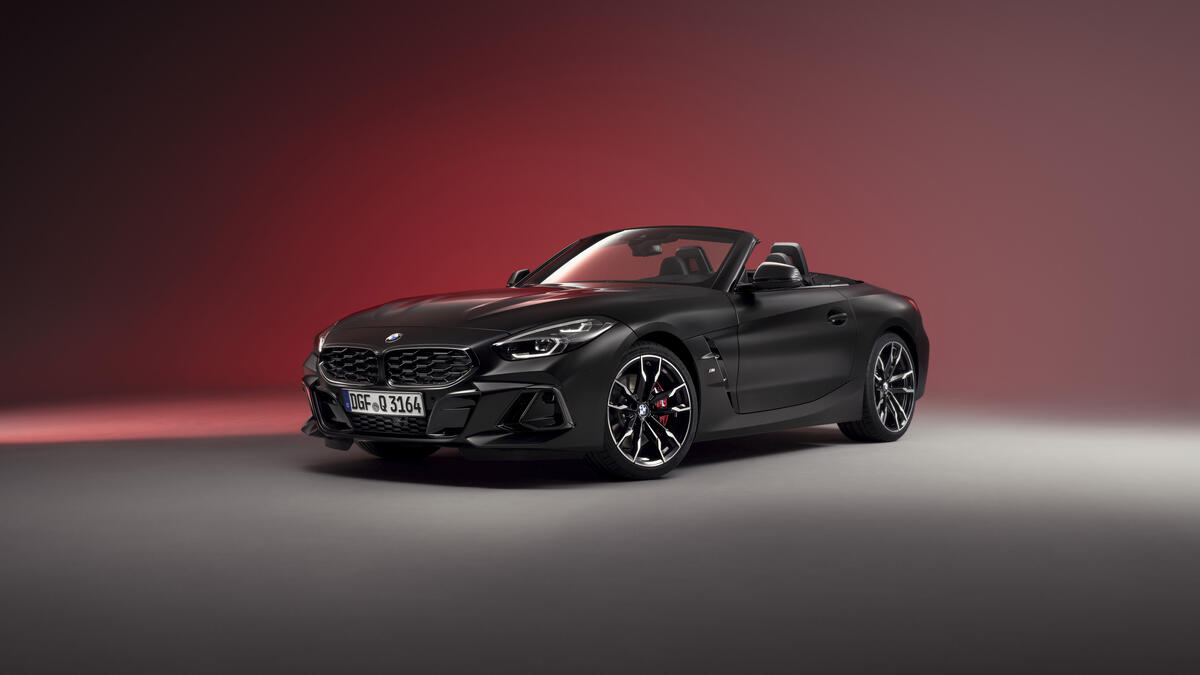
BMW Z4
"... edition M3 CS hen shelter like they did with the Z4 so there is sort of a special edition final versi..."
The BMW Z4 is a small two-seat sports car with a roadster style. The podcast mentions it in the context of a special edition version. That matters because special editions can have unique features compared to standard models.
The BMW Z4 is a two-seat roadster designed for sporty driving and open-air fun. The podcast references a special edition/final version context, which suggests it’s being discussed as a limited or end-of-line model. That makes it relevant for collectors or buyers interested in unique trims.
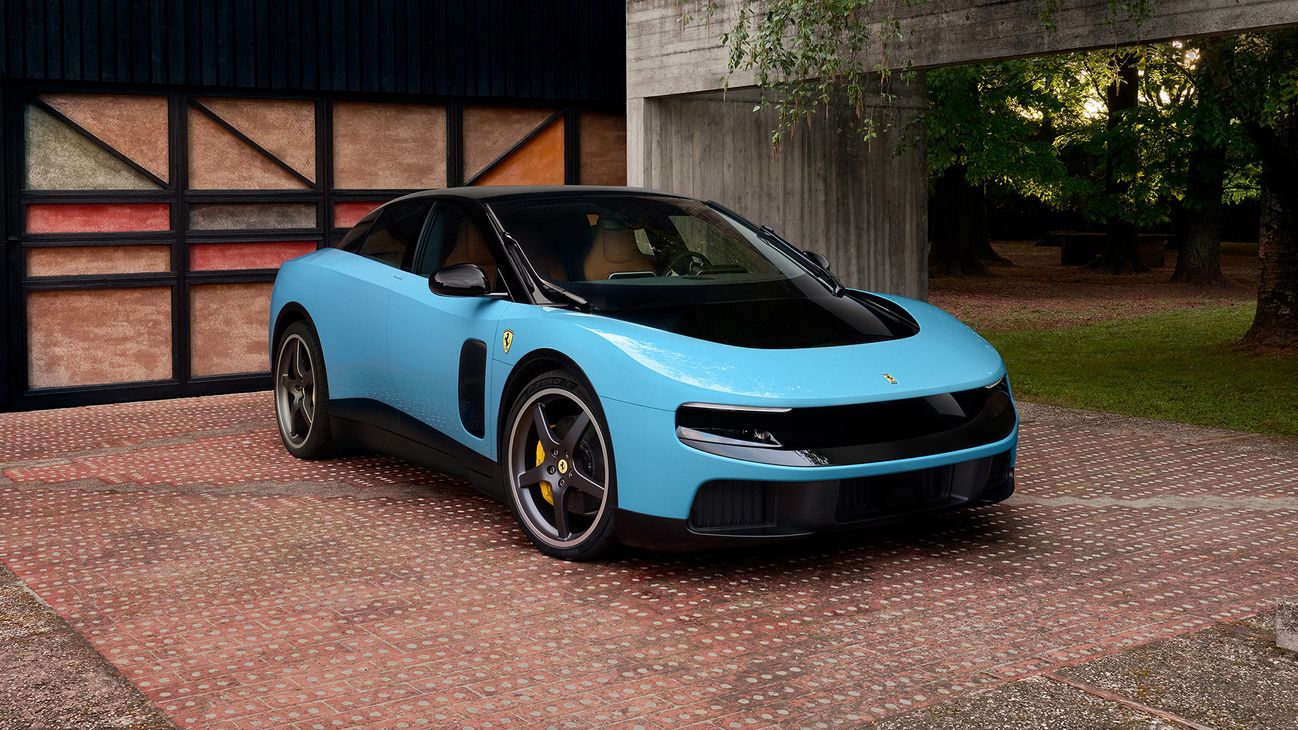
Ferrari Luce
"...e on sale right now I guess it's what the Ferrari luce no like Carrera GT no okay I do think though that..."
The Ferrari Luce is mentioned as a car name in the podcast. The hosts seem to be comparing it to another exotic car name. There aren’t details in the snippet about what it’s like to drive.
The Ferrari Luce is mentioned in the podcast as a name being compared against the Carrera GT. The context suggests it’s part of a discussion about which exotic car model they meant or were thinking of. Because the episode doesn’t provide technical details, it’s mainly referenced as a model name in the conversation.

Porsche Carrera GT
"...ht now I guess it's what the Ferrari luce no like Carrera GT no okay I do think though that I'm still gonna go..."
The Porsche Carrera GT is a very rare, very high-performance sports car. It’s the kind of car people mention when they’re talking about extreme performance. The podcast brings it up as a comparison to another supercar name.
The Porsche Carrera GT is a rare, track-focused supercar known for extreme performance and a special place in Porsche’s history. It’s often referenced when people talk about iconic, high-performance machines. In the podcast, it’s mentioned as a comparison point to another exotic car idea.
18-way
"there's a carbon-backed there's like the sport seats yeah yeah I'm thinking that like 18-way yeah I think those would work for me and Alex they"
“18-way” means the seat has lots of adjustment options. It usually helps you set the seat to fit your body better so you’re more comfortable.
“18-way” refers to a seat with many adjustable directions and settings. More adjustment points generally let you dial in posture, steering-wheel reach, and support for long drives or spirited driving.
vent and heat at the same time
"I'm thinking that like 18-way yeah I think those would work for me and Alex they vent and heat at the same time right at the same time I actually didn't know that that's cool"
They’re talking about seats that can warm you up and also blow air at the same time. That way you feel comfortable without getting sweaty.
This describes seats that can provide both heating and ventilation simultaneously. The idea is to keep you warm without making you sweaty by moving air while also adding heat.
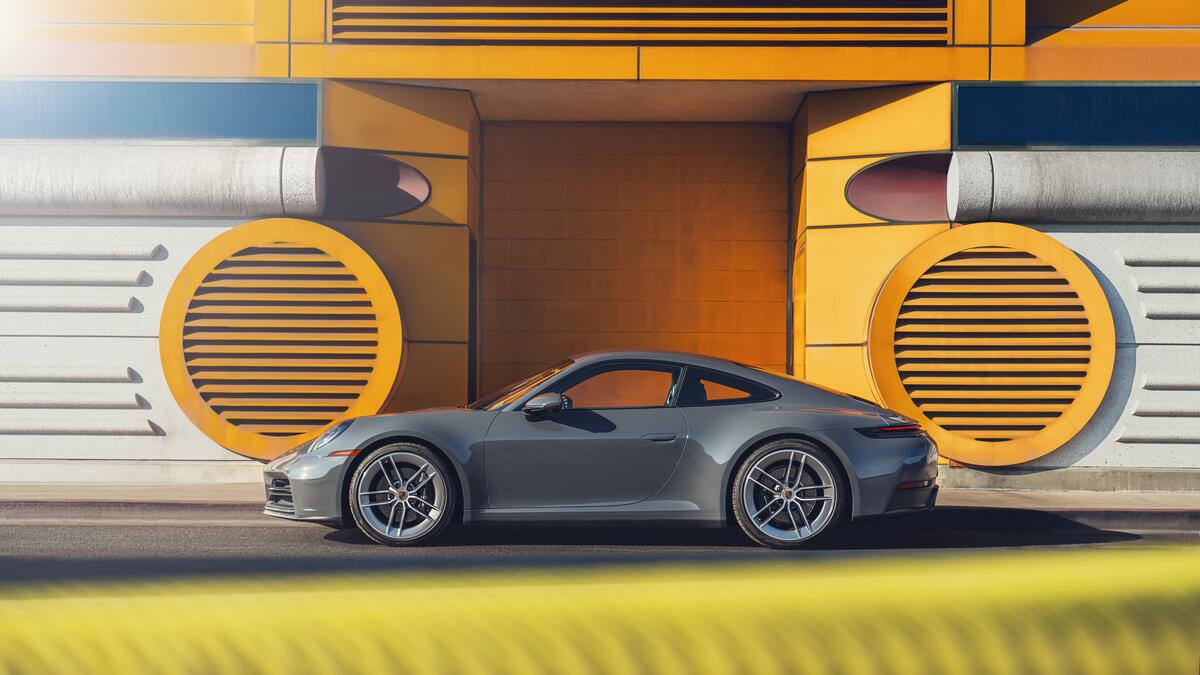
Porsche 911 GTS
"keep in mind this does mean that the 911 is off the table yeah the 911 Carrera the 911 GTS the 11 turbo the 911 we're gonna be here all day"
The Porsche 911 GTS is a sportier version of the 911. They’re listing it as one of the 911 trims they’re not going to use for the donor car.
The Porsche 911 GTS is a performance-focused 911 variant that typically sits between the Carrera and the more extreme Turbo/GT models. The hosts mention it as another 911 option that gets ruled out in their build plan.
Toyota GR86
"so what do you have so far you have the I have the chassis of the GR86 BRZ I have the M3 powertrain and then the 911 I'm gonna come borrow this car"
The Toyota GR86 is a small sports car designed to feel fun and responsive. Here, they’re saying they’ll use its chassis as the foundation for their custom build.
The Toyota GR86 is a lightweight, rear-wheel-drive sports coupe built around a driver-focused chassis. In this “Frankenstein car” plan, they’re using the GR86/BRZ platform as the base chassis.

Volvo V60
"Volvo v60 you should wagon platformers you laugh okay so what I am taking for my interior is the Lexus"
The Volvo V60 is a wagon-style Volvo. They bring it up as an example of a car platform they’re thinking about when talking about building a Frankenstein car.
The Volvo V60 is a wagon (estate) version of Volvo’s mid-size lineup, known for practical packaging and a comfortable, family-oriented ride. The host mentions it in the context of “wagon platformers,” implying they’re comparing how different bases feel when combined into a Frankenstein build.

Cadillac Escalade
"I am taking the Cadillac Escalade nice I thought about that yes ... make sure we're talking about an Escalade that like you're getting the space of that not just the seats okay"
The Cadillac Escalade is a big luxury SUV. Here, they’re using it as the foundation for their Frankenstein build because it has lots of space and very comfortable seats, including cooling/ventilated and massage-style features.
The Cadillac Escalade is a full-size luxury SUV known for its roomy cabin and comfort-focused features. In this segment, the hosts specifically discuss using it as the “Frankenstein” base to get the space and, especially, ventilated seats and massage-like comfort.
ventilated seats
"I run hot I need ventilated seats so that was like a non-negotiable I need ventilated seats"
Ventilated seats have small fans that blow air through the seat. That helps keep you cooler on hot days and makes long drives more comfortable.
Ventilated seats use built-in fans and airflow channels to blow air through the seat cushions. They’re popular in hot climates because they help reduce heat buildup and improve long-distance comfort.
supercruise
"turn on supercruise that's tech put I know but I'm saying put on a massage yeah that's so just sitting there having the car drive me and being massaged"
Super Cruise is a GM system that can help drive the car on compatible highways. The host mentions it because it makes highway driving feel more relaxed, especially when combined with comfortable seat features.
Super Cruise is General Motors’ hands-free driver-assistance system for certain highway conditions. In this segment, the host frames it as “tech” that pairs with comfort features—specifically enjoying the experience of the car driving while they’re massaged in the seats.
Autobahn
"it just it feels like a car that can go 200 miles an hour on the Autobahn without you know for years without any issues"
The Autobahn is a major highway system in Germany. It’s known for very fast driving, and the host is using it to say the car feels solid at high speeds.
The Autobahn is Germany’s highway network, famous for long stretches where speed limits may not be enforced. Mentioning it here is a shorthand for sustained high-speed driving, which the host uses to emphasize how stable and well-built the Porsche Cayenne’s cabin feels.
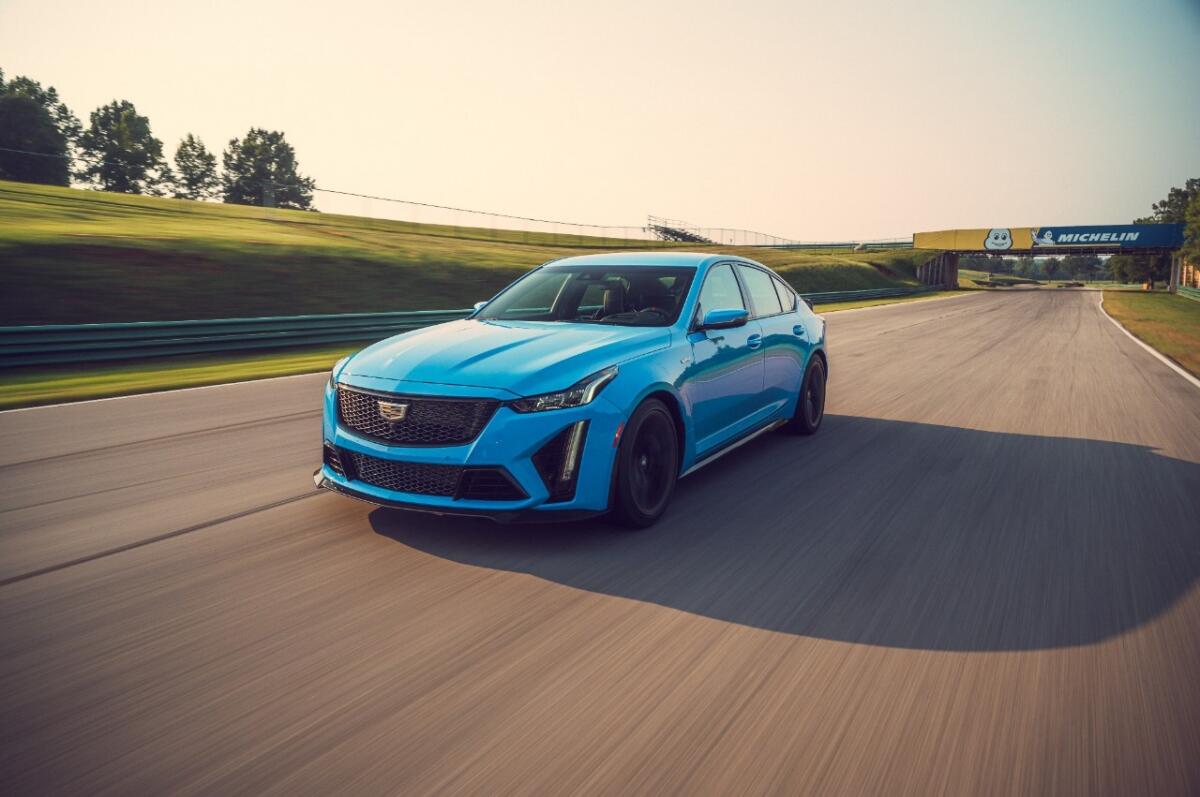
Cadillac CT5
"I kept I'd be like I'm gonna take oh let's do like the the CT5 black wing chassis and then the next one yeah and and maybe I'll oh what about the Cadillac CT5 black wing engine"
The Cadillac CT5 is a luxury sedan. In this segment it’s just one of the cars they considered using parts from for their Franken-car idea.
The Cadillac CT5 is a mid-size luxury sedan positioned against cars like the BMW 3 Series and Mercedes-Benz C-Class. Here it’s mentioned as a candidate in their “Frankenstein car” planning, specifically tied to an “engine” and “components” discussion rather than a detailed review.

Nissan Aria
"...to talk about tech for my interior I'm taking the Nissan aria now I know they've discontinued the right now so ..."
The Nissan Ariya is an electric SUV, meaning it runs on electricity. The podcast mentions that it’s been discontinued at the moment, which can affect what’s available to buy. They also talk about the interior tech and features.
The Nissan Ariya is an all-electric crossover designed around modern styling and EV technology. The podcast notes that it has been discontinued “right now,” which is relevant for shoppers considering availability and future support. It’s also mentioned specifically for its interior tech and how it feels inside.
zero gravity seats
"yeah so it like the seats have been around forever the zero gravity seats are super comfortable particularly when you've been in them for a long drive"
“Zero gravity” seats are seats shaped to feel easier on your body during long drives. They’re designed to spread your weight more comfortably so you don’t get as sore.
“Zero gravity” seats are designed to reduce pressure on the body by supporting it in a reclined, weight-distributing posture. The idea is to make long drives feel less tiring by improving how your back, hips, and legs are supported.
diesel engine
"and you guys know because of my m for my five series chassis and my diesel engine you're going to take this for a long drive"
A diesel engine is a type of engine that runs differently than a gasoline engine. It often gives good pulling power at low speeds and can be efficient on long trips.
A diesel engine is an internal-combustion engine that uses compression ignition rather than spark plugs. In passenger cars, it’s often chosen for strong low-end torque and efficiency, which can make highway cruising feel effortless.
sliding center console
"but also it has like the sliding center console well it's the little drawer that slides out the buttons that are sort of underneath the fake woodgrain trim"
A sliding center console is the part between the seats that can move out or slide forward. Here, it’s like a hidden drawer that comes out so you can reach buttons and controls.
A sliding center console is a center storage/control area that moves on tracks, letting you reposition it for easier reach or better ergonomics. In this segment, it’s described as a drawer-like section that slides out to reveal controls.

Ford Explorer
"it is specifically the Ford digital experience that they put in like the new Explorer and it's it was the biggest surprise of 2025 for me how much I really liked using it it is fast actually what models that in right now"
The Ford Explorer is a popular Ford SUV. Here, the host is talking about the car’s screen system—how easy it is to use and how quickly it responds.
The Ford Explorer is Ford’s midsize SUV, and this episode focuses on its infotainment and user interface. The host specifically praises the “Ford digital experience” in the new Explorer, calling it fast and simpler than Ford’s larger-screen setups.
Ford digital experience
"it is specifically the Ford digital experience that they put in like the new Explorer and it's it was the biggest surprise of 2025 for me how much I really liked using it"
Ford’s “digital experience” is the name for how Ford designs the car’s screens and software. The host likes it because it feels quick and easy to use.
“Ford digital experience” is Ford’s branded infotainment/software user interface package. In this segment, the host credits it for a fast, simpler, wide-screen layout in the new Explorer.

Ford Expedition
"it might be in the expedition with all the screens I don't love that this is this is better than the navigator"
The Ford Expedition is a bigger Ford SUV than the Explorer. The host is comparing the screen/tech experience between the two and saying the Explorer feels easier to use.
The Ford Expedition is Ford’s larger, full-size SUV, and the host compares its infotainment setup to the Explorer’s. They mention it “might be” in the Expedition with lots of screens, but they prefer the Explorer’s simpler interface.

Lincoln Navigator
"I don't love that this is this is better than the navigator this is a smaller simpler okay interface but it's fast"
The Lincoln Navigator is a luxury full-size SUV, and the host uses it as a benchmark for infotainment design. They say the Explorer’s interface is better than the Navigator’s, emphasizing simplicity and speed.
subscription
"it does require after a certain amount of time a subscription which when I was testing it there was no price yet for if I'm buying this car this better be not be like a 12 month subscription because I plan on owning the car for seven years"
Some newer cars require a paid subscription to keep certain features working after a free trial. The host is worried about long-term cost if they keep the car for many years.
In modern cars, a subscription can be required to keep certain connected features or software functions active after an initial trial. The host is concerned about paying monthly/annual fees if they plan to own the car for about seven years.
Apple CarPlay
"it does have Apple CarPlay and Android Auto so if I get an iPhone that won't bug me"
Apple CarPlay lets you connect an iPhone to the car and use certain apps on the car’s screen. It’s a way to keep your phone features while driving.
Apple CarPlay is a smartphone integration system that mirrors compatible iPhone apps onto the car’s infotainment screen. The host mentions it to reassure iPhone owners that the Ford interface won’t be annoying or limiting.
Android Auto
"it does have Apple CarPlay and Android Auto so if I get an iPhone that won't bug me"
Android Auto lets you connect an Android phone to the car and use supported apps on the car’s screen. It helps you use navigation and music without constantly touching your phone.
Android Auto is Google’s smartphone integration system that brings compatible Android apps to the car’s infotainment display. The host cites it alongside CarPlay as part of why the Ford tech setup works well for different phone types.
Lexus NX
"you'll be like I'll take the Lexus NX it's a good-looking car Dave you're up all right infotainment I'm"
The Lexus NX is a luxury SUV from Lexus. Here it’s being talked about as a possible winner, partly because people are judging how nice the car feels inside and how easy the screen/controls are to use.
The Lexus NX is a compact luxury SUV from Lexus, known for a comfort-focused ride and a user-friendly cabin. In this segment, it’s mentioned as a candidate car, with attention on how it looks and how the infotainment experience might factor into the group’s vote.
infotainment
"Dave you're up all right infotainment I'm gonna do I agree with Matt in that like I don't know if there's an infotainment system where I've been like it's a 10 out of 10"
Infotainment is the car’s main screen system for things like music, navigation, and phone features. If it’s well designed, it’s easier to use while you’re driving.
Infotainment is the car’s combined audio, navigation, phone, and screen-based controls system. It matters because it affects how quickly you can find settings and use features while driving.
Mercedes M-Bucks
"so the Mercedes M-Bucks I think generally is a well-executed interface you can find the menus and the controls you want it isn't entirely reliant on just screens it's got physical buttons in the right places"
“Mercedes M-Bucks” is a joking name for Mercedes’ infotainment screen and controls. The point is that it’s easy to use and not just dependent on the touchscreen.
“Mercedes M-Bucks” is a playful nickname for Mercedes-Benz’s infotainment interface. The speaker is praising it as a well-executed system because it combines a touchscreen layout with physical buttons for key controls.

Hyundai Genesis
"... systems however I'm taking one step up I'm going Genesis well I'm not gonna get you're right are fantastic..."
Genesis is Hyundai’s luxury car brand. In the podcast, it’s mentioned as a higher step up compared with more basic options. The discussion is about the kinds of features and systems you get in a luxury model.
The Hyundai Genesis name refers to Genesis-branded luxury vehicles, which are positioned above Hyundai’s mainstream models. In the episode, it’s mentioned as a step up in terms of features and systems. That makes it relevant when comparing what you get as you move into higher-end trims.

Genesis G80
"however I'm taking one step up I'm going Genesis well I'm not gonna get you're right are fantastic sorry go ahead though I feel like any Genesis I've been in has been like Hyundai Kia in ease of use but it looks better to me and I like I think it was the G80 or the GV80"
The Genesis G80 is a luxury sedan. In this discussion, it’s mentioned because Genesis’ screen layout and controls are considered easy to use, with a more stylish look than some rivals.
The Genesis G80 is a luxury sedan from Genesis (Hyundai’s luxury brand), known for a premium interior and modern tech. Here it’s referenced as an example of Genesis infotainment design that feels similar in ease-of-use to Hyundai/Kia but looks more upscale.

Genesis GV80
"and I like I think it was the G80 or the GV80 it's it's not two different screens in in a housing it's one giant widescreen"
The Genesis GV80 is a luxury SUV. The host brings it up because Genesis’ infotainment screens are designed to look clean and be easy to use, without blocking important views.
The Genesis GV80 is a luxury SUV from Genesis, positioned as a more premium alternative to mainstream Hyundai/Kia products. In this segment, it’s used to illustrate Genesis’ infotainment layout—especially the single, wide-screen approach that the speaker says is easier to read and interact with.
one giant widescreen
"it's it's not two different screens in in a housing it's one giant widescreen and I just really like that as a look"
That phrase means the car uses one big screen instead of separate smaller ones. The idea is that it looks cleaner and the important info stays easy to see while you’re driving.
This refers to a single, continuous wide display used for the infotainment and/or driver information area. The speaker likes it because it reduces visual clutter and keeps controls positioned so the steering wheel doesn’t block key information.
climate control
"displays is the climate climate control you can never see because yeah what is"
Climate control is what keeps the car’s cabin at the temperature you want. They’re saying it’s annoying because the controls are not easy to see or use.
Climate control is the system that manages cabin heating, ventilation, and air conditioning. The host specifically complains it’s hard to “see” or access because of how it’s integrated into the dashboard screens and bezel design.

Hyundai Ioniq
"...t's not it's not okay it's not there and I'm in a Hyundai Ioniq 9 now and it's that's one housing but it's two di..."
The Hyundai Ioniq 5 is an electric SUV, meaning it runs on electricity instead of gasoline. The podcast mentions it while comparing it to another electric Hyundai, focusing on the interior design. It’s brought up as a point of reference for tech and layout.
The Hyundai Ioniq 5 is an all-electric crossover designed around modern styling and technology. It’s frequently discussed as part of Hyundai’s EV lineup and for how it handles everyday electric driving. In the podcast, it’s mentioned alongside another Hyundai EV, with attention to the interior design and layout.

Hyundai Ioniq 9
"and I'm in a Hyundai Ioniq 9 now and it's that's one housing but it's two distinct screens with the bezel"
This is a Hyundai EV concept/line the host talks about. They’re comparing how the dashboard screens are arranged and how easy they are to use, especially for climate and infotainment.
The Hyundai Ioniq 9 is discussed here in the context of its dashboard interface, specifically how the climate control and infotainment screens are laid out. The host compares its usability and screen design to a Genesis model’s setup, focusing on the “two distinct screens” and bezel design.
mood curator
"the mood the mood curator that we had in the G90 that counts"
A “mood curator” is a fancy car feature that tries to set the vibe for you. It can combine things like music, scent, and even a seat massage into one experience.
“Mood curator” is a branded in-car experience that bundles sensory features—like music, scent, and seat massage—into selectable “moods.” The host says it’s enjoyable while waiting, implying it’s more than a gimmick because it’s integrated into the cabin experience.

Genesis G90
"... but the mood the mood curator that we had in the G90 that counts I was gonna say I love that if you're..."
The Genesis G90 is a large luxury sedan. It’s designed to feel comfortable and high-end inside. The podcast mentions it while talking about the overall vibe and presentation of the cabin.
The Genesis G90 is a full-size luxury sedan focused on comfort, quietness, and upscale appointments. It’s mentioned in the episode in relation to a particular “mood curator” experience, highlighting how the car’s cabin presentation can be part of the overall impression. That kind of discussion usually comes up when evaluating luxury interiors and features.
massage
"it has music and a massage a scent right"
Some luxury cars have a seat massage feature. It uses the seat to gently press and move in patterns to help you relax.
In luxury cars, a “massage” feature refers to seat massage functions that use built-in actuators to apply varying pressure patterns. The host lists it alongside music and scent as part of a “mood curator” experience.
highway driving assist
"somebody said at some point supercruises tech and I thought well Hyundai was already on my list and you get highway driving assist to on a lot of models right so that's like this too yeah yeah"
This is a system that helps you drive on highways. It can handle things like keeping the car in its lane and adjusting speed, but you still have to pay attention and be ready to take over.
“Highway driving assist” is a driver-assistance feature that helps with steering and speed control on divided highways. It’s typically designed for long, straight-ish stretches and may include lane centering and adaptive cruise behavior, but it’s not the same as fully autonomous driving.
Blue Cruise
"it's close it's not super cruise or blue cruise but it's approaching not even yeah"
BlueCruise is Ford’s highway driving help feature. On supported roads it can help keep you centered and manage speed, and it may allow hands-free driving, but you still have to watch the road and follow the system’s limits.
BlueCruise is Ford’s hands-free highway driving assistance system, designed to keep the car centered in its lane and manage speed on compatible roads. It’s commonly discussed alongside other systems like Super Cruise because the “hands-free” capability and road coverage are the differentiators.
Kia
"I really like the ways divided up I actually prefer the Hyundai and Kia versions to the Genesis one specifically so I'm glad you didn't take those"
Kia is another car brand being compared here. The host is saying they like Kia’s version of the highway driving assistance better than a competing brand’s version.
Kia is mentioned alongside Hyundai as another brand with a similar approach to highway driving assist. The speaker says they prefer the Hyundai and Kia versions of these systems over the Genesis implementation.
iDrive
"I actually did have BMW on my the iDrive on my list to it like if someone took the latest version where it's all screen yeah I don't like"
iDrive is BMW’s dashboard screen system for things like navigation, media, and settings. The host is saying it can be confusing because it’s easy to tap the wrong spot and end up in the wrong menu.
iDrive is BMW’s infotainment and vehicle control interface, typically combining a screen-based menu system with touch inputs and/or a controller. In this segment, the host’s issue is usability: too many touch areas can open different menus, so it’s easy to get lost.
form over function
"up until a year ago maybe it was yeah this one is just too reliant and the I just it is that okay so it's a form over function in a really annoying way"
“Form over function” means the design looks good, but it’s not as easy or practical to use. The host is saying the interface design makes it harder to operate the car.
“Form over function” is a design criticism meaning the styling or presentation is prioritized over practical usability. Here it’s used to describe BMW’s iDrive touch-heavy interface, where the host feels the design choices make everyday operation more annoying.
Honda
"somebody was gonna take Honda because to your point on like everything is too like there's always something to the noise me the Honda Civic every time I get to them"
Honda is the car brand mentioned here. They’re talking about how often Honda shows up in their day-to-day encounters, especially with the Civic.
Honda is name-dropped in a discussion about how certain brands show up frequently in the hosts’ experience or in their “consideration set.” The speaker jokes that every time they see a Honda Civic, it feels like the other person wants them to notice it.

Honda Civic
"somebody was gonna take Honda because to your point on like everything is too like there's always something to the noise me the Honda Civic every time I get to them just like so they clearly just want me to"
The Honda Civic is a very popular compact car. Here it’s mentioned just because the host keeps seeing them nearby.
The Honda Civic is a long-running compact car line known for being common, practical, and easy to spot in traffic. In this segment, it’s used as a reference point for the host’s observation that Honda Civics keep showing up around them.
physical buttons
"pair my phone it's too basic yeah it's like physical buttons home in the back"
Physical buttons are real buttons you can press, not just things you tap on a screen. The host is saying some cars use physical controls for phone/infotainment features, which can be easier than touchscreen-only setups.
Physical buttons are physical, tactile controls on the dashboard or center stack instead of touchscreen-only controls. The host brings them up while discussing phone pairing and infotainment usability, implying they prefer straightforward, dedicated controls over more complicated interfaces.

Honda Prelude
"and here here's the here's the pair your phone a physical button the prelude that I had a few months ago never would keep my phone paired"
The Honda Prelude is a Honda coupe that people often think of as sporty. Here it’s mentioned because the host had trouble keeping their phone connected to the car’s system.
The Honda Prelude is a Japanese coupe that’s known for its sporty, driver-focused feel and styling during its production run. In this segment, the host mentions it specifically as a prior car where phone pairing didn’t stay connected, which is why they’re comparing infotainment behavior across Honda models.
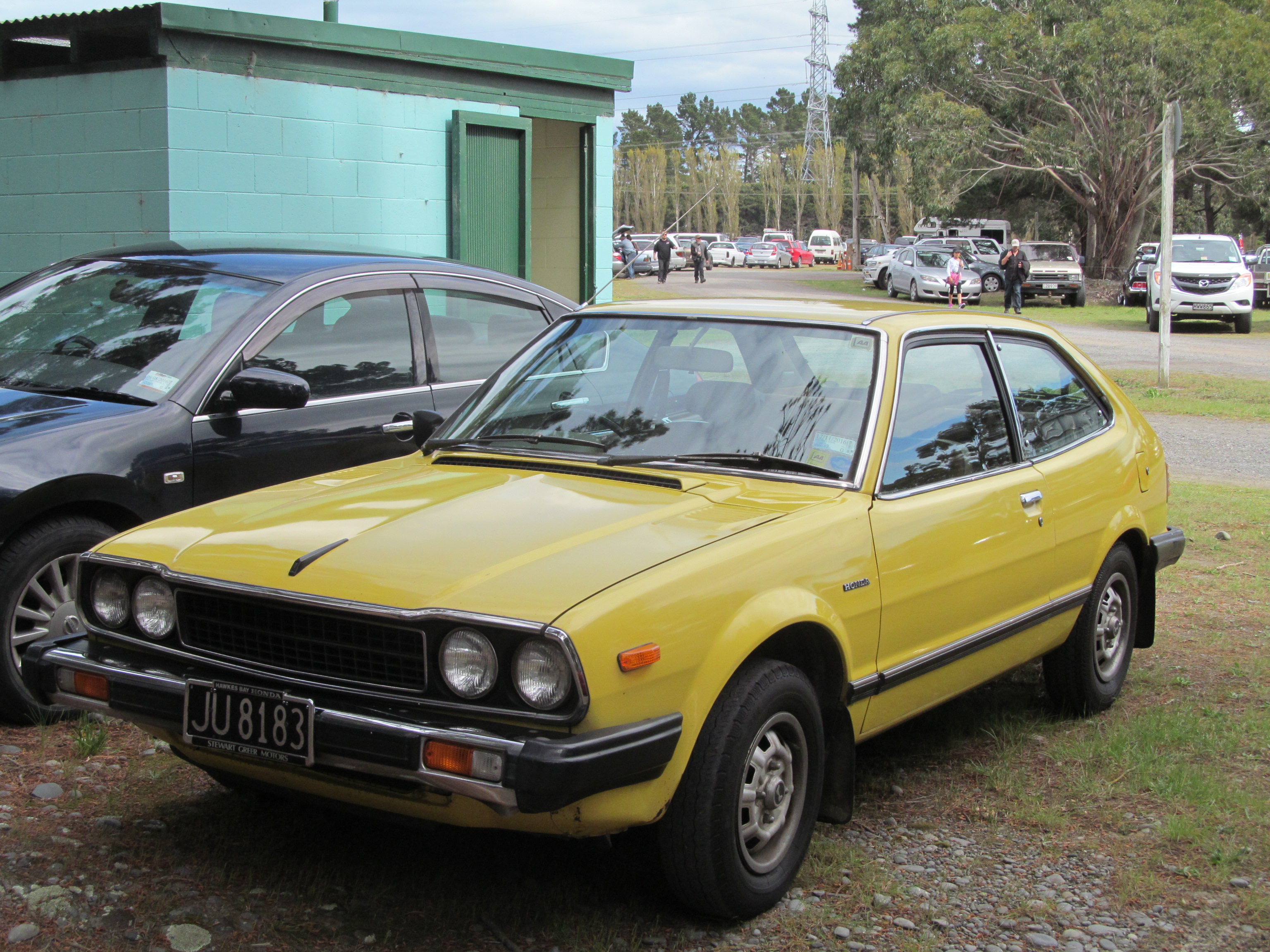
Honda Accord
"yeah that happens in our accord to drop it yeah one job to do"
The Honda Accord is a popular Honda family car. In this part, it’s brought up because the host says their phone connection kept dropping.
The Honda Accord is a mainstream Honda sedan/fastback that’s especially common in North America and often used as a benchmark for everyday usability. Here it’s referenced as another Honda where the host experienced the same phone-pairing annoyance, tying the discussion to infotainment and connectivity quirks.
Franken car
"but if you can like say something and we're like oh yeah I know exactly the design language that's a Franken car you're wrapping this design language around your thing you've created"
A Franken car is a custom car made by mixing ideas or parts from different cars. The host is describing their build as combining one brand’s styling “vibe” with another car to create something unique.
A “Franken car” is a custom build concept where parts, styling, or design elements from different sources are combined into one vehicle. In this segment, the host frames it as “wrapping” one brand’s design language onto another, so the result is a deliberate mashup rather than a factory look.
DRLs
"so maybe I will say the Sienna with Toyota's new design language with their like really angular sharp DRLs like on the new RAV4 the Camry"
DRLs are the lights that turn on during the day. They help other drivers see the car and also give it a recognizable front-end look.
DRLs stands for Daytime Running Lights. They’re the lights that are designed to be on during daylight to improve visibility and make the car’s front-end signature look distinctive.

Toyota RAV4
"...ir like really angular sharp DRLs like on the new RAV4 the Camry and they're they're pretty sharp vehicl..."
The Toyota RAV4 is a compact SUV meant for everyday driving. The podcast mentions it because its front lighting and styling look more angular and modern. It’s part of a conversation about how the newest versions look.
The Toyota RAV4 is a compact crossover SUV known for practicality and broad appeal. In the podcast, it’s specifically referenced for its sharper, more angular lighting design elements. That makes it relevant when discussing how newer models look and what design cues stand out.

Bristol Bullet
"...y don't Toyota well they're going to the Japanese bullet train yeah yeah so I'm you know what I'm gonna go..."
The Bristol Bullet is mentioned as a car name in the podcast. The hosts connect it to an idea about bullet trains, likely as a comparison of speed or imagery. The snippet doesn’t describe how the car drives.
The Bristol Bullet is referenced in the podcast as a vehicle name tied to a discussion about Japanese bullet trains and branding/imagery. The context suggests it’s being brought up as a fun or unusual comparison rather than a detailed technical review. As such, it’s mainly notable here as a named curiosity in the conversation.

Audi Q3
"the new Q3 the new Q5 the new Q7 and the forthcoming all new Q9"
The Audi Q3 is a smaller Audi SUV. They’re grouping it with other Q models to talk about how Audi’s new styling shows up across different sizes.
The Audi Q3 is Audi’s smaller crossover SUV, positioned below the Q5 and Q7 in size. The hosts mention it alongside other Q models to illustrate how Audi’s design language is spreading across multiple crossover sizes.

Audi Q5
"the new Q3 the new Q5 the new Q7 and the forthcoming all new Q9"
The Audi Q5 is a mid-sized luxury SUV. They mention it to show how Audi’s updated styling is consistent across several different Q models.
The Audi Q5 is a compact-to-midsize luxury crossover SUV that sits in the middle of Audi’s Q lineup. In this segment, it’s referenced as part of the set of Audi crossovers sharing a cohesive design approach.
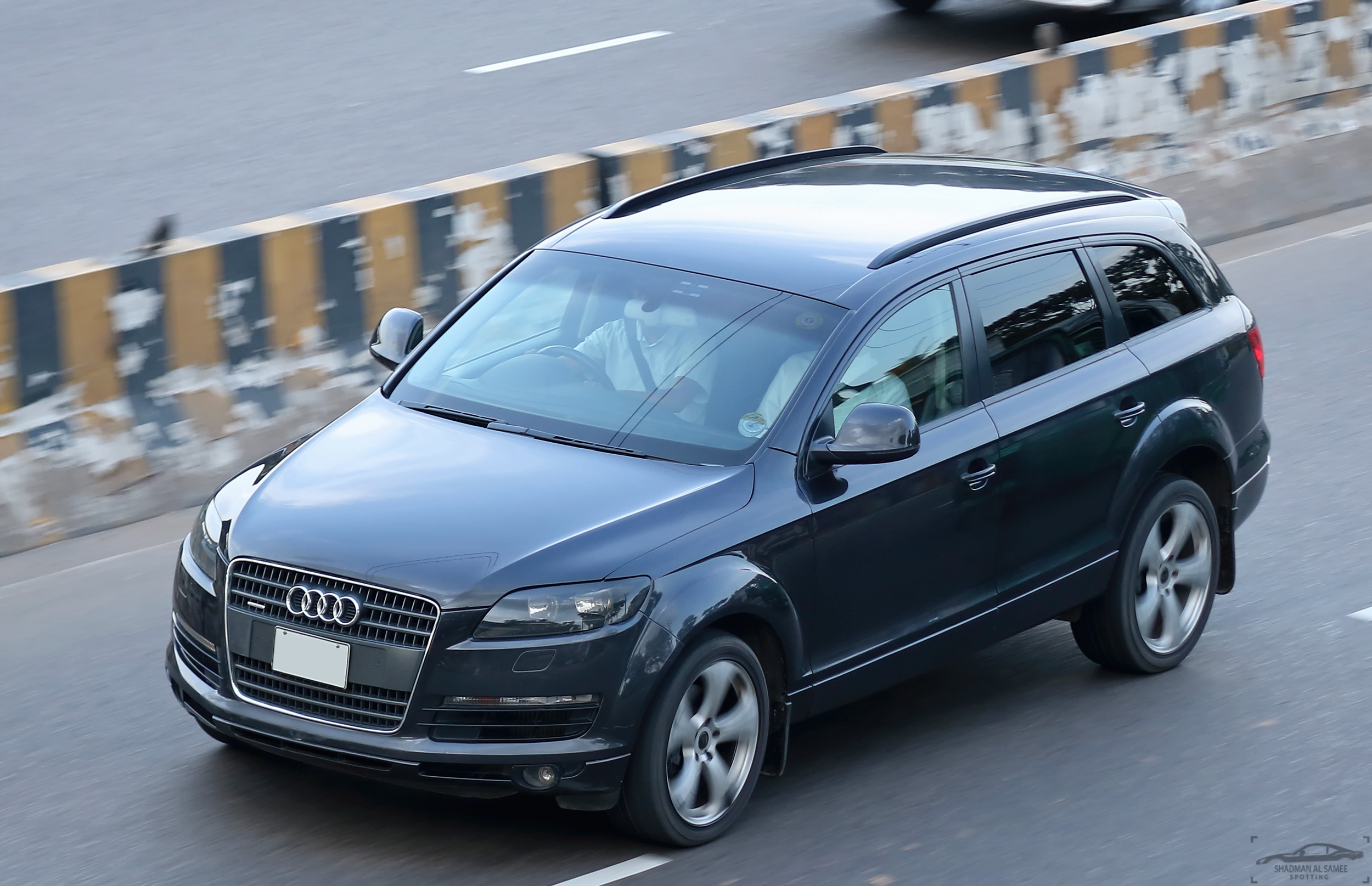
Audi Q7
"look at like Audi just a few days ago showed the new Q7 yeah that's a cool design language"
The Audi Q7 is a luxury SUV made by Audi. Here, they’re talking about how its new look fits with the newer designs Audi is putting on multiple SUV models.
The Audi Q7 is a midsize luxury SUV from Audi, known for its upscale interior and family-friendly practicality. In this segment, it’s used as an example of Audi’s newest SUV design direction and “design language” across the lineup.

Polestar 4
"or will be because it's they're all coming out I think one of the better-looking vehicles on the road right now is the Polestar 4"
The Polestar 4 is an electric SUV/crossover from Polestar. They’re saying it looks especially good and that its design is more convincing than some other Polestar models.
The Polestar 4 is a modern electric crossover-coupe from Polestar, designed around a sleek, performance-oriented silhouette. The hosts call out its styling as especially strong, contrasting it with other Polestar models and praising its “design language.”

Polestar 2
"but the other the three and the four and like"
The Polestar 2 is a smaller electric car from Polestar. Here, they’re comparing looks and saying the Polestar 2 doesn’t appeal to them as much as the Polestar 4.
The Polestar 2 is Polestar’s compact electric liftback, positioned below the Polestar 4 in size. In this segment, it’s used as a comparison point—one host says the Polestar 2’s styling “doesn’t really do it” for them, while the 4 (and others) do.
headlights
"Polestar for the design language they dare I say they do force hammer headlights better than false also the Polestar 2"
They’re talking about the car’s headlights as part of the overall look. Some cars have a distinctive headlight shape or lighting pattern that makes them easy to recognize.
In automotive design talk, “headlights” often refers not just to the lamps themselves, but to the shape and lighting pattern (the “signature”) that helps identify a model. The hosts specifically compare how Polestar’s headlights look versus other designs.
limited run
"the one that was the limited run like that they look they just look great I"
A “limited run” is when a company makes only a small number of cars. Fewer cars exist, so it can be harder to find one later.
“Limited run” means a manufacturer builds only a small number of units of a specific model or variant. That usually makes the car more exclusive and can affect availability and pricing later.
overhangs
"they have like these relatively short overhangs yes feels like the wall the wheels these big filling wheels"
Overhangs are how much car sticks out in front of the front wheels and behind the rear wheels. Short overhangs usually make the car look more athletic and well-proportioned.
Overhangs are the distances from the wheel centers to the front and rear ends of the car. Short overhangs generally make a vehicle look more compact and “tucked in,” which can improve visual balance.
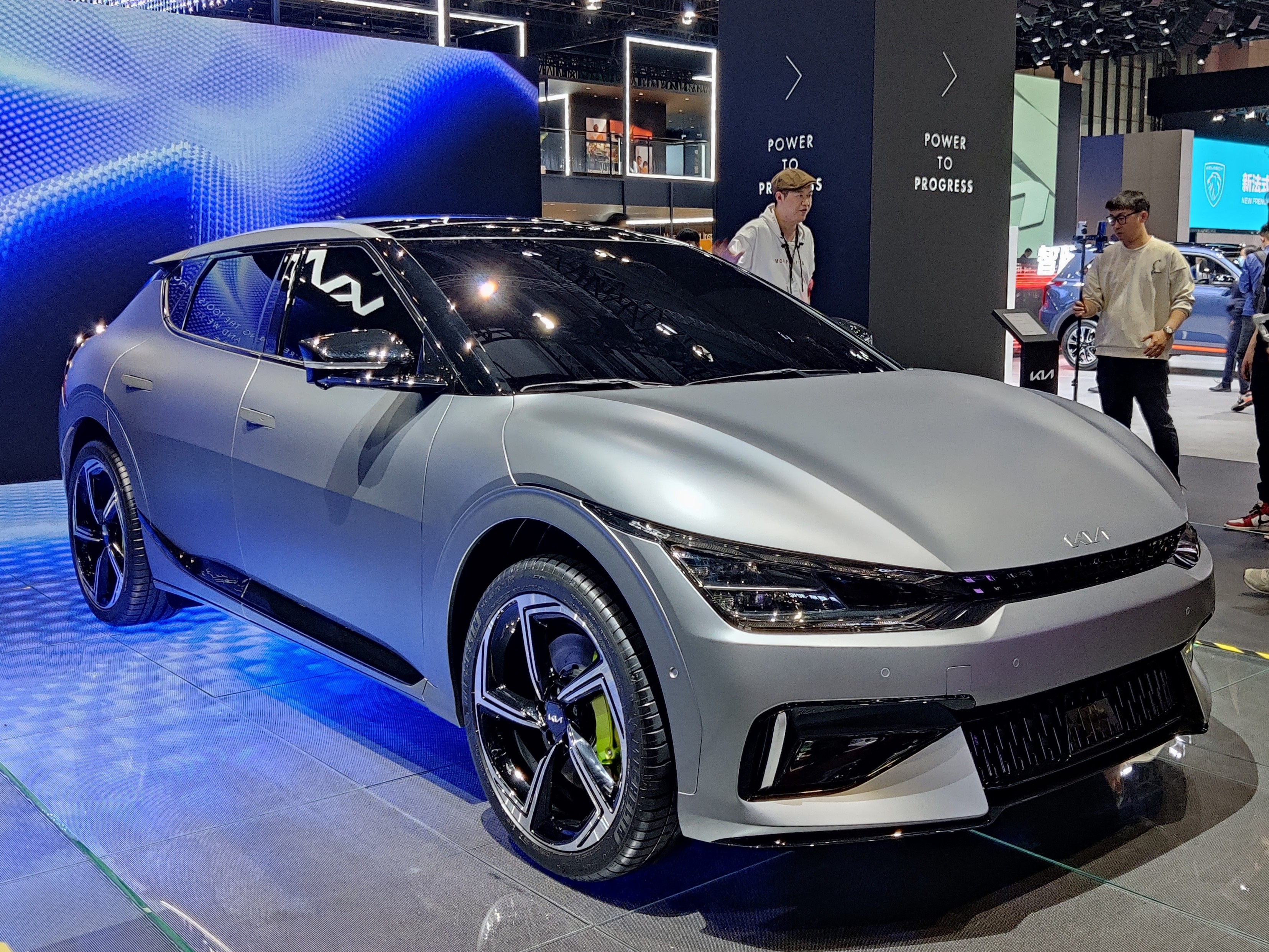
Kia EV6
"or no that'll be nice to give us a key EV 6 a little it does it didn't need"
The Kia EV6 is an electric car with a crossover-like shape. They’re basically saying their custom idea could have been an EV6 instead, but they wanted a different look.
The Kia EV6 is a modern electric crossover that’s often used as a design and packaging reference point because it has a bold, contemporary stance. Here, the hosts are comparing what their “Frankenstein” car could have been—suggesting the EV6 would have been a more straightforward choice.
digital rearview mirror
"I never used you guys use the digital rearview mirror I strongly just like digital here you have a choice"
Instead of a normal mirror, a digital rearview mirror uses a camera and a screen to show what’s behind you. Some people like it because it can be clearer, but it takes getting used to.
A digital rearview mirror replaces the traditional mirror with a screen that shows a camera feed from behind the car. It can improve visibility in some situations and allows the display to be adjusted, but it also changes how you perceive distance and motion compared with a normal mirror.
coop crossover
"it sits up a little higher than a city that's like is it a coop crossover it's a sedan like and we talked about that in the video"
A “coupé crossover” is basically an SUV shape with a sportier, more slanted roof. It’s a look/shape description more than a specific type of engine or drivetrain.
“Coupé crossover” is a styling term for a crossover/SUV with a more sloped, coupe-like roofline. It’s not a single mechanical specification—more about body shape and how the car’s silhouette is designed.
BMW M3
"I have the BMW M3 powertrain so 473 horsepower I think we said manual rear-wheel drive"
The BMW M3 is BMW’s performance-focused model, and using its powertrain in a Frankenstein build is a big swing toward a more powerful, driver-focused setup. In this segment, they describe it as a manual, rear-wheel-drive setup with very high horsepower.
Porsche 911 adaptive seats
"what was my interior oh Porsche Porsche interior with the 911 adaptive seats yep yep"
The Porsche 911 is a famous sports car, and its seats are part of what makes the cabin feel special. “Adaptive seats” means the seat position and support can be adjusted electronically to fit you better.
The Porsche 911 is known for its driver-focused interior and high-end comfort features. “Adaptive seats” typically means electronically adjustable seats (often with multiple settings and sometimes power bolstering) that can be swapped into a custom build for a more premium feel.

Infiniti QX80
"... yep yep I will say I also thought about infinity QX80 seats like if someone was gonna take those I like..."
The Infiniti QX80 is a large luxury SUV. It’s built to be comfortable and roomy, especially for passengers. The podcast mentions it while talking about seats and who might use them.
The Infiniti QX80 is a large luxury SUV designed to prioritize comfort and space. It’s often discussed for its roomy seating and family-friendly layout. In the episode, it’s mentioned specifically in terms of seat comfort and how it might be used by passengers.
infinity QX80 seats
"I will say I also thought about infinity QX80 seats like if someone was gonna take those I like the QX80 interior"
The Infiniti QX80 is a big, comfortable luxury SUV. They’re considering using its seats because they’re designed for long-distance comfort.
The Infiniti QX80 is a full-size luxury SUV, and the speaker is specifically talking about using its seats for comfort. This is a common Frankenstein approach: borrowing interior components from a comfort-oriented vehicle to make the custom car more livable.

Toyota Highlander
"...hose the NX to boron but the Sienna the Camry the Highlander a bunch of vehicles use that platform which was o..."
The Toyota Highlander is a family SUV with room for more than two rows of seats. The podcast mentions it because it shares the same basic engineering foundation as some other Toyota vehicles. That can influence how the car drives and is built.
The Toyota Highlander is a midsize three-row SUV designed for family comfort and practical daily use. It’s mentioned in the context of sharing a platform with other Toyota models, which can affect how the vehicles are engineered and built. In the episode, it’s part of a discussion about which vehicles use the same underlying design approach.
Ford Bronco Raptor
"so this is mine for chat the chassis is the Ford Bronco Raptor"
The Ford Bronco Raptor is the off-road, tough version of the Bronco. Choosing it as the base means the custom car starts with a platform designed for grip and durability.
The Ford Bronco Raptor is an off-road-focused version of the Bronco, built for rugged traction and durability. Using it as the chassis/base for a Frankenstein car suggests the builder wants a strong, capable foundation that can handle rougher conditions and bigger power.

Porsche Cayenne
"thousand horsepower it's good choice lots of torque interior is Porsche Cayenne's [3513.7s] interior infotainment is Mercedes M-Bucks and the body language is Audi's new"
The Porsche Cayenne is a luxury SUV from Porsche. Here it’s being used as a style reference for a nicer, more premium-looking interior.
The Porsche Cayenne is Porsche’s luxury SUV known for a mix of comfort and strong performance. In this segment, the host uses it as a reference point for the kind of upscale interior vibe they want in their Frankenstein build.
Franken thing
"a true Franken thing like the bottom half of it is off-roading and then the top [3542.4s] half is this like sophisticated swoopy European and it's powered by you know an"
They’re talking about a “Frankenstein” car project—basically mixing and matching parts from different cars. The goal is to get the best features from each one in a single build.
“Franken” here refers to a Frankenstein build: combining parts, styling, and engineering ideas from multiple vehicles into one hybrid project. It’s a common enthusiast approach when you want the best traits from different cars rather than sticking to one donor.

Lucid Air
"...erior is gonna be the Nissan Aria breath of fresh air in our modern world tech Ford Explorer the great ..."
The Lucid Air is an electric luxury car. It’s designed around modern technology and an emphasis on how it feels to drive and live with. The podcast mentions it as a standout example of EV tech.
The Lucid Air is an all-electric luxury sedan known for advanced technology and a strong focus on efficiency and performance. It’s discussed in the episode as a “breath of fresh air” in the modern tech landscape. That makes it relevant when the hosts compare how different EVs handle interior tech and driving experience.

Tata Motors Aria
"...ree behind me the interior is gonna be the Nissan Aria breath of fresh air in our modern world tech Ford..."
The Tata Motors Aria is a car model that the podcast mentions for its interior and technology. The hosts are comparing how the inside of the car feels and what features it has. The main focus here is the cabin experience.
The Tata Motors Aria is referenced in the podcast as a vehicle with a particular interior/tech impression. It’s brought up in the same breath as other modern-tech vehicles, suggesting the hosts are comparing cabin feel and features. The episode’s context points to interior design as the main talking point.
station wagon
"it's going to be pole stars take on a station wagon four-door [3605.0s] station wagon because I also love my child yours is a close second to mine"
A station wagon is a car with extra cargo space behind the back seats, and the roofline extends farther than on a sedan. They’re saying they want that kind of practical wagon shape.
A station wagon is a body style with a longer roofline and a rear cargo area that’s integrated with the passenger cabin. The host is specifying a “four-door station wagon” look for the Frankenstein build, blending practicality with a more upscale European design vibe.
vote for our own
"if [3610.2s] we can't vote for our own thank you Dave but we're gonna vote for our own and I'm [3614.6s] do we want to vote each other's or do we let it leave it up to the viewer"
This part is basically them playing a game—deciding whose Frankenstein-car idea wins. It’s not about car tech itself.
This is a segment where the hosts are assigning picks and voting rules for their Frankenstein-car component choices. It’s more of a game mechanic than a technical automotive concept.
turbo straight six
"I can't remember the engine but it's the turbo straight six that they put in like the Supra and the Z4"
A “turbo straight six” is an engine with six cylinders in a line, plus a turbocharger. The turbo helps the engine make more power, especially when you accelerate.
“Turbo straight six” describes an inline-six engine (six cylinders in a single line) that uses a turbocharger to force more air into the engine for more power. It’s a specific engine layout/technology combo that affects how the car makes torque and how it feels to drive.

Toyota Supra
"it's the turbo straight six that they put in like the Supra and the Z4 like there's an odd there's there's an avenue"
The Toyota Supra is a famous sports car. Here it’s mentioned because the hosts are talking about using a turbo straight-six engine idea in a Frankenstein build.
The Toyota Supra is known for its performance-focused turbocharged engine options and strong enthusiast following. In this segment, it’s referenced as an example of where BMW’s turbo straight-six concept shows up in the same “powertrain swap” conversation.

Acura Integra Type S
"jumping off of Natalie's design brandy those the Acura Integra oh yeah it was the type s okay and it was a six-speed so I spent about half my driving life owning sticks"
The Acura Integra Type S is a sporty Acura model that’s meant to be fun to drive. Here, they’re highlighting that it comes with a six-speed manual transmission, which is uncommon in everyday driving.
The Acura Integra Type S is a modern performance hatchback/sedan platform built around a driver-focused manual-transmission experience. In this segment, the hosts specifically call out the Type S and its six-speed manual, framing it as one of the rare cars they get to drive with a stick.
six-speed
"oh yeah it was the type s okay and it was a six-speed so I spent about half my driving life owning sticks"
“Six-speed” means the car has six gears you shift manually. It can help the engine stay in the right range for smooth driving and acceleration.
A six-speed manual transmission has six selectable gear ratios between the engine and the wheels. More gears can help keep the engine in its best power/efficiency range, but the driver still chooses each shift.
Integra Type S
"...ve in my daily life so what let me talk the Acura Integra type s assuming that our schedule is correct oh you have..."
The Acura Integra Type S is a compact car with a sportier focus than a basic version. The podcast mentions it because the host is talking about what they’d use in daily life. It’s brought up as a practical choice with performance in mind.
The Acura Integra Type S is a performance-focused compact car that’s discussed as a potential daily driver choice. In the episode, it’s mentioned in the context of what the host would drive regularly and the assumption that the schedule is correct. That makes it relevant as a “real-life” option rather than a purely enthusiast-only car.
2 liter turbo
"the type s it's the only way to get the upgraded engine which is a 320 horsepower 2 liter turbo 6"
A “2.0-liter turbo” means the engine is about 2.0 liters and it uses a turbo to make more power. The turbo helps the engine feel stronger without needing a bigger engine.
“2.0-liter turbo” describes an engine with a displacement of about 2.0 liters that uses a turbocharger to force more air into the cylinders. That typically allows a smaller engine to make strong power and torque compared with a non-turbo setup.
front-wheel drive
"it's incredible front-wheel drive only it's it's it's intended it says never so oh my gosh the appeal of all-wheel drive diminishes enormously"
Front-wheel drive means the front wheels do the work of both steering and pulling the car forward. The host is saying this car still handles great even without all-wheel drive.
Front-wheel drive (FWD) means the engine’s power is sent to the front wheels, which handle both steering and traction. The host is emphasizing that the Integra Type S can still feel exceptionally composed and grippy without all-wheel drive.
all-wheel drive
"oh my gosh the appeal of all-wheel drive diminishes enormously when you get in that car yeah I don't need it so I don't maybe if it's snowing"
All-wheel drive powers all four wheels, which can help the car grip better on slippery roads. The host is saying you might not need it for this car unless you’re dealing with snow or bad weather.
All-wheel drive (AWD) sends power to all four wheels, usually improving traction in low-grip conditions like rain, snow, or loose surfaces. The host argues that for this particular car and typical use, the AWD advantage becomes less important.
A-spec with technology trim
"which you can get I think it starts at 40 with the A-spec with technology trim so you can get the the six-speed below the type s"
“A-Spec” and “Technology” are trim/package names. They usually mean the car has sportier looks and extra features like tech and driver-assist options.
“A-Spec” is a trim level that typically adds sportier styling and equipment compared with the base model. “Technology” indicates a package of driver-assist and infotainment features, which can affect pricing and what drivetrain options are available.

Ford Lobo
"...go down the line Natalie I have the Ford Maverick Lobo yeah yeah it is interesting it is interesting so ..."
In the podcast, “Ford Lobo” is mentioned right alongside the Ford Maverick, so it sounds like a nickname or mix-up for that truck. The Maverick is a small pickup meant to be practical and easier to live with. The hosts are bringing it up as one of the options they’re considering.
“Ford Lobo” appears to be a reference to the Ford Maverick in the podcast context (the host says “Ford Maverick Lobo”). The key point is that it’s being discussed as an interesting option in the lineup of small trucks. Since the snippet ties it directly to the Maverick, the discussion is about that compact pickup’s appeal.
Ford Maverick Lobo
"let's just go down the line Natalie I have the Ford Maverick Lobo yeah yeah it is interesting it is interesting so Ford calling it a street truck University"
The Ford Maverick Lobo is a special version of the Maverick pickup meant to look and feel more sporty. The host talks about its wheels, stance, and a driving mode called Lobo mode.
The Ford Maverick Lobo is a sportier, more off-road-leaning variant of the Maverick pickup, positioned as a “street truck” with truck practicality. In this segment, the host focuses on its styling, wheel choice, lowered stance, and the Lobo mode feature.
turbo fan 19 inch wheels
"turbo fan 19 inch wheels it's a little bit lowered they say like the interior touches are inspired by street wear"
“19-inch wheels” means the wheels are 19 inches across. Bigger wheels can change how the ride feels, and here the host is mainly pointing out that the wheel design looks cool.
“19-inch wheels” refers to the wheel diameter, which affects ride comfort, steering feel, and how the tire sidewall flexes. The host also calls out a specific wheel design (“turbo fan”), emphasizing that the look is part of the Lobo’s appeal.
lowered
"it's a little bit lowered they say like the interior touches are inspired by street wear like sneaker trends"
“Lowered” means the truck sits closer to the ground. It can look better and feel more planted, but it can also scrape more easily on bumps or uneven roads.
A “lowered” suspension means the car or truck sits closer to the ground, usually by reducing ride height. That can improve appearance and sometimes handling feel, but it may reduce ground clearance and make rough roads less comfortable.
Lobo mode
"yeah and I think it's a good thing yeah too low like maybe a little more planted if you're actually it has Lobo mode which is supposed to be"
“Lobo mode” is a driving setting you can turn on in the Maverick Lobo. It’s meant to change how the truck responds so it feels more like the Lobo personality.
“Lobo mode” is a selectable drive mode on the Ford Maverick Lobo that changes how the truck behaves (typically throttle response, drivetrain behavior, and/or traction-related settings). The host frames it as part of what makes the Lobo feel distinct from a standard Maverick.
drift
"only for closed courses like you're supposed to be able to not quite drift it but I get a little bit autocrossy sideways"
Drifting is when the car’s rear wheels slide outward while you’re turning. It’s something you only do on a closed course because it can be hard to control.
Drifting is a driving technique where the car intentionally oversteers so the rear slips outward while the driver maintains control and angle through the corner. It’s usually associated with motorsport and closed-course driving because it requires precise throttle and steering inputs.
autocrossy sideways
"it but I get a little bit autocrossy sideways with how much and that's a while Natalie"
Autocross is a driving event with tight turns. When they say “autocrossy sideways,” they mean the car is being steered hard and slightly sliding through the turn, but still under control.
“Autocrossy” is a comparison to autocross driving, where cars are steered aggressively through tight cones. “Sideways” here means the car is sliding laterally while still being controlled, like you’d see in autocross-style cornering.
F-150 Lobo
"Cliff one of our viewers Cliff did a comparison between the F-150 Lobo and the Maverick Lobo so that's a pretty cool video"
The Ford F-150 is a full-size pickup, and “Lobo” here refers to a performance-focused variant. The segment compares it against the Maverick Lobo, implying differences in how the trucks drive and what you get for the money.

Maverick Lobo
"Cliff did a comparison between the F-150 Lobo and the Maverick Lobo so that's a pretty cool video so go check that out too"
The Ford Maverick is a smaller pickup than the F-150, and “Lobo” indicates a sport/performance-oriented trim. In this episode, it’s mentioned in a direct comparison to the F-150 Lobo, suggesting differences in capability and driving feel between the two.
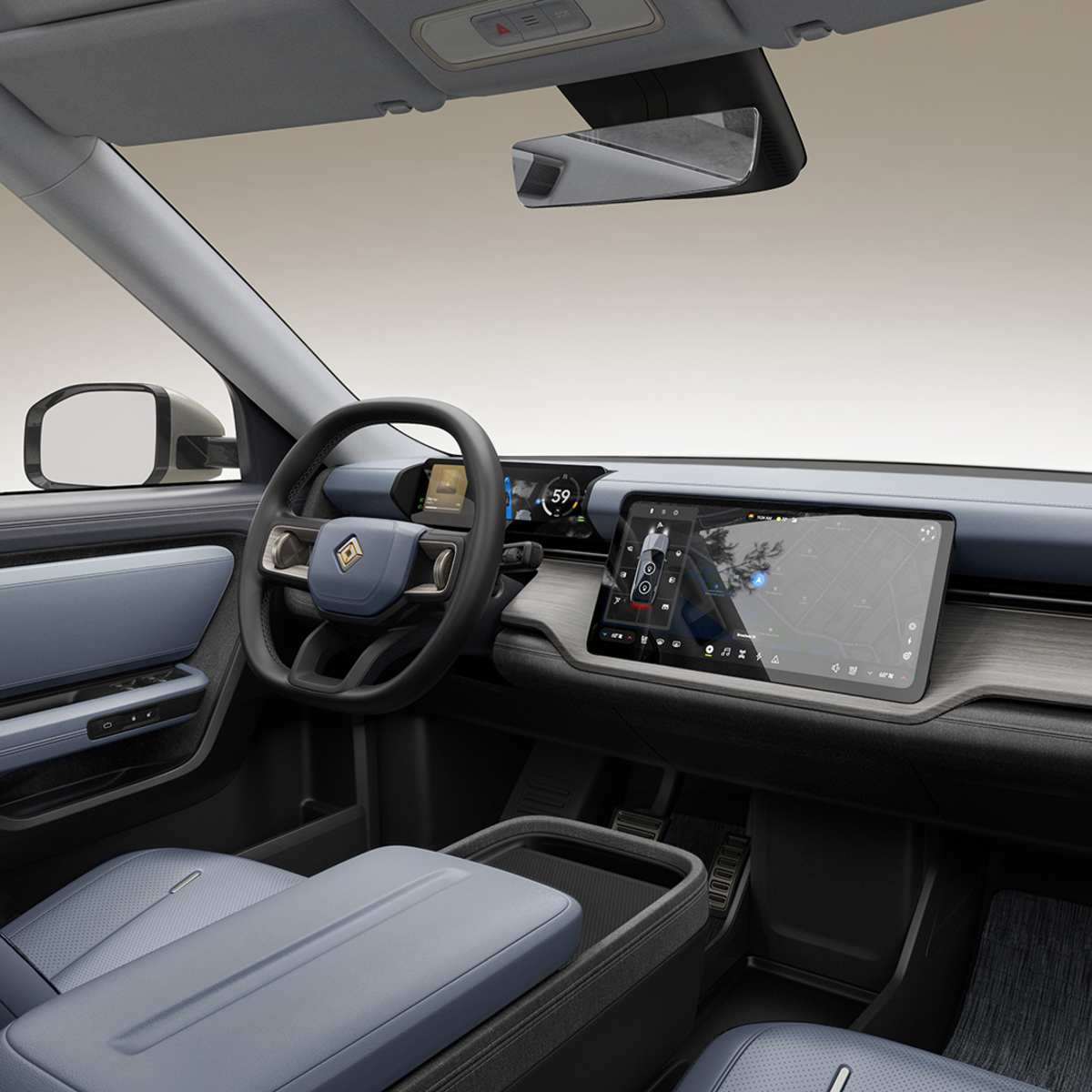
Rivian R2
"speaking of videos up on the channel right now is my video of the Rivian R2 ... we were on the roads ... freeway surface streets ... gravel roads dirt roads and then some pretty impressively aggressive trails that R2 is a home run ... we were in the full ... launch edition ... which is of the what the performance trim"
The Rivian R2 is an upcoming electric vehicle from Rivian. They’re saying it impressed them on a mix of normal roads and rough off-road trails, and they mention a high-performance “Launch Edition” version.
The Rivian R2 is an upcoming electric vehicle positioned as a more accessible, adventure-focused alternative to Rivian’s larger models. In this segment, the hosts highlight driving it across freeway, city streets, gravel/dirt roads, and aggressive trails, and they discuss the “Launch Edition” performance trim.
Launch edition
"we were in the full fully decked out launch edition which is of the what the performance trim so that's 656 horsepower"
A “Launch Edition” is an early, special version of a new car. It usually comes with extra features (and sometimes more power) compared to the regular versions that come later.
A “Launch Edition” is a limited initial production version of a new model, typically with higher equipment levels and sometimes performance upgrades compared with later, more widely available trims. Here, it’s described as the performance trim for the Rivian R2.

Subaru Outback
"...nna get people out of a Toyota for owner a Subaru outback I think so they're gonna sell well and scout isn'..."
The Subaru Outback is a practical crossover that’s shaped like a wagon. It’s known for being able to drive on different types of roads, especially with all-wheel drive. The podcast mentions it because it’s expected to sell well.
The Subaru Outback is a wagon-like crossover known for versatility and available all-wheel-drive capability. It’s often discussed because it appeals to buyers who want a practical vehicle that can handle different road conditions. In this episode, it’s mentioned as a strong seller and as a comparison point to another brand’s model.
hurricane engine
"the biggest one is they put new engine in it with the name yes it has a hurricane engine yes I do love it yeah turbo for it makes good power it's like over 300 horsepower"
“Hurricane engine” is the name Jeep is using for a newer engine in this Grand Cherokee. The point they’re making is that it’s a turbo engine that makes strong power.
“Hurricane engine” refers to Jeep’s new engine branding used for this Grand Cherokee update. The hosts connect it to turbocharged power output, describing it as making over 300 horsepower.
locking differential
"it has like a locking differential low-range transfer case like it will it will do the business"
A locking differential helps the SUV keep traction when one wheel starts slipping. It basically makes both wheels on the same axle work together so you’re less likely to get stuck.
A locking differential forces the left and right wheels on an axle to rotate together. That helps maintain traction when one wheel loses grip, which is why it’s a key off-road feature.
low-range transfer case
"it has like a locking differential low-range transfer case like it will it will do the business"
A low-range transfer case gives the SUV “crawl mode” gearing. It helps the vehicle go slowly with more pulling power when climbing or driving over rough terrain.
A low-range transfer case provides much lower gearing for crawling over obstacles. It multiplies torque at the wheels so the vehicle can move slowly and controllably in tough off-road conditions.
fuel economy
"EPA told me it should get good fuel economy the big thing for me though was"
Fuel economy is how far the car can go on a gallon of gas (or how much gas it uses). Higher fuel economy usually means you spend less on fuel.
Fuel economy is how efficiently a vehicle uses fuel, commonly expressed as miles per gallon (MPG) or liters per 100 km. It’s a key metric regulators and buyers use to compare vehicles’ operating costs and emissions.
EPA
"EPA told me it should get good fuel economy the big thing for me though was"
The EPA is a U.S. government agency that tests and regulates things like vehicle emissions and fuel economy. When they’re mentioned, it usually means the car’s efficiency numbers are based on official testing.
The EPA (Environmental Protection Agency) is the U.S. agency that sets and enforces rules around vehicle emissions and publishes fuel-economy testing results. When someone references the EPA in a car context, they’re usually talking about official efficiency/emissions expectations.
connectivity
"a big thing for me was connectivity what wouldn't just like not connect to Android Auto every once in a while"
Connectivity is how reliably the car can stay connected to your phone and online services. If it doesn’t reconnect, things like navigation or phone features may stop working until you reset the connection.
In modern cars, connectivity refers to how well the vehicle maintains links to your phone and services—typically for infotainment, navigation, and app integration. When connectivity is flaky, features can fail to load or reconnect after the phone leaves and returns.
Bluetooth
"at one point it wouldn't even connect the Bluetooth navigation wasn't wasn't like getting a signal"
Bluetooth is the wireless link that lets your phone connect to the car. If it won’t reconnect, features like calling or navigation can stop working.
Bluetooth is a short-range wireless connection used in cars for hands-free calling, audio streaming, and pairing phones with the infotainment system. If Bluetooth pairing or reconnection fails, navigation and phone features can appear broken.

Jeep Grand Cherokee
"I like the Jeep Grand Cherokee on like a platform and like the capabilities it's gorgeous gorgeous SUV"
The Jeep Grand Cherokee is a popular SUV model from Jeep. The host is saying it has strong power and looks good, and they like it enough to want the brand to succeed.
The Jeep Grand Cherokee is a midsize SUV known for offering multiple engine options and a more premium, capable feel compared with many mainstream SUVs. In this segment, the host highlights it as a platform for the “Frankenstein” build and praises its styling and power.
speed auto
"the old school six that penistar had been around for decades they have this speed auto that they've been using for"
This sounds like the host is talking about how the car automatically changes gears or behaves based on speed. The exact term is a bit unclear in the transcript, but it’s about automatic driving/shift behavior.
“Speed auto” appears to refer to an automatic transmission behavior or shift/gear-selection mode tied to speed. Because the transcript is unclear here (“penistar” and “speed auto”), it’s best treated as a possibly misheard phrase rather than a confidently identified technical term.
Request an Explanation
Heard something you'd like explained? We'll add it to this episode.
Sign in to request explanations for terms you heard.
Want to learn more?
Browse our glossary for plain-English explanations of automotive terms, jargon, and concepts.
Help improve this episode
See something that's not quite right? Our annotations are AI-generated and can sometimes miss the mark. Click the flag icon on any annotation to suggest a correction.