
Best American Cars of All Time! #60
About this episode
Celebrate America's birthday with hosts Natalie, Dave, and Matt as they debate the greatest and most iconic American cars of all time. The team dives into the legendary Ford GT40 and its historic triumph over Ferrari at Le Mans, the timeless appeal and astronaut connection of the third-generation Chevrolet Corvette, and the ultra-luxurious Duesenberg. It is a fun, opinionated trip through American automotive history, exploring what makes these vehicles cultural touchstones rather than just machines.
Happy 250th birthday America! In this episode, we look back at our most important, most crucial, and BEST American cars of all time. Did we miss your favorite? Let us know, we've got over a century of cars, we can't talk about them all!!
24 Hours of Le Mans
"You know, but the 24 hours of Le Mans is not an American race, but a true American spirit. It's French and we walked in."
A famous 24-hour race in France where sports cars compete to see who can drive the farthest distance in a single day without breaking down.
The 24 Hours of Le Mans is the world's oldest active sports car endurance race, held annually near the town of Le Mans, France. It represents one of the legs of the Triple Crown of Motorsport, challenging teams to balance speed with car reliability over a grueling 24-hour period.
Jeep
"Can we talk about Jeep? Don't get too technical. I'm just clearing it out. Everyone knows what you mean by when they say American."
A famous American brand known for making rugged off-road SUVs like the Wrangler, originally created for military use in World War II.
Jeep is an iconic American automobile brand specializing in off-road and utility vehicles, originally forged in the crucible of World War II with the Willys MB. Today, it is a subsidiary of the multinational corporation Stellantis, though it retains its deep-seated identity as a symbol of American freedom and adventure.

Jeep Wrangler
"...ts is going to let us know that actually the Jeep Wranglers run by a European company. They're going to go in..."
The Jeep Wrangler is a rugged, four-wheel-drive SUV made by Jeep, which is owned by a large European-based parent company called Stellantis. It is designed for driving on rough, unpaved roads and features a roof and doors that can be completely removed.
The Jeep Wrangler is an iconic, highly capable off-road SUV currently produced under Stellantis, a multinational automotive group. Known for its body-on-frame construction, solid axles, and removable doors, it remains a global benchmark for rugged outdoor adventure. It is discussed in the podcast due to its unique global corporate ownership despite its deeply rooted American heritage.
Stellantis
"maybe technically Jeep is owned by Stalantis, which is in what, Belgium? Holland? Netherlands? No one's really sure."
A massive global car company that owns many famous brands like Jeep, Dodge, Chrysler, and Ram.
Stellantis N.V. is a multinational automotive manufacturing corporation formed in 2021 by the merger of Fiat Chrysler Automobiles (FCA) and the French PSA Group. Headquartered in Amsterdam, the conglomerate oversees a massive portfolio of historic brands including Jeep, Ram, Dodge, Chrysler, Peugeot, and Maserati.

Jeep Brands Jeep
"No one's really sure. It's a made up country. It's a made up name. Everyone knows what we mean. All names are made up. Right. Everybody get down to it. American brands. Jeep is an American brand by sort of historic association and all that. The vibe of Jeep is very, it's America. It's"

Ford GT40
"GT 40. Let's do it. It's in terms of just like, dare I say, American exceptionalism. This, this was the biggest like, you know, Europe has hurt our feelings. So we're going to go over there and we're going to win."
A famous Ford race car built in the 1960s to beat Ferrari in a famous 24-hour French race, which it successfully did four years in a row.
The Ford GT40 is a legendary high-performance endurance racing car designed specifically to defeat Ferrari at the 24 Hours of Le Mans. Powered by a series of massive American V8 engines, it achieved this goal by winning the prestigious French race four consecutive times from 1966 to 1969.
Carroll Shelby
"So Carol Shelby takes over the program, brings in Ken Miles as the driver. You guys can see this word first."
A legendary American race car driver and designer who helped Ford build the cars that beat Ferrari, and who also created the famous Shelby Cobra sports car.
Carroll Shelby was an American automotive designer, racing driver, and entrepreneur best known for his involvement with the AC Cobra and Mustang-based performance cars for Ford. He played a pivotal role in turning Ford's GT40 program into a Le Mans-winning success after taking over management of the project in late 1964.
Ken Miles
"brings in Ken Miles as the driver. You guys can see this word first. Yeah. Matt Damon."
A highly skilled British race car driver and mechanic who worked closely with Carroll Shelby to develop and race Ford's legendary GT40.
Ken Miles was an English sports car racing engineer and driver who spent most of his career in the United States. He was a key development driver for Shelby American, helping refine the Shelby Cobra and Ford GT40, and famously drove the GT40 to a near-victory at the 1966 24 Hours of Le Mans.

Chevrolet Corvette (C3)
"I'm picking this specific generation of Corvette because it's my favorite, but I also want it to serve as sort of a proxy for every generation of Corvette... my favorite is the C3."
The third generation of the Corvette sports car, famous for its curvy body shape that looks like a classic Coca-Cola bottle.
The Chevrolet Corvette (C3) is the third generation of America's iconic sports car, produced from 1968 to 1982 and featuring a distinctive 'Coke bottle' body shape. It was powered by a range of small-block and big-block V8 engines, though later models suffered from drastically reduced performance due to 1970s emissions regulations.
T-tops
"If you want the super rare engines, but, and then like they have T tops, there's convertible."
A type of car roof where you can take out two panels over the driver and passenger seats, leaving a central bar in the middle that looks like the letter T.
A T-top is a car roof style featuring a removable panel on each side of a central rigid bar running from the windshield to the rear roof section. This design offers an open-air driving experience similar to a convertible while maintaining better structural rigidity and safety.
side pipes
"Some of them have side pipes. I personally, I like the, like the very early versions of the C3."
Exhaust pipes that run along the bottom sides of the car under the doors instead of exiting out the back, making the car look and sound very aggressive.
Side pipes are exhaust pipes mounted along the lower sides of a vehicle, running parallel to the rocker panels beneath the doors, rather than underneath the chassis to the rear. They are a classic performance car styling cue, famously used on Shelby Cobras and early Chevrolet Corvettes, known for producing a loud, raw exhaust note.

Duesenberg Model J
"I didn't even consider it. Although this is, this first one is a German sounding name. Dusenberg. Oh, wow. Yeah. So first, first of all, very like legend has it that this is the source of the phrase. It's a doozy."
An incredibly expensive and luxurious American car from the late 1920s and 1930s that was so impressive it inspired the phrase 'it's a doozy.'
The Duesenberg Model J is an ultra-luxury, grand touring automobile introduced in 1928 to compete with the finest European marques of its era. It was powered by a highly advanced 6.9-liter straight-eight engine with dual overhead camshafts, producing an astonishing 265 horsepower in naturally aspirated form.
straight-eight engine
"So Dusenberg was the first mass produced car with a straight eight. So that's kind of cool. I miss the era of straight A's."
An engine with eight cylinders lined up in a single straight row, known for being very smooth but extremely long.
A straight-eight engine (or inline-eight) is an internal combustion engine with eight cylinders aligned in a single straight line along the crankcase. Popular in luxury and performance cars prior to World War II, it offers exceptionally smooth power delivery but requires a very long engine bay.

1984 Dodge Caravan
"The 1984 Chrysler minivan program. I knew that would come out of which I am choosing the Dodge Caravan. Yes. Okay. So I don't know if you guys know this."
The original modern family minivan, introduced in the early 1980s, which completely changed how families traveled by offering tons of space in a vehicle that drove like a normal car.
The Dodge Caravan is a seminal American family vehicle introduced in 1983 that pioneered the modern minivan segment. Built on Chrysler's front-wheel-drive K-car platform, it offered car-like handling and garage-friendly dimensions while maximizing interior passenger space.
Lee Iacocca
"But Lee Iococca famously portrayed by John Bernthal admirably in Ford V Ferrari, of which is where I get most of my knowledge of this era. He was CEO of Chrysler at the time and championed the minivan program"
A famous American car executive who helped create the Ford Mustang and later saved Chrysler from going out of business by introducing the minivan.
Lee Iacocca was an iconic American automobile executive famous for spearheading the development of the Ford Mustang during his tenure at Ford, and later saving Chrysler from bankruptcy in the 1980s. At Chrysler, he championed the development of the K-car platform and the highly successful minivan program.
Chrysler K platform
"He was CEO of Chrysler at the time and championed the minivan program because they had the K car platform. Talk about platforms."
A basic car design that Chrysler used in the 1980s to build many different types of vehicles, from sedans to minivans, using the same underlying parts to save money.
The Chrysler K platform (commonly known as the K-car) was a highly versatile front-wheel-drive vehicle architecture introduced by Chrysler in 1981. It allowed the struggling automaker to produce a wide variety of models—ranging from compact sedans to the pioneering Dodge Caravan minivan—using shared mechanical components to drastically cut costs.
minivan
"And they invented an entire segment. It became the default American vehicle at the time."
A boxy family vehicle with sliding doors and three rows of seats, designed to carry lots of people and cargo comfortably.
A minivan is a vehicle body style designed to maximize passenger and cargo space, typically featuring a high roof, three rows of seating, and sliding rear side doors. Pioneered in the modern era by Chrysler in 1983, it became the quintessential family vehicle of the late 20th century.

Chrysler Pacifica
"...e new yesterday. You know, the the minivan or the Pacifica, right? Has a new face."
The Chrysler Pacifica is a family minivan made by Chrysler. It is designed to carry up to eight passengers and features sliding side doors for easy access.
The Chrysler Pacifica is a modern minivan that serves as the flagship family hauler for the Chrysler brand, offering innovative features like Stow 'n Go seating and an available plug-in hybrid powertrain. It is discussed in the context of minivans receiving updates or styling refreshes.

Ford Mustang
"...don't know if it's going to come up. Do we have a Mustang on this list? Because I had coke."
The Ford Mustang is a sporty, two-door car built by Ford. It is designed for fast, fun driving and is famous for its sporty styling and powerful engine options.
The Ford Mustang is a legendary American pony car that entered its seventh generation (S650) for the 2024 model year. It continues to offer traditional rear-wheel-drive performance with available V8 power alongside modern digital cockpit technology. It is discussed as an iconic staple of American automotive performance.

Buick Roadmaster
"How could it not be when that is out the window of my Buick roadmaster? Look at that. It, obviously there were other station wagons of the time."
A massive, classic American family car, most famous as a giant 1990s station wagon with wood paneling on the sides and a powerful V8 engine under the hood.
The Buick Roadmaster is a historic nameplate representing Buick's flagship full-size vehicle, most famously remembered in its 1990s station wagon iteration. These late-model wagons featured a rear-wheel-drive layout, wood-grain exterior paneling, and a powerful 5.7-liter LT1 V8 engine shared with the Chevrolet Corvette.
station wagon
"obviously there were other station wagons of the time. Ford country, Squire."
A passenger car with an extended roofline all the way to the back, creating a large cargo area behind the seats instead of a standard trunk.
A station wagon is an automotive body style variant of a sedan with its roof extended rearward to the back of the vehicle to maximize passenger and cargo volume, accessed via a rear tailgate or hatch. Popular before the rise of minivans and SUVs, they were the traditional choice for family road trips.

Ford Country
"...usly there were other station wagons of the time. Ford country, Squire. Yeah."
The Ford Country Squire is a large, classic station wagon made by Ford. It is best known for having decorative wood-like panels on the sides of the vehicle.
The Ford Country Squire was a premium, full-size station wagon produced across several decades, famous for its signature woodgrain exterior paneling. As Ford's flagship family wagon, it epitomized suburban American life before the rise of the minivan and SUV. It is discussed as the definitive classic American station wagon.

Chevrolet Suburban
"... the Chevrolet version of it. I thought about the suburban for a minute. I've been around since the thirties..."
The Chevrolet Suburban is a very large SUV made by Chevrolet that can carry up to nine people. It has been in production since the 1930s, making it one of the oldest vehicle models still sold today.
The Chevrolet Suburban is the longest-running continuous automobile nameplate in history, having been introduced in 1935. It is a massive, body-on-frame three-row SUV designed for hauling large families and heavy cargo. It is discussed due to its incredible longevity and historical significance in the American market.

Chevrolet Bel Air
"That's cool. I thought we were going to say Chevy Bel Air, which is 57 is like that's the iconic like drive..."
The Chevrolet Bel Air is a classic car made by Chevrolet, most famous for its models built in the 1950s. It is easily recognized by its large rear tailfins and shiny metal trim.
The Chevrolet Bel Air is a classic American car produced from 1950 to 1975, with the 1957 model year representing the pinnacle of 1950s automotive design. Featuring prominent tailfins, abundant chrome, and the famous small-block V8, it is a cultural touchstone. It is discussed as the quintessential, iconic mid-century American cruiser.

Ford Bronco
"I'm going to take the Mustangs off-road cousin Ford Bronco. But not the new ones. New ones are great. They're cool. But I'm saying in terms of like impactful, kind of iconic, fairly unique... first gen Broncos."
A classic, rugged two-door off-road vehicle built by Ford to compete with Jeep, highly prized today for its boxy vintage look.
The Ford Bronco is a highly celebrated compact off-road vehicle introduced in 1965 to compete directly with the Jeep CJ-5. The first-generation models featured a dedicated chassis, standard four-wheel drive, and a choice of inline-six or small-block V8 engines, making them highly sought-after collector items today.

Shelby Cobra
"but I'm going, I'm going Shelby Cobra. And now the reason I'm thinking like, should, should this be up for debate is because like AC Cobra was British, but Shelby Cobra is. I think that's American."
A famous, extremely fast sports car made by stuffing a big American V8 engine into a tiny, lightweight British roadster body.
The Shelby Cobra is a legendary sports car created by placing a powerful American Ford V8 engine into a lightweight British AC Ace chassis. Conceived by Carroll Shelby in 1962, this hybrid creation became one of the most dominant track cars of the 1960s and remains highly replicated.

Ac Cobra
"...uld, should this be up for debate is because like AC Cobra was British, but Shelby Cobra is. I think that's ..."
The AC Cobra MkIII is a classic, high-performance sports car from the 1960s. It was created by putting a powerful American Ford engine into a lightweight British car body.
The AC Cobra MkIII is a legendary sports car born from a collaboration between British automaker AC Cars and American racer Carroll Shelby, who stuffed a powerful Ford V8 into a lightweight British chassis. The MkIII featured a redesigned coil-spring chassis and wider fenders to accommodate the massive 427 cubic-inch engine. It is discussed due to the debate over its British versus American heritage.
Daytona Cobra Daytona
"...'s racing history, and then Simeon Museum has the Cobra Daytona Coupe, so that's another Ferrari beater."
The Daytona Coupe is an extremely rare, high-performance race car built in the 1960s. It was designed with a sleek, aerodynamic body specifically to beat European racing teams in international sports car races.
The Daytona Coupe (officially the Shelby Daytona Cobra Coupe) is an ultra-rare, aerodynamic race car built by Carroll Shelby to challenge Ferrari's dominance in GT class racing. With only six original units produced, its sleek fastback body allowed it to achieve much higher top speeds on long straightaways like Le Mans. It is discussed as a legendary American racing icon and 'Ferrari beater.'
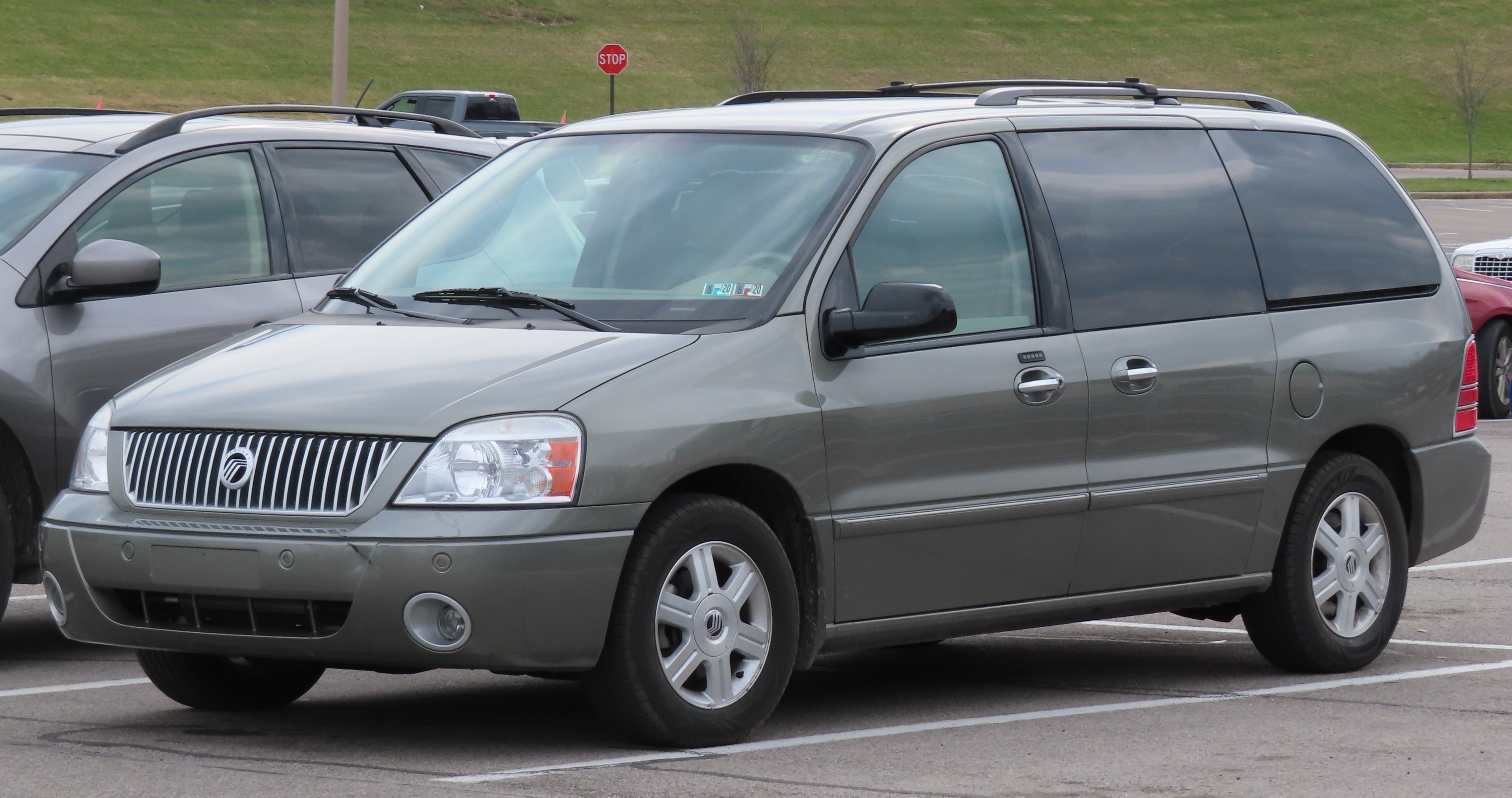
Mercury Monterey
"...a Cobra Coupe, one of six ever built at the Rolex Monterey Motorsports reunion. Oh, God."
The Mercury Monterey is a classic, large luxury car made by the Mercury brand, which was owned by Ford. It was designed to be a comfortable, stylish cruiser with more premium features than a standard Ford.
The Mercury Monterey was a full-size car produced by Ford's upscale Mercury division from 1952 to 1974, serving as a stylish step up from standard Ford models. It is remembered for its distinctive design elements, including the 'Breezeway' roll-down rear window on later models. It is likely mentioned due to a name association with the famous Monterey Motorsports Reunion.
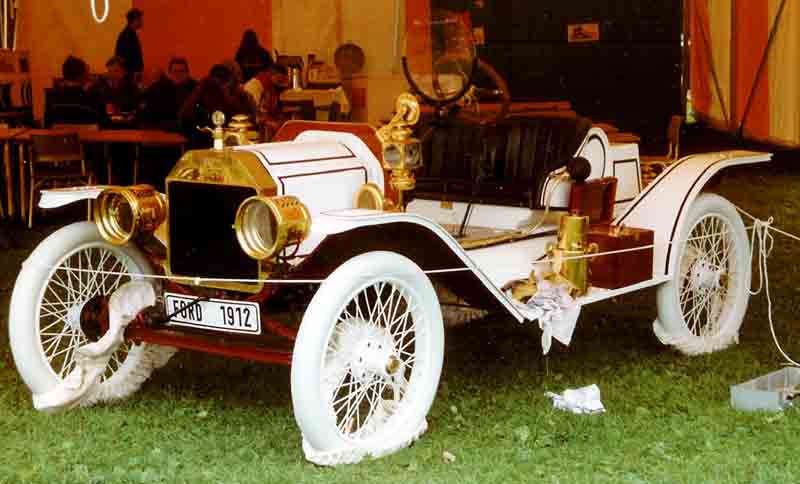
Ford Model T
"It's the Model T, the Ford Model T. How do you say no? How do you say no? You can't say no."
The historic car that 'put America on wheels.' It was the first car built on a moving assembly line, making it cheap enough for regular working people to buy.
The Ford Model T is widely regarded as the most influential automobile in history, credited with making car ownership affordable for the average citizen. Produced from 1908 to 1927, it pioneered moving assembly line mass production and was powered by a simple, rugged 2.9-liter four-cylinder engine.

Ford Model
"Natalie, you probably have. It's the Model T, the Ford Model T. How do you say no?"
The Ford Model A is an old car made by Ford in the late 1920s and early 1930s. It was the car that replaced the famous Model T and introduced more modern controls like a standard steering wheel and pedals.
The Ford Model A was the designated successor to the historic Model T, produced from 1927 to 1931. It was a massive commercial success that modernized Ford's lineup with standard driving controls, a safety glass windshield, and more stylish body options. It is discussed as a foundational vehicle in early automotive history.

Ford F150
"today the most important car is the F-150. That's where I'd go. Honestly, it is, I mean, it's the best."
America's favorite pickup truck, which has been the best-selling vehicle in the country for decades because of its toughness and versatility.
The Ford F-150 is a full-size pickup truck that has served as the best-selling vehicle in the United States for decades. Renowned for its utility, towing capacity, and rugged body-on-frame construction, it transitioned over generations from a basic work tool to a highly luxurious daily driver.

Ford F100
"Yeah, 75. Position between the lighter duty F-100 and the heavier F-250. I would counter your question by saying that the F-150's inclusion is largely based on the"
The Ford F-100 is an older model of Ford's pickup truck that was made for several decades before being replaced by the F-150. It was designed as a simple, durable work vehicle.
The Ford F-100 was Ford's primary light-duty half-ton pickup truck from 1953 until it was phased out in 1983 in favor of the F-150. It laid the groundwork for the F-Series' eventual dominance in the American truck market. It is discussed in the context of how Ford structured its truck lineup before the F-150 took center stage.

Buick Le Sabre
"It's a 1995 Buick Le Sabre. Two Buicks. And when we, when we turn this into a written article, we'll be dropping that in favor of the Ford Mustang."
A large, incredibly comfortable American sedan from the 1990s known for having an extremely reliable V6 engine that can run for hundreds of thousands of miles.
The Buick LeSabre is a full-size, front-wheel-drive sedan that was a staple of American roads for several decades. The 1995 model is highly regarded for its exceptional ride comfort and its legendary 3.8-liter Series II V6 engine, which is widely considered one of the most reliable engines ever built.

Plymouth Superbird
"So, Plymouth Superbird. The huge wing, the huge wing version of the road runner with the nose cone and the giant wing."
A wild-looking 1970 muscle car built for NASCAR racing, featuring a pointed nose cone and a giant rear wing that stood several feet above the trunk.
The Plymouth Superbird is a highly modified, aerodynamic version of the Plymouth Road Runner developed specifically for NASCAR racing in 1970. It is instantly recognizable by its elongated, smoothed nose cone and its massive, high-mounted rear wing designed to provide downforce at speeds exceeding 200 mph.

Dodge Road Runner
"...bird. The huge wing, the huge wing version of the road runner with the nose cone and the giant wing. How long w..."
The Road Runner is a classic, powerful two-door muscle car made by Chrysler's Plymouth division. It was designed to be a fast, affordable car with a fun theme based on the cartoon character.
While the Road Runner was officially produced by Plymouth, it shared its mid-size B-body platform with Dodge's muscle cars like the Charger and Coronet. It was designed as a back-to-basics, high-performance muscle car that offered raw speed at an affordable price point. It is discussed in relation to its extreme aerodynamic sibling, the Superbird.
Richard Petty
"And it was the car that Plymouth used to bring Richard Petty back to the team. The Richard Petty Superbird, that shade of blue."
A legendary NASCAR driver who won seven championships and is widely considered the greatest stock car racer of all time.
Richard Petty, nicknamed 'The King,' is a former American NASCAR driver who won a record 200 career races and seven Cup Series championships. His iconic Petty Blue Plymouth Superbird remains one of the most famous and recognizable racing cars in motorsport history.
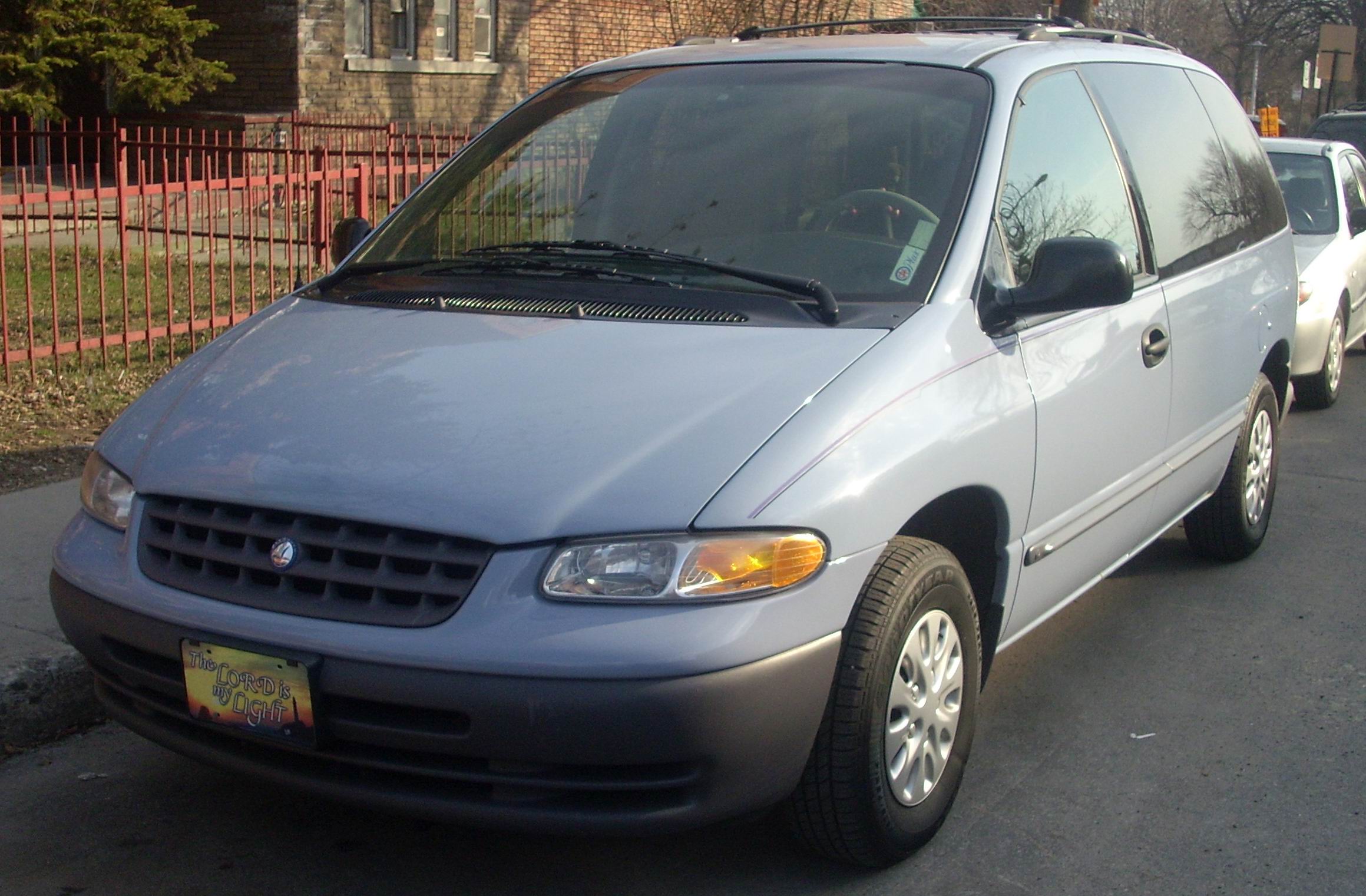
Plymouth Voyager
"Very dismissive. Very Voyager. But modern day Plymouth, you know, 90s, 2000 Ply..."
The Plymouth Voyager is a classic family minivan made by Plymouth. It was one of the very first modern minivans ever sold and became highly popular for carrying families and their gear.
The Plymouth Voyager was a pioneering minivan introduced in 1984 that, alongside the Dodge Caravan, revolutionized family transportation by creating the modern minivan segment. It offered car-like handling, garageable dimensions, and highly flexible seating configurations across several generations until the Plymouth brand was discontinued. It is discussed as a symbol of 1990s and early 2000s family hauling.

Chrysler Pt
"my frame was important. The Chrysler PT. Chrysler."
The Chrysler PT Cruiser is a small, five-door car made by Chrysler that was designed to look like an old-fashioned car from the 1930s. It was built to be a practical and affordable family vehicle with a unique shape.
The Chrysler PT Cruiser is a retro-styled compact car produced from 2000 to 2010, blending elements of a hatchback, wagon, and minivan. Designed to evoke 1930s street rods, it was initially a massive sales success before becoming a polarizing cultural icon. It is discussed as a notable example of early-2000s retro design trends.

Tesla Model S
"of the 21st century. Model S. I am going with the Model 3."
The Tesla Model S is a large, luxury electric sedan made by Tesla. It runs entirely on battery power and is known for its high-tech interior and very fast acceleration.
The Tesla Model S is a premium all-electric liftback sedan that revolutionized the automotive industry upon its launch in 2012 by proving EVs could be fast, luxurious, and long-range. It is discussed as one of the most influential vehicles of the 21st century.

Tesla Model 3
"Model S. I am going with the Model 3. Because that is the one that was truly for everybody. It was kind of the Model T of Tesla."
A popular, relatively affordable all-electric sedan made by Tesla that helped make electric cars common on everyday roads.
The Tesla Model 3 is an all-electric four-door sedan designed to bring electric vehicle ownership to a mass-market audience. Launched in 2017, it features a minimalist interior dominated by a single central touchscreen and is powered by a rear- or dual-motor electric drivetrain offering impressive range and acceleration.
over-the-air software updates
"Over the air software updates became normalized with Tesla. That's huge. Which that's a big shift."
Wireless software updates sent directly to your car over the internet, just like how your smartphone gets updates, allowing the car to get new features or bug fixes without visiting a mechanic.
Over-the-air (OTA) software updates refer to the wireless delivery of operating system, safety, or performance upgrades directly to a vehicle's onboard computer via cellular or Wi-Fi networks. Pioneered extensively by Tesla, this technology allows manufacturers to fix bugs, add features, or improve vehicle efficiency without requiring a physical dealership visit.

Ford Thunderbird
"...re. Like there were so many, I looked at like the Thunderbird. Yeah. Yeah."
The Ford Thunderbird is a classic car made by Ford over several decades. It was originally a sporty two-seat car but later became a larger, comfortable luxury vehicle.
The Ford Thunderbird is a historic nameplate produced across eleven generations from 1955 to 2005, initially launched as a sporty two-seat convertible to compete with European roadsters. It eventually evolved into a larger, highly successful 'personal luxury car' segment creator. It is discussed as a classic, highly recognizable American icon.

Tesla Model
"...rysler Mini Vans, Dodge Caravan specifically. The Tesla Model 3, the Ford Model T. Matt brought the Ford F-150,..."
The Tesla Model Y is a fully electric, mid-sized SUV made by Tesla. It is designed to be a practical family vehicle with lots of cargo space and a high driving position.
The Tesla Model Y is an all-electric compact crossover utility vehicle that has become one of the best-selling vehicles globally. Sharing much of its platform with the Model 3, it offers elevated seating, optional third-row seating, and versatile cargo space. It is discussed as a modern mass-market phenomenon.

Polestar 4
"Uh, the Polestar 4. So that's, this is Volvo's all-electric sister company. Owned by Chinese ownership, you know, historically Swedish. Polestar 4 is this like four-door coop, hatchback, sedan, light crossover kind of thing."
A modern electric luxury SUV that has a very unusual design feature: it has absolutely no rear window, so the driver has to look at a digital screen showing a camera feed instead of a normal rearview mirror.
The Polestar 4 is an all-electric, mid-size luxury crossover coupe produced by the Swedish-Chinese brand Polestar. Its most defining and controversial design feature is the complete absence of a rear window, relying instead on a high-definition roof-mounted camera feed displayed on a digital rearview mirror.

Polestar 2
"Yeah. I have not been a fan of the Polestar 2 yet and like, I never drove the 3."
The Polestar 2 is a fully electric four-door hatchback made by Polestar. It is designed to be a premium, high-tech daily driver with a minimalist Scandinavian interior.
The Polestar 2 is an all-electric premium fastback that serves as the brand's high-volume model, competing directly in the compact EV segment. A major refresh for the 2024 model year switched the single-motor variants from front-wheel drive to rear-wheel drive, significantly improving driving dynamics and efficiency. It is discussed in terms of personal driving impressions and how it compares to other models in the lineup.

Polestar 1
"...ve the 3. And for those wondering, yes, there's a Polestar 1 there. The nomenclature is just the order in whic..."
The Polestar 1 is a rare, high-end hybrid sports car made by Polestar. It uses both a gasoline engine and electric motors to produce a lot of power while still being able to drive on electricity alone.
The Polestar 1 is a limited-production, high-performance plug-in hybrid grand tourer that served as the halo launch vehicle for Volvo's electric performance spin-off brand. Featuring a carbon fiber body and a sophisticated twin-charged engine paired with three electric motors, it offered an impressive electric-only range. It is discussed to explain Polestar's sequential naming strategy.

Bmw I4
"...ique styling, right? Like it, if you want maybe a BMW i4 or the Tesla Model 3, but you want something diff..."
The BMW i4 is a fully electric four-door luxury car made by BMW. It is designed to look and drive like a traditional gas-powered BMW sports sedan, but runs entirely on battery power.
The BMW i4 is an all-electric compact executive car that adapts the traditional driving dynamics and styling of the 4 Series Gran Coupe into an EV. It offers a familiar luxury car experience with strong performance and a highly polished interior, making it a direct competitor to mainstream electric sedans. It is discussed as a premium alternative for buyers seeking traditional luxury styling in an electric vehicle.

Hyundai Ioniq 9
"I have the Hyundai Ioniq 9. Yeah, you do. I can tell you what the not best part about it this car is. It's how it looks."
A brand-new, very large electric family SUV with three rows of seats, built by Hyundai to carry up to seven people without using any gasoline.
The Hyundai Ioniq 9 is a large, all-electric three-row SUV built on Hyundai's dedicated E-GMP platform. It offers a spacious, lounge-like interior with advanced fast-charging capabilities, aiming to provide a premium electric family hauling experience.

Hyundai Ioniq
"Yeah. I have the Hyundai Ioniq 9. Yeah, you do."
The Hyundai Ioniq 5 is a fully electric SUV made by Hyundai. It has a distinctive, blocky design and can charge its battery very quickly using specialized charging stations.
The Hyundai Ioniq 5 is an all-electric compact crossover known for its retro-futuristic styling and ultra-fast 800-volt charging capability. It represents Hyundai's dedicated push into next-generation electric vehicles on the E-GMP platform. It is discussed alongside other members of Hyundai's expanding electric 'Ioniq' lineup.
Request an Explanation
Heard something you'd like explained? We'll add it to this episode.
Sign in to request explanations for terms you heard.
Want to learn more?
Browse our glossary for plain-English explanations of automotive terms, jargon, and concepts.
Help improve this episode
See something that's not quite right? Our annotations are AI-generated and can sometimes miss the mark. Click the flag icon on any annotation to suggest a correction.
1 community members have helped improve this episode.