All New EV C-Class, New Lamborghini Spied, GM Stops Building EV Trucks And More! THIS CAR POD EP108
THIS CAR POD! with Doug DeMuro & Friends!
All New EV C-Class, New Lamborghini Spied, GM Stops Building EV Trucks And More! THIS CAR POD EP108THIS CAR POD! with Doug DeMuro & Friends! · Apr 24, 2026
The Mercedes-Benz C-Class is one of Mercedes’ main “everyday luxury” car lines. Here, the big point is that the new C-Class they’re talking about is electric-only, not a mix of gas and electric.
“Electric only” means you can’t buy this version of the car with a gas engine—it’s only sold as an electric car. That also means you’ll need to think about charging instead of refueling.
The Mercedes-Benz 280 SE 3.5 is a classic Mercedes from the same vintage design family. The hosts are basically saying the new C-Class looks like it’s borrowing that older car’s front-end look.
Car
Mercedes-Benz W111
The Mercedes-Benz W111 is an older Mercedes from the 1960s that’s famous for its classic design. The hosts think the new C-Class is trying to borrow that vintage look, especially at the front and rear.
This is a classic Mercedes from the W111 generation, specifically the 280 SE. The hosts bring it up as a famous “dream car” story tied to Ralph Lauren. Then they use it to set up the idea of wanting a modern electric Mercedes instead.
The Mercedes-Benz GLC is a compact luxury SUV line, and “GLC electric” refers to its electric variant. The hosts say it has already been revealed, and they’re positioning the electric C-Class sedan as the next related model. This helps listeners understand Mercedes’ EV rollout across different body styles.
Some EVs are built with a higher-voltage electrical system (like 800 volts). That can help the car charge faster at compatible fast-chargers. It’s basically an EV design choice that makes high-speed charging more practical.
Range is how far an EV can go on one full battery charge. They’re saying this new electric C-Class should be good for around 350 miles. That number helps you judge how often you’d need to stop for charging.
The Nissan Skyline is a well-known Japanese car line. In this conversation it’s mentioned just to compare styling—like the new car’s look reminds them of a Skyline.
The Mercedes-Benz CLA is a smaller Mercedes luxury car. They’re saying its rear design has similar styling cues, but the main focus is the new interior with lots of screens.
They’re talking about a big digital screen that stretches across the dashboard where the gauges normally are. Instead of separate dials and screens, the car uses one continuous display for the driver’s information.
A passenger screen is a display for the front-seat passenger. Some versions of the car include it, and some versions replace it with a different kind of display setup.
They’re describing a screen that sits behind glass, so it looks more built-in. When it’s off, it can look like part of the dashboard instead of a separate gadget.
This means the car could show information on the windshield, like speed or navigation, without you looking down at the dashboard. It’s basically a screen that projects where your eyes already are.
A heads-up display is a screen that shows info in front of you, usually on the windshield area. It helps you see things like speed or directions without taking your eyes off the road.
The Polestar 4 is an EV that can be built without a rear window. That’s a styling choice that can also change how you see out the back, so the car may rely more on cameras and displays.
Mercedes’ S-Class is their top luxury model line. When they say a new car has “S-class things,” they mean it’s trying to feel extra comfortable and high-end, like the flagship Mercedes.
Air suspension is a suspension system that uses air-filled bags instead of metal springs. It can make the ride softer or firmer and can even raise or lower the car depending on conditions.
Car
Suzuki Across
The Suzuki Across is a hybrid SUV that can run on electricity for a bit. It’s basically built on the same overall platform as the Toyota RAV4 plug-in hybrid, so they feel similar.
The RAV4 is a very common Toyota SUV. In this conversation, it’s mentioned because people may mix it up with the Suzuki Across since they’re similar plug-in hybrid vehicles.
A two-speed gearbox is like having two “ranges” for how the power is geared. It helps the car choose the right ratio so it can feel quicker when you need it and run more efficiently when you don’t.
A “three-pedal” car usually has a clutch pedal plus the brake and gas. The speaker is asking whether this hybrid SUV drives like a manual or if it’s more like an automatic.
“I-4” is shorthand for a four-cylinder engine where all cylinders line up in a row. It’s often chosen for everyday driving because it can be efficient and not too expensive.
They’re talking about factories working longer hours by adding extra shifts. That’s usually what happens when lots of people want the car, so the company needs to build more.
A “design language” just means a brand’s recognizable look. If they decide to use one style across many cars, new models will start to look more similar.
EV means an electric car that runs on batteries instead of gasoline. Here, they’re talking about how EV styling might change as the brand updates its overall look.
This refers to artificial sound generation—common on EVs and some hybrids—where the car plays synthesized engine/drive sounds through the audio system. Automakers do this to give pedestrians and drivers audible cues and to make the driving experience feel less “silent” than a pure EV. It’s often criticized as being fake, depending on how natural or intrusive it sounds.
The BMW 7-Series is BMW’s full-size luxury sedan. Here, the hosts say a “new 7-Series” was announced but clarify it’s only a slight refresh, and they debate its styling—some people hate it, while the speaker argues it still has the “presence” a big sedan should have. That “presence” is a design/stance discussion rather than a performance spec.
The Audi A8 is Audi’s flagship full-size luxury sedan. The hosts mention it in the context of “big sedans get canceled,” implying that even top-tier sedans are facing declining demand and discontinuations. This is a market/trend reference rather than a deep dive into the A8 itself.
The XJ is a Jaguar luxury sedan. The hosts are basically saying that lots of big, traditional sedans like this one are disappearing from the market. It’s an example of the “big sedan” trend fading.
They mean the new car’s design is meant to look like it belongs to the next generation, but it still keeps some familiar cues. So it’s not a total redesign overnight—it’s a step toward the future look.
Taillights are the lights at the back of the car. They’re talking about how the new ones have a distinctive shape—like two lines—that helps the car stand out.
The BMW 5 Series is a popular luxury sedan from BMW. It’s the kind of car people recognize by its overall shape, and the hosts are saying this new model looks like that family when you see it driving.
This means the screen can be divided so you can see more than one type of information at the same time. It’s like having multiple panels on one tablet.
Instead of the usual round gauges, they’re describing a dashboard where the information is shown on a screen. That can make it easier to customize what you see, like speed and warnings, without using separate dials.
“Ford Mustang Dark Horse SC” refers to a special Mustang variant (Dark Horse) with “SC” indicating a supercharged setup. The hosts are treating it as a major news item, and the mention implies performance-focused hardware beyond a standard Mustang.
Term
electric SUV varieties
They’re talking about the same kind of SUV being sold in different versions—some gas, some fully electric. The electric one changes how you live with the car because you charge it instead of fueling it.
“Hand-built” means people assemble the engine by hand instead of only machines. It’s usually meant to suggest careful workmanship, but it doesn’t always mean the engine is trouble-free.
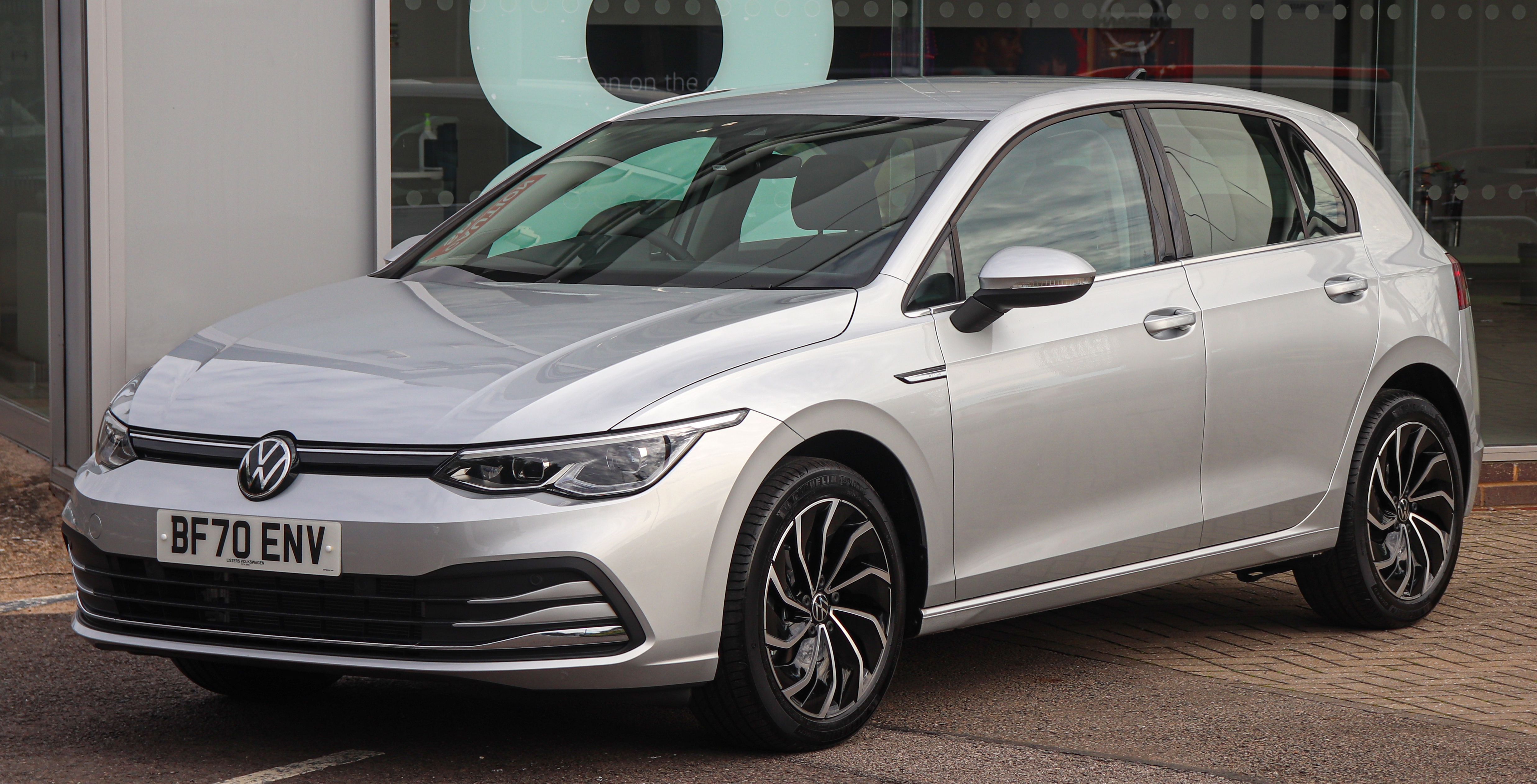
The Golf is a compact car model line. In the podcast, they’re talking about a specific Golf version called the GTD and comparing its power and price. That’s why “Golf” comes up here.
Some performance cars put a window in the back seat area so you can actually see parts of the suspension. It’s mostly a cool design detail that makes the car feel more special and mechanical.
They’re quoting the car’s price before you add sales tax and before the shipping/delivery charge. Your final price at the dealer will be higher than the headline number.
The Shelby GT500 is a high-performance Mustang made by Shelby. It’s designed to be very fast, with a stronger engine than regular Mustangs. People talk about it a lot, including how much it used to cost.
They’re talking about how one performance car is being replaced by another in the lineup. It’s not just a new badge—it’s the brand deciding which car should play the “top performance” role.
“Dark Horse” is a performance Mustang trim. They’re saying it’s basically filling the spot that people expected Shelby-branded cars to occupy.
Car
Ford Gt350
“Ford” here is being used in the context of Ford’s performance cars. The speakers are talking about a replacement for the GT350, which is a track-focused model. That kind of update matters to people who follow Ford’s performance lineup.
Car
GT350
The GT350 is a well-known high-performance Mustang from Shelby. They’re saying the newer Dark Horse trim is meant to replace the GT350 in the lineup.
The Maverick is a small pickup truck made by Ford. It’s meant for normal daily driving and light hauling. It may come up because Ford has discussed different ways to package or brand features for it.
A hybrid uses a regular gas engine plus an electric motor. The car can use electricity to help save gas, especially in stop-and-go or low-speed driving.
Miles per gallon (MPG) tells you how efficiently the vehicle uses gas. Saying it gets “40 miles per gallon” means it’s saving a lot of fuel compared with most trucks.
Tushy is a company that makes bidet add-ons for your toilet. The point here is that it’s supposed to be quick to install and doesn’t require major plumbing.
This is about how car companies guess or announce prices before the car is actually ready. Those numbers can change later, so it’s smart to wait for the final pricing.
LEDs are the small electronic lights used in modern cars. If there’s a shortage of those parts, car makers can’t build cars with the lights they planned.
The Honda Passport is a Honda SUV meant for families and road trips. They’re bringing it up as another vehicle that could be impacted if certain parts aren’t available.
A stripped-out car is a simpler version of a vehicle with fewer features. The idea is to keep the essentials and skip extra stuff that’s hard to source or not that useful.
“Back-to-basics” means a car that focuses on the essentials instead of lots of extra gadgets. The goal is usually to make it simpler, more reliable, and easier to live with.
Automatic emergency braking is a safety feature that can brake by itself if the car thinks you’re about to hit something. It uses sensors to judge what’s in front of you. Sometimes it can brake at the wrong time, like when you’re driving over rocks and it thinks the obstacle is a collision.
They’re saying the government requires certain safety features on new cars. That means even cheaper versions still have important tech that older cars might not. So you can’t really buy a very basic car anymore.
They’re complaining that the car’s safety system brakes at the wrong time. When you’re driving over rocks, the sensors can think you’re about to crash. Then the car stops you even though you’re just trying to drive normally.
AEB is a safety system that can automatically brake if it thinks you’re about to hit something. It’s meant to help you avoid crashes or make them less severe.
Concept
driver-assist systems turned off for off-road
Off-road driving can confuse some safety systems. Turning things like automatic braking off (or using trail settings) can help the car respond the way the driver expects on dirt and obstacles.
Trail mode is a driving setting meant for rough, slow paths. It helps the car behave more predictably off-road, and it may turn off some safety features that could get in the way.
Making a new car isn’t instant—it takes years of planning and testing. The “development cycle” is the whole timeline from designing the car to actually selling it.
They’re talking about companies showing off a product idea early, but not delivering it soon enough. If you build hype and then take years, people lose trust and interest.
The Nissan Frontier is a pickup truck, and “crew cab” just means it has more doors so people can sit in the back more easily. They’re saying you could start with that truck and change the back to make a quick, temporary version.
The company is basically saying, “We’re stopping the next EV plans for now.” That can happen if the cars aren’t selling as expected or if it’s too expensive to build them the way they planned.
The Hummer EV is GM’s electric truck lineup. It’s a big, high-profile EV that shows how serious GM was about EV trucks—and why they might change course later.
Sometimes car sales aren’t just regular people buying them—companies (including related ones) can buy in bulk. That can make the numbers look stronger or weaker than what you’d see from typical customers.
The Cybertruck is Tesla’s electric pickup. The point here is that some sales might be coming from Musk-related businesses, so it may not reflect typical everyday customer demand.
Concept
next gen of this old team platform and the trucks
They’re talking about the “platform” underneath the trucks—basically the shared design and parts that multiple vehicles use. If the next version is paused, it can ripple through the whole supply chain.
Car parts are made by other companies. If the automaker suddenly pauses the project, those suppliers may have to stop work even if they already started making parts.
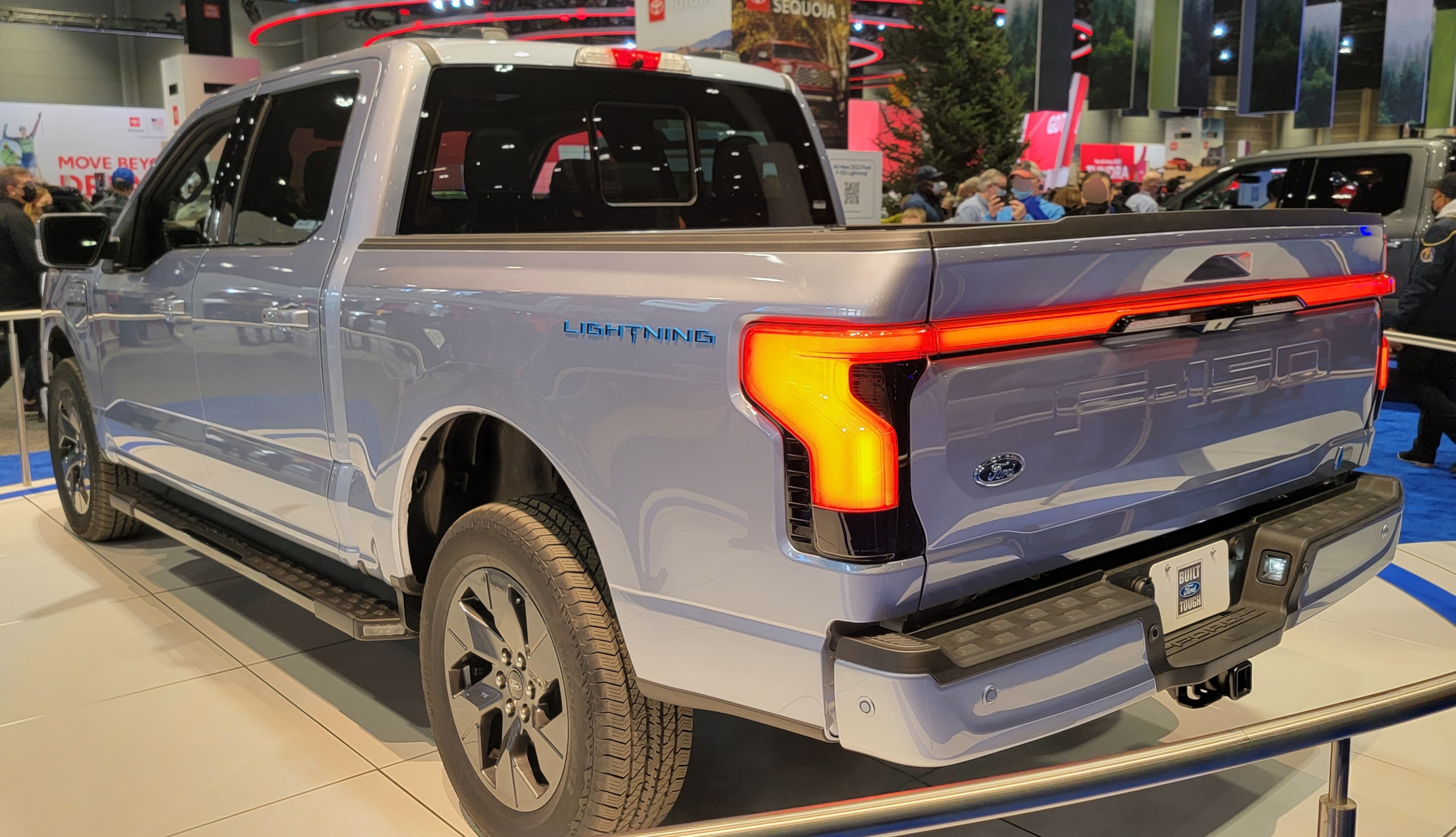
The Ford F-150 Lightning is an electric pickup based on the popular F-150. It was one of the first big-name EV trucks meant to appeal to regular truck shoppers.
Market share is how much of the total sales a product category gets. If EV market share goes up, it means EVs are selling a bigger slice of all vehicles.
Concept
fuel crises as a result of the Iran war
They’re saying Europe has been more affected by fuel-price problems tied to world events. When gas feels expensive or uncertain, people may look harder at alternatives like EVs.
They’re saying EV sales jumped a lot in March compared to the same time period before. Even if EVs aren’t dominating the market, growth can still happen month to month.
This is about how cars today mostly run on gas and diesel. EVs help because they run on electricity instead, which can come from cleaner energy sources.
Stellantis is a big car company that owns multiple brands. They’re mentioned here in the context of whether they’re investing enough in electric cars for the U.S.
The Chevrolet Bolt is an EV from Chevrolet. It’s meant to be a more affordable electric car, and the discussion here is about whether GM has a clear EV roadmap beyond it.
And for every pair sold, they give a pair to someone in need.
Over 20 million pairs donated.
Hard to not feel good about that.
And right now, buy one prescription pair
and get 20% off any additional pairs
at WarbyParker.com slash cars.
That's 20% off additional prescription pairs
when you go to W-A-R-B-Y Parker.com slash C-A-R-S.
Today to the top car segment,
which is brought to you by
my Toyota Sequoia.
Wow, we're back to it.
Filippo, I got to get out of this car.
What happened?
All right, me and Sean today
are at a gas station filming God knows what.
And a Sequoia TRD Pro rolls in.
Nice. What color?
And it has a vanity plate.
They all have vanity plates.
What was yours?
It was black.
And it has a roof tent.
And the guy had changed out
the Falcon Wild Peaks for Toyos.
He had already uptired.
And I'm like, oh, God.
And it comes in and it's so...
Did you also uptire?
Did you also uptire?
No, I got OE's.
I'm like, okay.
And then, and I said to Sean,
I said, this guy's going to get out
and be the most, like,
tatted up flat brim hat,
like hardcore MAGA bro.
And he gets out and he is literally
wearing a shirt with an American flag
on it that says freedom.
And I'm like...
God bless, brother.
And I want to be clear on this podcast.
We don't do politics and I don't care
about the Republicans.
They can do as they wish.
But the car is so far toward that.
It's the same reason why I don't want
to drive a Honda Clarity in the other direction.
Too far the other way.
I don't want a caution driver singing
bumper sticker.
You know what I mean?
But at the same time,
I don't want to be stereotyped to the point
where I'm getting out with the Clarity Pro
and I'm wearing a freedom shirt.
Like, come on.
Man, I know what you're getting you
for your birthday now.
I got to get out of this car.
So here's my plan.
You're going to love this plan.
I'm so excited.
I'm still looking for an AMG,
an old AMG station wagon.
Yeah.
Rami is looking for me.
Inbound Motorsports Rami.
My heart and soul is Rami.
He hasn't found one for me yet.
We're still looking.
Here's my plan.
This is a Filippo style plan.
I got to drive the Sequoia
and get a Nantucket this year.
It's been too long.
It's too late in the season to make a change.
Sell it.
I get back it in middle August.
Sell it instantly.
Done.
You don't need a car for nine months.
You don't need a car.
I never used that car in the winter.
Nine months.
Drive my station.
My new AMG wagon.
Come to LX700H.
When it's time to go again,
we buy an LX700H.
For the record,
this is exactly the plan that we laid out
in October of last year.
We're doing it.
I found you one.
You know what?
I've been going on AutoTrader.
They haven't depreciated it.
We were looking in January.
We should have bought.
We were looking in January.
And then the car mom did that thing
where she showed that it's horrible with car seats.
And I completely lost interest.
I literally haven't checked prices
until two days ago.
They're the same.
I do want you to be aware.
It hasn't gotten better for a car seat
from that time.
No, it hasn't.
And it's not any cheaper.
And it's still bad.
And I think that a lot of the ones
that are selling used are probably getting exported,
which is why I suspect that prices
are not particularly going particularly lower.
But I got to get out of the Sequoia.
I really like this plan.
I hate your Sequoia.
I hate it.
I really hate it.
There's another one in the neighborhood
that's just so embarrassing.
Why is it so rumbly?
It's just because...
Can you just tune that out?
People want that.
If I could tune that out and maybe swap the...
I've been looking for a wheel option
since I bought it.
I send wheel options to the...
I know.
You do.
God, do I know it.
We've all gotten tired of it.
The camo and the gunlock.
It's just like a nice thing.
That was unintentional.
The camo.
It's too much.
It's too much.
I will not be sad when that hideous,
massive thing disappears from our lives.
We all agree the worst part is
the giant Toyota on the...
No, there's a lot of bad...
That's bad.
There's just all of it.
Somehow that's the worst for me.
The thing that the electronics is,
that's so great,
it's triple locked.
Okay.
Yeah, legit.
The first triple locked Toyota
since the 80's.
I told you raw dogged though.
So like, why do you need that?
It's triple locked.
And you know what it doesn't do?
Tell anybody.
You would have no clue what that car is.
Whereas the Sequoia TRD Pro,
which is also exceptionally good off-road,
just has to shout it to everybody.
Yep.
Like the MAGA Republican car that it is.
Yep.
You know what I mean?
No, I mean it is.
And so, I can't do it.
I have to move on.
Well, thank goodness.
Finally.
We're not going to go down that road,
don't worry.
Eventually maybe they'll actually have
the trim packages you want though.
I only want an LX700.
I was next to a Z71 Suburban yesterday.
Like a new post.
They don't have Supercruise.
Yeah, I know.
The Suburban still doesn't have
Supercruise or Z71.
You have to choose between the two.
The Yukon, you can get an AT4 and Supercruise.
There you go.
I want a car that lasts.
Because I will own it for two to two and a half years.
Hey Toyota, if you want to make a more,
a triple locked Sienna, you got a buyer.
Oh my God.
A buyer.
If I could buy a triple locked Sienna,
I am not screwing with you.
I would buy it tomorrow.
But my plan is sell the thing in the fall,
drive my new station wagon that Rami will find me
until the spring.
And then by then, this is a year from now,
you got to assume that LXOvertrail values
have gotten into like 94.
Yeah, down from 97.
Well, that's not nothing.
I know in your world, four grand is meaningless.
But to people like me and Kenan.
Well, your Sequoia would appreciate it.
Notably.
It doesn't matter.
The Sequoia, I think though, it's nine months of depreciation.
I don't have to suffer in this.
And I can benefit from it.
We're going to do this.
You're committed that though, that in March,
we got to find an LXOvertrail.
Actually, yeah, you bet.
Okay.
It depends on whether you pay me to not talk to you or not.
We'll see what happens.
Got a year.
Okay.
That's my talk cars.
Filippo, we've got a few.
I'm a little nervous about some of them, but go ahead.
All right.
I'm going to start on a personal note here.
We've been talking a lot about 911s.
We've become a Porsche podcast.
This is the sports car.
You won't stop talking about it.
Not the terrorist attack.
The sports car.
Not that awful, man.
You go with the Porsche 911.
I could talk about how it drove with LA twice in the last week.
But my wife has told me that we talked too much about Porsches on this podcast.
Uh-huh.
And that people may have forgotten that I'm not really that guy.
Uh-huh.
I'm not into expensive cars.
Yeah.
Generally.
Okay.
And so she told me a couple of nights ago that I should buy a sob.
Pull up sobs.
Oh.
That I should buy a cheap sob.
Now, little does she know that I've been looking at them on Facebook Marketplace a lot.
Well, actually.
Because that's where the worst ones are.
For 12, all 12 years I've known you, you've been looking for cheap sob on Facebook Marketplace.
I know.
So any day now.
Any day now.
I should have bought that 900 turbo.
I know.
Yeah.
What were you doing?
Was that local?
It's local.
It was two years ago.
Yeah, but Filippo, what are you?
What am I?
I should buy that.
I should buy that.
This would have been so cool.
Where was this?
It's got California place on it.
It's somewhere in California.
It's cool down.
Oh my God.
Oh my God.
I don't think that realistically we can have five cars for two adults.
That's a little much even for me.
You know, Filippo's like one of these Michael Fuchs type people.
Have you figured this out?
He can't sell anything.
He can't get motivated to sell a car.
Cars are purpose in our lives.
Michael Fuchs stuff seems like that.
Five?
No, we're only at four.
That's why I can't have a five.
You have four cars.
You're two drivers and you have so many of the cars.
Yeah, but Filippo, three of the cars are hatchbacks.
And the pickup truck has rod and tire skin to use.
I don't understand.
What does the Volkswagen GTI do that the Mercedes station wagon doesn't?
The GTI is going to go away.
Yeah, but we've only been hearing that.
Because the issue is that every week that car gets driven a few hundred miles up to
Riverside and back or wherever my wife has worked travel.
But if you had the Mercedes station wagon for that.
She would take that, yeah.
Okay, so.
No, no.
The GTI is going away.
It just is.
It's like in my mind it's gone.
But in reality is that it's still here.
Yeah, but it's going to be gone soon.
But then maybe maybe we'll go back to four.
In my mind it's already gone.
It's in your mind that money's in your bank account.
I got 14 cars, but in my mind 12 of them don't exist.
So I really am down to two.
It's like some Nicoshawn level.
That was some flaky.
But so maybe there'll be a sob in my future or a Volvo.
I can go either way.
D5R.
Get an A50.
A80 could be cool.
If you get an 850 T5R wagon.
I only buy stick cars.
You can swap a stick in two seconds.
No, I don't.
Literally me and Kenner with two cold ones could do it in a couple of hours.
He would even be back in time for dinner with Emily.
I don't want that.
I would consider it a lot of like bad 80s 90s cars.
Pull it out back up.
No, no.
That's a good 80s 90s car.
I've never been an A50 fan.
I put 40,000 miles on one of these.
I've never been a fan of that A50 either actually.
What do you like?
What Volvos do you like?
Love the next gen.
I do like it.
The prior gen per year.
Yeah, I do love a nice S70 and a V70.
What's the difference between a S70 and an A50?
No, no.
They're becoming a little more rounded.
Oh my.
I do like this more.
But it's too new.
It's too new.
1998.
If I'm going old, I'm going to go 80s 90s.
So Volvos are out.
I do love a nice 240.
A 240?
If you get a 240 wagon in addition to your Mercedes wagon
and your GTI.
No, the GTI will be gone.
Oh yeah, yeah.
The GTI is gone.
I forgot.
That 900 SPG I think I did get on.
But it was sold by the Peterson and it had been running.
There was some issue with it.
But I think I did get it.
The fact that you didn't buy this car with three spokes.
I know.
You could have bought one.
It's just $700.
This is so new.
Original Saab 900.
This thing.
An OG 900, but not an OG 900.
Do you know what I mean?
Right.
I'm so curious.
I don't think it is.
That is the OG 900, but it's okay.
What's the next one?
The NG 900.
What's the last one?
The OG 93 and then the NG 93.
Okay, got it.
Yeah, yeah.
All right.
Two other quick things I want to talk about
that are events related.
Because I feel like I got to shout them out.
Because I will be at both of them.
In early May, I will be no other one.
I will not be a wagon passenger.
But I will be at a cars and coffee that we're doing
at Tyrac headquarters in South Bend, Indiana,
alongside the American Branching Association
and One Lap of America.
Driven past it before.
Have you?
They have quite a large parking lot.
So One Lap of America participants,
that's the ending of it,
are going to be doing laps at the Tyrac thing.
You know, word headquarters.
Yeah.
But then we're going to be doing a cars and coffee
that morning.
If you want to come in the community page,
which we have a post where you can submit your car,
I'm going to personally review them
and send some personalized invites to the cars.
It's the second point.
Filippo will be on the ground,
not in the air,
hanging out, talking about cars.
I want to be clear.
You have to go to the community post,
put your car there,
because I'm going to review all of them
and invite the people that I think have the coolest cars.
Folks, this is an I think have the coolest car.
Not that Doug thinks has the coolest car,
that I think has the coolest car.
This is the Tyrac headquarters
off Vorden Parkway out there in South Bend.
Vorden will have about half of their main parking lot.
If you are nice to Filippo,
he will take you over to the pilot travel center
off, off a brick road in South Bend there,
and he will buy you a hot dog.
I make no such commitment.
If you are nice to Filippo,
he'll take you, he'll,
he may even take you to Chivo's Pizza,
which is on a Meritech drive in South Bend
across the street from the pilot.
Sounds like it's going to be good.
I'll tell you this,
if this cars and coffee goes well
and Filippo ends up happy
and maybe you've seen a couple of sobs,
everybody goes to Chivo's Pizza on Filippo
at the end of the event.
How about this, I'll bring the people pizza.
Unfortunately, the event ends at like 11 a.m.
a little early.
That's why you go over to Chivo's, dude.
That's your right at lunchtime.
Chivo's opens at 11.
See you then.
Unfortunately, it doesn't open until 3 on Saturday.
Chivo's doesn't do lunch on the weekend.
What a shame.
The other event is,
we will be at the velocity invitation,
and we're going to be bringing
a bunch of really exciting cars,
including an Alfa Romeo TZ
that's over there that changed Doug's life.
Changed my life.
A bunch of the cars,
all the cars that we bring will be up for auction,
so you can come to the event and check them out.
Are you going to this?
I am not going to this event.
Why not?
Which is a sad shame.
I know, I might.
I was talking to a grain of horses
like I was thinking I might.
Come on up.
Dude, this is a real event.
I know, I might.
Have you been to Sonoma?
I have not.
You should go to this.
You think so?
Yeah.
It's going to be a really cool event.
This is like car heaven in May
instead of in August.
You should go up there.
It's so close.
It's like vintage racing.
It's so close.
Yeah, this is an easy flight.
Six, seven.
Oh, Lord.
But regardless, we'll be up there.
Check out carsandbits.com.
Slash events to buy tickets with a discount.
Or if you have a car,
we have a couple more slots,
literally a couple of slots for cool cars.
If I live in the South Bend thing,
a tire rack,
is there tickets for that?
Yes.
You have to go to community page
and I will invite you if you are worthy.
Wow.
Okay.
The velocity thing you need to buy tickets for.
You need to actually buy tickets.
There's a discount code at the events page.
Okay.
Now what if...
A lot of good events.
What if you live in Fort Wayne?
Well, you're used to driving
to get to good things.
Okay.
Kenner, you got some talk cars for us?
Yes.
I have a couple of talk cars things.
So right now,
so we're filming this on Wednesday.
By the time this airs,
this will be over, right?
But my friend's Boxster,
the thing that's been doing...
Yeah.
It's at $19,000.
It was at 15 when we started filming this pocket.
Yeah.
It's really been moving along.
But I mean,
it's an unbelievably nice example.
And my friend Brian
has done just an incredible job
documenting it.
And like, I genuinely mean this,
like, I'm not just saying
because I'm helping represent it,
but like,
if I didn't want a Viper,
I probably would have bought this
and then I would have just
won up to you.
I would have been very happy
to just pull up along
with you in your 9-11.
Careful with your language choice.
It's pretty common
to be deciding
between a 9-8-6 Boxster S
and a Viper.
And so I understand...
I fall in love
with nice examples of things.
Well, I saw something
that's nice and careful.
I just love that story.
That's why you love my wagon.
Do you?
Yeah.
Uh, yeah.
It's just...
Do you fall in love
with nice examples of things?
Yeah, of course.
Because if so...
Where's this going?
I don't know.
I'm really worried.
Right now,
right now over on the cars
and vids there...
Cars and vids.
Can you pull up,
go to the cars and vids
and type in classic.
Just the word classic.
Because right now
we have live.
That's a nice...
Oh.
Click on that.
Yes.
We have live right now.
This is a 4,500-mile example
of the Toyota Classic.
Yes.
Now,
Ken and you have previously told us
that you like nice things.
I say fall in love
with nice things.
And my heart is only so large.
This is so cool.
It's on a Hilux platform.
I think it's actually pretty cool.
The best part about it to me
is that Toyota logo.
Like a Mercedes logo on the front,
just sticking up proud on the hood.
Did I tell the story of this car
on this podcast?
No.
The history of this car?
No.
All right.
Toyota.
I'm sorry to interrupt the boxer.
I will come back.
Toyota.
We all know Toyota.
They manufacture a lot of great cars
and also my Republican SUV.
And not Republican.
Mago Republican.
Someone say a lot of great cars.
So,
Toyota had become a car company
in whatever year, 1920, whatever.
And they're coming up on their 75th,
or their 100th, or whatever,
birthday.
60.
And you know this story?
No, but I'm reading 60.
And they're like,
we really want to find a good example
for our birthday
of the very first car that we ever made.
Do you know this story?
They want to find a good example
of the first car they ever made.
It was this Toyota,
and it looked like a Chrysler Airflow,
similar to this.
And they made like a 200 of them total
in the whole world.
And they were like,
let's find a good example of the car.
Yep, the model AA.
So we can show it off,
the model, the AA,
that's what it was called.
So we can show this car off
at our birthday celebrations.
So they start looking,
and looking,
and looking.
Two years later,
they never found
an example of their first car.
Not once ever.
So what they decided to do was
using as many photos
and documents as they could find,
they recreated,
and this isn't it,
this was a modern homage to the car.
But they recreated one example
that was really perfect
of a model AA.
And then the birthday happened,
came and went,
and then they found one
in a barn in Russia.
And type it in,
the only one that's photographed
is going to be the ugly one
that shows up from the barn.
Yeah, there it is.
The car had been mounted on a different frame
and used different wheels,
but the body,
this was agreed by all parties
to be a Toyota model AA,
the only surviving
Toyota model AA.
And the Russians who found it
in their barn
sold it for hundreds of thousands of dollars too.
I think the Toyota distributor
in the Netherlands,
and it's in a museum I think,
in the Netherlands or Belgium
or something like that.
But after many years of searching,
Toyota couldn't find their first car
only for it to turn up later
in a barn in Russia.
No one knows how,
no one knows why.
Anyway, this is intended to be
a modern day kind of take on,
I actually saw one of these
when I was in Tokyo many years ago.
Built by Toyota Technocraft.
What is your,
so you like nice examples,
here you go.
Yeah, good.
It's on a Hilux chassis,
what motor is in it?
A two liter four cylinder.
It looks like pretty weak tires too,
but if it's on a Hilux chassis,
you know what you could do.
You could do really old things.
Yeah, raw dogged on the O-Tie.
Anyway, Ken, the Boxster's up.
Yeah, the Boxster's up
and is performing quite well,
but I also have,
so I have another friend
who wanted me to help him
sell his car that's coming out,
like very quick and quick succession.
So this is my friend's car,
so this is a very different car.
I don't think people are
cross shopping the two of these.
I've been working on this
for like a week or so,
so like the timing is like,
just kind of what it is,
but this is a Ferrari California T,
but specifically it's a 70th anniversary model.
Do you remember these cars?
No.
So to celebrate their birthday,
it was 70th birthday,
Ferrari decided they wanted
to create an homage
to 70 iconic liveries
from their past,
you know, very famous color combinations.
They decided to build one
of each model in the range
using that color combination.
So there were five models.
It was the GTC for Aluso,
the 488 GTB, the Spyder,
the F12, and the California T.
And so they built 350 of these cars
and technically each of them
is a one of one
because they would do one example
of each of them.
So this is the Cali 270th
of this colorway,
whatever it was trying to pay homage.
Yes.
The 206 Dino,
the one that Glickenhaus has.
This has the blue carpets
and all that stuff.
And what's interesting is like,
if you bought one of these cars
from Ferrari,
my friend bought this car brand new,
actually bought two of them.
This one in a different California T
in a different livery,
but when you bought them,
you didn't option the car.
Ferrari did all of it.
They specced all of it
through their TaylorMade program,
which is like their Sunderwunsch
like the equivalent.
Put it on the TaylorMade badge.
Yeah.
So this is the,
just like a video,
but yeah, the TaylorMade badge says
like exactly which car it's inspired by.
It says one of one out,
which Ferrari kind of plays
a little fast and loose
with production numbers,
but like they actually call it
out a one of one.
No, this one,
these definitely are a one of one.
But what's,
what's fascinating is the market value
stays at an unbelievably high rate
because when you think about it,
there are no collectible versions
of the California T.
The F12 has the TDF,
but like they're just like the GTC for Lusso.
There was nothing like that.
So those cars only got 1,500 miles.
1,500 miles.
Classy case certification,
which for a new Ferrari,
I realized it's like, you know,
I mean it was new,
but like even so,
like go underneath that there are pictures
of the transmission numbers
and all this stuff.
And it's just like an amazing car.
So I'm trying,
so also one last thing about this.
Well, my friend went to Italy,
to the factory.
He went to the class,
to the TaylorMade division
to like check things out.
And they went and pulled the files on his car.
So you could see it.
Oh, cool.
The level of detail they go into,
I didn't realize.
Like they have like the gauge of the thread
that was used for the stitching.
How wide everything has to be.
This particular color,
which is giallo triple strada,
which is used on other Ferraris.
They have five internal shades
they don't tell people about.
They just kind of pick them.
They picked the shade for this car
and they have the exact pink mixture
that's required for it.
So like if it needs anything ever,
like Ferrari has all this information,
which I had no idea.
I mean, it looks amazing that color.
And if you click through and listen,
this is obviously a really cool picture.
But if you click through the
exterior picture of the car,
like we're taking outside,
it just goes.
Yeah.
So I did a video on this car.
It's that far of San Antonio.
And that's where you have it stored right now.
You're agreeing to present my wagon for me, right?
You want help with your wagon?
I'm going to be honest about every floor.
This car has 15 miles
and I only found two flaws on it.
Your car, I'm going to find some stuff.
Kenan is presenting cars.
Kenan is great at this.
Well, thank you.
We got the Boxster.
We have his own cars
he's had been successful with.
He's got this California.
I can't break that record.
Well, again, a couple of people reached out
and like I do love doing this.
It is really fun.
And I just want,
I truly genuinely just want to help these
like good cars find like good homes.
And I believe in our platform to do it.
And I'm happy to do this.
Boom.
Take that.
What you doing?
On that subject,
I want to move on to the market report.
I want to talk about our platform.
The market report is brought to you by cars
and friends.
Our second podcast.
If you like cars and bids,
but you want friends,
go to cars and friends.
It comes out every Monday on the cars and bids.
YouTube channel.
And on Spotify.
For the friends.
It's Ryan Lopez.
It's often,
it's usually me,
Kenan, Ryan, Nick.
Ryan Lopez is part of it.
Usually.
Sometimes.
Folks,
if you tune in this week,
Ryan Lopez will tell you the story
about how he crashed a Mark 4 Supra.
It's going to be great stuff.
He was so hot from not having
his air conditioning fixed.
They just lost control.
None of this happened.
I want to talk about 991s.
I removed that from my list
because I felt like we talked about that.
We did talk about it.
And I actually wonder if we had,
there's this short going around that blew up,
that we were like,
991s are going to be the 993 of the modern era.
You said that.
I agree with that.
You said that because I don't agree with that.
I don't agree with it.
I said the 997.
It's the modern.
The market agrees with me.
No.
997.
I don't agree with that.
997.
They're hot.
991 sticks are 85.
Well, we sold a couple.
The market is...
Look at this.
It's a 20,000 mile S sold for 74.
Do you know what a 20,000 mile 991 S
would sell for right now?
It's also for seven years.
This is a base.
These are base cars.
I know.
The one with 57,000 miles.
This one with 57,000 miles sold for 80 plus.
The one we sold today was a tip.
And it sold for 79.
The market is...
991s are up.
Filippo.
997s are up more.
991s are up.
Up more relative, but 991s never went down.
It is wild to me what this market looks like.
I know.
I can't move the number one down.
I do suspect there aren't that many 991.2 sales that I find
interesting because they're mostly PDK.
I wonder though whether they're lower because those are the
turbocharged three liter instead of the...
Regardless.
The 991.1, the market is absolutely treating it like
it's the end of an era.
Yeah.
Because I predict it is.
It is.
The .2s are not that much lower Filippo.
Yeah, but they're also newer.
Way newer.
They're newer.
And they are not crazy money.
991.1s that are like base model cars with mid-miles.
Especially with sticks.
It was sticks.
They're selling for like crazy money.
I agree.
Sean desperately wanted the big wheel brown one.
And he got so beaten out that he's still crying about it.
And then this one, the black one sold for even more with
even more miles.
Yeah.
But I thought just recently we were talking about how 991s
are coming finally.
They were.
I said that on a podcast three weeks ago when that was true
for the results on cars and friends.
And then somehow they're ticking back up.
Because we...
Because you talked about it.
More than ticking.
The commenters are right.
We over-hyped it and now they're going up and down.
I am astonished at that market.
Convertible PDK, by the way, are an exception.
So if you want a 991.1 portal PDK, you can get a good amount.
The cheat code with all 9-11s is the cab.
If you want a good amount, you get the cab.
Especially a 10.
Always so much cheaper.
Yeah.
I still would love a 991.1 tip as like a daily.
Buy a tip cab relay.
They're 50 grand.
50 to 60.
It's not going to go down at all.
I can't imagine going down more than that.
It's NA.
Well, but you should consider it.
By the way, you know what car was cheap?
Go to it.
Press up.
Type up.
Right up.
Press up.
Yeah.
DB11.
Oh.
I saw that result.
Yeah.
So this car had a salvage title.
And so it didn't sell.
The colors for those of us who are old.
But 51.5.
Now it didn't sell.
Okay.
But the market felt.
The market views a salvage title DB11 with only 10,000 miles to be worth 50.
And I'm sitting here looking at 991s with 60,000 miles selling for 80.
And by the way, this is true over on Bring the Trailer also.
It's all, the 991 market's crazy.
DB11s, you want to bargain.
You go pick up a DB11.
These V12s.
No.
This one wasn't.
The one that sold for 80 is not a V12.
Yeah.
But along that train of thought, can I talk about a V12 Aston?
So I think that I have said on the cars and the buds.
Yeah.
That I think that V12 Aston's, I think Aston's in general undervalued.
I still cannot believe that these Vantage S's are so cheap for what they are.
I think all Aston Martin's offer unbelievable value and incredible performance.
It's 100 grand.
But a manual one is more than double that.
I know this is an automatic.
But like huge, giant 560 horsepower.
You can take 100 for a 9,000 mile tip.
That feels great to me.
It seems about right where I would expect it to be.
It feels a little more than I would personally say.
I think it's such a special car.
That number is really impressive.
Why did that car sell so cheap?
Was it a 20,000 mileage?
A lot of miles.
I think it had tons of miles on it.
72,000 to 3,000 miles.
But even so, I would happily buy this car.
I just think Aston's in general are really offering incredible experience.
I agree with that.
Not.
I mean, it's a lot of money.
A V12 in a car this size is pretty legit.
That's unbelievable.
I put in 165 horsepower.
It's pretty cool.
I think it was a stack for 85.
That was a...
That was not an S.
The S's are like $250,000 cars.
You want to talk about the RS2?
Pull it up.
No, I actually...
Pull up the RS2.
Really want to talk about the Corolla XRS.
Pull up the RS2 first.
No, no.
Go to the RS2 first.
So, I want to tell you a story about the RS2.
Anybody who's not selling wagons on cars and bids is insane.
This RS2 went over on the Bring the Trailer
and sold for an R&M for a fraction of its actual worth,
if we're being honest,
and came over to the cars and the bids
and sold for all the money that it absolutely deserved
because it's cool as hell.
Cars and bids is so clearly the wagon place.
And it's just true.
And this car proves it.
75.
53% more than the prior result over on the Trailer Place.
This car is...
I still think it's cool
and it still uses Porsche mirrors after all this time.
And wheels.
And wheels and turn signals and a lot of other stuff.
It's still a cool car.
And...
I realize when thinking about this car that I don't.
You don't want much.
But I did yours a lot.
You want the Corolla XRS.
I do.
Okay, we have a Corolla XRS.
You know what this car is?
The one that's live.
No.
For a brief period,
I think there may have actually been two generations.
Toyota took the four-cylinder engine that was in the Lotus Elix
and other Toyotas,
like the Matrix XRS and the Vibe GT.
And they put it in a Corolla.
And from the outside, it basically can't be told apart.
There's a couple of ways that guys like me and Felipe can tell.
How?
Is it the bumper?
It had its own wheels.
The bumpers were a little different.
It had a spoiler, minor though,
because the regular Corolla S also had this stuff.
It was just a little different.
The spoiler was a little worse than this.
Yeah.
It's such a cool car.
This has got to be the nicest,
single nicest one in existence.
You've got to assume dynamically it's not that great.
Who cares?
I know.
Because that powertrain,
I had that powertrain in the lease.
It is so good.
It looks good.
I don't like this version of Corolla very much,
but somehow this isn't your favorite gen Corolla.
No, my wife actually had one for a bit.
What's your favorite gen Corolla?
This is my favorite.
03 to 08.
The one before it.
Really?
That was also Chevy Prism.
Yeah.
That was such a mediocre car.
It was a better car, I think.
That was the kind of car he wanted.
I find this to be mediocre too.
But that's the kind of car he wants,
is rock-asleep mediocre.
The current Corolla is pretty damn good.
It's a good car.
Is this your favorite Corolla?
The current Corolla with the hybrid
is hard to argue against, to be honest.
It's a damn good car.
It's a fun fact.
I'm sorry.
No, please.
This is the kind of car I love
that's been well-kept.
Well, Kenan.
This is beautiful.
This is 21,000 miles.
It's got the manual.
It's got the 2ZZ.
It's unmodified.
It's in Arizona.
You have never owned a Japanese car.
This motor in the lease was so good.
You'd be on it and you'd be going fast.
And then it kicks in at this super high rev.
And then it goes even faster.
Now granted, this is front-wheel drive.
It has four doors.
It's heavier.
The dynamic is the Elise.
The heart beats the same.
Let me make a suggestion though.
You could convert it to mid-engine
rear-wheel drive.
It's already been done.
It's got to be possible.
Just a couple of cold ones.
Underneath the rear seats, obviously.
They did it in the MR2 also.
This is so cool.
Truly, this is so cool.
Here's the fun fact.
I drove a Corolla S of this gen automatic to your wedding.
Oh, how beautiful.
Fun fact.
Wow.
But this is a cool, cool car.
I've always found this car cool.
I agree with you.
Never seen.
Oh, this has a reserve.
I was going to say you should have been on it.
I would, except for the fact that it has a reserve.
Yep, that's the one that's been stopped.
No, but it's so cool.
This is well-kept.
And the El Monte thing is a nice touch.
Go a bit on this Corolla XRS.
It's so nice.
Your Z3M commentaries.
I agree with you.
Completely pull that out.
I agree with you.
I don't understand it.
So when Porsches come up in unusual colors,
they sell for...
Oh, my goodness.
It's floofing up in gray.
I've never seen anything like this color before.
Exactly.
It comes to market.
Wrenless goes.
Absolutely insane.
And people lose their minds.
BMW Z3, this is not the same.
Now, this color is evergreen.
It's on the Z3M.
It was often on the car.
You know this color?
It's nuts.
There are even lesser colors on the Z3,
but this one's out there.
This one is out there.
Look at the interior.
That's the real thing.
So it's green on green, which is outrageous.
And if there were 964 in this color combination...
Oh, in 2X.
2X the value of a regular car.
Easy.
993 would have absolute devotion.
It had no premium.
That's not true.
It had a 30% premium over a regular car.
What do you mean?
I mean, look, this one is red.
Well, that has half the miles and doesn't have a...
What was the mileage on this one?
I will also say this one is in May,
and which always...
56,000 miles.
Miles shown.
There's a clerical error, but...
The 56,000 miles shown.
This one had 192.
These are reliable.
Yeah, they are.
They are.
I think that's 52.
That's 52.
It's like an $18,000 and $21,000 range there.
Nonetheless, I completely agree with him that this does not add...
Remember the Boxster that we had...
78,000 miles on this one.
But that's investor-real.
Yeah, but it's about the same.
Right, so good color.
It's a special color.
It has a 30% difference.
Oh, okay, Mr. Percentage.
It is a negligible difference.
What did this sell for?
This one had 78,000 miles.
The other one was 56, and also 17 to 21 is not 30%.
What are you talking about?
I was adding a grand on top of rounding.
Money is nothing to sleep over.
25%.
He was wrong about the mileage and the price.
He's doing great.
It's like 26% of rounds.
I think my point stands.
I mean, we sold another one.
I mean, this one down here.
No, you're right.
I don't disagree with that.
Hey, what's that heinous color?
You know the one I'm talking about?
The tannish one?
No, it was like pistachio.
Yeah.
Was that it?
It was absolutely decrepently terrible.
We've sold one that color.
I swear.
We've sold one or two in that...
Remember that military green, or that was on the Z4?
Wow, that evergreen one failed to sell at 23 grand with no miles.
All right, maybe there is no premium at all.
They don't care.
People don't care.
People don't care.
Because they're all colors.
They're all colors, you know?
All the good Z3 colors.
Not all of them are silver.
A lot of them are silver.
A lot of them are silver.
Or red.
Or red.
Remember when we sold that 986 Boxster pre-Boxster hype?
Yeah.
That was nephrite green and whatever.
With the same interior.
That also didn't have a strong premium.
No.
People for these cars, these are cheap and disposable.
You want the one you want.
It's going to be a little bit more demand.
We have auctioned 263 Z3s.
If you just type in Z3.
Z3.
Wow.
Z3s are interesting to me because they were all kept as second cars.
So it's very easy to find them with no miles.
No miles.
They very rarely have miles.
Actually, this is a great one to buy.
The three liter.
Also, they don't weigh much at all.
Yeah.
So even if you just get the three liter, not the M, which the M54, M54 is a very reliable
motor.
Yep.
Had one.
This is a really great car.
They are dynamically actually pretty good.
The difference was yours was in an SUV that it could barely move out of its way.
But it was reliable.
This is a little sports car.
The motor was reliable.
The motor.
After I fixed it was reliable, yes.
I think these Z3s are all generally pretty good bargains.
Yeah.
But it is interesting.
Like you said, they're pretty tossable.
They're in there.
They all have basically low mileage.
The three liters came in the late ones.
You can get an M.
Yeah.
Yeah.
You get the S54 if you want to go crazy.
I realize they do have the shortcomings.
They do have the subframe issue like the M3 did.
All the Z3s have that?
Yeah.
Go back to Z3 in general and go to oldest first.
Is that a thing we do?
We do not do oldest first.
We can't sort.
Because I wanted James Bond.
Do you want the one point?
End at 98.
End at 98.
Okay.
That was like the James Bond.
I only want to look at that James Bond color.
You remember what I'm talking about?
I do.
You know, that car was in like one scene in that movie.
Yeah.
Oh, there it is.
There it is.
That blue.
1.9.
1.9.
That thing's probably a dog.
But it's six grand.
I mean, that's a pretty good deal.
That is pretty good.
It should be James Bond.
It could be James Bond for six grand, dude.
It's every dream you've ever had.
I've never cared.
Okay.
We got to move on to questions.
The questions were not good this week.
Yikes.
Folks, give us good questions.
Go to carsandbids.com.
Click on the community tab.
There will be a post and podcast questions.
It says, please give us your questions.
If you're listening to this right now and you're thinking,
I can do better than these questions, then do.
Do better than these questions.
Give us the good stuff, people.
We like good questions.
Not what car should I get?
Not if you could import any car,
or if you could have any automaker build you anything.
Those are too broad, too.
Give us the good stuff.
That question last week about the fast and the furious,
what cars would replace the car.
It was the best question I've ever done.
That was acceptable.
It was a good one.
Dear question from Glen Hamene.
Dear Ken and Filippo and Doug,
what cars have you had that your partners have hated
and did their opinion cause you to eventually
get rid of the car?
It's only applicable to you.
Because your partner has never hated a car.
My partner doesn't know what cars I have currently.
To be honest.
My wife didn't love the X5,
but I didn't really let her drive it
because I was worried it would break down.
And to be fair, it did.
Often.
This is battery issues.
And also rust issues.
And brake lines issues.
It was the whole thing.
You bought a good one.
It's typical Filippo.
She really did not like the NB Miata that we had.
She felt it was too small,
just a little too rickety and small.
What cars did she like?
What does she like there?
She loves the GTI.
Surprisingly loves it.
And she thought it was fine.
You're going to get rid of the GTI that she loves?
Yep.
Why not get rid of the station wagon?
Cause the GTI is not quite big enough.
Truly.
It's not.
Yeah.
So you need some size.
You got that pickup truck now.
You know what's in the back of this pickup truck?
Did you see this last night?
A spare wheel, right?
No.
I'm going to tell you what's in the back.
I'm going to tell you it's in the back.
There's two spare wheels and a cinder block.
Hell yeah.
And two floor mats.
And two rubber floor mats.
That's exactly what I was thinking.
I want you to know that I spent a long time before I got shipped here,
clearing out the rest of the back.
You know, and his wheels, he has two white wheels and two black ones,
and they're on opposite corners from one another.
Honestly, it's going to be new wheels.
Yeah, right.
That's a mistake.
New wheels coming.
The way to do mismatched wheels is put them on the same side,
and that way no one really realizes.
There's going to be new wheels soon,
cause there's 16 and a half inch wheels
and really hard to find tires for them.
You know what, you can buy a bolt pattern, a different size.
I know.
That's what's going to happen.
He's driving around with this dry rotted thing.
I'm not driving it around.
You know, also, I just was curious the other day,
cause also your 911 wheels are bad.
They're badly refinished.
They're slightly off color, yes.
He can just buy another set.
He's buying another set.
They're not expensive.
That's so true.
It's like $1500.
You can buy another set and just put them on and be done.
Instead, you're just going to mess around and not refinish your wheels.
No, I'm going to refinish.
Here's the difference.
Here's the difference between you guys and I.
I drive my car, and I don't want to give up driving it.
I drive a bike or weight.
I don't want to give up driving it.
You were just out of town for two weeks.
And right now you have.
Two weeks.
Oh, yeah.
Well, it doesn't count.
All right.
Next question from T-Stefan.
Kenan, do you have any answers for this?
No.
Emily drives an M3 CRT.
She drives cooler cars on that.
Emily is an M3 CRT.
Yep.
T-Stefan 672.
Dear Doug, as a lover of E-Class wagons,
would you ever buy the one-off E-400 4x4 squared if it became available?
The amount that I have thought about this car.
Pull it up, Kenan.
Pull up the E-Class wagon 4x4 squared.
No, it's not sold ever.
Now, I know what you're thinking, Kenan.
You're thinking they didn't make an E-Class wagon 4x4 squared.
Oh, but they did.
They did.
Are these photos exist?
It was a concept.
I think Johnny Lieberman like drove it or something.
Oh, that picture.
I'm dead serious.
I'm not.
Look at this picture.
That's the car we have.
I'm dead serious.
If I could buy this car, I would pay deep money for it.
I'm like real hundreds of thousands of dollars to have this car.
It'd be so cool.
It's like a squared G-Wagon without the issues.
It's so cool.
They made one.
I don't know why.
I think when this body of E-Class wagon came out to add a little height.
It's just like you're altering.
I think it's the coolest thing in the world.
I think very often about how I want this car.
Very often about how I want this car.
They never actually brought it to market,
which I think was a mistake.
I think it was sold.
Imagine the engineering necessary to make it.
Well, you made one to make 80.
Come on.
I love that they let their engineers do stuff like this, though.
That's very cool.
You could do this.
Yeah.
No, I mean, I would have a conversation.
If there's an off-road shop out there that really believes we can get this done.
I would have a conversation.
Take it to Phil Chung.
Have him spend a weekend with you.
There's not an off-road shop up there.
Can I make a suggestion?
So body-on-frame vehicles.
It's a body on top of a frame.
Your Sequoia is a body-on-frame vehicle.
Yeah.
Put a different body on it.
I don't think the E-400 is a different body.
Is a body-on-frame vehicle.
No, but I'm saying you don't like the image of the Sequoia,
but you have the capability of the Sequoia.
Just put a different body on it.
There are shops that would do it.
There are shops that would do it.
That's what people did.
I would have some concerns about crash rigidity, but it's doable.
These days, I don't think that with electronics and sizing and such,
I don't think that exists as much.
Although with those electronic, the electric vehicle,
skateboard chassis, as it may, I'm telling you,
if anyone's listening to this pod from Mercedes-Benz,
MBUSA, MB Global,
if you can sell me this car, and I know you can't,
because I think it's too...
Why did they do this?
I think it's too new to import.
To advertise for the thing.
Yeah, but this is so much cooler than what they actually bought.
I know, but that's not always true.
Look at that.
I would use it.
I would drive it.
I'd put it on Instagram.
This is sitting in a garage somewhere in...
Exactly.
It's in an underground garage, right?
It's in an underground garage in Stuttgart,
and nobody's thought about it in two and a half years.
And I'm sitting here every day wanting it.
So, like, how does that work?
We have to preserve our heritage.
Do I want a 213 wagon now?
Yeah, you do.
They're the best cars ever made.
Yeah.
Yes, you do.
We've talked about this many times.
I never have till now.
Next question from Cheese Lover.
I'll deal you in on this one if that's for me.
Now that Doug has saved Lincoln and Nissan
by urging them to make boxy off-roaders,
it's time to save Maserati.
I don't think making a Levante boxy will help.
They don't have any off-road credentials,
and pivoting is expensive.
Should they put a new ultra-exclusive halo car out
if the McPura had a stick would it sell?
Good questions.
Here's how you save Maserati.
Number one, you create an off-road SUV.
I agree with them.
Imagine a Levante off-road.
It wouldn't be a Levante.
I think any off-road SUV done well would sell.
Any.
For any brand.
I just don't think they have any.
Nobody has interested.
Exactly.
People have been just in a Maserati.
And if they could get a Raptor that was a Maserati,
have you been to Miami?
Oh.
Have you been to Texas?
People, as the Trofeo ones do.
I'd be into that.
You've got to do that.
So that's what I would do first and foremost.
I'd make it boxy.
I wouldn't just lift a Levante.
I would make a good car.
Already were impossible for Maserati.
I don't know how you make a good-looking Maserati-styled car.
The styling languages don't fit.
You ditch the styling language.
It doesn't work.
They build trash that no one wants.
Start there.
You go back to the bi-turbo for styling.
Yeah.
Or the Chimalt.
The wide fenders.
Number two thing you do.
And this is what you really do.
You have to get enthusiasts back to the brand.
The only way to do it is with a real enthusiast car.
Yes, you do a manual transmission, mid-engine, good car.
Not a depreciation disaster like the McPira.
Not a car that only sells to people in Florida
who are not sophisticated car enthusiasts.
A real car.
Manual transmission.
Real car.
You've got a manual real car for the car enthusiast.
You've got a boxy SUV for the crazy people.
Suddenly you're in business.
Now you can sell Chimalt to whoever you want.
Boom.
Can I make a different answer?
What's your answer going to be?
Dumb lease specials like they've been doing for the last 10 years?
Just don't try.
It's time to give up.
Fundamentally.
I don't know what this is, but Maserati used to be a stronger brand than Ferrari.
Maserati has more heritage than Ferrari.
Nobody recognizes it.
In the 1950's until they went under in the 1960's for the first time.
Do you think it's the sound of what when a company is...
No, that's expensive.
I- My point is there was a time when this brand, yeah.
There was a time when the Maserati-
In the 1940's, 50's, they were honestly
they were more legit than Ferrari.
Their history goes back longer.
They have more race success in that period.
Period.
it than Ferrari does. But Ferrari did it better. Yeah, well that's true. At the end. But my
point is you don't give up on a storied brand. Yeah, well that would be like giving up on Sears
or Kmart or Saab. Oh well. Or Pier 1 Imports. What you do is, you are a Pier 1. You massage
a storied brand. Yeah. I would like to see Maserati be successful. I don't, unlike you,
I don't, you just hate nice things. So like for you, you just kind of want the brand to
be successful. But I agree with you. You win Le Mans. You know, and Ferrari has currently been
winning Le Mans. So maybe, well actually all those engineers went to the Formula 1 team,
which they'll lose the championship this year, I'm sure. But I think that you're right. Ferrari's
won Le Mans less two years. You know that we made it so far into the F1 season without talking about
F1? Yeah, but we broke that. We broke that. Hey, we broke that. Hey, there's been a month. You
America. Although there's a Mexican involved. What's the story? Great Mexican driver. Well,
we've been on break for the last month because they're supposed to be the sports because there
have been, there were two races supposed to be in the Middle East and things aren't so great right
there right now. So they decided to cancel the races. We haven't had F1 all April. You know what
doesn't go on break is tennis. Yannick centers out there playing tennis right now. And what's,
what's the Mexican fellow driving my black wing doing? I don't know what, I don't know what anybody
is doing right now. I don't know what anybody is doing right now to be honest with you. So
there's nothing happening. Nothing has happened. The first race is this upcoming weekend. Where?
We're back. I think it's Miami this weekend. Do you think, and this is a real question,
do you think that during the, the break that's happening in the, because of the Middle East
situation, do you think that they can like has taken that time to retool and they will now be a
competitive game? They actually came out with a big SUV, a soft rotor. They've just did it on the
escalator platform. Right. They just decided tracks. We don't need no tracks. We're gonna just go.
No, I mean, it's been, it's a hard start to the season for Cadillac, not surprisingly because,
you know, they're a new team. They got a, there's a lot to learn. Formula one is not easy. And so
there hasn't been the smoothest of strides for Cadillac, but you know, I don't remember where
there are. I don't think they've scored any points yet, but I might be wrong on that. But still,
I'll keep you posted as the season evolves. Tell me when Cadillac wins their first race.
Okay. Well, let's talk to you in a couple years.
It's, it's actually interesting because F1's been taking a break, but I drove here today in
my Carrera GT. So, in a way, I think when somebody's driving an F1 car, that's exactly right.
F1 is not taking a break in San Diego. It's not an F1 derived engine. Why don't you even say an F1 car?
And I agree with him. Well, at the San Diego Auto Museum right now, there's a footwork
Formula One car with the Porsche engine. You can go look at a real Formula, a Porsche Formula One
engine. It's not that one. Last question, because I got to move on. I got to go. I have things to
do, people. Last question, from who the heck do you know, you and several of the pod friends,
your pod friends have kids. Filippo also is my child. What vehicles will you encourage your
children to get for their first cars and they reach driving age and why? You know, I got to
fill it down my block there. Everybody, I can imagine. My whole community, my home, everything
that exists in my world now is just in my neighborhood. I don't, I got to fill it on
my block there. He's a fellow and he's got a kid. She just turned 16 there. And you know what he got
her? It was a great idea. Base model ID four. It's slow. That is not a bad idea. It's free.
Yeah. When he did it. I mean, I think it's, but this was a year ago. It was probably
about $89. She's going to crash because she distracted trying to lower the rear wheels.
Ken, if you don't know, you have to press the button to make the windows push into the rear.
If she crashes, because it's safe. The answer to your question is I'm going to get my kid an ID
four. I'm going to say, Hey, I know this thing's 20 years old and the range is down to 61 miles.
That's the right amount of range. Where are they going? No, but in reality,
ever since that happened and blew my mind, I now think that that's the perfect car.
At least the worst electric car you can find.
They'll all be electric, which is a lot of them.
Shout out to our one of our coworkers, Matt Clark, who heads up our product engineering team.
His daughter is 16, 17, and she got a their old C max hybrid.
That's the same thing. Fundamentally the same thing.
What would you buy, get please? I would absolutely not buy.
Okay. What would you lease steel? You wouldn't buy. Obviously.
How would you procure the car? No, I wouldn't buy something new.
That's because I don't do that for myself. But I agree with that.
What does it cost to lease an ID four for the three years that she's
goes from driving to college? Three years total, three grand, four, maybe.
No, you're not wrong. I don't know. It depends.
Some like lightly used practical automobile. You know what I mean?
Or even better. ID four. I don't know. It depends on the child.
It really depends on the child. I'm also only interested in the ID four.
I don't have any interest in the other stuff because the ID four has been put in my head
by this fellow who lives down the street. And so smart because the other stuff seems to sporty.
Right. The ID four came out and kind of turned its nose.
Especially the ID four pro, which is the bass trim is good stuff.
Yeah. So you got some sort of thing.
It depends on the child. Like what do you have to be worried about with this child?
Say your child is Ken. Well, then all you have to worry is
it's been too long listening to Beethoven symphonies before.
I think you got to get a child like Ken and something that will fuel his passion.
Like an E 46 if it was up there. And now that would be like a no, that's
and that's exactly what happened. No, I think that was the right call.
Like if you were your passion, got you into it, it would be the equivalent.
Now is what like a sort of 10 535 by six feet.
That would be like the car that would be the. Oh my God, you're gonna give him 54.
I'm going to give him get an M five. Screw it. Like that's what Ryan did.
I'm so sorry. Don't do that. No, no, don't get an N 54 for anybody.
You love M 54 and as a mark. Yes.
Yeah. But the N 54 is the one in the 535, isn't it?
That's the N 55. They're both bad. Remember that video?
You know what? But you need unreliability.
Do you know that short dash cam video of that E 82 one series and the guy,
it breaks down and the guy is like crashing out on the side of the highway in Texas.
No, no, it's unreal. It's like an E 82 that is breaking down or has just broken down.
And the dude is out like screaming and kicking the car. And it's like, yep.
Okay. That's it. It's an interesting point. I will say like,
my first car was the 2001 E 39 525 high five speed,
which was the thing about that car, like it was a nice car.
And my friend Brian's first car was an E 39 and five year.
What year were you born? I was born in 1995.
So the car was five, six years old when you got, when the car was, you were sick.
So the question is, I was six and the car came out.
So if the person, if you had a child today, you'd be getting a car like 20,
20, 20, it's 2026 now. So you'd be, it would be, the car would have been.
Well, no, if you had the car, it would be like six years from now.
A 2031. I wonder if anything like an E 39 will even exist.
You sound like it seems like a good choice too.
No, it's too small.
But my point with this was we were all actually ended up, you know,
a lot of people are like, Oh, you don't want to get your kids a nice car and stuff.
But we, because of who we were as people, we were so careful with the cars.
And actually, Ryan built a whole business out of it.
And I'm here in part because my employee broke down.
That's a good point. It depends on the child.
It depends on the child.
Ken and Nancy had instead gotten for you an ID four.
He would have rebelled and started to do drugs.
Drugs. I take back my advice to the ID four.
I'm going to go march down the street and tell my neighbor the real answer.
He needs to buy his daughter an E 39.
The real answer, of course, is the answer for everyone.
Bicycles exist. Bicycles exist.
Yep. They'll be popular.
And thank you so much, Filippo.
That's lovely. And public transit.
Very pro public transit.
Filippo, can I tell you something?
Very, if you live in rural Texas, you, we don't.
I'm not trying to be a jerk. People do.
You live in sunny San Diego in the city, urban life, warm.
I live in Anchorage and not even where you live.
Okay. Oh, wow.
I can't take a bicycle.
You, you, you hanging out with the parents?
I don't know what that is.
Oh, those people, she was a part of that.
She, Sarah, but my mother sort of lived them with her.
All right. Well, I don't know.
I just go on Zilla there.
Listen, this was our best podcast of all time.
Buy your kids an ID four.
You got any parting advice?
Don't do that.
Go to cars and bids.
Yeah, go to carsandbids.com.
Check out our events.
Come submit your car for the Tyraq event
and also get tickets for the velocity invitation a bit.
There's an app.
There's a version for Android coming.
It'll be here at the same time.
Flupa will sell the GTI.
So we're still waiting on that.
Probably, actually, about that great.
We already have the Android app.
Yeah, exactly.
Goodbye, everyone.
Two good and co-coffee creamers are made with farm fresh cream,
real milk, and contain three grams of sugar per serving.
That's 40% less than the five grams per serving
in leading traditional coffee creamers
for a rich, delicious experience.
Whether you enjoy your coffee hot, cold, bold, or frothy,
two good coffee creamers make every sip a good one.
Two good coffee creamers, real goodness in every sip.
Find them at your local Kroger in the Creamer Isle.
About this episode
Mercedes’ all-electric new C-Class takes center stage, with the guys debating its retro-inspired exterior and especially its screen-heavy interior (including multiple display configurations). They also cover BMW’s refreshed 7-Series and Ford’s Mustang Dark Horse SC hitting 795 hp, plus Nissan’s upcoming “Extero” pricing talk and GM reportedly pausing next-gen EV truck plans. Italian supercar chatter follows: a Lamborghini Revuelto SV teaser and Ferrari Luce pricing rumors. The rest is classic-car market talk, events, and “talk cars” stories.
Have a question you want answered on the podcast next week? Ask HERE https://crsnbds.com/PODQUESTIONS
Welcome to THIS CAR POD! Doug DeMuro & Friends offers weekly expert insight and opinion on breaking automotive stories, the car market, and audience Q&A.
Thank you to our sponsors!
NordVPN - EXCLUSIVE NordVPN Deal https://nordvpn.com/dougdemuro Try it risk-free now with a 30-day money-back guarantee
Tushy - Over 2.5 Million Butts Love TUSHY. Get 10% off TUSHY with the code CARS at https://hellotushy.com/CARS
Claude - Get started with Claude today at Claude.ai/CARS
Hagerty - Head to https://hagerty.com/carsandbids to get a quote for your enthusiast vehicle.
Warby Parker - Right now, buy one prescription pair and get 20% off any additional prescription pairs at https://www.warbyparker.com/cars
Chapters:
00:00:00 THIS CAR POD!
00:00:10 The New Mercedes-Benz C-Class
00:06:31 The New BMW 7-Series
00:09:02 Ford Mustang Dark Horse SC
00:15:26 Nissan XTerra Pricing Rumor
00:20:25 GM Pauses EV Truck Production
00:25:09 Lamborghini Revuelto SV Spied
00:31:06 Ferrari Luce Pricing
00:39:55 Talk Cars
00:40:02 Doug's Toyota Sequoia TRD PRO
00:45:23 Filippo Is a Saab Guy
00:52:40 Kennan's Boxster Sale
01:00:29 Market Report
01:01:09 Porsche 991s
01:03:45 Aston Martin
01:05:26 Audi RS2
01:06:21 Toyota Corolla XRS
01:09:01 BMW Z3 Colors
01:13:13 Community Questions
01:13:50 What Cars Did Your Partner Hate?
01:16:13 Would Doug Buy The E400 4x4 Squared?
01:19:06 How Would Doug Save Maserati?
01:24:16 What WIll Your Kid's First Cars Be?
Learn more about your ad choices. Visit megaphone.fm/adchoices