All New EV C-Class, New Lamborghini Spied, GM Stops Building EV Trucks And More! THIS CAR POD EP108
About this episode
Mercedes’ all-electric new C-Class takes center stage, with the guys debating its retro-inspired exterior and especially its screen-heavy interior (including multiple display configurations). They also cover BMW’s refreshed 7-Series and Ford’s Mustang Dark Horse SC hitting 795 hp, plus Nissan’s upcoming “Extero” pricing talk and GM reportedly pausing next-gen EV truck plans. Italian supercar chatter follows: a Lamborghini Revuelto SV teaser and Ferrari Luce pricing rumors. The rest is classic-car market talk, events, and “talk cars” stories.
Mercedes-Benz C-Class
"Oh, the big news is the new Mercedes-Benz C-Class, which looks a little droopy in the front. There's only the electric C-Class, by the way. This is electric only. They haven't announced a non-electric."
The Mercedes-Benz C-Class is one of Mercedes’ main “everyday luxury” car lines. Here, the big point is that the new C-Class they’re talking about is electric-only, not a mix of gas and electric.
The Mercedes-Benz C-Class is a compact executive sedan/estate line that Mercedes-Benz updates regularly. In this segment, the hosts focus on an “electric only” C-Class, meaning the new model being discussed is confirmed as battery-electric rather than offering a traditional gasoline/diesel variant.
electric only
"There's only the electric C-Class, by the way. This is electric only. They haven't announced a non-electric. The non-electric remains the same as it currently is."
“Electric only” means you can’t buy this version of the car with a gas engine—it’s only sold as an electric car. That also means you’ll need to think about charging instead of refueling.
“Electric only” means the model line is offered exclusively as a battery-electric vehicle, with no internal-combustion (gas/diesel) version announced for that generation. This affects everything from pricing and incentives to charging requirements and how the car is engineered around an electric powertrain.
Mercedes-Benz 280 SE 3.5
"It looks like a 280 SE 3.5. It's got a low grille. I don't really hate the front."
The Mercedes-Benz 280 SE 3.5 is a classic Mercedes from the same vintage design family. The hosts are basically saying the new C-Class looks like it’s borrowing that older car’s front-end look.
The Mercedes-Benz 280 SE 3.5 is a specific classic W111-era model variant, known for its elegant styling and the “3.5” engine designation. The hosts use it as a visual reference point, saying the new C-Class’s front end resembles that older car’s proportions and grille shape.
Mercedes-Benz W111
"They were going for 1959 Mercedes-Benz W111. Well, that is exactly what it looks like. ... W111's 3.5."
The Mercedes-Benz W111 is an older Mercedes from the 1960s that’s famous for its classic design. The hosts think the new C-Class is trying to borrow that vintage look, especially at the front and rear.
The Mercedes-Benz W111 is a classic 1960s-era Mercedes sedan platform known for its distinctive styling. The hosts are comparing the new electric C-Class’s front and rear design cues to the look of the W111, specifically calling out the era’s proportions and grille/stance.
W111 280 SE
"all he wanted to do in life was own that W111, 280 SE, and he worked, and he worked, and he sold ties out of his trunk, and he bought himself."
This is a classic Mercedes from the W111 generation, specifically the 280 SE. The hosts bring it up as a famous “dream car” story tied to Ralph Lauren. Then they use it to set up the idea of wanting a modern electric Mercedes instead.
The Mercedes-Benz W111 280 SE is a classic late-1960s era luxury coupe/sedan platform associated with the “Heckflosse” (tail-fin) design language. It’s mentioned here as the Ralph Lauren story car—something he wanted to own early in life. The point is to contrast that classic Mercedes aspiration with a modern EV version of the C-Class.
GLC electric
"The GLC electric has already been revealed. This is the sedan version of that."
The Mercedes-Benz GLC is a compact luxury SUV line, and “GLC electric” refers to its electric variant. The hosts say it has already been revealed, and they’re positioning the electric C-Class sedan as the next related model. This helps listeners understand Mercedes’ EV rollout across different body styles.
800-volt infrastructure
"All the things you expect, 800-volt infrastructure, we expect about 350 miles range."
Some EVs are built with a higher-voltage electrical system (like 800 volts). That can help the car charge faster at compatible fast-chargers. It’s basically an EV design choice that makes high-speed charging more practical.
“800-volt” refers to the electrical system voltage used in some EVs to enable faster charging. Higher voltage can reduce current for the same power, which helps with charging speed and allows smaller/thinner cables and components. When hosts mention 800-volt infrastructure, they’re implying the car is designed to take advantage of high-power charging networks.
350 miles range
"800-volt infrastructure, we expect about 350 miles range. It'll come out in early 2027 is when it will be available for sale."
Range is how far an EV can go on one full battery charge. They’re saying this new electric C-Class should be good for around 350 miles. That number helps you judge how often you’d need to stop for charging.
“Range” is the estimated distance an EV can travel on a full charge under a specified test cycle. The hosts are quoting an expected figure (about 350 miles) for the upcoming electric C-Class. It’s a key spec because it affects whether the car works for daily driving and longer trips without frequent charging.
Nissan Skyline
"There's a little bit of Nissan Skyline going on here. Sure."
The Nissan Skyline is a well-known Japanese car line. In this conversation it’s mentioned just to compare styling—like the new car’s look reminds them of a Skyline.
The Nissan Skyline is a long-running Japanese sports-sedan/GT line known for performance variants and distinctive styling. Here it’s used as a visual reference point—suggesting the new Mercedes’ exterior design cues resemble Skyline design elements.
Mercedes-Benz CLA
"But the CLA looks somewhat similar in the rear, too, with that dark bar across. The real news, though, if you go back to the slideshow,"
The Mercedes-Benz CLA is a smaller Mercedes luxury car. They’re saying its rear design has similar styling cues, but the main focus is the new interior with lots of screens.
The Mercedes-Benz CLA is the brand’s compact luxury sedan (and related fastback variants). The hosts are pointing out rear design similarities—like a dark bar across the back—while transitioning to the bigger story: the interior screen layout.
huge screen that goes across the gauge cluster
"So the top-level option is this huge screen that goes across the gauge cluster, the middle, and the passenger."
They’re talking about a big digital screen that stretches across the dashboard where the gauges normally are. Instead of separate dials and screens, the car uses one continuous display for the driver’s information.
This describes a “wide-screen” digital cockpit layout where a single large display spans the instrument cluster area. It’s part of a broader trend in modern cars: consolidating gauges, infotainment, and passenger displays into a more tablet-like user interface.
passenger screen
"One of them doesn't have the passenger screen, but has a display. Yeah, I saw that."
A passenger screen is a display for the front-seat passenger. Some versions of the car include it, and some versions replace it with a different kind of display setup.
A passenger screen is an infotainment display aimed at the front-seat passenger, often used for media, navigation, or climate controls. In this segment, the hosts discuss different cabin configurations where some options include a passenger display and others don’t.
display underneath the glass
"It's not touchable, but it's a display underneath the glass. Okay."
They’re describing a screen that sits behind glass, so it looks more built-in. When it’s off, it can look like part of the dashboard instead of a separate gadget.
This refers to an under-glass display design where the screen is hidden behind a layer of glass, giving a cleaner look when it’s off. It’s often used to make the cabin feel more integrated and less like a bunch of exposed screens.
projected onto the windshield
"Pretty soon it'll be projected onto the windshield. It's a matter of time."
This means the car could show information on the windshield, like speed or navigation, without you looking down at the dashboard. It’s basically a screen that projects where your eyes already are.
Projecting information onto the windshield is a head-up display (HUD) concept, where key driving info appears in the driver’s line of sight. The hosts frame it as the next step in the “screens everywhere” evolution of modern interiors.
heads-up displays
"But heads-up displays exist. Yeah, but does anyone actually project like..."
A heads-up display is a screen that shows info in front of you, usually on the windshield area. It helps you see things like speed or directions without taking your eyes off the road.
A heads-up display (HUD) projects key information—like speed, navigation arrows, or warnings—into the driver’s line of sight. Instead of looking down at the instrument cluster, you can keep your eyes on the road while still seeing important data.
Polestar 4
"The Polestar 4, they got rid of a rear window, right? The Polestar 4 that you reviewed recently has no rear window."
The Polestar 4 is an EV that can be built without a rear window. That’s a styling choice that can also change how you see out the back, so the car may rely more on cameras and displays.
The Polestar 4 is an electric crossover-coupe that, as discussed here, can be configured without a rear window. Removing the rear glass changes visibility and aerodynamics, and it’s a design choice that also affects how the cabin feels and how cameras/displays may be used for rear visibility.
S-class
"and then about a minute later, we'll get back to not being. They've been touting in this release a lot of, like, S-class things."
Mercedes’ S-Class is their top luxury model line. When they say a new car has “S-class things,” they mean it’s trying to feel extra comfortable and high-end, like the flagship Mercedes.
“S-Class” refers to Mercedes-Benz’s flagship luxury sedan line, known for comfort tech and high-end features. When the hosts say the new model is getting “S-class things,” they mean it’s borrowing premium comfort elements—like air suspension—to feel more like a top-tier Mercedes.
air suspension
"They've been touting in this release a lot of, like, S-class things. So there's an air suspension available."
Air suspension is a suspension system that uses air-filled bags instead of metal springs. It can make the ride softer or firmer and can even raise or lower the car depending on conditions.
Air suspension uses airbags instead of traditional steel springs to support the vehicle. It can automatically adjust ride height and stiffness, helping the car feel smoother at low speeds and more controlled at higher speeds.
Suzuki Across
"[240.9s] Did you know the Mega Track? [242.9s] Do you know the Suzuki Across? [245.3s] I do actually know the Suzuki Across. [246.6s] What is it? [264.8s] That's a Suzuki Across. [265.8s] It's not a RAV4."
The Suzuki Across is a hybrid SUV that can run on electricity for a bit. It’s basically built on the same overall platform as the Toyota RAV4 plug-in hybrid, so they feel similar.
The Suzuki Across is a plug-in hybrid SUV that’s closely related to the Toyota RAV4 Plug-in Hybrid. It uses an electric motor to assist the engine, and it’s designed to behave like an SUV day-to-day while still offering EV-style driving for short trips.
Toyota RAV4
"[261.2s] Yeah, the RAV4. [262.5s] Excuse me. [263.5s] Excuse me. [264.8s] That's a Suzuki Across. [265.8s] It's not a RAV4."
The RAV4 is a very common Toyota SUV. In this conversation, it’s mentioned because people may mix it up with the Suzuki Across since they’re similar plug-in hybrid vehicles.
The Toyota RAV4 is a popular compact SUV, and in this context the speaker is comparing it to the Suzuki Across. The key point is that the Across is often confused with the RAV4 because they’re closely related as plug-in hybrid models.
two-speed gearbox
"[267.7s] One interesting thing, by the way, there's a two-speed gearbox. [270.6s] In the Suzuki Across, is it a three-pedal situation? [273.8s] No, I want to tell you about my neighbor's I-4."
A two-speed gearbox is like having two “ranges” for how the power is geared. It helps the car choose the right ratio so it can feel quicker when you need it and run more efficiently when you don’t.
A two-speed gearbox means the drivetrain can shift between two gear ratios, usually to keep the motor and engine operating in their most efficient or effective range. In plug-in hybrids, this can improve acceleration and efficiency depending on speed and driving mode.
three-pedal situation
"[270.6s] In the Suzuki Across, is it a three-pedal situation? [273.8s] No, I want to tell you about my neighbor's I-4."
A “three-pedal” car usually has a clutch pedal plus the brake and gas. The speaker is asking whether this hybrid SUV drives like a manual or if it’s more like an automatic.
“Three-pedal” usually refers to a traditional setup with a clutch, brake, and accelerator—common on manual transmissions. In hybrids and automatics, you typically don’t have a clutch pedal, so the question is really about whether the Across uses a conventional manual-style layout.
I-4
"I got a neighbor with an I-4. That is a damn good-looking car. Also great, Lucille. It also drives quite well. It drives like a BMW."
“I-4” is shorthand for a four-cylinder engine where all cylinders line up in a row. It’s often chosen for everyday driving because it can be efficient and not too expensive.
“I-4” means an inline four-cylinder engine layout. It’s a common choice for commuter cars because it balances efficiency and cost, especially compared with larger engines or more complex powertrains.
I-X3
"None of this states. But BMW is saying that their I-X3 has been a massive sales success overseas. Yeah, the SUV thing changes things. A massive sales success overseas. They're getting more orders."
“I-X3” is the name of BMW’s electric SUV (the iX3). They’re saying it’s selling well overseas, so BMW is making more of them.
“I-X3” refers to the BMW iX3, an electric version of the X3-style SUV sold in various overseas markets. The point here is that BMW claims it’s been a major sales success internationally, which helps explain why they’re ramping production.
iX3 (G08)
"None of this states. But BMW is saying that their I-X3 has been a massive sales success overseas. Yeah, the SUV thing changes things."
The BMW iX3 is an electric SUV. It’s meant to be the electric version of a compact BMW SUV. The podcast is talking about how well it’s sold in other countries.
The BMW iX3 (G08) is an electric version of the X3-style SUV platform, built to bring BMW’s compact SUV formula into an all-electric format. It’s significant in the conversation because the speakers mention BMW claiming strong overseas sales, which suggests it’s being evaluated as a market success. Electric SUVs like this are often discussed for how they fit into the broader “SUV vs. EV” shift.
factory shifts
"They're getting more orders. They've added shifts to the factory to build as much as they can. It's an interesting thing. I will say, credit to Mercedes."
They’re talking about factories working longer hours by adding extra shifts. That’s usually what happens when lots of people want the car, so the company needs to build more.
“Added shifts to the factory” means increasing production hours by running more work shifts. Automakers do this when demand rises, which can reduce wait times but also increases short-term operating costs.
design language
"I think what you will see is that all of their products will probably go to this design language. And then it won't be the roundy ones that are EVs."
A “design language” just means a brand’s recognizable look. If they decide to use one style across many cars, new models will start to look more similar.
“Design language” is the shared visual theme a brand uses across multiple models—things like lighting shapes, grille/face styling, and overall proportions. When a company standardizes its design language, future cars often look more consistent, even if they’re different types of vehicles.
EV
"And then it won't be the roundy ones that are EVs. They will all just look a little mediocre."
EV means an electric car that runs on batteries instead of gasoline. Here, they’re talking about how EV styling might change as the brand updates its overall look.
EV stands for electric vehicle. In this segment, the hosts are discussing how the brand’s styling will apply across its lineup and whether EVs will keep a more “rounded” look.
sound that'll be piped through the speakers
"It's as fake as the sound that'll be piped through the speakers of the new C-Class."
This refers to artificial sound generation—common on EVs and some hybrids—where the car plays synthesized engine/drive sounds through the audio system. Automakers do this to give pedestrians and drivers audible cues and to make the driving experience feel less “silent” than a pure EV. It’s often criticized as being fake, depending on how natural or intrusive it sounds.
7-Series
"All right. Move on to the 7-Series. New 7-Series was announced. And by new, I mean slight refresh. ... I think it has the presence a big sedan deserves to have."
The BMW 7-Series is BMW’s full-size luxury sedan. Here, the hosts say a “new 7-Series” was announced but clarify it’s only a slight refresh, and they debate its styling—some people hate it, while the speaker argues it still has the “presence” a big sedan should have. That “presence” is a design/stance discussion rather than a performance spec.
A8
"And in this era, when you're seeing all the big sedans get canceled, the XJ, the RL, the A8."
The Audi A8 is Audi’s flagship full-size luxury sedan. The hosts mention it in the context of “big sedans get canceled,” implying that even top-tier sedans are facing declining demand and discontinuations. This is a market/trend reference rather than a deep dive into the A8 itself.
XJ
"And in this era, when you're seeing all the big sedans get canceled, the XJ, the RL, the A8."
The XJ is a Jaguar luxury sedan. The hosts are basically saying that lots of big, traditional sedans like this one are disappearing from the market. It’s an example of the “big sedan” trend fading.
The XJ refers to the Jaguar XJ, Jaguar’s long-running full-size luxury sedan. The hosts mention it alongside other big sedans that are being canceled, using it as an example of how the market is moving away from traditional large sedans. This is more about the category’s decline than about the specific XJ generation.
BMW
"Like with the pinstripe that goes down the side, you know, similar to another luxury brand, the BMW. Two-tone even, right?"
They’re comparing the design to BMW. BMW often uses styling tricks like stripes and two-tone paint to make a car look more upscale.
BMW is referenced as a benchmark for luxury styling cues like pinstripes and two-tone paint schemes. In car design, these visual details are often used to create a more premium, “presence” look without changing the underlying platform.
two-tone
"Two-tone even, right? The fact that they're doing two-tones. They're really, they are really leaning into like creating a look of presence."
Two-tone means the car has two different paint colors. It’s a styling choice that can make the car look more expensive or more distinctive.
A two-tone paint scheme uses two different colors on the body, often with a contrasting upper/lower split or accent along the sides. Automakers use it to make the car look wider or more “designed,” and it can signal a more premium trim level or special edition.
bridge the gap to the new class styling
"It’s intended to bridge the gap to the new class styling. That's right. That's what it's supposed to be."
They mean the new car’s design is meant to look like it belongs to the next generation, but it still keeps some familiar cues. So it’s not a total redesign overnight—it’s a step toward the future look.
“Bridging the gap” is a design strategy where a new model’s styling is an evolution of the current look while still previewing the next generation’s design language. It helps customers recognize the model as part of the brand’s future direction without making the change feel completely alien.
taillights
"Have you seen the taillights? Now they had their like two lines. Oh, there's two lines. They go further in."
Taillights are the lights at the back of the car. They’re talking about how the new ones have a distinctive shape—like two lines—that helps the car stand out.
Taillights are the rear lighting units, and modern designs often use their shape as a signature styling element. Here, the hosts highlight that the new taillights use “two lines” and extend further inward, making them a key part of the car’s visual identity.
BMW 5 Series
"This car, when you see it on the road, it does not just look like a five series."
The BMW 5 Series is a popular luxury sedan from BMW. It’s the kind of car people recognize by its overall shape, and the hosts are saying this new model looks like that family when you see it driving.
The BMW 5 Series is BMW’s mid-size luxury sedan line, known for balancing comfort with sporty driving dynamics. In this segment, the hosts are saying the new car’s exterior styling reads like a 5 Series on the road.
split it into different views
"There's a camera in the middle and you can split it into different views. They're like, you can have a bunch of different stuff together."
This means the screen can be divided so you can see more than one type of information at the same time. It’s like having multiple panels on one tablet.
“Split it into different views” describes a multi-window infotainment layout where the display can show separate content areas simultaneously (for example, navigation plus media). This is a key usability feature in modern EVs and tech-heavy luxury cars.
not a traditional gauge cluster
"They have a passenger display. And then there's not a traditional gauge cluster. It's like a strip on top of the dash all the way across."
Instead of the usual round gauges, they’re describing a dashboard where the information is shown on a screen. That can make it easier to customize what you see, like speed and warnings, without using separate dials.
A “traditional gauge cluster” is the classic set of analog dials (speedometer, tachometer) behind the steering wheel. Replacing it with a continuous digital “strip” display changes how information is presented—often allowing more flexible layouts, graphics, and driver-focused content.
Ford Mustang
"Give us our next situation. Ooh, Ford Mustang Dark Horse SC. Yeah. So there's the Ford Mustang. You know that car?"
“Ford Mustang Dark Horse SC” refers to a special Mustang variant (Dark Horse) with “SC” indicating a supercharged setup. The hosts are treating it as a major news item, and the mention implies performance-focused hardware beyond a standard Mustang.
electric SUV varieties
"And that comes in regular or electric SUV varieties."
They’re talking about the same kind of SUV being sold in different versions—some gas, some fully electric. The electric one changes how you live with the car because you charge it instead of fueling it.
“Electric SUV varieties” refers to the idea that a model nameplate can be offered in both traditional gas and fully electric forms. This matters because EVs and gas cars can differ in performance feel, charging/ownership logistics, and drivetrain layout.
horsepower
"And the regular dark horse has 500 horsepower, which is a significant amount of power... The new dark horse SC makes 795 horsepower on gasoline."
Horsepower is basically how strong the engine is. More horsepower usually helps the car feel faster, especially when you accelerate.
Horsepower is a measure of engine output—how much power the vehicle can produce. Higher horsepower generally means stronger acceleration potential, especially when paired with the right gearing and traction.
pump gas cars
"Yeah. Exactly. For pump gas cars."
“Pump gas” just means regular fuel you can buy at a regular gas station. A “pump gas car” is tuned so it can use that fuel without needing race fuel.
“Pump gas” refers to gasoline you buy at public stations, as opposed to race fuel. When someone says “pump gas cars,” they’re usually talking about engines tuned to run reliably on that lower-octane fuel without needing specialized additives.
supercharged
"795. It's supercharged."
A supercharger is like an air pump for the engine. It squeezes more air in, which helps the engine make more power.
A supercharger is an engine-driven forced-induction device that compresses incoming air before it enters the engine. That lets the engine burn more fuel and make more power, often improving acceleration compared with a naturally aspirated setup.
torque
"It's supercharged. 660 pound-feet of torque. Do you understand what this is?"
Torque is the engine’s “twisting power.” More torque usually means the car feels stronger when you accelerate, especially from slower speeds.
Torque is the twisting force an engine produces. It strongly influences how quickly a car accelerates, especially at lower speeds, because it helps the drivetrain apply force to the wheels.
hand-built engine
"Yeah. It's also a hand-built engine, which is kind of interesting."
“Hand-built” means people assemble the engine by hand instead of only machines. It’s usually meant to suggest careful workmanship, but it doesn’t always mean the engine is trouble-free.
A “hand-built engine” means the engine is assembled with significant manual labor rather than being fully automated. This is often used as a marketing point for craftsmanship and can also imply tighter assembly checks, though it doesn’t automatically guarantee reliability.
Nürburgring
"This is Ford saying we own the Nürburgring, because they had that GTD situation."
The Nürburgring is a famous race track in Germany. Cars that do well there are often viewed as more “real-world fast,” because the track is tough.
The Nürburgring is a famous German racing circuit (often called “the Ring”) known for its long, challenging layout and high-speed corners. Automakers use it as a credibility test—if a car can perform there, it’s often seen as genuinely capable.
GTD
"because they had that GTD situation. Third, yeah."
GTD is a category in sports-car racing. It usually means cars that are based on real production models, but prepared to race under class rules.
GTD is a racing class designation used in sports-car competition (commonly in IMSA). It generally refers to production-based cars that compete with specific rules for performance and modifications.
Chevrolet Camaro
"We own muscle cars. The Camaro isn't even being made, I don't think, but I've lost track of all that."
The Camaro is a well-known American muscle car from Chevrolet. They’re mentioning it in the context of who’s still making (or supporting) fast cars.
The Chevrolet Camaro is being referenced as part of Ford’s performance “muscle car” narrative. The host also notes uncertainty about its production status, which ties into how automakers position their lineups.
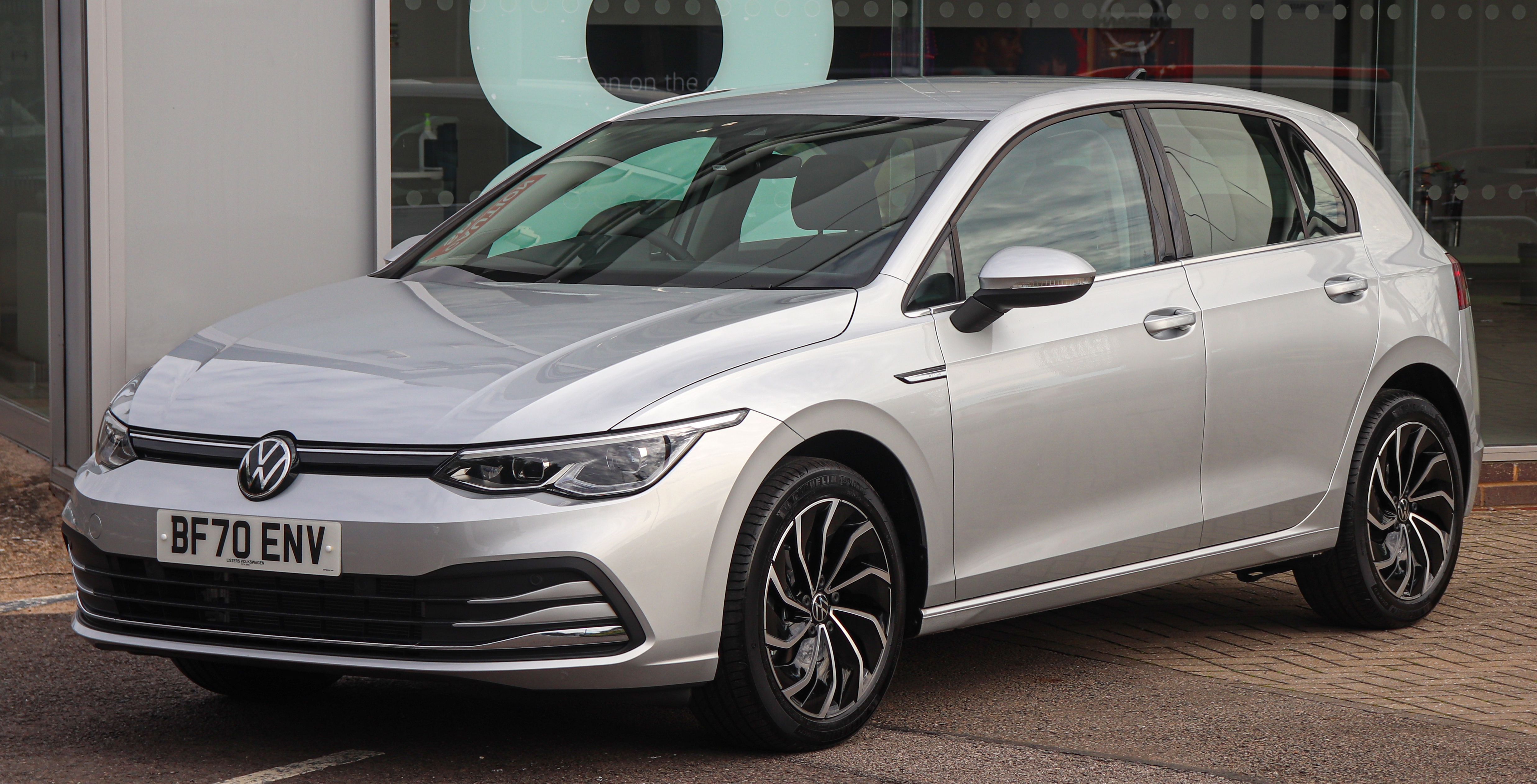
Golf Gtd
"Come on, take us on. The GTD, which is $327,000, has 20 more horsepower, just..."
The Golf is a compact car model line. In the podcast, they’re talking about a specific Golf version called the GTD and comparing its power and price. That’s why “Golf” comes up here.
“Golf” in this context refers to the Volkswagen Golf lineup, specifically the GTD being discussed. The podcast mentions a GTD price and horsepower difference, which points to how performance trims compare within the Golf range. It’s relevant because Golf trims are often compared by specs and value.
rear-seat window showing the suspension
"There is a window in the rear seat. You know how your car is back seats? Yeah. This car has a window, and in the window you can see the suspension."
Some performance cars put a window in the back seat area so you can actually see parts of the suspension. It’s mostly a cool design detail that makes the car feel more special and mechanical.
A rear-seat window that lets you see the suspension is a design choice that turns the chassis into a visual feature. It’s typically used on exotic or track-oriented cars to highlight how the suspension is packaged and to give occupants a unique “mechanical” view.
pre-tax, pre-destination
"that it's $103,500 pre-tax, pre-destination for a base SC."
They’re quoting the car’s price before you add sales tax and before the shipping/delivery charge. Your final price at the dealer will be higher than the headline number.
“Pre-tax, pre-destination” is how manufacturers often quote pricing: the base price before sales tax and before the delivery charge to the dealer. It matters because the number you actually pay at purchase (“out-the-door” price) is higher once taxes and destination are added.
Shelby GT500
"pre-destination for a base SC. What did the GT500 used to cost? Right around $80,000."
The Shelby GT500 is a high-performance Mustang made by Shelby. It’s designed to be very fast, with a stronger engine than regular Mustangs. People talk about it a lot, including how much it used to cost.
The Shelby GT500 is a performance version of the Ford Mustang, known for high horsepower and drag-strip/track capability. It’s often discussed because it’s one of the most powerful and iconic Mustang variants, and because pricing changes over time affect how people view its value. The podcast reference to what it used to cost highlights that historical pricing is part of the conversation.
lineup replacement (GT350 replacement / successor of GT500)
"So this is like the successor of the GT500. ... The regular dark horse, I guess, is the GT350 replacement,"
They’re talking about how one performance car is being replaced by another in the lineup. It’s not just a new badge—it’s the brand deciding which car should play the “top performance” role.
When a model is described as a “replacement” or “successor,” it usually means the brand is shifting roles within its performance lineup—who the flagship is, and which trim fills a particular niche. This segment uses that framing to explain why the Shelby naming and offerings are changing.
Dark Horse
"The answer is we have the dark horse instead. The regular dark horse, I guess, is the GT350 replacement,"
“Dark Horse” is a performance Mustang trim. They’re saying it’s basically filling the spot that people expected Shelby-branded cars to occupy.
The “Dark Horse” refers to a modern Ford Mustang performance variant that’s being described here as the reason people aren’t getting more traditional Shelby-badged cars. In this segment, they connect it to the GT350 replacement idea, suggesting it’s taking over the role in the lineup.
Ford Gt350
"The regular dark horse, I guess, is the GT350 replacement, and this is like a..."
“Ford” here is being used in the context of Ford’s performance cars. The speakers are talking about a replacement for the GT350, which is a track-focused model. That kind of update matters to people who follow Ford’s performance lineup.
In this podcast excerpt, “Ford” appears to refer to a specific Ford model discussion rather than a single car name. The context mentions a “GT350 replacement,” which implies the conversation is about the next-generation performance Mustang track-focused direction. It’s discussed because Ford’s performance lineup changes are big news for enthusiasts.
GT350
"The regular dark horse, I guess, is the GT350 replacement,"
The GT350 is a well-known high-performance Mustang from Shelby. They’re saying the newer Dark Horse trim is meant to replace the GT350 in the lineup.
The Ford Mustang Shelby GT350 is a track-focused Shelby model known for its performance tuning and handling. Here, the hosts say the regular Dark Horse is the GT350 replacement, which is a lineup and positioning change rather than just a small update.
Ford Maverick
"to something else. There was a proposal to have Maverick Drive, and I actually think it was Maverick Trai..."
The Maverick is a small pickup truck made by Ford. It’s meant for normal daily driving and light hauling. It may come up because Ford has discussed different ways to package or brand features for it.
The Ford Maverick is a compact pickup truck designed to be practical and relatively affordable compared with larger trucks. It’s notable because it’s aimed at everyday use—commuting, errands, and light hauling—rather than heavy-duty work. In a podcast, it may be discussed in the context of marketing ideas or naming/trim concepts like “Maverick Drive.”
hybrid
"It's hybrid. It's four-wheel drive. It's a pickup. It's a car."
A hybrid uses a regular gas engine plus an electric motor. The car can use electricity to help save gas, especially in stop-and-go or low-speed driving.
A hybrid vehicle uses both an internal-combustion engine and an electric motor/battery to improve efficiency. Depending on the system, it can blend power from both sources and may run the engine less often in certain driving conditions.
four-wheel drive
"It's hybrid. It's four-wheel drive. It's a pickup."
Four-wheel drive means power can go to all four wheels. That helps the truck grip better on rain, snow, or rough roads.
Four-wheel drive (4WD) sends power to all four wheels, improving traction on slippery or uneven surfaces. Many 4WD systems can switch modes depending on conditions, balancing grip and efficiency.
pickup
"It's four-wheel drive. It's a pickup. It's a car."
A pickup is a truck with a cargo bed in the back for hauling stuff. This one is being praised as not just useful, but also comfortable to drive.
A pickup truck is a vehicle with an open cargo bed behind the cabin, designed for carrying tools, gear, or other loads. The Maverick is being positioned as a pickup that’s still comfortable and efficient for daily use.
40 miles per gallon
"It's comfortable. It's haulable. It gets 40 miles per gallon."
Miles per gallon (MPG) tells you how efficiently the vehicle uses gas. Saying it gets “40 miles per gallon” means it’s saving a lot of fuel compared with most trucks.
Miles per gallon (MPG) is a fuel-economy measure that indicates how far a vehicle can go on a gallon of fuel. When a hybrid pickup is described as getting “40 miles per gallon,” it’s emphasizing that it can be unusually efficient for the pickup category.
Tushy
"[852.1s] I've been using Tushy for a while now, [853.9s] and honestly, I was skeptical going in. [856.1s] I figured installation was going to be [857.8s] some whole weekend plumbing project,"
Tushy is a company that makes bidet add-ons for your toilet. The point here is that it’s supposed to be quick to install and doesn’t require major plumbing.
Tushy is a brand of bidet attachments and bidet-style toilet accessories. The speaker describes it as easy to install and designed to connect to an existing toilet.
heated seat
"[902.0s] And if you go with one of the eBidets, [903.5s] you get warm water that never runs cold, [905.6s] a heated seat, and a built-in air dryer. [907.8s] So the whole thing is hands-free, [909.4s] and it only needs an outlet."
It’s a toilet seat that warms up so it doesn’t feel cold when you sit down. Some bidet-style toilets include this for comfort.
A heated seat is a comfort feature that warms the toilet seat surface. It’s commonly paired with bidet functions (like warm water and drying) to make the whole experience more comfortable.
built-in air dryer
"[903.5s] you get warm water that never runs cold, [905.6s] a heated seat, and a built-in air dryer. [907.8s] So the whole thing is hands-free, [909.4s] and it only needs an outlet."
Instead of wiping with paper, it uses air to dry you off. That can mean less paper use and less mess.
A built-in air dryer uses airflow to dry after the water spray. This reduces the need for toilet paper and can make the cleaning process feel more complete and hygienic.
hands-free
"[902.0s] And if you go with one of the eBidets, [903.5s] you get warm water that never runs cold, [905.6s] a heated seat, and a built-in air dryer. [907.8s] So the whole thing is hands-free, [909.4s] and it only needs an outlet."
It means you don’t have to do as much manual wiping. The device uses water and then dries you with air, so it feels cleaner and simpler.
“Hands-free” describes a bidet setup where the user doesn’t have to manually wipe as much (or at all). In practice, it’s about using water spray and airflow drying to handle cleaning and drying automatically.
price predictions
"Now, if I'm an automaker and I'm thinking about making price predictions, I would wait until pretty soon before, because this has happened before."
This is about how car companies guess or announce prices before the car is actually ready. Those numbers can change later, so it’s smart to wait for the final pricing.
“Price predictions” refers to how automakers estimate or announce pricing before a vehicle is fully finalized. EVs in particular can see pricing shift due to production costs, incentives, and market competition, so early numbers may not be final.
yellow glowing LEDs
"What if there's a COVID and there becomes a shortage of yellow glowing LEDs? They would be really screwed."
LEDs are the small electronic lights used in modern cars. If there’s a shortage of those parts, car makers can’t build cars with the lights they planned.
LEDs (light-emitting diodes) are used for exterior lighting like turn signals and running lights. The joke here is that if supply chains can’t get enough LED components, production could be delayed or cars could be missing key lighting features.
Honda Passport
"This and the Honda Passport are screwed. Imagine no red tow hooks."
The Honda Passport is a Honda SUV meant for families and road trips. They’re bringing it up as another vehicle that could be impacted if certain parts aren’t available.
The Honda Passport is a midsize SUV positioned as a more rugged alternative to the Honda Pilot. In the segment, it’s mentioned alongside supply-chain concerns, implying it could be affected by missing components or feature deletions.
red tow hooks
"Imagine no red tow hooks. No."
Tow hooks are the strong points on a car you can use to pull it out if it gets stuck. The “red” part is just how they’re shown on the outside.
Tow hooks are attachment points used to pull a vehicle during recovery (like after a breakdown or in a ditch). The “red” part is a styling/visibility detail, and the joke suggests even minor exterior features could disappear if production is constrained.
stripped-out car
"They've made it clear, by the way, that this is going to be a pretty stripped-out car that has everything you need and nothing you don't."
A stripped-out car is a simpler version of a vehicle with fewer features. The idea is to keep the essentials and skip extra stuff that’s hard to source or not that useful.
A “stripped-out” car is one that’s intentionally simplified—fewer features, less tech, and sometimes fewer convenience items—to reduce cost and avoid supply-chain bottlenecks. The hosts are contrasting this with the trend of adding more electronics and gadgets even when they don’t add much real value.
backup camera
"Well, I mean, that's odd to hear from Nissan, because the last Nissan I had, the backup camera, was about three pixels."
A backup camera helps you see behind the car when you’re backing up. If the picture is low quality, it can be harder to judge distance.
A backup camera is a rear-view camera that displays what’s behind the vehicle when reversing, improving low-speed visibility. The host’s comment about it being “three pixels” is a critique of resolution/quality rather than the concept itself.
back-to-basers car
"But I do like the idea of a back-to-basers car, particularly when the forerunner,"
“Back-to-basics” means a car that focuses on the essentials instead of lots of extra gadgets. The goal is usually to make it simpler, more reliable, and easier to live with.
“Back-to-basics” (here phrased as “back-to-basers”) refers to designing vehicles around essential driving needs instead of piling on extra tech and features. In this context, it’s tied to the idea of reducing complexity and focusing on what customers actually use.
automatic emergency braking
"stripped-out cars at this point because of federal mandates and consumer preferences all have automatic emergency braking, all have backup cameras, all have some power features generally."
Automatic emergency braking is a safety feature that can brake by itself if the car thinks you’re about to hit something. It uses sensors to judge what’s in front of you. Sometimes it can brake at the wrong time, like when you’re driving over rocks and it thinks the obstacle is a collision.
Automatic emergency braking (AEB) is a driver-assistance system that detects an imminent collision and applies the brakes automatically to reduce impact severity or avoid the crash. In this segment, the hosts complain that AEB can activate in off-road or unusual situations where the system misinterprets obstacles. That’s why it can feel intrusive when you’re trying to drive over rocks.
federal mandates
"Also, we should be clear, stripped-out cars at this point because of federal mandates and consumer preferences all have automatic emergency braking, all have backup cameras, all have some power features generally."
They’re saying the government requires certain safety features on new cars. That means even cheaper versions still have important tech that older cars might not. So you can’t really buy a very basic car anymore.
“Federal mandates” here refers to government rules that require certain safety and technology features on new vehicles. The hosts use it to explain why modern cars can’t be as “stripped out” as older models—features like AEB and backup cameras are increasingly standard. This affects how automakers price and package trims.
automatic emergency breaks
"And you know what's annoying? Because you're on the trail. You know what I mean? And the rock is in front of you, and you're trying to go over the rock and then an automatic emergency breaks. That is irritating."
They’re complaining that the car’s safety system brakes at the wrong time. When you’re driving over rocks, the sensors can think you’re about to crash. Then the car stops you even though you’re just trying to drive normally.
The hosts describe a scenario where automatic emergency braking triggers while driving over a rock, causing an unwanted stop. This highlights a real-world limitation of sensor-based safety systems: they can misinterpret obstacles or terrain as a collision risk. The result is “nuisance braking,” which can be especially noticeable off-road or on uneven surfaces.
AEB
"You've never run a trail with a car with AEB. I got a Sequoia. Well, you turn it off."
AEB is a safety system that can automatically brake if it thinks you’re about to hit something. It’s meant to help you avoid crashes or make them less severe.
AEB stands for Automatic Emergency Braking. It uses sensors to detect an imminent crash and can apply the brakes automatically to reduce speed or avoid a collision.
driver-assist systems turned off for off-road
"You've never run a trail with a car with AEB. I got a Sequoia. Well, you turn it off. Most trail modes turn those off."
Off-road driving can confuse some safety systems. Turning things like automatic braking off (or using trail settings) can help the car respond the way the driver expects on dirt and obstacles.
The segment highlights a common off-road practice: disabling or limiting driver-assist features (like AEB) and using trail-oriented drive modes. The goal is to prevent automated braking or stability interventions from fighting the driver during low-speed traction management.
trail modes
"Most trail modes turn those off. I don't participate in trail mode. I just get out there and raw dog it."
Trail mode is a driving setting meant for rough, slow paths. It helps the car behave more predictably off-road, and it may turn off some safety features that could get in the way.
“Trail mode” is a vehicle setting that changes throttle response, traction control, stability control, and sometimes disables certain driver-assist features to better suit low-speed off-road driving. Many systems also reduce or turn off automatic interventions that could interfere with crawling over uneven terrain.
car development cycles
"This is the problem with car development cycles. It's laughable that they already know it's going to look like this. And it's going to take them two and a half years to come to market."
Making a new car isn’t instant—it takes years of planning and testing. The “development cycle” is the whole timeline from designing the car to actually selling it.
“Car development cycles” are the multi-year process automakers go through to design, engineer, validate, and build a new vehicle. When hosts mention timelines like “two and a half years to come to market,” they’re talking about how long it takes to go from concept and testing to production-ready cars.
brand new platform
"It's a brand new platform. And unlike some manufacturers, they want to test it first."
A platform is like the car’s main “skeleton” and design base. If it’s brand new, the company has to build and test a lot before the cars can be sold.
A “platform” is the shared engineering foundation—things like the chassis architecture, mounting points, and many components—that multiple vehicles can use. A “brand new platform” usually means more upfront engineering and validation work, which can affect how quickly a new model reaches production.
tease something
"It's like if you're going to tease something, then you have to be able to deliver on it right away. It's unbelievable to me that they feel they can tease this and then wait three years."
They’re talking about companies showing off a product idea early, but not delivering it soon enough. If you build hype and then take years, people lose trust and interest.
The hosts are criticizing “teasing” a product launch—building hype before it’s actually ready—without a realistic delivery timeline. In automotive, this can backfire because buyers and media expect proof of progress (testing, production readiness, and timelines) rather than vague announcements.
stop-gap exterior
"Come out with a stop-gap exterior. And here's how you do it."
A “stop-gap” is basically a placeholder. It’s something temporary to keep things moving until the real update comes out.
A “stop-gap” approach means a temporary solution meant to bridge the gap until a better or more complete product is ready. Here, they’re suggesting Nissan could release a short-term exterior update to keep attention while waiting for a future reveal.
frontier crew cab
"You take a frontier crew cab. I know. You put a body on the back."
The Nissan Frontier is a pickup truck, and “crew cab” just means it has more doors so people can sit in the back more easily. They’re saying you could start with that truck and change the back to make a quick, temporary version.
The Nissan Frontier is a midsize pickup, and “crew cab” refers to a cab configuration with four full-size doors for rear-seat access. The hosts are using it as a base platform idea—take the Frontier crew cab and modify the rear/body to create a temporary exterior.
body on the back
"You put a body on the back. And that's it. And for two years, that can be our exterior."
They mean putting a different “rear section” on the truck. Instead of redesigning everything, you change the back part to make a new-looking version.
“Body on the back” describes adding or swapping the rear body/bed section on a pickup platform to change the vehicle’s look and function. In pickup terms, this is often how you create different variants (like work-focused or specialty configurations) without redesigning the whole truck.
putting on hold and maybe just fully canceling their next generation of EVs
"So GM has announced that they're putting on hold and maybe just fully canceling their next generation of EVs."
The company is basically saying, “We’re stopping the next EV plans for now.” That can happen if the cars aren’t selling as expected or if it’s too expensive to build them the way they planned.
GM is pausing (and possibly canceling) its next-generation EV plans. This kind of decision usually happens when demand, costs, or production timelines don’t line up with what the automaker originally forecast.
GMC Hummer EV
"We're familiar with the Hummer EV and the Silverado EV, et cetera."
The Hummer EV is GM’s electric truck lineup. It’s a big, high-profile EV that shows how serious GM was about EV trucks—and why they might change course later.
The Hummer EV is an all-electric pickup/SUV lineup from GMC (GM). It’s often used as an example of how GM’s EV truck push has evolved and how future plans can be affected by market demand and production realities.
Chevrolet Silverado EV
"We're familiar with the Hummer EV and the Silverado EV, et cetera."
The Silverado EV is an electric full-size pickup from Chevrolet. It’s part of GM’s attempt to compete in the electric truck market.
The Chevrolet Silverado EV is GM’s electric version of its popular full-size pickup. Mentioning it in the context of “next generation” EVs highlights that GM’s EV truck strategy is broader than just one model.
20% of Cybertruck sales are to other Elon Musk companies
"I read a news report in Bloomberg this week that 20% of Cybertruck sales are to other Elon Musk companies."
Sometimes car sales aren’t just regular people buying them—companies (including related ones) can buy in bulk. That can make the numbers look stronger or weaker than what you’d see from typical customers.
This is about how “sales” can be influenced by corporate or related-party purchases rather than purely retail buyers. When a meaningful portion of units goes to affiliated companies, it can skew demand signals and complicate forecasting for future production.
Tesla Cybertruck
"I read a news report in Bloomberg this week that 20% of Cybertruck sales are to other Elon Musk companies."
The Cybertruck is Tesla’s electric pickup. The point here is that some sales might be coming from Musk-related businesses, so it may not reflect typical everyday customer demand.
The Tesla Cybertruck is Tesla’s angular, all-electric pickup. The hosts reference a Bloomberg report suggesting a notable share of sales are tied to other Elon Musk-linked companies, which can affect how you interpret “real” consumer demand.
next gen of this old team platform and the trucks
"Clearly there has not been super strong demand for this, but they were pretty deep in planning for the next gen of this old team platform and the trucks."
They’re talking about the “platform” underneath the trucks—basically the shared design and parts that multiple vehicles use. If the next version is paused, it can ripple through the whole supply chain.
The hosts are describing GM’s “next generation” EV truck platform strategy, implying a planned evolution of an existing vehicle architecture. Platform changes are expensive and often depend on supplier readiness, tooling schedules, and expected sales volume.
Suppliers were building things and they all got a notice saying, just put this on hold
"Clearly there has not been super strong demand for this, but they were pretty deep in planning for the next gen of this old team platform and the trucks. Suppliers were building things and they all got a notice saying, just put this on hold."
Car parts are made by other companies. If the automaker suddenly pauses the project, those suppliers may have to stop work even if they already started making parts.
This describes how automaker EV program delays impact suppliers. When production is paused, suppliers who already started building components can face cancellations, inventory risk, and schedule disruptions.
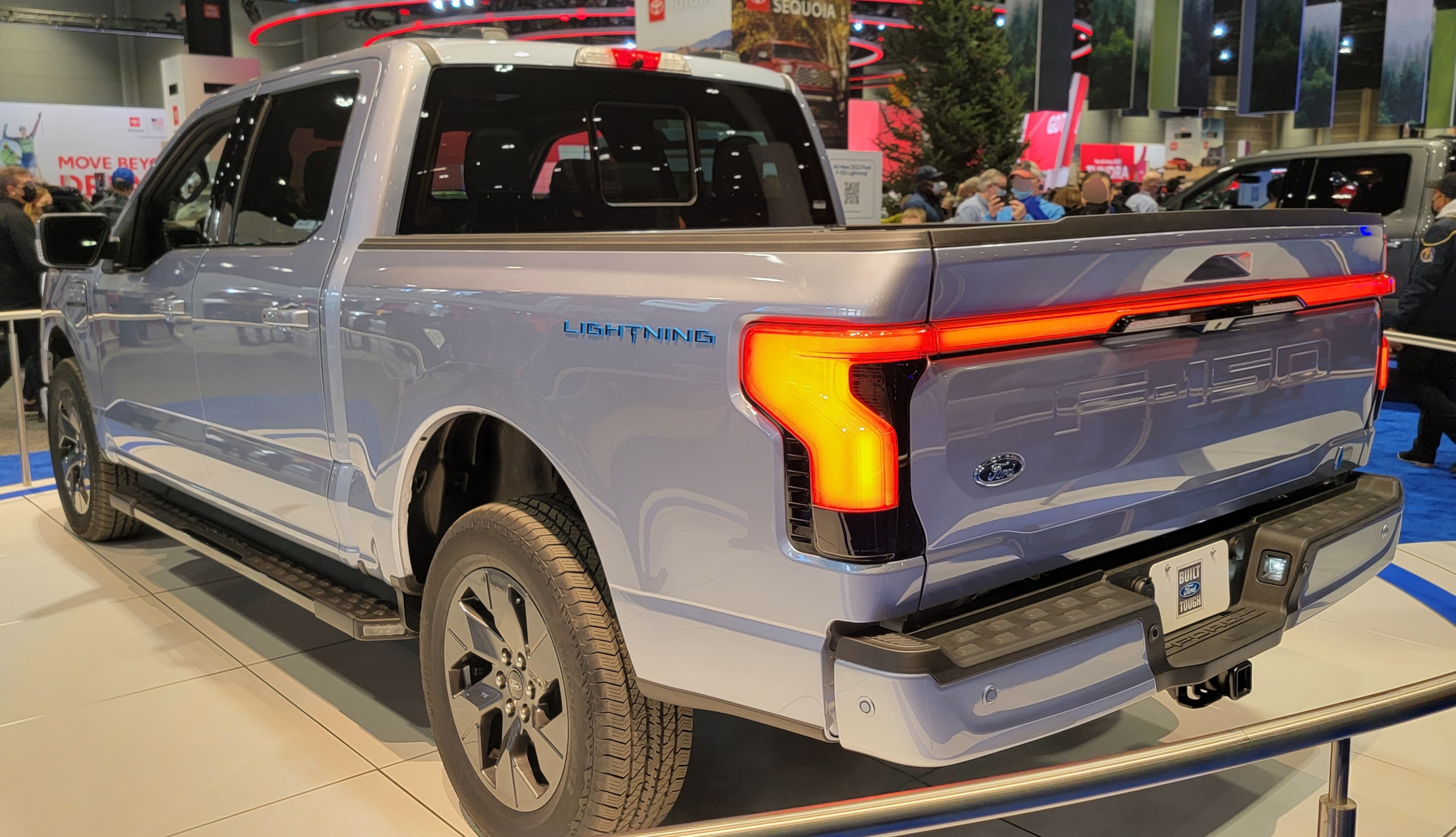
Ford F-150 Lightning
"...the R1T or the Hummer EV or the Lightning or it completely failed and no one is interested in any of them."
The Ford F-150 Lightning is an electric pickup based on the popular F-150. It was one of the first big-name EV trucks meant to appeal to regular truck shoppers.
The Ford F-150 Lightning is Ford’s electric version of the F-150 pickup. It was a major early player in the full-size electric pickup segment, aiming to bring EV tech to a mainstream truck buyer.
Rivian R1T
"...the R1T or the Hummer EV or the Lightning or it completely failed and no one is interested in any of them."
The Rivian R1T is an all-electric pickup truck. It was a big early entry into the EV truck market, meant to compete with other electric pickups.
The Rivian R1T is a full-size electric pickup truck. It was one of the early, highly anticipated EV trucks, competing for attention against other new electric pickups.
market share
"I will say market share ticked up in March. Gas was expensive. People bought EVs, but it was still slower market share than last March..."
Market share is how much of the total sales a product category gets. If EV market share goes up, it means EVs are selling a bigger slice of all vehicles.
Market share is the percentage of total sales in a category that a brand or powertrain captures. When the hosts say EV market share “ticked up,” they mean EVs sold a slightly larger portion of the overall vehicle market than the prior month.
fuel crises as a result of the Iran war
"In Europe, though, which feels the fuel crises as a result of the Iran war more strongly."
They’re saying Europe has been more affected by fuel-price problems tied to world events. When gas feels expensive or uncertain, people may look harder at alternatives like EVs.
The hosts connect European fuel concerns to geopolitical events, arguing that Europe feels fuel-price pressure more strongly. That context helps explain why EV adoption trends can differ between regions when gasoline and oil prices move.
EV sales in March were up 50 percent
"Both are true. Their EV sales in March were up 50 percent. Oh."
They’re saying EV sales jumped a lot in March compared to the same time period before. Even if EVs aren’t dominating the market, growth can still happen month to month.
A “50 percent” increase in EV sales means the number of EVs sold in March was much higher than the same month the previous year (or another comparison baseline). The hosts are using this to show that while EVs may be struggling overall, some months can still see strong growth.
reliance on fossil fuels
"The market is moving in a really specific direction because a lot of people don't want that reliance on fossil fuels. And the U.S. is going to be so far behind."
This is about how cars today mostly run on gas and diesel. EVs help because they run on electricity instead, which can come from cleaner energy sources.
“Reliance on fossil fuels” refers to depending on gasoline and diesel as the primary energy source for transportation. EVs reduce that dependence by using electricity, which can be generated from a mix of sources (including renewables).
Stellantis
"I really, really worry that the American manufacturers will absolutely not be. I don't think Chrysler or Stellantis in the U.S. is working on U.S. market EVs outside of the Charter."
Stellantis is a big car company that owns multiple brands. They’re mentioned here in the context of whether they’re investing enough in electric cars for the U.S.
Stellantis is a major automaker formed from the merger of Fiat Chrysler Automobiles (FCA) and PSA Group. In the transcript, it’s referenced as part of the discussion about whether U.S. automakers are developing EVs for the American market.
GM
"I don't think that GM is really working on much except for the Bolt, which theoretically will have a new generation. But will it?"
GM is a major American car company. The speaker is basically saying GM might not be moving as aggressively on electric cars as people expect.
GM (General Motors) is one of the largest U.S. automakers, and the speaker is discussing its EV strategy. The comment suggests GM’s near-term EV focus may be narrower than competitors, centered around the Bolt and uncertain next steps.
Chevrolet Bolt
"I don't think that GM is really working on much except for the Bolt, which theoretically will have a new generation. But will it?"
The Chevrolet Bolt is an EV from Chevrolet. It’s meant to be a more affordable electric car, and the discussion here is about whether GM has a clear EV roadmap beyond it.
The Chevrolet Bolt is GM’s compact electric car line, designed to be a practical, lower-cost EV compared with many competitors. The speaker is implying GM’s EV efforts are limited beyond the Bolt, and that a future “new generation” may be coming.
new EV platform
"They also have the small pickup truck that's coming. It's supposed to be like a cheaper truck on a new EV platform."
An EV platform is the “base design” a car is built on for electric power. It helps manufacturers make EVs more efficiently and sometimes cheaper.
An EV platform is the underlying vehicle architecture designed specifically for electric powertrains, including battery placement, wiring, and motor integration. Using a dedicated EV platform can lower costs and improve packaging versus converting older gas-car designs.
$4 a gallon
"I do wonder, right, like fuel is relatively, gas in the U.S. is relatively expensive. About $4 a gallon on average in March."
That phrase means gas costs about four dollars for every gallon. When gas is expensive, people are more likely to consider electric cars.
“$4 a gallon” refers to the retail price of gasoline in the U.S. It’s a key driver of consumer EV interest because higher fuel costs make the savings from electricity-based driving more attractive.
switch on EV
"You're thinking switch on EV. I wonder how many people are going to start thinking about that as they transition to their next car."
Switching to an EV means choosing an electric car instead of a gas car. When gas gets expensive, more people start thinking it might save money over time.
“Switching to EV” is the decision process of replacing a gas car with an electric vehicle, usually driven by cost, charging convenience, and environmental goals. Fuel prices can accelerate that decision because EVs can reduce ongoing energy costs compared to gasoline.
BMW i4
"May I suggest a BMW i4?"
The BMW i4 is BMW’s electric car. It’s meant to be a sporty daily driver, but powered by electricity instead of gasoline.
The BMW i4 is an all-electric 4-door Gran Coupe that’s designed to feel like a sporty BMW while using an EV powertrain. It’s often suggested as a practical alternative when someone is considering switching from a gas car to an EV.
iX-M60
"I passed an iX-M60. Wow. Yes, it exists. And the grille self-heels. ... Did we report on that car being canceled? ... That's gone, folks."
The BMW iX is an all-electric SUV, and “M60” indicates a higher-performance variant within the iX lineup. The hosts are discussing that this specific version appears to have been canceled or is no longer available, which affects what buyers can realistically order.
grille self-heals
"Yes, it exists. And the grille self-heels. The grille self-heals."
They’re saying the front grille has a coating that can “fix” small scratches. Instead of always needing touch-up paint, minor marks can fade as the surface warms up.
“Grille self-heals” refers to a protective surface treatment—often a clear coat or polymer—that can reduce the visibility of minor scratches or scuffs. The idea is that heat (from sunlight, airflow, or the vehicle’s operation) helps the surface recover so the grille looks newer for longer.
Ferrari F355
"I think I go between M60 sightings the same length of time as I go between like F355 on the road sightings."
They mention a Ferrari F355, which is a classic supercar. They’re basically saying they rarely see it, and they see the other car about as often.
The Ferrari F355 is a mid-engine sports car from the 1990s/early 2000s known for its V8 sound and analog driving feel. The host uses it as a comparison point for how often they see certain cars on the road.
spy shots / testing in Italy
"So these are some teaser shots. It was spotted testing in Italy. And we can only assume that it's going to be."
“Spy shots” and “testing” refer to how automakers validate new prototypes before launch. When a car is spotted testing in a specific country (here, Italy), it can hint at development routes, climate targets, and where engineers are dialing in performance and durability. It’s a common way enthusiasts learn about upcoming models before official announcements.
SV
"This is the rear obviously, but they've added a wing, which is a typical SV thing. They have more aggressive air changes to the front."
“SV” is Lamborghini’s way of labeling a more performance-oriented version of a car. It often comes with extra styling and real aero parts meant to improve grip at speed. The hosts are saying the wing and front aero look like what you’d expect from an SV.
In Lamborghini naming, “SV” generally signals a Super Veloce-style performance variant. These cars typically get more aggressive aerodynamic elements (like wings and splitters) and often more power or track-focused tuning than the standard model. In this segment, the hosts connect the added wing and aero to that SV identity.
air changes to the front
"They have more aggressive air changes to the front. We don't really have any other details outside of that."
This is basically about changing how air moves around the front of the car. Bigger or reshaped openings can help cool the engine and brakes, and they can also help the car stick to the road at speed. They’re saying the front looks more aggressive than the normal version.
“Air changes to the front” refers to modifications that alter airflow through and around the front of the car, such as larger intakes, revised ducts, or different front aero pieces. These changes can improve cooling and help manage aerodynamic pressure for better downforce and stability. The hosts are using the visible front aero as a hint about the car’s performance intent.
1200 horse
"The word is 1200 horse. Well, we'll see. That's definitely not confirmed."
They’re throwing out a rumor that the car could make around 1,200 horsepower. But they also say it’s not confirmed, meaning it could be wrong. Until the manufacturer verifies it, it’s best to treat it as speculation.
“1200 horse” is shorthand for an estimated horsepower figure (1200 hp) being rumored for the alleged Lamborghini Vuelto SV. The hosts immediately caution that it’s not confirmed, which is important because early reports often mix speculation with partial information. Listeners should treat it as a claim until Lamborghini releases official performance data.
Lamborghini Aventador
"The all the SV models. Aventador is or whatever this is called is so. Revuelto ha..."
The Lamborghini Aventador is a supercar made by Lamborghini. It’s built for very high performance and dramatic styling. In the podcast, they’re talking about different Aventador versions and how it compares to newer models.
The Lamborghini Aventador is a flagship supercar known for its extreme performance and distinctive styling. The podcast references “SV models” and compares the Aventador to the Revuelto, which highlights how Lamborghini’s lineup evolves over generations. It’s discussed because Aventador variants are often sought after and have strong enthusiast recognition.
Revuelto
"Aventador is or whatever this is called is so. Revuelto has. No, I'm serious."
The Lamborghini Revuelto is a very high-performance supercar. It’s the kind of car Lamborghini makes for top-tier speed and advanced engineering. The podcast brings it up while comparing it to other Lamborghini models.
The Lamborghini Revuelto is a modern Lamborghini supercar, discussed in the same breath as other Lamborghini flagship models. It’s significant because it represents Lamborghini’s latest approach to performance and technology in their high-end lineup. The podcast mentions it as part of a comparison among current and recent Lamborghini models.
SV version
"[1581.6s] Even better. [1582.4s] But I'm excited. [1583.4s] I mean, it's always cool when an SV version comes up. [1585.9s] What was your favorite SV Lambo?"
“SV” is Lamborghini’s way of making a model feel more hardcore and performance-oriented. When an SV version shows up, it usually means it’s been tuned to be more exciting and more track-capable than the regular version.
“SV” is Lamborghini’s performance sub-brand used for more aggressive, track-focused variants of certain models. When the hosts say it’s “always cool when an SV version comes up,” they’re referring to the expectation of sharper performance and more extreme tuning than the standard car.
super limited
"[1615.7s] It's super limited. [1618.1s] It came out like peak recession."
“Super limited” means only a small number of cars were made. Fewer cars usually makes them more special and can make them cost more later.
“Super limited” implies the car was produced in very small numbers, which can increase desirability and resale value due to scarcity. Limited production also often means higher prices and more collector attention.
peak recession
"[1615.7s] It's super limited. [1618.1s] It came out like peak recession."
“Peak recession” refers to the worst point of an economic downturn. The hosts connect the car’s release timing to the idea that it arrived when consumer confidence and spending were at their lowest.
low production
"They're not that crazy considering how low production it was. Right. Very cool."
Low production usually means fewer cars were built, which can push prices up later due to scarcity. When a model is limited-run, demand from collectors can outpace supply, especially if the cars are desirable.
camo
"But nonetheless, this is what the next one will kind of look like. I think the Camo is,"
Camo is the fake-looking covering on a test car. It’s used so people can’t easily tell what the final design will look like. It’s common when companies are testing new models before launch.
Camo (camouflage) is what automakers use on prototype cars to hide styling details while testing. It helps prevent leaks and lets the company gauge real-world feedback without fully revealing the final design.
spy shots / production timing speculation
"So this car went into production in summer of 23. So an SV is probably a year out. You figure it's going to be another 10, 12 year life cycle like all the big Lambo's."
They’re basically guessing when the new version will be ready for real production. When prototypes get spotted, it usually means the final car is still being developed, and production can be a while away.
The hosts are estimating when a new Lamborghini variant will enter production based on prototype timing. This kind of speculation is common in enthusiast media: early sightings often precede official production by months to a couple of years, depending on development and model-cycle planning.
rest of mod
"whether it's a pristine 90s JDA micron, a high horsepower rest of mod, or some weird modern classic, my favorite,"
A restomod is an old car that gets restored, but with upgrades. Think of it like keeping the classic style while making it drive and feel better with newer tech.
“Restomod” is short for a restyled/restored modification: an older car is restored but upgraded with modern performance, comfort, or reliability parts. The goal is to keep the classic look and feel while improving drivability and usability.
Hagerty
"And that's exactly why regular car insurance just doesn't cut it. And that's why Hagerty is the official insurance provider of cars and bids."
Hagerty is an insurance company that focuses on classic and enthusiast cars. They’re designed for people who care about the car’s value and want coverage that matches how those cars are actually owned.
Hagerty is an insurance company that specializes in classic, collector, and enthusiast vehicles. In this segment, they’re positioned as a better fit than standard auto insurance because they offer coverage tailored to how these cars are valued and used.
guaranteed value coverage
"Hagerty offers guaranteed value coverage, which means you agree on your car's value upfront. If there's a total loss, that's exactly what you get."
This is insurance that agrees on what your car is worth before anything happens. If it’s totaled, you get that agreed amount instead of a lower offer or a long argument.
Guaranteed value coverage is an insurance structure where you and the insurer agree on the car’s value upfront. If the car is totaled, the payout is based on that agreed value rather than trying to negotiate after the fact.
total loss
"If there's a total loss, that's exactly what you get. There's no depreciation, there's no arguing, there's no guessing games."
A “total loss” means the car is damaged beyond a point where it doesn’t make sense to fix. With the kind of coverage they’re describing, you’re paid based on the value agreed ahead of time.
A “total loss” is when an insurer determines the vehicle is too damaged (or too expensive to repair) to be economically repaired. Under guaranteed value coverage, the payout is tied to the pre-agreed value.
restrictive mileage limits
"whether that's on a weekend cruise, a cars and coffee run, or a road trip for ice cream, without restrictive mileage limits."
Some regular insurance plans only cover you if you drive below a certain number of miles. They’re saying Hagerty is more flexible for people who actually use their car for fun trips.
Many standard auto policies limit how much you can drive (mileage caps), which can conflict with enthusiast usage. The segment contrasts that with Hagerty’s approach, emphasizing coverage for driving events and road trips without those limits.
vehicle under construction coverage
"If you're mid-build, they've got you covered too. Hagerty's vehicle under construction coverage automatically increases your insured value by 10% every quarter."
This is insurance for a car you’re building that isn’t done yet. As you keep working on it, the coverage value goes up so you’re not underinsured.
Vehicle under construction coverage is insurance designed for cars that aren’t finished yet (mid-build). The segment says the insured value automatically increases over time, reflecting the added parts and work.
flatbed roadside assistance
"Plus, you get Hagerty Drivers Club with flatbed roadside assistance, valuation tools, and their award-winning magazine."
Flatbed roadside assistance means a tow truck uses a platform (flatbed) to lift the whole vehicle instead of dragging it. This is especially useful for low-clearance cars and many modern vehicles where towing incorrectly can cause damage.
Ferrari Luce
"All right, we've got another Italian manufacturer, so the Ferrari Luce. So the Luce, we've had a lot of stuff coming out about this recently."
Ferrari Luce is an upcoming Ferrari that the hosts are talking about based on new info they’ve seen. They’re especially interested in what the inside looks like.
Ferrari Luce is a rumored/previewed upcoming Ferrari model discussed in the episode. The hosts talk about recent information and show content that focuses on the cabin design, including what the interior looks like.
210 kilometers per hour
"These are the controls. 210 kilometers per hour. It's ironic because that's kind of how people feel about this car, you know?"
That’s a speed number—210 km/h. It’s just a way to say how fast the car can go, using kilometers instead of miles.
“210 kilometers per hour” is a top-speed figure expressed in metric units. It helps listeners translate performance claims into a real-world number, especially since the hosts later discuss how people feel about the car.
electric B
"It's ironic because that's kind of how people feel about this car, you know? Like it's an electric B. Anyway, what's the news?"
They’re using “electric B” like a class label for a smaller, everyday type of car. They’re joking that it’s priced way beyond what you’d expect for a car in that category.
“Electric B” appears to be shorthand for an electric car in the “B-segment” (a common European vehicle class for small cars). The hosts are using it ironically to contrast the car’s expected price with what people usually associate with that size/class.
insider hint into the pricing
"But the announcement is that Bloomberg claims they got from an insider, a hint into the pricing of this car. Now, the car is going to come out next month in an event in Rome…"
They’re talking about a rumor/leak about how much the car will cost. Even if it’s probably close, the real price can change once the company officially announces it.
The segment discusses pricing based on an “insider” leak rather than official manufacturer information. For high-end EVs, pricing leaks can still be useful for setting expectations, but they’re not guaranteed—final MSRP and option pricing can differ.
options
"And you have to imagine with options, most of these are going to be $3,500,000."
They’re saying the base price won’t be the whole story—extra packages and upgrades (“options”) will make the car cost more. So the final price could be much higher than the headline number.
The hosts mention that “options” will likely drive the final price higher. In luxury EVs (especially expensive ones), option packages, performance upgrades, and interior/tech add-ons can substantially increase the transaction price beyond the base figure.
electric sports car pricing vs demand
"If they attempt to sell an electric sports car at $650,000, I think even Ferrari has met its match. How do they not understand that the SF90 is already a terrible seller?"
They’re basically asking: if an electric sports car costs as much as a top-tier supercar, will people actually buy it? If not, the company’s pricing strategy may be the problem.
The hosts are debating whether an electric sports car can succeed commercially at extremely high prices. This is about market demand: if the price is too close to (or above) established supercar brands, buyers may choose better-known products or better value.
Ferrari SF90
"How do they not understand that the SF90 is already a terrible seller?"
Ferrari SF90 is a supercar that uses both gas and electricity. The idea is to get quick electric response while still having a powerful gas engine.
The Ferrari SF90 is a high-end plug-in hybrid supercar from Ferrari. It’s known for combining an internal-combustion engine with electric motors for very strong performance and a complicated (but effective) powertrain strategy.
MSRP
"What about the Panferina Batista? Yeah, what's MSRP on that? Two and a half."
MSRP is the official price the manufacturer lists on the car. It’s like the starting point before sales discounts or dealer pricing changes.
MSRP stands for Manufacturer’s Suggested Retail Price, which is the sticker price a carmaker sets before discounts. In supercar and EV pricing discussions, MSRP matters because it frames how “expensive” a model is compared to what buyers actually pay.
650 stickers
"[2000.1s] And the answer is they don't. [2002.3s] SF90s are 650 stickers. [2004.2s] They are selling on the used market [2006.0s] for half price."
“650 stickers” means the car’s original price tag was around $650,000. They’re saying that when you look at what people pay later, the price can drop a lot. It’s a quick way to talk about depreciation without getting too technical.
“650 stickers” is slang for a roughly $650k MSRP/sticker price. The hosts use it to contrast the original new-car price with what these cars sell for later on the used market. This highlights how exotic/low-volume cars can depreciate quickly after launch.
used market
"[2002.3s] SF90s are 650 stickers. [2004.2s] They are selling on the used market [2006.0s] for half price. [2007.5s] You know,"
The “used market” is the secondary market where cars are bought and sold after initial retail sales. In this segment, the hosts argue that real-world pricing (what buyers actually pay later) can be very different from the original “sticker” price. For limited-run exotics and high-priced EV/hybrid products, that gap can be especially large.
supply and demand
"he actually got supply and demand correct... And within only a few years, supply and demand is already going on the bad side of private equity."
Supply and demand is just a fancy way of saying: how many cars exist versus how badly people want them. If there are too many cars for the number of buyers, prices and resale value usually drop.
“Supply and demand” describes how pricing and availability are influenced by how many cars are offered versus how many buyers want them. In automotive markets, getting this balance wrong can flip a brand from scarcity (strong resale) to oversupply (faster depreciation).
resale market
"you couldn't get a Ferrari. The resale market was high. The buyer market was high."
The resale market is the price you can get when you sell a car later. If not many people can buy new ones, used ones often sell for more. If more cars are available, used prices usually fall.
The resale market is what used cars sell for after the original purchase. When a brand is scarce and demand is high, resale values tend to stay elevated; when supply rises, resale can soften as more used inventory appears.
depreciating
"Well, now the cars are depreciating. They have more cars than customers."
Depreciation means the car becomes worth less as time goes on. If there are lots of cars available, people don’t have to pay as much, so the value drops faster.
Depreciation is how quickly a car loses value over time. When a brand moves from limited supply to oversupply, buyers may pay less upfront and used prices can drop, accelerating depreciation.
restyling the interior
"...I think as far as the electric car stuff goes, I think the idea of restyling the interior and having someone do this stuff properly..."
Restyling the interior is when a car maker updates what the cabin looks and feels like. They might change the screen layout, buttons, and materials, even if the car’s core hardware stays the same.
“Restyling the interior” means updating the cabin’s design—materials, layout, screens, and controls—without necessarily changing the underlying platform. On EVs, interior refreshes are often used to keep the design feeling modern as software and display tech evolve.
full screen thing
"The full screen thing showed up. The giant full screen thing came up in the road."
A “full screen” setup means the car uses big digital displays instead of separate gauges and lots of physical buttons. It can make the dashboard look cleaner and feel more modern.
A “full screen” interior design replaces traditional gauges and buttons with large digital displays. It’s a common modern trend in EVs because the interface can be updated via software and can unify navigation, media, and vehicle settings.
zero to 60
"A plaid can do zero to 60 in one. And we're selling them every day for 22."
“Zero to 60” means how fast the car can go from stopped to 60 miles per hour. It’s a quick way to compare acceleration, but it doesn’t tell you everything about how the car drives.
“Zero to 60” is shorthand for how quickly a car accelerates from a standstill to 60 mph. It’s a common performance metric because it reflects launch and power delivery, but it doesn’t fully describe handling or real-world drivability.
SF-90
"I do wonder, the SF-90 tried to combine a lot of things pretty early, right?"
“SF-90” is a Ferrari plug-in hybrid supercar. It uses both a gas engine and electric motors, so it’s an example of a car trying to mix a lot of tech in one package.
The “SF-90” is the Ferrari SF90 Stradale, a plug-in hybrid supercar that combines an internal-combustion engine with electric motors. The discussion is about how early it tried to blend multiple technologies at once—performance, electrification, and complexity.
dealer
"Do you know what car will never sell for $750 after it's initially sold to its first owner? Who, by the way, will be the dealer?"
They’re talking about the dealer—the place or person that sells the car next. Who the dealer is can affect how much the car ends up costing and how quickly it sells.
The hosts are discussing who the “dealer” would be in the context of buying/selling a car after initial ownership. In car talk, this matters because dealer networks, auction channels, and brand positioning can strongly affect resale pricing and availability.
12-cylinder
"“And did you like the 12-cylinder? I love the 12-cylinder.”"
A “12-cylinder” engine has 12 combustion chambers. More cylinders usually means the engine can run very smoothly and sound great, which is why enthusiasts notice it.
“12-cylinder” refers to an engine with 12 cylinders, typically associated with smoothness, strong power delivery, and a distinctive sound. In Ferrari context, it’s often part of what makes certain models feel special compared with smaller-cylinder or hybrid setups.
Ferrari SP3
"“The SP3 changed our lives... The SP3 was my car of the year a couple of years ago.”"
The Ferrari SP3 is a special, limited Ferrari made for people who really care about driving. The speaker is saying it was so impressive that it stood out as a top car for them.
The Ferrari SP3 is a one-off, track-focused Ferrari built around a special “SP” program concept—often meaning a bespoke, enthusiast-first machine rather than a mass-market model. The hosts say it “changed our lives” and that it was “car of the year,” emphasizing its impact and desirability.
Ferrari Sp3 Daytona
"...s amazing. But, you know, I would rather have an SP3 Daytona. The car I did really love was that SF-90XX."
The Ferrari Daytona SP3 is a very expensive, limited-run sports car. It’s made for people who want a special, high-performance Ferrari. In the podcast, they’re comparing it to other rare Ferrari models.
The Ferrari Daytona SP3 is a limited-production, high-performance supercar built for collectors and enthusiasts. It’s significant because it’s a modern take on Ferrari’s Daytona heritage while using advanced engineering and a distinctive design. The podcast compares it to other Ferrari special models, which is why it comes up in value and desirability discussions.
340R
"I drove that 340R and I was like, this is so cool. To be fair, it is. It really is."
The Ferrari 340R is an old-school Ferrari race car. People love it because it feels very direct and “real,” like you’re driving something built for racing rather than comfort.
The Ferrari 340R is a classic, lightweight racing Ferrari from the late 1950s, famous for its raw, analog feel and motorsport heritage. When someone says they drove a 340R and loved it, they’re usually reacting to the car’s unfiltered steering/braking feel and period-correct “race car” character.
Warby Parker
"[2334.7s] Warby Parker completely flipped that. [2337.7s] The first thing that got me was the virtual try-on."
Warby Parker is a company that sells glasses. The hosts mention it because their app lets you try on frames using your phone, which feels easier than going to a store and dealing with upsells.
Warby Parker is an eyewear brand known for selling prescription glasses and sunglasses, often with a more direct-to-consumer approach than traditional opticians. In this segment, they’re used as an example of a smoother shopping experience, especially with their virtual try-on feature.
virtual try-on
"[2337.7s] The first thing that got me was the virtual try-on. [2340.5s] You literally point your phone at your face [2342.9s] and try on frames in real time."
Virtual try-on means you use your phone camera to see what glasses frames would look like on you. Instead of trying things on in person, you can preview options right away.
A virtual try-on is a digital feature that uses your phone camera to overlay or simulate how eyewear frames will look on your face. It reduces the need to physically try multiple frames in-store and can speed up the selection process.
vanity plate
"And it has a vanity plate. They all have vanity plates."
A vanity plate is a license plate you customize with your own letters or numbers. It’s a way to make your car stand out or show your personality.
A vanity plate is a personalized license plate with custom letters or numbers. People use them to show personality, affiliations, or inside jokes, and they can make a car feel more “owned” than generic plates.
roof tent
"And it has a roof tent. And the guy had changed out"
A roof tent is a tent that sits on top of your car. You can open it to sleep up high, which helps when the ground is uneven or uncomfortable.
A roof tent is a camping tent mounted on the roof of a vehicle, typically on a rack. It lets you sleep off the ground and is popular for overlanding because it’s relatively quick to deploy and works on uneven terrain.
Falcon Wild Peaks
"And the guy had changed out the Falcon Wild Peaks for Toyos."
Falken WildPeaks are all-terrain tires. They’re made to handle both regular roads and rougher surfaces like dirt or gravel.
“Falcon WildPeaks” refers to Falken’s WildPeak line of all-terrain tires. These tires are designed for mixed pavement and off-road use, with tougher sidewalls and tread patterns that help in dirt, gravel, and light mud.
Toyos
"And the guy had changed out the Falcon Wild Peaks for Toyos. He had already uptired."
“Toyos” means Toyo tires. People swap them in because they may grip better off-road or last longer depending on the tire model.
“Toyos” is a shorthand reference to Toyo tires. In off-road and overlanding circles, Toyo’s all-terrain and mud-terrain models are commonly swapped in when people want more traction, durability, or a different tread feel than their original tires.
Ford Falcon
"And the guy had changed out the Falcon Wild Peaks for Toyos. He had already uptired."
The Ford Falcon is a Ford car model that was sold in some countries, including Australia. In the conversation, it sounds like someone modified one with different tires and setup changes. People talk about Falcons like this when discussing car builds and upgrades.
The Ford Falcon is a model name used for Ford cars that were sold in various markets, including Australia. In the podcast context, it sounds like the discussion is about a modified Falcon—specifically tire changes and suspension/fitment choices. It’s relevant because Falcon builds often reflect local enthusiast culture and customization.
uptired
"He had already uptired. And I'm like, oh, God."
“Uptired” means putting bigger tires on the vehicle than it came with. Bigger tires can help the car handle rough roads, but they can also make the ride and efficiency a bit different.
“Uptired” means upgrading to larger tires than stock, usually along with related changes like wheels, suspension clearance, and sometimes a lift. Bigger tires can improve ground clearance and off-road capability, but they can also affect ride quality, steering feel, and fuel economy.
LX700H
"My new AMG wagon. Come to LX700H. When it's time to go again, we buy an LX700H."
The Lexus LX 700h is a big luxury SUV that runs on a hybrid system. They’re saying that when they’re ready to change cars again, they’ll buy this one.
“LX700H” refers to the Lexus LX 700h, a luxury full-size SUV that uses a hybrid powertrain. The “700h” naming indicates a higher-output hybrid variant, and the hosts are treating it as their next long-term replacement when it’s time to switch cars again.
AutoTrader
"I've been going on AutoTrader. They haven't depreciated it."
AutoTrader is a website/app where people list cars for sale. When someone checks AutoTrader, they’re usually comparing prices and seeing what’s available.
AutoTrader is an online marketplace where you can browse listings for used and new cars. Hosts often reference it to talk about pricing trends and availability in the market.
depreciated
"They haven't depreciated it. We were looking in January."
Depreciation is how the value of a car goes down as it gets older. If prices “haven’t depreciated,” it means the car is still selling for about the same money as before.
Depreciation is how much a car’s value drops over time. When the hosts say it “hasn’t depreciated,” they mean the used prices haven’t fallen much since they last looked.
car seats
"the car mom did that thing where she showed that it's horrible with car seats. And I completely lost interest."
Car seats are child safety seats. Some cars make them annoying to install or use—like not enough space or awkward seatbelt/seat access.
“Car seats” here refers to child-safety seats and the practical fit/comfort issues they can create in a specific vehicle. Some cars are harder to use day-to-day with rear-seat space, seatbelt routing, or access to the back row.
exported
"a lot of the ones that are selling used are probably getting exported, which is why I suspect that prices"
Exported means the cars get shipped to another country to be sold there. If fewer cars stay in your area for sale, local used prices can stay high.
When used cars are “exported,” they’re sold out of the local market to buyers in other countries. That can reduce the supply of used cars locally, which may keep prices higher than you’d expect.
wheel option
"I've been looking for a wheel option since I bought it. I send wheel options to the..."
A “wheel option” just means choosing a different set of wheels for the car. Different wheels can change how the car rides and how loud it feels on the road.
A “wheel option” is a factory or dealer-ordered wheel package (often different wheel sizes, designs, and sometimes tire fitment). Changing wheel options can affect ride comfort, road noise, and appearance, and it can also change how easily you can tune the vehicle’s feel.
triple locked
"the thing that the electronics is, that's so great, it's triple locked. Okay. Yeah, legit. The first triple locked Toyota since the 80's."
“Triple locked” usually means the truck/SUV can lock multiple differentials so the wheels keep turning even if they’re on slippery or uneven ground. It’s an off-road traction feature that helps when you’re stuck in mud, rocks, or deep ruts.
“Triple locked” typically refers to having three locking differentials (or lockable drivetrain components) that can be engaged to keep wheels turning with minimal slip. This is a big deal for off-road traction because it helps the vehicle maintain forward motion when one or more wheels lose grip.
Toyota Sequoia TRD Pro
"Whereas the Sequoia TRD Pro, which is also exceptionally good off-road, just has to shout it to everybody."
The Toyota Sequoia TRD Pro is a Toyota SUV that’s meant to handle rough roads better than a normal one. The hosts are basically saying it’s great off-road, but it’s more obvious/advertised than the other Toyota they’re talking about.
The Toyota Sequoia TRD Pro is a full-size SUV built for off-road use, with TRD (Toyota Racing Development) performance and durability upgrades. In this segment, it’s contrasted with another Toyota for how it communicates its identity—less “secretive” than the other setup.
Supercruise
"They don't have Supercruise. Yeah, I know. The Suburban still doesn't have Supercruise or Z71. You have to choose between the two."
Super Cruise is a GM feature that can help the car steer and manage driving in supported situations. The key point here is that you might have to pick between Super Cruise and other trim/off-road options.
Super Cruise is GM’s hands-free driver-assistance system for certain roads and conditions. It’s typically tied to specific trims and option packages, which is why the hosts are discussing whether it’s available alongside other packages like Z71.
Suburban
"Yeah, I know. The Suburban still doesn't have Supercruise or Z71. You have to choose between the two."
The Chevrolet Suburban is a large SUV. They’re saying that on the Suburban, you may have to choose between the off-road Z71 package and Super Cruise.
The Chevrolet Suburban is GM’s long-running full-size SUV, and it’s being used here as a comparison point for option availability. The hosts specifically call out that Super Cruise and Z71 aren’t available together on the Suburban they encountered.
Yukon
"The Yukon, you can get an AT4 and Supercruise. There you go."
The GMC Yukon is a big SUV from GMC. In this conversation, they’re using it as an example of a model where you can get both an off-road trim and the Super Cruise driver-assistance feature.
The GMC Yukon is a full-size SUV positioned as a close competitor to the Chevrolet Suburban. Here, they’re noting that the Yukon can be optioned with AT4 and Super Cruise together, unlike the Suburban/Z71 pairing they just discussed.
Toyota Sienna
"Hey Toyota, if you want to make a more, a triple locked Sienna, you got a buyer. Oh my God. A buyer."
The Toyota Sienna is a family minivan. Here they’re talking about a special, very off-road-capable version—basically one that can lock its wheels so it keeps traction when conditions get rough.
The Toyota Sienna is a minivan that’s popular with families, but it can also be configured for more capable off-road-ish use depending on trim and drivetrain. In this segment, “triple locked Sienna” is shorthand for a highly off-road-focused setup with multiple locking differentials.
depreciation
"Notably. It doesn't matter. The Sequoia, I think though, it's nine months of depreciation. I don't have to suffer in this."
Depreciation is the reduction in a vehicle’s value as it ages and as market demand changes. In car talk, people often estimate depreciation over a time window (like “nine months”) to judge whether buying and selling makes financial sense.
Porsche 911
"We've been talking a lot about 911s. We've become a Porsche podcast. This is the sports car. You go with the Porsche 911."
The Porsche 911 is a famous sports car from Porsche. People love it because it’s fun to drive and has a very recognizable design and feel.
The Porsche 911 is Porsche’s iconic rear-engine sports car line, known for its distinctive silhouette and handling balance. In enthusiast circles, it’s often treated as a benchmark for what a “sports car” should feel like.
Facebook Marketplace
"[2759.9s] Now, little does she know that I've been looking at them on Facebook Marketplace a lot. [2763.0s] Well, actually. [2763.9s] Because that's where the worst ones are."
They’re talking about shopping for cars on Facebook Marketplace. It can be a good place to find deals, but you still have to be careful and check the car closely before buying.
Using Facebook Marketplace for car shopping is common because it’s a large, informal marketplace where private sellers list vehicles. The tradeoff is that listings can be inconsistent, so buyers often need to verify condition, history, and negotiate carefully.
five cars for two adults
"[2792.4s] I don't think that realistically we can have five cars for two adults. [2796.3s] That's a little much even for me. [2798.2s] You know, Filippo's like one of these Michael Fuchs type people."
The hosts are discussing a “car lineup” concept—how many vehicles a household can realistically manage and why that number matters. It ties into ownership tradeoffs like storage, maintenance workload, insurance costs, and ensuring each car has a real purpose.
hatchbacks
"[2814.7s] Yeah, but Filippo, three of the cars are hatchbacks. [2817.1s] And the pickup truck has rod and tire skin to use."
A hatchback is a car where the back door opens upward, and it usually has more flexible cargo space than a sedan. They’re mentioning hatchbacks to explain what kind of cars are in their collection.
Hatchbacks are cars with a rear door that swings upward and typically fold the rear seats to expand cargo space. In the segment, the speaker notes that several of their cars are hatchbacks, implying they’re using them for practicality while still keeping variety in the lineup.
Volkswagen GTI
"[2819.7s] I don't understand. [2820.5s] What does the Volkswagen GTI do that the Mercedes station wagon doesn't?"
The Volkswagen GTI is a sporty, everyday hatchback. It’s often chosen because it feels fun to drive but still works as a normal car. Here they’re basically asking what the GTI offers that a Mercedes wagon doesn’t.
The Volkswagen GTI is a performance-focused version of the Golf, known for a sporty driving feel, strong aftermarket support, and practical everyday usability. In this segment, it’s being compared against a Mercedes station wagon to discuss what each car “does” in daily life—especially around driving character and purpose.
"money's in your bank account"
"It's in your mind that money's in your bank account. I got 14 cars, but in my mind 12 of them don't exist."
They’re joking about how you can think you own something in your head, but it doesn’t count until it’s actually yours. It’s a reminder that real car ownership is about what you’ve actually bought, not just what you’re imagining.
This is a reference to the difference between perceived vs actual ownership/value. In car talk, people often say they “have” cars they’re imagining or planning, but until the purchase is real, the money and the car aren’t actually there.
stick cars
"I only buy stick cars. You can swap a stick in two seconds."
“Stick cars” are cars with a manual transmission (you shift with a clutch and gear lever). They’re debating whether it’s easy to convert a car to manual.
“Stick cars” means manual-transmission cars. The hosts are discussing how desirable (or not) manual gearboxes are, and whether swapping one into a car is practical.
Volvo V70
"Yeah, I do love a nice S70 and a V70."
The Volvo V70 is the wagon version of the S70—so it’s built for cargo and everyday use. Some versions are also turbocharged, which is why car people sometimes get excited about them.
The Volvo V70 is the wagon (estate) version of Volvo’s 70-series platform, typically known for practicality and long-distance comfort. It’s also a common enthusiast pick because certain trims were offered with turbo power and a more performance-oriented feel than base models.
Volvo S70
"Yeah, I do love a nice S70 and a V70."
The Volvo S70 is a Volvo sedan from the 1990s/early 2000s. People like it because it feels like a normal, comfortable Volvo, but some versions can be pretty quick.
The Volvo S70 is a mid-size sedan from Volvo’s 1990s/early-2000s era. In enthusiast discussions, it’s often compared to other Volvo “50” series cars because of its balance of comfort and performance, especially in turbocharged variants.
Volvo 240
"I do love a nice 240. A 240? If you get a 240 wagon in addition to your Mercedes wagon and your GTI."
The Volvo 240 is a classic Volvo from the 1970s–1990s, often remembered for its rugged, straightforward design. In this segment, the host specifically likes a “240 wagon,” which is a popular configuration because it offers practical cargo space while staying mechanically simple.
three spokes
"The fact that you didn't buy this car with three spokes. I know. You could have bought one. It's just $700."
They’re describing the wheel design—specifically that it has three spokes. It’s basically a style/appearance detail they’re calling out.
“Three spokes” is a wheel design description—likely referring to a specific aftermarket or factory wheel style with three main spokes. The host is using it to point out a visual detail that could be different if you chose a different car or wheel option.
Saab 900
"This is so new. Original Saab 900. This thing. An OG 900, but not an OG 900."
The Saab 900 is a classic Saab car people often collect because it feels unique compared to other cars. They’re saying they like the original-style 900, not a newer version.
The Saab 900 is a classic Saab model (produced across multiple generations) that’s strongly associated with the brand’s quirky, aviation-inspired design and engineering. Here, the host calls it an “OG 900,” emphasizing that it’s an early, classic version rather than a newer interpretation.
cars and coffee
"But I will be at a cars and coffee that we're doing at Tyrac headquarters in South Bend, Indiana, alongside the American Branching Association"
“Cars and coffee” is a meet-up where people bring their cars and hang out. It’s usually relaxed and focused on chatting with other car people.
“Cars and coffee” is a casual car meet where enthusiasts gather—often on weekend mornings—to show cars, talk builds, and network. It’s typically informal compared with a formal show, and it’s common for local communities to host them at businesses or event spaces.
Tyrac headquarters
"But I will be at a cars and coffee that we're doing at Tyrac headquarters in South Bend, Indiana, alongside the American Branching Association"
They’re saying the event is happening at Tyrac’s main office. It’s basically the place where the car meet is being held.
The hosts mention Tyrac headquarters as the location for a cars-and-coffee event. This is a specific company/event venue reference that helps listeners understand where the meetup is happening.
One Lap of America
"So One Lap of America participants, that's the ending of it, are going to be doing laps at the Tyrac thing."
One Lap of America is a big road trip-style car event. People drive their cars across a long route, usually to meet other car fans and show off their rides.
One Lap of America is a long-distance driving event where participants tour multiple states over a set route. It’s often used as a showcase for interesting cars and communities rather than a pure race.
community page
"If you want to come in the community page, which we have a post where you can submit your car, I'm going to personally review them and send some personalized invites to the cars."
They’re using a community page as a place to submit your car for the event. Then the host looks through the entries and invites people with the coolest cars.
A “community page” here functions like an organized submission portal for event participation. The hosts describe reviewing submissions and selecting cars for invites, which is a common way car communities curate what gets featured.
velocity invitation
"we will be at the velocity invitation, and we're going to be bringing a bunch of really exciting cars, including an Alfa Romeo TZ that's over there that changed Doug's life."
“Velocity invitation” appears to be the name of an event the hosts are attending. The key detail is that they’ll bring exciting cars and that the cars will be available for auction, so it’s more than just a display—there’s a buying opportunity.
Alfa Romeo TZ
"we will be at the velocity invitation, and we're going to be bringing a bunch of really exciting cars, including an Alfa Romeo TZ that's over there that changed Doug's life."
An Alfa Romeo TZ is a rare, old-school Italian race car. People love it because it was built to be fast and light, and it has a big reputation among car collectors.
The Alfa Romeo TZ (often referred to as the TZ1/TZ2 depending on details) is a classic, lightweight Italian sports racer built for the late-1950s/early-1960s era. It’s famous for its racing pedigree and distinctive design, and it’s the kind of car collectors obsess over because of its rarity and motorsport history.
up for auction
"A bunch of the cars, all the cars that we bring will be up for auction, so you can come to the event and check them out."
“Up for auction” means the cars will be sold by bidding. Instead of a set price, people compete with bids until the highest one wins.
When cars are “up for auction,” they’re being sold to the highest bidder rather than through a fixed price. For enthusiasts, auction listings often include detailed condition notes, provenance, and sometimes restoration history—so it’s a different buying process than a dealership.
Sonoma
"Have you been to Sonoma? I have not."
They’re talking about Sonoma, which is a famous race track in California. The conversation is basically about whether the host has been there before.
“Sonoma” likely refers to Sonoma Raceway in California, a well-known motorsports venue. Mentioning whether they’ve been there signals the hosts’ familiarity with track culture and events, which can matter when discussing car gatherings and driving experiences.
Dodge Viper
"...if I didn't want a Viper, I probably would have bought this... It's pretty common to be deciding between a 9-8-6 Boxster S and a Viper."
The Dodge Viper is a loud, powerful sports car with a big engine. It’s the kind of car people buy when they want something exciting and a little wild to drive.
The Dodge Viper is a hardcore American sports car known for its big V10 engine and raw, analog driving feel. People often compare it against more “everyday usable” European sports cars because the Viper is more about drama and straight-line performance than refinement.
consideration set
"It's pretty common to be deciding between a 9-8-6 Boxster S and a Viper. And so I understand..."
A consideration set is just the few cars you’re seriously thinking about buying. In this case, the person is comparing two specific options before deciding.
A consideration set is the short list of cars a buyer is actively comparing before choosing one. When someone says they’re deciding between two specific models, they’re effectively narrowing down their consideration set to the cars that best match their priorities (feel, performance, usability, and ownership experience).
4,500-mile example
"This is a 4,500-mile example of the Toyota Classic. Yes. Now, Ken and you have previously told us that you like nice things."
A “4,500-mile example” highlights that the vehicle has been driven very little, which can matter a lot for condition. Low mileage can mean less wear on interior surfaces, seals, and mechanical components, though it doesn’t automatically guarantee it was maintained well.
Toyota Hilux
"It's on a Hilux platform. I think it's actually pretty cool. The best part about it to me is that Toyota logo."
They mean the car is built on the same basic “bones” as the Toyota Hilux pickup. That usually makes it feel more rugged and can mean easier parts sharing.
Saying the car is “on a Hilux platform” means its underlying body structure and major mounting points are based on the Toyota Hilux pickup’s architecture. That typically implies a truck-like foundation—often durable, with parts and engineering that are shared with the Hilux family.
birthday
"[3282.6s] And they're coming up on their 75th, [3284.4s] or their 100th, or whatever, [3285.4s] birthday. [3285.6s] 60. [3286.2s] And you know this story?"
They’re talking about a big anniversary for Toyota. The idea is that for a milestone birthday, the company wants to show a meaningful piece of its history—like its very first car.
The hosts are discussing an automaker anniversary “birthday” (e.g., 60th/75th/100th) and how companies often use milestone dates to highlight their heritage. In this case, Toyota is looking for an example of its very first car to represent the occasion.
first car they ever made (rare surviving example)
"They want to find a good example of the first car they ever made. It was this Toyota, and it looked like a Chrysler Airflow, similar to this."
For the very first cars a company made, almost none may still exist today. That makes it hard to show the real thing, so people often have to use old pictures instead.
This segment highlights the concept of “survivorship bias” in automotive history: for very early cars, surviving examples are often missing due to low production numbers, scrappage, and lack of preservation. When a brand can’t find an original, it may use photos or replicas to tell the story.
Chrysler Airflow
"It was this Toyota, and it looked like a Chrysler Airflow, similar to this."
The Chrysler Airflow is an old Chrysler from the early days of car design. They’re using it as a reference point so you can picture what the Toyota looked like.
The Chrysler Airflow is a famous early-1930s Chrysler model known for its aerodynamic, wind-tunnel-inspired styling. Mentioning it here is a visual comparison to describe the Toyota’s early design shape.
200 of them total
"And they made like a 200 of them total in the whole world. And they were like,"
If only around 200 were made, that means there are very few left in the world today. That’s why it’s so hard to find an original example.
A production run of “about 200” makes a vehicle extremely scarce, which directly affects how likely you are to find surviving examples decades later. Low-volume early cars are often the hardest to locate for museums, brand history, and collectors.
modern homage to the car
"this isn't it, this was a modern homage to the car. But they recreated one example that was really perfect of a model AA."
A “modern homage” means a newer car or design that’s meant to look like or celebrate an older classic. Here, they’re basically saying the recreation wasn’t quite the real thing, even though it was inspired by it.
A “modern homage” is a newer creation designed to pay tribute to an older car’s look, spirit, or design cues. In this context, the hosts contrast a recreated modern version with the original Toyota Model AA, emphasizing authenticity and historical accuracy.
barn find
"...and then they found one in a barn in Russia. ...the only surviving Toyota model AA. And the Russians who found it in their barn"
A “barn find” is a car that’s been sitting in storage for a long time and gets discovered later. It can be exciting because it might be rare, but it may also need a lot of work once you actually try to drive it.
A “barn find” is a vehicle discovered after being stored away for a long time, often with little use and minimal restoration. These finds can be historically valuable, but they also may have hidden issues like corrosion, stuck components, and missing parts.
Toyota model AA
"...but the body, this was agreed by all parties to be a Toyota model AA, the only surviving Toyota model AA. And the Russians who found it in their barn"
They’re talking about an old Toyota called the Model AA. The interesting part is that one surviving example was found in a barn in Russia, so it’s rare and important for history.
The Toyota Model AA is an early Toyota vehicle that’s being discussed here as a specific, historically significant car. In this segment, the hosts focus on a particular surviving example that was found in a barn in Russia and is considered the only one photographed/remaining.
Toyota Technocraft
"Built by Toyota Technocraft. What is your, so you like nice examples, here you go."
Toyota Technocraft is a Toyota-related company that makes special Toyota-based vehicles. In this story, they’re credited with building the specific example the host saw.
Toyota Technocraft is a Toyota-affiliated company that has built specialized vehicles and conversions. Here, it’s mentioned as the builder of the speaker’s example seen in Tokyo, suggesting a custom or niche Toyota-based project.
chassis
"It's on a Hilux chassis, what motor is in it? A two liter four cylinder."
The chassis is the vehicle’s main skeleton. It’s the part that holds the suspension and drivetrain, and it supports the rest of the car.
A chassis is the main structural framework of a vehicle that everything else mounts to—suspension, drivetrain, body panels, and more. When a car is “on a Hilux chassis,” it typically means it uses that frame layout rather than a unibody platform.
two liter four cylinder
"It's on a Hilux chassis, what motor is in it? A two liter four cylinder."
That means the engine is about 2.0 liters total and has four cylinders. It’s a pretty typical setup for many everyday cars and trucks.
“Two liter four cylinder” describes an engine with 2.0 liters of total displacement and four cylinders. It’s a common, efficient configuration, and in this case the speaker is using it to describe the powerplant in the Toyota-based vehicle.
Porsche Boxster
"Anyway, Ken, the Boxster's up. [3422.4s] Yeah, the Boxster's up [3423.8s] and is performing quite well,"
The Porsche Boxster is a sporty two-seat roadster from Porsche. It’s famous for being fun to drive, and here they’re basically saying it’s doing well right now.
The Porsche Boxster is a mid-engine roadster that’s known for its handling balance and driving feel. In the segment, it’s mentioned as “up” and performing well, implying it’s currently being evaluated or sold and is doing well in that context.
Ferrari California T 70th anniversary model
"but this is a Ferrari California T, [3443.9s] but specifically it's a 70th anniversary model. [3445.9s] Do you remember these cars?"
The Ferrari California T is a luxury sports car meant for comfortable long drives. This one is a special “70th anniversary” version, so it’s a limited edition with extra unique features compared to a regular California T.
The Ferrari California T is a grand touring (GT) model with a turbocharged V8, designed to blend everyday usability with performance. The “70th anniversary model” indicates a special edition celebrating Ferrari’s milestone, typically with unique styling and/or equipment compared with standard California T cars.
homage liveries
"Ferrari decided they wanted to create an homage to 70 iconic liveries from their past, you know, very famous color combinations. They decided to build one of each model in the range using that color combination."
An “homage livery” is a special paint job meant to pay tribute to an older, famous look. Ferrari is basically recreating classic color combinations from its history on a limited run of cars.
“Homage liveries” are special paint and color schemes designed to reference historically significant factory colors or famous racing/road-car combinations. In this case, Ferrari used its past iconic color pairings to create a limited set of cars for its 70th birthday, with each model tied to one of those themes.
Ferrari 488 GTB
"They decided to build one of each model in the range using that color combination. So there were five models. It was the GTC for Aluso, the 488 GTB, the Spyder, the F12, and the California T."
The Ferrari 488 GTB is a sporty Ferrari with the engine behind the driver. Here, it’s being used as one of the specific models Ferrari picked to make special one-off style cars with famous past color combinations.
The Ferrari 488 GTB is a mid-engine sports car from Ferrari’s modern lineup, known for its turbocharged V8 and track-focused handling. In this segment, it’s mentioned as one of the models Ferrari chose to create a special “homage” livery for its 70th birthday.
Ferrari F12
"So there were five models. It was the GTC for Aluso, the 488 GTB, the Spyder, the F12, and the California T. And so they built 350 of these cars"
The Ferrari F12 is a luxury-performance Ferrari with a V12 engine. In this story, it’s one of the models Ferrari picked to receive a special paint/color homage for its anniversary.
The Ferrari F12 is a grand touring (GT) model built around a powerful V12 engine and a focus on high-speed comfort. In the segment, Ferrari includes the F12 as one of the five models it produced in a special set of anniversary liveries.
one of one
"And so they built 350 of these cars and technically each of them is a one of one because they would do one example of each of them."
“One of one” here means that exact combination—like the specific model plus that exact color scheme—was only made once. Even though there were 350 cars overall, each individual setup was unique.
“One of one” in this context doesn’t mean a single car exists overall; it means each car is unique within its specific model/color combination. The speaker explains Ferrari built 350 cars total, but each model/color pairing was produced as a single example, making them “one of one” for that particular spec.
Ferrari 206 Dino
"So this is the Cali 270th of this colorway, whatever it was trying to pay homage. Yes. The 206 Dino, the one that Glickenhaus has. This has the blue carpets"
The Ferrari 206 Dino is an older, classic Ferrari that’s famous for its distinctive Dino design. Here it’s mentioned because it’s connected to the specific blue color theme being discussed.
The Ferrari 206 Dino is a classic Dino-era Ferrari, notable for its small-displacement V6 and its place in Ferrari’s history. In this segment, it’s referenced as the inspiration for the color theme, with the speaker noting that “Glickenhaus has” one.
livery
"This one in a different California T in a different livery, but when you bought them, you didn't option the car."
A livery is the car’s visual styling—paint colors, stripes, decals, and overall graphic theme. The hosts mention different liveries on two Ferrari cars to show how the same base model can be made to look distinct.
TaylorMade program
"Ferrari did all of it. They specced all of it through their TaylorMade program, which is like their Sunderwunsch like the equivalent."
Ferrari’s Tailor Made (often stylized as TaylorMade) program is a customization service where Ferrari builds a car to a specific, buyer-requested concept—then handles the details through their own process. In this case, the buyer didn’t “option” the car; Ferrari specced everything through the program.
market value stays at an unbelievably high rate
"...what's fascinating is the market value stays at an unbelievably high rate because when you think about it..."
They’re talking about why some cars keep their value extremely well. If there aren’t many similar collectible versions, buyers have fewer options, so the price can stay high. It’s basically supply and demand in the collector market.
This is a discussion of how collector-car market value can remain extremely strong over time. The hosts connect it to scarcity and the existence (or lack) of collectible variants—if there are few comparable cars, demand for the right examples can stay high. It’s essentially an explanation of how supply, rarity, and desirability drive pricing.
Ferrari F12 TDF
"The F12 has the TDF, but like they're just like the GTC for Lusso."
The Ferrari F12 TDF is a special, limited-edition version of the F12. In the conversation, it’s used as an example of a Ferrari that has a more collectible “variant” compared to the California T. Limited special versions tend to be more valuable because there are fewer of them.
The Ferrari F12 TDF is a special edition of the F12 Berlinetta, named after the “Touring de France” concept. It’s positioned here as having a unique collectible variant (the TDF) compared to the California T’s lack of collectible versions. The discussion is about how limited special editions can influence desirability and pricing.
Classy case certification
"So those cars only got 1,500 miles. 1,500 miles. Classy case certification, which for a new Ferrari..."
“Classy case certification” appears to refer to a documentation/certification process used to verify a car’s authenticity and condition history for collectors. The hosts mention it alongside mileage, implying that certified low-mileage cars can command higher confidence and value. (The exact program name may be mis-transcribed, but the idea is certification for collector assurance.)
transmission numbers
"...go underneath that there are pictures of the transmission numbers and all this stuff."
Transmission numbers are the identifying codes on the transmission. Collectors check them to confirm the car is original and matches its paperwork. It’s like verifying the car’s identity at a deeper level than just looking at the outside.
“Transmission numbers” refers to the stamped/identified serial or part numbers on the transmission. Collectors look for these numbers to verify originality and match documentation, especially on high-value cars. The hosts are implying that even on a “new” Ferrari, you can find evidence under the car that supports authenticity.
TaylorMade division
"He went to the class, to the TaylorMade division to like check things out."
Ferrari has a customization program where buyers can request special options. Here, the visit is about checking the specific details that were chosen for that customer’s car.
Ferrari’s “Tailor Made” (often stylized as “TaylorMade”) program is a customization service for bespoke options. In this context, the factory visit includes checking details tied to the customer’s specific build.
pull the files on his car
"And they went and pulled the files on his car. So you could see it. Oh, cool. The level of detail they go into..."
They looked up the car’s paperwork from the factory. That kind of record helps the shop know the exact materials and specs used, so repairs can match the original car better.
This refers to a manufacturer’s build/traceability records—documents that capture the exact configuration of a specific car. For collectors and owners, this matters because it enables precise matching of paint, trim, and stitching details during repairs.
gauge of the thread
"Like they have like the gauge of the thread that was used for the stitching. How wide everything has to be."
Thread gauge just means how thick the stitching thread is. Using the right thread size helps the stitching look right and last, and the factory records it so repairs can match.
Thread gauge is the thickness/size of the sewing thread used for upholstery and stitching. The segment highlights that Ferrari tracks even small manufacturing parameters, which affects appearance, durability, and how the stitching holds over time.
giallo triple strada
"This particular color, which is giallo triple strada, which is used on other Ferraris."
“Giallo triple strada” is a specific paint color used on certain Ferrari cars. The important part is that Ferrari knows the exact formula, so if the car is repainted, it can be matched closely instead of looking slightly off.
“Giallo triple strada” is a specific Ferrari paint color name. The segment emphasizes that Ferrari uses a tightly controlled recipe (exact “pink mixture”) and internal shade matching so the color can be reproduced accurately for repairs or refinishing.
15 miles
"[3602.4s] I'm going to be honest about every floor. [3604.2s] This car has 15 miles [3605.2s] and I only found two flaws on it."
“15 miles” means the car is barely used. That usually suggests it’s basically brand new, with very little wear so far.
“15 miles” implies the car is essentially new—likely pre-delivery or just barely driven. Low mileage matters because it reduces wear, and it can also mean the car hasn’t fully gone through early break-in or initial quality checks.
Mark 4 Supra
"Folks, if you tune in this week, Ryan Lopez will tell you the story about how he crashed a Mark 4 Supra. He was so hot from not having his air conditioning fixed."
They’re talking about a Toyota Supra from the 1990s (the “Mark 4” generation). It’s a famous sports car, and people often modify them. Here, it’s the car involved in Ryan Lopez’s crash story.
“Mark 4 Supra” refers to the fourth-generation Toyota Supra (often called the A80). It’s a popular 1990s sports coupe known for its turbocharged performance and strong aftermarket support. In this segment, it’s used as the setup for a crash story.
air conditioning
"He was so hot from not having his air conditioning fixed. They just lost control."
Air conditioning is what keeps the car cabin cool. If it’s broken, the inside can get really hot, which can be uncomfortable and distracting. In this story, it’s mentioned as the reason he was overheating.
Air conditioning (A/C) is the climate-control system that cools and dehumidifies the cabin. In older cars, A/C failures can make the interior uncomfortably hot and can also point to issues like refrigerant leaks or compressor problems. Here, it’s part of why the driver was “so hot” before losing control.
used-car market pricing by mileage and trim
"Look at this. It's a 20,000 mile S sold for 74. Do you know what a 20,000 mile 991 S would sell for right now? It's also for seven years. This is a base. These are base cars. I know. The one with 57,000 miles. This one with 57,000 miles sold for 80 plus."
The hosts are talking about how current used prices depend heavily on mileage and whether the car is a base model or a more desirable variant. They compare examples like a 20,000-mile car selling for a certain amount versus higher-mileage cars selling for more, illustrating how supply/demand and condition drive market value.
PDK
"I do suspect there aren't that many 991.2 sales that I find interesting because they're mostly PDK."
PDK is Porsche’s automatic transmission with two clutches. It shifts gears quickly, which many buyers like—so it can affect how desirable (and how priced) a used Porsche is.
PDK is Porsche’s dual-clutch transmission. It’s known for fast, smooth gear changes and is a common choice on many modern 911s, which can influence how buyers value specific cars.
turbocharged three liter
"I wonder though whether they're lower because those are the turbocharged three liter instead of the... Regardless."
This means a 3.0-liter engine that uses a turbo to make more power. They’re saying the newer cars may feel different (and be valued differently) because of that engine setup.
“Turbocharged three liter” describes a 3.0-liter engine that uses a turbocharger to increase power. In this context, the hosts are comparing how the 991.2’s engine setup (turbocharged 3.0-liter) differs from other variants and how that may affect market perception.
sticks
"Especially with sticks. It was sticks. They're selling for like crazy money."
“Sticks” means the car has a manual transmission. Some enthusiasts really prefer manuals, so those cars can cost more than similar automatic versions. That’s part of why the hosts say these are selling for a lot.
“Sticks” is car-speak for a manual transmission. In the used market, manual cars are often more desirable to enthusiasts because they’re more engaging and less common than automatics. That can push prices higher, especially for models like the Porsche 911 being discussed here.
market over-hype
"Because you talked about it. More than ticking. The commenters are right. We over-hyped it and now they're going up and down."
The hosts describe a “hype cycle” where demand spikes after attention, then cools off, causing prices to fluctuate. In enthusiast car markets, this can happen when social media, forums, or influencer commentary drives buyers toward specific models or configurations. The takeaway is that pricing isn’t always linear—sentiment matters.
Aston Martin DB11
"Press up. Type up. Right up. Press up. Yeah. DB11."
They’re talking about an Aston Martin DB11. It’s a luxury grand touring car—meant to feel smooth and upscale while still being quick.
The segment mentions a “DB11,” which is the Aston Martin DB11 grand tourer. It’s positioned as a luxury performance car, typically with a focus on comfort and long-distance driving rather than pure track hardware.
salvage title
"Yeah. So this car had a salvage title. And so it didn't sell."
A salvage title means the car was once considered a total loss by an insurance company. Even if it looks fixed, it can be harder to sell and may cost more to insure.
A salvage title is issued when a car is declared a total loss by an insurer, typically due to major damage or theft recovery. Even if it’s repaired, the title status can affect resale value, financing, and buyer confidence.
Bring the Trailer
"And by the way, this is true over on Bring the Trailer also. It's all, the 991 market's crazy."
Bring a Trailer is a website where car enthusiasts buy and sell cars through auctions. If a price trend shows up there too, it suggests the market behavior is real—not just a one-off listing.
Bring a Trailer (BaT) is an online auction site focused on enthusiast cars, where prices can reflect real buyer demand. The hosts mention it to support their claim that the Porsche 991 market is “crazy” and that similar pricing trends show up across platforms.
Vantage S
"I still cannot believe that these Vantage S's are so cheap for what they are. I think all Aston Martin's offer unbelievable value and incredible performance. It's 100 grand. But a manual one is more than double that. I know this is an automatic."
The Aston Martin Vantage S is a sportier, higher-performance version of the Vantage. They’re saying it’s a great value because it feels like a serious performance car, even though the price can be lower than you’d think.
The Aston Martin Vantage S is a performance-focused version of the Vantage, known for a more aggressive setup and (in many markets) a V8 powertrain. Here, the hosts emphasize that Vantage S pricing is surprisingly low for the performance you get, and they note the specific example is an automatic.
tip
"You can take 100 for a 9,000 mile tip. [3892.6s] That feels great to me."
They’re talking about a price adjustment—basically how much the asking price or deal price moved. It sounds like they’re estimating the difference based on the car’s details.
“Tip” here appears to be shorthand for a pricing adjustment or negotiation figure (e.g., adding/subtracting a certain amount). The context suggests they’re discussing how much the price changed relative to mileage or condition.
mileage (used-car value impact)
"Why did that car sell so cheap? Was it a 20,000 mileage? [3902.5s] That feels great to me. [3904.7s] 72,000 to 3,000 miles."
Mileage is how many miles a car has been driven. More miles often means more wear, so it can lower the price—even if the car is still exciting or well cared for.
Mileage is one of the biggest factors that affects used-car pricing because it correlates with wear and potential maintenance needs. In this segment, the hosts connect the car’s low sale price to having high mileage (tens of thousands of miles), even while still considering it a desirable buy.
V12
"[3914.1s] I mean, it's a lot of money. [3915.6s] A V12 in a car this size is pretty legit. [3917.3s] That's unbelievable."
A V12 is a type of engine with 12 cylinders. It usually means a powerful, smooth-running car and often a really special sound.
A V12 is an engine with 12 cylinders arranged in a “V” shape. In a relatively compact/luxury sports-car context, a V12 is notable because it typically delivers strong smooth power and a distinctive sound, but it also adds complexity and cost.
cars and bids
"...and came over to the cars and the bids and sold for all the money that it absolutely deserved because it's cool as hell. Cars and bids is so clearly the wagon place."
Cars & Bids is a website where people bid on enthusiast cars. The hosts are saying it tends to attract buyers who really want wagons, so the prices can reflect that demand. They’re using this to explain why the RS2 sold for more there.
Cars & Bids is another enthusiast-focused online auction platform, competing with Bring a Trailer. The hosts claim it’s “the wagon place” and use the RS2’s sale results to argue that this platform can better capture demand for certain types of cars. Auction platforms can influence pricing because their audiences and bidding behavior differ.
auction results
"And it's just true. And this car proves it. 75. 53% more than the prior result over on the Trailer Place."
The segment is comparing how the same car performs across two auction platforms, highlighting how “market clearing” prices can differ. When a car sells for a much higher amount the second time, it can indicate stronger buyer demand, better timing, or a more targeted audience. This is a useful concept for listeners because it affects how you value rarity and desirability.
Porsche mirrors
"This car is... I still think it's cool and it still uses Porsche mirrors after all this time. And wheels."
They’re pointing out that the car still has Porsche-style side mirrors. Those mirrors are a recognizable design detail that can help you identify the car’s original look. It’s basically a “this still feels like a real Porsche” comment.
“Porsche mirrors” refers to the distinctive mirror design used on certain Porsche models/variants, often recognizable by shape and mounting style. In collector discussions, these details can help confirm the car’s authenticity or trim/era. Here, the hosts mention them to reinforce that the RS2 still carries Porsche-specific visual cues.
Corolla XRS
"You want the Corolla XRS. I do. Okay, we have a Corolla XRS. You know what this car is?"
The Corolla XRS is a sportier version of the Toyota Corolla. It’s basically the same model name, but with upgrades that make it drive and look a bit more performance-focused than a standard Corolla.
The Toyota Corolla XRS is a performance-oriented trim that was built to make the otherwise practical Corolla feel more sporty. In this segment, the hosts connect it to a specific four-cylinder engine swap and to subtle exterior differences that distinguish it from regular Corollas.
four-cylinder engine
"Toyota took the four-cylinder engine that was in the Lotus Elix and other Toyotas, like the Matrix XRS and the Vibe GT. And they put it in a Corolla."
A four-cylinder engine is an engine with four “power chambers.” It’s often chosen because it can be efficient, and in this story it’s the key part that makes the Corolla XRS more special than a normal Corolla.
A four-cylinder engine is an engine with four combustion cylinders, typically used for efficiency and lower cost. Here, the hosts emphasize that Toyota took a specific four-cylinder and installed it into the Corolla XRS, which helps explain why it feels different from a regular Corolla.
Toyota Matrix XRS
"...and other Toyotas, like the Matrix XRS and the Vibe GT. And they put it in a Corolla."
The Matrix XRS is a more performance-focused Matrix. In the conversation, it’s mentioned because it shares the same kind of engine that later shows up in the Corolla XRS.
The Toyota Matrix XRS is a sportier version of the Matrix hatchback, and the hosts use it as an example of where the same four-cylinder engine family showed up. It’s part of their explanation for how the Corolla XRS ended up with similar hardware.
badge/trim identification by subtle exterior differences
"And from the outside, it basically can't be told apart. There's a couple of ways that guys like me and Felipe can tell. How? Is it the bumper? It had its own wheels. The bumpers were a little different. It had a spoiler, minor though,"
Sometimes a “special” version of a car looks almost the same as the regular one. Car people spot it by small details like wheels, bumpers, and spoilers that were changed for that trim.
The hosts describe how enthusiasts can identify a special trim (like the Corolla XRS) even when it looks nearly identical to the standard model. They point to cues such as wheel design, bumper differences, and a spoiler—details that matter because manufacturers often keep the body shape the same while changing performance/appearance packages.
powertrain
"Because that powertrain, I had that powertrain in the lease. It is so good. It looks good."
A powertrain is the “moving parts” that make the car go—like the engine and the transmission working together. They’re saying that part of the car felt really good from their experience.
A powertrain is the combination of components that generate and deliver motion—typically the engine, transmission, driveshaft, and final drive. Here, they’re praising the Corolla’s powertrain because they previously had it on a lease and found it “so good.”
Chevy Prism
"That was also Chevy Prism. Yeah. That was such a mediocre car."
The Chevy Prism was basically a Toyota Corolla with a Chevrolet badge. It’s often remembered as a “meh” car because it didn’t feel as distinctive as a true Chevy.
The Chevrolet Prism is a rebadged version of the Toyota Corolla sold in certain markets/years. The speaker calls it “mediocre,” which highlights how badge-engineered cars can feel less special even when the underlying platform is similar.
Geo Prism
"Really? That was also Chevy Prism. Yeah."
The Geo Prism is a small compact car that was sold under the Geo name. It’s basically a Prism model with a different badge. The podcast mentions it because people are trying to confirm which Prism they mean.
The Geo Prism is a compact car that was sold under the Geo brand, which is tied to Toyota-era compact-car platforms. It’s mentioned in the podcast as a “Prism” reference, likely to clarify which Prism model is being discussed. It comes up because these badge-engineered compact cars can be confusing to identify and remember.
manual
"[4071.8s] This is 21,000 miles. [4073.4s] It's got the manual. [4074.4s] It's got the 2ZZ."
A manual transmission means you shift gears yourself using a clutch. People like it because it gives you more control over how the car responds.
A “manual” transmission is a gearbox where the driver selects gears using a clutch pedal and gear lever. In enthusiast circles, manual cars are often preferred because they offer more direct control over engine speed and acceleration feel.
unmodified
"[4074.4s] It's got the 2ZZ. [4075.7s] It's unmodified. [4076.8s] It's in Arizona."
“Unmodified” means the car is basically stock, not changed with aftermarket parts. That usually makes it easier to trust how it drives and how it was originally built.
“Unmodified” means the car hasn’t been changed from its original factory configuration. For enthusiasts, an unmodified example often preserves the intended performance, drivability, and reliability characteristics.
front-wheel drive
"[4088.8s] And then it goes even faster. [4090.8s] Now granted, this is front-wheel drive. [4092.9s] It has four doors."
Front-wheel drive means the front wheels both steer and pull the car forward. That can change how the car feels when you accelerate or take corners.
Front-wheel drive (FWD) means the engine’s power goes to the front wheels. It affects traction and handling balance—especially under hard acceleration—because the front tires do both steering and propulsion.
Lotus Elise
"[4093.8s] It's heavier. [4094.5s] The dynamic is the Elise. [4096.3s] The heart beats the same."
The Lotus Elise is a small, lightweight sports car. People like it because it feels quick and nimble when you drive it, especially through turns.
The Lotus Elise is a lightweight, mid-engine sports car known for sharp handling and a high-revving character. In this segment, it’s used as a reference point for driving “dynamic,” meaning how the car feels and responds rather than just straight-line speed.
convert it to mid-engine rear-wheel drive
"[4098.0s] Let me make a suggestion though. [4099.7s] You could convert it to mid-engine [4101.3s] rear-wheel drive. [4102.2s] It's already been done."
They’re talking about changing where the engine sits and which wheels get power. Putting the engine more in the middle and driving the rear wheels can make the car handle and accelerate differently.
This is describing a drivetrain and layout swap: moving the engine toward the middle of the car (mid-engine) and changing the drive wheels to the rear (rear-wheel drive). The point is that changing layout can dramatically alter balance, traction, and how the car “feels,” and the speaker argues it should be possible.
Toyota MR2
"[4109.5s] Underneath the rear seats, obviously. [4111.3s] They did it in the MR2 also. [4113.1s] This is so cool."
The Toyota MR2 is a sports car where the engine sits closer to the middle of the car. That layout helps the car feel more balanced, and the speaker is saying it’s been done before.
The Toyota MR2 is a mid-engine sports car famous for having the engine mounted behind the seats, which helps balance the car. Here, it’s referenced as proof that putting key components “underneath the rear seats” is a proven layout.
Corolla S
"[4115.6s] Here's the fun fact. [4116.3s] I drove a Corolla S of this gen automatic to your wedding. [4119.8s] Oh, how beautiful."
The Corolla S is a nicer, more fun version of the Toyota Corolla. It’s still a normal everyday car, but with a sportier setup than the basic trim.
The Toyota Corolla S is a sportier trim of the Corolla, typically aimed at buyers who want a more engaging feel than the base model. The host mentions driving one “of this gen” to a wedding, using it as a personal anecdote to highlight how practical and likable that generation of Corolla can be.
reserve
"[4125.3s] Never seen. [4126.0s] Oh, this has a reserve. [4126.9s] I was going to say you should have been on it."
A “reserve” is the lowest price the seller will accept. If the bidding doesn’t hit that number, the car might not sell.
In auction or sales contexts, a “reserve” is the minimum price the seller is willing to accept. If bids don’t reach that threshold, the item may not be sold, even if there are active bids.
El Monte
"[4135.5s] This is well-kept. [4136.6s] And the El Monte thing is a nice touch. [4138.0s] Go a bit on this Corolla XRS."
“El Monte” is a place in California that’s often connected with used-car auctions and dealer lots. Saying it’s an “El Monte thing” usually hints at the car’s background or how it was found.
“El Monte” likely refers to El Monte, California, which is historically associated with used-car auctions and dealer activity. In collector talk, mentioning El Monte can signal a particular provenance or where a car was sourced or processed.
Collector value premium for rare color combinations
"And if there were 964 in this color combination... Oh, in 2X. 2X the value of a regular car. Easy. 993 would have absolute devotion."
With collector cars, certain paint and interior combos can be worth more because they’re rare and people really want them. That’s why the hosts talk about “premiums” and big value jumps for specific color setups.
In the collector car world, unusual paint and interior combinations can command a “premium” because they’re harder to find and more desirable to specific buyers. The hosts are essentially discussing how rarity and visual appeal can multiply value versus a more common configuration.
mileage shown
"56,000 miles. Miles shown. There's a clerical error, but... The 56,000 miles shown. This one had 192."
“Miles shown” is the number of miles the car is reported to have. If there’s a clerical error, the number might be inaccurate, and that can change how people judge the car’s condition and price.
“Miles shown” refers to the odometer reading listed on the vehicle’s listing or paperwork. When the hosts mention a “clerical error,” it highlights how reported mileage can sometimes be wrong, which matters because mileage strongly affects perceived wear and resale value.
clerical error
"Miles shown. There's a clerical error, but... The 56,000 miles shown. This one had 192."
A “clerical error” means the mileage or other listing details were entered incorrectly. In used-car shopping, even small paperwork mistakes can signal bigger issues (like inconsistent records), so it’s worth verifying with service history and inspection.
heinous color
"[4253.4s] Hey, what's that heinous color? [4255.7s] You know the one I'm talking about?"
They’re using slang to say the color was really unappealing. In real car shopping, the wrong color can make a car harder to sell, even if the car itself is fine.
“Heinous color” is slang for a color that buyers strongly dislike. In car sales, color can materially affect how quickly a vehicle sells and what discount (if any) is needed to move inventory.
BMW Z4
"Remember that military green, or that was on the Z4? [4268.4s] Wow, that evergreen one failed to sell at 23 grand with no miles."
BMW’s Z4 is a small sports car/roadster. They’re talking about a color that showed up on a Z4 and didn’t attract buyers.
The BMW Z4 is a roadster/coupe-style sports car known for its compact size and driving feel. In this segment, the hosts reference a specific paint color that was seen on a Z4, using it as an example of a color that didn’t sell well.
failed to sell at 23 grand with no miles
"Remember that military green, or that was on the Z4? [4268.4s] Wow, that evergreen one failed to sell at 23 grand with no miles."
If a car has “no miles,” it’s basically new. If it still won’t sell at a certain price, it usually means buyers aren’t interested for some reason—often the color or the specific version.
“No miles” typically means the vehicle is effectively new (or new/near-new) and should command a higher price than a used car. When a “no-mile” car still fails to sell at a given price point, it often signals a mismatch between buyer expectations and factors like color, trim, or demand.
pre-Boxster hype
"Remember when we sold that 986 Boxster pre-Boxster hype? Yeah."
“Pre-Boxster hype” means before people got really excited about the Boxster. When a car becomes more popular, prices can jump because more buyers want them.
“Pre-Boxster hype” describes buying/selling a model before it became widely popular or “hot” in the enthusiast market. When hype arrives, demand can rise and certain colors/condition/trim can start commanding a stronger premium.
nephrite green
"That was nephrite green and whatever. With the same interior. That also didn't have a strong premium."
Nephrite green is just the name of a car paint color. Some colors are more popular than others, and that can affect what people are willing to pay.
Nephrite green is a specific paint color mentioned for the Porsche Boxster example. In the used-car market, certain colors can be more or less desirable, which can influence how much a car sells for at auction.
BMW Z3
"Z3s are interesting to me because they were all kept as second cars... Actually, this is a great one to buy... They don't weigh much at all... This is a little sports car."
The BMW Z3 is a small BMW roadster. People like it because it’s light and feels fun to drive, and you can sometimes find low-mile cars because they were kept as weekend/second cars.
The BMW Z3 is a small, lightweight roadster that’s often praised for being fun to drive relative to its cost. In this segment, the hosts focus on why low-mile examples are easy to find and how the car’s light weight helps it feel agile.
M54
"even if you just get the three liter, not the M, which the M54, M54 is a very reliable motor."
M54 is BMW’s inline-six engine family used in several models, including certain Z3 variants. The hosts call it “very reliable,” which is a common reputation for this engine when maintained properly.
dynamically actually pretty good
"They are dynamically actually pretty good. The difference was yours was in an SUV that it could barely move out of its way... But it was reliable. This is a little sports car."
“Dynamically” basically means how the car drives. They’re saying the Z3 feels good on the road, especially compared to a heavy SUV.
“Dynamically” refers to how the car behaves—handling, balance, steering feel, and overall driving manners. The comparison to an SUV highlights that the Z3’s light, sports-car setup makes it feel more responsive and easier to drive.
tossable
"But it is interesting. Like you said, they're pretty tossable. They're in there."
“Tossable” means the car feels easy to steer and quick to respond when you turn. It’s the kind of car that’s fun to drive on twisty roads.
“Tossable” is enthusiast slang for a car that’s easy to throw into corners—quick to respond to steering inputs and willing to change direction. It fits the Z3’s light weight and roadster layout discussed earlier in the segment.
subframe issue
"[4350.5s] I realize they do have the shortcomings. [4352.3s] They do have the subframe issue like the M3 did."
A “subframe issue” refers to problems with the structural frame section that supports key components like suspension and drivetrain. If the subframe is prone to cracking, corrosion, or loosening, it can become an expensive repair and can also affect alignment and handling.
James Bond color
"[4367.4s] Okay. [4367.7s] That was like the James Bond. [4369.1s] I only want to look at that James Bond color. [4371.5s] You remember what I'm talking about?"
“James Bond color” is a pop-culture reference used to describe a specific paint color associated with a Bond movie car. In car shopping, these references matter because certain colors can be more desirable, harder to find, and sometimes command a premium.
BMW X5
"My wife didn't love the X5, but I didn't really let her drive it because I was worried it would break down. And to be fair, it did."
The BMW X5 is a luxury SUV from BMW. It’s the kind of car people buy for comfort and driving feel, but in this story it’s also used to illustrate how personal taste and reliability worries can affect whether you keep a car.
The BMW X5 is a midsize luxury SUV known for strong performance and a premium interior. In the segment, it comes up as a car the speaker’s wife didn’t love, and the speaker also mentions reliability concerns.
battery issues
"This is battery issues. And also rust issues. And brake lines issues."
“Battery issues” means the car’s battery isn’t working the way it should. That can show up as shorter range or trouble charging. EV batteries usually get worse slowly, but some problems can be fixed or replaced depending on the cause.
Battery issues can mean reduced range, charging problems, or battery degradation over time. In EVs, it can also involve the battery management system monitoring and protecting the pack.
rust issues
"And also rust issues. And brake lines issues. It was the whole thing."
Rust issues mean the car is corroding from salt and moisture. It can start small (like surface spots) and eventually affect parts under the car. Catching it early can prevent expensive repairs later.
Rust issues refer to corrosion on body panels, underbody components, or structural areas. Even on newer cars, poor drainage, road salt, and damaged coatings can accelerate corrosion.
brake lines issues
"And also rust issues. And brake lines issues. It was the whole thing."
Brake lines are the tubes that move brake fluid to the brakes. If they corrode or get damaged, the car can lose brake fluid and braking can become unsafe. This is a serious safety item to inspect.
Brake lines issues usually means corrosion or damage to the metal lines that carry brake fluid. If brake lines rust through, it can cause fluid leaks and reduced braking performance.
Mazda MX-5 / Miata
"She really did not like the NB Miata that we had. She felt it was too small, just a little too rickety and small."
The “NB Miata” is a Mazda MX-5 Miata from the NB generation. It’s a small, lightweight roadster, so if someone says it feels too small, that’s usually about cabin space and overall size. It’s still considered a great handling car by many enthusiasts.
“NB Miata” refers to the second-generation Mazda MX-5 Miata (the NB chassis). People often describe these as fun, lightweight, and easy to work on, but some drivers find them cramped compared with larger cars.
station wagon
"You're going to get rid of the GTI that she loves? Yep. Why not get rid of the station wagon?"
A station wagon is like a sedan, but with extra space behind the back seats for cargo. People like them when they need more room for trips, gear, or everyday hauling. In this conversation, it’s mentioned as an alternative to the GTI for size.
A station wagon is a car body style with a longer roofline and cargo area behind the rear seats. They’re often chosen for practicality—more space than a hatchback—without going to a full SUV or pickup.
spare wheel
"Did you see this last night? A spare wheel, right? No. I'm going to tell you what's in the back. I'm going to tell you it's in the back."
A spare wheel is the backup wheel your car keeps in case you get a flat. It lets you swap a damaged tire so you can get to a shop. Some spares are smaller and you may have to drive slower.
A spare wheel is an extra wheel stored in the vehicle so you can replace a damaged tire and keep driving. Some cars include a full-size spare, while others use a smaller “donut” spare, which can have speed and distance limits.
floor mats
"And two floor mats. And two rubber floor mats. That's exactly what I was thinking."
Floor mats sit on the floor to protect the car’s carpet. Rubber ones are popular because you can wipe them clean and they handle messes better.
Floor mats protect the carpet from dirt, mud, and spills, and they’re often replaceable. Rubber mats are especially common in wet or snowy climates because they’re easier to clean than fabric.
mismatched wheels
"Yeah, right. That's a mistake. New wheels coming. The way to do mismatched wheels is put them on the same side, and that way no one really realizes."
Mismatched wheels means the wheels don’t match each other. Sometimes people do it to save money or because they had to replace one wheel. But it can make tires harder to find and can affect how the car drives if sizes don’t match.
Mismatched wheels means the car has different wheel designs or sizes on different corners. It can be a cosmetic choice, but it can also complicate tire sourcing and may affect handling if the wheel/tire sizes aren’t matched correctly.
16 and a half inch wheels
"There's going to be new wheels soon, cause there's 16 and a half inch wheels and really hard to find tires for them."
Wheel size matters because it determines which tires will fit your car. If your wheels are an uncommon size—like 16.5 inches—it can be harder to find tires quickly.
Wheel size is typically measured in inches across the wheel diameter, and it directly determines what tire sizes will fit. “16.5-inch” is an unusual size, which can make tires harder to source and more expensive.
bolt pattern
"You know what, you can buy a bolt pattern, a different size. I know."
The bolt pattern is how the holes on the wheel line up with the car’s bolts. If it doesn’t match, the wheel can’t be installed properly and safely.
A bolt pattern is the arrangement of the wheel’s lug holes (how many there are and the spacing between them). It must match the vehicle’s hub, otherwise the wheel won’t mount safely.
dry rotted
"He's driving around with this dry rotted thing. I'm not driving it around."
“Dry rotted” means the rubber has gotten old and cracked. That can make the tire less grippy and less safe, even if it still looks usable.
“Dry rotted” usually refers to tire sidewalls or rubber components that have cracked from age and heat exposure. Dry rot can reduce grip and increase the risk of a blowout, so it’s a safety issue rather than just cosmetic.
refinish your wheels
"Instead, you're just going to mess around and not refinish your wheels. No, I'm going to refinish. Here's the difference."
Refinishing wheels means having them cleaned up and repainted so they look new again. It can fix scuffs and discoloration, but it takes work and you want a good shop so the finish lasts.
Wheel refinishing is the process of stripping, repairing, and repainting/coating wheels to restore their finish. It’s often chosen to fix curb rash or discoloration, but it can be time-consuming and the result depends heavily on the shop’s prep and coatings.
M3 CRT
"Emily drives an M3 CRT. She drives cooler cars on that. Emily is an M3 CRT."
The BMW M3 CRT is a special, lighter version of the M3 made to feel more “track” than “daily.” It’s basically BMW tuning the car for faster, more focused driving.
BMW’s M3 CRT is a lightweight, track-focused special edition of the M3. “CRT” stands for a competition/track-oriented package that emphasizes reduced weight and sharper dynamics compared with a standard M3.
concept
"Are these photos exist? It was a concept. I think Johnny Lieberman like drove it or something. Oh, that picture."
A concept car is basically a “show car” that proves an idea. It might look real and be fully built, but it usually isn’t something you can buy from a dealership.
A concept car is a vehicle built to show an idea—often a design, technology, or unusual configuration—rather than something intended for mass production. In this case, the hosts are saying the “E-400 4x4 squared” exists as concept material/photos, not as a regular customer purchase.
G-Class Gwagon
"[4617.0s] It'd be so cool. [4617.9s] It's like a squared G-Wagon without the issues."
The “G-Wagon” is a Mercedes-Benz SUV with a very boxy shape. It’s famous for being tough and having a classic, upright look. The speaker is basically saying this other car has a similar square, rugged vibe.
“G-Wagon” is the common nickname for the Mercedes-Benz G-Class, a boxy, off-road-focused SUV known for its rugged design and strong resale value. When the host says the car is “a squared G-Wagon,” they’re describing a similar upright, SUV-like silhouette rather than claiming it’s actually a G-Class.
E-Class wagon
"[4622.4s] They made one. [4623.4s] I don't know why. [4624.5s] I think when this body of E-Class wagon came out to add a little height."
Mercedes makes the E-Class in different body styles, including a wagon. A wagon usually has more room for cargo than a sedan. Here, the host is talking about a version that looks taller or more “raised,” like it’s been made to feel more rugged.
The “E-Class wagon” refers to the Mercedes-Benz E-Class in wagon/body style, typically a longer-roof variant built for more cargo space and a more practical layout than the sedan. In this segment, the host suggests the car’s height/stance was adjusted when this wagon body came out, implying a crossover-like or lifted look.
never actually brought it to market
"[4635.8s] Very often about how I want this car. [4639.0s] They never actually brought it to market, [4641.0s] which I think was a mistake."
“Bringing it to market” means selling it widely to customers. If a car never makes it to market, it usually means only a few exist (or it was never produced at scale), so it can be hard to find and expensive when it does show up.
“Bringing it to market” means launching a vehicle for sale to the public through normal production and distribution. When a concept or limited-run model never reaches market, it often becomes a rare, enthusiast-only curiosity—sometimes with unclear pricing, support, or parts availability.
engineering necessary
"[4642.2s] I think it was sold. [4644.8s] Imagine the engineering necessary to make it. [4647.3s] Well, you made one to make 80."
Making a unique car isn’t just about styling. If you change the shape or height, engineers have to redesign how the car is built and how its systems work together so it’s safe and drives correctly.
The host is pointing out that building a specialized variant (or a one-off) requires significant engineering work—packaging, structural changes, and systems integration—beyond just changing the exterior. Even small-looking changes (like adding height or altering body shape) can cascade into suspension, drivetrain, and safety calibration.
body-on-frame vehicles
"Can I make a suggestion? So body-on-frame vehicles. It's a body on top of a frame. Your Sequoia is a body-on-frame vehicle."
Some cars are built with the body and the main structure as one piece (unibody). Body-on-frame cars have a separate “skeleton” frame underneath, and the body sits on top. That separation can make certain conversions and custom builds easier, but it can also raise questions about how safe and rigid the final structure is.
A body-on-frame vehicle uses a separate frame (like a ladder) to carry the structure, and the body bolts on top. This layout is common on trucks and SUVs because it can be strong and tolerant of modifications, but it can also affect ride refinement and crash-structure behavior compared with unibody designs.
crash rigidity
"There are shops that would do it. There are shops that would do it. That's what people did. I would have some concerns about crash rigidity, but it's doable."
In a crash, a car’s structure is supposed to stay strong and control how forces move through it. If you change the way parts are put together—like swapping bodies—those safety “paths” might not line up the same way, so you want to be sure it still protects people.
Crash rigidity refers to how well a vehicle’s structure resists deformation in a crash, especially during impact and occupant-protection events. When you change bodywork or build a hybrid of components, the engineered load paths can be altered, which is why people worry about whether the modified structure will still behave safely.
MB Global
"if anyone's listening to this pod from Mercedes-Benz, MBUSA, MB Global, if you can sell me this car, and I know you can't,"
“MB Global” means Mercedes-Benz’s worldwide side of the business. The idea is that where you live affects whether you can buy certain cars.
MB Global is used here as shorthand for Mercedes-Benz’s global organization. The hosts are implying that the car’s availability depends on how Mercedes-Benz manages distribution across regions.
MBUSA
"if anyone's listening to this pod from Mercedes-Benz, MBUSA, MB Global, if you can sell me this car, and I know you can't,"
MBUSA is Mercedes-Benz’s U.S. organization. They’re the ones involved in selling Mercedes cars in America.
MBUSA refers to Mercedes-Benz USA, the company responsible for bringing Mercedes vehicles to the U.S. market. In this segment, it’s mentioned in the context of whether a particular car can be sold/imported to the speaker.
too new to import
"I think it's too new to import. To advertise for the thing. Yeah, but this is so much cooler than what they actually bought."
Sometimes a brand-new car can’t be brought into a country right away. It may take time for the government rules and paperwork to be sorted out.
When a car is “too new to import,” it usually means it hasn’t been approved or made available for the destination market yet. Import timing can be affected by regulations, certification, and how quickly manufacturers release models to different countries.
off-road SUV
"Here's how you save Maserati. Number one, you create an off-road SUV. I agree with them. Imagine a Levante off-road."
An off-road SUV is built to handle dirt roads and rough terrain better than a typical crossover. The hosts think that if a brand does it well, people will want it.
An off-road SUV is designed and marketed for rough terrain use, typically with features like higher ground clearance, stronger suspension tuning, and driveline capability. The hosts treat it as a product category that can help brands sell by matching a proven buyer interest.
pivoting is expensive
"They don't have any off-road credentials, and pivoting is expensive. Should they put a new ultra-exclusive halo car out"
They mean it’s costly for a company to change direction in what it builds. Making a big shift—like moving into off-road SUVs—usually takes a lot of money and time.
“Pivoting” here means changing a company’s product strategy—like shifting from its current lineup toward a new segment such as off-road SUVs. The hosts note that this kind of strategic change costs a lot because it often requires new engineering, platforms, and marketing.
ultra-exclusive halo car
"Should they put a new ultra-exclusive halo car out if the McPura had a stick would it sell?"
A “halo car” is a high-visibility, high-status model meant to boost a brand’s image, even if it doesn’t sell in huge volumes. The hosts question whether Maserati should invest in an ultra-exclusive halo car instead of pursuing a more mainstream, category-driven strategy.
F-150 Raptor
"...been just in a Maserati. And if they could get a Raptor that was a Maserati, have you been to Miami?"
The Ford F-150 is a large pickup truck. It’s built for everyday driving and work tasks like hauling. The podcast is talking about a high-performance version called the Raptor.
The Ford F-150 is a full-size pickup truck and one of the most widely recognized trucks in the market. The podcast context mentions the Raptor and a “Maserati” reference, which sounds like a humorous comparison rather than a direct technical detail. It’s discussed because the F-150’s performance variants are a major part of its appeal.
Maserati Levante
"Oh. Have you been to Texas? People, as the Trofeo ones do. I'd be into that. You've got to do that. So that's what I would do first and foremost. I'd make it boxy. I wouldn't just lift a Levante."
The Maserati Levante is Maserati’s SUV. The speakers are saying you shouldn’t just copy the Levante’s look—you need to design the new car so it actually looks right as a Maserati.
The Maserati Levante is the brand’s SUV, built to blend luxury with a more performance-oriented Maserati feel. In the segment, they’re criticizing simply “lifting” the Levante design rather than creating a cohesive, good-looking Maserati-styled vehicle.
bi-turbo
"Start there. You go back to the bi-turbo for styling. Yeah. Or the Chimalt. The wide fenders."
“Bi-turbo” means the engine uses two turbochargers. Turbos help the engine make more power by pushing extra air in, and the speaker is suggesting that Maserati should lean back into that kind of performance identity.
“Bi-turbo” means a twin-turbo setup, where two turbochargers help force more air into the engine for stronger power and response. The speaker mentions going back to a “bi-turbo” approach as part of getting the styling and character right.
Chimalt
"You go back to the bi-turbo for styling. Yeah. Or the Chimalt. The wide fenders. Number two thing you do."
They mention “Chimalt” right before talking about “wide fenders,” which suggests it’s a design/style reference. The exact word may be misheard, but the point is that the car’s shape should include that wider fender look.
“Chimalt” appears to be a mishearing or nickname for a Maserati styling reference, followed immediately by “the wide fenders.” Because the exact model/term isn’t clear from the transcript, this is best treated as a potentially garbled name tied to a specific design look.
wide fenders
"Or the Chimalt. The wide fenders. Number two thing you do. And this is what you really do."
Wide fenders are the flared sections around the wheel area. They make the car look wider and more aggressive, and the speaker is saying that look is important for the design they want.
Wide fenders visually emphasize a wider stance and often hint at larger wheels/tires or a more aggressive performance look. In this discussion, “wide fenders” are presented as a key styling element to make a Maserati-inspired design feel right.
storied brand
"...you don't give up on a storied brand. Yeah, well that would be like giving up on Sears or Kmart or Saab... What you do is, you massage a storied brand."
A “storied brand” is a company with a long, notable history—often in racing, craftsmanship, or cultural impact—that gives it identity beyond current product cycles. The hosts argue you don’t abandon such brands; instead, you “massage” or manage them to keep the heritage alive while improving modern success.
Le Mans
"...You win Le Mans. You know, and Ferrari has currently been winning Le Mans. So maybe..."
Le Mans is a famous long-distance race where cars have to keep going for a full day. Winning it is a big deal and is often used to judge how good a racing brand really is.
Le Mans refers to the 24 Hours of Le Mans, one of the world’s most prestigious endurance races. The hosts use it as a benchmark for brand credibility, comparing Maserati and Ferrari’s racing success and implying that endurance results reflect engineering strength.
F1
"...we made it so far into the F1 season without talking about F1? Yeah... there were two races supposed to be in the Middle East... So they decided to cancel the races."
F1 is the highest level of open-wheel racing, with teams and drivers competing across a season. They’re saying there hasn’t been much F1 lately because some races were canceled.
F1 (Formula 1) is the top tier of open-wheel racing, run as a season with races around the world. The hosts mention being far into the F1 season without talking about it, then pivot to why there’s been a break—citing canceled races in the Middle East due to current events.
Porsche Carrera GT
"It's, it's actually interesting because F1's been taking a break, but I drove here today in my Carrera GT. So, in a way, I think when somebody's driving an F1 car, that's exactly right."
The Porsche Carrera GT is a very rare, very fast Porsche supercar. It’s the kind of car you’d drive when you want something special, not a normal daily vehicle.
The Porsche Carrera GT is a supercar from Porsche built around a naturally aspirated V10 and a lightweight, track-focused layout. In the segment, it’s used as a contrast to Formula 1, emphasizing that the host drove a high-performance car while F1 is “taking a break.”
Formula One
"F1 is not taking a break in San Diego. It's not an F1 derived engine. Why don't you even say an F1 car? ... Last question, because I got to move on. I have things to do, people. Last question, from who the heck do you know, you and several of the pod friends, your pod friends have kids."
Formula One is the highest level of race car competition. The cars are purpose-built for racing, and the segment is basically talking about F1 activity and related tech.
Formula One (F1) is the top tier of open-wheel racing, known for highly specialized race cars and advanced engineering. In this segment, they discuss whether F1 is “taking a break,” and they reference an F1 car and engine display at an auto museum.
range is down to 61 miles
"I'm going to say, Hey, I know this thing's 20 years old and the range is down to 61 miles. That's the right amount of range. Where are they going?"
They’re talking about how far the car can go on one charge—here, about 61 miles. As EV batteries get older, the usable range can drop. The hosts are saying that even with reduced range, it can still be enough for the person’s daily needs.
“Range is down to 61 miles” refers to reduced driving distance on a charge, which can happen as an EV’s battery ages or if the car is used in conditions that reduce efficiency. For EV buyers, range is a practical constraint—especially for commuting or for a new driver. This segment treats 61 miles as “the right amount” for the intended use case.
perfect car
"ever since that happened and blew my mind, I now think that that's the perfect car. At least the worst electric car you can find."
They’re basically saying the best car isn’t always the most advanced or fastest—it’s the one that fits what the driver actually needs. In this case, they think the EV works well for the kid’s everyday trips. So the decision is more about practicality than bragging rights.
“Perfect car” here is about matching the vehicle to the user’s real needs rather than chasing the best specs. The hosts argue that, for the specific scenario (a teenager’s driving and limited routes), the EV’s range and practicality make it the “perfect” choice. It’s a reminder that the “right” car is often the one that fits the lifestyle and constraints.
C max hybrid
"His daughter is 16, 17, and she got a their old C max hybrid. That's the same thing. Fundamentally the same thing."
They mean the Ford C-Max Hybrid. It’s a smaller family car that uses a gas engine plus an electric motor. They’re using it as a comparison for what kind of car makes sense for a teenager.
“C max hybrid” refers to the Ford C-Max Hybrid, a compact hybrid MPV/hatchback sold in earlier model years. The hosts use it as an example of a family-friendly car that a teenager can drive, comparing it to the EV they’re discussing. The key idea is choosing something sensible and low-stress for a new driver.
lease
"Okay. What would you lease steel? You wouldn't buy. Obviously... What does it cost to lease an ID four for the three years that she's goes from driving to college?"
Leasing means you pay to use the car for a few years, then you give it back. Instead of owning it long-term, you’re paying for the time you need it. They’re trying to figure out whether leasing an EV for a kid is worth the money.
Leasing is a way to pay for using a car for a set period (often a few years) instead of buying it outright. The hosts discuss the cost of leasing an EV for a short window—like the time a teenager drives before college. Lease pricing depends on factors like depreciation, incentives, and the vehicle’s residual value.
ID four
"What does it cost to lease an ID four for the three years that she's goes from driving to college? Three years total, three grand, four, maybe... I'm also only interested in the ID four."
They’re talking about the Volkswagen ID.4, which is an all-electric car. The point here is whether it makes sense to lease one for a kid going to college. They’re weighing how far it can drive on a charge versus how practical it is day to day.
“ID four” refers to the Volkswagen ID.4, an all-electric crossover. It’s known for being a practical EV with a focus on daily usability rather than performance. In this segment, the hosts discuss leasing it for a teenager and how range and real-world practicality affect the decision.
BMW E46
"Like an E 46 if it was up there. And now that would be like a no, that's and that's exactly what happened."
“E46” is BMW’s code name for a generation of the 3 Series. It’s a popular older BMW, and what you get depends on the exact engine and model.
“E46” refers to the BMW 3 Series generation from the late 1990s to early 2000s. In BMW talk, E46 is shorthand for that platform, and it’s commonly associated with enthusiast appeal—though specific engine choices matter a lot for reliability and cost.
M five
"That would be like the car that would be the. Oh my God, you're gonna give him 54. I'm going to give him get an M five."
The BMW M5 is BMW’s performance version of a big sedan. It’s the kind of car that’s meant to be fast and fun, not just comfortable.
“M5” is BMW’s high-performance “M” sedan line, known for strong acceleration and a sport-tuned chassis. When someone says “give him an M5,” they’re talking about a serious performance car rather than a normal family sedan.
BMW E82
"Do you know that short dash cam video of that E 82 one series and the guy, it breaks down and the guy is like crashing out on the side of the highway in Texas."
“E82” is BMW’s code name for a generation of the 1 Series coupe. The point here is that the car can fail and leave someone stranded, even if it’s not a huge vehicle.
“E82” is the BMW 1 Series coupe generation (roughly mid-2000s to early 2010s). The hosts are referencing a viral-style breakdown story, using the E82 as an example of how even a relatively small BMW can become a roadside nightmare.
Tyraq event
"[5400.9s] Check out our events. [5402.0s] Come submit your car for the Tyraq event [5404.3s] and also get tickets for the velocity invitation a bit."
They mention a “Tyraq event,” which sounds like a specific car event where you can submit your vehicle. It’s probably more about meeting other car people than about a car part or feature.
The “Tyraq event” appears to be a specific Cars & Bids or community event where people can submit cars. Without more context in the excerpt, it’s best understood as a named gathering rather than a technical automotive concept.
Request an Explanation
Heard something you'd like explained? We'll add it to this episode.
Sign in to request explanations for terms you heard.
Want to learn more?
Browse our glossary for plain-English explanations of automotive terms, jargon, and concepts.
Help improve this episode
See something that's not quite right? Our annotations are AI-generated and can sometimes miss the mark. Click the flag icon on any annotation to suggest a correction.