
The End of the Altima, Lucid's Crisis, VW Shrinks, Electric Lexus LFA Revealed!
About this episode
Lucid’s financial spiral takes center stage, with rumors of restructuring help and even Chapter 11 speculation, plus practical issues like “an enormous amount of unsold inventory” and paused Gravity production. The conversation widens to Volkswagen’s shrinking footprint—job cuts, factory closures, and model discontinuations—while weighing how EV demand and subsidies are shifting the market. The hosts then pivot to enthusiast and collector angles: Nissan’s Altima exit, Lexus LFA talk (including an “electric LFA” backlash), and a flurry of used-car pricing, dash-cam, and microcar detours.
Lucid
"Let's start with the news and let's start with Lucid. That's tough. Lucid had some news this week... Obviously, we know Lucid's been having trouble."
Lucid is an EV company that makes electric cars. This episode segment is about Lucid having financial trouble, and how rumors about bankruptcy or restructuring can shake investor confidence.
Lucid is an electric-vehicle brand known for high-end EVs and a focus on efficiency and performance. In this segment, the hosts discuss Lucid’s financial stress—reports about restructuring and the market reaction—because it affects confidence in the brand’s future and product pipeline.
bankruptcy protection
"There were some reports yesterday, on Tuesday, that they had engaged a firm called Alex Partners that does bankruptcy protection and restructuring things."
Bankruptcy protection is a legal process that gives a struggling company time and protection while it tries to reorganize. It often signals serious financial trouble, even if the company later insists it’s not going bankrupt.
Bankruptcy protection refers to legal court processes that shield a company from certain creditor actions while it reorganizes. In the segment, it’s tied to restructuring efforts and the market’s fear that Lucid might be heading toward a Chapter 11 filing.
Alex Partners
"There were some reports yesterday, on Tuesday, that they had engaged a firm called Alex Partners that does bankruptcy protection and restructuring things."
Alex Partners is a business that helps other companies with big financial problems. Here, it’s brought up because Lucid may have been considering a bankruptcy-style plan, or at least restructuring their finances.
Alex Partners is an outside firm that companies can hire for financial restructuring and related advisory work. In this segment, it’s mentioned in connection with Lucid possibly exploring Chapter 11, which is a formal bankruptcy process.
restructuring
"The goal of engaging Alex Partners is to just help them restructure. They brought in a new CEO, they fired a bunch of staff, they've restructured a bunch of things..."
Restructuring means a company changes how it runs and how it handles money to get back on track. In this case, it includes cutting staff and reorganizing to reduce how much money it loses each month.
Restructuring is the process of changing a company’s financial and operational setup to improve its chances of surviving and becoming profitable. Here, it’s described as firing staff, reorganizing parts of the business, and seeking outside help to reduce losses.
chapter 11
"But there was a report or a leak got out that maybe one of the things they were considering and part of their improving their business operations was Chapter 11."
Chapter 11 is a legal bankruptcy option in the U.S. where a company tries to keep operating while it reorganizes its debts. Even the rumor of it can spook investors and move the stock price.
Chapter 11 is a U.S. bankruptcy code that allows a company to reorganize under court supervision rather than immediately liquidate. The hosts mention it because reports suggested Lucid might consider it, which would strongly affect investor sentiment and stock price.
unsold new inventory
"Obviously, we know Lucid's been having trouble. They have an enormous amount of unsold inventory."
Unsold inventory means cars (or other products) are already made but not being sold. If a company has a lot of it, it can hurt their finances because they’ve spent money to build cars that aren’t bringing in revenue yet.
Unsold inventory is product already built and sitting on lots or in warehouses because customers haven’t bought it yet. For automakers, high unsold inventory can strain cash flow and often leads to incentives, production changes, or revised sales forecasts.
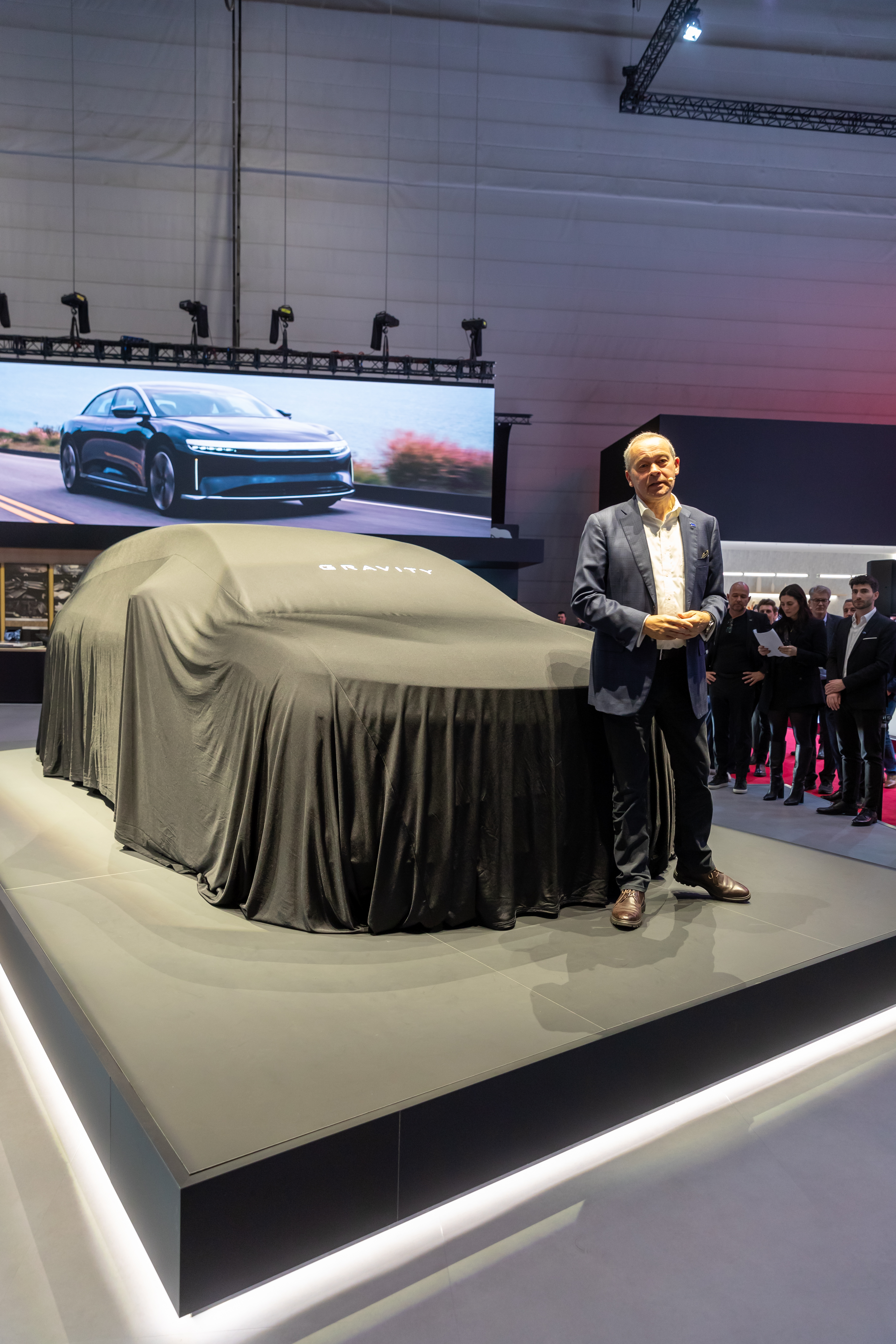
gravity
"They have some supply chain issue with the gravity. That means that they're not producing cars. They had pause production. They'd also cut a shift."
Lucid Gravity is Lucid’s electric SUV. The hosts say problems getting parts and too many cars not selling have led to production being paused or reduced.
The Lucid Gravity is Lucid’s electric SUV model. The segment ties production slowdowns and supply-chain problems specifically to Gravity units sitting unsold, which then reduces the need for upstream parts.
supply chain issues
"They have some supply chain issue with the gravity. That means that they're not producing cars. They had pause production. They'd also cut a shift."
A supply chain issue means the factory can’t reliably get the parts it needs. When that happens, car production can slow down or stop.
A supply chain issue is a disruption in the network of suppliers and logistics that delivers parts and materials to the factory. In this segment, it’s used to explain why Lucid isn’t producing cars and why production was paused or reduced.
subsidies
"There were some pretty significant subsidies that were benefiting them initially when they launched that have gone away."
Subsidies are money incentives that can make electric cars cheaper or easier to sell. The host says Lucid initially benefited, but those incentives have ended.
Subsidies are financial incentives (often government-backed) that reduce the effective cost of buying or producing certain vehicles. The segment says Lucid benefited from EV-related subsidies at launch, but those benefits have gone away, worsening pricing pressure.
consumer sentiment from EVs
"There's been a general turn away in consumer sentiment from EVs. Do they sell globally, Philippa? ... The market has just generally started to reject EVs."
Consumer sentiment means what people think and feel about EVs. If more people start feeling skeptical, fewer cars get sold.
Consumer sentiment from EVs refers to how positively or negatively buyers feel about electric vehicles at a given time. The segment claims sentiment has turned away from EVs, which can reduce demand even if the cars are technically sound.
price point
"Those are a lot of that stuff is things that they couldn't necessarily control except for maybe the price point. The real issue that they could have controlled, I think, was there's a perception that the cars are challenging to own."
Price point is just the price level the product is sold at. The host says pricing might be adjustable, but other problems affecting how people feel about owning the cars are tougher.
Price point is the specific price level a product is positioned at in the market. Here, the host argues Lucid could control pricing to some extent, but other issues—like perceived ownership difficulty—were harder to fix.
software issues and glitches
"about software issues and glitches and other problems like that. I think that at that price"
That means bugs or problems in the car’s computer systems. If the software is glitchy, it can make the car feel less dependable or less pleasant to use.
This refers to problems in the car’s electronic systems—often the infotainment, driver-assist software, or other onboard computer functions. In EVs especially, software quality can affect customer satisfaction and perceived reliability.
market segment
"They do have many events. They do have smaller models coming up, but this is a tough part of the segment to compete in, especially if you want volume."
A market segment just means a specific “type” of car buyers. The host is saying some categories are harder to sell a lot of cars in.
A market segment is a defined slice of the car market—typically grouped by size, price, body style, and buyer expectations. The speaker argues it’s a tough segment to compete in if you want high sales volume.

Tesla Model Y
"...le. We got one live. The R2 is on sale today. The Model Y has been on sale for 10 years. I don't live in th..."
The Tesla Model Y is an electric SUV made by Tesla. It’s designed for everyday driving, and it’s been sold for a long time. People talk about it a lot because it’s one of Tesla’s most common models.
The Tesla Model Y is a compact electric SUV that’s been one of Tesla’s biggest-selling vehicles for years. It comes up often in discussions because it represents Tesla’s mainstream, high-volume approach to EVs. The podcast context also ties it to how long it’s been on sale and how Tesla’s lineup is positioned.

Subaru R2
"...e in the world of coming up. To me, it's like the R2 is on sale. We got one live. The R2 is on sale to..."
The Subaru R2 is a small car made by Subaru. It’s the kind of model that may not be common in many places, so people notice it when one is available. The podcast mentions it because they’re looking at one that’s currently for sale.
The Subaru R2 is a small, compact car that’s often discussed as a niche model, especially because it’s not widely known outside its home market. In the podcast, it’s referenced as being “on sale” with a live example, suggesting the conversation is about a specific listing or viewing. The “R2” mention is tied to how rare or interesting the car is to collectors.

Tesla Model 3
"...success, which they have with the Model Y and the Model 3. Well, maybe. I mean, it's a different market seg..."
The Tesla Model 3 is an electric car made by Tesla. It’s meant to be a practical, everyday sedan. It’s often discussed because it’s one of Tesla’s main models and it’s related to the Model Y in how Tesla sells EVs.
The Tesla Model 3 is Tesla’s compact electric sedan and one of the brand’s key products. It’s significant because it helped establish Tesla’s early mass-market EV success. In the podcast, it’s mentioned alongside the Model Y to compare how Tesla targets different market segments.

Lucid Air
"...atters. I think it product is a good product. The air and the gravity are both excellent products that ..."
The Lucid Air is an electric sedan made by Lucid. It’s designed for premium comfort and everyday driving as an EV. The podcast mentions it alongside another Lucid model to say both are strong products.
The Lucid Air is Lucid’s electric sedan, positioned as a premium EV with strong performance and efficiency. It’s mentioned in the podcast as part of a broader discussion about Lucid’s product quality. The context groups the Air and the Gravity together as “excellent products.”
gas powered
"[401.3s] Gas-powered. Go after up-seal nurturers and trend-setting achievers and active explorers?"
“Gas-powered” means the car runs on gasoline and uses an engine. They’re basically debating whether Lucid should focus on gas cars instead of electric ones.
“Gas-powered” means the vehicle uses a gasoline internal-combustion engine rather than an electric motor. In the discussion, it’s used to contrast an EV strategy versus a traditional combustion strategy for Lucid’s target market.
Volkswagen Auto Group
"[492.5s] cross brand mobile model lineup. I don't mean just a Volkswagen brand. [497.7s] Volkswagen auto group owns a lot of brands..."
They’re referring to the bigger Volkswagen corporate group, which includes more than just Volkswagen-branded cars. The point is that changes at the group level affect multiple brands.
“Volkswagen auto group” refers to the broader corporate group structure that includes multiple brands and subsidiaries, not just the Volkswagen-branded cars. The hosts use it to explain how one company’s problems can ripple across many marques.
Bentley
"[501.5s] and has partnerships that also mean models across Porsche, Lamborghini, Bentley, Skoda, Seat, [509.9s] Volkswagen."
Bentley is a luxury car brand that’s owned by the Volkswagen Group. They’re listing brands affected by the group’s situation.
Bentley is a luxury car brand within the Volkswagen Group. The segment name-drops it while explaining that Volkswagen’s restructuring could impact multiple luxury and mainstream brands.
Lamborghini
"[501.5s] and has partnerships that also mean models across Porsche, Lamborghini, Bentley, Skoda, Seat, [509.9s] Volkswagen."
Lamborghini makes high-end supercars and is part of the Volkswagen Group. They’re just naming brands in the group.
Lamborghini is an Italian supercar brand that belongs to the Volkswagen Group. Here it’s referenced to illustrate the breadth of brands under the same corporate umbrella.
Skoda
"[501.5s] and has partnerships that also mean models across Porsche, Lamborghini, Bentley, Skoda, Seat, [509.9s] Volkswagen."
Skoda is a car brand in the Volkswagen Group. They’re naming other brands that sit under the same corporate umbrella.
Skoda is a Czech automaker brand owned by the Volkswagen Group. It’s mentioned as part of the group’s multi-brand portfolio.
seat
"[501.5s] and has partnerships that also mean models across Porsche, Lamborghini, Bentley, Skoda, Seat, [509.9s] Volkswagen."
SEAT is a car brand that belongs to the Volkswagen Group. They’re listing the brands under that group.
SEAT is a Spanish car brand within the Volkswagen Group. The hosts include it to show how Volkswagen’s corporate decisions can affect many different model lines.
Porsche
"[501.5s] and has partnerships that also mean models across Porsche, Lamborghini, Bentley, Skoda, Seat, [509.9s] Volkswagen."
Porsche is a sports-car brand, and it’s part of the bigger Volkswagen company group. They’re listing brands that belong to that group.
Porsche is a German sports-car brand within the Volkswagen Group. In this segment, it’s mentioned as one of the brands that could be affected by group-level restructuring.
tariffs
"and then certain markets shifted away from EVs. And then there was like this is there's, it's crazy the kind of shakeup that's happening right now and tariffs became a situation."
Tariffs are taxes on imported products. If tariffs hit cars or parts, they can make them more expensive and force companies to adjust their plans.
Tariffs are taxes a government adds to imported goods. In auto trade, tariffs can raise the cost of cars and parts crossing borders, influencing pricing, supply chains, and which markets automakers can profitably sell into.
emissions
"And that's really brilliant to do that. And then there was that whole thing where they were killing people with the emissions."
In automotive policy, “emissions” refers to regulated pollutants produced by vehicles, especially from exhaust. The hosts allude to VW’s historical emissions scandal, where software was used to affect emissions testing results, leading to major legal and financial fallout.

Volkswagen Jetta
"The Jetta and the Volkswagen Taos will be. The Jetta is still on sale. The Jetta is still on sale."
The Volkswagen Jetta is a popular VW sedan. In this segment, they say it’s still being sold even though some other models may not survive.
The Volkswagen Jetta is a compact sedan that’s been a long-running, high-volume model for VW in the U.S. Here it’s mentioned as still being on sale even as the hosts discuss other VW models that may be discontinued.

Volkswagen Taos
"The Jetta and the Volkswagen Taos will be. The Jetta is still on sale. The Jetta is still on sale. Yeah. They just had a big refresh for the third time. Big. Yeah. The Taos also just had a refresh, but that's not going to, these are not,"
The Volkswagen Taos is a small SUV. The hosts are saying it may be discontinued even though it recently got an update.
The Volkswagen Taos is a compact crossover SUV positioned below VW’s larger models. The hosts mention it alongside the Jetta as a model that may be cut or not survive, even though it recently received a refresh.

Volkswagen Id Buzz
"before you finish, I'm going to tell you what else there's to be next generation of. There's not going to be a next generation ID buzz."
The Volkswagen ID. Buzz is an electric van from VW. They’re saying it won’t get a future next generation, which would change what VW plans to sell in that EV-van category.
The Volkswagen ID. Buzz is an all-electric van based on Volkswagen’s ID electric vehicle platform. The segment claims there won’t be a next generation ID Buzz, which is important because it affects Volkswagen’s long-term EV van strategy.

Volkswagen Passat
"The Passat will not be manufactured in any capacity in any market."
The Volkswagen Passat is VW’s long-time midsize car. They’re saying it won’t be built anymore anywhere, which is a major change for VW’s lineup.
The Volkswagen Passat is a long-running midsize sedan/wagon model line for VW. The hosts say it will not be manufactured in any market, which is a big deal because it signals the end of a major global volume model.
Volkswagen Q2
"the Sportback obviously, the A1 Sportback, the Q2, the Fabia, let's go to Fabia, which is actually a really notable small car nameplate. The Q2 is going away. I know. Tragic."
The Volkswagen Q2 is a small SUV/crossover model. They’re saying VW will stop making it, which is part of the larger story about VW reducing its lineup.
The Volkswagen Q2 is a small crossover nameplate within VW’s Q lineup. The hosts say the Q2 is going away, which matters because it’s part of VW shrinking or pruning its small-car lineup.
internal combustion engine
"even though we've been talking a lot about Porsche's decision to figure out how to put an internal combustion engine in the 718, they've said that per this report, there will not be a gas powered 718 coming."
An internal combustion engine is the traditional type of engine that burns fuel to make power. This segment is using it to talk about whether a future Porsche 718 would still be gasoline-powered or not.
An internal combustion engine (ICE) is an engine that burns fuel inside the engine to create power, typically using gasoline or diesel. The reason it comes up here is that the hosts are debating whether the Porsche 718 will have a gasoline-powered (ICE) future or move away from it.

Porsche Taycan
"Porsche dealers who have just been asked a year or two ago to build a brand new facility... are going to be livid if they cancel the Taycan and the 718, and they're throwing EV McCons down their throats and EV Kions down their throats."
The Porsche Taycan is Porsche’s electric car. It’s a fast, performance-focused EV, and the hosts are talking about whether Porsche dealers will keep pushing it.
The Porsche Taycan is Porsche’s all-electric performance sedan, built around an EV powertrain and high-voltage battery system. In this segment, it’s mentioned as part of Porsche dealers’ EV lineup that could be affected by business decisions.

Porsche 718
"Porsche dealers... are going to be livid if they cancel the Taycan and the 718... If they don't do a gas 718, apparently their plan is to... not have a gas 718, the electric 718 not on the axed list."
The Porsche 718 is Porsche’s mid-engine sports car line. Here they’re debating whether Porsche will still sell a gas-powered 718 or move more toward an electric 718.
The Porsche 718 is the model family for Porsche’s mid-engine sports cars (Cayman/Boxster), and the segment contrasts gas vs electric versions. The hosts discuss whether Porsche will keep a gas 718 and how dealers feel about shifting plans toward an electric 718.
EV
"they cancel the Taycan and the 718... they're throwing EV McCons down their throats and EV Kions down their throats... If they don't do a gas 718... the electric 718 not on the axed list."
EV stands for “electric vehicle,” meaning a car powered primarily by an electric motor and a rechargeable battery. The segment uses EV repeatedly to describe Porsche’s and other brands’ shift toward electric model lineups.

Volkswagen T-Roc
"I had a rental car T-Rock four years ago, and it was great. As most Volkswagen products kind of are, they're just good."
The Volkswagen T-Roc is VW’s smaller SUV/crossover. The host is saying they rented one and liked it, using it as a quick example of VW products being solid.
The Volkswagen T-Roc is a compact crossover/SUV sold by VW, known for being a mainstream, practical option in the lineup. The host mentions renting one as an example of VW being “good,” tying it to the brand’s broader cost and factory pressures.
Union so far in Germany
"They're in a really tough position because the Union so far in Germany have absolutely rejected the plan to close four factories and cut 100,000 employees."
They’re talking about labor unions in Germany. The unions are pushing back on plans to close factories and lay off workers, which makes it harder for the company to reduce costs.
The “union” here refers to German labor unions involved in negotiations over factory closures and workforce reductions. Their rejection is presented as a major constraint on Volkswagen’s ability to cut costs quickly.

Volkswagen Atlas
"Are they going to keep making the TerraMont? ... The Volkswagen TerraMont. Are they going to keep making that? That's the Atlas. So yes, just got redesigned for 27, by the way."
The Volkswagen Atlas is VW’s bigger, family-oriented SUV with three rows. The hosts clarify that “TerraMont” is actually the Atlas, and mention it’s getting a redesign for 2027.
The Volkswagen Atlas is VW’s larger three-row SUV, positioned as a family-focused alternative to smaller crossovers. In the segment, “TerraMont” is corrected to “Atlas,” and the host notes it was redesigned for 2027.
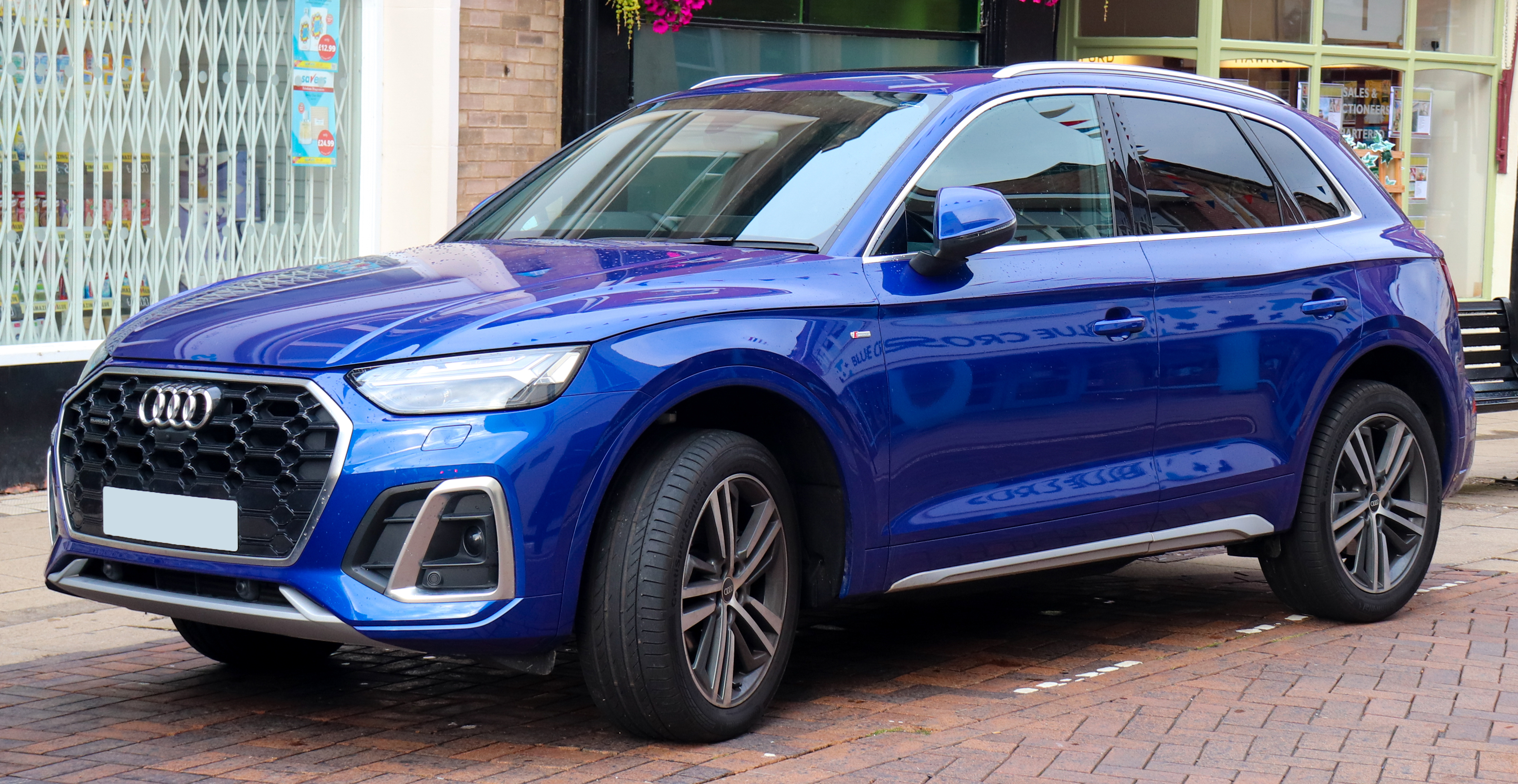
The Q5 Sportback
"The Q5 Sportback. Okay, sure. But also, how expensive is that?"
This is an Audi SUV called the Q5 Sportback. It’s basically a Q5, but with a more stylish, slanted roof that makes it look more like a coupe while still being an SUV.
The Audi Q5 Sportback is a compact luxury SUV with a more sloped, coupe-like roofline than the standard Q5. That “Sportback” body style is designed to look sleeker while keeping the Q5’s practical size and interior packaging.

the Volkswagen Tiguan
"Apparently, the Volkswagen Tiguan was named by combining the German word for tiger, which is something like tiger, with the German word for iguana, which is like leguan, or something."
The Volkswagen Tiguan is a common Volkswagen SUV. Here they’re joking about how its name sounds like it’s built from German words meaning “tiger” and “iguana.”
The Volkswagen Tiguan is a mainstream compact SUV from Volkswagen, known for being practical and widely sold in many markets. In this segment, the hosts are discussing the origin of the name “Tiguan,” which they connect to German words for “tiger” and “iguana.”

Porsche Panamera
"Panamera has a new design, Tycon sales are half what they were in 2025, [1108.6s] but one bright spot, 9-11 sales."
The Porsche Panamera is Porsche’s four-door car. It’s meant to feel sporty like a Porsche, and the hosts say it’s getting a new look.
The Porsche Panamera is Porsche’s four-door performance sedan, known for combining a sporty driving feel with everyday usability. Here, the hosts mention it getting a new design, which typically means a refresh that can help sales and keep the model competitive.
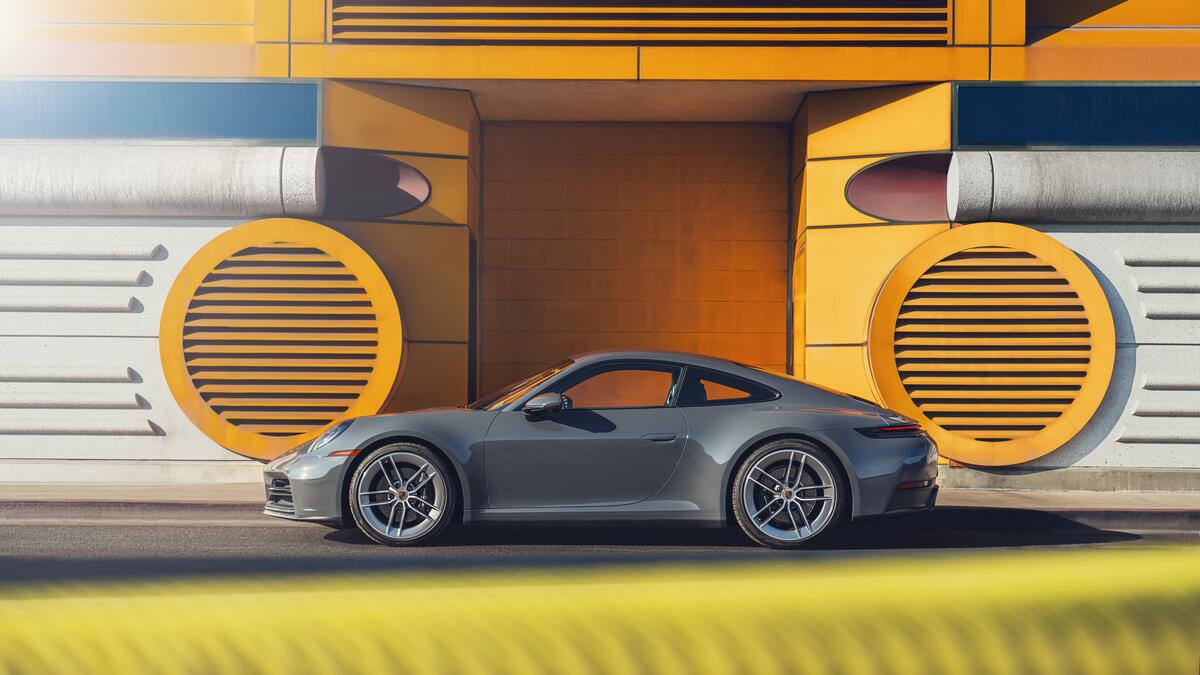
Porsche 911
"Panamera has a new design, Tycon sales are half what they were in 2025, [1108.6s] but one bright spot, 9-11 sales. [1112.8s] So far through 2026, we're about 8,500."
The Porsche 911 is Porsche’s most famous sports car. They’re saying 911 sales are doing well, even compared to other Porsche models.
The Porsche 911 is Porsche’s iconic rear-engine sports car, famous for its long-running design and performance heritage. In this segment, the hosts call out 911 sales as a “bright spot,” and they also discuss how Porsche positions it as limited-production—suggesting strong demand even while other models struggle.

Porsche Cayenne
"Luckily, we got 12 more years before the Cayenne comes out. What do you mean luckily? The Cayenne changed the world, same Porsche. And it has a low range."
The Porsche Cayenne is Porsche’s SUV. They’re saying it was a big turning point for Porsche’s sales and direction, and that it can be set up for rough/off-road driving.
The Porsche Cayenne is Porsche’s SUV that became a major volume driver for the brand. The hosts say “the Cayenne changed the world,” and they mention a “low range,” pointing to its off-road-capable transfer case setup (common on many Cayenne trims).
low range
"The Cayenne changed the world, same Porsche. And it has a low range. Maybe 12 years from now, the new product that will change the trajectory will come out again."
“Low range” is a gear mode that makes the car move slowly but with more pulling power. It’s meant for rough terrain or steep hills where you need extra control.
“Low range” refers to a low-gear setting (typically via a transfer case) that multiplies torque for slow-speed traction. It’s used for off-road crawling, steep grades, or situations where you want maximum control rather than speed.

Nissan Altima
"This is the Nissan Altima. The Nissan Altima is dead after this year, which leaves a single sedan in Nissan's lineup, the Sentra."
The Nissan Altima is a popular mid-size sedan. In this clip, they’re saying Nissan is ending it after this year, leaving fewer sedans in the lineup.
The Nissan Altima is a mainstream midsize sedan, and this segment says it’s “dead after this year.” They connect that to Nissan shrinking its sedan lineup down to just the Sentra, framing the Altima’s discontinuation as part of a broader product strategy shift.

Nissan Sentra
"The Nissan Altima is dead after this year, which leaves a single sedan in Nissan's lineup, the Sentra. The Sentra got bigger."
The Nissan Sentra is a smaller sedan. Here, they’re saying it becomes Nissan’s only sedan option once the Altima is discontinued, and that the newer Sentra is larger than before.
The Nissan Sentra is Nissan’s compact sedan, and in this segment it’s positioned as the last remaining sedan in Nissan’s lineup after the Altima ends. They also say the Sentra “got bigger,” implying a size/packaging change relative to earlier generations.
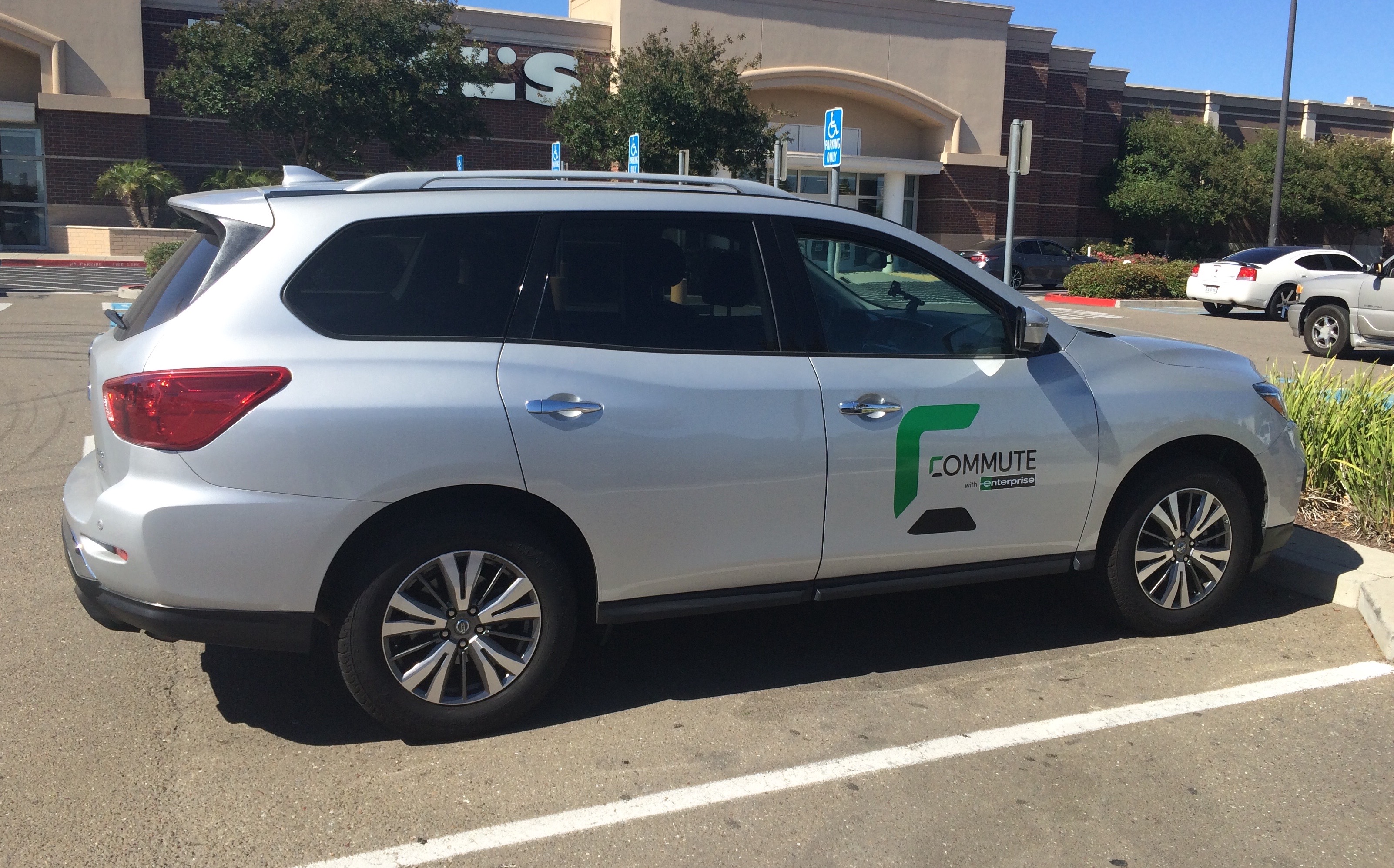
Nissan Pathfinder
"First, they cancel the fourth generation Pathfinder Hybrid after just one model year, [1228.4s] 2014. And then they cancel the Altima."
The Nissan Pathfinder Hybrid is an SUV that uses a hybrid powertrain. The hosts say Nissan stopped it after just one model year, which they see as part of a bigger shift away from certain models.
The Nissan Pathfinder Hybrid is a hybrid version of the Pathfinder SUV, and the segment notes Nissan canceled it after only one model year. The speaker even says they were at the Pathfinder Hybrid launch, tying this cancellation to Nissan’s broader product strategy changes.
segment that we think is dying
"Their view is we made the Sentra bigger. Therefore, it can play in this segment that we think is dying. And it is nothing sacred."
They’re talking about a type of car market that they think is getting smaller. The idea is that Nissan doesn’t see enough future demand in that category, so they’re shifting focus to a different model.
This refers to a market segment (a category of cars) that the speaker believes is shrinking or losing demand. In context, Nissan is repositioning the Sentra to cover the role of the Altima because they think the broader midsize/entry-to-midsize sedan space is weakening.
2.5 SL
"Now, that's a 2.5 SL. That was a rare trim."
“2.5 SL” is a particular version of the Altima. The “2.5” means the engine is about 2.5 liters, and “SL” is a nicer, more equipped trim level.
“2.5 SL” refers to a specific trim/engine combination on the 2002 Altima. The “2.5” indicates the engine’s displacement (2.5 liters), while “SL” is a higher equipment trim level compared with base versions.
V6
"The V6 was really the hot rod of the whole situation. It was fast and efficient. ... That's a V6."
A V6 is an engine with six cylinders. In this context, the hosts are saying the V6 version is the more exciting, faster option compared with the smaller engine choices.
A V6 is an engine with six cylinders arranged in a “V” shape. In this segment, the hosts call the V6 the “hot rod” option, implying it’s the stronger, more performance-oriented choice versus smaller engines.
3.5 SE
"That's a V6. That's a 3.5 SE. That was the right car."
“3.5 SE” means a specific Altima version with a bigger 3.5-liter engine. “SE” usually indicates a sportier or more feature-rich trim than the basic models.
“3.5 SE” is another Altima trim/engine combination. The “3.5” indicates a 3.5-liter engine, and “SE” is a sportier/higher-spec trim designation than lower trims.

Nissan Rogue
"...ng a little bit interesting. They also killed the rogue hybrid or plug-in hybrid, but that's because that..."
The Nissan Rogue is a compact SUV made by Nissan. It’s sold in different versions, including some that use hybrid-style technology. The podcast mentions it because some electrified Rogue versions were removed from the lineup.
The Nissan Rogue is a popular compact crossover SUV, typically offered with multiple powertrain options depending on model year. In the podcast, it’s mentioned alongside hybrid or plug-in hybrid availability, suggesting changes to the lineup. The context indicates that certain Rogue electrified versions were discontinued.
plug-in hybrid
"They also killed the rogue hybrid or plug-in hybrid, but that's because that was an outlander."
A plug-in hybrid is a car that uses both a battery and a gas engine. You can charge the battery by plugging it in, not just by driving.
A plug-in hybrid (PHEV) is a hybrid vehicle that can be charged from an external power source (like a wall outlet) in addition to using its engine. The episode mentions Nissan killing a plug-in hybrid variant, tying it to the broader lineup changes.

Mitsubishi Outlander
"...or plug-in hybrid, but that's because that was an outlander. The actual rogue e-power, which doesn't really m..."
The Mitsubishi Outlander is an SUV made by Mitsubishi. Depending on the year, it can be sold with different engine types, including hybrid-style versions. The podcast mentions it while talking about which electrified versions were offered and which were not.
The Mitsubishi Outlander is a compact-to-midsize SUV that has been offered with different powertrains, including electrified versions in some markets. In the podcast, it’s mentioned in the context of hybrid or plug-in hybrid availability and how that relates to other models being discussed. The key point is that the Outlander name is tied to electrified lineup changes.
e-power
"The actual rogue e-power, which doesn't really matter. You don't care, Ken. It's coming out next year."
e-Power is Nissan’s system where the car drives like an electric vehicle, but a gas engine helps generate electricity. It’s different from a typical hybrid or a plug-in hybrid.
e-Power is Nissan’s electrified powertrain approach where the wheels are driven by an electric motor, while a gasoline engine acts mainly as a generator to supply electricity. The hosts mention “Rogue e-power” as a distinct system from a conventional hybrid or plug-in hybrid.
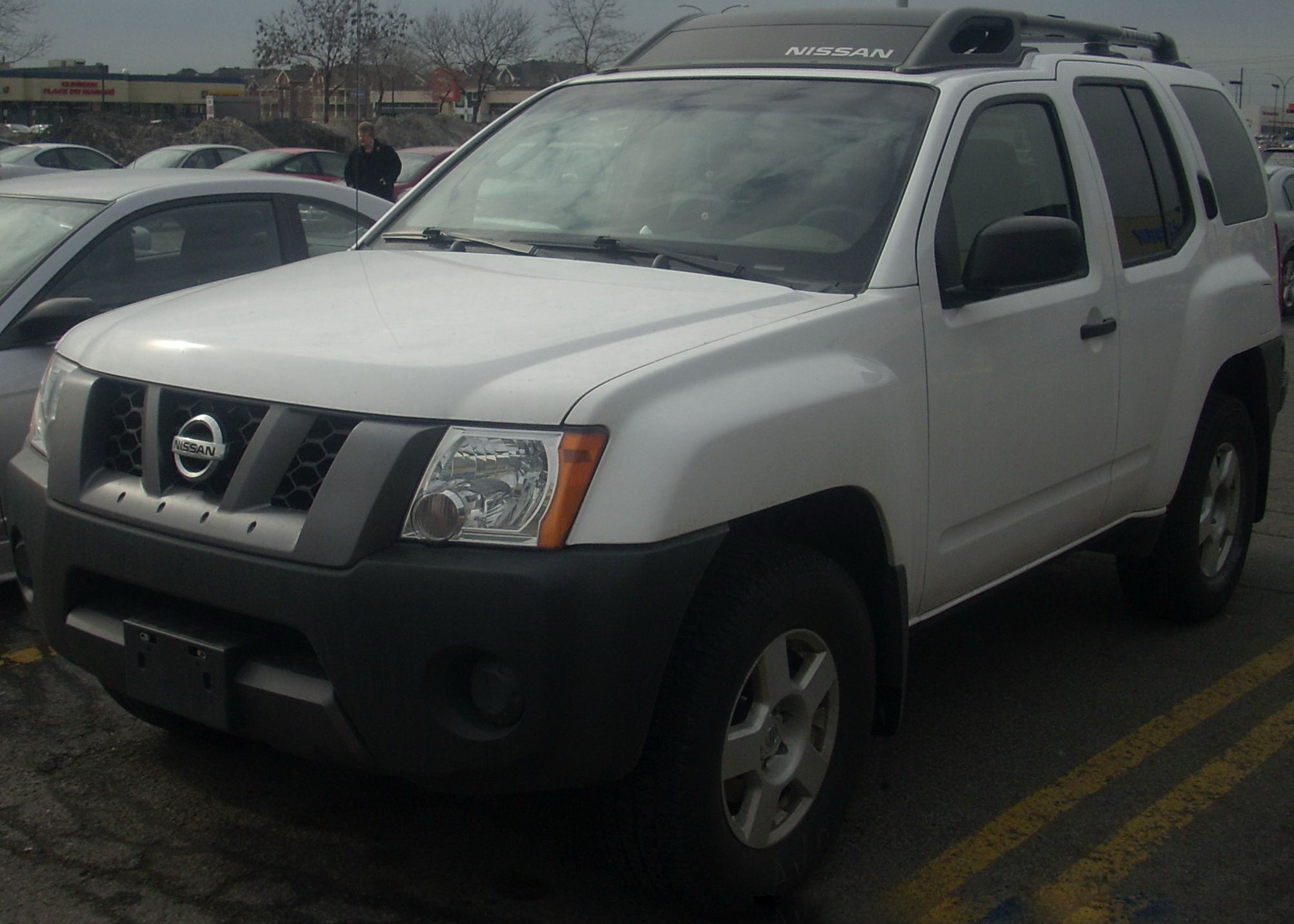
Nissan XTerra
"The XTERRA is coming out the next year or two. There's some other things entering, but the lineup is kind of sparse for a few years"
The Nissan Xterra is a tougher-looking SUV meant for dirt roads and outdoor use. They’re saying it’s expected to return or launch again soon.
The Nissan Xterra is a rugged, body-on-frame-style SUV built for off-road capability and outdoorsy buyers. In this segment, it’s mentioned as “coming out the next year or two,” suggesting a future lineup shift toward SUVs.

Nissan Versa
"The Versa, by the way, also dead after this year. Just throwing it out there. The Versa is dead."
The Nissan Versa is Nissan’s cheaper, basic sedan. They’re saying it’s being discontinued soon, so it won’t be around much longer.
The Nissan Versa is Nissan’s entry-level subcompact sedan, typically aimed at budget buyers. In this segment, it’s described as “dead after this year,” signaling an end to that model’s availability in the lineup.
CVT
"These are still driving 08 Altimas with a long turn signal. With the CVT that somehow hasn't blown up. But it's getting going."
CVT means the car uses a transmission that can change ratios smoothly, rather than shifting through set gears. The host is joking that the CVT in an older Altima has lasted a long time without failing.
CVT stands for continuously variable transmission, a gearbox that can smoothly change gear ratios instead of using fixed “gears.” The speaker mentions an “08 Altima” with a CVT that “somehow hasn’t blown up,” pointing to CVT durability as a concern.

Nissan Rogue Sport
"Rogue? Yep. Rogue sport. Rogue sport is no more."
The Nissan Rogue Sport is a smaller Nissan SUV. The hosts are saying that version has been discontinued, so you won’t see it as a current model anymore.
The Nissan Rogue Sport is a smaller crossover SUV in Nissan’s lineup, positioned below the larger Rogue. In this segment, the hosts say it’s “no more,” meaning the model has been discontinued or replaced.

Armada
"Armada. Armada, yep. Oh yeah, whatever."
The Armada is Nissan’s large, full-size SUV. The hosts are counting it among the SUVs Nissan currently has listed.
The Nissan Armada is a full-size SUV, typically aimed at buyers who want maximum interior space and towing capability. In this segment it’s named as part of Nissan’s remaining lineup on its website.

Nissan Frontier
"[1414.2s] Frontier. [1416.4s] Yep. [1417.6s] Altima versus Leaf."
The Nissan Frontier is a mid-size pickup truck. Here it’s just being name-dropped as one of Nissan’s models in the lineup.
The Nissan Frontier is a mid-size pickup truck. In this segment it’s mentioned alongside Nissan’s other model lineup, as part of a discussion about which vehicles are “on there” in a list or app context.
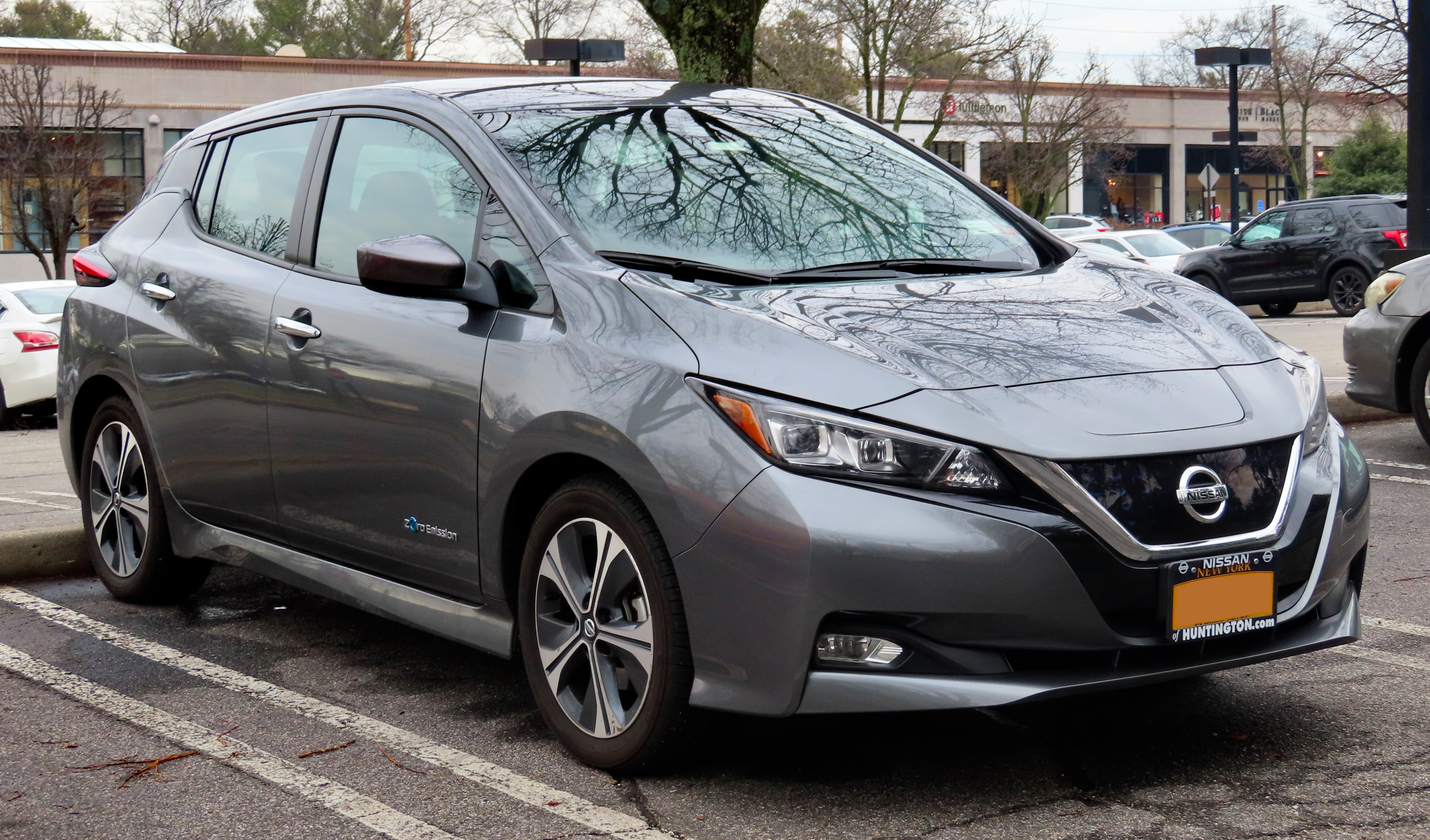
Nissan Leaf
"Yep. Altima versus Leaf. Oh, Leaf is an SUV, according to them."
The Nissan Leaf is an electric car made by Nissan. It’s designed for normal driving and charging at home. In the podcast, it’s mentioned as a familiar EV model people recognize.
The Nissan Leaf is a long-running, mainstream electric hatchback that helped popularize affordable EV ownership. It’s frequently discussed because it’s one of the best-known EVs and has been around for many years. In the podcast, it’s brought up in a comparison context and even described incorrectly as an SUV, highlighting how people categorize it.

Tata Motors Aria
"Yep, Leaf is an SUV. Aria. Is Aria still on there?"
The Tata Motors Aria is an SUV/crossover made by Tata Motors. It’s not one of the most commonly discussed cars, so people may be checking whether it’s still part of the conversation or listings. The podcast mentions it as a model to look up.
The Tata Motors Aria is a crossover/SUV model from Tata Motors, mentioned in the podcast as part of a lineup of cars being checked or compared. The context specifically asks whether the Aria is still listed, implying it’s being considered for relevance in the discussion. It’s brought up as a less familiar model that may be harder to find.

Kicks
"[1442.9s] Okay, hit me. [1443.8s] What are they? [1444.3s] The Kicks, which is their small SUV."
The Nissan Kicks is a small crossover SUV. They’re using it as an example of one of Nissan’s SUV models.
The Nissan Kicks is a small crossover SUV. In this segment it’s identified as “their small SUV,” as part of a discussion about which Nissan SUVs are currently in the lineup.
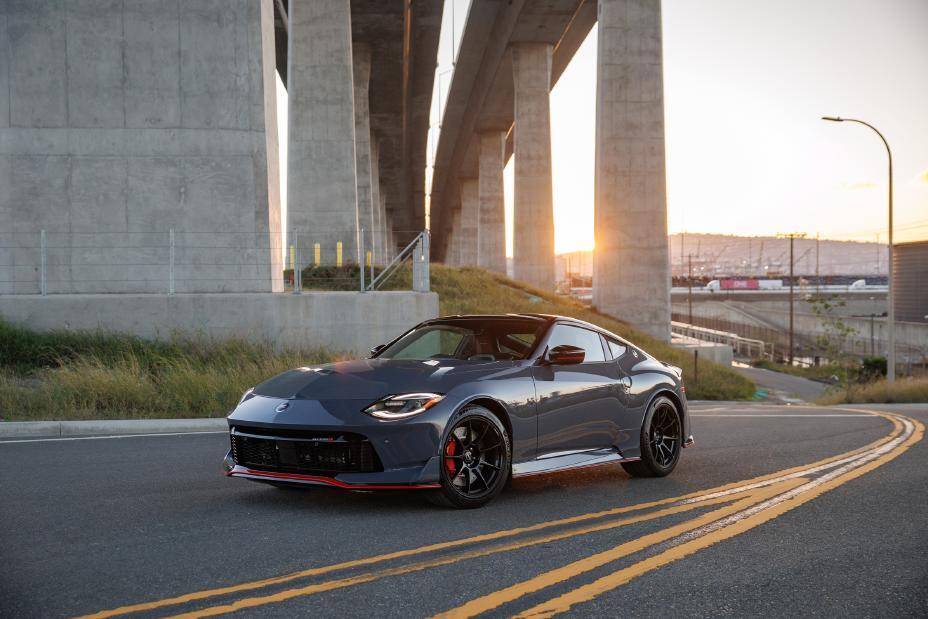
Nissan Z
"[1450.0s] No, it's still on there. [1451.1s] It exists. [1452.2s] By the way, you also missed the Nissan Z."
The Nissan Z is a sports car line known for its rear-wheel-drive layout and performance-focused heritage. The hosts mention it as something the other person “missed,” tying it back to the broader Nissan model lineup discussion.
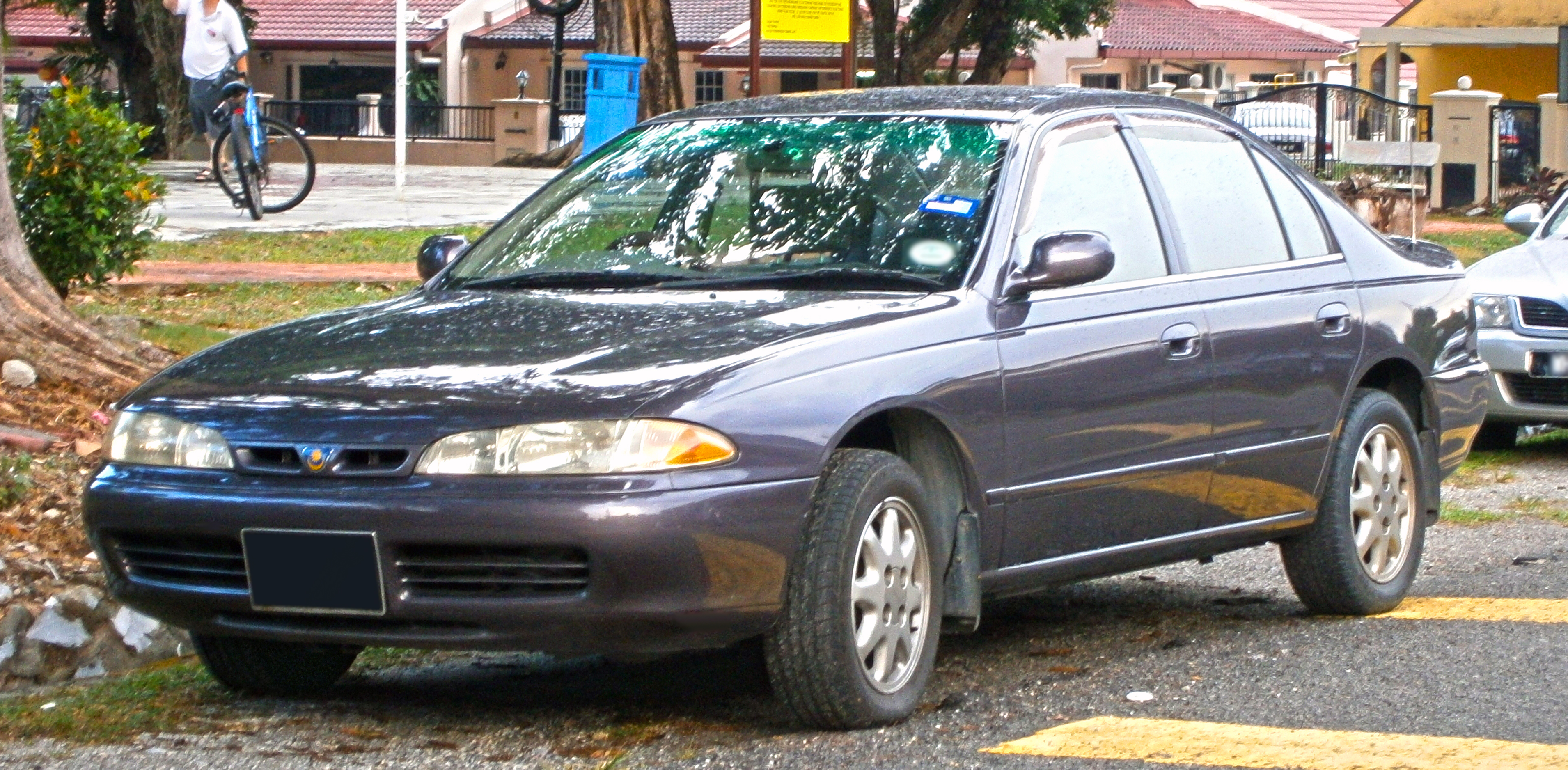
Perdana Proton Perdana
"...an't be the same thing, yeah. Can you pull up the Proton Perdana? This is going to be relevant."
The Perdana is a sedan model that the podcast is asking to look up. They mention it because it’s supposed to matter for the current discussion. The key point is that they want to confirm what the car is.
The Proton Perdana is a sedan model that’s being pulled up in the podcast as something “relevant,” implying it connects to a platform or naming discussion. The context suggests they’re checking a specific listing or confirming details about the car. It’s mentioned as a model to look up rather than a mainstream topic.
heavy facelift
"Wait, it doesn't depend on the year. It turns out there was a heavy facelift, and it stayed as a Honda Accord, but they just changed the look of it a lot."
A heavy facelift means the car gets a big “refresh” partway through its life. It usually changes the styling a lot, even if the underlying car is still basically the same.
A heavy facelift is a major mid-cycle refresh where manufacturers change more than just minor details—often including front/rear styling, lighting, bumpers, and sometimes interior updates. In this segment, it explains why the Proton Perdana can still be an Accord underneath while looking quite different.
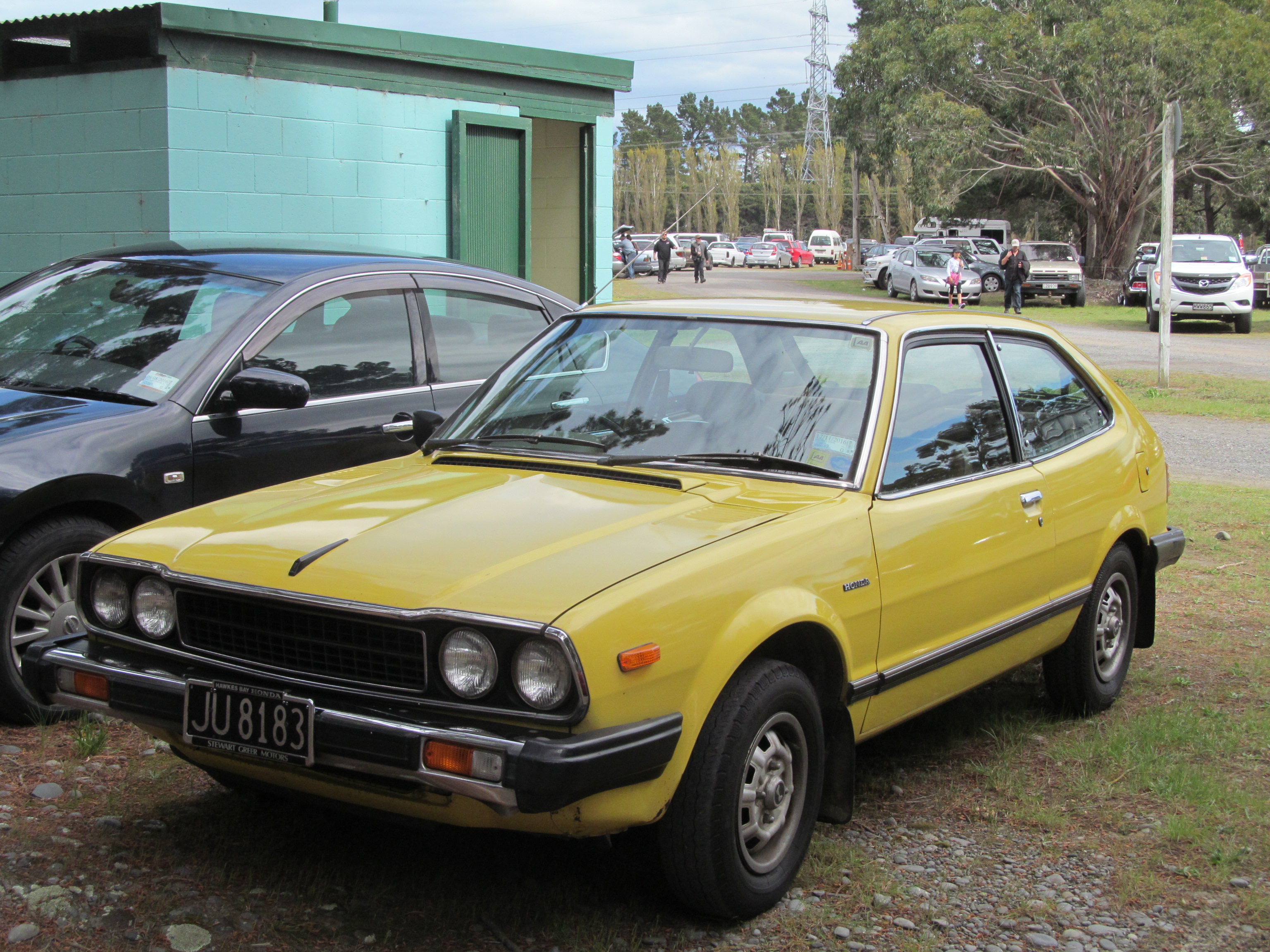
2012 Honda Accord
"That is just like a 2012 Honda Accord. This is Malaysia's car culture right here, folks."
This is the 2012 version of the Honda Accord. They’re saying the other car’s body lines look like the 2012 Accord’s styling.
The 2012 Honda Accord is a specific model year of Honda’s midsize sedan, and it’s used here as a visual benchmark. The hosts are pointing out that the other car’s door shape and body “character line” look similar to that 2012 Accord design.
character line
"But I do see the door and the character line. Malaysia's car culture involves this company Proton"
A character line is a raised line or crease on the side of a car. It helps the car look more “sculpted,” and they’re using it to say the doors look similar to an Accord.
A character line is a body crease that runs along the side of a car to add shape and visual definition. It’s often used to make the side profile look more sculpted, and here it’s referenced to compare the other car’s styling to the Honda Accord’s side design.

Honda Jazz
"I think singlehandedly started a Honda Fit or Honda Jazz craze. And I don't know if it was his doing or if you followed the craze, but the Honda Jazz in the UK is like a hot commodity right now."
The Honda Jazz is a small Honda hatchback that’s popular because it’s practical and fits a lot inside for its size. The host is saying that, in the UK, people really want them right now.
The Honda Jazz (called the Honda Fit in many other markets) is a small, practical hatchback known for its clever packaging and roomy interior. In the UK, the speaker says it’s currently in high demand, implying it’s a “hot commodity” among buyers.

Honda Fit
"I think singlehandedly started a Honda Fit or Honda Jazz craze. And I don't know if it was his doing or if you followed the craze, but the Honda Jazz in the UK is like a hot commodity right now."
The Honda Fit is basically the same car as the Honda Jazz, but it’s sold under a different name in some countries. The host is talking about how interest in it grew.
The Honda Fit is the same model as the Honda Jazz, just marketed under a different name depending on the country. The segment suggests the speaker believes a person helped spark a wave of interest in this car.
hot commodity
"but the Honda Jazz in the UK is like a hot commodity right now. Really? Yeah."
“Hot commodity” just means lots of people want it right now. In this case, the host is saying the Honda Jazz is very popular in the UK.
“Hot commodity” is a market term meaning something is in unusually high demand and can be hard to get. Here, it’s used to describe the Honda Jazz’s current popularity in the UK.

Ford Focus
"I think we're going to give him a run for our money because we're going to run over Nick's Ford Focus, and we got a buddy, Kevin, who's got a Honda Fit Jazz City life."
The Ford Focus is a popular compact car by Ford. Here it’s just being used as one of the cars in a comparison game, not as a deep technical topic.
The Ford Focus is a compact car from Ford, best known in enthusiast circles for its variety of trims and (in some generations) sporty handling. In this segment, it’s used as a benchmark car in a playful “run over” comparison.
small cars
"In Europe, there's this whole market of small cars that don't require a full license to drive, which is where this plays."
In Europe, there are very small vehicles that can be treated differently by the law. That can mean you don’t need the same full license as you would for a regular car, which changes who ends up buying them.
In Europe, “small cars” often refers to microcars and light quadricycle-style vehicles that are regulated differently than normal cars. The key point here is that some of these vehicles can be driven without a full driver’s license, which affects who buys them.
three wheels
"there's this whole market of small cars that don't require a full license to drive ... converts Fiat 500 to three-wheels"
A three-wheeler is just a vehicle that has three wheels instead of four. Some countries treat these differently for driving rules, which is why people talk about them in the context of “who can drive it.”
A three-wheeler is a vehicle with only three wheels instead of four. Converting a car like the Fiat 500 into a three-wheeler can change how it’s classified legally and how it’s used in places with different licensing rules for light vehicles.

three-wheel Fiat 500
"If we were in Europe, would you be driving one of those three-wheel Fiat 500? ... Pull up the three-wheel Fiat 500."
Fiat 500 is a tiny city car. Here they’re discussing a special converted version that turns it into a three-wheeled vehicle, which can make it easier to drive under certain European rules.
The Fiat 500 is a small city car, and the “three-wheel” version is a conversion that removes one wheel to create a narrower, lighter vehicle. In this segment, they’re talking about a company that modifies a Fiat 500 into a three-wheeler for markets where that can be easier to drive legally.
McLaren 788HS
"So this is the 788HS. [2082.4s] This is going to be a limited production car [2083.9s] that are making 200 of them, 100 Cubs, 100 Convertibles. [2086.6s] It makes 777 horsepower."
This is a special McLaren supercar that’s being made in a small number of units. The episode says it’s based on McLaren’s 720S platform and that it has huge power—around 777 horsepower.
The McLaren 788HS is a high-performance, limited-production McLaren built on the company’s 720S-era platform. The “HS” is explained in the segment as “high support,” and the host notes it’s making 777 horsepower with torque said to match the prior car.
limited production car
"This is going to be a limited production car [2083.9s] that are making 200 of them, 100 Cubs, 100 Convertibles."
A limited production car is made in a small number of copies. Because there aren’t many, it’s usually more exclusive and can be more expensive than a regular model.
A “limited production car” is built in a small, capped quantity rather than mass-produced. That usually means higher demand, more exclusivity, and often more bespoke features or tuning compared with a standard model.
HS stands for high support
"Torque is the same as its predecessor. [2091.5s] But HS stands for high support."
“HS” is the model’s special badge, and in this episode they say it means “high support.” It’s basically McLaren’s way of labeling what this version is meant to emphasize.
In this McLaren naming, “HS” is defined by the host as “high support.” That kind of badge typically signals a specific performance/engineering focus within a model family, rather than being just a random trim letter.

McLaren 765LT
"Wait, what is its predecessor? [2094.9s] Is its predecessor the 750S or the 765LT? [2098.2s] 775S."
The McLaren 765LT is mentioned as one of the earlier high-performance McLarens in the same family. The host is basically asking which car the 788HS is replacing.
The McLaren 765LT is referenced as a possible “predecessor” in the 720S/derivative lineup. In this segment, the host is mapping how McLaren’s high-performance variants evolved across different model numbers.

McLaren 750S
"Wait, what is its predecessor? [2094.9s] Is its predecessor the 750S or the 765LT? [2098.2s] 775S."
The McLaren 750S is brought up as another earlier McLaren that the 788HS could be replacing. It’s part of the same conversation about which model came before it.
The McLaren 750S is named as another candidate predecessor to the 788HS. The segment treats these model numbers as steps in McLaren’s progression of performance-focused variants.
McLaren 775S
"Is its predecessor the 750S or the 765LT? [2098.2s] 775S. [2098.8s] So it's going 720S, then 765LT, then 750S."
The McLaren 775S is another model in the same family. The host uses it to show the order of McLaren’s recent performance versions.
The McLaren 775S is mentioned as part of the sequence of related McLaren models leading up to the 788HS. In this segment, it’s used to illustrate the “end of the line” for the 720S-based platform and how the variants evolved.
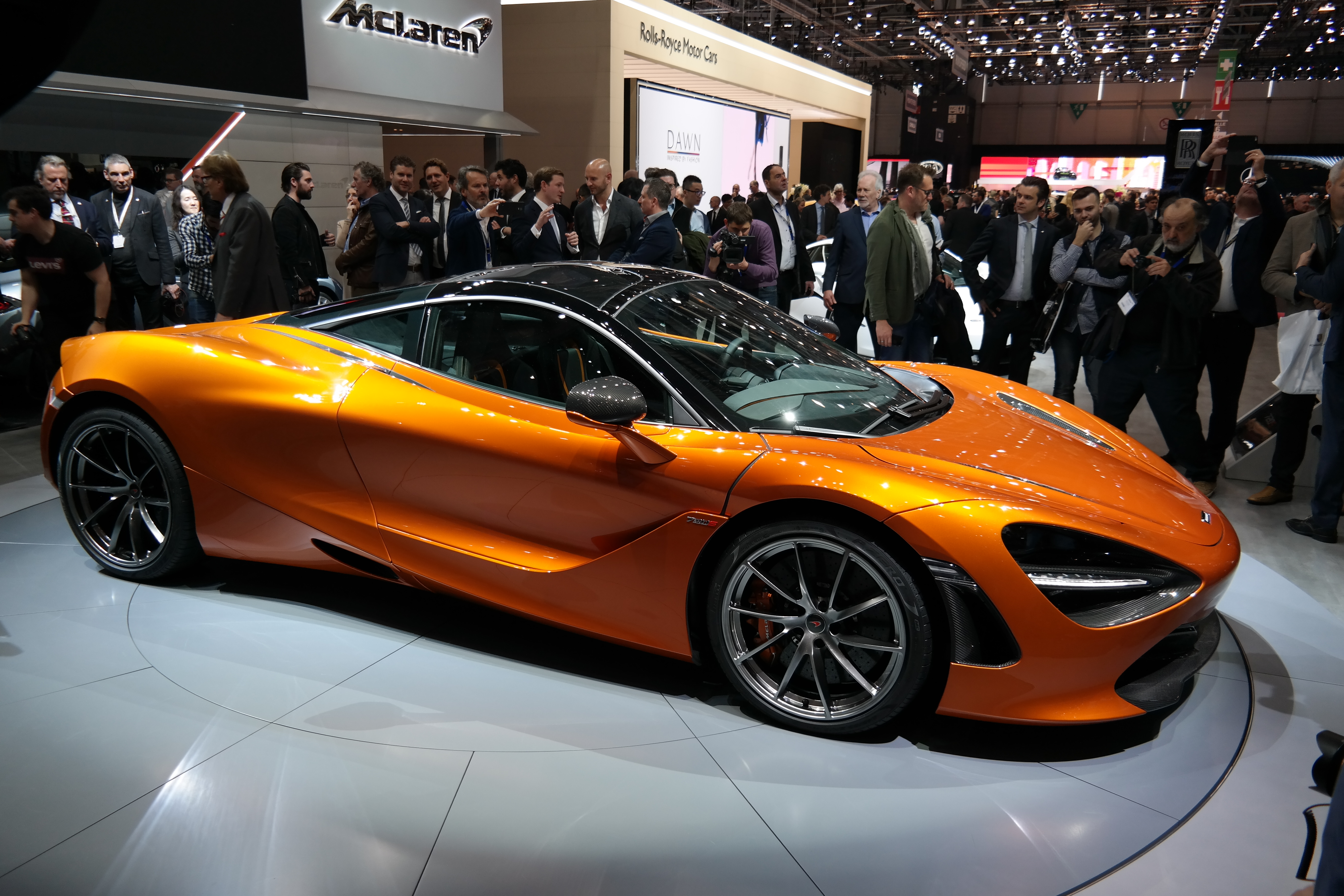
McLaren 720S
"Well, they're saying this is the end of the line. [2108.7s] This is the end of the line for the 720S-based platform, [2111.8s] which has been around since 2011, I think,"
The McLaren 720S is the earlier supercar platform the host says the 788HS is based on. The segment frames the 788HS as the “end of the line” for that 720S-based platform, which has been in use since around 2011.
720S platform
"I don't know if I'm sad that the 720S platform is going away. I think it is actually one of their better platforms."
A “platform” is the car’s main foundation—how the body and major parts are laid out. If that platform is ending, it usually means the next cars will be built on a new foundation.
A “platform” is the shared engineering base a car is built on—things like the chassis structure, mounting points, and major design architecture. When the 720S platform is said to be “going away,” it implies McLaren is moving to a different underlying structure for future cars.
low mileage collector cars
"You know how the Ferraris... There are always people who, like, perfectly preserved. So there's, like, seven-mile Ferraris and, like, 2,000-mile Ferraris."
They’re talking about collector cars that stay in great shape and don’t get driven much. Because collectors and specialists focus on certain brands, you can often find low-mileage examples.
The hosts are discussing how some classic/supercar models are often found in “perfectly preserved” condition, with very low mileage. This is a collector-market phenomenon: preservation culture and buyer demand can make certain cars seem more available than others.
tenders
"all plugged into tenders in their car covers, [2177.5s] has, like, a 720S."
A battery tender is a small device that keeps a car battery healthy when the car is parked. It helps prevent the battery from going dead if you don’t drive the car often.
A battery tender is a charger/maintainer that keeps a car’s battery at the right voltage when the car sits for long periods. Enthusiasts use them to prevent battery drain and sulfation, especially for cars that aren’t driven daily.
wrapped
"Like, every 720S is out there getting wrapped [2182.4s] and tuned and bad wheels."
“Wrapped” usually means the car’s paint gets covered with a vinyl film. People do it for style or to protect the paint, but it can complicate things if it’s done badly.
“Wrapped” refers to applying vinyl wrap over the car’s paint for color changes or protection. In enthusiast circles, wraps can also be part of a broader customization that may affect resale condition if the wrap is poorly done or removed later.
tuned
"getting wrapped [2182.4s] and tuned and bad wheels."
“Tuned” means the car’s settings are changed to make it run differently—usually for more power or sharper response. The concern here is that many cars get modified and then end up in worse condition.
“Tuned” means modifying the car’s engine/ECU settings (often with aftermarket software and sometimes hardware) to change performance characteristics. The hosts are using it as shorthand for enthusiast modifications that can lead to wear, damage, or inconsistent condition on used cars.
first gen Gyarados
"And it's going to be, like, first gen... [2189.1s] In 10 years, it's going to be, like, first gen Gyarados, [2190.7s] where you literally cannot find a nice one"
They’re using a Pokémon example as a metaphor. The point is that early versions of something can get ruined or disappear, so it becomes tough to find a “nice” one later.
This is a comparison to the Pokémon “Gyarados” from the first generation, used as a metaphor for early production cars becoming hard to find in good condition. The idea is that if early examples get destroyed, modified, or lost, later buyers can’t easily find clean specimens.

McLaren 570S
"But, uh... [2235.2s] Well, I think the, like, the high-performance, [2238.3s] more limited edition cars, those are... [2239.9s] No, no, the LTs and stuff is a different story. [2242.6s] But I mean, like, the 570S, the 720S,"
The McLaren 570S is a high-performance supercar from McLaren. In this discussion, it’s brought up as one of the cars people buy and then use aggressively, so it may not stay “perfect.”
The McLaren 570S is a performance-focused supercar from McLaren, built around a lightweight, track-capable chassis and a turbocharged V8. The hosts mention it alongside the 720S as part of the “regular performance” cars that tend to get driven hard and show wear over time.
limited edition cars
"Well, I think the, like, the high-performance, [2238.3s] more limited edition cars, those are... [2239.9s] No, no, the LTs and stuff is a different story."
A limited edition car is made in small quantities, usually with special features. The point here is that those cars are more likely to be kept in better condition because fewer people have them and they’re treated more like collectibles.
“Limited edition cars” are production vehicles built in small numbers, often with special styling or performance tweaks. The host contrasts them with more common “regular performance” models, implying limited editions are more likely to be preserved rather than heavily driven.

Ferrari 308
"Because, like, with all Ferraris, like, you could find... [2256.7s] I drove a 1900 mile 308 that we sold on the site."
The Ferrari 308 is a famous older Ferrari sports car with a V8 engine. Here it’s mentioned as an example of a car that got driven a lot and still ended up being sold.
The Ferrari 308 is a classic mid-engine sports car from Ferrari, known for its V8 layout and driver-focused feel. In this segment, it’s used as an example of how even high-value Ferraris can be heavily used and still survive in the real world.
F1
"[2270.9s] That guy does not want any McLaren's. [2272.7s] He has not ever thought... [2273.6s] I mean, an F1, of course. [2274.6s] F1, yeah."
F1 means Formula 1, the highest level of race car competition. They’re saying that while this collector may not want certain supercars, they would want F1-related stuff.
F1 stands for Formula 1, the top tier of open-wheel motorsport run by the FIA. In the segment, “F1” is referenced as the kind of car/series that someone would definitely want, contrasting it with other supercar brands.
200 of them
"But like I said, they're only going to be 200 of them. So I'm sorry, Filippo."
When a car is limited to a fixed number—like “200 of them”—it means only that many will be made. Fewer cars usually makes it harder to get one and can make it cost more.
A “limited production run” means the manufacturer intentionally caps the number of cars built. That scarcity often increases demand and can push pricing higher, especially for supercars and special editions.
speculation
"They didn't announce pricing. They're speculation. They'll be in and around that price figure, yeah."
“Speculation” here means people are guessing the price before the company officially announces it. So the number being discussed is an estimate, not a confirmed MSRP.
In car pricing, “speculation” refers to unofficial estimates circulating before the manufacturer releases official numbers. Limited-run supercars often have pricing that’s first guessed by media and insiders, then confirmed later.
Storato versions
"they're going to continue to make Storato versions. They want to continue to make crazy editions of their cars."
“Storato” here sounds like a special Lamborghini version meant for tougher, more off-road-style use. The point is that it’s not just a gimmick—it’s tied to how some customers actually use their cars.
“Storato” is being used here as a named Lamborghini sub-model/trim concept aimed at off-road or rugged use. The discussion frames it as a way to sell “crazy editions” that still match real customer needs—like towing and rural activities.

Lamborghini Urus
"You said they should do a Storato version of the Urus. They should do a specific off-road version. And they said, that's what the car is."
The Lamborghini Urus is Lamborghini’s SUV. It’s not just for looks—it’s designed to handle rougher driving too, and the discussion here is about an even more off-road version.
The Lamborghini Urus is a high-performance luxury SUV built around a powertrain and chassis setup meant for more than just city driving. In this segment, the hosts discuss making an off-road-focused “Storato” version of the Urus, arguing it already has the underlying capability for that kind of use.
shuttering factories
"But they're just shuttering factories,"
“Shuttering factories” means closing factories down, usually for good or for a long time. It’s about stopping production at that location.
“Shuttering factories” means permanently or long-term closing manufacturing plants. It’s a business/production term that signals reduced capacity and job impacts, and it contrasts with the hosts’ claim about continuing to fund other high-profile vehicles.
off-road versions
"but they're going to do off-road versions"
“Off-road versions” are cars set up to handle dirt, bumps, and rough ground better than a normal road car. Here, they’re talking about making a supercar more rugged.
“Off-road versions” are factory or aftermarket variants tuned for rougher terrain—typically with changes like higher ride height, different tires, and protective bodywork. In this segment, it’s used to criticize the idea of spending heavily on a rugged supercar while cutting mainstream production.

Lamborghini Huracan
"...n't even know what that means in the context of a Huracan Storato."
The Lamborghini Huracan is a supercar made by Lamborghini. The podcast mentions it while talking about a specific version name. They’re trying to understand what that variant means in the context of the Huracan.
The Lamborghini Huracan is a supercar known for its dramatic styling and high-performance V10-era reputation. In the podcast, it’s referenced in a context about a specific Huracan variant name (“Storato”), suggesting they’re discussing a particular trim or model designation. The mention indicates interest in how that variant is described or understood.
Request an Explanation
Heard something you'd like explained? We'll add it to this episode.
Sign in to request explanations for terms you heard.
Want to learn more?
Browse our glossary for plain-English explanations of automotive terms, jargon, and concepts.
Help improve this episode
See something that's not quite right? Our annotations are AI-generated and can sometimes miss the mark. Click the flag icon on any annotation to suggest a correction.