
The New BMW M, Porsche Denies Electric 911! Stradman's Lamborghini Catches Fire!
About this episode
The hosts start with USAA discount stacking, then pivot into sad news about Jeremy Clarkson’s prostate cancer diagnosis. After a quick PSA on PSA screening, the conversation heats up with BMW’s “Neue Klasse” and an electric M-flavored direction for the next M3—plus debate over whether it’ll avoid hybridization. Porsche reportedly denies an electric 911, while the guys also unpack Lamborghini “spider” convertible tradeoffs and a viral Stradman-linked Lamborghini fire story. The episode later broadens into used-car bargains, collector insurance, and Cars & Bids strategy.
Neue Klasse
"This is the new BMW new class concept... They had they had teased the regular Neue class version as a concept car a few months ago or maybe a year."
“Neue Klasse” is BMW’s name for its next big generation of cars and design direction. The hosts are saying BMW showed a regular version first, then later showed an M-focused version.
“Neue Klasse” (German for “New Class”) is BMW’s branding for a next-generation vehicle platform and design direction. In this segment, the hosts say BMW teased the regular Neue Klasse as a concept, then followed with an “M version” design study.
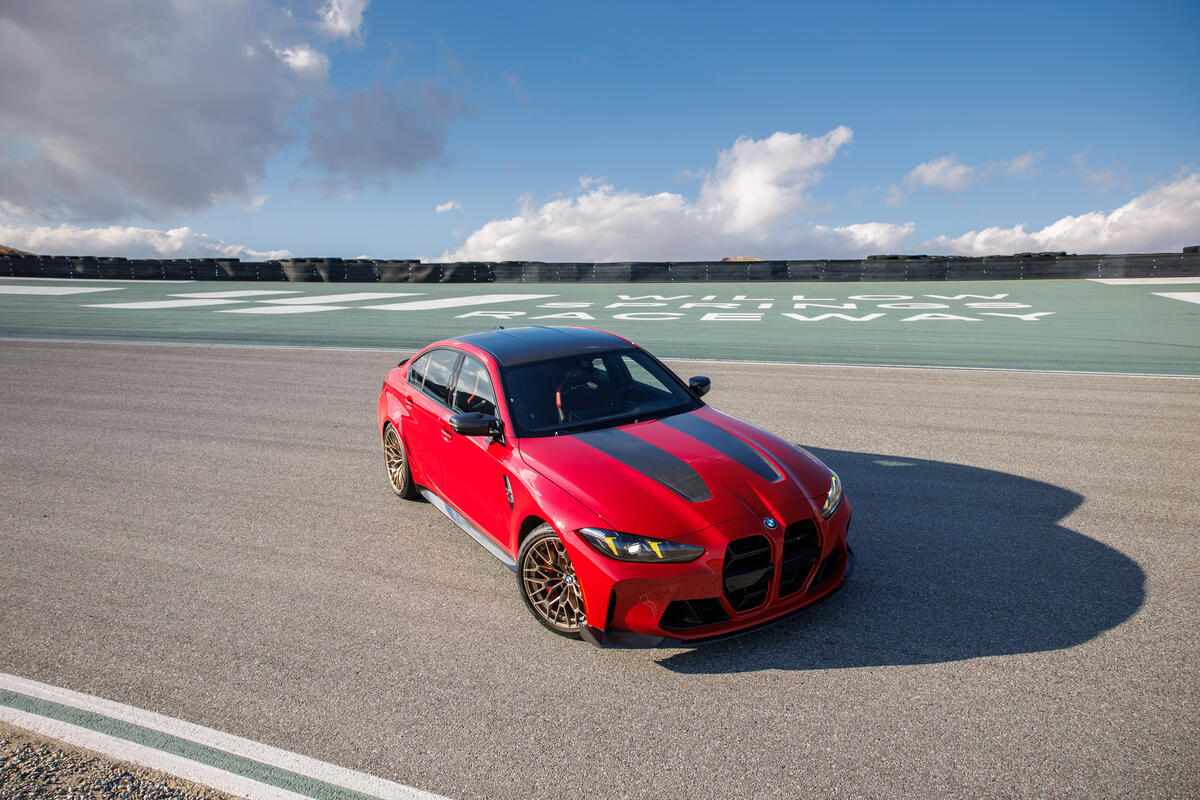
BMW E30M3
"It’s electric. It looks like an E30M3 a little bit. Exactly. It is a new design study for the upcoming BMW."
The BMW E30 M3 is an older BMW sports car that’s famous with enthusiasts. They’re saying the new BMW concept has a similar look to that classic car.
The BMW E30 M3 is a classic 1980s/early-1990s performance BMW known for its compact size and motorsport-derived character. In the segment, the hosts use it as a visual reference point because the new BMW concept “looks like an E30 M3 a little bit.”

BMW News Bmw
"They also indicated the next M3 will not be a hybrid. So good news, BMW fans, you can rejoice and or let out a sigh of relief that BMW is not going to screw things up again."

Neue Class
"...concept car. They had they had teased the regular Neue class version as a concept car a few months ago or mayb..."
electric
"Yeah. And I think this will be very good. [320.6s] Yeah. But it's this is an electric car."
They’re saying the next BMW M3 could be an electric car. That means it would be powered by an electric motor and battery rather than a gas engine.
In this context, “electric” means the next BMW M3 would use an electric powertrain instead of (or alongside) a gasoline engine. The speaker also mentions a plan to split the lineup into electric and gasoline versions, which is a common strategy as automakers transition to EVs.
hybrid
"So it seems to me that if they're saying the next M3 won't be a hybrid... Them confirming that it won't be a hybrid."
A hybrid uses two kinds of power: a gas engine and an electric motor. The tradeoff is that the electric parts can add weight, which can affect how the car drives.
A hybrid powertrain uses both a combustion engine and an electric motor. In performance-car debates like this one, the key issue is that hybrids can add weight (from batteries and related hardware), which can change handling and balance.

BMW M5
"...esponse to the pushback on the curb weight of the M5. There was such an enormous pushback because they..."
The BMW M5 is a fast, sporty BMW sedan made by BMW’s performance division. People talk about it a lot because it’s supposed to be quick, but modern cars can be heavy. The podcast is discussing why the weight matters and why people argued about it.
The BMW M5 is a high-performance version of the 5 Series, built for fast driving with a strong focus on everyday usability. In the podcast, it comes up in the context of curb weight and the debate around how heavy modern performance cars have become. That makes it a natural topic when discussing what “performance” means in the real world.
curb weight
"I wonder if that's a direct response to the pushback on the curb weight of the M5. There was such an enormous pushback because they had made it a gas car and have an electric powertrain."
Curb weight is the car’s weight as it sits ready to drive, with standard fluids and a typical amount of fuel, but without passengers or cargo. The segment suggests that the M5’s curb weight became a sticking point when it adopted a hybrid-style layout.

SF90
"everybody has gone down that road in Ferrari with the SF90 and the Temerario and all these cars."
The Ferrari SF90 is a high-end Ferrari that uses both gas power and electric motors. They bring it up to show that hybrid supercars exist, but they can end up heavier than you’d want.
Ferrari SF90 is a plug-in hybrid supercar known for combining a combustion engine with electric motors for extra acceleration. The segment uses it as an example of the broader industry move toward hybrid performance, while arguing that these cars can become “porky” (heavy).
porky
"But the drawback is all of those cars are porky. They're big cars."
“Porky” is slang for “too heavy.” They’re saying the hybrid cars can end up weighing more than the ideal for sharp handling.
“Porky” is enthusiast slang meaning “overweight” or “too heavy.” In this context, the speaker argues that hybrid supercars can become heavy enough to hurt the very handling traits performance buyers expect.
balance and precision and handling
"But the M3 has always been about balance and precision and handling. And so like weight just is the antithesis of all of those things."
They’re talking about how a car feels when you turn and how controllable it is. The idea is that extra weight can make it harder for the car to feel nimble and precise.
This refers to the way a performance car distributes grip and responds predictably to steering and throttle inputs. The speaker contrasts BMW M3’s traditional focus on handling with the idea that added hybrid weight can work against that goal.
design language
"This is a new design language for BMW M automobiles. So it is not meant to be just this vehicle."
A “design language” is just a brand’s recognizable style. It means multiple cars will look like they belong to the same family, using similar design features.
“Design language” is a brand’s consistent set of styling cues—like proportions, lighting shapes, and grille/bumper themes—that show up across multiple models. When BMW M talks about a new design language, it usually means future M cars will share that look rather than being a one-off for a single vehicle.

XM
"which maybe they'll start with the XM. That would be a good one to redesign."
The BMW XM is BMW’s more extreme, performance-focused SUV. The host is saying BMW could use it as the first car to show off a new M design style.
The BMW XM is BMW’s high-performance SUV in the M lineup, positioned above the more mainstream X models. The speaker suggests BMW might start rolling out the new BMW M design language with the XM.
General Motors
"The next big news story this week was new pickup trucks from General Motors. To me, this is basically a redesign."
General Motors is a major car company. The host is talking about GM’s new pickup trucks and what’s changing in them.
General Motors (GM) is the automaker behind brands like Chevrolet, GMC, and others. Here, the speaker is referring to GM’s new pickup-truck lineup and the changes to powertrains and styling.
turbo four cylinder
"The two point seven turbo four cylinder is still sort of the base engine. This is exciting."
A turbo four-cylinder is a smaller engine with four cylinders that uses a turbo to make more power. It’s often offered as the cheaper or more efficient engine option.
A “turbo four cylinder” is a smaller four-cylinder engine that uses a turbocharger to increase air intake, helping it make more power than a non-turbo version. The speaker calls it the “base engine,” suggesting GM will offer a more efficient option alongside the larger V8s.
facelift slash redesign
"The looks are almost universally across the interwebs regarded as wow. That is that is like the freshest, nicest facelift slash redesign on the market."
A facelift is like a “refresh” of a car—new looks and maybe some tech, but it’s not a totally new car. A redesign is a bigger change where the car is more fundamentally updated. The host is saying this update feels closer to a redesign than a small refresh.
A facelift (often shortened to “mid-cycle refresh”) is a model update that typically changes styling details, lighting, bumpers, and sometimes tech or interior materials without fully replacing the platform. A redesign is a more comprehensive change—new body structure, powertrain, and/or chassis fundamentals. When someone says “facelift slash redesign,” they’re describing how the changes feel more significant than a typical refresh.
V8s
"And again, keeping the V8s and everything people like. Keeping the V8s is definitely an interesting thing."
A V8 is a type of engine with eight cylinders arranged in a V shape. People often like V8s because they tend to feel strong and sound great. The host is saying it’s interesting that this truck still offers V8 engines.
“V8” refers to an engine with eight cylinders arranged in a V shape. Many buyers associate V8s with strong low-end torque and a distinctive sound, so keeping V8 options can be a major selling point even as automakers move toward smaller engines or electrification. In this segment, the host is highlighting that the truck’s appeal partly comes from still offering V8 power.
six cylinder powertrains
"I'm curious, you know, where in the development cycle that decision was made as obviously as Ford has heavily started to rely on six cylinder powertrains."
A powertrain is everything that works together to move the car, starting with the engine. “Six cylinder” means the engine has six cylinders instead of eight. The host is saying Ford has been leaning more toward six-cylinder setups, so it’s interesting this truck still keeps V8s.
A “powertrain” is the combination of components that make the car move—typically the engine plus transmission and drivetrain. “Six cylinder powertrains” means the automaker is increasingly relying on engines with six cylinders (often inline-six or V6) rather than V8s. The host connects this shift to Ford’s strategy and wonders when the decision to keep V8s was made.
trail boss
"They sent me the press release last week and they're really pushing the off road versions. The trail boss, which I think is sort of a middling off road, if you're honest."
“Trail Boss” is a name Chevrolet uses for a truck trim meant for dirt roads and light off-roading. It’s usually not the most extreme off-road version in the lineup. The host is basically saying it’s in the middle—not the toughest, but better than stock.
“Trail Boss” is a trim name for an off-road–oriented Chevrolet truck. It’s typically positioned as a more casual off-road option—more capable than a base model, but not as hardcore as the top off-road trims. The host calls it “middling,” meaning it sits in the middle of the off-road lineup.
ZR2
"But also the ZR2, which is a pretty more substantial off roader, almost becoming in the vein of kind of the Raptor."
“ZR2” is a higher off-road trim level on a Chevrolet truck. It’s meant to handle tougher terrain than the more basic off-road versions. The host is saying it’s becoming more like the most hardcore off-road trucks.
“ZR2” is a Chevrolet truck off-road trim known for more serious off-road hardware than milder trims. It’s commonly associated with upgrades aimed at rough terrain—stronger suspension components, off-road tires/wheels, and other capability-focused details. The host contrasts it with Trail Boss and suggests it’s getting closer to the level of a top-tier off-road competitor.
Raptor
"Almost becoming in the vein of kind of the Raptor. And I'm interested to see how that actually feels and how it actually succeeds."
“Raptor” is Ford’s name for a very capable off-road truck. It’s built for rough terrain and has suspension and equipment meant for serious off-roading. The host is comparing the Chevy’s off-road trim level to that kind of top-tier off-road truck.
“Raptor” refers to Ford’s high-performance off-road truck line, best known for aggressive suspension tuning and hardware designed for desert-style driving. When the host says the ZR2 is “almost becoming in the vein of” the Raptor, they’re comparing the Chevy’s off-road positioning to Ford’s flagship off-road reputation. It’s a way of saying the Chevy may be targeting the same buyer who wants maximum off-road capability.

F-150 Raptor
"...oader, almost becoming in the vein of kind of the Raptor. And I'm interested to see how that actually feel..."
The F-150 is Ford’s big pickup truck. The podcast is talking about a version that’s meant to feel more like a tougher, off-road style truck. They’re interested to see how it drives in real life.
The F-150 is Ford’s full-size pickup line, and the podcast is discussing a newer loader/variant that’s described as feeling closer to the Raptor style. This kind of mention usually focuses on how the truck drives and whether it matches the expectations people have for a more aggressive, off-road-oriented setup. It’s relevant because the F-150 is a benchmark for what many buyers compare other trucks against.
high country
"Obviously, there's new luxury that, you know, all the trims are new. There's big new screen in the center. They were they heavily pushing also the high country,"
“High Country” is a higher-end trim level on a Chevrolet truck. It usually means more comfort features and a more premium feel than the base trims. The host is saying even these nicer trims are getting updated.
“High Country” is a trim level name used by Chevrolet to indicate a more upscale, comfort-and-features–focused version of the truck. In this segment, the host frames it as part of the lineup where “all the trims are new,” implying updated styling and equipment across the range. It’s essentially the brand’s higher-end option rather than the most off-road-focused one.
share the same architecture
"They all kind of share the same the same architecture and that kind of thing. The other thing to your point is it's not quite the Raptor edition."
Sharing the same architecture means different vehicles are built on a similar underlying design. That can make it easier to put new engines or tech into more than one model.
When vehicles “share the same architecture,” they’re built on a common underlying platform—shared structural design, mounting points, and often electronics/drivetrain packaging. That makes it easier for automakers to roll out similar updates (like new engines or hybrid systems) across multiple models.

Raptor R
"But if you think about it, the Raptor R is what you have to buy if you want to V8 in the Raptor, you're spending well over a 100000 dollars. And it's still only five point two liters."
The Ford Raptor R is a super tough off-road truck. It’s the top, most extreme version of the Raptor line and it’s built to handle rough terrain, not just look rugged.
The Ford Raptor R is a high-performance off-road pickup built for serious desert-style driving. It’s notable for pairing a large V8 with off-road hardware, and it’s positioned as the “halo” Raptor for buyers who want the most extreme version.
V8
"But if you think about it, the Raptor R is what you have to buy if you want to V8 in the Raptor, you're spending well over a 100000 dollars. And it's still only five point two liters."
A V8 is an engine with eight cylinders. People often like it because it tends to sound great and feel powerful.
A V8 is an engine with eight cylinders arranged in a “V” shape. In this segment it’s the key buying motivation—people want the sound and feel of a V8, even if the truck’s off-road performance isn’t the fastest in every situation.
off road components
"So Chevy can also, hey, dude, you can get a six point six liter V8 without spending a hundred grand and have the majority of the off road components you want."
Off-road components are the specialized parts that help a truck handle rough terrain—things like suspension tuning, stronger drivetrain parts, and other hardware designed for durability and traction. The hosts argue that you can get most of these benefits without paying the Raptor R’s extreme price.
Duramax diesel
"The the other the other announcement is the base Silverado work truck gets the Duramax diesel."
Duramax is the name GM uses for its diesel engines. Diesel engines are often picked for towing and getting good fuel economy, and the host says the Silverado work truck is getting one.
Duramax diesel refers to GM’s diesel engine family used in many Chevrolet and GMC trucks. In this context, it’s being added to the base Silverado work truck, signaling a move toward diesel power for customers who want the diesel’s typical torque and efficiency advantages.
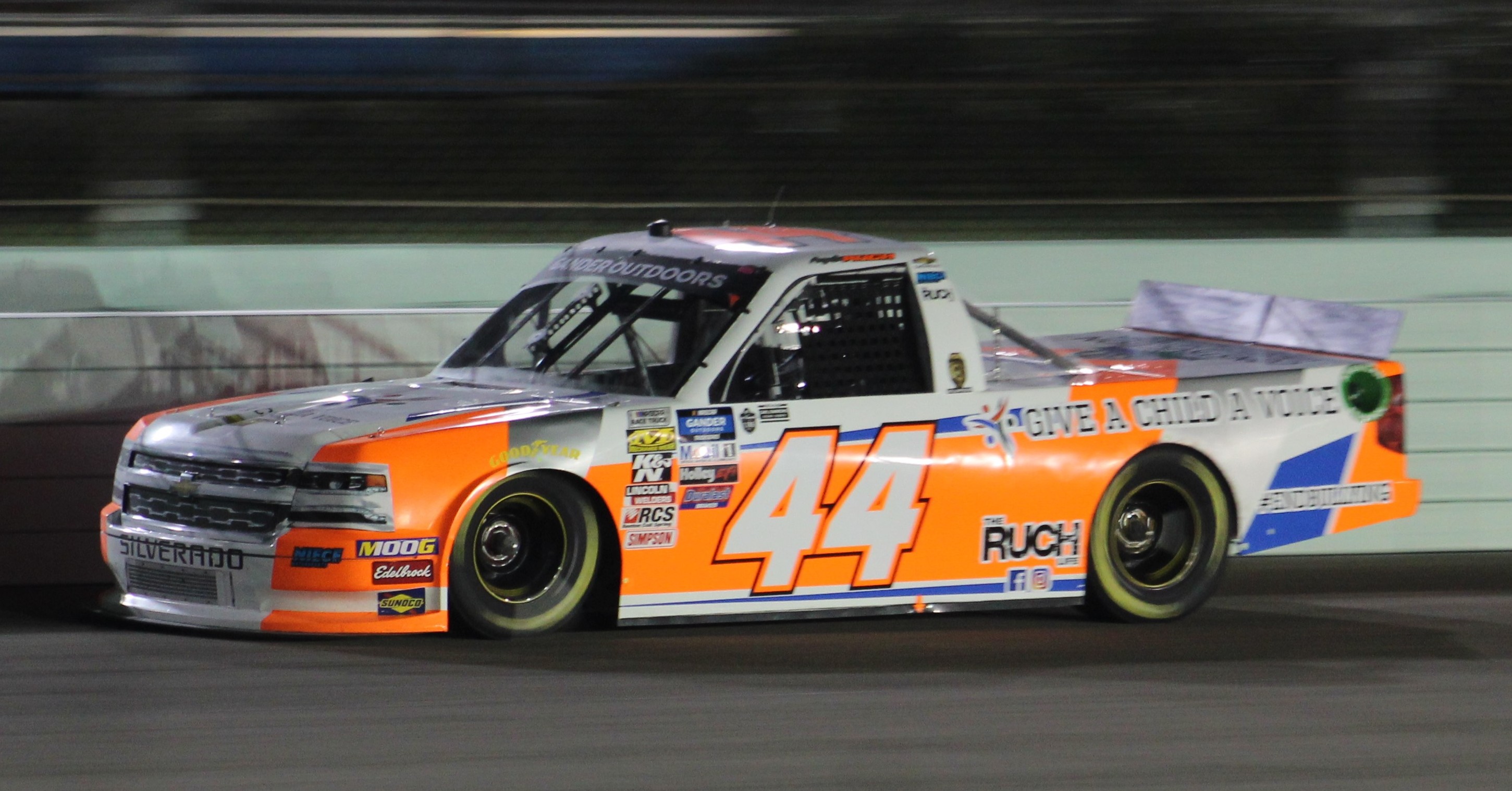
Chevrolet Silverado
"The the other the other announcement is the base Silverado work truck gets the Duramax diesel."
The Chevrolet Silverado is a big pickup truck. Here they’re talking about the work-truck version getting a diesel engine, which is often chosen for hauling and long-distance fuel economy.
The Chevrolet Silverado is GM’s full-size pickup truck platform, and this segment discusses a specific powertrain change for the base work-truck version. The host says it gets the Duramax diesel, which is a notable upgrade for buyers who want better towing/efficiency than gasoline-only options.
engine swap
"You get the ZR1 and it's a Corvette, right? You put the ZR1 engine in the ZR2 pickup and you call it the ZR3. I like it."
An engine swap is when someone replaces a vehicle’s original engine with a different one, usually from another model. In this segment, the host describes swapping the Corvette ZR1 engine into a ZR2 off-road pickup as a playful “ZR3” idea.

Chevrolet Corvette
"You get the ZR2. It's a it's an off road pickup. You get the ZR1 and it's a Corvette, right? You put the ZR1 engine in the ZR2 pickup and you call it the ZR3."
ZR1 is the most extreme performance version of the Corvette. The host is joking about taking that Corvette’s engine and putting it into an off-road truck to make a ridiculous hybrid.
ZR1 is a high-performance trim of the Chevrolet Corvette, known for being the top-tier, track-oriented version in the lineup. The host’s joke is to take the ZR1’s engine and put it into a ZR2 off-road truck, creating a “ZR3” concept.

Ram TRX
"You know, Ram's problem with that truck will always have been that they started with the TRX and then went backwards."
The Ram TRX is a super-powerful, high-end Ram pickup truck. The hosts are saying it was the original “big deal” version, and later trucks don’t get the same respect.
The Ram TRX is a high-performance pickup from Ram built around extreme off-road and drag-style power. In this segment, it’s used as the benchmark for credibility because it was the earlier, more successful “top-of-the-line” version before Ram tried to move in a different direction.
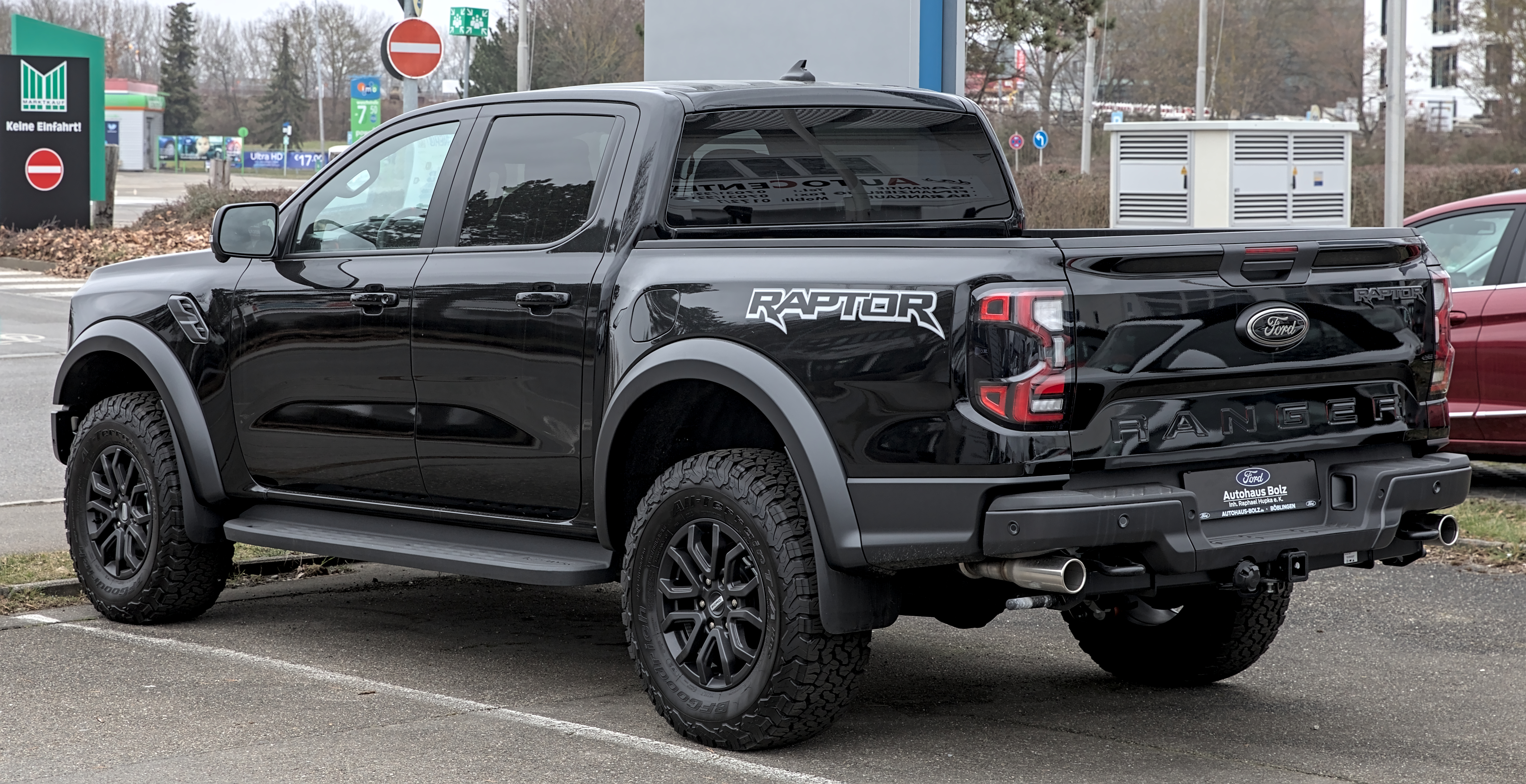
Ford Raptor
"Whereas Ford started with the Raptor and then went upwards to the Raptor R."
The Ford Raptor is Ford’s most capable, off-road-focused pickup. The point here is that Ford improved the idea step-by-step, so people trusted it more.
The Ford Raptor is Ford’s flagship performance pickup, known for off-road hardware and a reputation built over multiple generations. Here, it’s contrasted with Ram’s strategy: Ford started with the Raptor and then “went upwards,” building credibility over time.
volume dial up to 11
"But everyone just wants the volume dial up to 11. Like they want the flex."
It’s a colorful way of saying people want the truck to be even more extreme—bigger, louder, and more impressive. The host is saying buyers want the “maxed out” version, not something that feels like a downgrade.
“Dial up to 11” is a car-enthusiast way of saying a manufacturer should push the extremes—more power, more off-road capability, and more “showy” performance. In this segment it’s tied to how buyers want the truck to feel like the top-of-the-line version rather than a step sideways.
shocks
"They'll probably want new shocks. [923.6s] Definitely a new mineral change."
Shocks (shock absorbers) are parts in the suspension that help control bouncing. They keep the wheels planted on the road so the ride and handling don’t feel “bouncy.”
“Shocks” are the shock absorbers in a car’s suspension. They damp bouncing so the tires stay in contact with the road instead of oscillating after bumps.
alternator
"It wouldn't be shocks for your new alternator. [926.7s] I also just realized I don't think that this tailgate opens right now."
The alternator is what keeps your car’s battery charged while the engine is running. If it’s not working right, the car can lose power to electronics and may not start.
An alternator is the engine-driven generator that powers the car’s electrical system and recharges the battery. If it’s failing, you can get electrical gremlins and eventually a no-start condition.
AutoZone
"Luckily, I am confident that the folks at AutoZone can help me get what I need. [936.6s] So stay tuned to this car pod to see what we start with as we tackle this project [941.2s] with the help from our friends at AutoZone."
AutoZone is a store where you can buy car parts and tools. The host is saying they expect to get the needed parts there for their project.
AutoZone is a retail auto-parts company that sells replacement parts and accessories, often with in-store help for DIY repairs. In this segment, it’s mentioned as a resource for sourcing parts for the host’s project car.

Porsche 911
"Ah, yeah. Porsche. [958.7s] Porsche. More German car news... said that Porsche will not produce an electric version of the 911. [983.3s] But obviously, we've talked a lot about electric Porsche since it was announced"
The Porsche 911 is Porsche’s famous sports car. This part of the show is about whether Porsche plans to make an electric version of the 911, which would be a big change from the traditional setup fans expect.
The Porsche 911 is Porsche’s iconic rear-engine sports car, and it’s known for its long-running, evolution-by-generation approach rather than a single “all-new” redesign. This segment focuses on whether Porsche will ever offer an electric version of the 911, which would be a major shift for the model’s identity.

Porsche Cayman
"that the Cayman and the Boxer were going to be electric. [989.1s] There's been a lot of pushback on the market."
The Porsche Cayman is a mid-engine Porsche sports car. They’re saying people expected an electric version, but there’s been pushback from the market.
The Porsche Cayman is Porsche’s mid-engine sports coupe (sharing much of its platform DNA with the 911). The hosts mention earlier plans/expectations that the Cayman could become electric, and they connect that to broader market pushback on EV sports-car plans.
simulated shifting
"that Porsche is adding simulated shifting to the Taycan for a Taycan facelift,"
Simulated shifting is when an electric car uses software to imitate the feeling of changing gears. It’s meant to make the car feel more like a traditional transmission, even though it’s not actually shifting gears the same way.
Simulated shifting is a software feature that imitates the sensation (and sometimes sound/feedback) of a traditional transmission shift in an automatic or electric car. Because many EVs don’t use multi-gear shifting the same way, the car can “fake” gear-change cues to match how drivers expect the car to behave.

Porsche Taycan
"I'm reading a message that I'm just getting this just in [1016.3s] that Porsche is adding simulated shifting to the Taycan for a Taycan facelift,"
The Porsche Taycan is Porsche’s electric car. It doesn’t shift like a gas car, so “simulated shifting” is software that imitates the sensation of changing gears to make the driving feel more familiar.
The Porsche Taycan is Porsche’s all-electric performance sedan, built around an electric drivetrain instead of a gasoline engine. In this segment, the hosts mention a Taycan facelift getting “simulated shifting,” which is a software feature that mimics the feel of gear changes for a more familiar driving experience.
gasoline engines
"So we have gasoline engines for a little while longer. Yep."
A gasoline engine is the traditional type of engine that burns fuel to move the car. Here, they’re saying those will stick around for a while before electric versions take over.
“Gasoline engines” are internal-combustion engines that burn gasoline to make power. In this discussion, it’s about Porsche delaying a full switch away from combustion toward electric 911s.
Mission E
"That was the theory with the Mission E. I mean, this whole thing was going to go like this. ... They released the Mission E,"
“Mission E” was Porsche’s early plan for an all-electric sports car. The goal was to make an electric car that still felt like a high-performance Porsche, but the plan didn’t roll out exactly as originally expected.
“Mission E” was Porsche’s internal concept name for an all-electric sports car program. The idea was to build a high-performance electric model to compete in the “supercar” space, but the program’s timing and eventual product path changed over time.
918
"I mean, the 918 did that 10 years ago. Oh, the supercar is hybrid."
“918” refers to the Porsche 918 Spyder. It’s a high-performance supercar that uses both gas and electricity, and the host is saying it was an early example of that hybrid supercar idea.
“918” is shorthand for the Porsche 918 Spyder, a plug-in hybrid supercar known for combining a gasoline engine with electric power. The host is referencing it as an early example of a supercar trend (hybrid) that influenced how people thought about hybrids in general.

Porsche 918 Spyder
"And then it like makes it feel cool. I mean, the 918 did that 10 years ago. Oh, the supercar is hybrid..."
The Porsche 918 Spyder is a rare supercar from Porsche. It uses both a gas engine and an electric system. The podcast is pointing out that it was a hybrid supercar that still felt exciting.
The Porsche 918 Spyder is a limited-production hybrid supercar that combines a high-performance engine with electric power. The podcast notes that it made the supercar feel “cool,” and it also highlights that the 918 did hybrid in a way that stood out. That’s relevant because it connects to how hybrids can still feel special in the supercar world.

Porsche Boxster
"The Mission E was canceled. The Boxster Electric was canceled. This onslaught didn't real..."
The Porsche Boxster is a two-seat sports car where the engine sits in the middle. It’s built for driving enjoyment, often with the top down. The podcast is saying an electric version of the Boxster was canceled.
The Porsche Boxster is a mid-engine two-seat roadster that’s designed to deliver handling-focused driving with open-top fun. The podcast references the cancellation of a proposed electric Boxster, alongside other canceled electric plans. That makes it relevant to the conversation about how Porsche is approaching (or pausing) electrification for its lineup.
Nurburgring
"[1166.2s] But even so, they are currently testing the spider [1168.8s] on the Nurburgring. [1169.5s] There have been lots of spy shots of it coming out."
The Nürburgring is a very famous race/testing track in Germany. Car companies use it because it’s extremely demanding, so it’s a good place to find issues before release.
The Nürburgring is a famous German test and racing circuit, known for its long, demanding Nordschleife layout. Automakers use it to evaluate real-world durability and handling at speed, because it stresses cars in ways that are hard to replicate elsewhere.
hard top convertible
"[1175.7s] We knew a spider was going to come at some point. [1177.7s] You know, it appears that it's going to be a hard top convertible, [1181.0s] which is kind of interesting."
A “hard top convertible” is a convertible where the roof is made of solid material, not fabric. When you open it, that rigid roof retracts, and it can feel more solid than a fabric-roof car.
A “hard top convertible” uses a rigid roof section that folds or retracts, rather than a fabric soft top. Compared with soft tops, hard tops can change weight and stiffness characteristics, which can affect ride feel and structural behavior.
spider
"But you'd be surprised how many people will buy a coupe. And then because they want one of the first and then a year later, the spider comes out and they're at the dealer..."
“Spider” is a fancy way of saying “convertible.” It’s the version where the roof can open up so you get an open-air drive instead of a fixed roof.
In car talk, “spider” usually means a convertible version of a coupe—typically with the roof removed or folded down. It’s often used as a model/trim nickname (for example, on some Italian cars) to distinguish the open-top variant from the fixed-roof “coupe.”

Lamborghini Gallardo spider
"Nick, do you remember when the Gallardo spider came out in that sky blue color? ... That was so cool."
The Lamborghini Gallardo is the Italian supercar that helped define Lamborghini’s modern, more driver-focused era, and the “spider” is its open-top convertible variant. The speaker is recalling a specific Gallardo Spider color moment, which highlights how visually distinctive the roof-off version can be.
drop top
"Like a lot of cars, the spider slash drop top commands a [1257.5s] significant premium. [1258.6s] It seems like..."
“Drop top” is just another way to say “convertible,” meaning the roof can go down. They’re using it to talk about the open-top versions of these supercars.
“Drop top” is a slang term for a convertible—an open-air car where the roof can be removed or folded down. Here it’s paired with “spider” to emphasize that the discussion is specifically about open-top versions and how their styling affects buyer demand.

Ferrari 458
"Ask Kenan about the 355, but also 360, the 430, the 458, all those cars. [1269.7s] Like only the limited ones is the spider."
The Ferrari 458 is a well-known Ferrari supercar. Here it’s brought up while comparing how people feel about different versions—especially convertibles—based on how they look with the roof down.
The Ferrari 458 is a mid-engine Ferrari supercar known for its naturally aspirated V8 character. In this segment, it’s mentioned as part of a set of Ferraris where the convertible “spider”/drop-top versions are discussed in terms of desirability and how the roof-down look affects buyer appeal.
ergonomically
"So I am kind of curious ergonomically how this feels."
Ergonomics here means how comfortable and usable the driver area is—like whether your legs fit well and where your feet go. In cars with retractable roofs, the roof parts can take up space and make it feel tighter.
Ergonomics is about how well the car’s layout fits the driver’s body—seat position, steering reach, and especially legroom and footwell space. With open-top “spider” cars, the roof storage and structure can reduce usable space, so the fit can change compared with the coupe.

Lamborghini STO
"We're going to get like the STO version, the STS. We're like, there's going to be so many cool special editions."
Lamborghini STO is a “track version” of a Lamborghini. It’s usually aimed at being lighter and more aggressive than the regular street car, and here they’re talking about different STO-related special editions.
The Lamborghini STO is a track-focused special edition from Lamborghini, positioned as a more hardcore, lighter, and more performance-oriented take on the Huracán platform. In this segment, the hosts are speculating about which STO-style variants and special editions Lamborghini might release next.
clamshell
"Do we get the STO version with the, with not the clamshell, but what's the front clip thing called?"
A clamshell is a big body panel that opens outward like a shell. They’re saying the front might not open the usual way, and are trying to name the other front design.
In car design, a clamshell refers to a body panel (often a hood or front section) that opens like a hinged shell. The host is contrasting a “clamshell” front with another front-end design element, implying a different way the front section is constructed or removed.
front clip
"Do we get the STO version with the, with not the clamshell, but what's the front clip thing called? Oh yeah."
A front clip is basically the car’s front section that can be removed as one piece. They’re talking about a carbon front part that can come off, like a modular track-car feature.
A “front clip” is the front-end assembly of a car—typically a removable section that includes components like the bumper, headlights, and related structure. The host is describing a Lamborghini design where a carbon front section can peel off, which is common in track-focused or modular bodywork concepts.
carbon board that peels off
"Oh yeah. The little pole. The little carbon board that peels off the front of the car."
They’re talking about carbon-fiber parts on the front of the car. Carbon fiber is light and strong, and here they mean a front piece that can come off like a removable panel.
This refers to carbon-fiber bodywork panels used for weight savings and stiffness, with a removable “peel off” front section. The host is describing a track-car style approach where carbon aero/trim pieces can be removed or swapped for different setups.

Lamborghini Huracan
"Well, you know, luckily the Huracan exists in Applenty. They're out there with that great NAV 10. So on a scale of one to 10, how rich guy go fastest in your book, Doug? ... But I mean, I guess I felt that way about the Huracan. And now I look back at the Huracan and like, man, that V10 sounds good"
The Lamborghini Huracán is a fancy, high-performance supercar from Lamborghini. It’s famous for a V10 engine (an engine with 10 cylinders) and a loud, exciting sound. Here, they’re basically saying it’s still a great pick for wealthy people who want to go fast, and that it’s gotten cheaper compared to before.
The Lamborghini Huracán is a mid-engine supercar known for its high-revving V10 engine and sharp, aggressive driving feel. In this segment, Doug talks about how the Huracán’s V10 sound and its changing market value affect how it ranks for “rich guy go fast” buyers.
V10
"And now I look back at the Huracan and like, man, that V10 sounds good"
A V10 is an engine with 10 cylinders. The cylinders are arranged in two groups that form a V shape, and in cars like the Huracán it’s known for sounding really exciting when you rev it.
A V10 is an engine with 10 cylinders arranged in a “V” shape (two banks of five). In supercars like the Lamborghini Huracán, the V10 layout is prized for its high-revving character and distinctive sound.
value
"and they're coming down in value. Like it's lowered on that rich guy go fast scale"
When they say the car’s value is coming down, they mean it’s getting cheaper in the real market. That can make it a better deal for buyers who still want the same kind of performance.
In car talk, “value” usually means what the car is worth in the market—often influenced by demand, rarity, and how desirable the powertrain is. Here, Doug says the Huracán is “coming down in value,” implying it’s becoming a more attractive buy compared to when it was pricier.

Ferrari 550 Marnello
"...hink about this. Like, you know, Michael Jordan's 550 Marnello, I think is for so right now. And like, he bought..."
The Ferrari 550 Maranello is a classic Ferrari sports car. It’s known for being very fast and for having a strong collector reputation. The podcast mentions it as an example of a famous person owning one.
The Ferrari 550 Maranello is a classic V12-era Ferrari grand tourer known for its performance and collectible status. The podcast references Michael Jordan’s 550 Maranello, using it as a recognizable example of the car’s ownership appeal. That makes it relevant as a benchmark for “rich guy” Ferrari desirability and value over time.

Gordon T50
"I'll give me an example. The T50, that's not a rich guy go fast. That is a car for..."
The Gordon Murray Automotive T.50 is a rare supercar. It’s designed to be fun and engaging to drive, not just fast in a straight line. The podcast is saying it’s meant for a particular type of enthusiast.
The Gordon Murray Automotive T.50 is a limited-production supercar built with a focus on driver experience and lightweight engineering. The podcast contrasts it with “rich guy go fast” cars, saying the T.50 is more of a car for a specific kind of enthusiast. That makes it relevant as a discussion point about what kind of supercar ownership and driving feel the T.50 is aiming for.

Rimac Nevera
"Got another one for you. [1542.2s] Remacnevera. [1543.8s] Where was that one to 10? [1546.8s] That wasn't even talk about a level of unsophistication in order to buy that car."
The Rimac Nevera is a very high-performance electric supercar. The host is basically saying it’s the kind of car you buy because you’re into cars/tech, not because you’re just following what’s popular.
The Rimac Nevera is an all-electric hypercar known for extremely high performance and a heavy emphasis on technology and engineering. Here, the host argues that buying it requires little “market awareness,” implying it’s not a typical mainstream purchase and is instead aimed at enthusiasts who understand what it is.

Audi A6 all road
"It is not coming as the base wagon, but we do continue to get an A6 wagon in the form of the all road... Then America is more likely to get the two liter in line for what is your 2.7 liter twin turbo common?"
This is an Audi A6 wagon that’s made to handle rougher roads better than a normal wagon. The hosts are also talking about what engine it might use and whether it will be offered in the U.S. or Europe.
The Audi A6 allroad is an A6 wagon variant with a more rugged, off-road-oriented setup. In this segment, they’re discussing which engines it may get (like a 2.7L twin-turbo V6 vs diesel options) and how it differs from the standard A6 wagon lineup.
twin turbo
"It does not have the 2.7 liter twin turbo... But but even that doesn't offer the all road belongs as an unreliable twin turbo V6."
“Twin turbo” means the engine uses two turbochargers to make more power. The hosts are comparing that engine choice to other engine options and mentioning concerns about reliability.
A twin-turbo setup uses two turbochargers to force more air into the engine, improving power and responsiveness. In this discussion, they’re specifically contrasting a 2.7-liter twin-turbo V6 with other possible engines for the Audi A6 allroad, and they call the twin-turbo V6 “unreliable.”
turbo diesel V6
"It does not have the 2.7 liter twin turbo, but there should be either a three liter turbo diesel V6 in Europe."
This is a diesel engine with six cylinders and a turbocharger. The turbo helps it make strong pulling power, and the hosts are saying Europe might get this type of engine.
A turbo diesel V6 is a six-cylinder diesel engine with a turbocharger, tuned for torque and efficiency rather than high-revving power. Here, the hosts suggest Europe could get a three-liter turbo diesel V6 in the Audi A6 allroad lineup.

Audi RS6
"I do have to say, first off, I think that updated A6 new all road is the wagon... I think there will also be an RS6... It's been very successful in the States."
The RS6 is the “hot-rodded” performance version of the Audi A6. They’re saying they think an RS6 could show up in this wagon/allroad direction and that it’s done well with American buyers.
The Audi RS6 is the high-performance, RS-badged version of the A6, typically known for strong power and performance-focused tuning. The hosts speculate that an RS6 could be added to the allroad/wagon conversation and note it’s been successful in the U.S.

Mercedes-Benz E-Class
"I am curious, you know, my my I've had six Mercedes Benz E classes... but they ditched the third row. And I'm very curious if we end up in an all road."
The Mercedes-Benz E-Class is a luxury car line. The host is talking about their experience owning multiple E-Class generations and how Mercedes removed a third-row seating option, which leads them to wonder about the wagon/allroad’s practicality.
The Mercedes-Benz E-Class is a mainstream luxury sedan line, and in this segment the host references their personal ownership across generations. They mention Mercedes “ditched the third row,” then wonder whether the allroad/wagon direction could end up with a similar seating layout change.
third row
"I've had every generation of E class... but they ditched the third row... Maybe it's just maybe it's time that neither car has a third row."
A third row means extra seats behind the back seats. The hosts are discussing whether these cars should keep that extra seating or drop it to reduce cost and complexity.
A “third row” is an additional set of seats behind the second row, turning a car into a more family-oriented, multi-passenger layout. The hosts discuss Mercedes-Benz removing third-row seating and then debate whether the allroad/wagon should also drop it, possibly affecting pricing and practicality.

G wagon
"Because you're down on the G wagon now. [1690.7s] Yeah. [1691.1s] No, no, I am a Mercedes Benz guy."
The Mercedes G-Wagon is a tough-looking SUV that’s built for off-road use. In this conversation, they’re basically saying they usually stick with the E-Class, but they’ve also owned a G-Wagon before.
The Mercedes-Benz G-Class (often called the “G-Wagon”) is a boxy, body-on-frame SUV famous for rugged off-road capability and a distinctive, old-school design. The speakers contrast their E-Class loyalty with periods of owning a G-Class, implying the G-Class is a different kind of Mercedes experience.
AMG
"they're going to produce over 27 new AMG models, which is a lot. Now, this allegedly comes because Mercedes Benz and BMW have always kind of been after one another."
AMG is Mercedes-Benz’s performance brand. It makes the sportier, higher-power versions of regular Mercedes cars, and the hosts are comparing how many AMG cars they sell versus BMW’s performance cars.
AMG is Mercedes-Benz’s in-house performance brand, known for tuning and building higher-output versions of regular Mercedes models. In this segment, the hosts compare AMG sales volume to BMW’s M division to discuss how each company is scaling performance offerings.

Bmw M
"...row AMG stuff at more cars. What are we calling a BMW M? That's what I, an actual M car, the WBS VIN."
The BMW M Coupe (E36) is a sporty two-door BMW. It’s part of BMW’s performance lineup and is based on the E36 generation. The podcast is talking about what counts as a true BMW M car and how to identify it.
The BMW M Coupe (E36) is a performance-focused two-door BMW built on the E36 generation, known for its compact size and enthusiast appeal. The podcast references it in a VIN-related way, implying a discussion about identifying or owning a real “M” car. That makes it relevant to authenticity and the details that matter to collectors.
VIN
"What are we calling a BMW M? That's what I, an actual M car, the WBS VIN. Are you sure?"
VIN is a car’s unique identification number, like a fingerprint. The host is saying they believe the VIN information can confirm whether a car is officially counted as an M.
VIN stands for Vehicle Identification Number, a unique code assigned to each car for identification and record-keeping. In the segment, the host mentions “the WBS VIN” as a way to verify whether a car is truly an “M” model based on how it’s identified in official records.

BMW M235I
"...at's what it said. So I'm not saying it's like an M235i. They might be saying like that that counts."
The BMW 2 Series is a smaller BMW car line. The podcast is talking about how the name can be confusing because different trims can mean different performance levels. They’re trying to figure out what exact version is being discussed.
The BMW 2 Series is a compact BMW model line, typically positioned below the 3 Series in size. The podcast discusses what it might be referring to—like an M235i—suggesting they’re talking about which specific trim or performance level matters. That’s relevant because small differences in model names can mean very different engines and performance.
engine variance
"They're going to reduce their engine variance though, from 10 different variants down to four, which is quite a reduction, but it kind of makes sense."
This means how many different engine versions a company offers for the same kind of car. If they reduce the number of versions, it can make the cars easier to build and support.
“Engine variance” here means the number of different engine configurations or variants a manufacturer offers within a model line. Reducing from many variants down to fewer typically simplifies production and can streamline parts, calibration, and marketing.

Mercedes-Benz E 63
"But there are cars that we've been waiting for, like a new E 63. We've been waiting for that for a while."
This is a high-performance Mercedes E-Class made by AMG. It’s the “sporty” version of the normal E-Class, with stronger engine tuning and better performance parts.
The Mercedes-Benz E 63 is an AMG-tuned version of the E-Class sedan, known for higher output and more performance-focused tuning than the standard E-Class. In AMG naming, the “63” typically indicates a specific performance tier within the lineup.

BMW E63
"I know what you're saying. But there are cars that we've been waiting for, like a new E 63. We've been waiting for that for a while."
The BMW 6 Series is a bigger, more comfortable BMW compared to smaller models. The podcast is talking about people waiting for a new version and what they hope it will be. It’s basically about BMW’s future lineup and expectations.
The BMW 6 Series is a larger BMW model line that’s often associated with more comfort and a grand-touring style. The podcast mentions waiting for a new E63 and implies expectations around BMW’s future direction. That makes it relevant as a topic about what enthusiasts are hoping BMW will deliver next.

Mercedes-Benz E 53
"And of course, they're kind of electric SUV variants of, you know, like they make four [1895.0s] The E 53, the E 63, the E 33 wagon, the E 63 wagon."
This is a sportier AMG version of the Mercedes E-Class. The “53” usually indicates it’s more powerful and more performance-focused than the regular E-Class.
The Mercedes-Benz E 53 is an AMG performance version of the E-Class, typically tuned for stronger acceleration and more aggressive driving dynamics than the standard E-Class. In AMG naming, “53” marks a particular performance level within the lineup.
Mercedes-Benz E 63 wagon
"The E 53, the E 63, the E 33 wagon, the E 63 wagon. Nonetheless, AMG rocking it, they will continue to be every time a new Mercedes Benz model comes"
This is the AMG “63” performance Mercedes E-Class, but in wagon form. It’s for people who want a fast Mercedes and also want the extra space a wagon provides.
The Mercedes-Benz E 63 wagon is the AMG performance version of the E-Class estate, combining the “63” performance tier with a wagon body style. Wagons are often chosen by enthusiasts who want performance but also more cargo practicality.
4x4
"And give me a look for an high roof. 4x4 squared Sprinter. I mean, there's so many possibilities."
4x4 means the car can send power to all four wheels. That usually helps it grip better on snow, mud, or rough roads.
“4x4” means a four-wheel-drive system, where power is sent to all four wheels for better traction on loose or slippery surfaces. It’s commonly associated with off-road capability and improved grip in poor weather.

GLS 63
"They did announce the GLE 63 and GLS 63."
The Mercedes-Benz GLS 63 is the AMG “sport” version of the big GLS SUV. It’s tuned to be quicker and more performance-focused than the regular GLS.
The Mercedes-Benz GLS 63 is the AMG performance variant of the GLS full-size luxury SUV. Like other “63” AMG models, it’s positioned as the more powerful, sport-oriented option within the GLS lineup.

GLE 63
"They did announce the GLE 63 and GLS 63."
The Mercedes-Benz GLE 63 is the sporty, high-power AMG version of the GLE SUV. It’s meant to feel and drive more like a performance car than a normal family SUV.
The Mercedes-Benz GLE 63 is a high-performance version of the GLE SUV line, built by AMG. The “63” badge typically signals a more powerful engine and AMG-tuned performance hardware compared with the standard GLE.
flat paint crank V8
"Both are getting the flat paint crank V8 for 2027."
This is about how the V8 engine’s crankshaft is shaped. A flat-plane crank usually changes the engine’s sound and how it feels when you rev it.
A “flat-plane crank” V8 refers to an engine crankshaft design that spaces the firing events differently than a traditional cross-plane V8. Flat-plane V8s typically rev more freely and can produce a sharper, higher-RPM character.
manual transmission
"considering BMW M still offers a manual transmission and some few variants, but they still offer"
A manual transmission is the kind of car where you use a clutch pedal and a gear stick. You’re the one choosing the gear, not the car.
A manual transmission is a gearbox controlled by the driver using a clutch pedal and gear lever. It’s often associated with more direct driver control because you choose the exact gear rather than letting the car decide.
Hagerty
"then you might want an insurance provider like Hagerty. Hagerty has declared value policies that help you out and you can agree in advance what your car is worth."
Hagerty is an insurance company that focuses on car enthusiasts. They help you insure a collector car by agreeing on its value ahead of time.
Hagerty is an insurance company known for insuring enthusiast and collectible cars. The segment mentions Hagerty’s “declared value” approach, where you agree on the car’s value in advance for the policy.
call center script
"Your claim isn't run through a call center script. It's handled by people who actually speak car."
A call center script is a fixed set of lines customer service uses. The point here is that the insurer’s staff know cars better than generic scripted help.
A “call center script” is a standardized set of prompts and responses used by customer service agents. The speaker contrasts that with Hagerty handling claims through people who understand cars.
totaled
"So if it's ever totaled, including for catching on fire, that's what you're paid. And the value doesn't depreciate year after year like standard insurance."
“Totaled” means the car is considered too damaged to be worth fixing. In that case, the insurance pays you instead of repairing it.
“Totaled” means the insurer decides the car is not worth repairing after damage. The payout is typically based on the car’s insured/agreed value rather than the cost to fix it.
OEM
"Hagerty uses high quality parts appropriate to the vehicle and the damage, including OEM, new old stock or custom components when suitable and available, handled with real care."
OEM parts are the same type of parts the car maker uses. Using OEM parts usually helps keep the repair closer to how the car was built.
OEM stands for “Original Equipment Manufacturer.” In insurance repair terms, it means parts made by (or for) the car’s manufacturer, rather than generic aftermarket parts.
new old stock
"including OEM, new old stock or custom components when suitable and available, handled with real care."
New old stock means parts that are brand-new, but they’re from an older production run. It can help keep repairs authentic on older cars.
“New old stock” (NOS) refers to brand-new parts that were made earlier but never sold or installed. For older cars, NOS can be a way to get period-correct components when current production parts aren’t available.
collector vehicle
"So your collector vehicle stays as a collector vehicle. Visit them at Hagerty.com and get insurance for drivers."
A “collector vehicle” is a car you keep because it’s special—rare, valuable, or maintained for enthusiasts. The insurance is meant to protect that special value.
A “collector vehicle” is typically a car insured for its special value—often because it’s rare, historically significant, or maintained for show/enthusiast use. Collector-car insurance is designed to protect that value rather than treat the car like a normal daily driver.
polarized
"They block 100% of UV, they're polarized, scratch resistant, and more."
Polarized sunglasses cut down on annoying glare. That can help when you’re driving and the road reflects sunlight.
Polarized lenses use a filter that reduces glare from reflective surfaces like roads and water. That can make driving easier because bright reflections are less distracting.
EVs
"So if they want to start winning F1 again, do whatever you want with EVs. [2361.1s] No, you hit it on the point."
EVs are electric cars that mainly use an electric motor. Instead of burning fuel in an engine, they rely on electricity stored in a battery.
EVs (electric vehicles) are cars powered primarily by electric motors instead of an internal-combustion engine. In racing and road-car strategy discussions, EVs often come up because they change how manufacturers design power delivery, energy storage, and performance trade-offs.
Jeremy Clarkson
"No, you hit it on the point. [2362.3s] Jeremy Clarkson made this point many years ago."
Jeremy Clarkson is a well-known car presenter and writer. In this clip, he’s being quoted about how focusing on regular cars versus racing can pull resources in different directions.
Jeremy Clarkson is a British automotive journalist and TV presenter known for commentary on cars and motorsport. Here, he’s referenced for a common idea: when a company pours resources into road cars, its F1 performance can suffer—and vice versa.
Formula One
"He said, when the road cars are good, they suffer in Formula One. [2367.1s] And when the Formula One cars are good, the road cars suffer."
Formula One is the highest level of professional race car driving. Teams build special race cars for it, and that can affect what they focus on for regular cars.
Formula One (F1) is the top tier of open-wheel motorsport, where teams develop highly advanced race cars under strict rules. The segment is using F1 as a benchmark for how engineering priorities can shift between racing and road cars.
SF 90
"Well, this win brought to you by the SF 90. [2377.4s] I'll tell you this."
The SF 90 is Ferrari’s Formula 1 race car. It uses a modern hybrid setup, which helps it make and manage power efficiently during a race.
The Ferrari SF 90 is Ferrari’s Formula 1 car from the late-2010s/early-2020s era, built around a hybrid powertrain. In F1, that hybrid system is part of how teams harvest energy and manage power delivery during races.
Lewis Hamilton
"And I really want to see Lewis win his eighth championship to become the most successful driver in history."
Lewis Hamilton is a top Formula 1 race driver. The discussion is about him trying to win his eighth championship, which would be a record.
Lewis Hamilton is a Formula 1 driver known for winning multiple World Championships with Mercedes. The hosts mention him chasing an eighth title, which would set a new record for the most championships in F1 history.
Michael Schumacher
"What about Schumacher? You don't want Schumacher to be the most successful driver in history? Well, they're tied. They're tied with seven world championships between them."
Michael Schumacher is one of the most famous Formula 1 drivers ever. The hosts are comparing his championship record to Lewis Hamilton’s.
Michael Schumacher is a legendary Formula 1 driver who won seven World Championships. The hosts compare his championship total to Lewis Hamilton’s, noting they’re tied on championships at seven each in their discussion.
Carlos Sainz
"When is the last time Ferrari won an F1 race? Carlos Sainz two years ago, right?"
Carlos Sainz is a Formula 1 driver. The hosts mention him as the driver associated with Ferrari’s last F1 win they recall, tying the conversation to recent race results.
Barcelona
"Oh man, I Google it and it says it yesterday at the Barcelona."
Barcelona is where a well-known race track is located in Spain. The host is saying they checked online and saw the result tied to a race there.
Barcelona refers to the Circuit de Barcelona-Catalunya, a major Formula 1 venue used for races and testing. The host says they Googled and it shows Ferrari won “yesterday at the Barcelona,” tying the claim to that track’s recent event.
turbo build
"It had gone through a number of iterations, including a big turbo build that went pretty wrong."
A “turbo build” means adding a turbo to the engine to make more power. It’s not just a bolt-on—there are other systems that have to be set up correctly too.
A “turbo build” is a modification where a turbocharger system is added (or upgraded) to increase engine airflow and power. On a naturally aspirated supercar like the Lamborghini Gallardo, this typically requires supporting changes (fueling, cooling, engine management), and poor execution can cause reliability issues.
Request an Explanation
Heard something you'd like explained? We'll add it to this episode.
Sign in to request explanations for terms you heard.
Want to learn more?
Browse our glossary for plain-English explanations of automotive terms, jargon, and concepts.
Help improve this episode
See something that's not quite right? Our annotations are AI-generated and can sometimes miss the mark. Click the flag icon on any annotation to suggest a correction.
3 community members have helped improve this episode.