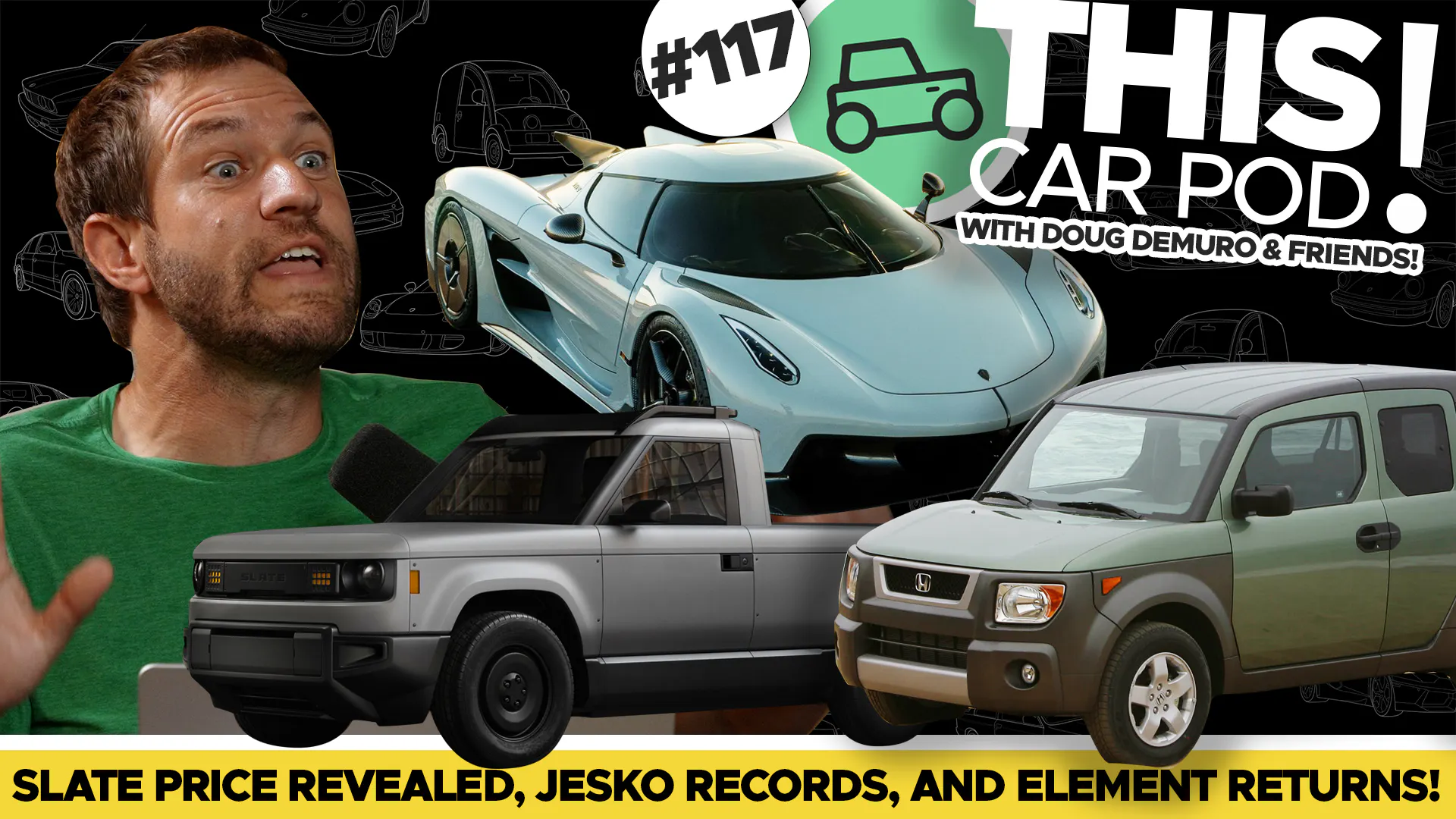
Slate Price Revealed, Koenigsegg Jesko Records, Honda Element Returns, and More! THIS CAR POD! EP117
About this episode
Pricing for the Slate vehicles kicks things off, with the hosts comparing apples-to-apples numbers and then drilling into how stripped the base trim is. They debate whether EVs make sense without home charging and range limits, and they pivot through a Honda Element return rumor—boxy, convertible, and even a hose-down/mold debate. Later, the show swings to Lucid updates (cuts, guidance, transaction pricing) and Koenigsegg’s Lego-built Jesko record at Goodwood, plus plenty of other car talk and listener Q&A.
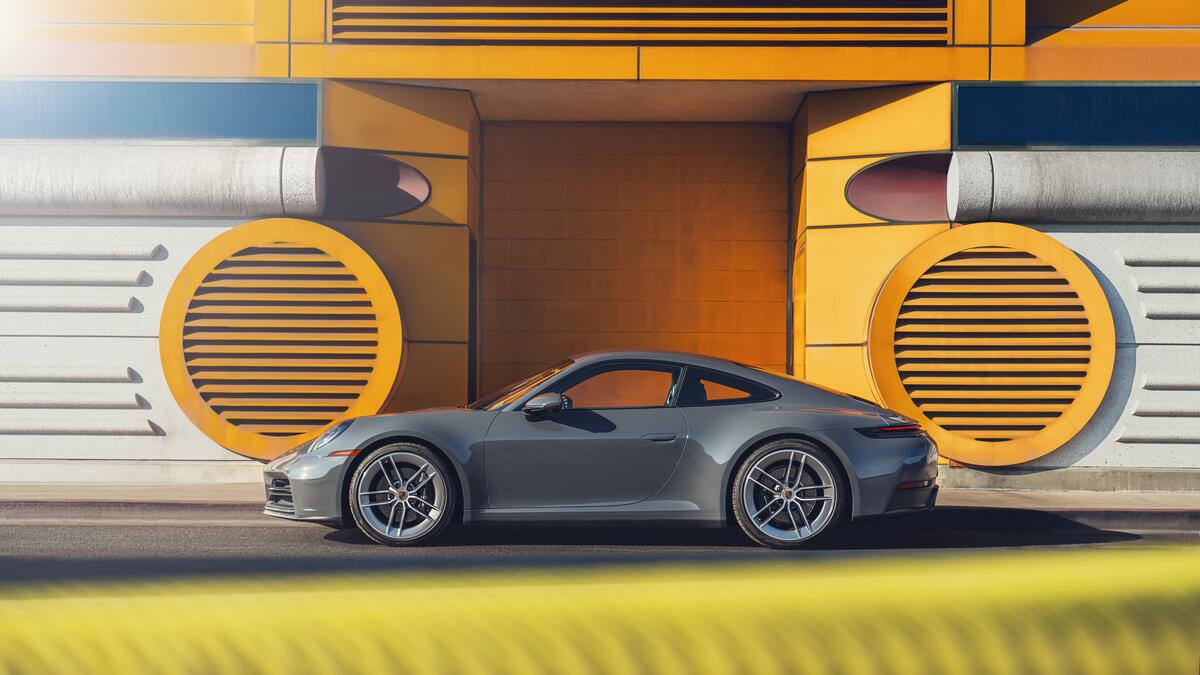
Porsche 964
"You got like an Eames chair, a 964, and one of those speaker things."
“964” is a specific generation of the Porsche 911. People like it because it’s a classic 911 shape, but with updates that make it feel more modern than the earlier cars.
Porsche 964 refers to the 911 generation built in the late 1980s and early 1990s, known for modernizing the classic 911 formula. It’s a popular enthusiast era because it sits between the older air-cooled feel and the later, more electronically complex 911s.
Marantz
"This person is wearing a Marantz t-shirt."
Marantz is a company that makes high-quality home audio equipment. The t-shirt is just a clue that the person likes good sound systems.
Marantz is an audio brand known for high-end home and hi-fi equipment. Mentioning a Marantz t-shirt is a quick signal that the person in the Porsche studio is into premium audio gear, not just cars.
destination
"Yeah, 25 grand without destination. [133.0s] We don't know the destination pricing yet. [135.0s] What the pickup truck is, just as a quick reminder of specs,"
“Destination” is the extra charge for getting the car shipped to your area. So the price you hear first may go up a bit once that fee is added.
“Destination” is the delivery fee added to a car’s base price to cover shipping it to the buyer’s region/dealer. It’s why the final “out-the-door” price can be higher than the headline number.
EV-only
"And as the base price, we will drive 200-ish miles of electric range, [158.0s] EV-only, crank windows, no stereo, et cetera."
“EV-only” means it runs on electricity only. You charge it instead of using gas, and the range they mention is how far it can go on a full charge.
“EV-only” means the vehicle is powered solely by an electric motor and battery, not a gasoline engine. That matters for range expectations and for how the car is used day to day (charging vs. refueling).
wrap
"So if you want a color, if you don't want it to be raw metal, [173.0s] you need to get a wrap. [175.0s] The wrap starts at $500 plus install."
A wrap is a vinyl covering you put on the outside of a car to change its color or add designs. It’s like a removable skin, and it costs extra to have it installed.
A vehicle wrap is a printed vinyl film applied over the body panels to change color or add graphics. It’s often used to get a custom look without repainting, and here they mention it as an option with a starting cost plus installation.

Ford Maverick
"Can I just put it after this? The Maverick starts at 27. It's gone up a little bit."
The Ford Maverick is a small pickup truck. It’s meant to be easier to live with and cheaper than bigger trucks. The podcast mentions it because its starting price has gone up a bit.
The Ford Maverick is a compact pickup truck aimed at being affordable and practical. It’s significant because it brought a smaller-truck option to buyers who want truck utility without the size and cost of a full-size pickup. It comes up in the episode in the context of pricing and how that starting price has changed.
two airbags
"What other stuff does a base Slate not have? It only has two airbags."
Airbags are safety cushions that pop out during a crash. This segment says the base “Slate” version only includes two of them, which means fewer safety features than higher trims.
Airbags are supplemental restraint devices that inflate rapidly in a crash to help protect occupants. Saying the base “Slate” only has two airbags is a trim-level safety/feature difference that can matter to buyers.
key fob
"It doesn't have a key fob, as far as I can tell. It doesn't have a center armrest. It doesn't have a door, like a padded armrest."
A key fob is the little remote you use to lock and unlock the car. On many cars it also lets you start the engine without putting in a key.
A key fob is a small wireless remote that lets you lock/unlock the car and often start it without inserting a traditional key. Many cars use it with a proximity system so the car can detect the fob nearby.
infotainment screen
"It doesn't have an infotainment screen. There's a spot for your phone. It's very, very, very bare bones."
The infotainment screen is the car’s main display for things like music and navigation. It’s where you control many of the car’s features.
An infotainment screen is the main display in a car used for media (music, radio), navigation, and vehicle settings. It often replaces or integrates controls that used to be separate buttons and knobs.
very simple truck
"It's very, very, very bare bones. And they, if you read their engineering interviews and the few folks have driven it and talked to their teams, the Atopian included."
They’re talking about a truck that’s intentionally kept simple—less tech and fewer fancy features. That can make it easier to live with and maintain, but it won’t feel as “connected” or comfortable as a modern car.
The host is describing a vehicle designed with minimal complexity—fewer electronics, fewer convenience features, and simpler mechanical construction. In practice, that can mean easier maintenance and fewer failure points, but it may also mean fewer comfort and tech features.
frame is not like a single cast
"Like the frame is not like a single cast. It's a bunch of welds together. Every kind of component is really really simple."
Instead of being made from one big solid piece, the frame is built from sections that are welded together. Welded frames can be easier to build and sometimes easier to fix if damaged.
A “single cast” frame would be made from one large molded piece. Saying the frame is “a bunch of welds together” points to a welded steel structure, which is typically easier to manufacture and repair than a complex one-piece casting.

Tata Nano
"Do you remember, do you remember how the Tata Nano was going to change India? Of course. For $7,000."
The Tata Nano was a super-cheap small car Tata Motors tried to sell in India. It was meant to be affordable for a lot of people, but it didn’t sell as hoped.
The Tata Nano is a famously low-cost city car from Tata Motors, launched with the goal of making car ownership affordable in India. It became well-known because it was priced around $7,000 at launch, but sales didn’t meet expectations.
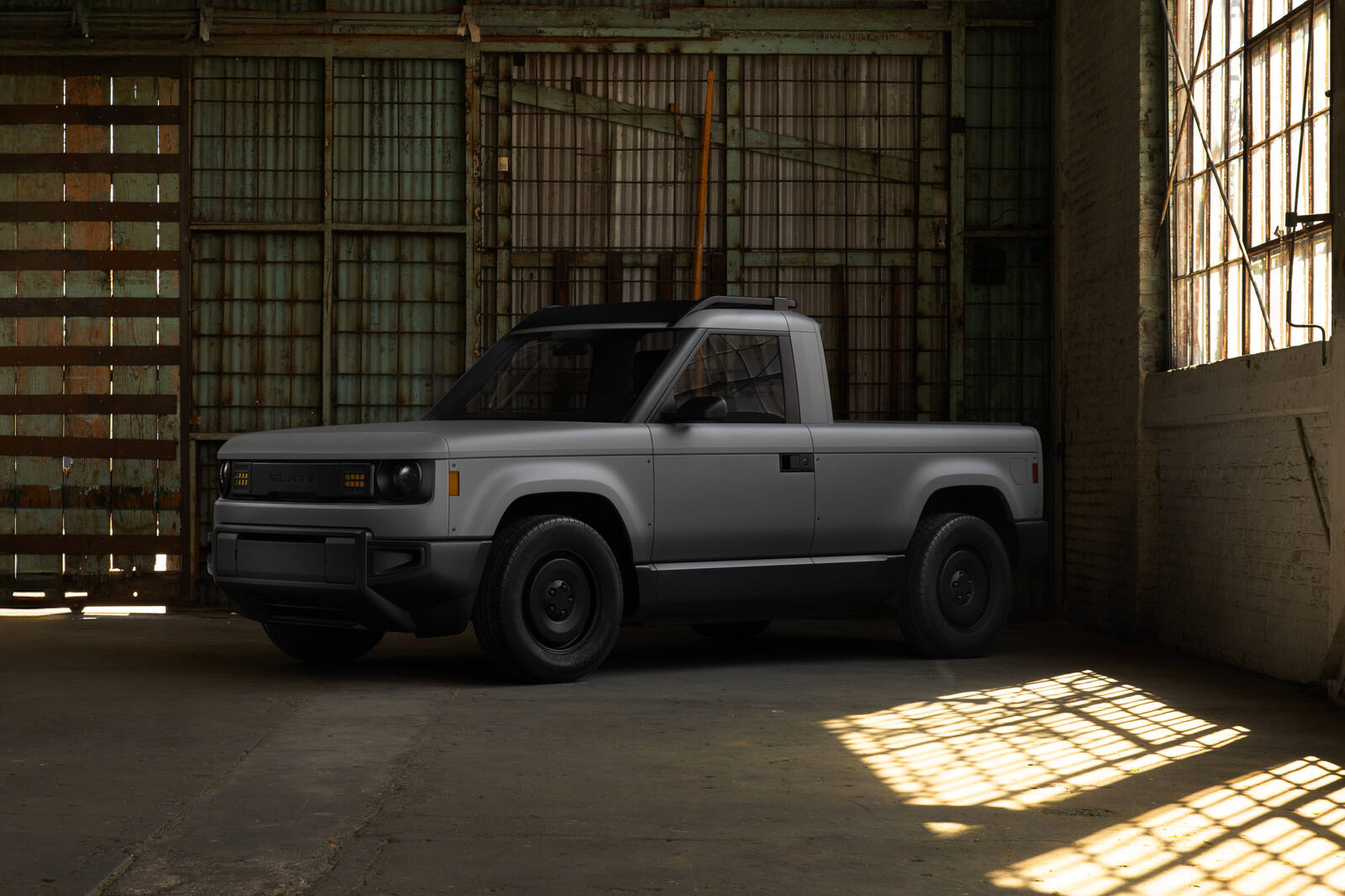
Truck Slate Truck
"...ing situation was gone. Given that you're not the Slate Truck consumer, tell us what your thoughts are on simpl..."
The podcast is talking generally about trucks and what kinds of people buy them. It’s not naming one specific truck model in this moment. The point is to discuss what buyers want and how choices can be simplified.
The episode includes a general discussion about “truck” buying and consumer expectations, implying a broader topic rather than a single model. It’s tied to a segment about who a particular truck is for and how simplifying choices affects buyers. The mention suggests the hosts are talking about the truck market and preferences.

Tesla Model 3S
"... public. There are a lot of people who do it with Model 3s, but in general, it's easier if you have more mon..."

Hyundai Santa Cruz
"...ort of wow, interesting factor. And then like the Santa Cruz, honestly. And then after that, you're going to b..."
The Hyundai Santa Cruz is a crossover that also offers some pickup-style utility. The podcast mentions it because it feels interesting compared to more typical vehicles. It’s included in a list of cars the speaker is considering.
The Hyundai Santa Cruz is a crossover-style vehicle with pickup-like utility, often discussed as a “truck-ish” option. In the episode, it’s mentioned for its “interesting factor,” suggesting the speaker sees it as a standout choice. It’s brought up as part of a sequence of vehicles being evaluated for appeal.
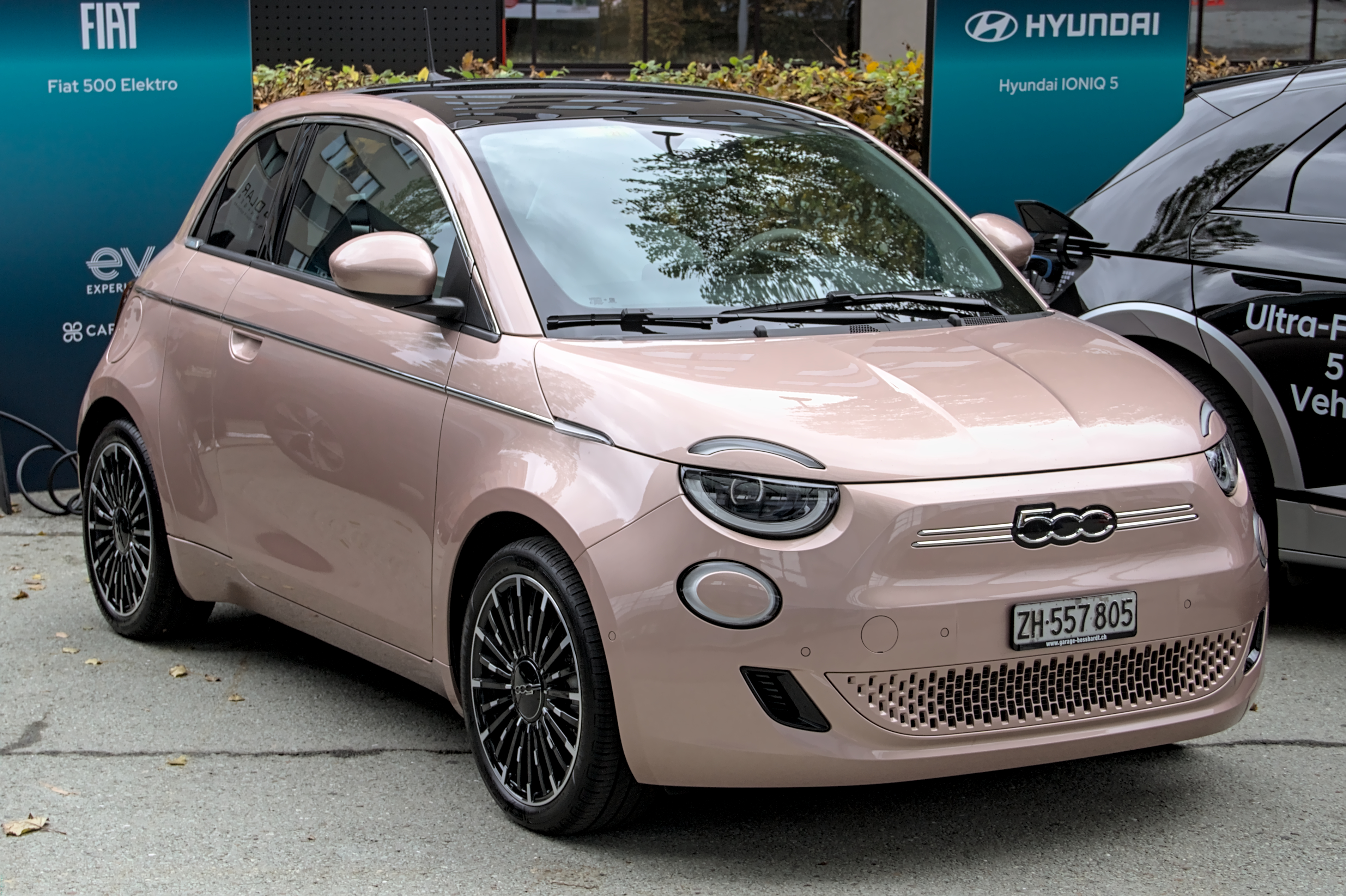
Fiat 500e
"The Fiat 500E that you reviewed, it's a new generation. It's a low-range electric."
The Fiat 500E is Fiat’s small electric car. It’s designed more for city driving and shorter trips, not long-distance commuting.
The Fiat 500E is Fiat’s electric version of the 500, and it’s known for being a compact, city-friendly EV with a relatively limited driving range. In the segment, Doug highlights it as a “low-range electric,” meaning it’s better suited to short trips than long-distance use.
low-range electric
"It's a new generation. It's a low-range electric."
“Low-range electric” means the battery doesn’t last as long on a single charge. It’s better for shorter trips unless you’re willing to plan charging stops.
“Low-range electric” describes an EV with a shorter driving range per charge. That usually changes how people use the car day-to-day—more short trips, fewer long drives without planning charging stops.
Duramax heavy duty
"Would you rather have a used Duramax heavy duty? I think that that's a different clientele."
Duramax is a diesel engine used in some heavy-duty GM trucks. They’re saying that diesel heavy-duty trucks attract a different type of customer than the other truck being discussed.
“Duramax” refers to GM’s diesel engine family, commonly found in heavy-duty GM trucks. The phrase “Duramax heavy duty” is used here to contrast a more traditional, work-focused diesel truck with a different kind of pickup that targets a different buyer.

Ford Ranger
"...dsize and small trucks in the U.S. market between Ranger in Colorado and Canyon and Maverick and Santa Cru..."
The Ford Ranger is a pickup truck that’s smaller than a full-size truck. It’s meant for people who want truck capability but not a huge vehicle. The podcast brings it up while talking about the small-truck options available.
The Ford Ranger is a mid-size pickup truck positioned between small and full-size trucks. It’s discussed because it’s part of the broader “small truck” conversation in the U.S. market, alongside other compact/mid-size options. The episode references it in the context of where it fits in that lineup.

Ford Transit
"Or a Transit Connect. Or they all have a Ford Transit Connect. Alright, move on to our next news story."
The Ford Transit Custom is a van used for work or carrying cargo. The podcast mentions it while comparing different van models in the same general family. It’s included as an option in that discussion.
The Ford Transit Custom is a commercial van platform used for transporting people or cargo. The episode mentions it alongside other Ford van names, indicating a discussion about which van models to consider. It’s brought up as part of a broader “Transit” family conversation.
convertible
"It wasn't a convertible originally. I know, but everybody wants convertibles now. They want convertibles originally and look at us now."
A convertible is a car where the roof can be opened so you can drive with the top down. The hosts are talking about how people want more open-air versions of cars, including SUVs.
A convertible is a car with a roof that can be removed or folded away, typically to expose the cabin to open-air driving. In the segment, the hosts are debating whether a convertible version of an SUV/crossover would be desirable and why the market seems to be responding to that demand.

Jeep Wranglers
"Do you know how many sales Wranglers they sold last year? Are you crazy? They sold a few. 160. I don't think the Element is to be priced like that."
The Jeep Wrangler is a popular off-road SUV that’s famous for being easy to drive with the top and doors off. They’re citing Wrangler sales to make the point that people will buy open-air versions of SUVs.
The Jeep Wrangler is a rugged off-road SUV line known for its removable doors and roof options, which makes it one of the most “open-air” mainstream SUVs. The hosts use Wrangler sales as a data point to argue that buyers do respond to convertible/open-top style vehicles, even if the broader market doesn’t offer many convertible SUVs.

Ford Broncos Sport
"...e a relatively boxy vehicle, and it's going to be Broncos sport size and a Broncos sport competitor. So like a mo..."
The Ford Bronco Sport is a compact SUV with a more rugged, boxy look. It’s designed to compete with other small SUVs in the same general size class. The podcast mentions it while talking about that segment and styling.
The Ford Bronco Sport is a compact SUV positioned as a smaller, more approachable alternative in the Bronco lineup. It’s discussed in the context of being “boxy” and competing in the same size category as other compact SUVs. The episode frames it as a direct competitor by size and styling.
CRV
"So like a more utilitarian, cutesy, square, HRV, CRV. It is interesting that you have an understanding."
CR-V is a Honda crossover model. They’re using it as a reference point for the Element’s likely size and purpose.
CR-V (spoken here as “CRV”) is Honda’s compact crossover model line. In this segment, it’s part of the host’s comparison set for how the returning Element might be positioned as a practical, boxy competitor.
HRV
"So like a more utilitarian, cutesy, square, HRV, CRV. It is interesting that you have an understanding."
HR-V is a Honda model name for a small crossover. They’re comparing the Element’s likely look and role to that kind of Honda.
HR-V (spoken here as “HRV”) is Honda’s subcompact crossover nameplate. The host is using it as a comparison for the Element’s expected “cutesy, square” vibe and size category.
recipe for disaster
"And by the way, we're not going to talk about the ability to hose it down because every Honda Element fan knows that that is a recipe for disaster."
They’re joking about a real concern: hosing a car can sometimes leave moisture trapped inside. If it doesn’t dry out, that can lead to mold.
This is an enthusiast shorthand for a known risk scenario: using a hose on a vehicle can trap moisture and encourage mold growth, especially if water gets into seams, upholstery, or hard-to-dry areas. The hosts frame it as a recurring Element owner debate.

Honda Element
"I love the original Honda Element. I thought they were really cool cars back then. So it makes sense to bring it back now."
The Honda Element is a Honda model that was famous for being super practical and easy to live with. It had a very square, outdoorsy look and was designed so you could keep it clean and use it for messy stuff.
The Honda Element is a boxy, utilitarian compact SUV/crossover from Honda known for its flexible, easy-to-clean interior and practical layout. It became popular with people who wanted something that felt like a small, rugged “lifestyle” vehicle rather than a traditional family hauler.

Honda Passport
"Oh, wow. You think it's going to be bad? No, the Passport's not a bad vehicle. But you're going to have these ambitions."
The Honda Passport is a bigger Honda SUV than the smaller models. The speaker is basically saying it’s not a bad vehicle, but the company may still disappoint people with what it delivers.
The Honda Passport is a mid-size SUV in Honda’s lineup, typically aimed at buyers who want more space and capability than a compact SUV. In the transcript, it’s used as a benchmark to say the new/related Honda product won’t be “bad,” even if expectations are high.

Honda Hrv
"...sappointment. It's going to be like a squared off HRV is my guess. With some planning."
The Honda HR-V is a small SUV meant for everyday driving. The podcast talks about it possibly looking more boxy in a future version. It’s mentioned as part of a guess about design and planning.
The Honda HR-V is a subcompact crossover SUV focused on easy daily driving and practical packaging. In the episode, it’s referenced as being “squared off,” suggesting a discussion about design changes or expectations for the next version. The mention is tied to planning and what the vehicle might look like.
sunroofs
"The previous one, I do sunroofs. If they do a convertible, Filippo will buy it. Absolutely not. If they do a convertible, I will have a conversation about buying it."
A sunroof is a window in the roof that you can open to let in air and light. It’s not the same as a convertible, because the roof isn’t fully removed.
A sunroof is a glass (or sometimes metal) panel in the roof that can tilt and/or slide open for ventilation and sunlight. They mention it as part of what the “previous one” had, contrasting it with a full convertible.

4Runner Forerunner
"...rbyparkard.com slash cars. Not a full convertible forerunner. It is instead that Lucid is cutting an additiona..."
The 4Runner is a Toyota SUV built for tougher driving and rougher roads. The podcast mentions it while clarifying that it’s not a full convertible. It’s part of an explanation about a vehicle concept connected to the 4Runner name.
The 4Runner is Toyota’s midsize SUV known for rugged capability and a traditional, durable approach. In the episode, the mention appears in a context that ties to an ad read and a “not a full convertible” clarification, contrasting it with a different vehicle concept. It’s used to anchor the conversation around the 4Runner name and what form it’s taking.
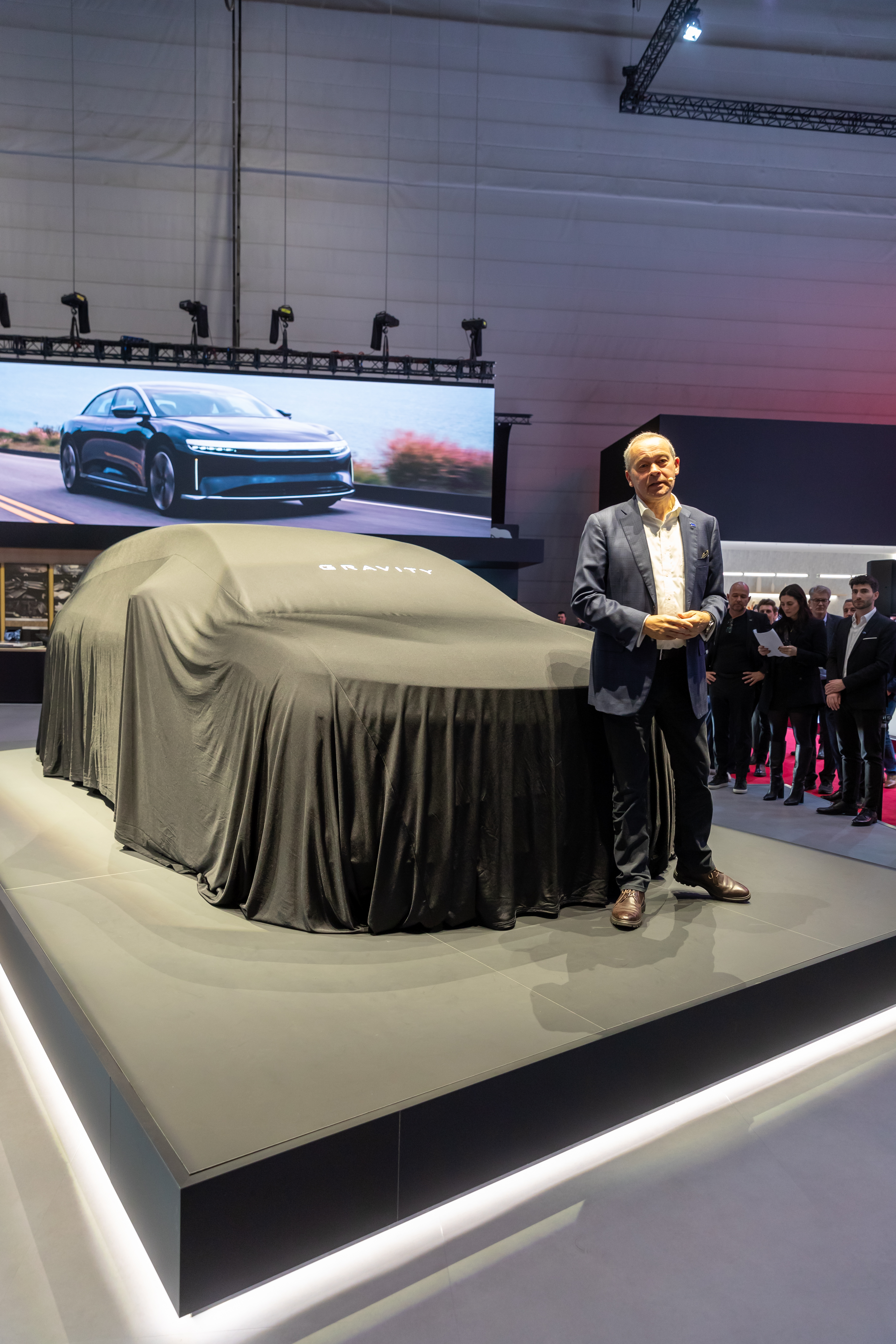
Lucid Gravity
"I'm into it. I love the gravity. The problem is you're a contrarian and most people when faced with a $125,000 minivan or a Rivian, they're not choosing the minivan. The secret is that it's not $125,000."
Lucid Gravity is Lucid’s electric family vehicle (an SUV/minivan type). The big point here is that people think it costs a lot, but the host says the real transaction price is much lower, which changes how buyers see it.
Lucid Gravity is Lucid’s electric SUV/minivan-style vehicle, positioned as a more practical alternative to traditional EV sedans. In this segment, the hosts focus on how its pricing and positioning affect demand—especially compared with the idea of a $125,000 minivan.
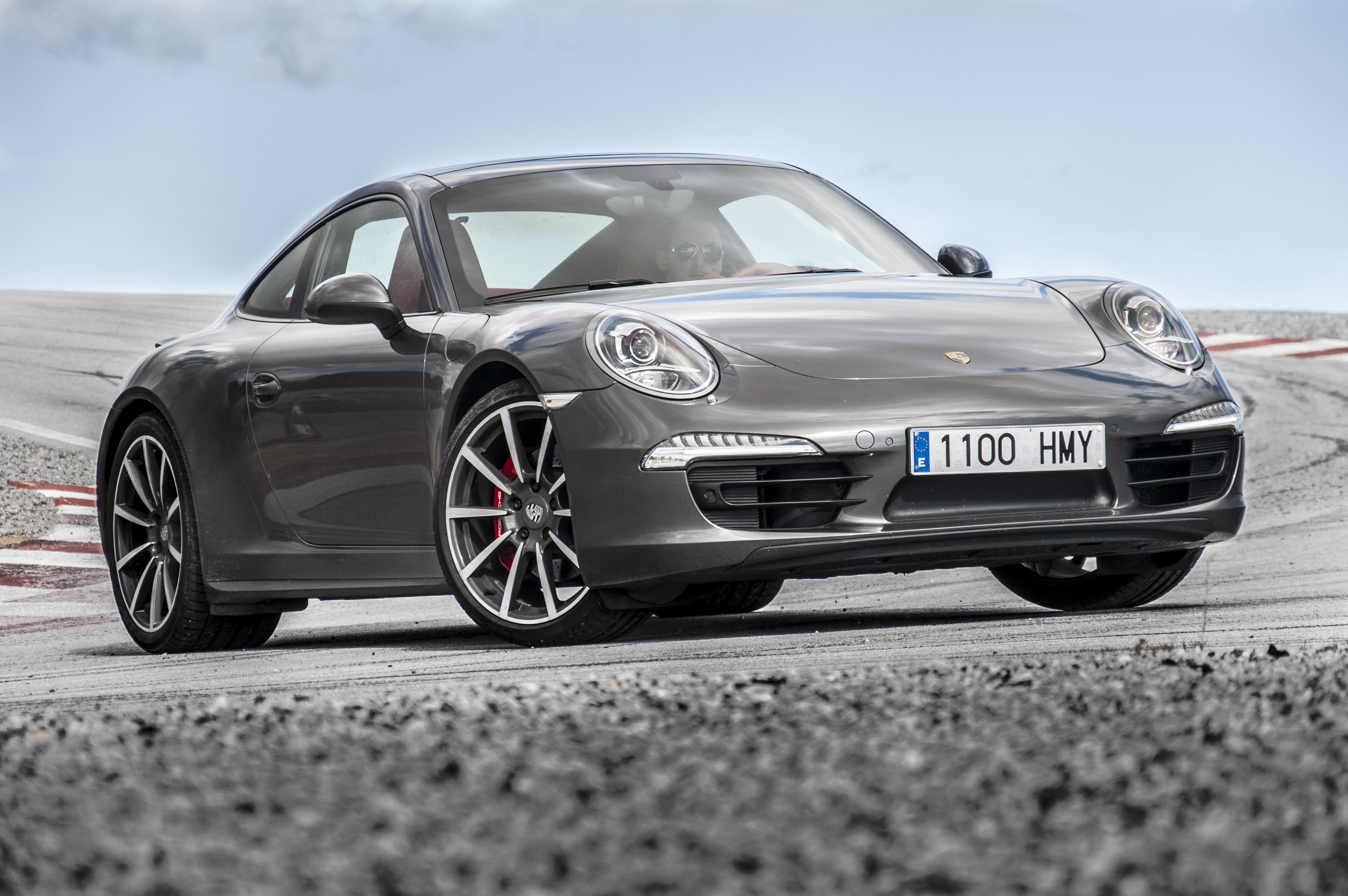
Porsche
"in the day of SUVs that all these automakers decided that they would launch sedans as their first EV. Porsche made the mistake, Lucid various others did too."
Porsche is a car brand. The hosts are talking about how Porsche (and others) chose to start their EV lineup with sedans, before moving into other types of vehicles.
Porsche is mentioned in the context of EV strategy—specifically, launching sedans as early EV products. The host uses Porsche as an example of an automaker that made a “mistake” by starting with a sedan before expanding to other body styles.

Rivian
"The problem is you're a contrarian and most people when faced with a $125,000 minivan or a Rivian, they're not choosing the minivan."
Rivian is an electric-vehicle company that makes SUVs and trucks. In this discussion, it’s used as an example of another EV option people might pick instead of the minivan-style vehicle.
Rivian is an EV brand known for electric SUVs and trucks, often competing in the same “family EV” conversations as other high-priced EVs. Here, it’s mentioned as an alternative that buyers might choose instead of a minivan-style EV.
transaction price
"The secret is that it's not $125,000. Yeah, that's right. The transaction price is $41,770. And by the way, that's why all the layoffs are happening."
Transaction price is the real final price you end up paying for the car after deals and discounts. It’s different from the price you might first hear in ads or on a website.
Transaction price is the actual amount a buyer pays for a vehicle after considering discounts, incentives, and any negotiated deal structure. It can be very different from sticker price or marketing numbers, which is why the host emphasizes it when discussing demand.
Kia
"It better not look like the gravity. Lucid, make it boxy. They will absolutely not make it boxy. The Kia tell your ride, should tell you everything you need to know."
Kia is a car brand. The host is making a joke about Kia’s slogan to emphasize what they think the next vehicle should be like.
Kia is referenced via its advertising slogan (“tell your ride”), implying a marketing/positioning point rather than a specific model. In this segment, it’s used as a punchline about what the upcoming vehicle should look like and how it should appeal to a target audience.

G-Class Gwagon
"Like we're not going to go down the G-Wagon road. We're going to make the XM."
The G-Wagon is a very recognizable, boxy Mercedes-Benz SUV. The hosts mention it as an example of a style that customers actually want. They’re saying some companies avoid that look, and then sales can suffer.
The G-Wagon refers to the Mercedes-Benz G-Class, a boxy, rugged SUV with a long-standing reputation and strong brand identity. The hosts use it as an example of a “boxy” design that automakers might copy because it sells. In this segment, they contrast that with other models that chose different styling and then faced weak sales.

XM
"Like we're not going to go down the G-Wagon road. We're going to make the XM."
The BMW XM is BMW’s big, performance-focused SUV. Here it’s mentioned as an example of a company going in a different styling direction instead of copying the classic boxy look. The point is about how design choices can affect sales.
The BMW XM is BMW’s high-performance plug-in hybrid SUV. The hosts mention it in the context of automakers choosing a different design direction than the classic boxy G-Class. It’s used as an example of a model that didn’t follow the “boxy” formula.
second shift of production
"They eliminated their second shift of production at their Arizona facility. No one is expecting a gravity."
A second shift is basically an extra work schedule at the factory. If they remove it, the factory makes fewer cars per day. The hosts connect that to the company not being sure how many cars they can sell.
A second shift of production is an additional work schedule (beyond the first shift) used to increase factory output. Eliminating it is a way to slow production without shutting the plant down entirely. In this context, it’s presented as a response to uncertainty in how many vehicles Lucid will sell.
Arizona facility
"They eliminated their second shift of production at their Arizona facility. No one is expecting a gravity."
They’re talking about Lucid’s factory in Arizona. Eliminating a production shift usually means the factory is making fewer cars. That can happen when the company thinks it has too many cars already built or isn’t sure demand will match production.
The Arizona facility is Lucid’s production site referenced in the segment. The hosts say Lucid eliminated a second production shift there, which typically reduces output and can be a response to demand or inventory levels. This is a manufacturing decision with direct implications for how quickly cars reach customers.
guidance
"About a month ago, they suspended all guidance for the year because they weren't sure how many cars they'll sell"
Guidance is the company’s prediction for the future—like how many cars it expects to sell. If they suspend it, they’re basically saying, “We’re not sure yet.” In this segment, it’s tied to uncertainty about sales volume and inventory.
Guidance is a company’s forward-looking sales or production forecast it communicates to investors and the market. Suspending guidance signals uncertainty about demand and how quickly cars will move off lots. Here, Lucid pauses guidance because it’s not sure how many Gravity units it will sell given inventory.
elevated inventory
"because they weren't sure how many cars they'll sell because they have elevated inventory."
Elevated inventory means the company has more cars sitting around than it expected. If too many cars are unsold, the company can’t be confident about future sales. That’s why they pause their yearly sales guidance in this discussion.
Elevated inventory means there are more unsold vehicles on hand than the company wants. When inventory is high, automakers may pause or adjust sales forecasts because demand may not keep up with production. In the segment, Lucid suspends guidance partly because it isn’t sure how many cars it will sell given that inventory situation.
500 miles of range
"And it has 500 miles of range, which no other EV has still. The other day, someone asked me if they should get a Lucid air."
“Range” means how far an electric car can go before the battery runs out. The host is pointing out that this one can go about 500 miles on a full charge, which is a big number.
“Range” is how far an EV can drive on a full battery charge, usually measured under standardized test conditions. The host is emphasizing that this EV’s claimed range is unusually high compared with other EVs at the time of the discussion.

Lucid Air
"... other day, someone asked me if they should get a Lucid air. And I said, look, they're amazing."
The Lucid Air is an electric sedan. The podcast says it’s an amazing car and that it impressed someone who was considering buying one. It comes up as a recommendation-style discussion.
The Lucid Air is an electric sedan known for its performance and modern technology. The episode frames it as an impressive car that stands out to people considering an EV. It’s mentioned because someone asked whether they should buy one, and the host responded positively about it.
used ones are cheap
"And I said, look, they're amazing. And the used ones are cheap. And they're incredible."
They’re talking about how buying the car used can cost less than buying it new. The idea is that the price drops enough that used examples feel like a better deal.
This is a discussion of how depreciation can make EVs cheaper after their initial launch period. The host is implying that buying a used Lucid Air may be a better value than buying new, even if there could be future ownership tradeoffs.
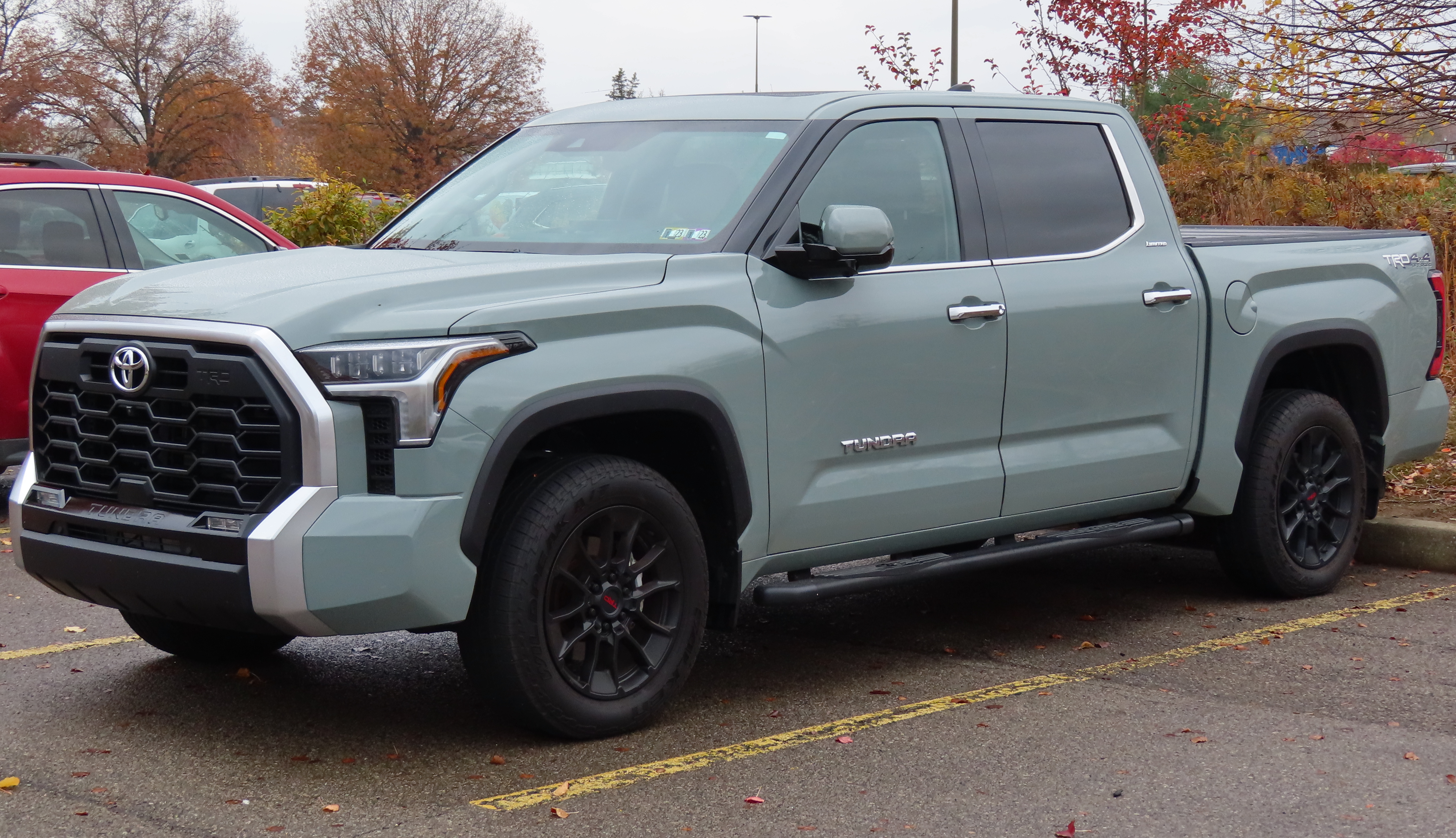
Toyota Tundra
"I saw the spurt. The Tundra, the Highlander, the Murano, among others."
The Toyota Tundra is a big pickup truck. In this story, it’s used as an example of a truck built in the U.S. that gets sold in Japan, where buyers may expect a slightly different level of finish.
The Toyota Tundra is a full-size pickup truck built for the U.S. market, and it’s one of the examples mentioned in the episode of cars being produced in America and sold in Japan. That matters because the episode is discussing how U.S.-built vehicles can be held to different presentation/quality expectations than Japanese-market buyers are used to.
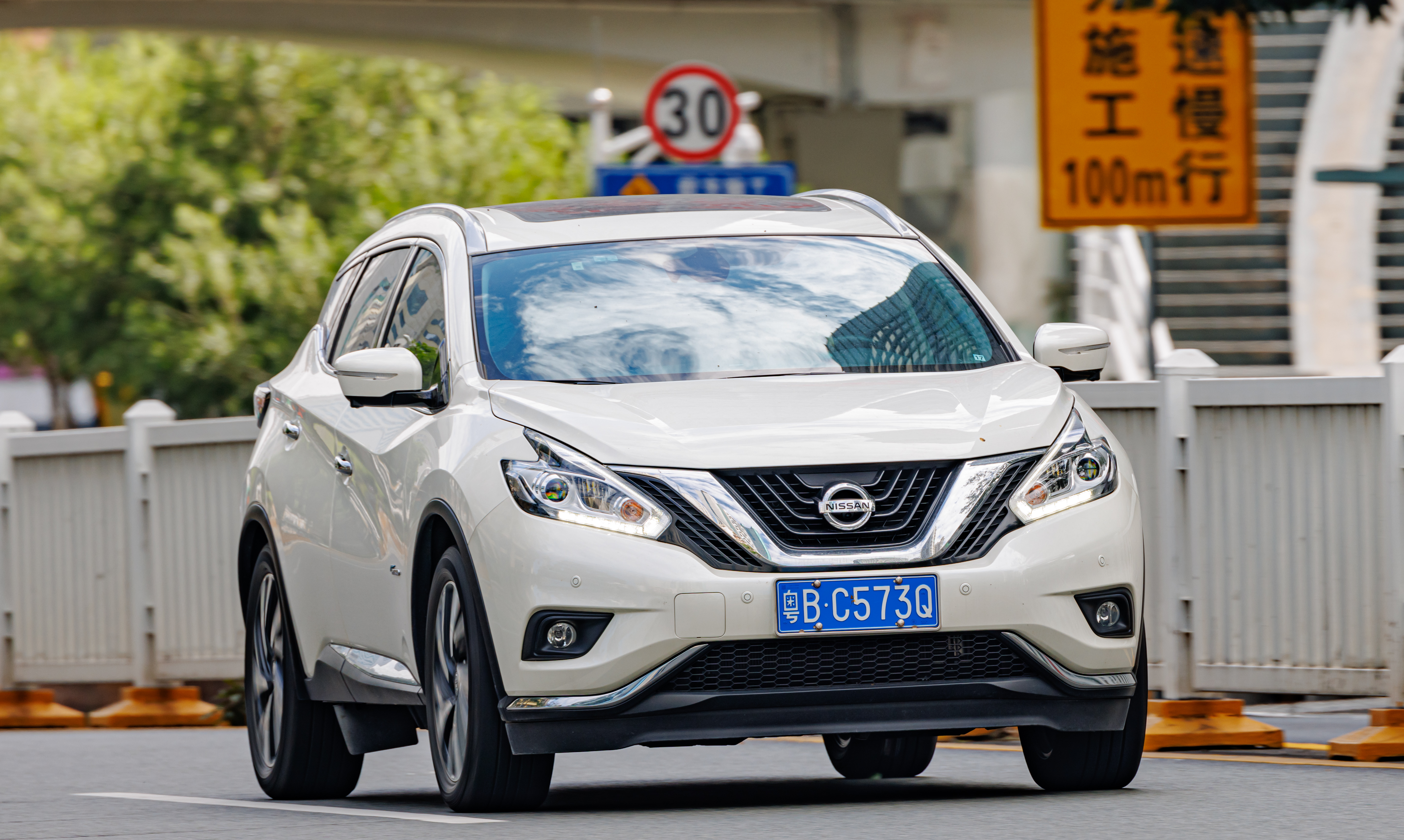
Nissan Murano
"The notice on Muranos when they're sold in Japan say, this vehicle is manufactured, specifications intended for overseas markets. And vehicle... the SUV, the Murano, may have dust particles in the paint, traces of sealant residue or misaligned or uneven paneling gaps."
The Nissan Murano is an SUV. The episode says that some Murano sold in Japan may have been built for overseas buyers, and that can show up as small cosmetic things like paint specks or slightly uneven body panel gaps.
The Nissan Murano is a midsize SUV, and the episode focuses on how Japan-market paperwork can indicate it was built to overseas specifications. The host then lists cosmetic/fit-and-finish issues that may show up on these cars—like dust in the paint, sealant residue, or uneven panel gaps—while still claiming they don’t affect how the vehicle functions.
tariffs
"Part of this is driven by the agreement that the Japanese and the US government came to related to tariffs, opened the door for more imports from the... more exports from the US to Japan."
Tariffs are taxes governments put on imported products. The episode is saying that changes in tariffs helped more cars move from the U.S. to Japan.
Tariffs are taxes or trade barriers that governments apply to imported goods. In the episode, tariffs are mentioned as part of an agreement that helped open the door for more U.S. exports to Japan, which then affects which cars get built in America and sold in Japan.
paint finishes
"This has a little more nuance to it, though. It's like paint finishes are a little bit different."
Paint finish is how the car’s paint looks on the outside—smoothness and how clean it appears. The host is saying that cars made for different markets can end up with slightly different paint appearance.
Paint finish refers to the final surface appearance of a car’s paint—how smooth it looks, how cleanly it lays down, and how free it is from visible defects. The episode argues that differences in paint finishes can come from the car’s design/manufacturing focus for different markets, not necessarily from poor workmanship.
paneling gaps
"the SUV, the Murano, may have dust particles in the paint, traces of sealant residue or misaligned or uneven paneling gaps. But they don't affect the vehicle's functionality, which may be true."
Panel gaps are the lines of space between body panels. The episode says some cars built for overseas markets may have gaps that look slightly misaligned or uneven, mostly affecting appearance rather than driving function.
Panel gaps are the visible spacing between adjacent body panels (like doors, fenders, and hatches). The episode uses “uneven paneling gaps” as an example of fit-and-finish differences that can appear on cars built for overseas markets, even when the vehicle’s functionality is unaffected.
sealant residue
"the SUV, the Murano, may have dust particles in the paint, traces of sealant residue or misaligned or uneven paneling gaps."
Sealant residue is a bit of leftover sealing material from where the car’s body panels are joined together. The episode says some overseas-spec cars may show small traces of it, even if it doesn’t affect how the car works.
Sealant residue is leftover material from the compounds used during body assembly to seal joints and prevent water/air intrusion. The episode mentions it as a possible cosmetic difference on some Murano sold in Japan, along with other fit-and-finish items like panel gaps.
Turbo V6
"But this is a real story. The Tundra, the engines are exploding left and right. It's a real problem with the Turbo V6, okay?"
A turbo V6 is an engine with six cylinders that uses a turbo to make more power. The hosts are saying that this specific engine type is linked to a serious failure problem that led to recalls.
A turbo V6 is a six-cylinder engine (V6 layout) that uses a turbocharger to force more air into the cylinders. In this segment, the hosts connect the turbo V6 to a recall and catastrophic engine failures (“exploding engines”).
recalling them
"They're recalling them. And they're putting in new motors on some of them."
A recall is when the company admits there’s a serious problem and asks owners to get the car repaired. In this case, they’re replacing engines on some affected vehicles.
A vehicle recall is when the manufacturer asks owners to bring cars in for a fix because of a safety or major defect. Here, the hosts say the affected Tundra vehicles are being recalled and some are getting replacement engines.
hybrids
"But my understanding is those new motors also explode. But the hybrids aren't affected. And I finally discovered why the hybrids aren't affected."
In this context, “hybrids” refers to Tundra hybrid versions that use an electric motor alongside the gasoline engine. The hosts claim the hybrid powertrain isn’t affected by the same engine failure issue, implying the underlying hardware/software differs from the non-hybrid setup.
Accent cycle
"No. Accent cycle. Same powertrain. Same powertrain. So how could it not be affected?"
They’re saying the hybrid truck runs its engine differently than the non-hybrid. Even if some parts are similar, the way the engine is used can change enough to prevent the same problem.
“Accent cycle” is likely a mis-transcription of a specific engine cycle/operating strategy name, used to explain why the hybrid powertrain avoids the same failure mode. The key idea is that the hybrid’s powertrain uses a different operating approach even if it shares components, changing how the engine is stressed.
Same powertrain
"Accent cycle. Same powertrain. Same powertrain. So how could it not be affected?"
Powertrain means the main parts that make the car move, like the engine and the hybrid/electric system. They’re saying the trucks are similar in layout, so it’s surprising that only one version has the problem.
“Powertrain” is the set of components that create and deliver motion—typically the engine, transmission, and any hybrid/electric elements. The hosts emphasize “same powertrain” to argue that the non-hybrid and hybrid versions share major architecture, yet only one is affected, pointing to differences in how it’s operated.
hybrid powertrain
"However, when the gas motor blows in the hybrid, and it does, with the same frequency [1448.7s] as the gas powered cars, the hybrid powertrain is sufficient to drive you to a safe place."
A hybrid powertrain is the whole setup that lets a hybrid car use gas and electricity. The idea here is that if the gas engine has a problem, the electric side might still be able to get the car moving safely.
A hybrid powertrain is the combined system in a hybrid car that uses both a gasoline engine and an electric motor (plus their control electronics and battery). In this discussion, the point is that if the gasoline engine fails, the remaining hybrid components may still be able to move the car to safety.
National Highway Safety Administration
"It's the National Highway Safety Administration. [1461.5s] It's enough to drive you to a safe place, and so the hybrid doesn't need a safety recall"
This is a U.S. government agency that deals with car safety. They can require car companies to issue recalls if they decide a problem could be dangerous.
The National Highway Safety Administration is the U.S. regulator that oversees vehicle safety rules and can require recalls when defects pose safety risks. In this segment, it’s referenced as the authority Toyota is convincing regarding whether a hybrid failure scenario warrants a recall.
safety recall
"[1461.5s] It's enough to drive you to a safe place, and so the hybrid doesn't need a safety recall [1465.7s] because technically it isn't a safety issue."
A safety recall is when a car maker (or regulators) says a problem could be dangerous, and owners should get it fixed. Here, they’re debating whether the hybrid version counts as dangerous enough to require that kind of fix.
A safety recall is a government- or manufacturer-initiated action to fix a defect that could create a safety risk. The segment argues that regulators may decide a hybrid’s behavior during a failure doesn’t qualify as a safety issue, so a recall might not be required.
V8
"I don't have a V8. I'm driving around in this six cylinder, and I sit here and I say, the six cylinder is so great."
A V8 is a gas engine with eight cylinders. People often like V8s because they can feel powerful and smooth compared with smaller engines.
A V8 is an engine with eight cylinders arranged in a “V” shape. It’s often associated with stronger low-end power and smoothness, which is why some buyers prefer V8s over smaller engines like a six-cylinder.
six cylinder
"I'm driving around in this six cylinder, and I sit here and I say, the six cylinder is so great. And it is."
A “six cylinder” engine has six cylinders. The host is saying it can still be great, but if it fails, the car may need to rely on the hybrid system to keep going safely.
“Six cylinder” refers to an inline-six or V6 engine configuration with six cylinders total. The speaker is arguing that a six-cylinder powertrain can be excellent—until a failure forces reliance on the hybrid system.
hybrid engine
"Right up until it blows, and I have to use the hybrid engine to safely get to the right spot to run."
They mean the car’s hybrid setup, which uses both gas and electricity. The idea is that even if the main gas engine has trouble, the car can still move using the hybrid system to get to safety.
A “hybrid engine” in this context refers to the hybrid system’s combined operation—gas engine plus electric motor(s)—rather than just a single engine. The speaker’s point is that when the main engine is compromised, the hybrid system can still provide propulsion to get the vehicle to a safe place.
powertrains
"But let's the recall powertrains, are they working any better? I'm not convinced."
A powertrain is the car’s “go” system—how the engine’s power gets to the wheels. They’re talking about whether the recall fixes to that system actually help.
A powertrain is the set of components that create and deliver motion—typically the engine, transmission, and related driveline parts. In this segment, the hosts question whether recall-related powertrain changes improve reliability.
2UZ 4.7 liter VA
"I want them to recall my Sequoia hybrid and put in the 2UZ 4.7 liter VA from the Tundra"
“2UZ” is Toyota’s name for a specific 4.7-liter V8 engine. The host is joking about replacing the hybrid system with this regular V8, because they believe it could be more dependable.
“2UZ” refers to Toyota’s 4.7-liter V8 engine family, and “VA” is used here as part of the engine’s naming. The host is proposing swapping that V8 into a Sequoia hybrid, implying they think a conventional V8 might be more reliable than the hybrid powertrain.
reliability
"We're not trying to go fast here, Felipe. We're trying to be reliable. Good point."
Reliability means the car keeps working without big problems. They’re saying the goal is dependable transportation, not going fast.
In automotive talk, “reliability” means how consistently a vehicle avoids breakdowns and major repairs over time. The hosts contrast reliability with speed, emphasizing that the recall discussion is really about preventing problems rather than making the car faster.
quarter mile
"Life a quarter mile at a time. [1730.2s] If I recall, you love your quarter mile thing."
In drag racing, the quarter mile is a standard race distance. Cars race from a stop and try to cover about 402 meters as fast as possible, usually measured by time.
A quarter mile is a drag-racing distance: the car accelerates from a stop and runs 1/4 mile (about 402 meters). It’s commonly used to compare acceleration performance using elapsed time (like “8.3 seconds”).
Koenigsegg Jesko Records
"So the yes, go recently set a very interesting record. [1739.3s] It was the first production car to break 186 miles an hour in the quarter mile. [1787.0s] There's footage of this that they recorded."
This part is about a new record in drag racing. They talk about how fast the car went over a quarter mile and mention there’s video footage.
This segment focuses on a drag-racing record tied to a specific production car’s quarter-mile performance. The hosts discuss the milestone speed and elapsed time, plus the existence of recorded footage.
8.3 seconds
"That means that means it did a quarter, it does the quarter mile in 8.3 seconds. [1749.5s] Now, Doug, you've done a lot of quarter miles."
That “8.3 seconds” is how long the car took to run the quarter mile. Faster time generally means the car accelerates better.
“8.3 seconds” here is the elapsed time for the car to cover the quarter mile. In drag racing, lower elapsed time means stronger acceleration and overall performance over that distance.
189.76 miles an hour
"So the actual speed was clocked at was 189.76 miles an hour. [1775.2s] Trev speeds 190 miles an hour in a quarter."
189.76 mph is the measured speed at the end of the quarter-mile run. In drag racing, that’s a big performance number because it shows how fast the car gets by the finish.
189.76 mph is the recorded trap speed for the quarter-mile run. Trap speed is a key drag-racing metric because it reflects how much speed the car builds by the end of the distance.

Koenigsegg Jesko
"Is this not an official Koenigsegg lap this quarter mile time? This is what they have published. Quarter mile at 8.5 four seconds and it was verified."
The Koenigsegg Jesko is a very extreme supercar/hypercar made by Koenigsegg. Here, they’re talking about its published drag-strip times and how fast it can accelerate even without being electric or hybrid.
Koenigsegg Jesko is a high-horsepower hypercar known for extreme acceleration and top-end performance. In this segment, the hosts discuss its published quarter-mile result and how impressive it is given it’s rear-wheel drive and not electric or hybrid.
rear wheel drive
"It's also incredibly impressive given that it's rear wheel drive. It's not electric."
Rear-wheel drive means the back wheels get the power. That can make launches harder to grip, so it’s impressive when a rear-wheel-drive car still runs very fast times.
Rear-wheel drive (RWD) means the engine sends power to the rear wheels. On hard launches, RWD cars can be traction-limited compared with all-wheel drive, so very fast drag times are especially notable when a car is RWD.
zero to 60 time
"I will say that there's zero to 60 time, which is 2.35 seconds according to this. It's not the fastest zero to 60, but it must just like the first."
Zero to 60 time is how fast a car goes from standing still to 60 mph. Lower numbers mean quicker acceleration.
Zero to 60 time measures how many seconds it takes a car to accelerate from a standstill to 60 mph (about 97 km/h). It’s a common performance metric because it captures launch behavior, traction, and drivetrain response.
launch problem
"I think the slower than that quarter mile. There's a launch problem because it's not for a drive and it's not. We will drive it not hybrid."
A launch problem means the car doesn’t get off the line as effectively as it should. That can happen if the tires can’t grip or if the power delivery isn’t ideal at the start.
A launch problem refers to something that limits acceleration right at the start of a run—often traction loss, torque delivery issues, or how the car manages power during the initial shift/engagement. It can make a car slower in the first part of a drag run even if it catches up later.
trap speed
"It's interesting because the trap speed tells you why the Koenigsegg is so much faster."
Trap speed is the car’s speed at the end of the drag run. If one car’s trap speed is much higher, it usually means it accelerated harder and kept building speed longer.
Trap speed is the speed a car reaches at the end of a drag strip timing zone (often near the finish line). It’s a key indicator of how much speed the car gained over the run, and it helps explain why a car can be faster even if you’re comparing different acceleration profiles.
power for the same price
"The 01 X blows by all of those cars in the quarter mile and there was 60 and a half percent power for the same price."
This phrase is pointing at a value metric: how much power (engine output) you get relative to the purchase price. Enthusiasts often compare cars this way to judge whether a hypercar’s performance is “worth it” financially.
Z71
"That's G. That's him. Z71 high country. E-Ray trail boss. An E-Ray trail boss."
Z71 is a Chevrolet “off-road” package. It means the truck is equipped and tuned to do better on dirt, gravel, and rough trails than a regular version.
Z71 is Chevrolet’s off-road trim designation, most commonly seen on Silverado trucks. It generally signals hardware and tuning aimed at rough terrain—like off-road suspension components and more capable tires.
Goodwood
"They're driving a Lego car at Goodwood. At Goodwood. What do you mean all you need to do?"
Goodwood is a famous car-and-racing event location in the UK. It’s the kind of place where people show off unusual vehicles and do stunt-style runs.
Goodwood refers to the Goodwood Estate in the UK, which hosts major motorsport and car events. The hosts mention driving a Lego car there, using it as a recognizable venue for automotive stunts and showcases.
friction
"They're well-engineered. It's all friction. They must be there."
Friction is what makes motion harder when two surfaces rub against each other. The hosts are basically saying the Lego blocks create a lot of rubbing resistance, which can slow things down.
Friction is the resistive force between surfaces in contact. In the context of a Lego-built car, the hosts are suggesting that the block-to-block contact creates drag/resistance that affects how the model moves.
Ghost mode
"Ghost mode works. So there are other electric modes."
“Ghost mode” usually means a special driving setting that makes the car quieter or changes how it drives. Here, they’re saying the car has different electric modes, and “Ghost mode” is one of those settings.
“Ghost mode” is a named driving/operating mode used on some electric or hybrid vehicles to reduce noise and/or change how the car behaves. In this context, the speaker is saying the car has multiple electric modes, with “Ghost mode” being one of them.
Morgan Midsummer Coupe
"So this is a Morgan... They're calling it the Midsummer Coupe... It's going to be powered by the B58... and it's going to use the 8-speed ZF transmission."
This is a Morgan coupe concept that’s being designed with help from Pininfarina. The big deal is that it’s supposed to use BMW’s inline-six engine and a ZF 8-speed automatic gearbox.
The Morgan Midsummer Coupe is a Morgan-bodied coupe concept built in partnership with Pininfarina. It’s notable because it’s described as using BMW’s B58 3.0-liter inline-six and pairing that with a ZF 8-speed automatic transmission.
B58
"They're calling it the Midsummer Coupe. It's going to be powered by the B58, the great BMW 6-cylinder..."
B58 is BMW’s name for a modern inline-six engine. It’s the engine they’re saying will power this Morgan coupe.
B58 refers to BMW’s modular inline-six engine family, known for strong power and smoothness for its size. In this context, it’s the engine source for the Morgan Midsummer Coupe, which is a notable swap away from older, simpler powertrains.
8-speed ZF transmission
"...and it's going to use the 8-speed ZF transmission."
This means the car uses an automatic transmission with 8 gears from ZF. More gears can help the engine feel smoother and more responsive.
An 8-speed ZF transmission is a multi-gear automatic gearbox made by ZF, designed to keep the engine in its efficient power band. Using an 8-speed unit is a common way to improve drivability and responsiveness versus older fewer-gear automatics.
Pininfarina
"[2269.6s] Of course, we'll be very unlikely to ever see one, but it is proof. [2273.4s] I really would love to see Pininfarina go back and do more cars. [2276.2s] I know we had talked about, like, with the Luce. ... [2297.1s] Pininfarina was purchased by the Indians, Mahindra. ... [2324.0s] because we are Italian. [2325.0s] And I think that's what happened."
Pininfarina is a company that designs the bodies and styling of cars. Here they’re talking about how its ownership changed and how that might have influenced Ferrari’s decision to do more design work internally.
Pininfarina is an Italian design and coachbuilding company best known for shaping the look of many Ferraris and other high-end cars. The segment discusses how Pininfarina’s ownership and design direction changed after it was purchased by Mahindra, and how that affected Ferrari’s thinking about keeping design in-house.
Mahindra
"[2293.1s] And we had a pod we could be a little bit more outgoing. [2297.1s] Pininfarina was purchased by the Indians, Mahindra. [2302.8s] And I think that Ferrari decided that they did not want their vehicles."
Mahindra is a big Indian company in the auto business. In this segment, they’re mentioned as the buyer of Pininfarina, which is part of the story about how design priorities changed.
Mahindra is an Indian automaker and industrial group that acquired Pininfarina. In this discussion, Mahindra’s ownership is used as the turning point for why Pininfarina’s design identity may have shifted away from what Ferrari wanted.
Ferrari
"[2302.8s] And I think that Ferrari decided that they did not want their vehicles. [2308.8s] This is my theory slash I've heard from people that it's true. [2314.6s] Ferrari did not want their vehicles designed by, I mean, Pininfarina is Italian."
Ferrari is an Italian supercar brand that has historically relied on outside design houses like Pininfarina for many models. The segment’s theory is that Ferrari later preferred bringing design in-house to keep the brand’s “Italian” design direction consistent.
coupes
"Why are they only doing nine coupes? I don't know. Maybe that's all the tooling can handle."
A coupe is a two-door car with a normal fixed roof. It’s the opposite of a convertible, which has a roof you can open.
A coupe is a fixed-roof two-door car category, typically with a more rigid structure than a convertible. The discussion contrasts coupe production numbers versus convertible numbers, implying different manufacturing or structural constraints.
Midwinter
"The convertible is called the Midsummer. The coupe should have been called the Midwinter. Oh, the Midwinter, as Philippa would say."
“Midwinter” is the name they think the coupe version should have had, to match the “Midsummer” name for the convertible. It’s basically a joke about how the special editions were named.
“Midwinter” is referenced as the name the coupe “should have been called,” mirroring the “Midsummer” naming for the convertible. This is a naming/branding detail tied to limited variants rather than a general automotive term.
driver monitoring systems
"There is currently a trend in China. So there's a bunch of cars that have driver monitoring systems that are making sure that there's somebody actually paying attention."
These are systems that use a camera to check whether you’re actually paying attention. If it thinks you’re not, it can alert you and may reduce or stop some automated driving features.
Driver monitoring systems (DMS) are cameras and sensors that watch the driver’s face and eyes to confirm they’re paying attention. If the system thinks the driver is distracted or not present, it can warn the driver or limit/disable certain driver-assistance features.
bobblehead of a face
"They have figured out that if you attach a bobblehead of a face right in front of the camera, and this is especially true in Tesla's, but not only Tesla's, you can trick the camera into thinking that you are paying attention..."
They’re talking about putting a fake face (like a bobblehead) in front of the car’s camera. The goal is to trick the car into thinking a real driver is paying attention.
In this context, a “bobblehead of a face” is a physical prop placed in front of the driver-monitoring camera. It’s used as a workaround to make the system believe the driver is present and looking forward, even when they aren’t.
Tesla's
"They have figured out that if you attach a bobblehead of a face right in front of the camera, and this is especially true in Tesla's, but not only Tesla's, you can trick the camera into thinking that you are paying attention..."
Tesla is the car brand mentioned as an example. The host is saying some Tesla cars use a camera to judge whether you’re paying attention, and people have found ways to trick that camera.
Tesla is the automaker whose cars are specifically called out here for using driver monitoring systems that can be fooled. The point is that Tesla’s attention-detection camera can be tricked by placing something in front of it that looks like the driver is watching.

Peugeot 208
"You rented some Pujo that didn't look all that good. Yeah, I rented a Peugeot 208, a three cylinder, one liter turbocharged, small steering wheel, really small steering wheel."
The Peugeot 208 is a small hatchback. In this case, it’s powered by a tiny 3-cylinder engine with a turbo, and the steering is part of what the host notices—small cars often feel more nimble and easier to steer than bigger ones.
The Peugeot 208 is a subcompact hatchback, and this one is described as having a 1.0-liter turbocharged three-cylinder engine. The host also points out the steering feel/size differences, which matters because small cars often feel quicker and more “direct” at low speeds than heavier cars.
one liter turbocharged
"Yeah, I rented a Peugeot 208, a three cylinder, one liter turbocharged, small steering wheel, really small steering wheel."
Turbocharged means the engine uses a device that packs extra air into the engine so a small engine can feel stronger. “One liter” tells you it’s a very small engine size, and the turbo helps it not feel weak.
“Turbocharged” means the engine uses a turbocharger to force more air into the cylinders, allowing a smaller engine to make useful power. A “one liter” turbo setup is common in modern small cars because it targets good fuel economy while still feeling responsive.
three cylinder
"Yeah, I rented a Peugeot 208, a three cylinder, one liter turbocharged, small steering wheel, really small steering wheel."
A three-cylinder engine has three “power chambers” inside it. It’s common in small cars because it can be efficient, but it can feel and sound different than a four-cylinder or bigger engine.
A “three-cylinder” engine has three combustion cylinders instead of the more common four or six. In small turbo cars, three-cylinders are often chosen for packaging and efficiency, but they can feel different in smoothness and sound compared with larger multi-cylinder engines.
power steering
"for the first 20 minutes that like my power steering was broken because it was so heavy."
Power steering helps you turn the wheel with less effort. If it feels very heavy, it can make you think the assist isn’t working, even if the car is just set up differently.
Power steering is a system that reduces the physical effort needed to turn the steering wheel, typically using a hydraulic pump or an electric motor. If it feels unusually heavy, it can indicate the system isn’t assisting properly—or simply that the new car’s steering calibration is different.

Chevrolet Captiva
"..., why didn't you rent something cool like a Chevy Captiva? Thankfully, I was not given a Chevy Captiva."
The Chevrolet Captiva is a compact SUV. The podcast mentions it because the host says they weren’t given one as a rental car. It’s brought up as part of a story about rental choices.
The Chevrolet Captiva is a compact SUV that the host mentions as something they didn’t want to rent. The context is about choosing a “cool” rental vehicle, and the speaker says they were not given a Captiva. It’s referenced mainly as a point of contrast in a rental story.
Abruzzo
"In Abruzzo, which is like an area east of Rome by a couple hours in the mountains, some of the best roads I've ever been on, some of the tightest roads I've ever been on, the 208 felt large."
Abruzzo is a region in central Italy with lots of mountains and twisty roads. They’re using it to explain how different cars feel when the driving is very tight and curvy.
Abruzzo is a mountainous region in central Italy, east of Rome, known for winding roads through the Apennines. The hosts use it as a real-world driving environment to judge how “big” or “small” a rental car feels on tight corners and narrow stretches.
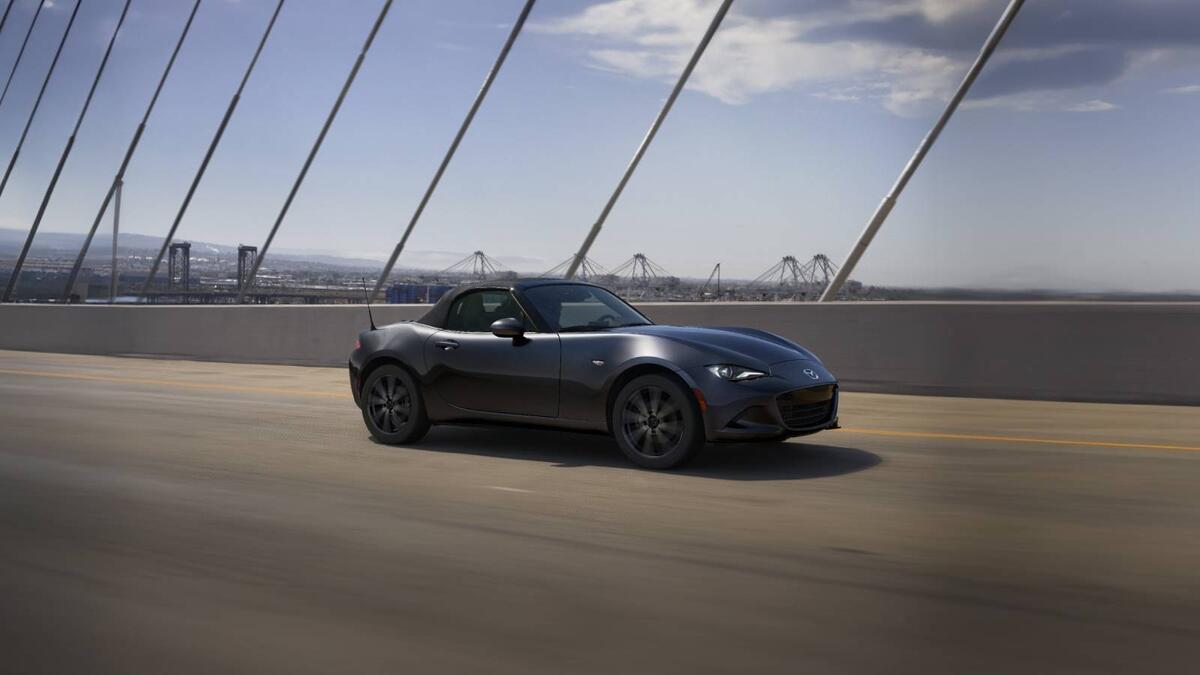
Mazda MX-5 / Miata
"I was thinking about this a lot. If I had a Miata, which I could have rented from a different compa..."
The Miata is a small two-seat convertible roadster. It’s designed to be light and fun to drive, especially on curvy roads. The podcast mentions it because the speaker is considering it as a possible car to have.
The Mazda MX-5, commonly called the Miata, is a lightweight two-seat roadster known for its simple, fun driving feel. It’s often discussed because it’s one of the most accessible “driver’s cars” and is easy to enjoy on twisty roads. In the episode, it’s mentioned as a car the host thinks about owning or renting.
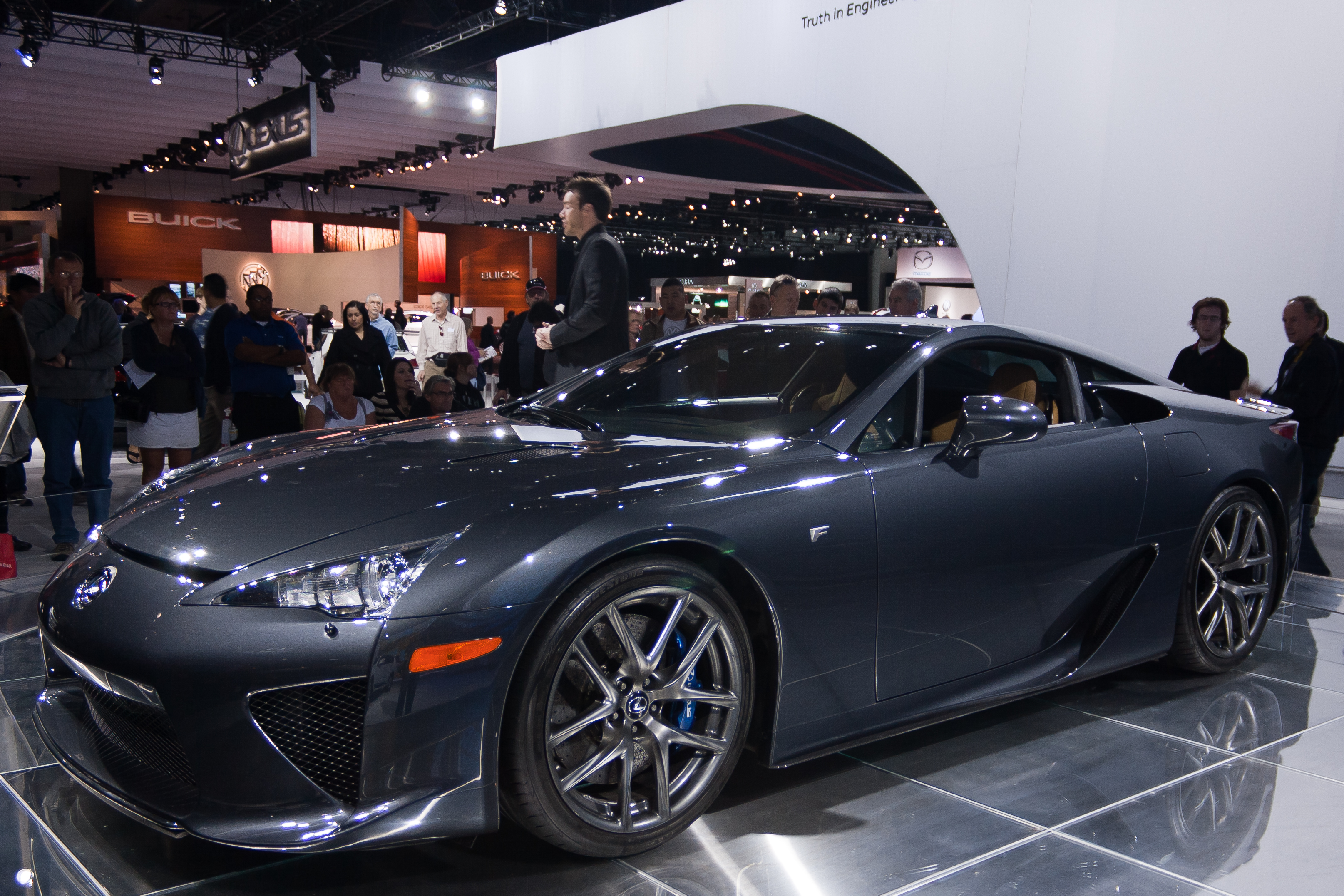
Lexus Lfa
"I don't know anything about any of them. But except for the Lexus LFA. The Lexus LFA I knew about."
The Lexus LFA is a rare, high-end supercar from Lexus. People love it because it has a special high-revving engine and a very distinctive “supercar” personality.
The Lexus LFA is Lexus’s halo supercar, best known for its high-revving V10 engine and exotic, track-focused character. It’s a modern enthusiast icon because it was built in relatively small numbers and is famous for its distinctive sound and performance feel.
964 Turbo
"probably have a man bag. [2838.6s] 991 GT3 RS and a 964 Turbo here."
This is a Porsche 911 Turbo from the 964 era. “Turbo” means it uses a turbocharger for stronger acceleration, and this generation is a classic enthusiast favorite.
The Porsche 911 Turbo in the 964 generation is known for bringing turbocharging to a more modern, refined 911-era platform (compared with earlier turbos). It’s a key enthusiast reference point because it blends classic 911 shape with an evolution of turbo performance and drivability.
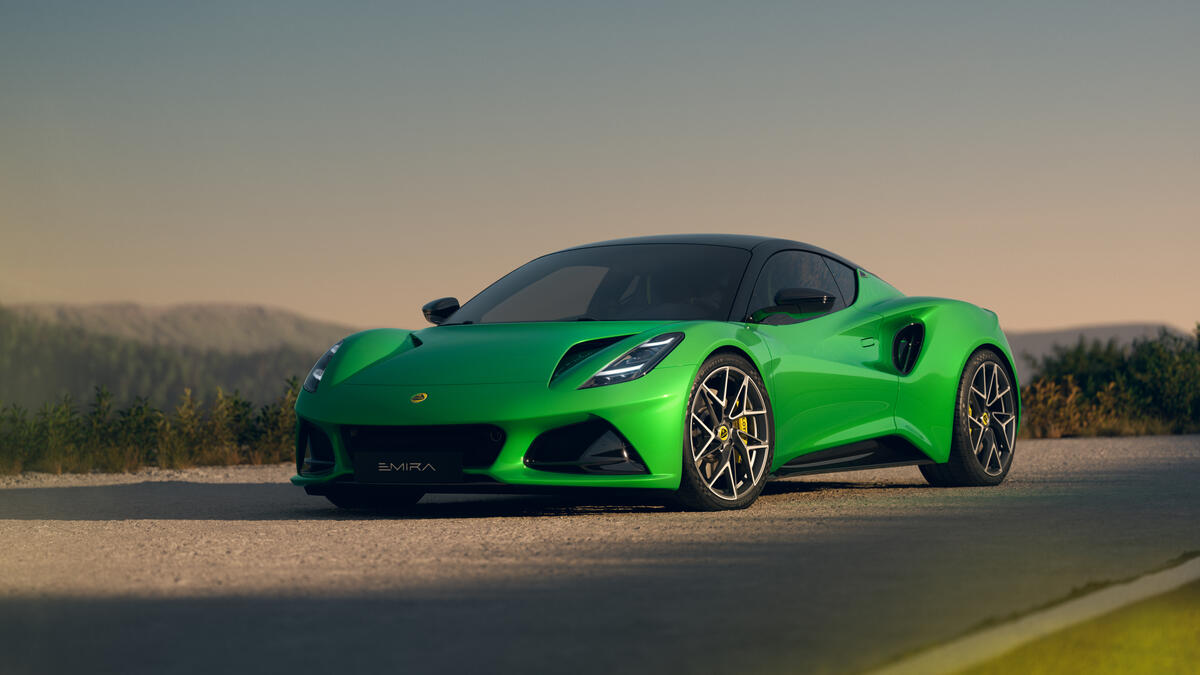
Lotus Amira
"I did. Speaking of Toyota sports cars, the Amira. Yeah."
The Lotus Emira is a sports car made for driving enjoyment. The podcast mentions it while talking about sports-car choices. It’s included as one of the cars the speaker is thinking about.
The Lotus Emira is a sports car focused on driving feel and lightweight performance. In the episode, it’s mentioned in the context of “Toyota sports cars,” suggesting the speaker is comparing different sports-car options and their appeal. The reference is brief but places the Emira in the sports-car conversation.
Request an Explanation
Heard something you'd like explained? We'll add it to this episode.
Sign in to request explanations for terms you heard.
Want to learn more?
Browse our glossary for plain-English explanations of automotive terms, jargon, and concepts.
Help improve this episode
See something that's not quite right? Our annotations are AI-generated and can sometimes miss the mark. Click the flag icon on any annotation to suggest a correction.