And then we had our super or career couple episode.
You know, that's another story where where we had the cars.
We had the series.
We had 18 cars sold everything.
And then Mr. Schwab can be so ideal.
And he said a sister kisses her sister.
There's no interest in that and I canceled the whole thing.
But I think there was more to it because it had Porsche Castle
in America.
I think we sold three thousand seven hundred cars in a year.
So I think it had to do something with financial too.
Sure.
In all fairness.
Yeah.
So what it was a big blow from in the beginning.
But then the nine sixty four came and sixty four type nine
eleven and Kenny is our came in.
That's how the racing department slowly was built up.
And you were there until two thousand two.
No, I was there till the thirty first of January two thousand
four.
Oh, two thousand four.
And then you said you were going to retire.
That's exactly that.
I really had that in mind.
I had over battle as a successor and I convinced
him to come early and I convinced the board in or at least
the head of Porsche Racing at that time to send them over here
three months earlier so that when the time came that the
transition would just happen overnight without any stops
because we had Daytona exactly in that time.
And that's what happened.
So I took over then my.
In in OK, so in December of two thousand three Porsche
Weissach in our last or in our Christmas celebration,
the end of your party.
They gave me a really, really, very, very big goodbye.
I don't really it was they flew my family in from
California, they flew my got my friends from from Germany
and to surprise I had no idea.
So I just walked in there and all of a sudden I see my
yeah, it was a big deal.
And the next day I went to Mr.
Duomo, I want to say goodbye.
And he looked at me and said, sit down.
Oh, it's clear.
He said, you can't leave.
So let's stop right there.
They just literally the night before had a huge
set off surprise for you.
Yeah. And then less than 24 hours, they're saying,
you can't leave.
That's what he said.
And I really for a moment, I didn't know anymore.
And then I went and then he was very clever.
He said, you know what, you're confused.
Yes, I'm definitely confused.
He said, go home.
Think about where you can help or where you would be
of help for Porsche Motorsport.
And come back.
And I went home and I told my wife, I said,
I am unbelievable.
I have no idea what he wants.
So I got a little bit confused.
And then somehow we talked about it.
And I came up with the conclusion because I always
like BOP, Balance of Performance,
because it wasn't the beginning, just starting.
And I never really had that really time to do that,
you know, when I ran Porsche Motorsport.
And I went the next morning.
Morning, morning, I said, OK, I have an idea.
I want to do BOP, Balance of Performance.
That's exactly what I thought you should do.
So my insight, I said, you are smart.
And then he said, OK, second thing is
help over my success.
So if you're given because, you know, like we picked it
and three, if I have special projects, if I have special things.
So we shook hands.
That was it.
So when I went, I would have been oh, five right now.
When four or five or four.
So in Porsche Motorsports, one of their responsibilities
is selling customer cars.
And so that would have been right when the 997 Cupcars coming
and our Cupcars are becoming really popular.
And especially in America, and everyone who wants to race
the Porsche has discovered that the Cupcars a way to go
because it's a factory race car.
And so I guess I guess Porsche saw you as the
the main contact for America, especially for the Motorsports
and understanding how.
Back then, it wasn't was an imps or was it the we were talking about this,
the U.S.R.R.C.
Yeah, we had U.S.R.C.
We had Grandin, and the split was happening with the ALMS and World Challenge,
you know, like, but we see we sold cars already in the 90s
because, you know, like it started, like I said, in 1995,
1996, with the 964 RSR, we just started already.
So it was not something new that the sales
but I guess the quantity seemed to really get higher.
The quantity really came then.
So by the time you left, they were selling a lot of Cupcars.
You probably couldn't supply all the Cupcars that people wanted.
We cannot do it today, you know, that we still are.
We get a limited amount of cars and they're just for the people
who compete in a series and not for collectors.
Yeah, which I think was very important because a lot of manufacturers,
you would see, for example, what I remember was seeing Nissan,
which the 300ZX they raced wasn't even a 300ZX.
It was proportions were totally different from the factory street car
where Porsche, these were still street cars that were turned in the Cupcars,
but they were still the factory built race car.
It wasn't something that a company built and said we were going to race
this car under this name.
And Nissan didn't sell 300ZX to the customers.
No, no, it was just not a special car, so prototypes.
Now what Porsche already had at that time.
But don't forget, you know, Uwe was actually the boss of the Supercar series,
Super Cup series. OK.
So I mean, you know, he had the knowledge, he had everything.
And he, like I said, it was a nice, flawless takeover from my reign to his reign.
And I stayed on in advising him, helping him.
It was beautiful.
We stayed for five years.
And today it's like one, two, three, four.
So we have the fifth successor is Falko Holtzmeier.
So it went on.
The issue is you can ask yourself, why am I staying so long, you know, in the things?
And I tell you what the issue is.
The way how Porsche does it, they send the people over here for five years.
OK, but it takes a new guy when he comes over here from Germany.
It takes a minimum three years to kind of understand how the American people take,
how the whole system is, and most importantly, respect from the other side.
So and then three years, then he has maybe four years,
his third learning period, and then he has to go home.
And then a new one came again.
So and that is something where I always helped, you know, two things.
And people would kind of call me then.
And I would say, ah, it's the new guy.
But you know, the transition thing, that's what I always did.
And that's if somebody would have come like over,
if over would have stayed like me for 20 years, then I really
maybe after the first year, when everything was settled,
I would have retired.
So and for that, I stayed on and I.
Went through one, two.
Board members, different board members, you know, and then.
Then today, now for the last two years,
I've been with the Porsche Penske 963 program.
And I still for do for the nine for the
PMNA Porsche models, but I still do the historic engines
with Eric Bloss, oversee that.
And especially the dyno work, I still do that.
And I have breakfast with the folk all tomorrow.
We talk a little bit about the business, but otherwise,
Falka is running it by himself and he's doing a good job.
Wow, you are the busiest retired person I know.
Yeah, I know.
And doing the most exciting work.
Yeah, but you know what?
The way like I look at it, it is if you keep the brain moving
and if you have a job like what I have, what I like
and what I really I've learned, my opinion, do good.
So if the health is good, my wife is OK
and family is good. Why don't you do it?
No, I'm going to be 82.
No, I am 82.
I'm going to be 83.
And that is something where I'm very, very proud of,
you know, like there's nobody at Porsche who's that age
who is even coming close, you know, working still,
officially, you know, from the thing.
So very proud of that.
Yeah, definitely as you should be, as you should be.
All right.
Let me before we get into our I want to call it our speed round,
but this new round that you're going to draw some names and have him
describe a little bit here, I want to make sure we thank our new
corporate sponsor, Auto Atlanta.
If you're chasing down Porsche parts looking for things that may seem to be
impossible to find, I think they might have your back,
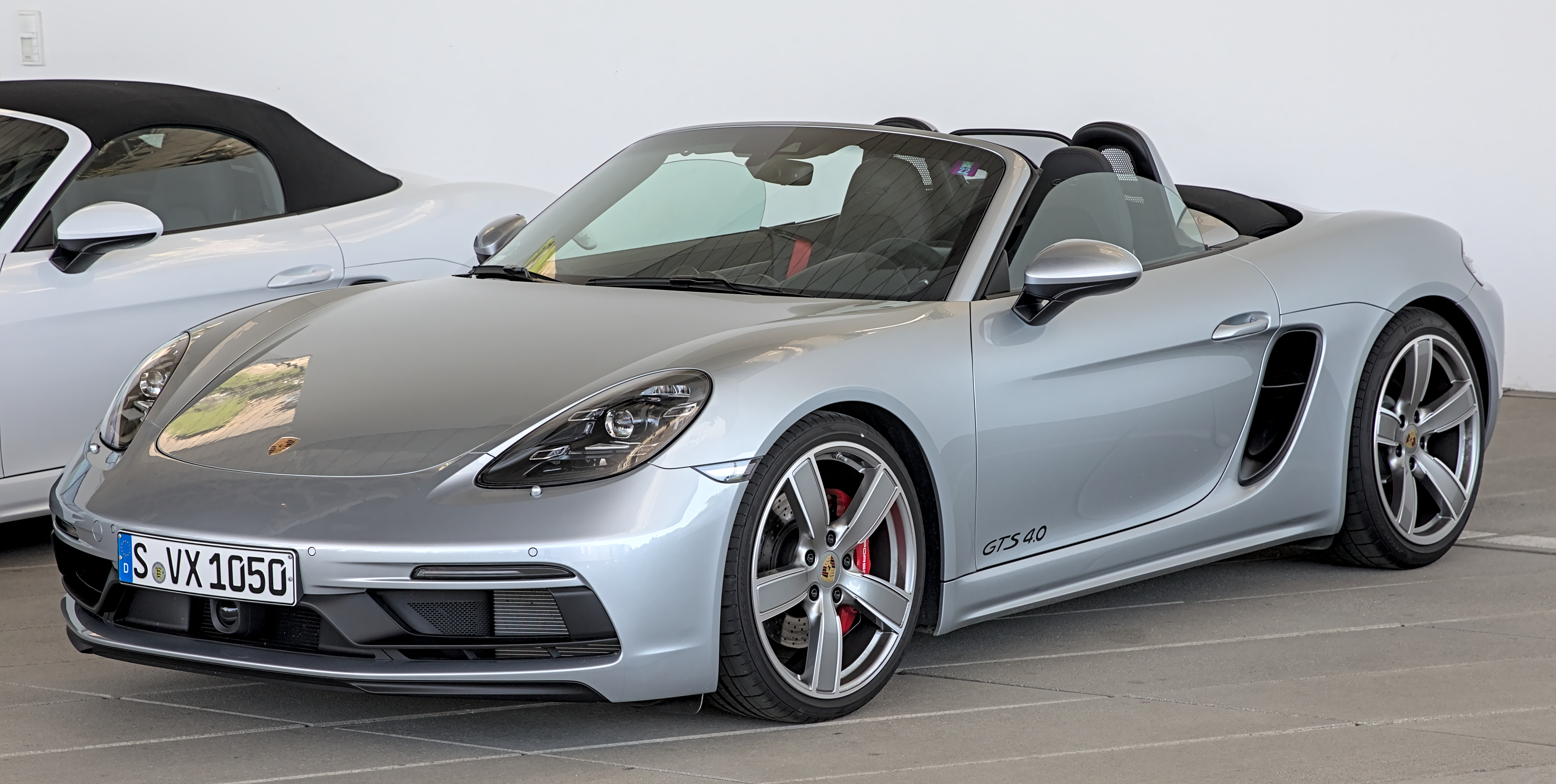
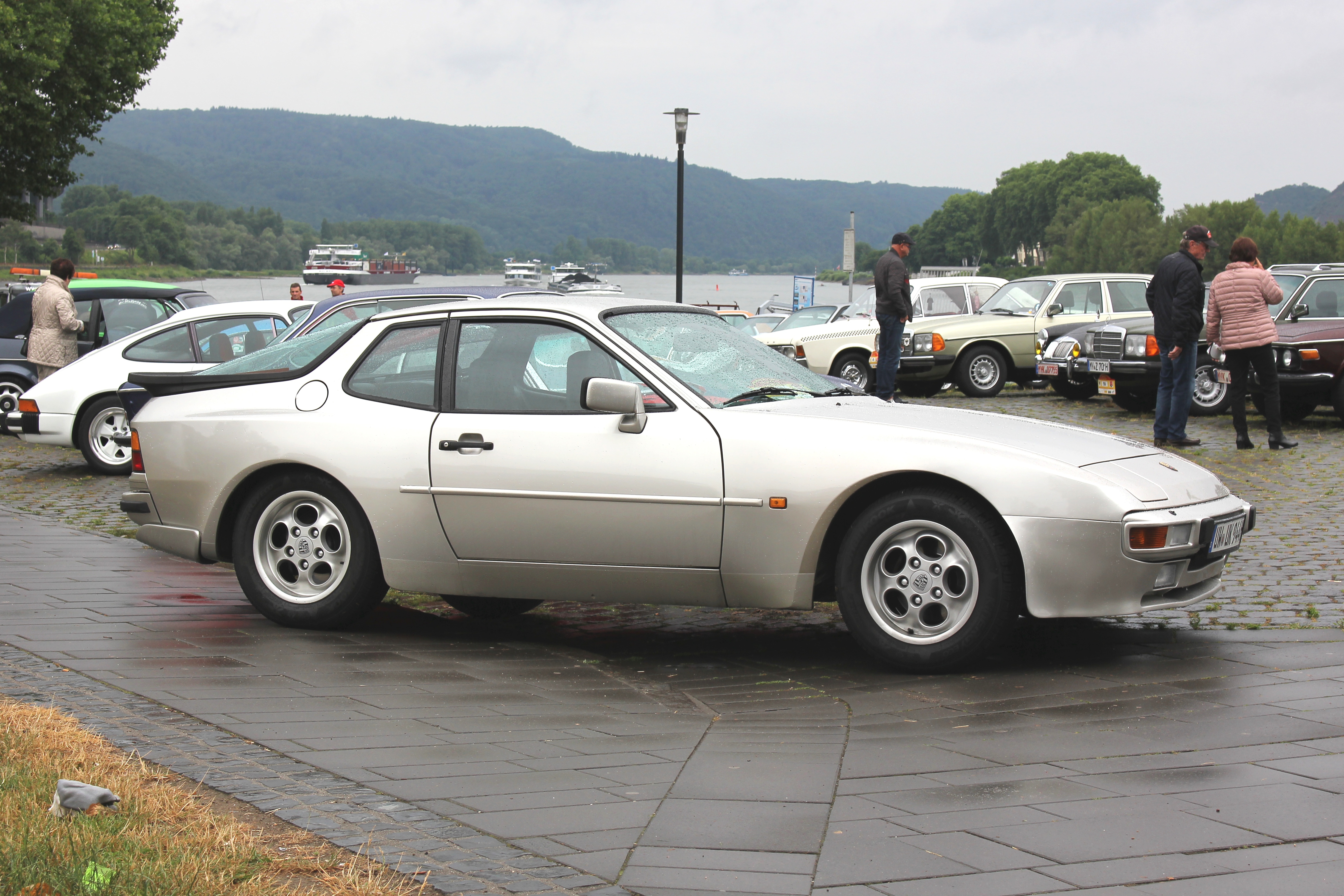
whether it be parts for your 944 Turbo, your 914 looking for stuff
for your 911 SC, Auto Atlanta has you covered.
They've been taking care of Porsches and only Porsches since 1978.
Not only do they have parts, but they also ship internationally
and offer expert advice to to boot.
So no matter where you are in the world, head over to autoatlanta.com.
They have a team of all star Porsche specialists who handle
everything from complex mechanical repairs, full restorations,
regular service and even detailing your car.
If you're selling, they're buying and if you're buying,
they're selling pre-owned vehicles, Porsches along
for your new home, a new lease on life, call them, they'll buy it.
Whether you're rebuilding a classic or a single clip to finish your project,
Auto Atlanta has you covered.
Again, head to autoatlanta.com.
Be sure to use the special code PCA, the number five,
OFF for five percent discount off of your first order.
Again, that's Auto Atlanta, Porsche parts, Porsche people,
Porsche passion since 1978.
Mr. Alvin, you have a list of names
and I think you will announce.
And then Alvin, if you would share some insights,
some stuff that maybe those that have been to a lot of your presentations
still may not know some of these deep dark secrets.
They are the deep dark secrets.
You have to be careful.
The real nice ones.
I can talk about it. That's the sad part.
You know, we talked about some of these names
that some people may not know.
I think the diehard Porsche enthusiasts will know,
but they're still part of Porsche history
and there's so many different
interwebs of personality as a Porsche
that really make make the brand what it is.
So in reading Alvin's book and just starting to jot down names,
I thought it's every one of these names that I jotted down had stories,
but we had to narrow it down to like nine names.
So I think we can get through as many as we can here in the podcast.
People find interesting and I would definitely recommend once again
going online, finding that book because it is filled with so much
so much information and stories all from North America.
Because that's where Alvin really made his name.
So I always say what's really frustrating for us here in North America
is when you want to buy these toy cars, they're all European cars.
You're just like racing in European, not not from the North American.
It's almost like they forgot that Porsche race in North America.
So trying to find an end all toy is so hard.
But fortunately, the nine sixty two.
They dominated so much in almost every nine sixty two
and that race in America had an end all sticker that at least one.
So that's not too hard to find.
That's a good story, sticker.
So, you know, like it was my idea
because what we did is data and myself, we would go on Friday night
that I special to the race track Sunday night back again Monday to work.
So that was tough, tough, tough years.
But what I said to the teams, I said, look,
put the end all sticker on on the front and on the sides and our support.
The only thing what you pay is our flight.
You share the flights and you share the labor is for free.
And that's what our deal was.
And I told my guys, I said, look, my end all in reality,
it doesn't mean anything.
But what I want to have or what we should work for is that within 10 years,
the name end all in racing is known.
And from 1985, when we when we did our 10 year
anniversary, we had it.
And that was my goal on the name.
So good to see people jumping.
That's right.
So the first name, Milt, Miltner, Milt, Minto.
Milt, Minto was the lead driver when I started
at Vasa Polo in 1969.
And I'll tell you, he I always looked at him.
And at that time, at that time, he really didn't mean anything to me.
You know, but later on, I understood, you know, what Milt was deep down.
It was from California, but he was definitely a little Billy.
Had a beard.
No, yeah, yeah, but I mean, you know, the way like he acted,
he was friendly, a good time.
And I spent with him two years in the canner.
First of all, we did the nine over six.
We did the cut off the roof.
Everything don't don't gloss over that story.
No, no, no, no, I can't because we don't have enough time.
But I look like so tell them about how you take this nine or six.
You said in nine or six, its heyday is gone, if you will.
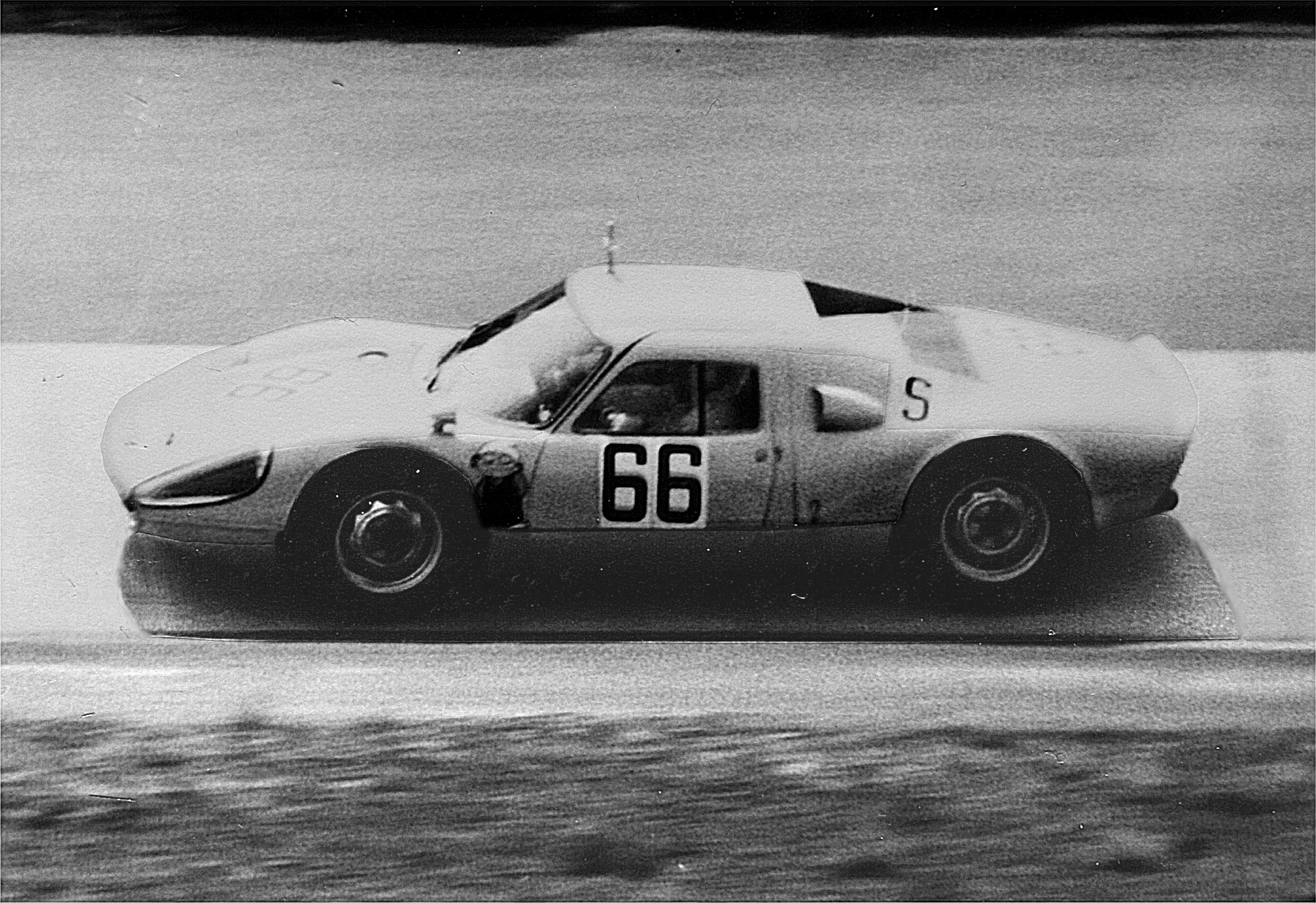
And so back then, the old race cars almost didn't have a purpose,
but you're still trying to make this car competitive.
So you realize that the car's too heavy in its class.
And and you're working for Russia Pollock at the time.
Why? Yeah, there was there was 69.
So Milt, one of his customers 70.
So Milt was driving really his butt off and driving
against an Alfa T33 with Skidermek Kittrick.
I never forget the name.
And he was beating us left and right.
And, you know, we increased the engine to 2.3 liter,
but it still wasn't enough.
So it had to be some weight wise.
And what I did is Pollock would go, I would say,
three, four times a year to Germany, like three weeks, four weeks.
And one of these times I took 906, cut the roof off,
but the way like we always could put it back again
and the rear decklid of the doors off, you know, everything
and built actually very, very flimsy doors,
light doors, a light decklid.
And I gained about 170, 180 pounds.
And from then on, we went racing.
No, before we went racing, Mr. Pollock came back
and I was very proud of the car.
And I always did the nighttime.
I said, how am I going to tell him what I did?
So he came and he looked at his car and he said,
what happened to my car?
And then I explained it to him and then I mean, he flipped out.
But I showed him then the roof, the way how I had cut it off.
So we could always put it back again if it didn't work.
The windshield was not broken.
Everything was done nice.
We could put the rear decklid on doors on everything.
And yeah, good.
OK, he mumble, mumble.
And from then on, we won races and won the B Sports Racing Championship
in Atlanta, you know, and then, of course, I was the golden boy.
But if that would have gone wrong, oh, boy,
that would have been the end of it.
But you know what?
There is in life, you have to take calculated risk and chances.
Otherwise, you don't get anywhere.
But back then, when you're racing, it wasn't the glory of what it is now
with the team, with motorhomes and and, you know, 300 people coming.
It was just you and Milt, right?
Milt and myself.
Milt had an old motorhome and we had at that time with the spider.
We had a flat tailo.
But that's all, you know, like, and we would drive from California
to the races to Atlanta.
Open trailer and trailer, end of the story.
That's it, the two of us.
Simple days.
And you said he would always think back roads.
No, no, no, no, that was then the 917 days with Milt
because really, again, we had the motorhome, but a bigger motorhome
for the two of us could sleep and we had a flatbed.
I don't know what you call it.
Chevrolet. Oh, yeah.
You know, like, where you have the race car on a ramp.
And I was driving the race car and the Chevrolet
and he was driving the motorhome.
And that's how we went.
Can I'm racing?
Just the two of us and support would come on Friday,
help us over the weekend and leave again.
And then Milt and I, we were on our own.
So what happened?
We would find Volkswagen dealerships.
We would find paint shops, wherever we could work.
And I think once or twice a year would overhaul the engine.
And a 917 engine, 12 cylinder, that's a lot of bolts and nuts
and Milt would help.
Hmm. He would help.
He would have cleaning, you know, like he's not only driver,
we are team.
And what we would do, that's another thing in a nice part
in between races, when we had, let's say, 14 days time.
So we wouldn't tell what are the interstates.
We would drive over country roads and we would stay
because of the motorhome.
We were flexible.
We would stay everywhere and Milt had that
that the talent again, hillbilly type.
Now I learned what it was.
He would talk to the people in the slang.
He could do that.
And we were always welcome.
And it didn't matter big town, small town.
And one time I was in North Atlanta,
old North Atlanta, we were in Gainesville
and we got a garage where we could work
from a Volkswagen dealership.
And there were two, three garages beside us
and Milt got a family across from the complex
and we were friends.
And then one night the guy said, come on, guys,
I'll show you something.
So we went up to Moonshine,
you know, plant where they made
in the dark in the woods.
I know where we were going.
And then all of a sudden, you know,
he lit up the fire and then we could see what it was.
I mean, for me, unbelievable.
I drank it and he told me immediately,
be very careful.
And I'm telling you now comes a technique
from the old thing.
So then the next day we went down
and opened up the garage to start to work the watch.
The next garage door goes up
and guess what comes out?
The Feds. Oh, no.
They were right to us in the next stall.
I was unbelievable.
You know, think about it across the street
when the Moonshine guys were the Feds
was looking for the guys and we were in the middle of it.
So I have so many stories with Milt,
you cannot think about it.
Wow.
Unbelievable.
He was a quite a character.
And I think he actually came to a couple of rents
for a reunion, I remember.
Yes, yes, and one later on, you know,
he got sick and unfortunately died too young.
Yeah, he was definitely a character of the fans.
The other one is the next person is someone who I call
the unsung heroes, where there's some people
that get everyone knows like Hans Metzger.
You know, everyone knows the name Metzger engine
and so forth.
But then there is the turbo and the turbo
charger was something that was obviously very important
to Porsche, especially with the Can-Am
because that's what made Porsche competitive
was the way they were able to harness the turbo power.
And I first met Valentin Schaefer,
I guess Rensport 4, I think.
And I had no idea who he was and someone introduced me.
And then when they told me the history,
my eyes got really big because I have to admit
I was one of the people who did not never heard of this man.
But once you heard what he did, it was total respect.
Yeah, Valentin definitely was, like you said, the unsung hero.
And I got to know him in the 1970, at the end of 1970,
when I went for the four months to Weissach, not to Weissach.
Zufenhausen, I always make that mistake.
Zufenhausen, that time, was the race department.
And Mr. Porat made it possible to go there
for months to learn the engine totally from the ground up.
And that's when I got to know Valentin.
And I got to know Valentin in a very, very funny way.
It's I was driving with Mr.
Pollack and he said, OK, I have to go to a guy here, stay in the car.
I'll be out.
It was in the wintertime.
It was not exactly warm.
And I was sitting there for half an hour and I said, you know, cold.
All of a sudden, the door comes out.
Valentin comes out.
I didn't know who he was.
He said, how can you sit out here and then come inside?
So he took me in and that's how we met.
And Mr. Pollack was there.
He didn't apologize.
But, you know, I got warm and that's how we met.
And then from then on, he was a very, very supportive guy of me.
I mean, he supported me over all the years
when I had a question, when I needed anything.
He was became a very good friend, 94 years old now.
And we still are in contact every two months, three months.
We talk about that.
And you learned a lot when you were at that time.
I learned a lot.
And the funny part, what I have about.
I have so many from Valentin, but I give you a good one.
It's the street, the customer department in Soufenhausen
and the racing and the development department.
There was no visor at that time.
There was just a door and the door was not locked.
But see what the Porsche guys very cleverly.
They had all the customer mechanics in gray uniforms
and the development department in red uniform.
So if you would go through the door, you immediately, you know,
they would pick you up and they would say out.
And of course I had to do it and they picked me up and out
and then Valentin, the next day over, he said, OK, I get you in.
And of course, with him on my side and he showed me
the whole development department from dinos over the engine,
over everything.
I mean, that's the beginning of the turbo.
Yeah, no, it was still not.
It was still normal aspirated.
That was in 71 and then he was already working on a turbo.
He didn't show me that.
But then in 72 when Mr.
Penske Penske team came with Donahue,
then Valentin showed up with the turbo and that is.
But then I really learned what he's doing.
So I give you a story.
So Mr. Metzger and his team would design the engine.
I said, oh, neither, but the 917 is one of his big things.
And then Valentin and his team and there were four people.
That's all would take the drawings,
get the manufacturer to produce the parts,
get the engine, the propelled workshop to assemble the engine,
go on a dyno, get everything done and go on the racetrack
and get the car running.
That was Valentin and his little team who did that all.
And I tell you the turbo, the turbo success
from the 917 was majority of Valentin's
and his team's tenacity, is that right?
Well, yeah, tenacity, 100 percent.
That's Valentin.
The next name I know who's never heard of.
I guarantee most of our listeners have never heard of.
But as an interesting gentleman that this comes full circle later
in our one's life is Randolph Townsend.
Randolph Townsend, a very interesting guy.
So in 1975, end of 75, we just opened up and now
and a guy came,
Beatt, you know, Beatt, full face, gold chains around his neck,
heavy built, very muscular.
Like a bodybuilder. Oh, yeah. Oh, yeah.
And he said, I want to have a 917.
As a 917. Yeah.
He said, I have a million dollars to spend per year.
In 1976, think about it.
I'd be like, shit, you know, one of the blah, blah, blah guys.
No, it was three.
And we did, we bought the 917, we went racing.
We became actually, I would say, you know, good friends.
And what we would do is we would smoke cigars, the two of us.
And then we have two little kids who were driving the truck.
We went from the motel to the racetrack.
They sit in the back of the car.
We were sitting in the front, smoking cigars.
I never forget. And then the other things, Randolph,
he was not a good race car driver and he knew it, too.
But he crashed a couple of months.
917 he crashed. He bought a new one
or went to Germany, bought a new one from Willy Kausen.
And he later on became a politician.
In Nevada, he became a senator and a senator.
And, you know, we stayed in touch and I never forget that.
He called me and he said, after a couple of months,
and he said, Alvin Alvendair, I have to tell you that.
I said, what happened? I was Democrat.
I have to put that in here.
But I watched it.
So, you know, there were, he said, guess what?
The head guy of the Senate told me.
He said, Randolph, I tell you what it is all about.
He said, one thing, what you have to learn
is the masses are asses.
And I said, you can't be kidding me.
What are you talking about?
He said, yeah, that's what shook me also.
You know, like it is, it is not like we were supposed to be for the people.
No, the people were there and we would tell the people what to do.
And he said, I was totally blown away.
Then he changed the party.
And stayed under for 20, 24 years, 23 years.
So we never lost contact, you know, into Vegas.
And, you know, we came to Germany once with us.
So, you know, we kind of, we became close.
But you, you're becoming citizen, trying to become American.
Now comes the closing part.
So and then I.
My wife and my kids, of course, were American.
My wife was born in Morocco, but she became American immediately.
And I somehow didn't want to lose my German citizenship.
And the Germans had something where if you would become American
or became a different citizen, you lose the thing.
And I didn't want to do that.
And then somehow the Germans changed the law.
And when I got all of it, immediately I applied.
So I went through the motion, everything else.
And then the next thing was that I went for the swearing in.
Everything was good.
Yes, you're American. Congratulations.
I said, OK, I need a passport because I have to go to Germany.
When it was in August.
So in November, I want to go to Germany.
My passport didn't show up.
No, no. Then, yeah, we missing one document.
So OK. So I gave it to you.
And unfortunately, I gave you the original ones.
Yeah, we need a copy.
So where are we going to get a copy from? Oh, no.
Have you ever dealt with immigration?
It's fun. I'll tell you that. It's fine.
So the guy says, and then finally after, or maybe it was earlier,
the guy came back and he said, yeah, we found where the location of the paper is.
It's as best to contaminate the room.
Yes, and where do I come in?
Yeah, you need a copy.
So I was in a limbo.
Honestly, he said, you need a copy.
And I said, where am I going to get a copy from?
So and then I called Randolph and said, I know we have to help me.
What can you do?
And I tell you, he had Harry Reid at that time,
who was the big democratic head guy in the health.
I think yeah.
So he talked to him and was in one week.
Guy from him called.
I gave him my information and was in 10 days.
I had my passport.
Oh, that's Harry Reid and Randolph and Randolph Townsend.
And today we still good, good together.
There's that six. There's that six degrees outside of motorsports, as well.
The other one is a little bit heartbreaking, too.
But he was such an important part of for sure, motorsports was Al Holbert.
Yeah, that's that's that's a sad story
because L L and I, again, when when we built our 935 L
one car, we had our first race in Riverside.
So I asked if he would drive the car with Harold Rose, my friend
from Germany, and he did.
And that kind of bonded us.
And then from then on, you know, when the 960 came,
we were together.
And that the whole thing evolved into a friendship, really good friendship
and and business relations thing where where he would tell me, OK,
Alvin, that's the engine problem, you take care of it, you do what you have to do.
And don't ask me, stay within reason.
And that's it. And we had a perfect thing.
I would. And that's where the foundation was laid again
for later on Porsche Motorsport.
When you were so I was running his engine program totally by myself.
Also with ender people, not careful.
Yes. So never by yourself.
You know, it's us, it's me.
So that that was L and L.
It's he always told me, Alvin, take over Porsche Motorsport
and come to to Pennsylvania.
I said, no, I've been in Canada.
I know what the winter time is, not me, that I wouldn't go.
And then one morning or one evening, I was in Columbus, Ohio.
I was in a hotel and a guy from Creepy Crawley
called me and he said, listen, you know, like sad news
because I just saw the news and the plane went down
and the tail is definitely the lovin' boy.
It's got him and that was.
But that was his own pilot, wasn't it?
Yeah, but the story was there and that's faith.
That's all what it is.
What we would do is what when all the back east races,
you know, L and I would go
on Friday after the last practice,
we would fly to his home
in Warwick and spend the time with the family at dinner.
And on Saturday morning, we would leave early again to the race track.
Wow. So normally I would have flown with him.
But he had a meeting about the new spider, you know, like that.
It was a successor of the of the nine sixty two.
And he was building it.
And we wanted to use the indie engine
but converted into a gasoline engine.
So it was all moving and he was talking to people.
And that's why I didn't join him.
And otherwise, I would have gone with him.
So that's yeah, we remember very, very soon.
Al Holberg, Derek Bell, the Lowenbrow number 14 was legendary.
That and the racing.
They were so dominant.
The team, the team was just a family.
Just we were a big, big family and successful family.
Yeah, it's definitely what would have been the other tragic, I guess.
Also, what we just picked these to happen to be next to each other
is Bob Warwick, Bob Warwick is another good friend.
And we didn't start out as friends.
He was a successful race car driver when he came over here.
But at the same token,
he was, I call it, was called him grouchy.
Now, because he was, you know, like whoop, whoop, whoop, whoop,
you know, never, never really smiled or joked or whatever.
And and the story, what I remember, you know, among a lot of other ones,
but that's a good one is I would tell him good morning, Bob.
He would just walk by.
No answer. And that went on, I would say, for years or at least
for a couple of months.
And then one day he walked by me and he said, good morning, Alvin.
And I said, you know what? I played a game.
So I just didn't act that exactly like him.
I kept on going and he came with my shoulder around and he said,
I told you good morning.
Yeah, I said, I know.
And you've been doing that for the last three months or six months
or whatever, and you never just giving you the shit back what you give me.
And I'm telling you, that broke the camel's neck.
You know, we became so close friends.
And I and I and I remember it.
You know, I don't know how these nuts are called.
They're about, you know, that long, that wide.
And they have a very hard shell, very, very hard shell.
And once what I say that was bullock,
hard shell, but once you came through the middle, it was like butter.
Yeah, it was like butter.
We became very close friends.
And I was there the last day when he got killed.
He came in and he gave me a sign.
Like I have it still at home when you visit my home.
And it's at something about bullshit artists or what, you know, I say, are you,
you know, like any left?
We said goodbye and that was it.
Well, he was the my favorite story a little more.
Not so sad was the he was driving your car with Preston Hen and an age.
Well, he wasn't the original driver.
No, right? He was he was driving.
He was driving an Aston Martin that breaks down.
I think of the Nimrod that breaks down.
And and I think Preston Hen ran into AJ and found that AJ didn't have a car
anymore for the 25th Daytona.
This is the races going on at this point.
And he asked Preston asked AJ if he wants to drive his car,
which is the same car as Bob.
But he doesn't tell Bob, right?
You know, you know, he didn't know Bob had no idea
because Bob brought the car into the lead.
So we were leading the race.
And then Preston made a deal with AJ Foyd and AJ Foyd never sat in the car.
They had no idea about shifting, about the switches or what.
So I had to sit down with him and give him a little sketch.
You know, what is what he aware.
And this is while the car is racing.
Yeah, yeah.
There's there's showing.
Wollack, Wollack, Wollack is in first place.
And he came in and Wollack gets out and Foyd gets in.
And Wollack, the famous guy, he said something on TV.
You know, who in the is that guy?
Oh, it's AJ or somebody said that's AJ Foyd.
And he said, oh, but that was Wollack.
But then in the doing the remainder of the race,
AJ drove a brilliant race in the car.
He never sat in.
No idea in the rain also.
So it was definitely after the race.
Wollack definitely paid him tribute.
Yeah, they became great friends.
They became great friends.
Yeah, that was Bob.
They have so many stories from him, but, you know, we don't have enough time.
Yeah, so that's a good preview of, like I said,
we could make this a six to eight hour episode of all the names I wanted to talk about.
And I, you know, I can go on and on.
You know, it's not like the little things what I have told you.
But where do you we can pick one guy and just talk about it
because I spent so many times and so good times
and successful times and mutual good times.
That's the important part.
I want to say the list that you originally put together,
man, he had at least like 20 names.
Oh, more than that. More than that, right?
And for those of you that are joining us on Treffen at sea,
you're going to get more of this.
And every time we are together with you, I learn so much.
I learned so much.
And it's it's great that you're willing to share.
I know, definitely.
I I like it also because I was you guys.
I'm not the big guy in in in in podcast.
So what I don't give a lot of them, you never you don't see me a lot.
But with you guys, I feel like home.
It's like family and I enjoy it.
And I look forward to the cruise
where you said like 800 PCA people are coming there.
I look forward.
And what I asking the people who are listening right now
and joining the cruise, one, we have our
it's not a podcast or a meeting there or seminar seminar,
feel free when it's over to ask some question.
And don't be bashful.
For one, let's go for it.
For one, all when that this is the first
tactic ever went to that there was alcohol involved.
So it's hopefully no one gets too rowdy.
We've we've described Treffen at sea before.
We've said it a million times.
Those that have been on Treffen at sea
totally understand what we're talking about.
But it's hard to capture the essence
of what you will feel on that ship until you've been there.
So I'm looking forward to you getting to know Treffen at sea
and all of the members having access to you.
We're going to have a great time.
But before we move over to I think we have one bit of
portion news to go over, I'm looking at his shirt.
And I want to remind folks that it is indeed the 50th anniversary of
Andal and you brought that and our livery GT three to works reunion
and unveiled it with us.
So I want to thank you and thank Porsche.
And we want to thank our friend Boris that I just want to say I didn't.
I didn't bring it.
I mean, Boris up and bring who is the heavily involved
in the Sonderwunsch management.
It was his idea.
He executed it with Thomas Klein.
And I want to say that in the design and they came with a 992
in the end original 935 colors.
And it looked beautiful.
I can tell you people who have seen it, I always got good results.
So I want to thanks to Porsche A.G.
To do that means a lot to me personally
and of course to always up and bring and to Thomas Klein.
All because Boris visited your house, right?
That is correct.
And he saw a picture of the car.
Yeah, that's enough.
So you want to have time?
Yeah, OK, then I tell you that.
So Boris and his wife and his little kid came
and cast him from England.
He's the the boss of Porsche Design United States.
Shout out to Karsten.
Exactly. And.
For Goldsmire, for Porsche Motorsport, we had the kids.
We had a pool party at my house. Nice.
And so then we went upstairs in my office.
You have been there.
You have seen it.
And we were looking at it and we saw the car.
And then we said, we have shoes made, we have t-shirts made.
You know, Karsten said that.
And Boris said, that ain't enough.
We have to bring that some more on a current car design.
And he didn't say anything.
And that was in August, July.
And then in November.
Two thousand twenty four hours in Weissach.
I was sitting and then Boris came over from two thousand
and we're sitting there with Henry Freud.
I don't know if you know him.
He does all the special cars and we were talking.
And then he said, hey, I'm working already on it.
And I have a design almost ready.
And I said, what design?
He said, on the race car.
So what race car?
Yeah, what race car?
And then in April, he sent me the first sketches.
Amanda, they got the car, did it in Germany.
I put the wrap on and then send the car to Porsche.
No, no, the car was sent to Porsche Motorsport.
And the rep was done in California and then brought it up to Monterey.
And then, you know, for the you guys were there.
And so was Tim O'Rash, the CEO of PCNA and IHC Cocoa.
That's the marketing VIP was very, very rewarding
and gratifying for myself.
I can tell you that.
Oh, well, congratulations to, again, the German who went to Canada
to work on the car, then got into Volkswagen to go to Southern California
to be here celebrating a brand that you and two other partners
started and getting the respect of Porsche and now celebrating with all of us.
And now you're going back to Canada on a boat.
Absolutely.
Maybe not on land.
Now, very nice, guys.
Very good. Thanks for the good time.
Yes. And we're looking forward to more details.
Let's just hop over to reminding folks to make sure they sign up
for PCA's newsletters, performance news, e-brake news and Mark Fresh,
all free at PCA.org.
And this one here is going to be a little bit counter to what you're
working with typically.
And this is talking about gear shifts, but not when they say fake.
Yeah, so there's no other way to say it a year ago.
And I read about this, a rumor of it, they interviewed Lars Kern,
who's a test driver, and he said it'll never happen that Porsche will
never make the EV sound like they're shifting gears.
And but now of an article on Road and Track, Sasha Nissen,
who is the Porsche prototype fleet manager, said that it's very
possible that they will be having a car that feels like it's a gear shifting.
Me personally, I don't I don't want to say it's not a good idea,
because that's what I said about texting.
But I don't understand why we need a why we need to go down.
The technology seems to me that have a car simulate a gear change
when it's not necessary.
But then again, a year ago, I didn't like this idea of having
fake sound on a car.
But then we rented I rented a Ford expedition and I thought it was a V8.
It sounded great.
I thought, boy, Ford has really done a great job of V8.
Beautiful sounds.
So for like 16 hours.
Sucker.
And when I was taking it back to the rental place, I happen to see
a boost gauge and I thought, oh, my God, this is a V8 turbocharged.
And turns out it was a V6 and the sound is fake simulated, not even simulated.
I mean, they're simulated of the V8, not a V6 turbo.
So I wasn't listening to the engine.
I was listening to the electronic sound, but I thought, you know what,
it pulled me for 16 hours and made me kind of happy thinking
I was driving this really nice sounding engine.
So who knows what Porsche is going to do.
I want to say that we have an article by Bradley Iger
that you can see on the screen now.
Check it out on PCA.org.
But Hyundai did this with their Ionic five, Ionic five.
And and it seemed like a really cool concept.
Bradley wrote a really good op-ed about it.
Go check it out and let us know if you think Porsche should simulate
your changes and I'll throw it back to you, Damon.
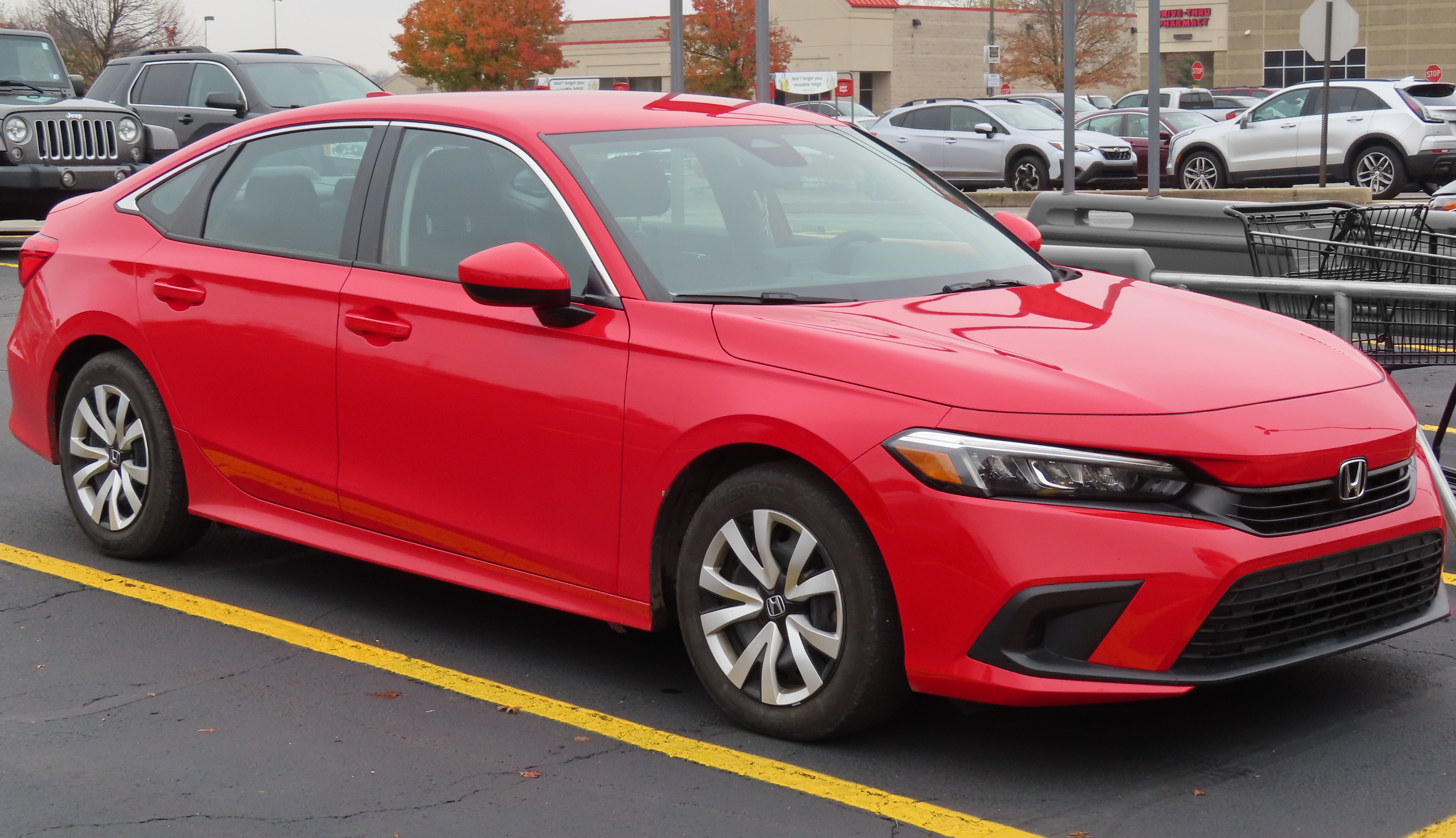
You were so my wife and I, we have a Honda Civic naturally aspirated
manual vehicle and you rented the Civic.
The other day for Monterey and that's a CVT transmission.
Yeah. But it does have simulated.
Did it? Yeah, it didn't.
And it sounded or felt fine to me.
I didn't realize I was driving a CVT.
Exactly. Quite honest.
Exactly. That's what I think they're trying to do is
people have this expectation of how an engine should sound
when you're accelerating, decelerating and such.
And they want the CVT for the economy.
But they're putting into the software
to make it behave similar to a for me.
It's why not off the choice?
And I think what people are seeing is, for example, on track,
if you're used to having break points with downshift,
you know, you your fifth gear going into whatever turn,
turn one at Laguna Seca and your turn, turn two, I guess,
and you're hitting the brakes and you're you have a reference point with your gears.
So there's one cool thing about it.
I don't know. I don't have the choice.
Will it make you slower if you're going?
It will. Yeah. Oh, yeah.
For sure. My suggestion, if I'm on the track,
the guy next to me can be using the fake gears.
Let me just have the regular power.
I don't need a fake gears.
I get you. I get you.
But sometimes it's that that simulation
and sometimes slower is more rewarding.
I mean, there we go.
I'm just saying from a sense.
He's going to disown me now.
He's going to disown me now.
I'm just saying from a sensory, from a sense.
I think I was saying that's what the losers.
I tell you, I stay out of it from the day I know you will.
I knew I knew when I read this topic,
he's going to stay out of this one
because we were talking about it earlier and he's like,
we're not going to be talking about that on the podcast, are we?
So I'm going to leave you out of this.
Don't disown me because I said that.
I'm going to move on to events.
And that is Unstock 2025, November 16th.
Porsche Santa Clarita registration will be opening September 3rd.
So we'd love to see you there.
Of course, if you're looking to race with PCA members online,
check out PCACemRacing.com.
If you're looking for insider swag, bottles, mugs, t-shirts,
PCAwebstore.org.
And of course, we'd love you to show your support
and how proud you are of the PCA Insider Podcast.
Just send us your address, information to podcast at PCA.org.
And we'll send you a set of decals.
Man, I know we could go for hours and hours
and we will go for hours and hours on the cruise.
And it's going to be a lot of fun.
Sorry, hey, you guys could have joined on the cruise too.
And you could have been part of this.
May I say something?
We got alcohol.
And we're going to get the unfiltered, the raw.
I mean, we promised we wouldn't record it
and he promised he would tell it all.
Yeah, I'll give you a good one.
So when I did my book and I really had my vision
was to tell the people what really happened there.
And the writer told me already, we can't do that.
Liability here, liability there, the lawyers.
And so, unfortunately, the real spicy stories
you cannot tell these days anymore.
It is we live in a crazy world.
Yeah, I'll tell you that.
Yeah, and I found out the hard way.
So I have to restrain myself, but only to a certain degree.
Oh, exactly.
We'll unlock it with some liquid courage there
when we're on the boat. Exactly.
Let's go forward.
All right, folks, well, thank you for listening.
I hope you enjoyed it as much as I did.
Be sure to like, comment and subscribe
and consider sharing our show with fellow Porsche enthusiasts.
Until next time, stay safe and we'll catch you down the road.
Thank you, Alvin.
Yeah, goodbye and thank you very much for listening.
About this episode
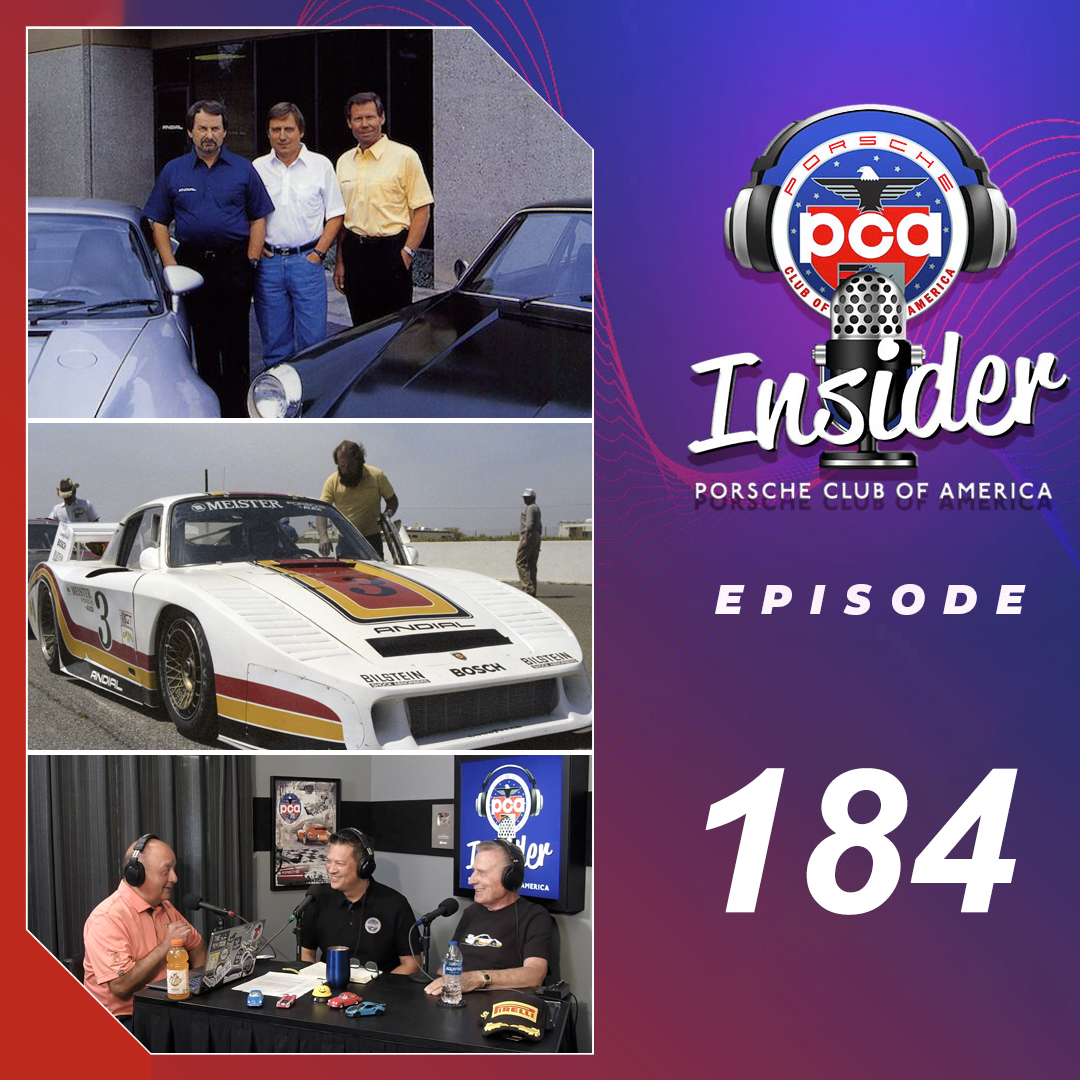
Alwin Springer shares captivating stories from his extensive career in Porsche Motorsports, detailing his journey from a Canadian technician to CEO of Porsche Motorsports. He recounts his experiences at Vasek Polak's dealership, the founding of Endal, and his pivotal role in the evolution of Porsche's racing programs. With anecdotes about legendary figures like Al Holbert and Bob Wollek, this episode dives deep into the history and passion behind Porsche racing, highlighting the camaraderie and challenges faced along the way.
Alwin Springer, one of the co-founder of Andial as well as the former President of Porsche Motorsports North America, joins us on the podcast again. He regales us with stories of some of his favorite people who he worked with during his long career in racing. We learn how he got hired at the famous Vasek Polak dealership and became head of the racing program, to how he formed Andial alongside Arnold Wagner and Dieter Inzenhofer. He also tells us about his time as head of Porsche Motorsport in North America and how he continued to help Porsche after he retired. 75 minutes never went by so fast!