00:00
Welcome to the Porsche Club Insider, your one stop for all things Porsche and PCA.
00:08
Here's your host, Vu Gwin, and the Insider Crew.
00:20
Welcome everyone to episode 184.
00:22
We have a special episode for you.
00:25
But before I introduce our guest, I want to recognize Manny Alvin.
00:29
To my right and Damon Launey at the controls to my left, of course we want to thank our
00:34
presenting sponsor, Pirelli.
00:36
Pirelli tires have to achieve the highest levels of performance, safety, noiselessness, and grip
00:41
on the road surface, innovative tires that can satisfy even the most specific mobility
00:46
needs of the end consumer.
00:48
And thank you to all of you that are listening.
00:50
If you aren't currently a PCA member in own a Porsche, what are you waiting for?
00:54
Grab that VIN, head over to PCA.org and make yourself a PCA member.
00:59
For those of you that are looking for a Porsche, for your driveway or garage, we have the Test
01:07
Folks, if you're into motorsports, if you know anything about a 718 Spyder 917, 935,
01:15
962, 963, 550 Spiders, and you've just been around the track, there is, as Manny
01:23
said it before, there's six degrees of separation from the godfather of Porsche Motorsports, Alvin
01:31
Sir, welcome to PCA Insider.
01:33
Yeah, thank you very much.
01:35
I'm very, very pleased.
01:37
It's the second time, actually.
01:39
Yeah, it's the second time for a Porsche, but it is the first time here because
01:44
last year, remember on the last evening, I got a little bit of the flu and couldn't
01:50
make it up for so about this year.
01:52
I'm here, I enjoyed, and so far we have a wonderful time and it's going to continue for
02:00
When we go on a ship.
02:02
For the 70th anniversary, Traffin at Seacruz, so we're looking forward to that, but we've
02:05
already had a wonderful day so far, spending time with you and Yolanda.
02:12
Let's get started with a little bit.
02:14
We're going to switch it up because I think obviously you've been in front
02:18
of a lot of motorsports fans and shared many of stories in the past, and we've heard
02:23
some of them and some will share, but I think we'll briefly talk about your start and your
02:28
time as Porsche Motorsports CEO, but Manny and you had a great idea to talk about some
02:35
of the folks that you've worked with in the past and delve into things or details
02:40
that the general public might not have heard yet.
02:45
To me, this whole afternoon has been a dream because having read his book, which if you
02:52
haven't, I highly recommend, I think it's sold out, so you'll have to buy it second
02:57
You might have to get on eBay.
02:58
Unfortunately, because you know like we had 1963 copies, no, 1963 copies, sorry about
03:06
that, and they sold out within seven months, so it was very good.
03:10
But you can go to the secondary market and find it.
03:14
There are still so many stories of Porsche history starting in 66, I think.
03:21
Working on the 718, the RS Spiders, all the way through being consultant with the 963.
03:27
So just imagine the stories and how much involvement Alwin has had with Porsche Motorsports
03:33
here in the U.S. that it was fun for me to hear him retell some of the stories
03:39
that I read in the book with some things that weren't in the book was even better.
03:47
It's quite incredible to think a Canadian technician in 1965 eventually becomes CEO of
03:55
Porsche Motorsports.
03:56
Now, Canadian, I would say not really.
04:01
I was going to say, when you said that, I'm like, what?
04:04
You were in Canada.
04:07
German working in Canada.
04:10
Yeah, just because you lived in Boston for a couple of years does not make you a Bostonian.
04:16
So, let's talk about Andal.
04:20
And the three founders prior to becoming known as Andal, you were working at a very famous
04:31
Vasek Pollak in Manhattan Beach in the 60s.
04:35
Vasek Pollak, I would say, was the leading guy in California when it came to Porsches.
04:43
And he had not only good dealerships, but he had a racing team.
04:48
And he raced Porsches.
04:50
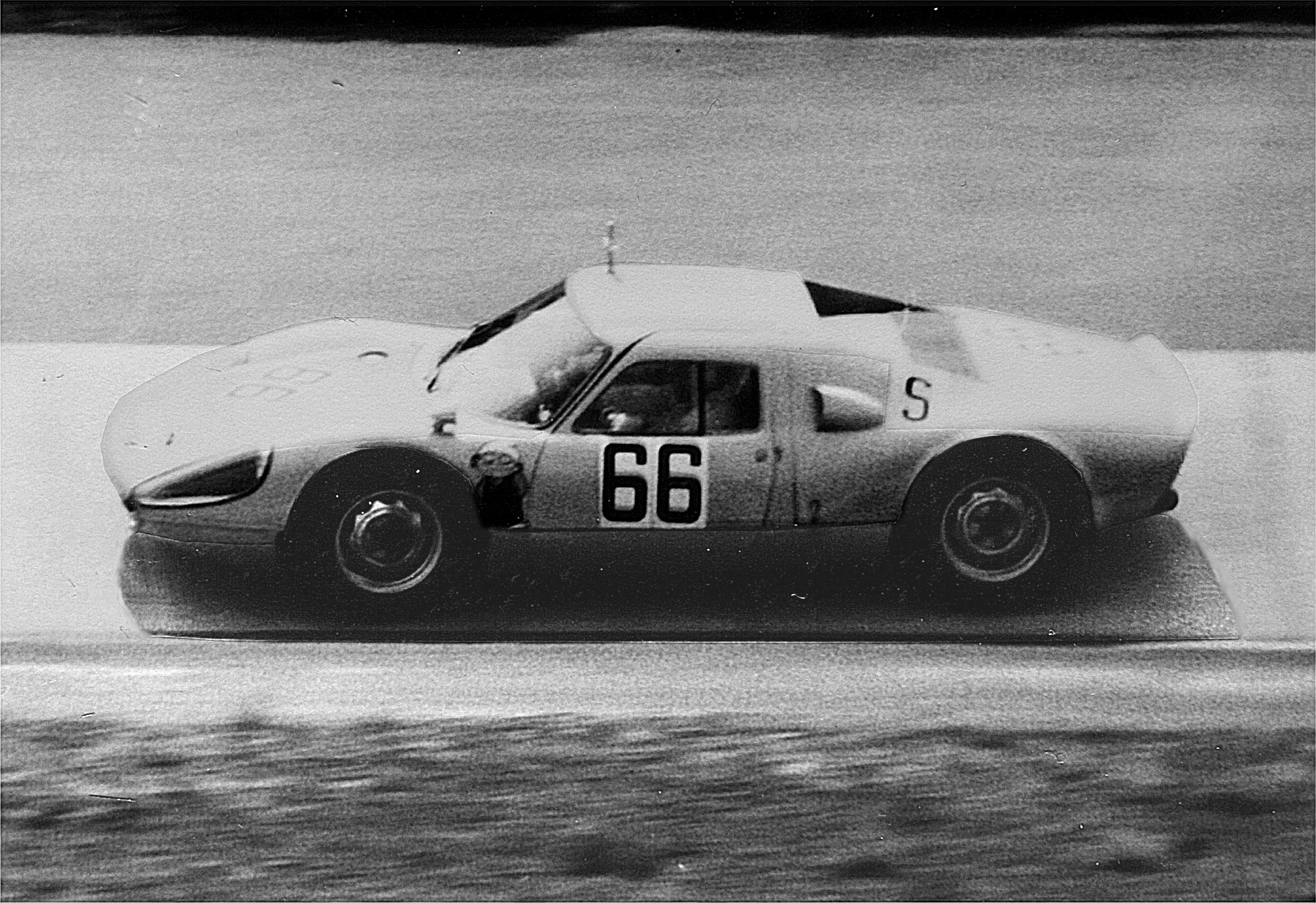
And I tell you, he was at that time the leading guy because he had a 911, a 904
04:58
And that was pretty remarkable.
05:01
And Dieter and Arnold was working there.
05:04
Dieter was at the head mechanic and did the racing, the local racing and club racing.
05:12
And Arnold did the parts department.
05:16
We was the parts manager.
05:18
And when I came there in 69, I took over the racing department on the professional
05:23
side with the 906, 904 and later on in 1971 with the 917.
05:32
And you all came from Germany to Canada and you met in Canada, didn't you?
05:41
We all came from Germany to Toronto and Dieter and Arnold went on to Vancouver and from
05:46
Vancouver to Vasek Pollak in Manhattan Beach.
05:49
And I came from Germany to Toronto and then from there to Manhattan Beach.
05:55
So you all meet at Vasek Pollak.
05:58
So while you all three were in Canada, you did not know each other.
06:01
It wasn't until you landed at the dealership.
06:03
I didn't know the two.
06:04
The two of them, of course, they were together, but I did not meet them now.
06:11
And can you share with us briefly, what do you think was the success of that
06:17
How did back in the day, did they have allocations of these, you know, racecars and
06:23
Were they not into it or how did that all work back in the day?
06:26
No, I would say that Mr. Pollak had the vision and he had the passion and experience
06:33
and his heart was into racing.
06:37
And I did not see any, maybe Otto Zippo at that time, was here, but otherwise
06:43
I did not see anybody else in racing but like him.
06:47
And how did you end up there?
06:49
There was an indeed.com.
06:50
How did you find that there was a position available?
06:54
That's a good story.
06:55
I was in, okay, let me go back a little bit.
07:00
I just want to spend some time for my, between my end of journey ship as
07:06
mechanic and auto electric.
07:09
And I wanted to go in a time between the end of it and the beginning of my
07:17
So I had three years time and I just want to see the United States.
07:21
But the United States at that time, just the Vietnam War was starting.
07:25
And I tell you that was the last thing in my mind to, you know, to go over there.
07:31
And so somebody came in and he said, okay, Toronto.
07:34
I said, Toronto is good, you know, close to the United States.
07:38
And that's how I went to Canada but never with my intent to
07:44
But I went over there and I got there in October 65.
07:49
And then in January 66, a couple of things happened.
07:52
Number one, I met my future wife.
07:55
And then I got involved in racing.
07:59
He was a shop foreman at the Volkswagen dealership.
08:03
And that's how I got involved in racing.
08:05
And then in 68, I would say that I went back and forth.
08:11
I did my master degree.
08:13
But then like I said, I got involved and the question became, you know, like, and I set
08:20
I have to say that I compared it like a Y.
08:24
In the beginning, you can jump between left and right.
08:27
And then the Y becomes wider and you have to decide where you want to go.
08:32
So I decided to stay in Canada with racing and with my wife.
08:39
But then in 68, Canada became very, very hard to make a living because the economy went down
08:46
and the wintertime, I didn't like that at all.
08:50
And so I was really fighting and going back to Germany or staying or what I was fighting.
08:58
And then we went to Daytona in 1969, which was a 906.
09:03
I was helping there.
09:05
And the guy from California, from Vasek, Polak.
09:09
He said, listen, you, going back to Germany, we need people like you.
09:15
So I got home, told your land and we were not, we were just leered, we were not engaged,
09:21
So I said, I'm going to go to California.
09:23
She said, what do you mean, go to California?
09:25
I said, okay, I go.
09:27
Within a week, I had a Volkswagen toolbox suitcase, $870 on my way.
09:34
And that's how I got up into Polak.
09:37
And when you arrived, and excuse me for asking the story again, but I love, I love hearing
09:43
When you arrived, you still had to prove yourself.
09:47
That's a good story.
09:49
So yes, I went to Mr. Polak and I be open at that time.
09:56
I was also illegal.
09:58
I came over because I just went to the United States.
10:02
And then Mr. Polak, I really couldn't work.
10:05
He said, okay, you can take over racing, because he asked me what I had done before.
10:09
And I said, yeah, I worked on an RS Spyder.
10:13
He said, we have three engines from the RS Spyder, was the four-man engine, the four
10:19
I would say that's still one of the most difficult Porsche engines to rebuild.
10:25
And one of them, I looked at it, it was full of water.
10:30
The other one had a hole in the crankcase and the other one was parts missing.
10:34
And he said, you build one engine.
10:39
Get it to run and you can stay.
10:41
Yeah, I didn't say that.
10:43
So I said, okay, but I had never done that before.
10:46
And I was very, very lucky, because Arnold, the parts manager, we kind of, you know,
10:53
we talked and he gave me a little repair book for these engines.
11:00
Porsche had done that very, very detailed.
11:04
And that's how I rebuilt the engines.
11:07
And I made from the three engines, according to the book, it was a little bit luck and
11:12
I built it, I put it in the car, started it up or what was there, it smoked like hell,
11:19
And he told me, clap me on the shoulder, he said, smoke is okay, because we're
11:23
So let's do the racing engine.
11:27
That's very impressive.
11:28
Yeah, that was luck.
11:30
But again, you know, I had the engine, I had to take it apart again, because in the beginning
11:36
and I was a trick on these things, they're all bevel gears, you know, re-implenients.
11:40
And I made a mistake.
11:42
And the issue is that if you, you can assemble the engine till the last camshaft, and then
11:49
it doesn't turn anymore.
11:50
It's for you to take the whole engine apart again, do it again.
11:54
But you know, like at that time, I was in it.
11:58
And so how long did you spend there before the three of you decided to leave the dealership
12:04
and go on your next adventure?
12:07
Yeah, I did the 917, although 71 we started, 71 we got a 917, we did 917, 71, 72, 73.
12:19
By the end of 73, the SCCA killed the Canem, the 917 Canem, because of the fuel constructions.
12:28
I went back to the street and then I got close, we were going to Deedal.
12:34
And somewhere along the line between our Deedal, myself, we decided, you know what, why don't
12:39
we build our own business?
12:41
And that's how Endal started.
12:44
And Endal, the name is very interesting.
12:47
Because we decided, first we want to say, okay, Porsche Vest, Porsche Service Vest.
12:56
And then we said, we might get in trouble.
13:02
And then we said, okay, why don't we use our dial?
13:06
So the first two letters from each name.
13:09
Because Y, A, because it was yellow patches, yellow pages, and I don't know if you
13:16
But A is the first page.
13:19
So with an R dial, it didn't sound right.
13:22
And then we just said, okay, why don't we call it Endal?
13:25
And Endal is a name, it kind of flows off your, it doesn't mean anything, but it flows
13:30
So that's why Arnold had to sacrifice.
13:32
Oh, I always wondered, because you told it before, it's the first two letters.
13:37
I'm like, well, no, it's not, because it's first two letters for you and for
13:41
So you had, you switched it from R to N to make it sound better.
13:49
So when you were at the dealership, you were working just on racing, you weren't modifying
13:54
or boosting up streetcars yet?
13:57
You didn't start that until you became Endal?
14:00
No, no, no, no, no.
14:02
By the end, in 1974, the Can-Am, the racing was finished.
14:07
And by the end, Vasek asked me, he said, do you want to work, no, you work on
14:15
Historic cars, so now it's up my line.
14:18
So I want to work on actual cars, you know, living cars.
14:22
And that's how I went to the street department.
14:25
So you were in the street department?
14:26
I worked in the street department for almost a year.
14:30
And when you left, and this is what tells a lot about someone's personality and
14:36
sort of business ethics, as you guys decided to depart or go a different
14:44
path with the dealership, you did so in a very honorable way.
14:48
Yeah, we kind of went in the morning to Mr. Pollock and we said, we're going to quit.
15:01
Yeah, but there's a story before, so you know, like, I don't know how much time
15:06
I'll tell you honestly how it started all.
15:13
You know the Rolodex.
15:15
For those of you that don't know what a Rolodex is, it's like a phone book that you
15:20
We had the phone numbers.
15:21
It's kind of scrolling for your contacts, turning by hand.
15:25
I can't believe we're describing this.
15:26
Yeah, no, we have to.
15:29
So I had that on my toolbox.
15:31
And one morning I came in and the Rolodex was gone.
15:36
So I went to the service manager and said, what happened to my Rolodex?
15:39
And he said, Mr. Polak came by and he took it.
15:41
So I went up to his office and I said, knock, knock, open the door, Mr. Rolodex, Mr. Polak,
15:49
do you have my Rolodex?
15:52
What do you mean my?
15:54
This Rolodex is mine, oh, oh, oh.
15:59
So then at least can I copy a couple of numbers?
16:07
It clicked in my head.
16:09
And that's when I approached Arnold, not immediately, but that's when I said, you know, it's time
16:15
to go to your own business.
16:16
So I approached Arnold first and then when he was on board, when he did, then of course
16:22
the natural thing was to ask Dieter because, you know, like Dieter was that nice closing
16:29
So that's how the three of us and then all of us went up and said, thank you
16:36
Did you ever find out?
16:37
That's how it started.
16:38
But he wasn't too happy to hear all three employees leaving.
16:42
He tried very, very hard in Germany, you know, like to that Frau Baer who was at that time
16:48
in the racing department selling parts and not to sell us any parts and an input.
16:53
He couldn't stop us.
16:56
But you did move the business, when you started the business far away from?
17:01
We moved about 40 miles south, but see like Newport Beach, if you know
17:07
California, Southern California a little bit, Newport Beach, Seal Beach, all the beach
17:13
things, that's where the money is and that's where we were right in Costa
17:17
Mesa was right across, perfect, perfect sport.
17:22
And then we're going to fast forward to how did you land at Porsche Motorsports?
17:30
Porsche Motorsports, yeah, OK, in the 80s and now in the 70s already, now let's say
17:39
when we started and then we had Arnold Rand Office and the parts department.
17:48
Dito and I did the street cars and within, I would say, three, four months,
17:56
Dito brought a customer in for racing.
17:59
And that's how we started and racing and I took off, took over the racing side over
18:04
the years and Dito stayed more on the street side.
18:07
It was a perfect combination.
18:09
So that's that's how it started.
18:12
And that's that's the connections you made through the racing program and
18:16
dial is how your connections to Porsche Motorsports.
18:19
There's more. No, there's more because then in the 70s, we kind of started
18:25
already this modification of racing engine and reliability to make a name of
18:31
ourself. And then in the 80s when when 935 we have with Rolf Stommelman and
18:38
Harold Gross, we had three 500 mile races in Mosbord, Elcat Lake and
18:46
Mid-Ohio, three consecutive weekends and we won them all three, two with
18:52
Rolf and with Harold and then with Rolf and with Derek Bell.
18:57
So we really, we made a name of ourself and then the 962 came.
19:03
And the 962 L Hallward ran that time Porsche Motorsport, but not as a main job
19:12
And the two of us, we hit it off and then in the 80s, we dominated the
19:16
962s, we dominated the Inser series with our engines, the ordinary engines, no
19:23
cars, that's the customer thing.
19:26
And of course, over the years, I built a good relationship with the people
19:32
in Weissar and here and then when Al, unfortunately, you know, he had an
19:41
airplane accident and he passed away in 1988 in Columbus.
19:50
And then in 1989, Porsche closed down Motorsport, Porsche Motorsport completely.
19:57
There was only a paper company in Delavere and then I got
20:03
approached by Helmut Flegel in 89 if I would be interested in running
20:11
Porsche Motorsport.
20:16
Helmut Flegel was at that time the head of the racing in Weissar.
20:20
That are you sure you want me to ask because, you know, like at that time,
20:24
we were like the enemies of Porsche Karsten or America Fritz Schwab
20:29
because we had a good street business going and they didn't like that.
20:33
I can tell you that.
20:35
He said, OK, it's no problem.
20:37
It's my my my thing will do it.
20:40
And by the end of the year, I said, OK, so it became.
20:45
So then then I started in 1990, myself, really myself on the
20:51
Porsche Motorsport side.
20:53
And of course, we had to end our people and we had the engine
20:57
rebuild as it was and our racing.
21:00
So and over the years, 97, it took me that long to kind of combine
21:07
And on the first of January, 1997, we took over Porsche Motorsport,
21:13
took over the end of people and the program and we became complete
21:18
Porsche Motorsport.
21:19
So when you took over, let the listeners give some perspectives.
21:23
The nine sixty twos are ending and the Indy car program
21:28
that our whole board started.
21:29
That's also ending.
21:31
But Porsche started to focus in on, I guess, customer racing,
21:37
That's we had in the when I took over, we had nothing.
21:42
We had we had, like I said, it was myself and there was nothing.
21:50
We didn't have a car.
21:51
So and then Bob Carlson, who was that time, the marketing
21:55
no, the public relation guy at Porsche Castle in America, a very
22:00
helpful, very bright guy.
22:02
Then he said to go help me.
22:04
And he said, why don't we start with a small series?
22:08
And we the first series where we started was the super car
22:13
was a turbo nine sixty four turbo super car and stuck and
22:19
hurly he would and that's how we went and we went in
22:22
nineteen ninety one, nineteen ninety two, nineteen ninety
22:26
three and kind of dominated the series.
22:30
And that's how it started.
22:32
And then we had our super or career couple episode.
22:37
You know, that's another story where where we had the cars.
22:42
We had 18 cars sold everything.
22:45
And then Mr. Schwab can be so ideal.
22:48
And he said a sister kisses her sister.
22:51
There's no interest in that and I canceled the whole thing.
22:54
But I think there was more to it because it had Porsche Castle
23:00
I think we sold three thousand seven hundred cars in a year.
23:04
So I think it had to do something with financial too.
23:09
So what it was a big blow from in the beginning.
23:12
But then the nine sixty four came and sixty four type nine
23:16
eleven and Kenny is our came in.
23:18
That's how the racing department slowly was built up.
23:24
And you were there until two thousand two.
23:27
No, I was there till the thirty first of January two thousand
23:34
Oh, two thousand four.
23:36
And then you said you were going to retire.
23:40
That's exactly that.
23:42
I really had that in mind.
23:43
I had over battle as a successor and I convinced
23:48
him to come early and I convinced the board in or at least
23:53
the head of Porsche Racing at that time to send them over here
23:57
three months earlier so that when the time came that the
24:01
transition would just happen overnight without any stops
24:06
because we had Daytona exactly in that time.
24:09
And that's what happened.
24:10
So I took over then my.
24:14
In in OK, so in December of two thousand three Porsche
24:20
Weissach in our last or in our Christmas celebration,
24:26
the end of your party.
24:28
They gave me a really, really, very, very big goodbye.
24:34
I don't really it was they flew my family in from
24:37
California, they flew my got my friends from from Germany
24:42
and to surprise I had no idea.
24:45
So I just walked in there and all of a sudden I see my
24:48
yeah, it was a big deal.
24:50
And the next day I went to Mr.
24:54
Duomo, I want to say goodbye.
24:57
And he looked at me and said, sit down.
25:02
He said, you can't leave.
25:05
So let's stop right there.
25:08
They just literally the night before had a huge
25:11
set off surprise for you.
25:13
Yeah. And then less than 24 hours, they're saying,
25:18
That's what he said.
25:19
And I really for a moment, I didn't know anymore.
25:22
And then I went and then he was very clever.
25:25
He said, you know what, you're confused.
25:27
Yes, I'm definitely confused.
25:31
Think about where you can help or where you would be
25:33
of help for Porsche Motorsport.
25:39
And I went home and I told my wife, I said,
25:45
I have no idea what he wants.
25:46
So I got a little bit confused.
25:49
And then somehow we talked about it.
25:51
And I came up with the conclusion because I always
25:54
like BOP, Balance of Performance,
25:57
because it wasn't the beginning, just starting.
26:00
And I never really had that really time to do that,
26:03
you know, when I ran Porsche Motorsport.
26:06
And I went the next morning.
26:08
Morning, morning, I said, OK, I have an idea.
26:12
I want to do BOP, Balance of Performance.
26:16
That's exactly what I thought you should do.
26:19
So my insight, I said, you are smart.
26:24
And then he said, OK, second thing is
26:28
help over my success.
26:31
So if you're given because, you know, like we picked it
26:36
and three, if I have special projects, if I have special things.
26:43
So when I went, I would have been oh, five right now.
26:47
When four or five or four.
26:50
So in Porsche Motorsports, one of their responsibilities
26:54
is selling customer cars.
26:56
And so that would have been right when the 997 Cupcars coming
27:01
and our Cupcars are becoming really popular.
27:04
And especially in America, and everyone who wants to race
27:07
the Porsche has discovered that the Cupcars a way to go
27:11
because it's a factory race car.
27:13
And so I guess I guess Porsche saw you as the
27:18
the main contact for America, especially for the Motorsports
27:22
and understanding how.
27:24
Back then, it wasn't was an imps or was it the we were talking about this,
27:29
Yeah, we had U.S.R.C.
27:31
We had Grandin, and the split was happening with the ALMS and World Challenge,
27:36
you know, like, but we see we sold cars already in the 90s
27:41
because, you know, like it started, like I said, in 1995,
27:46
1996, with the 964 RSR, we just started already.
27:51
So it was not something new that the sales
27:53
but I guess the quantity seemed to really get higher.
27:56
The quantity really came then.
27:58
So by the time you left, they were selling a lot of Cupcars.
28:01
You probably couldn't supply all the Cupcars that people wanted.
28:04
We cannot do it today, you know, that we still are.
28:08
We get a limited amount of cars and they're just for the people
28:13
who compete in a series and not for collectors.
28:18
Yeah, which I think was very important because a lot of manufacturers,
28:21
you would see, for example, what I remember was seeing Nissan,
28:25
which the 300ZX they raced wasn't even a 300ZX.
28:29
It was proportions were totally different from the factory street car
28:34
where Porsche, these were still street cars that were turned in the Cupcars,
28:38
but they were still the factory built race car.
28:41
It wasn't something that a company built and said we were going to race
28:45
this car under this name.
28:47
And Nissan didn't sell 300ZX to the customers.
28:50
No, no, it was just not a special car, so prototypes.
28:54
Now what Porsche already had at that time.
28:57
But don't forget, you know, Uwe was actually the boss of the Supercar series,
29:03
Super Cup series. OK.
29:05
So I mean, you know, he had the knowledge, he had everything.
29:08
And he, like I said, it was a nice, flawless takeover from my reign to his reign.
29:15
And I stayed on in advising him, helping him.
29:21
We stayed for five years.
29:23
And today it's like one, two, three, four.
29:27
So we have the fifth successor is Falko Holtzmeier.
29:33
The issue is you can ask yourself, why am I staying so long, you know, in the things?
29:39
And I tell you what the issue is.
29:42
The way how Porsche does it, they send the people over here for five years.
29:49
OK, but it takes a new guy when he comes over here from Germany.
29:54
It takes a minimum three years to kind of understand how the American people take,
30:01
how the whole system is, and most importantly, respect from the other side.
30:08
So and then three years, then he has maybe four years,
30:13
his third learning period, and then he has to go home.
30:17
And then a new one came again.
30:19
So and that is something where I always helped, you know, two things.
30:24
And people would kind of call me then.
30:28
And I would say, ah, it's the new guy.
30:31
But you know, the transition thing, that's what I always did.
30:35
And that's if somebody would have come like over,
30:38
if over would have stayed like me for 20 years, then I really
30:43
maybe after the first year, when everything was settled,
30:46
I would have retired.
30:47
So and for that, I stayed on and I.
30:52
Went through one, two.
30:56
Board members, different board members, you know, and then.
31:01
Then today, now for the last two years,
31:04
I've been with the Porsche Penske 963 program.
31:09
And I still for do for the nine for the
31:14
PMNA Porsche models, but I still do the historic engines
31:18
with Eric Bloss, oversee that.
31:21
And especially the dyno work, I still do that.
31:24
And I have breakfast with the folk all tomorrow.
31:28
We talk a little bit about the business, but otherwise,
31:31
Falka is running it by himself and he's doing a good job.
31:36
Wow, you are the busiest retired person I know.
31:40
And doing the most exciting work.
31:42
Yeah, but you know what?
31:43
The way like I look at it, it is if you keep the brain moving
31:49
and if you have a job like what I have, what I like
31:53
and what I really I've learned, my opinion, do good.
31:57
So if the health is good, my wife is OK
32:03
and family is good. Why don't you do it?
32:06
No, I'm going to be 82.
32:11
I'm going to be 83.
32:12
And that is something where I'm very, very proud of,
32:15
you know, like there's nobody at Porsche who's that age
32:19
who is even coming close, you know, working still,
32:23
officially, you know, from the thing.
32:25
So very proud of that.
32:27
Yeah, definitely as you should be, as you should be.
32:30
Let me before we get into our I want to call it our speed round,
32:34
but this new round that you're going to draw some names and have him
32:38
describe a little bit here, I want to make sure we thank our new
32:41
corporate sponsor, Auto Atlanta.
32:43
If you're chasing down Porsche parts looking for things that may seem to be
32:47
impossible to find, I think they might have your back,
32:50
whether it be parts for your 944 Turbo, your 914 looking for stuff
32:55
for your 911 SC, Auto Atlanta has you covered.
32:59
They've been taking care of Porsches and only Porsches since 1978.
33:03
Not only do they have parts, but they also ship internationally
33:06
and offer expert advice to to boot.
33:09
So no matter where you are in the world, head over to autoatlanta.com.
33:13
They have a team of all star Porsche specialists who handle
33:16
everything from complex mechanical repairs, full restorations,
33:20
regular service and even detailing your car.
33:23
If you're selling, they're buying and if you're buying,
33:25
they're selling pre-owned vehicles, Porsches along
33:29
for your new home, a new lease on life, call them, they'll buy it.
33:33
Whether you're rebuilding a classic or a single clip to finish your project,
33:37
Auto Atlanta has you covered.
33:39
Again, head to autoatlanta.com.
33:42
Be sure to use the special code PCA, the number five,
33:46
OFF for five percent discount off of your first order.
33:50
Again, that's Auto Atlanta, Porsche parts, Porsche people,
33:53
Porsche passion since 1978.
33:57
Mr. Alvin, you have a list of names
34:01
and I think you will announce.
34:03
And then Alvin, if you would share some insights,
34:07
some stuff that maybe those that have been to a lot of your presentations
34:11
still may not know some of these deep dark secrets.
34:15
They are the deep dark secrets.
34:16
You have to be careful.
34:17
The real nice ones.
34:19
I can talk about it. That's the sad part.
34:23
You know, we talked about some of these names
34:25
that some people may not know.
34:27
I think the diehard Porsche enthusiasts will know,
34:29
but they're still part of Porsche history
34:31
and there's so many different
34:34
interwebs of personality as a Porsche
34:39
that really make make the brand what it is.
34:42
So in reading Alvin's book and just starting to jot down names,
34:46
I thought it's every one of these names that I jotted down had stories,
34:50
but we had to narrow it down to like nine names.
34:53
So I think we can get through as many as we can here in the podcast.
34:58
People find interesting and I would definitely recommend once again
35:02
going online, finding that book because it is filled with so much
35:06
so much information and stories all from North America.
35:10
Because that's where Alvin really made his name.
35:13
So I always say what's really frustrating for us here in North America
35:17
is when you want to buy these toy cars, they're all European cars.
35:22
You're just like racing in European, not not from the North American.
35:26
It's almost like they forgot that Porsche race in North America.
35:29
So trying to find an end all toy is so hard.
35:33
But fortunately, the nine sixty two.
35:35
They dominated so much in almost every nine sixty two
35:38
and that race in America had an end all sticker that at least one.
35:42
So that's not too hard to find.
35:45
That's a good story, sticker.
35:47
So, you know, like it was my idea
35:50
because what we did is data and myself, we would go on Friday night
35:55
that I special to the race track Sunday night back again Monday to work.
36:00
So that was tough, tough, tough years.
36:03
But what I said to the teams, I said, look,
36:07
put the end all sticker on on the front and on the sides and our support.
36:14
The only thing what you pay is our flight.
36:17
You share the flights and you share the labor is for free.
36:21
And that's what our deal was.
36:23
And I told my guys, I said, look, my end all in reality,
36:27
it doesn't mean anything.
36:29
But what I want to have or what we should work for is that within 10 years,
36:34
the name end all in racing is known.
36:37
And from 1985, when we when we did our 10 year
36:41
anniversary, we had it.
36:43
And that was my goal on the name.
36:45
So good to see people jumping.
36:48
So the first name, Milt, Miltner, Milt, Minto.
36:53
Milt, Minto was the lead driver when I started
36:57
at Vasa Polo in 1969.
37:00
And I'll tell you, he I always looked at him.
37:03
And at that time, at that time, he really didn't mean anything to me.
37:08
You know, but later on, I understood, you know, what Milt was deep down.
37:15
It was from California, but he was definitely a little Billy.
37:19
No, yeah, yeah, but I mean, you know, the way like he acted,
37:23
he was friendly, a good time.
37:25
And I spent with him two years in the canner.
37:30
First of all, we did the nine over six.
37:33
We did the cut off the roof.
37:35
Everything don't don't gloss over that story.
37:37
No, no, no, no, I can't because we don't have enough time.
37:40
But I look like so tell them about how you take this nine or six.
37:44
You said in nine or six, its heyday is gone, if you will.
37:48
And so back then, the old race cars almost didn't have a purpose,
37:53
but you're still trying to make this car competitive.
37:55
So you realize that the car's too heavy in its class.
37:59
And and you're working for Russia Pollock at the time.
38:02
Why? Yeah, there was there was 69.
38:05
So Milt, one of his customers 70.
38:08
So Milt was driving really his butt off and driving
38:12
against an Alfa T33 with Skidermek Kittrick.
38:18
I never forget the name.
38:20
And he was beating us left and right.
38:22
And, you know, we increased the engine to 2.3 liter,
38:27
but it still wasn't enough.
38:28
So it had to be some weight wise.
38:31
And what I did is Pollock would go, I would say,
38:36
three, four times a year to Germany, like three weeks, four weeks.
38:41
And one of these times I took 906, cut the roof off,
38:47
but the way like we always could put it back again
38:51
and the rear decklid of the doors off, you know, everything
38:54
and built actually very, very flimsy doors,
38:59
light doors, a light decklid.
39:03
And I gained about 170, 180 pounds.
39:09
And from then on, we went racing.
39:12
No, before we went racing, Mr. Pollock came back
39:16
and I was very proud of the car.
39:18
And I always did the nighttime.
39:20
I said, how am I going to tell him what I did?
39:23
So he came and he looked at his car and he said,
39:27
what happened to my car?
39:29
And then I explained it to him and then I mean, he flipped out.
39:34
But I showed him then the roof, the way how I had cut it off.
39:38
So we could always put it back again if it didn't work.
39:41
The windshield was not broken.
39:43
Everything was done nice.
39:44
We could put the rear decklid on doors on everything.
39:51
OK, he mumble, mumble.
39:54
And from then on, we won races and won the B Sports Racing Championship
39:59
in Atlanta, you know, and then, of course, I was the golden boy.
40:05
But if that would have gone wrong, oh, boy,
40:08
that would have been the end of it.
40:11
There is in life, you have to take calculated risk and chances.
40:15
Otherwise, you don't get anywhere.
40:16
But back then, when you're racing, it wasn't the glory of what it is now
40:22
with the team, with motorhomes and and, you know, 300 people coming.
40:27
It was just you and Milt, right?
40:31
Milt had an old motorhome and we had at that time with the spider.
40:36
We had a flat tailo.
40:37
But that's all, you know, like, and we would drive from California
40:42
to the races to Atlanta.
40:45
Open trailer and trailer, end of the story.
40:48
That's it, the two of us.
40:51
And you said he would always think back roads.
40:54
No, no, no, no, that was then the 917 days with Milt
40:59
because really, again, we had the motorhome, but a bigger motorhome
41:06
for the two of us could sleep and we had a flatbed.
41:10
I don't know what you call it.
41:11
Chevrolet. Oh, yeah.
41:13
You know, like, where you have the race car on a ramp.
41:16
And I was driving the race car and the Chevrolet
41:20
and he was driving the motorhome.
41:22
And that's how we went.
41:25
Just the two of us and support would come on Friday,
41:28
help us over the weekend and leave again.
41:30
And then Milt and I, we were on our own.
41:36
We would find Volkswagen dealerships.
41:40
We would find paint shops, wherever we could work.
41:44
And I think once or twice a year would overhaul the engine.
41:50
And a 917 engine, 12 cylinder, that's a lot of bolts and nuts
41:54
and Milt would help.
41:56
Hmm. He would help.
41:57
He would have cleaning, you know, like he's not only driver,
42:02
And what we would do, that's another thing in a nice part
42:06
in between races, when we had, let's say, 14 days time.
42:10
So we wouldn't tell what are the interstates.
42:13
We would drive over country roads and we would stay
42:17
because of the motorhome.
42:19
We would stay everywhere and Milt had that
42:22
that the talent again, hillbilly type.
42:26
Now I learned what it was.
42:28
He would talk to the people in the slang.
42:33
And we were always welcome.
42:35
And it didn't matter big town, small town.
42:38
And one time I was in North Atlanta,
42:41
old North Atlanta, we were in Gainesville
42:44
and we got a garage where we could work
42:47
from a Volkswagen dealership.
42:49
And there were two, three garages beside us
42:52
and Milt got a family across from the complex
42:57
and we were friends.
42:59
And then one night the guy said, come on, guys,
43:01
I'll show you something.
43:02
So we went up to Moonshine,
43:05
you know, plant where they made
43:08
in the dark in the woods.
43:10
I know where we were going.
43:11
And then all of a sudden, you know,
43:13
he lit up the fire and then we could see what it was.
43:16
I mean, for me, unbelievable.
43:18
I drank it and he told me immediately,
43:21
And I'm telling you now comes a technique
43:24
from the old thing.
43:26
So then the next day we went down
43:29
and opened up the garage to start to work the watch.
43:33
The next garage door goes up
43:35
and guess what comes out?
43:38
They were right to us in the next stall.
43:43
I was unbelievable.
43:44
You know, think about it across the street
43:47
when the Moonshine guys were the Feds
43:49
was looking for the guys and we were in the middle of it.
43:53
So I have so many stories with Milt,
43:56
you cannot think about it.
43:59
He was a quite a character.
44:02
And I think he actually came to a couple of rents
44:04
for a reunion, I remember.
44:06
Yes, yes, and one later on, you know,
44:09
he got sick and unfortunately died too young.
44:11
Yeah, he was definitely a character of the fans.
44:14
The other one is the next person is someone who I call
44:17
the unsung heroes, where there's some people
44:20
that get everyone knows like Hans Metzger.
44:25
You know, everyone knows the name Metzger engine
44:28
But then there is the turbo and the turbo
44:32
charger was something that was obviously very important
44:35
to Porsche, especially with the Can-Am
44:37
because that's what made Porsche competitive
44:40
was the way they were able to harness the turbo power.
44:43
And I first met Valentin Schaefer,
44:47
I guess Rensport 4, I think.
44:51
And I had no idea who he was and someone introduced me.
44:54
And then when they told me the history,
44:56
my eyes got really big because I have to admit
44:58
I was one of the people who did not never heard of this man.
45:01
But once you heard what he did, it was total respect.
45:05
Yeah, Valentin definitely was, like you said, the unsung hero.
45:11
And I got to know him in the 1970, at the end of 1970,
45:17
when I went for the four months to Weissach, not to Weissach.
45:22
Zufenhausen, I always make that mistake.
45:24
Zufenhausen, that time, was the race department.
45:29
And Mr. Porat made it possible to go there
45:33
for months to learn the engine totally from the ground up.
45:37
And that's when I got to know Valentin.
45:41
And I got to know Valentin in a very, very funny way.
45:45
It's I was driving with Mr.
45:47
Pollack and he said, OK, I have to go to a guy here, stay in the car.
45:53
It was in the wintertime.
45:54
It was not exactly warm.
45:56
And I was sitting there for half an hour and I said, you know, cold.
46:00
All of a sudden, the door comes out.
46:02
Valentin comes out.
46:04
I didn't know who he was.
46:05
He said, how can you sit out here and then come inside?
46:09
So he took me in and that's how we met.
46:12
And Mr. Pollack was there.
46:14
He didn't apologize.
46:16
But, you know, I got warm and that's how we met.
46:20
And then from then on, he was a very, very supportive guy of me.
46:26
I mean, he supported me over all the years
46:29
when I had a question, when I needed anything.
46:31
He was became a very good friend, 94 years old now.
46:37
And we still are in contact every two months, three months.
46:40
We talk about that.
46:43
And you learned a lot when you were at that time.
46:47
And the funny part, what I have about.
46:50
I have so many from Valentin, but I give you a good one.
46:53
It's the street, the customer department in Soufenhausen
47:00
and the racing and the development department.
47:02
There was no visor at that time.
47:04
There was just a door and the door was not locked.
47:08
But see what the Porsche guys very cleverly.
47:11
They had all the customer mechanics in gray uniforms
47:17
and the development department in red uniform.
47:20
So if you would go through the door, you immediately, you know,
47:24
they would pick you up and they would say out.
47:28
And of course I had to do it and they picked me up and out
47:32
and then Valentin, the next day over, he said, OK, I get you in.
47:37
And of course, with him on my side and he showed me
47:41
the whole development department from dinos over the engine,
47:46
I mean, that's the beginning of the turbo.
47:49
Yeah, no, it was still not.
47:52
It was still normal aspirated.
47:54
That was in 71 and then he was already working on a turbo.
47:58
He didn't show me that.
48:00
But then in 72 when Mr.
48:02
Penske Penske team came with Donahue,
48:06
then Valentin showed up with the turbo and that is.
48:10
But then I really learned what he's doing.
48:13
So I give you a story.
48:15
So Mr. Metzger and his team would design the engine.
48:20
I said, oh, neither, but the 917 is one of his big things.
48:25
And then Valentin and his team and there were four people.
48:29
That's all would take the drawings,
48:32
get the manufacturer to produce the parts,
48:36
get the engine, the propelled workshop to assemble the engine,
48:42
go on a dyno, get everything done and go on the racetrack
48:46
and get the car running.
48:47
That was Valentin and his little team who did that all.
48:51
And I tell you the turbo, the turbo success
48:55
from the 917 was majority of Valentin's
49:00
and his team's tenacity, is that right?
49:04
Well, yeah, tenacity, 100 percent.
49:08
The next name I know who's never heard of.
49:10
I guarantee most of our listeners have never heard of.
49:13
But as an interesting gentleman that this comes full circle later
49:17
in our one's life is Randolph Townsend.
49:20
Randolph Townsend, a very interesting guy.
49:23
So in 1975, end of 75, we just opened up and now
49:32
Beatt, you know, Beatt, full face, gold chains around his neck,
49:37
heavy built, very muscular.
49:38
Like a bodybuilder. Oh, yeah. Oh, yeah.
49:41
And he said, I want to have a 917.
49:46
He said, I have a million dollars to spend per year.
49:51
In 1976, think about it.
49:54
I'd be like, shit, you know, one of the blah, blah, blah guys.
49:59
And we did, we bought the 917, we went racing.
50:04
We became actually, I would say, you know, good friends.
50:10
And what we would do is we would smoke cigars, the two of us.
50:14
And then we have two little kids who were driving the truck.
50:20
We went from the motel to the racetrack.
50:23
They sit in the back of the car.
50:26
We were sitting in the front, smoking cigars.
50:31
I never forget. And then the other things, Randolph,
50:35
he was not a good race car driver and he knew it, too.
50:41
But he crashed a couple of months.
50:43
917 he crashed. He bought a new one
50:45
or went to Germany, bought a new one from Willy Kausen.
50:49
And he later on became a politician.
50:56
In Nevada, he became a senator and a senator.
51:01
And, you know, we stayed in touch and I never forget that.
51:06
He called me and he said, after a couple of months,
51:08
and he said, Alvin Alvendair, I have to tell you that.
51:10
I said, what happened? I was Democrat.
51:12
I have to put that in here.
51:16
So, you know, there were, he said, guess what?
51:20
The head guy of the Senate told me.
51:23
He said, Randolph, I tell you what it is all about.
51:27
He said, one thing, what you have to learn
51:30
is the masses are asses.
51:36
And I said, you can't be kidding me.
51:38
What are you talking about?
51:39
He said, yeah, that's what shook me also.
51:42
You know, like it is, it is not like we were supposed to be for the people.
51:48
No, the people were there and we would tell the people what to do.
51:52
And he said, I was totally blown away.
51:56
Then he changed the party.
51:58
And stayed under for 20, 24 years, 23 years.
52:03
So we never lost contact, you know, into Vegas.
52:06
And, you know, we came to Germany once with us.
52:10
So, you know, we kind of, we became close.
52:14
But you, you're becoming citizen, trying to become American.
52:16
Now comes the closing part.
52:22
My wife and my kids, of course, were American.
52:25
My wife was born in Morocco, but she became American immediately.
52:29
And I somehow didn't want to lose my German citizenship.
52:33
And the Germans had something where if you would become American
52:38
or became a different citizen, you lose the thing.
52:42
And I didn't want to do that.
52:44
And then somehow the Germans changed the law.
52:47
And when I got all of it, immediately I applied.
52:51
So I went through the motion, everything else.
52:54
And then the next thing was that I went for the swearing in.
53:01
Everything was good.
53:03
Yes, you're American. Congratulations.
53:05
I said, OK, I need a passport because I have to go to Germany.
53:09
When it was in August.
53:11
So in November, I want to go to Germany.
53:13
My passport didn't show up.
53:16
No, no. Then, yeah, we missing one document.
53:21
So OK. So I gave it to you.
53:24
And unfortunately, I gave you the original ones.
53:26
Yeah, we need a copy.
53:27
So where are we going to get a copy from? Oh, no.
53:29
Have you ever dealt with immigration?
53:31
It's fun. I'll tell you that. It's fine.
53:34
So the guy says, and then finally after, or maybe it was earlier,
53:38
the guy came back and he said, yeah, we found where the location of the paper is.
53:43
It's as best to contaminate the room.
53:47
Yes, and where do I come in?
53:49
Yeah, you need a copy.
53:51
So I was in a limbo.
53:53
Honestly, he said, you need a copy.
53:56
And I said, where am I going to get a copy from?
53:58
So and then I called Randolph and said, I know we have to help me.
54:05
And I tell you, he had Harry Reid at that time,
54:08
who was the big democratic head guy in the health.
54:14
So he talked to him and was in one week.
54:18
Guy from him called.
54:20
I gave him my information and was in 10 days.
54:24
Oh, that's Harry Reid and Randolph and Randolph Townsend.
54:29
And today we still good, good together.
54:31
There's that six. There's that six degrees outside of motorsports, as well.
54:35
The other one is a little bit heartbreaking, too.
54:37
But he was such an important part of for sure, motorsports was Al Holbert.
54:43
Yeah, that's that's that's a sad story
54:48
because L L and I, again, when when we built our 935 L
54:57
one car, we had our first race in Riverside.
55:01
So I asked if he would drive the car with Harold Rose, my friend
55:08
from Germany, and he did.
55:10
And that kind of bonded us.
55:12
And then from then on, you know, when the 960 came,
55:17
And that the whole thing evolved into a friendship, really good friendship
55:23
and and business relations thing where where he would tell me, OK,
55:30
Alvin, that's the engine problem, you take care of it, you do what you have to do.
55:35
And don't ask me, stay within reason.
55:39
And that's it. And we had a perfect thing.
55:42
I would. And that's where the foundation was laid again
55:45
for later on Porsche Motorsport.
55:48
When you were so I was running his engine program totally by myself.
55:54
Also with ender people, not careful.
55:57
Yes. So never by yourself.
55:59
You know, it's us, it's me.
56:01
So that that was L and L.
56:05
It's he always told me, Alvin, take over Porsche Motorsport
56:10
and come to to Pennsylvania.
56:13
I said, no, I've been in Canada.
56:15
I know what the winter time is, not me, that I wouldn't go.
56:20
And then one morning or one evening, I was in Columbus, Ohio.
56:26
I was in a hotel and a guy from Creepy Crawley
56:32
called me and he said, listen, you know, like sad news
56:37
because I just saw the news and the plane went down
56:41
and the tail is definitely the lovin' boy.
56:44
It's got him and that was.
56:45
But that was his own pilot, wasn't it?
56:47
Yeah, but the story was there and that's faith.
56:53
That's all what it is.
56:55
What we would do is what when all the back east races,
56:59
you know, L and I would go
57:05
on Friday after the last practice,
57:08
we would fly to his home
57:10
in Warwick and spend the time with the family at dinner.
57:15
And on Saturday morning, we would leave early again to the race track.
57:18
Wow. So normally I would have flown with him.
57:22
But he had a meeting about the new spider, you know, like that.
57:27
It was a successor of the of the nine sixty two.
57:32
And he was building it.
57:34
And we wanted to use the indie engine
57:38
but converted into a gasoline engine.
57:41
So it was all moving and he was talking to people.
57:45
And that's why I didn't join him.
57:49
And otherwise, I would have gone with him.
57:52
So that's yeah, we remember very, very soon.
57:54
Al Holberg, Derek Bell, the Lowenbrow number 14 was legendary.
57:58
That and the racing.
58:00
They were so dominant.
58:02
The team, the team was just a family.
58:06
Just we were a big, big family and successful family.
58:10
Yeah, it's definitely what would have been the other tragic, I guess.
58:13
Also, what we just picked these to happen to be next to each other
58:17
is Bob Warwick, Bob Warwick is another good friend.
58:26
And we didn't start out as friends.
58:29
He was a successful race car driver when he came over here.
58:34
But at the same token,
58:36
he was, I call it, was called him grouchy.
58:40
Now, because he was, you know, like whoop, whoop, whoop, whoop,
58:43
you know, never, never really smiled or joked or whatever.
58:48
And and the story, what I remember, you know, among a lot of other ones,
58:57
but that's a good one is I would tell him good morning, Bob.
59:03
He would just walk by.
59:05
No answer. And that went on, I would say, for years or at least
59:10
for a couple of months.
59:12
And then one day he walked by me and he said, good morning, Alvin.
59:16
And I said, you know what? I played a game.
59:19
So I just didn't act that exactly like him.
59:22
I kept on going and he came with my shoulder around and he said,
59:25
I told you good morning.
59:27
Yeah, I said, I know.
59:28
And you've been doing that for the last three months or six months
59:31
or whatever, and you never just giving you the shit back what you give me.
59:36
And I'm telling you, that broke the camel's neck.
59:39
You know, we became so close friends.
59:42
And I and I and I remember it.
59:45
You know, I don't know how these nuts are called.
59:47
They're about, you know, that long, that wide.
59:51
And they have a very hard shell, very, very hard shell.
59:56
And once what I say that was bullock,
59:59
hard shell, but once you came through the middle, it was like butter.
00:03
Yeah, it was like butter.
00:04
We became very close friends.
00:06
And I was there the last day when he got killed.
00:10
He came in and he gave me a sign.
00:13
Like I have it still at home when you visit my home.
00:16
And it's at something about bullshit artists or what, you know, I say, are you,
00:21
you know, like any left?
00:22
We said goodbye and that was it.
00:24
Well, he was the my favorite story a little more.
00:29
Not so sad was the he was driving your car with Preston Hen and an age.
00:37
Well, he wasn't the original driver.
00:39
No, right? He was he was driving.
00:42
He was driving an Aston Martin that breaks down.
00:44
I think of the Nimrod that breaks down.
00:46
And and I think Preston Hen ran into AJ and found that AJ didn't have a car
00:53
anymore for the 25th Daytona.
00:54
This is the races going on at this point.
00:57
And he asked Preston asked AJ if he wants to drive his car,
01:02
which is the same car as Bob.
01:04
But he doesn't tell Bob, right?
01:06
You know, you know, he didn't know Bob had no idea
01:09
because Bob brought the car into the lead.
01:13
So we were leading the race.
01:16
And then Preston made a deal with AJ Foyd and AJ Foyd never sat in the car.
01:23
They had no idea about shifting, about the switches or what.
01:27
So I had to sit down with him and give him a little sketch.
01:30
You know, what is what he aware.
01:32
And this is while the car is racing.
01:34
There's there's showing.
01:35
Wollack, Wollack, Wollack is in first place.
01:37
And he came in and Wollack gets out and Foyd gets in.
01:45
And Wollack, the famous guy, he said something on TV.
01:48
You know, who in the is that guy?
01:51
Oh, it's AJ or somebody said that's AJ Foyd.
01:54
And he said, oh, but that was Wollack.
01:58
But then in the doing the remainder of the race,
02:02
AJ drove a brilliant race in the car.
02:07
No idea in the rain also.
02:10
So it was definitely after the race.
02:13
Wollack definitely paid him tribute.
02:16
Yeah, they became great friends.
02:17
They became great friends.
02:19
Yeah, that was Bob.
02:21
They have so many stories from him, but, you know, we don't have enough time.
02:25
Yeah, so that's a good preview of, like I said,
02:28
we could make this a six to eight hour episode of all the names I wanted to talk about.
02:34
And I, you know, I can go on and on.
02:37
You know, it's not like the little things what I have told you.
02:41
But where do you we can pick one guy and just talk about it
02:45
because I spent so many times and so good times
02:49
and successful times and mutual good times.
02:53
That's the important part.
02:55
I want to say the list that you originally put together,
02:58
man, he had at least like 20 names.
03:00
Oh, more than that. More than that, right?
03:02
And for those of you that are joining us on Treffen at sea,
03:06
you're going to get more of this.
03:07
And every time we are together with you, I learn so much.
03:11
And it's it's great that you're willing to share.
03:13
I know, definitely.
03:14
I I like it also because I was you guys.
03:18
I'm not the big guy in in in in podcast.
03:21
So what I don't give a lot of them, you never you don't see me a lot.
03:25
But with you guys, I feel like home.
03:27
It's like family and I enjoy it.
03:30
And I look forward to the cruise
03:34
where you said like 800 PCA people are coming there.
03:39
And what I asking the people who are listening right now
03:43
and joining the cruise, one, we have our
03:47
it's not a podcast or a meeting there or seminar seminar,
03:51
feel free when it's over to ask some question.
03:55
And don't be bashful.
03:56
For one, let's go for it.
03:58
For one, all when that this is the first
03:59
tactic ever went to that there was alcohol involved.
04:03
So it's hopefully no one gets too rowdy.
04:07
We've we've described Treffen at sea before.
04:09
We've said it a million times.
04:10
Those that have been on Treffen at sea
04:12
totally understand what we're talking about.
04:14
But it's hard to capture the essence
04:17
of what you will feel on that ship until you've been there.
04:20
So I'm looking forward to you getting to know Treffen at sea
04:24
and all of the members having access to you.
04:27
We're going to have a great time.
04:28
But before we move over to I think we have one bit of
04:32
portion news to go over, I'm looking at his shirt.
04:35
And I want to remind folks that it is indeed the 50th anniversary of
04:39
Andal and you brought that and our livery GT three to works reunion
04:46
and unveiled it with us.
04:49
So I want to thank you and thank Porsche.
04:52
And we want to thank our friend Boris that I just want to say I didn't.
04:58
I mean, Boris up and bring who is the heavily involved
05:02
in the Sonderwunsch management.
05:06
He executed it with Thomas Klein.
05:09
And I want to say that in the design and they came with a 992
05:14
in the end original 935 colors.
05:19
And it looked beautiful.
05:20
I can tell you people who have seen it, I always got good results.
05:25
So I want to thanks to Porsche A.G.
05:27
To do that means a lot to me personally
05:31
and of course to always up and bring and to Thomas Klein.
05:35
All because Boris visited your house, right?
05:38
And he saw a picture of the car.
05:39
Yeah, that's enough.
05:40
So you want to have time?
05:42
Yeah, OK, then I tell you that.
05:44
So Boris and his wife and his little kid came
05:49
and cast him from England.
05:50
He's the the boss of Porsche Design United States.
05:54
Shout out to Karsten.
05:59
For Goldsmire, for Porsche Motorsport, we had the kids.
06:02
We had a pool party at my house. Nice.
06:04
And so then we went upstairs in my office.
06:07
You have been there.
06:10
And we were looking at it and we saw the car.
06:12
And then we said, we have shoes made, we have t-shirts made.
06:17
You know, Karsten said that.
06:18
And Boris said, that ain't enough.
06:20
We have to bring that some more on a current car design.
06:25
And he didn't say anything.
06:27
And that was in August, July.
06:30
And then in November.
06:33
Two thousand twenty four hours in Weissach.
06:38
I was sitting and then Boris came over from two thousand
06:42
and we're sitting there with Henry Freud.
06:44
I don't know if you know him.
06:45
He does all the special cars and we were talking.
06:48
And then he said, hey, I'm working already on it.
06:51
And I have a design almost ready.
06:54
And I said, what design?
06:56
He said, on the race car.
07:00
Yeah, what race car?
07:01
And then in April, he sent me the first sketches.
07:05
Amanda, they got the car, did it in Germany.
07:09
I put the wrap on and then send the car to Porsche.
07:13
No, no, the car was sent to Porsche Motorsport.
07:16
And the rep was done in California and then brought it up to Monterey.
07:21
And then, you know, for the you guys were there.
07:24
And so was Tim O'Rash, the CEO of PCNA and IHC Cocoa.
07:30
That's the marketing VIP was very, very rewarding
07:36
and gratifying for myself.
07:38
I can tell you that.
07:39
Oh, well, congratulations to, again, the German who went to Canada
07:44
to work on the car, then got into Volkswagen to go to Southern California
07:49
to be here celebrating a brand that you and two other partners
07:54
started and getting the respect of Porsche and now celebrating with all of us.
07:59
And now you're going back to Canada on a boat.
08:06
Now, very nice, guys.
08:08
Very good. Thanks for the good time.
08:10
Yes. And we're looking forward to more details.
08:13
Let's just hop over to reminding folks to make sure they sign up
08:17
for PCA's newsletters, performance news, e-brake news and Mark Fresh,
08:21
all free at PCA.org.
08:24
And this one here is going to be a little bit counter to what you're
08:28
working with typically.
08:29
And this is talking about gear shifts, but not when they say fake.
08:35
Yeah, so there's no other way to say it a year ago.
08:38
And I read about this, a rumor of it, they interviewed Lars Kern,
08:42
who's a test driver, and he said it'll never happen that Porsche will
08:46
never make the EV sound like they're shifting gears.
08:51
And but now of an article on Road and Track, Sasha Nissen,
08:56
who is the Porsche prototype fleet manager, said that it's very
09:00
possible that they will be having a car that feels like it's a gear shifting.
09:09
Me personally, I don't I don't want to say it's not a good idea,
09:12
because that's what I said about texting.
09:15
But I don't understand why we need a why we need to go down.
09:19
The technology seems to me that have a car simulate a gear change
09:23
when it's not necessary.
09:25
But then again, a year ago, I didn't like this idea of having
09:29
fake sound on a car.
09:31
But then we rented I rented a Ford expedition and I thought it was a V8.
09:37
I thought, boy, Ford has really done a great job of V8.
09:42
So for like 16 hours.
09:45
And when I was taking it back to the rental place, I happen to see
09:48
a boost gauge and I thought, oh, my God, this is a V8 turbocharged.
09:54
And turns out it was a V6 and the sound is fake simulated, not even simulated.
10:00
I mean, they're simulated of the V8, not a V6 turbo.
10:04
So I wasn't listening to the engine.
10:06
I was listening to the electronic sound, but I thought, you know what,
10:09
it pulled me for 16 hours and made me kind of happy thinking
10:12
I was driving this really nice sounding engine.
10:14
So who knows what Porsche is going to do.
10:17
I want to say that we have an article by Bradley Iger
10:21
that you can see on the screen now.
10:23
Check it out on PCA.org.
10:25
But Hyundai did this with their Ionic five, Ionic five.
10:29
And and it seemed like a really cool concept.
10:32
Bradley wrote a really good op-ed about it.
10:35
Go check it out and let us know if you think Porsche should simulate
10:39
your changes and I'll throw it back to you, Damon.
10:42
You were so my wife and I, we have a Honda Civic naturally aspirated
10:47
manual vehicle and you rented the Civic.
10:51
The other day for Monterey and that's a CVT transmission.
10:55
Yeah. But it does have simulated.
10:57
Did it? Yeah, it didn't.
10:58
And it sounded or felt fine to me.
11:02
I didn't realize I was driving a CVT.
11:03
Exactly. Quite honest.
11:05
Exactly. That's what I think they're trying to do is
11:09
people have this expectation of how an engine should sound
11:11
when you're accelerating, decelerating and such.
11:14
And they want the CVT for the economy.
11:18
But they're putting into the software
11:22
to make it behave similar to a for me.
11:25
It's why not off the choice?
11:27
And I think what people are seeing is, for example, on track,
11:31
if you're used to having break points with downshift,
11:35
you know, you your fifth gear going into whatever turn,
11:39
turn one at Laguna Seca and your turn, turn two, I guess,
11:43
and you're hitting the brakes and you're you have a reference point with your gears.
11:47
So there's one cool thing about it.
11:50
I don't know. I don't have the choice.
11:52
Will it make you slower if you're going?
11:54
It will. Yeah. Oh, yeah.
11:56
For sure. My suggestion, if I'm on the track,
11:58
the guy next to me can be using the fake gears.
12:01
Let me just have the regular power.
12:02
I don't need a fake gears.
12:05
I get you. I get you.
12:06
But sometimes it's that that simulation
12:09
and sometimes slower is more rewarding.
12:10
I mean, there we go.
12:14
I'm just saying from a sense.
12:16
He's going to disown me now.
12:17
He's going to disown me now.
12:18
I'm just saying from a sensory, from a sense.
12:20
I think I was saying that's what the losers.
12:23
I tell you, I stay out of it from the day I know you will.
12:27
I knew I knew when I read this topic,
12:29
he's going to stay out of this one
12:31
because we were talking about it earlier and he's like,
12:32
we're not going to be talking about that on the podcast, are we?
12:34
So I'm going to leave you out of this.
12:36
Don't disown me because I said that.
12:39
I'm going to move on to events.
12:41
And that is Unstock 2025, November 16th.
12:45
Porsche Santa Clarita registration will be opening September 3rd.
12:50
So we'd love to see you there.
12:52
Of course, if you're looking to race with PCA members online,
12:56
check out PCACemRacing.com.
12:58
If you're looking for insider swag, bottles, mugs, t-shirts,
13:05
And of course, we'd love you to show your support
13:08
and how proud you are of the PCA Insider Podcast.
13:10
Just send us your address, information to podcast at PCA.org.
13:15
And we'll send you a set of decals.
13:17
Man, I know we could go for hours and hours
13:20
and we will go for hours and hours on the cruise.
13:23
And it's going to be a lot of fun.
13:24
Sorry, hey, you guys could have joined on the cruise too.
13:27
And you could have been part of this.
13:28
May I say something?
13:30
And we're going to get the unfiltered, the raw.
13:35
I mean, we promised we wouldn't record it
13:37
and he promised he would tell it all.
13:39
Yeah, I'll give you a good one.
13:43
So when I did my book and I really had my vision
13:47
was to tell the people what really happened there.
13:51
And the writer told me already, we can't do that.
13:54
Liability here, liability there, the lawyers.
13:57
And so, unfortunately, the real spicy stories
14:04
you cannot tell these days anymore.
14:06
It is we live in a crazy world.
14:08
Yeah, I'll tell you that.
14:10
Yeah, and I found out the hard way.
14:12
So I have to restrain myself, but only to a certain degree.
14:17
We'll unlock it with some liquid courage there
14:20
when we're on the boat. Exactly.
14:23
All right, folks, well, thank you for listening.
14:25
I hope you enjoyed it as much as I did.
14:27
Be sure to like, comment and subscribe
14:29
and consider sharing our show with fellow Porsche enthusiasts.
14:32
Until next time, stay safe and we'll catch you down the road.
14:36
Yeah, goodbye and thank you very much for listening.