An engine swap means replacing the car’s original engine with a different one. People do it to change how the car feels—often to make it faster or more interesting.
“Bolt-on ready” means the car is set up so upgrades can be installed with common parts and basic tools, without a lot of custom fabrication. The downside is that builds may start to look more similar because it’s easier to copy proven setups.
An “LS swap” is when someone puts a GM LS V8 engine into a car that originally had a different engine. It’s popular because there are lots of parts and people know how to make it work.
“S14” is a Nissan Silvia model generation that a lot of people modify. It’s famous in the car-tuning world, and people often change the engine to make it faster or more unique.
They’re talking about how car culture used to spread through magazines, which came out on a schedule. Now online content moves faster, so the “wait and see” excitement—and the variety of unusual builds—may be less visible.
Concept
long waiting period
Magazines take time to print and distribute, so you have to wait to see what’s new. Online, you can see new stuff right away, so the magazine experience feels different.
That phrase means someone changed the exhaust in a sloppy way, usually by cutting it. It often makes the car louder and can sound bad instead of sounding cool.
Daikoku is a famous car-meet spot in Japan. People go there to see lots of modified cars and supercars, so it’s often used as a benchmark for how good a car scene is.
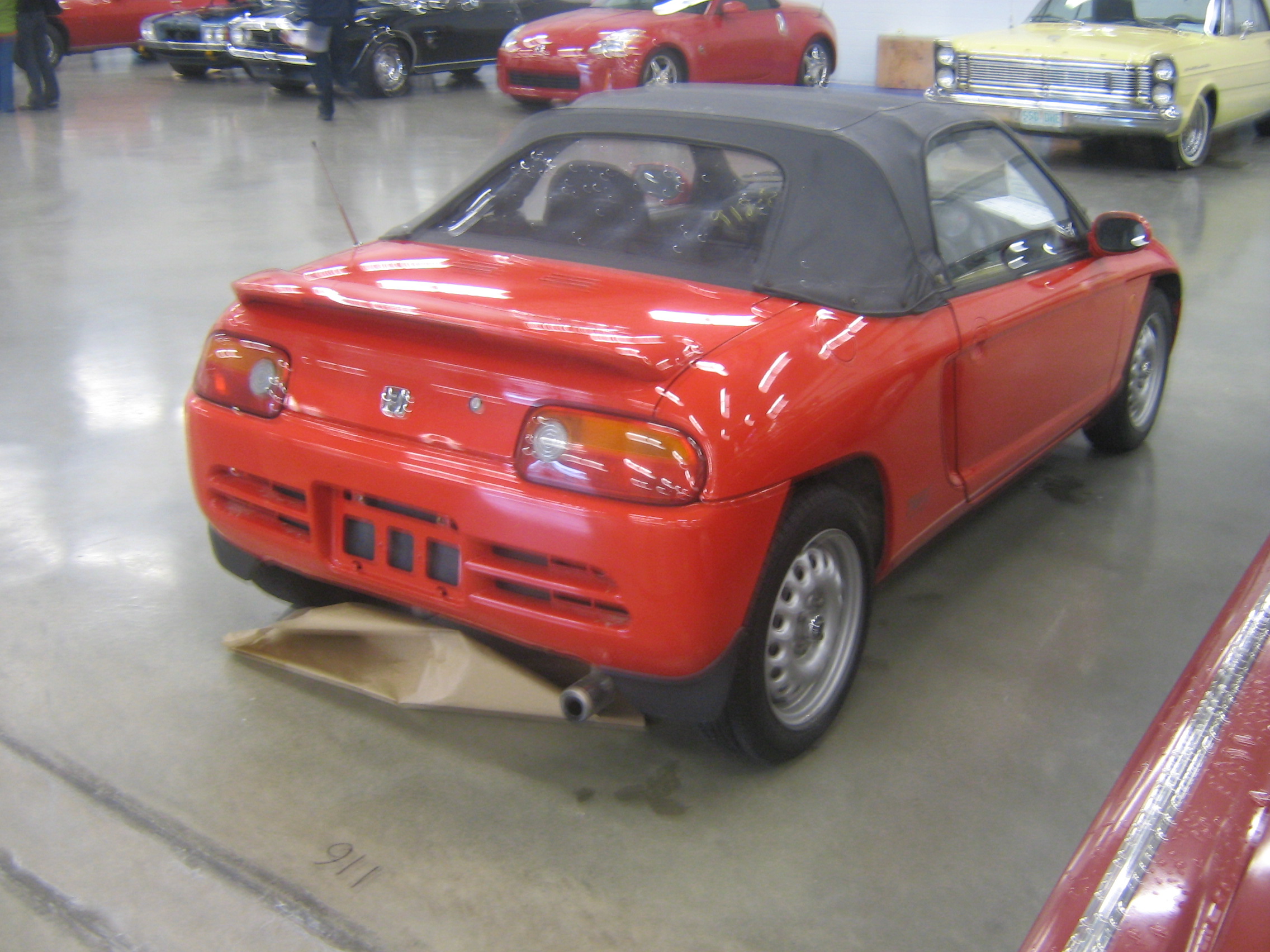
The Honda Beat is a small Honda roadster that’s popular with car fans because it’s light and fun to drive. The host is saying the little Honda cars there are especially cool.
The Ferrari F40 is a legendary old-school supercar from Ferrari. It’s known for being fast, loud, and very special—so it shows up at car meets a lot because people love seeing it in person.
Drift is when a driver makes the car slide sideways on purpose while still steering through a turn. It’s a skill-based style that looks dramatic and requires control.
The GMC Safari is a large van designed to carry passengers. It’s not as common as many other everyday vans, so it can stand out when people talk about interesting vehicles. The podcast is likely referencing it as a “nerdy” favorite.
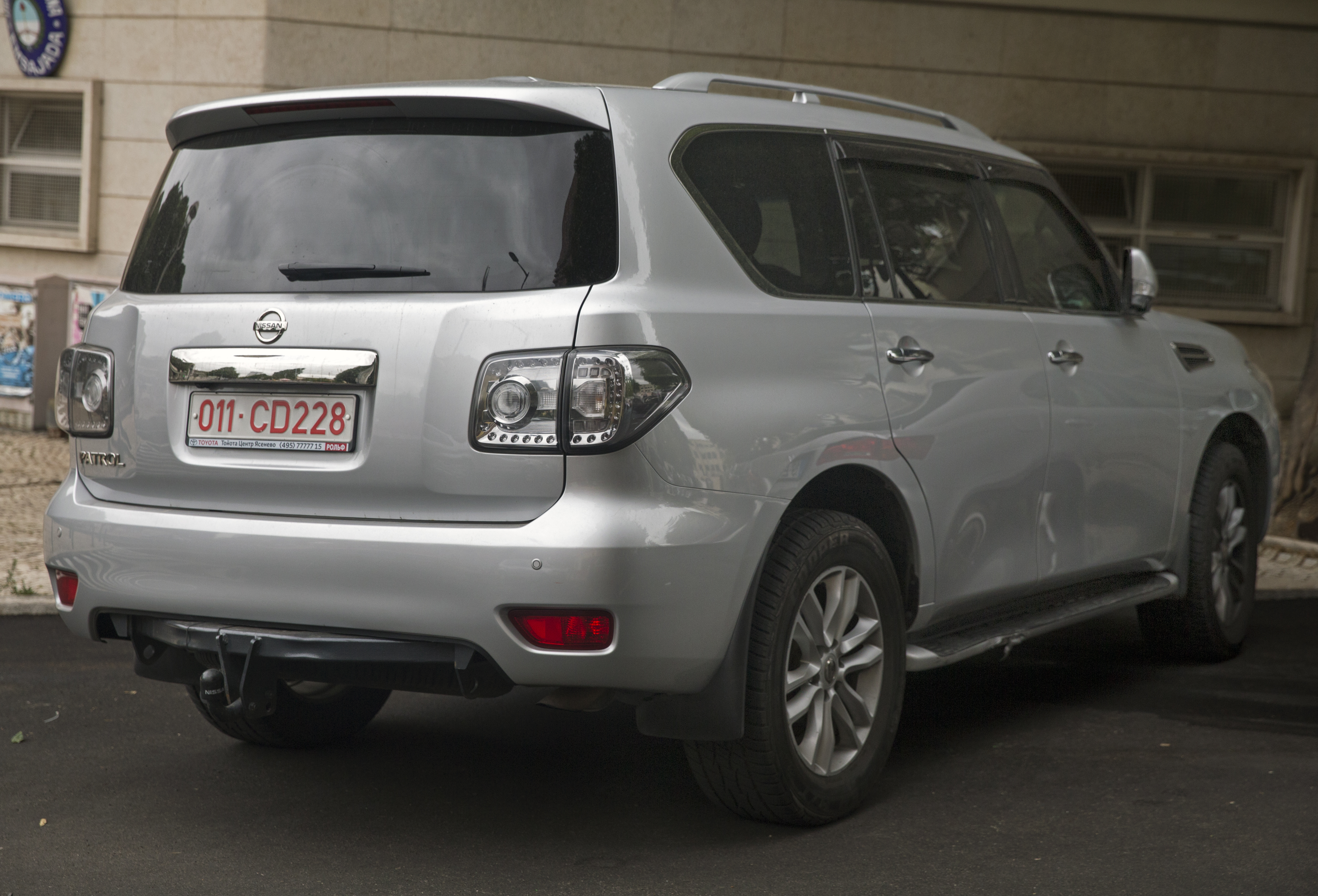
The Nissan Patrol is a big SUV that’s built for rough terrain and long-distance reliability. Here it’s being used like a desert-racing truck, including versions with straight-six engines.
A straight-six (inline-six) engine is a six-cylinder layout where all cylinders are in one line. It’s often praised for smooth power delivery and mechanical balance compared with many other common engine layouts.
Sand dunes are soft, loose hills of sand. Driving on them is tricky because the tires can lose traction, so you have to keep momentum and choose the right setup.
Time attack is a racing style where the goal is to beat the clock. Instead of racing side-by-side, drivers focus on making one really fast lap.
Term
manji
“Manji” is a drifting move where the car slides in a repeated, patterned way. People use the term to describe the look of the car’s path during the drift.
Clipping points are the planned places on a track where drivers try to pass very close to the best path. In drifting, hitting them helps you set up the slide for what comes next.
Street takeovers are when groups of cars show up and take over public streets for stunts. They’re dangerous and often illegal, and they can make regular people think badly about all car fans.
Engine management is the car’s “brain” for the engine. It controls things like fuel and spark timing so the engine runs correctly, especially after modifications.
Term
socket PC board
This is describing an older way of tuning cars that involved physical electronics parts. Instead of plugging in a modern tuning computer, you often had to deal with circuit boards directly.
Shock tower bars are metal supports that help keep the car’s suspension area from twisting. If they’re made from titanium, they’re lighter and strong, but the big reason people use it is usually because it’s cheaper/easier to get and build locally.
Term
suspension pieces
Suspension pieces are parts that connect the wheels to the car and help the car handle bumps and turns. Here, the point is that people are upgrading a lot of those parts with titanium.
That means the area under the hood gets “cleaned up” by removing or smoothing things you don’t need. People do it so the engine swap looks neat and intentional, not cluttered.
A “swap” is when someone replaces the car’s original engine with a different one. “Clean” here means the swap is done neatly and professionally, with everything fitted and connected properly.
ITBs are “individual throttle bodies,” meaning each cylinder gets its own throttle valve. That can help the engine respond faster when you press the gas.
The Nissan Skyline is a Japanese performance car that many car fans follow. The R34 Skyline is a specific version that’s especially popular with enthusiasts. The podcast mentions racing and tuning names because those are part of the Skyline’s history.
Term
KA
“KA” is a nickname for a certain Nissan engine family. When someone says they “ripped out” a KA, they mean they removed that engine and put a different one in.
“SR” is a nickname for a Nissan engine family that’s popular with tuners. The host is saying people often removed that engine and swapped in a different one for bigger or easier power.
“LS” is a GM V8 engine family that’s popular for engine swaps. People like it because it’s powerful and there are lots of parts and tuning options available.
Topic
Japanese tuning culture vs American tuning culture
The hosts are comparing how Japanese and American car fans tend to modify cars. They’re especially talking about engine swaps and whether the goals are different.
“USDM style” means “U.S. market style.” It’s when Japanese cars get built or modified to look and be set up more like what people in the U.S. typically want.
The Honda Integra is a popular Honda with a strong car-enthusiast reputation. Here it’s mentioned as a car people modify to look more like a US-style version.
The Acura Integra is a compact car that was made to be fun to drive. People often customize them, including changing the front end to match a different style. The podcast mention is about those kinds of conversion projects.
It means people often want what they can’t easily have. Here, the host uses it to describe how some people chase other countries’ car styles instead of what’s already popular locally.
A “Barra swap” is when someone takes a Ford Barra engine and puts it into a different car than it originally came with. People do it because the Barra engine can make a lot of power and is popular for performance builds.
The Nissan 300ZX is an older sports car that a lot of people like to modify. Here, the key idea is that someone put a Ford Barra engine into a 300ZX to make it faster than it would be stock.
The “GT 350” is a special Mustang model made for track-style driving. In this story, the host says that setup failed (“blew up”) and then the builder switched to a Barra engine instead.
Adam LZ is a well-known automotive YouTuber and builder who’s associated with high-profile engine swap and performance build content. In this segment, he’s used as an example of someone who put a Barra engine into a Mustang after a prior GT350 build failed.
Mighty Car Mods is an Australian car show/channel that makes videos about modifying cars. The host is saying they watched it a lot and it influenced their love for the Australian car scene.
Brand
Turbo Yoda
Turbo Yoda is a name the host brings up as part of the Australian car scene. It likely refers to a builder or creator involved with performance cars and events.
They’re talking about taking a trip to see car culture in person. The point is that some places have more interesting scenes and stories than others. Here, Australia is being highlighted as a place worth visiting for that.
The Pontiac G8 is a Pontiac sedan that was sold in the U.S. for a limited time. People bring it up because it’s related to the kind of performance cars Australia had, and it’s one of the few that actually came over.
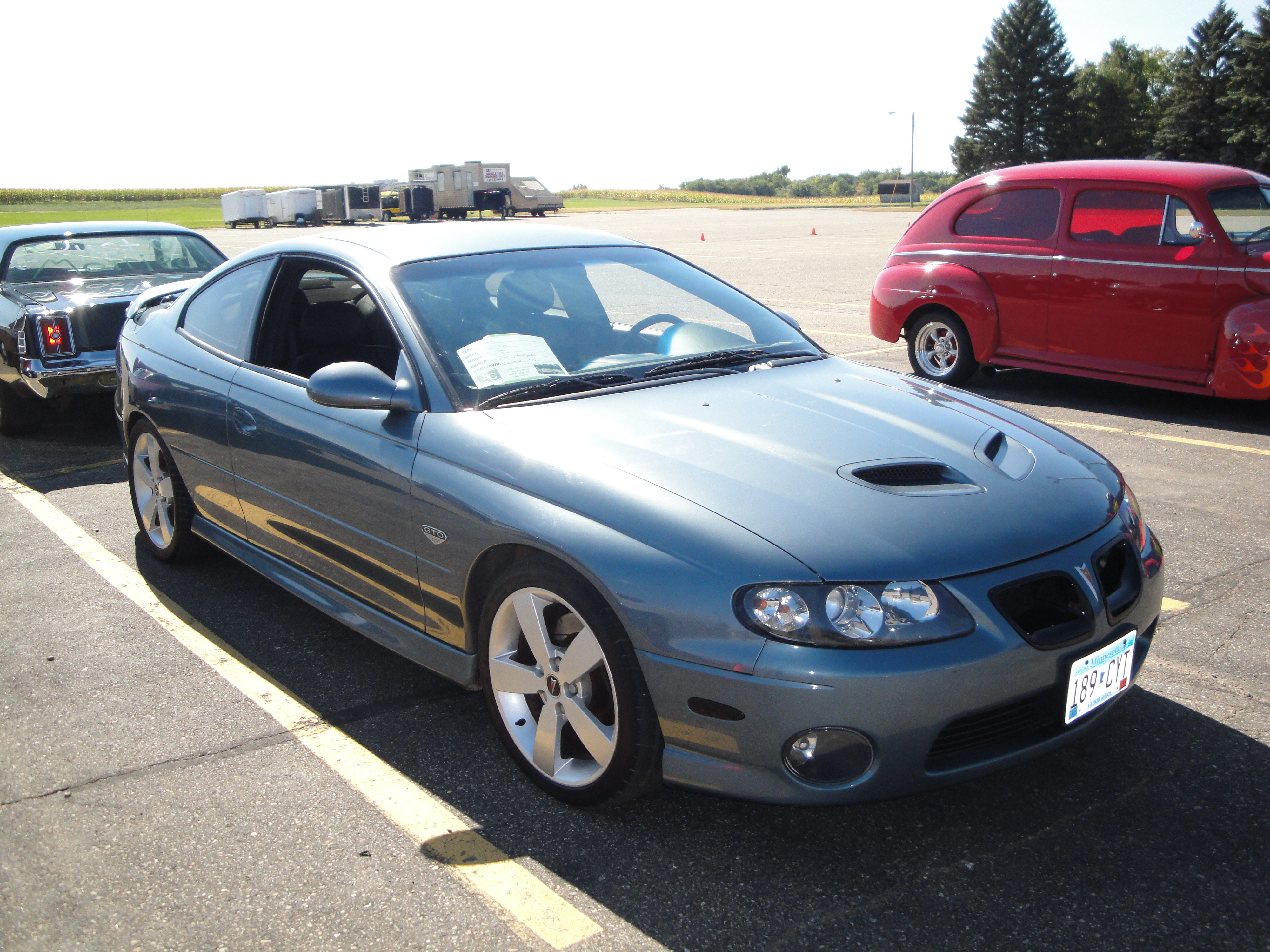
They’re talking about the Pontiac GTO, a well-known performance car. The point is that the US cars were influenced by what was being built in Australia, and fans still care a lot about those cars and parts.
They mention a website called “Maverick men” that sells parts for these cars. It’s basically a niche shop for enthusiasts who own that kind of vehicle.
The Ford Maverick is a small pickup truck made for everyday use. People like it because it’s easier to live with than bigger trucks, and some owners customize them with aftermarket parts. It’s the kind of truck that can become a hobby project.
Forza is a popular racing video game. The host is saying they’ve driven something in the game before, and it reminds them of that experience in real life.
Hockenheim is a famous race track in Germany. The host is using it as an example of where people are filming and racing, showing that car culture is still strong over there.
“Modified” means the car has been changed from how it came from the factory. People do it to make it look different, sound different, or drive differently.
Two-stroke motorcycles make power differently than most modern engines. They often feel more “snappy” and rev quickly, but they can be louder and may need different care than four-strokes.
The Toyota Corolla is a compact car that many people drive because it’s generally reliable. It’s also a common car to modify, so you may see older ones with lots of added parts. That’s likely what the podcast is pointing to when it mentions heavily built Corollas.
Here, “mirrors” means the outside side mirrors you can replace. The speaker’s point is that some mirror designs are only made for cars that were sold locally, so other regions may not have compatible options.
The Honda Civic is a very common Honda model sold in lots of countries. The point here is that some parts are easy to find for popular versions, but harder for versions that weren’t sold in certain regions.
A “global platform” means the same basic car design is used in multiple countries. If that’s the case, parts like trim and fitment are more likely to work across different regions.
Puerto Rico is referenced as a place with a strong local car culture, especially around rotary engines and drag racing. The speaker’s point is that the rotary community there has deep know-how and has influenced the broader U.S. scene.
Rotaries are a type of engine where a spinning part (instead of pistons) does the work. People who build and race these engines often know them really well because the rebuild process is different from normal engines.
This phrase is basically a rivalry: imported cars versus cars made by U.S. brands. Enthusiasts use it to talk about which group has the better cars for racing or modifying.
Porsche is a well-known sports-car company from Germany. Here it’s just being used as an example of a brand that makes high-end photo books for car fans.
Larry Chen is a photographer whose car photos are collected into a book. The point being made is that a real, physical photo book feels more special than just scrolling pictures online.
BMW is a major car brand from Germany. In this conversation, it’s mentioned as another brand that has coffee-table style car books.
LIVE
So with Forza dropping and this whole resurgence of Japanese car culture popping up on social
media because of the game, I'm thinking back to when we were more into the magazine side
of the industry.
I like hearing some of those stories where you had these very unique builds for the time.
So the first time I ever saw major engine swaps or anything that was out of the ordinary,
it wasn't at my local scene.
It was in these publications.
And the one thing that I started to struggle with is have we gone to a point where these
cars are so bolt-on ready that we're going to start to see less and less of that cool
customization that we saw back in those days?
Because I miss that.
I miss flipping into the magazine and the first time you got to see a S14 with an LS
swap, for instance, because it wasn't done.
It wasn't popular.
There weren't kits out there yet.
And I feel like now we're not getting that as much.
Maybe that's part of why I feel like the car magazine culture might have died also is that
cars started to become very bolt-on ready.
And I was kind of thinking, if anyone knew what that time was like from the inside, it
would have been you.
And I know you were dealing with a lot of free answers and stuff at that time.
Yeah.
I think one of the main reasons that magazines as a whole sort of fell off the map has to
do with just the internet in general.
Because with the magazine world, there's always a long waiting period.
Because if the Formula D happens this Saturday and a magazine is there covering it, it's
not going to show up on the newsstand for like two months probably.
By then, because of the internet, it's all news.
Right now we get it immediately.
As it's happening, we're getting stories.
We're getting reels.
We're getting X posts, whatever it is.
So that was a major factor.
What you're seeing though, I understand what you're seeing, seeing stuff first like an LS
swap when those first started coming around, they might have been happening around the
country once the word got out about it.
But by the time it got covered by a magazine, it was already kind of, I wouldn't say old
news, but it was already kind of being done.
I think for a lot of people at the time, the internet, social media wasn't really a big
thing at that time.
It wasn't really around.
So you were seeing stuff kind of break in print and that was kind of like the norm.
There was a weird transition period where it was like, okay, well, since the internet
came in and it kind of took over and social media is speeding things up.
Let's use the digital front in order to get breaking stuff out first and then kind of
save bigger stories or maybe certain types of builds for print.
It doesn't really work though because again, no one has the patience to wait for that anymore.
And it's been that way for years.
I'm kind of the same way.
If I wanted to see a event coverage, I'm not going to wait two months to see it.
Just go poke around on a website or poke around on social and find it.
You know what I mean?
So it really didn't stand much of a chance with the lightning fast social media strike.
That was pretty much it.
That pretty much killed it.
Okay.
So because to me, from the outside looking in, I always felt like the uniqueness of cars
from that time period were so different than what we're dealing with now.
I feel like everything now on social media is very cookie cutter.
Yeah.
Yeah.
I understand what you're saying, but I think a lot of that comes down to things kind of
going to cycles.
And I think that for someone like you that was, you've sort of been like this lifelong
enthusiast.
You worked at a shop for a number of years.
You kind of seen it all inside and out.
For you, things started to look the same because you're seeing pretty much the same thing on,
like I said, digitally, right?
You're seeing the same sort of like wheel setup, seeing the same sort of engine swaps,
the same seats, everyone's using the same steering wheel.
But you have to remember if it was 15 years ago, maybe like your earlier days, like you
know, 18, 19 years old, you weren't seeing that stuff every day.
It wasn't, it was few and far between.
Even car meets, there weren't a ton of those back then.
Now they're like every weekend.
I'm sure out there where you are too.
Every Saturday or Sunday, there's something going on, right?
Yep.
100%.
But back then, back then there wasn't.
There was like maybe a big car show quarterly, maybe once a year, something like that, or
an Opie or something like that.
And then of course, the magazine stuff.
But even with that, you weren't seeing exactly the same stuff over and over again.
Now it's like just constantly recycled.
Everyone's got a page for their build and they're constantly posting pictures of it and making
pick talks and a lot of stuff.
It just sort of, it saturates it a bit.
I think it kind of kills the creativity a bit.
But that's just kind of like, like I said, it's a cycle.
The one thing that I have really liked, and I think that might be part of it too, is that
the good that's come out of that whole social media, like pushing into that realm, is that
I'm seeing a lot of builds from overseas and a lot of car shows and car scenes overseas.
And I gotta tell you, Southeast Asia, holy crap, the shows that they put down on, they're
putting on in Thailand and things like that.
They're taking over those massive parking garages filled with hundreds.
And all the cars are just absolutely stunning.
And I know that there's some differences like the cars cost more there to get in there.
And there's weird things like that.
In some cases, yeah.
Yeah.
So I know that there's weird things like that, but these cars, they're just absolutely stunning.
Like, you go to a car meet here and I'm not trying to knock us too hard, but there's a
lot of regular traffic.
There's a lot of I have a car with a set of wheels and a hacked off exhaust, let's say,
that tends to be a lot more common.
And then I'm looking at these meats and they're not, and this isn't like some, you know, closed
off professional meat where they they're curating the cars.
This is just even a local meat.
But every single thing there is stunning.
Or we're looking at like Sunday morning at Daikoku.
Looking at the Honda beats that are there are absolutely the coolest little things running
around.
And yeah, of course, you have a Ferrari F40 on the other side of the parking lot and the
Lamborghini guys are there and all that.
But that happens on Long Island too.
Like cars and coffee here, you know, and you're in a you're in an area, I'm sure it's the
same way where they run the gamut.
And I'm not saying that that's not what we're getting, but I feel like we're getting less
and less of that quality here that I'm seeing out there.
Yeah, you know, when when I was still in the media world, I was a little bit I was a little
bit done because I didn't realize how big it was in Thailand.
Like I didn't I didn't know I knew there was obviously building going out there, but I
didn't know how how in depth it was.
It wasn't until I started seeing some some builds come from there through.
I don't know if you've ever heard of Street Metal.
Street Metal is like a media guy out there.
He's Thai and he's like he covers everything.
Like he's really, really in deep with like drift, the drag, everything, right?
The car shows, all that stuff.
So he was kind of the guy and I think I reached out to him and we started kind of communicating
and he started getting me some coverage from out there from certain vehicles I thought
were were really unique, especially in the Honda world.
And then excuse me, and then events as well.
Later on, you know, CB Media Chad moved out there as well.
He was he was a freelancer with me for for a number of years and then he moved out there
and he, you know, he his YouTube blew up, which is which is incredible.
Actually, that's where I started to see a lot of the the the meets overseas was actually
from him. And that's that's kind of what got me exploring a little more and and being
that, you know, Konie has to chize the Malaysia and all that.
Like the Malaysian car scene is insane also.
You know, it's really it's getting really cool to see what's out there.
Like, yeah, you know, even in the Middle East, like Dubai and things like that,
you know, I'm an Easton guy.
So the Nissan Patrol has like this like little spot that in the safari or like
two of my cool little nerdy truck things from like the SUVs.
But they have some of the fastest, fastest, straight six powered patrols
and they are racing up sand dunes, things that I would never think of.
You know, like it's really cool that now with social media being in the forefront,
we're getting to see those things that I never would have thought I'd seen.
Like, you know, we've talked about in the past where, you know, you guys covered
back in the magazine days, the time attack cars and things like that.
And that was awesome because that was new and fresh.
And we had never seen anything like that because time attack was just pioneering
itself then. This is every time I'm like getting on and seeing these these things
from all over the world, I'm seeing a whole new side of car culture and racing
that I've never seen. And I kind of that's what's really cool.
You know, I'm not saying that the U.S. doesn't have that.
I'm saying there there are there are places where I wish we were doing more.
I'm really happy for Mila D. I'm going this weekend and they added a manji
in the center of the freaking course for the first time in a long time.
And I think them adding that was such a good design choice because I missed
I missed 2015.
Formula D. I miss the cars being a little slower, having a little bit
more technique behind them and them literally mirroring each other around
some of these clipping points. I miss those days.
I think that was peak.
And to see that coming back is is really cool.
But we're still dealing with a lot of track closures.
A lot of negative press because of people doing dumb things on the Internet
and posting it.
And and obviously there's that whole problem with the street takeovers
hurting the the the public's perception of all car people
because they automatically associate us.
I don't really put those into the into the car.
No, but they are saying I'm saying the public associates
car people with that culture, even though they're independent of each other.
So let me just clarify that.
But but that's the problem is that perception in that has has hurt us.
And that yeah, I wonder what that effect is.
Like if there is an issue like we were talking about Thailand, for example,
is there a lot of guys that are doing crazy stuff in the local authorities
or like not having it or is it that the culture is so much different
that it's just much more respectful.
They do have a strong tie to to drag racing there.
You know, Drift is starting to grow there as well.
But it feels like when when I was looking at stuff from their video footage
and stuff like that, even like five or six years ago, it felt like
like mid 90s US 100 percent, because it was so so fresh and so new.
And like everyone's like building a car that can like show and drag
and they put on the street and I love that.
And I think that's what I kind of was alluding to with this whole thing
is that is that I miss that feeling like I miss that it's I have one car
that I need to do this like I need to get out there.
It needs to look good.
It needs to tear down the track and and do great.
And then the drag strips kind of feel like that same time period.
Like they're they're smaller venues.
They're they're more intimate.
And and don't get me wrong.
We cleanest set all his stuff up down in down in Florida.
It has that sort of feel.
And I think that's why it's done so well, to be honest with you.
Yeah, I think it captures that and not I grew up going to MIR.
So it before they put in the big press box and all that,
I was going there then when they said would bleachers like you get splinters
on a Friday night I tested into.
So I missed that time period.
And I think it's just nostalgia at this point, obviously.
Yeah, but it but it's really cool to see that that's happening overseas.
And then something that I I'm jealous of is that they're getting to do all of
that with the technology that we have now.
And I'm like, man, we used to have to work so much harder just to have
the same amount of fun.
These guys are like, oh, I just grabbed a Haltech and plugged it in.
I was like, man, that would have been nice.
We had a socket PC board.
Yeah, no, I hear what you're saying.
In terms of like Southeast Asia, I believe I hear what you're saying.
But I wonder if you're seeing it now because of social media, right?
Take that away, though.
They've probably been building cars and doing the same sort of like hot rotting
as long as maybe long in the US, right?
Because you've had access to better better versions like SRs and stuff like that.
So I would think that it's probably been this way for many, many years.
It's not like they're just getting into it now or, you know, in the last couple years.
We're seeing it though.
We're seeing it now because, you know, obviously we have more more visual access
to it all, which is great.
One of the other things that I noticed when I was working with Street Metal
is like every car had so much titanium on it.
I was like, why every car has titanium shock tower bars and suspension pieces
and dress up, everything is titanium.
And then I did a little research and it's like that area because labor is so cheap
and manufacturing costs are so cheap.
Everyone does titanium.
So even like the what did you call those little taxi things, little free wheeler taxis?
Oh, the tuk-tuk.
Yeah, like those vehicles, like they've got titanium shock tower braces and like,
you know, like everything's titanium.
And I was like, man, there's so much stuff there.
And, you know, that was really, really big here for a while still is.
But I mean, it's everywhere.
And that's why it's so much cheaper.
The labor is so much less.
So you can get a lot of custom fabric and they have some really talented fabricators
out there that can make whatever you want.
You know, so there's some really, really cool stuff to see.
That was always what kind of drew me in the most is like seeing the custom
fabrication and the stuff they were doing.
A lot of the stuff they were doing was like, you know, shaved engine bays
and like really clean swaps and, you know, ITBs, turbos, all that stuff.
Just like here.
But I just I really liked the custom one off pieces that, you know,
I hadn't seen anywhere else that was kind of a cool, a cool touch.
So if we can move up a little bit, because I know we were we were kind of focusing
on Southeast Asian, I did bring up Daikoku in Japan.
And that's kind of where I got kind of got going with this.
Now, I obviously I came up when the Japanese JDM car culture, the JDM side of it
was really like something we were watching, you know, I was watching at, you know,
12, 13 years old as I was getting older.
You know, I watched Smoking to God and I watched, you know, the builds over at
Mines, which we've talked about in the past that, you know, built by legends
is still doing the Mines, the Mines stuff with the R34s.
Like those names and getting to drive those cars in Gran Turismo and stuff like that.
How did that compare and contrast to the way that the US car culture was?
Because I feel like there you had a lot more of we're going to take what we have
and make it the best we can and and kind of to the same effect of that same time period
was when I would say that I saw the the guys ripping out their, you know,
KAs or SRs and dropping in an LS instead.
Was there some difference between like the Japanese tuning culture and the
American tuning culture in that regard?
Yeah, there's always been differences, right?
We've always looked up to the Japanese because that's where the vehicles come
from originally, right?
And they were doing the coolest stuff.
And this, you know, obviously I'm older than you.
So like what I was seeing wasn't really the video stuff as much as it was seeing
stuff in print, you know, all option magazines and stuff like that.
So we're seeing what they were doing.
I had option DVDs.
Thank you.
Yeah.
I had option VHS.
So that's all, you know, it goes way back.
But but like with with those with those books, you know, we would go to like the
local, at least here in SoCal, like they have like a Japanese market and go there
and you pick up a few of those and they were super expensive.
And then you kind of flip through and see like, oh, I wonder if I could find these
ITBs or what if I could find this wing or whatever it is, you go through your
sources and try to find someone that can get it for you.
Right.
Like that was what was done.
And and the guys that could get like one or two pieces were like the ones that
stood out the most at, you know, like the street races and stuff.
And this is, you know, we're talking like, you know, early, early 90s, mid 90s.
One thing that's interesting though is like over the years, some of that has
shifted a bit because there is a huge, a huge number of people in Japan that are
building cars to more USDM style.
And I don't think this is a big surprise.
Like people know this already, especially with, you know, with Instagram and stuff.
But prior to the social media buzz, like there was always a big push to build
USDM style stuff.
And, you know, a buddy of mine who lives there, he throws an event every year called
called K-Day.
And that event is like primarily based on vehicles that have a ton of US influence.
And I'm talking like, you know, an Integra would like a US front end conversion
or like a Civic Type R converted to look like a DX, you know what I mean?
Like it sounds like you're going backward to us, right?
But then over there, like that's the cool thing, right?
And if you have a left hand drive car, you're the guy, right?
So, so, yeah, so that was a big deal.
So I think there's a little bit of a mix up there in terms of people that are
newer to car to kind of our car culture.
And they're always thinking that everything has to be JDM.
But a lot of times there's another subculture that's kind of the opposite.
It's that grass is always greener type thing, right?
So you want what you can't have.
So at least in the Honda world and Nissan world, you know, I don't know if it goes
well beyond that, but that's what I've experienced.
You know, and it's like, it's like now it's such a mishmash of everything from everywhere.
And so I think if you're building a car right now and you want something unique,
you should probably be pulling inspiration from everywhere, from Japan,
from the US, from Thailand, from Australia, from, you know, from everywhere.
Yeah. Yeah.
So I mean, that's another one too.
Like Australia is such a unique section.
There's so many high powered, like wild, wild builds in that in that region.
It's insane. You're speaking my language.
Yeah. So I really like the stuff they do there.
Yeah. Coming from the RB world, like I had a infatuation with RBs for such a long time
that coming from the RB side of it, I have a love for the Australian, you know,
car culture that comes along with the, you know, the Kudamunja drags and those guys
running that all down there.
So, so you're speaking my language and actually speaking of unique things
to come from Australia, I'm loving that we're seeing more Barra swaps.
Like being the Ford side of me loves this whole, like we're starting to see them
trickle in more. And just recently I started following somebody on social
media that has a 300ZX with a Barra swap.
And I'm so pumped to see that thing come to fruition.
I think Adam LZ built that Mustang with the, that he did his GT 350 after it blew
up, he put the Barra engine in it.
And I think that is probably one of my favorite cars of his.
If I had to choose one of the cars from his collection, I'd probably take that.
So the Australian, car scene down there is insane, you know,
whether it, whether it be, I grew up watching Mighty Car Mods, you know, I
would say probably most of my adult life, I've been watching those guys and I,
I love what they've put on.
And some of the guys that they've worked with, like Turbo Yoda and, and I can't
remember the other gentleman's name, but they're great, you know, and you get
some really cool insight and a lot of that eight HP stuff actually came from
me seeing eight HPs being used in the Australian market.
Right.
And that's kind of what started, started that whole conversation with Greg
from Turbo Lamac was seeing the, the swaps that they were doing down in
Australia and I love it, man.
That, if there was one place I'd want to go for a car culture trip, I know
everyone's like, I'm going to Japan.
I want to go to Australia.
I really want to go to Australia for that trip.
Yeah.
Yeah.
I feel like there's enough information on Japan's car culture on my need.
Yeah.
I'd be too surprised now.
You know what I mean?
Yeah, exactly.
Yeah.
I don't know if I'm seeing this right, but I remember, and this is like, and this
is like probably mid nineties, maybe early.
There was a website called, I think it was called X ViterMitty in, in Australia.
And I'm probably butchering that, but it had, it featured like a lot of their
R32 street racing.
Okay.
Um, I don't know if it was street racing or if it was like an organized event,
but on the street.
And, um, and I remember they were just super fast.
And I remember me and my friends just watching that stuff all the time.
This is like when, you know, we're all like getting computers and getting, you
know, getting into the internet or whatever, um, the dark ages, right?
But, but it was, it was really, really cool to see that.
And that's what really kind of turned me on to Australia originally.
And then over the years, they've always just built like the super high horse
power, just wild, wild builds.
So there's always cool stuff there.
Always.
Yeah.
And it's like, not just, um, not just JDM cars, not just Japanese cars, but
all the cars are there.
They always, you know, like the hold instance stuff.
I was going to say the fourth, the, uh, between, between GM with the, the air,
the hold inside of it.
And then obviously before Australia, you know, you have the Falcons and the,
the Mineros and everybody, you know, and some of those cars obviously trickled over.
I mean, you get the, the Pontiac G8 and, but we never got the, um, we never
got some of those cool.
Like I said, the bear never made it here.
And I hate that Ford never took that chance to bring.
I think it would have done really well in our market.
I, I don't know if you remember, do you remember the turbo T birds back in the day?
Do you know what I'm talking about?
That was such a popular car that they could have done that, you know, a modern
updated one instead of making that ugly thing that they made.
I don't know if you remember the one from the 2000s that made it look.
Yes.
It was like so flat.
Yeah.
Instead of doing that, imagine if they would have done a turbo straight six
freaking bring back of the T bird.
I would have been all about that.
I think that would have been my first car instead of the 442
but that's just me.
Yeah.
The, the, we mentioned the hold and hold is interesting because, you know,
for people who aren't familiar, like, you know, obviously we have the US version
or we had the US version.
Um, and when I see those, like the GTO is it's interesting because, um, they
really looked toward pulling parts or inspiration from the ones that were
being built in Australia to, you know, to build the ones over here.
And there's, there's a huge, you know, a huge enthusiast market for that.
I have a buddy that, that has a website called Maverick men and Maverick men
carbon and he specializes in a lot of parts for those vehicles.
And like a lot of the guys that have them, they went like the hold and
interior, they went like the hold and badges or, you know, whatever.
Seem just like a guy with a civic trying to get all the, all the, you know, the
type R parts or whatever.
Uh, so it's a really, really big super tight knit community.
And those guys are very, very dedicated.
And obviously, you know, the engine is like, you know, legendary.
So there's a ton of, of aftermarket parts for it.
So, so correct me if I'm wrong.
It's an LS two, it's a six.
So right.
Or something like that.
It's the LS three, LS three, something like that.
It's an LS.
Yeah.
So it's a, it's a,
It's almost the same to me.
Yeah.
Check, check out the engine anatomy on LS is it's going to come in the future.
They're all going to be, that's, that's all it's going to be.
LS engines, they're all the same to me.
And that's going to be the whole video.
I can't wait to write that and not know the difference to them.
But, but yeah, yeah, it's, it's LS and it's like, you know, they make huge power.
Obviously, you know, there's, there's turbo ones and the super charged ones.
And there's always different versions.
Um, yeah, the H, the HSV that, that super charged, it's essentially the
Pontiac G eight with the super charged LSA and that one I do know.
And oh man, that, that's a cool car.
Those are, those are sick.
Um, you know, definitely spend some time on, uh, bringing back to the
Forza thing, driving that thing around in Australia years ago on the old Forza
games.
So I've been there.
Yeah.
Right.
Right.
Yeah.
And in my dreams, I've been there.
I've, I've warped.
I've, I've larked, but I'm right.
But no, and that's, that's what's really cool.
You know, even, even over in like the UK, we have a couple of guys that are
running our wheels over there.
Um, they're, they're really, you know, you see a lot of really great track racing.
Um, camera, maybe the track was like Hockenheim or something like that.
I think it's the name of the track out there.
Um, some guys running out there and really seeing a great track culture even
coming from that side of the pond, which is really cool.
Like I think the, the, even if locally, sometimes it feels like the car
culture is shrinking, it's really cool that we can look out and see that there's
still segments that are, that are excelling and ones that we didn't even know
about that are doing really cool things in other parts of the world.
Well, yeah, now you can, but you know, you bring up a good point.
Like the UK, for example, when, when I was young and getting into cars, you know,
again, magazine was magazines were the access point, right?
To figure out what was going on.
And I remember there was a few, um, magazines specifically catering to the UK
that were at, uh, Tower Records, had a big magazine section, right?
You kind of flipped through them.
And all I would see on there was like these cars I'd never seen before, like
just tiny little cars, right?
And they were always dumped.
They always had really like shiny chrome wheels and a bunch of like stuff on them.
Like so much stuff, just pieces of flair on them.
Okay.
And I didn't realize that there was such a big like, uh, performance community
there because all I saw was what I saw through the magazines.
There was always that stuff.
Um, along with some random nudity in those books, which was really weird, but anyways,
it was very strange, very strange magazine.
But like what, you know, when I look at those, I, and I would see like the,
the chrome wheels and, and they were always dumped to the ground.
They didn't have a lot of power.
And that's, that's what I thought that whole car movement was there.
I had no idea that there was such a big race community until, until years later,
you know, you kind of do your research and see, but, um, in those early days,
that's all I knew because that's what the magazine showed me.
You know what I mean?
And that, that was a very small, you know, peek into it.
Cause, you know, obviously we're not getting a bunch of UK magazines out here,
especially in those times, but, um, you know, with the internet, you can see it all now.
Yeah.
Now, now it's really cool that, you know, that, and,
I mean, as we, we've kind of made our way, I guess we, we should kind of get into
the South America a little bit cause we can't leave all those guys out because
you know, uh, last year I went to Jamaica and I gotta tell you,
you would not know going there that when you get there, the car culture is
going to be so on point, but man, I saw modified, well, I guess they call it,
it's an Evo.
It was an Evo.
I guess it's still an Evo or a Mirage or whatever they call it.
Thing was, you know, Evo 10 equivalent done up to the nines, you know,
tons of customized motorcycles.
A lot of them are like those little, um, the bikes that you would see and like
Vietnam and stuff, those little two stroke motorcycles all kitted out.
Like it's, it was so cool to see, you know, all these different modified vehicles
that, you know, you're going to go on vacation.
You're not expecting to hear the guys drag racing at two o'clock in the
morning, you know, a couple of miles away on the other side of the, the, you
know, the hill mountains or whatever.
Yeah.
You know, it's cool that those things exist.
I would have loved to like escape out and go find them.
I don't know.
I don't know if I would have ever came back.
I was probably going to stay in Jamaica and been like, you know, sorry guys,
I'm going to stay here.
I'm moving in.
We got a, we got a drag strip over here, but yeah.
Max is
Max going to Photoshop you with some dreadlocks real quick.
That's exactly.
So he just said it in the background.
He's just said, right, oh man, I'm Nick.
But yeah, no, you know, I remember I had done a few pieces on events that were
happening in Jamaica, you know, many years ago, and it was, it was all drag
centered.
They were really, really big in the drag racing, at least for the, for the Honda
crowd.
I haven't seen much, you know, recently, but I know that they had a thriving
aftermarket, you know, it was a big community there.
I saw, as I was saying, I was surprised with the cars.
I saw old Corolla's all done up a ton of, a ton of like, um, a lot of the,
believe it or not, a lot of Honda stuff, but like they were all like four door
Hondas, but they were all modified, but they were all like, you know, really nice.
Like done nice.
You know, I was, I was actually.
You have to build like whatever's, whatever's available, right?
There's going to be different fields in different regions.
I think when I had ordered a, excuse me, a set of mirrors from, um, from a vendor
in Thailand and we were talking, I wanted to order something for, um, that was
for my civic, I wanted to order something from my older Integra.
Um, and it's, you know, it's a 92 and he's like, we, we don't have those here.
Like we, I can't make anything for that car.
I don't have anything to base it off of because we never got that car here.
And I was like, I didn't think about that.
So yeah.
We wanted to the same problem with wheels, believe it or not.
I get a lot of guys that, that will message in from other parts of the world.
And they're like, Hey, I got this one vehicle.
And I'm like, I don't even know what vehicle that is.
So let's start.
So I know the manufacturer, but what are we talking about here?
And sometimes, sometimes we get lucky and it'll be like a global platform where
everything crosses over.
Of course.
But like a Ford.
Yeah.
But now, now that's more common.
It used to not be, you know, I get some of the older cars and they don't cross,
you know, so it all depends.
Um, you know, and obviously, you know, in the, in DR and in Puerto Rico, everyone
knows that the car culture there is, is top tier, you know, they, they do big drag
racing stuff there.
You know, we're talking a little bit about rotaries.
He's coming from Puerto Rico the other day.
And cause, uh, you know, talking about what's going to be going down when they
do the, uh, you know, imports versus domestic and, you know, USA versus the
world at down at the at MIR, you know, so we're sitting there BSing about that.
And, you know, it's, it's really cool to see an underutilized platform.
Cause let's be honest, like in the U S there are some really good rotary guys,
but they, the down in, in the islands, you know, in DR and in Puerto Rico, I feel
like they really adopted that engine and did a lot of good stuff with it.
That, that translated back to the U S market too, obviously, but yeah, there's,
there's a lot of rotary builds in the U S and there's some good ones too, but
there, like that's the capital of the world.
Like that's the bread and butter, right?
They know that engine better than anybody does.
You can see them, you know, with the bucket and they take it apart and they put
everything in the bucket and they send the bucket and put it all back together.
It's like nothing.
It's a clockwork, right?
So they can do, they can do anything with those, with those engines.
That's like, like I said, they're bread and butter.
Their engines rebuild.
I'm still halfway through the oil change.
Like hold on, be there.
Yeah.
Yeah.
They're so good.
It's crazy.
And they're so fast.
It's absolutely nuts.
And then, you know, it's cool.
We're getting a lot more.
Um, we actually picked up a driver recently that races down to Mexico.
He's down there and we're starting to get a lot more guys in, in South
America and, and working our way through.
So it's really cool to see that we're, we're getting such a global reach in
the car community.
And, and I feel like, you know, I was sheltered from that for a very long time.
And I think that's been one of the biggest, um, biggest changes from going
from like a print media world to a digital world.
You know, I know everyone, you know, everyone talks about like, well, not everyone.
A lot of people talk about magazines should come back and, and it was a
better time and all that stuff.
And listen, I get it.
You know, I worked in that world for a lot of years, but I think you can't
deny how much better access is now with, you know, all the, all the internet
stuff we have now.
Um, there, there's certainly a place for magazines, but I think now it's gotta
be like those special like once or twice a year or maybe like a quarterly type
thing.
It can't be a monthly thing.
There's just not a market for it.
Yeah.
And I think that's, you know, everyone can kind of agree on that.
Um, or agreed to disagree, I guess you'd say.
But, but, um, there, there is a spot for like coffee table style books, you know,
and I know there's like Porsche ones.
There's like, uh, there's a few BMW ones that are out there.
What we can, can we let name drop Larry Chen's photo book?
Because if you've got it, oh my gosh, that thing is absolutely stunning.
That's a good example.
Right.
Little expensive.
But yeah, but if there's something special, like obviously Larry Chen is a
special photographer, right?
And like he has, he has, you know, a special product.
That's something that you can, you don't want to just see like on Instagram.
Like you want to, you want to touch it.
Yeah.
I get it.
I get it.
I think most, most are, you're not everyone.
Some people would be like, man, am I paying for that?
I get it.
I forget.
You know, I understand.
I get it.
There's, you know, there's people that are, that are very budget about stuff like
that.
But I think for a lot of the older people or people that are really, really dedicated
to the car community, like that type of thing and being able to hold it and, and
see it is a little bit different experience, you know, and owning it and having it,
you know, at your home.
And having it forever.
I still have all my, my D sports, my super streets, my importuners.
So on that note, speaking of D sport, super street import, which of your car
magazines, I'm obviously talking to the comments now, uh, which of your car
magazines were your favorites, uh, which were the go-tos, which ones did you not
pick up, um, leave them in the comments below.
Let us know.
Anything else, Matt?
That's it for me.
That's it for me too.
Peace out.
All right.
About this episode
Car culture’s “problem,” the hosts argue, isn’t a lack of builds—it’s how quickly trends spread and how standardized they can feel. They miss magazine-era surprises, like seeing “a S14 with an LS swap” before it was common, but social media delivers updates “immediately.” That speed can also create “cookie cutter” setups, while constant posting “kills the creativity a bit.” Overseas scenes still thrive, from titanium-heavy builds to straight-six Patrol dune racing.
For decades, America was considered the epicenter of import tuner culture. From packed parking lots and late-night street meets to the glory days of magazines like Super Street and Import Tuner, the U.S. helped shape modern car culture as we know it.
But has that changed?