
Electrification means converting a car so it runs on electricity instead of gasoline. In this discussion, they’re saying conversions are more likely to feel right when the original car wasn’t really about its engine.
An internal combustion engine is the normal gasoline or diesel engine that burns fuel to make power. The hosts are saying that if the original engine wasn’t the best part of the car, switching to electric can work out better.
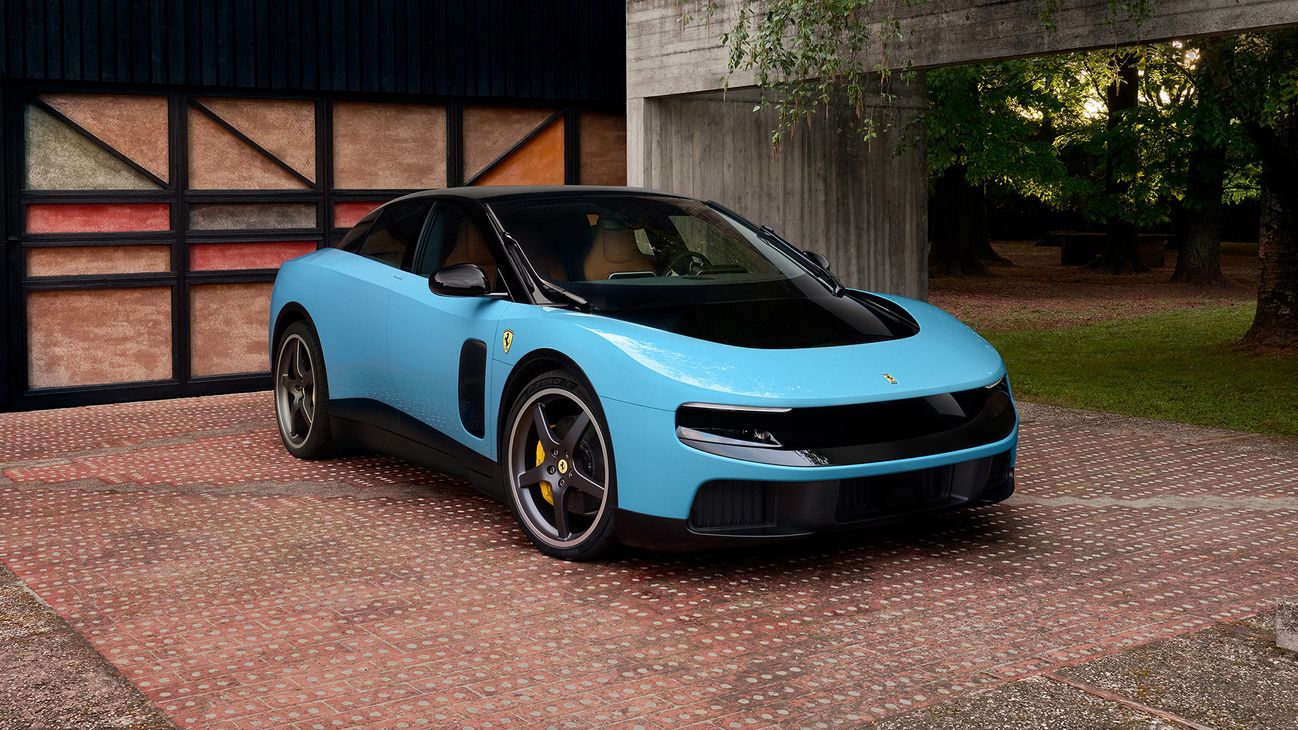
The Ferrari Luce is a Ferrari model mentioned in the podcast. The speaker is saying the engine wasn’t the main thing people should focus on. Instead, they’re pointing to other qualities that make the car interesting.
Car
Volkswagen flat four
This is a type of engine where the cylinders sit flat, like a “boxer” layout. The host is talking about the older Volkswagen air-cooled engine that makes a distinctive sound, but it doesn’t have much power. That low power is a big reason the bus feels under-motivated.
This describes an older-style engine that cools itself using air instead of antifreeze. It also has a flat, sideways layout for the cylinders. The host is saying this engine type is a big part of the classic Volkswagen “feel,” especially in how it sounds and how much power it has.
Volkswagen used “Type” numbers to group related cars. “Type 1” is basically the Beetle family. The host is using these Type numbers to talk about the classic, older Volkswagen era and how they all feel similar.
“Type 2” is Volkswagen’s label for the classic Bus/Transporter family. The host is grouping several Volkswagen “Type” families together because they share a similar classic character. Here, it’s especially relevant because they’re talking about a bus.
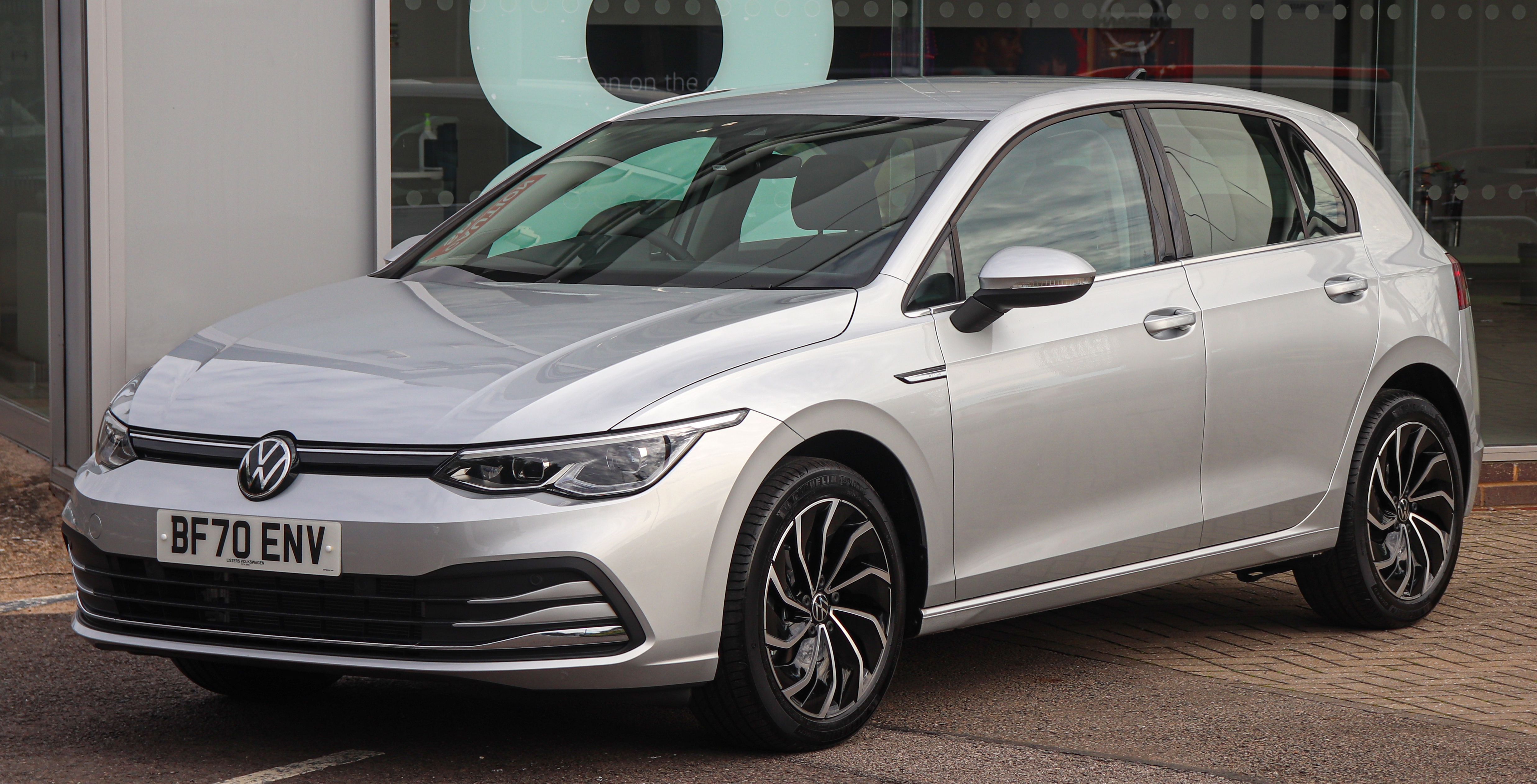
The Volkswagen Golf is a compact car that Volkswagen made to replace older models. It became one of their most common cars, so it’s often mentioned when people talk about Volkswagen’s history. It’s designed for everyday driving rather than being a niche vehicle.
The Audi TT is a sports car model from Audi. In this part of the conversation, it’s mentioned because the host previously made a video about it. They’re basically saying, “we filmed that other car for the TT episode.”
This is a specific name for a Volkswagen body shape. “Squareback” usually means the rear looks more upright and boxy, often with a hatch-style layout. The host is listing different classic Volkswagen shapes you could choose from.
A “fastback” is a car body shape where the roof slopes down smoothly toward the back. The host is comparing it to other Volkswagen body shapes like “squareback” and “notchback.” It’s basically about the silhouette.
A “notchback” is a car shape where the roof and rear end look more separated, like there’s a step or notch. The host is listing different classic Volkswagen body shapes you could get. It’s mainly about how the car’s silhouette is shaped.
A “panel van” is a van meant more for cargo than passengers. It usually has fewer windows (especially in the back) so it’s more like a box for carrying things. The host is using it to describe different bus configurations.
The host is talking about how a car’s personality comes from how it feels when you drive it, not just the numbers. In this case, the bus is so big and the engine so weak that you notice the lack of power in everyday driving. So the engine’s weakness becomes part of what defines the experience.
The Volkswagen ID. Buzz is an electric van. It’s meant to be a practical vehicle for people and cargo, but powered by electricity. The podcast is also pointing out its distinctive color and presence.
The Volkswagen Beetle is the iconic VW compact with a long-running history and a very recognizable shape. In this segment it’s used as the baseline comparison for how the bus feels and how speed/acceleration compare in real conditions.
A headwind is wind hitting you from the front. It makes it harder for the car to move forward, so you feel slower even if you’re pushing the vehicle hard.
“12 volts” is the usual electrical system voltage in most cars. It typically powers brighter lights than older 6-volt setups, though the host says these particular headlights still weren’t great.
“Six volt” means the car’s electrical system runs on 6 volts instead of the more modern 12 volts. Older 6-volt systems often make headlights dimmer and less effective.
Sealed-beam headlights are older-style headlight units where the bulb and lens are built as one sealed piece. The host is saying these older headlights don’t put out very good light.
Concept
boxing me in
“Boxing in” is when cars position themselves to trap another car in a small space. Here it’s used as a joke about how the crew should have helped keep the host from being isolated on the road.
A sidewind is wind coming from the side. It can shove the car sideways and make driving feel more difficult, especially for a tall, slow vehicle like a bus.
Steering lock is how far you can turn the steering wheel before it hits its limit. If the steering has a lot of lock, it can feel harder to keep the car going straight without constantly correcting.
The speaker means this van takes a lot of focus to drive safely. They’re saying you can’t just relax behind the wheel—you have to stay on top of what the vehicle is doing.
A crumple zone is the part of a car that’s designed to crumple in a crash. That helps slow down the crash forces instead of them going straight into you.
This means the bus has a roof section that runs farther along the van. That lets it have more windows/skylights, which is one of the things that makes certain versions more desirable.
A skylight is a window in the roof. In this case, the host is saying the top VW Bus versions have several skylights that add to the overall window look.
This is about why some older cars get expensive. If a vehicle survives and is restored really well, there are fewer of them in great condition, and more people want them—so the price rises.
“23-window” is a collector term for a Volkswagen Bus with a certain number of side windows. People care because the window layout is part of the classic look, and that look can strongly affect what a bus is worth.
“Full restoration of the chassis” means they’re doing serious work on the van’s main structure, not just making it look nice. That matters because the structure is what keeps the car solid and safe over time.
They’re talking about a classic 1960s Volkswagen bus. In this project, they keep the bus’s look but rebuild the important parts underneath for an electric conversion.
They’re using suspension parts from a C7 Corvette. That’s a big deal because it’s a modern performance setup, and it has to be adapted to fit and work safely under a classic VW bus.
Unitary construction means the car’s body and frame are basically one combined structure. That affects how you reinforce it when you add heavy parts like batteries.
Rack-and-pinion is a common steering design that turns the wheels using gears. “Hydraulically assisted” means power help is added so steering takes less effort.
“Vacuum assisted” refers to power braking that uses a vacuum source to boost brake force. The speaker notes an EV-specific constraint: you can’t rely on engine vacuum, so they use a vacuum pump to generate the vacuum needed for the brake booster.
Term
eb
“EB” means electric vehicle. Because there’s no gas engine, the car can’t rely on engine vacuum for things like brake boosting, so the conversion adds a pump.
Spring plates are the metal parts that connect the torsion bar to the suspension. When the torsion bar twists, the spring plate moves to help support the car.
The inverter is the electronics box that turns battery power into the right kind of power for the electric motor. It helps control how hard the motor works.
A heat pump is a device that can transfer heat to warm the cabin. In EVs, it’s also part of the system that manages temperatures for the motor and electronics.
Coolant pumps move a liquid through the car’s cooling system. That liquid carries heat away from the motor and electronics and helps the cabin heating/AC work.
Term
operable
Operable windows can be opened. Opening them can help the cabin breathe and reduce how hot it gets.
Steering feel is what it’s like to turn the wheel—how heavy or light it feels and how clearly it tells you what the tires are doing. Here they’re saying the bus steers in a way that feels good and controllable.
A dead zone is a range of pedal or control input where the system response is delayed or muted. The host says the brakes have “a little bit of initial dead zone,” meaning the first part of brake pedal travel doesn’t immediately produce strong deceleration—then the feel improves.
To modulate means to smoothly and precisely vary input to get a controlled output. The speaker praises the brake pedal’s travel so it’s “incredibly modulatable,” i.e., you can apply exactly the braking force you want without abrupt changes.
Zero to 60 is a test of how fast a car accelerates from a stop to 60 mph. They’re saying the bus doesn’t feel quick right at launch, so the test number doesn’t tell the whole story about how it drives.
Steering ratio describes how many turns of the steering wheel it takes to turn the wheels. It affects whether steering feels quick and responsive or slow and relaxed—especially noticeable on older buses.
Heavy steering means it takes a lot of effort to turn the wheel. It can make the car feel harder to drive, especially when parking or making frequent corrections.
This is how much you have to turn the steering wheel while driving. “180 degrees of sweep” means the wheel turns a lot from left to right during normal steering inputs.
“Play” means the steering wheel can move a bit before the front wheels really start turning. Less play usually feels more precise and less tiring to drive.
Wind noise is the sound you hear from air moving around the vehicle. If the shape and windows are similar to the original bus, you can still hear that classic old-van wind sound.
A side gust of wind is when wind hits the car from the side and pushes it sideways. It can make the vehicle feel like it wants to drift, especially at higher speeds.
They’re talking about what the van can do around 50 mph. The point is that the EV version still has strong acceleration there, while the older bus would struggle to keep up.
First gear is the lowest gear used for starting and slow driving. The host is saying the bus spends a lot of time in that low-speed mode in city traffic.
CarPlay is a way to connect an iPhone to a car’s screen so you can use apps like music and maps while driving. It’s one of the “modern tech” features the hosts are praising here.
A digital instrument cluster is the car’s screen for the speedometer and other gauges instead of traditional needles. The host likes the design but says sunlight can make it difficult to read.
Term
gear slide gear indicator park reversal
Even though it’s electric, the car still needs a clear way to choose things like Park and Reverse. The host likes how this bus shows the gear/selection clearly.
Term
power output meter
A power output meter is a gauge that tells you how much power the EV is using or sending. The host says it looks like an old analog gauge and may have been adapted from the bus’s original gauge layout.
LCD screens are liquid-crystal displays used in many modern dashboards and infotainment systems. The host points out a common issue: LCDs can dim in hot conditions, which can worsen visibility of critical readouts like speed in bright weather.
DC fast charging is the quick way to charge an EV at a charger designed for speed. It’s what makes longer trips practical because you don’t have to wait as long.
Regen is how an EV “slows down and charges at the same time.” Instead of wasting all that slowing-down energy as heat, it sends some of it back to the battery—so you usually get better range in city driving.
A grade is how steep a road is. The host is saying regen can be useful on a long, steep downhill because the car has more chances to slow down and turn that motion into battery charging.
Friction brakes are the normal brakes that stop the car by squeezing pads against discs. The host is saying this EV ends up using those brakes a lot because it doesn’t have regen.
“Real world economy” here means how efficiently an EV uses energy in everyday driving conditions, not just on a constant-speed test. The host contrasts EV behavior in city driving (where regen can help) versus highway cruising (where constant speed limits opportunities to recover energy).
Range anxiety is when EV drivers worry they won’t have enough battery to finish their trip. It’s basically the fear of running out before they can find a charger. If the EV can go farther in real driving, that worry goes down.
DC fast charging is a high-speed way to charge an EV at a charger that can push a lot of power into the battery. It’s faster than plugging into a regular outlet or slower home charger. The car has to be able to accept that power for it to work quickly.
Anti-lock brakes (ABS) stop the wheels from locking up when you brake hard. If wheels lock, you can’t steer as well and the car can slide. ABS helps the car keep grip so you can stay more controllable.
Stability control is a safety feature that helps the car stay on track when the road is slippery or you’re turning hard. If the car starts to slide or rotate the wrong way, it can intervene automatically. Without it, it’s easier to lose control.
Locking up the rears means the back wheels lose grip and start sliding instead of rolling. On slippery roads, that can make the car spin or feel out of control. Systems like ABS help prevent this.
Term
analog tile style knobs
They’re talking about real physical knobs on the dashboard instead of only touchscreen or button menus. Physical controls can be quicker to adjust while driving. In an EV, that can include changing how strong the regen braking feels.
A digital dash is the driver’s gauge cluster shown on a screen. It can display lots of information and can be customized by the car. EVs often use it to show battery and charging-related info.
The Ford Bronco is a rugged 4x4 SUV built for off-road driving. Here, they’re talking about borrowing Bronco components and layout ideas to help build an electric version more efficiently.
Serviceability is how easy it is to fix the car when something breaks. If parts are designed to bolt in the same way every time, repairs are faster and less complicated.
HVAC is the car’s heating and air-conditioning system. It’s what keeps the cabin comfortable, and here they’re saying they standardized that system across vehicles.
An air box is an intake/ducting enclosure that routes airflow to components like the HVAC system or engine-related air paths. In this segment, it’s called out as a custom piece while other HVAC components (like the fan) remain shared.
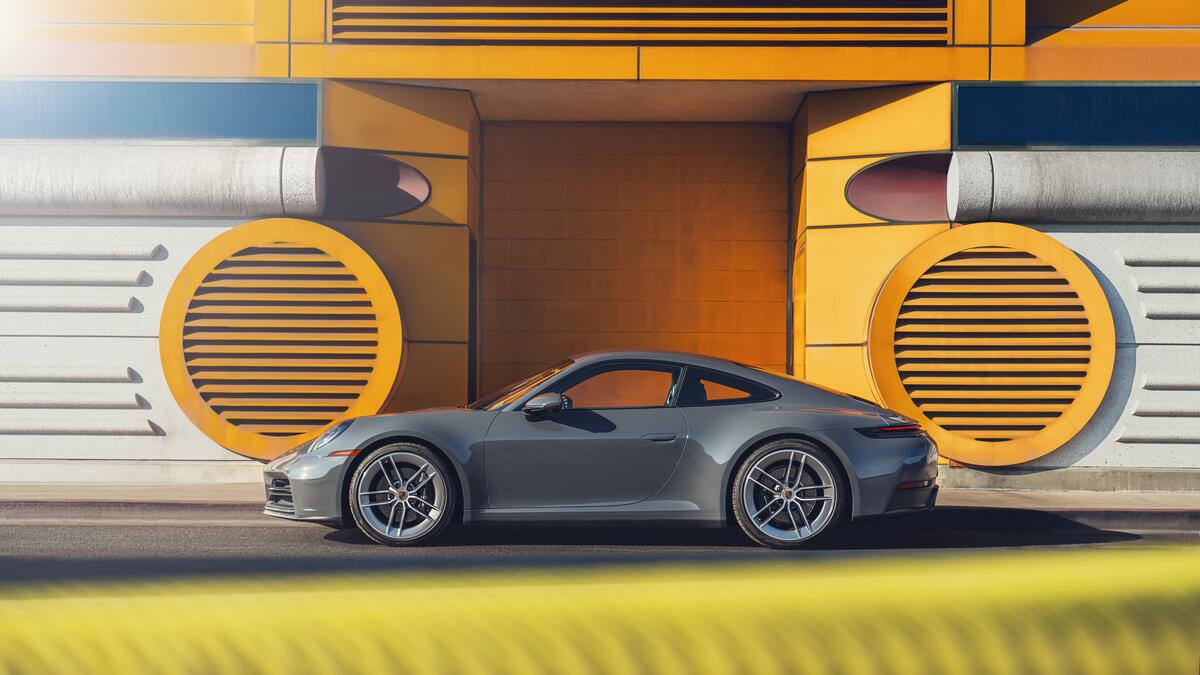
The Porsche 911 is a famous sports car from Porsche, known for its distinctive engine setup. Here, they’re talking about an EV version and how it changes what makes the 911 feel like a 911.
Drum brakes are an older type of brake where pads press against the inside of a drum. They can fade more easily than newer brakes when you brake hard over and over.
The Volkswagen e-Golf is an electric Golf. They’re using it as the kind of EV you’d actually consider as a normal daily, then contrasting it with how expensive an electric 911 would be.
Tiptronic is an automatic transmission that lets you choose gears yourself if you want. It’s basically “automatic with manual control,” and it’s part of the car’s specific spec they’re describing.
They’re talking about converting a regular car into an electric car. Instead of using the original engine and transmission, you swap in an electric motor and battery so the car can still be driven.
A “rusty shell” is basically a car body that’s been eaten by rust. People might still buy it if the important parts can be repaired, but it’s not a complete, clean car anymore.
Structural integrity means the car’s body is still solid and not bent or badly rusted. If the frame/body is too far gone, the project usually isn’t worth saving.
The gauge cluster is the dashboard display the driver uses for things like speed and battery/charging info. On electric cars it often shows how much power you’re using and how regen is working. The host is including it in their critique.
“Stance” is how the car sits—basically whether the front and rear look level or if one end is lower. The host is saying the back of the EV bus looks too low compared to the front. They think suspension setup (or limits on adjustment) is the cause.
“17s” are wheels that are 17 inches in diameter. Changing wheel size usually changes the tire’s sidewall thickness, which can change both how the car looks and whether parts like brakes fit. The host thinks the wheel size is the giveaway that the setup isn’t stock.
Tire aspect ratio is how tall the tire’s sidewall is compared to its width. Taller sidewalls can look and ride differently than shorter ones. The host is saying they’d prefer a tire setup that keeps the proportions closer to what they want.
Brakes can overheat when you use them a lot for a long time, like going down a steep hill. When that happens, braking performance can drop (brake fade). The host is saying that if the EV can’t use regen enough, the front brakes may get too hot.
A kilowatt is a way to measure power—how hard the car is working. Saying “30 kilowatts” is like saying the brakes are capable of doing a certain amount of work per second.
“Braking power” just means how strongly the car can slow down when you press the brake. If the brakes are cold, they may not work as effectively right away, so the car may feel different until everything warms up.
Term
g
“g” is a unit for how hard the car is pulling—like how strong the acceleration feels compared to gravity. “Three tenths of a g” means it’s using about 30% of the acceleration you’d get from gravity.
The host is describing a mental mismatch: your brain expects a big, slow bus, but the vehicle behaves more like a normal car. That can make you feel like you should be worried even when everything is actually fine.
“Draggy” is a little GPS gadget that measures how fast your car accelerates and how quickly it reaches certain speeds. It helps you get real numbers instead of guessing.
They’re talking about who the product is really for: people who love the idea of an old car, but don’t want the hassle of owning one. The EV conversion is meant to remove those practical problems.
Term
fumes
“Fumes” means the exhaust smell and emissions from gas engines. The point is that an EV avoids that downside.
A brake fluid flush is when the old brake fluid is drained and replaced. It helps keep the brakes working consistently because brake fluid can wear out and pick up moisture.
“Dynamically deficient” means the car doesn’t feel right or doesn’t respond well in driving. The hosts are saying that if a car is weak in some way, fixing that weakness can make it a lot better to live with.
RPM (revolutions per minute) is how fast the engine spins, and 8,000 RPM is a high engine speed where many engines produce more power. The host is describing how limiting RPM (not revving it hard) can make a slow car feel even worse when climbing hills or when the engine is cold.
An RPM limit means you’re not letting the engine spin as fast as it wants. That usually reduces power, so the car struggles more to accelerate, especially uphill.
They’re talking about how long it takes to reach 60 mph. Their point is that if it’s around 10 seconds or slower, you may feel like you have to plan your driving more to stay safe and keep moving in traffic.
The Porsche 356 is an old Porsche sports car. It’s the kind of car that can feel fun and quick at lower speeds, but at higher speeds it may not have much “go” left.
The Porsche 912 is an older Porsche sports car. In the podcast, it’s being compared to other classic cars with around 100 horsepower. The point is that it’s meant to be enjoyable and lightweight rather than extremely powerful.
The Datsun 240Z is an older sports car that people still talk about today. The podcast mentions a four-speed version, meaning it’s a manual transmission. It’s considered impressive for how much driving fun you can get from a car like this.
In drag racing, an “eighth mile” is a shorter race distance than the quarter-mile. Since it’s shorter, the car doesn’t have as much time to build speed.
Dragy is a small gadget that uses GPS to measure how fast a car accelerates and how long timed runs take. It helps you get consistent numbers without relying only on track timing.
Gearing is how the transmission “multiplies” the engine’s effort. Shorter gearing helps you move off and accelerate at low speeds, but it can limit how easily the car speeds up at higher speeds.
A “chip” here means a modification to the car’s engine computer. It can change how the engine runs, but it won’t magically fix problems caused by the car’s gear ratios.
Torque multiplication means the transmission can make the engine’s twisting force stronger at the wheels. That’s why lower gears help you launch and accelerate quickly from a stop or slow speed.
This is the idea that not every car is a good candidate for an EV conversion. The hosts are saying you should electrify cars where the electric setup can improve the driving experience without ruining what makes the car fun in the first place.
The powertrain is what actually makes the car move. In a gas car it’s the engine and related parts; in an EV it’s the electric motor and its control system.
Suspension is what connects the wheels to the car and helps the tires stay planted. Better suspension can make the car ride smoother and handle more confidently.
“LS engine” refers to General Motors’ LS-family V8 engines (most commonly the small-block V8 used in many swaps). They’re popular because they’re compact, make good power, and have strong aftermarket support for upgrades like forced induction and modern fuel injection.
Fuel injection is how the engine gets fuel. Instead of a carburetor, it uses electronically controlled injectors to deliver the right amount of fuel at the right time.
LIVE
Hello and welcome to this episode of The Car Mudge and I'm reading this car
Mudge and show okay and I am Derek Tam hyphen Scott I am Jason non hyphen
Camisa and the current show is driven by hardy insurance for enthusiasts by
enthusiasts and many enthusiasts own a VW bus you have to be enthusiastic to own
a VW bus you're not gonna be enthusiastic about how fast it is isn't
how fast it's not how fast it isn't okay what we have here is a not slow and in
fact maybe even speedy Volkswagen bus produced by Kindred Motorworks on loan
to us for a an assessment so if you want to learn what it's like what it does and
doesn't do well then that's all in this episode if you feel this is sacrilege
well stay tuned okay I'm going to clap was that pathetic I mean even Mike laughs
hang your head in shame hyphen that was it would you like Derek I'll do it just
for sound let us do this tomato do that I think you need the context that I say
lettuce instead of let's sometimes you say lettuce I say onion pickle right
that's a latent pickle it's not a pre-pickled pickle is a cucumber precursor
my god what did you have for lunch weed or having mustard for this carmogen
episode is not must I guess that's French is mustard colored yeah that's like
America mustard not German mustard Germans would never see that color and
think of it as mustard no they would think of it as I don't know pollen
sunflower sunflower yeah okay thank you that for those of you not watching and
only listening is a VW bus mm-hmm buzz or bus that buzzes no it does maybe a
little bit electric it's an electric bus so our philosophy as
we have discussed at various times about electrification is that your best
chance of success with electrification is to electrify something where the
powertrain the engine the old outgoing internal combustion engine was not a
highlight like Ferrari luce because Ferraris were never about their engine
of course not okay gotcha so the pushrod Volkswagen flat four with its robust angry
36 to 44 horsepower is not a motoring motoredom motoring them engine
highlight I mean it was fine in a beetle was it no okay so yeah I would say an
air-cooled flat four soundtrack is kind of part of the type one type two type three
type four Volkswagen experience this means the original Volkswagen win of
which there was only one until the golf came out right there was basically one
Volkswagen from the dawn of time in 1939 until the golf came out 1974 right you
got to choose which body style you wanted so we actually parked this bus next to a
karmic gear which was kind of a fun little two car solution just while we were
out driving it that's the karmic gear that I filmed for the Audi TT revelations
did we talk about the TT ever I don't think we did maybe we can do that in a future episode
but you were you could choose how you wanted your beetle to be it could it be a beetle it
could be a karmic gear which is a two plus two Cooper convertible sports car with 30 something
horsepower or sports car is in very heavy air quotes I mean it looked like the quotes are so
air quotes are so heavy that faster than I am or you can have it in a square back a fast
back a notch back or not back there were three backs yeah or a bus and the bus was available
with a pickup bed and like a double cab or a single cab or the bus bus or a panel van which
has no windows right and then there's 20 up to 23 windows as many as 23 windows so your
bus is actually also a greenhouse or something yeah without the flying buttresses yes and so
of all of those I feel like the bus was perhaps the least defined by its engine it was so far away
you could barely hear it and feel it it was you mean experientially defined sure and it sort of
it was largely insufficient to motivate such a large vehicle yeah so experientially defined
by its engine it was not as you posit except for to the extent that it could not motivate because
of the engine so in some sense it was expo experientially defined by its lack of the
the only thing I would say positive about the engine in a bus is that thank god they didn't
go any faster because they were terrifying at 45 miles an hour yes um we in your icons that was
about id buzz id buzz which was also yellow wasn't it I don't know I don't I never remember colors
of cars but I feel like the it might have been yellow but it might have also been blue yeah like
a blue green yeah it was teal oops in any case we had a Volkswagen bus present on that shoot and
a beetle I was actually surprised I think that bus must have been I hesitate to say hot rotted warm
rotted uh it was faster than the beetle it was faster than the beetle sedan despite being um
a bus packaged quite differently that one also had dishes in it as I recall not just wheels you
mean actual like no uh yeah like uh trying to eat on it yes um that car was driving
that so the one the first time I drove that car except on their the racetrack which we only used
for filming that segment um was in the dark on on our way to the air bnb from willow springs
and I not only are the headlights on that car glow worms um in terms of that light I must have been
a six volt they switched to 12 volts in 1967 don't quote me on that uh and the six volt ones are
even worse even 12 yeah even 12 volts you know they were not exactly they were sealed beams they're
terrible um and there was a huge headwind and I could do 42 uh actual I think indicated it was 44
and I had the whole crew behind me I had one person in front of me who just fucked right off
and left me for dead and I'm like you're supposed to be boxing me in so you're protecting me um
and lighting the way you know they thought I had died or something I was
going so slow and then there were cars behind me that were blinding me but also um it couldn't
understand why I was going so slow and I was fully flat out then I made I was heading west
from the track and then I made a left and went south and that headwind turned into a 40 or 50
mile an hour sidewind I like how cardinal directions suddenly become relevant when you
drive an extremely slow car like in a normal car this stuff you just don't even think about it
but it's it's a material factor it's like sailing yeah fair point except in sailing you don't have
to keep a fucking bus in a lane that's true when you're sailing terrifying your constraints are
fewer I could have gone faster than 45 I probably could have done 52 or something um but I wouldn't
I couldn't I I couldn't bring myself to do it because I had to have about self-preservation
120 degrees of lock on the steering just to get it to go straight and then when the wind would
stop momentarily then the car would veer into the shoulder yeah um it was just I
charming is all hell but terrifying um and then driving it sort of in pacific coast highway at
50 miles an hour foot on the floor issue it was okay but it's work it's terrifying they are
concerning it's amazing that they have accumulated the mileage is that some of them have and that
people traveled across the country in them I mean and to think that nobody did it sober either
or like not high is amazing because I feel like it's a 100 concentration type of vehicle to operate
at any speed you have but you have to be high to put yourself at that risk I mean you are you
are the crumple zone and you know the the headlight buckets meaning the rear part of the headlight is
protrudes into your knee space basically that's true not in a way that's intrusive but you can see
it if you look down yeah so there is nothing between you and the 7000 pound Rivian
you're about to hit except due to the insufficiency of your drum brakes while there yes exactly
uh but the only thing in between you is a paper thin piece of sheet metal that is not going to
do a goddamn thing yeah so these vehicles define an entire generation culturally and we're going
to talk about the the characteristics that this one shares and doesn't share with the legacy bus
but you know imagine something that weighs what did we determine 3100 pounds with 40 horsepower
44 on a good day it's not a road burner by any means but yes inextricably linked to the hippie
movement inextricably I mean the thing is like a coontosh you cannot go anywhere in a Volkswagen
bus without getting stopped and spoken to and everyone has a story you just compared a coontosh
to it's in terms of attention they're they're they are up on parody you you cannot I mean
some of the most attention I've ever gotten in any vehicle ever as a Volkswagen bus
everyone is smiling has a story it is relevant they used to be
everywhere now there are none and so that's what drove I would say let's see probably about 20 years
ago I think it was good in 2005 sold a I don't remember if it was a 21 or 23 window bus but
they sold it for above a 100000 dollars in 2005 ish and I remember everyone absolutely
lost their shit because they're like how is this a 100000 dollars you can buy a new 911
for a 100000 dollars like what on earth is going on here and you know
these things came in a whole bunch of different flavors ranging from like quite pedestrian to
like the full most luxurious expensive version which was called the deluxe and the deluxe was
available with or without the full length roof and the full length roof always came with these
eight little skylight things on the top and that's how you got to the grand total of 23 windows
at some point they widened the rear hatch and they got rid of the corner windows and the 23
window became the 21 window but those are the top of desirability that was the top of the line
that was the most expensive it was the most like beachy you know this one has the safari windows
which were optional which is the windshields are hinged at the top and can be driven with them
open if you desire bugs for your teeth which you know some people do if you're
really high yeah i mean i guess that could be a benefit no no obviously it's an incredible
vibe uh to drive with the windows open right and also these cars were not available with air
conditioning so and they weren't fast enough to kill a bug if you hit it anyway which is not the
problem we have with this one so you know we did kill some bugs with this one there are bugs on
the front of which is probably one of the first Volkswagen buses ever to have dead bugs on it
because it's the first one that was ever fast enough to actually kill a bug yeah um okay so
what is it yes okay so we got a tour of kindred motorsports this morning works motor
works yes i was gonna say motorsports didn't sound right as it was coming out of my mouth kindred
motorworks they're located on mare island which is a small i guess it's a female horse oh it
just doesn't necessarily be small no probably large probably large um small island uh in the
abandoned buildings which undoubtedly don't have any asbestos especially a nuclear power
plant that used to be there that probably wasn't asbestos lined or anything right so it's perfectly
safe uh there's there so there's a it's a very cool island and it's getting very gradually
rehabilitated and it's the perfect place to put a facility that makes cars which is what they're
in um either of two flavors gas powered it's a coyote v8 in it or electrified
and then now their third model is the bus evie um and so the their strategy is so the car's
200 which you cannot get with the coyote in it to be clear no i don't know if you'd although i don't
know i don't think it would be as fast all right we'll get there in a second the uh the idea behind
this is take so first of all it's $249,000 um there's one option which is a $20,000 option
for custom paint color otherwise you're picking one off of the um color chart um
i am not horrified by that price um because of what 21 and 23 window buses were worth yeah i mean
they have certainly traded above 200 some probably in into the 300s even uh for some of these things
when they're really nicely restored again this is one of those things where like your shirako in
some sense it happens with cars that were ubiquitous or you know and inexpensive and everyone
experienced them and used them up and nobody thought about saving them and so when you find one
that has survived well enough to be preserved and restored to a high standard then they end up getting
expensive because there's a large number of people who like them and a small number of good
survivors and so they get expensive for that reason especially for the like top of the line one
that everyone wanted at the time but couldn't afford or didn't buy or whatever and this is
sort of representative of that right i mean it it is it's 23 window it was not originally a 23
window so yes before all of the pitchforks come out uh it's not atypical for people to add the
windows and the roof of the safari deluxe uh like this one has uh because it's the look and the
vibe everyone wants and you know if it might be 60 grand for a nice one that's been converted as
opposed to a genuine one for 150 or 200 then there's lots of people out there doing that so
they have not cut up a genuine 21 or 23 window bus to do this this one's a 23 window because
it's a slightly earlier one um and what they did do and it is effectively a full restoration
plus right we'll get there it's much more than a restoration i would say yeah but i mean if yes a
complete restoration of the chassis for sure you're looking at a car that effectively reads brand
new yes perfect paint perfect leather inside perfect upholstered is it leather or vinyl
i think it's leather smells like leather um perfect vinyl perfect carpet it's a it's
effectively a brand new 60s bus right um the facility is really cool it's a snapped one picture
of the sort of center of it the way the building worked is there used to be train tracks that ran
through uh through it was a factory for ships naval ships apparently and so the
train would stop and they'd unload raw materials materials right there turned into boats um kind
of a cool cool vibe every great signage just a kind of a fun uh fun place to work or visually
anyway um and so their idea is they're buying these cars and chopping them up ish but doing a huge
amount of structural reinforcement so they're boxing in the the frame rails because they're
adding 1200 pounds worth of weight to this car in total um but part of that is batteries it's a
oh i forgot already was 84 kilowatt hour battery or 70 74 74 kilowatt hour battery
located in three different spots on the car their goal was closer to 50 50 weight distribution
we have the scales here we can weigh this we will put the weight on the screen because we haven't
done it yet the weight and the weight distribution on the screen um closer to 50 50 weight distribution
just to sort of clean up the handling is what what they told us um the front suspension
is largely from the c seven corvette yes um which is kind of wild so substantial
reinforcements to the chassis to the it's a unitary construction but normally they have c
section uh frame rails and they have boxed them for strength because you're adding a bunch of
weight and a bunch of power and a completely different front suspension design there are
basically what i concluded are front and rear subframes and the front subframe carries the
suspension and the brakes and the steering which is a hydraulically assisted rack and pinion
which is not something definitely not that you could get a volkswagen bus in the past uh and a
huge disc brakes front and rear vacuum assisted which is also so it has a vacuum pump because
it's an eb because so you can't pull vacuum from the engine uh so dramatically improved front
suspension design uh rear suspension design is conceptually closer to original in that it has
torsion bars and spring plates but dramatically upgraded to withstand it's a spring plate it's
like the little thingy that comes out of the back of the torsion bar tube and it like it it's basically
oh that's the connector between the torsion and the trailer where the trailer arm is okay never
heard that term before it's a Porsche volkswagen weenie thing i guess uh so the rear suspension
design looks a lot closer to the original design than the front one does yeah the front is double
control arms um they did have to remake one of the upper control arm um just because they needed
to go with a heavier and wider spring and then would fit on the corvette arm but i'll see seven
hubs um also yeah so it has a corvette bolt pattern which is kind of wild yes um this one
has 17 inch wheels uh which is required to fit over the brakes um the rear subframe is kind of wild
uh took picture of this too there was kind of a cold cradle yeah i mean it's it's kind of genius
they welded a plate onto what was originally the transmission mount and that's where this
subframe mounts to on the leading edge um but it contains um the motor and transmission
known as a single speed gearbox i guess um plus inverter what what else is the ac pump heat uh
heat pump i guess it's not a pump it's not heat pump but it's a uh a heating unit um and a bunch
of coolant pumps to move all the coolant around a to heat the cabin but b also to heat uh to heat
and cool the motors and the inverter and also to cool the cabin right because it has
area conditionata this is not it's air conditioning climate on lager this is a german car yeah so
that's wild because normally these things are um hot yeah it's really good at thermal gain
because there's so much greenhouse area and that's why they have the opening windows the opening roof
and like every single window is operable basically in the thing because uh they're really good at
getting hot inside so we picked this car up it was 84 degrees uh and within 20 minutes because we
moved further away from the bay it was 99 um and i think we might have found the thermal limits
not the thermal limit the limit of rejection heat rejection from that air conditioning system
because it still did get a bit warm in there um but then we opened the door to get out and it's
like oh no it's fucking really hot outside yeah um it was pretty amazing to be in a bus in any air
in a vintage bus um we're in a vintage vw none of them had ac like to have air conditioning
blowing at your feet and face that was insane and that's i would say that experience is consistent
with a lot of the rest of the experience that you have in this bus where you have like some
some parts of it is very obviously bus and then other parts you're like whoa that is not a bus
like experience at all so i drove it first you were behind me in your 124 wagon and i made you
get next to me and floored it and i waited until i hear and i let you get about a quarter of a car
length ahead and then i fucked right past you yeah so and what was that like to observe to look at
it's really comedic and improbable because these things are usually just rolling roadblocks and
to see it like move off like an ev with the obvious instantaneous response and like the
mid-range and like the responsiveness especially immediate torque was very very
like physics defying to see and i think you frightened or concerned or surprised or something
a tesla driver because you sort of like squirted into a hole in traffic in front of them because
they were failing to i don't know if he was looking at the car or just on the phone with his
fucking astrologist or he was just out to lunch but i needed to get over and i kept speeding up
and he kept speeding up and i'm like dude my i need to make this right turn and so i just nailed
it and cut him off um because of course he then got on the gas but the look on his face was one of
complete and total disbelief like how the fuck did that bus just do this yes so we should all
say it as 300 horsepower yeah 350 torques uh and so it makes it transforms it into something that is
genuinely terrifying and unusable on the highway into something that is genuinely usable
like a modern vehicle we did a 0 to 60 test i'm sorry about that noise i just dropped my phone
we test it trapped strapped testing equipment with a 75 ish percent state of charge it was a
7.6 seconds 0 to 60 which okay 7 6 is slow in today's world does that a feel 7 6 and b feel slow
no neither no like if you are doing a full like watt launch with a brake torque the thing
doesn't feel like outrageously quick but if you just are in some sort of real world situation
where you squeeze into the throttle and you're like i need to go over there now then the thing just
it does it in a way that's incredibly sort of snappy feeling it's preposterous it's sort of
defies belief so it is totally usable and i think that like we should maybe back up a little bit
talk about kindred's philosophy because as was articulated to us it is basically aimed at people
who desire an old car for sort of stylistic experiential aesthetic reasons lifestyle reasons
but don't want to put up with the bullshit of actually having an old car and so you know as
those of us who have owned cars of this era know the reality of living with and interacting with one
is that it's kind of unpleasant oftentimes and there's this is why you have your e-golf because
sometimes you just like i don't want to think about anything or worry deal with
this or that and it's just nice to have something that i can think about almost not at all and by
the way none of my cars are 1940s tech carbureted right i mean these are really old school stuff
and so there is this cultural significance and aesthetic value and enthusiasm from the public
that you get with this but you also get all this really incredibly unpleasant stuff whether it's
the vague steering and inability to keep a lane and keep up with traffic in any meaningful way
and so i think it's aimed at addressing all of those things so yes it is stable on the highway
and feels controllable it has you know actually good steering feel and and hydraulic like yeah
and good brakes and moves in a in a meaningfully useful way yeah objectively i'll say the steering
has some play right on center which is strange it's probably in the linkage which is bizarre
because it sort of goes back over and doubles over your head three times or something just how
the whole thing is set up the so a little bit of play on center but then it's perfectly lovely
the brakes have a little bit of initial dead zone and then feel amazing they're just the perfect
amount of additional travel to modulate a bull incredibly modulatable yep all of it is there
it's tepid off the line which is why it's zero to 60 doesn't represent what it the real world how
it feels um and so other than the the fact that the steering wheel is almost completely horizontal
is just a very strange layout it's steering ratio and the assist also dramatically transforms it one
of the defining characteristics of driving an old bus is that the steering wheel the steering ratio
is simultaneously extremely slow yet despite that the steering is extremely heavy uh and and
with all of them neither and the play built in is you will routinely add 180 degrees of sweep
left to right to keep keep it 90 degrees neither direction it's not atypical um and so the idea
that this has you know 10 degrees of play and then and then actually turns and you're not also
popping a tendon in your elbow to get it to do it is pretty wild yes very unbust like yeah and so
it's very strange because in some respects it's very bust like you know and aesthetically it has
been preserved almost entirely intact and that means that the windows and wind noise and you
know all that stuff is old present to the counter for you yeah it's old bus experience and so you
get that part of it but then the you know the the sort of safety and functionality things around
steering and brakes and and straight line performance is all very uh different from how a bus I will
say the buses never rode none of the original Volkswagen's rode all that well this doesn't
either it's a bit busy um but I think it's probably does ride better than original bus uh bus it's
been on such a long time well and I think for me the stability at speed like then you drive one of
those things on those old tires and you're just like this is you know a lot of the complaints
you're making about the steering I think you can love a lot about the tires also I think that whole
entire system is is all cut from the same cloth which is like maximum vagueness and terror and
delivers that um and this delivers almost no vagueness and and it certainly doesn't deliver
terror yeah there was one pretty strong side gust of wind um that pushed me into the next
lane but I admittedly wasn't paying that much attention and I you know sort of it had lulled
me into a sense of security where I thought oh it's just you know kind of drives like a real car
other than the wind noise and then a big custom came in and just sort of oh okay I think I'll go
there again um but uh transformative experience especially the ability to at 50 miles an hour
where the regular bus would be topping out um to just lay into it and move off and pass someone
without a second thought is amazing yeah it totally expands the realm of what is possible
with this vehicle because that vehicle it the the bus is by in standard form I would say I would
categorize it the same way I would a Dushivo or a Cinquecento um this this category of car that is
too slow to safely use on the highway um or in cities even I mean yeah yeah I mean in a city
where you're routinely stopping and then need to go 45 miles an hour and then like stop again
and then you add hills like San Francisco yeah you're doing eight miles an hour in first gear
and that's it matted yeah so it it really does dramatically change and and certainly delivers
on the promise that they made which was to try and make it actually functional and usable to use
this car as a modern person and it's kind of good stereo so there's a pioneer doubled in
carplay unit with nice speakers sounds good works I mean again loud on the highway so you're turning
it up quite loud to to hear your music over that it also has a digital instrument cluster
when we which would be very easy to fuck up would be very easy to fuck up it's very very
simple there's no adjustment there's no interacting with it and I love the design when it first started
strongly recalls the original analog gauge that is present in the bus at the temperatures that
we were at in the sunlight that we were at it it's very hard to read and so if I had to give
some criticism I would say the that gauge cluster doesn't really offer that much more
than a traditional gauge cluster would have if functionally functionally I need a speedometer
an odometer and a and a fuel gauge and that could have been converted to work with an EV all of it
I understand the desire to go to an electric display because now I have a gear slide gear
indicator park reversal or which is actually extremely useful that is yeah you kind of need
it in an EV on the other hand to the left of there is a sort of looks like an old ammeter but
it's a power output meter from yeah it's probably originally a fuel gauge that I kind of wish the
gauges had remained analog because it was so difficult to see the speedometer in sun again this
could be a factor of heat because it was just so hot today and LCD screens like to go dim when it's
hot but you know well done the shifter is sort of recalls the original definitely you push forward
the location and the shift knob the likewise the pedals I mean there's generally speaking they were
very respectful of the original aesthetic of the bus understanding that the people who are buying
this thing want the full vibes of the original bus and so they left almost all of that intact
you know the overhead ventilation console thing is still there they changed the seat arrangement
in the back it's kind of got like a limousine style j-bench I guess now with a table in the
middle which is quite clever they put a lot of effort also into storage in the back storage
enclosures for both maintenance and like your shit as well so very well thought out executed at a
high level and can DC fast charge I mean it's got the old SAE connector not the new tesla connector
but can charge it 40 kilowatts so you could do a road trip on it they're saying real world miles
range of 200 miles I'd find that hard to believe the way the speeds we were driving but
I think in the city that could really be made a lot better because there's one kind of glaring
omission which is there's no regen at all and we're talking to one of the reps
about the one of the engineers who gave us all kinds of great insight on the car and his response
was oh regen doesn't really all help you all that much unless you're coming down the mountain
from like Lake Tahoe okay yes coming down a 7000 foot grade obviously will allow you to regen
some electricity however that's not what I was asking about I was curious about in town because
you are using the friction brakes quite often in this car which is the first time I've ever
experienced that in EV yeah and I mean just for those who have never owned or paid attention to the
sort of real world economy of an EV but I mean your expectations for is the opposite relationship
that you have with a gasoline car in terms of fuel economy which it's you know highway at 50 miles
an hour should give you the best possible fuel economy and EVs are the opposite because in town
you can be decelerating and recapturing energy on a much more regular basis so you should expect
superior range in an urban environment as opposed to constant speed and so to not have the ability
to capture that is you know gives away one of my favorite characteristics of of an EV which is
a sort of psychological thing that I feel like I'm getting free energy instead of using my brakes
and that for some reason as like an engineer like mentally gives me a lot of joy to know that I'm
doing that and it's one of my favorite parts of driving it would be the equivalent of people
a lot of people hate EVs and like you know there's there's no reason it's it can be more efficient
than a gas engine okay tell me the last time you took your foot off the gas and as you slowed down
the injectors the gas gauge right you put put fuel back into the tank and it's it's also just a
matter of convenience because you're not removing your foot from the gas pedal it's it's certainly
that wouldn't certainly not something that would stop me from buying this car no but it just seems
to stop the customers but strange oversight right I mean well and I think everyone has range anxiety
certainly this is a obviously a sort of indulgent frivolous or like a toy type purchase and so maybe
range anxiety is not going to be as much of a concern but that would certainly meaningfully
improve range in the city yes in in that use case right of frequent acceleration and deceleration
and for me cerebrally I think I would get more value out of it also yeah so that's you know
something I would change and it from a technological standpoint it should be relatively straightforward
to incorporate yeah it would be so if the battery pack can deal with 40 kilowatt DC fast charging
then it should be able to it would also be able to deal with 40 kilowatts worth of
regen braking which isn't huge but it's substantial right I mean that's 60 horsepower
55 60 horsepower worth of braking so it would be stopping at a much faster rate than the original
car ever accelerated with and so you would be able to do most of your driving in town
without ever touching the friction brakes the the risk there and we talked about this when we drove
the sacrilege 911 is that without having stability control and anti-lock brakes you then would
have the risk of locking up the rears in when it's slippery out and so there are some beautiful
controls on the dash of this car like you know there's a beautiful analog tile style knobs right
and one is a volume control which I love that it has this digital dash that would otherwise have
push button up and down but you're using an actual re-ostat for volume I would love a regen
next to it and just say give me three levels of regen if you need to or just even on off
maximum or none I would just I one of the things I really like about an EV is a knowing that I'm
not using the brakes but being able to not have to move my foot otherwise I think this is pretty
cool yeah I think there's the overlap also with the Bronco was interesting to observe firsthand
as we saw them in various stages of construction but what they have basically done is repurposed a
lot of so the Broncos four-wheel drive so it has a motor at the front and the rear and they have
basically used the one from the rear and a lot of the sort of hardware is and are even architecture
of the battery system is shared between the two which obviously gives you some economies of scale
that makes the thing you know if they've bothered to do all the development work they seem to be
very thorough about engineering the product so they will disassemble them completely and study
them and figure out how to get where they're trying to go while preserving the important
experiential characteristics for their customers of the original vehicles one of the things that
they really rammed home was the idea of of same uniformity so the idea that you know they have
one specification for standardization thank you fuck me one of these standardizing all of the
cars and that's both for Bronco and and bus but also within them so each one of those cars has
one powertrain option and what they've done is they bring the the bare chassis down to the chassis
down to the bare chassis and weld on any reinforcements and brackets that they need to do and from
there on out everything bolts up to those cars and every car is exactly the same right so there's
not so much custom fabrication and like oh gotta file a little bit here there and do this and that
it's like okay this is a mass production in the sense that the holes on the subframes are all in
the same place and you're not like modifying stuff to get it to fit together exactly and that's part
of part of the well that feeds into serviceability right you need to be able to service these cars
at some point and so if a part fails you need to be able to get to it and you need to be able to
replace it and the new one needs to bolt on in exactly the same spot and so what they've done
that within each model but then also across them so this they developed one HVAC solution and then
this car has a custom air box but the same the fan and whatever else is the same as they're using
in some of the other cars same with the heater steering system same with the suspension
components and stuff where we're possible so that they can just get these cars in an assembly line
and get them out and they're not searching for huge volume no I think it's 50 units per quarter
across all of their model lines so this includes the gasoline Bronco the EV Bronco the bus and then
there's another car coming which is announced good Porsche 911 Porsche 911 and EV Porsche 911
another EV Porsche 911 so lots of people are making EV Porsche 911s and we have experienced
I guess 11 of those so far yeah it's actually what I mentioned before and actually I didn't
I love that they named it that right I love to call it out and actually we both quite like that car
I I can see how people would be upset about removing the engine from a 911 because the engine
and its mounting location and its personality is such a core part of the 911's driving experience
um what I like about this car is that everyone I think can agree the weakest part of that car
the weakest parts of the bus have now been removed right and there's no one going to say well the
parts that prevent you from using and enjoying it in a modern context pretty much anywhere you
would go in any car right and that's not the case in a 911 you can get it in 1964 first-year car and
just drive it like a car and it will keep up with traffic yeah and it will be controllable until it
tries to kill you and yeah so it's a tougher sell conceptually with a 911 to a purist right
yes to a purist and you have to return to their stated mission statement which was that it was
intended for someone whose description I don't personally fit I'm willing to put up with the
bullshit of driving a 50s car with drum brakes or a stinky 911 that you know has no catalysts from
choose any decade really with a carburetor that will react differently every single time you
started yeah press the gas and so the 911 you know is probably not a product for me I did admit
enjoying the sacrilege 911 you know did I enjoy it enough especially at the price point which was
admittedly a lot higher than this product will be and so this thing their electric 911 is going to
cost 29 of the sacrilege car or even perhaps a little bit less and so you know there's obviously
some value there you know maybe the ultimate daily and it like something that's a fun substitute to
an e-golf you'd have to have a huge for me I'd have to have a huge huge huge amount of money
in order to have a $300,000 daily as a substitute to like an e-golf but I you know would I choose
the standard 911 I think probably but as we know my spirit age is 200 getting on and you know it
pained me a little bit to see the 911 all blown apart that they had there I think partly because
it was such a cool spec and it looked like it had been quite a nice car before they blew it apart
so that pained me a little bit but of course you know experience the proof is in the pudding I'd
have to try it out yeah and we to to that point we did both like that sacrilege yes to both of our
surprise yes and that car was a cabriolet that was a tiptronic and that made that helped me come
to terms because it deserved to be killed yes exactly but you know see it was a brown 79 sc
with a cork interior and that's like what I think just such a stellar color combination
and to see it all blown apart I was like that was a little bit sad it's so funny how we as
enthusiasts get so butt hurt about different things that other people wouldn't care about right
or and only some particular cars right I'm no one's upset to chop up a bus I didn't really
chop it up but you know what I mean no but it's irreversibly altered to be sure yeah but no one's
gonna be upset about turning this into an EV fine someone will use it great yeah I mean I think it
helps to know that it wasn't originally a 23 window so you know you're like well if it was going to
be a rusty shell someplace anywhere then and I'm sure they're out there buying sort of and
will always try to buy sort of this the cheapest structurally sound example of anything they can
find because all that the only thing that matters is that it has good structural integrity and is
straight and isn't rusty beyond the level that they can effectively repair and then also what they
were looking for they said they were looking for in the terms of Broncos where projects that people
started you know like restoration project that was started 20 something years ago and someone gave up
and sold it to someone else who sold to someone else and now have it is missing yeah and it's all
the stuff they don't need yeah but you know my question was have you set up they were talking
about setting up sort of supply chains to get to you know the parts that they needed for example
the Corvette hubs and stuff like that and just to make sure they have enough materials on hand
to keep everyone busy and my question was you know did you often also have to set up like a
supply chain to get rid of some of the parts that have value that you don't need i.e. engines and
other stock parts and in the case of the Bronco they don't have any value yeah because you can buy
this is this is something that in my various fantasizations about owning a galaxy you like
look up the part costs because you see when you're like oh the carpet's fucked or like it's missing
this chrome strip or you know this panel needs to be replaced and all that stuff exists and it's
like free right like i'm used to the stuff that i have to deal with with various you know whatever
usually german or italian cars and it's like that's not available or you got to find a used one
and it's seven trillion dollars or or and this stuff is all available and new and cheap it's
just shocking car carpet gets probably a hundred bucks or something outrageous yeah
it's so crazy um yeah i i i think this is really interesting um criticisms on this car
one we talked about regen that's probably my biggest functional concern we talked about the
gauge cluster uh what else do you have what do you the way it sits oh the rear end is about i hope
that that's an a calibration issue but i'd certainly think that yeah the stance
needs to be improved yeah it's just dragging ass the back end of the car is quite a bit lower than
the front yeah again springs or torsion bars so i mean i guess you can you can probably always
adjust it i don't know if that's there's a maximum um but uh that's about it i mean i think i think
the aesthetics of the 17s are the thing that really give away that it's altered and so if i could
have a higher aspect ratio with a smaller diameter wheel i would like that you know if the brakes
don't fit then the brakes don't fit which is too bad but that to me is the aesthetic part that is
like i'm very detail oriented and sensitive to alterations and like it that's always a thing
that i will notice well here's here's one other piece if they put more regen and they would have
to rely less on the brakes hmm look at that we're we're developing a path i mean look there's one
motor it's on the rear it's not like you're you're not going to be doing a huge amount of braking
for the rear but if you are going down a long grade and you did need to drag the brakes the whole
way down you will be overheating the front brakes while you're doing that if you if that is taken
care of with 40 or 50 even 30 kilowatts worth of braking power you're leaving those brakes ice cold
until you need them and you'll have enough reserve um so but what about when you're on a
back road doing terrorism okay so i took an exit ramp at what i would call about 1.7 tenths
1.7 no it was higher than that three i mean you were behind me in your car and you said you were
you were frightened i was apprehended well i've just i've driven enough of these things and spent
enough time in them to be like but then you know the experience that you might be having inside
normally did the same thing and i think you were going about the same speed and you were squealing
you were making strange noises you were like i was i was concerned but it was feeling concerned it
was fine it was totally four tenths of a g three tenths i mean whatever it was it was totally fine
it's just that there's a lot of cognitive dissonance in this thing and i guess that's sort of if i had
to sum it up it's the fact that in some ways you're very definitely in a bus in other ways you very
much aren't and getting all of that sort of improvement in its capability but still having a
very like obviously i'm in a bus experience is very like mentally debilitating for me because
i'm just like i should be concerned right now but i'm not or i should be going very slowly but
i'm not or i shouldn't be able to stop but i can or you know any number of things so it's very
interesting to see its capability and it's not like a 10 or 20 percent improvement
it's like a 10 or 20 times yeah absolutely in its functionality and usability i hit the
gas at so we were kind of stuck in traffic pretty quickly and then i you know as we were leaving
kindred and we're on the highway it's a one lane in each direction set with k-wall and we're doing
50 at one point the guy in front of me had sort of sped up quickly and i thought oh i'll just
mat it and i'll i hit the gas and couldn't believe how it took off took off and i'm like oh i have
my draggy with me i'll do it zero to 60 and i'll do a quarter mile run a couple miles later we're
doing 65 in a 65 zone and i'm i roll into it i'm like i'm not doing a quarter mile because i think
i left off at 75 or something i was moving and i thought i don't want to know i don't want to
know what this car's top speed is and if i have to do a quarter mile run and this thing does 85
or 90 that's a no that's just an absolute and i'm not doing that in a bus you know maybe it
could do it that's the thing is it probably would be perfectly fine doing it yeah but my brain
is telling me 50 is it like don't go faster than 50 yes because of all this sort of i think this
you know obviously this product will really impress people who would never buy a genuine
original one uh but uh want the experience it's so certainly that's their target customer so
it's going to impress their target customers but i think that the people who have spent any amount
of time driving a real like original bus unaltered would be even more impressed because i could say
i thought you were gonna say they weren't going to be impressed no no they're they will they won't
be able to process or fathom what is happening to them because it is so different what'd be funny
to watch the first one let's mat the gas pedal because that's the only way to get moving in one
right and just and then just like rear end the car in front of them having no expectation that
it'll actually move out like that yeah so i mean i think it's an interesting concept i i think that
their philosophy of sort of choosing to focus on consumers who conceptually like the idea of
an old car but in practice it's not a fit for their mechanical inclinations or tolerance for
bullshit or fumes or lack of air conditioning or you know headrests seem to be an important
consideration also for them in terms of uh safety you know safety so it just addresses i think all
of the parts of the spider web graph that are really problematic like dealbreakers for certain
categories not really the safety bar i mean yes that's the one thing that you know really is is
lacking in all old cars look you and i are spoiled spoiled we work on our own cars we
are not afraid of mechanical issues like when i talk to some people it's i often forget about
i have to admit forget how expensive it can be to maintain an old car and i i don't mean just
repair i'm just maintenance stuff where i think oh well let's just you know like just do a brake
fluid flush and you know maybe throw us out of pads and rotors at it and just you know normal
stuff and people like no no my guy wants 3000 dollars to do that okay or whatever it is
right these huge sums of money um this really can take the sting out of out of old car ownership
because yes you're replacing brake pads i mean if you're spending a quarter million dollars
then it's also kind of don't really care probably that is also true um yes you wanted to you were
going to mention region again sorry no but enough enough bitching about the region but no i guess
you're right i mean this is a hundred percent clearly a toy for for people who do have money
lot of discretionary income but would would you buy this or the original if you loved a
bus in the shape of a bus which would you buy if i wanted to use it i would buy this yeah i know i
can't if i wanted to ever go on the highway if i ever wanted to go 40 miles an hour if i wanted
to go on public roads i i was thinking about this the other day because um i was in that's the
important thing you got to choose something that's really dynamically deficient so there's a huge
benefit to be gained by improving the experience well my question is where is the line between
a car that's drivable and not drivable power wise and maybe we can do a whole episode about a hundred
horsepower to how depending on how much weight yes first one i'm thinking like zero to 60 oh yes
right um if i think about it the rover was my slowest car and rover and the cabrio when they
it was a two-liter were about 9.8 for the rover and 10.3 ish to 60 for the cabrio
the cabrio i thought was dangerous it was too fucking slow in the bay area where we have big
hills right the beat at 12 or 13 seconds to 60 was not a drivable car in traffic and it was fine
on level ground but then i'd be going up some of these big hills in san francisco and you know
especially when the engine was cold and i wasn't willing to rev it to 8 000 rpm so if i
applied a 5000 rpm limit to it there were the street right by where you live that was that 15
that was 17th 17th street 15 miles an hour that's all i could do and i'm annoyed when
everyone else maxes out at 15 or 18 miles an hour at peak speed in the middle of a block and i want
to kill them but there i was doing the same thing and so that i i feel like sort of in our
geographical region 10 seconds to 60 is kind of the minimum threshold for you minimum threshold
to really not think it's not that you can't right did you have to think about it yes under 10
and under eight you're fine yeah you're totally fine and one of the experiences that i've had is
like you drive a lot of old sports cars where they are geared relatively short and only have four
speeds and they are peppy and usable until you reach a certain speed and then beyond that you're
this thing has no oomph left and i also can't cruise yeah and i can't cruise on the highway
because the thing's turning 4500 rpm and so like alfa romeo juliet as i like this Porsche 356 is
Porsche 912 all of these sort of like 100 horsepower ish or you know 75 to 125 horsepower
four speed carbureted cars from the 50s and 60s and probably like as you move down market into
the 70s like triumphs and stuff like that there's a certain like experience that you have like and
and this happens sometimes where like i'm in a group drive environment and there's someone in a
car like that and i'm like tell me what your speed is because you know i'm driving a 911 so i could
cruise at 80 but i suspect that in this car you were going to want to be cruising at 68 or at most
and so it's like let me know what your number is and i will set our pace accordingly if you're
try to be sympathetic to people driving stuff like triumphs and it's amazing how much of a
240z even i like this four speed 240z yeah it's amazing how much of a different short gears
will make around town i mean you can really yeah you can keep up with traffic you can keep up perfectly
well until you get onto a interstate and then it become the problem i think that's part of the
reason why i i don't feel like my cars are all that slow right i mean i just did
i had my e30 touring at uh at wednesday night drags last night um and sonoma raceway you mean
sunday night drags because it's monday morning yeah the other day it was wednesday and uh uh
the sonoma drags god love them they used to fucking do wednesday night drags every when
every wednesday now it's a couple times a year um and this is the second time in a row that i've
gone that they have not announced it but changed it to an eighth mile run um and i feel like they
should give us half of our money back because we're only using half the track and i don't really
give a fuck about an eighth mile but i bought my draggy with me i think it was in my bag from
last week's shoot and i was like i'll put it in i'll just keep my foot in it and get a quarter
mile time and so the the e30 is in 94 degree weather with a 25 mile an hour headwind it was
eight seconds to six to eight flat 778 or eight flat whatever it was um and 16
seconds to the quarter mile if a new car came out today that would be it would just be pan for
being dangerously slow i have no problem keeping up with the traffic at all and or on a back road
at all because of gearing right that car at 100 not much left it will still do 130 but you know
100 miles an hour it's not accelerating quickly we don't need that in this country yeah um what
i do need to be able to do is scored across an intersection really quickly and i don't think
i realized that i was that how short geared that e30 is that i was shifting at 52 miles an hour
from second to third like second cannot even with a chip in it that lets it rev 500 rpm
past where it did from the factory um i can't even get to 60 in second gear and so you have this
first of all you have the build in the sound of an engine you know makes it feel like it's faster
than it really is but also you have torque multiplication from the gearing and it actually
does squirt across an intersection um and so even like when you're driving something like this
on the highway it's a it not like not this car like a regular bus on the highway it's just like
a nightmare around town it's okay you can kind of keep up with traffic at it in a car that does
zero to 60 in 18 seconds until it's all you're not trying to go more than 30 right and then
because at that point you're in third gear because second gear on this bus remember whom we raced
that's right bicycle the bicycle did beat me until 40 i think i was doing 38 or something
miles an hour when i finally got past the bicycle you were gone you were in your mirror
it fucked right the fuck off um but uh yeah this thing to be able to just at 50 just move
it was wild yeah wild it really is quite mind-bending so i mean and i think at this price
point given what the experience you get i think it makes good sense for someone who can afford it
yeah i mean it's a lot of money yeah but for the person who's buying it it's
not something that is for someone from who's looking at a gas powered one also you have
a 250 000 gas powered 21 window that you can't drive anywhere and will require maintenance and
as a pain in the ass and is leaking oil and and you have to be able to drive stick um or you can
have an ev version of the same car that's effectively brand new um it does make a lot of
sense that's something i would have never thought uh we'd be saying so reinforcing yet again the
philosophy about electrifying the right thing is really a good idea it has to be something that
has a lot of room for dynamic improvement uh and in which the powertrain is not a central part of
the character right appeal and and making dynamic i talked a couple weeks ago about that uh transam
there was like 78 transam uh that uh was at a Porsche meet and i put Andy Porninger in it
because it was such a riot this car was had nothing to do with the transam and it was a
fully modern suspension front and rear fully modern LS engine um i guess moderately modern at this
point um with a supercharger on it new it was it was not it was it was built recently it was
built recently but it's still you know of the modern fuel injection and such um and i didn't
have any problem with uh the suspension and brakes being upgraded in the car to make it usable
i would have had a problem with it being electric yes because the engine was such the center piece
of that car and all he did was all the guy who did it we built it was fixed the inherent problem
which was the shit but preserved the character right and the character all came from the engine
the character of this car just never did come from the engine i mean the badness
sure so interesting interesting stuff i'm glad we got the chance to yeah it was a pleasure to
interact with it and uh to see the facility where they're coming together and sort of
understand the philosophy and the target customer i think that really helps contextualize it properly
cool um i didn't know if we were going to agree on this one so apparently we
i don't know we never know i don't know because you think i'm like a rapid purist i mean you
bought three luches i don't know if you want to admit that on camera so i did you told me about
i heard you do it oh no uh not we don't always agree on cars sure i didn't know if this one you've
probably got more bus experience than i do and uh i didn't know if you that's why i like it well
but i don't know if you'd miss be missing it you also like crotchety old cranky things too and yeah
i don't miss the the the particular brand of crank in a in a bus is not something i loved
no it's something you tolerate and you like it in spite of that rather than because of those
characters and they fixed it so okay pretty cool all right thank you for joining us we'll be back
next week maybe
About this episode
Kindred Motorworks’ EV VW bus is framed as a transformation from legacy VW bus terror to something genuinely usable. Hosts quantify why the original felt unsafe—“terrifying at 45 miles an hour”—then dig into the conversion: boxed frame reinforcement, a large multi-location battery pack, and a C7 Corvette-based front suspension. Driving impressions emphasize modern highway confidence, DC fast charging at 40 kW, and a glaring omission: “there’s no regen at all.”
This week, we drive an icon that’s been electrified - the Kindred EV Bus, based off of the Volkswagen Microbus. While most of us typically mourn the conversion of many classic cars to EV, this particular conversion may change your mind…
===
Visit http://JasonSentMe.com to get a Hagerty Guaranteed Value (TM) collector-car insurance quote!
===
While most EV conversions strip away the character and soul of a gas car with a great engine, the Volkswagen Microbus is one of those vehicles that was never really defined by its engine. Well, actually - if it was - it was defined by its acceleration, or rather the lack thereof. Many VW Buses had no more than 50 horsepower to work with, making them virtually undriveable above 50 MPH.
The Kindred EV Bus, however, rewrites the rulebook - accelerating from 0-60 in just 7.6 seconds. While that may not seem particularly notable when many modern EVs are twice as fast, this changes the game for this 23-window Microbus - making it genuinely usable in everyday driving. And when the rest of the vehicle was already defined by its iconic styling and form within function, is it now even better than original?
All this and more on this week’s episode of The Carmudgeon Show. Special thanks to Kindred Motorworks for lending us this bus for testing! Check them out at https://kindredmotorworks.com/
Learn more about your ad choices. Visit megaphone.fm/adchoices