
An Actually Usable VW Bus: The Kindred EV Bus — Carmudgeon Ep 241 w/ Jason Cammisa & Derek Tam-Scott
About this episode
Kindred Motorworks’ EV VW bus is framed as a transformation from legacy VW bus terror to something genuinely usable. Hosts quantify why the original felt unsafe—“terrifying at 45 miles an hour”—then dig into the conversion: boxed frame reinforcement, a large multi-location battery pack, and a C7 Corvette-based front suspension. Driving impressions emphasize modern highway confidence, DC fast charging at 40 kW, and a glaring omission: “there’s no regen at all.”
electrification
"our philosophy as we have discussed at various times about electrification is that your best chance of success with electrification is to electrify something where the powertrain the engine the old outgoing internal combustion engine was not a highlight"
Electrification means converting a car so it runs on electricity instead of gasoline. In this discussion, they’re saying conversions are more likely to feel right when the original car wasn’t really about its engine.
Electrification is the process of replacing a car’s traditional internal-combustion powertrain with an electric one (motor, battery, and associated control systems). The hosts’ point is that EV conversions tend to work best when you start with a platform where the original engine wasn’t the main “selling point.”
internal combustion engine
"where the powertrain the engine the old outgoing internal combustion engine was not a highlight like Ferrari luce because Ferraris were never about their engine"
An internal combustion engine is the normal gasoline or diesel engine that burns fuel to make power. The hosts are saying that if the original engine wasn’t the best part of the car, switching to electric can work out better.
An internal combustion engine (ICE) is the traditional gasoline/diesel engine that burns fuel inside the engine to produce power. The hosts contrast it with EVs to argue that some cars are easier to “improve” with electrification because the ICE wasn’t the main attraction.
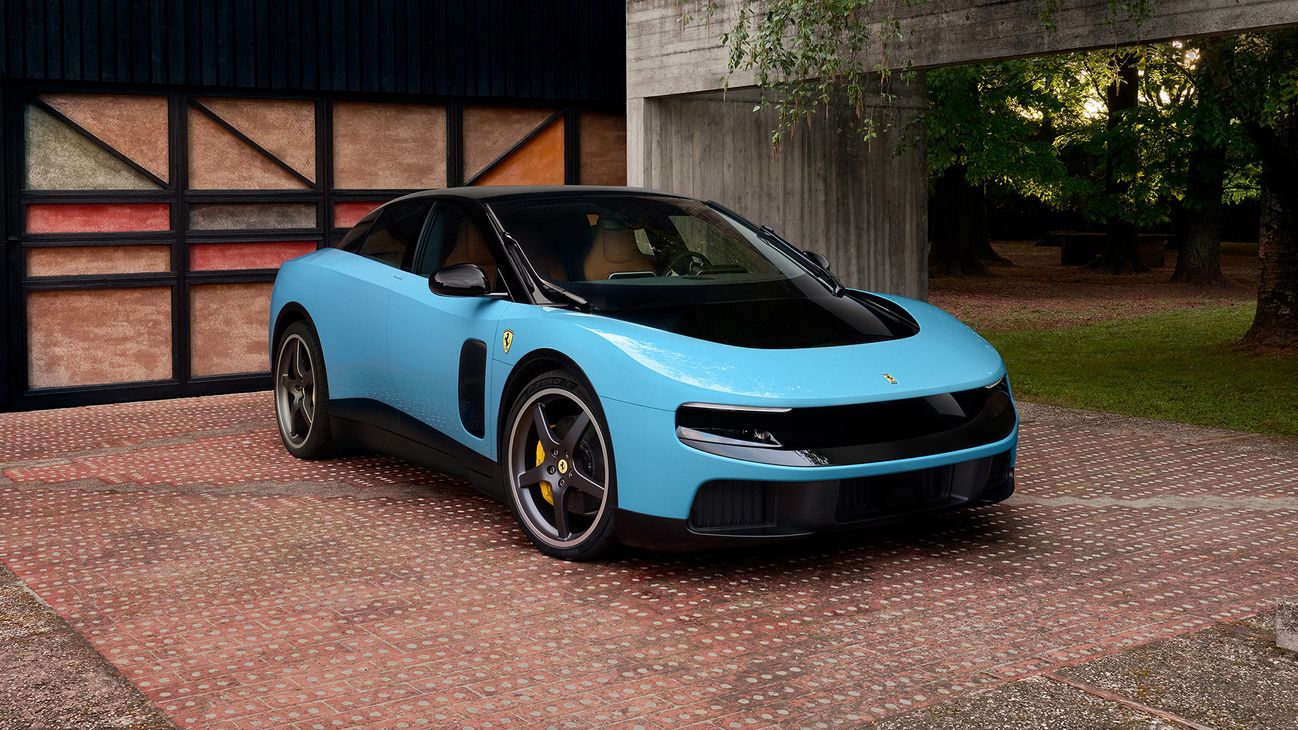
Ferrari Luce
"...ombustion engine was not a highlight like Ferrari luce because Ferraris were never about their engine of..."
The Ferrari Luce is a Ferrari model mentioned in the podcast. The speaker is saying the engine wasn’t the main thing people should focus on. Instead, they’re pointing to other qualities that make the car interesting.
The Ferrari Luce is referenced in the podcast as a Ferrari where the combustion engine wasn’t the highlight. That framing suggests the discussion is about what makes the car notable beyond just engine performance. It’s brought up because Ferrari models are often discussed in terms of their powertrains, so a “not about the engine” comment stands out.
Volkswagen flat four
"of course not okay gotcha so the pushrod Volkswagen flat four with its robust angry 36 to 44 horsepower is not a motoring motoredom motoring them engine"
This is a type of engine where the cylinders sit flat, like a “boxer” layout. The host is talking about the older Volkswagen air-cooled engine that makes a distinctive sound, but it doesn’t have much power. That low power is a big reason the bus feels under-motivated.
A Volkswagen “flat four” refers to a horizontally opposed four-cylinder engine layout. In this segment they’re talking about the classic air-cooled pushrod Volkswagen design used in early Beetle-era cars, where the engine’s sound and feel are part of the experience. The host also mentions a low power output range (36 to 44 horsepower), which helps explain why it struggled to move a larger bus.
air-cooled flat four
"so yeah I would say an air-cooled flat four soundtrack is kind of part of the type one type two type three type four Volkswagen experience"
This describes an older-style engine that cools itself using air instead of antifreeze. It also has a flat, sideways layout for the cylinders. The host is saying this engine type is a big part of the classic Volkswagen “feel,” especially in how it sounds and how much power it has.
An “air-cooled flat four” is an engine that uses air flow (instead of liquid coolant) to remove heat, while keeping the cylinders in a horizontally opposed “flat” layout. This is a hallmark of classic Volkswagen designs, and the host ties it to the “Type 1 / Type 2 / Type 3 / Type 4” era of Volkswagen experiences. Because it’s air-cooled and relatively low power, it also shapes how the vehicle sounds and feels at low speeds.
Type one
"so yeah I would say an air-cooled flat four soundtrack is kind of part of the type one type two type three type four Volkswagen experience"
Volkswagen used “Type” numbers to group related cars. “Type 1” is basically the Beetle family. The host is using these Type numbers to talk about the classic, older Volkswagen era and how they all feel similar.
“Type 1” is Volkswagen’s internal designation for the original Beetle platform and its family. In this segment, the host uses “Type 1 / Type 2 / Type 3 / Type 4” as shorthand for different eras and model families that share the classic air-cooled Volkswagen engineering DNA, including the distinctive flat-four sound. It’s less about a single car and more about a Volkswagen product lineage.
Type two
"so yeah I would say an air-cooled flat four soundtrack is kind of part of the type one type two type three type four Volkswagen experience"
“Type 2” is Volkswagen’s label for the classic Bus/Transporter family. The host is grouping several Volkswagen “Type” families together because they share a similar classic character. Here, it’s especially relevant because they’re talking about a bus.
“Type 2” is Volkswagen’s internal designation for the Transporter/Bus family (the classic split between Beetle-like cars and the iconic bus). The host is grouping “Type 1 / Type 2 / Type 3 / Type 4” together to describe the shared “air-cooled flat four” character across multiple Volkswagen model families. In this episode, the Type 2 bus is the central reference point.
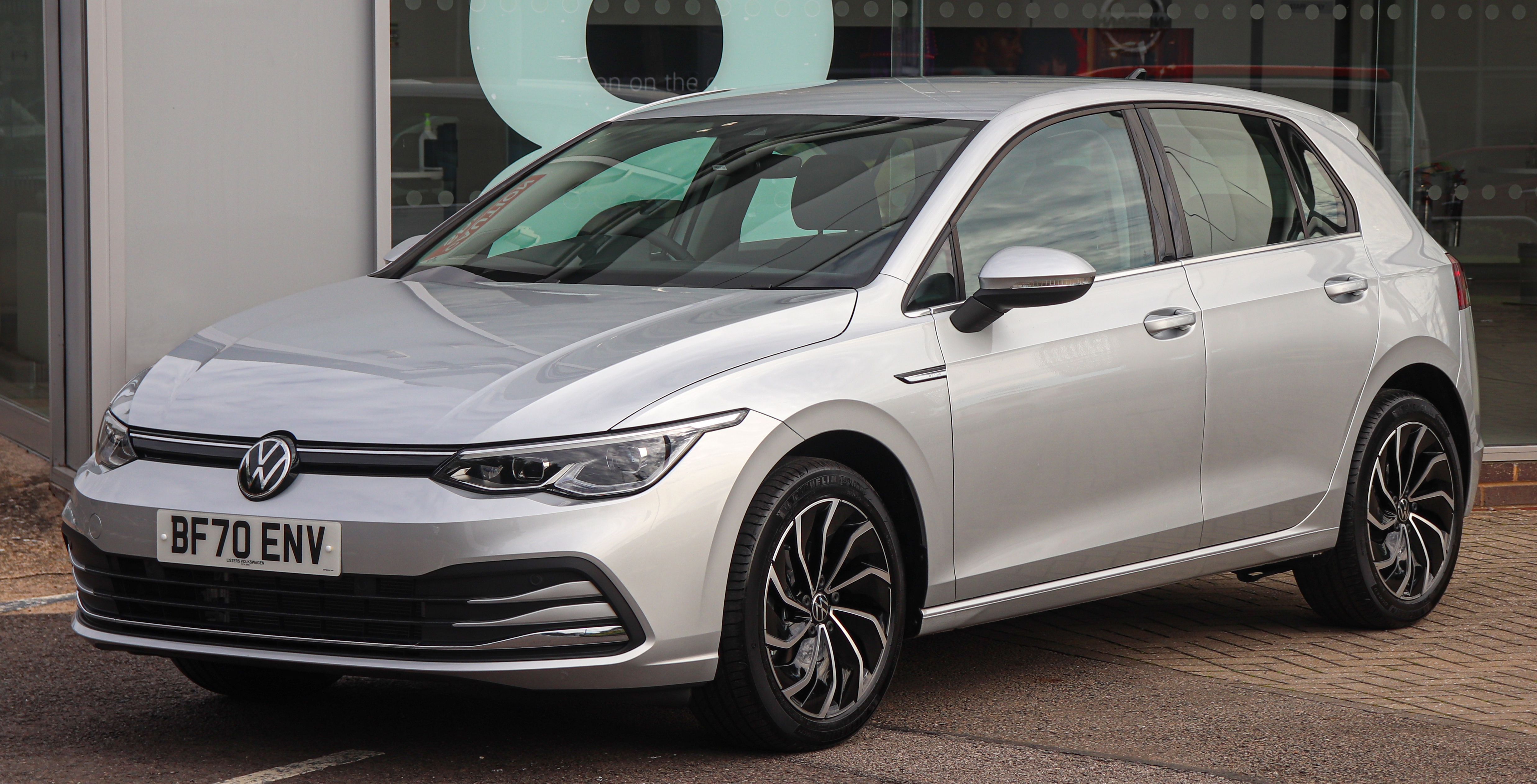
Volkswagen Golf
"...kswagen win of which there was only one until the golf came out right there was basically one Volkswagen..."
The Volkswagen Golf is a compact car that Volkswagen made to replace older models. It became one of their most common cars, so it’s often mentioned when people talk about Volkswagen’s history. It’s designed for everyday driving rather than being a niche vehicle.
The Volkswagen Golf is a mainstream compact car that became a major turning point for the brand. The podcast context suggests it’s being discussed as the model that replaced an earlier, more limited lineup—making it a big deal historically. It’s often referenced when talking about how Volkswagen evolved into a more modern, widely sold platform.

Audi Tt
"but you were you could choose how you wanted your beetle to be it could it be a beetle it could be a karmic gear which is a two plus two Cooper convertible sports car with 30 something horsepower or sports car is in very heavy air quotes I mean it looked like the quotes are so heavy that faster than I am or you can have it in a square back a fast back a notch back or not back there were three backs yeah or a bus and the bus was available"
The Audi TT is a sports car model from Audi. In this part of the conversation, it’s mentioned because the host previously made a video about it. They’re basically saying, “we filmed that other car for the TT episode.”
The Audi TT is a compact sports car line from Audi, and in this segment it’s referenced as the subject of a prior “revelations” video. The host is using it as a comparison point for filming and context—specifically, they parked the bus next to a “Karmic gear” car that he filmed for the Audi TT content. It’s not the main focus of the bus discussion, but it’s a named car line that anchors the episode’s media context.
square back
"or a square back a fast back a notch back or not back there were three backs yeah or a bus and the bus was available"
This is a specific name for a Volkswagen body shape. “Squareback” usually means the rear looks more upright and boxy, often with a hatch-style layout. The host is listing different classic Volkswagen shapes you could choose from.
“Squareback” is a Volkswagen body-style designation used for certain Type 3 variants, characterized by a more upright rear end and a hatchback-like shape. The host is listing multiple classic Volkswagen body styles (“square back,” “fast back,” “notch back”) to explain the variety of Beetle/Type 3-era silhouettes. These names correspond to specific roofline and rear-end shapes, not just generic descriptions.
fast back
"or a square back a fast back a notch back or not back there were three backs yeah or a bus and the bus was available"
A “fastback” is a car body shape where the roof slopes down smoothly toward the back. The host is comparing it to other Volkswagen body shapes like “squareback” and “notchback.” It’s basically about the silhouette.
“Fastback” is a named body style where the roofline slopes smoothly into the rear, creating a continuous aerodynamic-looking shape. In Volkswagen’s classic lineup, “fastback” is used as a specific variant name alongside “squareback” and “notchback,” which describe different rear-end and roofline geometries. The host is using these terms to show how many distinct body shapes were available.
notch back
"or a square back a fast back a notch back or not back there were three backs yeah or a bus and the bus was available"
A “notchback” is a car shape where the roof and rear end look more separated, like there’s a step or notch. The host is listing different classic Volkswagen body shapes you could get. It’s mainly about how the car’s silhouette is shaped.
“Notchback” is a body-style designation where the roofline and rear deck create a more stepped profile (as opposed to the continuous slope of a fastback). The host groups “notch back” with “square back” and “fast back” to describe distinct classic Volkswagen rear-end shapes. These are named categories with specific visual definitions.
panel van
"or a bus and the bus was available with a pickup bed and like a double cab or a single cab or the bus bus or a panel van which has no windows right"
A “panel van” is a van meant more for cargo than passengers. It usually has fewer windows (especially in the back) so it’s more like a box for carrying things. The host is using it to describe different bus configurations.
A “panel van” is a van body style with cargo-focused construction and typically minimal or no side windows in the rear section. The host contrasts it with other bus configurations that do have windows, emphasizing how the same basic vehicle family could be configured for different uses. This is a specific body/utility category rather than a generic “van.”
experientially defined
"of all of those I feel like the bus was perhaps the least defined by its engine it was so far away you could barely hear it and feel it it was you mean experientially defined sure and it sort of it was largely insufficient to motivate such a large vehicle"
The host is talking about how a car’s personality comes from how it feels when you drive it, not just the numbers. In this case, the bus is so big and the engine so weak that you notice the lack of power in everyday driving. So the engine’s weakness becomes part of what defines the experience.
“Experientially defined” here is a discussion concept: the idea that a vehicle’s identity is shaped less by specs and more by what it feels like to drive and hear. The host argues the bus is “experientially defined by its lack” of engine power—meaning the engine is so weak relative to the vehicle size that it dominates the driving experience through underperformance. It’s a qualitative way to talk about how power and sound translate into real-world feel.

Volkswagen Id Buzz
"...es an hour yes um we in your icons that was about id buzz id buzz which was also yellow wasn't it I don't k..."
The Volkswagen ID. Buzz is an electric van. It’s meant to be a practical vehicle for people and cargo, but powered by electricity. The podcast is also pointing out its distinctive color and presence.
The Volkswagen ID. Buzz is an electric van based on Volkswagen’s ID electric platform, designed to capture the look and feel of a classic people-mover. The podcast mentions the ID Buzz being yellow, which fits the way it’s often discussed as a standout, recognizable EV. It’s relevant because it brings an electric powertrain to a vehicle type associated with practicality and family use.

beetle
"and a beetle I was actually surprised I think that bus must have been I hesitate to say hot rotted warm rotted uh it was faster than the beetle it was faster than the beetle sedan"
The Volkswagen Beetle is the iconic VW compact with a long-running history and a very recognizable shape. In this segment it’s used as the baseline comparison for how the bus feels and how speed/acceleration compare in real conditions.
headwind
"and there was a huge headwind and I could do 42 uh actual I think indicated it was 44 and I had the whole crew behind me ...and then there were cars behind me that were blinding me"
A headwind is wind hitting you from the front. It makes it harder for the car to move forward, so you feel slower even if you’re pushing the vehicle hard.
A headwind is wind blowing directly against the vehicle’s direction of travel, increasing aerodynamic drag. The hosts describe how a headwind made the bus extremely slow even when fully flat out, and then how it shifted into a strong sidewind.
12 volts
"they switched to 12 volts in 1967 don't quote me on that uh and the six volt ones are even worse even 12 yeah you know they were not exactly they were sealed beams they're terrible"
“12 volts” is the usual electrical system voltage in most cars. It typically powers brighter lights than older 6-volt setups, though the host says these particular headlights still weren’t great.
“12 volts” refers to the standard automotive electrical system voltage used on most modern cars, which generally provides more power for lighting and accessories. The host notes that even with 12 volts, the headlights are “terrible,” specifically calling them sealed beams.
six volt
"and I not only are the headlights on that car glow worms um in terms of that light I must have been a six volt they switched to 12 volts in 1967 don't quote me on that uh and the six volt ones are"
“Six volt” means the car’s electrical system runs on 6 volts instead of the more modern 12 volts. Older 6-volt systems often make headlights dimmer and less effective.
“Six volt” refers to a 6-volt electrical system, which was common on older vehicles and affects how bright and effective components like sealed-beam headlights can be. The host contrasts it with later 12-volt systems, saying the 6-volt setup is “even worse” for lighting performance.
sealed beams
"even worse even 12 yeah even 12 volts you know they were not exactly they were sealed beams they're terrible"
Sealed-beam headlights are older-style headlight units where the bulb and lens are built as one sealed piece. The host is saying these older headlights don’t put out very good light.
Sealed-beam headlights are older headlamp units where the bulb and reflector are sealed into one replaceable unit. The host criticizes them as “terrible,” implying limited light output and beam quality compared with what modern drivers expect.
boxing me in
"and I could do 42 uh actual I think indicated it was 44 and I had the whole crew behind me I had one person in front of me who just fucked right off and left me for dead and I'm like you're supposed to be boxing me in so you're protecting me"
“Boxing in” is when cars position themselves to trap another car in a small space. Here it’s used as a joke about how the crew should have helped keep the host from being isolated on the road.
“Boxing in” is a race/track driving tactic where a trailing car positions itself to limit the space for the car ahead to escape. The host uses it humorously to describe how the crew should have helped manage traffic while filming at low speed.
sidewind
"and then I made a left and went south and that headwind turned into a 40 or 50 mile an hour sidewind I like how cardinal directions suddenly become relevant when you"
A sidewind is wind coming from the side. It can shove the car sideways and make driving feel more difficult, especially for a tall, slow vehicle like a bus.
A sidewind is wind blowing from the side, which can push a vehicle laterally and make it harder to stay in the lane. The host ties the sidewind magnitude to the bus’s very low speed/handling constraints, comparing it to sailing where wind direction dominates the outcome.
120 degrees of lock
"120 degrees of lock on the steering just to get it to go straight and then when the wind would stop momentarily then the car would veer into the shoulder"
Steering lock is how far you can turn the steering wheel before it hits its limit. If the steering has a lot of lock, it can feel harder to keep the car going straight without constantly correcting.
“Steering lock” is how far the steering wheel can rotate from center to full left or full right. A very large steering lock angle can make the bus feel imprecise or require careful correction to keep it going straight.
mileage
"it's amazing that they have accumulated the mileage is that some of them have and that people traveled across the country in them"
Here, “mileage” just means how many miles the vehicle has been driven. The point is that some of these old buses have still racked up a lot of miles.
In this context, “mileage” means how many miles the vehicle has been driven over its lifetime. The speaker is pointing out that some of these buses have survived with high accumulated use.
100 concentration type of vehicle
"i mean and to think that nobody did it sober either or like not high is amazing because I feel like it's a 100 concentration type of vehicle to operate at any speed you have"
The speaker means this van takes a lot of focus to drive safely. They’re saying you can’t just relax behind the wheel—you have to stay on top of what the vehicle is doing.
This is a driving-intensity concept: the speaker is describing the bus as requiring constant attention to stay safe. The idea is that its steering behavior, braking feel, and crash-space layout make it mentally demanding to operate.
crumple zone
"you are you are the crumple zone and you know the the headlight buckets meaning the rear part of the headlight is protrudes into your knee space"
A crumple zone is the part of a car that’s designed to crumple in a crash. That helps slow down the crash forces instead of them going straight into you.
A crumple zone is an engineered area of a vehicle designed to deform in a crash to absorb energy. The speaker is contrasting how the bus’s crash protection leaves occupants with less space between them and hard components.
headlight buckets
"you are you are the crumple zone and you know the the headlight buckets meaning the rear part of the headlight is protrudes into your knee space basically"
Headlight buckets are the inner housings behind the headlights. On some older cars, those housings can take up space near your knees or feet.
“Headlight buckets” refers to the headlamp housings/inner structures that sit behind the visible headlight lens. In older vehicles, these can intrude into the driver’s footwell/knee area, affecting how much space you have in a crash.
deluxe
"like the full most luxurious expensive version which was called the deluxe and the deluxe was available with or without the full length roof"
“Deluxe” here means a nicer, more optioned-up version of the VW Bus. It’s the more expensive top trim with extra features.
“Deluxe” is a trim/option level used on certain Volkswagen Bus variants to indicate a higher-content, more luxurious specification. In this segment, it’s the “top of desirability,” tied to features like roof options and a higher window count.
full length roof
"the deluxe was available with or without the full length roof and the full length roof always came with these eight little skylight things on the top"
This means the bus has a roof section that runs farther along the van. That lets it have more windows/skylights, which is one of the things that makes certain versions more desirable.
A “full length roof” on a VW Bus refers to a roof configuration that extends farther along the body, enabling additional glazing and a more panoramic look. The host links it to the “eight little skylight things” and a total window count, which is part of how these buses are judged and priced.
skylight
"the full length roof always came with these eight little skylight things on the top and that's how you got to the grand total of 23 windows"
A skylight is a window in the roof. In this case, the host is saying the top VW Bus versions have several skylights that add to the overall window look.
A skylight is a window in the roof that lets in light from above. On these deluxe VW Bus configurations, the host notes multiple skylights on the roof as a key part of the “window count” that defines the most desirable versions.
safari windows
"this one has the safari windows which were optional which is the windshields are hinged at the top and can be driven with them open"
“Safari windows” are a special VW Bus window option that can open outward. The idea is to get more fresh air while driving.
“Safari windows” are a specific VW Bus window option where the windshield/upper glass is hinged at the top so it can be opened outward. The host describes them as optional and highlights the practical/quirky appeal—driving with them open for airflow.
air conditioning
"also these cars were not available with air conditioning so and they weren't fast enough to kill a bug if you hit it anyway"
Air conditioning is what cools the inside of the car. The host is saying this VW Bus version didn’t have it, so it’s more old-school to live with.
Air conditioning (A/C) is a climate-control system that cools and dehumidifies cabin air. The host points out that these VW buses weren’t available with A/C, which affects day-to-day usability compared with modern vehicles.
Kindred Motorworks
"we got a tour of kindred motorsports this morning works motorworks"
Kindred Motorworks is the shop the hosts visited. They’re the ones working on or building the EV VW Bus discussed in the episode.
Kindred Motorworks is the shop/company the hosts toured, connected to the “Kindred EV Bus” project mentioned in the episode title. In this segment, it’s introduced as the place where the bus was examined and discussed.
mare island
"they're located on mare island which is a small i guess it's a female horse"
Mare Island is a real place in California. The host is saying the shop is located there in old industrial buildings.
Mare Island is a location in California known historically for naval and industrial activity. The host uses it to describe where Kindred Motorworks is based, including the setting of abandoned industrial buildings.
Coyote V8
"in um either of two flavors gas powered it's a coyote v8 in it or electrified and then now their third model is the bus evie um"
“Coyote V8” is a name people use for Ford’s modern V8 engine. In this context, it’s the engine they might put into the bus instead of going electric.
“Coyote V8” refers to Ford’s modern 5.0-liter V8 engine family (often called the Coyote) used in swaps because it’s compact for its power and has strong aftermarket support. Here, it’s mentioned as one of the gas-powered flavors for the Kindred EV Bus lineup, contrasted with an electrified version.
restored to a high standard
"and so when you find one that has survived well enough to be preserved and restored to a high standard then they end up getting expensive because there's a large number of people who like them and a small number of good survivors"
This is about why some older cars get expensive. If a vehicle survives and is restored really well, there are fewer of them in great condition, and more people want them—so the price rises.
The hosts are describing how condition and quality of restoration drive collector value: when a once-common vehicle survives and is restored well, it becomes scarce in “good” form. That scarcity plus demand from enthusiasts is what pushes prices up.

23 window
"this is sort of representative of that right i mean it it is it's 23 window it was not originally a 23 window so yes before all of the pitchforks come out"
“23-window” is a collector term for a Volkswagen Bus with a certain number of side windows. People care because the window layout is part of the classic look, and that look can strongly affect what a bus is worth.
A “23-window” Volkswagen Bus is a specific factory window-count configuration that enthusiasts use as shorthand for a particular body style and era. In this segment, the speaker emphasizes that the example discussed is a 23-window bus (and notes it was not originally a 23-window), which matters because collectors pay big premiums for the look people want.
full restoration of the chassis
"and what they did do and it is effectively a full restoration plus right we'll get there it's much more than a restoration i would say yeah but i mean if yes a complete restoration of the chassis for sure"
“Full restoration of the chassis” means they’re doing serious work on the van’s main structure, not just making it look nice. That matters because the structure is what keeps the car solid and safe over time.
A “full restoration of the chassis” implies the structural base is rebuilt or extensively repaired rather than just cosmetic work. In collector terms, that’s a major quality signal because it addresses rust and structural wear that can’t be fixed by paint or interior refresh alone.

60s bus
"[916.3s] effectively a brand new 60s bus right um the facility is really cool it's a snapped one picture"
They’re talking about a classic 1960s Volkswagen bus. In this project, they keep the bus’s look but rebuild the important parts underneath for an electric conversion.
The speaker is describing a Volkswagen Type 2 “bus” from the 1960s, which is the classic split-window-era look. In this episode it’s being converted into an EV, so the original body is being kept while the drivetrain and chassis hardware are heavily reworked.
84 kilowatt hour battery
"[953.5s] amount of structural reinforcement so they're boxing in the the frame rails because they're [958.9s] adding 1200 pounds worth of weight to this car in total um but part of that is batteries it's a [965.3s] oh i forgot already was 84 kilowatt hour battery or 70 74 74 kilowatt hour battery"
kWh is how much electricity the battery can store. A bigger number like 84 kWh usually means more driving range before you have to recharge.
A “kilowatt-hour” (kWh) is the amount of electrical energy stored in the battery. An 84 kWh pack is a large capacity for an EV conversion, which directly affects how far the bus can go before needing to recharge.
50 50 weight distribution
"[971.6s] located in three different spots on the car their goal was closer to 50 50 weight distribution [976.1s] we have the scales here we can weigh this we will put the weight on the screen because we haven't done it yet the weight and the weight distribution on the screen"
This is about how the car’s weight is split between the front and back. Closer to 50/50 can help the car feel more balanced and easier to control.
“50/50 weight distribution” means the vehicle’s mass is split roughly evenly between the front and rear axles. Converters chase this because it can improve balance and handling predictability, especially when you add heavy components like EV batteries.

c seven corvette
"[986.4s] just to sort of clean up the handling is what what they told us um the front suspension [993.0s] is largely from the c seven corvette yes um which is kind of wild"
They’re using suspension parts from a C7 Corvette. That’s a big deal because it’s a modern performance setup, and it has to be adapted to fit and work safely under a classic VW bus.
The speaker says the front suspension is largely sourced from the C7-generation Chevrolet Corvette. That matters because the Corvette’s suspension geometry and components are designed for a modern, performance-focused chassis, so transplanting it into a classic VW bus requires major structural reinforcement.
unitary construction
"[1000.3s] substantial [1000.3s] reinforcements to the chassis to the it's a unitary construction but normally they have c [1005.5s] section uh frame rails and they have boxed them for strength"
Unitary construction means the car’s body and frame are basically one combined structure. That affects how you reinforce it when you add heavy parts like batteries.
“Unitary construction” means the body and chassis are integrated into one structure rather than using a separate ladder frame. The speaker contrasts this with the bus’s more traditional frame-rail approach, explaining why they’re boxing the rails for strength after adding heavy EV components.
hydraulically assisted rack and pinion
"[1014.4s] basically what i concluded are front and rear subframes and the front subframe carries the [1020.3s] suspension and the brakes and the steering which is a hydraulically assisted rack and pinion [1025.3s] which is not something definitely not that you could get a volkswagen bus in the past"
Rack-and-pinion is a common steering design that turns the wheels using gears. “Hydraulically assisted” means power help is added so steering takes less effort.
A “rack and pinion” steering system uses a toothed gear (pinion) that moves a steering rack left/right to turn the wheels. “Hydraulically assisted” means a hydraulic pump helps provide steering effort, which is a modern-feeling setup compared with older, lighter-assist steering approaches.
vacuum assisted
"[1025.3s] which is not something definitely not that you could get a volkswagen bus in the past uh and a [1031.2s] huge disc brakes front and rear vacuum assisted which is also so it has a vacuum pump because [1035.8s] it's an eb because so you can't pull vacuum from the engine"
“Vacuum assisted” refers to power braking that uses a vacuum source to boost brake force. The speaker notes an EV-specific constraint: you can’t rely on engine vacuum, so they use a vacuum pump to generate the vacuum needed for the brake booster.
eb
"[1031.2s] huge disc brakes front and rear vacuum assisted which is also so it has a vacuum pump because [1035.8s] it's an eb because so you can't pull vacuum from the engine uh so dramatically improved front"
“EB” means electric vehicle. Because there’s no gas engine, the car can’t rely on engine vacuum for things like brake boosting, so the conversion adds a pump.
“EB” here is shorthand for “electric vehicle.” The key point is that EVs don’t produce the same engine vacuum as a gasoline engine, which is why the conversion needs a vacuum pump for brake assist.
torsion bars
"torsion bars and spring plates but dramatically upgraded to withstand it's a spring plate it's [1052.6s] like the little thingy that comes out of the back of the torsion bar tube"
Torsion bars are like springy metal rods that work by twisting. They help the wheels move up and down and keep the ride from feeling too bouncy.
Torsion bars are suspension springs that twist instead of compressing. In a VW Bus-style setup, they’re mounted in tubes and connected to suspension arms to control ride height and wheel movement.
spring plates
"torsion bars and spring plates but dramatically upgraded to withstand it's a spring plate it's [1052.6s] like the little thingy that comes out of the back of the torsion bar tube"
Spring plates are the metal parts that connect the torsion bar to the suspension. When the torsion bar twists, the spring plate moves to help support the car.
Spring plates are the stamped metal arms that connect the torsion bar to the suspension. As the torsion bar twists, the spring plate rotates to provide springing for the rear suspension.
double control arms
"the rear suspension [1069.6s] design looks a lot closer to the original design than the front one does yeah the front is double [1077.0s] control arms"
This means the front wheel is held by two arms instead of just one. Those arms help keep the tire positioned well as the suspension moves.
“Double control arms” refers to a double-wishbone-style front suspension using two control arms per side to locate the wheel. This layout helps control camber changes as the suspension moves, improving handling and tire contact.
bolt pattern
"to go with a heavier and wider spring and then would fit on the corvette arm but i'll see seven [1091.7s] hubs um also yeah so it has a corvette bolt pattern which is kind of wild yes"
The bolt pattern is how the wheel’s bolt holes are laid out. It has to match the car’s hubs or the wheels won’t fit correctly.
A bolt pattern is the arrangement of the wheel’s lug holes (how many lugs and the diameter of the circle they sit on). If the vehicle uses a “Corvette bolt pattern,” it means wheel fitment can follow that standard rather than the original VW pattern.
rear subframe
"this one [1097.6s] has 17 inch wheels uh which is required to fit over the brakes um the rear subframe is kind of wild [1105.1s] uh took picture of this too there was kind of a cold cradle"
A subframe is like a smaller frame inside the car that holds key parts. It helps support and mount the drivetrain and suspension components.
A subframe is a secondary structural frame that bolts to the main body/chassis and carries specific components. Here, the rear subframe is described as a major structural “platform” for packaging the drivetrain and mounting points.
17 inch wheels
"this one [1097.6s] has 17 inch wheels uh which is required to fit over the brakes um the rear subframe is kind of wild"
Wheel size affects whether the wheel can clear the brakes. They’re saying you need 17-inch wheels so the brake parts fit inside the wheel.
Wheel size matters for brake clearance: larger wheels provide more room for bigger brake calipers. In this case, the speaker says 17-inch wheels are required to fit over the brakes.
cold cradle
"uh took picture of this too there was kind of a cold cradle [1110.6s] they welded a plate onto what was originally the transmission mount"
They’re using a nickname for the built-in mounting area that helps keep the EV hardware cool. It’s part of how the cooling system is packaged.
“Cold cradle” is a descriptive nickname for a packaged mounting structure that supports components while managing thermal loads. In this context, it’s tied to how the EV’s motor/inverter cooling system is integrated into the vehicle structure.
single speed gearbox
"subframe mounts to on the leading edge um but it contains um the motor and transmission [1121.8s] known as a single speed gearbox i guess um plus inverter"
An EV can usually use only one gear because the motor pulls strongly at many speeds. That’s what a single-speed gearbox means.
A single-speed gearbox is an EV drivetrain layout that uses one fixed gear ratio instead of multiple gears. Electric motors can provide strong torque across a wide speed range, so a multi-gear transmission is often unnecessary.
inverter
"known as a single speed gearbox i guess um plus inverter [1130.0s] what what else is the ac pump heat uh heat pump i guess it's not a pump it's not heat pump but it's a uh a heating unit"
The inverter is the electronics box that turns battery power into the right kind of power for the electric motor. It helps control how hard the motor works.
An inverter converts DC power from the battery into AC power for the electric motor. It also controls motor torque and speed by modulating how the AC is generated.
heat pump
"what what else is the ac pump heat uh [1130.0s] heat pump i guess it's not a pump it's not heat pump but it's a uh a heating unit um and a bunch [1136.5s] of coolant pumps"
A heat pump is a device that can transfer heat to warm the cabin. In EVs, it’s also part of the system that manages temperatures for the motor and electronics.
A heat pump is a system that can move heat in either direction—heating the cabin in cold weather and, depending on design, helping manage cooling. In EVs, it’s often integrated with the same coolant loops used for motor and inverter thermal management.
coolant pumps
"um and a bunch [1136.5s] of coolant pumps to move all the coolant around a to heat the cabin but b also to heat uh to heat [1142.4s] and cool the motors and the inverter"
Coolant pumps move a liquid through the car’s cooling system. That liquid carries heat away from the motor and electronics and helps the cabin heating/AC work.
Coolant pumps circulate liquid coolant through the EV’s thermal system. They move heat between the motor/inverter and the heat exchangers so the electronics stay within safe temperature limits and the cabin can be heated/cooled.
operable
"because there's so much greenhouse area and that's why they have the opening windows the opening roof [1165.6s] and like every single window is operable basically in the thing"
Operable windows can be opened. Opening them can help the cabin breathe and reduce how hot it gets.
“Operable” windows/roof means they can be opened by the occupants, which changes airflow and ventilation. In a vehicle that gets hot easily, having many operable openings can help manage cabin heat soak.
heat rejection
"and i think we might have found the thermal limits [1182.8s] not the thermal limit the limit of rejection heat rejection from that air conditioning system [1187.5s] because it still did get a bit warm in there"
Heat rejection is how well the car can get rid of heat. If it can’t dump enough heat outside, the inside of the bus starts getting hot.
Heat rejection is how effectively the HVAC and cooling systems can move heat out of the cabin and power electronics. When the system can’t reject enough heat, the cabin temperature rises even if the AC is running.
instantaneous response
"to see it like move off like an ev with the obvious instantaneous response and like the mid-range and like the responsiveness"
It means the car reacts right away when you hit the gas. EVs can do this because they can send power to the wheels very quickly.
“Instantaneous response” describes how an EV can deliver torque almost immediately when you press the accelerator. That’s a key difference versus many internal-combustion setups, where there can be delays from engine speed, throttle mapping, and drivetrain behavior.
torques
"so we should all say it as 300 horsepower yeah 350 torques uh and so it makes it transforms it"
Torque is the force that helps the car pull forward. More torque usually means stronger acceleration, especially from a stop or at low speeds.
“Torque” is the twisting force that actually turns the wheels, and it strongly affects how quickly a vehicle accelerates. The host pairs “horsepower” and “torque” to explain why the EV-converted bus feels dramatically faster than a typical vintage bus.
0 to 60 test
"we did a 0 to 60 test i'm sorry about that noise i just dropped my phone"
This is a simple acceleration test: how fast the car goes from 0 to 60 mph. Lower time usually means quicker acceleration.
A “0 to 60 test” measures how many seconds it takes a car to accelerate from 0 mph to 60 mph. It’s a common real-world performance metric, especially for comparing acceleration feel between vehicles.
state of charge
"we test it trapped strapped testing equipment with a 75 ish percent state of charge it was a 7.6 seconds 0 to 60"
State of charge just means how full the battery is. If the battery isn’t very full, the car may not accelerate as strongly.
“State of charge” (SoC) is how full the battery is, expressed as a percentage. Battery SoC matters because EVs can deliver less power when the battery is not in an optimal range, affecting acceleration results.
watt launch
"if you are doing a full like watt launch with a brake torque the thing doesn't feel like outrageously quick"
They mean a very aggressive “hit the gas hard” start. The car feels less dramatic in everyday driving, but more impressive when you launch it hard.
A “watt launch” here refers to a hard, power-on acceleration technique where the driver uses a very aggressive throttle input to maximize launch performance. The host contrasts that with normal driving, explaining why the car doesn’t feel “outrageously quick” unless you launch it hard.
brake torque
"if you are doing a full like watt launch with a brake torque the thing doesn't feel like outrageously quick"
It means using the brakes while you launch. That can help the car put power to the ground instead of just spinning its wheels.
“Brake torque” is the braking force applied (often to hold the car or manage traction) while launching. In EV testing, combining throttle with controlled braking can help keep the drivetrain from spinning and can change the launch feel and measured acceleration.
steering feel
"so yes it is stable on the highway and feels controllable it has you know actually good steering feel and and hydraulic like yeah"
Steering feel is what it’s like to turn the wheel—how heavy or light it feels and how clearly it tells you what the tires are doing. Here they’re saying the bus steers in a way that feels good and controllable.
Steering feel is how the steering system communicates road forces to the driver—things like resistance, smoothness, and how predictable the car is. In this segment, the host is praising that the bus has “actually good steering feel,” meaning it’s easier to control and more confidence-inspiring than typical old vehicles.
dead zone
"the brakes have a little bit of initial dead zone and then feel amazing they're just the perfect amount of additional travel to modulate"
A dead zone is a range of pedal or control input where the system response is delayed or muted. The host says the brakes have “a little bit of initial dead zone,” meaning the first part of brake pedal travel doesn’t immediately produce strong deceleration—then the feel improves.
modulate
"they're just the perfect amount of additional travel to modulate a bull incredibly modulatable yep all of it is there"
To modulate means to smoothly and precisely vary input to get a controlled output. The speaker praises the brake pedal’s travel so it’s “incredibly modulatable,” i.e., you can apply exactly the braking force you want without abrupt changes.
zero to 60
"it's tepid off the line which is why it's zero to 60 doesn't represent what it the real world how it feels"
Zero to 60 is a test of how fast a car accelerates from a stop to 60 mph. They’re saying the bus doesn’t feel quick right at launch, so the test number doesn’t tell the whole story about how it drives.
Zero to 60 mph (often written “0–60”) is a common acceleration benchmark that measures how quickly a vehicle reaches 60 mph from a stop. The host argues that this number doesn’t match real-world feel because the bus is “tepid off the line,” so the launch doesn’t reflect the overall driving experience.
steering ratio
"is just a very strange layout it's steering ratio and the assist also dramatically transforms it one of the defining characteristics of driving an old bus is that the steering wheel the steering ratio"
Steering ratio describes how many turns of the steering wheel it takes to turn the wheels. It affects whether steering feels quick and responsive or slow and relaxed—especially noticeable on older buses.
Steering ratio is how much the steering wheel turns relative to how much the wheels turn. A higher ratio generally means slower, more gradual steering response; a lower ratio means quicker steering. The host calls steering ratio one of the defining characteristics of driving an old bus, and links it to how the steering wheel layout and power assist change the experience.
steering is extremely heavy
"[1491.7s] is simultaneously extremely slow yet despite that the steering is extremely heavy uh and and [1497.6s] with all of them neither and the play built in is you will routinely add 180 degrees of sweep"
Heavy steering means it takes a lot of effort to turn the wheel. It can make the car feel harder to drive, especially when parking or making frequent corrections.
“Heavy steering” means the steering effort is high—more force is required to turn the wheel. That sensation is often tied to steering geometry, assist system behavior, and tire grip, and it can make a vehicle feel slow or tiring even at low speeds.
180 degrees of sweep
"with all of them neither and the play built in is you will routinely add 180 degrees of sweep [1504.9s] left to right to keep keep it 90 degrees neither direction it's not atypical um and so the idea"
This is how much you have to turn the steering wheel while driving. “180 degrees of sweep” means the wheel turns a lot from left to right during normal steering inputs.
“Degrees of sweep” describes how far the steering wheel turns from one side to the other. When the host says you’ll routinely add 180 degrees of sweep left to right, they’re talking about the steering travel needed for normal driving corrections.
10 degrees of play
"the idea [1510.7s] that this has you know 10 degrees of play and then and then actually turns and you're not also [1515.4s] popping a tendon in your elbow to get it to do it is pretty wild"
“Play” means the steering wheel can move a bit before the front wheels really start turning. Less play usually feels more precise and less tiring to drive.
“Play” is free movement in the steering before the wheels actually respond. The host contrasts the EV Bus’s low steering play with older buses that require more input before the car reacts, which can feel vague and tiring.
wind noise
"and aesthetically it has [1524.6s] been preserved almost entirely intact and that means that the windows and wind noise and you [1530.8s] know all that stuff is old present to the counter for you yeah it's old bus experience"
Wind noise is the sound you hear from air moving around the vehicle. If the shape and windows are similar to the original bus, you can still hear that classic old-van wind sound.
Wind noise is the audible turbulence created when air flows around the body, mirrors, and windows. The host notes that because the EV Bus preserves the old bus’s exterior details, you still get that “old bus” wind-noise character.
side gust of wind
"yeah there was one pretty strong side gust of wind um that pushed me into the next [1592.6s] lane but I admittedly wasn't paying that much attention and I you know sort of it had lulled [1597.7s] me into a sense of security"
A side gust of wind is when wind hits the car from the side and pushes it sideways. It can make the vehicle feel like it wants to drift, especially at higher speeds.
A side gust of wind is lateral wind pressure that pushes the vehicle sideways, testing directional stability. The host describes being pushed into the next lane, then notes the EV Bus’s behavior felt secure until the gust reminded them how much wind matters.
50 miles an hour
"but uh transformative experience especially the ability to at 50 miles an hour [1613.1s] where the regular bus would be topping out um to just lay into it and move off and pass someone"
They’re talking about what the van can do around 50 mph. The point is that the EV version still has strong acceleration there, while the older bus would struggle to keep up.
This is a specific speed reference used to compare real-world drivability. The host highlights that the EV Bus can accelerate and pass confidently at 50 mph, whereas the regular bus would be near its top-speed limits.
first gear
"and then like stop again and then you add hills like San Francisco yeah you're doing eight miles an hour in first gear and that's it"
First gear is the lowest gear used for starting and slow driving. The host is saying the bus spends a lot of time in that low-speed mode in city traffic.
“First gear” refers to the lowest gear ratio in a transmission, used for very low-speed movement and starting. The host uses it to describe how the EV bus is effectively operating at crawl speeds in stop-and-go city traffic, especially on hills.
CarPlay
"there's a pioneer doubled in carplay unit with nice speakers sounds good works I mean again loud on the highway so you're turning it up quite loud to to hear your music over that"
CarPlay is a way to connect an iPhone to a car’s screen so you can use apps like music and maps while driving. It’s one of the “modern tech” features the hosts are praising here.
CarPlay is Apple’s in-car system that mirrors and controls compatible iPhone apps through the vehicle’s infotainment screen. In this segment, it’s mentioned as part of the bus’s modern usability, paired with a Pioneer head unit and speakers.
digital instrument cluster
"it also has a digital instrument cluster when we which would be very easy to fuck up would be very easy to fuck up it's very very simple there's no adjustment there's no interacting with it"
A digital instrument cluster is the car’s screen for the speedometer and other gauges instead of traditional needles. The host likes the design but says sunlight can make it difficult to read.
A digital instrument cluster replaces traditional analog gauges with screens that display speed, range, and other vehicle information. Here, the host notes it’s easy to use but can be hard to read in bright sunlight, and they compare it to the original bus’s analog gauges.
gear slide gear indicator park reversal
"I understand the desire to go to an electric display because now I have a gear slide gear indicator park reversal or which is actually extremely useful that is yeah you kind of need it in an EV"
Even though it’s electric, the car still needs a clear way to choose things like Park and Reverse. The host likes how this bus shows the gear/selection clearly.
On an EV, the driver still needs clear selection of drive modes like Park, Reverse, and Drive, because the vehicle doesn’t have a traditional geartrain feel. The host highlights the “gear slide”/indicator layout as extremely useful in an EV, contrasting it with the visibility issues of other displays.
power output meter
"to the left of there is a sort of looks like an old ammeter but it's a power output meter from yeah it's probably originally a fuel gauge"
A power output meter is a gauge that tells you how much power the EV is using or sending. The host says it looks like an old analog gauge and may have been adapted from the bus’s original gauge layout.
A power output meter shows how much electrical power the vehicle is delivering or requesting at that moment. The host compares it to an older-style analog gauge (like an ammeter) and notes it likely started life as a fuel gauge in the original bus layout.
LCD screens
"could be a factor of heat because it was just so hot today and LCD screens like to go dim when it's hot but you know"
LCD screens are liquid-crystal displays used in many modern dashboards and infotainment systems. The host points out a common issue: LCDs can dim in hot conditions, which can worsen visibility of critical readouts like speed in bright weather.
DC fast charge
"and can DC fast charge I mean it's got the old SAE connector not the new tesla connector but can charge it 40 kilowatts so you could do a road trip on it"
DC fast charging is the quick way to charge an EV at a charger designed for speed. It’s what makes longer trips practical because you don’t have to wait as long.
DC fast charging is a method of charging an EV using direct current, which can refill the battery much faster than standard AC charging. It’s especially important for road trips because it reduces the time spent at chargers.
SAE connector
"and can DC fast charge I mean it's got the old SAE connector not the new tesla connector"
A connector is the plug shape your EV uses to charge. The host is saying this bus uses the older SAE-style fast-charging plug instead of Tesla’s plug.
The SAE connector refers to the standardized plug used for DC fast charging in many regions and networks. In this segment, the host contrasts it with Tesla’s connector, implying charging compatibility differences.
regen
"there's one kind of glaring omission which is there's no regen at all ... you are using the friction brakes quite often in this car which is the first time I've ever experienced that in EV"
Regen is how an EV “slows down and charges at the same time.” Instead of wasting all that slowing-down energy as heat, it sends some of it back to the battery—so you usually get better range in city driving.
“Regen” is short for regenerative braking, where the EV uses its electric motor as a generator during deceleration to recover energy back into the battery. The segment argues that the bus lacks regen, which removes a key efficiency advantage EVs normally have in stop-and-go driving.
7000 foot grade
"oh regen doesn't really all help you all that much unless you're coming down the mountain from like Lake Tahoe okay yes coming down a 7000 foot grade"
A grade is how steep a road is. The host is saying regen can be useful on a long, steep downhill because the car has more chances to slow down and turn that motion into battery charging.
A “grade” is the steepness of a road, and a “7000 foot grade” describes a long, significant elevation drop or climb. The host uses it to illustrate that regen can matter most when you have extended downhill driving where there’s lots of deceleration energy to recover.
friction brakes
"because there's no regen at all ... you are using the friction brakes quite often in this car"
Friction brakes are the normal brakes that stop the car by squeezing pads against discs. The host is saying this EV ends up using those brakes a lot because it doesn’t have regen.
Friction brakes are the conventional brake system that slows the car by pressing pads against rotors, turning kinetic energy into heat. In an EV, regen typically handles much of the deceleration, so relying heavily on friction brakes can reduce efficiency and EV “feel.”
real world economy of an EV
"just for those who have never owned or paid attention to the sort of real world economy of an EV but I mean your expectations for is the opposite relationship"
“Real world economy” here means how efficiently an EV uses energy in everyday driving conditions, not just on a constant-speed test. The host contrasts EV behavior in city driving (where regen can help) versus highway cruising (where constant speed limits opportunities to recover energy).
range anxiety
"but strange oversight right I mean well and I think everyone has range anxiety certainly this is a obviously a sort of indulgent frivolous or like a toy type purchase and so maybe range anxiety is not going to be as much of a concern but that would certainly meaningfully improve range in the city"
Range anxiety is when EV drivers worry they won’t have enough battery to finish their trip. It’s basically the fear of running out before they can find a charger. If the EV can go farther in real driving, that worry goes down.
Range anxiety is the fear that an EV won’t have enough battery to reach the next charging stop. It’s especially common for drivers who don’t know how far they can go in their specific conditions (speed, weather, traffic). Improving range—like better efficiency in stop-and-go driving—can reduce that worry.
DC fast charging
"it from a technological standpoint it should be relatively straightforward to incorporate yeah it would be so if the battery pack can deal with 40 kilowatt DC fast charging"
DC fast charging is a high-speed way to charge an EV at a charger that can push a lot of power into the battery. It’s faster than plugging into a regular outlet or slower home charger. The car has to be able to accept that power for it to work quickly.
DC fast charging is a way to charge an EV using direct current at high power, which can refill the battery much faster than standard AC charging. The key practical point is how much power the battery can accept without overheating or limiting charge speed. Higher DC fast-charging capability usually makes longer trips and frequent charging more convenient.
anti-lock brakes
"we talked about this when we drove the sacrilege 911 is that without having stability control and anti-lock brakes you then would have the risk of locking up the rears in when it's slippery out"
Anti-lock brakes (ABS) stop the wheels from locking up when you brake hard. If wheels lock, you can’t steer as well and the car can slide. ABS helps the car keep grip so you can stay more controllable.
Anti-lock brakes (ABS) prevent the wheels from locking up during hard braking by modulating brake pressure. Locked wheels lose steering ability and can increase stopping distance on some surfaces. ABS helps maintain traction so the driver can better steer while braking.
stability control
"we talked about this when we drove the sacrilege 911 is that without having stability control and anti-lock brakes you then would have the risk of locking up the rears in when it's slippery out"
Stability control is a safety feature that helps the car stay on track when the road is slippery or you’re turning hard. If the car starts to slide or rotate the wrong way, it can intervene automatically. Without it, it’s easier to lose control.
Stability control is an electronic safety system that helps keep the car pointed in the direction the driver intends during cornering or slippery conditions. It can reduce engine power and apply individual brakes to correct unwanted yaw or skidding. Without it, traction loss is more likely to become a loss of control event.
locking up the rears
"without having stability control and anti-lock brakes you then would have the risk of locking up the rears in when it's slippery out"
Locking up the rears means the back wheels lose grip and start sliding instead of rolling. On slippery roads, that can make the car spin or feel out of control. Systems like ABS help prevent this.
Locking up the rears means the rear wheels stop rotating and slide instead of rolling, usually due to excessive braking force for the available traction. When the rear locks, the car can become unstable and oversteer more easily on slippery surfaces. This is why ABS and stability control matter.
analog tile style knobs
"so there are some beautiful controls on the dash of this car like you know there's a beautiful analog tile style knobs right"
They’re talking about real physical knobs on the dashboard instead of only touchscreen or button menus. Physical controls can be quicker to adjust while driving. In an EV, that can include changing how strong the regen braking feels.
This refers to physical, analog-style control knobs on the dashboard rather than a purely digital interface. In EVs, having dedicated controls for functions like regen can make it easier to adjust deceleration feel without digging through menus. The “tile” description suggests a modern layout of tactile controls.
digital dash
"and one is a volume control which I love that it has this digital dash that would otherwise have push button up and down"
A digital dash is the driver’s gauge cluster shown on a screen. It can display lots of information and can be customized by the car. EVs often use it to show battery and charging-related info.
A digital dash is an instrument cluster displayed on screens instead of traditional analog gauges. It can show more information and change layouts depending on driving mode, including EV-specific data like battery status and regen behavior. Pairing a digital dash with physical controls can improve usability.

Bronco
"cool yeah I think there's the overlap also with the Bronco was interesting to observe firsthand as we saw them in various stages of construction but what they have basically done is repurposed a"
The Ford Bronco is a rugged 4x4 SUV built for off-road driving. Here, they’re talking about borrowing Bronco components and layout ideas to help build an electric version more efficiently.
Ford Bronco is a modern off-road SUV known for its four-wheel-drive capability and rugged body-on-frame roots. In this segment, the host discusses using Bronco hardware as a donor for an EV drivetrain layout, including front and rear motor placement.
four-wheel drive
"what they have basically done is repurposed a lot of so the Broncos four-wheel drive so it has a motor at the front and the rear and they have"
Four-wheel drive means the car can send power to all four wheels. It helps the vehicle grip better, especially on dirt, snow, or rough ground.
Four-wheel drive (4WD) sends power to both the front and rear axles, improving traction on loose or uneven surfaces. The segment uses it as context for an EV conversion approach that keeps a similar front/rear motor concept.
serviceability
"it's like okay this is a mass production in the sense that the holes on the subframes are all in the same place and you're not like modifying stuff to get it to fit together exactly and that's part of part of the well that feeds into serviceability right you need to be able to"
Serviceability is how easy it is to fix the car when something breaks. If parts are designed to bolt in the same way every time, repairs are faster and less complicated.
Serviceability is how easily a vehicle can be inspected, repaired, and maintained when parts wear out or fail. The segment explains that standardized mounting points and bolt-on components help technicians access and replace parts without custom fitting.
HVAC
"so this they developed one HVAC solution and then this car has a custom air box but the same the fan and whatever else is the same as they're using"
HVAC is the car’s heating and air-conditioning system. It’s what keeps the cabin comfortable, and here they’re saying they standardized that system across vehicles.
HVAC stands for heating, ventilation, and air conditioning—the systems that control cabin temperature and airflow. The segment notes they developed one HVAC solution across models to keep parts and assembly consistent.
air box
"so this they developed one HVAC solution and then this car has a custom air box but the same the fan and whatever else is the same as they're using"
An air box is an intake/ducting enclosure that routes airflow to components like the HVAC system or engine-related air paths. In this segment, it’s called out as a custom piece while other HVAC components (like the fan) remain shared.
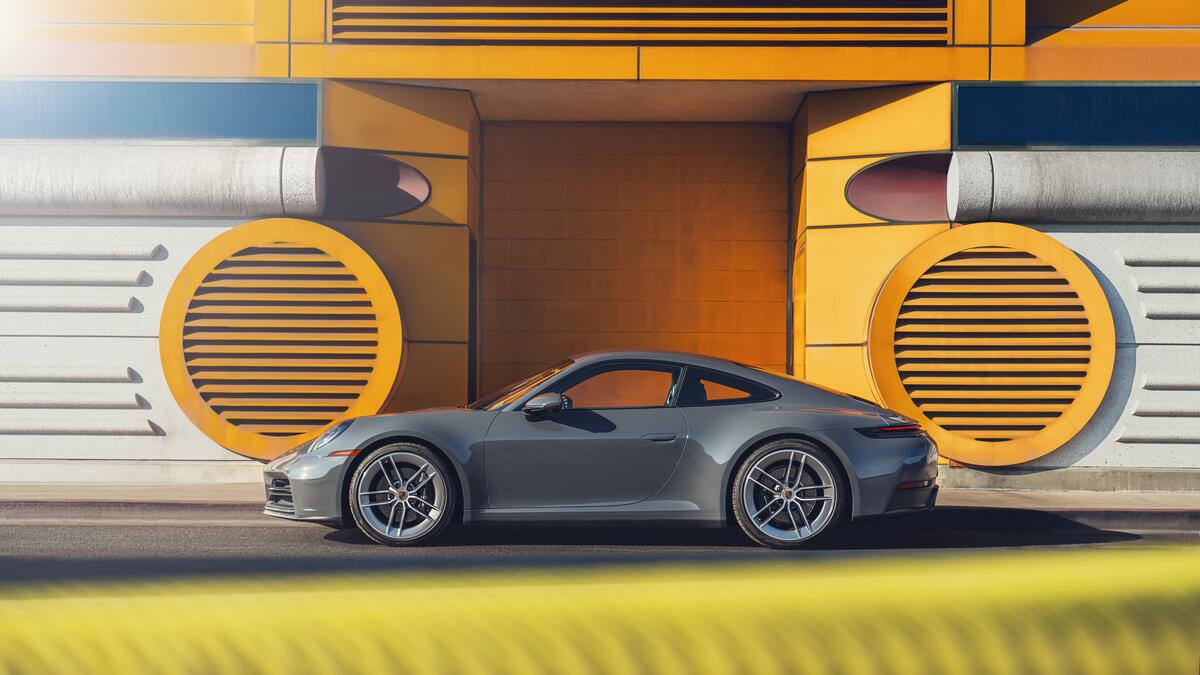
Porsche 911
"there's another car coming which is announced good Porsche 911 Porsche 911 and EV Porsche 911 [2227.4s] another EV Porsche 911 so lots of people are making EV Porsche 911s"
The Porsche 911 is a famous sports car from Porsche, known for its distinctive engine setup. Here, they’re talking about an EV version and how it changes what makes the 911 feel like a 911.
The Porsche 911 is defined by its rear-mounted flat-six engine layout and long-running identity as a sports car. In this segment, the hosts discuss both gasoline and EV versions of the 911, focusing on how removing the engine changes the driving experience and what purists expect.
drum brakes
"which was that it was intended for someone whose description I don't personally fit I'm willing to put up with the bullshit of driving a 50s car with drum brakes or a stinky 911"
Drum brakes are an older type of brake where pads press against the inside of a drum. They can fade more easily than newer brakes when you brake hard over and over.
Drum brakes use brake shoes that press outward against a rotating drum to create stopping force. They’re generally less effective at repeated high-speed braking than modern disc brakes, which is why the hosts mention them as part of the “50s car” compromise.
catalysts
"or a stinky 911 that you know has no catalysts from choose any decade really with a carburetor"
Catalysts are emissions-control parts in the exhaust that reduce pollution. Without them, the car can smell worse and emit more harmful gases.
Catalysts (in the emissions sense) are devices in the exhaust system that help convert harmful pollutants into less harmful gases. The hosts contrast a “stinky 911” without catalysts to a properly emissions-equipped car, implying different smell and emissions behavior.
carburetor
"choose any decade really with a carburetor that will react differently every single time you started yeah press the gas"
A carburetor is an older way to mix fuel and air for the engine. It can make the car feel less consistent than modern fuel-injection systems.
A carburetor mixes air and fuel before it enters the engine, using mechanical metering rather than electronic fuel injection. The hosts use it to describe how older engines can feel inconsistent—reacting differently each time you press the gas.

e-golf
"maybe the ultimate daily and it like something that's a fun substitute to an e-golf you'd have to have a huge for me I'd have to have a huge huge huge amount of money"
The Volkswagen e-Golf is an electric Golf. They’re using it as the kind of EV you’d actually consider as a normal daily, then contrasting it with how expensive an electric 911 would be.
The Volkswagen e-Golf is an all-electric version of the Golf, used here as a benchmark for a practical, affordable EV daily-driver. The hosts compare the idea of an electric 911 as a “fun substitute” to an e-Golf, emphasizing the huge price gap.
cabriolet
"and that car was a cabriolet that was a tiptronic and that made that helped me come to terms because it deserved to be killed"
A cabriolet is a convertible—its roof can open up. The hosts mention it because it’s a specific kind of Porsche body style, not just “any 911.”
A cabriolet is a convertible body style where the roof can be opened and closed. In this context, it matters because a Porsche 911 cabriolet is a specific configuration with different structure and market value than a coupe.
tiptronic
"and that car was a cabriolet that was a tiptronic and that made that helped me come to terms because it deserved to be killed"
Tiptronic is an automatic transmission that lets you choose gears yourself if you want. It’s basically “automatic with manual control,” and it’s part of the car’s specific spec they’re describing.
Tiptronic is Porsche’s name for an automatic transmission that also allows manual-style gear selection (often via a shift lever or paddles). It’s mentioned here as part of the specific 911 cabriolet configuration, which helps explain why that particular car’s setup felt “right” to the host.
turning this into an EV
"or and only some particular cars right I'm no one's upset to chop up a bus I didn't really chop it up but you know what I mean no but it's irreversibly altered to be sure yeah but no one's gonna be upset about turning this into an EV fine someone will use it great"
They’re talking about converting a regular car into an electric car. Instead of using the original engine and transmission, you swap in an electric motor and battery so the car can still be driven.
This refers to an EV conversion: taking an existing vehicle and replacing its original powertrain with an electric drivetrain. The hosts frame it as “less sacrilege” than destroying a classic gas car, because the end result is still a usable vehicle rather than a permanently wrecked original.
rusty shell
"helps to know that it wasn't originally a 23 window so you know you're like well if it was going to be a rusty shell someplace anywhere then"
A “rusty shell” is basically a car body that’s been eaten by rust. People might still buy it if the important parts can be repaired, but it’s not a complete, clean car anymore.
A “rusty shell” is an enthusiast term for a vehicle body that’s largely stripped and salvageable mainly for its remaining structure, despite significant corrosion. The host uses it to describe the kind of starting point EV converters are willing to buy if the underlying structure can still be repaired.
structural integrity
"because all that the only thing that matters is that it has good structural integrity and is straight and isn't rusty beyond the level that they can effectively repair"
Structural integrity means the car’s body is still solid and not bent or badly rusted. If the frame/body is too far gone, the project usually isn’t worth saving.
Structural integrity is how sound a vehicle’s body and chassis structure are—whether it’s straight, solid, and not compromised by rust or prior damage. For conversions and projects, this is often the first filter because a rotten or bent shell can’t be made “right” economically.
gauge cluster
"we talked about the gauge cluster uh what else do you have what do you the way it sits"
The gauge cluster is the dashboard display the driver uses for things like speed and battery/charging info. On electric cars it often shows how much power you’re using and how regen is working. The host is including it in their critique.
A gauge cluster is the driver-facing instrument panel (speed, power/charge status, warning lights, etc.). On EVs, it often includes displays for battery state, energy flow, and regenerative braking behavior. The host mentions it as part of the car’s overall usability/fit-and-finish concerns.
stance
"yeah again springs or torsion bars so i mean i guess you can you can probably always adjust it i don't know if that's there's a maximum um but uh that's about it"
“Stance” is how the car sits—basically whether the front and rear look level or if one end is lower. The host is saying the back of the EV bus looks too low compared to the front. They think suspension setup (or limits on adjustment) is the cause.
In car talk, “stance” refers to the car’s visual ride height and attitude—how high or low the front and rear sit relative to each other. It’s often influenced by suspension geometry and spring/torsion-bar settings, and it can be a sign of fitment changes or altered suspension. The host says the rear sits noticeably lower than the front and wants that corrected.
17s
"but uh that's about it the aesthetics of the 17s are the thing that really give away that it's altered"
“17s” are wheels that are 17 inches in diameter. Changing wheel size usually changes the tire’s sidewall thickness, which can change both how the car looks and whether parts like brakes fit. The host thinks the wheel size is the giveaway that the setup isn’t stock.
“17s” means 17-inch wheels, which typically changes the tire sidewall height and overall wheel/tire diameter. That can noticeably alter the car’s look (“aesthetics”) and can also affect fitment with brakes and suspension. The host says the wheel choice is what gives away the car has been altered.
aspect ratio
"if i could have a higher aspect ratio with a smaller diameter wheel i would like that you know if the brakes don't fit then the brakes don't fit"
Tire aspect ratio is how tall the tire’s sidewall is compared to its width. Taller sidewalls can look and ride differently than shorter ones. The host is saying they’d prefer a tire setup that keeps the proportions closer to what they want.
Tire aspect ratio is the sidewall height expressed as a percentage of the tire’s width. A higher aspect ratio means a taller sidewall (often a more cushioned ride and different visual proportions), while a lower aspect ratio usually looks “flatter.” The host wants a higher aspect ratio with a smaller diameter wheel to improve the look without compromising fitment.
overheating the front brakes
"if you are going down a long grade and you did need to drag the brakes the whole way down you will be overheating the front brakes while you're doing that"
Brakes can overheat when you use them a lot for a long time, like going down a steep hill. When that happens, braking performance can drop (brake fade). The host is saying that if the EV can’t use regen enough, the front brakes may get too hot.
Brake overheating happens when friction brakes are used heavily for long periods, causing the brake rotors/pads to get too hot and potentially fade. On EVs, regenerative braking can reduce how much friction braking is needed; if regen is limited, more braking load shifts to the friction brakes. The host’s point is that on a long downhill, insufficient regen could overheat the front brakes.
kilowatts
"care of with 40 or 50 even 30 kilowatts worth of braking power you're leaving those brakes ice cold"
A kilowatt is a way to measure power—how hard the car is working. Saying “30 kilowatts” is like saying the brakes are capable of doing a certain amount of work per second.
A kilowatt (kW) is a unit of power, meaning how quickly energy is being used or produced. When the host talks about “30 kilowatts worth of braking power,” they’re describing how much power the braking system is capable of handling at that moment.
braking power
"care of with 40 or 50 even 30 kilowatts worth of braking power you're leaving those brakes ice cold"
“Braking power” just means how strongly the car can slow down when you press the brake. If the brakes are cold, they may not work as effectively right away, so the car may feel different until everything warms up.
“Braking power” is the amount of stopping capability the brakes can deliver, which depends on factors like brake temperature, brake system design, and how hard you’re asking for deceleration. In EVs, braking power can also be influenced by how much deceleration comes from regenerative braking versus the friction brakes.
g
"it was feeling concerned it was fine it was totally four tenths of a g three tenths i mean whatever it was it was totally fine"
“g” is a unit for how hard the car is pulling—like how strong the acceleration feels compared to gravity. “Three tenths of a g” means it’s using about 30% of the acceleration you’d get from gravity.
“g” is a measure of acceleration relative to gravity (1 g ≈ 9.81 m/s²). When the host says things like “three tenths of a g,” they’re quantifying how hard the car is accelerating or decelerating in a way that’s comparable across vehicles and conditions.
cognitive dissonance
"it's just that there's a lot of cognitive dissonance in this thing and i guess that's sort of if i had to sum it up"
The host is describing a mental mismatch: your brain expects a big, slow bus, but the vehicle behaves more like a normal car. That can make you feel like you should be worried even when everything is actually fine.
“Cognitive dissonance” here is used to describe the mismatch between what the driver’s brain expects from a vehicle (a bus) and what it actually does (car-like acceleration/braking behavior). It’s not a mechanical term, but it’s a useful way to explain why the experience can feel mentally “off” even if the car is performing safely.
draggy
"i have my draggy with me i'll do it zero to 60 and i'll do a quarter mile run"
“Draggy” is a little GPS gadget that measures how fast your car accelerates and how quickly it reaches certain speeds. It helps you get real numbers instead of guessing.
“Draggy” is a reference to the Dragy GPS performance measurement device/app, which logs acceleration and speed runs (like 0–60 and quarter-mile estimates). It’s used to get repeatable, data-based performance numbers from real driving.
EV
"obviously this product will really impress people who would never buy a genuine original one uh but uh want the experience it's so certainly that's their target customer"
EV means electric vehicle. Instead of using gas, it runs on an electric motor powered by a battery.
EV stands for electric vehicle, meaning the car uses an electric motor (and a battery) instead of a gasoline engine. In an EV-converted VW Bus, that changes how the vehicle delivers power, how it’s driven, and what maintenance costs look like compared with an older mechanical setup.
philosophy of choosing to focus on consumers who conceptually like the idea of an old car but in practice it's not a fit
"so i mean i think it's an interesting concept i i think that their philosophy of sort of choosing to focus on consumers who conceptually like the idea of an old car but in practice it's not a fit for their mechanical inclinations or tolerance for bullshit or fumes"
They’re talking about who the product is really for: people who love the idea of an old car, but don’t want the hassle of owning one. The EV conversion is meant to remove those practical problems.
This describes a product strategy: targeting buyers who want the look/experience of an older vehicle but don’t want the day-to-day realities (maintenance complexity, comfort compromises, and emissions). In the context of an EV Bus conversion, it’s about matching customer expectations to a modernized mechanical package.
fumes
"an old car but in practice it's not a fit for their mechanical inclinations or tolerance for bullshit or fumes or lack of air conditioning or you know headrests seem to be an important consideration"
“Fumes” means the exhaust smell and emissions from gas engines. The point is that an EV avoids that downside.
“Fumes” here refers to exhaust emissions from older internal-combustion vehicles. The hosts are contrasting the EV conversion’s cleaner operation with the real-world downsides of driving and maintaining an older bus.
brake fluid flush
"i often forget about i have to admit forget how expensive it can be to maintain an old car and i i don't mean just repair i'm just maintenance stuff where i think oh well let's just you know like just do a brake fluid flush"
A brake fluid flush is when the old brake fluid is drained and replaced. It helps keep the brakes working consistently because brake fluid can wear out and pick up moisture.
A brake fluid flush is a service where old brake fluid is removed and replaced with fresh fluid. Brake fluid absorbs moisture over time, which can reduce braking performance and contribute to corrosion inside the brake system.
pads and rotors
"and you know maybe throw us out of pads and rotors at it and just you know normal stuff and people like no no my guy wants 3000 dollars to do that okay"
Brake pads and rotors are the parts that stop the car. Pads clamp onto the rotors, and both can wear out over time.
Brake pads and rotors are the wear components that create friction to slow the vehicle. Pads press against the rotor surface; when pads wear out, rotors may also need replacement or resurfacing depending on condition.
dynamically deficient
"you got to choose something that's really dynamically deficient so there's a huge benefit to be gained by improving the experience"
“Dynamically deficient” means the car doesn’t feel right or doesn’t respond well in driving. The hosts are saying that if a car is weak in some way, fixing that weakness can make it a lot better to live with.
“Dynamically deficient” means the car’s behavior and responsiveness are lacking—often in acceleration, braking feel, steering balance, or overall drivability. In this discussion, they argue that improving a weak point can make the vehicle much more usable.
horsepower
"maybe we can do a whole episode about a hundred horsepower to how depending on how much weight yes first one i'm thinking like zero to 60"
Horsepower is a number that roughly describes how strong the engine is. More horsepower generally helps a car accelerate and climb hills more easily.
Horsepower is an engineering measure of engine power—how much work the engine can do over time. Here, the hosts connect horsepower to acceleration and to whether a vehicle feels drivable under real-world loads like hills and cold starts.
rev it to 8 000 rpm
"especially when the engine was cold and i wasn't willing to rev it to 8 000 rpm so if i applied a 5000 rpm limit to it"
RPM (revolutions per minute) is how fast the engine spins, and 8,000 RPM is a high engine speed where many engines produce more power. The host is describing how limiting RPM (not revving it hard) can make a slow car feel even worse when climbing hills or when the engine is cold.
5000 rpm limit
"so if i applied a 5000 rpm limit to it there were the street right by where you live that was that 15 that was 17th 17th street 15 miles an hour"
An RPM limit means you’re not letting the engine spin as fast as it wants. That usually reduces power, so the car struggles more to accelerate, especially uphill.
An RPM limit is a constraint on how high the engine is allowed to rev, which directly affects available power and acceleration. Here, they’re using a “5000 RPM limit” to illustrate how restricting engine speed can turn an already-slow car into a near-traffic hazard on steep grades.
10 seconds to 60
"in our geographical region 10 seconds to 60 is kind of the minimum threshold for you minimum threshold to really not think it's not that you can't right"
They’re talking about how long it takes to reach 60 mph. Their point is that if it’s around 10 seconds or slower, you may feel like you have to plan your driving more to stay safe and keep moving in traffic.
“10 seconds to 60” is a rule-of-thumb acceleration threshold they’re using to judge whether a car feels usable without constant planning. The host argues that below 10 seconds you don’t have to think as much about whether the car can keep up in real traffic.

Porsche 356
"because the thing's turning 4500 rpm and so like alfa romeo juliet as i like this Porsche 356 is Porsche 912 all of these sort of like 100 horsepower ish"
The Porsche 356 is an old Porsche sports car. It’s the kind of car that can feel fun and quick at lower speeds, but at higher speeds it may not have much “go” left.
The Porsche 356 is an early Porsche sports car known for its compact, lightweight design and air-cooled flat-four engine. In the segment, it’s used as an example of older cars with short gearing that feel lively at lower speeds but run out of usable pull at higher road speeds.

912 Porsche 912
"...e alfa romeo juliet as i like this Porsche 356 is Porsche 912 all of these sort of like 100 horsepower ish or y..."
The Porsche 912 is an older Porsche sports car. In the podcast, it’s being compared to other classic cars with around 100 horsepower. The point is that it’s meant to be enjoyable and lightweight rather than extremely powerful.
The Porsche 912 is a classic Porsche model that’s often grouped with other early 911-era cars in discussions about small, relatively modestly powered sports cars. The podcast context compares it to other cars in the roughly 100-horsepower range, emphasizing the lightweight, fun-to-drive character rather than outright power. It’s mentioned because it represents an accessible entry point into the Porsche lineup of that era.
four speed
"four speed carbureted cars from the 50s and 60s and probably like as you move down market into the 70s like triumphs and stuff like that"
“Four-speed” means the car has four forward gears. With fewer gears, it can be harder to keep the engine in its best power range at highway speeds.
A “four-speed” transmission means the car has four forward gear ratios, which often results in wider gaps between gears than modern multi-gear setups. The host connects this to vintage cars feeling peppy at lower speeds but running out of usable acceleration at higher speeds.
carbureted
"four speed carbureted cars from the 50s and 60s and probably like as you move down market into the 70s like triumphs and stuff like that"
“Carbureted” means the engine uses a carburetor to blend fuel with air. Older cars often used this instead of modern fuel injection.
Carbureted engines use a carburetor to mix air and fuel before it enters the engine. The host mentions “carbureted” in the context of 50s/60s four-speed cars to emphasize how older fuel/engine setups and gearing combine to shape drivability.

Datsun 240Z
"...tuff like triumphs and it's amazing how much of a 240z even i like this four speed 240z yeah it's amazin..."
The Datsun 240Z is an older sports car that people still talk about today. The podcast mentions a four-speed version, meaning it’s a manual transmission. It’s considered impressive for how much driving fun you can get from a car like this.
The Datsun 240Z is a classic Japanese sports car known for being a strong performance value and for its enthusiastic following. The podcast mentions a “four speed 240Z,” which highlights the manual transmission experience many owners seek. It’s discussed because the 240Z is often remembered as an affordable way to get real sports-car driving feel.

e30 touring
"i think that's part of the reason why i i don't feel like my cars are all that slow right i mean i just did i had my e30 touring at uh at wednesday night drags last night um and sonoma raceway"
The BMW E30 Touring is an older BMW 3 Series wagon. The host is talking about using his E30 Touring for drag racing and measuring its times.
The BMW E30 Touring is a classic 3 Series wagon (E30 generation) that’s often sought after for its blend of practicality and enthusiast driving feel. Here it’s specifically tied to drag-racing testing, with the host describing conditions and how the car’s setup behaves during quarter-mile runs.
Sonoma raceway
"i had my e30 touring at uh at wednesday night drags last night um and sonoma raceway you mean sunday night drags because it's monday morning"
Sonoma Raceway is a racing track in California. The host is talking about drag-racing there and how the track’s run distance changes the test results.
Sonoma Raceway is a motorsports venue in California used for drag racing events and other track activities. In this segment, it’s where the host ran his BMW E30 Touring and where the event format (quarter-mile vs eighth-mile) affects how they test.
eighth mile run
"they have not announced it but changed it to an eighth mile run um and i feel like they should give us half of our money back because we're only using half the track"
In drag racing, an “eighth mile” is a shorter race distance than the quarter-mile. Since it’s shorter, the car doesn’t have as much time to build speed.
An “eighth mile run” is a drag-racing format where cars accelerate over 1/8 mile (660 feet) instead of the more common quarter-mile. Because it’s shorter, it changes how much time and distance the car spends accelerating, which can make some timing comparisons (like quarter-mile-focused habits) feel less relevant.
quarter mile time
"i don't really give a fuck about an eighth mile but i bought my draggy with me i think it was in my bag from last week's shoot and i was like i'll put it in i'll just keep my foot in it and get a quarter mile time"
A “quarter mile time” is how long it takes a car to go 1/4 mile in a drag race. It’s a common way people compare how fast cars accelerate.
A “quarter mile time” is the elapsed time it takes a car to cover 1/4 mile (1,320 feet) from a standing start in drag racing. The host says he brought a Dragy device to still capture a quarter-mile result even though the event was switched to an eighth-mile format.
Dragy
"but i bought my draggy with me i think it was in my bag from last week's shoot and i was like i'll put it in i'll just keep my foot in it and get a quarter mile time"
Dragy is a small gadget that uses GPS to measure how fast a car accelerates and how long timed runs take. It helps you get consistent numbers without relying only on track timing.
Dragy is a GPS-based performance measurement device used to record acceleration and timed runs like quarter-mile results. The host uses it as a workaround so he can still measure a quarter-mile time even when the track event is running an eighth-mile format.
gearing
"at all and or on a back road [3197.8s] at all because of gearing right that car at 100 not much left it will still do 130 but you know"
Gearing is how the transmission “multiplies” the engine’s effort. Shorter gearing helps you move off and accelerate at low speeds, but it can limit how easily the car speeds up at higher speeds.
In a car, gearing refers to the gear ratios that determine how engine speed (RPM) relates to vehicle speed. Short gearing can make a vehicle feel more responsive at low speeds because it multiplies torque, even if top speed and acceleration to highway speeds are limited.
chip
"from second to third like second cannot even with a chip in it that lets it rev 500 rpm [3223.9s] past where it did from the factory um i can't even get to 60 in second gear"
A “chip” here means a modification to the car’s engine computer. It can change how the engine runs, but it won’t magically fix problems caused by the car’s gear ratios.
A “chip” in this context usually means an aftermarket engine control unit (ECU) tune or reprogramming. It can change how the engine responds—like allowing higher RPM or altering fueling and ignition—but it can’t fully overcome limitations caused by gearing and shift points.
torque multiplication
"first of all you have the build in the sound of an engine you know makes it feel like it's faster [3234.5s] than it really is but also you have torque multiplication from the gearing and it actually [3237.7s] does squirt across an intersection"
Torque multiplication means the transmission can make the engine’s twisting force stronger at the wheels. That’s why lower gears help you launch and accelerate quickly from a stop or slow speed.
Torque multiplication is the way gear ratios increase the effective twisting force delivered to the wheels. Lower gears multiply torque more, which helps a vehicle “squirt” forward quickly from low speed even if the engine isn’t making huge power.
drive stick
"and will require maintenance and [3311.9s] as a pain in the ass and is leaking oil and and you have to be able to drive stick um or you can"
“Drive stick” means using a manual transmission. You have to shift gears yourself instead of letting an automatic do it.
“Drive stick” means operating a manual transmission, where the driver must use a clutch and shift gears. It’s a skill requirement that can make older cars and classic enthusiast vehicles harder to live with for some buyers.
electrifying the right thing
"so reinforcing yet again the philosophy about electrifying the right thing is really a good idea it has to be something that has a lot of room for dynamic improvement uh and in which the powertrain is not a central part of the character"
This is the idea that not every car is a good candidate for an EV conversion. The hosts are saying you should electrify cars where the electric setup can improve the driving experience without ruining what makes the car fun in the first place.
“Electrifying the right thing” is a philosophy that argues EV conversions should target vehicles where electrification can improve the overall experience without erasing what makes the original car special. The key idea here is that if the powertrain is central to the car’s character, switching it to electric may remove the very “feel” enthusiasts want.
powertrain
"the philosophy about electrifying the right thing is really a good idea it has to be something that has a lot of room for dynamic improvement uh and in which the powertrain is not a central part of the character"
The powertrain is what actually makes the car move. In a gas car it’s the engine and related parts; in an EV it’s the electric motor and its control system.
A powertrain is the set of components that create and deliver motion—typically the engine (or electric motor), transmission, driveshaft, and final drive. In an EV, the powertrain is mostly the electric motor(s) plus the reduction gearing and control electronics.
suspension
"it was a fully modern suspension front and rear fully modern LS engine um i guess moderately modern at this point um with a supercharger on it"
Suspension is what connects the wheels to the car and helps the tires stay planted. Better suspension can make the car ride smoother and handle more confidently.
Suspension is the system of links, springs, and dampers that connects the wheels to the body and controls ride quality and tire contact. Upgrading suspension can make a car feel more stable and predictable, especially when converting or modernizing a platform.
LS engine
"this car was had nothing to do with the transam and it was a fully modern suspension front and rear fully modern LS engine um i guess moderately modern at this point"
“LS engine” refers to General Motors’ LS-family V8 engines (most commonly the small-block V8 used in many swaps). They’re popular because they’re compact, make good power, and have strong aftermarket support for upgrades like forced induction and modern fuel injection.
supercharger
"fully modern suspension front and rear fully modern LS engine um i guess moderately modern at this point um with a supercharger on it new it was it was not it was it was built recently"
A supercharger is a device that forces extra air into the engine. That extra air helps the engine make more power.
A supercharger is a forced-induction device that uses a belt-driven compressor to push more air into the engine. More air (with the right fuel/air mixture) lets the engine make more power, often with quicker throttle response than naturally aspirated setups.
fuel injection
"it was built recently but it's still you know of the modern fuel injection and such um and i didn't have any problem with uh the suspension and brakes being upgraded"
Fuel injection is how the engine gets fuel. Instead of a carburetor, it uses electronically controlled injectors to deliver the right amount of fuel at the right time.
Fuel injection is an engine system that delivers fuel in precise amounts using electronically controlled injectors. Compared with older carburetors, it typically improves drivability, efficiency, and how well the engine responds across different conditions.
Request an Explanation
Heard something you'd like explained? We'll add it to this episode.
Sign in to request explanations for terms you heard.
Want to learn more?
Browse our glossary for plain-English explanations of automotive terms, jargon, and concepts.
Help improve this episode
See something that's not quite right? Our annotations are AI-generated and can sometimes miss the mark. Click the flag icon on any annotation to suggest a correction.