
What Makes A Restomod Count? — Carmudgeon Show w/ Jason Cammisa & Derek Tam-Scott — Ep 237
About this episode
Restomod “counting” isn’t about the idea of modernizing—it’s about execution, engineering, and whether the car keeps its character while fixing real problems. The hosts map the spectrum from OEM-plus to “OEM plus plus” and “a rest of mod,” then dig into Mercedes SL lineage and Pagoda-era traits (sedan underpinnings, swing-axle confidence, gearing, and limited-slip behavior). They connect good builds to cohesive drivetrain/chassis integration, proper safety, and even legal classification.

1963 Mercedes-Benz 230 SL
"It is a 1963 Mercedes-Benz 230 SL. [176.6s] It was. [178.0s] Much of the car, including its chassis number,"
This is a classic Mercedes-Benz SL from 1963. It’s a famous model in Mercedes’ “SL” sports-car family, and the hosts are talking about it as a restomod example where a lot of the original car is still there.
The Mercedes-Benz 230 SL is a classic SL (Sport Leicht) from the early 1960s, notable for its elegant roadster/coupe styling and its place in Mercedes-Benz’s SL lineage. In this segment, the hosts use it as an example of a “restomod” where a large portion of the original structure remains, including the chassis identity.
chassis number
"Much of the car, including its chassis number, [181.2s] is a 1960, no, more, I would say, [183.4s] so if we're going to talk generally about restomods,"
A chassis number is the car’s unique ID number. It’s important because it ties the car’s identity to a specific original vehicle, not just the parts that are installed now.
A chassis number (often called the VIN in modern terms) is the unique identifier assigned to a specific vehicle. The hosts emphasize that this Mercedes-Benz 230 SL’s chassis number is from an earlier year, which matters for authenticity and how “real” the restomod is.
restomods
"so if we're going to talk generally about restomods, [185.4s] more of this car is present than is present [187.4s] in a lot of other restomods."
A restomod is an old car that’s been kept, but improved with newer parts or upgrades. The point here is whether the build still feels like the original car or mostly becomes something new.
A restomod is a restyled and modernized classic car: the original body and identity are kept, but key systems are updated for drivability, safety, and reliability. In this discussion, the hosts are using “restomods” as a framework to judge how much of the original car remains versus how much is replaced.
serial number
"first 500 cars or so, the serial number ends [195.4s] like 0, 0, 0, 5, 5, 9 or something like that, [199.8s] which they built many tens of thousands of these cars."
A serial number is a production ID that tells you where a specific car sits in the order it was built. The hosts are using it to show this car is from the earliest batch.
A serial number is the production sequence identifier used by manufacturers to track how many units were built and where a specific car falls in the run. Here, the hosts use serial-number endings to describe how early this “Pagoda” example is, which supports its historical significance.
second generation Mercedes SL
"The Pagoda was the effectively [219.9s] the second generation Mercedes SL. [222.0s] You're going to call it the third, but I won't."
Mercedes SL generations are basically different eras of the SL model. The hosts are debating the numbering because it affects how you think about the car’s history and authenticity.
The Mercedes SL “generations” refer to distinct eras/architectures within the SL model line. The hosts are arguing about how to count the SL lineage—placing the Pagoda-era car as effectively the second generation—because it helps frame what “counts” as an authentic, historically grounded restomod.
tubular framed race car
"It was the, but it was a tubular framed race car"
A tubular frame means the car’s structure is built from metal tubes. Race cars often use this because it can be strong and light, and it helps the car handle better.
A tubular frame is a chassis made from welded steel tubes, commonly used in race cars because it can be very stiff while keeping weight down. The hosts describe the 300 SL as a tubular-framed race car to contrast its construction and purpose with later SL models that became more road-focused.
body-on-frame
"with a body on it and gullwing doors sold ... thanks to Max Hoffman to the general public"
Body-on-frame means the car has a separate “skeleton” (a frame) and the body is bolted on top. It’s relevant to restomods because the frame affects how the car handles and how much you can modernize safely.
Body-on-frame is a construction method where the car’s body is mounted to a separate ladder-like frame. In the context of this segment, it’s used to describe the underlying structure of an older Mercedes roadster/gullwing-era design, which matters because restomods often decide whether to keep the original structure or modernize it.
gullwing doors
"with a body on it and gullwing doors sold ... launched I think at the same motor show as the gullwing in New York auto show in 1954"
Gullwing doors are doors that open upward instead of outward. They’re a signature look on certain classic cars, including the Mercedes-Benz 300 SL mentioned here.
Gullwing doors are doors hinged at the roofline that swing upward like a bird’s wings. The Mercedes-Benz 300 SL is especially associated with this feature, and the segment uses it as a recognizable marker of the original SL design era.

Mercedes-Benz 190 SL
"launched I think at the same motor show as the gullwing in New York auto show in 1954 was the 190 SL, which cost less than half as much and had, ... The 190 SL had even more sedan content, including like the chassis, but it was a different sedan."
The Mercedes-Benz 190 SL is a cheaper, smaller roadster that came out around 1954. In this discussion, the big idea is that it borrowed more parts from Mercedes sedans, including the chassis, so it was easier to produce and buy than the 300 SL.
The Mercedes-Benz 190 SL is the smaller, more affordable roadster counterpart to the 300 SL, introduced at the 1954 New York auto show. The key point here is that it used even more sedan-derived parts—up to and including the chassis—making it a more accessible way to get the “SL” look and feel.

Mercedes-Benz 300 SL
"in New York auto show in 1954 was the 190 SL, which cost less than half as much and had, so the 300 SL had an end, we shouldn't know. Now we're doing an SL. ... The 300 SL had a fair amount of sedan content in it, including the steering engine, gearbox, probably much of the suspension also, but not the chassis."
The Mercedes-Benz 300 SL is a famous Mercedes sports car. It’s known for the gullwing doors, and it also used many parts from Mercedes sedans to make it easier to build and maintain.
The Mercedes-Benz 300 SL is a landmark Mercedes sports car known for its distinctive gullwing doors and its blend of racing-derived engineering with production practicality. In this segment, it’s discussed as sharing a lot of components with Mercedes sedans, including steering, gearbox, and much of the suspension.
sedan content
"The 300 SL had a fair amount of sedan content in it, including the steering engine, gearbox, probably much of the suspension also, but not the chassis. And the 190 SL had even more sedan content, including like the chassis, but it was a different sedan."
“Sedan content” means the roadster/sports car uses parts that were originally designed for a regular family sedan. In this segment, they’re comparing how much of that shared hardware each Mercedes SL used.
“Sedan content” here means the sports car shares major components with a sedan platform—like steering, gearbox, suspension, or even the chassis. The hosts use this to explain how the Mercedes SL models differed in how much they were “sports-car specific” versus “borrowed from regular cars.”
1.9 liter four cylinder
"which was a 1.9 liter four cylinder with 105 horsepower. [299.6s] That's the hot version with twin solex carburetors."
This describes the engine size and layout: four cylinders total, with 1.9 liters of displacement. It’s one of the basic specs that influences how strong the engine can feel.
A 1.9-liter four-cylinder describes an engine with four cylinders and a total displacement of 1.9 liters. Displacement is a key spec that helps estimate how much air/fuel the engine can move, which relates to how the engine feels and performs.
twin solex carburetors
"That's the hot version with twin solex carburetors. [302.7s] It's not hot."
Carburetors are devices that mix fuel and air for the engine. “Twin Solex carburetors” means there are two of them, which can help the engine breathe and respond better than a single-carb setup.
Twin Solex carburetors means the engine uses two carburetors (Solex is the brand) to mix fuel and air before it enters the cylinders. Carburetors like this were common on older performance cars, and having two can help improve throttle response and fueling compared with a single carburetor setup.
grand touring sports car
"as a grand touring sports car for old men [343.0s] rather than a race car for the road, [344.3s] which is 300 SL."
A grand touring sports car is built for long drives—comfortable enough for the road, but still quick and fun. The speaker is saying the SL line became more about that kind of driving than about being a race car you use on the street.
A grand touring (GT) sports car is designed for comfortable, fast long-distance driving rather than being focused purely on track racing. In the segment, the speaker contrasts a road-focused GT direction with a race-car-for-the-road direction, using the SL lineage as the example.
limited slip differentials
"Differentials? [376.3s] What? [376.6s] Limited slip differentials? [378.0s] Yes."
A limited-slip differential helps both drive wheels work together. When one wheel loses grip, it limits how much the slipping wheel can spin so the car can still move forward.
A limited-slip differential (LSD) is a differential that reduces speed differences between the left and right wheels. That helps the car put power down more effectively when traction is uneven, like in corners or on slippery surfaces.
sedan under the skin
"and powertrain were all effectively sedan in a wrapper that is more sporting and exciting looking, but fundamentally it is a sedan under the skin"
They’re saying the car may look more exciting, but underneath it uses the same basic platform as a regular sedan. So the driving feel and layout are still rooted in sedan engineering.
The hosts are describing a common platform strategy: a car can have a more “sporting” body and styling, but still share the underlying chassis platform with a sedan. That means the suspension geometry, mounting points, and drivetrain layout are fundamentally sedan-derived even if the exterior looks different.
compression
"with slightly, you know, hot at its 2.3 instead of 2.2 liters, maybe a little more aggressive cam timing and compression, but still at its core based on the,"
Compression is how tightly the engine squeezes the fuel-air mixture before it’s ignited. More compression can make more power, but it has to be matched with the right engine and fuel.
Compression (in engine tuning) is how much the air-fuel mixture is squeezed before ignition. Higher compression generally improves thermal efficiency and can increase power, but it also raises the risk of knock if the fuel and engine design aren’t suited.
cam timing
"maybe a little more aggressive cam timing and compression, but still at its core based on the,"
Cam timing controls exactly when the engine’s valves open. Adjusting it can change where the engine feels strongest as you accelerate.
Cam timing is when the engine’s camshaft opens the intake and exhaust valves relative to the crankshaft position. Changing cam timing can shift the engine’s powerband—often trading low-end smoothness for stronger mid/high-end performance.

Mercedes SL
"And that's true of almost every generation of SL in the lineage sense that you're talking about, which is that it's a GT car for old rich guys..."
The Mercedes SL is a luxury roadster line that’s meant to feel sporty, but also be easy to live with. The point here is that it’s not trying to be a hardcore track-focused sports car.
The Mercedes SL is a long-running luxury roadster/convertible line known for blending grand-touring comfort with sports-car styling. In this segment, the hosts are talking about how the SL’s “lineage” expectations differ from what people expect from a pure sports car.
GT car
"which is that it's a GT car for old rich guys and ladies too, I guess, everybody, old rich people generally."
A GT car is built for comfortable long drives. It’s meant to feel sporty, but it’s not necessarily the same as a track-focused sports car.
A GT car (grand tourer) is designed for long-distance driving with a focus on comfort and refinement, while still offering performance. The speaker contrasts that with the expectations people have when they hear “sports car.”
hard top
"And the hard top made it a much more usable car, especially if you're considering what else sports cars were doing..."
A hard top is a solid, rigid roof. It generally keeps the cabin more comfortable in bad weather and makes the car easier to use every day.
A hard top is a rigid roof (as opposed to a soft top) that improves weather protection and reduces cabin noise. In this context, the speaker argues that the SL’s hard top made it more usable day-to-day than many contemporaneous sports cars.
swing axle suspension
"But being a Mercedes, they were good handling cars that will make a swing axle suspension at the rear."
Swing-axle suspension is a type of rear suspension. It can make the car’s handling feel a bit “twitchy,” especially when weight shifts during cornering.
Swing-axle suspension is a rear suspension layout where the axle pivots at the differential, allowing the wheels to move through travel. It’s known for a tendency toward oversteer when the car is loaded/unloaded, which can make handling feel unpredictable compared with more modern independent setups.
period road test
"Although I was reading a period road test about the Pagoda and I think it was a British magazine called The Motor..."
A period road test is a car review written when the car was new. It’s useful because it reflects what people thought at the time, not later opinions.
A period road test is a review published at the time a car was new, based on contemporary driving impressions and measurements. The speaker uses it to show how the Pagoda SL was evaluated by magazines in its original era.
The Motor
"and I think it was a British magazine called The Motor, which gushed to the extent..."
The Motor is a classic British car magazine that published road tests. The host is citing it as an example of what reviewers thought back then.
The Motor is a British automotive magazine known for road tests and reviews. Here, it’s referenced as the source of a “period road test” that praised the Pagoda-era Mercedes SL.
swing arm
"[557.2s] Everything with a pendulum axa, [559.9s] as the Germans call it, [560.5s] a swing arm is Larry at the back. [562.9s] And so you've learned to make,"
A swing arm is a suspension part that connects the wheel to the car and moves on a pivot. It helps determine how the wheel reacts when you turn or hit bumps, which can change how confident the car feels in hard driving.
A swing arm is a type of suspension link that pivots to control wheel movement. In the rear of some cars, this layout can influence how the car behaves under cornering loads—especially how predictable the rear feels when you approach the handling limit.
pendulum axa
"[557.2s] Everything with a pendulum axa, [559.9s] as the Germans call it, [560.5s] a swing arm is Larry at the back."
A “pendulum axle” is a suspension/axle setup where the rear end moves in a pendulum-like way as the car goes over bumps or turns. That movement can change how the back of the car feels when you drive aggressively.
“Pendulum axle” (the speaker’s “pendulum axa”) refers to a rear axle/suspension concept where the axle assembly behaves somewhat like a pendulum. This can affect rear-wheel motion and the car’s balance, which is why enthusiasts sometimes associate it with a particular feel at the limit.
disc brakes
"It was originally a 2.3 liter inline six. With disc brakes on the front and drums in the back."
Disc brakes are a braking system where pads squeeze a metal disc to slow the car down. They usually handle heat better than drum brakes, so braking can feel more consistent.
Disc brakes use brake pads clamping onto a rotating disc to slow the vehicle. Compared with drum brakes, they generally shed heat better and can provide more consistent braking during repeated stops.
drums
"With disc brakes on the front and drums in the back."
Drum brakes are another type of braking system. Instead of squeezing a disc, they push shoes against the inside of a drum to slow the car down.
Drum brakes slow the car using brake shoes that press outward against the inside of a drum. They can be more sensitive to heat buildup than disc brakes, which can affect fade during harder or repeated braking.

Mercedes-Benz 250 SL
"They 250 SL and onward got standard discs all around."
The Mercedes-Benz 250 SL is an older Mercedes roadster. Here it’s mentioned because the braking setup changed over time—from drums to disc brakes—which affects how the car stops and feels.
The Mercedes-Benz 250 SL is a classic SL roadster from the early 1960s, known for its inline-six engine and period-correct suspension and braking choices. In this segment, it matters because the speaker contrasts earlier drum brakes with later disc brakes “all around,” which changes stopping feel and confidence.
four speed manual
"And this was a four speed manual. And so they were reasonably quick."
A four-speed manual is a car where you shift gears yourself using a clutch. With only four gears, the engine may run at higher RPMs compared to cars with more gears.
A four-speed manual transmission has four forward gears controlled by a clutch and gear lever. Older cars often used fewer gears, which can make them feel “busy” at highway speeds and can influence how quickly they accelerate.
short geared
"They are short geared. And so the other sort of overarching impression I have of these cars"
“Short geared” means the transmission final drive and/or gear ratios are set to keep engine RPM higher at a given speed. That typically improves acceleration feel but can make cruising noisier and less relaxed.
revving
"And it's not an engine that really inspires revving. It's a single overhead cam, relatively long stroke engine that's tuned for torque."
Here, “revving” means how easily the engine spins faster (higher RPM). Some engines feel like they want to climb to high RPM quickly, while others feel more comfortable pulling at lower speeds.
In this context, “revving” refers to how willing an engine is to spin up to higher RPM. Engines tuned for torque and/or longer stroke designs may feel less eager to rev, changing the driving rhythm compared with engines that are designed to reach high RPM easily.
long stroke engine
"It's a single overhead cam, relatively long stroke engine that's tuned for torque."
A “long stroke” engine means the piston travels a longer distance each cycle. That often helps the car pull strongly at lower speeds, even if it doesn’t feel like it wants to spin to very high RPM as easily.
A long-stroke engine has a crankshaft throw that’s longer than average, which generally favors torque and lower-RPM strength. Longer stroke designs often feel less eager to rev than short-stroke engines, though modern engineering can change the exact behavior.
single overhead cam
"And it's not an engine that really inspires revving. It's a single overhead cam, relatively long stroke engine that's tuned for torque."
“Single overhead cam” means the engine uses one camshaft up in the top of the engine head to open and close the valves. It’s a common design, and it can be tuned to make more pulling power at lower speeds.
A single overhead cam (SOHC) engine uses one camshaft located in the cylinder head to operate the valves. Compared with dual overhead cam (DOHC) designs, SOHC setups are often simpler and can be tuned for a broad torque-friendly powerband.
tuned for torque
"It's a single overhead cam, relatively long stroke engine that's tuned for torque. And so there's..."
When an engine is “tuned for torque,” it’s set up to feel stronger pulling power at lower speeds. So you don’t have to rev it as much to get moving.
“Tuned for torque” means the engine’s calibration and internal geometry are set up to make stronger twisting force at lower to mid RPM. That typically improves everyday acceleration feel and reduces the need to rev the engine hard to move quickly.
six speed manual transmission
"Specifically, it has six speed manual transmission and a tall final drive ratio and an engine that doesn't mind revving."
A six-speed manual transmission uses six gear ratios that the driver selects with a clutch. More gears can help keep the engine in its best RPM range for acceleration and cruising, especially when paired with a specific final drive ratio.
tall final drive ratio
"Specifically, it has six speed manual transmission and a tall final drive ratio and an engine that doesn't mind revving."
Final drive ratio is the gearing that affects how fast the car goes versus how fast the engine spins. A “tall” ratio generally means lower RPM at highway speeds, so the engine feels less strained.
Final drive ratio is the gearing between the transmission and the differential; a “tall” ratio means the car travels farther per driveshaft revolution. Tall gearing usually lowers engine RPM at a given speed, which can make high-speed cruising feel calmer while still allowing acceleration through the gearbox.
M113
"So let's start where the public will want to start, which is with the powertrain. M113. It's an M113."
M113 is the name Mercedes-Benz gave to a particular engine family. Here, they’re talking about a big naturally aspirated 5.4-liter engine that’s paired with a manual gearbox.
M113 is Mercedes-Benz’s engine family used in several performance-oriented models. In this segment, it’s described as a 5.4-liter naturally aspirated V8, so it’s the specific powerplant architecture the hosts are discussing.
naturally aspirated
"It is the 5.4 liter naturally aspirated engine. Single cam 3 valve presonder."
Naturally aspirated means the engine makes its airflow without a turbo or supercharger. The result is typically a more direct, steady response when you press the gas.
Naturally aspirated means the engine draws air in without a turbocharger or supercharger. That usually changes how power is delivered—often more linear throttle response and no boost-related lag compared with forced induction.
single cam 3 valve
"It is the 5.4 liter naturally aspirated engine. Single cam 3 valve presonder."
“Single cam” (SOHC) means one camshaft operates the valves for the engine’s cylinder head. “3 valve” indicates each cylinder uses three valves (typically two intake and one exhaust), which is a specific head design that affects breathing and how the engine makes power.
crossfire transmission
"Correct, backed by six speed manual transmission, not the crossfire transmission in this particular case. I guess it's got something else, which is probably secret, I don't know."
“Crossfire transmission” refers to a specific transmission used in the Mercedes-Benz Crossfire model line. The hosts are contrasting it with the transmission actually fitted here, implying the restomod uses a different gearbox than the one associated with that donor application.
Matt Quick
"Built, of course, by Matt Quick. So this is a Matt Quick creation."
Matt Quick is referenced as the builder behind this restomod’s powertrain/engine setup. In enthusiast circles, the builder’s name often signals a particular approach to sourcing, machining, and tuning rather than a factory configuration.

Mercedes-Benz CLK63 Black Series
"He has done the swaps on CLK63 black series that we previously featured and many other items."
The Mercedes-Benz CLK63 Black Series is a special, high-power AMG version of the CLK. The hosts mention it because they’ve modified it heavily—like you might do when building a restomod.
The Mercedes-Benz CLK63 Black Series is a high-performance AMG coupe built around a powerful V8 and track-focused tuning. In this segment, it’s mentioned as a platform where the hosts have done swaps, implying significant drivetrain/vehicle modifications typical of restomods.

Mercedes-Benz C126
"We both drove a 126. Yeah, C126 with a 5.4, the same powertrain as this and an S-class coupe. This is considerably smaller and lighter than an S-class coupe."
Mercedes-Benz C126 is the code for a particular older Mercedes coupe platform. In this discussion, they’re talking about putting a modern/stronger 5.4 engine into it and how that changes how the car feels.
The Mercedes-Benz C126 refers to the 126-series S-Class coupe platform, known for its big-engine, luxury-meets-performance character. Here it’s specifically tied to a 5.4 powertrain and compared to an S-class coupe, setting up the restomod idea of making a smaller, lighter body feel dramatically more powerful.

Mercedes-Benz Sclass
"Yeah, C126 with a 5.4, the same powertrain as this and an S-class coupe. This is considerably smaller and lighter"
The Mercedes-Benz S-Class is a very high-end luxury car made by Mercedes. It’s known for being comfortable and well-equipped. The podcast mentions it to compare how a smaller, lighter car can still use similar engine/powertrain ideas.
The Mercedes-Benz S-Class is the brand’s flagship luxury sedan line, known for comfort, refinement, and advanced features. In the podcast context, it’s being used as a reference point for a smaller, lighter coupe application with a shared powertrain theme. It comes up because it represents the “top tier” engineering and packaging choices Mercedes made for performance and luxury together.
overpowered
"The laughter, when a car is overpowered, the laughter stops. It just stopped, well it was tireshaking, right?"
“Overpowered” here means the car has more power than the tires can safely use. When that happens, the car can start slipping, and you have to focus hard to keep control.
In this context, “overpowered” means the car’s available power (and torque delivery) exceeds what the tires and traction can manage in the moment. The hosts connect it to immediate traction loss—so the driving experience shifts from fun to intense concentration.
tireshaking
"The laughter, when a car is overpowered, the laughter stops. It just stopped, well it was tireshaking, right? And then you just pucker quiet and you concentrate on not dying."
“Tireshaking” is what happens when the tires start slipping and vibrating because they can’t get enough grip. It’s usually a sign the car is putting down more power than the tires can handle.
“Tireshaking” describes the vibration or chatter you can feel when tires lose grip and start slipping under heavy acceleration or torque. In this segment, it’s used to explain why the laughter stops—traction is being overwhelmed and the driver must focus on controlling the car.

Dodge Challenger Hellcat
"Hellcats are overpowered, right? So you just can't put it down in first or second."
“Hellcats” refers to Dodge’s very powerful V8 cars. The point here is that they make so much power that it can be hard to put it to the ground without spinning the tires.
“Hellcats” is shorthand for Dodge’s high-output Hellcat models, which are known for very strong acceleration and big V8 power. In this segment, the host uses the name to argue that the car’s power can overwhelm traction, especially at low speeds.
traction
"You can't get traction back. They're just not even close."
Traction is tire grip. If you don’t have enough of it, the tires spin and the car doesn’t move forward as effectively.
Traction is how well a tire can grip the road without slipping. When traction is limited, the car may spin the wheels instead of converting engine power into forward motion.
wheelspin on demand
"You put a grippier set of tires on it, but what I love is wheelspin on demand for the purpose of drama."
“Wheelspin on demand” means the driver can deliberately break traction and spin the tires whenever they want. It’s often used for quick acceleration drama, but it also shows the car’s power is exceeding what the tires can grip at that moment.
incinerate the tires
"This thing, you would just incinerate the fucking tires and send a very clear message like, no, this is my turn."
“Incinerate the tires” is a vivid way of saying the car aggressively spins the tires, rapidly wasting tire rubber. It implies the driver is using full throttle in a situation where traction is insufficient.
NASCAR V8 sounds
"Cause you're going, there's a lot of forward progress, but you're also have screaming NASCAR V8 sounds plus a lot of tire squeal,"
“NASCAR V8 sounds” refers to the distinctive loud, raspy, high-rev V8 character associated with stock-car racing. In context, it’s used to emphasize the restomod’s aggressive exhaust note and how it accompanies tire squeal and acceleration.
tire squeal
"plus a lot of tire squeal,"
Tire squeal is the high-pitched noise tires make when they’re slipping while cornering or accelerating. It’s a sign the tire is near or beyond its grip limit.
axle tramp
"a little bit of axle tramp too, [874.1s] but that's just adds to the effect."
Axle tramp is when the rear of the car starts to shake or bounce because the suspension and drivetrain are fighting each other. It often shows up when you accelerate hard, and it can feel dramatic—sometimes fun, sometimes annoying.
Axle tramp is a vibration or hopping behavior where the rear axle oscillates under load, often during acceleration or rough traction. It’s usually linked to suspension geometry and how the drivetrain loads the axle, and it can make the car feel “alive” or unstable depending on severity.
second gear rolling slight burnout
"This car also did a second gear rolling slight burnout, [884.1s] just a little bit of a nudge."
A rolling burnout means the car is moving and the tires still spin enough to lose grip briefly. Choosing a gear changes how the engine power hits the tires, so it can be easier or smoother to do.
A rolling burnout is when the tires break traction while the car is already moving, rather than from a full stop. Doing it in a specific gear (here, second) changes how the engine torque and drivetrain load the tires, which affects how easily the tires spin and how much heat and slip you generate.

AMG 5.4
"So the headline I think for the public [902.5s] is mostly that it's got an AMG 5.4, [907.5s] it's an E55 or S55 engine,"
“AMG 5.4” means a Mercedes-AMG engine that’s 5.4 liters. It’s the big engine at the center of the car’s personality here, and the hosts connect it to the way the car feels with a manual transmission.
“AMG 5.4” refers to Mercedes-AMG’s 5.4-liter V8 engine used in certain AMG models. In this segment, it’s presented as the car’s headline hardware, and the discussion ties it to the engine’s naturally aspirated character and how it pairs with a manual gearbox.
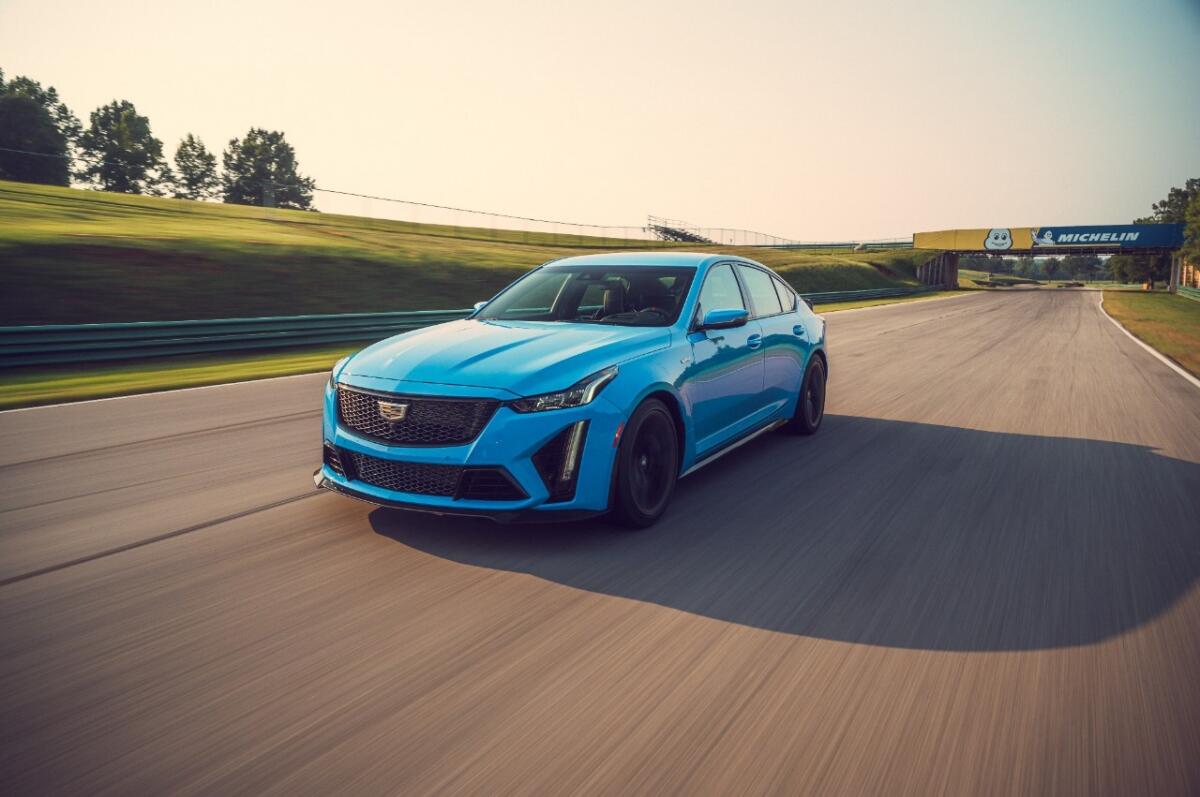
Cadillac CT5
"It kind of reminds me of [924.5s] CTS, sorry, the CT5 black wing,"
The Cadillac CT5 Blackwing is a sportier CT5 with a more performance-minded setup. Here it’s mentioned as a reference for the kind of driving feel the speaker is getting.
The Cadillac CT5 Blackwing is a performance-focused version of the CT5, built to deliver a more driver-oriented feel. In this segment, the host uses it as a comparison point for how the described gearing and power delivery “reminds” them of that car’s character.
tall gearing
"that even though it has ridiculously tall gearing. [937.1s] But I don't, look, I wasn't looking at the Speedo,"
“Tall gearing” means the car is geared so you go faster in each gear. That usually keeps the engine RPM lower at highway speeds, but it can make acceleration feel different.
“Tall gearing” means the transmission and final-drive ratios are set so each gear covers more road speed. The tradeoff is that the engine may spin at lower RPM at a given speed, which can feel relaxed but may reduce responsiveness depending on the engine’s torque curve.
sixth gear
"I did a check, 2000 RPM in sixth gear is 65. [952.1s] Oh yeah, 2000 in that CT5V would be over 80."
Sixth gear is one of the higher gears in a multi-gear transmission. Using it at highway speeds helps keep the engine RPM lower for a calmer ride.
Sixth gear is a higher-ratio gear used in multi-speed transmissions to keep engine RPM down at cruising speeds. This segment uses sixth gear to illustrate how modern cars can be geared so that a given speed corresponds to a lower RPM than older cars.
RPM
"I did a check, 2000 RPM in sixth gear is 65. [952.1s] Oh yeah, 2000 in that CT5V would be over 80."
RPM (revolutions per minute) is how fast the engine crankshaft is spinning. In this discussion, RPM is used to show how gearing changes engine speed at a given road speed—e.g., 2000 RPM in sixth gear corresponding to about 65 mph.

Lamborghini Gallardo
"... That's not, you know, I'm just doing research on Gallardo, did 62 or 64 in first and then 92 or 94 in secon..."
The Lamborghini Gallardo is a high-performance supercar made by Lamborghini. It uses a V10 engine and is known for quick acceleration. The podcast is talking about how fast it gets in early gears and how it pulls as you shift.
The Lamborghini Gallardo is a V10-powered supercar from Lamborghini, known for its strong performance and dramatic driving experience. The podcast context mentions specific acceleration/gear behavior (“62 or 64 in first and then 92 or 94 in second”), which suggests a focus on real-world performance characteristics. It’s discussed because the Gallardo is a benchmark for how Lamborghini’s V10 era delivers speed and punch.
horsepower
"So this is the 282 horse version of this motor or 300? ... So maybe you're at 375 horsepower."
Horsepower is a number that describes how much “power” an engine can make. Higher horsepower usually means the engine can push harder, but it’s not the only factor in how fast or quick a car feels.
Horsepower is an engineering measure of how much power an engine can produce. It’s commonly used in car specs to compare how strong different engines are, but it doesn’t tell the whole story about how a car feels in real driving.
exhaust, no cats
"It's got an exhaust, no cats, a mild tune. So maybe you're at 375 horsepower."
“No cats” means the catalytic converters are not there. That can make the exhaust breathe more freely and sound different, but it can also be illegal and increases emissions.
“No cats” means the catalytic converters have been removed or bypassed, which reduces exhaust backpressure and can increase flow. It also typically makes the exhaust louder and can increase emissions, so it’s often discussed in the context of legality and drivability changes.
mild tune
"It's got an exhaust, no cats, a mild tune. So maybe you're at 375 horsepower."
A “mild tune” is a software adjustment to the engine that makes it run a bit better. It’s usually not as extreme as a full-on performance tune.
A “mild tune” is an engine calibration change (often via ECU software) that increases performance modestly without going as far as a more aggressive race-oriented setup. The hosts are using it to estimate power gains from their swap’s configuration.
Pendle axle
"The pièce de résistance in my experience, because we just talked about the terror of Pendle axle and this car doesn't have one anymore, which I think is really the headline for me, having driven a bunch of these cars is the complete transformation in the sure footedness that you feel."
This sounds like a nickname for a rear-axle configuration that makes the car feel sketchy. The point here is that the upgraded car no longer uses that setup, so it feels safer and more stable.
“Pendle axle” refers to a specific axle setup associated with certain Mercedes rear-end behavior that enthusiasts consider problematic. The hosts frame it as something that causes “terror,” and the restomod replaces it to improve stability and confidence.
five link rear end
"Because it has a five link rear end from a CLK, from a 209 CLK, which is the same, like the black series generation of CLK, second generation CLK."
A five-link rear suspension uses multiple arms to control how the rear wheels move. More control usually means the car grips better and feels more stable, especially when you accelerate or turn.
A five-link rear end is a multi-link suspension design that uses several control arms to precisely manage wheel alignment and movement under acceleration, braking, and cornering. Compared with simpler setups, it can improve traction and stability by keeping the rear tires working in a more predictable way.

CLK 209
"Because it has a five link rear end from a CLK, from a 209 CLK, which is the same, like the black series generation of CLK, second generation CLK."
Mercedes-Benz CLK (W209) is the second-generation CLK platform, and the hosts specify using its five-link rear suspension as the basis for the restomod’s rear end. That generation detail matters because different CLK generations can have different suspension layouts and handling characteristics.

Mercedes-Benz C55 AMG
"Effectively based on a 203 C55 AMG. So in theory, this is effectively a C55 engine, right?"
The C55 AMG is a Mercedes performance version of the C-Class. The hosts are saying the modified car is basically using the C55’s engine setup, so it should drive more like that faster, stronger configuration.
Mercedes-Benz C55 AMG is a performance-oriented C-Class variant, and the hosts claim the restomod is “effectively a C55 engine.” That matters because the C55’s engine character and output define how the car feels at speed, especially when paired with the rest of the chassis upgrades.

Volvo P1800
"...ng that has two doors. The Cyan, which is a Volvo P1800 based thing. And I think the last one was maybe t..."
The Volvo P1800 is an older Volvo with two doors that’s designed more like a sports car than a regular family car. The podcast mentions it because someone made or referenced a custom project based on a Volvo P1800. It’s being used as the starting point for a different kind of build.
The Volvo P1800 is a classic Volvo two-door sports coupe known for its distinctive styling and long-running collector appeal. In the podcast, it’s mentioned in relation to a “Cyan” and a Volvo P1800-based concept or build, suggesting a discussion about custom projects and how the P1800 platform gets reused. It comes up because the P1800 is a recognizable base for enthusiasts who want a unique, personalized car.
Alpha Halux
"Alpha Halux is another one that I would bucket with Kimura, although I would say the Alpha Halux experience. ...Alpha Halux, I think does a really good job of preserving the character of a vintage car..."
Alpha Halux is mentioned as a company/project approach to rebuilding classic cars. The host says it does a good job keeping the original car’s personality while still making it work well today.
Alpha Halux is referenced as a specific restomod-style project/brand that the host groups with Kimura. The point being made is that Alpha Halux aims to preserve the “character” of a vintage car while updating it enough to create a satisfying modern driving experience.
shoehorn in a powertrain
"And then a lot of other cars, if you shoehorn in a powertrain and don't do the rest of the sort of development of the car, then you end up with a, it's like a spider web graph..."
This is about dropping a new engine into an older car without properly redesigning everything else to match. The host’s point is that the car can end up feeling awkward or unbalanced to drive.
“Shoe-horning in” a powertrain means installing an engine/drivetrain into a car with minimal engineering integration. The host argues that if you do that without developing the rest of the car around it, the result can feel mismatched—like the car’s systems don’t work together as a coherent whole.
spider web graph
"...then you end up with a, it's like a spider web graph where one point is really far off in the distance and the rest of it is like not, it's a small spider web."
They’re using a visual metaphor: imagine a web where one spoke is way longer than the others. If the car is great in one area but not the rest, it can feel out of balance when you drive it.
The host uses a “spider web graph” metaphor to describe how different aspects of a build (handling, power delivery, braking feel, comfort, etc.) can be uneven. If one area is far ahead while others lag, the overall package feels “incoherent” and less satisfying to drive.

Ferrari F355
"Henry Catchwell's first drive of a Ferrari F355 that was modified by a new company called Evoluto. ... I thought the F355 was absolutely beautiful to begin with."
The Ferrari F355 is a famous older Ferrari supercar with a V8 engine in the middle. People like it as a starting point for restomods because it already looks great, and you can improve things like drivability and tech while keeping the Ferrari vibe.
The Ferrari F355 is a mid-engine V8 supercar from the 1990s known for its sharp handling and high-revving character. It’s a popular base for restomods because its styling and chassis are already “classic Ferrari,” so modern upgrades can be added without losing the original identity.
Evoluto
"that was modified by a new company called Evoluto. ... Evoluto, which would be evolved maybe in Italian"
Evoluto is the company the hosts say did the modifications to the Ferrari F355. In the restomod world, these are the shops that change the car’s look and update parts to make it feel more modern.
Evoluto is mentioned as the company that modified the Ferrari F355 in this story. In restomod culture, small coachbuilders and specialty shops like this are often responsible for the “new look + modern improvements” package.

288 GTO
"Yeah, I love it because it throws in a bunch of 288 GTO traits, traits into calls."
The Ferrari 288 GTO is an older, very famous Ferrari with a turbo engine. The host is saying the modified F355 takes some design inspiration from the 288 GTO—basically nodding to that classic look.
The Ferrari 288 GTO is a legendary 1980s Ferrari turbocharged race-bred road car. When the speaker says the F355 “throws in a bunch of 288 GTO traits,” they mean the modified car borrows visual or design cues associated with that iconic model.

Ferrari 355
"like standard production mid-engine Ferrari. Yeah. Maybe of a Dino. Dino is prettier, but yeah, 355 is. ... Henry spoke about the steering of how the 355 didn't better the 348 steering."
The Ferrari 355 is a mid-engine Ferrari sports car. Here, they’re talking about how its steering and driving feel compare to the Ferrari 348, and whether it’s worth modifying for better handling.
The Ferrari 355 is a mid-engine V8 sports car from Ferrari, known for its sharp steering feel and classic 1990s-era design. In this episode, it’s discussed specifically in the context of whether it needs a restomod because of handling/steering characteristics compared with the earlier Ferrari 348.

Ferrari 348
"I quite like the 348. Actually, I'm strange in that. I don't dislike it either. ... Henry spoke about the steering of how the 355 didn't better the 348 steering."
The Ferrari 348 is an older Ferrari sports car with a mid-mounted engine. They’re using it as a comparison point for steering feel, saying the later Ferrari 355 didn’t really make it better.
The Ferrari 348 is an earlier mid-engine V8 Ferrari that’s often compared directly to the later Ferrari 355. In this segment, the hosts argue about steering feel—specifically that the 355 didn’t improve on the 348’s steering—and they treat the 348 as the baseline for what “better” should feel like.
overboosted
"you and I have constantly complained about 355 steering being overboosted and numb while they fixed that."
“Overboosted” here means the steering assist is helping too much. When that happens, the steering can feel numb instead of giving you clear feedback.
In steering feel discussions, “overboosted” usually means the power-assist is providing too much assistance relative to speed or driver input. That can make the steering feel numb or disconnected because the system reduces the driver’s feedback.
shocks, springs
"Yeah, but you can fix them with shocks, springs. Fast rack."
Shocks (dampers) and springs are suspension components that control ride height and how quickly the car settles after bumps or during cornering. Changing them is a common way to address “dynamic problems” like body motion and steering response, which the hosts suggest can be fixed without changing the car’s identity.
Fast rack
"Yeah, but you can fix them with shocks, springs. Fast rack."
A “fast rack” means the steering is geared so it turns quicker. You need less steering-wheel movement to make the car turn, which can make the car feel more responsive.
A “fast rack” refers to a steering rack with a quicker ratio, so the steering wheel turns less to achieve the same wheel angle. That typically sharpens response and can help address steering feel complaints like slow on-center response or vague turn-in.
fast steering rack
"Right, a fast steering rack. And you know, that's not a rest-o-mod, right?"
A fast steering rack makes the steering respond quicker—turn the wheel less and the tires turn more. That can make the car feel sharper, but it can also change the feel of control.
A fast steering rack is a steering gearbox with a higher steering ratio (less steering wheel rotation for the same road-wheel angle). It typically makes the car feel quicker and more responsive, but it can also change how stable and “natural” the steering feels at speed.
running gear
"My cabrio, for example, the VR6, there's literally not a single piece of running gear that's original to that car."
“Running gear” means the main mechanical parts that make the car move and handle—things like suspension, steering, and brakes. They’re saying basically none of those parts are original.
“Running gear” is enthusiast shorthand for the car’s mechanical components that move it—typically suspension, steering, brakes, and drivetrain-related parts. In this context, the speaker is arguing that their Cabrio’s running gear has been fully replaced or modernized.
OEM
"I'm technically, I mean, shocks, right? I mean, the shocks are, but yes, they're effectively OEM, GTI replacement shocks."
OEM means “original equipment manufacturer,” referring to parts made to match what the car came with from the factory. In the segment, the speaker uses OEM to suggest the shocks are essentially factory-spec replacements rather than a major custom performance change.
GTI replacement shocks
"I mean, the shocks are, but yes, they're effectively OEM, GTI replacement shocks."
They’re saying the car uses shock absorbers meant for a Volkswagen GTI. It’s like using a factory-style upgrade from a different model, not necessarily a totally custom suspension build.
“GTI replacement shocks” means using suspension dampers intended for a Volkswagen GTI as a substitute. This is a common enthusiast approach: swap to a different factory-spec damper tune rather than going fully aftermarket, which may or may not qualify as a “rest-o-mod” depending on how much else changes.
brakes at the wheels
"and it has brakes from a 126 [1513.1s] and the brakes at the wheels, [1516.0s] and then it has like a hydro booster from a BMW E24,"
“Brakes at the wheels” means the braking hardware is mounted directly at each wheel (calipers or wheel cylinders), rather than relying on a centralized braking arrangement. In a swap, this matters because it determines how the car is stopped and how brake lines, routing, and pedal feel are engineered.
hydro booster
"and then it has like a hydro booster from a BMW E24, [1518.8s] the driveshaft's custom, the exhaust is custom,"
A hydro booster helps your brakes by using hydraulic pressure to make the brake pedal easier to push. It’s a common upgrade when a car’s original brake system doesn’t match the new setup.
A hydro booster is a hydraulic brake-assist unit that uses engine power (via hydraulic pressure) to multiply the force applied to the brake pedal. It’s often used in swaps because it can provide stronger, more consistent pedal feel than vacuum-only setups, especially when vacuum is limited.

BMW E24
"and then it has like a hydro booster from a BMW E24, [1518.8s] the driveshaft's custom, the exhaust is custom,"
BMW E24 is a specific older BMW 6 Series model generation. Here, they’re saying they used a brake-assist part from that BMW in the custom car.
BMW E24 refers to the 6 Series generation (late-1970s to late-1980s). In this context, the host is using an E24 hydro booster as part of a brake-assist setup, which is a common way to adapt modern-ish braking hardware to a custom build.
driveshaft's custom
"the hydro booster from a BMW E24, [1518.8s] the driveshaft's custom, the exhaust is custom,"
The driveshaft is the part that transfers power from the transmission to the rear axle. If you change the drivetrain, you often need a custom one so everything lines up correctly.
A custom driveshaft is a tailored prop-shaft assembly used to connect the transmission to the differential after drivetrain changes. Swapping parts often changes the required length and angles, so a custom driveshaft helps maintain correct alignment and reduces vibration risk.
exhaust is custom
"the hydro booster from a BMW E24, [1518.8s] the driveshaft's custom, the exhaust is custom,"
A custom exhaust is built to fit the new engine and layout. When you swap parts, the original exhaust often won’t line up or clear everything, so they make a new one.
A custom exhaust is fabricated to fit the specific engine and chassis packaging of a swap, including routing, pipe diameter, and how the exhaust mates to the rest of the system. It can be necessary when the drivetrain is changed and the original exhaust no longer fits or doesn’t clear components.
restomazes
"But I guess my question is, do restomazes, are these all there to try to change the character of the car or to- ... I think different strokes for different folks, right? And it depends on what the original experience is."
They’re talking about restomods—old cars that have been modified. The question is whether those changes are meant to keep the original vibe or completely reshape how the car feels.
“Restomazes” appears to be the hosts’ playful way of referring to restomods—modified classic cars built to feel and drive better than stock. The key idea is that the modifications can target different goals, like changing how the car accelerates, handles, or “communicates” to the driver.
LS swap
"especially when you start putting LSs in them, ... And I drove a supercharged LS swap Land Rover Defender"
An “LS swap” is when someone puts a GM V8 engine (the LS family) into a car that didn’t originally have it. People like it because it’s a popular, upgrade-friendly engine that can make a big difference in how the car drives.
An “LS swap” means installing a GM LS-series V8 engine into a different vehicle. Enthusiasts do it because the LS engines are relatively affordable, make strong power with simple upgrades, and have a huge aftermarket support network.

supercharged LS swap Land Rover Defender
"And I drove a supercharged LS swap Land Rover Defender and that thing was just undriveable"
The Defender is a classic off-road truck, and an LS swap means replacing the original engine with a modern GM V8. When you also add a supercharger, it can make the truck feel extremely strong and hard to control—so it may lose the “fun old truck” vibe.
A Land Rover Defender is known for its old-school, utilitarian character, and swapping in an LS V8 is a common restomod move because the LS family is compact, powerful, and parts are widely available. Adding a supercharger to an LS swap increases boost and torque, which can make the truck feel dramatically more violent than the original diesel setup.
turbo diesel
"because even with the 90 horsepower turbo diesel, the thing is terrifying."
A “turbo diesel” is a diesel engine with a turbo that helps it breathe better. Turbos help diesels make strong pulling power, especially at lower speeds.
A “turbo diesel” is a diesel engine that uses a turbocharger to increase the amount of air entering the cylinders. That improves efficiency and helps diesels produce strong torque at low engine speeds—often the reason older trucks feel “pulling” even with modest horsepower.
wide open throttle
"when you gave it wide open throttle, you felt like you were going to roll from the torque"
“Wide open throttle” means you’re flooring it and asking the engine for maximum power. On a powerful, torque-heavy build, that can make the truck feel like it’s about to lose control.
“Wide open throttle” (WOT) means the driver has fully opened the throttle plate, commanding maximum airflow to the engine. In a high-torque restomod, WOT can overwhelm traction and drivetrain limits quickly, which is why the speaker describes feeling like the vehicle might tip over under load.
restomating a Pagoda
"I'm open, in fact, enthusiastic about restomating a Pagoda... And this addresses all of those concerns and it feels, you know, coherent and enjoyable and hilarious at the same time."
They’re basically saying: if you don’t like how the classic Pagoda drives, a restomod might fix the parts you dislike. The goal is to make the car more fun and less frustrating to drive.
The speaker is weighing whether a restomod is “worth it” for a Pagoda (Mercedes-Benz 300 SL W113). Their argument is that restomodding can address specific driving complaints—like rear-end uncertainty and highway “breathlessness”—while making the car feel more coherent and enjoyable.
back end
"There's always this uncertainty from the back end and like this sort of short leggedness, like breathlessness feeling like on the highway."
“Back end” means how the rear of the car feels while driving. The speaker is saying it feels a bit uncertain and not very confident at highway speeds.
When enthusiasts talk about the “back end” of a car, they usually mean the rear axle behavior—how stable or unstable the car feels as you accelerate, brake, or change speed. Here, the speaker links it to uncertainty and highway “breathlessness,” implying the rear doesn’t feel confidently settled.
short leggedness
"There's always this uncertainty from the back end and like this sort of short leggedness, like breathlessness feeling like on the highway."
“Short leggedness” means the car’s gearing makes it feel like it doesn’t have enough “reach.” At highway speeds, it can feel like the engine is working too hard.
“Short leggedness” is an enthusiast way to describe gearing that feels too “short,” so the engine runs out of usable speed quickly. The result is that highway cruising can feel strained or like the car needs to work harder to maintain pace.
breathlessness
"and like this sort of short leggedness, like breathlessness feeling like on the highway."
“Breathlessness” here means the engine feels like it’s struggling to keep up, especially at highway speeds. It doesn’t feel smooth or effortless when you ask it to go faster.
In car talk, “breathlessness” usually describes an engine that feels like it can’t pull smoothly at higher speeds—often because of gearing, cam/induction characteristics, or how the engine responds under load. The speaker is using it to characterize the highway experience of the Pagoda.
built motor
"And it's got a built motor in it. [1786.5s] And I don't- [1786.9s] Is it to have a built everything in it?"
A “built motor” means the engine has been modified and strengthened for more power or durability. Instead of staying stock, it’s put together with upgraded parts so it can handle harder driving.
A “built motor” means the engine has been upgraded and assembled with performance-focused internal parts (and often stronger components) rather than left stock. In a restomod context, that’s typically done to handle higher stress and deliver more power or reliability than the original engine could manage.
blew it up
"I think it's got a built most of it in there, [1790.1s] but I think he blew it up. [1791.7s] So I think it's now being really built,"
“Blew it up” is slang for the engine failing in a serious way. It usually means the car needs major repair or a rebuild before it runs right again.
“Blew it up” is enthusiast slang for catastrophic engine failure—something inside the engine lets go badly enough that the car can’t continue normally. The hosts then describe the car as being “really built” again, implying it’s in the middle of a rebuild after that failure.
Request an Explanation
Heard something you'd like explained? We'll add it to this episode.
Sign in to request explanations for terms you heard.
Want to learn more?
Browse our glossary for plain-English explanations of automotive terms, jargon, and concepts.
Help improve this episode
See something that's not quite right? Our annotations are AI-generated and can sometimes miss the mark. Click the flag icon on any annotation to suggest a correction.
1 community members have helped improve this episode.