
The Ugliest US Bumpers Ever Produced — Carmudgeon Ep. 245 w Jason Cammisa & Derek Tam-Scott
About this episode
Collector-car insurance and the ugly results of U.S.-market regulations collide in Carmudgeon Ep. 245. Hagerty coverage gets credited for keeping a Rover SD1 project alive after a crash and for valuing cars by replacement cost. The show then zooms out to explain why U.S. bumpers and sealed-beam lighting often look worse in Europe, with examples like the 1996 Chevy Impala and a long list of bumper offenders. Between the styling talk, there’s plenty of real-world SD1 gearbox and oil-pressure drama.
imported cars
"[60.7s] And also we will do a discussion of European cars and non-European cars, imported cars [68.9s] that were ruined or altered by the addition of US lights and bumpers and what some of"
“Imported cars” are vehicles sold in a country other than where they were originally built, often requiring compliance changes for local regulations. The hosts frame this as a cause of ugly exterior modifications—especially lighting and bumper differences—when cars cross the Atlantic.
US lights and bumpers
"[68.9s] that were ruined or altered by the addition of US lights and bumpers and what some of [75.3s] the most egregious offensive examples are."
This refers to the common practice of modifying a car’s exterior lighting and bumper components to meet U.S. regulations and then carrying those parts (or their look) into other markets. In the episode’s context, the hosts argue these changes often produced awkward “hybrid” front/rear styling.

Chevrolet Impala
"we tried to have a detail. The person who's like, you know, you should really talk about the 96 Chevy Impala's European taillights and how terrible they are."
The Chevrolet Impala is a large sedan made by Chevrolet. The podcast mentions the 1996 model because it had taillights that looked different from what some people expected. They’re discussing that specific styling detail.
The Chevrolet Impala is a full-size sedan that has been produced for decades, with many distinct generations. In the podcast, it’s specifically tied to the “96 Chevy Impala’s European taillights,” which points to a discussion about styling differences and how certain features were received. That makes it relevant for conversations about model-year-specific changes.

Chevrolet Corvette
"Yeah. Because some of the Corvettes, for example, with the Ambrose, we could, we can ..."
The Chevrolet Corvette is a sports car made by Chevrolet. It’s known for being fast and for having a strong performance reputation. The podcast mentions some Corvettes because certain versions have notable differences.
The Chevrolet Corvette is a long-running American sports car known for its performance and for being a flagship model for the brand. In the podcast, it comes up in the context of specific Corvettes and how they were set up or discussed, which is typical when people compare details across model years. That makes it a natural subject for talking about what changed and why certain versions stand out.

SD1 Rover Sd1
"What is it? It is a Rover SD1. Oh, you missed the airplane."
The SD1 is a car model made by Rover. The podcast pauses to clarify what it is, which suggests it’s an important reference in their discussion. They’re using it as a comparison point for something they’re talking about.
The Rover SD1 is a classic Rover model that the podcast treats as a key reference point, including a moment where the speaker clarifies what it is. The mention suggests the SD1 is central to the conversation—likely as a comparison for design or parts fitment. Because it’s a specific model, it often shows up when people talk about how certain components were intended to work.

3500S Rover 3500
"Oh, you missed the airplane. Rover 3500. Reverence."
The 3500S is a Rover car model. The podcast mentions it as something noteworthy, likely because it fits the theme of the cars they’re discussing. It’s brought up as a specific example from Rover’s lineup.
The Rover 3500S is a Rover model referenced in the podcast alongside the SD1, with the speaker calling it “Reverence.” That suggests it’s being treated as a notable or respected classic within the same general discussion. It’s included because it helps illustrate the speaker’s broader point about certain Rover-era cars.
Rover SD1
"Yes. My Rover SD1 is after 15 months back. I think we talked about in the podcast, it returned."
The Rover SD1 is an older British car that people still talk about today, especially because it’s a V8-era classic. Here, the speaker is talking about what happened to their SD1 after it came back from being worked on.
The Rover SD1 is a classic British executive car from the late 1960s/1970s era, best known for its V8-powered versions and for being a popular base for swaps and restorations. In this segment, it’s the specific car the host is discussing after a recent repair/return.
transmission imploded
"I made it, was it 19 kilometers? I think it was 19 kilometers and the transmission imploded. God damn it."
That phrase means the car’s gearbox failed in a big, sudden way. Instead of slowly wearing out, something inside broke badly enough that the transmission couldn’t function.
“Transmission imploded” is a dramatic way to describe catastrophic internal failure of the gearbox—gears, bearings, or shafts break down so badly that the unit effectively destroys itself. It’s being used here to explain why the car didn’t survive after a short period back on the road.
scatter shields
"Well, at least it didn't explode since you don't have a scatter shield installed. That's true. Due to the massive power output of your new engine might need a scatter shield."
A scatter shield is a safety plate that’s meant to catch flying debris if a major mechanical part breaks. People add them when they’re running more power or doing swaps, because failures can be more violent.
A scatter shield is a protective barrier installed around a high-stress rotating component (commonly near the transmission/flywheel area) to contain fragments if something fails. It’s especially relevant when an engine is making more power than stock, because a failure can otherwise send debris into the cabin or engine bay.
250 horsepower
"It was, it is quoted and claimed at 250 horsepower, but I haven't yet to measure it. So the car is here."
Horsepower is how much power the engine can make. Here, they’re saying the engine is claimed to be around 250 horsepower, but they haven’t checked it with a real measurement yet.
“Horsepower” is a measure of engine power output, and “250 horsepower” is a specific claimed rating for the engine being discussed. The speaker notes it’s quoted/claimed but hasn’t been measured yet, implying the real output could differ from the advertised figure.
Euro lights and Euro bumpers
"Yeah. It has Euro lights and Euro bumpers and it has been uncrashed. It has been uncrashed."
“Euro” here means the car has lighting and bumpers made to match European rules, which can be different from US versions. The speaker is pointing out those parts as a clue to what the car currently has.
“Euro lights and Euro bumpers” refers to lighting and bodywork specifications intended for European market regulations, which can differ from US-spec equipment. In this context, it’s part of identifying what’s changed on the car (and that it’s “uncrashed”), likely affecting appearance and compliance.
Hagerty's guaranteed insurance
"which will bring you to a place where you can get a quote for Hagerty's guaranteed insurance."
Hagerty is an insurance company that focuses on classic cars. The host is mentioning their “guaranteed insurance” option as something you can look up through the link.
Hagerty is an insurance brand known for coverage aimed at classic and enthusiast vehicles. “Guaranteed insurance” here is being referenced as a specific product/feature the host is promoting via their website link.
replacement cost
"There's a very big difference between market value and replacement cost. I had this car insured for replacement cost, which is far greater than the market..."
Replacement cost is what you’d need to spend to get a similar car again. For rare cars, that can be way more than what the car is worth to buy or sell.
Replacement cost is the amount it would take to replace the car with a comparable one—same kind of car, condition, and availability. In collector-car insurance, it often drives higher coverage limits than market value because finding an exact match can be expensive or impossible.
market value
"There's a very big difference between market value and replacement cost. I had this car insured for replacement cost, which is far greater than the market..."
Market value is the price you could sell the car for right now. It’s based on what similar cars are actually trading for.
Market value is what a car is realistically worth in today’s buying market—what someone would pay for it. It can be much lower than what it would cost to find an equivalent car in the same condition.
rust
"It's unlikely I will find another North American specification SD1 without rust, low mileage, complete, fully functioning."
Rust is corrosion on the car’s metal. For older cars, rust can be a big deal because it can be expensive to fix and can affect safety and value.
Rust is a major factor in collector-car value because it can mean structural corrosion and expensive body repairs. The host specifically calls out finding an SD1 “without rust” as a key requirement for a true replacement.
insurance payout vs repair costs
"I think upon the crash, when I crashed it, I had it insured for 20,000 US... Really glad I did because the actual bodywork wound up being $14,000 to repair... The car was not totaled, obviously."
They talk about how insurance money and repair estimates determine whether a car is written off. They also explain why parts and shipping can make repairs expensive.
This segment focuses on how insurance payout decisions (totaled vs not totaled) relate to actual bodywork repair costs and what gets funded. It also covers how shipping and body-panel replacement can drive costs.
refinishing
"it's a British hood, which meant it was rusted and shitty and it would have been thousands of dollars to refinish it."
“Refinishing” here means making the panel look good again—usually by preparing it and repainting it. Rust makes that process much more expensive.
“Refinishing” in this context means restoring the surface finish of body panels—typically sanding, preparing, and repainting to match the surrounding paint. The host says a used British hood would have been rusted, making refinishing costly.
not totaled
"The car was not totaled, obviously. It was below the threshold."
“Not totaled” means the insurer decided the car’s damage wasn’t severe enough to declare it a total loss. That decision is usually based on whether the repair cost stays below a specific threshold compared with the car’s value.
threshold
"It was below the threshold. Total repair cost was below the threshold."
The “threshold” is the insurance company’s rule for deciding when a car is too expensive to fix. If the repair estimate is under that line, they’ll usually repair it.
The “threshold” is the insurer’s cutoff for when a vehicle is considered a total loss. If the estimated total repair cost is below that threshold, the car can be repaired instead of being written off.
Series 1 European headlights
"So these are now Series 1 European headlights, which required some trim and some other stuff."
These are a specific headlight version meant for European-spec cars. The host says they needed extra pieces to make the swap work properly.
“Series 1 European headlights” refers to an earlier headlight design (Series 1) used on European-spec versions of the car. Swapping them can require additional trim and related parts to fit correctly and match the intended lighting configuration.
lower grill
"But also that lower, the lower grill on these cars and the fenders, by the way, are welded on."
The “lower grill” is the front opening near the bottom of the bumper area. Here they mention it’s welded on, meaning it’s not as easy to remove and replace as a bolt-on part.
The “lower grill” is the front fascia opening (typically below the main grille) that helps manage airflow to cooling components. In this segment, it’s called out as being welded on, which affects how hard it is to replace or modify after damage.
fender
"But also that lower, the lower grill on these cars and the fenders, by the way, are welded on."
Fenders are the panels around the wheel openings. If they’re welded on (instead of bolted), fixing them after a crash usually takes more work.
“Fenders” are the outer body panels over the wheel area. The host notes that on this car, the fenders are welded on, which can make collision repair more labor-intensive and expensive than if they were bolted.
Johann
"There was a guy, I think I mentioned on the podcast in the past, a guy in Sweden named Johann, [444.7s] who sent me the bumpers. He had them lying around."
Johann is a person the host mentions who helped by sending the bumpers. The point here is that he had them and made them available for the host to compare how the car would look in Europe.
Johann is mentioned as a person in Sweden who provided the bumpers for the host to evaluate. In this segment, he’s essentially the source of the European-style bumper set used for comparison.
lower tow hooks
"And so now this is the correct look, possibly without those lower tow hooks. [452.1s] I haven't quite looked into that yet."
Lower tow hooks are the metal points on a car where you can attach a tow strap. They’re usually near the bumper, and whether they’re there (or covered) affects the car’s look and how you’d tow it.
Lower tow hooks are mounting points on the front or rear of a car used to attach a tow strap or recovery rope. They’re often integrated into the bumper area or hidden behind trim, and their presence/absence can change both appearance and how easily the car can be recovered.
full suspension
"It is unrecognizable from a driving experience compared to how it was before, [481.1s] after you did these full suspension and tires."
“Full suspension” means more than one suspension part was updated or replaced. That can completely change how the car rides and handles, especially when paired with new tires.
“Full suspension” refers to replacing or reworking multiple suspension components (not just one part) to change ride quality and handling. When combined with tires, it can dramatically alter how the car feels both at speed and over bumps.
tires
"It is unrecognizable from a driving experience compared to how it was before, [481.1s] after you did these full suspension and tires."
Tires are what actually touch the road. Switching to different tires can change how the car grips, turns, and rides—so it can feel like a totally different car.
Tires are the contact patch between the car and the road, so changing tire type can strongly affect grip, steering response, ride comfort, and braking feel. In this segment, the host credits the tire change—along with suspension—for making the car feel “unrecognizable.”
Pumo Solis
"Because remember, it didn't have, what were those? [488.8s] Pumo Solis. [490.1s] Solis Cumhorse."
This sounds like the name of the tires that were on the car before. Changing to a different tire model can noticeably change how the car drives.
This appears to be a specific tire model name the host says the car had before. The point is that swapping from one named tire to another can significantly change grip and steering feel, especially when paired with suspension work.
Fred a Science Sprint Classic
"Now it has Freda Science Sprint Classic. [495.1s] And the combination of the suspension and the tires completely."
This sounds like the name of the specific tire brand/model now installed. Different tires grip differently and can make the car feel much better or worse.
This appears to be a specific tire model name the host says is now on the car. Tire model names matter because different compounds and tread designs change traction and how the car responds during driving.
high compression
"[512.3s] And yeah, but it also now has high compression, [516.5s] head work cams."
High compression means the engine squeezes the fuel-air mixture more tightly than usual. It can help the engine make more power, but it usually needs the right fuel to avoid knocking.
“High compression” means the engine squeezes the air-fuel mixture into the cylinder more than stock. That can improve efficiency and power, but it also makes the engine more sensitive to fuel octane and detonation risk.
head work cams
"[512.3s] And yeah, but it also now has high compression, [516.5s] head work cams. [518.1s] This was all done at a shop."
“Head work” refers to modifications to the cylinder head (like porting/valve work) to improve airflow, while “cams” are the camshafts that control valve timing and lift. Together, they’re common performance upgrades that change how the engine breathes and where it makes power.
pushrod engine
"[525.2s] It's the only pushrod engine I've ever owned. [527.7s] I think. [529.4s] Yes."
A pushrod engine is an engine design where the camshaft pushes on rods to open the valves. It’s a common older-style layout that many enthusiasts associate with classic performance engines.
A pushrod engine uses a camshaft in the engine block to operate the valves via pushrods and rocker arms. This layout is common in many classic V8s and some inline engines, and it affects how the valvetrain is packaged and tuned.
fuel injected
"[533.8s] Technically you did own part of this car. [536.8s] Yeah. [537.5s] Fuel injected, two valve per cylinder, but pushrods."
Fuel injection means the engine uses electronic injectors to spray fuel instead of a carburetor. It usually makes the engine easier to start and tune.
Fuel injection is an engine system that delivers gasoline (or other fuel) into the intake or directly into the cylinders using electronically controlled injectors. Compared with carburetors, it typically improves throttle response, cold starts, and tuning flexibility.
valve per cylinder
"[537.5s] Fuel injected, two valve per cylinder, but pushrods. [541.7s] Yeah. [542.6s] Nothing else?"
Two valves per cylinder means there’s one valve for letting air/fuel in and one for letting exhaust out. More valves can sometimes flow more air, but two-valve engines can still be strong when designed well.
“Two valve per cylinder” means each cylinder has one intake valve and one exhaust valve. This is a simpler head design than multi-valve setups and can influence airflow, engine breathing, and how the engine responds at higher RPM.
carburetor
"[568.6s] With this injection? [569.9s] No. [570.4s] No. [570.7s] That's with carbs or with a carburetor and their headers on it."
A carburetor is a device that mixes fuel and air before it goes into the engine. It’s common on older cars and can be tuned to help the engine make more power.
A carburetor is a fuel-delivery device that mixes gasoline with air using engine vacuum and airflow. In older performance setups, carburetors are often paired with intake/exhaust modifications like headers to tune mixture and airflow for power.
headers
"That's with carbs or with a carburetor and their headers on it. [575.3s] Their headers don't unfortunately fit in the SD1."
Headers are upgraded exhaust parts that help gases leave the engine more easily. That can improve power, especially when the rest of the engine is set up for performance.
Headers are aftermarket exhaust manifolds that replace the stock exhaust piping to improve exhaust flow. Better flow can help an engine breathe, which often increases power—especially on performance builds with carburetors and higher-compression setups.

Land Rover Range Rover
"...nfortunately fit in the SD1. They're designed for Range Rover or Triumph TRA or something? I think CR8."
The Range Rover is a large SUV made by Land Rover. It’s designed to handle rough roads but still feel comfortable. The podcast brings it up because some parts or designs are meant for it and may not fit other cars correctly.
The Range Rover is a luxury SUV from Land Rover, built around off-road capability and comfort. The podcast mentions it in a context that sounds like parts or design fitment—comparing what was intended for Range Rover versus other vehicles. That kind of discussion usually matters because mismatched parts can affect fit, function, or appearance.
block huggers
"[581.6s] And so these are headers from D&D in Michigan, [584.5s] which are pretty small, but they're sort of block huggers. [587.3s] So they're not enormous."
“Block huggers” are exhaust headers that tuck close to the engine to fit in tight spaces. They’re a packaging solution, not just a pure power upgrade.
“Block huggers” are a type of compact header/exhaust manifold design that runs close to the engine block. They’re often chosen when space is tight, but they can trade off some peak-flow potential versus larger, more free-flowing headers.
butt dyno
"[589.5s] TWS was hoping for 210 horsepower expecting 200 plus. [594.5s] Not sure we're there. [596.6s] Your butt dyno is unsure."
“Butt dyno” means guessing how much power you gained just by how it feels to you, not by measuring it. It’s a humorous way to say the results are hard to verify.
“Butt dyno” is slang for judging engine changes by seat-of-the-pants feel rather than using instruments like a dyno or data logging. It’s used here to question whether the claimed horsepower increase is actually noticeable.
torque
"I don't actually think it makes much torque more than it did before, [609.0s] if any, but whereas the engine used to start to fall on its face by 4,000"
Torque is the engine’s twisting force. More torque usually means the car feels stronger when you accelerate, especially before you reach the highest RPM.
Torque is the twisting force an engine produces, and it strongly affects how quickly a car accelerates, especially at lower RPM. When the speaker says the engine makes “more torque,” they’re talking about a measurable change in that twisting force output.
engine used to start to fall on its face
"but whereas the engine used to start to fall on its face by 4,000 [614.5s] and it was just done by five grand, this pulls right to 6,500."
They mean the engine stops pulling strongly at higher revs. It feels like it runs out of steam or doesn’t respond as well.
“Fall on its face” is a performance description meaning the engine loses momentum or stops pulling strongly at a certain RPM. It’s often associated with poor breathing, ignition/fueling limits, or cam timing that doesn’t support higher revs.
cam chop
"It needs more cam chop. [650.0s] It needs, it needs cutouts."
“Cam chop” is the choppy, uneven sound some performance engines make at idle. It usually comes from a camshaft that’s designed for power at higher RPM.
“Cam chop” refers to the rough, rhythmic idle sound that comes from an aggressive camshaft profile. It happens because the valve timing creates more noticeable changes in cylinder pressure at idle.
cutouts
"It needs more cam chop. [650.0s] It needs, it needs cutouts."
“Cutouts” are exhaust valves that open up to make the car louder. They can also change how the exhaust flows through the system.
Exhaust “cutouts” are valves (often in the exhaust system) that open to vent exhaust gases, typically for a louder sound. They can change backpressure and affect how the car sounds and sometimes how it performs.
lopid idle
"I need to be able to start the thing and have it go, [653.0s] but it does now have a bit of a lopid idle. [656.9s] It sounds a little bit, it's funny because it's the exact same exhaust."
They’re describing a rough, uneven idle sound/feel. On many performance engines it’s normal and comes from a camshaft that’s tuned for higher RPM.
“Lopid idle” appears to be a transcription error for “lopy idle,” which means an uneven, rough idle caused by an aggressive camshaft. A lopy idle is common on performance builds and is often more about character than a mechanical fault.
cat S
"It has cats on it. [661.1s] By the way, it's fully smog legal."
“Cats” are catalytic converters. They clean up exhaust gases so the car meets emissions rules.
“Cats” is short for catalytic converters, emissions devices that reduce harmful exhaust gases. The speaker notes the car still has them, which is why it can remain emissions-compliant.
smog legal
"By the way, it's fully smog legal. [662.7s] It's still running the original fuel injection,"
“Smog legal” means the car is allowed under emissions rules and should be able to pass an emissions test. It usually implies the exhaust and emissions parts are still in place.
“Smog legal” means the vehicle is compliant with emissions regulations and should pass local inspection/verification. The speaker ties this to having catalytic converters and maintaining emissions equipment like fuel injection.
fuel injection
"It's still running the original fuel injection, [664.5s] but it definitely sounds angrier than it did."
Fuel injection is how the engine gets fuel. It sprays fuel in a controlled manner so the engine can run properly and efficiently.
Fuel injection is the system that delivers fuel to the engine in a controlled way (instead of carburetion). The speaker says it’s still using the original fuel injection, implying the engine’s fueling strategy wasn’t swapped out even though the character changed.
manual transmission
"So when it was a part before, when the engine was apart, David, my colleague, my former colleague at the Haggerty had pulled the transmission apart to replace a pump. It is a pump in it, which is something I've never seen from a manual transmission."
A manual transmission is the kind of car gearbox where you shift gears yourself. It still needs oil inside to keep the gears from wearing out or grinding.
A manual transmission is a gearbox you shift yourself using a clutch pedal and gear lever. It relies on internal lubrication and moving parts to keep gears from grinding, so if a lubrication component fails, you can get gear damage quickly.
pump
"had pulled the transmission apart to replace a pump. It is a pump in it, which is something I've never seen from a manual transmission. And the fact that it locked itself in fifth gear and the pump is there primarily to lubricate that fifth gear shaft and the fifth gear set tells me that the most likely explanation for the transmission granating is that when he put it back together, the pump didn't engage."
The “pump” is a part inside the transmission that moves oil to the gears. If it doesn’t spin or engage correctly, the fifth gear area can run dry, overheat, and the transmission can fail hard.
Here, the “pump” is an internal transmission lubrication pump that supplies oil to critical moving parts. The host explains it primarily lubricates the fifth-gear shaft/set, and if the pump drive doesn’t engage correctly during reassembly, the transmission can lock into fifth and then grenade (catastrophically fail).
locked itself in fifth gear
"And the fact that it locked itself in fifth gear and the pump is there primarily to lubricate that fifth gear shaft and the fifth gear set tells me that the most likely explanation for the transmission granating is that when he put it back together, the pump didn't engage."
“Locked in fifth gear” means the car gets stuck in one gear and won’t shift normally. That usually happens when something inside the gearbox fails or doesn’t get oil properly.
“Locked itself in fifth gear” describes a failure mode where the transmission can’t shift out of a single gear. That symptom often points to internal mechanical or lubrication problems that prevent normal gear engagement and disengagement.
fifth gear shaft
"And the fact that it locked itself in fifth gear and the pump is there primarily to lubricate that fifth gear shaft and the fifth gear set tells me that the most likely explanation for the transmission granating is that when he put it back together, the pump didn't engage."
The fifth gear shaft is the part that fifth gear spins on inside the gearbox. If it doesn’t get enough oil, fifth gear can overheat and fail.
The fifth gear shaft is the rotating shaft that carries the fifth-gear set inside the transmission. In this case, the lubrication pump is described as primarily lubricating that shaft, so loss of oil flow can cause rapid wear or failure specifically in fifth gear.
transmission granating
"and the pump is there primarily to lubricate that fifth gear shaft and the fifth gear set tells me that the most likely explanation for the transmission granating is that when he put it back together, the pump didn't engage."
When someone says a transmission “grenaded,” they mean it broke in a big, sudden way. In this story, it’s tied to the transmission not getting proper lubrication, so it locks up and fails.
“Transmission granating” is the host’s way of describing a transmission that “grenades,” meaning it fails catastrophically. The context here links the failure to the lubrication pump not engaging after reassembly, leading to damage severe enough to lock the gearbox in fifth gear.
shakedown on the transmission
"So I took it out for a bit of a drive, probably four miles just to do a shakedown on the transmission, got it all nice and hot. And when I came back in and I saw an oil pressure light."
A shakedown is a quick test drive after work is done. The goal is to make sure the new transmission is acting right before you drive it normally.
A “shakedown” drive is a short test period after a repair to confirm the car behaves correctly under real driving conditions. In this case, it’s specifically to verify the newly installed transmission works properly before longer use.
oil pressure light
"So I took it out for a bit of a drive, probably four miles just to do a shakedown on the transmission, got it all nice and hot. And when I came back in and I saw an oil pressure light. Oh, you've never seen one of those with this car before?"
That light means the engine isn’t getting enough oil pressure. Since oil is what keeps moving parts from grinding, you should treat it as a serious warning and stop driving until it’s checked.
An oil pressure light is a dashboard warning that the engine’s oil pressure is below the level the engine needs for safe lubrication. If it comes on, it can indicate low oil level, oil pump issues, or a lubrication problem that can quickly damage the engine.
oil external oil pressure gauge
"It's a very, it's a pain in the ass to get an oil external oil pressure gauge on this because I don't have any American style tools."
An external oil pressure gauge is a tool you connect to the engine to directly measure oil pressure. It helps confirm whether the warning light is telling the truth or if the sensor/switch is the problem.
An external oil pressure gauge is a temporary, test instrument used to verify real oil pressure at the engine. It’s often used when the dash oil pressure light or an oil pressure sensor seems unreliable, because it provides a direct measurement.
oil pressure center
"And that's a taper thread on the, on the, for the oil pressure center. Either way, looks like it was getting no oil pressure when the oil is really hot."
This is the spot on the engine where you can measure oil pressure—either with a sensor or by attaching a gauge. If you can’t connect correctly, you can’t trust the reading.
The oil pressure center here refers to the engine’s oil pressure measurement port/fitting location where a sensor or gauge can be installed. Different engines use different port designs, so getting the correct adapter and connection is crucial for accurate testing.
taper thread
"And that's a taper thread on the, on the, for the oil pressure center. Either way, looks like it was getting no oil pressure when the oil is really hot."
A taper thread is a special screw shape where the threads get tighter as you tighten them. The right thread is important so the fitting seals correctly and doesn’t leak oil or give bad readings.
A taper thread is a screw thread shape where the diameter changes along the length, helping create a seal as it’s tightened. For oil pressure fittings, thread type matters because the wrong thread or adapter can leak or prevent a proper connection.
oil pressure problems
"However, which does a concern. Does me a concern. I am concerned that it expresses oil pressure problems when hot, because that's usually when you would have experienced an oil pressure problem,"
An oil pressure problem means the engine isn’t pumping oil well enough. It’s a big deal if it happens when the oil is hot, because hot oil can flow more easily and pressure can drop.
An oil pressure problem means the engine’s lubrication system isn’t maintaining adequate pressure under operating conditions. It’s especially concerning when it shows up only when the oil is hot, because hot oil can thin out and reduce pressure.
hot idle
"Hot idle is the lowest oil pressure you will ever see in an engine. And so we sort of went back and forth."
Hot idle means the car is just idling after it’s warmed up. When the oil gets hot, it flows more easily, so the oil pressure usually gets lower.
Hot idle refers to the engine idling after it has reached operating temperature. Oil pressure typically drops when the oil is hot and thinner, so hot-idle pressure is a key diagnostic point.
full throttle pull
"But all it would take is one full throttle pull, which would get the oil hot enough to then when it returned to idle, I'd get a light under 1000 RPM or so."
A full throttle pull means you floor it and accelerate hard. It heats things up, and afterward the oil pressure can drop when the engine goes back to idling.
A full throttle pull is a wide-open-throttle acceleration where the engine is loaded heavily. In this context, it heats the oil, which then causes oil pressure to drop back at idle and trigger the oil light.
pressure relief valve
"We'll just send you a new pressure relief valve. So the way that the oil pump on this car is the stupidest design I've ever seen... And one is at 33 pounds for, you know, never once more than 33 PSI of oil pressure."
A pressure relief valve is like a safety valve for the oil system. If oil pressure gets too high, it opens to keep the engine from being stressed by excessive pressure.
A pressure relief valve is a valve in the oil system that limits maximum oil pressure by diverting or releasing oil when pressure gets too high. It helps protect the engine from excessive pressure and is often adjustable or calibrated to a specific target range.
front timing cover
"The pump housing is actually part of the front timing cover and not replaceable and not rebuildable."
The front timing cover is a protective housing at the front of the engine. Here, it also includes the oil pump housing, which makes repairs more involved than swapping a simple pump part.
The front timing cover is the housing at the front of the engine that encloses the timing components (like the timing chain/belt area). In this case, the oil pump housing being part of the front timing cover makes the pump harder to service because it’s not a standalone replaceable unit.
two pressure release valves
"And then there's a cap, a cover that goes on those gears that has two pressure release valves in it. One, I think is the sort of minimum at idle. And one is at 33 pounds..."
Two pressure relief valves means the oil system uses more than one “pressure limit.” One helps at idle, and the other prevents pressure from going too high under load.
Having two pressure release valves means the oil system can control pressure at more than one threshold. The speaker describes one valve as handling minimum pressure at idle and another as limiting pressure around a higher target (about 33 PSI).
oil pressure at idle
"And so they're like, okay, we'll just send you another one and we can preset them a little bit [1022.6s] to give you, give you a little bit more oil pressure at idle. [1024.9s] Great."
This is how much pressure the engine’s oil system makes when the engine is just idling. If that pressure is too low, the engine may not be getting enough lubrication.
“Oil pressure at idle” is the amount of pressure the engine’s oil pump creates while the engine is idling. It matters because low oil pressure at idle can mean the pump isn’t primed or the oiling system isn’t sealing properly, which risks engine wear.
Vaseline
"And the only way to prime the oil pump is to go to the fucking pharmacy and buy a tub of Vaseline. [1044.2s] You have to pack the pump full, completely solid with Vaseline."
They’re using petroleum jelly as a temporary helper to get the oil pump working. The idea is it helps the pump seal so it can start pulling oil through.
Here, “Vaseline” (petroleum jelly) is being used as a temporary sealant/lube to help the oil pump prime and create an initial seal. The speaker describes packing the pump with it so oil can be drawn in and pumping begins.
scored
"I mean, it's just completely scored and gored and there are burrs everywhere. [1075.9s] It looks like absolute dog shit. [1078.2s] So I sent a picture of them. [1079.4s] I'm like, guys, I'm really concerned about this. [1095.5s] And of course, when you look online, you see they all kind of are scored."
“Scored” means the metal surfaces are scratched up with grooves. That kind of damage can stop parts from sealing properly and can lead to oil pressure problems.
“Scored” describes damage where metal surfaces are scratched or grooved, often from metal-to-metal contact or debris. In this context, the speaker says the oil pump components are scored, implying abnormal wear that can affect sealing and oil pressure.
burrs
"I mean, it's just completely scored and gored and there are burrs everywhere. [1075.9s] It looks like absolute dog shit. [1078.2s] So I sent a picture of them."
Burrs are little rough metal nubs or sharp edges. If they’re inside an oil pump, they can mess up how parts fit together and can contribute to extra wear.
“Burrs” are raised, sharp bits of metal left behind after machining, casting, or damage. Burrs inside an oil pump can interfere with clearances and sealing surfaces and may also shed debris that worsens wear.
small block
"The gears have sort of all kinds of markings on them. [1084.3s] It frankly looks like it sucked in a small block. [1087.4s] Like it just ingested a small block through this oil pressure, this oil pump."
“Small block” usually refers to a classic V8 engine family (often Chevy). Here it’s being used as a dramatic comparison to say the pump looks like it got wrecked by something big.
“Small block” is a common enthusiast shorthand for Chevrolet’s small-block V8 family (and sometimes the idea of a V8 engine being “ingested” by a system). The speaker uses it as a vivid metaphor to say the oil pump damage looks like it swallowed something massive and destructive.
oil pan
"you're talking about all pulleys, all belts, all accessories, oil pan, water pump, everything's got to come out of the way."
The oil pan is the part at the bottom that stores the engine oil. If you’re taking the front cover off, the oil pan may need to come off too to access everything safely.
The oil pan is the reservoir at the bottom of the engine that holds engine oil. It often has to be removed during deeper front-engine work because it blocks access to internal components and seals.
metal in it
"But now I'm concerned that there's so much metal in it."
Finding metal bits in the oil usually means something inside the engine is wearing down. It’s a warning sign that the problem may be more than just a minor issue.
“Metal in it” refers to finding metal debris in the oil system (often in the filter or oil), which suggests component wear or failure. In this context, it raises concern that the oil pump housing or internal pump parts are shedding material.
intake
"But there's like a whistle in the intake that I can't find."
The intake is how air gets into the engine. If you hear a whistle there, something in that air path may be leaking or vibrating.
The intake is the path that air (and sometimes fuel) takes into the engine. A whistle in the intake often points to an air leak, a vacuum/boost-related issue, or a component vibrating in that airflow path.
lifters
"One of the lifters is unhappy ever since it had low oil pressure the first time and it just won't come back."
Lifters are parts inside the engine that help open and close the valves. If the engine had low oil pressure, the lifters may not be getting enough lubrication and can start making noise or acting up.
Valve lifters (often called lifters) are components that translate camshaft motion into valve opening and closing. If a lifter is “unhappy” after low oil pressure, it can indicate oiling problems that lead to abnormal noise and poor valve actuation.
hydraulic
"Is it hydraulic? They're hydraulic, yeah."
Hydraulic lifters use oil pressure to keep the valve train adjusted automatically. If oil pressure is low, they can start making noise and may not work right until the oiling issue is fixed.
Hydraulic lifters use engine oil pressure to automatically take up clearance and maintain proper valve timing. When oil pressure is low or oil flow is disrupted, hydraulic lifters can tick/whistle and may not “pump up” correctly again.
oil filter
"With as much metal as I saw in the coming... Not in the oil, coming out of the oil filter, clearly it's getting chewed up somewhere"
The oil filter catches dirt and metal bits from the oil. If metal is coming out of the oil filter, it usually means something inside the engine is wearing badly and sending debris through the system.
The oil filter traps metal particles and debris circulating in the engine oil. Finding “metal… coming out of the oil filter” strongly suggests internal wear or a component failure that’s shedding material into the lubrication system.
shake it down
"and I said, yeah, no problem, go shake it down, right? [1281.4s] It's a huge job."
It means you drive the car briefly right after work is done to make sure everything is working and nothing is broken. The goal is to find issues early, before they turn into bigger problems.
“Shake it down” is a common shop phrase for running a newly built or newly repaired car through an initial test period to catch problems early. It’s basically a controlled break-in and troubleshooting pass before the car is put into regular use.
vacuum leak
"This is a vacuum leak that I just can't find in the intake, [1322.8s] but I want them to do it."
A vacuum leak is when air gets into the engine where it shouldn’t. That can make the engine run poorly because the computer can’t measure the air correctly.
A vacuum leak is an unintended air leak in the intake/vacuum system that upsets engine air-fuel mixture and idle control. Symptoms can include rough idle, stalling, poor throttle response, and trouble codes, depending on the engine.
odometer
"And I have this client who's like, I can't buy a car with that kind of kilometers on the odometer. I just, it's never the same."
The odometer is the gauge that shows how far the car has been driven. People often use it to judge how much wear the car might have.
An odometer measures how many miles or kilometers a car has been driven. In used-car discussions, higher odometer readings often correlate with more wear, but the host is arguing that the “right” kind of low-mileage car can still be a better bet.
undisturbed time warp car
"And there's like a beauty to a really like undisturbed time warp car. This is true for complex cars."
A “time warp” car is one that’s basically stayed in its original, unmodified state. The idea is that if you don’t mess with a complicated car, you’re less likely to create new problems.
An “undisturbed time warp car” is a used car that has been left largely original and untouched over time, preserving its condition as it was when new. The host’s point is that complex cars are more likely to develop issues when they’ve been taken apart or modified, so originality can matter.

E34 M5
"This is true for complex cars. You know, the car in question was an E34M5, which is, you know, it's a complicated motor."
This is a BMW M5 from the E34 generation. It’s a complicated performance car, and the point here is that messing with it can make things go wrong more easily than leaving it alone.
BMW’s E34 M5 is a performance sedan from the E34 generation, known for its high-revving, complex inline-six and enthusiast appeal. The host is using it as an example of a complicated car where disturbing it (or modifying it) can increase the odds of problems.
steering box issue
"And it's got a known steering box issue that a lot of steering box German cars have of just, they wear out. And rebuilding is hard or impossible and parts are hard to find for those specific things."
The steering box is the part that turns your steering wheel into the motion that actually steers the car. On some cars, that part can wear out over time, making steering feel loose or off.
A steering box is the gearbox that converts the steering wheel’s rotation into movement for the steering linkage. Some older “German” cars are known for steering boxes wearing out, which can cause play, looseness, or inconsistent steering feel.
opportunity cost
"And if instead it's 5,000, it's 10,000 or instead of 10,000, it's 20,000. Unless you specifically want to be involved in the undertaking of everything you've just done with the rover, it makes more sense to buy the nicest one you can afford, because even if it costs twice as much in terms of opportunity costs of not getting to use the car"
Opportunity cost means the “cost of what you could have done instead.” In this case, buying the nicer car costs more money up front, but it can save you time and trouble that you’d otherwise spend fixing the cheaper one.
Opportunity cost is what you give up when you choose one option over another. Here, the host is saying that spending more upfront on a better car can still be cheaper overall once you factor in the time and hassle of dealing with problems on a cheaper purchase.
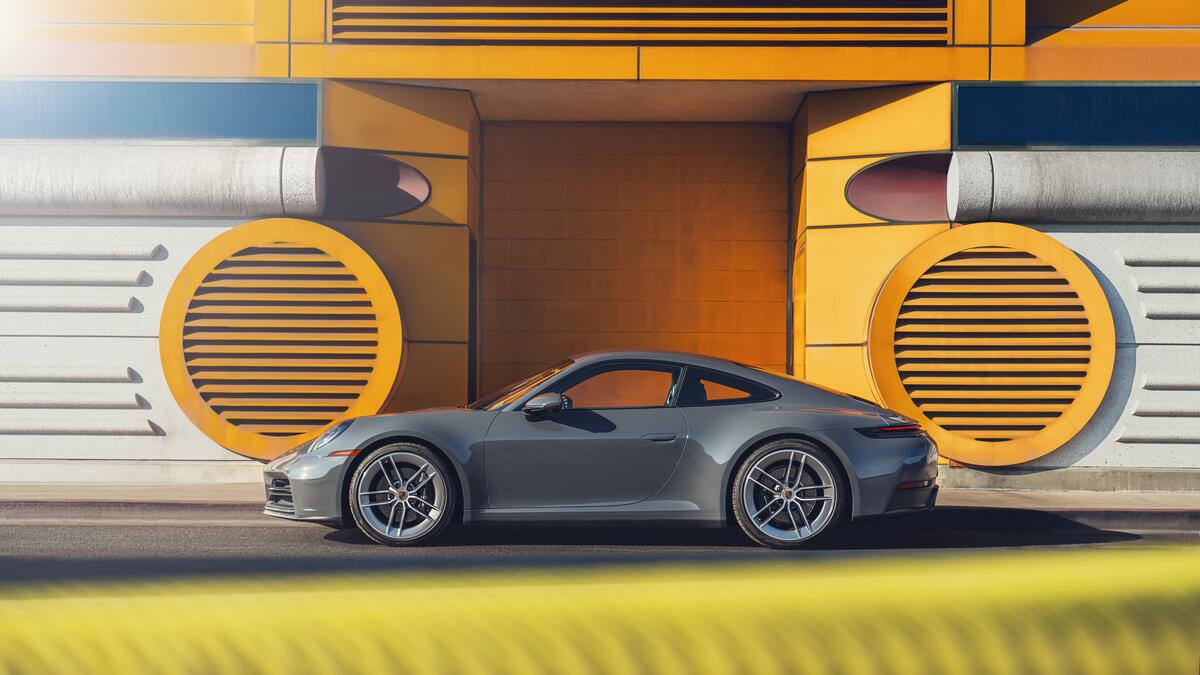
Porsche 911
"Yeah, Porsche 911 might be the answer. And then you buy when that's not running and you just leave it non-running and put it away as a sort of asset."
The Porsche 911 is a famous sports car from Porsche. Here, they’re talking about buying one that doesn’t run and keeping it stored, like something you own for later.
The Porsche 911 is a rear-engine sports car famous for its distinctive layout and long-running design. In this segment, it’s mentioned as a potential buy, but the key point is the idea of buying a car that isn’t running and storing it rather than using it daily.
put it away as a sort of asset
"And then you buy when that's not running and you just leave it non-running and put it away as a sort of asset. I will say that the, it all really depends on who did the work and the quality of the work."
They’re describing the idea of buying a broken car and keeping it stored for later. Instead of using it right away, you treat it like something you’ll fix or keep because it may be worth something.
This describes a collector-style approach: buying a non-running car and storing it rather than driving it, treating it like an asset. In enthusiast circles, this often means the car is expected to be repaired later or held for value rather than used immediately.
16 valve
"My FWs, my two 16 valve Volkswagen's have both undergone massive surgery. They're both new engines."
“16 valve” tells you how many valves the engine has. More valves can help the engine breathe better, and here it’s just how they’re describing which Volkswagen engines they worked on.
“16 valve” describes an engine with 16 valves total, typically meaning four cylinders with two valves per cylinder (or another configuration that totals 16). In this segment, it’s used to identify the specific Volkswagen engines the speaker says have needed major surgery and rebuilds.

Volkswagen Scirocco
"How many different cylinder heads have you had in your Scirocco? I don't like your accusation. No, this engine."
The Volkswagen Scirocco is a sporty Volkswagen model. In this part, they’re talking about how many different engine parts—especially the cylinder head—have been replaced or rebuilt over time.
The Volkswagen Scirocco is a compact sporty coupe/hatch that’s known among enthusiasts for being a popular platform for engine swaps and rebuilds. Here, the speaker references multiple cylinder heads and repeated engine work, which is why the Scirocco comes up in a “how many times have you rebuilt it?” kind of discussion.
cylinder heads
"How many different cylinder heads have you had in your Scirocco? I don't like your accusation. No, this engine."
The cylinder head is a key part of the engine that sits on top of the cylinders. It contains the valve area, so changing cylinder heads usually means serious engine work.
Cylinder heads are the top castings of an engine that house components like the valves and spark plugs (depending on engine design). Replacing or swapping “cylinder heads” is a major engine repair step, and the speaker’s question implies they’ve had to change them multiple times.
re-ringed
"It does everything fine, but it does use oil thanks to a bad machine shop. Who caught the pistons and I've re-ringed it three times and whatever."
Re-ringed means the piston rings were replaced. Piston rings help seal the combustion gases and control oil—so replacing them is often part of fixing oil-burning or low-compression problems.
“Re-ringed” means replacing the piston rings inside the engine. This is commonly done when an engine is burning oil or losing compression, and the speaker ties it to oil use caused by a bad machine shop and issues with the pistons.
Taunton, Massachusetts
"But those cars are ultimately really reliable. I wouldn't hesitate to get into either of my Mark I Volkswagen's and drive them to Taunton, Massachusetts, where TWS is."
Taunton, Massachusetts is a real place in the U.S. The speaker mentions it to show they trust their cars enough to drive them there.
Taunton, Massachusetts is a specific location the speaker uses as a destination to illustrate confidence in the cars’ reliability. They say they’d drive their Mark I Volkswagens there, implying the cars can handle a real trip.
alternator
"Wait. You bring an alternator. Alternator always."
The alternator is the part that keeps your car’s battery charged and powers the electronics while the engine is on. If it breaks, the battery runs out and the car can stop running.
An alternator is the electrical generator on a car that charges the battery and powers the vehicle’s electrical systems while the engine is running. If it fails, the battery can’t keep up, and the car may stall or fail to restart.
differential gear
"They don't last that much longer than that. There's a rivet that comes out of the differential ring gear. Yes."
The differential ring gear is part of the drivetrain that helps send power to the wheels. If something comes loose in that gear area, the transmission/differential can fail very suddenly and badly.
The differential ring gear is a large gear inside the differential that works with the pinion to transfer drive to the axle(s). If a rivet or fastener comes loose from the ring gear area, it can cause catastrophic drivetrain failure—exactly the kind of “explosion” the speaker describes.
ignition coil
"So I travel with ignition coil, fuel pump, distributor, all of the things that are just known that can pull the entire car down, right?"
An ignition coil makes the high-voltage electricity that creates the spark to start and run the engine. If it’s bad, the engine may misfire or not start at all.
An ignition coil is an electrical transformer that boosts battery voltage to create the high-voltage spark needed to ignite the air-fuel mixture in the engine. If a coil fails, the engine can misfire or refuse to start.
distributor
"So I travel with ignition coil, fuel pump, distributor, all of the things that are just known that can pull the entire car down, right?"
A distributor is an older ignition component that sends the spark to the right spark plug at the right moment. Newer cars often don’t use a traditional distributor anymore.
A distributor is part of older ignition systems that routes high-voltage current to the correct spark plug at the right time. Many modern cars use coil-per-cylinder or coil packs instead of a traditional distributor.

Master Tech
"...a car in Germany that's been serviced by a German master tech. I see them just about as good."
“Master” here sounds like a description of a top-level technician rather than a car model. The podcast is saying the car was serviced by a highly skilled mechanic in Germany. The point is that good maintenance can help a car stay in better shape.
In the podcast context, “Master” appears to refer to a car in Germany that was serviced by a German master technician. That phrasing is less about a specific car model and more about the service history and who maintained it. It’s mentioned to support the idea that proper, skilled maintenance matters.

Buick 215
"The red line team was looking for a Buick 215 and aluminum Rover V8 effectively to rebuild."
The Buick 215 is a V8 engine from Buick. People look for it because it’s a smaller, lighter V8 that can be rebuilt and upgraded for a fun project.
The Buick 215 is a small V8 engine (often associated with the early 1960s Buick Special/Skylark era) that’s known for being compact and lightweight for its displacement. Enthusiasts often seek it out for swaps and rebuilds because it can be made to perform well with the right parts and tuning.
engine seized
"The reality of that has been anything but, right? Transmission exploded. That had nothing to do with the, there's nothing wrong with the transmission before the engine seized well."
When an engine “seizes,” the moving parts inside stop moving and the engine gets stuck. It’s a serious failure that can cause a lot of expensive damage.
An engine seizure means the engine’s internal moving parts have locked up and can’t rotate. It’s usually caused by severe oiling failure, overheating, or internal damage, and it often leads to major secondary damage to other components.
teething stuff
"So take one step forward, two steps back, you know, and it's, it's just a matter of getting through the teething stuff. And once that happens, this should be reliable or as at least as reliable as it was."
“Teething stuff” refers to early-production or early-ownership problems that show up after a new design, rebuild, or repair. The idea is that once those initial bugs are worked through, the system becomes stable and dependable.
shake down thing
"Yeah. And that's the shake down thing and that's an expensive process. And you always, you know, everyone has probably experienced this in some way or another or come across cars like this,"
A “shake down” is a period where you test the car right after work is done to make sure everything is actually fixed. It helps catch early issues before they turn into bigger problems.
A “shake down” is an initial testing and operating period used to flush out problems after a repair, rebuild, or major change. In car terms, it often means running the vehicle through heat cycles and monitoring for leaks, misbehavior, or other early failures.

Jeep Cherokee coupe
"My favorite one was my sister had, my sister had an 86 Jeep Cherokee coupe. So two door, 2.5 automatic that she just, it was,"
The Jeep Cherokee is a Jeep SUV. The “two-door” version is what they mean by “coupe,” and it’s a common style from that era.
The Jeep Cherokee is a compact SUV line from Jeep, and the “coupe” wording here refers to a two-door body style. In the 1980s, the Cherokee was known for being a popular platform for both daily driving and long-term ownership.
transmission exploded
"And the worst one was the transmission exploded on the George Washington bridge."
The transmission is what transfers power from the engine to the wheels. If it “explodes,” it usually means it failed badly and the car can’t drive normally anymore—often requiring a replacement or major repair.
A transmission “exploding” is a dramatic failure where internal components break and the unit can catastrophically lose function. When this happens, the car may suddenly stop moving, shift erratically, or require a full transmission replacement or rebuild.
radiator exploded
"Three other things broke. The radiator exploded. All this other shit happened."
The radiator is what helps your car cool down by moving hot coolant through a heat exchanger. If it “explodes,” the cooling system has a serious failure and the engine can overheat quickly.
The radiator is the front-mounted heat exchanger that removes heat from the engine coolant. When the radiator “explodes,” it usually means the cooling system failed catastrophically, often from overheating or pressure/hoses/neck failure.
emergency brake
"Transmission exploded again, but I had no emergency brake and couldn't put in park. It was the output shaft."
The emergency/parking brake is what keeps a car from rolling when it’s stopped. If it isn’t available, it’s much harder to keep the car safe while you wait for help.
The emergency brake (parking brake) is a secondary braking system used to hold the car in place when parked. If the speaker “had no emergency brake,” it removes a key safety fallback during a drivetrain failure.
Request an Explanation
Heard something you'd like explained? We'll add it to this episode.
Sign in to request explanations for terms you heard.
Want to learn more?
Browse our glossary for plain-English explanations of automotive terms, jargon, and concepts.
Help improve this episode
See something that's not quite right? Our annotations are AI-generated and can sometimes miss the mark. Click the flag icon on any annotation to suggest a correction.