
Do Young People Like Cars Anymore? — The Carmudgeon Show w/ Jason Cammisa & Derek Tam-Scott — Ep 238
About this episode
Porsche Taycan GTS and Sport Turismo set the tone as the hosts ask whether younger people still care about cars. They challenge the “kids aren’t interested” narrative as based on an old study, then pivot to what they’re seeing: social-media hype, nostalgia, and car-meet culture. The conversation also ranges through EV driving feel, efficiency, and active suspension tech—before circling back to how access, sound, and in-person experience shape real enthusiasm.

Porsche Taycan GTS
"That is a Taycan GTS in the background. I don't know if you could see it. Sport Turismo. That's right, Sport Turismo."
The Porsche Taycan GTS is Porsche’s electric sports car. It’s meant to be quicker and more driver-focused than the simpler Taycan versions.
The Porsche Taycan GTS is an electric performance model from Porsche, positioned as a sportier step up from the base Taycan. In this episode, it’s used as the example of “amazing engineering prowess,” highlighting how modern EVs can still feel like enthusiast cars.
Hagerty
"This is the Carmagen Show, which is driven by Hagerty, [25.6s] which is a company that provides insurance for enthusiasts by enthusiasts."
Hagerty is an insurance company that caters to people who care about cars. They’re known for coverage that fits enthusiast vehicles.
Hagerty is an insurance company that focuses on car enthusiasts, offering coverage tailored to hobbyists rather than standard daily-driver policies. In the segment, it’s mentioned as the show’s driver/presenter connection.
Porsche Taycan
"...day. We'll see how good we get. Today, we use the Taycan and its amazing engineering prowess as a springbo..."
The Taycan is an electric sedan made by Porsche. It uses electricity instead of gasoline and is designed to drive like a performance car. The podcast is praising it for its engineering and driving feel.
The Porsche Taycan is Porsche’s all-electric performance sedan, built to deliver quick acceleration and strong handling without a gasoline engine. It’s frequently discussed for its engineering and how it feels as a driver’s car. The podcast highlights using the Taycan as a “springboard,” praising its engineering prowess.

Chevrolet Suburban
"...the length that's the width, 77.4. So approaching suburban. It's fucking, you can't even,"
The Suburban is a large SUV made to carry lots of people and cargo. It’s known for being very roomy and physically big. The podcast mentions it because it’s noticeably larger than most vehicles.
The Chevrolet Suburban is a full-size SUV known for its very large body and roomy interior, built for families and long-distance hauling. It often comes up in conversations about size because it’s one of the biggest mainstream vehicles on the road. In the podcast, it’s referenced as a “suburban” size—highlighting how enormous it feels compared with typical cars.

Porsche Cayenne
"...models. And we just, we're just buying McCons and Cayennes. This is the first time I've gotten in the Gen 2"
The Cayenne is Porsche’s SUV. It’s meant for people who want an SUV but still want a sporty driving feel. The podcast mentions the “Gen 2” version, which is the second generation of that SUV.
The Porsche Cayenne is Porsche’s SUV line, combining everyday practicality with Porsche-style performance and handling. It’s significant because it’s a major part of Porsche’s modern lineup and often gets discussed alongside other Porsche models. The podcast specifically calls out “Gen 2,” meaning the second generation of the Cayenne.
facelift
"Yeah, there was a facelift with a bunch of additional motor technology and a bunch of efficiency, efficiency changes, plus different front end."
A facelift is a mid-cycle refresh where a car gets updated styling and often engineering changes, without becoming a completely new generation. In this segment, the host says the second-gen Cayenne received a facelift with additional motor technology and efficiency updates.
efficiency changes
"Yeah, there was a facelift with a bunch of additional motor technology and a bunch of efficiency, efficiency changes... Does it have competitive efficiency now?"
“Efficiency changes” refers to engineering updates intended to reduce fuel/energy use—often through revised engines, transmissions, aerodynamics, or calibration. The host questions whether the updated Cayenne now has “competitive efficiency,” implying it may not match rivals in real-world terms.
class size comparison (S class vs C class)
"They also made a car the size of an S class that has less room in it than a C class, I would say."
“S class” and “C class” are shorthand for Mercedes-Benz vehicle size/market segments, with S class generally representing a larger luxury sedan than C class. The host claims a car “the size of an S class” has less room than a C class, highlighting how packaging can differ from what size labels suggest.

BMW E30 wagon
"So the, my E30 wagon, which is genuinely tiny. ... It is horribly space inefficient, but I guess that's what you get for those looks."
The BMW E30 wagon is an older, compact BMW. The hosts are using it to show how small it feels compared with what you can buy today.
The BMW E30 wagon is part of the E30-generation 3 Series lineup and is known for being unusually small and compact for a wagon. In this segment, it’s used as a reference point to argue that modern Mercedes options are still larger and that the E30’s packaging leaves very little usable space.
frunk
"To sort of get a small frunk."
A frunk is a trunk-like storage space in the front of the car. It’s common on many electric cars because there’s no traditional engine in the front.
A frunk (front trunk) is the storage compartment at the front of some cars, especially many electric vehicles. Because the engine bay is smaller or absent, designers can use that space for luggage, but it can come at the cost of other packaging tradeoffs.

Tesla Model S
"My problem when I reviewed Tycon was that Model S, right? ... Model S was, by comparison, a piece of shit in terms of interior quality and build quality."
The Tesla Model S is a big electric luxury sedan. In this part of the show, they’re comparing it to another EV—especially how well it’s built and how fast it feels.
The Tesla Model S is a large electric sedan that’s often compared directly with other luxury EVs on interior quality, build quality, and performance. Here, the host contrasts it with another EV by calling out interior/build shortcomings and discussing how its acceleration compares to the other car’s Ludicrous-mode performance.
ludicrous
"I guess the plaid was probably about P100D ludicrous was out at the time. ... And the Tycon couldn't match ludicrous levels of acceleration."
“Ludicrous” is Tesla’s extra-fast driving mode. It’s meant to make the car accelerate as hard as possible.
“Ludicrous” refers to Tesla’s high-performance software/drive mode for certain Model S and Model X variants, designed to maximize acceleration. In this segment, it’s used as a benchmark for how quickly the car can accelerate compared with another EV.
P100D
"I guess the plaid was probably about P100D ludicrous was out at the time."
P100D is a specific Tesla Model S version. It indicates a performance setup and a large battery, which matters because it’s linked to the car’s top acceleration mode.
P100D is a Tesla Model S powertrain/battery configuration designation (a “P” performance variant paired with a 100 kWh-class battery). The host mentions it in the context of when the Ludicrous mode was available, tying the trim/configuration to acceleration performance.

Tesla Model
"... sitting right here. You couldn't spend that on a Tesla Model S if you tried. Oogly moogly, that's a lot of dol..."
The Model Y is an electric SUV/crossover made by Tesla. It runs on electricity instead of gasoline. The podcast brings it up to compare pricing with another Tesla model.
The Tesla Model Y is a compact electric crossover designed for everyday driving with an all-electric powertrain. It’s frequently discussed because it offers a lot of capability for its price compared with other electric vehicles. In the podcast, it’s contrasted with the cost of a Tesla Model S, emphasizing how expensive the Model S can be by comparison.
two-speed retransmission
"It's quick. I really do not care for that two-speed retransmission. I don't like feeling a shift and an EV."
Some EVs use a gearbox with two gear ratios instead of just one. That can make the car feel like it “shifts,” and the host doesn’t like that sensation.
A two-speed transmission (often described as a two-speed gearbox) uses two gear ratios to keep the motor operating in its most efficient or effective range. The host dislikes the “shift” feel, which can be more noticeable in some EVs that use a multi-speed gearbox.
one-pedal driving
"I really do not like the lack of one-pedal driving. Although maybe there's an option there."
One-pedal driving means you can slow down mostly by lifting off the accelerator. The host doesn’t like that the car they’re talking about doesn’t let you do that.
One-pedal driving is an EV driving mode where lifting off the accelerator commands strong regenerative braking, slowing the car without using the brake pedal as often. The host dislikes the lack of one-pedal driving, implying the car they’re in doesn’t provide that familiar EV “lift to slow down” behavior.
heated steering wheel
"I got in the car this morning, it was cold and I really wanted a heated steering wheel ... For a quarter million dollars, you just have a fucking heated steering wheel."
A heated steering wheel is a steering wheel that warms up so your hands feel less cold. It’s usually turned on with a button or a screen setting.
A heated steering wheel uses built-in heating elements (typically in the wheel rim) to warm the driver’s hands. It’s usually controlled through the car’s infotainment or a dedicated control, and it can be especially noticeable on cold mornings.
infotainment system
"This car's infotainment system is hateful. And I just don't understand why the traditional car companies cannot make a screen based system that doesn't have many layers of controls,"
An infotainment system is the car’s main screen and controls for things like music, maps, and phone features. If it’s hard to use, it can take too many steps to get to what you want.
An infotainment system is the car’s integrated electronics for media and information—think navigation, audio, phone connectivity, and vehicle settings—usually shown on a central screen. When people complain about “layers of controls,” they’re often talking about how many menus or physical/virtual buttons you must use to reach common functions.
kilowatt hour
"It's far more efficient than the previous one. [631.3s] I think I'm averaging 400 watt hours per mile. [633.2s] So 2.5 miles per kilowatt hour, roughly."
A kilowatt-hour (kWh) is a measure of how much electricity you used. When people say “miles per kWh,” they mean how far the car can go using that amount of battery energy.
A kilowatt-hour (kWh) is a unit of electrical energy: it’s how much energy you get from using 1 kilowatt of power for one hour. EV efficiency is often expressed as miles per kWh (or kWh per 100 miles) to show how far the car goes per unit of battery energy.
watt hours per mile
"It's far more efficient than the previous one. [631.3s] I think I'm averaging 400 watt hours per mile. [633.2s] So 2.5 miles per kilowatt hour, roughly."
Watt-hours per mile is a way to measure how much battery energy the car uses for each mile. Less energy per mile means the EV is more efficient.
Watt-hours per mile (Wh/mi) is an energy-consumption metric that tells you how many watt-hours the vehicle uses to travel one mile. Lower Wh/mi generally indicates better efficiency, since the car is spending less battery energy per distance.

Volkswagen Egolf
"Still, isn't the e-golf like 43 and a half? [645.0s] The e-golf is literally half the weight, a quarter of the size, a tenth of power."
The Volkswagen e-Golf is an electric Golf. The hosts use it as a comparison car to show how weight and size can change how efficiently an EV uses energy.
The Volkswagen e-Golf is an electric version of the Golf, so it’s a useful baseline for comparing efficiency and packaging versus other EVs. In this segment, it’s brought up as a reference point for energy use and how vehicle size/weight affects real-world driving.
rolling resistance
"But look at the frontal area. [658.5s] Look at the rolling resistance. [659.5s] I mean, look at the size of the tires."
Rolling resistance is the “drag” from your tires rolling on the road. Lower rolling resistance usually means the car needs less energy to keep going.
Rolling resistance is the energy lost as tires deform and as they scrub against the road while rolling. It’s a major factor in EV efficiency because it directly affects how much power is needed to keep the car moving at steady speeds.
frontal area
"Still, isn't the e-golf like 43 and a half? [645.0s] The e-golf is literally half the weight, a quarter of the size, a tenth of power. [650.0s] Yes, e-golf with grippy tires, I average 3.4. [654.1s] And 10 years older. [655.2s] But look at the frontal area."
Frontal area is how big the car looks from the front. Bigger usually means more air resistance, which can make an EV use more energy.
Frontal area is the size of the car’s “front face” that air flows around. A larger frontal area generally increases aerodynamic drag, which can hurt efficiency—especially at highway speeds.
hydraulically actuated anti-roll bars
"Way more comprehensive. So hydraulically actuated anti-roll bars allow you to decouple the roll bars."
These are like roll bars, but instead of being fixed, they can be tightened or loosened using hydraulics. That helps the car stay flatter in turns without making it feel stiff all the time.
Hydraulically actuated anti-roll bars are roll-bar assemblies whose stiffness can be actively controlled using hydraulic actuators. The goal is to reduce unwanted body roll in corners while allowing the system to behave more softly when you’re going straight or hitting uneven bumps.
decouple the roll bars
"So hydraulically actuated anti-roll bars allow you to decouple the roll bars. So when you're going in straight ahead, you do not need the roll bars, obviously."
Decoupling means the car can let the left and right sides move more independently. It helps the car handle bumps without forcing both sides to act the same way.
To decouple the roll bars means the system can reduce how strongly the left and right wheels are mechanically linked through the anti-roll bar. That lets the suspension respond independently to bumps on one side while still providing roll control when cornering demands it.
effective spring
"But what they do is actually add a spring rate effectively when you have a one-wheel bump. When they're both doing the same thing, the bar is moving."
An “effective spring” is the way the anti-roll bar can act like extra stiffness. When one wheel goes over a bump and the other doesn’t, the bar twists and helps resist that uneven movement.
An “effective spring” is how the anti-roll bar’s twisting action can add resistance to wheel movement, making the car feel stiffer in certain situations. Here, when one wheel hits a bump and the other doesn’t, the bar twists and creates that added spring-like effect.
hydraulically actuated roll bars
"And so a lot of these hydraulically actuated roll bars are there. [759.3s] Basically, initially they were to disconnect."
These are sway bars that can be controlled by hydraulics. The car can “tune” how much it resists leaning, depending on driving conditions.
Hydraulically actuated roll bars use a hydraulic system to change how the sway bar behaves. Instead of being fixed, the bar can be made to couple or decouple left and right sides to reduce roll while improving ride comfort.

BMW E60
"[762.2s] So BMW did this fairly wrong. [763.8s] I think E60 had hydraulically disconnecting sway bars."
The BMW E60 (5 Series generation) is mentioned here in the context of early hydraulic sway-bar disconnect designs. The host suggests BMW “did this fairly wrong,” implying the system’s behavior or calibration didn’t deliver the expected ride/handling payoff.
sway bars
"[763.8s] I think E60 had hydraulically disconnecting sway bars. [767.5s] So you can use a..."
Sway bars help stop the car from leaning too much in turns. If they can be disconnected, the wheels can move more freely, which can make the ride smoother.
Sway bars are the same core hardware as anti-roll bars: they connect left and right suspension to reduce body roll. When they’re “disconnected,” each side can move more independently, which can improve ride comfort over bumps.
air springs
"This is not that. [790.7s] What this uses is air springs that determine the vehicle height,"
Air springs use air pressure to support the car instead of metal springs. They can adjust to keep the car at a steady height and help smooth out the ride.
Air springs use compressed air instead of (or alongside) steel coil springs to support the vehicle. Because the air pressure can be adjusted, they can maintain a chosen ride height and help control how the suspension responds to load and road conditions.
vehicle height
"[790.7s] What this uses is air springs that determine the vehicle height, [793.6s] this sort of static vehicle height."
Vehicle height is how high the car sits. Some suspension systems can adjust it so the car stays level even when you load it up.
Vehicle height refers to the ride height—the distance between the body and the ground. In suspension systems with air springs, controlling vehicle height can keep aerodynamics and suspension geometry more consistent as passengers and cargo change the load.
high voltage electrical architecture
"So this car is... [805.5s] It's a high voltage electrical architecture."
Electric cars often have two electrical systems: a normal 12-volt one for things like lights and computers, and a much higher-voltage system for actually driving the wheels. The “high-voltage electrical architecture” is how that big power system is set up.
A high-voltage electrical architecture is the layout of a car’s traction power system—how the high-voltage battery, inverter(s), wiring, and motors are organized. It’s what enables electric drive components to run at much higher voltage than the car’s normal 12-volt system.
adjusting the pressure
"By adjusting the pressure that the fluid is delivered at instead. [815.0s] By building pressure or relieving pressure."
Instead of changing the fluid’s thickness, the system can change how much pressure it uses. Changing pressure can change how strongly the suspension or actuator pushes/pulls.
Adjusting the pressure refers to controlling hydraulic fluid pressure to change how a system behaves. In active suspension/actuation contexts, varying pressure can replace “viscosity adjustment” by changing the force delivered by the fluid circuit.
12-volt low voltage system
"So this car uses conventional 12-volt low voltage system. [821.2s] And then the high voltage system..."
Most cars use a 12-volt battery to run everyday electronics like screens, lights, and sensors. Even electric cars still keep a 12-volt system for those jobs.
The 12-volt low-voltage system is the car’s traditional electrical network used for accessories and control electronics. Even in high-voltage EVs, this system typically powers items like infotainment, lighting, and many sensors.
800 volt
"This uses an 800 volt bar on it. [836.1s] That those motors are on the 800."
In an electric car, the battery can run at different high-voltage levels. An “800 volt” system means the car uses a very high voltage for driving power, which can help it move power more efficiently.
“800 volt” refers to the EV’s high-voltage level. Higher voltage can reduce current for the same power, which can allow smaller cables and improve charging and power delivery efficiency.
five kilowatt motors
"That those motors are on the 800. [839.9s] They are five kilowatt motors."
Kilowatts measure how much power a motor can make. Saying “five kilowatt motors” is basically a way to describe the strength/capability of each motor.
A “kilowatt” is a unit of power, and “five kilowatt motors” means each motor can produce up to about 5 kW of power (depending on the system’s limits). In EVs, motor power ratings help explain how much electrical energy can be converted into motion.
four of them
"How many? [843.9s] Four of them. [845.3s] So in theory, when all four suspension motors"
“Four of them” means there are multiple motors working together instead of just one. Here, the discussion suggests those motors are involved with the suspension system.
Using “four” motors typically implies a multi-motor layout where power is distributed across multiple actuators. In this context, the speaker later ties them to “suspension motors,” suggesting the car uses multiple motorized suspension actuators rather than a single system.
suspension motors
"So in theory, when all four suspension motors [845.3s] are running on full song,"
Suspension motors are motors that help control how the suspension moves. Instead of the suspension just reacting passively, the car can actively adjust it while you drive.
“Suspension motors” are motors that actively control suspension behavior—such as ride height and damping—rather than relying purely on passive springs and dampers. Active suspension can react to driving conditions to keep the car more stable and comfortable.
hydraulic system
"And what they're doing, there are four of them, one for each corner, obviously. And they are circular pumps that create pressure and hydraulic system."
A hydraulic system uses fluid under pressure to move and control parts. In a car’s suspension, it helps the shocks react quickly to bumps.
A hydraulic system uses pressurized fluid to transmit force. In suspension, that pressurized fluid can be directed to control how the shocks resist motion.
static ride height
"The shocks themselves, are you ride, the car rides, so the static ride height is given by the air chambers."
Static ride height is how high the car sits when you’re not hitting anything. With air suspension, it’s controlled by the air in the suspension’s chambers.
Static ride height is the car’s baseline height when it’s not actively moving over a bump. With air suspension, that height is set by air volume in the air chambers.
damping force
"And then the damping force is controlled completely by that hydraulic pressure."
Damping force is how much the shock resists moving up and down. It affects how quickly the car calms down after hitting a bump.
Damping force is the resistance the shock provides to suspension movement. Higher damping generally controls how quickly the car settles after a bump, improving stability and ride control.
actively pull a wheel up
"And so it can actively pull a wheel up. It can actively push a wheel down depending on how the valves route that pressure."
Actively pulling a wheel up means the suspension can lift a corner of the car intentionally. Instead of only reacting to bumps, it can move the wheel to control ride and grip.
Actively pulling a wheel up means the suspension can generate force to lift that corner rather than just reacting to bumps. This is a hallmark of active suspension systems that can change wheel position on demand.
valves route that pressure
"It can actively push a wheel down depending on how the valves route that pressure."
Valves are like controlled switches for pressurized fluid. They decide where the fluid goes, which tells the suspension whether to push or pull and how firm it feels.
Valves route hydraulic pressure to different parts of the suspension. By switching where the pressurized fluid goes, the system can change whether it pushes or pulls a wheel and adjust damping behavior.
weight distribution
"it can also fully counter roll. [969.6s] So it's sort of helicopters [971.0s] where it will lean into... [977.2s] And it plays constant tricks with weight distribution."
Weight distribution is where the car’s weight sits on the wheels. In turns, moving that weight around can help the tires keep better grip.
Weight distribution is how a car’s mass is spread across its wheels and axles. In cornering, changing weight distribution can help maintain traction and stability by keeping the tires closer to their grip limits.
limit of adhesion
"So if it sees you're approaching [981.9s] the limit of adhesion of one wheel, [983.6s] it can add weight to that wheel"
The limit of adhesion is basically the point where the tires stop gripping the road. When you’re near that point, the car can steer and accelerate well—but if you go past it, the wheels start to slip.
The limit of adhesion is the maximum grip available between a tire and the road before it starts to slip. Traction control and active suspension systems try to keep each wheel near that grip threshold to maximize handling without losing control.
handling
"it can add weight to that wheel [985.2s] by just pushing down on that and then... [988.9s] That's game changing for handling. [991.1s] So it simultaneously improves"
Handling is how controllable the car feels, especially when turning and slowing down. It depends on tire grip and how the suspension keeps the car balanced.
Handling is how well a car responds to steering, braking, and throttle inputs—especially in corners. It’s strongly influenced by grip, suspension behavior, and how the car manages weight transfer.
power consumption
"And plus there's power consumption. Now I was told that this car's EPA rating is independent of whether it has this system."
Power consumption just means how much energy a car system uses while it’s running. If a system uses more power, the car may use more energy overall—especially when you’re driving harder.
Power consumption is how much electrical or mechanical power a system uses while operating. In efficiency discussions, it matters because extra power draw (for motors, compressors, pumps, or electronics) can reduce range or increase energy use, especially under higher loads.
EPA rating
"Now I was told that this car's EPA rating is independent of whether it has this system. I'm not gonna call bullshit. I believe that."
The EPA rating is a number the government uses to compare how efficient cars are. It comes from a standardized test, so your actual results can be different depending on how and where you drive.
An EPA rating is the fuel-economy or efficiency figure measured under standardized tests run by the U.S. Environmental Protection Agency. It’s meant to be comparable across vehicles, but real-world driving can differ because the test cycle doesn’t perfectly match how people drive day to day.
EPA cycle
"Now, the EPA cycle is probably done on... How bumpy is the EPA? Probably not. And it's probably not very dynamic."
The EPA cycle is the test route pattern used in lab testing. It controls things like speed changes and acceleration, so it may not reflect how your car behaves on real roads.
The EPA cycle is the specific driving schedule used in EPA testing—how fast the car goes, how often it accelerates, and how it decelerates. If the cycle is steady or not very “dynamic,” it can under-represent situations like frequent load changes or aggressive driving.
kilowatts
"But you can imagine if you applied 20 kilowatts or 34 kilowatts."
Kilowatts are a way to measure how much “work” a system is doing per second. More kilowatts usually means the car is using energy faster.
Kilowatts (kW) are a unit of power—how quickly energy is used. When the discussion references applying 20 kW or 34 kW, it’s talking about higher power draw, which can make efficiency look worse on real roads than in a standardized test.
scrub from the tires
"Well, yes, you're doing... Obviously, you're... On a back road, you have scrub from the tires"
“Scrub from the tires” means the tires aren’t rolling perfectly smoothly—they’re being dragged or flexed a bit. That wastes energy, so the car has to use more power to keep moving.
“Scrub from the tires” refers to energy losses when tires are forced to slip or deform while turning, braking, or dealing with uneven surfaces. That wasted energy shows up as extra power demand, which can reduce efficiency on real back roads compared with smoother test conditions.
turning speed back into electrons
"Unless you're turning speed back into electrons [1088.9s] because you're driving an EV."
In an EV, braking can “charge” the battery a little. Rather than turning all the car’s speed into heat, the car uses the motor to slow down and send some energy back to the battery.
This is describing regenerative braking in an EV. Instead of wasting the car’s kinetic energy as heat during braking, the motor acts like a generator and converts some of that energy back into electrical energy stored in the battery.
regenerative braking
"Unless you're turning speed back into electrons [1088.9s] because you're driving an EV."
Regenerative braking is when the car slows down and also recovers some energy. It helps the battery by turning part of your braking energy into electricity instead of wasting it as heat.
Regenerative braking is an EV (and hybrid) feature where the drive motor slows the car while generating electricity. That electricity is routed to the battery, improving efficiency compared to friction brakes alone.
horsepower
"[1096.7s] 20 kilowatt, 30 horsepower-ish, [1098.9s] would get this car probably down the road at 50 miles an hour."
Horsepower is a measure of how much power the car’s motor can make. It’s another way to talk about the same idea as kilowatts.
Horsepower is another unit of power, commonly used for engines and motors. The speaker is roughly converting EV motor power (kilowatts) into an equivalent “horsepower-ish” figure to make the energy/efficiency discussion easier to visualize.
Dakar
"So if you were driving at 50 miles an hour [1104.5s] and had the suspension just doing all weird shit, [1107.0s] you could conceivably double the energy consumption. [1111.4s] This might be more like... [1112.6s] Keep that in mind for a Dakar."
They’re referencing Dakar to imagine this idea in a tough, long-distance race setting. It’s a shorthand for “real-world endurance where energy use really adds up.”
The Dakar reference is about applying the energy/efficiency discussion to a high-demand off-road endurance context. It’s a way to frame how much power and energy matter when conditions are harsh and speeds are sustained.
aerodynamically efficient
"Oh, because it's so... [1117.4s] Because it's aerodynamically efficient. [1119.1s] I don't know what the tires are."
Aerodynamic efficiency means the car cuts through the air with less resistance. Less resistance usually means you need less energy to keep going at speed.
Aerodynamic efficiency means the car produces less aerodynamic drag, so it needs less power to maintain speed. That’s especially important for EVs because at higher speeds, energy use is often dominated by overcoming drag rather than just drivetrain losses.
reactive system
"Overspeed table. So remember, this is a reactive system. So it's looking for, you know... Forces, acceleration."
A reactive system is one that responds to what’s happening in real time—using sensor inputs like forces and acceleration—rather than predicting conditions ahead of time. In suspension control, this typically means the controller adjusts damping or actuator commands based on current road and vehicle behavior.
Skyhook principle
"The Skyhook principle, right? Which we've all heard this before and this is the idea that the car should be suspended from the sky. And just as it's moving through space, it should just be moving slightly."
The Skyhook principle is an idea for suspension that tries to keep the car feeling “weightless” and steady. It uses sensors and control to reduce the car’s bouncing and leaning instead of just letting springs do all the work.
The Skyhook principle is an active suspension concept where the car is controlled to behave as if it’s “suspended from the sky.” Instead of relying only on springs and dampers, the system uses sensors and actuators to minimize body motion like pitch, roll, and vertical movement.
wheel travel sensors
"But this is looking at all of those sensors that are built in plus wheel travel sensors"
Wheel travel sensors track how much the suspension moves up and down at each wheel. That lets the car’s control system know what the suspension is doing so it can respond to bumps.
Wheel travel sensors measure how far each wheel moves relative to the vehicle body. That information helps an active or controlled suspension system estimate suspension compression/extension and respond appropriately to road inputs.
speed tables
"So driving through the city of San Francisco this morning at 25 miles an hour over speed tables that I would normally slow way down or, and more importantly, hit with one wheel on my car."
Speed tables are raised parts of the road meant to make you slow down. They’re usually less “jumpy” than speed bumps, so the car’s suspension can handle them more smoothly.
Speed tables are raised sections of road designed to slow vehicles down. They’re typically flatter and longer than speed bumps, so the suspension has more time to react as the car transitions over the rise.
speed bump
"But then when you hit a really severe speed bump, even at a relatively normal speed, which is a sudden jerk up and over, it just slammed into the bump stops and didn't have time to react."
A speed bump is a raised hump in the road to slow cars down. If you hit it too fast, the suspension can run out of room to move, and the ride feels like a hard jolt.
A speed bump is a raised obstacle in the road that forces vehicles to slow down. If you hit one too fast, the suspension can bottom out—meaning the suspension runs out of travel—leading to a harsh jolt.
bump stops
"it just slammed into the bump stops and didn't have time to react."
Bump stops are like safety limits for the suspension. If you hit a bump hard enough, the suspension can’t compress further and the car feels a much harsher impact.
Bump stops are rubber or hydraulic limits that prevent the suspension from compressing too far. When the car “slams into” them, the suspension can’t absorb the impact anymore, so the chassis gets the harshness.
Mercedes magic ride control
"That is a very big difference between this and Mercedes magic ride control, which is predictive. It uses a laser to scan the surface of the road and knows what's coming."
Mercedes magic ride control is a suspension feature that tries to make the ride smoother. It looks ahead at the road and adjusts how the suspension responds so you feel less of the bump.
Mercedes magic ride control is an active suspension system that aims to smooth out bumps before they hit the wheels. It uses sensors (including a laser scan of the road surface) to predict upcoming road conditions and adjust damping so the car can react earlier.
predictive
"That is a very big difference between this and Mercedes magic ride control, which is predictive. It uses a laser to scan the surface of the road and knows what's coming."
Here, “predictive” means the car tries to anticipate the road ahead. Instead of reacting only after you hit the bump, it adjusts beforehand to soften the ride.
In this context, “predictive” refers to suspension control that anticipates road conditions rather than waiting for the impact. By sensing what’s coming, the system can pre-adjust damping to reduce how violently the suspension compresses.
waft
"It's just Rolls Royce level of waft. [1368.0s] It's not float, it's waft over everything."
“Waft” is a fancy way of saying the car feels really smooth, like it’s gliding over the road. It’s the opposite of a firm, jiggly ride.
“Waft” is car-enthusiast slang for an ultra-smooth ride that feels like it floats over road imperfections. It’s often used to describe luxury cars that isolate occupants from bumps and vibration.
hybrid system
"So Panamera, which is the gas burning equivalent [1393.8s] of this car, that is the hybrid system. [1398.2s] And so the hybrid system has the high voltage battery"
A hybrid system is a car setup that uses both gasoline and electricity. The battery stores electrical energy so the car can run on electric power or help the gas engine.
A “hybrid system” combines an internal-combustion engine with an electric motor and a battery. In this context, the key detail is the high-voltage battery that can “activate the system” for electric assist or hybrid operation.

Porsche Panamera
"So Panamera, which is the gas burning equivalent [1393.8s] of this car, that is the hybrid system."
The Porsche Panamera is Porsche’s big four-door sedan. Here it’s mentioned as the non-electric (gas) counterpart, and the point is that it also uses a hybrid system with a high-voltage battery.
The Porsche Panamera is Porsche’s four-door performance sedan, and in this segment it’s used as the “gas burning equivalent” to the car being discussed. The host ties it to Porsche’s hybrid system, specifically the high-voltage battery used to run the hybrid functions.
21 inch wheels
"This is optional 21 inch wheels. All I kept thinking is imagine what this system would look like, would drive like if this car had 15 inch wheels with 70 series sidewalls, right?"
Bigger wheels (like 21 inches) usually mean shorter tire sidewalls. That often makes the ride feel firmer over rough roads.
Wheel size (like 21-inch) affects ride quality because it changes the tire’s sidewall height and how much the tire can flex over bumps. Larger wheels usually pair with shorter sidewalls, which can make the ride feel firmer and less forgiving.
70 series sidewalls
"All I kept thinking is imagine what this system would look like, would drive like if this car had 15 inch wheels with 70 series sidewalls, right?"
“70 series” is a tire sizing detail that describes how tall the tire’s sidewall is. Taller sidewalls usually ride smoother because they can flex more over bumps.
“70 series” refers to the tire’s aspect ratio: the sidewall height as a percentage of the tire’s width. Higher aspect-ratio tires (like 70-series) have taller sidewalls, which generally improves ride comfort and helps absorb impacts compared with low-profile tires.
brakes would be bigger than the wheels
"All I kept thinking is imagine what this system would look like, would drive like if this car had 15 inch wheels with 70 series sidewalls, right? That brakes would be bigger than the wheels."
The point is that brake parts have to physically fit inside the wheel. If you go to smaller wheels, the brakes may not fit unless the brake setup is changed.
This is a shorthand way of saying that if the braking hardware (calipers/rotors) is designed for large wheels, reducing wheel size can create packaging constraints. In practice, brake components must fit within the wheel’s inner barrel, so smaller wheels may limit brake size or require different brake calipers/rotors.
G
"“So, you know, more than half a G.”"
“G” is a way to describe how hard something accelerates or slows down. One “G” is roughly the force you feel from gravity. Saying “more than half a G” means the braking is pretty strong—enough to feel like a noticeable push in your body.
“G” is a unit of acceleration, where 1 g equals the acceleration due to gravity (about 9.8 m/s²). When the host says “more than half a G,” they’re describing how strong the braking deceleration is in terms of lateral/longitudinal forces felt by the car and occupants. It’s a common way to compare performance without quoting a single speed.

Ferrari 308 GT4
"“The Ferrari, the 308 GT4, 205 7014 tires.”"
The Ferrari 308 GT4 is an older Ferrari that’s famous for how it feels to drive, not just how fast it is. Here, the hosts say the biggest thing about it is the way it rides—like it feels smooth and floating. They’re using it as a comparison for what makes a car’s driving experience memorable.
The Ferrari 308 GT4 is a 1970s-era Ferrari grand tourer known for its distinctive driving feel—especially how it rides and communicates grip. In this segment, the hosts use it as a reference point for what they consider the “defining characteristic” of the car’s driving experience. They specifically mention the ride feel as the standout trait.
205 7014 tires
"“The Ferrari, the 308 GT4, 205 7014 tires.”"
That number string is the tire size. It tells you how wide the tire is, how tall the rubber sidewall is, and what wheel size it fits. Different tire sizes can change how smooth the ride feels and how the car handles.
“205/70/14” is a tire size code: 205 is the tire width in millimeters, 70 is the sidewall height as a percentage of the width, and 14 is the wheel diameter in inches. Tire size affects ride comfort, steering response, and how much grip the tire can provide. The hosts mention it to describe the specific setup that contributes to the car’s feel.
control arms
"It's just control arms, double arms, front and rear. And 70 series tires, huge, big balloons."
Control arms are parts of the suspension that hold the wheels in the right position. They help the car absorb bumps and also affect how accurately the car turns.
Control arms are suspension links that connect the chassis to the wheel, controlling how the wheel moves as the road changes. Their shape and mounting determine ride comfort and steering feel because they affect alignment and how forces are transmitted.
70 series tires
"And 70 series tires, huge, big balloons. Imagine, because all of the little, the high frequency, like on the broken pavement is gone in that Ferrari."
“70 series” is a tire size detail that describes how tall the rubber sidewall is. Taller sidewalls tend to make the ride smoother because they flex more over bumps.
“70 series” refers to a tire’s aspect ratio—how tall the sidewall is compared to the tire’s width. A higher aspect ratio (like 70) usually means a taller, more flexible sidewall that can improve ride comfort by absorbing small bumps.
high frequency
"Imagine, because all of the little, the high frequency, like on the broken pavement is gone in that Ferrari."
“High frequency” here means the quick, small bumps and vibrations from the road surface. The goal is to keep that shaking from getting into the car.
In ride quality discussions, “high frequency” refers to rapid, small oscillations from road texture—like the chatter you feel on rough pavement. Softer tire sidewalls and suspension tuning can reduce how much of that vibration reaches the cabin.
range and efficiency
"It'd be really interesting to, I'm sure it would kill range and efficiency. I'm sure it would have all these other horrible."
Range and efficiency are about how far the car can go and how much energy it uses. Tire and wheel changes can make the car harder to roll, which can hurt economy or EV range.
Range and efficiency are energy-related measures that can be affected by wheel/tire choices. Larger wheels and lower-profile tires can increase rolling resistance and aerodynamic drag, which may reduce fuel economy or EV range.
deflections
"Because of the deflections and energy that goes into the. Unless, I mean, these cars all were run 40 to 50 psi of tire pressure."
Deflection is how much the tire or suspension “gives” when you hit a bump. If it gives too much, the car can feel less sharp when you turn.
Deflection is how much a tire or suspension component moves under load. More deflection can help absorb bumps, but it also changes steering response and can make the car feel less immediate if the system is too compliant.
tire pressure
"Unless, I mean, these cars all were run 40 to 50 psi of tire pressure. So, sure you could engineering it out."
Tire pressure is how inflated the tires are. It changes how the tire flexes over bumps and how directly the car responds when you steer.
Tire pressure affects ride comfort, grip, and steering response by changing how stiff the tire sidewall and tread contact patch behave. Lower pressure generally increases compliance (smoother ride) but can reduce precision and increase heat buildup if taken too far.
turn in response
"So, sure you could engineering it out. And you would never get the turn in response. Unless, I mean, these cars all were run 40 to 50 psi of tire pressure."
Turn-in response is how promptly the car starts turning when you steer. If the suspension or tires are too soft, the car can feel less immediate and a bit vague.
Turn-in response is how quickly and precisely the car begins to rotate when you turn the steering wheel. Suspension and tire compliance can improve comfort, but too much softness can make turn-in feel delayed or “muddled.”
21s ride
"The engineers are using their brains to make a car with 21s ride. Like a car with 21s has no business riding."
“21s” means 21-inch wheels. Bigger wheels usually come with shorter, stiffer tire sidewalls, which can make the ride feel less smooth.
“21s” refers to 21-inch wheels. Larger wheels typically require lower-profile tires, which reduces sidewall flex—often making the ride harsher and more sensitive to road texture unless the suspension is tuned to compensate.
PSI of hydraulic fluid
"[1601.5s] Yeah. [1602.1s] And volts and PSI of hydraulic fluid. [1605.6s] And thus you wind up with a reasonably sized full size car."
PSI is a way to measure pressure. If they’re talking about hydraulic fluid, they mean the fluid is being pushed with a certain amount of force, which changes how the system works.
PSI (pounds per square inch) is a pressure unit. When someone mentions “PSI of hydraulic fluid,” they’re referring to how much pressure the fluid is under in a hydraulic system, which affects how that system behaves.
EV
"[1611.0s] With no backseat room, no cargo capacity, moderate efficiency. [1616.1s] As an EV moderate, it's fine. [1619.9s] And a compromised ride."
EV means electric vehicle. It’s a car that runs mainly on electricity from a battery, and here it’s being discussed in terms of how it feels and how it’s packaged.
EV means electric vehicle—cars powered primarily by electricity stored in a battery. In this discussion, the speaker contrasts an EV’s tradeoffs (like ride quality and packaging) with what they prefer in older cars.
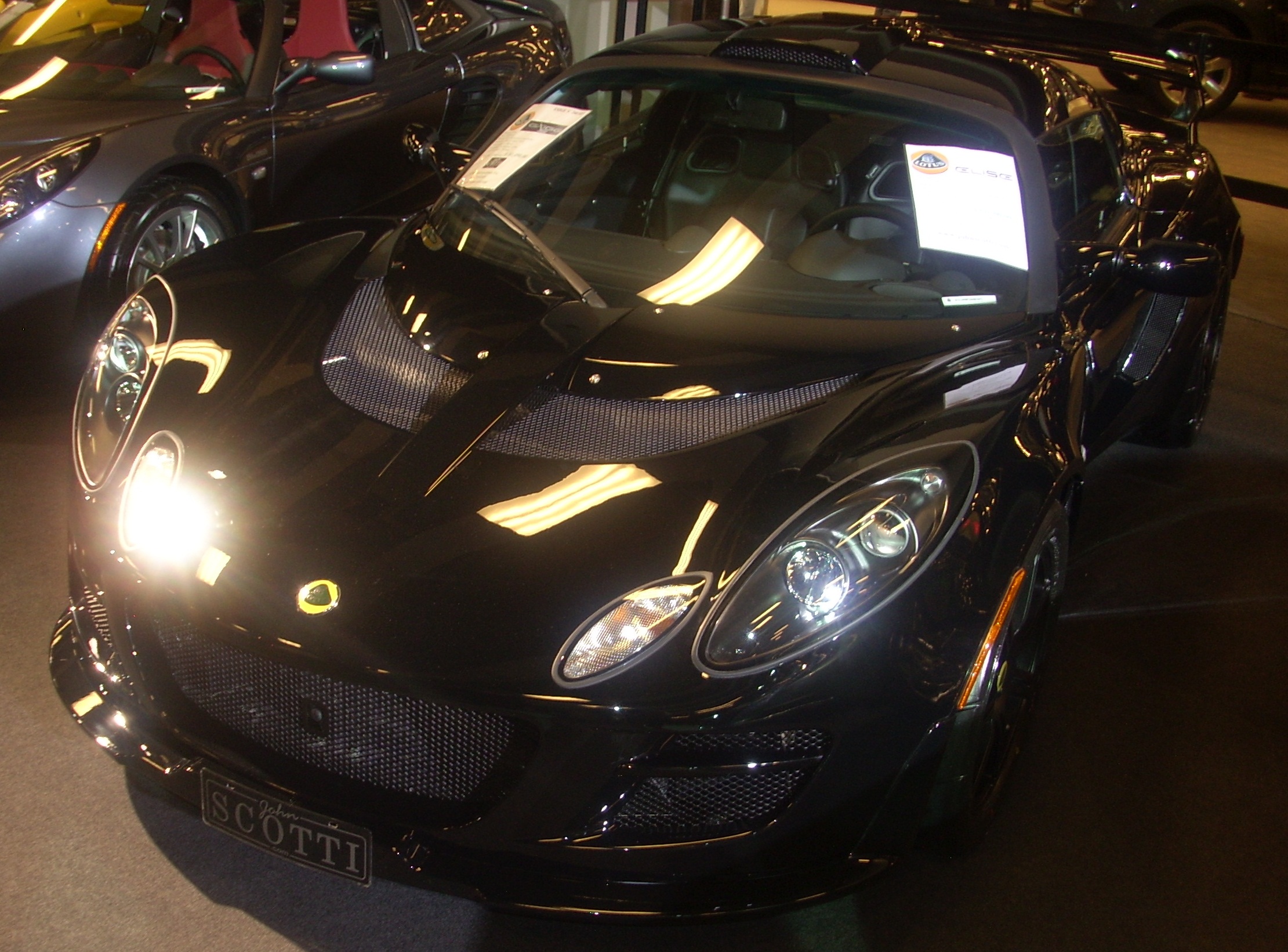
Lotus Elise
"So what's the right answer here? [1633.5s] Old cars. [1633.8s] Lotus Elise, old cars."
The Lotus Elise is a small, lightweight sports car that’s built to feel nimble and fun to drive. Here, the host brings it up as an example of a simpler, more engaging older car.
The Lotus Elise is a lightweight, driver-focused sports car known for its small size and agile handling. In this segment, it’s used as an example of an “old car” that avoids the compromises of modern full-size vehicles and EVs.

Ford Maverick
"Couple, couple highlights in there mostly. Ford Maverick. Maverick was fun. Maverick started to fall apart after a couple of days though."
The Ford Maverick is a small pickup truck. Here, the point is that the host felt it started making odd noises and didn’t feel as well-built after only a short time.
The Ford Maverick is a compact pickup that became popular for its practical size and modern design. In this segment, the hosts mention it as a recent new-car experience that developed issues quickly, including noises and perceived build-quality problems.
clunks
"It was fun initially, but then some of the, there were clunks all over that car. Like I think the exhaust was hitting the underside of the car."
“Clunks” are loud knocking sounds you can hear when a car hits bumps or shifts load. They usually suggest something in the suspension or mounting isn’t tight or isn’t moving smoothly.
“Clunks” are audible or felt knocks that often show up when suspension components have play, worn bushings, loose fasteners, or alignment/fitment issues. In this context, the host links the clunks to the car’s underside and suspension behavior rather than normal road noise.
front suspension
"Like I think the exhaust was hitting the underside of the car. Front suspension clunks. I just, it didn't feel quality after, you know, once the initial like, oh,"
The front suspension is what helps the front wheels move up and down smoothly. If it makes clunking noises, it can mean parts are loose, worn, or not fitting together correctly.
The front suspension is the system that connects the front wheels to the car’s body and controls how the wheels move over bumps. When the host says “front suspension clunks,” they’re pointing to the front-end hardware or mounting points as the likely source of the knocking sounds.
trickle down
"Do you believe in trickle down? Yeah. It will, all of this will trickle down, right?"
“Trickle down” means new, expensive tech eventually shows up in cheaper cars. The host is saying today’s cutting-edge engineering will later benefit regular drivers.
“Trickle down” is the idea that advanced technology introduced in high-end products eventually becomes cheaper and spreads to mainstream cars. Here, the host uses it to argue that engineering improvements will make their way into everyday vehicles over time.
Xenon headlights
"Is why a current Nissan Sentra drives like a million bucks. It's why Xenon headlights are on Corollos now."
Xenon headlights are a type of car headlight that uses a special gas to make brighter, whiter light. The host is pointing out that this kind of lighting tech has become common on regular cars.
Xenon headlights (often called HID—high-intensity discharge) use an electric arc in xenon gas to produce bright light. Compared with older halogen bulbs, xenon systems typically provide a whiter, more intense beam and are often associated with higher-end lighting performance.
NVH
"I've had two Corolla rentals and they, the NVH is indescribably bad from that power train. [1790.6s] It is so bad. [1792.0s] I didn't even know how that can happen."
NVH is a car term for how noisy and bumpy a car feels. If NVH is bad, the engine and road vibrations get into the cabin and make the car feel unpleasant, even if it’s otherwise fine.
NVH stands for noise, vibration, and harshness—how loud the car is, how much it vibrates, and how “rough” it feels over bumps or under load. It’s a key refinement metric because two cars with similar performance can feel very different if one has more engine/drivetrain noise or vibration transmitted into the cabin.

Toyota Corolla
"But Corollos are shit boxes now, that I can say. [1783.9s] Are they? [1784.1s] Yeah."
The Toyota Corolla is a very common, practical compact car. Here, they’re complaining that the ride and engine feel really noisy and rough (not smooth or refined) in the version they rented.
The Toyota Corolla is a compact car that’s often chosen for affordability and practicality. In this segment, the hosts are specifically criticizing its NVH (noise, vibration, harshness) when driven as a rental, implying the powertrain/overall refinement can feel unpleasant.
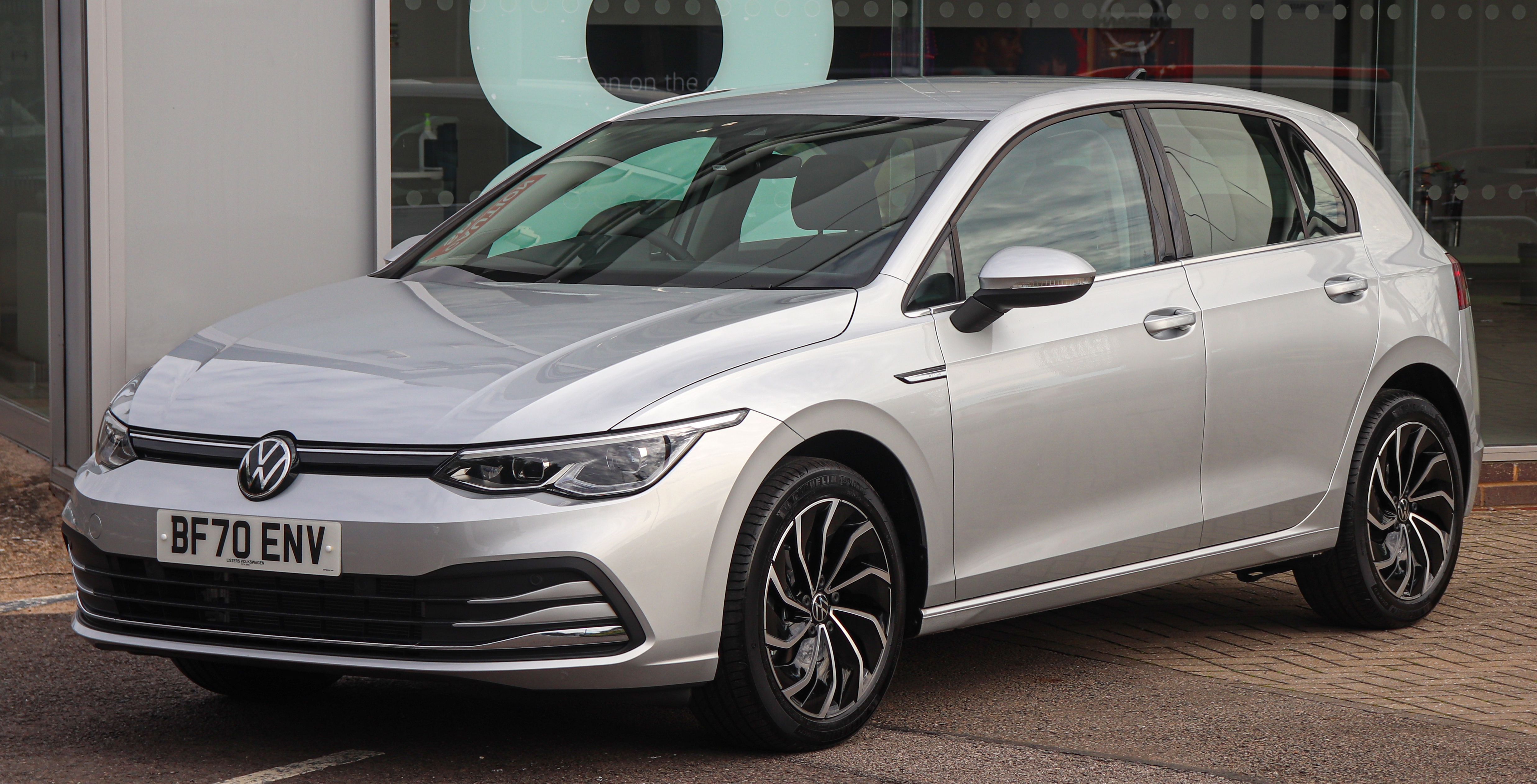
Volkswagen Golf
"And I got out of that and I got into a 10 year old golf with a 2.0 T and I'm like, [1799.8s] oh, thank God it's not me. [1801.1s] Like I thought, did I, have I just become a rich?"
The Volkswagen Golf is a compact hatchback known for being a “driver’s car” in everyday form, with a reputation for refinement compared to many budget compacts. Here, the hosts contrast it with the Corolla rental by saying the Golf feels better—specifically mentioning a 2.0T powertrain—suggesting improved NVH and overall smoothness.

Nissan Sentra
"And then I got into a Sentra rental and I'm like, smooth as silk. [1813.5s] Sounds okay. [1814.5s] It's a CVT, but it's just a lovely little car."
The Nissan Sentra is a compact sedan positioned as an affordable alternative in its class. In this segment, the hosts praise the Sentra rental’s smoothness and specifically call out that it uses a CVT, framing it as a more pleasant experience than the Corolla rental.
CVT
"It's a CVT, but it's just a lovely little car. [1818.7s] Well, you heard it here folks first. [1820.7s] The thing you never heard that expected to hear Jason Camisa say."
CVT stands for continuously variable transmission. Instead of fixed gear ratios, it uses a belt/chain and pulleys to keep the engine in a favorable operating range, which often makes the car feel smooth and can help fuel economy. Some drivers dislike CVTs for a “rubber-band” feel, but in this clip the host says the CVT Sentra feels especially smooth.
409
"[2142.1s] about 409s and like there's songs about cars and there's not songs about cars anymore. [2146.8s] I think it was kind of a universal right of passage that everybody should be."
“409” is a nickname for a famous 1960s Chevrolet V8 engine. In the episode, it’s used as a pop-culture shorthand for the muscle-car era.
“409” refers to the Chevrolet 409 engine, a famous big-block V8 from the 1960s. It became a cultural icon because it was associated with powerful performance cars and was referenced in songs as shorthand for speed and muscle-era style.
Maibach
"Okay. [2155.1s] Every rap song is a mention of a Bentley or a Maibach or something."
This sounds like “Mercedes-Maybach,” a very luxury version of Mercedes. The point in the conversation is that it’s used in songs to signal wealth and status.
“Maibach” appears to be a transcription error for Mercedes-Maybach, the ultra-luxury sub-brand of Mercedes-Benz. Maybach is associated with top-tier comfort and opulence, and here it’s referenced as a status “prop” in rap lyrics.
muscle car
"Was your sort of muscle car or hot rod or whatever the thing that like in this sort of era, [2184.7s] Was your sort of muscle car or hot rod or whatever the thing that like in this sort of era,"
A muscle car is a kind of American performance car, usually with a big engine, built to go fast. Think “fast in a straight line,” especially the classic 1960s vibe.
A muscle car is an American-style performance car known for a powerful V8 engine and strong acceleration, especially popular in the 1960s. The term usually implies a focus on straight-line speed and a relatively affordable, mass-market attitude compared with more exotic sports cars.
hot rod
"Was your sort of muscle car or hot rod or whatever the thing that like in this sort of era, [2184.7s] Was your sort of muscle car or hot rod or whatever the thing that like in this sort of era,"
A hot rod is usually an older car that someone modifies to make it faster and cooler. It’s part of a culture of customizing cars rather than leaving them stock.
A hot rod is a modified car—often an older model—built for performance and style, typically by upgrading the engine, suspension, and drivetrain. In car culture, hot rodding is closely tied to the idea of customizing and making a car personal, not just buying it as-is.

BMW X5
"I'm trying to find something. And an X5 diesel. This is not a normie."
The X5 is a luxury SUV from BMW. It’s designed for comfortable driving with a sporty feel. The podcast mentions an X5 diesel because that specific fuel type isn’t as common.
The BMW X5 is a midsize luxury SUV that’s positioned as a more performance-oriented alternative to typical family SUVs. It’s often discussed because it offers multiple powertrain options, including diesel in some markets. The podcast calls out an “X5 diesel” as unusual, implying it’s not the most common configuration.

Land Rover Range Rover
"...ung person who's in their 20s driving around in a Range Rover classic or an R107 or a 129 or something that is,..."
The Range Rover is a luxury SUV made by Land Rover. It’s built to be comfortable on-road and capable off-road. The podcast mentions it as an example of a recognizable, premium SUV.
The Land Rover Range Rover is a flagship luxury SUV known for off-road capability and high-end comfort. It’s often referenced in discussions about status and presence because it’s a long-running, premium model. In the podcast, it’s mentioned in a broader point about what certain drivers are perceived to be driving.
Request an Explanation
Heard something you'd like explained? We'll add it to this episode.
Sign in to request explanations for terms you heard.
Want to learn more?
Browse our glossary for plain-English explanations of automotive terms, jargon, and concepts.
Help improve this episode
See something that's not quite right? Our annotations are AI-generated and can sometimes miss the mark. Click the flag icon on any annotation to suggest a correction.
1 community members have helped improve this episode.